Showing posts with label Sulemani Keeda. Show all posts
Showing posts with label Sulemani Keeda. Show all posts
When Vicky Donor came out, I’d tell people this is my story-Naveen Kasturia
7:55 AM
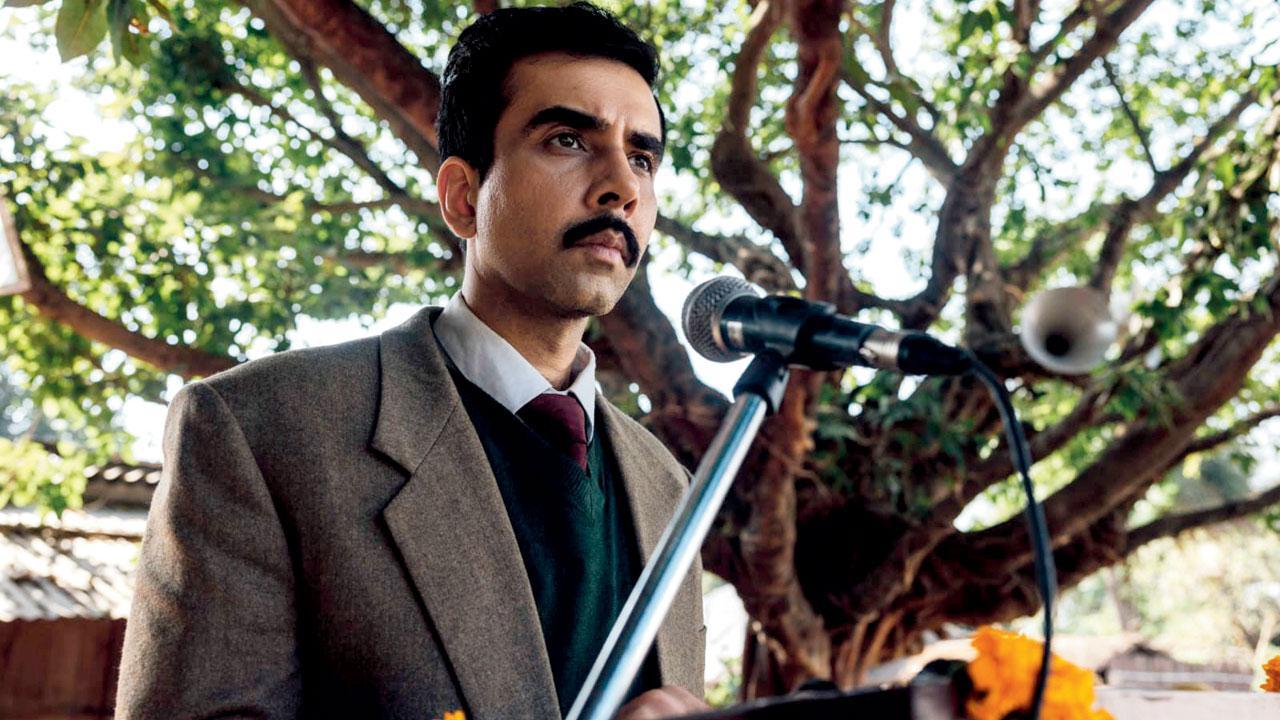
Niharika Lal (DELHI TIMES; October 13, 2024)
“People have this perception that Delhiites are like Chucha (from Fukrey); they are all loud. But Oye Lucky! Lucky Oye is also Delhi, Vicky Donor is also Delhi,” says Naveen Kasturia, while discussing the image and reputation of the city.
Even if critics felt he doesn’t quite look like a typical Delhi guy, he’ll tell you there is no one format for Dilli ka ladka. In conversation with us, Naveen speaks about his hometown, his popular roles, and how he fell in love with Delhi again.
‘WHEN VICKY DONOR CAME OUT, I’D TELL PEOPLE THAT THIS IS MY STORY’
Naveen grew up in Lajpat Nagar and before moving to Bombay 16 years ago. “Main pura Lajpat Nagar Amar Colony ka product hoon. In fact, when Vicky Donor came out, I’d tell people this is my story. He was from Lajpat Nagar, so am I. Usmein mujhe flaw bhi dikhta tha – woh (Ayushmann’s character) Lajpat se metro leta tha, but people from there use the Moolchand metro station.”
‘Khosla Ka Ghosla represents Delhi’
Naveen says he’s always told that he doesn’t look like he is from Delhi. He says, “I did a film called Sulemani Keeda in which two characters are trying to make it big in Bollywood. Uske ek review mein likha tha, ‘Arey ye Dilli ke bane hue hain ladke, ye Dilli ke toh lagte nahi.’ Ab main Dilli ka hoon aur Dilli ke ladke ka role kar raha hoon, I’m playing myself in a way!”
He adds, “Mere liye badi inspiring film thi Khosla Ka Ghosla. Usmein Khosla sahab ke jo do ladke hain Bunty (played by Ranveer Shourie) aur Chiraunjilal (Parvin Dabas) dono alag hain. That film represents Delhi, I feel.”
‘I find central Delhi very pretty in mornings’
In the last few years, the actor fell in love with Delhi again. He shares, “I think I was shooting for Aspirants, and I’d shoot in central Delhi early in the morning, around 6 am, and I’d find the city very pretty. Main uss waqt wahan jata tha toh mujhe aisi feeling aati thi ki mujhe desh ke liye kuch karna hai. Main roz uss DM ke kirdar mein ghusta tha, waise kapde pehenta tha. At that time I started thinking about doing a job where I could contribute to the country. Maine ek dost se baat ki aur usne kaha, ‘Iss umr mein tu defence mein ja sakta hai kisi tareeqe se, lekin IAS toh ab tu nahi ban sakta.”
‘I really want to do roles set in different worlds’
Talking about the roles he gets, he says, “Sometimes I’ve been slotted into the role of a common guy trying to achieve something, but I really want to do roles set in different worlds. Only when people see me in diverse roles and settings will they start thinking of me in different parts. That’s why I was so happy when I got Breathe and Mithya. I did a role in the second season of Mithya because I really liked the character and the world in which it is set. It’s a really complex part. We shot most of the scenes in Darjeeling. Mithya ke baad Rajit Kapur mere favourite co-actor ban gaye hain. Jab aap manjhe huye actor ke saath kaam karte hain, toh kai baar aap woh cheezein kar jaate hain jo aapne sochi bhi nahi hoti hain.”
I was a bit skeptical about how Newton would fare without much publicity-Amit Masurkar
8:02 AM

Kusumita Das (MID-DAY; December 31, 2017)
Having tasted sweet success with his first film Sulemaani Keeda (2014), most people were expecting Amit Masurkar to continue making films in a similar humorous vein. “I would get offers to direct fun and breezy films, (like Sulemaani Keeda).”
But, the idea of Newton was lodged in his brain and wouldn’t go away. The film tells the story of the struggles that an election clerk goes through while trying to run a free and fair election in a conflict- ridden jungle of Central India. Along with co-writer Mayank Tewari, Masurkar spent six months working on the script. “During that process, we traveled to Chhattisgarh several times, interacted with lawyers, human rights activists, adivasi voters, politicians, police, administrators, surrendered Maoists — and their lived experiences became a part of the story. We met some wonderful people who helped us and their feedback enriched the screenplay,” says the 36-year-old.
As unconventional as the story and script may have been, fortunately, for Masurkar, it was not an uphill task to take it on the floors. “I met producer Manish Mundra early on, so there was no struggle in finding someone to back the project. And it was Manish who suggested Rajkummar Rao’s name for the lead. Rao read the script and came on board immediately.”
The team was confident of the product they had created. “The Indian audience is watching the best films and shows from all over the world. We have as many fans here for the Marvel universe and Game of Thrones as anywhere else. This audience is tired of the same old stories, which is why a film like Dangal or Hindi Medium does well. Newton is a unique story with a fiery young protagonist, and we were confident that it would do well too.”
When the year kicked off, the film was ready for a festival premiere in Berlin. The buzz here was low-key and even close to its September 22 release, it was not anticipated to be a box-office success, no matter how much critical acclaim it had earned already, across 60 international festivals worldwide.
Masurkar admits that he was not sure how the film would do in small towns, transcending multiplex boundaries. “Aanand L Rai and Eros International came on board to present the film. It was Aanand ji’s idea to release Newton in 450 theaters, including small towns. Until then, we were thinking of 120 screens; so, his confidence in the film was a big deal. I was a bit skeptical about how it would fare without much publicity, but he was always confident and was proven right. The film did exceptionally well in small towns.”
As far as the film’s role in the race for Oscars is concerned, it was announced as India’s official entry for the 90th Academy Awards, the day it released, on September 22. “The Film Federation of India selects India’s official entry to the Academy Awards. The voting members are representatives from film unions from all industries — Hindi, Tamil, Bengali, Marathi, Telugu etc.”
Is he a tad disappointed that it did not make it to the final list? “When we set out to make Newton, we had no aim but to make an honest film. In LA, we got an excellent reception from the press and members of the Academy. We were competing with the best films in the world, and the ones that made it to the shortlist are also very good.”
The lesson I learnt
The only way to enjoy work is to continue making films that I believe in
I didn’t expect the audience in Germany to connect with Newton-Amit Masurkar
8:56 AM

The Berlin winner on his political satire, life nuggets from Mahesh Bhatt, and why every writer doesn’t aspire to make a movie
Kunal Guha (MUMBAI MIRROR; February 26, 2017)
On a Spanish holiday, shortly after being honoured with the International Federation of Art Cinemas award at the 67th Berlin International Film Festival for Newton, director Amit Masurkar’s first reaction is that he “wasn’t expecting so much travel”. “It is a story set in a jungle in Chhattisgarh during elections. So I didn’t expect the audience in Germany to connect with the story,” says the filmmaker, who left the festival a day before the award was announced; he wasn’t expecting to win.
“With Brexit and Donald Trump getting elected, people are questioning the ideals of democracy, which is why they found parallels in their own shortcomings,” he says.
Newton — a dark comedy stars Rajkumar Rao as a government officer on election duty at a polling booth in a Naxal-infested conflict zone — was shot an hour-and-a-half away from Dalli Rajhara. It’s an area with a strong Maoist presence. This meant additional security measures and precautions for the crew. “We had 40 actors in camouflage carrying fake AK47s, so there was a danger that they could be mistaken for real constables,” says the filmmaker. And though he opted to shoot without police protection in order “to remain neutral”, Masurkar briefed his crew to refrain from discussing politics and cast mainly local non-actors. “They were fearless and got it right away,” says Masurkar, who didn’t mind investing in a few extra takes for every shot that featured a first-time actor.
Incidentally, the original idea for Newton occurred to Masurkar when he happened to browse through the Constitution — a document he describes as “a beautiful piece of writing” and one that gave him “goosebumps”. He was inspired to write “a story about democracy”, without spilling into the political saga genre. This eureka moment led to the story of a day at a polling booth in a conflict-prone area. “Under the guise of conflict, you can do anything and this got me thinking,” says Masurkar. “I even met government officials in Delhi who had been deployed on election duty in conflict zones.”
The engineering dropout “drifted into the film industry” because he had “nothing better to do”. An internship with JAM magazine had him cover the Mumbai International Film Festival and drew him to cinema. Following a string of assisting and writing gigs, which included sketches for The Great Indian Comedy Show, he made his directorial debut with the 2013 indie comedy Sulemani Keeda about two struggling writers hopeful of finding their feet. While the film gave Masurkar an identity, “it only released in 40 screens”. “When I started out, all struggling writers aspired to make a feature film. Today, most want to make a web series and many are even tweaking their film scripts for the web,” he says. Even Masurkar hopes to ride the wave of short-form cinema for the internet as it allows one “a chance to work outside the system, the content is uncensored or self-censored, there’s freedom to do something that won’t fly on regular TV or cinema screens and there’s no pressure to cast stars”.
“But there is one danger — many web shows are being churned out of unsold film scripts and have low production standards. As more web shows fail, people will blame the medium.”
Masurkar, who co-wrote Murder 3, recollects working with Mahesh Bhatt as an invaluable experience. “Mahesh Bhatt, who plays himself in my first film, believes in the ideology that ‘no matter how much we achieve or study, we know nothing about life. We just have to discover our own purpose and meaning’,” says the writer-director, whose Murder 3 was accused of being ripped off from Spanish thriller The Hidden Face. But Masurkar is all for “adaptations”. “Since time immemorial, stories keep getting rehashed and retold. There are dozens of versions of Ramayana — from Indonesia to Afghanistan. Films are a 100 years old, so how can you suddenly expect something purely original and devoid of any influence? I’m all for adaptations of stories, which are competing enough to be retold but not lazy frame-by-frame remakes,”he argues.
Razak Khan: The man behind the many caricatures
7:58 AM

1954 2016
Writer-filmmaker Amit Masurkar, whose directorial debut Sulemani Keeda was the last film in which Razak Khan made an appearance, remembers a formidable actor who was the polar opposite of the characters he played in his 23-year career
As told to Sanyukta Iyer (MUMBAI MIRROR; June 2, 2016)
Razak Khan had extremely refined taste. He spoke Urdu and English with equal flair, enjoyed long conversations about Hollywood, western and Hindi films from the 1950s and frequently quoted shayaris. His taste in music was just as eclectic. He once shared a song on the Peshawar student killings, which he could quote verbatim.
I wasn't privy to many facets of his life because I knew him only professionally. I first met him in 2012 to cast him in my directorial debut, Sulemani Keeda. He was aware that we didn't have money to pay the actors but that didn't deter him. At the end of the meeting, he didn't just agree to be a part of the film but also paid for the coffee, refusing to let us shell out money.
He arrived on set completely prepared. He was a formidable actor and knew his lines by heart. He saw us as a team of an indie project that subsisted mostly on vada pavs on the sets thanks to financial constraints so he would bring along a huge dabba packed with mutton keema, fried fish, rice and rotis for the entire unit.
Once, he shared how serendipitously acting happened to him. He was chilling with his gang at Sun n Sand when Javed Akhtar spotted him. The veteran lyricist then sent him a written note saying he wanted to cast him as an actor. An unperturbed Razak bhai declined curtly. Javed sahab then came to him and said, "I am asking you with respect, do you want to act in a film?" Razak bhai was close friends with Amjad Khan at the time who advised him to take it seriously. That's how Roop Ki Rani Choron Ka Raja (1993) happened.
Razak bhai came from a well-to-do family. Unfortunately, he was to get slotted in similar roles - Ninja chacha in Hello Brother, Kaala Bhai in Kyunki Main Jhooth Nahi Bolta, Fayyaz Takkar of Akhiyon Se Goli Maare, Nawab Changezi in Ishq, Manik Chand in Baadshah. And he had grown tired of them. He had a very recognisable face and became synonymous with a certain kind of character but he wanted to do so much more. I think his greatest film was Dubai Return, where he played the lead alongside Irrfan Khan. The film was directed by my friend, Aditya Bhattacharya. I realised his true potential only after watching this film. He was phenomenal in it. Too bad it never got released.
He knew he was capable of a lot more and enjoyed working in Sulemani Keeda because he did not have to repeat his trademark mannerisms.
He attended the Sulemani Keeda premiere at MAMI. Patrons who were standing in lines to catch other films, mostly world cinema, and the ushers, broke into big smiles as soon as they spotted him. Many of them thronged him for selfies. He had that effect on people. They always smiled at him and he reciprocated with equal warmth.
I approached him for my next, Newton, as well which he unfortunately couldnt do. I had discussed the role with him and told him that he would have to cut his hair, which he said he could not do since he was doing two other films and it would disrupt their continuity.

Getting Shah Rukh Khan on board was another high altogether-Arunabh Kumar
8:12 AM

BOMBAY TIMES (February 27, 2015)
Arunabh Kumar is a popular
name with the youth, thanks to his innovative venture, The
Viral Fever (TVF). Says Arunabh, “The idea behind launching the
production house was to make interesting concepts. I
realised that youngsters didn't watch TV today , but watched
international fiction shows available online. That prompted me to come
up with newer kind of scripted fiction shows like College Qtiyapa.“
While he started out with the production house, Arunabh soon graduated to an online channel.“Rowdies (a spoof on Roadies) was one of the first shows we uploaded. Soon, Karan Johar wanted us to do something innovative to promote Student Of The Year. That's how Gana Wala Song came about. We also made Gangs Of Social Media, which became popular,“ he adds.
Arunabh maintains that his big moment came when Shah Rukh Khan agreed to be a part of his chat show, Barely Speaking With Arnub. “While we had got Ayushmann Khurrana and Anurag Kashyap for our previous shows, getting Shah Rukh Khan on board was another high altogether. When he respected our creativity, it was a validation that we were headed in the right direction,“ he smiles.
Besides delivering fresh content to the e-generation, Arunabh has also provided small-budget films with a platform to reach out to the audience. “Through Inbox Office, we try to release entertaining films that deserve to be seen. We recently released a small movie called Sulemani Keeda,“ he concludes.
While he started out with the production house, Arunabh soon graduated to an online channel.“Rowdies (a spoof on Roadies) was one of the first shows we uploaded. Soon, Karan Johar wanted us to do something innovative to promote Student Of The Year. That's how Gana Wala Song came about. We also made Gangs Of Social Media, which became popular,“ he adds.
Arunabh maintains that his big moment came when Shah Rukh Khan agreed to be a part of his chat show, Barely Speaking With Arnub. “While we had got Ayushmann Khurrana and Anurag Kashyap for our previous shows, getting Shah Rukh Khan on board was another high altogether. When he respected our creativity, it was a validation that we were headed in the right direction,“ he smiles.
Besides delivering fresh content to the e-generation, Arunabh has also provided small-budget films with a platform to reach out to the audience. “Through Inbox Office, we try to release entertaining films that deserve to be seen. We recently released a small movie called Sulemani Keeda,“ he concludes.
Five independent filmmakers come together to speak about challenges faced in releasing their films
8:10 AM
From
left: Sanjay Puran Singh Chauhan, Amit V Masurkar, Rajat Kapoor, Girish
Malik and Shreyas Talpade at mid-day office for a debate on small
budget filmmakers and their struggles. Pics/Datta Kumbhar - See more at:
http://www.mid-day.com/articles/are-independent-filmmakers-still-struggling-for-survival-in-b-town/15858178#sthash.pMipRxF3.dpuf

From left: Sanjay Puran Singh Chauhan, Amit V Masurkar, Rajat Kapoor, Girish Malik and Shreyas Talpade at mid-day office for a debate on small budget filmmakers and their struggles. Pics/Datta Kumbhar
Independent filmmakers speak about the challenges involved in pushing projects that do not follow the set pattern
MID-DAY (December 22, 2014)
Multiplexes barely run films that are ‘different’. Most producers are reluctant to put their money to back such ventures. And they struggle for screen space with a big banner film releasing at the same time. We are talking about independent cinema. A handful of Hindi filmmakers is struggling to break away from the formulaic candy-floss romance and over-the-top drama — taking risks to explore new genres and fresh stories, but with paltry budgets and resources. Some of them have met with reasonable success while others are staring at an uncertain fate.
hitlist invited five independent filmmakers for a discussion on the constraints and challenges faced by their ilk in reaching out to the audience...
What is urgently needed to boost the morale of independent filmmakers?
RAJAT KAPOOR: I do not think anything is going to change in the next 30 years — the audience is not going to change, nor will the cinema or exhibition policy. I am convinced that this movement, there is a movement, will continue because of the passion of individuals. There will always be this lot of people who will make films because they are passionate enough to raise money somehow, passionate enough to lose money and still make the film.
What do you ideally want changed?
SHREYAS TALPADE: I feel things will change. A film like Iqbal got a decent release, although it was a little delayed. Then there was Paan Singh Tomar and a lot of other films that were deserving and got fame.
We have seen Shyam (Benegal) babu make a lot of films but they never released on the big screen. However, those were considered pure art films. Today, the line between an art film and a commercial film has been blurred.
RAJAT: But there’s no denying that there are mainstream and non-mainstream films. If a film like Bang Bang! releases on 4000 screens and a film like Sulemani Keeda on 40 screens, there is a difference.
SHREYAS: There is, but a change is also taking place. During the release of Poshter Boyz, I was at the mercy of the distributor. I feel that if my distributor had been as passionate as my team, the scenario would have been different. Luckily, we could make money.
Are you saying that the passion is limited only to the filmmaker?
SHREYAS: Many distributors treat it (film releases) just as a job. This needs to be changed. They should come on board if they there are convinced about the film’s prospects. If I am going all out to make a film, why must the distributor give it merely a morning show? Who will come to see my film in the morning?
RAJAT: It is not a new problem. When multiplexes came up in 2005-06, there was a ray of hope — films like Iqbal and A Wednesday got a release. Then the multiplexes were hijacked by mainstream films. So was the multiplex audience. They now see big star films; they are not interested in our films. I am not blaming anyone but the whole industry is about money and those involved in it will go where there is money.
SANJAY PURAN SINGH CHAUHAN: Since the coming of studios, the era of independent cinema and producers ended. Nowadays, equipment is cheaper and filmmakers are able to manage within a compact budget. This has enabled those with a story to make a film. The side-effect, however, is that bad stories turn into films too. So, distributors have a huge range of options to select from. I made Lahore from my artistic leanings, but since no one was interested to push the film, I sent it abroad. To my amazement, it was highly appreciated even though it was a hardcore commercial film. As a result, all those who had earlier ignored my film started approaching me for the rights.
No one wants to walk around waving the flag of independent cinema because they prefer a “ backdoor” entry so that by the time they make their second film, it is backed by a studio and features big stars. In my opinion, there are two films — a good film and a star-based film. It is just by chance that one makes a star-based film that is good. Only a few can afford a distributor, which is why many good films are lying around.
RAJAT: PK was the 200th film of the year. If there are six to seven movie every week, how many shows are we going to get? The problem is that there is a glut of so-called independent films and most of them are very bad — let’s face the truth. Now, how does Sulemani Keeda stand out from this glut of complete rubbish? In 2005, the producers were attracted to this model of business where a small budget film could give them high returns, and everyone else followed suit. But, a small film does not always translate into good cinema.
AMIT V MASURKAR: Today, all kinds of information are available to budding filmmakers. Everything is just a click away; nothing is exclusive and no one has an excuse to not know. Accessible technology will result in more films but, the way I see it, cinema in the next 30 years is going to be bleak. We are the last people to be making 90-minute long films as the duration will soon reduce. Few films will release and everything is going to be on the internet.
RAJAT: Cinema will actually become an art form.
AMIT: Maybe, an Interstellar and a Chennai Express will be in cinemas but the rest will be on the internet. In the US, theatres have only 15-20 people. No one goes to the cinemas as they know they can catch it online two months later.
RAJAT: This has been going on since sound came and then when colour and cinemascope came. So, it is a historical phenomenon.
AMIT: I started my first project with Saurabh Shukla’s film Mudda in which Rajat Kapoor played a part. At that time we used 35mm film and I dreamt of shooting my films using 35mm. Unfortunately, that won’t be possible today.
RAJAT: Christopher Nolan had once said that celluloid is the medium of the future. But I do not think that these are the real issues — digital or film.
AMIT: I was talking about the romance of making a film. If I am making one, the content is important for me.

PK released on 5200 screens across India and no other film competed with it. Don’t you think it was a complete take-over?
RAJAT: We keep thinking that this is something new, but this used to happen in the ‘70s too.
But lesser films were being made then...
SHREYAS: Iqbal released with No Entry in 2005 and we were scared about our film’s prospects. But we actually benefited from the overflow. If people did not get a ticket for No Entry, they opted for Iqbal.
So, there is always place for two films.
RAJAT: You are right when you say there is a sense of monopoly. But, it isn’t ego that gets played here; they fear that by the end of the week the story of the film will be out. So, most films try to collect as much money as they can in the first few days.
AMIT: PK’s first day, first show tickets cost Rs 350 rupees. A morning show ticket!
SANJAY: They are planning a Rs 300-crore recovery. So, for that, they are prepared to do anything. A couple of months ago, I was shooting with a Pakistani actor who said that on his way to the sets he saw several highrises and slums co-existing, and wished the same for cinema. However much passion we put into our films, no one will be interested in small budget films.
Do you all agree to that?
RAJAT: Everything you are saying is correct, but I do not understand why we are looking for a magic solution to change things.
SHREYAS: Aamir and Shah Rukh Khan do one film a year, Salman Khan does two. So, when the biggies do eight to 10 films annually, the other 42 weeks are in our hands.
SANJAY: But, in the independent film window there is an overcrowding of small budget films that only the big distributor will be able to arm twist his way through for a successful release. Otherwise, as a genuine independent filmmaker, one should be satisfied if he gets a release. If one manages to get a release and make money too, that should go down in history.
Amit, are you happy with the numbers Sulemani Keeda got?
AMIT: I am very happy with PVR directors because they got us good show timings. However, our prints and advertising ( P&A) budget was so small that we should have invested a little more in ads. It was thanks to word of mouth and social media buzz. In fact, we went into our third week with PK and opened in Hyderabad. In Versova, we saw Action Jackson had only eight takers while Sulemani had 180-odd viewers. The government should abolish entertainment tax.
RAJAT: What good will that do? A Rs 400-ticket would cost Rs 200 and then PVR will hike its prices.
AMIT: They should understand the long term benefit. If they are so greedy, they will lose out on a lot besides killing a whole genre of films. Chennai does not have entertainment tax for Tamil films as politicians there are actors.
We looked at the coming of multiplexes with a lot of hope but has the whole purpose been defeated?
RAJAT: It is a great thing that we have multiplexes because 15 years ago, if someone made a Lahore or Iqbal, it would not have even got a release.
GIRISH MALIK: No one has their own judgment, and to instill that judgment about a film being good, you need validation. The moment a big personality comes on board to promote your film, it becomes much easier for filmmakers to convince the audience to watch the film. While making a film, one has to keep an eye out for those sailing in the same boat who can be of some help.
How does the audience distinguish good films from bad? It’s tough...
RAJAT: Out of a 100 independent films, 95 are very bad. How do you know which one to go for?
GIRISH: Suddenly, I am wondering if my film (Jal) will work in European markets. Not that I want to make films for their taste, but I have to start looking for avenues. The success of Lunchbox lied in having 16 to 17 producers. So, when I make a film I want to be sure that I get a good producer from Europe. Somewhere down the line, a filmmaker must be able to create a hype around his/ her film. I can’t depend on just a great story or concept.
Amit, do you agree?
AMIT: No, I haven’t done any such thing for my film, but I am sure Girish has more experience.
GIRISH: Yes, I have suffered quite a bit.
AMIT: You should make what you want to make and you will end up getting an audience.
SHREYAS: That is easier said than done.
GIRISH: I agree filmmakers live in a world of their own. But the common link of conviction binds us.
SANJAY: But even when one makes a film out of conviction, one needs to get an audience which is impossible because of the monopoly. Our P& A budget is just peanuts.
RAJAT: I am completely at odds with this point of view. I believe that it is the film that matters; everything else is necessary, but you cannot run away from the market reality. None of it should colour your vision or the film that you have made.
SANJAY: Some are lucky but others are still awaiting the release of their films that are decent and made with a lot of belief.
RAJAT: Even Farah Khan believes in a Happy New Year.
SANJAY: Farah makes what the audience wants to see while people such as us make films that we like.
Outside of Mumbai, very few people are aware of independent films. So there is a problem of awareness and getting the right show timings.
RAJAT: What has changed for the better is that now a film has a life — whether it is on TV or on the internet, someone is going to pick your film. The other aspect is money, but if the film is good it will be watched. It may not have got a great response when it released but it’s good, it will be watched later, too.
SANJAY: But I was initiated into the world of cinema by sitting in a theatre and watching a film. I hope people watch my film the same way.
Idealistic perhaps, but should there be reservation for small-budget films in multiplexes?
RAJAT: Why would a multiplex run a film when there are only two people in the audience? What is lacking in Mumbai and other metros is a cinemathique, which is there in the West. That allows for an audience of 300- 400 people to share an experience of watching a film they like. There is a daily programming of world cinema classics. When I am 80, I would love to run a cinemathique here.
SHREYAS: Maybe, we need to come up with innovative trailers and promos also.
But doesn’t one need a budget for that?
GIRISH: Speaking of a budget; I don’t think every independent filmmaker can make a film with a low budget — unless he is quaint enough to think of a transition that puts across his thoughts in a cheaper way.
RAJAT: Thinking quaint has killed many filmmakers.
(Coordinated by Sonali Joshi Pitale; Moderated by Shubha Shetty-Saha; Compiled by Sanat Mehra)
Sulemani Keeda finds a fan in Pulp Fiction writer Roger Avary
7:31 AM

Ankur Pathak (MUMBAI MIRROR; October 18, 2014)
Director Amit Masurkar's globe-trotting debut film, Sulemani Keeda, which is receiving critical acclaim in the festival circuit and will open in India in November, has found a fan in Oscar-winning writer of Pulp Fiction, Roger Avary.
A decade ago, when Amit was an engineering student apprehensive about foraying into filmmaking, he wrote to Roger for advice. To his surprise, the screenwriter replied saying, “Go for it. Write. Make the film you've always wanted to. And don't have a back-up plan, if you don't have a back-up plan, your only option is to go after your dreams.“
15 years later, Amit's debut feature Sulemani Keeda, about two scriptwriters struggling to make it big in Bollywood, had a sold-out screening in Los Angeles and Avary was one of the patrons. “Not only did he show up and liked the film, he also invited me to his house and showed me his Oscar,“ an excited Amit told Mirror adding, “He liked the film because he said he could see his relationship with his then collaborator Quentin Tarantino on-screen. They later had a feud. Much like what happens in Sulemani Keeda.“
Subscribe to:
Posts (Atom)