Showing posts with label Sudhir Mishra interview. Show all posts
Showing posts with label Sudhir Mishra interview. Show all posts
Betrayals will occur but churning will also happen-Sudhir Mishra
8:40 AM

Sudhir Mishra says the story isn’t Sonam Wangchuk’s, but of a generation seeking its voice amid India’s social churning and demanding to be heard
Sudhir Mishra (MID-DAY; July 19, 2026)
I don’t belong to the haloed tribe of left liberals who, every time the compromises of their own shitty lives burst up all around them, suddenly find some cause. I think sticking to one’s ideas and making films that allow you to make difficult films is a much more honourable path than farting around on X, which I sometimes do. Beg your pardon. I am who I am.
I have made Hazaaron Khwaishein Aisi [2005], and it was about a generation that, in a sense, rejected the idea of a nation, place, and legacy that was given to them by their fathers. They rejected their fathers, both metaphorical and real. In a sense, they felt orphaned. So they latched on to something.
In that churning, there were many wrong things that happened. History is never tidy. Every upheaval carries within it both emancipation and injury. Beneath every settled order lie voices waiting to be heard, lives waiting to be acknowledged, and dignities waiting to be restored. When they finally emerge, they arrive burdened by contradiction, anger, memory, and hope.
So now, there’s another churning, and beyond the shore, I see a man called Sonam Wangchuk. I’ve heard many things about him. I’ve heard about his support for the abrogation of Article 370. There are problems in everybody. There are problems in me, and the man probably has flaws. Some of the demands around him are odd and even undemocratic. They say, “Put so and so in place of so and so!” Not surprising, since most liberals in India are classists.
But the point is not Sonam Wangchuk. The point is, again, these young people feeling orphaned, unrepresented, feeling lost again, and, in a sense, rejecting the ideas that are handed over to them by their parents. To them, we owe something.
If they have felt that someone can hold the lifeline and pull them out of a certain morass, or that at least someone is talking on their behalf when no one else is, then maybe it is our job also to listen and hold their hands, in whichever way we can.
I know that the movement itself needs to answer many questions. However, I still think we need to talk to the young. Even though I know, ultimately, almost certainly, some betrayal will occur. But some churnings will also happen.
Satish Shah's energy was unmatched-Sudhir Mishra
8:26 AM

The filmmaker recalls working with the late actor in Jaane Bhi Do Yaaro, saying his rhythm and timing were ‘effortless’
Natasha Coutinho (HINDUSTAN TIMES; October 27, 2025)
Filmmaker Sudhir Mishra, co-writer of the story and screenplay of Jaane Bhi Do Yaaro (1983), fondly recalls working with actor Satish Shah on the film, who died on Saturday at the age of 74.
Sudhir shares, “Kundan (Shah, director) had brought in a lot of new people like Nasser (actor Naseeruddin Shah), Om (Puri) and Satish... out of all, Satish and actor Ravi Baswani were the most comfortable with the idea that it wasn’t a realistic art film. The film was funny and they were completely in tune with the kind of nonsense that Kundan used to talk about.”
Talking about the famous coffin scene, the 66-year-old says, “Renu (Saluja, editor) suggested an intercut. After all, what sense did it make to linger on a dead body? But that’s when Satish began changing his expressions, and it became a pattern. It was the same during the Mahabharata scene.”
Sudhir adds, “The idea of comedy as a farce, yet milking the scene to its fullest, came naturally to Satish. The rhythm and timing were effortless, perfectly in sync with Kundan’s style. Shooting with him was great fun. We once shot for 72 hours at a stretch, but the energy was unmatched.”
Sharing some of his favourite memories from the film and their later collaborations, he says, “I still remember some of those famous lines like ‘Thoda khao thoda phenko.’ I went on to work with him in Mohan Joshi Hazir Ho! (1984) and he was just amazing each time.”
We've stopped fighting for the other's right to exist regardless of differences of opinions-Sudhir Mishra
9:12 AM

Filmmaker Sudhir Mishra has adapted his grandfather DP Mishra's memoir for his eight-part series Summer Of '76. He talks to us about how it is absolutely possible for different viewpoints and polarising opinions to peacefully coexist in a healthy democracy
Mohar Basu (MID-DAY; July 13, 2025)
On Samvidhaan Hatya Diwas, June 25, a reminder of the Indian Constitution’s suspension during the Emergency, we sat down with filmmaker Sudhir Mishra at his Versova bungalow to discuss his Sony Liv series, Summer Of '76. It’s supposed to be an adaptation of a political memoir by his grandfather Dwarka Prasad Mishra, former CM of Madhya Pradesh — Living an Era.
He clears the air right away saying “it’s not just based on my grandfather’s book”. Then what is it? For Mishra, it’s a retelling of a time that’s never studied with the clarity it deserves. “I have an intimate understanding of the power politics of the Congress and in a very odd way, the politics of India in general. My grandfather had been active since 1939. I’m not totally in agreement with his politics. I’m also my father’s son. My father’s a mathematician. For me, you know, there’s a hypothesis, and it has to be proved. DP Mishra may have been opposed to or followed another kind of politics, like the socialist movement. There was someone called Ramesh Dixit, one of the students who was arrested. So, we took the rights to his life. He’s very close to me, almost like an elder brother. There’s this person called Pushpesh, who is a writer. He was a professor. So he’s also an activist,” he says.
The series is a work of imagination based on the lives they have studied. As Mishra says, “It is roughly based on memories. I was 15 when the Emergency happened. We also have the benefit of hindsight. The Emergency, for me, becomes a metaphor. It’s when the powerful stop listening. What happened during the Emergency was that the connection to the ground was lost. There’s a whole generation of people who did not agree with the idea of India that was being handed down to them by their parents. They thought it was problematic. Summer Of '76 is a bit of everything. It’s a rebellion. It’s a rebellious time, which confronts people in power.”
The eight-part series for Sony LIV begins in a university in Delhi. That’s where the confluence of varied ideologies starts. Mishra says, “Everyone is from different backgrounds. There are characters from Dalit backgrounds for whom political commitment is not a choice — it’s a necessity. There are also Muslims whose parents chose to remain in India, and they wanted to participate in this development. It’s a flux of people who accidentally meet and then it becomes their story — a story of passion, of youth, of young people, and excitement..”
A common dialogue about Emergency is the blatant unconstitutional censorship. Censorship has been a constant in India regardless of the party in power. Mishra tells us, “Artistes find a way to tell their stories. Many times, we are censoring ourselves. There’s also market censorship. ‘You can’t make this film because people say it won’t run’. Or, ‘You can’t make a film with a woman protagonist because it won’t work’. When I was making Yeh Saali Zindagi, the head of the CBFC asked why the title should have ‘Saali’. Even when I was making Hazaaron Khwaishein Aisi, they said, ‘Take out the name of the Congress party’. But if you’re not a sensationalist, and if you have facts behind you, you can make it work. I’m not saying I want censorship, I’ve always opposed it. But sometimes it forces you to avoid the obvious and do something else. There’s a line I use all the time, ‘The shortest distance between two points is a straight line, but the shortest real distance between two points, taking obstacles into account, is never a straight line’. There are always obstacles. So, you have to mark that path and navigate it.”
But censorship in cinema in 2025 has been alarming. A few days ago, mid-day reported how the CBFC’s e-cinema website, which listed all the cuts made to films, went down due to a technical issue. And now it’s clear that people will no longer be able to access what cuts or changes are being requested by the body. Films like Punjab 95, Santosh, Monkey Man, L2 Empuraan, have faced the ire of the CBFC, most not even making it to the release. Mishra says filmmakers need to fight for each others’ rights regardless of their own beliefs.
“We’ve all retreated into our own rooms and platforms. We don’t meet each other like we used to. Something changed after the pandemic. The lockdown disconnected people. That community feeling is gone, which is sad. We have stopped fighting for each others’ right to exist regardless of differences of opinions! Politics has become quite polarizing. But contrast that with the 1970s during the Emergency. People were still taking stands, even if they were ideologically opposed. Everyone should have views, but we must also support the right to another view. Now, obviously, there are extremes — like supporting rape or genocide. I cannot support that. But if we disagree on how the world should be better, and we’re both coming from good faith, then that’s a healthy disagreement. I had a very good friend, we used to have massive fights. We’d yell and scream at night, but in the morning, it was fine again.”
Even at 66, Mishra constantly wants to be challenged. “I’ve had people come up to me and say, 'That’s the crappiest film I’ve ever seen'. And I didn’t agree, but they had their reasons. I remember one boy once told me, ‘Your film was like the binding on a canteen’s menu—it’s ugly.’ It’s the best criticism I’ve ever heard! It’s about having a view, engaging with the film. Now everything is about 'likes'. That word has become a four-letter word. Instead of provoking thought, we want likes. Even among left-leaning or liberal artistes—there’s a kind of toxicity that mirrors the right. I’m not into constant negativity either. A lot of critics sound like there’s nothing to celebrate in India. But I want to celebrate India more. And I have issues with nepotism too—especially the kind of liberal nepotism where people believe genius comes from genes. Nobody owns cinema. It belongs to all who love it. There are kids in Darbhanga making films now.”
One of the prototypes that came out of the ’70s was the Angry Young Man, which everyone says was born out of the rage the common man was feeling at the time. Was there an antithesis to the Angry Young Man?
“The angry young man broke the established monopoly and turned everything on its head. He broke the rules because that was the only way in. That’s why he was called a fixer — because there was no other way for him to enter the system. Not everybody was angry, but a lot of people were. They were not being heard. That’s what the Congress didn’t get at the time. The anger wasn’t directed at a specific figure — it was because people weren’t getting justice. They weren’t receiving what was promised. That’s what the Angry Young Man represented — especially in the Salim-Javed films, right? There were people before that too — like Guru Dutt and Bimal Roy — who had already begun questioning society. Popular filmmakers back then were very connected to the people. They came from among them. That’s not the case now. And that’s the criminal act of nepotism — today, cinema has been handed over to people who have no real connection to the audience. How will you make popular cinema if you’re not connected? Cinema needs healthy popular storytelling. For a while, it happened — with people like Vishal Bhardwaj, Anurag Kashyap, and Imtiaz Ali. They all came from small towns and had that connection. But then those doors shut again. Every few years, the industry needs a correction. Back in the day, the state supported cinema. Pather Panchali wouldn’t have been released without government support. That support made Indian cinema what it was.”
20 Years of Hazaaron Khwaishein Aisi: My whole reputation with the younger generation is built on-Sudhir Mishra
9:10 AM

Niharika Lal (BOMBAY TIMES; April 21, 2025)
“Hazaaron Khwaishein Aisi precedes me whenever I walk into a room. First, Hazaaron walks in, then I,” says the film’s director Sudhir Mishra. Even two decades after its release in 2005, the film, starring Shiney Ahuja, Chitrangda Singh and Kay Kay Menon, is regarded as one of the finest political dramas of Hindi cinema, and Mishra believes, “There are many films – but none like Hazaaron. Even I haven’t made another film like it.”
As the film clocks 20 years, Mishra offers a glimpse into the ideas that shaped the movie.
‘THE FILM IS A LAMENT FOR A LOST GENERATION’
For Mishra, the period of Emergency shown in the film is used as metaphor. “It’s about a generation that rejected the version of India that was handed down to them,” he says, adding, “Perhaps it was the last generation that truly rebelled – for whom life wasn’t all about loving your parents. Life was also about holding the hand of someone who wasn’t yours, but was less fortunate. It was about recognizing that this world isn’t the best of all possible worlds. I think all of that was communicated through the film. It’s also a requiem, a lament for a lost generation. It’s a lament, too, for an India that could have been, and wasn’t.”
‘HAZAARON... LAUNCHED MANY CAREERS’
Mishra calls the film an accident. “Everything that could go wrong in a film went wrong. But strangely, every problem led to a solution that turned out better than the original,” he says.
Citing examples he says, “For example, I had cast someone (as female lead), but it didn’t work out due to certain issues – then I found Chitrangda, and she turned out to be a better choice. The same thing happened with Shiney (Ahuja). Even Swanand Kirkire – he was right behind me, assisting on the project. This film ended up launching many careers.”
‘I’ve lost count of how many young people have seen the film’
Mishra recalls Shekhar Kapur’s reaction to the film’s first screening. “He said, ‘Who will see this? The young don’t know anything about anything.’ But now, I’ve lost count of how many young people have told me they’ve seen it,” Mishra says, adding, “My whole reputation with the younger generation is built on Hazaaron.”
‘First title was Twist With Destiny’
Talking about the title of the film, Mishra says, “Like tryst with destiny, the film was initially titled Twist With Destiny. It was a play on Nehru’s Tryst With Destiny speech. But Pritish said, ‘Hindustani film nahi lagegi.’ And I thought he was right, so we dropped it. I was going to use the song Hazaaron Khwaishein Aisi anyway, so we went with that as the title.”
Baawra Mann changed my life: Swanand Kirkire
Swanand Kirkire, who was the chief assistant director on the film, sang one of the most popular tracks of the film – Baawra Mann. Recalling how he ended up singing it, Kirkire shares, “Baawra Mann was written 3–4 years before Hazaaron... I never thought it would become a song for a film and would live on. I never used to sing it for anybody, but on that set, I sang it for Kay Kay, Sudhir, and everybody. It clicked with them, and Sudhir asked me, ‘Yeh kiske liye likha hai? Yeh film mein le sakte hain kya?’ Then Shantanu Moitra polished it, and it became a part of the film. It changed my life. I never wanted to become a singer. But Sudhir said, ‘Tu hi gayega.’”
How Hazaaron Khwaishein Aisi came to be
Mishra was working on a different film when the story for Hazaaron... came along. “I was sitting with my friend and cowriter, Shiv Kumar Subramaniam. Various things were happening, and in one of the stories, Vikram appeared (played by Shiney). And we thought, what if we tell the story of our generation, or of those who wanted to rebel, through the eyes of a guy who didn’t want to rebel – the fixer. And if we humanise that fixer, make him more than just a type… then we could tell our story through the eyes of someone who hated the rebels, and yet was one of them. That’s what completes the picture of India. So, when Vikram (Shiney’s character) came into the story, the film came together,” he recalls.
20 Years of Hazaaron Khwaishein Aisi: The only criteria was no known faces-Sudhir Mishra
8:22 AM
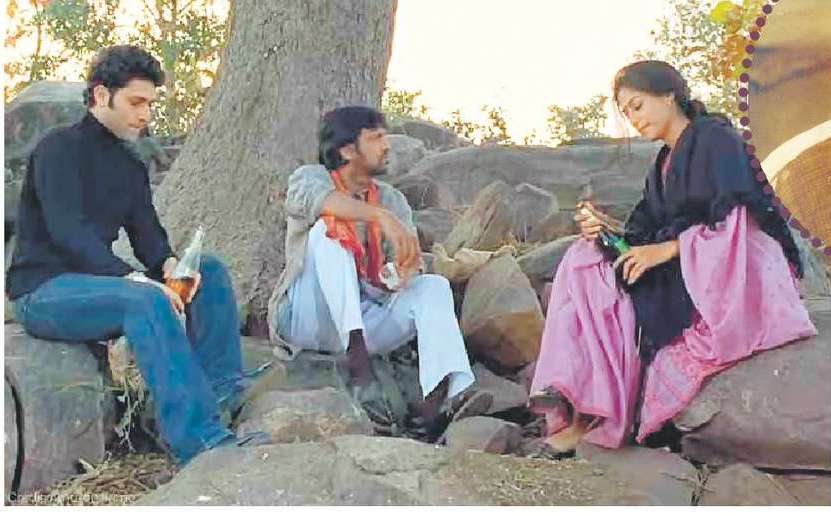
As Hazaaron Khwaishein Aisi (HKA) clocks 20 years, writer-director Sudhir Mishra reflects on its cult status now
Deep Saxena (HINDUSTAN TIMES; April 16, 2025)
Starring Kay Kay Menon, Chitrangda Singh, and Shiney Ahuja, Hazaaron Khwaishein Aisi (2005) was a semi-hit but garnered widespread love and acclaim over the years. Dismissing rumours of a remake, Sudhir Mishra, who served as both director and writer, says that a sequel could be worked out.
A big screen viewing again?
It is the time of re-releases, and Sudhir shares that there were talks about HKA, too, getting a re-release before the death of producer Pritish Nandy: “It’s surely in consideration. HKA was released without PR and was a minor hit. (But) the kind of viewership it got later is weird!”
‘Kharab nahin kar sakte’
The filmmaker feels that HKA is no longer his film: “Over the years, the audience made it their own.” He is also asked about a possible sequel or remake wherever he goes and shares, “A sequel can be done as the story of the three characters can move on. But, nothing should not be done just for the sake of it! If something comes to mind, it will be, but I can’t spoil the memory of the film – kharab nahin kar sakte.”
The biggest award
“The film was rejected by the National Award jury headed by (filmmaker) Basu Chatterjee. The industry thought that it would be sent for the Academy Awards but lost to Paheli (2005). But HKA went to several festivals and won awards all over,” the filmmaker shares, adding “The test of a film is that it has meaning for its audience across time and keeps finding other audience. HKA does. That is the biggest award!”
Fresh faces
Sudhir was certain about casting fresh faces for the film. He recalls how, Swanand Kirkire, who wrote and sang Bavra Mann and also appeared as a villager in the film, auditioned hundreds of actors for the lead roles.
“I had already cast someone for Shiney’s role, who is still very angry with me. But then, Zoya (Akhtar, filmmaker) sent Shiney. I originally tested him for Kay Kay’s role but changed it... Chitrangada was going to catch a flight when I called her... The only criteria was no known faces,” he recalls.
Pritish Nandy asked me for a sequel to Hazaaron Khwaishein Aisi-Sudhir Mishra
9:08 AM
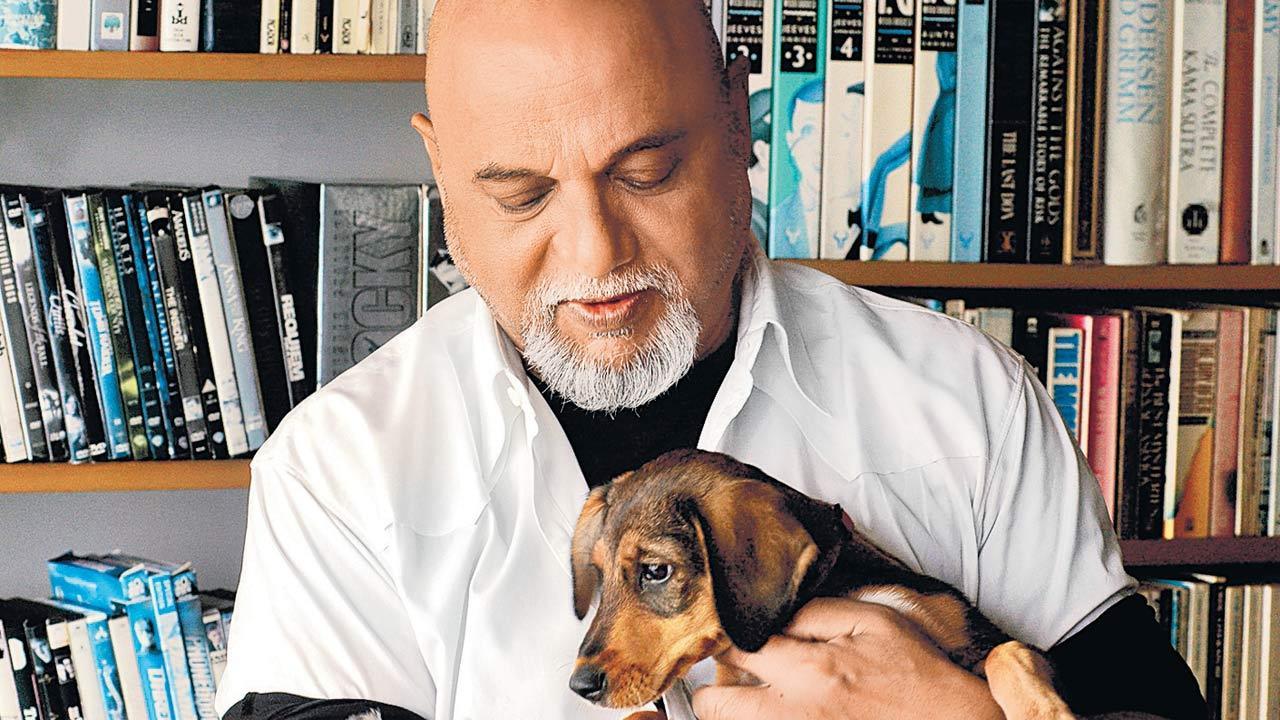
Director Sudhir Mishra on the man who made his Hazaaron Khwaishein possible
Sudhir Mishra (MID-DAY; January 10, 2025)
“You seem stressed”, a voice next to me half-whispered into my ear. I must’ve been crying or something. I was very stressed. I turned around and through my tears, I saw a blurred face of a man, who I recognized to be Pritish Nandy.
We were on a flight to Delhi, and the funding for my film had just fallen through. That film was Twist With Destiny, which would later be known as Hazaaron Khwaishein Aisi. The guy, who was funding me, told me to f*** off, because it was too obtuse, too unlike anything else, too political, and not political enough, where the main girl character was a kind of a sl**.
“Who’s going to sympathize with a bitch like that,” Money Man had said. I turned to look at Pritish again, and trying to get a hold of myself, I told him I was trying to make a film. And now that Money Man had said no, I’ll be unable to make it.
He looked at me, and smiled. Of course, I knew Pritish: the publisher and editor of The Times of India group, and that he had taken over the Illustrated Weekly magazine from the hands of Khushwant Singh!
He had done a lot of famous interviews with Mr Patnaik, the chief minister of Orissa, at the time. The interviews had almost toppled his ministry! I knew that the Delhi circles were quite upset with him. I knew that he didn’t give a damn.
I also knew that he had taken over the Sunday Observer magazine and then left it again! Rumours were that he had started a production company, but there were too many rumours in Mumbai, and we seldom took everything seriously.
I must’ve stared at him blankly, because I didn’t know how to reply when he suddenly asked me what the film was about. Anyway, I was going to spend two hours with the man [on the flight], and he had bothered to ask. My gut instinct told me that he’d get the film, creatively.
I sort of gave him a 15-minute narration. There was a long pause, and he told me “Come to my office tomorrow. I’ll give you the money.” That’s exactly how Hazaaron began.
We met the next day, I signed the contract in a couple of days. He never asked me what the cast was. I showed him pictures of the people I was casting. 40 per cent of the money was supposed to come from France, in kind. This came to us in the form of the DoP, the editor, and the sound designer.
Everyone else from India was new. The actors Shiney Ahuja, Chitrangda Singh were absolutely fresh faces and while KK had done some work, it was still initial days for him. Shantanu Moitra was the music director nobody knew at the time. Swanand Kirkire happened to be my associate director and he would go on to write the songs. He was also the main casting director.
Pritish never said much. He never talked about the film, but talked around it. He was very respectful to us as filmmakers, and very generously tried to tell us things around the subject-matter of the film—in the hope that some things would land, be understood and therefore, become part of the film.
In those conversations, I understood how deeply he knew about those times. There was also a lament inside him for what was changing. There was this Radical Kolkata interacting with the Cosmopolitan Kolkata. The Radical Kolkata was also the product of the Cosmopolitan Kolkata, and the various fissures tearing apart Bengal then.
Pritish Nandy was a product of the Kolkata of that time, and he carried that with him wherever he went. Sometimes, I think, you could feel the loss in his poems, although he never directly talked about them.
Another great thing about Pritish was that he never imposed his power as producer. When he didn’t like something, he never issued instructions. Instead, he gave you many options, of which you could take one, or many. There was never any insistence from his side. But the depth and force of his arguments were so great that you often incorporated his understanding of things into your film.
One day he called me and said, “Your film is about my time, but then it should also be about any time.” For him, the ’60s were also visible in the ’70s; and so was a yearning for the future.
“So, your film should indicate the time period subtly, but not constantly thrust it in the audience’s face. Everyone should not have sideburns. Not everyone should wear a bell bottom, and so on.”
I thought it was a sharp observation and something that I implemented. As a result, Hazaaron became about the people, and the Emergency became its backdrop, and therefore, now it’s not only about the young people of that time, but about the young people and their passions in any time period.
Another sharp memory. I was going to the shoot one day, and he called me and said, “You know, Sudhir. Your title ‘Twist With Destiny’ doesn’t do justice to the film. So, change it, but please don’t give me an English one. It’s an Indian film. Give me a title, which doesn’t just appeal to the anglicized set, but to everyone.”
Five minutes later, I asked him if we can call it ‘Hazaaron Khwaishein Aisi’. He immediately said yes, and put the phone down.
When Hazaaron didn’t release for a long time I was quite upset and he said to me, “I let you make the film you wanted to, right?” Now, let me put it in front of the audience in a way that the audience deserves, and he did.
Hazaaron, in some strange way, in the way he marketed it [though not everyone agreed] became a silent, cult hit, and that has a lot to do with Pritish.
Then we made Chameli. During that time, I met his two lovely, young daughters. He said, “I used to hate them, when they were children. But when they grew up to be bright, intelligent children, I fell in love with them.” You wouldn’t think so, when you met a man like Pritish. But he really adored his children.
I often met him later… We were going to do another film, but it didn’t work out. He called me, and we met again. He asked me for a sequel to Hazaaron. It’s one of my regrets that I couldn’t come up with a worthy sequel for Hazaaron.
We were supposed to meet this month and over a cup of tea, talk about life and cinema. That too is one regret.
Imagine Chameli without Kareena Kapoor's face; A R Rahman was a co writer in Lagaan-Sudhir Mishra
7:49 AM
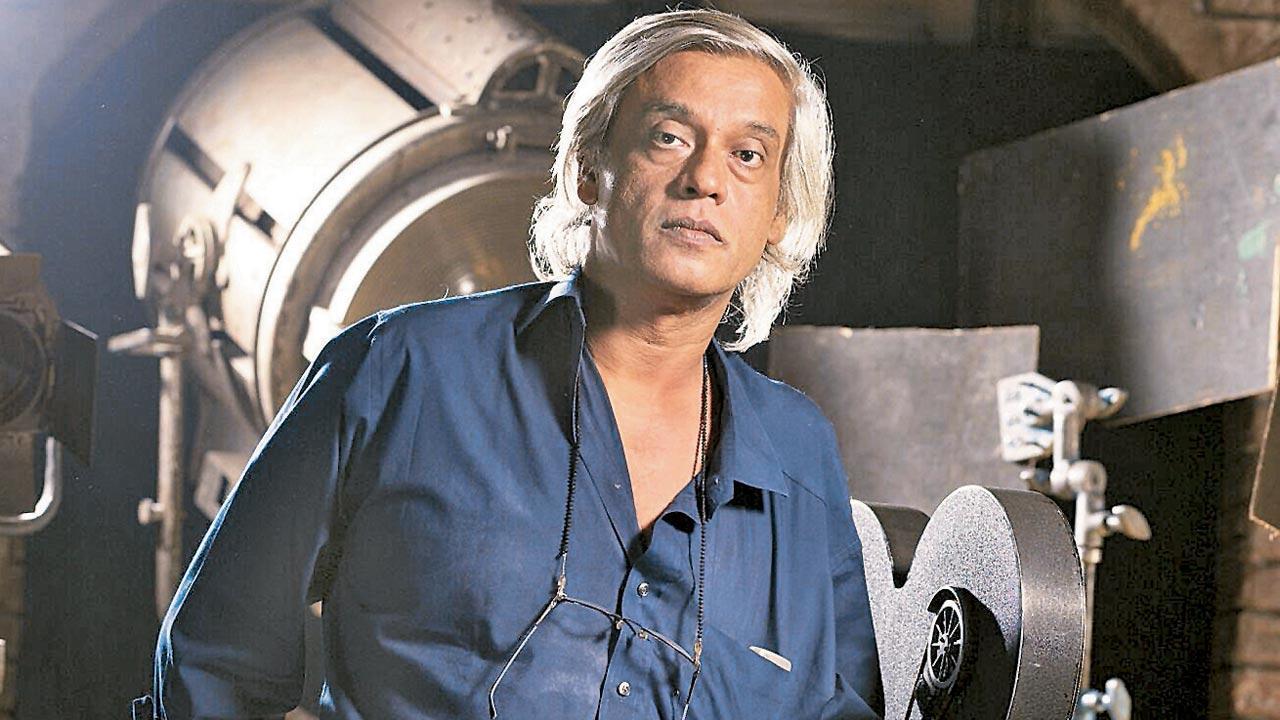
Niharika Lal (BANGALORE TIMES; November 8, 2024)
Sudhir Mishra sees filmmaking as a constant process of rewriting. But, he insists that filmmaking is not only a director’s medium. “Actors are co-writers of the film. Every actor has a different process, and the director’s job is to follow their process,” he says. In a recent interview, the filmmaker opened up about the making of Tanaav Season 2, his love for long-form storytelling, how he connected with Kashmir, and what it’s been like working with actors throughout his career.
‘WHAT’S THE POINT OF ACTORS IF EVERYTHING IS PRE-WRITTEN’
Sudhir Mishra tells us, “I consider cinema a constant process of rewriting. You rewrite with locations and with the actors, otherwise, what’s the point of actors when everything is pre-written? Imagine Hazaaron Khwaishein Aisi without Chitrangda Singh’s face, or Chameli without Kareena Kapoor, or Serious Men without Nawazuddin Siddiqui, Yeh Saali Zindagi without Irrfan Jhan, or Dharavi without Om Puri and Shabana Azmi. You can’t – they’re co-writers.”
He adds, “Then, the camera takes its position, the location speaks, and you gather all that material and sit with the editor. The film you imagined may not be there, so you try to find it. You add music – take A R Rahman’s score in Lagaan. Put another piece and the film changes. So, for me, Rahman is a co-writer of Lagaan.”
‘THE FILM I MAKE SHOULD IMPACT ME’
For Mishra, discovering the film is the aim of making a film. He says, “When I make a film, I should learn something I didn’t know before. The film should impact me – that’s the fun, the excitement, the therapy.”
Sudhir Mishra says all his films have surprised him – sometimes for the better, sometimes for the worse. “You can’t say it’s not the cinematographer’s medium – then why do you hire him? The director is a bit like an architect or a designer of the overall film. A director is like a conductor of an orchestra. Sometimes he writes the score and also conducts it,” he adds.
‘After making Tanaav, I understand Kashmir better’
About making Tanaav and shooting in Kashmir, he says, “I just love Kashmiris. They are really compassionate, warm, but also very sad. So, you have to work with that rhythm. I tried to bring out the human aspect (in the show). After making Tanaav, I understand Kashmir better.”
Talking about films on Kashmir and how he managed to avoid any controversies, Mishra says, “Most films about Kashmir are made by outsiders, and many of them don’t have a deep enough connection to the place. If your purpose is not to offend, and you approach things without bias – seeing them as they are – no one gets offended. If you’re not a sensationalist, not pretending to be the final word on anything, not strutting around like someone who thinks they know everything, there’s no issue.”
--------------------------------------------
About working with Rajat Kapoor, the filmmaker says, “You just have to indicate the character to Rajat and he will bring himself to it”
--------------------------------------------
Talking about Irrfan, Sudhir Mishra says, “He knew the character and was more interested in ensuring the entire scene works, because if the scene worked, he worked”
If you don’t make difficult films, you’ll have a dumb audience, a dumb voter-Sudhir Mishra
8:12 AM
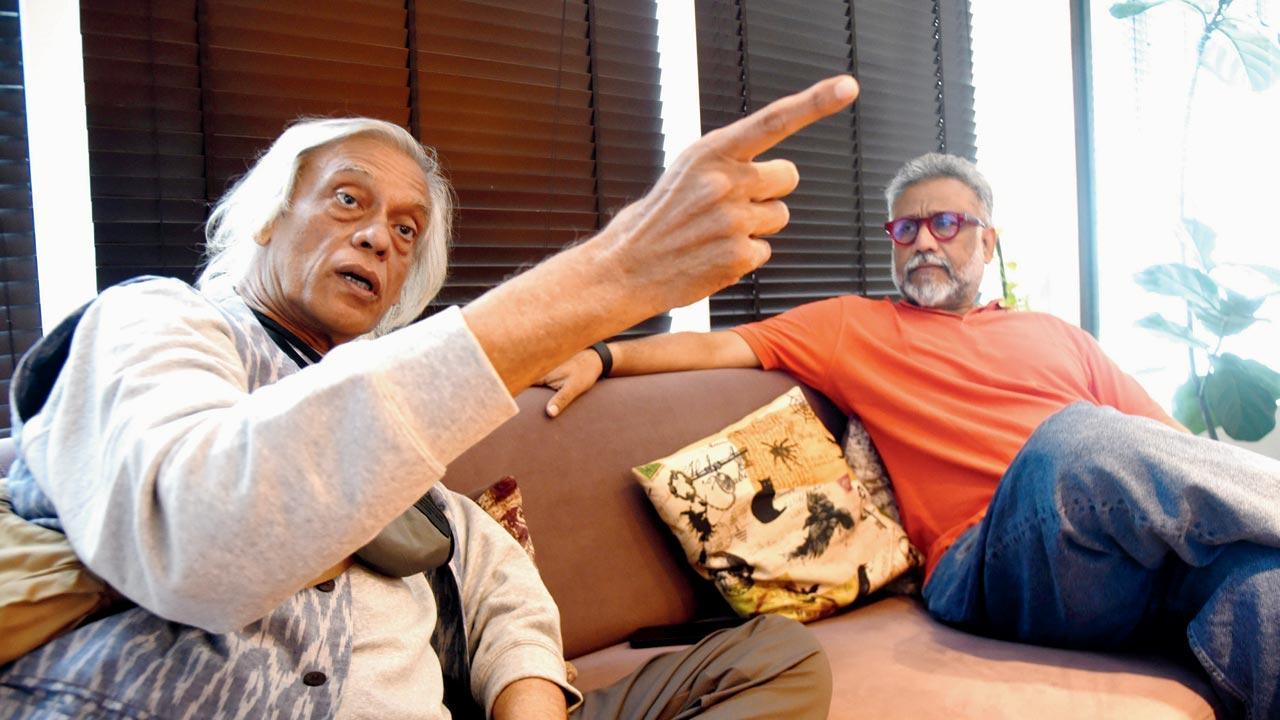
Sudhir Mishra and Anubhav Sinha, friends and collaborators on last week’s political thriller that chases the life of a rumour, on why they don’t waste time on apprehensions
Jane Borges (MID-DAY; May 14, 2023)
The day we visit Sterling theatre in Fort for an 8 pm show of Sudhir Mishra’s Afwaah, #LoveJihad has been trending largely thanks to the week’s other controversial release, The Kerala Story. It tells the story about a group of women from the southern state who are converted to Islam and forced to join the Islamic State of Iraq and Syria (ISIS). Mishra’s film, a plausible antithesis to this rhetoric, appears light years away from this shor sharaba.
Afwaah is not unbothered, though. When we walk out of the cinema, we realise that it’s deeply invested in the great affliction of our times—the boom and doom of virality and the nature of communal propaganda. With characters caught in the thick of the white noise on the web, the film cleverly chooses to play spectator instead of taking the moral high ground as commentator. “Here’s a town. Let’s witness the chaos,” it seems to say.
Set in a conservative pocket in Rajasthan, the plot tracks the insincere and raving-mad aspirations of right-wing politician Vicky Bana (Sumeet Vyas), whose chicanery forces his outraged bride-to-be Nivedita Singh (Bhumi Pednekar) to run away from home—she won’t marry a bigot. This fuels a night of violence and bloodbath. Wedged in this kerfuffle is the suave Rahab Ahmed (Nawazuddin Siddiqui), who is on his way to a tony book festival where his wife is a participant, and whose only fault is wanting to rid himself of the guilt of a lie he has carried far too long. It’s what—we will later learn—compels him to save Nivedita from the goons set loose by her fiancé. It’s a trap, and for a man, who doesn’t wear religion on his sleeve, but whose identity now embroils him in a “Love Jihad” controversy.
“He is being hunted for who he is not.” The audience is pulled into a night of epic proportions. “A lot of people wanted me to remake Iss Raat Ki Subah Nahin…,” says Sudhir Mishra of his iconic 1996 thriller that spans an entire night, explaining the genesis of his latest all-nighter, when we meet him days after its release. Mishra is joined by friend and Afwaah’s producer Anubhav Sinha, “…But you can’t go back to your youth, and remake a film just like that.”
The idea for Afwaah “was all over us. You just had to have your ear to the ground”. “But what interested me, and what I think the critics have not got…” says Mishra, asking us if he can be “a bit arrogant” “…is that people see films only at the surface.”
“Afwaah is not really about the rumour that’s outside,” he says of the political thriller that most critics have called a cautionary tale about false narratives infesting social media. “Protagonist Rahab is also spreading a rumour about himself, and the bubble he is living in,” says Mishra, who has written and directed the film, “The film is not about what makes headlines, but what happens behind those headlines.”
Mishra’s characters are layered. We see spurts of goodness, even in evil. Chandan, a character played to perfection by Sharib Hashmi, believes he is Vichy Bana’s wingman; he makes one wrong move and has everyone baying for his blood, including Bana, who is ruthless in his chase. “Chandan is both, the victim and the antagonist. The film tries to understand the lyncher as much as it understands the lynched.”
None of his motivations as a storyteller, Mishra feels, have been understood by the critics. His disappointment is evident. But that’s not stopping him. “If you don’t make difficult films, you will have a dumb audience and a dumb voter… and then God help you.”
Sinha, who has been listening quietly, has himself long moved away from spinning box office juggernauts, to engage with content that forces the viewer to think. Be it the patriarchy-defying Thappad (2020) or the more recent Bheed, which documented the painful and horrifying migrant exodus during the pandemic.
Working with Mishra was an important part of this journey, he says. “Over the last few years, we bounced ideas off each other. But every film has its destiny, some stories get made quickly, some take longer. This [Afwaah] was the child that got lucky.”
Having said that, Sinha says, the content of the film was not as important, as “wanting to make a film with Sudhir bhai”. “He is one of the first filmmakers I met when I came to Mumbai. On my first night here, I had the privilege of having a drink with him and Javed saab… he used to drink back then,” Sinha smiles.
“I wanted to make Afwaah to learn something from him. The rest—you write a film, you cast for it, you shoot and edit—is all mechanics. What’s important to know is why you are making the film that you are.”
Movies like Afwaah that don’t endeavor to entertain the audience in a manner that they lose themselves, he adds, are difficult to make and watch. “What has become even more difficult [to determine] is which film has the real audience. All those numbers [box office] are not trustworthy. They are not truthful anymore. Unfortunately, the success and failure of a film is only defined by them,” says Sinha, “But what about the other number, the number of years a film will live on a shelf? Or the number of times, people will go back to it [during their lifetime].”
Film consumption is diverse. “It is meant for weekends, theatres, satellite channels, OTT platforms and for times to come. Of these, the biggest parameter, according to me, is the times to come,” thinks Sinha.
For Mishra, making a film is still a discovery. A mathematician’s son, he didn’t go to film school. He says he learnt from his father that you start with a hypothesis, and then you go about proving it. “I make a film to learn. I wanted to learn about Rahab... there’s a lie he has been telling.”
Mishra’s protagonist is not a hero in the true sense then. He doesn’t want to die, because he thinks it would be a useless death. “When did you last hear a hero say that?” Mishra asks.
“One journalist called me after seeing the film, saying it reminded her of George Bernard Shaw’s Arms And The Man, where there’s a character called [Captain] Bluntschli who says, ‘martyrdom sucks’. I suddenly remembered that Bluntschli was the first role I played in my life, on stage. So, what influences you, you sometimes discover through the process of making a film. I discover myself [when I make a film].”
That it is increasingly becoming difficult to make honest films that hold a mirror to society, is not lost on them. “I would be lying if I said that there wasn’t any apprehension,” says Mishra. “But I don’t think it ever stopped Anubhav from wanting to produce it, or me from making it. There is this dynamic, democratic society called India, and we are participating in it. We should be allowed to have our say. That’s what we expect.”
Mishra confesses that his affiliation is to his art, not any political party. His 2004 political drama, Hazaaron Khwaishein Aisi, was set against the Emergency of 1975, and released when the Congress was in government. He is also not one to shy away from engaging in conversation with filmmakers whose films contrast his own.
We were surprised when we stumbled on a recent two-hour-long interview where Mishra engages with The Kashmir Files director Vivek Agnihotri for his YouTube channel, I Am Buddha. Here, Agnihotri, who is an unapologetic right-wing filmmaker, credits Mishra for inspiring him after Hazaaron... to tell the stories he believed in. No hard feelings, none at all.
The hope is that more people will show courage. Even actors, who are often hesitant to take on daring scripts. “See, the big stars won’t come to me anyway, because I write frail characters,” claims Mishra. “There’s all of Indian cinema. And then, there’s my cinema.”
The former, he says, worships the hero, while he is invested in their failure. “That’s why it is more difficult to make my kind of films. The heroes don’t like this. It upsets their testosterone-ridden, fake machoism… they are simply pretending to be sensitive to women. None of them are.”
Sinha thinks female actors are stronger in conviction and the risk that they will take. He adds that this also stems from the fact that we do not ascribe the success of the film to its women. “A lot of time it’s they who are responsible for it, though,” says Sinha.
Waheeda Rehman, for instance, says the duo, was “better than all the men of her time”. “She had more skillsets than any of the actors.” Sinha adds, “Even today, the number of good female actors is way higher than the good male actors. They are gutsier, and they are far more disciplined…”
Mishra adds, “I come from the parallel cinema [era] when we were considered a viral infection. Today, I feel that there are younger actors who are far more genuinely appreciative of the films I make. Whether they work in my film or not is another thing.”
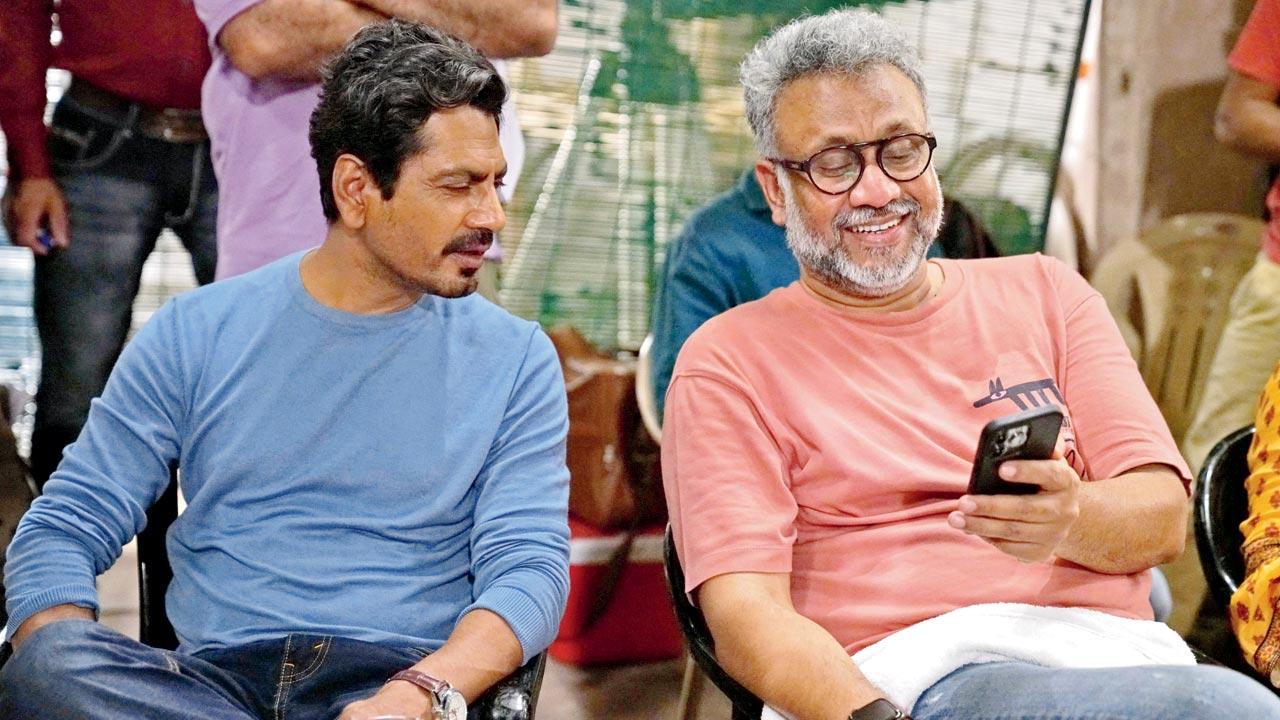
Sinha and Nawazuddin Siddiqui, the protagonist of Afwaah
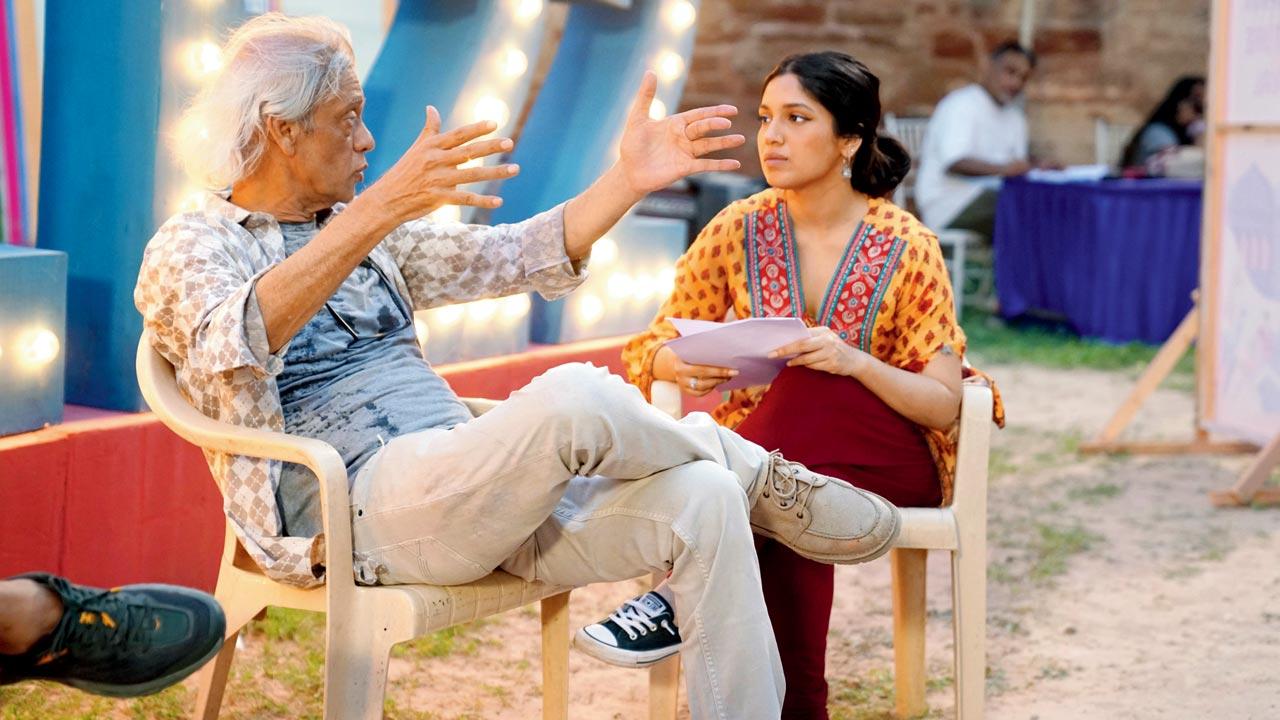
Mishra with actor Bhumi Pednekar, who plays a political heiress
Every director needs a collaborator like Shiv Subrahmanyam-Sudhir Mishra
7:35 AM
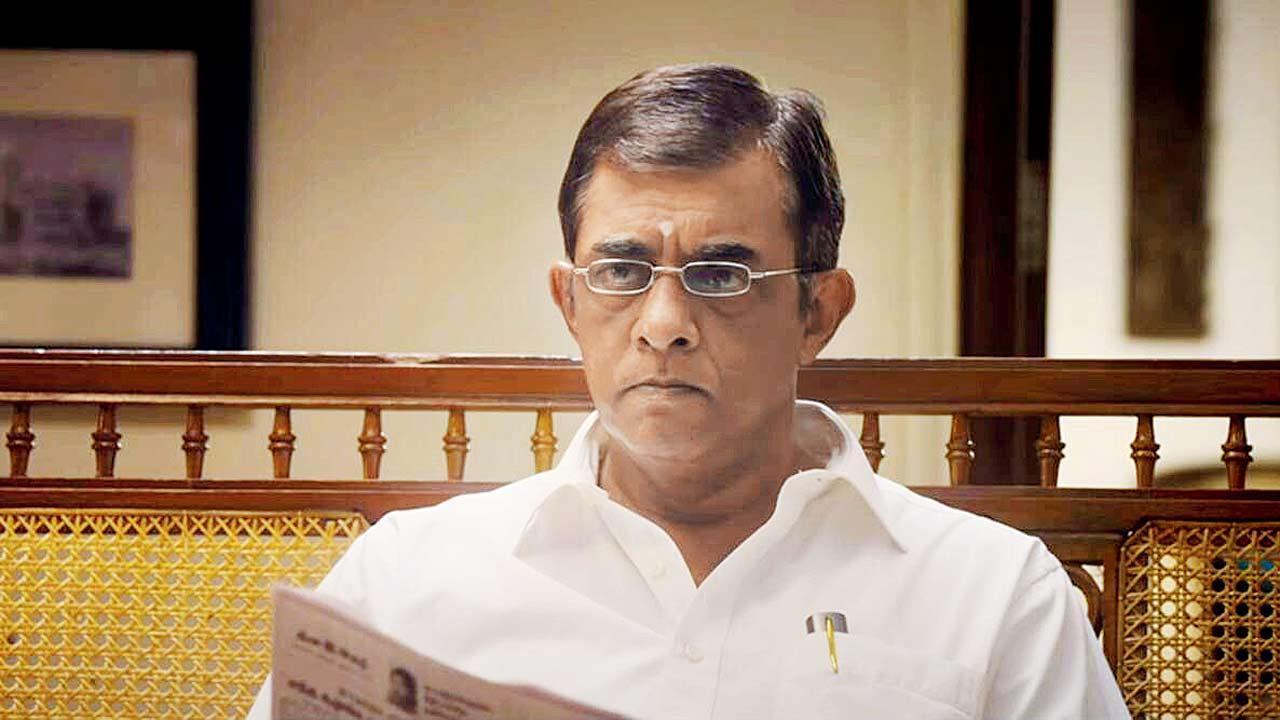
Sudhir Mishra remembers Shiv Subrahmanyam, his brutally honest friend who always made his craft better
As told to Upala KBR (MID-DAY; April 12, 2022)
I really loved Shiv; at one point, he was very close to me. I remember this bright, young man who came to me [at] Naseeruddin Shah’s [behest]. This was in 1983, at the time of the making of Saeed Mirza’s Mohan Joshi Hazir Ho. I was the chief assistant on the sets. Shiv was a writer, and being in theatre, he was part of Naseer’s coterie. Naseer asked me to look after Shiv and show him around.
We would get into heated arguments over Brecht and Shaw, and other poets. He co-wrote Is Raat Ki Subah Nahin, Chameli and Hazaaron Khwaishein Aisi, with me. We worked on Hazaaron Khwaishein Aisi for six months, and Shiv, Swanand Kirkire and I wrote Chameli in 15 days. I called Shiv and we worked together night and day. Shiv’s contribution to Chameli cannot be overlooked. Chameli was our last piece of writing together. We were really close at one point of time. I don’t think I have spent that much time with somebody.
I found him to be an interesting collaborator who could tell me where I was going wrong. Every director needs such a collaborator. Shiv was fearless — he could say anything to anyone, [and couldn’t] take rubbish from anyone. I was quite afraid of crossing Shiv’s path. If he was really angry with you, there would be a look in his eyes. I can imagine that if someone upset him, he could [reject their proposal], even if he was getting a lot of money.
Shiv had a terrific, biting, and wicked sense of humour. All the work that we did together had an element of black comedy. We shared a similar sense of humour. Creatively, we were like brothers. I would write one line, and he could finish the scene. His sense of humour was self-deprecatory. I remember him as a guy with a fine mind; he was a passionate theatre person. Shiv and I met every day, and I really depended on his views on everything. His plays must be reprinted. Theatre was where his heart was. It is the most difficult medium to be in, and involves a lot of struggle.
We lose sight of our dear ones as life gets messy. Shiv and I lost each other during the pandemic. I got involved with my problems as my father passed away. I had to look after my mother, and had to focus on earning money. During the lockdown we lost touch; I never knew the suffering he was enduring. He was too proud to say anything. It is terrible. The last time I met him was in January 2020, when he was coming out of the hospital with his [late] son, and I was taking my dad there. We didn’t know that we would never meet again. I was unaware of what was going on in his mind, in the last couple of years.
I miss him a lot… It’s a pity that there won’t be another subject that I can collaborate with Shiv on. He was contemporary, supportive, yet independent-minded, and could always tell me the truth. Shiv was compelled to say what was on his mind.
Nawazuddin Siddiqui reminds me of Om Puri-Sudhir Mishra
8:02 AM

Director Sudhir Mishra heaps praise on Nawazuddin Siddiqui as they collaborate for the first time on Serious Men
Shaheen Parkar (MID-DAY; September 29, 2020)
A decade after the satire highlighted the inherent caste divide in our society, Manu Joseph's novel Serious Men is being brought alive on the screen by Nawazuddin Siddiqui. The film, directed by Sudhir Mishra, revolves around a Dalit slum-dweller Ayyan Mani who develops an outrageous plan to portray his son as a math wiz, in a bid to improve his prospects.
Mishra, who had read the book when it was first published in 2010, devoured it again when he was approached to direct the film. "It is difficult to turn a book into a movie. I can't mimic the author. We took the characters, the theme and then adapted it for the screen, taking a few cinematic liberties," says the director, who shot the film at BDD chawls in Worli. He reveals that Joseph was part of the creative process and was elated to find the perfect Ayyan Mani in Siddiqui.
The Netflix release marks the veteran filmmaker's first collaboration with Siddiqui. His deep admiration for the actor is evident as he says, "I have watched all his films. Nawaz reminds me of Om Puri, be it the ease with which he approaches the role or the fluency with which he merges into the story." Mishra had teamed up with the late actor in Dharavi (1992). "Having worked with actors of the parallel cinema movement, I can see the similarity between Nawaz and them. As an actor, he does not try to be clever. It's an almost invisible performance. But when you see it as a whole, it turns out to be an effective performance," adds the director.

I wish web series had appeared 20 years ago, because I would have done much more work-Sudhir Mishra
8:23 AM

Thirty years ago, the digital space would have been a godsend for Sudhir Mishra, when he was making films like Dharavi, Is Raat Ki Subah Nahin, and Hazaaron Khwaishein Aisi. As he makes his web debut with Hostages, he says his best is yet to come
Ekta Mohta (MID-DAY; June 9, 2019)
As film debuts go, no one got a better start than Sudhir Mishra. While an apprentice on Vidhu Vinod Chopra's Sazaye Maut in 1981, he met Kundan Shah, a production manager. Distance can determine friendships in Mumbai, and as luck would have it, Shah lived in Sion, Mishra in Sion Koliwada. Shah first become his drinking buddy, then his writing partner, and then his director. Between several bottles of rum and shared rides on BEST, they wrote Jaane Bhi Do Yaaro (1983). "I don't know why anybody would tell a 22-year-old kid to write," Mishra says. "I had not the foggiest notion of writing a script. I had just seen a lot of cinema, vaguely assisted on one film, I knew Hindi and had a background in theatre from Delhi. So, it was just him provoking me. I must have done something because he gave me the credit."
With his silver hair combed into a neat hairstyle, his 6'4 frame stretched on an armchair, while chewing gum and constantly adjusting his crooked glasses over large eyes, Mishra looks like a mad scientist. In a commander's voice, occasionally flashing a blinding smile, he says, "From now on, I'm going to attempt to make another 10 great films. I think I still have a good 15 years left." He hasn't done too bad so far. In the last three decades, he has written and directed Dharavi, Is Raat Ki Subah Nahin, Hazaaron Khwaishein Aisi, Khoya Khoya Chand and Yeh Saali Zindagi. Not one of them was a money-spinner, but all of them have a long shelf life. Mishra was making movies for the web, way before the web was born. "I wish it had appeared 20 years ago, because I would have done much more work. The web series world is not dependent on a hit or an immediate recovery. So, you are making a thing that lasts. It's there forever on some web space. It's like a novel on the shelf. Somebody may read A Hundred Years of Solitude today. Some kid will see Breaking Bad many years later, and that's great."
This month, Mishra made his web debut with Hostages, on Hotstar, a thriller with Tisca Chopra and Ronit Roy. An adaptation of an Israeli show, it isn't his best work, but a sort-of Take 1. "I liked the idea of the series and the two main protagonists. I also wanted to get into the web space and understand the grammar, telling a story over 10 episodes. My job was to rewrite and adapt it for the screen here. So, I didn't mimic a shot or how the sound is played. I tried to make it mine in shooting, edit and post. All the adaptation flaws, if any, are mine."
Mishra has fallen for the medium because, "The web series is a kind of long form cinema, with the contours of a novel. Anyway, my films have a novelistic structure. I veer naturally towards the telling of side stories, of minor characters, their beginning and ends, giving them some kind of a life." So, he's currently working on three scripts. Manu Joseph's Serious Men, which he's adapting for Netflix with Nawazuddin Siddiqui as lead, is currently in its 13th draft. For the past year, he's been writing a series called Taang Kiski Hai for Applause Entertainment. "It's a black comedy, [set] in a place that god forgot. It's about four days in the life of a village, where a cut leg is found on the tracks. The town goes a bit haywire." And, for the last three years, along with a team of five writers and a script doctor, he's been shaping a series called The Nawab, The Nautch Girl And The East India Company, a fictional look at "how India was won." He says, "The right stories, you have to allow them to find you. I think this is one that did because I'm interested in history. It's probably the best thing that I've done. After this, they'll remember me as the guy who did [this series]. Till now, they say he's the guy who made Hazaaron."
As the guy who made Hazaaron, Mishra identifies most with Geeta, Chitrangada Singh's character. "I'm not a fixer; I'm not a Naxal. Manu Joseph wrote a piece on me called 'The Collector of Frail Men'. The men in my work are little confused, little weak. They want to die because of their mistakes. I like telling stories about women, because women accept frailty much easier. The struggle inside women, of the necessity of what you have to do, when you are living in a world that doesn't allow you to express yourself. I'm not good at stories that lead you to a pot of gold at the end of the rainbow. I like to leave stories somewhere in between. Like Hazaaron. At the end of it, you are left holding each other's hand and life continues."
It's a lesson he learnt in his debut film. "In its essence, Jaane Bhi was a deeply pessimistic story. Kundan couldn't give a happy end. The essential message was that innocence is always violated. When people ask, 'Where are you from?' Some people say, 'I'm from a film institute,' but I say, 'I'm from Jaane Bhi Do Yaaro,' because that's where I learned everything. It was a crash course with the best. I sometimes still think about it and say, 'How lucky can you get?'"

Ronit Roy in a scene from Hostages, currently on Hotstar
When a woman stands up for herself, she is instantly labelled bad-Sudhir Mishra
8:23 AM

BOMBAY TIMES (April 26, 2018)
Sudhir Mishra finds women, who are afraid of defying conventions and breaking stereotypes, boring. Which is why, you will never find such characters in his films. On the contrary, the women in Mishra’s films are as aggressive as the men, if not more. With his latest feature, Daas Dev, which offers a contemporary and political twist on Sarat Chandra Chattopadhyay’s Devdas, he presents Paro and Chandramukhi in an all-new light. They come with more than 50 shades of grey.
 Mishra says, “When a woman stands on her own, when she stands up for herself or when she becomes a little competitive or aggressive she’s instantly labelled bad. Bad is used as a cliché. The film industry works with these tropes.” The feisty women in his film are hungry for power and cannot be tamed. “The women of Daas Dev are badass,” he says. The maverick filmmaker presents his views on the two complex and layered women who make the word ‘bad’ seem all too cool.
 ‘PARO IS NEITHER COY NOR HELPLESS’
Paro for me is not the Paro of Sarat Chandra Chattopadhyay’s novel. So I apologise for not allowing her to be trapped behind a big gate inside her husband’s house. My Paro is a modern, spunky, interesting woman who fights with the weapons she has and in the end confronts Dev. Paro hails from a family which is associated with Dev’s family in the political arena, but lower in rank. The young couple gets embroiled in the dynastic ambitions of their family and in this situation Paro rises to the occasion.
Paro is neither coy nor helpless. She knows her mind better than her heart. This makes her vulnerable and she is almost not aware of it. This is also what makes Paro of Daas Dev so endearing. You almost want to hold her and tell her that it will all be fine.
‘CHANDNI STRADDLES BETWEEN POWER AND LONGING’
Some might call Chandni a woman with questionable ethics, but in my version she is as close to Chandramukhi as she can get in this day and age. A money handler, fixer, manipulator, she is the one who services the political forces of our time. However, she has the essence of Chandramukhi and also the same blind spot, the same fatal flaw — her love for Dev. However, this does not prevent her from looking out for her own interests while confronting Dev’s weaknesses and aiding him to rise above himself.
The ease with which Chandni straddles between power politics and longing for Dev is magic. She is like the light at the end of the dark tunnel which Dev could have.
Kashmiri pandits are sometimes more political than they should be-Rahul Bhat
8:29 AM

Rachit Gupta (BOMBAY TIMES; April 15, 2018)
Sudhir Mishra and Rahul Bhat are perfect examples of a filmmaker and an actor being distinctly different, yet seamlessly compatible. While Mishra made his foray into filmmaking during the onset of parallel movies in the ’80s, Rahul burst onto the scene in the new millennium. Yet, the two share a unique rapport. Both love politics and view cinema as a medium of art and not just mart. No surprises then, that they have joined hands to make DaasDev. The film, they say, is a “reverse engineered version” of Devdas. In an exclusive chat with BT, the two mercurial artistes trash out their ideals of cinema. Excerpts…
Sudhir Mishra calls you a chameleon. How do you react to that, Rahul?
Sudhir Mishra: Once you get to know him, you’ll find it hard to believe that he played a loser in Ugly, because he is very different in real life. I think his character in DaasDev is closer to his real self — a slightly arrogant person with a devil-may-care attitude.
Rahul Bhat: Achcha, chameleon ke saath saath, arrogant bhi bol diya (laughs!).
SM: Isse toh aata hi nahi sahi baat bolna. Ye kucch bhi, kahin bhi bol deta hai. We’ll be at a party together, aur yeh kisi bhi bade aadmi ko kuchh bhi bol dega. He can only interact with people like us, people who don’t strut around thinking they are Gods. Unfortunately, chaar filmein chal jaati hai toh, most people in the industry think that they are Gods.
RB: I’ve been like this since childhood. I can’t change myself in real life, but I am more than willing to do so for a film. That’s my job as an actor. My eccentricities as a person may result in me losing out on work, but then, I get to work with acclaimed filmmakers like Sudhir sir, Anurag Kashyap and Prakash Jha sir. They don’t give two hoots about my behaviour, and appreciate me as an actor. What more can I ask for?
Which quality of Rahul as an actor has impressed you the most?
SM: He just gives himself to the part. The best actors are the most transparent ones, they don’t obstruct the storytelling process. In our industry, we like people who do drama. So, the film takes a pause and you admire the actor’s histrionics on the screen. The hallmark of good actors is that you realise that they did a fabulous job only after the film is over. Rahul has that ability, he’s an actor who can work selflessly for the film. Another common scenario in our films is the hero saying, ‘Maine heroine ko bachaya, maine gaadi chalayi, main pahad pe chadha, main bura aadmi nahin ban sakta’... The moment an actor says these things, he ceases to be an actor.
Rahul, you’ve already worked with acclaimed filmmakers like Anurag Kashyap, Prakash Jha and Abhishek Kapoor. How different was Sudhir’s approach towards filmmaking?
RB: Just before Ugly went on floors, I was talking to Anurag and praising him to the skies. He then told me, ‘I would like to see you work with Sudhir Mishra’. He then added that there are directors who help liberate actors. ‘Har actor ka ek dhakkan hota hai. And some filmmakers have the knack of uncorking and setting him free,’ he said. At that point, I couldn’t grasp what he said. But after working with Sudhir sir for about 10 days, Anurag’s words started making sense to me. Now, I’ve learnt to use my craft to its full potential.
Were the two of you apprehensive about comparisons with Sanjay Leela Bhansali’s Devdas and Bimal Roy’s 1955 classic with Dilip Kumar playing the title role? Even Anurag Kashyap did a spin on Devdas with Dev.D...
SM: I have taken the essence of the original novel, i.e. the relationship between Dev and Paro as well as the one between him and Chandramukhi, to a certain extent. However, I have placed them in a totally different context. My film should not be seen as another version of Devdas, it should be treated like a film loosely inspired by Sarat Chandra Chattopadhyay’s novel. I loved Anurag’s version, too. For me, this story is about addiction to power. How Dev becomes obsessed with power and then he liberates himself, encompassing the journey of daas to dev. Similarly, a modern woman like Paro fights injustice, but she too gets addicted to power. Chandni (Chandramukhi) is manipulative and wants to extract something for herself. It’s essentially a story of our times. It’s an observation of the lust for power. In that way, it’s also slightly Shakespearean.
Your films always have a strong undertone of politics and reality. Are they your perennial inspirations?
SM: I’d like to think that all my films talk about something new. I feel Chameli is different from Yeh Saali Zindagi, which is different from Inkaar. I try and put myself in a new situation every time, and make every film like it’s my debut. My attempt is to evoke new reactions and emotions, and in the process, perhaps discover something new about myself. Even I don’t know the kind of film I’ll end up with when I start making it. There’s a reason why I’m not making Hazaron Khwaishein 2 or 3. That’s what most modern filmmakers do — they make the same film over and over again, and just keep camouflaging it.
What were the conversations on the sets of DaasDev about? Love or politics?
SM: Love has a lot to do with politics.
RB: Yeah, love is political.
SM: A lot of things were said, a lot of things that we can’t reveal (laughs!).
RB: A lot of things we shouldn’t reveal (laughs!).
SM: Rahul has suffered politically, as he comes from Kashmir. Given the circumstances they come from, most Kashmiri have strong political views.
RB: Yeah, Kashmiri pandits are sometimes more political than they should be. (laughs!) But I have never wanted to play the card that I am a Kashmiri pandit and that I am a victim of a situation. I am an actor and I belong to Mumbai. I’m more of a Mumbaikar than a Kashmiri pandit.
DaasDev has an ensemble cast of acclaimed actors. Rahul, as an actor, do you view it as a situation of fierce competition? Also, how does a filmmaker control so many actors?
RB: With established and talented actors is always a challenge. You’ve to be on your toes and that’s quite an interesting experience. Ensemble cast ke saath kaam karne mein maza toh bahut aata hai.
SM: Acting is not a wrestling match, all actors share the dais in a film. A good actor will always raise the bar for others and make his co-stars perform better. I believe that it’s a fantastic environment to work in. It can be an enriching experience.
RB: No actor is perfect, be it Naseeruddin Shah, who is my favourite actor, or even Robert De Niro. There’s no actor who was perfect in all the films he did. They are great in some movies and not so good in others. That’s how an actor’s career pans out. Which is why, when people ask me what I look for in a film before signing it, I don’t talk about my co-stars or the script. All I say is that the director should be good. If the director is good, the story will be good, the choice of actors will be good and eventually, the film will also be good.
Who makes or breaks a film? The actors or the director?
RB: Cinema is a director’s medium. No actor can make or break a film. Yes if you’re a star, you have a stronger influence, but that’s because you keep making the same kind of films over and over again.
SM: From the director’s perspective, an actor is very important. Even the smallest actor contributes to a film immensely. In DaasDev, the characters of journalists are played by real journalists, because that’s the only way to ensure authenticity. No actor will be able to fill that space. So, I always keep a mix of actors and non-actors in my films.
RB: There’s a journalist in DaasDev who says, ‘Aisi kaun si davai khayi thi bees saal pehle, jo aapko bees saal purani ghatna yaad aa gayi’. No actor on this planet could say that line the way that guy has said it in the film. He says the line with such nonchalance that only a real journalist can pull it off. Anybody else will just make a fool of themselves.
Do actors and directors share a love-hate relationship?
SM: I love working with good actors, because I can trust them blindly. That’s the reason why I cast Saurabh Shukla in all my films. I know that I can just put him in a scene and he’ll handle it well. At times, I would give the other actors the exact lines that they have to speak. But with Saurabh, I just give him the gist of the scene and let him fill in the gaps. Such actors are the biggest asset for any filmmaker.
RB: What better compliment for an actor than to have the filmmaker say that he can be trusted blindly. But having said that, it’s not easy to work with filmmakers like Anurag and Sudhir sir, because you have no idea what could happen on the set. One day, they’ll just show up with random ideas plucked out of thin air. You’ll have no inkling as to how to react to their demands.
SM: Sometimes, we’re not the nicest people on the set (laughs). Filmmakers are like Jekyll and Hyde. We can suddenly turn into monsters on the sets.
RB: The good thing about working with mercurial filmmakers is that they’re always on the lookout for something new. Filmmakers like Sudhir sir and Anurag are always looking to create magic. They are not the kind of people who will simply shoot a scene, they will keep pushing the envelope till they create something wonderful and magical.

Renu Saluja would never support me if I was wrong; she was more popular than me-Sudhir Mishra
7:47 AM

Renuka Vyavahare (BOMBAY TIMES; March 24, 2018)
 Over the years, Bollywood has seen directors offering a peek into their personal lives through their films. For example, Mahesh Bhatt’s Zakhm and Arth were taken out of the pages of his own life, and are also considered as some of the most moving semi-autobiographical films of Hindi cinema.
Speaking of which, Sudhir Mishra’s upcoming film Swaha reminisces the life and times of his late partner — renowned film editor Renu Saluja. The story revolves around his relationship with her and their last days together before her death in 2000, following a battle with cancer. While Aditi Rao Hydari will be seen essaying the lead role of Saluja, the actor who will play Sudhir, is yet to be cast.
Renu, an FTII (Film and Television Institute of India) alumna and four-time National Award-winning editor for Parinda (1989), Dharavi (1991), Sardar (1993) and Godmother (1999), was revered by filmmakers like Shekhar Kapur, Govind Nihalani, Kundan Shah and Vidhu Vinod Chopra.
Some of her other well-known films include Jaane Bhi Do Yaaro (1983), Kabhi Haan Kabhi Naa (1993), Bandit Queen (1995), Pardes (1997), Rockford (1999) and Hey Ram (2000). Nagesh Kukunoor’s Bollywood Calling and Sudhir’s Calcutta Mail, released in 2003, were her last edited films.
In an exclusive chat with Bombay Times, Sudhir revealed, “I became who I am because of her. I’ve been meaning to make a film on her life for the longest time and I am glad it’s happening now. She was way ahead of her time and one of the most brilliant and compassionate women who I have known. I will be directing the film and have co-written it as well.”
 About the film, he explained, “Towards the end of her life, she started rejecting me and I had to stand by her, no matter what. Those were trying times as she was going through a lot after being diagnosed with cancer. She began introspecting, reexamining her own life as one tends to do towards the end. My film is predominantly about that — from her point of view and in context to our relationship during that period. It compels you to think, ‘Can you stand by a person who wants to push you away?’”
Renu was previously married to filmmaker Vidhu Vinod Chopra. When asked if he, too, will be portrayed in the film, Sudhir said, “There will be references. As an individual, you make certain choices and other relationships are a part of it. She and Vinod continued to be friends and worked together even after they separated. In fact, she was editing Vidhu’s Mission Kashmir before she passed away. Director Rajkumar Hirani eventually completed the film.”
There were reports of Vidhu also planning to make a film on her, many years ago. Speaking of it, Sudhir added, “I had heard about it. If he wants to do it, he should. It’s always interesting to see the other person’s point of view as well. I don’t own her. It’s his right, as they shared a beautiful friendship. Vidhu and I have never had any problems with each other, contrary to speculations. He is a great guy and we were there, together, at her funeral.”
The film will also shed light on Saluja’s fiercely independent nature and her ability to call a spade a spade. Sudhir said, “She wasn’t biased. If I had an argument with someone, she would never support me if I was wrong. She would always do and say what she thought was right. We talk about feminism today, but what she did years ago was empowering for women — making a mark in a field (film editing) that was essentially dominated by men. She was financially independent, more successful, liked and popular than me.”
As far as Aditi Rao Hydari’s casting is concerned, the director reasoned, “I like Aditi as an actor. She lends that soft sensitivity to a character. Renu was best known for two things — her infectious laughter and impromptu singing. She would constantly laugh despite the serious nature of her work and would sing Hindi songs at any given point. Aditi can sing and has that smile as well, so she was the perfect choice. The film is slated to go on floors this year.”
DaasDev is the reverse journey of Devdas-Sudhir Mishra
7:46 AM

DNA (February 2, 2018)
Sudhir Mishra’s DaasDev, which was supposed to open in cinemas on February 16, will now finally release on March 9. With Padmaavat hitting the marquee on January 25, the makers had to postpone the unconventional love story which features Rahul Bhatt, Richa Chadha, and Aditi Rao Hydari. The film, which reprises the fascinating story of Devdas (one of author Sarat Chandra Chatterjee’s most famous works), has a unique contemporary twist to it. Mishra gives us an insight into the movie, which is set against a political backdrop.
Since Padmaavat opened in cinemas on January 25, you moved the release date of DaasDev...
Everybody had to shift their films because suddenly Padmaavat announced their date. We will now hit the marquee on March 9, which is a good date. Hate Story 4 is coming on the same day but there is always place for two movies. We are very excited as we have a good film on our hands.
Tell us a bit about it…
It all started when one of my friends suggested, ‘Why don’t you make Devdas?’ I started working on it with a fellow writer and suddenly things started changing. I began to feel that Hamlet and Devdas were similar stories. Then, the Indian political scenario came in. So, if the original was the story of a man from a noble family who becomes a slave (a Daas) to his addiction, this is like a reverse journey. My film’s hero has the same lineage as Sarat Chandra Chatterjee’s Devdas, but the movie is about how he breaks free at the end. Our view point also includes Paro, who had to stay behind closed doors in the original. In my movie’s second half, she confronts Dev. So, DaasDev explores if love is possible in today’s corrupt times.
It features Rahul Bhatt, Richa Chadha and Aditi Rao Hydari as the lead cast...
I loved Richa’s performances in Oye Lucky! Lucky Oye! (where she had a small part), Gangs of Wasseypur, Fukrey, and Masaan. I always wanted to see her playing a spunky, modern and rooted character. Paro is exactly like that. So, she came to my mind when I was casting for this role. Luckily, she agreed to do the film. Chandramukhi is an independent-minded woman who delivers a fatal blow to Dev. DaasDev, which is about Dev and Paro, is told through Chandramukhi’s point of view. I immediately thought of Aditi, whose first major part was in Yeh Saali Zindagi. I had seen Ugly and really liked Rahul’s (Bhat) acting in it. He has that air of a khandaani man, who is vulnerable but has a natural arrogance.
The ensemble cast is an interesting mix too...
Saurabh (Shukla) is a must in all my films. He plays the antagonist here. Then, there are actors like Vipin Sharma, Vinit Singh, Sohela Kapoor, Deepak Rana and Anil George who had a pivotal role in Ashim Ahluwalia’s Miss Lovely. Anurag Kashyap will also be seen in a special appearance. So, the cast is outstanding.
How is the story relevant in today’s times?
It is set in the present scenario. The characters are modern and the women are independent. They can betray you just as you can betray them, they don’t ask for mercy. Dev is a modern man trying to find his way in this mess as he is the heir to a political legacy. I think it’s very rare that a parallel can be drawn with contemporary politics. The movie is about addiction — power being the most dangerous one. Dev Chauhan, the character of my film, moves from alcohol to power and he discovers that power is a far more lethal addiction.
How come your muse, Chitrangda Singh, is not in this film?
Scripts find their actors. Chitrangda was in Hazaaron Khwaishein Aisi, but she wasn’t there in Khoya Khoya Chand. Why wasn’t this question asked at that time? She may be seen in my another film, if she wants to do it.
Subscribe to:
Posts (Atom)