Showing posts with label South Korea. Show all posts
Showing posts with label South Korea. Show all posts
One of my favourite compliments in Korea is that my face is as small as a fist-Anushka Sen
9:27 AM

Neha Maheshwri (BOMBAY TIMES; September 9, 2026)
Anushka Sen’s long-standing love for K-dramas has now translated into a lead role in one. She has wrapped up Jeju Olle, a Korea-India romantic musical that makes her the first Indian actress to headline a South Korean film. She says, “When I saw my first K-drama, I absolutely fell in love with the way they show moments and create those K-drama moments. Since then, I’ve had a dream to be part of a project where I could play the lead and have my own K-drama moment, and Jeju Olle is that for me.”
The film also required Anushka to perform in Hindi, English and Korean, with singing in Korean adding to the challenge. She says, “For the first time, I’m performing in English and Korean, with a little bit of Hindi. I wanted to get my pronunciation right, so I learnt and practised every day during my three-month shoot because getting it right is about more than just the tone; it’s also about the emotion.”
Being the only Indian actor on a predominantly Korean set meant adapting to an unfamiliar working environment, but Anushka says she never felt like an outsider. “It was wonderful getting to know them and understanding their process. I realized that when you’re equally passionate, genuinely love art and want to do your best, it doesn’t matter where you come from. Everyone made sure I was comfortable, and I genuinely didn’t feel like I was a foreigner. It felt like another home, a home away from home.”
The response to her presence extended beyond the set, with members of the team and the Korean public curious about working with an Indian actor. Anushka recalls, “The team also appreciated my eyes, expressions and performance. For many of them, it was their first time working with an Indian actor, so they found my approach fresh and different. One of my favourite compliments in Korea is being told that my face is jumeok-manhada, or as small as a fist, and jinjja yeppeoyo, which means ‘really pretty’.”
The working style of her Korean co-actors also left an impression on her. She shares, “What I really loved about the Korean actors was their process. We were always on time, always on set, and everybody came fully prepared for the scene. At the same time, they were always ready to improvise and go with the flow. If I did something new that wasn’t in the script, Hyung-seok would immediately understand it and add something of his own. I think that requires great instinct and being a thorough professional.”
Her co-star Kang Hyung-seok and she initially communicated through a translator before gradually finding a common language. She says, “He’s such a professional, and I’m a huge fan of his work, especially his character in Hometown Cha-Cha-Cha. In the beginning, we would communicate through a translator, but eventually, he started learning English and I started understanding and speaking more Korean. I have such a beautiful bond with him. I learnt so much from him and genuinely had the best experience working with him.”
I’ve realized that Cannes is often misunderstood as a place of screenings, red carpets, and parties-Guneet Monga
9:44 AM
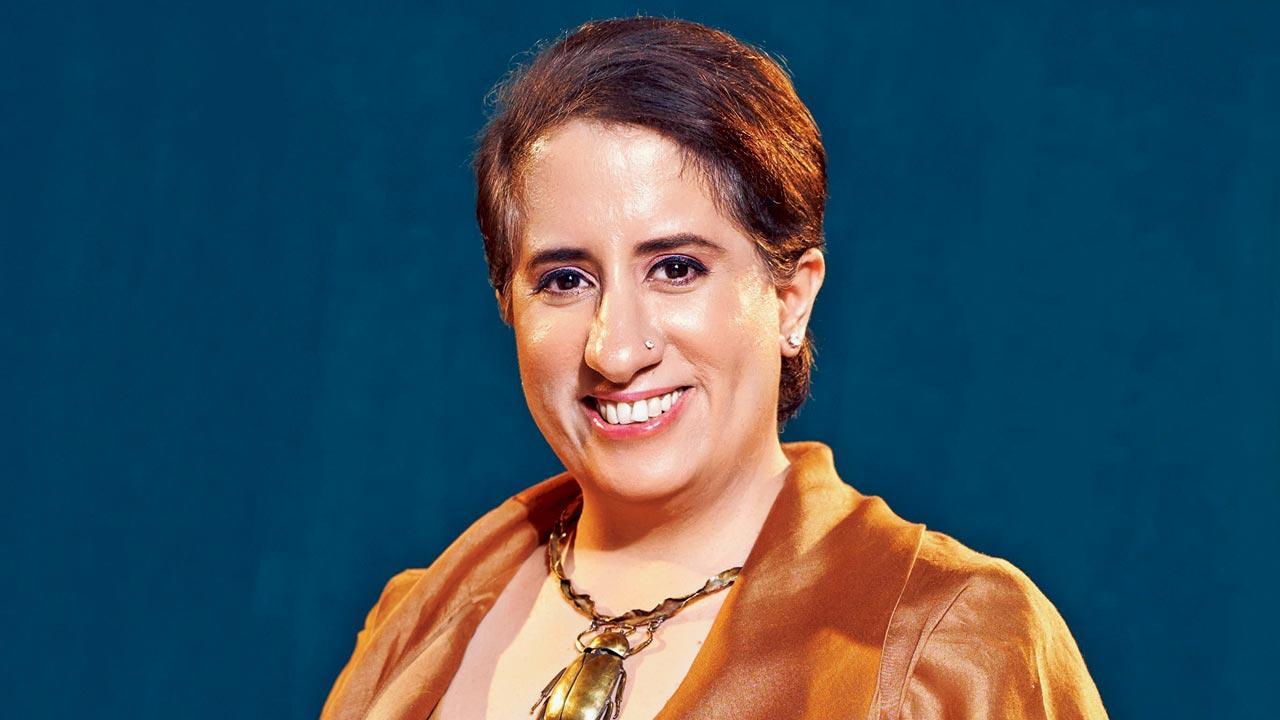
Guneet Monga (BOMBAY TIMES; June 12, 2026)
For those who’ve never been to Cannes, let me paint a picture with a familiar reference from home. Imagine a road by the beach in Juhu or Versova, Mumbai, a long stretch buzzing with activity. Now imagine that same road transformed into the epicentre of the global film industry for ten days. At Cannes, you walk constantly, between screenings, meetings, markets, and events. It’s a fitting metaphor for the journey itself: you walk for years, building relationships and credibility, so that one day your films can run.
That’s Cannes. It’s a place where filmmakers, producers, distributors, sales agents, festival programmers, financiers, and industry stalwarts from across the world converge in one compact space. You’re not just there to pitch your project; you’re there to shape its future, finding collaborators, planning its festival journey, discovering opportunities, and building connections that can last a lifetime.
Few places bring together so much cinematic ambition, talent, and possibility under one roof, or rather, along one strip of land.
This year marked my 15th year attending Cannes. As I walked through the city, I found myself revisiting the places that have defined my journey there, the cafes where deals were first discussed, the meeting spots that led to lasting collaborations, and the theatres that hosted premieres of films that went on to become milestones in Indian cinema, including The Lunchbox, Gangs Of Wasseypur, and Masaan.
For almost two decades in the film industry, I’ve lived by instinct, courage, and a lot of hustle. Finding my way through spaces I had once only dreamed of entering, and slowly realizing that sometimes the most powerful thing you can do is stop waiting for a seat at the table and build your own. That idea stayed with me for years. I’ve learned that talent was never the problem for women in cinema. Access was. Networks were. Exposure was.
Perhaps the most meaningful shift has been moving from navigating these rooms myself to helping others enter them. Through Women in Film India, we’ve been building bridges between Indian women filmmakers and the global film ecosystem, supporting three women at Cannes last year and four this year, creating opportunities for the kind of access and networks that can change the trajectory of a career.
This year, for the first time, two Indian women, out of just ten participants selected globally, were chosen to attend the impACT Lab at the Marché du Film in Cannes. Through a nationwide search conducted by Women in Film India, we were proud to support their journey to Cannes. In addition, two more Indian women producers were selected to participate in the prestigious Producers Network programme, further strengthening the presence of Indian women filmmakers and producers on one of the world’s most influential film industry platforms.
Not as guests, and definitely not as plus-ones. They walked in as scholars, selected through a national open call, evaluated by an industry jury, and sent there with the specific purpose of learning how the global film market actually works. They sat in rooms alongside filmmakers from across the world, participating in conversations that most Indian filmmakers never get access to at all.
That is the Cannes I come to every year. The one in the photographs is a different place entirely.
Over the years, I’ve realized that Cannes is often misunderstood as a place of screenings, red carpets, and parties. While all of that exists, the real value of Cannes lies elsewhere. It lies in the possibility of a conversation.
It is one of the few places in the world where every stakeholder in the film ecosystem comes together in one concentrated space. What matters is having the courage to walk up to someone, introduce yourself, share an idea, and begin a conversation. A single meeting can lead to a co-production partner, a festival strategy, financing support, international distribution, or a creative collaborator who stays with your project for years.
For independent filmmakers, especially, Cannes opens doors that may otherwise remain inaccessible. It is a place where films find advocates, where international partnerships are formed, and where entire futures can be shaped through a chance introduction. The connections you make there often outlast the festival itself and continue to influence your work for years to come.
The festival may command the headlines, but the market is where possibilities are created and where films truly begin their journey into the world.
India makes more films than almost any other country on earth, and yet our presence in these rooms remains disproportionately small. The reason is structural. Cannes operates on relationships built over years, on institutional backing, and on a deep understanding of how the global film ecosystem functions.
Think about what it takes to build that kind of presence. France has spent decades negotiating bilateral co-production treaties, funding international distribution, and maintaining a permanent infrastructure at Cannes that works on behalf of its filmmakers every single year.
If India is serious about strengthening its place in these global conversations, there is much to learn from countries that have approached international markets strategically. South Korea offers the clearest example. At this year’s Cannes, the Korean Film Council’s KO-PICK programme placed Korean producers directly within the Producers Network, backed by government funding, structured market access, and long-term international relationships. This is the result of decades of strategic investment, not just in producing films, but in ensuring those films have pathways to travel, find partners, and compete globally.
The lesson is not that India should replicate Korea’s model exactly, but that global success is rarely accidental. It is built through sustained participation, institutional support, and a commitment to creating opportunities for filmmakers beyond national borders. India’s support for independent cinema on the international stage is still evolving, but if we want our stories to travel further, we must invest not only in making films but also in building the networks, partnerships, and market presence that allow them to thrive internationally.
Co-productions fundamentally expand what is possible for a film. They unlock access to international financing, public funds, distribution networks, and long-term partnerships that are often unavailable to purely domestic productions. For a country with extraordinary stories and filmmaking talent, India’s next challenge is building the infrastructure around that talent, the market relationships, institutional support, and global presence that enable films to travel. Every producer who enters spaces like the impACT Lab or the Producers Network contributes to building that ecosystem, one conversation, partnership, and opportunity at a time.
The future of Indian cinema on the global stage will require filmmakers and producers to view Cannes not as a destination, but as an ongoing investment in their work. It means saving up to be there year after year, preparing months in advance, setting up meetings before boarding a flight, attending networking events with purpose, following up relentlessly, and understanding what international partners, programmers, and financiers are looking for rather than simply asking them to look at our projects. The opportunity is already there. The stories are certainly there. The talent has never been in question. What remains is our willingness as an industry to engage with the global ecosystem strategically, patiently, and collectively. If we do that consistently, the next decade of Indian cinema will not just be about taking films to the world, it will be about helping shape the future of world cinema itself.
And then there is the magic of Cannes that no schedule can account for. One of our scholars casually ran into Pedro Almodóvar. I found myself crossing paths with Pan Nalin, whom I had interned with nearly twenty years ago. That’s the thing about Cannes: every step of the way, you run into people you’ve admired for years, and people who may become part of your journey in the years ahead. The distance between a chance encounter and a life-changing opportunity can sometimes be just a few steps. At Cannes, you never really know what might happen next, and that’s precisely what keeps people coming back.
People cried during Love In Vietnam's Korean premiere. They were all so emotional-Rahhat Shah Kazmi
9:14 AM

Letty Mariam Abraham (MID-DAY; December 16, 2025)
On his trip to Vietnam for a film festival in collaboration with the Indian government, writer and director Rahhat Shah Kazmi fell in love with the country; an idea to base his next film there slowly took root. It was festival organiser Captain Rahul Bali — now one of his co-producers — who lent him support. Love In Vietnam, starring Shantanu Maheshwari, Avneet Kaur, Kha Ngân, and Farida Jalal, among others, eventually came through after considerable effort.
However, the film, which released in India in September, did not get enough room to spread its wings. “This is the first ever India-Vietnam collaboration,” he beams.
“But the Indian release clashed with 40 other films — including Demon Slayer and Mirai — floods, and limited screens. We did not get shows in our own country. Everyone was disheartened. All our efforts felt like they were in vain.”
The tide turned when South Korea embraced the film. Singer Seaya released a song inspired by the film after watching it, and the filmmaker was recently honoured with Best Asian Film and Best Director of Asia gong for Love In Vietnam at the Seoul Global Movie Awards 2025.
“We wondered if the people would like the movie or if they will get up and leave mid-way because they couldn’t connect with the story and the songs in the film. But, people cried during the première. They were all so emotional. They started posting on their social media. It was a dreamlike experience. Now the film is opening in Korean theatres in the first week of January,” he smiles.
Kazmi remains hopeful about an Indian re-release someday. He says that talks with OTT platforms are ongoing and that a date will soon be locked.
“Our desire to show the film to our people is not fulfilled. People haven’t seen it. So, we’ll try again. Around February, we are hoping to get a licence for China. We will lock the OTT plan after it releases in China.”
Shantanu Maheshwari on ‘Love In Vietnam’
Being a part of ‘Love In Vietnam’ has been a special experience. Working in a new culture with language differences automatically makes you more aware and present as an actor. You discover your own language to communicate with people. While the audience may be new, I realised that emotions don’t really change. Stories about love, conflict, and hope connect the same way, and that’s the beauty of storytelling. This film reminded me that a good love story can travel beyond languages and boundaries.
Our house help watches Korean TV shows dubbed in Marathi-Siddharth Roy Kapur
9:53 AM

As filmmakers across Asia, Africa and the Arab world rethink their place in global cinema, one question looms large: how do you build the kind of cultural wave South Korea sent sweeping across the world?
Anand Holla (MUMBAI MIRROR; November 30, 2025)
As filmmakers across Asia, Africa and the Arab world rethink their place in global cinema, one question looms large: how do you build the kind of cultural wave South Korea sent sweeping across the world?
It’s the longest-running, cross-cultural magnum opus in the world of cinema, and its story has only just begun. For nearly three decades, films from the Global South have continued to reshape the future of cinema. Today, more than ever before, stories, talent and financing from the Global South are overhauling the global film ecosystem. And the most potent force driving this shift is not technology, budgets, or marketing — it’s authentic, culturally rooted storytelling.
Earlier this week, in Qatar, during the Doha Film Festival, this idea dominated a fascinating industry panel discussion featuring creators and producers from across the Global South. Invited to speak at the event, seasoned producer Siddharth Roy Kapur told Mumbai Mirror, “What Hollywood has managed to achieve over the last 100 years, and South Korea over the last 25, is to reach out to the world with their soft power. Both the government policy and the creative forces worked together to push out Hallyu,” he said.
Hallyu: a real superhit formula
Also known as the Korean Wave, Hallyu refers to the global spread of South Korea’s popular culture — films, K-pop, K-dramas, beauty and food. Korean cultural exports has evolved into a multi-billion-dollar global industry, supported by a mix of state-led strategy and a creative sector willing to take daring, stylistic leaps.
Yet the panelists agreed that numbers alone don’t explain Hallyu’s force. It’s the connection. “Our house help watches Korean TV shows dubbed in Marathi. Now that could be time spent watching a Marathi show,” Kapur said. “So, clearly something somewhere has resonated with the audience on a very deep level. We need to understand what that is and be able to do that with our own entertainment as well.”
The takeaway wasn’t that countries should copy Korea’s model, but that audiences worldwide are ready, even hungry, for stories that feel specific rather than generic. Kapur’s own film Dangal, for instance, became a phenomenon in China, earning over $200 million because Chinese families saw their own struggles in that story about Indian wrestlers.
The film RRR spawned fan clubs from Tokyo to Los Angeles without changing a frame for foreign viewers. K-dramas like Extraordinary Attorney Woo topped charts across Asia, Latin America and the Middle East despite being rooted in Korean legal and social structures. Nigerian film The Black Book entered Netflix’s global Top 5 in 42 countries. Japanese anime films like Suzume and Demon Slayer set records in India and Brazil even though their logic, pacing and spirituality come straight from Shinto folklore. The pattern is undeniable: people want texture. Meaning. A point of view. Besides, when stories travel, they rewrite boundaries.
“Chinese girls were taking their parents to watch Dangal,” Kapur said. “Sometimes we are blind to the commonalities between cultures which some stories are able to bring out.”
The real bottleneck, thus, isn’t talent or audience demand. It’s money. Around the world, the stories with the most cultural potential are often the least funded, which keeps entire regions from playing on the global stage. South Korea’s government, for instance, has long supported storytelling through film. In fact, just this year, the Korean Film Council (KOFIC) launched an initiative to revive mid-budget Korean films. The scheme allocates around KRW 10 billion (Rs 61 Cr) to back films with budgets between KRW 2–8 billion ((Rs12 Cr to Rs 49 Cr). Selected projects can receive grants of up to 30% of their production costs. All of this is aimed at restoring the industry’s “backbone.”
Financing: the largest hurdle
Saleem Albeik, a Palestinian film critic, novelist and cultural editor based in Paris, spoke plainly about structural obstacles. “Arab cinema mostly relies on European funding, often from France and Germany. This means limitations on the scope of the narrative. In the long run, say, over a decade, this controlled framework plays a big part in shaping what constitutes Arab cinema,” he said.
Kapur, on the other hand, spoke of the challenges faced by films that have an “Currently, the ambition in the cinema from South India is very high. Their commercial yet inventive storytelling approach is commendable. They are also taking big, bold risks because of individual financiers who are willing to take a punt on those ideas unlike in the Hindi film industry, where the financing has become very structured,” he said.
Albeik believes the way forward lies in South–South partnerships. “It’s easier to retain an authentic voice and nuance for an Egyptian film when the funding or a co-production is sourced from the Global South, like from India, Brazil, or South Africa, which share similarities on issues like socio-political tensions or poverty. There is a mutual understanding untouched by any colonial past between them, and therefore no power dynamic,” he said.
Qatar’s launch of its Film Committee signals a wider regional push. In recent years, countries from Saudi Arabia to Kenya and Indonesia have expanded film commissions, rebates and co-production programmes to build local industries with global reach.
Africa’s rising wave
If any region embodies this transition, it is Africa. Nigerian media mogul Mo Abudu, who launched the $50 million Afro Film Fund last year, spoke passionately about the stakes. “The global gatekeepers and studios don’t seem to fully realize the potential of great storytelling that they can possibly tap into from our continent,” she said. “They should think of Africa not as a charity case, but as a business case, because Africa has the youngest population globally (70 percent are under the age of 30), which means an audience and a workforce that can spend.”
Africa’s demographic weight is impossible to ignore. With a population nearing 1.5 billion in 2025 and booming streaming markets in Nigeria, Kenya, Ghana and South Africa, production and investment have surged. Abudu believes the world has barely begun to tap the continent’s narrative wealth. “We have 3,000 ethnic groups. We have 250 tribes in Nigeria alone. Be it a movie about a wedding, a funeral, a heist, or any universal theme, the specificity of our society and culture that shines through is what makes the audience experience our stories like they have never before,” she said.
India’s inflection point
In India, the diversity of filmmaking voices could inspire far richer storytelling — provided it isn’t flattened into a Bollywood-versus-regional binary. “We must take a few chances on films that haven’t been made before and help the films that have the ability to travel to do so,” Kapur said. RRR, after all, proved how quickly a local film can become a global phenomenon.
“When RRR dropped on Netflix around the world, the film had exhausted its South Asian diaspora audience overseas but generated a renewed interest from a crossover audience that started to trip out on this incredible, larger-than-life, Indian film,” said Kapur. “The next Squid Game or Parasite is going to come from somewhere. It should come from India.”
Koreans have a different level of fascination with Indian films-Shantanu Maheshwari
4:03 PM

Akash Bhatnagar (HINDUSTAN TIMES; December 25, 2025)
Actor Shantanu Maheshwari’s recent visit to Seoul turned out to be far more than just a work trip. The actor travelled to South Korea for the screening of his Indo-Vietnamese film Love In Vietnam, and returned with a deep appreciation for Korean culture and its connection with India.
“I felt very welcomed. People in Seoul truly touched my soul,” says Shantanu, adding that he was pleasantly surprised by their interest in Indian cinema: “They have a different level of fascination with Indian films, which I was unaware of. They also love Indian music. I met many influencers there, and the music they were listening to was actually remixes of Indian songs.”
The actor also found Korea’s influencer ecosystem particularly impressive. “They have a very organized influencer culture and even a dedicated association for it. There’s a lot of warmth within the community,” he shares. One of his most memorable interactions was with the K-pop girl group X:IN, which includes India’s first K-pop artiste, Aria.
Recalling his meeting with her, the 34-year-old says, “When Aria got selected, I wanted to reach out to congratulate her, since it’s a big deal to make it in a foreign land. I finally got to meet her in Korea and told her how proud I was of her achievement. She in turn told me that she’s seen me in Dil Dosti Dance.”
Talking about cultural differences between Korea and India, Shantanu says, “Korean people are more shy. Their fashion sense is also quite monochrome, whereas in India, we have a lot of vibrancy when it comes to colours.”
Although Love In Vietnam received recognition in Korea, it failed to make an impact in India. Addressing this, Shantanu says, “Of course, it hurts when a film doesn’t work in your own country while being appreciated internationally, but every film has its own destiny. It’s not something in my hands. If we don’t get screens, I can’t do anything about it. I know my choices aren’t wrong, and nobody criticized my work in the film, so I focus on that.”
Having worked on an Indo-Vietnamese project, is a Korean collaboration next? “Many local directors who came to see our film approached me and said that if they ever need an Indian character, they would call me. Language will be a barrier, but I would still want to explore because I love working with different cultures. I’d love to explore not just Korea, but other film industries as well,” he says.
Bollywood needs government support to nurture bold storytellers-Vivek Agnihotri
8:46 AM

Vivek Ranjan Agnihotri pens an open letter to Union Commerce and Industry Minister Piyush Goyal
HINDUSTAN TIMES (April 7, 2025)
Dear Piyush Goyal ji,
Your recent remarks at the Startup Mahakumbh about Indian startups needing introspection and real value-addition in the face of global competition — especially against China’s strides in EVs, semiconductors, and robotics — were deeply resonant. Your push to move beyond superficial ventures like “fancy ice cream and cookies” and focus on meaningful innovation is timely. In this vein, I wish to highlight a sector with immense cultural and economic potential — Indian cinema — which, despite its legacy, is failing to innovate, compete globally, or harness its soft power potential like South Korea or Japan.
Globally, cinema and OTT thrive on bold storytelling and technological disruption. Films like Boyhood (shot over 12 years and released in 2014), the single-take illusion of 1917 or the social commentary of Parasite (both 2019) and even a raw, real-time dive into teenage chaos shot in one take such as that in Adolescence, showcase how innovation drives cultural influence.
Today, K-entertainment contributes over $12 billion (approximately Rs. 1,200 crore) to Korea’s economy, while Japan’s anime industry exceeds $20 billion (about Rs. 2,000 crore) in revenue. Hollywood dominates through streaming platform Netflix’s $31 billion (Rs. 3,100 crore) content budget, making it a global content empire.
Meanwhile, Indian cinema remains stagnant — copying formats without mastering their essence. We are the world’s second-largest film producer, yet ironically, most of our content ends up being sold to American platforms. It’s the East India Company syndrome all over again — we create the raw material, but others own and profit from our stories.
The decay is evident. Studios are shutting down; producers flee to real estate. Visionary filmmakers struggle to survive, while the system promotes non-actors better suited to making Instagram reels or dancing in weddings than meaningful cinema. Rooted, Indic stories are missing. Bollywood, once a soft power beacon, is now “flower power” — style without substance.
The viewer experience is equally dismal with outdated multiplex screens, exorbitant ticket and food prices, and theatres that now resemble food courts. Cinema, once a middle-class joy, is now an unaffordable luxury with diminishing returns. I speak from experience. The Kashmir Files (2022) — a non-starrer, risky narrative — broke Bollywood’s formulaic mould; but this came at a personal cost: fatwas, security threats, relentless backlash and character assassination. If truth invites such hostility, how can we expect innovation?
The industry needs government support — funding, incentives, and platforms — to nurture bold storytellers, not just star-driven fluff. Indic cinema can be the biggest startup of India, with potential to generate jobs, export cultural capital, and build global influence just as South Korea’s entertainment industry has done. Just as startups must prioritize real value, Bollywood must shift from elite appeasement to global relevance. Cinema can be an economic and cultural powerhouse, India’s leading soft power but only with introspection and disruptive innovation.
I urge your intervention to empower filmmakers who dare to dream—help Indian cinema reclaim its place as a global leader, not a copycat.
Sincerely,
Vivek Ranjan Agnihotri
Indic Filmmaker
Disclaimer: The views shared in the above article belong solely to the author
It’s crazy to think the impact Black made on people from different demographics-Ayesha Kapur
8:50 AM

19 years after the release of Black, starring Ayesha Kapur, the actor is glad it’s on OTT as it’s ‘more accessible’ for viewers and her American friends
Mimansa Shekhar (HINDUSTAN TIMES; February 10, 2024)
Ayesha Kapur, best known for playing the role of the deaf and mute Michelle McNally in the cult classic Black (2005), was shocked to see the film in the ‘New Releases’ section on an OTT platform recently. The actor was sad when the film was taken down on YouTube, but now that it’s streaming on OTT, “more viewers will see it, including my friends from college in America”. “I was surprised that it wasn’t on any online platform for the longest time. I think being on OTT makes it more accessible,” adds the 29-year-old.
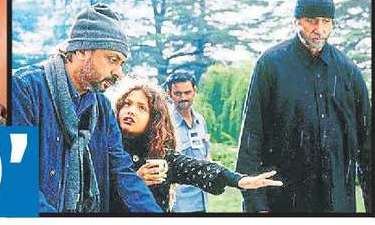
Released 19 years ago, the Sanjay Leela Bhansali directorial features actor Amitabh Bachchan as McNally’s teacher Debraj Sahai, while Rani Mukerji played the role of the older McNally. But Kapur’s role won her a lot of appreciation: “It affected the blind and deaf community and even became a cult film in South Korea. It’s crazy to think where all this film was travelled and the impact it made on people from different demographics.”
However, all of nine years at the time of the film’s shooting, Kapur wasn’t “exposed to Bollywood and really didn’t know what I was getting into”. Ask how she pulled off such a powerful performance and the actor says, “I didn’t have any star complex [at that time, which is why] I could play that part. It was only later that I realized how intense playing Michelle was, but I fell in love with acting through this process.”
I have fallen so much in love with Mumbai that I often find myself thinking about living her permanently-Aoora
8:16 AM

K-pop idol Aoora’s recent Korean version of Jimmy Jimmy aaja aaja is a hit among K-pop fans not just in India but across the globe. The Korean star, and now an Indian sensation, tells all in this chat
Devanshi Doshi (MID-DAY; June 6, 2023)
After a Russian and even a Tibetan version of Bappi Lahiri’s cult hit Jimmy Jimmy aaja aaja, K-pop idol Aoora is the latest to give a Korean twist to the Disco Dancer track. The 36-year-old’s plans to bring India and Korea together via music reflect not only in his new release but also in his lifestyle and social media engagements. The remake, Jimmy Jimmy K-pop version, which was released on May 25, has already crossed a million views. Aoora has plans to continue making such songs, and would like to collaborate with his favourite Indian singer, King. Excerpts from the email interview:
How did you first discover, and later, decide to remake this track? What made it ideal for K-pop music?
I have been listening to a lot of Indian music lately. About two months back, I heard this song Jimmy Jimmy aaja aaja [sung by Parvati Khan and composed by Bappi Lahiri]. I was attracted to its energy and the disco beats. I felt that adding K-pop beats to the song while keeping the original disco element intact would be cool. I am happy that people like this version.
How have the fans (Korean and Indian) reacted to the song?
The response has been amazing. From the comments I’ve received, people are definitely enjoying it. In my recent concerts, I was surprised to see the audience dancing to the hook step of this song. It is humbling.
You are a regular visitor to India. At what point did you decide to bring Korea and India together via music?
The energy in K-pop and Indian songs is similar. I have wanted to do something like this for ages. I have discovered that when you bring the art forms together, the results can be surprising [in a good way].
Indian K-pop fans adore you. What made you connect with people from a very different culture?
Music is a universal language. K-pop fans connect with me because they understand that my only purpose is to create music that can spread happiness.
What was a big cultural shock for you when you first came to India?
In Korea, more people prefer to live alone. At first, I was pretty shocked [to see families still living together in India]. But now, I feel like I want to live here, too. Everyone is so loving and kind; relationships are strong.
Your Instagram account is full of Bollywood stuff; do you follow it regularly?
Oh, yes. I follow and listen to many Indian songs; not just Bollywood but also Tamil, Telugu and Punjabi music. My current favourite songs are Naatu Naatu, Badtameez Dil and Cham Cham.
What desi lingo have you picked up from your visits to India?
Jhakkas! Fadu hai, fadu! Ab chalein?
-----------------------------------
The K-pop artiste, who has recreated the Bollywood track Jimmy Jimmy, talks about his love for Indian music
Debarati S Sen (BOMBAY TIMES; June 10, 2023)
While there are many fans of K-pop music in India, K-pop artiste Park Min-jun aka Aoora, a wellknown K-pop artiste, by his own admission, is an admirer of Bollywood music. After his debut show in Mumbai in February 2023, the singer, rapper and music producer says that he “felt an instant connection with the people of Mumbai”, and was captivated by Indian music so much that he recreated two of Bappi Lahiri’s songs, one of which is Jimmy Jimmy (Disco Dancer, 1982). He is currently in Mumbai for some work commitments and plans to explore the city before heading home at the end of this month.
ON RECREATING JIMMY JIMMY FROM DISCO DANCER
Aoora says, “When I first heard the song, Jimmy Jimmy, I was captivated by its modern and globally appealing beats. I saw an opportunity to infuse it with a K-pop twist, which I knew would be exciting and enjoyable. The idea of blending the essence of Bappi Lahiri’s song with the vibrant and dynamic elements of K-pop felt like a perfect fit.”
-----------------------------------
"One of the major factors that has drawn me to this country is Indian music. I am captivated by the energy and vibrancy it exudes. The lively beats, rhythmic patterns and melodic arrangements of Indian singers never fail to energize me"
-----------------------------------
"I love everything about Mumbai! I have fallen so much in love with the city that I often find myself thinking about living her permanently. It is a place that resonates with me on a deep level"
-----------------------------------
"I admire the grandeur of Bollywood songs. The production value, vocals and choreography create a captivating experience. I also find a striking similarity in the energy of K-pop and Bollywood music"
Drishyam franchise gears up for a Korean remake
8:20 AM
BOMBAY TIMES (May 22, 2023)
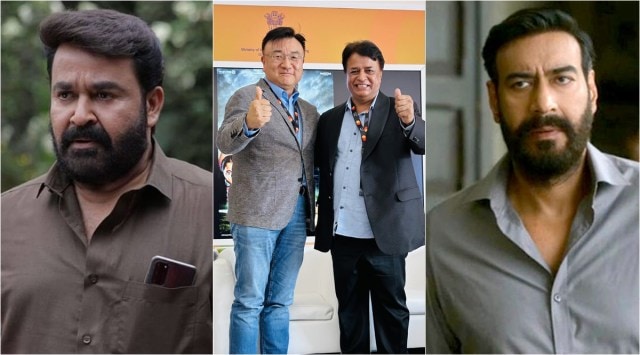
During the Cannes Film Festival, Kumar Mangat Pathak’s Panorama Studios and Anthology Studios, founded by former Warner Bros. local Korean production head Jay Choi, Parasite actor Song Kang-ho and director Kim Jee-woon made an exciting announcement. The two studios will join hands to produce the Drishyam franchise in Korean language. The announcement was made at India Pavilion in Cannes in the presence of the studio heads. This would be the first-ever collaboration between an Indian and a Korean studio and the first time a Hindi film is being officially remade in Korean.
Drishyam, an Indian franchise, proved successful in many Indian languages – Malayalam, Tamil, Kannada, Telugu and Hindi. The Hindi sequel, directed by Abhishek Pathak, which released last year, became a huge success. The Chinese remake, Sheep Without A Shepherd, too, won the audience’s appreciation. Ajay Devgn and Tabu headlined the franchise in Hindi.
Kumar Mangat Pathak says, “I’m excited that the Drishyam franchise is being made in Korean, a first for a Hindi film. This will not only increase its reach outside India, but will also put Hindi cinema on the global map. All these years, we have been inspired by Korean fare, and now they have found a muse in one of our films. What can be a bigger achievement for the Indian film fraternity.”
Jay Choi added, “We are thrilled to have an opportunity to remake a successful Hindi film with a touch of originality from Korean cinema. The remake has greater significance as the first major co-production between Korea and India. Through our partnership, we will be able to bring the best of both Indian and Korean cinema and make a meaningful remake that is as excellent as the original.”
Pathak is confident that the Drishyam franchise will find an audience in Korea and around the world. “This is the beginning of a valuable cultural exchange between both countries and film industries,” he says.
US-based Jack Nguyen will serve as the executive producer of the project. He had collaborated with Pathak on Atithi Tum Kab Jaoge and with Jay Choi and his team to produce a slate of Korean films.
Jack Nguyen says, “I have a history with and utmost respect for these highly-regarded producers, so it was a natural fit for me to bring them together to collaborate on a great story in Drishyam. I’m excited to help them make history with this first-of-its-kind Indian-Korean co-production.”
Can you believe that I actually shot some scenes on the Han River Bridge? It was like a dream come true-Anushka Sen
8:03 AM
Neha Maheshwri (BOMBAY TIMES; February 20, 2023)
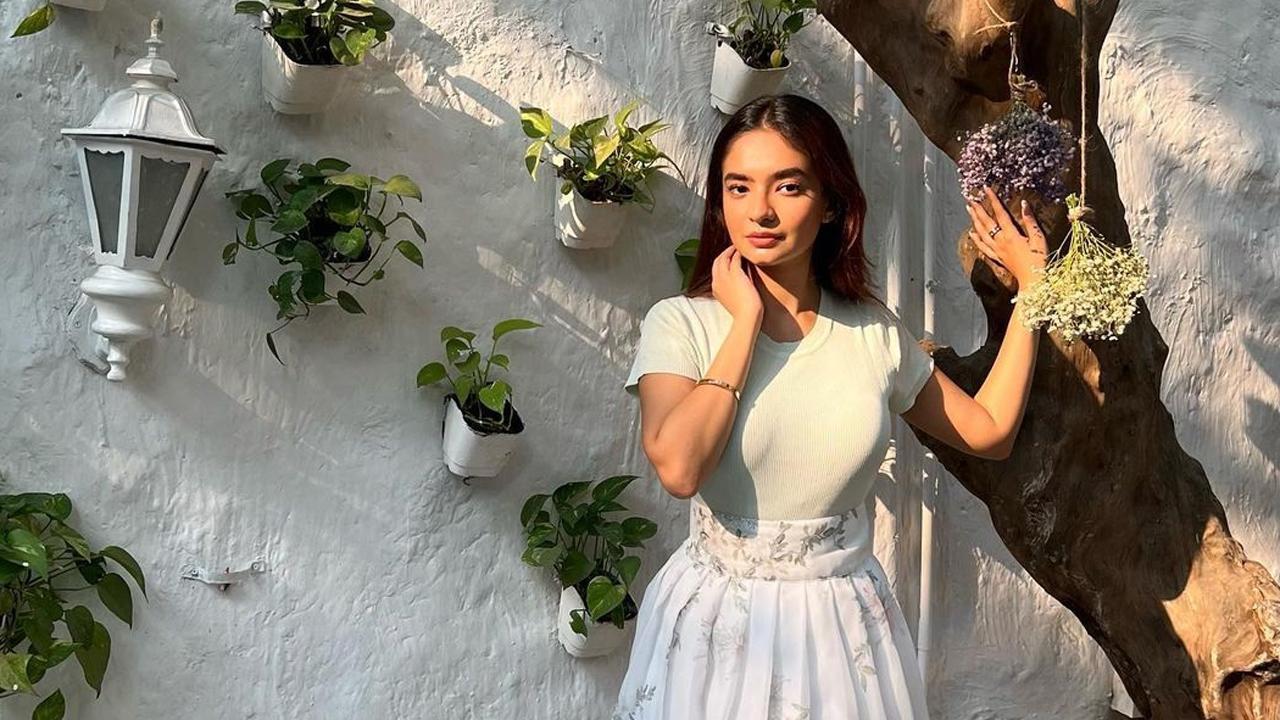
She may be just 20, but Anushka Sen is already exploring different avenues. After working in several TV shows as a child artiste and participating in Khatron Ke Khiladi, she is currently shooting for the Korean film, Asia, which will mark her debut in South Korean cinema.
She shares, “As the title suggests, the film features people from all over Asia and I feel fortunate to represent India in it. I play an assassin, which is a first for me.”
The actress wrapped up the first schedule of the film in mid-November last year and is expected to reunite with the unit in March for the next schedule. Sharing her experience of shooting in a foreign land, she says, “I had an amazing experience shooting in Korea. Hopefully, I will be going back for the next schedule soon. There are many similarities between the Indian and the Korean film industries – people are passionate and hardworking. Like us, they, too, don’t care about putting in extra hours if it results in better output.”
Anushka has been a huge K-drama and K-films fan. With this film, she hasn’t just realized her dream of featuring in a K-film but also shooting on the Han River Bridge. She shares, “I started watching Korean content during the pandemic and fell in love with it. Among other things, I was particularly fascinated by the Han River Bridge. Can you believe that I actually shot some scenes on the Han River Bridge? It was like a dream come true.”
Meanwhile, she is learning Korean to help her interact better. She says, “I picked some words, especially greetings while watching K-shows. My translator was pleasantly surprised when I understood the instructions at the shoot without having him explain them to me (smiles). People in Korea are very welcoming and never make me feel like a foreigner.”
Anushka wishes to strike a balance between her Indian projects and Korean assignments. “The Indian TV industry has given me so much love for the past 12 years and I want to continue working here. However, now that I am getting an opportunity to work internationally, I want to become a bridge between Indian and Korean cinema and even Hollywood. Dreaming big always gets you closer to your goal! I will work hard and give my best in everything I take up,” she concludes.
I was surprised the Korean makers were tracking my work for 2 years-Anushka Sen
8:06 AM

The actress talks about being a part of a Korean web show and film
Hasti Doshi (BOMBAY TIMES; August 19, 2022)
Anushka Sen began her career as a child actor in 2009 with the TV show Yahaan Main Ghar Ghar Kheli. Since then, she has been working continuously, and is currently hosting a chat show. She says, “I am really excited to do this show because it is not a regular chat show where the questions are scripted. I get to ask what I want; it’s more of a heart-to-heart conversation.”
Not just in the entertainment arena here, Anushka is also exploring her options in the Korean film industry. She is currently shooting for multiple projects there. She says, “I have shot for a travel show already, which was in English. I will be shooting for a feature film and a web show as well, for which I am learning the language. It’s interesting to see how your voice changes when you speak a different language. It’s new for me, and I am enjoying this process.”
Revealing how she landed her first offer, Anushka says, “I have been watching K-Drama for the past two years, and I love them. I was surprised when the team from Korea reached out to me a couple of months ago. Later, when I went there, I got to know from them that they were tracking my work for the last two years and thought I would be good for these roles and connected with me. I am happy to represent India in Korea. I like taking up work that’s challenging.”
Talking about the difference between our industry and theirs, Anushka says, “It is just language that’s different. Apart from that, both industries are very systematic with their work and approach. The one thing I noticed is that even for a small project, they have a storyboard and presentation ready. That happens here, too, but only for big projects.”
On the personal front, the 19-year-old is balancing her studies with her work. “I haven’t taken a break from my studies because it is very important for my family and me. I am currently in my third year and next year, I will be a graduate. I am studying filmmaking, and if possible, I would also like to do my masters in it,” she shares.
When my name was announced, all my fears were washed away-Sriya Lenka
8:11 AM

Upam Buzarbaruah (BOMBAY TIMES; May 30, 2022)
Odisha girl Sriya Lenka’s dream came true on Thursday when she earned a place in the South Korea-based girl band Blackswan.
“It feels unreal that an Indian girl is going to be a part of a K-pop band. Sriya just gave fans like us one more reason to follow Korean songs and bands. But I hope she gets accepted and doesn’t meet the fate of Lisa from Blackpink, who is from Thailand,” says Poulomi Mitra, a social media professional and music enthusiast.
‘WHEN MY NAME WAS ANNOUNCED,ALL MY FEARS WERE WASHED AWAY’
Sriya, an 18-year-old from the small town of Jharsuguda in Odisha, has been training hard with the band’s parent music company in Seoul since December 2021. “When my name was announced, all my fears were washed away. It was the happiest moment of my life. It was a dream come true. I have been away from my home, my country, my family and friends for so long and I wanted to make everyone proud. So, when I was selected, the first thought that came to my mind was, ‘Yes, I did it!’,” says Sriya from Seoul.
Speaking to us from Jharsuguda, Sriya’s father Abinash Lenka said it’s a proud moment not just for the family, but Sriya’s friends, extended family, and the state. When asked if Sriya would be coming home soon, he said, “It’s on the cards, but a date hasn’t been finalised yet. ”
‘HER TRAINING FOR K-POP WAS VERY DIFFERENT FROM WHAT SHE HAD BEEN DOING’
According to Philip YJ Yoon from the music company that manages Blackswan, they could see that Sriya was naturally talented when they first met her. “We also figured that she was very competitive as she had been participating in traditional Indian dance competitions back in her country,” he said, adding, “Nevertheless, K-pop training was very different from what she had been doing. She had to be in a country where everything, right from food and culture to language, was different.”
Phillip says, “For the past six months, her improvement never ceased to surprise us. Her training schedule began at 9 am and ended at 10 pm, but she continued practicing in the dorm till 2-3 am on her own. That was the biggest reason behind her selection. She is not only naturally talented but also very diligent, which is a rare combination.”
He adds, “If she keeps training as much as she does now, I’m pretty sure she’ll be a great artiste.”
When asked about their first album, Philip said, “Gabi (Gabriella) and Sriya just joined the band. They need to start preparing for the next Blackswan album as soon as possible. It’s too early to reveal when the album will be long for sure.”
I love and admire Shah Rukh Khan. He is someone who inspires millions of people every moment-Anupam Tripathi
8:01 AM

Mihir Bhanage (BOMBAY TIMES; December 5, 2021)
From pursuing music and acting in plays in India, to doing small roles in South Korean television shows and films, actor Anupam Tripathi’s career graph has been interesting. However, 2021 changed everything for him. The world went crazy over Squid Game, and Anupam’s character of the Pakistani migrant worker Abdul Ali received a thumbsup from viewers. Still coming to terms with the popularity, Anupam says that the response was totally unexpected. “We knew we had created a good show. But the reception was phenomenal; totally overwhelming,” says the Delhi-lad, who is now looking forward to more roles that let him show his potential.
In his journey from Delhi to Seoul, Anupam went from harbouring dreams of joining the National School of Drama (NSD), to pursuing performing arts at the Korea National University of Arts. What has kept him going is his passion for acting. “I was originally interested in music and was learning classical music from Dr Sarita Pathak Yajurvedi. Later, I joined the Behroop theatre group and was mentored by the late Shahid Anwar before coming to Korea,” he says.
Anupam is among the actors who’ve made a mark in the audience’s minds due to shows or films on OTT platforms, and he agrees that these platforms have a big hand in taking projects to a global audience. He shares, “There’s no limit for creativity, thanks to OTT platforms. There are more opportunities for actors and creators, and projects have become multicultural. And this will only grow further. At the same time, the reach and opportunities also put an onus on artistes to constantly hone their craft and experiment with roles.”
Experimentation is something he, too, wishes to do now. So, is Bollywood on the cards anytime soon, we ask, and he replies, “If an interesting role comes my way, I will definitely take it up. That said, I speak three languages — Hindi, English and Korean — and I want to explore opportunities in each of these.”
The topic of Bollywood invariably brings us to the people he looks up to. On his list are — “Irrfan, Nawazuddin Siddiqui, Pankaj Tripathi, Raj Kapoor, Guru Dutt, Dilip Kumar. I also loved Ayushmann Khurrana’s work in Andhadhun. Internationally, I admire Marlon Brando and Charlie Chaplin’s work.”
There’s another person he admires, someone he also shares his birthday with — Shah Rukh Khan. “Not just as an actor, but as a person who has built such a big name for himself through his work and dedication, I love and admire Shah Rukh Khan. He is someone who inspires millions of people every moment,” says Anupam.
While his near ones celebrate his success and popularity, Anupam has his eyes set on the things to come. In his words, “This is just the beginning of my story.”
--------------------
ON THE GLOBAL POPULARITY OF K-DRAMAS AND K-POP...
I am not an authority on this, but I think Korean shows, movies or music are so popular because they tell universal stories and motivate people to do better. Also, what you see in these projects is a melting pot of cultures.

Katrina Kaif ready to pack a punch with Tiger 3
8:27 AM

Ahead of Tiger 3 rolling next week, Kaif undergoes 14-day training with South Korean stunt artistes to pull off action scenes
Upala KBR (MID-DAY; March 4, 2021)
The worlds of Phone Bhoot and Tiger 3 may be as different as chalk and cheese, but Katrina Kaif is juggling them with ease. The actor has begun her prep for the third instalment of the successful Tiger franchise, which will go on floors on March 8 with Maneesh Sharma at the helm. Kaif intends to be fighting fit for her role of former Inter-Services Intelligence (ISI) agent Zoya Humaimi, especially since the first schedule will see her perform heavy-duty stunts alongside co-star Salman Khan.
It is heard that the actor shoots for the Ishaan Khatter and Siddhant Chaturvedi horror-comedy during the day, and heads to Yash Raj Films studio in Andheri in the evenings to pick up kickboxing and hand-to-hand combat for the espionage thriller.
“Maneesh has requested his leads to be action-ready for the Mumbai leg of the shoot. So, over the past fortnight, Salman and Katrina have been working hard, upping their fitness level. While Katrina is continuing her daily regimen with trainer Yasmin Karachiwala, she is additionally training with a South Korean crew, which specialises in martial arts, for the stunts,” reveals a source.
It turns out producer Aditya Chopra has had the team specially flown down for Kaif’s training as he wants the thriller to be an action spectacle. Meanwhile, a South African stunt team is working with Khan.
I am grateful to Parasite for drawing positive attention towards Korean films, says Peninsula director Yeon Sang-ho
8:01 AM

With Bong Joon-ho's film opening avenues for Korean movies, famed director Sang-ho looks forward to Peninsula's India release
Mohar Basu (MID-DAY; November 24, 2020)
Celebrated filmmaker Yeon Sang-ho admits he knows little about India. As Peninsula, the sequel to his much-acclaimed Train To Busan (2016), gears up for a November 27 release in India, he is eager to see how the audience receives the apocalyptic horror film. "I had no idea that my films had a huge fan base in India. As I've only lived in South Korea, I have not [gauged] the interest [my movies] elicit abroad. I'm aware that the Indian film and animation industry are huge," says Sang-ho, speaking from Seoul.
With the world coming to a standstill due to the Coronavirus pandemic, the makers had a tough time planning the film's theatrical release. While the horror thriller hit screens in South Korea on July 15, it sought a date with the US audience a month later on August 21. "The hardest part was determining how and when to release the film so that the audience could go to theatres safely. The footfall had plummeted, and theatres were closed internationally. As one of the few films that released during the pandemic, Peninsula had satisfactory [box-office] results. People around the world were rooting for it, and that collective support showed in its success."
With Parasite (2019) sweeping the top honours at the Academy Awards earlier this year, auteur Bong Joon-ho's words — "Once you overcome the one-inch-tall barrier of subtitles, you'll be introduced to many more amazing films" — have sparked a widespread interest in South Korean movies. Quiz Sang-ho whether he feels the pressure to perform, and he says, "There is no pressure at all. I am grateful to Parasite for drawing positive attention towards Korean films. I am working hard to create films that match the expectations."

At 28.6%, India is the fastest-growing OTT market internationally, says PWC report
8:17 AM

A new report suggests that 2020 has been a ‘tipping point’ vis-à-vis streaming sites’ revenues overtaking theatrical earnings; advertisers see a ‘big opportunity as it’s the space to look out for’
Prashant Singh (HINDUSTAN TIMES; October 31, 2020)
There’s no doubt that OTT (over-the-top) platforms have seen a sharp rise in 2020, especially since the lockdown came into force. In fact, according to findings from a media and entertainment report by PricewaterhouseCoopers, Indian OTT market is set to become the world’s sixth largest by 2024 surpassing South Korea, Germany and Australia, to touch revenues of $2.9 billion over the next four years. Interestingly, as per the report, India is already the fastest-growing OTT market internationally, expanding at a CAGR (compound annual growth rate) of 28.6%.
Comfort and price!
Experts, on their part, feel that streaming platforms were destined to rise rapidly. “For the last five to six years, I have maintained that the OTT space is waiting to explode, and due to practical reasons. Over the years, watching movies in theatres has become quite a costly affair if you include tickets, food and travelling etc. OTT world, on the other hand, is a blessing for such people as they — and their entire family — can access tonnes of content now by paying a fixed amount, while sitting within the comfort of their homes,” says filmmaker Tigmanshu Dhulia, who is busy with the prep of his new web series.
The report suggests that over the next four years, OTT platforms, along with internet advertising; video games, e-sports and music; and radio and podcasts are going to be the top segments that are expected to witness revenue growth in India. Apparently, in 2018, the SVoD (subscription video-on demand) revenues were a third of India’s total box office revenues but the report suggests that as digital platforms attract audiences, the country’s movie box office may fall by 2.6% over the next four years even as SVoD’s growth spikes by 30.7%. Interestingly, the report underlines that 2020 is a ‘tipping point’ as SVoD revenue overtakes theatrical earnings. So, the big question is: has the Covid-19 pandemic, due to which the theatres have been shut and people have been cooped up at homes, helped speed up the rise and penetration of OTT players in India? Analysts agree in unison.
“It goes without saying that the OTT space is spreading rapidly. For instance, the platform that’s running Scam 1992 is seeing a huge jump in its subscription. And it’s also true that the lockdown restrictions as well as fear [of Coronavirus] are also playing a part [in people turning towards streaming portals],” says filmmaker Hansal Mehta, whose new web series, Scam 1992: The Harshad Mehta Story has hit the bull’s eye. At the same time, the filmmaker believes the charm of big screen isn’t going to wither away anytime soon. “I feel theatres may have a difficult time making a comeback but eventually, they will,” he adds.
The top space
Actor Nawazuddin Siddiqui concurs, adding that theatres will always have a special appeal of its own, but OTT platforms have several advantages, not just for viewers but makers, too. “On one hand, people — from across the world — have access to my content despite any kind of lockdown. And for makers, streaming sites have brought in a level-playing field. Plus, some really great talent is coming through due to the streaming world,” says Siddiqui, who has had a tryst with OTT through several shows/films such as Sacred Games, Serious Men and Raat Akeli Hai.
Now, as OTT platforms disrupt the traditional Indian content space, advertisers, too, see a big opportunity as it’s space to look out for. “It’s a given that the share of online platforms, especially OTT sites, in the total advertising pie is going to increase. But therein also lies a challenge, as it’s time for advertisers/creative people to sit and, what I call, ‘thunk’ [think hard] about how to embed and seamlessly insert advertising in the OTT space without interrupting the narrative [of the show/film],” says ad whiz Prahlad Kakar.
Coincidentally, the coming days may also see a number of top Bollywood names — such as Akshay Kumar, Ajay Devgn, Hrithik Roshan, Shahid Kapoor and Aamir Khan, among others — having a tryst with the OTT world. But film analysts feel theatres aren’t going anywhere. “Yes, the OTT space is spreading but the 70mm screen will fight back and eventually, shine bright again,” concludes trade expert, Taran Adarsh.

Emraan Hashmi cancels plans to travel to 25th Busan International Film Festival
7:49 AM

The actor’s film, Harami, directed by LA-based filmmaker Shyam Madiraju is headed for the film festival; the team will attend the event virtually
Rachana Dubey (BOMBAY TIMES; October 19, 2020)

Talking about it, LA-based Shyam, who has also made a few short films and a feature in the past, says, “I am excited and nervous like any other filmmaker. Harami is a labour of love and effort. We’ve run into so much bad luck with almost every big film festival being called off due to Coronavirus. We were being selected for some big ones. The entire team was excited about the Busan Festival. They still are, but we’re not travelling to South Korea anymore. The country has barred people from other countries to travel there due to the pandemic. So, Emraan, I and everyone else involved with the film had to cancel our tickets at the last minute. We’ll be there virtually, though.”
Harami has Emraan playing a merciless crime lord, who controls a gang of pickpockets in Mumbai. The film, which is selected to be a part of the main competition section (New Horizons), was shot at real locations in Mumbai, including railway stations. “I wanted it to be all real. It was unimaginable to escape people’s eyes while shooting at these busy locations. It was laborious, tedious and rewarding to be able to pull off a shoot like that,” says the director, adding, “I had meticulously planned this film for two years, and Emraan could see that. He asked me if I planned to make Sagar bhai (his character) look the way I had written it. I told him to grow his hair and beard. He laughed and promised to keep the beard. He embodied the look when we finally got down to shooting. It’s like this with every good actor – he or she becomes the person they’re playing. Emraan treats the camera like a magic door that takes him into a different world.”
Radhe: Salman Khan builds his fight club with South Korea's biggest stuntmen Kwon Tae-ho
8:20 AM

Inside dope on how Salman Khan flew down South Korean action star Kwon Tae-ho to choreograph elaborate fight sequence for Radhe: Your Most Wanted Bhai
Upala KBR (MID-DAY; October 13, 2020)
Where his character Chulbul Pandey is the friendly cop who becomes the messiah of the poor, Salman Khan — with his upcoming film Radhe: Your Most Wanted Bhai — wants to establish the eponymous character as a suave, no-nonsense cop. In his bid to ensure that the thriller boasts hyper-stylised fight sequences, the superstar roped in Kwon Tae-ho, one of South Korea's biggest martial arts stars and stuntmen. It is learnt that the action star flew down to Mumbai in November 2019 to choreograph an elaborate fight sequence featuring Khan and Randeep Hooda.
"The scene sees Salman's character Radhe take on the Goan drug mafia and its overlord, played by Randeep. Director Prabhudheva and Salman wanted it to be slick and fast-paced, and agreed that Kwon Tae-ho would be the best person for the job. He stayed in the country for a month as they shot the scene at a Bandra studio. He was put up at a five-star near Bandstand throughout the stint," reveals a source.
Well aware that his fans lap up his action avatar, Khan has upped the ante by trying his hand at kick-boxing in the sequence. "It has been picturised as a moody scene, complete with dim lights and lots of smoke. In fact, Tae-ho also features as one of the bad guys and is seen engaging in hand-to-hand combat with Salman," adds the source. The film, featuring Jackie Shroff and Disha Patani, will mark the Bollywood acting debut of Mulshi Pattern director Pravin Tarde.
mid-day reached out to producers Atul Agnihotri, Sohail Khan and Nikhil Namit, who remained unavailable for comment.

Fenil's Bollywood Talk # 637
10:21 AM

TENET AND THE EIGHT HUNDRED’S SUCCESS ADDS EXCITEMENT AMONG THE TRADE!
When the Coronavirus pandemic began to rapidly spread across the world in the beginning of 2020, a lot of films got postponed to next year or 2020-end. The belief was that even if cinemas reopen, it’ll be suicidal to release a film this year. This is because audiences might not turn up due to the fear of contracting the virus. Also, they argued that with just 50% occupancy allowed in cinemas as part of social distancing measures, the collections won’t be enough to recover costs. However, the success of some films across the globe has made it clear that films can succeed despite all these Covid-related limitations.
The first country to evoke hope was South Korea. We had discussed a couple of months ago that the thriller Alive has done very well in its first week. In its lifetime it managed to earn $13.4 million (Rs. 98.05 crore approx). Then July saw the release of Peninsula, a sequel to the worldwide 2016 hit Train To Busan. It has earned $32.4 million (Rs. 237.08 crore approx.), which is double of its budget. The reports however are mixed and it won’t collect as much as the first part - $98.5 million. But it has managed to do business that is double of its costs and moreover, it is still running well in many countries across the world. Lastly, Deliver Us from Evil, which released on August 5, is also running successfully, having earned $24.1 million.
Meanwhile, in Spain, a film called Padre No Hay Mas Que Uno 2 (Father There Is Only One 2) surprised one and all. It is the sequel to a hit film called Padre No Hay Mas Que Uno, released in 2019. Believe it or not, it did better than the first part despite releasing in lesser cinemas than part 1 and having restricted occupancy in theatres!
But it’s China that took the cake. A film called The Eight Hundred had a thunderous start and went on to become a huge grosser. It was released on August 21 and collected a huge $116 million in 3 days. As of August 30, it has amassed $277 million, which totals to Rs. 2026 crore approx.! It remains to be seen if it can break the record of Avengers: Endgame which had collected $614 million (Rs. 4492 crore approx.). Even if it doesn’t, the job is done for the film.
And last but not the least, the much awaited Tenet released in Canada and international markets on August 26. The trade had expected it to collect $25-30 million in the weekend but it has managed to earn $53 million. In South Korea, it has collected $4,359,632 (Rs. 31.90 crore approx.) in 5 days. In most major territories like the United Kingdom, France, Germany, etc, it has exceeded expectations. It releases in the USA today, that is September 3, while tomorrow, September 4, it’ll release in China. The collections are now expected to increase a lot once that happens. The reports, though a bit mixed, are mostly encouraging and that’ll further help the collections.
All these instances have proved that there’s a huge pent up demand to watch films. It also shows audiences are ready to come back to cinema halls if there’s an exciting film running. Yes, the collections in all countries, except China, aren’t record breaking due to fewer people in a screen at a time. But, it is believed that sooner or later, the films will manage to make up for it if it has merit.
It now remains to be seen when theatres start in India. The decision to keep cinemas shut as part of Unlock 4 guidelines have led to frustration among exhibitors. But there’s still hope that the government will allow them to resume operations by September-end. And if that happens, Tenet will be the first release in the country.
Tenet scores $50 million plus in international markets
8:14 AM

Box Office India Trade Network
TENET far exceeded expectations with $50 million coming in International markets. The worldwide number is $53 million but that will include a $2 million plus number from Canada which is the domestic market. The film was expected to collect around the $25-30 million mark but has come in double the expectations.
The top market is United Kingdom with $7.1 million and that market has not exceeded expectations by much as $5-6 million was expected. It was expected that UK would be around 20% of the opening weekend in overseas but it has come in at around 13-14%. The performance in South Korea and Germany is also not much above expectations. UK, South Korea and Germany have gone 25% above expectations while France which was expected at $4-4.50 million hit $6.7 million which is 50% above expected numbers.
The total from from United Kingdom, France, South Korea (inc. previews) and Germany is around $22 million and the rest of Overseas has contributed around $28 million which is great news as it means many markets has seen people return to cinemas in big numbers. The figures will start coming out over the week for many markets and it will be interesting to see how this $28 million is formed. The best day of the film would have been Saturday with collections in the $14 million range while Wednesday and Friday also saw numbers of $10 million plus not including Canada.
Subscribe to:
Posts (Atom)