Showing posts with label Shreya Ghoshal. Show all posts
Showing posts with label Shreya Ghoshal. Show all posts
Shreya Ghoshal’s tribute to Lata Mangeshkar moves Mumbai
9:55 AM

Debarati S Sen (BOMBAY TIMES; March 9, 2026)
Paying tribute to a legendary singer with an 80-year career spanning nearly 45,000 songs is no easy task. Yet, that is precisely what Shreya Ghoshal achieved at her concert Letters To Lata Didi held at Jio World Garden on Saturday night. The evening was unlike the typical large-scale concert spectacle. There were no confetti bursts, fireworks or pyrotechnics; only pure music, delivered straight from the heart. With no costume changes and no breaks, she sang non-stop through more than 50 songs, each unfolding like a musical letter to the timeless legacy of Lata Mangeshkar, whose voice defined generations of Indian cinema and music.
“Aaj ki yeh shaam mere liye sabse khaas hai”
She opened with a traditional Ganesh vandana, followed by the classic Aayega Aanewala. Setting the emotional tone for the evening, Ghoshal addressed the audience
“Aaj ki yeh shaam mere liye sabse khaas, most important, sentimental and emotionally close to my heart evening hai. And main shayad kitni bhi tayaari kar loon, aaj ke din ki tayaari poori nahi hai. I think you will sense my vulnerability my emotion today. We are all here celebrating the legacy of Maa Saraswati, hamari pyari Lata Didi. This tribute is from all of us fans, from me and the musicians and isko sametne ke liye humne yeh ek zariya apnaya hai. Didi ko hum itna upar rakhte hain, unka jo sthan bhagwanon ke jagah hai. Hum sab fans ke taraf se hai yeh show and iss legacy ko celebrate karne ke liye aap sab saath mein gaiyega zaroor. I am sure Didi is smiling upon us from the heavens.”
Memories, music and ‘letters’
The evening’s narrative unfolded through music interspersed with audio-visual segments featuring messages and memories from people who knew and worked closely with Lata Mangeshkar. Tributes from Nitin Mukesh, Anandji Shah (Kalyanji-Anandji), Prasoon Joshi, Sachin Tendulkar and Prakash Peters added a deeply personal dimension to the concert. Shreya also shared memories of how Lata Mangeshkar’s voice shaped her own musical journey since childhood.
“Uss choti si ladki ko zara bhi andaza nahi tha ke yehi woh awaaz hai jo uska haath thaamkar usse uske aane wale kal ki oor le jayegi. I was too young but Lata Ji ke awaaz ne mujhe iss tarah khincha ki maine music se pyaar karna shuru kar diya. We formed a spiritual bond, that’s the asar of her voice. Karodo Bharatiyon ki tarah maine unhe sunne se zyada mehsoos kiya. Aur inn jazbaaton ko hum sabne jiya hai, lekin shayad unhe poori tarah jata nahi sakein. Toh aaj ki yeh shaam unhi unkahi baaton ko inn khaton ke zariye aapko samarpit karte hain.”
The first meeting with Lata Didi
The singer also recalled her first meeting with Lata Mangeshkar in 2005. “I was recording in her studio and she came there. I ran down to meet her and when she saw me, unhone mujhse kaha, ‘Tum Shreya ho na?’ Main unhe kuch bhi nahi bol payi. I was so stunned, meri bolti bandh ho gayi. Uss din main unse mil nahi rahi thi, mujhe uss din Lata Didi ke darshan ho gaye the. Uss waqt kuch nahi sujha, main thank you bhi nahi bol payi. Aaj mujhe Didi ko thank you bolna hai, for the soul, music you were for me.”
Choosing from a legendary repertoire
Selecting songs from Lata Mangeshkar’s vast repertoire proved to be one of the biggest challenges confessed Shreya. “Today, we are trying to cover all the eras of Lata Didi’s blockbusters,” she said.
“There are songs with so many composers including S D Burman, Laxmikant-Pyarelal, Kalyanji-Anandji and so many hit duets with the likes of Mohamad Rafi, Kishore Kumar. She worked with Laxmikant-Pyarelal for around 35 years and sang around 700 songs with just them. There are so many eras of her songs, her repertoire is simply massive. Ek se ek behtareen gaane hain unke. Main kya chunu? Finally, we just had to pick chits of which ones to sing!”
Introducing the song Aa Jaan-E-Jaan, she noted with a smile, “This was probably the only cabaret that Lata Didi ever sang. If you listen to this song you will realize that even in a cabaret there can be so much divinity, spirituality and itna apnapan and pyaar, even though it is a seduction song.” The evening featured several Lata Mangeshkar duets performed with singers Javed Ali and Kinjal Chatterjee.
A feminist inspiration
Speaking on the eve of International Women’s Day, Shreya highlighted Lata Mangeshkar’s enduring influence beyond music. “Lata Didi has always inspired us. Woh sabse badi feminist hain and tomorrow we are celebrating Women's Day. She has inspired us not just as a musician but also as a human being, living by her own terms. She gave us a sense of purpose. Aisi kitni auratein thi 40s, 50s and 60s ke daur mein jinhone kitna kuch iconic kiya.”
Music in its purest form
More than 40 musicians performed live on stage, including the UAE Philharmonic Orchestra and a choir, recreating the grand orchestral feel of the golden era of film music. Praising the ensemble, Ghoshal said, “Aaj lag raha jaise Lata Didi ke recording studio mein sab kuch live hota tha, waise hi hum conductor ke haath pe tike hue hain. I feel all this energy is very much missing in today’s film music.”
Among the distinguished guests present were members of the Mangeshkar family, Nitin Mukesh, Anandji Shah and Shantaben, Sonu Nigam, Prasoon Joshi, Kumarmangalam Birla, Dr Neerja Birla, Virender Sehwag and Anjali Tendulkar.
After the concert, Usha Mangeshkar was invited on stage and blessed the singer. “Aaj mere samne sirf Didi dikh rahi hai aur uski awaaz aa rahi hai mere kaon mein. Bachpan se main Didi ke saath recordings mein jaati thi, aakhri gaane tak. Ek ek cheez yaad aa raha hai. Bahut accha gaya Shreya. Bhagwan aapko hamesha Didi ka ashirwad zaroor denge!”
A standing ovation for the finale
As the evening drew to a close, Ghoshal performed songs such as Lukka Chuppi, Ae Mere Watan Ke Logon, Naam Gum Jayega and Rahein Na Rahein Hum.
For the final song — which she described as “a hug from all of us to Lata Didi” — the audience switched on their phone flashlights as she sang the immortal Lag Jaa Gale. Overcome with emotion, Ghoshal teared up on stage as the crowd rose to its feet in a standing ovation.
Palak Muchhal is the torchbearer of industry’s music legacy-Mithoon
9:46 AM

Natasha Coutinho (HINDUSTAN TIMES; January 28, 2026)
Music director-composer Mithoon, an introvert, admits performing on stage isn’t easy despite a 20-year career. “I’ve never been much of a stage artiste. I’ve been making music for 20 years but never been comfortable on stage,” he says.
“Only recently have I developed a specific sound for my band, and I’m not competing with any artiste. When the audience sees an artiste live, it’s an intimate experience, that’s the vision I want to give them.”
When asked if India’s booming live music scene influenced him, Mithoon says, “No. It’s more of an internal journey of being prepared that happened to coincide with the boom, but I’m happy live music is being celebrated in the country.”
He adds, “The audience understands, and many introverts present in the audience enjoy the music along with me. What they appreciate is honesty. It’s ‘main jaisa hoon, aapka hoon.”
Mithoon says he and wife, singer Palak Muchhal, keep work talk out of their home. “She’s a busy professional herself. We do riyaz together and discuss some musicality, but we keep work sanctified.”
Calling himself her biggest critic, he adds, “Since the time she sang the female version of ‘Meri Aashiqui Tum Hi Ho’ (Aashiqui 2), I’ve always believed in her potential and have been demanding of the level I expect from her,” Mithoon says.
Praising her, he adds, “There’s an unsaid legacy led by Lata ji (Mangeshkar), Kavita ji (Krishnamurthy), Alka ji (Yagnik), Shreya (Ghoshal), Palak belongs there on her own merit, she is the torchbearer of the music industry’s legacy.”
Meanwhile, brother-in law Palaash is currently making news for taking the legal route to deal with a cheating and financial fraud case initiated by former fiancee and cricketer Smriti Mandhana’s friend, Vidnyan Mane. Mithoon however chooses to steer clear of the controversial subject.
Female voices deserve more space in film music-Jonita Gandhi
2:20 PM

Debarati S Sen (BOMBAY TIMES; June 12, 2025)
In a candid, no-holds-barred moment that echoes the growing calls for gender equity across creative industries, singer Jonita Gandhi pulled back the curtain on a troubling pattern in Hindi film music - female voices being reduced in songs otherwise dominated by male leads.
Responding to a pointed question during an exclusive interview with Bombay Times, about the recurring trend where even top-tier female vocalists are often handed just a few lines sandwiched between a male-dominated melody, Jonita didn’t mince words. “Honestly, they can do better,” she said bluntly. “I don't think there's a reason why we only need to give four lines to the girl in a three- or four-minute-long song.”
Jonita’s critique cuts deep into the creative choices made by composers and lyricists who continue to sideline the female narrative in music. “Why not just make the song a male solo, if that's the case?” she asked. “If you're including a female voice, give it space, give it meaning. Not enough effort is made to flesh out the female perspective.”
Her comments shine a spotlight on a longstanding issue in the Indian music industry, where male-led songs dominate both screen time and sonic space. Even when renowned female singers are roped in, their presence is often tokenistic, just enough to check a box, rarely enough to make a statement.
“We're talking about incredible talents — Sunidhi Chauhan, Shreya Ghoshal — we all know they're phenomenal. But what's the point of bringing them into a song just to hand them two or three lines? It’s a waste,” Gandhi asserted.
She also acknowledged the bind many female artists find themselves in: accept a minimal part or miss out entirely. “It’s not in our control. You either do it or you don’t, and someone else does. And sometimes these songs are just too beautiful to pass up,” she admitted.
Yet, the bigger issue, she says, is the scarcity of female-centric songs that could serve as a counterbalance. “It’s not happening,” she said.
Jonita’s response to this disparity is carving her own path. “That’s also why I’ve started focusing more on my own music. Because in my own songs, I’m the star!” she signed off with a smile.
Shreya Ghoshal sets BKC ablaze with melody: "Mumbai tumhari aur meri love story hai"
8:41 AM

Debarati S Sen (BOMBAY TIMES; May 26, 2025)
Saturday evening turned into a surreal musical celebration as Shreya Ghoshal took centrestage at BKC, delivering an unforgettable performance that was nothing short of electric. Thousands gathered to watch the melody queen live in action, and she did not disappoint, holding the audience in rapturous delight from the first note to the final bow.
As the evening set in and the crowd erupted in deafening cheers, Shreya made a powerful entrance singing “Sunn Raha Hai”, setting the tone for a night of nostalgia, emotion, and celebration. “Are you ready to sing with me, Mumbai? Are you ready to party?” she asked, and the crowd responded with euphoric chants of “Shreya, Shreya!”
“Mujhe iss din ka intezar saalon se tha!”
Brimming with emotion, Shreya expressed how special the Mumbai concert was for her. “Finally the day has come, and I am performing in Mumbai (The same show was to be held earlier on May 10 at the same venue). I am so excited! Trust me Mumbai, mujhe iss din ka intezar saalon se tha!” she said, visibly overwhelmed.
“Bahut gaana hai, it's going to be an incredible night. Sab saath mein gaane wale hain. Hope you are prepared with some moves!” She then set the stage ablaze with chart-toppers like “Tum Kya Mile”, “Jadu Hai Nasha Hai”, and many more, turning the ground into one massive karaoke session with the audience singing in unison.
“Mumbai tumhari aur meri love story hai”
Declaring her eternal bond with the city, Shreya said, “I have a perfect song, because Mumbai tumhari aur meri love story hai. Aisi love story honi hai because Mumbai mera ghar hai, meri Bhoomi hai, mera sab kuch hai.” That heartfelt proclamation was followed by songs that touched the soul, “O Rangrez,” “Piyu Bole,” “O Saathi Re,” and “Deewani Mastani”.
As she sang, Shreya also took time to connect with fans holding up placards. “You’ve travelled 12,000 kilometres to be here!?” she read aloud in amazement. One fan had brought her a painted portrait to which she asked, “Main yeh rakh loon?” A girl from Kota caught her eye, prompting a warm, “You are from Kota! Hello, girl from my place!”
“Singing a Gulzar Saab song is an award in itself”
Shreya paid rich tributes to the lyricists and composers who’ve shaped her musical journey. “Gulzar saab ka koi gaana agar ga liya toh wohi award hai apne aap mein.” Reflecting on her blessed journey, she added, “Mujhe saare composers ne apne best gaane diye hain. Main bahut shukr guzar hoon unn sab ka. Aaj bhi woh sab gaane dil ko chhoote hain… because acche music ki life bahut lambi hoti hai.” She then delivered those very timeless tunes that audiences continue to cherish, proving that good music indeed has no expiration date.
“Aaj sabse surili audience hai. Kasam se”
As the audience harmonized note-for-note, Shreya playfully joked, “Everywhere I perform, I say, ‘I have the best singing audience today.’ I have said this in so many places that iss sentence ka koi trust value nahi raha. Iske toh memes bhi ban chuka hai. But today I really have to say, ‘Aaj sabse surili audience hai. Sacchi main, kasam se.’” Popular Bollywood singers were spotted cheering from the audience including Benny Dayal, Amit Trivedi, Aditi Singh Sharma, and Shalmali Kholgade.
“The reason I became a singer is because of Lata Ji’s voice”
In one of the evening’s most poignant moments, Shreya paid tribute to her greatest inspiration, Lata Mangeshkar. “The reason I became a singer is because of her voice. Her songs inspired me to choose music beyond just a simple passion or a career.” She followed this with soul-stirring renditions of “Lag Jaa Gale” and “Abhi Na Jao Chhod Kar”.
“This is the first time I am singing this verse on stage”
In a surprise, Shreya sang a verse she had never sung live before. “There are so many songs I want to sing but never have the time. But aaj main tayyari karke aayi hoon. This is the first time I am singing this verse from ‘Main Agar Kahoon’ on stage.”
The magical moment left the audience spellbound. She also performed duets with singers Kinjal Chatterjee and Chaitanya Devadhe, fondly calling him “Chaitu.” They sang some favorites like “Manwa Laage,” “Tere Naina,” “Teri Ore,” “Dagabaaz Re,” and “Saans.”
“Thank you for being with me despite the rain”
Despite a mid-concert drizzle, the crowd stayed rooted to their spots. Organizers swiftly distributed free raincoats to all. Shreya smiled and thanked them saying, “Thank you for being with me despite the rain today.” Towards the end, she warmly introduced every member of her band and background vocalists, showing her appreciation for the people who make the magic happen behind the scenes.
After nearly 40 songs and three hours of pure musical bliss, Shreya closed the night with a powerful tribute to India’s armed forces with “Vande Mataram”.
Amaal Mallik on his post about cutting ties with his family: "The post has brought the family closer"
2:45 PM

Vinay MR Mishra (BOMBAY TIMES; May 16, 2025)
Under the spotlight and in front of a roaring Bangalore crowd, Amaal Mallik took the stage - his first as a solo concert - and left the audience humming. “It’s the best feeling on earth. You feel like a superhero,” he says, the thrill still palpable in his voice. For years, Mallik has been the man behind the curtain—a “Batman in the cave,” as he puts it—crafting hits in the shadows while letting others take the mic. “The love that fans have poured into me over the last ten years—I’m giving it back,” he says.
Fresh off the adrenaline high of his solo concert, Amaal joins us from Bangalore over a call—his first interview in months, and the first since his candid, much-talked-about post earlier this year, where he revealed stepping away from his family. What follows is a conversation as raw as it is revealing.
'I am a prime example of how to be indie within Bollywood'
Talking about performing so rarely, Amaal shares, "If you try to figure out the artistry that I am made of it is of a musician who likes to be at home, likes to wear his headphones, sitting on his pair of shorts, making good music. I am a prime example of how to be indie within Bollywood. My attitude and soul are very indie."
The shift from behind-the-scenes producer to on-stage performer wasn’t an easy one for Mallik. “I used to play the keys, and my brother Armaan would sing,” he recalls of his earlier performances. “I would never even try to sing until I was 15 or 16. Singing is something I never took any formal classes for.”
Even now, Mallik, who has sung over 10 songs, is still honing his craft, admitting that he’s not quite where he wants to be vocally. “Singing is something I never took any formal classes for. When you're performing on stage, you do get to know that it's a different art and a different ball game. I can safely say I’m 60-70% on pitch, but that 30% is something I want to train. I’m trying to learn Hindustani classical, not heavily, but at least the basics and the light classical that I can,” the Sooraj Dooba Hai composer shares.
'I think musically I may have healed and helped them'
During the current political situation multiple singers, including Shreya Ghoshal, Usha Uthup, and Arijit Singh, canceled their concerts. Amaal, however, decided to go ahead with his show. "I was fully convinced that we should not (go ahead with it), because if there's a safety issue. Till I think 2 am or 3 am, it was a no go anyway. We had all been told that's almost not going to happen. But then the ceasefire was announced and the security in the southern part of India is safer. Also, on a professional level I had to do it as I was already paid. Obviously the country comes first. I wouldn’t want to sabotage anyone’s security. Shreya and Arjit Singh's concerts were called off because they are much bigger artist and they rake much bigger crowd. They cannot take that chance to take the risk. I think musically I may have healed and helped them," he explains.
'The post brought the family closer'
Earlier this year, Amaal made headlines when he shared a post announcing his decision to cut ties with his family, including his brother, singer, Armaan Mallik and his father, composer Daboo Malik. For the first time, Amaal opens up about the post and reveals the state of his family. “It was something I had been keeping in for a long time,” he admits.
“Every kid, I think, goes through repressed feelings. I've been like the soldier who marches on. I felt a little light talking about it. But I know on social media people have this feeling that you cannot talk about your family. But sometimes even family doesn't manage to realize what you're going through because we're all so busy in spite of being connected. I think Armaan, me, mom, and dad, are like the fantastic four. But there are things that maybe I don't know that Armaan's going through. Possibly he might hide. All of us go through that. I think it was important for me to let it out; even for my fans, for a lot of people, expecting out of me - 'Why is he not sending songs?' I just spoke what my inner voice wanted to say. My parents also understood it. It actually brought us closer as a family. They were obviously a little hurt, but they understood that our son is going through so much and we don't get time to understand that sentiment. But it's been much more precious and beautiful after that. I know there have been critics, saying that I have thrown your family under a bus and all, but I think my family got closer after that. We're stronger and happier about these discussions,” he shares.
He adds, "Being depressed can have many facets to it. It's not just a career thing. My dad told me something very beautiful: 'People say parents are God, but we are also just humans. Mistakes happen. We are also first time bringing someone into this world. We're also learning.’ My relationship with Arman is so precious to the world and to us. Nothing can change that."
He also shares, "No two people's trajectory - personal or professional can be the same. God has been kind that both have had like a bazooka start in this industry. Very rarely from a family, two swords come in and, take over an empire. We've done that as youngsters, however, sometimes my parents would feel that my way of approaching projects, or how I work, or how I speak, or how I opinionate should be just as correct as Armaan's. It may not work like that. We are two different people like chalk and cheese. That is a beautiful part of being human. So, these things have to be understood. Eventually we all have understood that about each other."
'I am not AI Mallik, I am Amaal Mallik'
So all is well with the Malliks? The Ami Je Tomar 3.0 composer replies, "Yeah. It is all sorted. There's no stress. There never. There never will be any stress like that. This family is too close to get into stress.”
He adds, "Armaan's just laughing. He's like, 'I'm just stuck here. I'm being tagged in everything the minute you tweet'. That is his only complaint. Otherwise, I think me coming out and speaking has made my fans also realize why I'm not putting 20 songs a year and also the industry to understand that I'm not AI. And I'm not AI Malik. I'm Amaal Mallik. I am now taking a little bit of a stand for my health and eating home food. It's not happened for 14 years. I've lived and slept in studios. It's all added to this feeling. This post is like a meltdown for a human being. Now I think back on path and replenishing, trying my best.”
Amaal Mallik recently opened up about his battle with clinical depression, blaming his family for his struggles in a now-deleted Instagram post. Amid the buzz, an old interview with his mother has resurfaced, where she spoke about leaving her teaching career to support his and Armaan Malik's musical dreams.
'I was somewhere beginning to give up on myself'
Does he feel that the post was impulsive? He replies, "It's been years of things on my mind and in my heart, a lot of things from my career. Everything just came to me at a point. The only way I could put it out was through that. It was not impulsive. It may have happened in an impulse, but it's a collection of emotions over years. Everyone's not talking to just get some limelight or some front page. There are things which we feel. But the kind of love and the kind of support that I got from within my family, from my fans, and from people around me, made me feel that at least I am important enough to not give up on myself. That is what that post did for me. I was somewhere beginning to give up on myself. I don't want to do that."
'I am finding myself'
For Amaal the next chapter isn’t just about music—it’s about reclaiming his life, his family, and his truth. "Right now, I am finding myself. In finding yourself, the music arrives. I'm not sitting down recording songs back to back, I'm not making a bank. Not pushing too hard towards just creating, I am absorbing," he concludes.
I feel embarrassed when a five-year-old sings Chikni Chameli-Shreya Ghoshal
8:37 AM

BOMBAY TIMES (February 28, 2025)
Shreya Ghoshal has a long list of songs to her kitty. The singer has also crooned some fast-paced songs, apart from the soft melodies that she has known for. The popular 'Chikni Chameli' featuring Katrina Kaif was crooned by Shreya, however, in a recent interview, she has revealed that she feels embarrassed about some of her songs like 'Chikni Chameli', as little girls sing the song without knowing the meaning of the lyrics.
She said during a chat with Lilly Singh, "I have a handful of songs which could be borderline raunchy, like Chikni Chameli. There is a fine line between being sensuous, sexy, or being out there, making yourself objectified, or women in general. Why am I a little conscious about it now? It’s because I see young girls sing these songs without understanding the lyrics."
Hence, Shreya admits to being very conscious about the songs she chooses to sing. She's also very particular about the lyrics and makes sure they are well-written before she agrees to sing.
She added, "I have been conscious about that, and even if I am doing it, it is not wrong to be celebrating, happily talking about how sexy I am or how sensuous I am, but don't write it in such a way... Maybe if a woman were writing it, she would have written it in a very gracious manner. She can—it's just a matter of perspective. In our society, especially in India, it is essential to set some benchmark because music and films have a huge impact on our lives."
'Chikni Chameli' was an item song in the remake of 'Agneepath' which starred Hrithik Roshan, Sanjay Dutt.
Sunidhi Chauhan and I are besties; we would love to tour together-Shreya Ghoshal
2:51 PM

Shreya Ghoshal and Sunidhi Chauhan tell Soumya Vajpayee what makes their friendship so special
Soumya Vajpayee (HINDUSTAN TIMES; October 11, 2024)
They have always been pitted against each other and it makes them “have a good laugh”. Singers Shreya Ghoshal and Sunidhi Chauhan have sung multiple film songs in the past, including Imaan Ka Asar (Dor; 2006), Hum To Aise Hain Bhaiya (Laaga Chunari Mein Daag; 2007) and Om Shanti Om title track (Om Shanti Om; 2007), and now the “besties” have come together for an independent number for the first time.
The singers have recorded a single, titled Chhaila, for composer duo Salim-Sulaiman’s independent music initiative Bhoomi 2024, which will see them “in a different avatar”. In a tête-à-tête with HT City, Ghoshal and Chauhan talk about their bond, motherhood and all things music.
You both have been pitted against each other since the beginning. How does it impact you?
Shreya: People somehow derive pleasure from painting an image about women artistes and feeling that they are in competition or in some kind of battlefield (laughs). Sorry to disappoint everyone but Sunidhi and I are besties. I wonder how male artistes are never pitted against each other.
Sunidhi: Our choices may not be alike, but our souls are. That defines our friendship.
Tell us more about your bond...
Sunidhi: We catch up very often over a coffee and chat endlessly. In fact, even when we are in the studio together, we have so much fun that a three-hour session turns into a six-hour one. We also give each other constructive inputs, which helps hone the final product. For instance, Chhaila will see Shreya rap for the first time, and while she was recording, I suggested her to try out a couple of things, which she did. I love Shreya.
Shreya: We always look for excuses to spend time together. Besides music, another commonality between us is that both of us are mothers to boys. I remember when I was pregnant, I would reach out to Sunidhi for anything and everything. I remember calling and asking her: ‘Which diapers should I buy for my baby?’
You both have sung for so many films together, but the song Chhaila is your first indie song together. How liberating was it?
Sunidhi: Oh, we had a blast. We would have so much fun at the studio that Salim-Sulaiman had to wait endlessly for work to happen (laughs). It gave Shreya and me so much time together that when the song was done and the music video was shot, I started missing her from the next day. We had become so used to seeing each other daily. To feel that kind of love and to work on the song that showcases us in such a different avatar was gratifying.
Shreya: I never thought I’d rap in a song ever. But the way the rap jugalbandi unfolds between me and Sunidhi in the song is amazing. We had so much fun doing that. I’m sure it’s the kind of liberty only non-film music can offer. Both of us are also dancing and grooving in the music video. Prepping for it was so fun.
Considering you both love spending time with each other, would you ever tour together?
Sunidhi: Oh, I’d love to. I really hope someone conceptualizes that and reaches out to us.
Shreya: Yes, we really hope to tour together someday. I would jump at the opportunity.
There couldn’t be a better time to talk about motherhood than Navratri/Durga Puja, considering Maa Durga symbolizes multitasking. Both of you record songs, travel for shows and are hands-on mothers too. How hard is it to juggle these roles? Do you ever feel mum guilt?
Shreya: Of course, a lot of times. I often ask myself, ‘Am I doing enough?’ To say goodbye to Devyaan (her son) on days when he wants me around but I’m obligated to step out due to a professional commitment feels excruciating. But I try to balance out each role, from being true and dedicated as a musician to waking up in the morning and making breakfast for my little one before dropping him to school.
Sunidhi: I feel you, Shreya. Tegh is a little older now, but the moment he says, ‘Mumma, mat jaao’, my heart melts. I feel an inexplicable pain of being torn between both my loves — my work and my child. However, motherhood is so empowering, it teaches you a lot. I think Maa Durga helps us understand how we can multitask and fulfil all our responsibilities.
How has becoming a mum impacted you and your work?
Shreya: Motherhood has helped me better my efficiency. I am able to manage my time well and deliver way more than what I used to earlier. Sometimes, I wonder, ‘What was life like before having Devyaan?’ It is unimaginable.
Sunidhi: Having Tegh has made me more grounded. I feel I used to be all over the place earlier, but now I know, no matter what I do or where I go, I need to return home to my son. In fact, as we talk, I remember I need to buy a pair of scissors and glue for his school project (laughs). I love this phase of my life and wouldn’t miss it for the world. I know everything can come around due to the circle of life, but once Tegh grows up, I’ll never have this phase again.
Sonu Nigam, Shankar Mahadevan, Shreya Ghoshal to perform at Anant Ambani-Radhika Merchant’s wedding
8:16 AM

HINDUSTAN TIMES (July 8, 2024)
After pop star Justin Bieber rocking businesspersons Anant Ambani-Radhika Merchant’s sangeet, there’s a lot of anticipation around the performances at their wedding. International singers Adele, Drake and Lana Del Rey will reportedly have power-packed acts at the celebration that will be held from July 12 to 14.
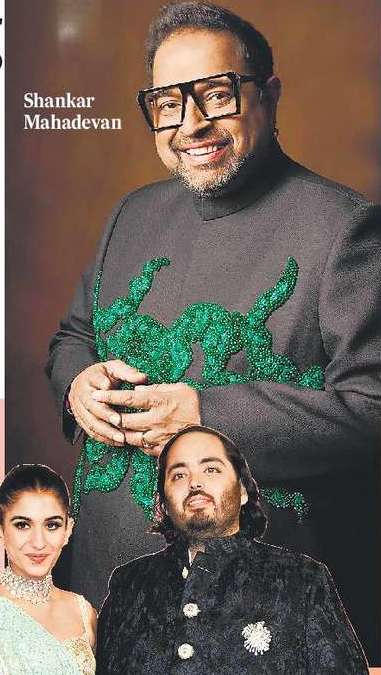
Now, we have exclusively learnt that a few Indian musicians would also have an important role to play at the do. A source tells us that musicians Sonu Nigam, Shankar Mahadevan, Hariharan, Shreya Ghoshal and Kaushiki Chakraborty will be performing live at the wedding.
The source adds, “There are some devotional songs and shlokas that will be performed by these musicians, including Shri Krishna Govind Hare Murari by Sonu. There has been extensive prep and rehearsals, as the shlokas are in Sanskrit. All the songs have been composed by Ajay-Atul (music director duo).”
I’m glad that my son is growing up in a musical household just like I did-Shreya Ghoshal
3:59 PM

Hasti Doshi (BOMBAY TIMES; December 21, 2023)
Shreya Ghoshal is a doting mother to two-year-old son Devyaan and she is happy that her child is growing up in a musical household. So, does she hope that her son follows in her footsteps. She says, “I started taking singing lessons when I was four years old and later started performing too. My son is two years old and I feel that it will be harsh on my part to have any kind of expectations from him. I will never force him to do anything.”
She further adds, “Yes, my son is growing up in a musical household, and I too grew up in such an environment. When I was a kid, my mother was fond of music and she used to play instruments and do riyaz. So, I subconsciously grew up learning music. I feel that someday Devyaan will come to me and suddenly sing one note in a pitch-perfect manner. As a new mom, I am excited about all these things and I take pride when he does something new. I will give him a great environment and let him decide what he wants to do in the future and hopefully, he will become a musician.”
She is currently seen on the panel of judges of Indian Idol alongside Vishal Dadlani and Kumar Sanu. “It is surely tough as a mother to juggle things, but this is the balance I have to strike and I am doing it without any regrets,” she shares.
‘I am a hands-on mom’
Talking about how she manages to strike a balance between work and spending time with her son, Shreya says, “God has been very kind and has given me a family that’s supportive. Even at the slightest hiccup or difficulty, I have my family with me. So Devyaan is literally growing up with his nani when I am not around. But I am a hands-on mom; I don’t have any help and I want to be there for my kid.”
I cannot be partial to any contestant for sentimental reasons-Shreya Ghoshal
8:33 AM

The singer talks about her return to television after a decade
Hasti Doshi (BOMBAY TIMES; September 24, 2023)
In 2013, Shreya Ghoshal was on the panel of judges of Indian Idol, and now, after a decade, she’s returning to the show again as a judge alongside Vishal Dadlani and Kumar Sanu. In a chat with us, she says she’s happy to be back on TV and recalls her days as a contestant on the show. Excerpts:
‘I MISSED BEING ON TV’
While her excitement is high, she says, “I am one of those people who always wants to do something different. So, after judging in 2013, I was interested in doing more concerts and live shows. But at this point, I am ready to judge a show again. I missed being on TV, so I took this up, and I am sure I will enjoy it.”
‘ON STAGE, EVERY CONTESTANT IS EQUAL’
Reality shows often face flak for adding elements like romantic angles between participants and exaggerated emotional moments to create drama. Ask Shreya about it, and she says, “No matter what people say about showing sob stories and other things on reality shows, ultimately, the contestants really work hard to perform in front of the audience and judges. It is not an easy task. There are some human-interest stories that are highlighted, and when we interact with contestants who have gone through a tough time to reach here, we naturally want to support them. But at least from my end, I have been extremely cognizant of the fact that I am here for the music above anything else. I cannot be partial to any contestant for sentimental reasons. On stage, every contestant is equal.”
‘AS AN 11-YEAR-OLD CONTESTANT, I WAS A TOTAL WRECK’
Recalling her days as a participant on Sa Re Ga Ma Pa in 1996, she says, “I was a part of the competition where judges would make the decisions and not the audience, so it was a little different from now. I was just 11, and I didn’t know where my journey would lead me. I came from Rajasthan by train and had to perform the next day. It was gruelling for a young girl like me. I was a total wreck and was nervous on the stage. I couldn’t even make eye contact with anyone, and I was constantly looking at the floor. So, I understand what’s going on in the minds of the contestants on stage.”

RRR wins 6 National Awards, Gangubai Kathiawadi 5; Allu Arjun wins Best Actor award
8:45 AM

THE TIMES OF INDIA (August 25, 2023)
New Delhi: ‘The Kashmir Files’, Vivek Agnihotri’s controversial film on the exodus of Kashmiri Pandits from the Valley, bagged the Nargis Dutt Award for best feature film on national integration at the 69th National Film Awards announced Thursday. Pallavi Joshi won best supporting actress for the film.
The National Awards for 2021, announced by filmmaker Ketan Mehta, declared Nikhil Mahajan best director for Marathi film ‘Godavari’.
The Indira Gandhi Award for best debut film went to ‘Meppadiyan’ in Malayalam while the prize for best film on social issues went to Assamese ‘Anunaad-the Resonance’. Telugu blockbuster ‘RRR’, which won six awards, saw M M Keeravani share the best music direction award with Devi Sri Prasad for ‘Pushpa’.
Asked about films releasing theatrically in 2022 winning the awards for 2021, Neerja Sekhar, I&B additional secretary, said, “As per regulations, the eligible films were certified and released from 1st January 2021 to December 31, 2021.”
--------------------------------------------------------
THE TIMES OF INDIA (August 25, 2023)
New Delhi: Hindi feature film ‘Rocketry: The Nambi Effect’ was adjudged best feature film in the National Awards 2021 announced on Thursday.
Allu Arjun, Alia Bhatt and Kriti Sanon won top acting honours for their roles in ‘Pushpa: The Rise (Part I)’, ‘Gangubai Kathiawadi’ and ‘Mimi’ respectively. Pankaj Tripathi won the award for best supporting actor for ‘Mimi’. Shoojit Sircar’s biopic ‘Sardar Udham’ won the award for best Hindi film as well as honours for best cinematography, audiography (re-recording final mixing), production design and costume design.
‘RRR’, directed by S S Rajamouli, won six awards including best popular film providing wholesome entertainment, best male playback singer to Kalabhairava, special effects, action director and choreography.
Sanjay Leela Bhansali’s biopic ‘Gangubai Kathiawadi’ was a close second with five awards. While Alia Bhatt won best actress, Bhansali won the award for best editing and screenplay writer (adapted), both jointly with Utkarshini Vashishtha.
Shreya Ghoshal won the best female playback award for her song ‘Mayava Chaayavaa’ for the film ‘Iravin Ninzhal’. The best original screenplay award, meanwhile, went to Malayalam film ‘Nayattu’ and its writer Shahi Kabir.
--------------------------------------------------------
MID-DAY (August 24, 2023)
Feature Film Awards:
Special mention: Kadaisi Vivasayi - Late Shri Nallandi, Jhilli - Aranya Gupta & Bithan Biswas, Home - Indrans, Anu: Eyes On The Sunshine - Jahanara Begum
Best Feature Film in each language:
Mishing: Boomba Rise
Assamese: Anur (Eyes On The Sunshine)
Bengali: Kalkokkho-House Of Time
Hindi: Sardar Udham
Gujarati: Chhello Show
Kannada: 777 Charlie
Maithili: Samanantar (The Parallel)
Marathi: Ekda Kay Zala
Malayalam: Home
Meiteilion: Eikhoigi Yum (Our Home)
Odia: Pratikshya (The Wait)
Tamil: Kadaisi Vivasayi (The Last Farmer)
Telugu: Uppena (Wave)
Technical Awards:
Best Action Direction: King Soloman for RRR (Telugu)
Best Choreography: Prem Rakshith for RRR
Best Special Effects: V Srinivas Mohan for RRR
Special Jury Awards: Shershaah director Vishnu Vardhan
Best Lyrics: Chandrabose for 'Konda Polam' song from Dham Dham Dham
Best Music Direction: Devi Sri Prasad for 'Pushpa' and M M Keeravani for 'RRR'
Best makeup artist: Preetisheel Singh D'Souza For 'Gangubai Kathiawadi'
Best Costume Award: Veera Kapur Ee for Sardar Udham
Best Production Designer: Dmitrii Malich & Mansi Dhruv Mehta for Sardar Udham
Best Editing: Sanjay Leela Bhansali for Gangubai Kathiawadi
Best Audiography: Chavittu, Jhilli and Sardar Udham
Best Screenplay: Shahi Kabir for Nayattu (original) and Sanjay Leela Bhansali for Gangubai Kathiawadi (Adapted)
Best Dialogue Writer: Utkarshini Vashishtha and Prakash Kapadia for Gangubai Kathiawadi
Best Cinematography: Avik Mukhopadhayay for Sardar Udham
Best Female Playback Singer: Shreya Ghoshal for Maayava Chaayavaa from Iravin Nizhal
Best Male Playback Singer: Kaala Bhairava for Komuram Bheemudo for RRR
Best Child Artist: Bhavin Rabari (Chelloo Show)
Best Supporting Actress: Pallavi Joshi for The Kashmir Files
Best Supporting Actor: Pankaj Tripathi for Mimi
Best Actress: Kriti Sanon for Mimi and Alia Bhatt for Gangubai Kathiawadi
Best Actor: Allu Arjun for Pushpa
Best Direction: Nikhil Mahajan for Godavari
Best Feature Film: Rocketry: The Nambi Effect
NON-FEATURE FILM CATEGORY:
Best Non-Feature Film: Ek Tha Gaon (Garhwali & Hindi)
Best Director: Bakual Matiyani for Smile Please (Hindi)
Best Film on Family Values: Chand Saanse (Hindi)
Best Cinematographer: Bittu Rawat for Pataal Tee (Bhotiya)
Best Investigative Film: Looking For Challan (English)
Best Educational Film: Sirpigalin Sipangal (Tamil)
Best Film on Social Issues: Mithu Di (English), Three Two One (Marathi & Hindi)
Best Environmental Films: Munnam Valavu (Malayalam)
Best Book on Cinema: Music by Laxmikant Pyarelal: The Incredibly Melodious Journey by Rajiv Vijayakar
Best Film Critic: Purushothama Charyulu
Best Film Critic (Special Mention): Subramanya Bandoor
We need more solo songs, say female playback singers
8:27 AM

Debarati S Sen (BOMBAY TIMES; August 2, 2023)
While Bollywood has always had a significant number of talented female singers who have made remarkable contributions to the music industry, the number of solo female songs in Hindi films, overall, has been much lesser in comparison to the number of solo male songs and duets. And, in the last few years, this discrepancy has only increased.
Even duets often feature the female vocalist for the last one minute of a three-minute song, case in point -- the recent popular number Tere Pyaar Mein from Tu Jhoothi Main Makkaar sung by Arijit Singh and Nikhita Gandhi. The song sparked a debate on this subject, and many female singers believe that, ‘It’s the society, more than the film or music industry, that is responsible’.
‘Still a long way to go for female solo songs’
While Nikhita Gandhi has had two solo Bollywood songs this year, she believes that there is definitely a disparity. “There is a slight tilt towards male songs in Bollywood playback. There is usually a lot of male-centric music in Bollywood. Having said that, I wouldn’t say that there isn’t any female song at all, because I just sang Mushkil from the film Blind (for Clinton Cerejo and Bianca Gomes) and Banjaare from Almost Pyaar With DJ Mohabbat. There is still a long way to go for female solo songs.”
‘There is some kind of a subconscious choice which a creator has’
Shreya Ghoshal, who has sung the maximum solo songs in Bollywood in the last three years, says, “I think somehow there is some kind of a subconscious choice which a creator or producer has, which stems from the society we live in. But now, things should change. There are girl bosses everywhere. It’s the time for women, but the same is yet to reflect in our films, stories and music.”
‘Songs depend on the importance a female lead has in the narrative’
Music composer Jeet Gannguli agrees that there is a dearth of female-led songs in the Hindi film industry. “It all depends on the heroine’s character and the importance she has in the narrative. In all of Sanjay Leela Bhansali’s works, female solos are beautifully used because they have significant roles. And female-oriented action films do not have much scope other than background music and title songs.”
‘Female singers want to explore various kinds of songs’
Shilpa Rao is among the few female singers who recently had a big solo hit, Besharam Rang from Pathaan, but understands the need for change. “We need to have more voices, and by voices, I mean perspectives. Every gender has its own voice that needs to be represented. The story will be incomplete otherwise.”
‘Films are male dominated, so more songs are sung by men’
Harshdeep Kaur explains that the lack of female voices is because there aren’t enough female protagonists in our movies. She says, “Most films generally are male dominated and that’s why there are many more songs that are sung by men. Unless an entire film is women-centric, with women protagonists, there won’t be many solo songs for female vocalists. Even at big music festivals and music concerts, the headliners are usually male singers.”
‘Even if it is just four lines, the male perspective is prioritized’
Composer Shantanu Moitra says, “In most Bollywood films, directors, producers and scriptwriters are male, and therefore, the narratives are from the male perspective. Today, the overall usage of songs has anyway reduced in films, even in that limited space, the point of view given out is that of a male, hence, you are listening to more male songs. Even if it is just four lines, the male perspective is prioritized. There are exceptions of course, but it all depends on the subject of the film. And that is the snapshot of India – for the average woman in non-urban India, the narrative is controlled by the man. And the representation of a voice comes from there. Sickening but true.”
Bollywood has about four-five songs in the film albums these days and female songs are much lesser than before. But it all depends on the heroine’s character and the importance she has in the narrative
Jeet Gannguli, composer:
Today, the usage of songs has reduced in films, and even in that limited space, the point of view given out is that of a male, hence, you are listening to more male songs
Shantanu Moitra, composer:
Most films generally are male dominated and that’s why there are many more songs that are sung by men. Unless an entire film is women-centric, with women protagonists, there won’t be many solo songs for female vocalists
Harshdeep Kaur:
I think narrative-wise, people tend to just adhere to more male vocals. A lot of it is also due to the fact that our society, in general, is like that. In India, we are sort of just pre-conditioned to listen to the male voice, including ads and documentaries. I think that it’s society, more than the film or the music industry, that is responsible
Nikhita Gandhi:
We need to have more voices, and by voices, I mean perspectives. Every gender has its own voice that needs to be represented. The story will be incomplete otherwise
Bengali folk anthem Golemale gets a touch of contemporary rap in Trial Period
8:28 AM
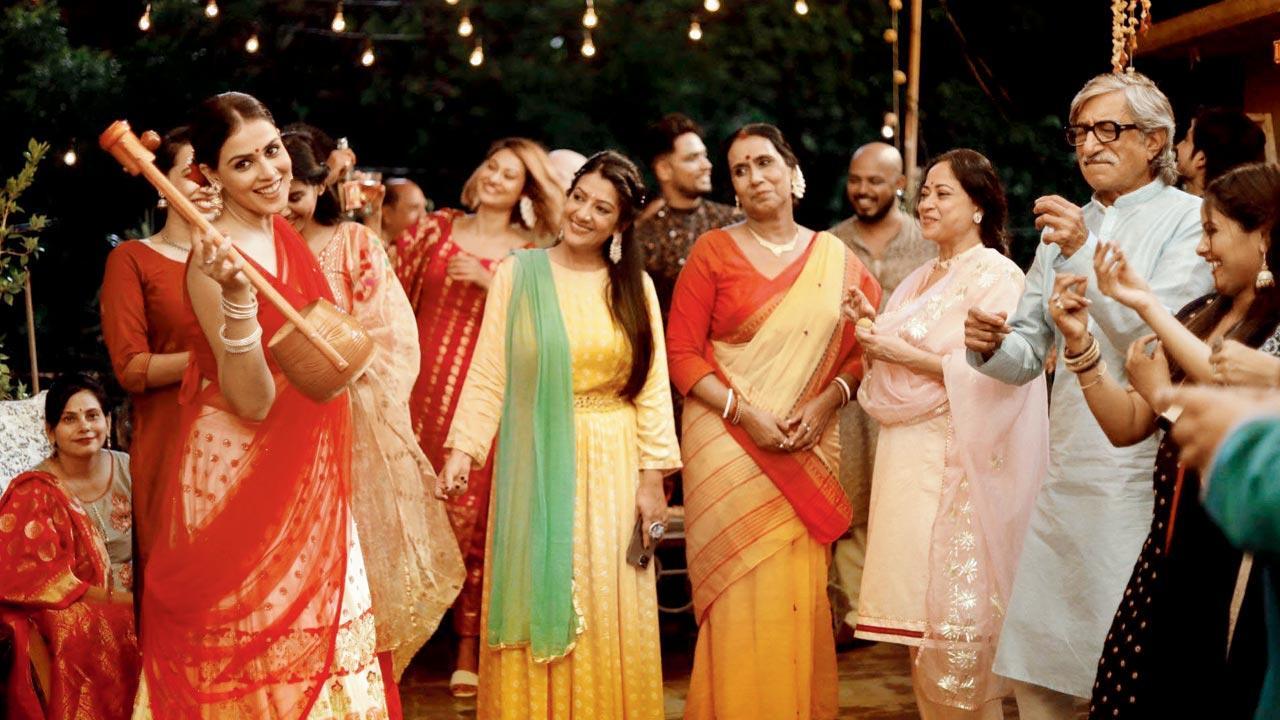
Director Aleya Sen shares why she chose Golemale for her upcoming film, Trial Period, featuring Genelia and Manav
Mohar Basu (MID-DAY; July 15, 2023)
When director Aleya Sen set out to make Trial Period, she was certain that not only the songs needed to be in sync with the storyline but also convey the emotions of the principal characters in those situations. The Jio Cinema offering revolves around a single mother Ana, essayed by Genelia Deshmukh, living in Delhi with her six-year-old son Romi. Her world turns upside down when Romi demands a father on a month-long trial basis.
For the critical sequence when Prajapati Dwivedi’s (Manav Kaul) trial period as Romi’s father is coming to an end just before Diwali, Sen opted for Golemale, a famous Bengali Baul folklore song. It is significant as Kaul’s character wrestles with his emotions, realizing it is his last chance to express his feelings to his ladylove. What adds to the impact of the track is that the director has also brought in elements of rap, to make it an interesting dance number.
“Golemale Pirit Koro Na is a Baul song that is like an anthem in Bengal that almost every Bengali has grown up with. It evokes a feeling of love, joy and longing,” Sen says, sharing that when the scene was drafted, the song came naturally to her and fits into the narrative seamlessly.
She elaborates, “The core of the song says that one should not go ahead and fall head over heels in love. There are dire consequences. It was an important call to take as I wanted the lyrics as they are. When [composer duo] Kaushik-Guddu came on board, they instantly got the pulse.”
Conceding that it is a challenge to create a rendition of a folk song that generations have been listening to since childhood, she says, “One of my reasons for using an authentic Bengali song is that music holds the power to connect with people in a profound sense. Golemale does exactly that while also adding a cultural layer to it. The song is beautifully composed by Kaushik Guddu and Shreya Ghoshal has added her magical touch to it! Choreography by Vijay Ganguly is nuanced and Genelia Deshmukh has done a fine job at performing it.”
Sharing their view of incorporating the folk number, composer duo Kaushik-Guddu say, “The story hit to a point where we needed a song that would speak on behalf of the characters. That’s where Golemale happened.”
Asserting that it is not an out-and-out romantic number, but a very old Baul Bengali folk song with a unique rhythm, the composer duo adds, “Even if you don’t understand the lyrics, you will move to it. When we were briefed about the song, we were certain that we didn’t want to disturb the melody because it has the biggest acceptance ever among the Bengalis. For generations and generations, this song is living through us and yet sounds new. We have added a rap part to add some colour to the song and also to add a visual break, and apart from this heavy groove and bass line, merging with a dotara riff is sounding bang on!”
None of this would have happened if I didn’t get that phone call, ‘Main Sanjay Leela Bhansali bol raha hoon’-Shreya Ghoshal
8:13 AM

Debarati S Sen (BOMBAY TIMES; February 28, 2023)
In the last two decades, Shreya Ghoshal has gone on to become one of the most-loved singers in our country. While she is known for some unforgettable, soulful melodies like Bairi Piya, Manwa Laage, Silsila Ye Chahat Ka, Jaadu Hai Nasha Hai, Wada Raha, Piyu Bole, Rasiya, she has also given music lovers foot-tapping numbers like Chikni Chameli, Param Sundari, Ooh La La and more.
In the recent past, Shreya did not get a chance to do a live concert in Mumbai, and finally, last weekend, after almost four years, she was back on stage to enthral her fans. Talking to Bombay Times, a few days prior tothe concert, she had said, “I feel Mumbai needs more live concerts. There is so much scope for our city to grow when it comes to live events as the energy of the audience here is amazing. I feel that Mumbai does not have as many concerts as other cities. There is a lot of potential here and as an artiste I do feel the lack of it.”

‘MUMBAI REPRESENTS THE MULTICULTURAL PART OF MY JOURNEY’
The singer feels strongly for the city which she says is her karma bhoomi. “Mumbai is very cosmopolitan, a huge mixed pot,” she said.
Shreya said, “We have so many different kinds of people living in the city, so, doing a concert in Mumbai feels very wholesome. As an artiste, my songs belong to various genres and I sing in different languages. Mumbai represents that multicultural part of my journey.”

‘IN MUMBAI CONCERTS, I LIKE TO SING MARATHI SONGS’
The fact that Shreya has sung in over 17 languages ensures that whenever she is at a concert, across India, she sings a few of her songs in the local language. She recently sang some Marathi songs for composer Ajay-Atul. “After a long time, I sang something in Marathi — a song called Chandra (Chandramukhi). A lot of non-Maharashtrians also enjoyed this song. In Mumbai concerts, I like to sing Marathi songs,” she added.
‘A CALL FROM SANJAY LEELA BHANSALI CHANGED MY LIFE’
At the concert that happened over the weekend, Shreya walked on to the stage singing the hit song Deewani Mastani from Bajirao Mastani. On an emotional note, she shared with the audience what working with Sanjay Leela Bhansali meant to her. The singer completed 20 years in the music industry, and while talking about it, she also recalled her first collaboration with Bhansali.
She said, “None of this would have happened if I didn’t get that phone call, ‘Main Sanjay Leela Bhansali bol raha hoon’. That call changed my life in every sense. And the song from Devdas, Bairi Piya, is the first song I ever recorded.”

Being a mother has changed me as a musician-Shreya Ghoshal
8:28 AM
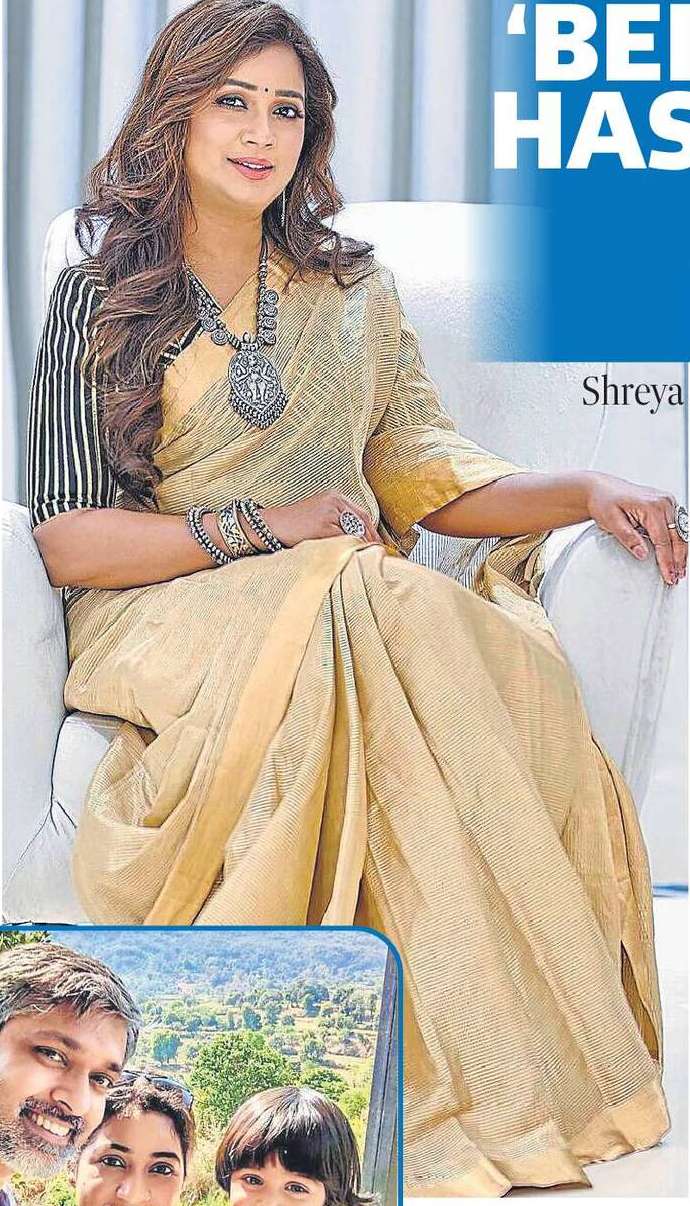
Shreya Ghoshal says her two-year-old son has helped her become more satisfied as a person; adds that he enjoys music too
Soumya Vajpayee (HINDUSTAN TIMES; February 25, 2023)
“Performing live gives me the oxygen to keep going. To be able to sing in front of large audiences means the world to me,” says Shreya Ghoshal, who will take the stage in Mumbai tonight. The singer, who became a mum during the pandemic, says motherhood has impacted her art positively.
“Being a mum has changed me as a musician. My perspective about life has changed a lot and that reflects in my life as a musician too. I feel more satisfied now,” says Ghoshal.
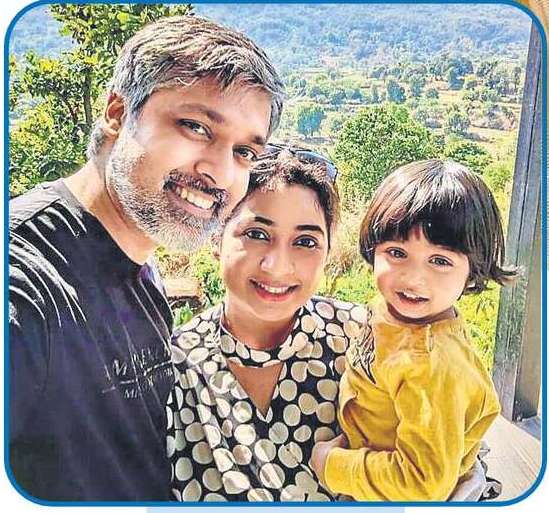
Does her son, Devyaan, enjoy music, too? “He is 21 months old now and it’s amazing to see him grow every day. He loves listening to music. He’s been responding to music since he was born,” shares the 38-year-old, who has given her “100% as a mum alongside work”.
Proud of being able to strike a work-life balance, Ghoshal adds, “It’s because of my family that I could travel for shows. It’s tough to stay away from my son for long. Sometimes, I take him along too.”
Though she has completed 20 years as a playback singer, she says it doesn’t feel like that long. “This is my 21st year. I started with Devdas (2002) and I feel so grateful and blessed. Though it’s a long time, it feels like yesterday. The journey has been so giving and enriching,” says the singer.
Ask about her aspirations as a musician, and Ghoshal adds, “I wish to learn more genres, collaborate with more artistes and delve more into independent music. I feel there’s no boundary between film and independent music anymore. People make good music and listeners connect to all kinds of music. I am so happy independent music is back and I too keep trying different kinds of songs.”
Catch it live
What: Shreya Ghoshal Live In Concert
When: February 25
Where: Inorbit Mall, Malad (W)
Timing: 7:00 pm onwards
Reality shows unfortunately are fiction shows today, says Antakshari creator Gajendra Singh
8:17 AM

Akash Wadhwa (BOMBAY TIMES; July 13, 2022)
Gajendra Singh, creator of music reality shows like Antakshari, SaReGaMa, Music ka Maha Muqabala, Sur Kshetra and more, recently conceived and directed the show, Nam Reh Jayegaa, a musical tribute to the late Lata Mangeskhar.
Talking about taking the show to Lucknow, he said, “Lata Mangeshkar had a unique association with Lucknow. Several music directors from there helped her with her Hindi and Urdu diction. So Lucknow ka ek final celebration and tribute toh banta hai Lata ji ko.”
Ganjendra, who started the trend of reality shows in India, says he is not happy with the dramatisation of the concept for the sake of TRPs today. He says, “Back then, reality shows were all very real. There was no added drama in them. We did not add any artificial script to a reality show. The reason why makers are doing it today is because they lack content. Channels don’t want drama, they want numbers and this can be achieved without drama. Makers of reality shows need to work on their content more — they would not need the support of drama then. The side-effect of drama in reality shows, especially singing ones, is that people remember the stories of a contestant, but they don’t remember their voices, the way they remembered Sonu Nigam, Shreya Ghoshal, Shaan and Sunidhi Chauhan. All the reality show singers of the past are remembered for their voices, try recalling their drama and you will not have a single memory because tab drama tha hi nahi. Reality shows unfortunately are fiction shows today.”
Gajendra says that he is trying to bring back one of his most remembered shows, Antakshari. He says, “Yes, talks are on with the channel and of course, the host Annu Kapoor, to bring Antakshari back in the same format, but with a new flavour. I had ended Antakshari because I wanted to move on then. I wanted to sign off on a high note. If all goes well, the show will soon go on floors,” he said.
Shreya Ghoshal, Neeti Mohan and I kept in touch throughout our pregnancies-Harshdeep Kaur
7:44 AM

Titas Chowdhury (HINDUSTAN TIMES; June 3, 2021)
Harshdeep Kaur welcomed her son, Hunar, on March 3. While it’s just been three months since she embraced motherhood, the singer has already learnt to strike a balance between her personal and professional life. “Earlier, I used to just do my riyaaz and recordings at home, but now, I sing to him (Hunar) all the time. That way, I’m composing new songs and lullabies. Sometimes, when he sleeps, I quickly record a song in my home studio,” she says.
Delivering a baby during a pandemic is no cakewalk, and Kaur admits she was worried to step out for check-ups: “But, we took all precautions, and our doctor was very encouraging. Another thing I was worried about was my vaccination, but I’m happy that they’re vaccinating lactating mothers now.”
The Mere Baabula (Jawaani Jaaneman; 2020) singer has also been sharing tips with “close” friends — singers Shreya Ghoshal, who delivered a baby boy last month, and Neeti Mohan, who is currently in her final trimester.
“We kept in touch throughout our pregnancies,” Kaur continues, “When I told Neeti that I’m going to be a mother, she kept my hand over her belly and told me she is pregnant as well... She keeps asking about my delivery experience, things she should pack in her hospital bag. As for Shreya, I was very concerned and kept checking on her.”
We lack the guts to experiment, that’s why we have so many remixes-Shreya Ghoshal
8:03 AM

Debarati Sen (BOMBAY TIMES; March 31, 2021)
Having rendered hundreds of songs till date, Shreya Ghoshal is a well-known name in Hindi film music industry. Would she change anything about Bollywood if given a chance? “Once a formula becomes successful in the industry, everybody tries to repeat it. All the originality and excitement goes out of the creative process then. You cannot repeat the same formula and hope for the same amount of success. I feel we lack the courage and guts to experiment, which is why we have these phases in music where only remixes happen. Of course, once that phase is over, we go back to experimentation,” says Shreya.
The singer also believes that there are many in the industry who think out-of-the-box. “There are some directors, music composers and producers who think differently and try to experiment. After that, another trend starts. I wish we were a bit more courageous and created different kinds of music that we believed in instead of just following trends,” she adds.
Talking about what she loves most about the Hindi film industry, Shreya says, “Bollywood is a very versatile place and welcoming towards new artistes, especially now. I also feel that the variety of music that exists in the industry would be hard to find elsewhere. Ours is a unique industry. We have so many different kinds of films, genres and such diversity of songs. If you look at my career, I have been fortunate to render songs that are soulful, romantic and melodious. At the same time, I have sung foot-tapping dance numbers, motivational, inspirational, philosophical and even situational songs. Some are classical while some have a Western touch and some are inspired by folk traditions. That is one of the reasons why we have an array of talent from composers to singers, musicians and lyricists in the industry. That's the best part of the Hindi film industry.”
I am planning to ask my fans to suggest names for my baby-Shreya Ghoshal
8:14 AM

Shreya is all set to welcome her first child with husband Shiladitya Mukhopadhyaya
Debarati Sen (BOMBAY TIMES; March 6, 2021)

Shreya further adds, “Shiladitya has been taking care of my health, mood swings and cravings. We wanted to plan this for a long time, but it’s only now that we’ve finally got a break from our crazy work schedules to give it the right amount of focus and love. We are nervous and excited at the same time. It’s all so new to us.”
Shreya says that they have not thought about names for the baby yet. “We are considering many options and are asking family and friends for suggestions,” she says, adding, “I think I will now open it to my fans as well. They will surely come up with the most meaningful and unique names.”
Talking about getting a nursery ready for the new addition to their family, she says, “I kept thinking that there is a lot of time, but I got busy with my work during this pregnancy, and now, I can’t believe how time has flown by. I have to start preparing soon.” Shreya plans to do up the nursery on her own. She tells us, “I love doing things myself, and for this, I would not have it any other way.”
The singer is thoroughly enjoying being pampered by her family. She shares, “My mom and dad are pampering me a lot. All my bizarre food cravings at odd hours are lovingly taken care of by them. They are so excited about becoming grandparents. Soumyadeep, my brother with whom I released a song recently, has been so caring. My in-laws, too, are very loving and supportive. My pet, Sherlock, seems to be very curious about all that is happening around him. He can probably sense he is getting a sibling soon.”

What we have done is just the warm up-Shreya Ghoshal, Shekhar Ravjiani
8:29 AM

Shreya Ghoshal, Shekhar Ravjiani are aware of the measures they've taken to survive in the industry for 20 years. In an interaction, they say they are only getting started
Sonia Lulla (MID-DAY; February 1, 2021)
Two years after Shekhar Ravjiani and Shreya Ghoshal first expressed their interest in collaborating on this property, mid-day is finally able to have them arrive at a time suitable to both. Brought together via a video-conferencing app, the talkative singer-composer duo leave little scope for a third person’s intervention. Over cups of coffee, they amuse one another with poor jokes, and us, with noteworthy stories of their respective journeys in the music industry. Edited excerpts from the interview:
Shreya: How has this phase been for you? You look so comfortable in Khandala that it seems like you no longer want to come back.
Shekhar: This has been a great year for me. I understand that people have gone through a tough time, physically, mentally, in their relationships and due to the pressure of work. But, for me, it was like a gate had opened. I didn’t have to think about anything, and simply went with the flow. If someone asked me which year has been among my most favourite in recent past, it will be 2020. Things rolled with ease. I was busy [working for] my music school, and making songs without worrying about the platform for which they were being created, or how they were being promoted. I wanted to go back to that stage in my life when I had no films, and created music because I loved to do so. Those wings are out now, and I am experiencing that feeling of flying [again].
Shreya: I had a similar experience. I have never spent as much time in my kitchen or living room as I have been spending now. The first few days were about cooking meals. Then, it seemed like [we had been in lockdown for] too long. At some point, I [feared] for the future. Then, I gave in, and took to a routine I had once diligently followed. [I began to] do my riyaaz regularly. An aspect of self-improvement was completely lacking in my life. And implementing that again has brought about a big change.
Shekhar: If you could revisit your life and do anything differently, what would that be?
Shreya: Had the things that happened to me, not have happened, I would not have been able to take the decisions that I did to reach here. I lived in Rajasthan, in a township of scientists and engineers. No one in the community had made a career out of music, and often [school authorities] would frown upon me for skipping school to fulfil a music commitment. But, my parents were supportive, and made me believe that what I was doing was special, and I was privileged to have this gift. I didn’t have a degree. My friends are all big techies today, and I could have been among them. But I would have been mediocre, and I am glad that I didn’t [choose another career]. I realised early on that I may not be great, but I felt good about myself when I sang.
Shreya: Tell us about how you fell in love with music.
Shekhar: It started pretty early. Luckily, my family members were such that if any chord was struck at home, each member was capable of catching the note and singing in tune. We didn’t come from a music background, but music was always played at home. When guests would come over, people would jam. My dad was a phenomenal accordion player, which he pursued as a hobby. I eventually took music lessons from the piano player Xavier Fernandes. I was never interested in the first 50 minutes of the sessions, which involved theory. But, the last 10 minutes, when he taught me a song, were cherished. I would practice what he’d teach in those last minutes, long after he would leave. Thus, I say, I have learnt by listening. A friend who worked for Mr Mukul Anand took a tape of mine to him. He heard it, and wanted to meet me. At 16, I got my first job as a composer and singer, and at 17, I was among the busiest composers for 60-second ads.
Shreya: When did [your debut film] Pyaar Mein Kabhi Kabhi, come out?
Shekhar: I had been working in the industry for seven years before it came my way. It was made by Mukul Anand’s assistant Raj Kaushal, and most of the artistes associated with the film, went on to [achieve immense fame].
Shreya: I want to know about your new music school, the GIIS Shekhar Ravjiani School of Music.
Shekhar: In 2018-2019, I did workshops in Singapore. The kids were so talented, and sang Carnatic and Hindustani classical music so well, that the limited workshops that I did there were very successful. That’s when we locked the GIIS and Shekar Ravjiani Music School, with 22 campuses and 15,000 students. Fifteen of them will be personally mentored by me. I will pick those students who really have the desire to learn, and who are happy souls. Your heart has to be happy to flourish.
Shekhar: Can you tell us about your latest song?
Shreya: The music that we have around us is not inspiring. With Angana more, I wanted to do a bandish, but decided to make a song instead. I wanted it to be unique, and that is when [I roped in] my brother [Soumyadeep]. He is a full-time techie, but has always been passionate about music. But, neither did [the family] encourage him to take it up [professionally], nor did he consider it a [career option]. But, he has found an outlet [to express himself]. I have been a singer and have not been [exposed to] the process of composing. So, this is a journey I really enjoyed.
Shreya: I want you to start working on the collection of songs you have created. When do we begin? I am supposed to work on many of them.
Shekhar: Yea, unfortunately I haven’t been able to connect with Shreya Ghoshal. Do you have a line on her?
Subscribe to:
Posts (Atom)