Showing posts with label Sholay. Show all posts
Showing posts with label Sholay. Show all posts
I believe an actor who becomes frustrated burns out very quickly-Rakesh Bedi
4:52 PM

Neha Maheshwri (BOMBAY TIMES; July 20, 2026)
If Dhurandhar has been a disruptor in Indian cinema, Rakesh Bedi has emerged as one of its biggest rediscoveries. Nearly five decades into a career spanning cinema, TV and theatre, the veteran has won widespread acclaim for his portrayal of Jameel Jamali, proving that one role can remind audiences of an actor’s enduring brilliance.
‘Dhurandhar was a result of one scene in Uri’
Citing his role of Khabrilal in Tirangaa (1993) as an example, he says, “No matter the role, big or small, I always worked honestly and to the best of my ability. When Uri: The Surgical Strike (2019) was being made, I received several calls from the production, but I kept refusing because I didn't want to do just one scene. Finally, Aditya Dhar called me. At the time, I barely knew him. He told me, ‘Sir, whenever I reach this page in the script, I can only think of you for this part. Now you tell me, will you do it or not?’ I was overjoyed. Since then, Aditya and I have shared great mutual respect.”
‘The maine sabki chhutti kar dee mindset is a dangerous zone’
At the sequel’s screening, Arjun Rampal told him, “Aap sabko khaa gaye.” Bedi smiles at the memory but is careful not to let the compliment go to his head. He says, “That was his way of appreciating my performance. Everyone has done justice to their role. So did I. It's just that my part took a bigger slice of the pie.”
The veteran is equally mindful of not allowing success to inflate his ego. Clarifying a recent remark about finally feeling like a star, he says, “I don’t have the feeling that I am a star. I said it in reference to the love I have received after Dhurandhar. If that’s what people call stardom, so be it. I never assume that maine sabki chhutti kar dee. That mindset can be dangerous. It can get into your head, and luck or fortune can humble you overnight. Main uss zone mein nahi jaata ki main bahut phail jaaun.”
‘I believe an actor who becomes frustrated burns out very quickly’
Jameel Jamali has revealed a side of Bedi that even many within the industry hadn’t seen before. Yet, he has never measured his career by the opportunities he missed.
He says, “One thing about me is that I have never been frustrated. I believe an actor who becomes frustrated burns out very quickly. If I keep dwelling on what I didn’t get, it will only breed anger, and sooner or later, that will reflect in my work and behaviour towards colleagues ki tum nahi jaante main kya hoon. Arre bhai, nahi jaante tum kya ho, lekin tumko jo kaam diya hai, usko toh theek se karo. I never want to get into that space.”
‘Amjad Khan didn’t become an overnight star with Sholay’
If there’s one thing Bedi wants younger actors to remember, it is to let the work speak louder than the trappings of stardom. He says, “Aap jo bhi kaam kar rahe hain, usko achha kijiye. Uska kahin na kahin aage jaa kar asar padta hi hai. A lot of newcomers focus more on the frills than on the work, like meri vanity, mere dry fruits, and everything that comes with stardom.”
Drawing from Bollywood history, he adds, “We often think Amjad Khan became an overnight star after Sholay (1975). He didn’t. Before that, he had done around 10 films, playing small parts, sometimes just a scene or two. But whatever he did, he did well. The same is true of Nawazuddin Siddiqui and Pankaj Tripathi. I’m not saying you should accept completely inconsequential roles with a single dialogue like, ‘Yeh aapka letter aaya hai,’ or ‘Maine injection laga diya hai. Baaki Bhagwan par bharosa rakhiye.’ Luck plays a huge role, but it isn’t in your control. What is in your hands is doing every role with honesty, dedication and complete focus.”
‘I have to choose my roles diligently and carefully’
Finding a director who can look beyond an actor’s established image, Bedi believes, can be career-defining.
He says, “Ye iss industry ki vidambana hai that once you’ve played a certain kind of role, people tend to see you only through that lens. They either can’t or don’t imagine you differently. They often cast whoever is available and fits the budget. Very few filmmakers are willing to wait for an actor rather than compromise on their vision. That kind of faith gives an actor tremendous confidence. It’s always a two-way street.”
He concludes, “After Dhurandhar, people have expectations from Rakesh Bedi. So, I have to choose my roles more diligently and carefully. Whatever I achieved in Dhurandhar, I owe equally to Aditya Dhar. He wrote a wonderful part, and I’m grateful he entrusted me with it.”
25 Years of Gadar - Ek Prem Katha: Never had exhibitors seen such a response to scenes with the public going wild
10:52 AM
Box Office India Trade Network
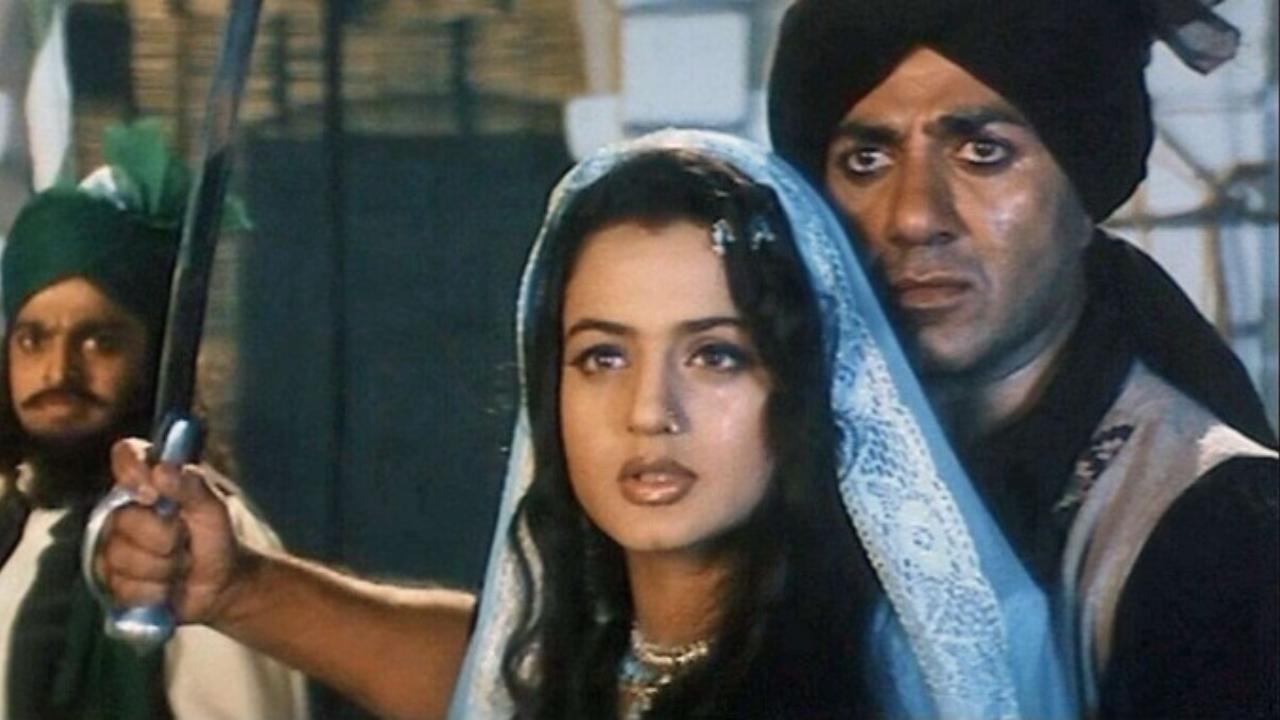
GADAR - EK PREM KATHA is celebrating 25 years today as it released on 15th June 2001 to a bumper response. The collections on day one were not a record but that was basically because it was not the biggest release in terms of prints. In those days, prints were important for the final number as generally most commercial films with a star cast were going to 90% plus occupancy on day one. GADAR - EK PREM KATHA opened to cent per cent capacity all over barring some stations of South India.
The collections of the film were never seen before type especially for those initial 10-12 weeks. The craze was unprecedented with the music and dialogues, certain scenes going to such a level that they became etched in public memory like never before. Never had exhibitors seen such a response to scenes with the public going wild and this was practically all over the country.
The film did an insane job at the box office when released and was one of the great films of India cinema but to get among the real cream there has to be a longevity. GADAR - EK PREM KATHA had this longevity as some scenes were such that the audience would never forget but due to the change in business, it never had that theatrical run of SHOLAY or MOTHER INDIA, which, even after twenty of years release, were a theatrical force. These films proved their relevance well after release. So, while GADAR - EK PREM KATHA had the same relevance their was no way to prove it. Yes satellite was a rage but then SOORYAVANSHAM was a bigger rage. Hence, when you want to be among the greats, you need something more than satellite.
Eventually GADAR 2 happened in 2023 and that initial and the response to the film rubber stamped the greatness and relevance of GADAR - EK PREM KATHA and how it had passed the test the time like very few before it. The reaction to GADAR 2 meant that that GADAR - EK PREM KATHA was probably the second greatest film ever seen in India after SHOLAY.
There are only 4-5 films in this bracket and time will tell if BAAHUBALI or DHURANDHAR can get there though it will be tougher for the former due to the faces in it and the music in the film as CHANDRALEKHA was a similar film in 1949. But ten years later, no one really knew about it. With DHURANDHAR time will tell though it does not have that mass appreciation at the level of a SHOLAY, GADAR or MOTHER INDIA.
GADAR clashed with another big film LAGAAN but in those days the clashes did not matter as both films had their chain of theatres in each circuit. LAGAAN had better industry reports and the general sense was that it will do better but this was related to media and industry. GADAR had been sold for higher prices and was a wider release. So, ground realities were different to what the industry and media thought even before release. The only thing was business was not about the weekend or week at that time. As a result, with the better industry reports they would have thought that the final business of LAGAAN would be better.
Aamir Khan compares Thugs Of Hindostan to Sholay
9:26 AM

HINDUSTAN TIMES (May 19, 2026)
Actor Aamir Khan reflected on the box office failure of his 2018 film Thugs Of Hindostan at a Mumbai event on Friday. The 61-year-old compared the film to Ramesh Sippy’s classic Sholay (1975) and revealed that repeated script changes caused the story to lose its essence.
Aamir shared, “Thugs Of Hindostan is (basically) Sholay. In Sholay, you have Sanjeev Kumar’s Thakur, who needs to take revenge for his family being wiped out. And two people, Jai and Veeru, come in to help. Over here, it’s Zafira (Fatima Shaikh) needs same help and Firangi (Aamir) comes in.”
Admitting that while he usually prioritises the story above all else, here he placed his character above the story, which “bounced back badly”.
Speaking at the Screen Academy Masterclass, he shared, “For casting reasons, we kept changing the script. I wouldn’t know I’d make a fundamental error. We should not have changed the script. So, when you’ve seen Thugs, you haven’t seen the original script that Victor wrote.”
Directed by Vijay Krishna Acharya, Thugs Of Hindostan was made on a reported budget of over Rs. 300 crore, and ended up as a massive box office failure.
Sonal Chauhan to feature in dance number Mirzapur: The Movie on the lines of Sholay's Mehbooba Mehbooba
8:32 AM
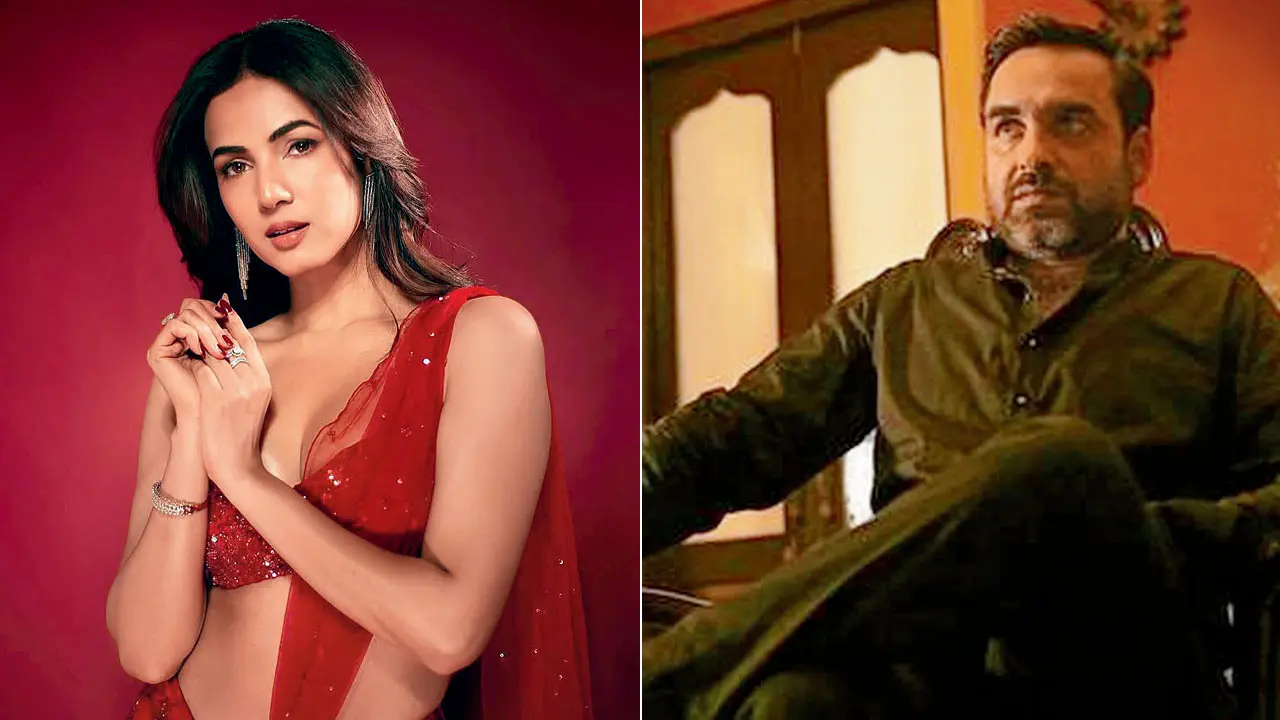
‘Mirzapur: The Movie’ actors Pankaj Tripathi, Ali Fazal, and Divyenndu join Sonal Chauhan to shoot a dance number, along the lines of ‘Sholay’ chartbuster ‘Mehbooba Mehbooba’
Upala KBR (MID-DAY; March 21, 2026)
When crafting a full-blown action spectacle, it’s not surprising for a filmmaker to take inspiration from Hindi cinema’s most enduring movie, Sholay (1975). Gurmmeet Singh would agree. After all, the director, who is readying Mirzapur: The Movie for the big screen, has created a dance number along the lines of Mehbooba Mehbooba, which featured late Amjad Khan and Helen. Pankaj Tripathi aka Kaleen bhaiyya, Ali Fazal, Divyenndu, Jitendra Kumar, Abhishek Banerjee, and Ravi Kishan feature in the track that has Sonal Chauhan at the centre.
We’ve heard that the unit filmed the track in Jodhpur last month. Tripathi’s Kaleen bhaiyya may be more skilled with guns than with dance moves, but it turns out producers Farhan Akhtar and Ritesh Sidhwani were certain that such a song would only amp the sequence.
A source told mid-day, “Sonal Chauhan has performed the item song against a desert backdrop. The mood is such that Kaleen bhaiyya and the other characters are having fun at a rural bar where she is shaking a leg, and eventually they all join in the revelry. Tents were put up across the deserts of Jodhpur, where the song was shot over three nights.”
Mirzapur: The Movie’s soundtrack has been composed by Khandal and Junaid Kumar, while Vijay Ganguly choreographed the dance number.
The source added, “Pankaj is not known to dance much, but he enjoyed shaking a leg. Whatever he does, he does with great satisfaction.”
It’s no longer possible to make films like Gangs Of Wasseypur fearlessly today-Anurag Kashyap
2:24 PM

Yemen S (BOMBAY TIMES; February 6, 2026)
Filmmaker and actor Anurag Kashyap says his biggest fear today is not being able to make the kind of cinema he truly believes in. Speaking at the 17th Bengaluru International Film Festival (BIFFES) 2026 during the Fearless Filmmaking session on Saturday, Anurag said films such as Gangs Of Wasseypur and Mukkabaaz would not be made in the current climate.
“Gangs Of Wasseypur or Mukkabaaz would not have been made today because of the themes I chose to tell those stories with. And even if they were released, they would be heavily censored,” he said.
Anurag also noted that several honest filmmakers are attempting to find ways around censorship. “India is still better, and that gives me hope. If filmmakers can make cinema in Russia and China, we can too,” he said in conversation with critic and writer Baradwaj Rangan. “Movies that spark important conversations will be made in India at some point. We just need to wait,” he said.
‘The OTT format has destroyed the way cinema is experienced’
Cinema, Anurag said, has always been meant for the big screen. However, with the rise of OTT platforms and the convenience they offer, audiences are increasingly consuming films on smaller devices. “When I made Nishaanchi, I envisioned it entirely for the big screen. But times have changed. People now watch films at their convenience. The format has destroyed the way cinema is experienced,” he said.
Emphasizing the importance of the theatrical experience, he added, “The joy of cinema is watching it on a big screen. You can’t watch Mera Naam Joker or Sholay on a phone. These films are made for the theatre, and it’s a disgrace if they’re watched otherwise.”
‘Reaction to Toxic trailer was blown out of proportion due to social media’s controlled narrative’
Responding to the backlash around the trailer of the upcoming Kannada film Toxic, Kashyap said he enjoyed it and felt the reaction on social media was exaggerated.
“When a woman is in control of her sexuality and enjoys it on screen, it becomes a problem. But when male actors do the same, no one says anything,” he said, adding, “Social media controls the narrative, and this was blown out of proportion.”
Jai-Veeru’s iconic motorcycle from Sholay becomes a fan magnet at IFFI Goa
8:36 AM

Niharika Lal (BOMBAY TIMES; November 27, 2025)
Right next to the parking lot at the IFFI (International Film Festival of India) venue in Goa – just past the security checkpoint – stands the Sholay motorcycle, displayed inside a glass enclosure. The iconic 1942 BSA WM20 is pulling more fans than the red-carpet this year. The motorcycle, which Amitabh Bachchan and Dharmendra rode through the Yeh Dosti song sequence, has been brought out of the archives by Karnataka’s Department of Information and Public Relations to celebrate the film’s 50th anniversary, and cinephiles can’t get enough of it.
Cinephiles heading to screenings pause to pose beside the motorcycle, snapping photos of the registration plate – MYB 3047 from the erstwhile Mysore state. Most of them are heard asking the same questions: “Is this really the bike from Sholay ?”, “Does it still run?” and “Is it a replica?”
Replica or not (yes, it’s the real bike), very few installations across the festival grounds have drawn cinephiles at IFFI like this motorcycle. Following Dharmendra’s demise on November 25, more festival-goers have been flocking to see it.
‘I wish there was the sidecar too’
Grace, a cinephile who went behind the motorcycle to get a shot with it, said, “If not for the Sholay poster, we would’ve walked right past it. It’s so iconic, I can’t believe it’s the same motorcycle. But I wish the sidecar was there too!” Another festivalgoer, Jacob Verghese, said, “No matter which generation you are from, you know the Yeh Dosti song. You know that bike. Seeing it here at IFFI is like a piece of movie history on display.”
Yeh Dosti put viewers on the motorcycle
The song Yeh Dosti was shot over 20 days. Director Ramesh Sippy and cinematographer Dwarka Divecha added a sidecar to the bike to emphasize the friendship and filmed the sequence with a 180-degree effect – making viewers feel as if they were riding with Jai and Veeru.
Here's why Sholay 4K screening cancelled at the 56th IFFI
10:09 AM

Rishabh Suri (HINDUSTAN TIMES; November 27, 2025)
Fans of Sholay will have to wait longer to watch the remastered version of the iconic 1975 classic, originally scheduled for a special screening at the 56th International Film Festival of India (IFFI). HT City has learnt that the screening has now been called off. The cancellation comes at a time when fans are already grieving the loss of its beloved star Dharmendra. The veteran actor, who played Veeru in Sholay, died on November 24 at the age of 89.
An official source tells us that the screening was scrapped due to “technical glitches from the makers’ side.” Director Ramesh Sippy and actor Hema Malini were expected to walk the red carpet for the event. However, with Dharmendra’s deteriorating health over the past few weeks, Hema’s appearance was already uncertain. Many had, in fact, initially attributed this as the reason for the screening not happening.
The film’s 4K version will release in theatres on December 12. Meanwhile, Ramesh Sippy’s session on 50 years of Sholay will take place as scheduled at the festival.
When Dharmendra told Omar Qureshi, "From now, my home is open to you at any hour. Just don’t break the faith"
8:52 AM

Omar Qureshi (MUMBAI MIRROR; November 25, 2025)
My fingers are frozen, my eyes are moist and my heart is flooded.
How does one pen an ode to the greatest hero that ever lived? How can a word count ever do justice to his 89 years? His 65-year career that spawned more hits than any superstar born. Even today. Yet he disliked the tag ‘superstar’.
“Call me actor. Brother, son, father. Those are the most important roles we play,” he stated often during our many interactions. And great actor-star he was, with a flair for comedy no star can master. And those fist fights? Phew. When his massive hand covered the face of the bad guys and that famed dialogue ‘kutte’ rang out – there was theatre frenzy unleashed.
No wonder a teenage me always wanted to be Dharmendra. Every youngster did. A soft vulnerable face that charmed every bird from every tree. A physique that every youngster wanted long before gyms were a thing. The classic soft face, a tough body. And with an endless well of emotions that never failed to overwhelm.
No wonder, when I joined the legendary magazine ‘Stardust’, I wanted to interview Garam Dharam (an epithet fondly given to him by the magazine publisher and editors past). The editor warned me. ‘He doesn’t speak easily to us. And you will have to chase him and convince him.” That very day my chase began. In an era without mobile phones, I chased him to every shooting, every mahurat, every premiere but he always gave me a fresh date.
It was six months later that I finally got an interview at Film City. Of course, I sat miles away, near the green room door to run if required. However, the man I met was the kindest, most humble, most caring star I’d always imagined. Nevertheless, after the interview the warning came; “I trust you, so write well. Don’t twist my words, otherwise you know I can get angry also.”
I never gave him that chance. It was the cover, headlined ‘50 Years and Sexy Still’. That interview made my bones as a writer as soon as the issue hit the stands. Later that night, my landline at home rang. “Dharamji baat karenge,” said the voice.
My heart skipped several beats until the star himself spoke, “You have gained my trust. I liked your article. From now my home is open to you at any hour. Just don’t break the faith.” Vindication!
After that there were several times I interviewed him, often dropping into his warm and cozy home. It was his warmth and greatness that almost made me feel like family. Always so much more than an actor or a star. That was a trait the world came to love and adore. A rare trait. He could be anyone, play any role. At Bobby’s launch in Barsaat, it was as if he was Editor, Writer, Photographer all in one. He wanted Sunny and Bobby to do a feature clad in denim. It became one of the highest sold covers. Thanks to Dharam ji’s vision. All because it came from the deep emotional heart of a doting family man.
A little-known fact about this huge talent, was and is, that he is fluent in Urdu and wrote the most beautiful shairi. During my The Times of India tenure, he asked me, “Urdu jaante ho?” Shamefacedly I couldn’t nod. “Shame on you. You should know Hindi and Urdu first. Uske baad English.” Then he recited the most beautiful poetry I’d heard. All from the pen of this multi-talented man.
Hard to imagine that this man, with the massive fan following and the toughest natural muscles in Bollywood had a soft side. A weakness. He couldn’t see suffering. Legions of people visited him daily for solace and help; even producers stuck for funds. And a superman named Dharmendra always helped them. A cameo in a film, a phone call of support and even not charging many distressed producers. Surely many must’ve taken undue advantage, but our hero didn’t care. “Be good and be humble” was his motto always. The only time he flared up was when his family or any woman were disrespected. Then God help the offender. At heart he was always the gentle giant. A good man, of the finest mettle that was ever made.
In later years, he made action movies like Hukumat, Loha and Insaniyat ke Dushman coming on the heels of an industry strike. Those movies saved the industry, blockbusters all. Though his all-time personal favourite remained the sensitive Satyakaam.
From on-screen lover boy to an action star with a flair for comedy, he could be anything he wanted at any point in his career. Cinema and the world of Bollywood adapted around him. How else can we explain the iconic Chupke Chupke? The hilarious Naukar Biwi Ka? The sensational Sholay? This legend made any genre slip into cinema as easily as he carried off the gladiator look in Dharam Veer. He also made a dance style his own, reminding people that tough guys can dance.
Tragically, every story has a cruel twist. The man with the endearing smile will smile no more. An era is past. Or is it? Does the flame of the eternal hero ever dim? 65 years of film magic will live on forever. And as millions of hearts brim over worldwide; a song haunts us in the background – Gaadi bula rahi hai, seeti baja rahi hai … from Dost - another of his beloved films. It reminds us that heroes never really go away. They live in hearts and minds forever. Dharmendra has just taken a train to Valhalla. He will be back soon – on every screen there is. And I will watch and clap like that teenager of our first meeting.
After all, yeh dosti hum nahin todenge…
Omar Qureshi is a Bollywood expert and film reviewer
I don’t believe that cinema is dead, it’s alive and thriving-Ramesh Sippy
8:59 AM

Eshna Bhattacharya (BOMBAY TIMES; November 15, 2025)
When Ramesh Sippy took the stage at the 31st Kolkata International Film Festival for the Satyajit Ray Memorial Lecture, the packed hall was transported back to the dusty plains of Ramgarh, where Sholay first came alive. Fifty years since its release, the filmmaker’s words still carried the same spark of storytelling that defined one of Indian cinema’s greatest epics.
Sholay: From two lines to timeless legend
Ramesh Sippy recalled, “Sholay started as a two-line idea, maybe four, about an army officer and two mischievous ex-soldiers, later changed to police officers because army permissions would have slowed filming.”
He praised Salim-Javed, saying, “I told Javed sahib only about Gabbar - impulsive, heady, smiling one moment and exploding the next. From his first narration, I knew he’d captured exactly what I wanted. That scene in the ninth reel gave us the immortal line, ‘Kitne aadmi the?’”
On unseen technical challenges, Sippy explained, “The Thakur family massacre sequence took 23 days because weather kept changing; clouds appeared after days of perfect sunlight. The lamp-lighting scene with Amitabh and Jaya took 15–20 nights - we rehearsed in the afternoon and shot at dusk, often capturing just one take per day. There were no post-production fixes; every shot demanded meticulous planning, patience, and teamwork. Even a bike-with-sidecar shot was nailed in the first take after careful preparation.”
On casting, he said, “Dharmendra debated Thakur, Gabbar, and finally Veeru. Hema Malini’s speed and energy made Basanti unforgettable, while even small roles like Asrani’s jailor or Sachin’s priest’s son were built with perspective.”
Concluding on the film’s legacy, he reflected, “Every frame, every contribution - from Salim-Javed to technicians like M S Shinde and Mangesh Desai, to artisans like Aziz Bhai - mattered. That’s why Sholay endures, fifty years later, delighting audiences worldwide.”
Cinema, change, and the art of balance
For Sippy, the core of filmmaking lies in balance - between art and commerce, between dream and discipline. “The combination of art and commerce, to me, is true cinema,” he said. “Markets change, but the fundamentals remain. Filmmakers, producers, financiers -all adapt, but what lasts is sincerity.”
He dismissed the idea that cinema is losing its relevance. “Don’t believe for a moment that cinema is dead,” Sippy said. “It’s alive and thriving. Every genuine hit proves how audiences still come back to fill the halls. Multiplexes may be smaller than single-screen theatres, but they deliver what matters - great sound, beautiful projection, and that same old magic.”
Sippy’s message to young filmmakers was clear: “Follow your dreams, trust your instincts, and give the world good, powerful, entertaining cinema. The audience always knows what’s genuine - and they reward sincerity and passion. That’s the real legacy.”
He also spoke about the role of women in cinema, the rise of new voices, and how technology has transformed storytelling. “Whether you learn in film school or by observation, what matters is the urge to create,” he said. “Any time is a good time for cinema.”
Bengal, and a hope of a future bridge
The filmmaker grew nostalgic as he reflected on Bengal’s influence on his work. “To have someone like Satyajit Ray admire Sholay is an honour I’ll always hold close,” he said.
“Ray’s storytelling taught generations of filmmakers to aim higher.” He acknowledged the imprint of Bengali cinema on his own philosophy, adding, “I learned so much from Bengali cinema and from filmmakers everywhere: the ideal is always to combine art and commerce, making films that connect with audiences on all levels.”
Expressing a desire to return to Kolkata, he said, “Kolkata breathes cinema. I think I would be quite happy to look at some kind of proposal, a project bridging Bombay and Bengal. If we find the right film, the right subject that appeals to both audiences, and in general, to everyone, I’ll be very happy and willing to do it. If the opportunity arises, I’d love to make something that bridges Bombay and Bengal, a story that speaks to everyone.”
------------------------------------------------------
“My father was in films, but my first visit to a set was when I was just seven years old. I walked through those huge wires and all the equipment on set. It was dangerous, I realize now, but at the time, as a kid, I didn’t think about that. I was simply fascinated by the entire atmosphere.” - Ramesh Sippy
------------------------------------------------------
“Don’t think that cinema is dead. It is very much alive, and when a hit comes along, you realize the audience never left - they always come back. Whenever there’s a good film, they will return” - Ramesh Sippy
------------------------------------------------------
“Satyajit Ray was a great admirer of Sholay. He once told me it was one of the most well-crafted films in Indian cinema he had ever seen.” - Goutam Ghose
Restored & reborn: The 4K revolution reviving Indian cinema
10:00 AM

With recent film releases providing more misses than hits, the industry has turned to restoring old classics in 4K. Rajesh N Naidu writes about what this trend portends for our movie-going experience
Rajesh N Naidu (THE ECONOMIC TIMES; November 12, 2025)
Films from a bygone era are getting a new lease of life, in restored, 4K resolution. It’s introducing a new generation of audiences to cinematic legends, but it’s also having another, more unexpected benefit: It’s bringing families closer.
Imagine a situation in which a grandfather and his grandson are leaving a theatre after watching the 4K restored version of the 1957 Hindi classic Pyaasa. The grandson, a product of today’s highly visual world, says, “The dream song in Pyaasa was shot so well for its time.”
After almost a minute, the grandfather asks the grandson, “Didn’t you like the ‘lift’ metaphor in the scene after the dream song in which Mala Sinha’s character unconsciously conveys to Guru Dutt’s character that she wanted to rise in life and wouldn’t settle for a relatively poor and impractical life with him?’ The grandson says, “Yes, that scene was also shot so well” The grandfather smiles and understands that he relived what he had cherished from the classic and his grandson experienced what he chose to experience—an exquisite marriage of ‘substance’ and ‘visual fidelity’. And just like that, the two, generations apart, have something to bond over as they leave the theatre.
This is a common experience for many Indians in recent months, as several old classics in many regional languages are being re-released in theatres following a 4K restoration. Films such as Awara (1951), Pyaasa (1957), Silsila (1981), Umrao Jaan (1981), Chandni (1989), Samrajyam (1990), Ravanaprabhu (2001) and Varsham (2004) all got theatrical re-releases, and industry observers have said there is a line-up of at least six more films which are undergoing restoration. These include Pakeezah (1972), The Godfather II (1974) and Shiva (1989).
“Film restoration has two benefits: One is preservation, where you restore a valuable piece of film, but which may not make money even after a theatrical release. And second, you restore a classic like Sholay, which is likely to be a commercial success as well. This differentiation of films is key,” said Shivendra Singh Dungarpur, founder and director, Film Heritage Foundation, a non-profit that’s into restoration.
The Film Heritage Foundation, in association with director Martin Scorsese’s film restoration company, Film Foundation, restored Uday Shankar’s 1948 film Kalpana in 2012, the first Indian film to be restored in 4K.
Need of the hour
At a time when more mainstream cinema is being rejected for being too crass, violent or over-the-top, audiences are craving the simplicity of stories and depth of the performances from another era. Meanwhile, a different set of viewers appreciate the grand expanse of a visually clear classic on 70mm film. The re-released masterpieces thus offer something to everyone, creating a celebratory environment where the two sections of viewers appreciate old classics in their own unique ways.
This wave of restorations can also be attributed to more and better access to mobile streaming. “In the past few years, people have become used to a certain quality of content which they consume on smart TVs, smartphones, tablets, etc,” explained Hiren Gada, CEO, Shemaroo Entertainment.
If anything, streamers and platforms don’t even prefer to accept films that aren’t in 4K anymore. “Rights holders of old films in 4K version have an advantage over rights holders of the same old film in a non-4K version, because avenues of monetizing films are limited for the latter,” said Sushil Kumar Agrawal, CEO, Ultra Media and Entertainment Group.
Pandemic boom
The trend properly took off during the pandemic. With millions of people locked down at home and the pipeline of new films firmly turned off, restored films became a lifeline. “During Covid, there was no new content. It was a steady supply of old films in 4K which [entertained] audiences,” said Kavita Prasad, managing director, Prasad Corporation, one of the oldest film laboratories in India.
Even post-lockdown, in the early phase, it was film festivals honouring legendary actors such as Amitabh Bachchan, Dilip Kumar, Dev Anand and A Nageshwar Rao, organized by the Film Heritage Foundation in collaboration with rights holders of these films, that revived footfalls in theatres. “The Amitabh Bachchan Film Festival in October 2022, which showed 11 of his films, was a phenomenal success. It did two things: It brought people back into cinema halls, which wasn’t happening since Covid. And it showed the success of old classics,” Dungarpur said.
“It then culminated with the release of 4K versions of Telugu film icon A Nageshwar Rao’s movies on his birth centenary in September last year.”
Poor box-office performance of new Hindi films in the past few years has also hastened the trend. “Today, most new films don’t run beyond a week or 15 days. Multiplexes with multiple screens need [more] content. This need is being fulfilled by the old classics in 4K. In the South, this trend has caught on quite a bit thanks to the loyal fan bases of actors,” Prasad added.
And then, there are the producers who look at it as a form of reviving cultural memories and reliving nostalgia. “Nostalgia has value and it always sells. The 4K restoration movement marks a turning point for Indian cinema. It is about reviving our cultural memory for a new generation of audiences. It also provides today’s audiences opportunities to experience the same grandeur and emotion that once defined the golden age of Hindi cinema,” explained Suniel Wadhwa, co-founder and director, Karmic Films.
Talking business
But this has also triggered a natural question among industry observers: Will it be a fleeting trend, or does it make long-term business sense? One key advantage of restoring old films is the cost.
According to leading film laboratories, restoring an old film in 4K costs about Rs 20 to 60 lakh, depending on the condition of the original source material. “The cost of restoring old films is lesser than making a new film. One would have to invest at least Rs 10 to 50 crore to make a new film. But restoring an old film not only costs less, but also saves on marketing costs. Moreover, these films have already been made and were proven to have an appeal among audiences,” Prasad added.
But not all old classic films (especially Hindi) restored in 4K have met with success. “We restored a bunch of Guru Dutt films. But not all of them worked out commercially. There were no takers for Baaz (1953), but Pyaasa (1957) worked,” shared Sushil Kumar Agrawal, CEO, Ultra Media and Entertainment Group, which restored Guru Dutt’s films.
So, rights holders of these old films have been forming portfolios of 10-15 restored movies and then gauging their long-term performance, instead of assessing those of individual restored works. “A portfolio of old films restored in 4K can easily provide an internal rate of return (annual return) of at least 20% in the next three to five years post its restoration,” Gada added.
Companies which are into the business of film restoration also pointed out that 4K films provide premium advertising rates on CTVs and YouTube. According to a recent study by media and entertainment research firm Ormax Media, the CTV audience in India has grown by 85% to 129.2 million in 2025 from 69.7 million in 2024, reflecting the swift adoption of CTVs.
“Restoration is a one-time exercise. It increases a film’s reach significantly. A film’s rights holder can monetize it on more, bigger or better screens, targeting more premium audiences,” Gada said. “A 4K film on CTVs can easily fetch premium advertising rates, as it is targeted specifically to premium viewers who prefer superior visual quality,” added Gada.
At present, on average, at least 10% of libraries of aggregators have been restored in 4K, including other stages of upgradation in the visual format. Overall, these aggregators have restored 80-90% of their libraries in HD formats. And in the coming years, the restoration of films in 4K is likely to increase even further, given the available avenues for monetization. Industry observers believe that a lack of clarity regarding the lineup of new Hindi films for the next year may also work in the restored films’ favour.
They also believe that a genuine classic made 20 years later will have takers rather than merely re-releasing an old film in 4K. “A classic film which has a popular appeal can provide a huge 300-400% profit when monetized through theatrical and non-theatrical ways. Genuine classics have better stories which are highly engaging. People relate to these and want to see them in a better proposition, like in 4K,” explained Koushik Bhattacharya, founder, Quality Matters, a company which is into film restoration.
Understanding: What is a 4K film?
4K is essentially a display resolution of a screen. A 4K film typically shows the size of a screen horizontally and vertically in terms of pixels. Typically, a 4K film would have the following format: 4096 (size of the horizontal screen) x 2160 (size of the vertical screen) pixels.
| NFDC-NFAI Charges for 4K Film Restoration | ||
| Key Components | Per minute charge* | **Charge for 2-hour film |
| Reel Assessment & Storage | Free | Free |
| Digitisation and Grading in 4K | Rs2216 | Rs2.66 lakh |
| Restoration & Digitisation in 4K | Rs22836 | Rs27.40 lakh |
| Includes GST* | ||
| Estimated charges** | ||
Lucky Ali vs Javed Akhtar: Singer ‘apologizes’ for calling him ‘never original’
8:17 AM

HINDUSTAN TIMES (October 24, 2025)
Days after calling him “ugly as f**k”, singer-songwriter Lucky Ali ‘apologized’ to veteran lyricist Javed Akhtar. Ali (67) wrote in an X post that his words were not meant to offend. He wrote on Wednesday, “what I meant was that arrogance is ugly... it was a mistaken communique’ on my part... monsters may have feelings too and I apologize if I hurt anyone's monstrosity... (sic)”
This comes after his post on October 20, “Don’t become like Javed Akhtar, never original and ugly as f***,” over Akhtar’s (80) interview with India Film Project from last year that resurfaced online. Citing a scene from Sholay (1975), which he co-wrote with Salim Khan, Akhtar had said, “There was a scene where Dharmendra hides behind Shiv ji’s idol, and he speaks from that place. Hema Malini thinks Shiv ji is talking to her. Is it possible to have a scene like that today? No.”
Akhtar also remarked, “(Filmmaker) Raju Hirani and I were in Pune, and I said that don’t become like Muslims. Make them like yourselves. You are becoming like Muslims. It’s a tragedy.”
Akhtar did not publicly respond to Ali’s comments till the time of going to press.
Sholay’s jailer Asrani passes away at 84; Javed Akhtar says, "Fame harmed his acting career"
9:06 AM

Bella Jaisinghani (THE TIMES OF INDIA; October 21, 2025)
Mumbai: Even as his most iconic film ‘Sholay’ was playing as a Diwali highlight on television, legendary comedian and character actor Asrani passed away at the age of 84 Monday, reports Bella Jaisinghani. His familiar face and nasal twang brought smiles to generations of film audiences through 300 films over a career spanning 50 years.
“He was feeling weak for the past 15 days and had respiratory difficulty four days ago. He was hospitalized in Juhu. The final rites were performed in Santacruz crematorium with wife Manju (Bansal) and friends in attendance,” said secretary Babubhai Thiba. Manju was an actress who featured as Asrani’s wife in his famous Champak Bhoomiya avatar in ‘Aaj Ki Taaza Khabar’.
The death of the actor known for his iconic line, ‘Angrezon ke zamane ke jailor’, evoked a wave of sorrow nationwide. Born Govardhan Asrani to a carpet dealer in Jaipur in Jan 1941, he completed his school and college education in his native state before heading to FTII Pune to make a career in cinema.
After being advised to try his luck in cinema by Kishore Sahu and Hrishikesh Mukherjee, Asrani was first noticed in ‘Satyakam’ then ‘Mere Apne’ (1971) followed by Abhimaan. He accompanied Rajesh Khanna in nearly 25 films from 1972 onwards, including ‘Namak Haram’ and ‘Bawarchi’. He lent able support to Amitabh Bachchan especially as his Sindhi secretary in ‘Abhimaan’ and P K Shrivastav in ‘Chupke Chupke’.
Asrani’s memorable roles include Roti, Prem Nagar, Chhoti Si Baat, Rafoo Chakkar, Sholay, Balika Badhu, Fakira and Anurodh. He got to express more nuanced performances in Koshish and shades of grey in Nikaah and Ab Kya Hoga.
The multifaceted artist also experimented with singing as a horse cart driver in Alaap. Asrani later wrote and directed ‘Chala Murari Hero Banne’ which along with ‘Salaam Memsaab’ cast him as hero.
A diverse range of directors from Hrishikesh Mukherjee to Basu Chatterji, onward to David Dhawan and Priyadarshan, exploited his talent well. Asrani also enacted scores of Gujarati films as hero, and directed a few.
He won the Filmfare Award for Best Comedian for Aaj Ki Taaza Khabar and Balika Badhu. The audience of the 2000s became familiar with him through Hera Pheri, Chup Chup Ke, Hulchul, Deewane Huye Paagal, Garam Masala, Dhamaal, Malamaal Weekly, Bhagam Bhag and Bhool Bhulaiyaa.
Akshay Kumar mourned his loss saying, “Speechless with grief at the passing of Asrani ji. We had just shared the warmest of hugs just a week back at the shoot of Haiwaan. Bahot pyare insaan the. He had the most legendary comic timing. From all my cult films Hera Pheri to Bhagam Bhag to De Dana Dan, Welcome and now our unreleased Bhoot Bangla and Haiwaan.. I had learned so much from him.. thank you for giving us a million reasons to laugh.”
NCP (SP) MP Supriya Sule to his alma mater FTII, people and institutions mourned Asrani’s death. One fan wrote a beautiful epitaph on social media. Quoting his dialogue from Sholay, he said, “Aadhe idhar jao, aadhe udhar jao. Baaqi mere peechhe aao! Truly no one can follow your footsteps, Asrani Sahab.”
------------------------------------
Komal RJ Panchal, Upala KBR (MID-DAY; October 20, 2025)
It’s heartbreaking that on Monday, as the country was in a jubilant mood celebrating Diwali, the man who made us chuckle and laugh over the years, through his comic acts, was no longer with us. Veteran actor Govardhan Asrani, better known by his mononym Asrani, passed away on October 20 in Mumbai.
Confirming the news to mid-day on late Monday evening, his personal assistant Babubhai said, “Asrani sahab was admitted to Bharatiya Arogya Nidhi Hospital in Juhu four days ago. He passed away between 3.00 and 3.30 pm today. His funeral is done.”
In a career spanning over five decades, Asrani gave Hindi cinema many memorable characters, most iconic among them being his quirky jailor act in Sholay (1975).
As mid-day reached out to Javed Akhtar, who had written the action drama along with Salim Khan, the veteran screenwriter shared, “He was an extremely versatile actor. He achieved tremendous fame for the jailor’s role in Sholay, but at the same time, it harmed his acting career too. That became his image. Asrani had such a range of acting; I can never forget his dialogues in Bawarchi.”
Asrani’s command over his craft implied that he shone in supporting roles — as the able manager in Abhimaan (1973), or the street-smart guy in Chhoti Si Baat (1975).
Sholay director Ramesh Sippy remembered Asrani as someone who was “very easy to direct”. “He became the character so naturally. He had worked with me earlier in Seeta Aur Geeta for a cameo, and we thought he deserved another chance because he did that scene so well. He was 10 times better [in Sholay]. We will miss a great human being and a fine talent,” he said.
Ramesh Sippy on why he never made Sholay 2: "Some films should remain untouched"
9:38 AM
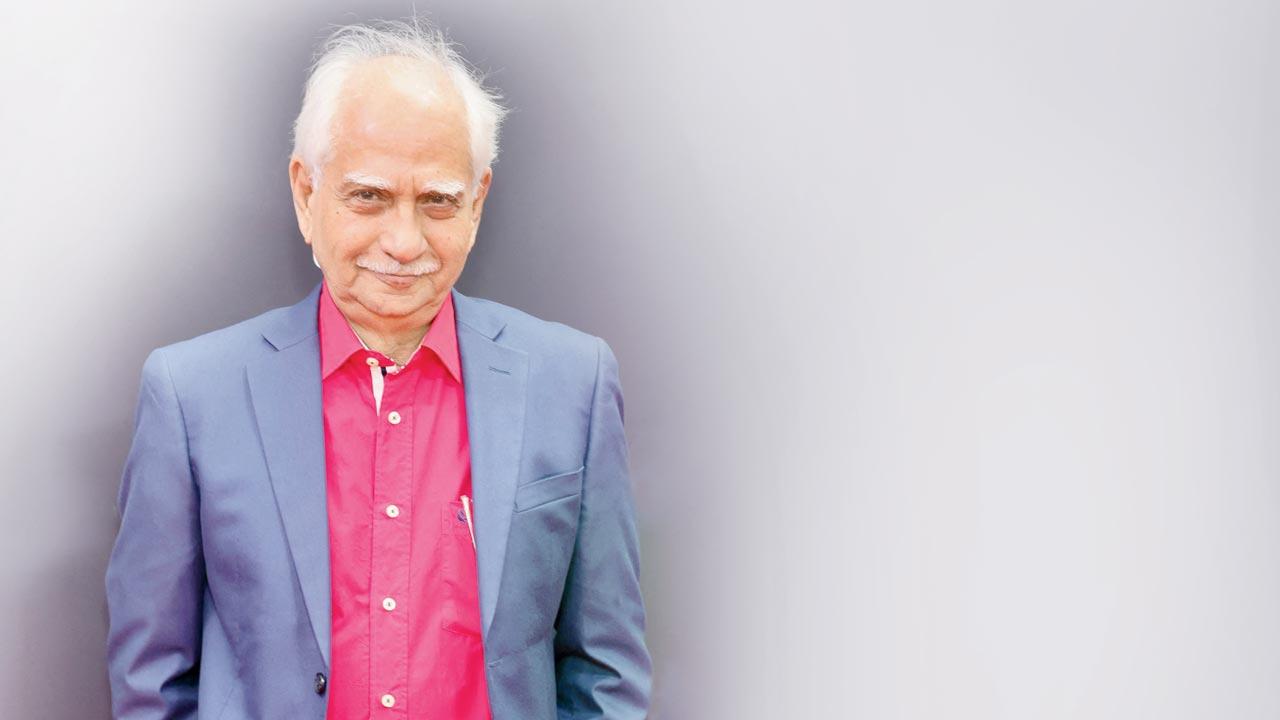
Komal RJ Panchal (MID-DAY; October 15, 2025)
For Ramesh Sippy, 2025 has been a significant year. The veteran filmmaker’s masterpiece Sholay completed 50 years of its release in August. Over decades, Sippy has carried the tag of the Sholay director. It’s something he wears with pride, but doesn’t let it weigh him down.
“I never felt any pressure to outdo Sholay. Every film must have its own identity. I don’t chase success; I chase inspiration,” he begins, when we, after over two months of chasing the filmmaker, sit down for a chat with him.
Inspiration has struck him again. The filmmaker, whose last directorial venture Shimla Mirchi released in 2020, is going back to the director’s chair.
“I’m developing a new project. It’s in its early stages. I’ve always believed in being completely sure of an idea before moving forward. Once I’m certain, you’ll hear an announcement,” he says, refusing to divulge any further details. While the buzz is that the project is an action film, he stays tight-lipped, only saying, “I am currently shaping it with writers.”
Sippy is understandably more forthcoming as we turn the lens on his 1975 classic starring Sanjeev Kumar, Amitabh Bachchan, Dharmendra, Jaya Bachchan, Hema Malini, and Amjad Khan. To mark the 50-year milestone, the movie’s restored version was screened at the Toronto International Film Festival. Many domestic film festivals too hosted special screenings. The response continues to move Sippy deeply.
“It’s overwhelming. When we made the film, we had no idea what it would become. I recently watched Sholay in Toronto with a full house, and the audience reacted exactly as Indian viewers did back in 1975. That was truly heart-warming.”
Very few Hindi films have managed to be as enduring as the classic. Ask Sippy the secret to the movie’s longevity and he points to its honesty.
“We kept it simple — drama where it was needed, humour and warmth where it belonged. Salim-Javed wrote a superb script, and the actors performed with sincerity. Add to that R D Burman’s unforgettable music, and everything just clicked.”
In today’s cinematic landscape, a film like Sholay would have spawned sequels and spin-offs. But Sippy never considered taking that route. “The culture of sequels didn’t exist back then, but more importantly, Sholay is fine as it is. After 50 years, the audiences react the same way. Why change something that continues to work perfectly? Some films should remain untouched.”
I will never make another Sholay-Ramesh Sippy
8:37 AM

Ramesh Sippy with Hema Malini and Amjad Khan on the sets of Sholay
Neha Maheshwri (BOMBAY TIMES; September 10, 2025)
Sholay, the 1975 blockbuster that redefined Indian cinema, turned 50 earlier this year. Touted as the greatest Indian film ever made, the film was honoured at the Toronto International Film Festival (TIFF), a recognition that speaks volumes for its timeless appeal and cultural influence.
Director Ramesh Sippy says, “Making a film is a lot of hard work. So, when it receives appreciation at the end of the day, it feels good. After all, being appreciated is an important aspect of moviemaking.”
Sholay created characters that became a part of popular cultural lore. However, Sippy dismisses the notion that the cult film helped him crack the formulaic moviemaking code in Indian cinema.
He says, “No one makes a good film with the thought that it must have some good songs, action that hasn’t been seen before, or a romantic scene that stands out. You begin with what you have, a bunch of writers who give you a strong storyline that you build up with good characters.”
‘Trade pundits felt Sholay would not recover the money spent on it’
Sippy says, “I was fortunate to have fine writers like Salim-Javed on board. Together, we were able to develop a powerful script. Casting the right actors was equally crucial. With music by R D Burman and lyrics by Anand Bakshi, we had a fabulous score.”
Surprisingly, Sholay did not open to a great start at the box office initially. He recalls, “Sholay was a very expensive film. It would normally cost Rs. 50-60 lakhs, but Sholay cost Rs. 3 crores, and trade pundits felt the movie would not be able to recover the money that was spent on it. No film had recovered that kind of cost, so they felt, what’s the point of it being a well-made film? We discussed the excessive criticism surrounding the film, but finally decided to leave it as it is. We thought time would tell and it did tell.”
The iconic characters of Sholay
The casting process of Sholay is the stuff of legends, with stories about Dharmendra initially wanting to play Thakur, while Sanjeev Kumar eyeing the role of Gabbar Singh.
Sippy shares, “If one character is more colourful, the other one seems to have more depth. Jaya Bachchan, playing the silent Radha, was just as important as the chatterbox Basanti, played by Hema Malini. It was the same in the case of Mr Bachchan as Jai, the silent and calm contrast to Dharam ji’s flamboyant and outspoken Veeru. It all worked out beautifully. However, it was not easy to make a film like Sholay. Most films are made in 40-50 days, but for Sholay, it took us 300 days to shoot it. We put our shoulders to the wheel as a team and plodded on.”
‘Films like Sholay become timeless, which is why we’re still talking about them’
Sippy is firm in his belief that Sholay should never be remade. He says, “I will never make Sholay again. If the film is still being remembered after 50 years, does it make sense to make it again? Films like Sholay become timeless, which is why 50 years later, we’re still talking about them. If somebody else wants to remake Sholay, they can, but I personally would not want to.”
In 2007, Ram Gopal Varma attempted exactly that, with Ram Gopal Varma Ki Aag, but the film failed to resonate with the audience. Sippy recalls, “Ram Gopal Varma had come to me wanting to remake it, and I very politely suggested to him not to. However, every maker has a right, and I told him it’s entirely his decision.”
Sholay was like a big and successful startup idea of those days-Rohan Sippy
8:38 AM

Rajesh Naidu (THE ECONOMIC TIMES; September 8, 2025)
Poet and cultural scholar A K Ramanujan in his essay Three Hundred Ramayanas observes: “In India and in Southeast Asia, no one ever reads the Ramayana or the Mahabharata for the first time. The stories are there, 'always already.'” It would not be an unpardonable exaggeration if one uses this insight in the case of one of the greatest films of Hindi cinema: Sholay.
One does not watch Sholay for the first time. One hears, reads, laughs and celebrates Sholay for almost anything—causes, agendas, sarcasm, personal communication and pure entertainment. It is a force which unites the elite with the mainstream and creates cliques even among people who do not share a deep bond. It has created a language of its own in which people speak to communicate the intimate, the profound, the routine and the mundane with absolute precision without losing the context. So, Sholay is a national cinematic language which has remained alive since its release. And it will remain the national cinematic language till the time Hindi cinema is alive.
Recently, Sholay completed fifty years of its release. ET’s Rajesh N Naidu caught up with Rohan Sippy, an accomplished filmmaker himself and son of Sholay’s director Ramesh Sippy, to know his thoughts about the film. Rohan Sippy has directed critically-acclaimed and commercially well-accepted films such as Bluffmaster! and Dum Maaro Dum and web series such as The Office, Sandwiched Forever and Criminal Justice: A Family Matter. He also shared his views about his own works and the current situation of the Hindi film industry. Here are the edited excerpts:
The world is celebrating fifty years of the release of Sholay. What are your thoughts when you look back at the film?
I think it is marvellous how almost everything fell into place for the film. One must consider the time in which the film was made. They were working at a time of political emergency. People were paying income tax, which was as high as 97%. Then, there was entertainment tax which was as high as 177%. This means that doing the movie business itself was challenging and required a daredevil spirit. In this backdrop, there is a director and an able producer who have an ambition to make a film which is larger-than-life than any film made before it.
One can have writers who are at the peak of their powers. One can have a competent producer who had a unique vision, courage and conviction to go into unchartered territory. Yet, one can go wrong and fail. But they all succeeded. This is the most startling part of the story.
One must bear in mind that a lot of technical work of Sholay was done overseas. Technicians were flown to London. Then, there is such a huge cast. It is unimaginable to pull off such a film even today.
It is just the passion to do something special which is palpable in Sholay. They found the right collaborators. They were able to ride out so many challenges on so many different levels. In today’s parlance, going by the sheer confidence and daredevil attitude of the director, Sholay can be considered a Start-up Idea which paid off. A one-in-a-million idea which succeeded. But I don't think one could predict or foresee the kind of success which the film earned over the years. I think this is the case with most great films. A director may have vision, confidence and conviction. But no director can claim to know the recipe of success of a film.
You are closer to the film’s creator than any viewer by the virtue of being his son. There might be stages of your understanding Sholay. You have watched Sholay as a teenager. Then, as a young adolescent. Subsequently, as a well-established filmmaker. As a filmmaker, what have been your key learnings from Sholay?
I first saw Sholay when I was about four years old. It was a magical and overpowering experience. The experience lingered in me for a long time. As a teenager I studied abroad. I showed it to my friends. They also liked it. It has cut across geographies and generations including my daughter and her friends. For me, it is a mystery beyond a point. It has become part of India’s popular mythology. It is like one of our epics.
There are so many lessons within Sholay. Over the years, the film has evolved into a Bible in filmmaking. One comes back to the film for a solution to a writing problem in a script. There are lessons about how to create a world, build characters and focus on certain specific aspects of a scene.
I will give you an example. You look at the introduction of Gabbar Singh in the film. You can study the shot taking one by one and understand how the character is unfolding. There is so much unpredictability in the presentation of Gabbar Singh. You look at where the camera is placed when Gabbar is laughing or where the camera cuts suddenly when Gabbar is in an aggressive mood. Also, the whole drama that unfolds when his gun comes out. The amount of thought which has been poured into these scenes is so awe-inspiring that one does not ever absorb these thoughts in the scene in the first viewing itself. Even the scene where Jaya Bhaduri’s character returns the keys to Jay and Veeru. It is so specific and adds so much emotional depth to the film’s narrative.
Importantly, Sholay’s sound design is another special thing in the film. Many a time, one is tempted to watch the film only for its sound design. You listen to the background sound when Sachin’s dead body is brought back to the village. It is a lesson in bettering your screenplay through an effective sound design.
So, everything from performance to staging scenes to editing them and then, sound design, Sholay has lessons in almost every department of filmmaking.
What are the lessons in filmmaking you have learnt from your father especially in the context of Sholay?
I don't think I have had a sit-down discussion with my father about Sholay. The last thing I want to do is be the millionth person asking him about Sholay. But we discussed a lot about the writing process. From these discussions life lessons would emerge. Lessons about how to take on challenges and keep pushing even when there are a lot of things pushing you back. I learnt that one needs to have conviction in one’s vision and an uncompromising attitude in the pursuit of excellence even when there are easy ways to do things. But the biggest lesson I learnt from the discussions I had with my father is clarity of thought. One needs to have clarity of vision and then pursue it doggedly.
Another thing which I learnt from him is the ambition to be different and not go down a path that either everyone else is going down or something that you have gone down before. You look at his body of work. He has worked in multiple genres. From a love story like Andaz to an out-and-out comedy film like Seeta Aur Geeta to an action adventure like Sholay to a James Bond-kind film Shaan and then again returning to a different kind of love story with Sagar. He also did a different kind of drama version of Mother India in an urban setting through the film Shakti.
This ambition to go out and expand one’s own cinematic language has been a big thing for me. I have followed this in my own way. Apart from Criminal Justice, I did a sitcom like Sandwiched Forever which I shot in a five-camera set up. It was a new learning experience for me.
What was the actual premise with which Ramesh Sippy started Sholay?
My father loved Westerns. He grew up watching them. He also liked horses. Even my grandfather owned racehorses and enjoyed that part of that passion as well. So, my father always thought about this idea of making a film which is close to a western. He always thought: Why cannot we make a film like a western in India? So, I think that was the kernel of the idea of Sholay. Then, I think the discussion with Salim sahab and Javed sahab started. Subsequently, the core story of the film emerged. Then, they bounced the story off with my grandfather. My grandfather instinctively saw potential in the story.
I think at that time there were two films. One was Majboor, a complete script. And the other was this idea of an outdoor western kind of film which will be Sholay. Then this story kept growing big day by day organically. They realized that they would have to fill a big canvas. So, they kept on working because they instinctively knew it was a good idea. I think this is the process by which they end up making the film.
The film’s screenplay was written in sixteen days and in another sixteen days the film’s dialogues were written. So, in a month’s time they had pretty much something very close to the shooting draft and maybe a few scenes here and there were fleshed out later.
There are certain scenes in Sholay which may not be directly connected to the main plot. In that sense, the film's screenplay does not seem tight and a bit scattered. Yet, they are so entertaining that audiences do not realize that they are not adding much to the main plot. What are your thoughts about it?
Those scenes reflect the power of a director who is at the peak of his powers. He was such a daredevil director. He knew that he was taking a little liberty. But he was confident that he will be able to pull it off. It could have been a tighter screenplay. But then the impact would not have been the same. These imperfections and slight diversions make Sholay what it is. These scenes give the film its soul.
Also, there are certain dialogues in Sholay which provide just information. According to you, what elements made these dialogues so iconic?
I think those dialogues are like the cherry on the top of a cake. They sound like a distinct cymbal clash in a beautiful 100-piece orchestra. This is the impact of these dialogues. Everything else is working in a perfect concert. These dialogues make the film memorable. A viewer who comes out of the cinema knows these dialogues. For instance, think about the dialogue: Purey Pachaas Hazaar. It works because there is a lilt to it. In that scene, there is threat, fear and the crescendo of the scene is the dialogue. There is an emotional impact on the audience. I think it was the first time a separate Long Playing (LP) record of dialogues of a film was released. This shows the extent to which the audiences connected with the film. This took the film’s acceptance to another level.
Directing a multi-starrer film could be a challenging thing. There is always a concern about stars not receiving proper footage. According to you, did Ramesh Sippy face any such challenges?
I think my father had earned a reputation as a young, incredibly talented and visionary director before he embarked on the journey of making Sholay. He had delivered two hit films. A lot of actors wanted to work with him. He had developed relationships with big and talented actors such as Sanjeev Kumar ji, Dharmendra ji and Hema Malini ji by this time.
Mr. Bachchan was not in the successful phase of his career. But my father loved him as an actor. My father knew that because he is not at that successful phase it would be easier to handle him than someone who might be at the peak of their power. Then, Jaya ji came on board as she also liked the overall story. There was a certain way in which actors worked that time. They would not just focus on their roles. They would focus on two important things. First: whether they want to be part of a story. And the other is: whether the story of a film was worth telling. This is how actors worked that time. So, it was not a difficult task to bring together these big actors. Also, one needs to bear in mind that the story needed these big stars given its scale. The casting of the film can be summed up as the right person emerging at the right time.
I am sure you have watched films such as Seven Samurai, The Magnificent Seven and similar films which spawned the western genre. How do you assess Sholay when you compare the film with these great western or samurai films?
I think inspiration is always there. One is inspired by others. The great Japanese director Akira Kurosawa was inspired by pulp western books. Then, he in turn inspired American filmmakers. Subsequently, American filmmakers inspired us and others. So, there develops a tribe of storytellers. I think this tribe of storytelling tradition goes back to William Shakespeare. So many of Shakespeare’s stories have geneses or roots in other stories and events. Then, you go back to oral traditions. One picks up from there also. But it is not an easy thing to do.
In Hindi, there is a saying which goes: Nakal Ke Liye Bhi Akal Chahiye (One must possess skills to borrow things and create well and convince others of the originality of one’s creation). One can give the same material to ten people. Nine of these ten people may fail to figure out as to how to use it. But the tenth person will copy certain things from the same material, change some things and present it in such a way that the material would look original. Most of us are like that only. A large part of our learning a language or what constitutes culture is achieved by copying each other only.
So, I think it is not that important whether westerns inspired the people behind Sholay. The world of films is a stream which keeps giving and taking things from one storyteller to another. I think the important thing is the relevance of a story and its ability to connect with audiences. That is the heart of filmmaking.
A lot of acclaimed directors made their great films when they were quite young. Francis Ford Coppola made The Godfather when he was just 32. In fact, Orson Welles who made Citizen Kane at 26, once said ‘ignorance’ in filmmaking was the key thing which worked in his favour. Ramesh Sippy was 28 when he made Sholay. Do you think when a talented director is young enough the ability to do out-of-the-box things is quite high in comparison with a seasoned director who may be set in his or her ways of filmmaking?
Yes, I agree. The spirit of a film reflects the people associated with it. When directors are talented and young, they are not straightjacketed in their worldview. Whether you call it ignorance or confidence, the cowboy mentality that I can do it is always there. This also worked in the case of Sholay. My father and Salim-Javed were like a bunch of cowboys. Even the actors in the film had swagger. The way these people interacted with each other and conducted their lives off screen made them so interesting. It is reflected in the film. One does not see such kind of people today. That is why one does not see that spirit in today’s films.
Which is your favourite character in the film?
I think there are so many memorable characters in the film. People even remember a small character like Samba who had very few dialogues. But I connect the most with Mr Bachchan’s character. One wants to be like the character. He is the coolest thing in the film. It is the most memorable and entertaining character in the film. I like his wit, the way he did his action and the whole emotional arc of the character. The character is very relatable to me.
It is a great tragedy that Sholay did not get many awards. It got the Filmfare Award for Editing only. Do you think it deserved awards in other important departments of filmmaking, especially direction?
It is bizarre to me how a small group of people make a subjective call. In hindsight, it looks ridiculous how such a big film got only one award especially when one considers the fact that the film has stood the test of time. Even after fifty years of its release, we are talking and discussing the film. It shows that the film was quite ahead of its time. It proves Wittgenstein's ruler theory which says a lot about the ruler than the thing which the ruler measures.
As a filmmaker, today when you look at Sholay, do you want to add, edit or delete anything in the film?
If I can go back in time, then I would like to release the uncensored version of the film. There is so much poetry in the way the uncensored version of the film ends. It deals with the idea of revenge in such an interesting manner. It makes the characters realize the futility and hollowness of revenge. In the uncensored version, after killing Gabbar, Thakur goes to Veeru, consoles him and says to him: ‘You lost your best friend. I killed Gabbar. I don’t know whether I have gained anything?’ I think if they had released this uncensored version, then the audiences would have loved the film even more. This is the original version of the film. This idea was used very well at the end of director Shriram Raghavan’s film Badlapur.
Do you think a web series based on Sholay exploring in detail the past of its key characters can be made?
I think it will be fun to look at the film in a web series form. The central mythology of the film could be fun to play around. Yes, a long form storytelling based on the characters of the film will be an interesting thing to explore. One can dig deeper and create more out of the key characters.
Now, let us talk about your work. In its recent research by media and entertainment research firm Ormax Media, Criminal Justice emerged as one of the highly watched original web series. You have directed the last three seasons of the web series. What elements in the series convinced you to be a part of this series?
I had previously worked with Applause Entertainment on some episodes of the Indian version of series The Office. I have long-standing relationships with Sameer Nair and Deepak Segal (producers of Criminal Justice series). In fact, Deepak was the editor of one of my grandfather’s films, Pathar Ke Phool. When I was approached to direct one of the seasons of Criminal Justice, it felt like a natural fit. The first two seasons were produced in the UK. The UK version introduces a new female lawyer character while here we chose to continue with the character Madhav Mishra. It made sense narratively.
Directing a series has been a different experience compared to films. Films typically require more holistic involvement from directors early on. But for a series much of the writing is done before a director's involvement. It is often shaped through discussions with a platform and then a shooting draft is finalized. Our input is focused and more contained compared to the broad scope a film director usually has in films.
One practice that has become a tradition across our projects is conducting table readings with all the actors and key crew members. This process allows everyone to hear the script aloud, which is valuable because television work is oral and visual rather than purely written like a book. Table readings clarify many aspects and generate new ideas. They offer actors insight into their characters' emotional journeys, especially because shooting is fragmented over long periods. I found this collaborative approach particularly effective.
Criminal Justice appealed to me partly because I have not explored the legal genre before. It presented an exciting challenge and an opportunity to discover new creative rules for me. I have directed three seasons. I have seen how the show has evolved into its own format centred on the character Madhav Mishra. The character Madhav Mishra anchors the narrative much like classic legal drama characters.
It has been a rewarding experience to revisit the series multiple times. Each season introduces fresh cases, which helps prevent the show from becoming stale. This mix of familiar characters and engaging new investigations keeps the series relevant to audiences. Overall, the whole journey has been quite gratifying for me.
Are you working on a new film?
I am working on a script. I have been approached by producers for a couple of scripts. But till something is locked, it is impossible to talk about it. But I am trying something in a lighter space.
What is your assessment of the present state of the Hindi film industry?
These are the times of correction. One of the hallmarks of Hindi cinema used to be strong films featuring newcomers. Over the past several years, however, we seem to have moved away from that tradition. I am glad that Yash Raj has embraced it again, and I can already see the benefits. Hopefully, this approach will encourage many more filmmakers to follow suit. It shouldn’t be limited to a single genre either—the larger idea is to back projects with younger actors. After all, the audience largely remains young though we often forget that we have grown older.
Of course, this does not mean films must exclusively feature young actors. But it is important to invite them in and give them space. Saiyaara has done that very effectively, and I hope it sparks fresh excitement among producers and in the market to support such ventures. What is really needed now is new ways of thinking about how to make this happen. If this succeeds, then I hope to see many more such films by the end of the year.
Lastly, what are the challenges in the Hindi film industry? Do you think there is a lack of passion, funding or absence of directors in the right sense of the expression?
I think the expression that sums up the present situation in the Hindi film industry is: Skin in the game. In the earlier time, you had to have skin in the game. A producer was liable. He would put his own cash and credibility on the line. So, in a sense, the risks got evened out. It is not that they weren't failures. A director also realized the risks a producer was taking. A producer knew that he would lose home or office if things go wrong.
Think about the time when Rajshri Productions’ Hum Aapke Hain Koun..! was released. At that time, only mass films were working. But they put everything at stake. They decided that they will not sell the film. They decided to release the film in 36 screens. It was a huge risk. If the film did not work, then they would have incurred losses. They were liable for everything. But it worked. Then, there are instances when producers made mistakes too many times and they knew they were not going to survive.
And this system of having a personal stake worked not just on producers’ level. It worked across the value chain of filmmaking: sub-distributor, distributor, sub-exhibitor and exhibitor. This is how the filmmaking system effectively ran. Today, among other things, this system must sustain for better scope and future of films.
In recent years, the biggest shift which has happened is the people who are authorizing films. They don't have a personal stake or skin in the game in the entire enterprise of filmmaking. They are working for a large studio. And that responsibility which producers and other entities in the value chain of filmmaking shouldered is diffused. So, in that sense, things have changed.
Subscribe to:
Posts (Atom)