Showing posts with label Shivendra Singh Dungarpur. Show all posts
Showing posts with label Shivendra Singh Dungarpur. Show all posts
The Odyssey team stayed for 7 or 8 minutes; as they left, Tom Holland gave me a thumbs up, says Olympia owner
3:50 PM

Before they walked down the red carpet, Christopher Nolan, Matt Damon and Tom Holland found their way to a 108-year-old Irani café that still serves taxi drivers and Oscar winners the same cup. Here’s what else they got up to
Nisrin Saria (MUMBAI MIRROR; July 14, 2026)
There are two Mumbais every visiting celebrity encounters. One is all premieres, luxury hotels and flashing cameras. The other is discovered through recommendations. Over the past days, The Odyssey director Christopher Nolan and actors Matt Damon and Tom Holland found themselves on the latter trail.
At the Film Heritage Foundation in Ballard Estate on Friday, founder Shivendra Singh Dungarpur took Nolan through the Foundation’s restoration facilities, where the director watched technicians at work on a 70mm print. For a filmmaker who has spent years championing celluloid, it was a rare opportunity to see India’s preservation efforts up close. Nolan, fans would know, has also served on Martin Scorsese’s Film Foundation for over a decade. That Dungarpur’s Foundation has grown into one of the world’s leading centres for restoring and preserving films probably made it a fitting stop before The Odyssey reached Mumbai.
Photographer and filmmaker Sunhil Sippy, rarely someone to be overawed by famous names, found himself unexpectedly tongue-tied. He presented Nolan with a signed copy of Opium Of Time, his 2021 coffee-table book of monochrome photographs of Mumbai. “I was nervous when he asked me to sign it,” Sippy says. “I simply wrote, ‘What an honour.’”
That evening, Dungarpur took Nolan and actor Matt Damon to Trishna in Kala Ghoda, that has fed Bombay’s old guard for decades. Nolan was, reportedly, already familiar with that menu, having eaten there with his family on an earlier trip.
A taste of Mumbai
If Friday belonged to cinema, Saturday belonged to Mumbai. Hours before the premiere, Nolan, Damon and Holland walked into Olympia Coffee House in Colaba. Founded in 1918, the Irani café has changed little over the decades. Its marble tables have welcomed everyone from taxi drivers and office-goers to politicians and film stars, while regulars still arrive early for bun maska, chai and its famously limited roast mutton. When Mirror met owner Mufti Ilyas Abul Rahim Saji, 56, last evening, he laughed at how ordinary the afternoon had seemed.
“Around 2.30 pm, members of their team started coming in,” he says. “We thought they were regular customers. They had tea and snacks, left, then returned again.”
Only around 6 pm did anything seem unusual – because security personnel gathered outside before a van pulled up. “We didn’t recognize them,” Saji says with characteristic matter-of-factness. “They came in, sat down, had tea and spoke among themselves. Then it was time for my prayers, so I left.”
The advance team had told Olympia only that a few VIP guests would be dropping in and requested chai and bun maska. True to the café’s old-school hospitality, Saji decided that wasn’t quite enough. He asked the kitchen to send out saffron phirni and custard as well.
The Saji family bought a 50% stake in Olympia from its Iranian owner, Mohammad Mirab, in 1954, when Mirab and his cousins were returning to Iran. Three generations later, copper vessels are still used here, because, Saji insists, “the taste changes if the pot changes.”
What has never changed, he says, is the place’s philosophy. “Our customers range from taxi drivers to celebrities, but everyone is our customer and we treat them alike. Everyone gets the same service,” says Saji, explaining that they go by the principle of equality taught in Islam.
Manager Inayat Maridiya, 40, knew only that “VIP guests” were arriving. “They stayed for seven or eight minutes,” he says. “As they left, Tom Holland gave me a thumbs up. Only later did someone tell me he was Spider-Man.”
Saji laughs. “I’ve never watched the Spider-Man films.”
When word spread
By the next morning, celebrity had worked its familiar magic. Customers arrived asking for the table where Nolan, Damon and Holland had sat, and even the cups they had used. They were out of luck. “They’d already gone back into the kitchen and were mixed with the rest of the dishes, obviously,” says 30-year-old waiter Shahbuddin Khan. There were even those who hugged Shahbuddin, as though a little of Hollywood glamour might have rubbed off on him.
In less than 48 hours, three of Hollywood’s biggest names had visited three very different Mumbai institutions: one preserving the history of cinema, the other preserving the city’s everyday rituals.
I somehow knew that In Which Annie Gives It Those Ones would work even after 38 years-Shivendra Singh Dungarpur
2:30 PM

Niharika Lal (BOMBAY TIMES; March 30, 2026)
Moving, funny, ridiculous, nostalgic – these were reactions from 1970s college-goers at a recent screening of In Which Annie Gives It Those Ones (1989), a campus film starring Arundhati Roy and featuring a cameo by Shah Rukh Khan. For many in the audience, the film revived memories of college days.
Shivendra Singh Dungarpur, who restored the film, described the screenings as a reminder of cinema’s magic. “It is the magic of cinema that we witnessed at the Delhi and Mumbai screenings. The audience in India reacted in the same manner as audiences in Germany did when the film premiered at the Berlin International Film Festival recently. I somehow knew that the film would work even after 38 years,” he shared.
‘A film about young people who were radically different from each other’
When first made, the film’s characters were unlike anything on Indian screens – westernised, elite, English-speaking students portrayed with eccentricity and idealism, unlike the conventional characters that dominated Indian cinema at the time. Directed by Pradip Krishen and written by Booker Prize-winning author Arundhati Roy, the film follows eccentric architecture students in a 1974 Delhi college through their final year.
Roy spoke about the strange experience of revisiting a film she made nearly four decades ago and said, “It takes a lot of courage to sit in a hall and watch yourself when you are 38 years younger. I certainly had nothing to do with the restoration. Even archiving – I’m terrible at it. I just throw things away.”
Looking back at the screenplay, Roy added with candour, “When I looked at it recently, I thought, ‘What was I thinking?’ All I can say about this film is that it’s a celebration of utter ridiculousness. Maybe at a time like this, that’s all we have to celebrate.”
She spoke about how the film captures a different kind of youth culture. “Someone asked me what Gen Z would make of it. I don’t understand all these terminologies – Gen Z, X, Y. But when I look back, I see a group of young people who were radically different from each other. They forgive each other and celebrated each other’s eccentricities.”
‘We have a heritage through this film’
Roy had initially planned to attend the screening at Berlinale but later withdrew screening at Berlinale but later withdrew when festival jury president Wim Wenders when festival jury president Wim Wenders made the statement, “We have to stay out made the statement, “We have to stay out of politics.” of politics.”
Arjun Raina, who played Annie, seeing the restored film decades later was unexpectedly emotional. He shared, “What I found very healing is that we suddenly have a heritage through this film.”
Reflecting on the spirit of the time, he offered a metaphor, “We were like creatures in a jungle – someone was a squirrel, someone was a deer – all these delightful beings living together. Then came the ’90s. The forest was cut, the wood became furniture, and our lives changed.”
Pradip Krishen shared that over the past 38 years, ten members of the cast and crew have passed away. He recalled a humorous moment from the shoot and said, “When we were filming on the street and people asked what the film was called, we shortened it to ‘Those Ones’. If someone asked, ‘Kaun si film ki shooting ho rahi hai ?’we’d say, ‘Those Ones Those Ones’ Later we overheard someone answering the same question answering the same question and saying, Do Jawan Do Jawan’”
It was Amitabh and Jaya Bachchan’s idea that I should establish a foundation to preserve our heritage-Shivendra Singh Dungarpur
4:08 PM

Niharika Lal (BOMBAY TIMES; February 20, 2026)
Indian classic films are finding renewed life on the global stage, with restored versions travelling to major festivals such as Cannes, Venice, Toronto, and now the Berlin International Film Festival. Organizers said the screening of In Which Annie Gives It Those Ones (1989) played to a packed house. The audience extended beyond cinephiles, with several attendees saying they came because they follow Arundhati’s work. Shivendra Singh Dungarpur noted that representatives from Criterion, Berlin Classics, and MoMA were present to discuss the renewed momentum behind Indian film restoration.
Arundhati Roy skips screening, Wim Wenders attends it
The film has been making headlines over the past few days after its writer and lead actor, Arundhati Roy decided to withdraw from the Berlinale after the film festival’s international jury president, Wim Wenders, said that filmmakers must stay out of politics. Announcing her withdrawal, Arundhati described the remarks as unconscionable.
However, Wim Wenders joined the Indian team at the Berlin Film Festival for the film’s screening. Before it began, director Pradip Krishen – who is also Arundhati Roy’s husband – addressed the audience.
He said, “I know she has a very special place for Berlin in her heart. Based on the two book tours I accompanied her on in Berlin, I believe Berlin loves her as well. But she has strong principles and strong beliefs, and I stand with her.”
‘It was Mr and Mrs Bachchan’s idea that I should establish a foundation to preserve our heritage’
As part of the festival’s focus on film heritage and preservation, a masterclass on Indian film heritage was organized in conversation with Film Heritage Foundation (FHF) founder Shivendra Singh Dungarpur, moderated by Josh Siegel. Dungarpur began by reflecting on the limited awareness of film preservation in India. Recalling his early efforts to restore Kalpana, a 1940s film by Uday Shankar, he described his shock at the condition of the reels.
“At the time, people in India barely understood what film preservation meant. Despite producing over a thousand films a year, we were losing our cinematic heritage. That realization led me to document what was being lost, which eventually became a film itself, and later to founding a preservation initiative. It was Amitabh Bachchan and Jaya Bachchan’s idea that I should establish a foundation to preserve our heritage.”
‘In Which Annie ... was initially called Chapter 5’
“The film was initially called Chapter 5 because it was about fifth-year students in that architecture school (as shown in the film). But we felt it was too generic a title. We wanted something that people in their 60s and 70s would relate to – and that’s why we chose the title we did. The film was screened on Doordarshan after 10.40 pm without any advance notice. It was almost as if the channel was ashamed to show it. After that, the film developed an underground following. It only lived on as a pirated, low-grade version on YouTube. It became a rite of passage for architecture students,” said director Pradip Krishen.
‘The focus has always been on grassroots’
Josh Siegel placed the discussion in a broader institutional context. “MoMA has a long history of presenting Indian cinema dating back to the 1930s, particularly from the 1950s. I cannot overestimate the contribution you have made,” he said.
Dungarpur explained that the foundation chose to work across regions and languages. “We began restoring films across languages and regions – Malayalam, Odia, Manipuri, and others and also extended our work beyond India, collaborating on archival efforts in Sri Lanka, Nepal, Bangladesh, and Bhutan. The focus has always been grassroots: training people, building smaller regional archives, and working directly on the ground.”
Restored & reborn: The 4K revolution reviving Indian cinema
10:00 AM

With recent film releases providing more misses than hits, the industry has turned to restoring old classics in 4K. Rajesh N Naidu writes about what this trend portends for our movie-going experience
Rajesh N Naidu (THE ECONOMIC TIMES; November 12, 2025)
Films from a bygone era are getting a new lease of life, in restored, 4K resolution. It’s introducing a new generation of audiences to cinematic legends, but it’s also having another, more unexpected benefit: It’s bringing families closer.
Imagine a situation in which a grandfather and his grandson are leaving a theatre after watching the 4K restored version of the 1957 Hindi classic Pyaasa. The grandson, a product of today’s highly visual world, says, “The dream song in Pyaasa was shot so well for its time.”
After almost a minute, the grandfather asks the grandson, “Didn’t you like the ‘lift’ metaphor in the scene after the dream song in which Mala Sinha’s character unconsciously conveys to Guru Dutt’s character that she wanted to rise in life and wouldn’t settle for a relatively poor and impractical life with him?’ The grandson says, “Yes, that scene was also shot so well” The grandfather smiles and understands that he relived what he had cherished from the classic and his grandson experienced what he chose to experience—an exquisite marriage of ‘substance’ and ‘visual fidelity’. And just like that, the two, generations apart, have something to bond over as they leave the theatre.
This is a common experience for many Indians in recent months, as several old classics in many regional languages are being re-released in theatres following a 4K restoration. Films such as Awara (1951), Pyaasa (1957), Silsila (1981), Umrao Jaan (1981), Chandni (1989), Samrajyam (1990), Ravanaprabhu (2001) and Varsham (2004) all got theatrical re-releases, and industry observers have said there is a line-up of at least six more films which are undergoing restoration. These include Pakeezah (1972), The Godfather II (1974) and Shiva (1989).
“Film restoration has two benefits: One is preservation, where you restore a valuable piece of film, but which may not make money even after a theatrical release. And second, you restore a classic like Sholay, which is likely to be a commercial success as well. This differentiation of films is key,” said Shivendra Singh Dungarpur, founder and director, Film Heritage Foundation, a non-profit that’s into restoration.
The Film Heritage Foundation, in association with director Martin Scorsese’s film restoration company, Film Foundation, restored Uday Shankar’s 1948 film Kalpana in 2012, the first Indian film to be restored in 4K.
Need of the hour
At a time when more mainstream cinema is being rejected for being too crass, violent or over-the-top, audiences are craving the simplicity of stories and depth of the performances from another era. Meanwhile, a different set of viewers appreciate the grand expanse of a visually clear classic on 70mm film. The re-released masterpieces thus offer something to everyone, creating a celebratory environment where the two sections of viewers appreciate old classics in their own unique ways.
This wave of restorations can also be attributed to more and better access to mobile streaming. “In the past few years, people have become used to a certain quality of content which they consume on smart TVs, smartphones, tablets, etc,” explained Hiren Gada, CEO, Shemaroo Entertainment.
If anything, streamers and platforms don’t even prefer to accept films that aren’t in 4K anymore. “Rights holders of old films in 4K version have an advantage over rights holders of the same old film in a non-4K version, because avenues of monetizing films are limited for the latter,” said Sushil Kumar Agrawal, CEO, Ultra Media and Entertainment Group.
Pandemic boom
The trend properly took off during the pandemic. With millions of people locked down at home and the pipeline of new films firmly turned off, restored films became a lifeline. “During Covid, there was no new content. It was a steady supply of old films in 4K which [entertained] audiences,” said Kavita Prasad, managing director, Prasad Corporation, one of the oldest film laboratories in India.
Even post-lockdown, in the early phase, it was film festivals honouring legendary actors such as Amitabh Bachchan, Dilip Kumar, Dev Anand and A Nageshwar Rao, organized by the Film Heritage Foundation in collaboration with rights holders of these films, that revived footfalls in theatres. “The Amitabh Bachchan Film Festival in October 2022, which showed 11 of his films, was a phenomenal success. It did two things: It brought people back into cinema halls, which wasn’t happening since Covid. And it showed the success of old classics,” Dungarpur said.
“It then culminated with the release of 4K versions of Telugu film icon A Nageshwar Rao’s movies on his birth centenary in September last year.”
Poor box-office performance of new Hindi films in the past few years has also hastened the trend. “Today, most new films don’t run beyond a week or 15 days. Multiplexes with multiple screens need [more] content. This need is being fulfilled by the old classics in 4K. In the South, this trend has caught on quite a bit thanks to the loyal fan bases of actors,” Prasad added.
And then, there are the producers who look at it as a form of reviving cultural memories and reliving nostalgia. “Nostalgia has value and it always sells. The 4K restoration movement marks a turning point for Indian cinema. It is about reviving our cultural memory for a new generation of audiences. It also provides today’s audiences opportunities to experience the same grandeur and emotion that once defined the golden age of Hindi cinema,” explained Suniel Wadhwa, co-founder and director, Karmic Films.
Talking business
But this has also triggered a natural question among industry observers: Will it be a fleeting trend, or does it make long-term business sense? One key advantage of restoring old films is the cost.
According to leading film laboratories, restoring an old film in 4K costs about Rs 20 to 60 lakh, depending on the condition of the original source material. “The cost of restoring old films is lesser than making a new film. One would have to invest at least Rs 10 to 50 crore to make a new film. But restoring an old film not only costs less, but also saves on marketing costs. Moreover, these films have already been made and were proven to have an appeal among audiences,” Prasad added.
But not all old classic films (especially Hindi) restored in 4K have met with success. “We restored a bunch of Guru Dutt films. But not all of them worked out commercially. There were no takers for Baaz (1953), but Pyaasa (1957) worked,” shared Sushil Kumar Agrawal, CEO, Ultra Media and Entertainment Group, which restored Guru Dutt’s films.
So, rights holders of these old films have been forming portfolios of 10-15 restored movies and then gauging their long-term performance, instead of assessing those of individual restored works. “A portfolio of old films restored in 4K can easily provide an internal rate of return (annual return) of at least 20% in the next three to five years post its restoration,” Gada added.
Companies which are into the business of film restoration also pointed out that 4K films provide premium advertising rates on CTVs and YouTube. According to a recent study by media and entertainment research firm Ormax Media, the CTV audience in India has grown by 85% to 129.2 million in 2025 from 69.7 million in 2024, reflecting the swift adoption of CTVs.
“Restoration is a one-time exercise. It increases a film’s reach significantly. A film’s rights holder can monetize it on more, bigger or better screens, targeting more premium audiences,” Gada said. “A 4K film on CTVs can easily fetch premium advertising rates, as it is targeted specifically to premium viewers who prefer superior visual quality,” added Gada.
At present, on average, at least 10% of libraries of aggregators have been restored in 4K, including other stages of upgradation in the visual format. Overall, these aggregators have restored 80-90% of their libraries in HD formats. And in the coming years, the restoration of films in 4K is likely to increase even further, given the available avenues for monetization. Industry observers believe that a lack of clarity regarding the lineup of new Hindi films for the next year may also work in the restored films’ favour.
They also believe that a genuine classic made 20 years later will have takers rather than merely re-releasing an old film in 4K. “A classic film which has a popular appeal can provide a huge 300-400% profit when monetized through theatrical and non-theatrical ways. Genuine classics have better stories which are highly engaging. People relate to these and want to see them in a better proposition, like in 4K,” explained Koushik Bhattacharya, founder, Quality Matters, a company which is into film restoration.
Understanding: What is a 4K film?
4K is essentially a display resolution of a screen. A 4K film typically shows the size of a screen horizontally and vertically in terms of pixels. Typically, a 4K film would have the following format: 4096 (size of the horizontal screen) x 2160 (size of the vertical screen) pixels.
| NFDC-NFAI Charges for 4K Film Restoration | ||
| Key Components | Per minute charge* | **Charge for 2-hour film |
| Reel Assessment & Storage | Free | Free |
| Digitisation and Grading in 4K | Rs2216 | Rs2.66 lakh |
| Restoration & Digitisation in 4K | Rs22836 | Rs27.40 lakh |
| Includes GST* | ||
| Estimated charges** | ||
50 Years of Sholay: How just another dacoit tale went on to become a fable
9:13 AM

Sholay was initially declared a flop and panned by critics. Now, the all-time blockbuster — celebrating its 50th birthday on Aug 15 — is regarded as the ‘best’ and ‘greatest’ film in polls. An exploration of how director Ramesh Sippy’s film lives in our heads through its dialogues and characters
Avijit Ghosh (THE TIMES OF INDIA; August 10, 2025)
Avijit Ghosh (THE TIMES OF INDIA; August 10, 2025)
It was a warm but amiable night in Bologna. By the time the open-air screening started at the north Italian town’s sprawling Piazza Maggiore, it was already 10 pm. Yet, at least 2,000 cinephiles, mostly Italians, had turned up. This was Sholay’s restored, uncut version — an intimidating three hours and 24 minutes in length — at the Il Cinema Ritrovato festival. “But the audience was glued, watching in pin-drop silence. When the film ended at 1.30 am, the cheering was incredible. Sholay is timeless,” says Shivendra Singh Dungarpur, whose Film Heritage Foundation has restored the film.
If the viewers’ reaction in Italy in June reaffirmed Sholay’s enduring appeal across countries and generations, an X post made by Iran’s Consulate General in Mumbai in July revealed the film’s abiding impact. “Many Iranians still associate #Bollywood with this epic,” it said, adding that a newspaper in Iran had published a full-pager commemorating the movie’s 50 years.
There’s something about Sholay. Even the biggest blockbusters eventually recede from memory. With director Ramesh Sippy’s multi-starrer, the obverse seems to be true. Sholay never left us. The movie breathes in our lives through its dialogues, which have become like proverbs, and lives in our heads through its characters. When anyone says, ‘Basanti’, we know who. In India, there’s only one Basanti. As filmmaker Mahesh Bhatt says, “Nations are not built by borders. They are held together by stories. Sholay has transcended cinema. It is one of the stories that holds India together.”
The film talks to different generations in different ways. For old-timers, Sholay is inseparable from their youth, a living memory of life as it used to be. For their progeny, and their progeny, it is a family fable they have imbibed like food, and consequently discovered on TV, internet or OTT. “Some films refuse to fade because they don’t just entertain us, they actually become us,” says Bhatt. The film is a connector.
How Gabbar got embossed in our lives
The marketing men of Polydor, a record company with the film’s rights, were critical to the tattooing of Sholay into our collective consciousness. In her award-winning book, journalist Anupama Chopra writes how Polydor executives, worried at the lukewarm sales of the music album, noticed the audience being captivated by Salim-Javed’s dialogues. Within a month, a 58-minute long-playing record was released. It turned out to be a stroke of marketing genius. A TOI article noted in 1976, “the earthy outpourings of the Sholay film track” has sold “phenomenally well”. Sholay was the first film that India heard as much as it saw.
Seventies India was an audio world. This was a time when the middle-class lined up to buy rationed sugar. For most, television was just a photograph shown to nursery kids to teach the letter, ‘T’. Even record players were restricted to a thin socio-economic band. India was primarily a radio country. Paan shop transistors would tune in to Radio Ceylon or Vividh Bharati through the day.
Against this backdrop, Sholay’s dialogues blared for months at homes, in shops, markets and fairs in Inner India’s small towns, kasbahs and mofussils. By repetition of listening, even pre-teens could recall every dialogue, just like multiplication sums. Some remembered the film by heart.
The first time this reporter saw the film at a theatre, the experience was mixed. A guy sitting in the row behind would pre-empt every dialogue. He stopped only after someone told him that all of us could do the same and there was no need to show off.
This was also the first film where the most popular dialogues were delivered by the bad guy, Gabbar, played superlatively by Amjad Khan, and not the hero. “The dialogues reached a transcendental level. They are proverbial, aphoristic, dramatic. And they are fundamental to an Indian imagination in a filmy sense,” says social scientist Shiv Viswanathan.
The dialogues became unforgettable because the characters were unforgettable. “Sholay is an archetypical memory. Every character from Gabbar to Basanti to Raheem chacha, is archetypical. They all create a culture, a memory and possibility of new imitations,” he says.
Even the smallest of characters haven’t been forgotten. “Keshto Mukherjee’s cameo of a barber named Hariram is still remembered,” says film director Anil Sharma.
Stories, real and apocryphal
Mac Mohan acted in over 300 movies. In Sholay, his presence was reduced to sitting with a gun on a faraway rock. He got to say just three words, “Poorey pachaas hazaar”. But Sambha, his character’s name, became his lifelong identity. Just like Viju Khote, the recipient of Gabbar’s simple but scary one-liner, “Tera kya hoga, Kaalia?”.
In a 2015 interview, Khote told this reporter that the temperamental horse he rode threw him off at least six times. His remuneration for the aches and bruises was just Rs. 2,500. Fortunately, he did not break any bones.
Real or apocryphal, there is another story, wherein a groom refused to take the sacred vows unless the film’s dialogues were played. The missing record was brought and played. The wedding was solemnized.
For a film that has turned into lore, it is hard to believe that Sholay was dismissed as a flop in the early days of its release. In his autobiography, And Then One Day, actor Naseeruddin Shah writes about watching Sholay, running in its second week, at a “half-empty” theatre in Andheri, Bombay. Shah also writes that the blame for the failure was pinned on newbie Amjad.
Sharma, director of the megahit, Gadar, recalls coming home after watching the movie and being told by a film industry client of his father, an astrologer, “‘Sun rahe hain film flop ho gayi. Log Sholay ko Chholey (chickpeas) bol rahe hain.’ I had liked the film and told them so. But they were dismissive and said, you are too young to know about the film business. We got into a row.”
Sharma also loved the film’s impressive stereophonic sound. “When the coin was tossed and tinkled after falling on the ground, people would start looking for it beneath their seats,” he remembers.
Critics admitted to Sholay’s technological excellence but roundly panned the movie. The Illustrated Weekly of India (now defunct), a sister publication of The Times of India, said in its review: “There is nothing in the script of Salim-Javed to make this ‘the greatest story ever told’, it is just another dacoit tale on the lines of Mujhe Jeene Do, Gunga Jumna, Mera Gaon Mera Desh.”
The Statesman (New Delhi edition) said: “For nearly four hours, this film assaults one’s senses psychologically, emotionally and at the end almost physically.” Sunday Standard called it “a shaggy dog Western, sporadically funny, ludicrously heroic, monstrously violent and sprawled in loose limbed abandon”. Most reviews, barring Weekly, also ignored Amjad’s performance. The film received just one Filmfare award — for M S Shinde’s editing.
But over the decades, the film has been reappraised. In a classic case of overcompensation, Sholay was declared ‘The Best Film of 50 Years’ by Filmfare in 2005. In 2002, a British Film Institute poll hailed it as the ‘greatest’ Indian film ever made. The good times continue. “The movie is set for gala screenings at festivals in Toronto, London and New York in the coming months,” says Dungarpur.
But the critical re-evaluation aside, Sholay has become more than a movie, it has become a myth. Sharma sums it up, “Sholay now belongs to the public, not to the maker. The film has ruled over people’s hearts for 50 years. It will continue to do so for another 50 years.”
----------------------------------------
‘Fingerprint of Emergency etched in Sholay’s ending’
Sholay was released during the repressive Emergency, which lasted 21 months. Filmmaker Mahesh Bhatt says that in a symbolic sense, “Thakur, whose hands are chopped off, represented the common person’s ‘wounded conscience’. Like the people, he is ‘hungry for justice’ and helpless.” Bhatt was also shooting with Sanjeev Kumar, who memorably played ‘Thakur’, for Vishwasghaat (1977) at the same time. It is well known that Sholay’s ending, where Gabbar is arrested by cops, was forced upon the filmmaker by the censors. In the original ending, now brought back in the latest restored version, the villain meets a gory death.
“With that imposed ending, the fingerprint of those draconian times is etched on the enduring commercial classic, a reminder of the time of repression we lived in,” says Bhatt.
— Avijit Ghosh

Before multiplexes: What cinema tickets once said about you
7:57 AM

Niharika Lal (BOMBAY TIMES; August 2, 2025)
When Amitabh Bachchan recently shared a ticket from a Sholay screening, what caught attention was the seat classification printed in bold: Special Class. According to film experts, such tickets reflect a long-forgotten language of cinema-going in India. Your seat didn’t just determine your view, it also revealed your social standing. “It wasn’t a standard classification at all cinemas. But the ticket is from Excelsior cinema in Bombay (Mumbai), where the last few rows, separated from the main cluster of seats, were called Special Class,” says film historian Shivendra Singh Dungarpur.
Today, watching a film is a different experience – with recliners, gourmet snacks, and curated drinks, it feels more like a luxe night out. But it wasn’t always this fancy. Experts say old movie tickets act like time capsules, capturing how your seat reflected both access and your place in society.
‘Front bench full hai toh film hit hai – yeh criteria tha hit film ka’
The front bench was as crucial as the director’s name on the poster. “Front bench full hai toh film hit hai – yeh criteria tha hit film ka,” laughs Alok Diesh, a veteran in the cinema business, who was around long before ticketing apps came along. He says that the front bench was rowdy and loud. If those seats – often the cheapest and closest to the screen – were packed, it meant the film had made its way to the masses.
Chaitanya Prasad, a moviegoer in his 60s, recalls, “Balcony seats were always something to envy. It was almost like winning a medal if you got a ticket for the latest release. So, a balcony ticket was just something we could only wish for as students. And some places, like Regal, even had box seats for VIPs.”
“Cinema owner toh DM se bada hota tha!” jokes film distributor Sanjay Ghai. “DM bhi film ki ticket ke liye usi ko phone karta tha. If the show was full, the manager would actually put the phone aside to avoid requests.”
The balcony, the box, and the dress circle
Cine experts say that back in the day, your seat at the movies didn’t just decide your view – it said something about who you were. “In the ’50s and ’60s, men and women wouldn’t sit together. They had separate seats,” says Shivendra Singh Dungarpur. “Then came the idea that families could sit together. Later, the halls were redesigned to include balconies, dress circles, stalls. The stalls were closer to the projection and had a better angle. The dress circle was more separated and above.”
Film historian Gautam Chintamani describes seating at that time as highly stratified. “Roughly 65–80% of a cinema hall consisted of regular seats. Above those, you had the balcony, dress circle, and family boxes – small private enclosures with curtains or side doors. It used to be reserved for VIPs or people who didn’t want to be seen. So the seating reflected that hierarchy,” he says.
From places of leisure to places of luxury – the evolution of cinema seating
Post-Emergency (1975), while film content shifted towards escapism, the kind of audience frequenting cinema halls also changed. A certain segment of society – families and the working-class continued going to theatres. For them, cinema was an escape. You could smoke during interval (inside the cinema), have a cold drink and unwind. Seating reflected this shift, as theatres became places of affordable leisure for the masses.
Technological upkeep of theatres declined in the late 80s. India had 70mm theatres, grand halls with large seating capacities, but over time, infrastructure deteriorated.
Filmmaker Mansoor Khan once mentioned how he visited a theatre to watch Qayamat Se Qayamat Tak (1988) and found the doors didn’t shut completely, allowing light to spill onto the screen, and how 300–400 chairs creaked due to lack of oiling or maintenance. This decline shows the type of audience that still came to theatres – mainly lower and middle classes – while the elite moved towards home entertainment.
A significant shift happened with Hum Aapke Hain Koun..! (1994) . For the first time, a filmmaker gave theatre owners a checklist – unless the cinema had a particular sound system, clean restrooms (especially for women), and quality snacks, the film would not be released. This forced theatres to upgrade their infrastructure.
By late 90s, multiplexes like Priya in Delhi ushered in a new era. With advanced sound, better projection, and more comfortable seating, the expectations around what a cinema experience should feel like changed. By the 2000s, theatres began offering recliners, blankets, and luxury lounges. Cinema-going became an upscale, family-friendly outing.
– Film historian Gautam Chintamani
Restored Do Bigha Zamin to premiere at Venice
8:59 AM

The restored version of Bimal Roy’s film will have its world premiere at the Venice Film Festival in the Venice Classics section. Meanwhile, Bandini, Devdas and Madhumati are also being restored
Niharika Lal (BOMBAY TIMES; July 13, 2025)
Do Bigha Zamin (1953) marked a turning point in Indian cinema. While most films of that era were shot within the confines of a studio, director Bimal Roy broke the mould and took the camera to the streets, paving the way for realism in Indian filmmaking. Now the film, restored by the Film Heritage Foundation (FHF), the Criterion Collection and Janus Films, will be screened at the Venice Film Festival’s Classics section.
Gulzar, who worked with Roy, spoke to us about the film’s legacy. “It’s amazing that Do Bigha Zamin is restored and will be shown in Venice. The most important element is that all of his films were based on literature. Not many people know that Do Bigha Zamin is based on a poem by Rabindranath Tagore, with the same title.”
How was the film restored
Do Bigha Zamin was restored in 4K by the Criterion Collection and Janus Films, in collaboration with Film Heritage Foundation, at L’Immagine Ritrovata and Resillion, and in association with the Bimal Roy family.
The restoration process took over three years. It began in 2022, when the Criterion Collection/Janus Films and Film Heritage Foundation initiated the project. The FHF accessed the original camera negative and sound negative, which had been deposited by the Bimal Roy family at the NFDC–National Film Archive of India (NFAI) for preservation.
However, the sound negative presented several issues, including poor audio quality, interrupted dialogues, and missing sections. The original camera negative was also incomplete. A combined dupe negative - on Dupont/Kodak stock from 1954–55 was found at the British Film Institute (BFI) which was also used for the restoration
The restoration drew from the best surviving elements the 35 mm picture and sound negatives preserved at NFAI and the 35 mm combined dupe negative from the BFI.
Bimal da was the coolest director I have ever seen: Gulzar
I started working with Bimal da, who we used to call Dada, from the film “Kabuliwala” when I was his chief assistant. I have very fond memories of that time. People would say that Bimal-da was like a married print. In those days, the picture and sound negatives were separate and when they were brought together optically to make the release print, it would be called a married print.
Bimal da would shoot two shifts in a day – 7 am to 2 pm and 2 pm to 10 pm and would then sit in the editing room working till late night at Mohan Studios. People would say that he is married to films.
Bimal da was the coolest director I have ever seen. I learnt not only filmmaking from him, but the art of patience and stamina.
I am sharing a poetic portrait that I wrote on Bimal-da.
"The softly flowing river face shrouded in the evening mists
Eyes burning in the mistiness of a tawny visage
The spiral of smoke from the endlessly burning cigarette
The faraway voice heavy with sleep.
Shadowed below unknown thoughts that flew above
A face that seemed etched out of molten wax
The sound of every new dream transforms him
Making it seem he would neither sleep, nor wake, nor speak
A silent flowing river shrouded in evening mists."
(From the book “Caged . . .Memories Have Names”)
'Do Bigha Zamin changed the face of Indian cinema: Shivendra Singh Dungarpur, director of Film Heritage Foundation
Do Bigha Zamin changed the face of Indian cinema that brought filmmakers out of the studio to begin shooting on the streets. I am so happy that we were able to collaborate with The Criterion Collection/Janus Films to restore not only Do Bigha Zamin, but other classics of Bimal Roy like Devdas, Madhumati and Bandini, which are in the process of being restored.”
Do Bigha Zamin, is an unspoken autobiography of Bimal Roy: Rinki Roy Bhattacharya, Aparajita Roy Sinha, Joy Bimal Roy
After watching Vittorio De Sica’s film Bicycle Thieves, our father hoped Indian films would follow its deeply moving humanist vision. Do Bigha Zamin, is an unspoken autobiography of Bimal Roy who was cast off from his home in East Bengal in a similar episode like the hero, peasant, Sambhu Mahato. He never recovered from this cruel separation from his beloved birthplace.
Satyajit Ray on “Do Bigha Zamin”
“With his very first film Udayer Pathe (Humrahi in Hindi), Bimal Roy was able to sweep aside the cobwebs of the old tradition and introduce a realism and subtlety that was wholly suited to the cinema. He was undoubtedly a pioneer. He reached his peak with a film that still reverberates in the minds of those who saw it when it was first made. I refer to Do Bigha Zamin, which remains one of the landmarks of Indian cinema.”
Raj Kapoor on “Do Bigha Zamin”
Perhaps the best compliment came from Raj Kapoor, who upon watching the film, reportedly said, “I wish I had made this film.”
50 years later, Sholay to return to cinemas in restored version
9:36 AM
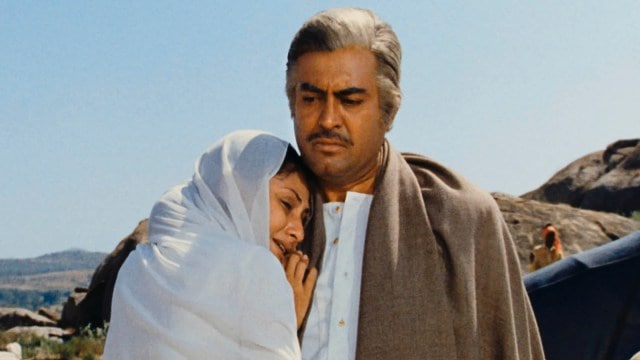
Niharika Lal (BOMBAY TIMES; June 23, 2025)
This August, Sholay will turn 50. And the celebration has already begun - thousands of miles away from Ramgarh - in a theatre where Fellini once ruled. Next week, Italy is hosting the world premiere of the newly restored, uncut version of Ramesh Sippy’s iconic film at II Cinema Ritrovato Festival.
When it was first released in 1975, Sholay turned into a phenomenon - running for over five years in some theatres. While Dharmendra calls it “duniya ka aathwan ajuba,” Amitabh Bachchan says, “At the time, I had no idea it would be a watershed for Indian cinema.”
Now, five decades later, the film is returning to theatres in a restored version. As it prepares for its comeback on Indian screens this August, we take a look at how the restoration came to life.
Shooting for Sholay was an unforgettable experience: Amitabh Bachchan
Reminiscing the film, Amitabh Bachchan says, “Some things in life remain permanently etched in your mind. Sholay is one such film. Shooting for the film was an unforgettable experience, but at the time I had no idea that it would be a watershed for Indian cinema. Its dramatic change in fortunes from being declared an unsuccessful venture, to its record-breaking box office run was an emotional rollercoaster for all of us.I hope that even 50 years later, the film will capture the imagination of new audiences across the world.”
Can’t wait for Sholay to begin its new lease of life: Shehzad Sippy
Talking about the restoration, Producer Shehzad Sippy, shares, "It has taken us three years, but we were able to find the original ending and some deleted scenes that the world will see for the first time at the grand premiere at the Il Cinema Ritrovato Festival in Bologna. I can’t wait for ‘Sholay’ to begin its new lease of life.”
‘This world premiere in Italy is a recognition of Sholay's place in global cinematic history’
“Sholay is often described as the greatest Indian film ever made,” says Shivendra Singh Dungarpur, Director, Film Heritage Foundation. As he talks about the restoration, he says, “I know every frame and every dialogue of the film by heart. Sholay was a masterpiece of passion that generations of Indians have loved and seen time and time again. Despite the fact that we could not use the original camera negative and that not a single 70mm print survives, we have left no stone unturned to ensure that this historic film has been beautifully restored. The Il Cinema Ritrovato Festival is renowned for its dedication to showcasing restored and classic films. This world premiere marks not just a celebration of a film, but a recognition of its enduring power and its place in global cinematic history."
I am thrilled to hear that the film is being restored: Dharmendra
I am thrilled to hear that the film is being restored and I am sure it will have the same success as it had 50 years ago. Who can forget the dialogues of Salim-Javed and the direction of Ramesh Sippy? So many scenes have gone down in the history of Indian cinema.
The restoration over three years
- In 2022, Shehzad Sippy began discussions with the Film Heritage Foundation (FHF) to restore Sholay
- Original 35mm camera and sound negatives were found in a Mumbai warehouse. Additional film elements were located at Iron Mountain in the UK, with support from the British Film Institute (BFI)
- Reels from Mumbai and London were sent to L’Immagine Ritrovata in Bologna for restoration. The original camera negative was too damaged to use. The team worked with interpositives from both cities
- A colour reversal intermediate found in London included the original ending and two deleted scenes
- The FHF also sourced the original Arri 2C camera used to shoot the film. With no surviving 70mm prints, veteran cinematographer Kamlakar Rao, who had worked alongside Sholay's DOP Dwarka Divecha, was consulted
- The final restored version combines two inter-positives and two colour reversal intermediates, bringing back the director’s original vision, including the lost scenes and original ending
Did You Know?
The original ending and previously deleted scenes that were not part of the widely distributed theatrical cut of Sholay. They have been included in the restored version.
Raj Khosla’s legacy to be celebrated on his centenary through screenings, panel discussion
8:56 AM

To mark director Raj Khosla’s birth centenary, Film Heritage Foundation to screen his hits, and host panel discussion with Asha Parekh and Mahesh Bhatt tomorrow
Mohar Basu (MID-DAY; May 30, 2025)
Ask cinephiles their favourite Raj Khosla movie, and the answers will widely vary — some will choose the noir CID (1956), others, the mystery drama Woh Kaun Thi? (1964), and some others, Dostana (1980). The one thing they will agree on, however, is that the director was a master across genres. It is this mastery that Film Heritage Foundation (FHF) aims to celebrate with the retrospective, Raj Khosla 100 — Bambai Ka Babu, at Regal Cinema in Mumbai tomorrow.
Marking the filmmaker’s birth centenary, the day-long celebration will feature a panel discussion with veteran actor Asha Parekh, filmmaker Mahesh Bhatt, and Amborish Roychoudhury, author of Khosla’s biography. Not just that, his classics — including CID, Bombai Ka Babu (1960), and Mera Gaon Mera Desh (1971) — will be screened.
Parekh, who had worked with the late director on several films, remembers him as one who put his leading ladies at the centre of the narrative, at a time when they were largely sidelined. “Do Badan [1966], Chirag [1969], Main Tulsi Tere Aangan Ki [1978], and Mera Gaon Mera Desh are among my favourite films. Before [working] with Raj Khosla, I was known more for my dancing and glamorous roles. Do Badan changed people’s perception of me as an actor who could perform serious roles. He was a fine filmmaker,” she reminisces.
Shivendra Singh Dungarpur, Director, FHF, notes that Khosla successfully dabbled in many genres in his three-decade career. “I’d describe him as the Howard Hawks of Indian cinema for his ability to successfully make films in every genre. He excelled in song picturisation, and was known for having strong female characters in his films.”
Wes Anderson was curious to know what Satyajit Ray was like-Sharmila Tagore
8:20 AM
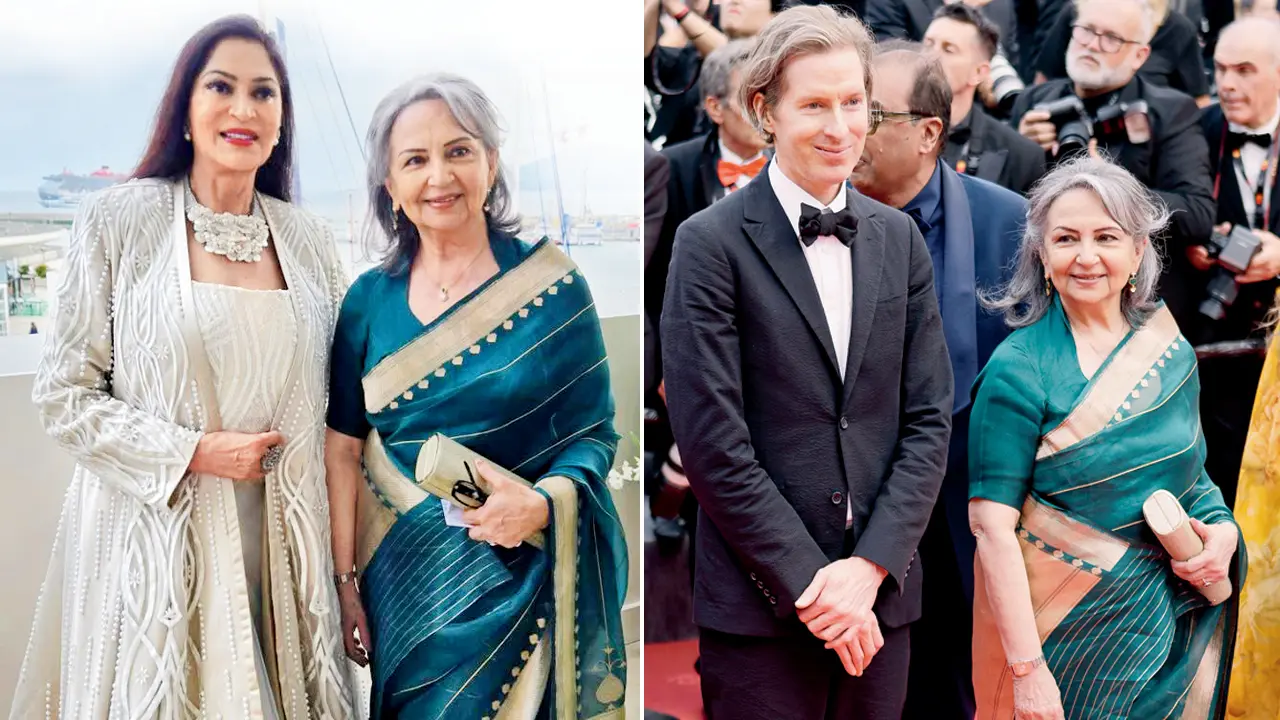
(From left) Co-stars Simi Garewal and Sharmila Tagore ahead of Aranyer Din Ratri’s screening; (right) (From left) Wes Anderson with Sharmila Tagore at Cannes. Pics/Getty Images, AFP, Wikimedia Commons, Instagram
Sharmila Tagore talks all things Cannes — from the standing ovation for Aranyer Din Ratri, to discussing Satyajit Ray movies with noted filmmaker Wes Anderson
Upala KBR (MID-DAY; May 24, 2025)
The thunderous applause, the standing ovation, and the pride she felt to be at the receiving end of it all. It’s a precious memory that Sharmila Tagore will keep close to her heart for a long time. “There was a standing ovation for a few minutes. People just clapped and clapped and clapped. We were getting tired of standing,” laughs Tagore, who returned only a few days ago from the special screening of Aranyer Din Ratri (1970) at the 78th Cannes Film Festival.
On May 20, a restored 4K version of late Satyajit Ray’s masterpiece was screened as part of the Cannes Classics section. Tagore and Simi Garewal, who had featured in the gem alongside late Soumitra Chatterjee, attended the event with noted American filmmaker Wes Anderson. Mention Anderson, who led Aranyer Din Ratri’s restoration and presented it at the film gala, and Tagore heaps praise on him.
“He was so respectful about Satyajit Ray, interested in and well-informed about his films. He was curious to know what Soumitra and Ray were like. I felt silly because I was not as well-informed [about his latest movies] as he was about ours. I have seen The Grand Budapest Hotel [2014], but not Asteroid City [2023], or I would have asked him about it.”
The veteran actor is no stranger to the Cannes Film Festival. After all, her 1960 movie Devi, directed by Ray, was in contention for the Palme d’Or at the 1962 edition of the prestigious film gala; in 2009, she was part of the festival’s jury. She is not surprised that this time too, it is Ray’s creation that has taken her back to the French Riviera.
Remembering the auteur who launched her in the movies, she says, “Sometime in the 1980s, I had interviewed Manik da [Ray] for Eyewitness [TV show]. When I asked him his favourite movies, he mentioned the Apu Trilogy, Charulata [1964], and Aranyer Din Ratri. Aranyer… was his first foray into contemporary cinema after his period films.”
It’s a privilege to have worked with Ray. Tagore knows she is among those fortunate few who had the privilege many times over. How was the legend at work? It’s a question, we’re sure, many asked her.
“I remember the scene in Aranyer… where my character shares that her mother had died in a forest. Before filming, Manik da came very close to me and read out that scene once. So, I did whatever he told me to do. As a director, he would read out the scene and then leave it to the actor to perform. If there was something he didn’t like in your performance, he would come very close to you and say, ‘Can you do it differently, please?’ We always got a lot of confidence seeing him behind the camera, looking at us. We knew he wouldn’t let us perform badly.”
Talking about Ray without mentioning Chatterjee is almost impossible. Tagore, who starred alongside the late Bengali actor in several films, must have missed him in Cannes. “Yes, and Rabi da [Rabi Ghosh, actor] too! I miss Soumitra continuously. He was one of my dearest friends, and he was not just a good actor; he could sing, write, and paint. He was truly a Renaissance man.”
With Cannes behind her, Tagore now hopes that Aranyer Din Ratri’s restored version is released in India. In fact, the veteran actor urges that the classics of Indian cinema be restored.
“If films are not restored, they will disappear. By restoring them, the new generation can see these films. I will request Shivendra Singh Dungarpur to make sure that Aranyer… is released in theatres across India.”
Growing number of young people have gotten estranged from the experience of seeing films in theatres-Wim Wenders
8:48 AM
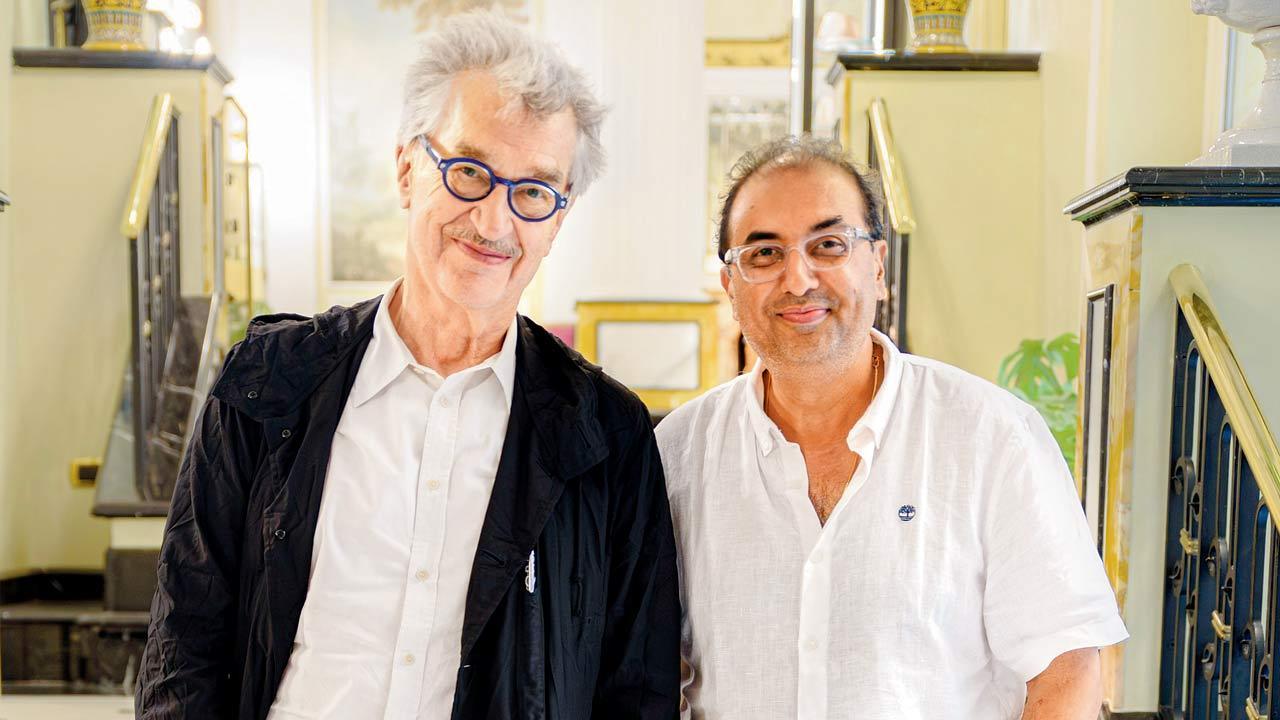
German filmmaker Wim Wenders talks about the future of films and the artistic challenges before the visual art
Avijit Ghosh (THE TIMES OF INDIA; February 5, 2025)
Wim Wenders is a master of modern cinema. The 79-year-old German filmmaker’s oeuvre includes Paris, Texas (1984), Wings of Desire (1987) and, more recently, Perfect Days (2023). Invited by Film Heritage Foundation, Wenders will be in India — his first trip here — today. In an email interview with TOI, he talks about the future of films and the artistic challenges before the visual art.
You have been making films since 1967. You have made road movies, character-driven films, science fiction, music video, TV commercials, opera. Perfect Days, which maps the life of a public toilet cleaner in Tokyo, has been much-acclaimed. What is your driving force?
My driving force is curiosity and to pose, again and again, the burning question: “How should we live?” The conditions under which we live as humanity change constantly and fast. We’re adjusting constantly. My films are not necessarily giving answers to that question, but they’re constantly in search of possible answers. Maybe the most poignant one in that regard was Until The End Of The World, a film that anticipated the impact of the digital revolution on our visual culture. It was shot in 1990 and tried to look 10 years ahead into the future; it takes place in the year 2000. Now that year is long gone, but the film still offers a powerful first look at what was going to happen to mankind.
As a philosopher of cinema, what would you say are the biggest creative challenges of the times? Is it Artificial Intelligence?
I’m not scared of AI. But I’m deeply disturbed by the deterioration of truth in public life and the massive and ever-growing amount of lies, of misleading and false information. We have huge parts of populations unaware of the propaganda and falsehoods they take as ‘reality’, for granted. The worst, however, is the common disinterest and lack of knowledge for history, even among politicians. You’d think that people wouldn’t go for the same nationalist paroles and promises that already ruined our civilization in enough wars and conflicts. But they seem eager to repeat the same recipes.
OTT channels such as Netflix and Amazon Prime have come to dominate middle-class lives across the globe. How do you see this development?
Streamers grow bigger and bigger. They were propelled fast-forward by the pandemic. They’re slowly pushing independent distributors and producers out of business. Also, a growing number of young people have gotten estranged from the experience of seeing films in theatres, together with others. They got used to getting all that “content” and much more at home. Some of them never really experienced movie theatres as a social institution, so they don’t even miss it. I find that a sad development in an overall world culture that makes people more and more solitary.
Films are a part of our cultural history and heritage. But celluloid fades. Since you have been personally involved in the restoration of your own films, how do you look at the process?
I’m happy that right now, all over the world, films are being restored, so that some of our greatest cultural treasures of the 20th century are being preserved. In India, the Film Heritage Foundation is doing amazing work. It is our connection and dedication to film preservation, I guess, that gave Shivendra Singh Dungarpur the idea to invite me to India for this five-city retrospective. My foundation is also extremely engaged in this field. Fifteen of the 18 films we show in India are restored versions. I can’t tell you how much I’m looking forward to talking with Indian audiences!
On a different note. You are a fan of Borussia Dortmund. French writer Albert Camus once said, “Everything I know about morality and the obligations of men, I owe it to football.” What does football mean to you?
I tend to agree with Camus. Football can be a great metaphor for the best in us, morally and as far as ‘character’ is concerned. But ever since he said this, the world has evolved, and not really for the better. “The Beautiful Game” has been extremely commercialized and therefore, much to my dismay, has lost some of its moral qualities and even some of its playfulness. I still follow it passionately, and I have my favourite teams in other leagues, not just in the Bundesliga in Germany. I follow Liverpool in England, Naples in Italy — both not always so much at the top of the game as today. Some of my teams have even disappeared in second leagues in France or Spain. But I keep my hopes up for them.
Deewaar made the grey, varied, flawed character very cool 50 years back
7:58 AM

For actors, it remains a reference on how to play the angry young man. For writers, it’s a masterclass in screenplay writing. As Deewar, a cult classic that made the anti-hero likeable, turns 50, we take a look at its legacy
Niharika Lal (BOMBAY TIMES; January 28, 2025)
‘When you make a film, let it speak for itself’
Talking about the making of Deewaar, Rajiv Rai, son of the film’s producer Gulshan Rai, says, “Deewaar has inspired many films in various Indian languages. The film received a massive response upon its release. My father, Gulshan Rai, who produced the film, didn’t really talk much about its success. I believe that when you make a film, you don’t come home and discuss it – you let the film speak for itself. Every scene was a gem, and everyone has their favourite moments from it. Pran Mehra, an ace editor of his time, played a major role in the making of the film. He was a highly sought after editor at the time and instrumental in making this film what it became.”
‘Deewaar made the anti-hero likeable’
Film historian Gautam Chintamani says, “Deewaar made the anti-hero cool 50 years back. It was among the first few films that made the anti-hero, the hero. The 70s was the point in Indian cinema where films focused on anti-establishment themes, changing the system, and how the system oppressed the common man and his fight against the system.”
Writer Saurav Dey adds, “The film talks about taking a stand against the establishment, capitalism, and has social commentary – but the entertainment value of the film is still high. It is not a morose, silent film despite the heavy topics it deals with. It made the grey, varied, flawed character very cool 50 years back.”
“Films like Deewaar, Shakti, Zanjeer, and other such films of Bachchan sahab, gave us the confidence to stand up against those who were superior to us. These films gave us the belief that one can stand up for something we truly believe in,” says Adil Hussain, adding that Deewaar was one of the films that inspired him to get into acting.
Deewaar was very rugged and one wondered if Yash ji would agree to do something like this: Bachchan
In the documentary The Romantics, Amitabh Bachchan talks about Deewar and says, “Yash ji was looked upon as this new-age young director wanting to make different films. Salim-Javed suggested that he should direct Deewar. Yash ji, by that time, had established himself as a director who worked more in beautiful sceneries, objects and the beauty of nature. Deewaar was very rugged and one wondered if he would agree to do something like this. He never lost his mind towards nature and towards romance, even when he was doing a film like Deewaar.”
‘Deewar cemented Amitabh Bachchan’s legacy as the Angry Young Man’
Talking about the cult status of Amitabh Bachchan’s Angry Young Man persona, film historian Shivendra Singh Dungarpur, shares, “Deewaar has had a very strong influence in enhancing Amitabh Bachchan’s Angry Young Man persona – a rebel who takes on the system and almost single-handedly revolutionized the ideology surrounding workers’ rights. At the end, the film shows the triumphs of righteousness, as his own brother kills him. The intensity and drama between the two brothers and their mother, combined with the way the angry young man became a powerful symbol after this film, are unforgettable. Deewaar cemented Amit ji’s legacy as the Angry Young Man.”
Trivia
- Deewaar’s screenplay was written in 18 days and dialogues were written in only 20 days
- Two songs were removed from the film because of its length
- Aruna Irani and Deven Verma are credited in the film, but their scenes were removed because of the length
3-day Raj Kapoor film festival to be held in 40 cities and 135 cinemas from December 13 to 15
10:22 AM

A rare picture of Raj Kapoor editing the film Satyam Shivam Sundaram
Niharika Lal (BOMBAY TIMES; December 4, 2024)
To mark Raj Kapoor’s birth centenary, R K Films, the Film Heritage Foundation, NFDC, NFAI and cinemas have come together to organise a retrospective titled ‘Raj Kapoor 100 – Celebrating the Centenary of the Greatest Showman’. The three-day fest will showcase 10 films of Raj Kapoor across 40 cities and 135 cinemas from December 13 to 15.
Earlier this year, the Toronto International Film Festival (TIFF), Festival des 3 Continents, and the recently concluded International Film Festival of India (IFFI) in Goa paid tribute to Raj Kapoor with screenings and discussions. Considered the ‘the greatest showman’ of Indian cinema, Raj Kapoor’s screen characters and films drew a tremendous response from fans not just in India but abroad too, particularly in the erstwhile Soviet Union and the Middle East.
Discussing Raj Kapoor’s films and filmmaking, Ranbir Kapoor admitted at IFFI that he is a bigger fan of Raj Kapoor the filmmaker than Raj Kapoor the actor. He also spoke about how, throughout his entire career, Raj Kapoor's films had messages of socialist reform. Awara addressed casteism, and Shree 420 dealt with greed and so on.
Not just India, but Raj Kapoor's screen characters and films drew a tremendous response from fans abroad. His characters and songs were extremely popular in the Soviet Union and the Middle East.
This month, India will start the centenary celebrations of Raj Kapoor - the actor, director, and producer considered to be ‘the greatest showman’ of Indian cinema. The celebration, titled 'Raj Kapoor 100 – Celebrating the Centenary of the Greatest Showman', is a retrospective of his ten films.
To commemorate 100 years of world cinema in 1990, the then Soviet Union honoured Raj Kapoor alongside eminent global film personalities like Ingrid Bergman, Jean Gabin, Charlie Chaplin and Marilyn Monroe.
Raj Kapoor's stories are timeless and this festival is our way of reliving that magic and inviting everyone to experience his legacy on the big screen: Ranbir Kapoor
"We are incredibly proud to be members of the Raj Kapoor family. Our generation is standing on the shoulders of a giant whose every film spoke of the time that it was made and was the voice of the common man over decades. I think it is our responsibility and our privilege to preserve his films for future generations. His stories are timeless and this festival is our way of reliving that magic and inviting everyone to experience his legacy on the big screen. See you at the movies!”
Raj Kapoor was truly India’s greatest showman: Amitabh Bachchan
"Raj Kapoor was truly India’s greatest showman. His life was a celebration and I am sure he would have been delighted to see his films back on the big screen. Raj Kapoor was an artist who lived for cinema. Even today Awara is a film that is etched in my mind. Made at a time of newly independent India, the film was socialistic, reflecting the mood of the times. Talking about Raj ji’s incredible showmanship, the way he envisioned the dream sequence in the film had never been seen before. You are amazed by his fantastical imagination that visualized the surreal setting, the ethereal Nargis ji emerging through thick clouds of smoke, Raj ji surrounded by demonic figures and burning fires – there is a powerful, mystical symbolism in the dream sequence, and that is my favourite."
Raj Kapoor had an all-consuming passion for cinema: Shivendra Singh Dungarpur, Filmmaker and Director of Film Heritage Foundation
"Contemporary audiences in 40 cities will have an opportunity to watch ten landmark Raj Kapoor films that put Indian cinema on the world map spanning almost four decades. These were films that not only captured the imagination of the people but reflected prevalent social and political themes beginning from a newly independent India. Raj Kapoor had an all-consuming passion for cinema. His unforgettable avatar as a tramp that embodied the common man and till his last film he remained a great showman."
Raj Kapoor was not just a filmmaker; he was a visionary who shaped the emotional landscape of Indian cinema: Randhir Kapoor
“Raj Kapoor was not just a filmmaker; he was a visionary who shaped the emotional landscape of Indian cinema. His stories are more than just films; they are powerful, emotional journeys that connect
generations of viewers. This festival is our humble tribute to the greatness of his vision.”
Celebrations across the globe
- This year, The Toronto International Film Festival (TIFF) screened the world premiere of the 4K restoration of Awara to commemorate the 100th anniversary of Raj Kapoor who directed and starred in the film.
- To celebrate 100 years of Raj Kapoor, the Festival des 3 Continents in Nantes, France conducted a book discussion on Raj Kapoor and Anari, Awara, Shree 420, Jis Desh Mein Ganga Behti hai, Teesri Kasam was screened.
- The recently concluded International Film Festival of India (IFFI) rolled out a tribute to honour the 100th birth anniversaries of four Indian cinema legends including Raj Kapoor.
Honours and accolades for Raj Kapoor
- Raj Kapoor received the Padma Bhushan in 1971 and the Dadasaheb Phalke Award in 1988.
- Shree 420 won a National Film Award in 1955.
- Awara and Boot Polish competed for the Grand Prize at the Cannes Film Festival in 1953 and 1955, respectively.
Hope we will have state support next year, says MAMI Mumbai Film Festival director Shivendra Singh Dungarpur
8:17 AM
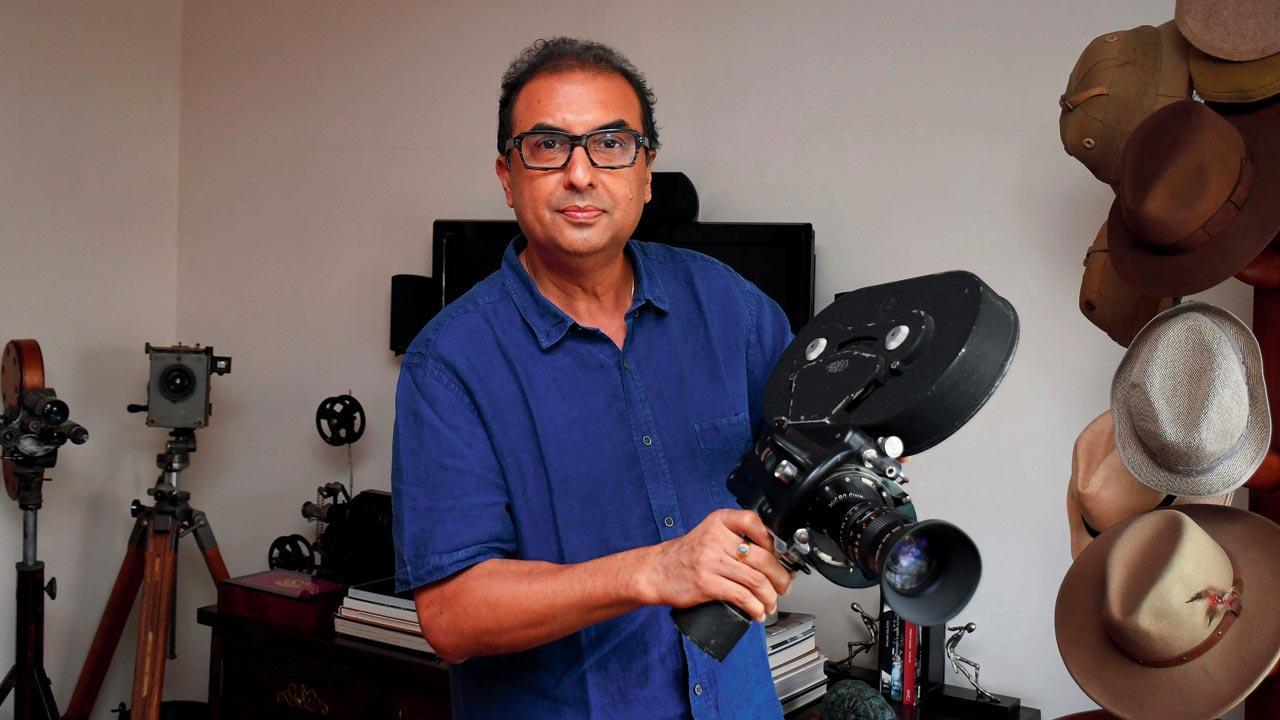
Before MAMI Mumbai Film Festival kicks off tomorrow, festival director Dungarpur confident that funding from the govt can make it a global cinematic event à la Cannes
Mohar Basu (MID-DAY; October 18, 2024)
The MAMI Mumbai Film Festival, over the years, has become a symbol of the city’s love for the movies. As the prestigious film gala sees a change of leadership this year, with film archivist Shivendra Singh Dungarpur taking on the role of the festival director, he says the idea is to bring independent cinema to the forefront. The festival, which opens tomorrow, aims to celebrate both emerging and established voices.
“This year, we are in a phase of transition. One [change] is that it’s just MAMI. No festival in the world has a tagline. We have come back to the original name,” starts Dungarpur, addressing head-on that Jio, the long-standing festival sponsor, has pulled out this time.
“The second important thing is that [over time], we didn’t feel like a festival. It has to be made into a celebration. We shouldn’t be spread out so massively that a guy from Juhu cannot meet a director, who is presenting [his film] in Goregaon. In film festivals, you should have to make little effort to go and experience the whole thing. Even with limited funding, we have got great programming this time—there is the South Asian competition, novel competition, we’ve got classics and the best of world cinema. But what was essential for me was to have an opening film that is truly Indian.”
This pursuit led him to Payal Kapadia’s Cannes Grand Prix-winning film, All We Imagine as Light. Dungarpur says the drama stands for two things that the festival stands for—the city of Mumbai, and rooting for indie filmmakers.
“A young filmmaker finds it difficult to raise funds, then she makes a film, and then he is able to take it to the world. Payal’s film will be an inspiration because it has reached the goal of the Grand Prix. We want to make sure that this festival is not about big films, it’s about independent films. We want it to be a people’s festival.”
Kapadia started her career with Dungarpur at Film Heritage Foundation, and to have his mentee’s work open the festival is a moment of great pride for him. “I have a special relationship with her. I told her that All We Imagine as Light should be the opening film for MAMI because it reflects the city. It’s rare to find a film that reflects everyone’s struggle in this city; a city where people come from different parts of the country and make a home. Usually foreign movies are chosen as the opening film. But to me, Payal’s film was the correct catalyst. There is so much buzz around this movie. Our phones have not stopped ringing; people want to come and see it. It’s wonderful to see this kind of response for an independent film. India doesn’t have the concept of a grant. It’s very tough for an independent filmmaker. That’s why you see so many sources of funding in Payal’s movie.”
Dungarpur believes MAMI has the potential to be on par with international film festivals like Venice and Cannes. He notes that the lack of state support holds India back from making a festival of that scale.
“If a movie goes to Cannes or Venice, then it goes everywhere else. I want to make Mumbai [one such destination for cinema]. We are hoping that by next year, we will have support from the state because the festival represents the city and its spirit. We want the state to be involved. You will see the reflection of state’s support of what the coming days and the next six years are going to be like.”
Mumbai’s date with MAMI
- Over six days, the festival will showcase 110-plus films from over 45 countries. These include Demi Moore’s The Substance, Emilia Perez that is France’s official entry to the 2025 Oscars, and Manoj Bajpayee’s Despatch.
- To attend screenings and events, one needs to register for a delegate badge on the MAMI website. There are badges for the press, industry delegates, cinephiles as well as for senior citizens.
- Screenings and events will be spread across prominent venues in Mumbai, including Regal Cinema and PVR Juhu. Soho House Mumbai will host the Industry Programme from October 21 to 23.

India makes 2,000 movies every year; its a paradise for me-Giuseppe Tornatore
2:44 PM

Renuka Vyavahare (BOMBAY TIMES; September 29, 2024)
You don’t merely grow up watching the movies but living vicariously through them. Legendary Italian filmmaker Giuseppe Tornatore’s Oscar-winning film ‘Cinema Paradiso’ (1988) exuded this sentiment, working as the most heartening love letter to cinema.
The coming-of-age dramedy as seen through the eyes of a young boy Toto and his heartwarming friendship with an ageing projectionist Alfredo, reflects upon cinema not only shaping but defining our life journey – childhood, friendship, nostalgia, first love, loss and longing. It was thus fitting for Tornatore in his maiden visit to India, an initiative of filmmaker, archivist Shivendra Singh Dungarpur’s ‘Film Heritage Foundation’ to felicitate the movie industry’s unsung heroes - the projectionists. The three-day festival, which culminates today, showcased restored Italian classics. In an exclusive chat, Tornatore, accompanied by Dungarpur, shared his thoughts about India, Indian cinema, the longevity of his iconic movie and more. Excerpts…
You made Cinema Paradiso 36 years ago, and it’s a film that continues to be watched and discussed among movie lovers. What would you attribute its longevity to?
You are too generous. It's a big mystery to me that 40 years after its making, it continues to be so popular and close to the people in every country. I introduced it as the opening film of the festival here. People of every age call me, write to me about this movie even today. Yes, the movie is autobiographical in some parts. But not all autobiographical movies receive this kind of love, affection. It probably worked because the movie theatre is a space where generations of people grow up and see their lives unfold. Probably there was a certain honesty to it that touched people's hearts.
Filmmaker Luca Guadagnino, another Italian great, was in the city last year and he told us that India and Italy are similar in many ways. What do you think?
I agree with him. Yesterday I was walking down the street in the city with the crowd, and I immediately felt some familiarity. I asked myself why I felt this connection with this place, these people .Life in the streets of Mumbai, the pace, vibe here reminded me of the first big town I knew of back home when I was young -- Palermo in Sicily. Until six years ago, Palermo was the same… the sound, chaos, screaming, shops, street food, colours, fruit sellers. It was a very strong experience yesterday and I hope to spend some more time here before I leave.
You have been fascinated with film projectionists since your early years and were one yourself, so would you say it was apt that during your first visit to India, you felicitated the unsung heroes of our cinema here - the projectionists?
I’ll confess a secret to you. Initially, I thought movies were made in the cinema projection room. The concept of screening was not known to me. I started to go to a movie theatre like this (points to Mumbai’s Regal Cinema) when I was six. I didn’t understand how it was possible that the characters that looked so huge on the big screen managed to get there from the small window of the theatre at the back. For a long time, I believed that the shadow of this man (the projectionist) was the maker of the movie. I thought movies were made in the projection room. When I had the opportunity to check out that room, the projectionist seemed like a legend to me. I figured the movies were not made there, but the idea that I had of it before decoding the real situation stayed with me. I met other projectionists and became one when I was nine. That was my world. So, I’m very happy to have felicitated the projectionists here because it felt like I gave an award to all the projectionists that I met when I was young.
Are you familiar with Indian cinema?
I feel what binds Indian and Italian cinema is realism. There’s a lot of fantasy in both, but the soul and origin of this poetic cinematography in both cinemas are realistic. Satyajit Ray was the first big director I knew of when I was young. About a year ago I watched a movie, (Pan Nalin’s) 'Last Film Show', which I believe was inspired by Cinema Paradiso. The film was India’s official Oscar entry, (didn't win a nomination) so it was a big honour for him and for me. I have also watched some clips of commercial Bollywood movies, and I am curious about this world. Shivendra (Dungarpur) has promised me that he will take me to the shoot of these big Bollywood movies someday. I am pleasantly shocked by the number of movies India produces each year. The Indian film industry is one of the largest in the world. A country where around 2,000 movies are produced every year is a paradise for me.
In a constantly evolving digital world, how important is film preservation and restoration?
Tornatore: People connect with each other through movies. Even politically, they are important because art transcends borders. Movies are not restricted by any language anymore. Shivendra and people like him are working to preserve and restore big movies that are part of the history of humanity. Be it the work of Federico Fellini, Akira Kurosawa, Satyajit Ray, John Huston, or Alfred Hitchcock, to name a few. In the future, if people will have the opportunity to see these iconic movies, it’s thanks to Shivendra and all the people who work for this cause. They are important. They give eternal life to movies.
Shivendra: It's an unbelievable feeling to have him here, because to me, his film (Cinema Paradiso) embodies our collective love for cinema. His film represented all that I went through as a child. I was the Toto of his film. I continue to be Toto because my life is about showing films. We show films to people for free. It is probably the most emotional moment for me. That not only he's come here as a director, as an artist, but somebody who's kept cinema alive. And the fact that he started his career as a projectionist. He was a photographer, then he became a projectionist, and he honoured our projectionists. It's the most beautiful thing to have happened to cinema.
The Film Heritage Foundation is doing some great work to restore classics, but looking at the advent of technology and OTT platforms, do you fear that the longevity of theatres will be affected?
Shivendra: From my point of view, we’ve kept cinema alive. Going by the number of people who have come for us (at this festival), it shows that basically, classic films are back. Today, look at the number of classics being re-released in multiplexes. All that has happened because of Film Heritage Foundation’s initiative to bring back classics into theatres. Also, the fact that we are keeping single screens alive is great. Over 1800 people registered for this Italian festival. These films are available online, yet people thronged to the theatres for that experience.
Tornartore: People watch more movies today than they did 50 years ago. Thanks to the technology that gives you the opportunity to watch movies wherever you want and whenever you want. Okay. I don't like my daughter watching movies on her phone. But I would prefer her watching the movie on her phone instead of not watching the movie at all. People need movies. Movies never die. Maybe the traditional movie business is anachronistic, but that will change and they will find a new way to go ahead because today, the financing of a movie is crazy complicated. When the technology of movies change, we can produce movies in a simpler way than the past. But one thing I am sure of. In this world, people will always have the necessity to watch movies. So we have to make movies. Even if we don't want to, we’ll have to make movies. (laughs).
Subscribe to:
Posts (Atom)