Showing posts with label Shershaah. Show all posts
Showing posts with label Shershaah. Show all posts
As a singer, the most powerful thing is to be part of someone’s healing-Jubin Nautiyal
8:52 AM
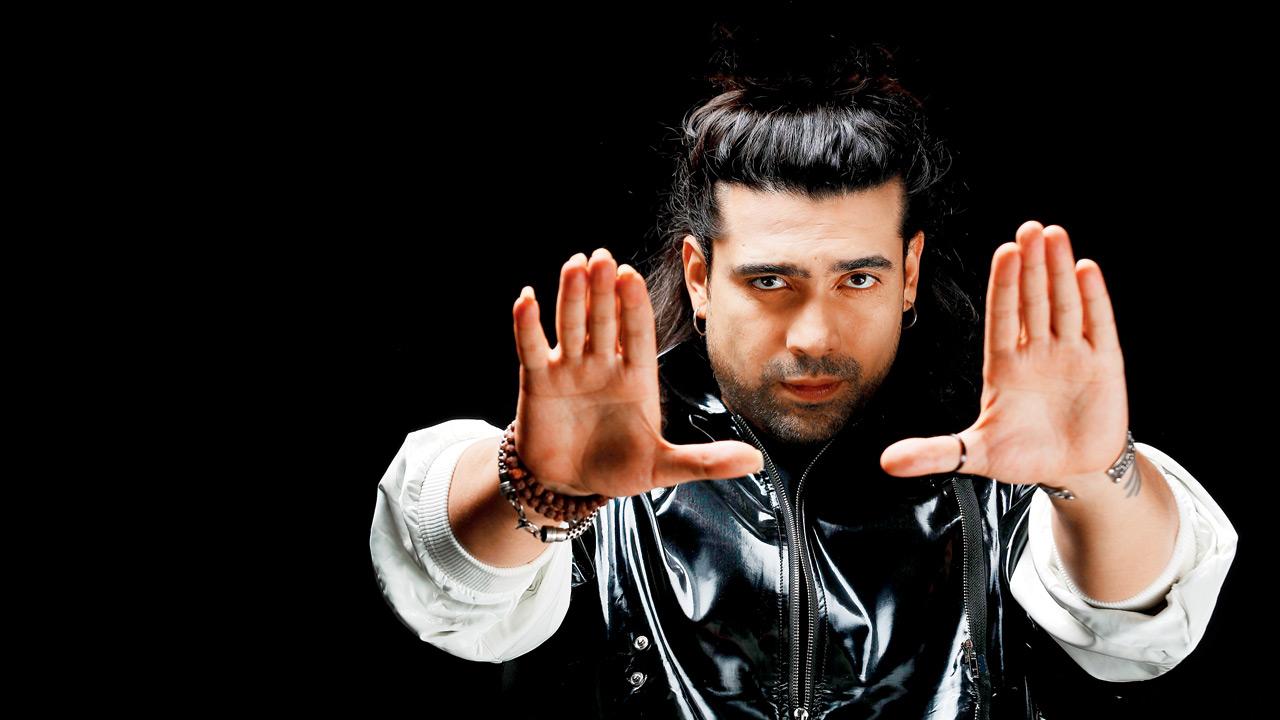
Jubin Nautiyal, the voice behind hits ‘Barbaad’ and ‘Bas Ek Dhadak’, attributes his success to the songs’ ability to soothe people’s soul
Priyanka Sharma (MID-DAY; August 4, 2025)
The past month was nothing short of a gift for Jubin Nautiyal, with two of his songs, Barbaad from Saiyaara and Bas Ek Dhadak from Dhadak 2, emerging hits. Naturally, the singer and musician is elated. But after a successful 11-year-long career, there is more he wants to add to his discography. “I find myself imagining what it’d be like to sing a jazz piece in an old-world setting,” he smiles. In a chat with mid-day, Nautiyal walks down memory lane to talk about the songs that made him a star, and the hunger that drives him.
Excerpts from the interview:
What was your discussion with composers Javed-Mohsin or director Shazia Iqbal before you went behind the mic for Bas Ek Dhadak?
The tune Javed-Mohsin shared with me was moving. I remember sitting in the studio, closing my eyes as the first notes played, and thinking, ‘This isn’t just melody; it’s a feeling’. Shazia Iqbal gave me a beautiful brief. She said, “Don’t sing it. Feel it like a broken heart.” Singing for Karan Johar’s [banner] added its own magic. They treat music with grandeur.
The title track of Dhadak (2018) was much appreciated. Naturally, there would be comparisons. Did that put any pressure on you?
The original Dhadak track was iconic. It’s still hummed across the country. I remember listening to the original when it released and thinking, ‘What a pure expression of love!’ So, I was aware of the expectations. But during the recording of Bas Ek Dhadak, I kept telling myself, ‘This is a new story.’ I reminded myself to honour this moment, this emotion.
Your voice has come to be known for love ballads. When you look back, is there a song that you feel personally proud of?
Humnava Mere, and Raataan Lambiyan [Shershaah, 2021] have touched people, but Tujhe Kitna Chahein Aur Hum [Kabir Singh, 2019] is a special song. When we performed it live at IIT Roorkee, 40,000 people were singing along. Even now, fans tell me how these songs helped them navigate heartbreak. As a singer, the most powerful thing is to be part of someone’s healing.
You’ve had another chartbuster last month with Barbaad from Saiyaara. How was your experience of working with Karan Johar and Mohit Suri?
Working with Mohit Suri sir is like stepping into the mind of a poet. During Barbaad, he narrated the scene — he told me what the character was feeling, the silence between the lines, and that helped me tap into the emotion more deeply. With Karan Johar, sir, the experience is about scale. When you know your song will be treated with such cinematic beauty, it elevates your own delivery.
At this stage of your career, do you feel excited by the work coming your way, or think you deserve more diverse opportunities?
I’m grateful for everything that’s come my way. There are days I find myself imagining what it’d be like to sing a jazz piece in an old-world setting, or to blend folk with electronic sounds. When I visited Uttarakhand a few months ago, I heard a local shepherd sing. I thought, ‘Why haven’t I explored this sound yet?’ So, I started exploring local sounds from Uttarakhand and collaborating with them.
What’s next on your plate?
I’ve been thinking about making an acoustic album — something intimate, stripped down. I also want to tap into Indian folk, learn from local artistes, and blend that authenticity into contemporary sound.
Saiyaara’s success proves that Tanishk original songs mein bhi baap hai-Tanishk Bagchi
10:16 AM
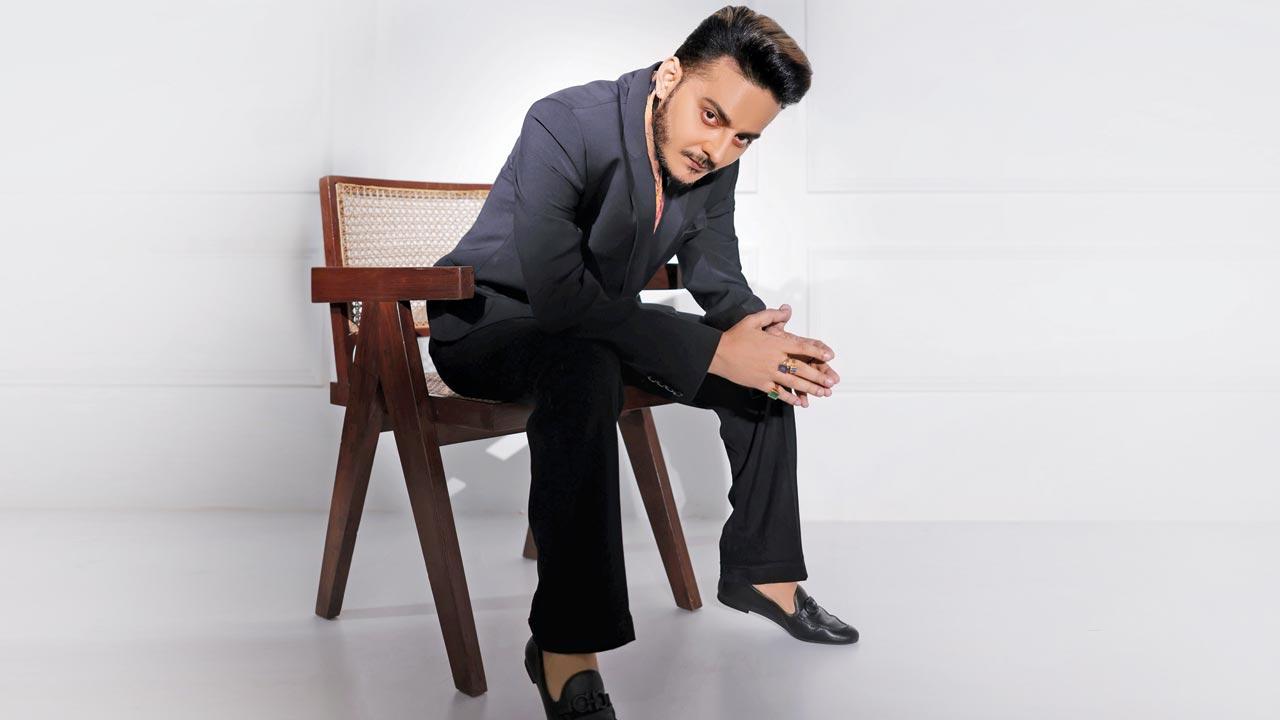
Composer Tanishk Bagchi, the man behind Saiyaara’s hit title track, opens up about being more than a remix machine and discovering his versatility
Priyanka Sharma (MID-DAY; July 28, 2025)
Unless one is living under a rock, there is no chance they wouldn't have heard the Saiyaara title track. Tanishk Bagchi’s composition is everywhere, from radio to YouTube, from the music streaming apps to Instagram Stories. So, we catch up with the man behind the sensation and understand how he composed the song for the Mohit Suri-directed love story. Excerpts from the interview:
Having long been criticized for building a career on remixes, you must be feeling vindicated with the success of Saiyaara’s title track, which is an original song.
It’s not the first time that I’ve composed something original and got rewarded for it. But now I feel that I am a versatile music composer. You can tell by listening to a song that it must be composed by so-and-so composer. But with my songs, you won’t be able to tell if it’s Tanishk’s music or someone else’s because I’m so versatile.
Do you like creating remixes or do so because of market demands?
It’s 100 per cent because of the market demand, survival, and what the director wants. My first preference will be original songs. But there are instances where if I don’t [create a remix], somebody else will. When a work opportunity comes to me, I can’t reject it immediately.
Take us back to the time when director Mohit Suri came to you with Saiyaara...
The past two years [were trying] for me because there were lots of issues in my work and family. At that time, I met Mohit sir and he supported me. I didn’t have anybody to show me the way. So, I started following his vision. He told me that he needed a song for his film. I was working on a single for the last two years with Faheem [Abdullah] and Arslan [Nizami]. When Mohit sir said he needed a song, we had one called Saiyaan Mera, and Arslan had written this line, ‘Saiyaan mera tu rootha nahin hai, mausam zara sa rootha hua hai.’ We completed it and pitched it to Mohit sir. Then Irshad bhai [Kamil] wrote the entire track.
How was it to reunite with Mohit?
With him, there’s always an emotion behind a song. He will never say, ‘We want a promotional track.’ He’s a music-oriented director.
You mentioned that you were going through a lot when Saiyaara happened to you. Are you comfortable talking about it?
After you give a super hit song, there is a lot of competition in the market, and when you say no to certain things, people think, ‘He doesn’t know how to create original music, or he only does recreations.’ This stress would seep into my personal life. Sometimes I used to earn money, at other times I didn’t. There were times when my song would be placed fourth or fifth in an album and it wouldn’t be promoted. I had composed Raataan Lambiyaan [Shershaah] and Bolna [Kapoor & Sons], but people still doubted me.
Producers often seek a hook line, hoping their song will become popular on Instagram Reels. But Saiyaara has busted the myth of hook lines being necessary.
Absolutely! I have never followed a trend. If someone asks me to make a song catering to a 15-second reel, I won’t do it. I will make a four-minute song. After Saiyaara, people are saying, ‘We believe in your original music’.
---------------------------------
Samarth Goyal (HINDUSTAN TIMES; July 28, 2025)
As the popularity of Saiyaara’s soundtrack grows, Tanishk Bagchi feels like he has finally found vindication.
While the composer has delivered some of Bollywood’s biggest hits in the last few years, his success has been overshadowed by the criticism that he is inclined towards recreations.
However, the title track of Mohit Suri’s recently released romantic drama has gone on to shatter records, becoming the first-ever Bollywood song to break into Spotify’s Global Top 5. “People didn’t know the number of good original songs I composed. Par ab logon ko pata chal raha hai ki Tanishk Bagchi original songs mein bhi baap hai,” says the 44-year-old.
He’s loving the appreciation, but Tanishk also admits that this success helped him overcome a mental rut. “For two years, I was very affected by the trolling. Now, I’m happy and at peace,” he says.
As for Saiyaara’s success, the composer reveals, “Despite its new stars, I had hope ki yeh fatega.” The success was made sweeter by the fact that the song doesn’t rely on gimmicks. “There’s pressure to create viral hits. But if a track has soul and emotion, it’ll work, no matter how long it is,” Tanishk ends.
"Lakshya was an accurate depiction of army life; Hrithik Roshan’s haircut was exactly how it is in the forces"
8:38 AM
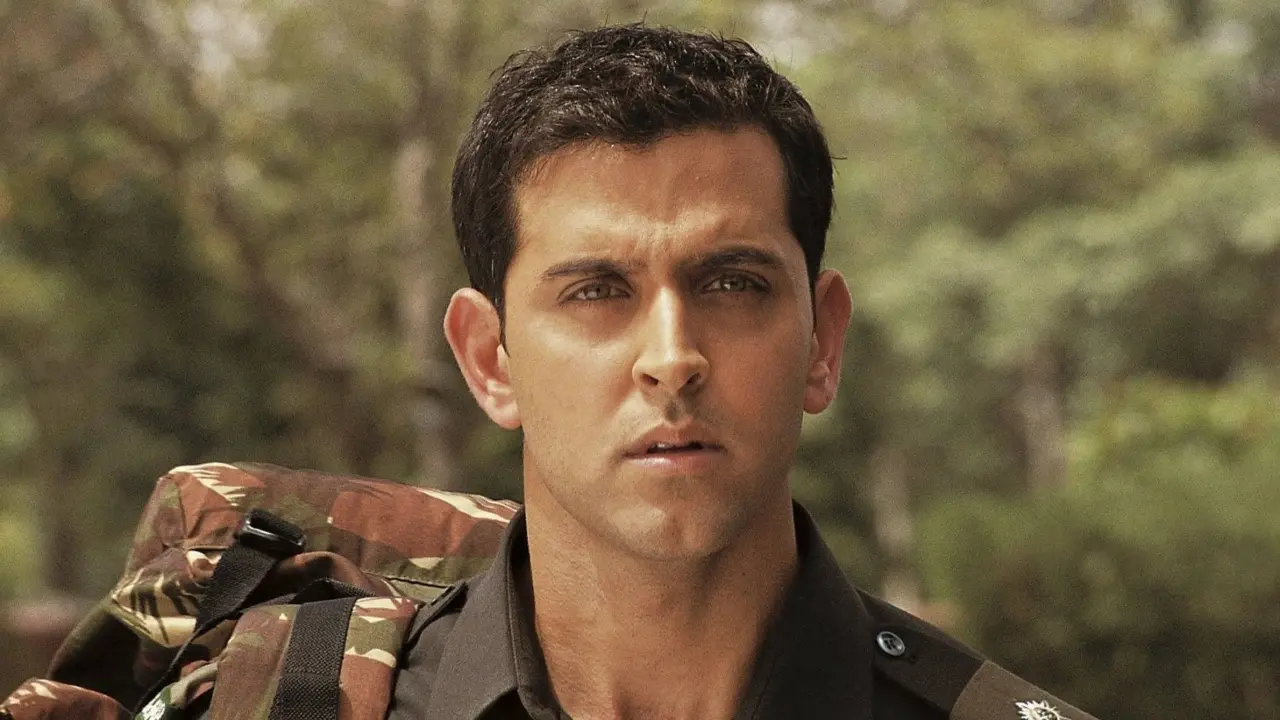
Niharika Lal (BOMBAY TIMES; July 26, 2025)
For 26 years, July 26 has been observed as Kargil Vijay Diwas, commemorating India’s victory in the Kargil War. In 1999, TV brought the war into the living room with 24 hour news cycles. At the time, realtime footage left little room for films to fill in the blanks. With time, filmmakers began exploring the Kargil narrative. The early 2000s saw a number of films – LOC Kargil (2003), Dhoop (2003) and Lakshya (2004). In recent years, Gunjan Saxena: The Kargil Girl (2020) and Shershaah (2021) attempted to show the war on screen. If TV captured Kargil as it happened, cinema stepped in to memorialize it, say cinema experts.
“That emotional connection created by films is very real,” says Major Sandeep Sangwan (Retd). “They help citizens understand and appreciate what the Army does, especially those who may never see it firsthand.”
‘Emotional storytelling is key for war films’
A film distributor recalls that when LOC Kargil and Lakshya had released, these films inspired many young people to join the forces. He says, “It’s not important to have 200 films (on the subject). What’s important is to have authentic films that tell the story of the Kargil war and inspire youngsters.”
Retired Major Sandeep Sangwan believes realism alone doesn’t move people. “If a film only talks about an operation without showing what the soldiers are feeling, it won’t stay with the audience. Emotional storytelling is key. That’s why you’ll always notice a personal angle in good war films – the family waiting back home, the camaraderie among soldiers.”
‘LOC, Lakshya, and Shershaah left a mark’
Major (Retd) Sandeep Sangwan, who now consults on military operations for films, names three films when it comes to cinematic depictions of the Kargil War – LOC Kargil (2003), Lakshya (2004), and Shershaah (2021). “Most of the war heroes were part of LOC Kargil, whether it’s Lt Balwan Singh (now Colonel), Capt Sachin Nimbalkar (now Colonel), or Capt Vikram Batra, who of course became known as Shershaah – the Tiger of Kargil. Since 8-10 operations were packed into one film, it became hard for audiences to register everything, but it is one of the most remarkable films on Kargil war,” he says.
Written by Javed Akhtar, Lakshya zeroed in on one officer’s journey. “It followed one operation, and one officer – right from his Academy days to getting selected, and eventually leading the operation. That’s why Lakshya stayed in people’s memory. It was focused and emotionally engaging,” says the Army veteran.
As director Farhan Akhtar, recalled on the film’s 20th anniversary, “Javed Akhtar had mentioned that he was working on a story about a young boy who joins the Army – not just in terms of calling, but also finding a true calling in life and truly understanding who he is through that process. That was the core of the film.”
‘Stories of officers who made sacrifices during Operation Safed Sagar need to be told’
Brigadier Gautam Ganguly, SM, VSM (Retd) says that stories from Operation Safed Sagar – the Indian Air Force’s (IAF) codename for its air operations during the Kargil War – should also be turned into cinematic projects.
“The Indian Air Force didn’t get as much recognition for its operations, which it conducted during the Kargil War. The stories of the officers who made immense sacrifices and displayed acts of bravery need to be told. Our younger generation must know these stories. After Operation Sindoor, people became more aware of the IAF’s operations – but back then, when the Indian Air Force didn’t even have precision-guided ammunition, the way they carried out their missions is an untold story of courage.”
I think OTT platforms are ideal for Kargil war stories: Gautam Chintamani
Film historian Gautam Chintamani feels sometimes when you’re too close to history, you don’t know how to chronicle it. He says, “That’s been the challenge with depicting the Kargil War. It was India’s first war in the age of 24/7 media – broadcast live into our homes. But strangely, despite its gravity, the seriousness of the Kargil war was often diluted in how it was reported and remembered. I still remember how bizarre it felt – India was playing a cricket series against Pakistan, while the same news channels were reporting sensitive details about troop movements during the war. In some ways, people didn’t fully register what we were fighting for.”
He continues, “Now, 25 years have passed. And a huge percentage of India’s population is under 25 – which means for them, Kargil is history. For those of us who lived through it, it was current affairs. So now is the right time to re-examine and retell these stories. The first big film on Kargil was J P Dutta’s LOC Kargil. Initially, J P saab wasn’t keen on making a film so soon after Border (1997), especially since the war was so fresh. But he met many families, widows and parents who’d lost sons – and that moved him deeply. That’s when he decided to make the film. But I’ve always felt that LOC... would’ve worked better as a series. A two-hour or-four-part miniseries would have allowed the individual stories of courage to breathe. In the film, because of its length and scale, many heroes ended up being unintentionally sidelined. I think OTT platforms are ideal for Kargil war stories. Now, with the benefit of time and long-form storytelling, we have a chance to do justice to Kargil in a more layered, meaningful way.”
Real soldiers were cast in Lakshya
On the 20th anniversary of Lakshya, Farhan had said, “There is a simple thing that anybody who is not from the Indian Army doesn’t know – soldiers do not kneel. Getting down on your knees is not considered right – they either lie down or stand. These kinds of things were learning for us.”
The production team even collaborated with the Army to include real soldiers in the film. “As far as weapons were concerned, the Indian Army did provide us weapons, which were then modified to fire blanks. This was handled by production and leads from the Army,” Farhan said.
‘There’s a surge of interest for such films now’
Mohommed Ali Shah, a former Army Major, who has acted in films like Haider (2014) and Bajrangi Bhaijaan (2015), believes there could be more films on Kargil war. He says. “There’s already been a surge of interest in the last few years with films like Gunjan Saxena and Shershaah. Lakshya stood out for its realism. To a huge extent, it was an accurate depiction of Army life – even Hrithik Roshan’s haircut was exactly how it is in the forces... Whether we fully agree with it or not, films leave an impact. And indeed, for a number of people, these films are how they remember Kargil War.”
Yodha's shoot was executed with the action director after 6 months of prepping to the T-Sagar Ambre, Pushkar Ojha
9:44 PM
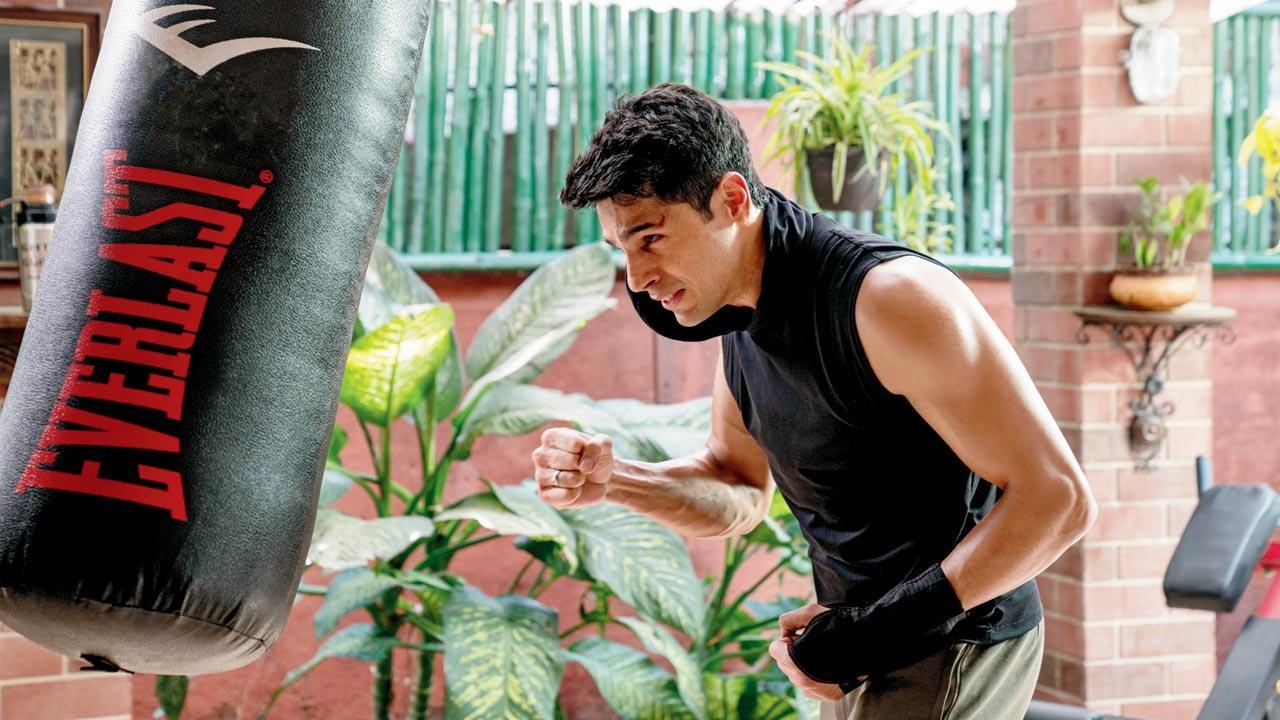
Yodha directors Sagar and Pushkar break down how Sidharth prepped for six months, perfecting knife-fight and hand-to-hand combat sequences in confined spaces, for the hijack thriller
Mohar Basu (MID-DAY; March 6, 2024)
Sidharth Malhotra has forged a bond with action movies after Shershaah (2021). It’s not surprising then that he followed up the war drama with Mission Majnu (2023), Indian Police Force and now, Yodha. But the upcoming hijack thriller, backed by Karan Johar, is worlds apart from the actor-filmmaker’s last collaboration, Shershaah.
The leading man says, “Yodha is fictitious whereas Shershaah was based on a real-life war hero. Yodha’s plot hinges on a stressful situation—who do you save, yourself or your countrymen? It delves into the quick-thinking mind of soldiers, their discipline and selflessness. The men in uniform have a protective instinct, and that spirit is captured in the film.”
Debutant director duo Sagar Ambre and Pushkar Ojha’s thriller—also starring Raashii Khanna and Disha Patani—showcases how a suspended officer of the special unit, Yodha Task Force, takes on a group of hijackers. Considering a chunk of Yodha is set inside an aircraft, Ojha says the action required months of meticulous planning.
“We storyboarded the idea to the finest detail. Then, a fight choreographer sat with us and added to it. When Sidharth entered the scene, he first did the action on a mock set,” he recalls.
Before arriving on the set, Malhotra underwent a six-month prep. Action choreographer Craig Macrae, who orchestrated the fight sequences in Pathaan (2023) and Jawan (2023), designed set-pieces that involved knife techniques and hand-to-hand combat, which could be pulled off in tight spaces. Considering this genre is his forte, the actor proved to be a quick learner. In addition, he committed himself to a rigorous fitness regimen and diet plan to adopt a lithe frame.
Ojha adds, “The shoot was executed with the action director after six months of prepping to the T. Safety is a must. If the process is followed correctly, the scene can be shot without any glitches. Sidharth put in way too many hours to get it right. The sequences look slick because he was fully familiar with it. The action pieces look great on screen.”
But a film can’t rely solely on action. The director duo was aware that the story’s emotional hook has to be equally strong. Co-director Ambre says they crafted Malhotra’s character Arun as a family man. “Arun is a true soldier. He has an ailing mother, a loving wife and is a family man, but still, the nation comes first for him. When his patriotism is questioned, something changes in him.”
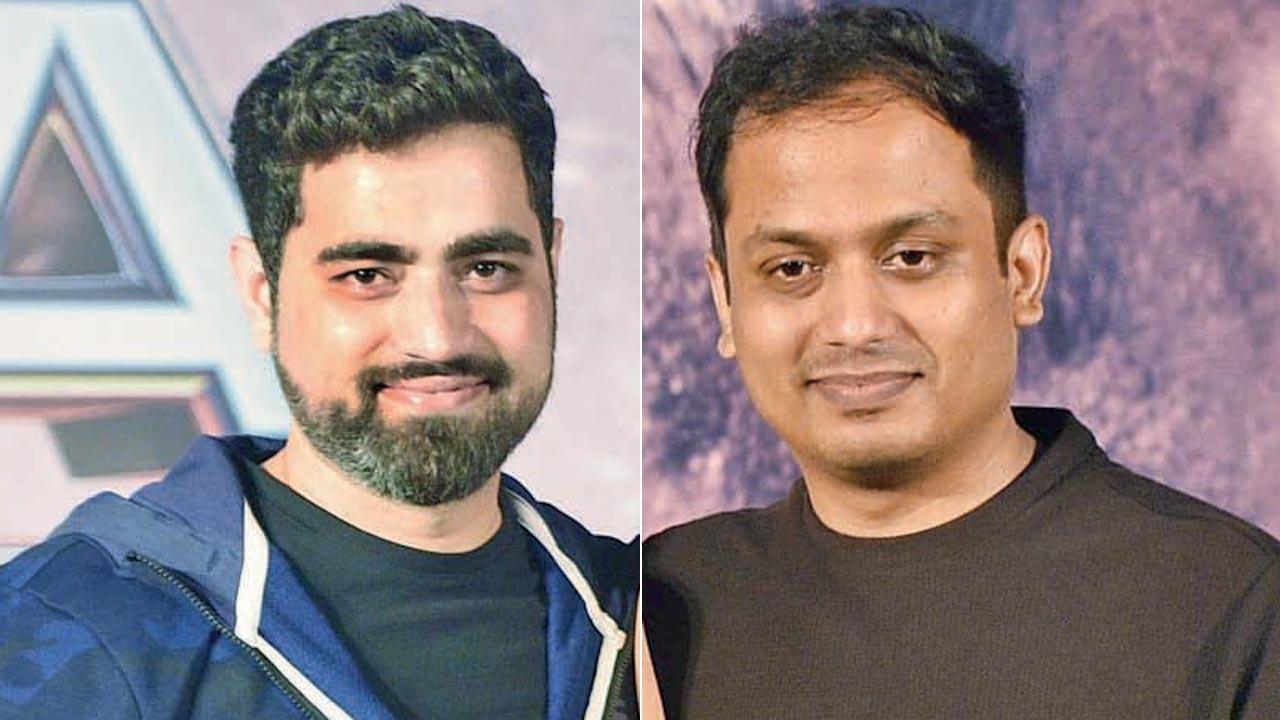
Pushkar Ojha and Sagar Ambre
‘Uri’ effect? Bollywood full of josh for military movies
8:32 AM

Wartime stories and biopics of heroes are the new favourite with filmmakers, many of whom are trying to make them more authentic with real weapons and research
Himanshi Dhawan (THE TIMES OF INDIA; January 28, 2024)
Bollywood is going to war! Well, not literally but visually. Don’t get us wrong. The staple Bollywood masala hero must still overcome insurmountable challenges, romance the girl and win in the end. But if a hero can also fly a plane, shoot enemies of the country, survive a couple of bullets, there is a better chance of box office success.
No wonder filmmakers have dusted off archival material to bring old war stories to celluloid — the 1971 war with Pakistan is a hot favourite. ‘Fighter’, starring Bollywood biggies Hrithik Roshan and Deepika Padukone who play fighter pilots in the Indian Air Force, released this week, and there are more such military-themed movies in the pipeline.
‘Ekkis’ by director Sriram Raghavan— slated for a 2025 release — is based on the youngest Param Vir Chakra awardee Lt Arun Ketrapal who lost his life during the 1971 war. Director Aanand L Rai has announced ‘Gorkha’ on Gorkha regiment’s Maj Gen Ian Cardozo and the pivotal role he played in the 1971 war, while Tamil director Rajkumar Periyasamy has begun shooting for a film on Major Mukund Varadarajan who killed three terrorists in J&K’s Shopian district and was awarded the Ashok Chakra posthumously.
‘Fighter’ co-producer and filmmaker Ramon Chibb has announced a film on Narendra ‘Bull’ Kumar recently. Col Kumar, who was awarded the Padma Shri, carried out multiple expeditions in the Siachen glacier area in the late 1970s and early 1980s which laid the basis for the Army’s success in Operation Meghdoot.
Last year, there were three Bollywood films on the armed forces, including the Sam Bahadur biopic starring Vicky Kaushal, and ‘Pippa’ that was released on OTT featuring Ishaan Khatter and ‘Tejas’ that showcased Kangana Ranaut as a woman fighter pilot helming a military spy operation. The first two received critical acclaim for their portrayal of the military. ‘Major’m based on NSG commando Sandeep Unnikrishnan’s bravery during the 26/11 Mumbai terror attacks, was released in 2022.
Military historian AVM Arjun Subramaniam says military movies have been an influential genre in the West that India is catching up to. “Indian filmmakers had it tough in terms of authentic research and access to material and people. Now, there are more sources of information, more books, and more articulate officers. Also, the defence establishment has realised that this is an effective form of outreach to show how the military that embodies the values of inclusiveness, secularism and multiculturalism has contributed to democracy.”
Subramaniam, who was advisor for ‘Sam Bahadur’, says it is amongst the few military biopic made after Independence and a good indicator of how nascent the genre is in India.
Many took their cue from the resounding success of ‘Uri: The Surgical Strike’ in 2019. “How’s the josh?” a dialogue by Vicky Kaushal’s character captured the public imagination. In 2021, ‘Shershaah’, based on Captain Vikram Batra who lost his life during the 1999 Kargil war, was also a success. ‘LOC Kargil’, ‘Lakshya’ and ‘Gunjan Saxena: The Kargil Girl’ have been some of the other films on the subject.
Chibb, who wrote the story for ‘Fighter’ besides co-producing it, says that there is a marked change in how Bollywood approaches the subject. For starters, it’s ditching the earlier clichés of bandook and badi mooch. “Filmmakers are more sensitive to historical facts and are veering towards realism whether it is action, operational details or equipment. Earlier, there were times when the film would carry the wrong medals, uniform and weaponry,” he says.
Cringe-worthy scenes like an army officer wearing police medals, or a 25 or 26-year-old being portrayed at a senior position like a Lt General that takes 25 years of service come to mind. Chibb says ‘Fighter’, which has extensive aerial manoeuvres and authentic weaponry and equipment, will hopefully show the way.
Chibb says that he would watch Hollywood films like ‘Guns of Navarone’ and ‘Top Gun’ and find that ‘cool’ quotient missing in Bollywood films. He singles out ‘Vijeta’ (1982) and ‘Prahar’ (1991) as exceptions and close to authentic. “The industry has realized that military stories lend themselves to the screen: they have action, mystery and drama. When big stars are willing to play the characters, it makes a huge difference. It raises awareness about the military and increases recruitment,” he says.
After the controversy sparked by the release of ‘Gunjan Saxena’, where the military felt that facts had been distorted to show the air force as gender biased, it mandated that scripts would be cleared by the Additional Directorate General of Public Information (ADGPI). ADGPI can also recommend defence consultants for projects.
“The military has also opened access to cantonment areas, equipment and even using real soldiers that adds authenticity to the film,” says Major Sandeep Sangwan who was a defence consultant for ‘Pippa’. The movie was shot at the Armoured Corps School and Centre in Ahmednagar, Maharashtra. In ‘Sam Bahadur’, Kaushal was allowed access to not only Field Marshal Sam Maneckshaw’s car but also his driver for the film scenes.
Filmmakers might have upped the standard with research, but critics say many of them still border on jingoism. Unlike films like ‘Dunkirk’ that examine military strategies or ‘American Sniper’ that explores PTSD in soldiers, most Bollywood films do not look at layered characters.
Subramaniam says, “Our DNA is not structured for an open investigation or learning from mistakes. Issues of national security are cloaked in secrecy. The public does not easily understand these matters.” This reflects in the paucity of books or availability of declassified archival material on the battles India has lost. Indian filmmakers also succumb to the temptation of adding romance and songs.
The military is one of the few institutions for which public support transcends regional and communal loyalties and that means serious moolah, an opportunity that Bollywood is gunning for.

Koffee With Karan 8: Kiara Advani reveals how Sidharth Malhotra proposed to her
8:21 AM
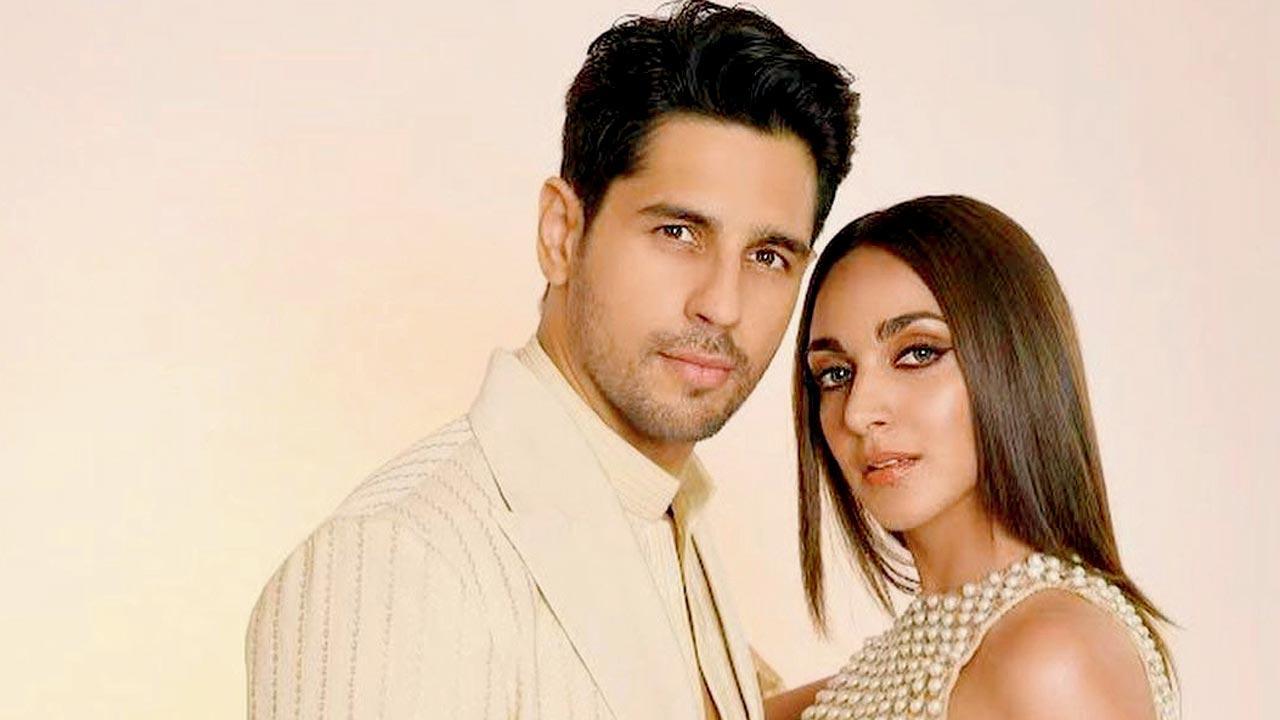
On Koffee with Karan, Kiara recounts how Sidharth proposed to her over violins and late-night walk during a family vacation in Italy
Mohar Basu (MID-DAY; December 7, 2023)
In February, Sidharth Malhotra and Kiara Advani had a dreamy wedding, the heart-warming video of which went viral. Now, in the latest episode of Koffee With Karan 8, Advani—who graces the couch with Vicky Kaushal—revealed that Malhotra proposed to her during their Italy vacation last year. It turns out the Satyaprem Ki Katha actor had joined her beau and his family for the holiday.
In the Disney+ Hotstar offering, Advani admitted that she had an inkling that he’d propose. “The first night that he planned to do it, something didn’t go right. So, it was cancelled. Then, the second night, he took us to a Michelin star restaurant, and I was sleepy because I just landed,” she recalled, adding that after dinner, Malhotra took her for a walk.
“I was cribbing about how tired I was. Suddenly, a violinist came out of the bushes, while his nephew was taking our video. Sid went down on one knee and proposed. I was so overwhelmed that I didn’t say anything. After his whole speech, he started saying the lines from Shershaah, ‘Main Delhi ka seedha saadha launda hoon’ and I burst out laughing.”
Host Karan Johar added that soon after, the couple Face-timed Advani’s parents and him to share the good news.
A good film will find its audience; everybody knows that Shershaah was a hit, or everybody was talking about Freddy-Rakul Preet Singh
8:36 AM

Neha Maheshwri (BOMBAY TIMES; February 27, 2023)
Rakul Preet Singh clocked in five releases in 2022 and one at the beginning of 2023. It’s obviously a busy time in her career. Lately, the actress has also been making news for matters of the heart as she is dating actor-producer Jackky Bhagnani. Rakul, who is enjoying this phase of her career, believes that her work will speak for her. Excerpts from a chat with the actress:
Right after the pandemic, you had five releases (in 2022) — Attack, Runway 34, Cuttputlli, Doctor G and Thank God. What do you think is working in your favour?
I don’t put much thought into what I have done right because I always live in the present. The moment my films release, it becomes the past. My energies are always on what I need to do next and how I can do better projects and grow as an actor. I am grateful that things panned out the way they have. I am also grateful to all the makers who believed in me as I got to do diverse films — from a commercial movie like Cuttputlli to a thriller like Runway 34 and the campus comedy Doctor G, in which I played a small-town doctor. What’s most important is the love of the audience because box-office numbers are driven by too many factors.
You have been doing South films long before the audience started consuming them widely across the country, the way they are now. Lately, there has been a lot of debate about the content of South films being better than Bollywood.
We are creating a debate where there is none. It’s just an outcome of there being so many platforms and the fact that everyone has an opinion on social media. South Indian cinema has been celebrated for the longest time on Hindi GECs (general entertainment channels), where people watch these films. It’s the influx of too much consumption during the pandemic, which is why it became a talking point, and I am glad because those films needed to be celebrated. Regional and Hindi cinema both are a part of the Indian industry, so there is no comparison. Today, if a film is good, it will find its audience. We should rather speak about the amazing time that we are in, where a great exchange of content, artistes and directors is happening, and the fact that we can make such great international-level cinema using talent across the country.
There are a lot of films releasing directly on OTT these days. Do you think your film Chhatriwali , which was released on OTT, would have done well in theatres?
No, I haven’t had that thought because it was never meant to be for the theatres. Today it’s not about which medium the film releases on. Everybody knows that Shershaah was a hit, or everybody was talking about Freddy. A good film will find its audience, whether it’s through OTT or theatres. Sometimes, good movies like Runway 34 get way more appreciation on OTT. Of course, the box-office numbers matter when a film is released in the theatres, but I think we understand that we are going through a re-correction phase currently, and the box office alone does not define whether the film is good, or whether you are good.
But it does matter when it comes to cementing your position in the industry, right?
Fortunately or unfortunately, it does to some extent. There has been a backlog of films for two years. Films are being released every week; sometimes, there are two releases. How do you expect the audience to come and watch every film? It’s an expensive affair. In the South, there is a cap that the government has on the pricing of the tickets, which you do not have here. So, they pick that one film a month but that doesn’t mean that your movie is bad. It just means that people possibly don’t have money right now. This can be one of the factors. While numbers give you a positioning, the industry realises that it’s a sensitive time today. So, your work is possibly not just looked through the prism of your box-office numbers.
You aren’t hiding your relationship with actor-producer Jackky Bhagnani. Recently, there was buzz about your marriage…
The thing is that I have always been vocal and whenever that conversation happens, I will be open. Given the films I am shooting and the ones Jackky is producing, where do you think we have the time? Whenever it happens, I will be the first one to announce it. As of now, we are extremely busy with our work.
It's lovely to see Sidharth Malhotra and Kiara Advani aka the reel Vikram and Dimple get married-Vishal Batra
8:41 AM

Vishal Batra, with his wife Dr Apara Sharma and daughter Aadya at Sidharth Malhotra and Kiara Advani’s wedding reception
Captain Vikram Batra’s brother shares the emotions he felt while attending Shershaah couple, Sidharth Malhotra and Kiara Advani’s wedding celebrations
Harshada Rege (BOMBAY TIMES; February 18, 2023)
Captain Vikram Batra sacrificed his life on the battlefield during the Kargil War in 1999 at the age of 24. His death left his love story with the love of his life, Dimple Cheema, incomplete. In a strange twist of fate, the actors who essayed their parts on the screen in Shershaah (Captain Vikram Batra’s biopic) — Sidharth Malhotra and Kiara Advani — tied the knot recently. Captain Vikram Batra’s twin brother Vishal Batra, along with his wife, Dr Apara Sharma and daughter Aadya, graced the reception in Mumbai.
During the making of Shershaah, Sidharth and Vishal became friends, and the latter says that he experienced a gamut of emotions when he attended Sidharth and Kiara’s wedding celebrations. “I met Sidharth in December 2015 when the idea of the movie came up. We have been in touch regularly despite the fact that the movie released two years ago, and he is a good friend now. It was lovely of him to invite us. For me, it was also a feeling that I couldn’t see Vikram’s wedding… It took me through various emotions, and being an identical twin, it’s something that can’t be explained in words. We got a message from Kiara, too, saying they are looking forward to us attending the wedding,” says Vishal.
Ask Vishal whether he was aware of the wedding plans, and he says, “I never spoke to Sidharth about it. Shabbir bhai (Shabbir Boxwala, co-producer of Shershaah) did tell me they were planning to get married. I think they got closer because of the movie, and I am very happy they got married. The real Vikram and Dimple could not get married, but the reel Vikram and Dimple have, and that is a lovely feeling. Our blessings are with them. They are a lovely couple. They are two wonderful individuals, and I have never interacted with them as stars. Recently, Sidharth even called me and asked me to attend the trailer launch of Mission Majnu in Delhi. He said, ‘I want you here with me’. It’s a brotherly feeling; otherwise, why do I need to be there for the launch.”
On her wedding day, Kiara walked to the mandap to the tune of the track Ranjha from Shershaah, which was specially rewritten for the special moment. Getting emotional, several people on social media commented and said that this, in a way, is the happy conclusion that Captain Vikram Batra and Dimple Cheema’s love story deserved.
“I have been reading some things,” says Vishal, adding, “This is a way for people to shower their love. They saw an image of Vikram in Sidharth. People draw a lot of courage from Vikram’s acts. They got to know his story – his bravery and his love story – through the film. Vikram left us so early, but this couple got close because of Vikram and Dimple’s life, it’s only right that people shower love on them.”
Though the film released two years ago, people often approach Vishal to share memories of his brother. Talking about Captain Vikram Batra, who was awarded the Param Vir Chakra posthumously, Vishal says, “If you remember, the film begins with a brother narrating his brother’s life. I had done a Ted Talk, after which people would approach me to speak about him. Now, after the film, it’s a lot more. I have always believed the real person who deserved it all was Vikram Batra. It is a lot of emotional burden on me… to live that life for the last 25 years. I always wish he was here to see what he has done for the country. At the end of the day, we are all narrators. I wish he were here to speak about his experiences.”
He further adds, “Sidharth did absolute justice to the role, and so did Kiara. Yes, Vikram’s physical absence continues to haunt me a lot, but look how he has created a name for himself, and he continues to live. Next year, he will complete 25 years of his sacrifice and people still remember him. I always have these mixed emotions where I feel sad and miss my brother, but also feel extremely proud of him.”
Hopefully, Mission Majnu will mark a new version of me, in the avatar of a spy-Sidharth Malhotra
8:52 AM
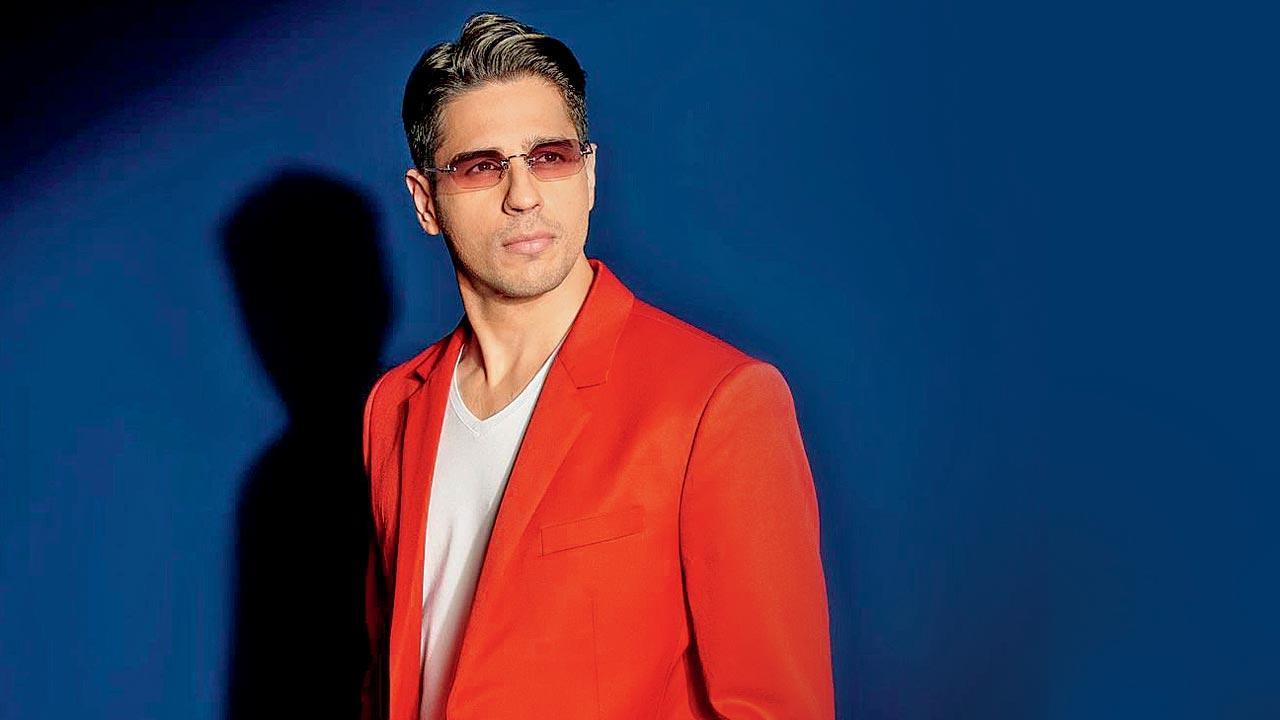
Armed with learnings of the past 10 years, Mission Majnu star Sidharth says he is now drawn to realistic characters
Hiren Kotwani (MID-DAY; January 14, 2023)
Looking back on the past 10 years elicits mixed feelings in Sidharth Malhotra. He is both content and hungry for more. From being a rank outsider who landed Student Of The Year (2012), to becoming one of the popular actors of today, it has been a steady climb, filled with learning and discovery.
“When I started out, there was a lot of nervousness and anxiety. I learnt it all on the job, understood what steps to take, and how to improve in terms of performance or choice of films. I also learnt that intention is what matters. If you are true to the genre, and give your best in terms of the script and performance, [it brings results],” reflects the actor.
If the last decade saw him finding his feet, the next few years will be about building “the 2.0 version”. Netflix’s Mission Majnu is the first step in that direction. “Hopefully, Mission Majnu will mark a new version of me, in the avatar of a spy. After Shershaah [2021], I look forward to getting the same love from audiences and gratification for the [espionage] thriller.”
Director Shantanu Bagchi’s offering, set against the backdrop of the 1971 India-Pakistan war, sees Malhotra as an R&AW agent who goes undercover to the neighbouring country to find information about their nuclear weapon facility. What instantly struck a chord with the actor was the story — inspired by true events, yet told through fictional characters.
“After playing Captain Vikram Batra, this is my endeavour to play a hero who can never come out and say what he has done for the country. It will tell the audience about the people who continuously work behind the scenes to protect us. Sacha Baron Cohen’s The Spy [2019] and Steven Spielberg’s Munich [2005], both based on true stories, seemed close to our film. This is not a spy who goes all guns blazing; he is not James Bond. He had to struggle — sometimes pretending to be a tailor, at other times, a plumber — to get that vital piece of information,” explains the actor.
After the success of Shershaah, he appears to be gravitating towards portraying heroes who serve the country. While Mission Majnu sees him bring a real-life agent’s story to the screen, he will play a man in the uniform in Yodha and Rohit Shetty’s Indian Police Force.
“In Yodha and Indian Police Force, I play fictional characters. I find it more engaging to play characters that are realistic, or inspired by real life.”
Award mil gaya for an original song, it is a big thing-Tanishk Bagchi
8:34 AM

Tanishk Bagchi says he is unfazed by comments on his latest recreation, Aap Jaisa Koi
Ashish Kumar Singh (HINDUSTAN TIMES; December 4, 2022)
Tanishk Bagchi has constantly faced flak for recreating iconic Hindi film songs, but the music composer is unfazed by it. The 42-year-old found himself at the receiving end of a lot of trolling on social media for remixing the iconic melody Aap Jaisa Koi for Ayushmann Khurrana’s latest film, An Action Hero.
The original was sung by Pakistani pop star Nazia Hassan and was picturised on yesteryear actor Zeenat Aman in the film Abdullah (1979). In an exclusive chat, Bagchi tells us how he doesn’t let the negativity get to him, and that his sole focus is his work.
“I don’t have the time to look at social media or negative comments. I’m always occupied with my work. I get a song and then I move on to the next project. My work is my main passion and I do not focus on what everyone is saying. Award mil gaya na for an original song, it is a big thing,” says Bagchi, who bagged awards for his song Raataan Lambiyan from Shershaah (2021).
Social media users, visibly irked, took to Twitter to express their angst over the new rendition, picturised on Khurrana and actor Malaika Arora. Ask Bagchi his opinion on people remixing their own songs on Instagram and amassing millions of views — the latest being Pakistani girl Ayesha’s rendition of Lata Mangeshkar’s Mera Dil Ye Pukare Aaja — and he says every trend is a good thing, as long as people enjoy it.
“They are creating their own genre. However, the attention span of people is becoming short. Abhi reel 15 seconds hai, kal ko 2 seconds ho jayega,” he notes.
Bagchi also sheds light on the debate about songs being made specially for Instagram Reels.
“It’s a marketing gimmick. The rules keep changing. It’s good if a specific part of the song is being focused on,” says the musician, who is currently hooked to songs such as Calm Down, Pasoori, and Jhoom.
----------------------------------------------------
Nazia Hassan must be turning in her grave: Adnan Siddiqui takes jibe at Bagchi
Pakistani actor Adnan Siddiqui was among the many to express their displeasure over the remix of Aap Jaisa Koi, from An Action Hero. He tweeted, “Is there something in the air that the world has suddenly developed a penchant for ruining perfect classics? Even re-creation requires talent. Nazia Hassan must be turning in her grave. #AapJaisaKoi nahi..(sic)”
Bhool Bhulaiyaa 2 is not a remake, so I’m not stepping into someone’s shoes-Kiara Advani
8:24 AM
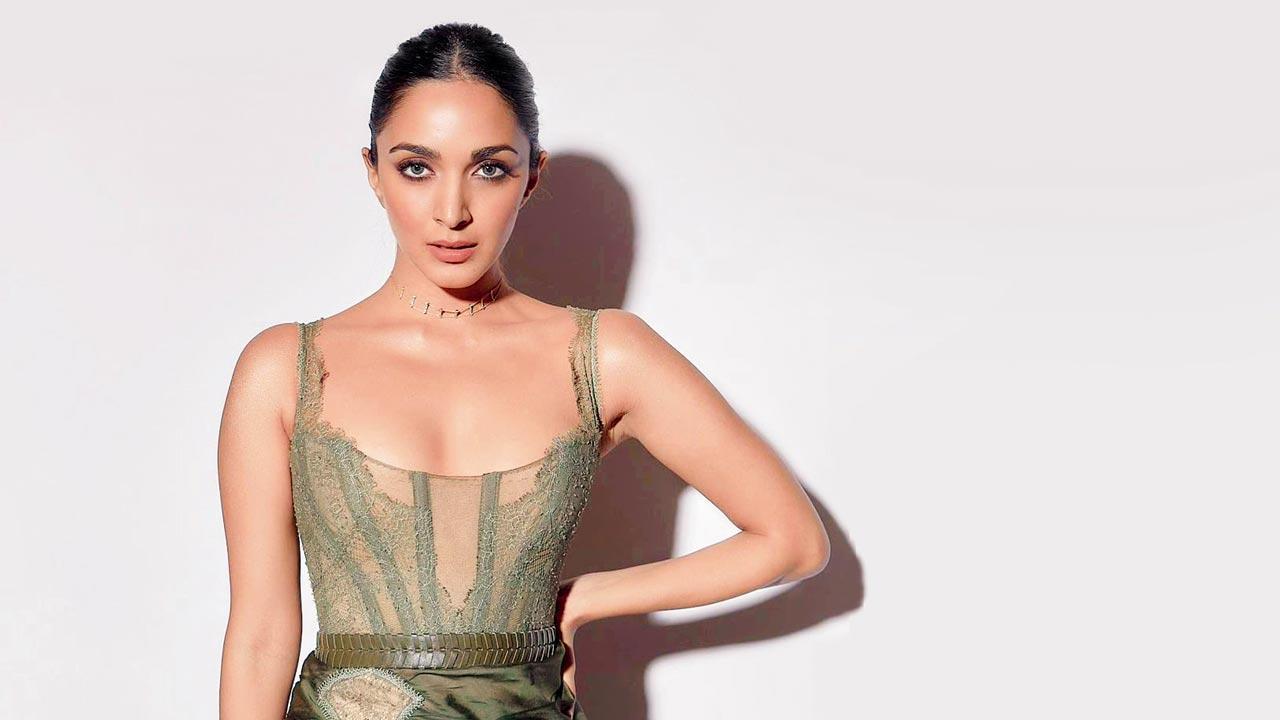
Stating that Bhool Bhulaiyaa was a ‘cult film’, Kiara says her performance shouldn’t be compared to Vidya’s as the team is offering a fresh story
Mohar Basu (MID-DAY; May 5, 2022)
Sometimes, nostalgia can be a big reason to give your nod to a project. Saying yes to Bhool Bhulaiyaa 2 came easy to Kiara Advani, who, despite her aversion to horror films, had loved the 2007 Akshay Kumar-Vidya Balan hit. She says,
“We have retained the essence of the original and some elements like Manjulika’s name, but as a storyline, this is completely new. That said, Bhool Bhulaiyaa was a cult film, and when you make the second part, you can only get inspired. This is not a psychological thriller, but a horror comedy. There is a layer of black magic.”
Anees Bazmee’s directorial offering, starring Kartik Aaryan, Tabu and her, sees Advani as Reet who is possessed by the all-powerful spirit of Manjulika. While Balan had given her own interpretation to Manjulika, did she feel the pressure as she picked up the reins? “I am not playing the character thankfully. It is not a remake, so I’m not stepping into someone’s shoes. We tried to do the best with the story we have. I am still that scared child who watched the original Bhool Bhulaiyaa in the theatre with her eyes half-closed,” she laughs, before adding, “I wanted to do the film because a genre like that could be transformed into a family entertainer.”
Sharing screen space with Tabu was a big draw for her. “She is one of the finest actors we have. She has made the story her own. As a person, she is grounded and chilled out.”
In the past year, Shershaah (2021) changed the game for the actor. The Amazon Prime Video offering ranked among the platform’s most watched films of 2021. Advani admits there has been a perceptible shift since, with filmmakers having more faith in her. “With each film, you cement your position. But rarely does a character resonate so universally. I saw how many people felt close to the character of Dimple. The love superseded our expectations. I feel settled and accepted, even comfortable to take on more challenges. But I still don’t feel I have made it. There is a long way to go.”
We trusted our instinct, stuck to original script of The Family Man 2-Raj Nidimoru
8:28 AM
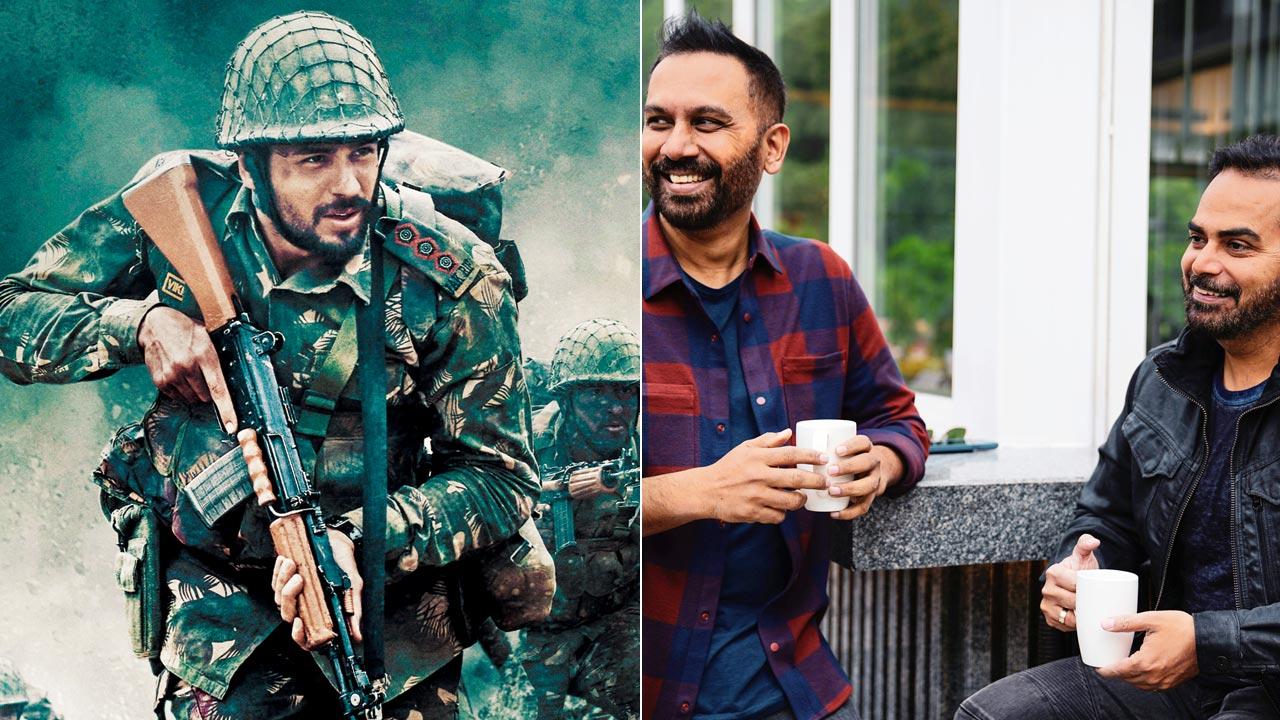
Sidharth Malhotra in Shershaah; (right) Showrunners Raj-DK
As The Family Man season 2 sweeps the mid-day and Radio City Hitlist OTT Awards with seven wins, showrunner Raj Nidimoru on the challenges of making the series
Uma Ramasubramanian, Mohar Basu (MID-DAY; April 24, 2022)
Two years of the pandemic would have been close to impossible to bear, if not for the barrage of content on digital platforms. From following Srikant Tiwari’s journey as he battled yet another threat to the nation, to witnessing Sidharth Malhotra honour Captain Vikram Batra’s sacrifice for the country in Shershaah, there was enough and more to keep the junta glued to their screens.
After the success of the second edition, mid-day and Radio City Hitlist OTT Awards returned with the third season and fans poured in their love by voting for their favourites until March 18 when the ballots closed. Raj Nidimoru and Krishna DK’s The Family Man season 2 walked away with seven wins, including the Best Season. If Manoj Bajpayee and Samantha won the top acting honours in the Series category, the Amazon Prime Video offering also walked away with gongs for Best Supporting Actor (male), Best Supporting Actor (female), Best Ensemble Cast and Best Showrunner/Creator.
“It is an honour to be acknowledged twice in a row for both our seasons of The Family Man. mid-day and Radio City were one of the pioneers in recognising and acknowledging OTT as an emerging, strong platform. We are delighted,” says Raj as he recalled the tough journey he started in 2019.
“To pull off the second season was the most difficult thing in the world. We have always been aware of the challenges of making a sequel. Thankfully, we were blissfully unaware of the first season’s outcome because we had already started shooting [for the second instalment].”
While there was an option to makes changes to the second edition, Raj and DK stuck to their gut feeling. “We stuck to our basic instinct on how the second season should be and went with it. I think, trusting that instinct and sticking to the original concept helped us break the curse of the second season,” explains Raj, and adds that a lot of viewers felt the second part was better than the first.
The other winners include Malhotra and Kiara Advani, who were adjudged Best Actors in the film category for Vishnuvardhan’s Shershaah. The film won three gongs. Malhotra thanked everyone who helped him through the journey of the film and dedicated the award to the Batra family.
“Shershaah is special. A win for the film requires [me to] thank so many people, from my producers—Karan Johar, Apoorva Mehta and Shabbir Boxwala—to Kiara Advani who played Dimple so perfectly. The win belongs to the Indian army and Captain Vikram Batra’s family who approached me and trusted me with this special story which I hope continues to inspire the country’s youth.”
And the award goes to...
- Best Show - Aranyak (Netflix)
- Best Season - The Family Man S02 (Amazon Prime Video)
- Best Web Film - (Hindi) Shershaah (Amazon Prime Video)
- Best Web Film - (Non-Hindi) Jai Bhim (Amazon Prime Video)
- Best Non-Fiction - House Of Secrets: The Burari Deaths (Netflix)
- Best Online Sensation - Bhuvan Bam (Dhindora, YouTube)
- Best Actor (Male) Series - Manoj Bajpayee (The Family Man S02)
- Best Actor (Female) Series - Samantha (The Family Man S02)
- Best Supporting Actor (Male) Series - Sharib Hashmi (The Family Man S02)
- Best Supporting Actor (Female) Series - Ashlesha Thakur (The Family Man S02)
- Best Actor (Male) Film - Sidharth Malhotra (Shershaah)
- Best Actor (Female) Film - Kiara Advani (Shershaah)
- Best Supporting Actor (Male) Film - Pankaj Tripathi (Mimi)
- Best Supporting Actor (Female) Film - Ileana D’Cruz (The Big Bull)
- Best Ensemble Cast - The Family Man S02 (Mukesh Chhabra)
- Best Showrunner/Creator - The Family Man S02 (Raj-DK)
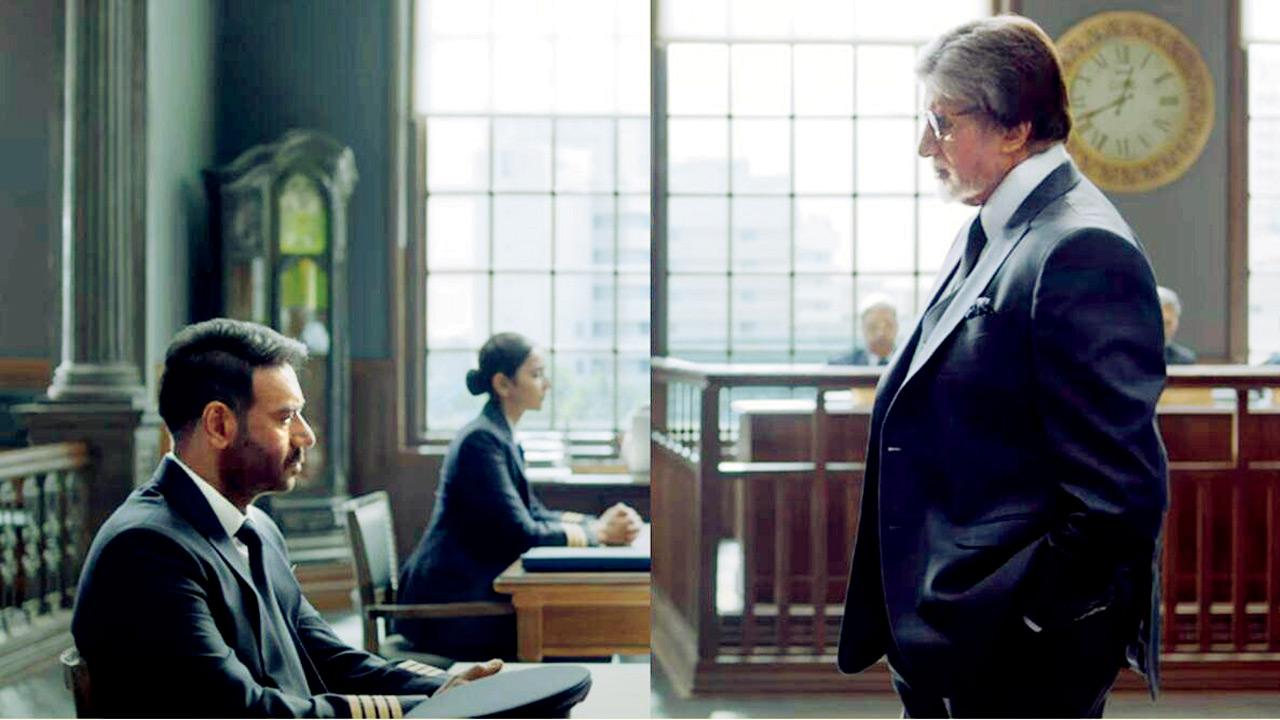
Runway 34 is an expensive film; it’s Ajay Devgn's directorial venture. So, the fact that he trusted me is a big deal-Jasleen Royal
8:28 AM

Going from strength to strength, film after film, Runway 34 composer Jasleen Royal on making success look easy
Sonia Lulla (MID-DAY; April 4, 2022)
Jasleen Royal is young, but her jaunty laugh shaves years off her age. She isn’t burdened by the need to establish her prowess over her craft when addressing questions, but camouflaged within her playful responses are important nuggets for artistes. The first among them addresses a vital question — in a male-dominated music-composition industry, how has a young musician like her made success look so easy?
“Earlier, I’d wonder what the fuss around a male and a female composer is. But, I realised that while growing up too, I had to fight for little things, like [resisting] the early deadline to return home only because you are a girl. I understood that it’s all ingrained. We don’t even realise that we are always putting up a little more of a fight. But all women, especially those in India’s interiors, who are not always afforded opportunities, should follow their dreams. Having said that, it’s important to know that only promising work will get you good [opportunities]. Kaam se hi chance milega. I am glad that people appointed me for my work,” says the singer, who has composed the entire score for Ajay Devgn’s upcoming film, Runway 34.
Royal’s previous collaboration with Devgn in Shivaay brought her in his good books. Even though the actor is a man of few words, Royal says when he speaks, “it’s always important”. “He initially called me for a few songs, and then we kept adding some more. It’s an expensive film, and it’s his directorial venture. So, the fact that he trusted me is a big deal. The best part about working with him is that he is open to new ideas. If I pitch an idea and he loves it, but I am unhappy with how it eventually sounds in the studio, he’s willing to let me try something new,” says Royal, delighted that the film’s Mitra Re, released a few days ago, is already earning acclaim.
Royal pins her ability to have found her way in the industry to a few crucial factors. To begin with, she isn’t easily attached to her projects. Also, she’s always willing to make amends to her work. “My approach towards any work has always been this — I need to love the song. If I don’t love it, I’m lying to whoever I take it to. When they take it, I’m done. Sometimes, if they ask me to make changes to make it more palatable, I’m wiling to do so, because even I want my song to be enjoyed by more listeners.”
She, however, agrees that any creative artiste is always challenged by one thing — the mental block, “when you don’t know what to do next”. What does she do next? “I share a good rapport with my lyricist Aditya Sharma. We chat, or head for a drive and discuss anything unrelated to music. When either of us is stuck, the other reminds them that such obstacles have been overcome in the pasts. If I’m at home, my [domestic help] will say, ‘Didi, ho jayega’. So, everyone is involved,” she laughs, safe in the knowledge that even if she must play 1,500 tunes, she will find five crucial ones that will get the job done.
Our conversation is incomplete without addressing the success she received for Shershaah’s Ranjha, which found a spot on the Billboard Global Excl US charts. “I made a song that I love. [The team] did a great job with the marketing plan, and the film worked too. Everything worked.”
The OTT business is really the IPL of content-Sameer Nair
8:25 AM
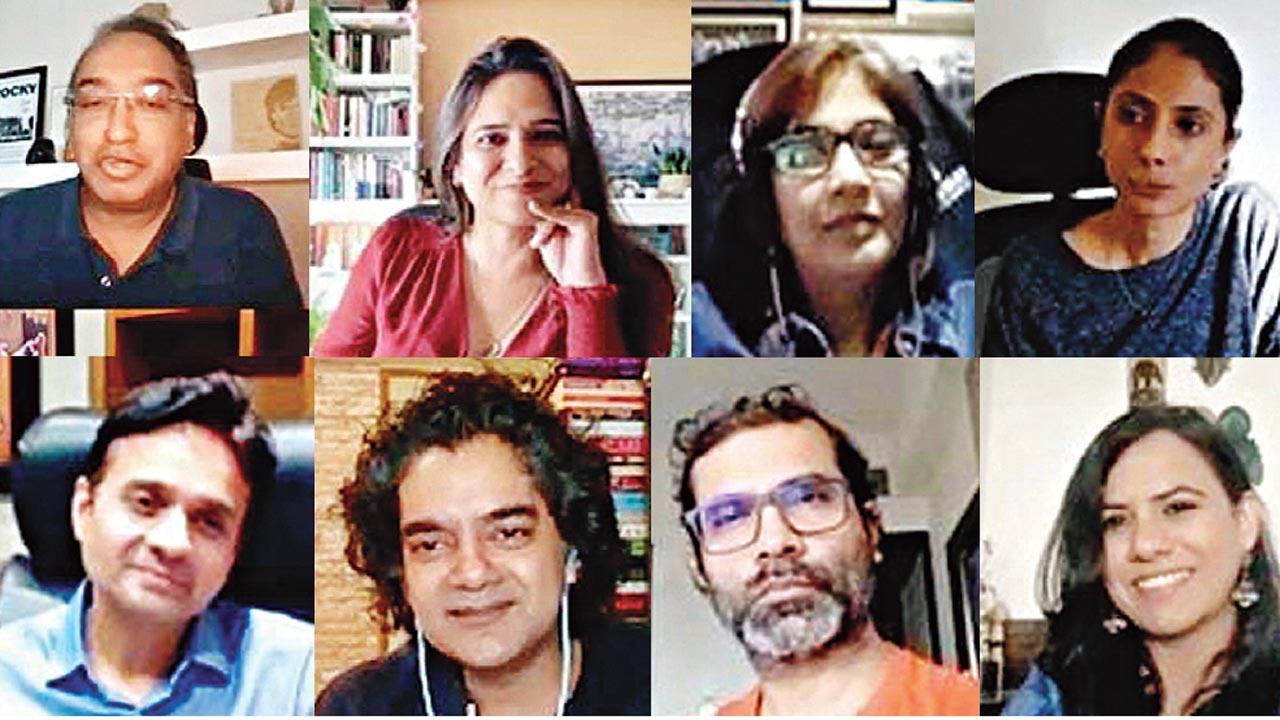
(Clockwise from top) Sameer Nair, CEO, Applause Entertainment; Nimisha Pandey, Chief Content Officer, Hindi Originals — Zee5; Madhu Bhojwani, partner, Emmay Entertainment; Pratiksha Rao, Director — films and licensing, India, Netflix; Aparna Purohit, Head, India originals, Amazon Prime Video; Arunabh Kumar, Founder TVF; Mayank Shekhar, Entertainment Editor, mid-day; Apoorva Mehta, CEO, Dharma Productions and Dharmatic
In the OTT head honchos’ huddle, ahead of Hitlist Awards, India’s top content bosses delve on the changing scene
Mayank Shekhar (MID-DAY; February 25, 2022)
Not that you can time this—a day before the Hitlist Awards’ OTT head honchos’ huddle took place over a zoom call, with India’s top content bosses, Netflix founder Reed Hastings dropped a truth bomb elsewhere.
Of all major markets, Reeds reckoned, Netflix was yet to convincingly crack India. Social media handles took off thereafter, throwing up suggestions on what Netflix must do, where it had gone wrong — a swarm of SWOT analyses, if you may.
Sameer Nair (Applause Entertainment) feels this is like offering boxing lessons to Mike Tyson, going through a purple patch: “Netflix are the leaders of how streaming business is done. And India has always been a complicated, hungry, but value-conscious market, that’s also tasted blood during the pandemic. Even cable TV is pathetically cheap at $3 a month here. Everywhere else, it’s $20-30. Satellite TV has 200 million viewers, OTT platforms are at 30-40 million. We talk of ‘cutting the (cable) cord’ — why bother; it’s just there!”
Pratiksha Rao (Netflix India), on the other hand, takes this barrage of unsolicited, social-media advice rather sportingly, terming it a “huge privilege that people think of brand Netflix as passionately. We see ourselves as creative enablers, partners for as diverse stories as we can, to also make them travel globally,” besides offering global (original) content on the platform itself.
To be fair, as per estimates, Netflix holds about 5 per cent of the Indian OTT market; its revenue-share stands close to 30 per cent. There are, currently, about 75 OTT platforms in India. And of the 225 fresh shows streamed in 2021, 170 of them were in Hindi alone. A certain level of segmentation has obviously taken place in an industry that’s at best about five years old.
Nimisha Pandey (Zee5) reveals her platform delivered 40 pieces of original content (series/films) in 2021: “We plan to focus more on quality.”
Aparna Purohit (Amazon Prime Video) agrees her mandate isn’t quantity either. Given that the streaming service is part of an overall shopping mall. “The pressure is to put out something that constantly raises the bar—becomes part of cultural zeitgeist, water-cooler conversations; whether that’s Paatal Lok or Mirzapur. That’s not easy pressure; even as we placed 18 shows and 50 films across languages (in 2021).”
With its own captive subscriber/audience base, the OTT can be deemed as the new star-system for Indian entertainment. They unilaterally green-light scripts—for films, and shows that are shot like cinema. And, in return, receive both immense love and instant criticism for the choices they make.
Speaking of the star-system, which is directly related to theatrical entertainment—whatever happened to Bollywood, as it were, that took a beating from both Hollywood (Spider-Man), and down South (Pushpa, which collected Rs 80 crore among Hindi audiences alone)?
A contention behind this threat to Bollywood being that most of Mumbai’s top, traditional producers have turned into vendors for OTT platforms in the process.
Apoorva Mehta (Dharma Productions, which pretty much equals Bollywood) reasons, “Theatrical is the cornerstone, that’s where the heart lies. The South is filling a gap. Very few Hindi filmmakers, like Rohit Shetty, are great with delivering scale plus entertainment.”
The other unsung aspect of the nascent, theatrical dominance of the South in Hindi markets, as Arunabh Kumar (TVF) points out, is serious upgrade in the quality of Hindi dubbing, subtitling and translation—something that wasn’t adequately appreciated for Allu Arjun’s Pushpa.
Of course television, more so OTT platforms, and Internet access in general, have had a role to play with audiences sampling cinema/content/stardom from all over, other Indian languages included.
As for his own Hindi films, Mehta says he had to make do with the war-tentpole Shershaah (2021) on Amazon Prime Video (APV), because they had held on to it for over a year since the pandemic: “We couldn’t miss out on August 15.” Also, one’s not sure anymore what the response to a mid-range production like Gehraiyaan (also on APV) would be in a theatre: “There’s a skew towards larger than life, experiential entertainment.”
What’s the unlearning, when film studios enter the streaming fray? How are the OTT and film industries different? Bollywood producer Madhu Bhojwani (Emmay Entertainment), who delivered 10 OTT titles in 2021 (including Empire and Mumbai Diaries 26/11) likens the two financial worlds to farming and hunting. Wherein the OTT industry promises a predictable return on an input cost: “There is a cap on how much you can make.”
“The up-side, even once you dilute stakes on the intellectual property of a film,” depends on performance in theatres: “Films are like the races.”
The other changing dynamic between the two industries is again, of course, the star-system itself. Lead actors in Bollywood are notorious for cornering as paycheck a bulk of the film’s budget. Do they matter on OTTs anymore?
TVF’s Kumar says streaming platforms are democratic, in the sense that they don’t grade content on your device, based on who’s in it. The library is near infinite (for a lifetime anyway). Unlike network television, where you can only watch a show at a time; and theatres, that can only play a certain number of films.
Can’t deny the initial buzz, though, that a show/film on an OTT is likely to generate, given a legacy star in it. Rao from Netflix is clear, “The script and the creator’s vision are most important in assessing a project, yes. There is still a commercial value attached to the power of big talents, who have built a filmography and fan base, over years. While they have to deliver that value, they also have to be used the right way, as we’ve done in the US. [Conversely], you can have a [Malayalam super-hero film] Minnal Murali that generates its own fandom. The film didn’t have a big star. But [Tavino Thomas] became a national heartthrob after.”
The equivalent of the box-office, the barometer for cinema stardom, isn’t clicks on OTT platforms, as Pandey from Zee5 points out: “The click is just a vanity metric. Sampling does no good. Once you have clicked—how long you have stuck with the content matters more in the long run.”
And this is why, according to APV’s Purohit, “There is no rush. You don’t have to prove a success of a film or series over a weekend [unlike box-office]. The audience surprises us eventually.”
The reason OTT platforms are seen as parallel to the film industry, rather than television—despite the disproportionate size of screen—is clearly for the budgets involved. And indeed the cross-pollination of talents that have taken place over the past half a decade.
Unlike the US, that moved towards limited edition, quality series back in the late 1990s, Indian network TV continued to appeal to mass markets, chiefly with long-running soap operas, with little incentive to do much else. “This is India’s HBO moment,” Nair from Applause, reckons.
Having been part of all three worlds, how does Nair perceive these industries separately? He says, “There are various ways to describe it. One that I find useful is to take the movie business as playing for the national cricket team—11 players from a billion plus. Fiction on TV is domestic cricket. Those in it hope to make it from thereon. The OTT business is really the IPL of content—involves both domestic and international players, with quality on display; everybody gets their moment under the sun.”
In the food-chain on the Internet, there is in fact another competitive level, below the IPL of content. Which is where TVF’s Kumar progressed from, on a free-for-all YouTube, making spoofs and branded content—starting out with a sketch called Rowdies in 2012, peaking with Kota Factory, the second season of which made it to Netflix.
In 2022, Kumar asserts, “The lot on YouTube from a decade ago are presently subscribers of OTT platforms. That’s the cascading effect. Likewise, there’s a whole new world of 18-year-olds consuming short videos on YouTube now, that we also make content for—being the only collective from the old lot that continues to.”
This content economy is also a creator economy. Everyone is an aspirant, with an idea for a feature, short, or series; displaying talents all-day, online. Many of whom, we figure, might be interested in a conversation with these OTT bosses.
All of whom suggest their inboxes are open for new ideas. Kumar however warns the idea alone is hardly as important as the rigour and effort behind detailing a plan that ought to be 5,000 pages, minimum: “An idea means nothing. I’d value discipline over talent, any day.”
There’s also the ‘bible’, which Zee5’s Pandey defines as an elaborate presentation of sorts that captures the treatment of an idea/story, sometimes visuals included.
Whether it’s a bible or story synopsis, what’s essential, says Rao for Netflix, is “if you’re able get out, what’s in your head. Focus on explaining the story, and its emotions. Instead of saying, this is the ‘best’, or it’s India’s version of xyz!” In case you were searching for a favoured genre to sell, APV’s Purohit makes it public: she is actively on the lookout for young adult fiction.
A safe area, no doubt. Given OTT is no more quite the brave new world it used to be, only until a year back—what with the government putting in place an indisputably draconian censorship law, skewed towards accepting complaints from any viewer of an OTT platform, to be acted upon by a three-tier crime and punishment system.
Bhojwani is part of the government’s second-tier committee, that comprises industry folk and members of civil society—the first is the OTT platform itself; the third tier involves multiple Union ministries.
Bhojwani says, “Since this grievance-redress council was put in place, a lot of complaints have come in. But it’s been okay, working, so far.” So far, being the essential rider. Mehta at Dharma is taking no chances, getting scripts vetted by legal teams, desisting from anything that spells potential trouble.
Although Nair—who recently got away with Danish Sait’s smart political satire, Humble Politician Nograj—reasons, you gotta do, what you gotta do: “Creators both reflect and hold mirror to society—telling stories you’re not meant to; finding ways to. All great art progresses on these fundamentals. A danger bigger than censorship, is self censorship.”
There is a moment of silence at this point from the OTT platform bosses in this huddle. Well. Understandably so.
One pick of 2021
Sameer Nair: Jerry Seinfeld’s stand-up special, 23 Hours To Kill (Netflix)
Madhu Bhojwani: Mini-series, Dopesick (Disney+ Hotstar)
Apoorva Mehta: German multi-part series, Dark (Netflix)
Nimisha Pandey: TVF series Aspirants (YouTube)
Arunabh Kumar: English-Japanese thriller film, Kate (Netflix)
Aparna Purohit: Cop investigative series, Mare of Easttown (Disney+ Hotstar)
Pratiksha Rao: The Morning Show, Season 2 (Apple TV)
Cast your vote for the Hitlist OTT Awards
Log on to www.radiocity.in/hitlistawards to cast your vote.
You can also vote via SMS. Send HITLIST <space> category name <space> your choice (a/b/c as on the website) to 57575.
Voting lines close on March 18.
Those criticizing me are the ones dancing to my tunes-Tanishk Bagchi
8:30 AM
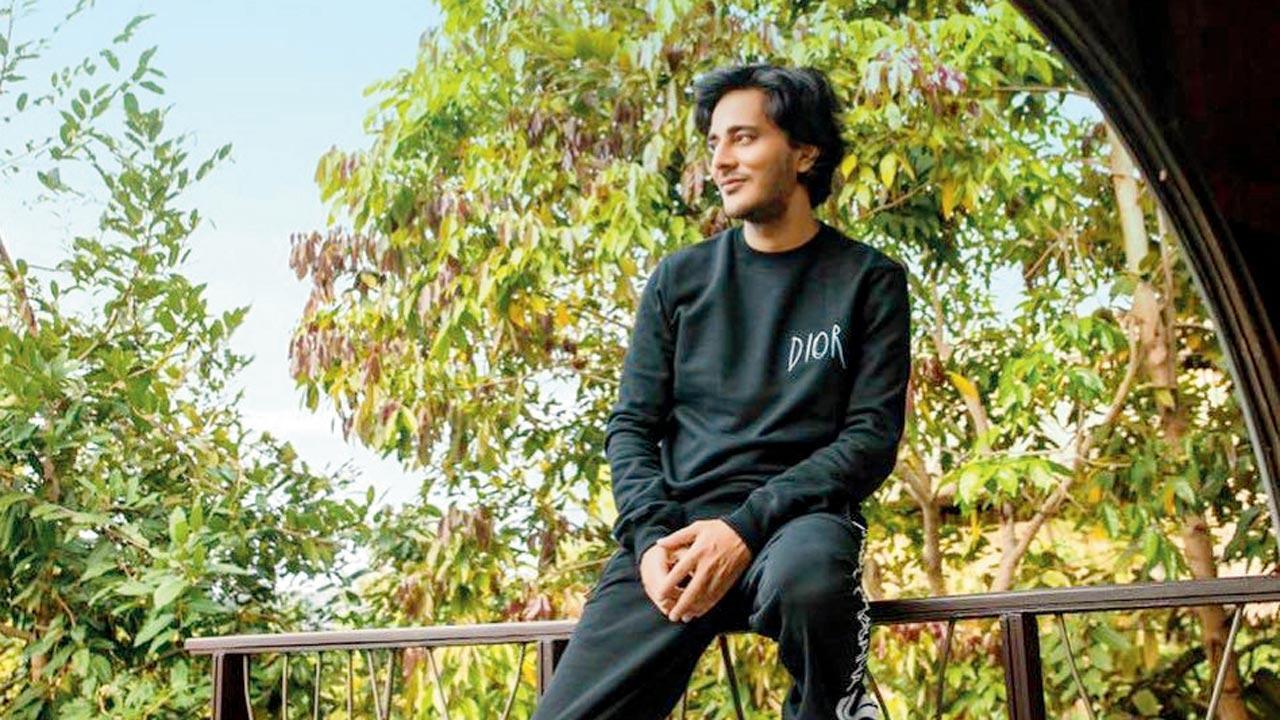
Undeterred by the brickbats he gets for remixing old ditties, Badhaai Do composer Tanishk Bagchi gets candid about emerging as the go-to person for filmmakers in search of chart-busters
Sonia Lulla (MID-DAY; January 31, 2022)
New music composers in the industry either win the favour of cinephiles and critics, or face brickbats. Tanishk Bagchi, however, faced an unusual predicament during his early years in Bollywood — he found favour in cinephiles, and faced the brickbats of critics. The Humma song, one of his first remixes, became a chartbuster in no time, and paved the way for a fresh trend in the industry. Bagchi’s scores became hot favourites among music consumers, a development that sat well with label heads, but not with composers of the original ditties that Bagchi was revisiting.
“I wasn’t the first one,” Bagchi tells mid-day in a candid chat. “Amit Trivedi did it with Hungama Ho Gaya, and Vishal-Shekhar with Bachna Ae Haseeno. When I started doing it, people questioned me. So, I decided that if I created two remixes, I’d make two original tracks as well. If I made Humma Humma, I made Akh Lad Jaave too. If I was at the top due to my remixes, I was also at the top because of my original songs.”
Bagchi’s resume evidently backs his claim. In 2021, apart from being a top performer on Indian music apps, his Shershaah composition Raataan Lambiyan made it to the Billboard charts as well. Emraan Hashmi-starrer Lut Gaye, and Nach Meri Rani were other Bagchi compositions that were also seamlessly adopted by music lovers.
Assured in the knowledge that “those criticizing me are the ones dancing to my tunes”, he says reinventing music is only a way of celebrating the work of revered composers. “My dad [Nandakumar Bagchi] would say that during the end of R D Burman’s life, few were there [with him]. But when he [passed away], people started reinventing his music. Nobody is trying to reinvent the work of those who are here. Only when they go do we say, ‘Wah, kya kaam kiya tha’. How do we get these legends back? We can do collaborations. Maybe, Anu Malik and I could collaborate.”
Despite the criticism he has faced, Bagchi is the go-to person for filmmakers seeking a hit track in their offerings. With as many as 20 projects under his belt as we speak, he gears up for his next, the Rajkummar Rao-starrer Badhaai Do. “I worked on the [franchise’s] first film as well, so I had the theme in my mind already. I begin to visualise the film through the music as soon as the story is narrated to me. I also like to think about it like a director would, and match the director’s vision. The dialect plays a crucial role as well. For instance, a Delhi-based film will have a Punjabi song. For a film set in UP, I will try to incorporate the flavour that we had in Badrinath Ki Dulhania. With 20 films [in my kitty], I need to be fast. It would usually take me a month, but, now, if a scenario is explained to me, I can churn out a track in a day.”
Matching the desired quality, one would assume, would be a challenging feat. But, Bagchi says his only aim is to appease himself. “Even if my manager or anyone else says a song I’ve made is good, I won’t present it unless I like it. If it doesn’t appeal to me, I will throw it out. I will also never repeat a certain kind of song. I can do a Makhna with Jacqueline Fernandez, a Nach Meri Rani with Nora Fatehi, a Raataan Lambiyan, which is [like a] sufi track, and a Tip Tip Barsa for Sooryavanshi. They all sound different.”
Bagchi admits that understanding the ways of the industry took a fair amount of toil. He didn’t find it easy to get work when he arrived in Mumbai from Calcutta, and turning down offers that he knew could easily go to other composers didn’t seem like a wise decision. “If I said no, producers would go to someone else. So I focussed on doing the best I could. At the end of the day, I focus on the good. When I will no longer be here, [my songs] like Ve Mahi and Baarish will be immortalized.”
Army Day special: Soldiers insist they want to see 'less jingoism, song & dance; more authenticity & originality' in war films
8:13 AM

Niharika Lal (BOMBAY TIMES; January 15, 2022)
While the Army has featured as a character – central, as well as peripheral – in several Bollywood movies, few have gotten the nuances of military life right or managed to nail the details related to Army personnel and the war zone down to the T. On Army Day, we spoke to some serving and retired Army personnel on how they think Bollywood movies captured their lives and battles, including all the things they got right – and wrong – on screen.
‘HAQEEQAT, LOC: KARGIL, SHERSHAAH ARE AMONG THE MOST REALISTIC FILMS’
What is surprising is that over a dozen officers (retired and those still serving) – when asked about their favourite Army films – could only think of two-three names that did justice to the Forces. Among these was Chetan Anand’s Haqeeqat (1964), starring Dharmendra and Farhan Akhtar’s Lakshya (2004) starring Hrithik Roshan – both of which featured a realistic portrayal of soldiers’ lives.
Major (retd) Sandeep Sangwan, who is also a defence consultant for the upcoming film Pippa, starring Ishaan Khatter and based on the Indo-Pakistan war of 1971, says, “If one were to judge a film on the parameters of weapons, equipment, uniform and the movement of the troops, then Border, LOC: Kargil, Lakshya, Uri: The Surgical Strike, and Shershaah score the highest.”
Major Mohommed Ali Shah, a former Army officer, who has acted in several films and web series, says, “Films that I feel were quite close in their depiction of the life of soldiers are Lakshya and Uri — if we don’t count the drone scenes and jingoism in the latter. Uri showed operations like no other film had before, and had all the accurate details, be it the uniform or the operations procedure.”

‘DON’T APPRECIATE FILMS WITH SOLDIERS DANCING ON THE BATTLEFIELD, GLORIFICATION OF WAR AND JINGOISM’
While several defence personnel may have appreciated Border, Lt Gen Zameer Uddin Shah, former Deputy Chief of Army Staff, who fought in the Battle of Longewala, isn’t a fan. He says, “The image that Indian films often portray of a soldier — as an alcoholic who sings and dances in the mess, and at times even on the battlefield! — isn’t true. Wars are nasty, but our films glorify them and have so much jingoism. Either they don’t hire any defence consultant or they don’t listen to them. I think Haqeeqat is a film that is better out of the lot, and I do think that films have improved in recent years.”
An Army officer who didn’t wish to be named, adds, “War is glorified and even politicised at times in Bollywood films, and they often imply that all soldiers do is to fight, which is definitely not true. Soldiers are quite well informed and they have to study and do a lot of research too, which is unfortunately never shown in films. Apart from films like Haqeeqat, I really liked Shaurya — inspired by Tom Cruise’s A Few Good Men — in terms of its portrayal of Army personnel. It is quite a wonderful film.”

‘WHAT’S THE POINT OF MAKING A FILM BASED ON THE LIFE OF A SOLDIER AND NOT GETTING THE BASICS RIGHT?’
Major Sangwan believes that to get the details right, it’s important to have defence experts on board. “While filmmakers do a lot of research when it comes to uniforms, they would not know the nuances of the uniform as compared to a person who wore it. While an artiste may believe they are wearing a ‘costume’, a uniform is not a costume. In fact, while portraying a soldier, one should know every aspect of that uniform.”
Major Shah adds, “Many makers have this misconception that they can’t show an accurate uniform on screen because ‘it is not allowed’.”
Having starred in the military drama series Avrodh: The Siege Within (2020) — for which he was also a defence consultant — and the film Haider (2014), he believes it is, in fact, necessary to get the details right. “In Haider, it was just a matter of a few scenes, but even then we got these details right. When there is a web series or a film based on the life of a soldier, if you can’t get these basics right, then what’s the point?”
Major Sangwan adds, “For Pippa, we trained junior artistes on how to talk, mannerisms, and decorum so that nuances weren’t lost. As compared to 20-30 years ago, films today are also more realistic because makers can use CGI, VFX, and other special effects.”

2021 Recap: Top 5 action films of Bollywood
8:09 AM

Action is a genre that has a universal appeal. Despite fewer films being released in the year due to the pandemic, we got a chance to see some great action-packed films. In this special feature, we have chosen the five best ones which in our opinion had the best fight scenes.
1. Shershaah
A war drama needs to get its action right. The battle scenes (by Stefan Richter and Sunil Rodrigues) were not too gory, added to the excitement and moreover, looked very authentic.
2. Sanak
Vidyut Jammwal is a pro when it comes to action and in Sanak, his action scenes went one step ahead. Action director Andy Long Nguyen came up with some novel fight scenes, surprising his viewers.
3. Sooryavanshi
Since it was a Rohit Shetty fare, one expected to see mind-blowing stunts and in this regard, Sooryavanshi didn’t disappoint. What was also impressive was that the story jumped from Jaisalmer to Bangkok, and the action in all the sequences was well woven and in sync with the principle plot.
4. Squad
Nilesh Sahay directed this fare and he was also credited as the action director of the film. In the latter category, he managed to impress the audience with the visually stunning and not-so-gory fights and stunts. Rinzing Denzongpa also seemed apt in the action avatar.
5. Antim - The Final Truth
The film had two action directors, Vikram Dahiya and ANL Arasu. Both managed to up the entertainment quotient. Special credit should go to ANL Arasu who directed Salman Khan’s intro fight scene. It led to a lot of whistles and claps in the theatres and was an apt Salman Khan entry fight sequence.
How Vicky Kaushal and Katrina Kaif met and how their romance blossomed
8:41 AM

As the star couple ties the knot today, here’s a deep dive into their romance, that they kept as hush-hush as their nuptials
BOMBAY TIMES (December 9, 2021)
It’s pretty much impossible for actors to keep their relationships out of the spotlight these days, with paparazzi following them and fans sharing videos of their off-duty time. However, Vicky Kaushal and Katrina Kaif, not only managed to keep their ongoing wedding celebrations in Rajasthan under wraps, but they also managed to keep their romance away from the media glare. The two were barely spotted together during the dating phase. Since they had never acted in a film together, many wondered how this romance blossomed. During her appearance on Karan Johar’s chat show Koffee With Karan in 2018, the actress said that she would like to work with Vicky Kaushal as she feels they may look good together. A few episodes later, when Vicky was on the show, Karan told him about Katrina’s statement, the actor, who was thrilled, pretended to faint with joy. Here’s how their love story unfolded after this.
1. JAB THEY MET
Apparently, Vicky and Katrina’s first meeting was in 2019 when they shot for a chat show where they discussed their work and experiences in the industry. Later that year, they shared the stage at an awards function when Vicky jokingly proposed to her. He said, “Aap kisi acche se Vicky Kaushal ko dhoondh ke shaadi kyun nahi kar leti?”
Sometime later, they were spotted on a dinner date, pictures from which went viral. After this, there was constant speculation regarding them dating. However, they were never clicked together. Still, their appearance at a friend’s Diwali bash in 2019 added fuel to the rumours.
2. PLAYING HIDE AND SEEK WITH PAPARAZZI
In March 2020, they were spotted having a great time at Isha Ambani’s Holi party, which also had other celebrities, including Priyanka Chopra Jonas and her husband Nick Jonas, in attendance. This year in August, they turned up for a special screening of Sidharth Malhotra’s film Shershaah, but they made sure that they were not photographed together. Katrina also attended the screening of Vicky Kaushal’s recent release Sardar Udham, but here too, the couple made separate entries and exits.
3. WHEN HARSH VARRDHAN KAPOOR LET THE CAT OUT OF THE BAG!
While the industry knew about their romance, there was no confirmation, as the couple hadn’t spoken about it. However, in an interview with Zoom this June, Harsh Varrdhan Kapoor – when asked about a rumoured relationship in Bollywood that is real – said, “Vicky and Katrina are together, that’s true. Am I going to get in trouble for saying this? I don’t know. I think they’re quite open about it.”
4. TAKING IT TO THE NEXT LEVEL
During the pandemic, Vicky was clicked a couple of times when he visited Katrina at her home. It was rumoured that the couple even brought in the New Year together in Alibaug. Online sleuths were convinced that Vicky’s reflection was visible in an image shared by Katrina online, which was later deleted.
Talk about them taking their relationship to the next level began this Diwali when there were reports of a roka ceremony at filmmaker Kabir Khan’s house. These love birds, who are tying the knot today have indeed managed to keep their relationship as private as possible.
------------------
IT’S D-DAY FOR VICKY-KATRINA
After a fun-filled-sangeet, Katrina and Vicky’s colourful haldi ceremony took place at Fort Barwara in Sawai Madhopur. “The musical-sangeet evening lasted till midnight and guests enjoyed a small performance by Gurdas Maan,” a source told us.
Following their wedding today, where Punjabi band RDB is expected to perform, the buzz is that the couple will visit Chauth Mata temple, which is close to their wedding venue, to seek blessings. As per sources, the guests will be taken for a tiger safari at the Ranthambore National Park and a crocodile safari at the National Chambal Sanctuary in Palighat village near the main city.
– Agencies (with inputs from Richa Shukla)

Subscribe to:
Posts (Atom)