Showing posts with label Shekhar Kapur interview. Show all posts
Showing posts with label Shekhar Kapur interview. Show all posts
I hated myself during the shoot of Bandit Queen-Shekhar Kapur
9:55 AM
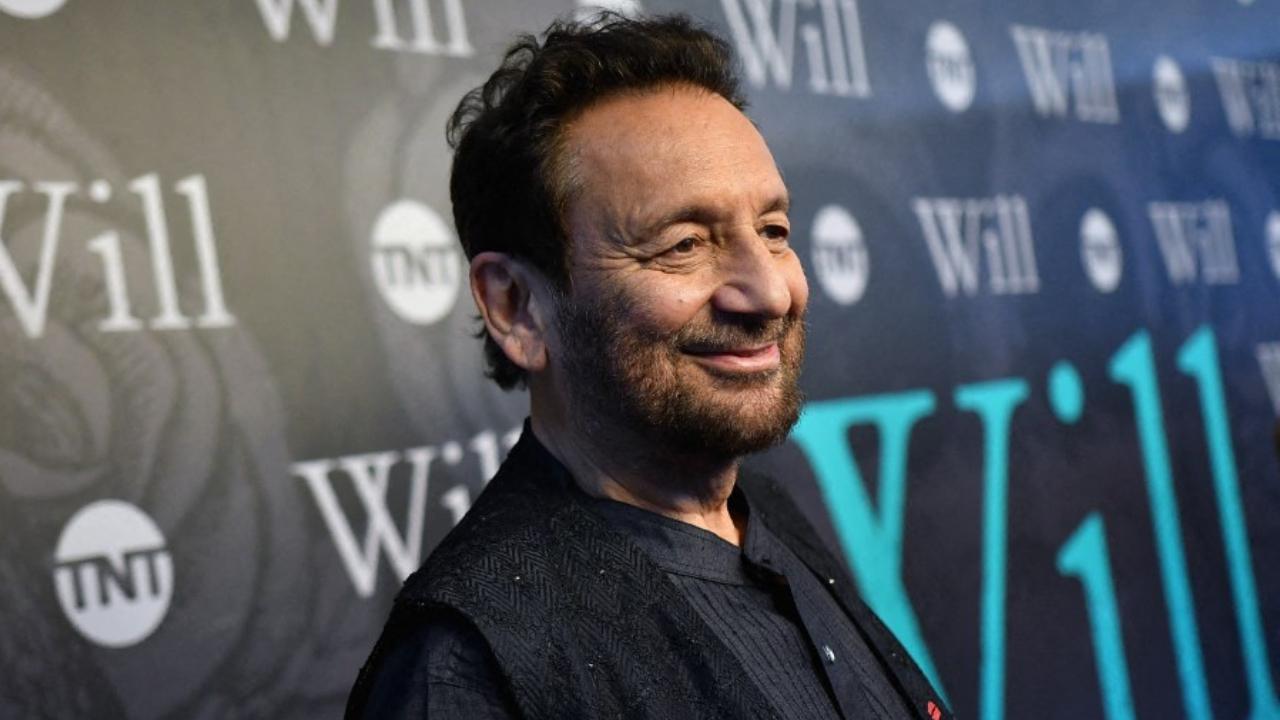
Niharika Lal (BOMBAY TIMES; April 8, 2026)
Shekhar Kapur is often asked when he will make another film like Bandit Queen (1994). The film, which won the National Award for Best Feature Film in Hindi in 1996, continues to stand out in Kapur’s oeuvre. But he has no plans to revisit it. “Kaise banaoon? Mar jaunga,” he said at the recently concluded International Film Festival of Delhi.
In a conversation with Vani Tripathi Tikoo, Artistic Director, IFFD, the filmmaker reflected on why he couldn’t imagine making another film like Bandit Queen, and how “everything about Masoom (1983) is Delhi.”
‘I APPROACHED BANDIT QUEEN FROM A PLACE OF GUILT – THAT I AM RESPONSIBLE FOR WHAT HAPPENED’
Discussing the journey of Bandit Queen, a film that chronicles the life of Phoolan Devi and lays bare the brutal realities of caste, gender violence and survival, Shekhar reflected on the emotional toll of making it.
“It’s difficult to describe the journey of Bandit Queen. I used to live in Nizamuddin at that time. I read about Phoolan Devi – it used to appear on the second or third page of the newspaper. Mujhe pata hi nahi tha ki yeh duniya hai kya. I didn’t know a world that existed right at my doorstep,” he said.
Shekhar elaborated how every film begins with an attitude. “Every filmmaker has to have an approach. I approached the film from a place of guilt – that I am responsible for what happened there. I have this tendency of becoming every character – as if it is me. Unless I become the character, I don’t know how to explain it to the actor.”
Discussing the everyday language used for girls, he told Vani, “In Punjabi, we say, ‘Kinni pyari hai, kinni soni hai, kinni sharmili hai’. Then I started thinking – this is the worst thing to say to a young girl. ‘Kinni sharmili hai’ means how submissive she is.” That thought shaped the film.
He shared, “Then I started asking – who am I in this film? I am a macho Punjabi man. It became a film that fundamentally said: rape is not a sexual act, it is an act of domination. It has nothing to do with sexuality.”
‘Bandit Queen was an expose of macho Shekhar Kapur’
At a certain point, he said, the film takes over. “Banate banate film ki ek marzi aa jati hai. And then the film takes over. You are no longer the director – you are following the dictates of the story.” After a pause, Shekhar spoke about filming one of the most difficult scenes of Bandit Queen.
He told the audience, “I was thinking for days – how do I shoot the gang rape scene? In films, such scenes are often shown as sexual. I sat locked in a room for two nights, trying to understand – what does it mean to be raped? What does it feel like? How do I shoot a rape scene and take the sex out of it? So, if you watch Bandit Queen – the scene is suggestive. Darwaza khul raha hai, band ho raha hai, log aa rahe hain – it’s all very suggestive. But I knew what was happening there. And so, while directing, I was constantly throwing up. The crew was watching me – ‘What is happening to him?’ I said, ‘Kal shoot karte hain, ab nahi ho raha.’ But they said, ‘Abhi shoot kar ke khatam karte hain.’ People ask me – ‘Bandit Queen jaisi film phir se kab banayenge?’ Kaise banaoon? Mar jaunga. I started hating myself, I hated myself during the shoot of Bandit Queen.”
After the film released, he recalled, even those close to him were unsure. They would tell him, “Film aise thode hi banti hai, Shekhar? Film mein gaane hote hain.” He said, “Par maine nahi banayi. Film ne khud ko banaya. Bandit Queen was an expose of macho Shekhar Kapur.”
‘Everything about Masoom is Delhi’
Speaking about Masoom (1983), Shekhar said, “Everything about Masoom is Delhi. At that time, Delhi was transitioning – from a bureaucratic city to a business city. Everyone I spoke to would say, ‘I do import-export.’ That’s how Saeed Jaffrey’s character’s profession came about. Masoom was not set in Delhi because it was easier to shoot there – it was because I knew these people.”
I know that I am better than ChatGPT-Shekhar Kapur
10:09 AM

Niharika Lal (BOMBAY TIMES; November 25, 2025)
Throughout the course of this year, several actors have secured protection for their personality rights from AI-generated impersonation. But when Shekhar Kapur consulted his lawyer about claiming rights over a dialogue from one of his films, the outcome was different. “I wanted to copyright the dialogue ‘Mogambo khush hua’ (from Mr India ), but I was told that the court would have granted protection of this dialogue to Amrish Puri. It’s the actor’s copyright,” he told the audience during a session at the ongoing International Film Festival of India (IFFI) in Goa.
The IFFI Director, who is making an AI-driven film titled Warlord , spoke about celebrity personality rights and what AI can and cannot do during a conversation with Berlin International Film Festival chief Tricia Tuttle at the festival. Excerpts:
‘PLAGIARISM, WITH OR WITHOUT AI, COMES FROM CREATIVE LAZINESS’
Discussing the possibilities and the limits of AI, Kapur explained that he can tell when a script has been written by it. He recalled his cook using ChatGPT to write a script for Mr India 2, saying, “He came to me with so much enthusiasm. I genuinely didn’t know what to appreciate first – the meal he had cooked or the script he had written.”
When an audience member pointed out that it was possible to generate the script only because the original exists, Shekhar responded that influence is natural. “It took me ten years to write this script, and it takes ten days to do it with AI tools,” he said, adding, “I know that I am better than ChatGPT.”
During the audience interaction, questions around plagiarism and ethics came up. Kapur said, “AI is not magic. It’s not chaos. It’s changed. But real storytelling is unpredictable. AI cannot predict the future; it can only imitate the past. Plagiarism, with or without AI, comes from creative laziness. Emotional storytelling will always reveal the human behind the work.”
‘Close-up works so well, AI can’t do that yet’
While working on a film that uses AI, Kapur also described the limitations he has encountered. He emphasized that the energy of collaboration and the presence of great actors are irreplaceable. “It’s unpredictable – the unpredictability of the moment actually happens when everybody is working together. There’s an electric atmosphere that is created between, say, me and my DOP Rand, and Cate Blanchett (on the set of Elizabeth). I don’t think AI, yet, can do what Cate Blanchett can do.”
He added, “If you have Cate Blanchett or Shabana Azmi, there are variations of expressions and emotions that they bring (which are captured in a close-up). There is an interesting thing that we are looking at right now – the close-up. That’s where AI has a problem, because we don’t even scientifically understand how the pupil works. So when a great actor comes on screen, with amazing eyes – be it Cate or Shabana or Brad Pitt – something happens. A connection is formed quite subconsciously between the actor and the audience. And that’s why the close-up works so well. AI can’t do that yet.”
Whoever feels they want to be a part of Paani will come to me naturally-Shekhar Kapur
7:39 AM
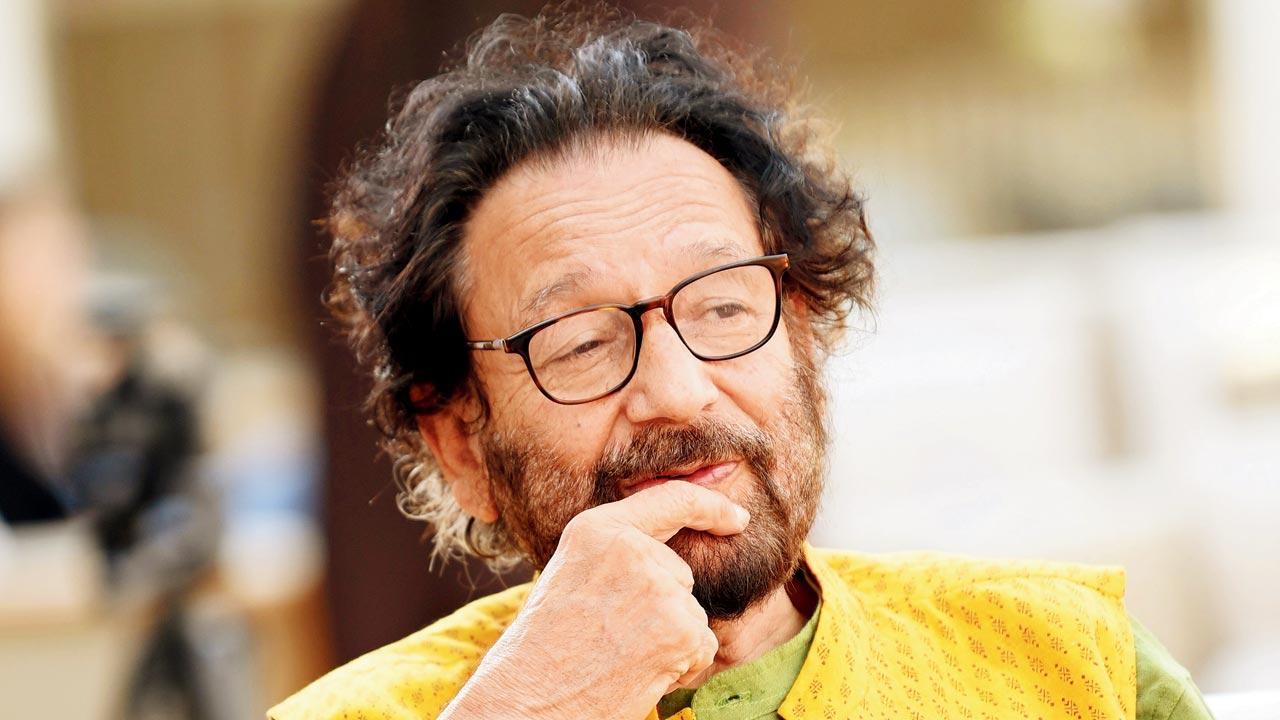
Confident that his ambitious project on water scarcity will attract the right cast, filmmaker Shekhar Kapur on reworking the project with new producers
Upala KBR (MID-DAY; May 26, 2024)
It all began in 2002, when actor and award-winning filmmaker Shekhar Kapur first announced his desire to make Paani, an apocalyptic film on the scarcity of water. Delays in casting and finding a producer kept pushing his plans for the film. Despite all the unforeseen interruptions, the director never lost his desire to make Paani. In fact, with time and added research, the director has managed to develop the script further. After all the waiting, things are finally falling into place as Kapur finds a producer to back his ambitious project.
Kapur felt that after What's Love Got to Do With It, many in Hollywood believed that he had moved back to India, but his research on water issues got a financing company interested. “Paani is now being negotiated as an international film,” he affirmed.
In fact, he had recently visited the New York University Abu Dhabi to understand their innovative research on water desalination, wastewater treatment, water security and sustainability. “Everybody has read about my interest in water, as it is such a huge topic now. [The university] invited me to show me all the technology that they have as we are running out of water. Like how to take drinking water out of salt water in the ocean. They are also looking [to clean] brackish or sewage water,” said the actor-director, adding that his fascination with water problems started 15 years ago when he was studying about glaciers drying out.
“We always thought air and water were free until one day I came to Mumbai and found people selling cold, drinking water on the streets. The first story I ever wrote was about a man who travelled from a village to Mumbai and returned with stories of selling water. That’s where Paani developed — how some people, in times of water shortage, will be using it to control others. The story is told in a mythic way, with relationships running between them. Paani has a father, mother, brother, sister, long-lost love, daughter, and son — at the centre of it is a love story. Every relationship is connected to water, as is our relationship with love.”
Kapur informs that although Paani was supposed to be shot as a film, his vision could not be summarized in two hours, especially when new information is constantly being added.
“We haven’t decided yet whether it should be a feature film or a series. When I narrated it to the [funding company], they said I had enough material for a limited series,” he said, adding, “I don’t think the film is casting dependent. Whoever feels they want to be a part of Paani will come to me naturally.” While the cast is unclear, Kapur had earlier said that he will dedicate the film to Sushant Singh Rajput, who was passionately involved in the project until his untimely death in 2020.
Before Paani, Kapur will wrap up Masoom The Next Generation, a sequel to his 1983 film Masoom.
I have never made a film which was a star vehicle-Shekhar Kapur
8:19 AM

Tanvi Trivedi (BOMBAY TIMES; February 19, 2024)
Filmmaker director Shekhar Kapur, who is known for his contribution to Indian cinema with masterpieces like Mr India and Bandit Queen, is all set to make a sequel to his 1983 directorial debut film Masoom. In a conversation with us, Kapur spoke about his inspiration for the sequel, his daughter Kaveri, who will make her acting debut with this project and how his films are all about the story, never the star. Excerpts:
You are making a sequel to your classic, Masoom, titled Masoom…The New Generation. What inspired you to do that after over four decades?
I have decided to make Masoom 2 - The New Generation for a reason. The story revolves around the next generation and their issues. The new generation is constantly thinking about who they are, where they are headed and so on. I want to make a film about them, their value system, how they relate to parents, single parents, and the entire debate about the old generation versus the new generation. There have been films on the new generation, but they have only touched the surface.
Your daughter Kaveri Kapur, who is a singer and songwriter, will make her acting debut in the sequel. Were you planning to direct her debut, or did this happen organically?
My daughter has been an artist for a long time and when I read her lyrics, I realized she is more of a philosopher. At her age, she talks about philosophy with Deepak Chopra. I have been discussing acting projects with her, but she kept saying, ‘No, that’s not me’. Then we watched a few Alia Bhatt films together, and she admired her work. That’s how she got interested in acting. I always knew she would act. When she was younger, I used to call her my entertainment machine; she would crack jokes and it is not easy being funny. She is talented like her mom (actress Suchitra Krishnamoorthi). The inspiration for the Masoom sequel came from Kaveri because she has often spoken to me about how their generation suffers from anxiety and how life is tougher as there are many opportunities, but the pressure is higher. I am currently writing her dialogues, but I hope that someone from her generation will share more about their issues. I don’t want my daughter to feel that I failed her. The film will also feature the old cast, including Shabana Azmi.
Among the many pressures that the current generation is facing, do you think social media ranks high?
Social media has definitely put pressure on Gen Z because it is creating an artificial aspirational life for them. Many young people I meet have become victims. People on social media keep sharing posts about how great their life is, which is not the reality. With ChatGPT and AI, it is a different life for Gen Z.
You moved to the West and made notable films in Hollywood. Looking back, do you think you could have made more movies in India?
In India, I agree (I did less work), but I did a lot of work abroad. I am proud of the fact that I worked with actors in Hollywood when they had started their careers, like Cate Blanchett and Heath Ledger (directed him in Four Feathers). After Bandit Queen, I figured that it was not easy to tell different stories. Now, with OTT, things have changed, and actors like Manoj Bajpayee are winning accolades. But, in those days, it was not possible to work with Manoj Bajpayee and make a film. You had to take a star, and when you work with a star, things change. I have never made a film which is a star vehicle, whether it is in the east or west. I have always worked on a movie where everyone is subservient to the film and story. Even when I worked with Sridevi in Mr India (1987), she was not a star; she had acted in Himmatwala (1983) and later became a star.
There has been a lot of speculation around a sequel to Mr India 2. Are there any plans?
I will never make Mr India 2 because I have already made the first part. But, I would not mind if they take another director and make the film and remember that the original was born because of the joy of filmmaking.
Big-ticket, tentpole films are ruling the box office today, while that’s great, do you feel we need to make more films that are socially relevant?
The big-ticket films do make sense because they are like a joy ride. But then, every now and then, we get a film like 12th Fail, and it reminds us how there are interesting films like these, too. I have enjoyed watching a lot of good content on OTT, like Panchayat, and many good writers have moved over to OTT platforms. I agree that social context is missing in films today, but then directors should be motivated to make films like Naya Daur and Pyaasa, which were so socially relevant.
I don’t know why people still call me a Bollywood director-Shekhar Kapur
8:33 AM

Filmmaker Shekhar Kapur says he hasn’t made any projects in India for 30 years
Sugandha Rawal (HINDUSTAN TIMES; January 23, 2023)
Shekhar Kapur is back in the world of cinema with his Hollywood project, What’s Love Got to Do with It? The filmmaker’s last feature-length directorial effort was the Cate Blanchett-starrer drama Elizabeth: The Golden Age in 2007. He asserts that he might have been away, but he is not detached from Indian cinema.
“I haven’t made a film in India since Bandit Queen (1994). I don’t know why people call me a Bollywood director, unless you consider Mr India (1987) and Masoom (1983) Bollywood projects. I don’t know what describes Bollywood,” the filmmakers tells us in an exclusive interview, when asked about the long gap.
The 77-year-old continues, “It’s been 30 years since I made a film in India. I’ve been making films outside during this time. I’ve been doing theatre outside (of India). I teach at MIT. I have been a part of the World Economic Forum. I am an environmentalist. So, life was busy. Then I found time to make a film, found a script, and made What’s Love Got to Do with It?”
When it comes to the film, the cross-cultural project is led by actors Emma Thompson, Lily James and Shabana Azmi, and deals with the complexities of love, marriage, relationships and intimacy.
“When you see the film, you realise that at the end, the characters realise that we have to forgive, and be compassionate. Because relationships are not about saying, ‘I love you’.... Love is a mystery. It’s a question of exploring that sense of mystery,” he shares.
The film deals with the concept of arranged marriage in the age of dating apps, and the director admits that this became more of a reason for him to do the project: “We are all looking for intimacy in our lives. When we are born, we are put on our mother’s chest. That’s the first act of intimacy that a baby feels. When we die, we want to hold somebody’s hand. In between, we complicate things, like if I put my hand around my friend’s shoulder, we are dating. We developed these keywords that interfere with our desire and our need to be intimate.”
Explaining further, the filmmaker says, “In the film, one fundamental question is: how do you know if it will work if you haven’t had sex before marriage? When I was a chartered accountant, my mother took me to meet some girls. The question in my mind was, ‘How do I know if it will work unless I have had sex? What if sex on the first night was a disaster?’ There’s an exploration of how it might work the other way. I’ve asked them all my life.”
He has infused his memories of Lahore, Pakistan, into the films as well. But border tensions are something that continue to restrict the exchange of art between the nations. Ask him the same, and he says, “Art transcends boundaries, as it should.”
You must have the rights to remake of my work-Shekhar Kapur
8:29 AM

Disappointed at being left in dark about the Mr. India Reboot, the director Shekar Kapur of the 1987 cult hit tells mid-day that he is seeking legal recourse to protect his 'creative rights'
Mohar Basu (MID-DAY; February 27, 2020)
 Soon after mid-day broke the news that Ali Abbas Zafar will helm the reboot of Mr India (1987), there was a backlash from the makers of the original. Anil Kapoor's daughter Sonam K Ahuja even criticised the "underhanded" manner in which the remake was conceived of without the knowledge of the original film's leading man. Director Shekhar Kapur has now joined the chorus.
It is understandable that Kapur, the director of Bollywood's first sci-fi outing, is mighty displeased about the turn of events. When mid-day reached out to him, he said, "Where is the director's ownership on the material he has created? It [the reboot] is based on what I have created. Now, I am in touch with lawyers all over the world to [tackle] the issue. It's about creating a new understanding of creative authorship of the principal director of a film. [The model] is [followed] in many nations of the world, including Australia, and the US. As the director, I am the prime author of the movie. I must have rights to the future remake of the film created by me. This calls for a change in the constitutional copyright laws. This is not about Mr India anymore."
Knowing all too well that a movie's rights rest with the producer in India, the director points out, "The poster reads Surinder Kapoor's Mr India produced by Boney Kapoor. His father was the original producer."
Kapur informs that he had reached out to Boney as soon as the reboot to the Sridevi-starrer was announced. "[When I questioned him], he said nothing is set in stone. Anil was equally disturbed that he didn't know about it," he says, adding that Boney did not inform him about the alleged transfer of rights. Charting his next course of action, Kapur says, "It's time to have a serious legal discussion here to reinterpret the copyright act so that it accords authorship of a film to the principal director. This is not directed at Boney, or the current director, or Zee Studios. It is directed at the act itself."
Boney Kapoor declined to comment on the story.
I have found it hard to face the camera-Shekhar Kapur's daughter Kaveri
7:59 AM

Ahead of the release of her single next month, Shekhar Kapur's daughter Kaveri says music will always be the centre of her world; father calls her a 'genius'
Sonia Lulla (MID-DAY; January 21, 2019)
When Shekhar Kapur's musician-daughter approached him with a request to direct her upcoming video, the filmmaker recalls being disturbed. "She's 17, and I wanted to know where those words came from," says Kapur, of Kaveri's song Smell Of The Rain.
"She told me that it's about how most of the mistakes that people make are because they reject their dark side. I knew then that I'd have to take it seriously." Shekhar took inspiration from Kerela's Kathakali dance form, which, he says, represents demons too. "I wrote a story of a young girl who tries to run away from her dark side. She then accepts it, and finally becomes it."
In an Instagram video shared in the midst of shoot, Shekhar trains his camera on an evidently shy Kaveri as she learns the ropes of the dance. "I was comfortable this time, but, I've found it hard to face the camera. Yet, dad has always wanted me to act," she says.
Like every teenager, Suchitra Krishnamoorthi's daughter too harboured aspirations of dabbling in a variety of professions. "A geologist and an astronaut," she says. "An archaeologist," her father adds. Yet, music has held a special place in her heart since she was eight. Confessing to sharing many similarities with her father, she says, "I know dad must have faced the same things at my age that I do, including apprehensions about the future, confusion about who you are, and even heartbreak. I talk to him about it all the time."
A student of Hindustani classical music, Kaveri spent a summer learning at Berklee College Of Music. "I've also applied to music schools now. I believe that should complete my education."
Certain that his daughter would make for a promising actor, Shekhar doesn't think twice before pitting her against the likes of Cate Blanchett and Heath Ledger when stating, "Working with actors like them, I've noticed how they tell a story with their eyes. Kaveri has that ability. What scares me is when people like A R Rahman say she has a gift. She is a genius. It made me realise that I have a special responsibility to support her. I'm not as gifted in filmmaking as she is in music."
Ask him how his daughter differs from him and he says, "Look, at 17, I was only chasing girls."

I am very inspired by Stan Lee to make a superheroine film in India-Shekhar Kapur
7:28 AM

Shekhar Kapur tells BT what a marvel Stan Lee was, and how knowing him has enriched his life
As told to Purba Dutt (BOMBAY TIMES; November 16, 2018)
 I met Stan Lee several times, and that was because I had a comic books company and used to, and still, write comics. The original company was formed between Deepak Chopra, Richard Branson, Sharad Devarajan and myself. Every time I met Stan, we used to discuss stories and share ideas on superheroes. He was very keen to do things in China and India. He was convinced that ultimate mythology exists in these two countries, and Stan used to draw a lot on mythology to create his superheroes.
I showed him my film Mr. India, and after watching it, he said to me, ‘You’ve got it right, Shekhar! You created a superhero out of an ordinary man’. He used to always say that a superhero is formed out of an ordinary person, and when the superpowers are taken away from him, one must remember that he’s an ordinary person. I have my short take on this. Whenever writers approach me with stories on superheroes, my one question to them always is — what’s his kryptonite? What is it that makes him weak? What is it that can break him down? You cannot have a superhero without his kryptonite. That kryptonite is what can take away his power, and keep him ordinary. So, a superhero has to be someone who even when devastated by his kryptonite fights beyond his vulnerabilities. Stan and I used to have long discussions on this.
He wanted to create superheroes from other cultures. Stan was really, really, really ahead of his times. And he never stopped. Every time we met, we’d bounce ideas of each other, and he was forever asking, ‘What do you think of this idea? What do you say about a superhero like this? How about doing this?’ He was unstoppable. I once told him that the world was fast changing, and we needed to have superheroines like Wonder Woman, and he readily agreed. ‘Yes, Shekhar, yes, yes, we need superheroines.’ He said when he had started writing his comic books, his audience was mainly in America, but now every culture needed to have its own superheroes. I am now even more inspired to make a superhero movie. Superheroine, really. The only superhero movie coming out of India that has stood the test of time is Mr. India. It’s about time I made the next. The last time I met Stan was four years ago, and he told me about the stories he was working on. I believe he sold a few of those stories to China. We had talked of the possibility of creating an Indian superhero, and there’s already a lot of work that has been done on this. So, work on that continues, though right now I am totally taken in with the idea of launching India’s first superheroine, Devi, based on the character in my comic book with Graphic India.
I’d say that I am very inspired by Stan to make a superheroine film in India.
Imagine a world where love could be decoded in simple words; wouldn't that be dull?-Shekhar Kapur
8:17 AM

Director Shekhar Kapur on the kind of love he believes in mysterious and indefinable
Deebashree Mohanty (TIMES LIFE; October 29, 2017)
What is your mind space right now?
I'm at peace. I was at an ayurveda centre in Kerala a while ago, and followed their two-week detox programme. Now, I feel refreshed. There is this fundamental principle that drives me we are not separated from Nature. I would suggest everyone to take time out and spend a few weeks in solitude. It helps to clear your mind.
You are making a biopic on Bruce Lee. What drew you to this film?
I feel Indians will have a deep connect with his philosophical disposition. Bruce Lee taught the world the importance of surrendering. He believed that in surrendering lies true victory. Not all battles are won with bloodshed and war. We must try this for a change.
Is it spirituality that you think will resonate with people, especially Indians?
It is important that audiences, especially today, relate their own lives to the journey of Lee and other philosophical masters. Spiritualism is big in India. And I am talking of the larger sense of it; one needs to understand that spiritualism has nothing to do with godmen and politics. It has a much deeper relevance. In the West, people look at India as a spiritual paradise. It's a shame that our people don't relate to it at that level. One must remember that it is not fashionable to be spiritual; it is important to be so.
What kept you from India for so long?
I am like a kite; I find it difficult to confine myself to just one place or surrounding. That's the reason why I like earthy women, who help me stay grounded. What drove me away from the Hindi film industry was too many people telling me what to do and not to. I missed making my own decisions, and felt my creative space was being compromised. Yet the contradictions present in this part of the world still intrigue me.
What contradictions?
In India, if you look to your right, you will see youngsters driving Bentleys; look to your left, and you will find starving children begging on streets. You realise that luck and chance have a huge role to play in determining your status.
Why are you so driven towards consciousness?
I have come to realise that in our consciousness lies the only truth. We are all knocking at the wrong door, pursuing the wrong things in life... the sooner we realise that, the better it is. This is not where we belong, we are created for something greater.
Is love a larger consciousness too, as an emotion?
Love, as an emotion, is as real as it can get. For me, love is and should be a mystery. Imagine a world where love could be decoded in simple words; wouldn't that be dull? It is we who try to destroy the emotion by making it definite. Love exists in freedom, in abandonment. If not, then what you are feeling is not love.
You speak on Twitter about everything, from physics to the mystical... What issues bother you?
The fact that we are still working on a skewed development model in this country. This is only creating a wider divide between the incredibly wealthy and the incredibly poor. We still have not been able to get rid of Western development models and find our own path.
You were born in Lahore and have often spoken about the idea of India, before Partition...
It has always been my dream. But I know it's not going to happen. The only way forward that I can see at the moment is through more trade and more cultural exchange.
You are known to be an actor's director. Who is the best actor that you have worked with?
That's not a fair question at all. Cate Blanchett is an easy choice, but Seema Biswas (who played the lead in Bandit Queen) would be right up there too. Geoffrey Rush as Sir Francis Walsingham, in both the Elizabeths. There are many more. All I can say is that without my actors, I am lost.
How do you perceive the superstar culture?
Ultimately, no film survives because of a big name. If it has to beat the test of time, the film will survive on its craft and content. I have said it many times before but I will reiterate this: Our stars are killing the film business with the kind of salaries they demand. There is little left to spend on re search and development.
Do you have any regrets in life?
Many. I wish I hadn't troubled my parents as I did. I wish my marriages hadn't broken up. I wish I had made many more films, and sometimes, I wish I wasn't such a thinker. I agree that am a difficult person to live with... but I am not fake.
I'm at peace. I was at an ayurveda centre in Kerala a while ago, and followed their two-week detox programme. Now, I feel refreshed. There is this fundamental principle that drives me we are not separated from Nature. I would suggest everyone to take time out and spend a few weeks in solitude. It helps to clear your mind.
You are making a biopic on Bruce Lee. What drew you to this film?
I feel Indians will have a deep connect with his philosophical disposition. Bruce Lee taught the world the importance of surrendering. He believed that in surrendering lies true victory. Not all battles are won with bloodshed and war. We must try this for a change.
Is it spirituality that you think will resonate with people, especially Indians?
It is important that audiences, especially today, relate their own lives to the journey of Lee and other philosophical masters. Spiritualism is big in India. And I am talking of the larger sense of it; one needs to understand that spiritualism has nothing to do with godmen and politics. It has a much deeper relevance. In the West, people look at India as a spiritual paradise. It's a shame that our people don't relate to it at that level. One must remember that it is not fashionable to be spiritual; it is important to be so.
What kept you from India for so long?
I am like a kite; I find it difficult to confine myself to just one place or surrounding. That's the reason why I like earthy women, who help me stay grounded. What drove me away from the Hindi film industry was too many people telling me what to do and not to. I missed making my own decisions, and felt my creative space was being compromised. Yet the contradictions present in this part of the world still intrigue me.
What contradictions?
In India, if you look to your right, you will see youngsters driving Bentleys; look to your left, and you will find starving children begging on streets. You realise that luck and chance have a huge role to play in determining your status.
Why are you so driven towards consciousness?
I have come to realise that in our consciousness lies the only truth. We are all knocking at the wrong door, pursuing the wrong things in life... the sooner we realise that, the better it is. This is not where we belong, we are created for something greater.
Is love a larger consciousness too, as an emotion?
Love, as an emotion, is as real as it can get. For me, love is and should be a mystery. Imagine a world where love could be decoded in simple words; wouldn't that be dull? It is we who try to destroy the emotion by making it definite. Love exists in freedom, in abandonment. If not, then what you are feeling is not love.
You speak on Twitter about everything, from physics to the mystical... What issues bother you?
The fact that we are still working on a skewed development model in this country. This is only creating a wider divide between the incredibly wealthy and the incredibly poor. We still have not been able to get rid of Western development models and find our own path.
You were born in Lahore and have often spoken about the idea of India, before Partition...
It has always been my dream. But I know it's not going to happen. The only way forward that I can see at the moment is through more trade and more cultural exchange.
You are known to be an actor's director. Who is the best actor that you have worked with?
That's not a fair question at all. Cate Blanchett is an easy choice, but Seema Biswas (who played the lead in Bandit Queen) would be right up there too. Geoffrey Rush as Sir Francis Walsingham, in both the Elizabeths. There are many more. All I can say is that without my actors, I am lost.
How do you perceive the superstar culture?
Ultimately, no film survives because of a big name. If it has to beat the test of time, the film will survive on its craft and content. I have said it many times before but I will reiterate this: Our stars are killing the film business with the kind of salaries they demand. There is little left to spend on re search and development.
Do you have any regrets in life?
Many. I wish I hadn't troubled my parents as I did. I wish my marriages hadn't broken up. I wish I had made many more films, and sometimes, I wish I wasn't such a thinker. I agree that am a difficult person to live with... but I am not fake.
Ask Anil and Boney Kapoor to give me freedom to make Mr India 2 my way-Shekhar Kapur
7:52 AM

Aastha Atray Banan (MID-DAY; May 29, 2016)
Shekhar Kapur has been haunted by the question, what is infinity, since he was 12. He would lie on his back, on the terrace of his Nizamuddin home in Delhi, and ponder about the Milky Way with his mother, Sheela. “I’d ask her where the sky extended to. And she’d say, to forever. I’d go to physics class the next day, and they’d tell me anything that can’t be measured doesn’t exist,” he smiles over the memory of contradictions when we meet at a Juhu café.
Most recently, the question led him to religious and spiritual gurus. He says he befriended new-age speaker Deepak Chopra and yogi Sadhguru Jaggi Vasudev. He also spent time with the Dalai Lama. He came closer to the answer when working on an installation called Water that now sits at Mumbai’s T2 international airport terminal. It allows visitors to interact with musical notes by running their fingers through a water fountain.
It’s while creating it that he met a scientist who had worked at a university run by the Amritanandamayi Trust which has at its centre, Amma, the 62- year-old hugging saint from Kerala who assuages people of their troubles with a squeeze. She spends more than 12 hours every day hugging thousands of followers, ridding them of woes when she presses their heads against her soft, rounded body always draped in white. Hospitals and educational institutions, spanning schools to engineering colleges, are run under the aegis of her trust. Like with all godmen and women, Amma too has been critiqued for amassing a fortune from misery.

It doesn’t vex Kapur. Instead, he harks back to 2013 when he was invited to film Amma’s 60th birthday celebrations in Kollam, Kerala. “She hugs for 17 hours a day. She travels six months of the year doing just that. She runs a multitude of universities, ashrams and hospitals, where the greatest minds from all over the world work. If you go up to one of them and ask, ‘who planned this? Who commissioned this?’, all answers lead to Amma,” he says. He remembers sitting behind her during a darshan when a staffer came and whispered something in her ear. She answered in Malayalam. “The guy told me, ‘We have a million dollars, and we needed to check with Amma what to do with it. She conveyed her decision. How does she do it? She is uneducated!” he says with wonderment about the woman born to a fisherman’s family in Parayakadavu, Kerala.
And so was born The Science Of Compassion, a 49-minute documentary on Amma, which he premiered online last week. Criticism targeted at her, he says he “doesn’t care for”. One of Amma’s most prominent followers, Gail Tredwell, released Holy Hell in 2014, highlighting the embezzlement of funds and rampant physical and sexual abuse at Amma’s ashram. “Even Buddha was accused of sexual abuse. People living in the rational world are always trying to bring down everything to the mundane. That’s the way we are,” Kapur says.
He clarifies though that he isn’t a follower. But he has fallen victim to her charm. “She is fascinating. There is this story I heard and a picture I saw of her licking the sores of a man suffering from leprosy when she was told she couldn’t hug him. Who does that?"
 We ask him about something less tricky —
Shakespeare. The director has been busy working on a 10-episode series for TNT
titled Will. It’s based on the early years of William Shakespeare’s
life. The trailer depicts a 16th-century London that could also be your
modern-day, loud, obnoxious nightclub.
We ask him about something less tricky —
Shakespeare. The director has been busy working on a 10-episode series for TNT
titled Will. It’s based on the early years of William Shakespeare’s
life. The trailer depicts a 16th-century London that could also be your
modern-day, loud, obnoxious nightclub.Will is a poet who writes stories that excite the masses. An actor questions him in the trailer, “You can’t just make up words”, and Will says to that, “Someone has to!” “I realised TV is big. I mean half the world watches Game of Thrones. Will was written by Craig Pearce, a collaborator of Baz Luhrmann. That made it more exciting.”
And the project taught him a thing or two. He admits he hates ‘intellectuals’. “I was always told that to read Shakespeare, you needed to be one. But when I began reading the script, I realised he was a poet of the masses. And English was the language that the man on the street spoke. The gentry conversed in French. It was only later that intellectuals staked claim to him.”
Will, Kapur admits, proves that he takes Bollywood along wherever he goes. “I went to Dharavi and took pictures, and the art direction is inspired by that shoot,” he laughs. “It’s very, very Bollywood.” He recalls a time after the release of the 1998 British biographical film, Elizabeth released. The New York Times called it an “MTV version” in its review. “For a long time, I thought it was a compliment,” he says. We crack up.
We decide to give him a real compliment — we still love Mr India; when can we hope for a sequel? “Ask Anil and Boney Kapoor to hand me the rights and the freedom to make it my way. During that movie, we did what we wanted; we weren’t scared to take a risk. We were fearless It has to be made like that, if again. If that happens, I’ll do it in a heartbeat.”
I am taking Paani out of India; Indian makers don't feel strongly for water scarcity-Shekhar Kapur
7:49 AM

The filmmaker says Indian producers don't feel strongly about the water scarcity issue; meanwhile is all set to revolutionise cinema with a 13-minute short on Buddha
Sanyukta Iyer (MUMBAI MIRROR; November 26, 2015)
 Shekhar Kapur whose
futuristic fantasy drama, Paani, has been in the making for 11 years,
has finally decided not to set it in India. The film which deals with
water scarcity and features Sushant Singh Rajput and Ayesha Kapoor in
the lead now has been shelved several times in the past for various
reasons.
Shekhar Kapur whose
futuristic fantasy drama, Paani, has been in the making for 11 years,
has finally decided not to set it in India. The film which deals with
water scarcity and features Sushant Singh Rajput and Ayesha Kapoor in
the lead now has been shelved several times in the past for various
reasons.The Bandit Queen (1994) director is now planning to shoot it abroad in 2016 and is looking for international funding. “Indian producers don't feel strongly about the issue of water scarcity so I didn't want to take the risk of making the film with such makers,“ Kapur told Mirror, adding that he is looking for a producer who not only believes in him but also the premise of the film.
Meanwhile, the 69-year-old writer-director has started working on a 13-minute film Buddha. It is on the period of enlightenment when Siddhartha distanced himself from all materialistic things to find the true meaning of life. “It will help the viewer enter his mind, look at the world through his eyes and come back,“ Kapur explained, adding that this will be possible when the viewer wears a 'Virtual Reality' headset that offers him the opportunity to choose perspectives and even situations he wants to view. “Every viewer can watch the same film differently. 'Immersive Viewing' is the next big thing and makes you wonder about the future of content creation,“ raved the filmmaker who was the guest speaker at the session on VR Technology and New Film Narratives session at the NFDC Film Bazaar in Goa on Monday.
Best known for films like Masoom, Mr India and Elizabeth, which was nominated in seven categories at the Academy Awards, Kapur admitted that he had always wanted to make a film on Buddha but realised that a three-hour narrative could be too long in today's times while a shorter format would find it difficult to get screen time. “There are only 8000 screens in India and if one big Bollywood film takes up 5000 screens, there is little left for the remaining 15 languages. The only way our cinema can survive is by empowering our filmmakers,“ he reasoned.
He pointed out that today everyone carries a screen in his pocket and can watch films on the handset. “People all over the world are creating content on their smartphones and will soon be using the VR technology to customise film viewing further. It helped me explore what happened to Buddha during and after his enlightenment,“ he added. “I'm trying to give the audience a feeling of what could have happened in his mind, how he saw the world and, how it changed for him.“
From her statues Cleopatra looked like Jennifer Lawrence-Shekhar Kapur
8:25 AM

Shekhar Kapur is scouting for an actress to play Cleopatra in his TV series; also working on a series on William Shakespeare
Roshmila Bhattacharya (MUMBAI MIRROR; September 17, 2015)
Shekhar Kapur is all set for a royal reign on television. The writer-director recently announced a "huge" TV series on Cleopatra and is currently scouting for an actress to play her. "I'm travelling all over the world. I may have to change my email id soon with all the pictures flooding in," he laughs. "It took me eight months to find Cate Blanchett to play Elizabeth. I hope I find my Cleopatra sooner."
The role has become synonymous with Elizabeth Taylor after she starred in the 1963 historical. Shekhar is looking for a younger actress to play her from the age of 18 to 39. "She was not Egyptian but of Greek descent. From her statues, Cleopatra looked a little like Jennifer Lawrence which is not to say that we'll be going to her, she would be too busy," he says. Shekhar points out that everything we know about the Queen was from the Romans who saw women as subordinate to men and hated her. They believed she was an evil seductress who made Julius Caesar and Marc Antony fall in love with her. The series will re-image her history and show her as a brighter, richer and better administrator-ruler than the men of her time. "I see her as a powerful woman, a conqueror, like my Elizabeth and Bandit Queen. The series will retell her story," he asserts.
Does he view her death as murder or suicide? "It was suicide. Octavian Augustus, the Caeser then, defeated her in battle and wanted to take her to Rome in chains to destroy her myth. But before he could do so, she died with a snake—the symbol of spirituality, infinity and motherhood— at her breast. Even in death she stole the show from Augustus. He was a great ruler but no one remembers him. They remember Cleopatra and the myth she created," he reasons, adding that he is in talks with four channels and hopes to start filming soon.
But before Cleopatra he will film another TV series on William Shakespeare. "It's the Bard's life story. I have Baz Luhrmann's screenplay writer, Craig Pearce, who worked with him on The Great Gatsby, Romeo + Juliet and Moulin Rouge!, collaborating with me," exults Shekhar, pointing out that today's feature films are all about franchises. "They are entertaining but not the best stories. The best dramas, like Breaking Bad and Orange Is The New Black are playing on TV. Even in India, people are hooked on western TV series which are drawing the best directors."
With his futuristic fantasy drama, Paani, expected to set a shooting date by October, how will he juggle three projects? "Only two episodes of the TV series, House Of Cards, playing on Netflix was directed by executive producer David Fincher. After that, it's a new director every week. I will direct the first two episodes, then, since I have conceived and worked with the writer, I will oversee the two series and focus on Paani," he says.

Subscribe to:
Posts (Atom)