Showing posts with label Sharmila Tagore. Show all posts
Showing posts with label Sharmila Tagore. Show all posts
Children don’t need flawless parents; they just need parents who are emotionally available-Soha Ali Khan
10:41 AM

Onkar Kulkarni (BOMBAY TIMES; May 10, 2026)
The daughter of legendary actress Sharmila Tagore and cricket icon Mansoor Ali Khan Pataudi, Soha Ali Khan grew up in a household where discipline, culture and creativity coexisted seamlessly. Today, she is a hands-on mother to her eight-year-old daughter Inaaya Naumi Kemmu, whom she shares with actor Kunal Kemmu. This Mother’s Day, Soha reflects on parenting, inherited values, working-mom guilt, and the deepening appreciation she now has for her own mother.
‘Motherhood is exhausting, joyful, chaotic and deeply profound’
For Soha, motherhood is not defined by one dramatic revelation, but by the constant emotional responsibility that comes with raising a child. “Motherhood for me has been the most transformative experience of my entire life. It’s exhausting, it’s joyful, it’s chaotic, it’s repetitive, it’s deeply profound. When I look at my daughter growing up, there’s not one moment that does not make me feel – this is what Amma did for me. The fact is that there’s never a day off from being a mother emotionally. Your brain is on duty forever,” she reflects, adding, “Even today, my mother worries about us. She asks me, ‘Will Saif be okay? Will Saba and you be okay?’ I feel 30 years from now, I’m going to be the same.”
‘Just because our surname was recognisable, didn’t mean rules would change for us at home while growing up’
A large part of Soha’s parenting style today comes directly from the values she inherited from Sharmila Tagore. She speaks fondly about a childhood shaped by books, conversations and structure rather than screens and distractions.
“The values from my mother that I try to pass on are kindness, curiosity and good manners. She taught us not to be bored, to be really comfortable in our own company. We were not allowed to use the word ‘bored’ at home especially because we grew up with books and that is what I am trying to do with Inaaya.”
She elaborates, “I have taught her reading, how to have a good conversation, how to be polite and the importance of being on time which my mother was very particular about. Some of these things are a little old fashioned but also, they are very underrated qualities. Growing up, we had very boring and normal rules: we had to do our homework, read books and behave well. Just because our surname was recognisable didn’t mean any of these things could change. Fame was never treated as an achievement in itself at home.”
Soha on protecting her daughter’s privacy in the age of AI
In recent years, Soha has also consciously chosen to give her daughter more privacy online, especially amid growing concerns around AI and digital safety.
She says, “The terrifying things that people are now doing with AI definitely played a role, but also consent. I think as parents, we increasingly realise that childhood is precious and private, and social media creates a sort of permanent digital footprint before children are old enough to even understand that. We still share moments occasionally, but I’m really trying to give my child the space to choose for herself how visible she wants to be when she’s older. I don’t want to have taken that away from her before she even had that opportunity to decide for herself.”
Life lessons from motherhood
The actress shares, “I think one life lesson that motherhood has taught me is that perfection is overrated. What matters more is just being there, showing up and being present. Children don’t need flawless parents; they just need parents who are emotionally available. Motherhood has taught me patience, although that’s definitely still a work in progress. There are many times when I fall short of being an example of patience, but I’m doing my best.”
Shakti Samanta shot Roop Tera Mastana as a background song, without rehearsals-Sharmila Tagore
2:59 PM
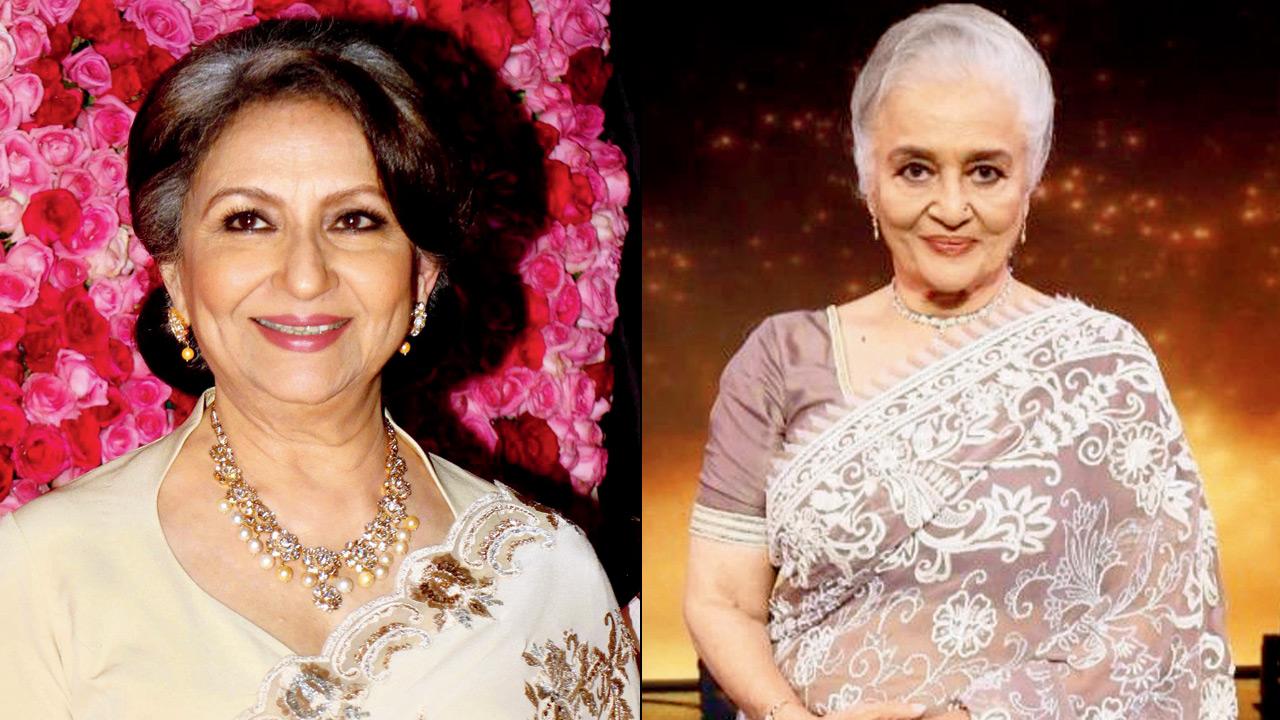
Sharmila Tagore and Asha Parekh take a nostalgic trip down Shakti Samanta lane as his restored hits stream online to mark his 100th birth anniversary
Upala KBR (MID-DAY; January 18, 2025)
Kuch Toh Log Kahenge, Logon Ka Kaam Hai Kehna… More than 50 years later, the iconic song from legendary filmmaker Shakti Samanta’s Amar Prem (1972) continues to resonate. January 13 marked the beginning of a month-long celebration for his 100th birth anniversary. The subscription-based platform Ultra Play OTT will stream 32 of his digitally restored Hindi films to honour the yesteryear filmmaker who gave us gems like Howrah Bridge (1958), Kashmir Ki Kali (1964), Kati Patang (1971), among others.
“I consider Amar Prem to be my best Hindi performance,” begins Sharmila Tagore. She laughs that she “looked very good” in it
“His movies have a repeat value, and his [film’s] songs have lived on forever. Music was his forte, but his films also had social relevance and his women were strong with a lot to say. Shakti da was a man of few words. He was always well-prepared and very efficient with his time. He shot the entire song Roop Tera Mastana [from Aradhana, 1969] as a background song, without rehearsals and lip syncing, in one shot, because we were pressed for time.”
Asha Parekh, his leading lady in Kati Patang and other films, says Samanta’s movies cracked the code for perfectly packaged entertainers. “He was one of the leading producer-directors of our film industry. It was a delight working with him because he was a fine person and an intense director,” shares Parekh, adding that Samanta often coaxed his actors to deliver multiple takes until he felt visually satisfied. His sincerity, she says, “impacted and influenced me”.
“Shakti da handed me Gulshan Nanda’s book Kati Patang and asked me if I’ll work with him. The film was a big hit.”
Rajat Agarwal of Ultra Media says Samanta’s films remain relevant even today. “They represent a perfect blend of emotion, music, and human connection. [The themes in his movies are] universal and ageless.”
Did you know?
For the song ‘Mere Sapno Ki Rani’ from ‘Aradhana’, Sharmila Tagore was not in Darjeeling during the shoot. She was busy filming another project. Shakti Samanta shot all of Rajesh Khanna’s portions on location in the hills, and later filmed Tagore’s train-window reactions in a Mumbai studio.
Sharmila Tagore mourns the loss of Dharmendra: "We shared the same birth date. If only we could’ve wished each other"
9:00 AM
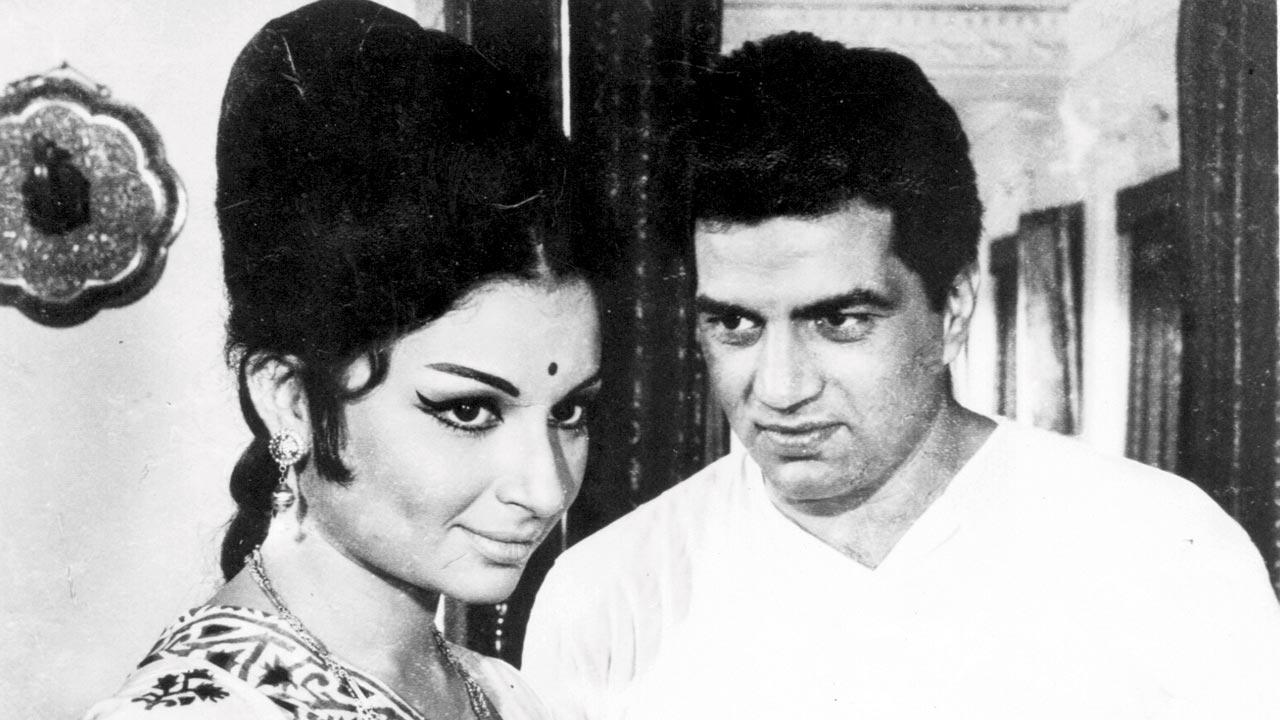
A still from ‘Satyakam’
Sharmila Tagore mourns the loss of her ‘Satyakam’ and ‘Chupke Chupke’ co-star, only days before his 90th birthday
As told to Upala KBR (MID-DAY; November 25, 2025)
We did seven movies together — Devar (1966), Anupama (1966), Satyakam (1969), Chupke Chupke (1975) and others — over the years, each special in its own way. We hardly spoke during our first movie, Devar. It took our second movie together, Anupama, to break the ice. We shared the same birth date, December 8. Though I knew he was critical, I wish he had stayed back so we could have wished each other. Every time I saw Chupke Chupke, I would message him and say how much I loved him in it. It was not his usual He-Man role, and I feel he should have won awards for it.
Among all our films together, Satyakam was the most challenging because it was a serious social drama. Dharam revered Hrishida [Hrishikesh Mukherjee, director] and his work. During the shoot, Hrishi da would tell Dharam not to think of himself as a star with an expensive car waiting outside the set, but as an honest and a poor man. I always found him listening and following the instructions of his directors closely, and never having any airs.
I remember we were shooting the song, Chhalka Yeh Jaam, for Mere Hamdam Mere Dost (1967). We had to complete the song that night as I was travelling to Kolkata the next day to watch a cricket match. Dharam cooperated and extended the shooting. He worked all night so that the song could be completed by 7 am the next day. He helped the producers and me, and I was always grateful for that.
While he had the He-Man image on screen, off it, he was a kind, affectionate, gentle, and caring person. He was very protective about women, and we felt safe when he was shooting with us.
Despite his superstardom, there was never any starry attitude to him. I clearly remember he had met me in Delhi where I was shooting for Waqt (1965). We were sitting in the lobby of the Imperial Hotel, when a dishevelled-looking gentleman saw Dharam and shouted out something in Punjabi. Dharam got up, went to the man and embraced him. Later he told us that he hadn’t recognized the man, but responded to him as a person. And I have always seen him like that — warm, humble, and ever-smiling.
Hrishida would tease him, people would pull Dharam’s leg, saying, “Aap toh bohot bade aadmi ho”. But he would smile with twinkling eyes, never behaving like a star.
Wes Anderson was curious to know what Satyajit Ray was like-Sharmila Tagore
8:20 AM
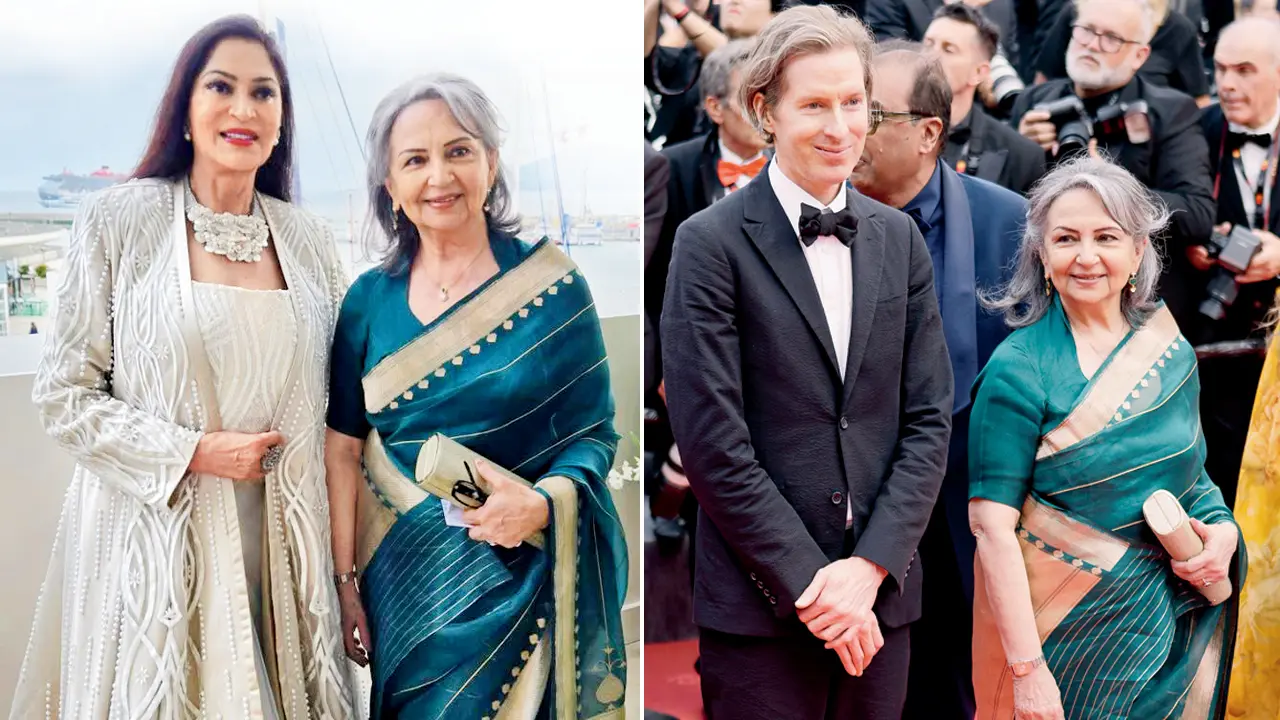
(From left) Co-stars Simi Garewal and Sharmila Tagore ahead of Aranyer Din Ratri’s screening; (right) (From left) Wes Anderson with Sharmila Tagore at Cannes. Pics/Getty Images, AFP, Wikimedia Commons, Instagram
Sharmila Tagore talks all things Cannes — from the standing ovation for Aranyer Din Ratri, to discussing Satyajit Ray movies with noted filmmaker Wes Anderson
Upala KBR (MID-DAY; May 24, 2025)
The thunderous applause, the standing ovation, and the pride she felt to be at the receiving end of it all. It’s a precious memory that Sharmila Tagore will keep close to her heart for a long time. “There was a standing ovation for a few minutes. People just clapped and clapped and clapped. We were getting tired of standing,” laughs Tagore, who returned only a few days ago from the special screening of Aranyer Din Ratri (1970) at the 78th Cannes Film Festival.
On May 20, a restored 4K version of late Satyajit Ray’s masterpiece was screened as part of the Cannes Classics section. Tagore and Simi Garewal, who had featured in the gem alongside late Soumitra Chatterjee, attended the event with noted American filmmaker Wes Anderson. Mention Anderson, who led Aranyer Din Ratri’s restoration and presented it at the film gala, and Tagore heaps praise on him.
“He was so respectful about Satyajit Ray, interested in and well-informed about his films. He was curious to know what Soumitra and Ray were like. I felt silly because I was not as well-informed [about his latest movies] as he was about ours. I have seen The Grand Budapest Hotel [2014], but not Asteroid City [2023], or I would have asked him about it.”
The veteran actor is no stranger to the Cannes Film Festival. After all, her 1960 movie Devi, directed by Ray, was in contention for the Palme d’Or at the 1962 edition of the prestigious film gala; in 2009, she was part of the festival’s jury. She is not surprised that this time too, it is Ray’s creation that has taken her back to the French Riviera.
Remembering the auteur who launched her in the movies, she says, “Sometime in the 1980s, I had interviewed Manik da [Ray] for Eyewitness [TV show]. When I asked him his favourite movies, he mentioned the Apu Trilogy, Charulata [1964], and Aranyer Din Ratri. Aranyer… was his first foray into contemporary cinema after his period films.”
It’s a privilege to have worked with Ray. Tagore knows she is among those fortunate few who had the privilege many times over. How was the legend at work? It’s a question, we’re sure, many asked her.
“I remember the scene in Aranyer… where my character shares that her mother had died in a forest. Before filming, Manik da came very close to me and read out that scene once. So, I did whatever he told me to do. As a director, he would read out the scene and then leave it to the actor to perform. If there was something he didn’t like in your performance, he would come very close to you and say, ‘Can you do it differently, please?’ We always got a lot of confidence seeing him behind the camera, looking at us. We knew he wouldn’t let us perform badly.”
Talking about Ray without mentioning Chatterjee is almost impossible. Tagore, who starred alongside the late Bengali actor in several films, must have missed him in Cannes. “Yes, and Rabi da [Rabi Ghosh, actor] too! I miss Soumitra continuously. He was one of my dearest friends, and he was not just a good actor; he could sing, write, and paint. He was truly a Renaissance man.”
With Cannes behind her, Tagore now hopes that Aranyer Din Ratri’s restored version is released in India. In fact, the veteran actor urges that the classics of Indian cinema be restored.
“If films are not restored, they will disappear. By restoring them, the new generation can see these films. I will request Shivendra Singh Dungarpur to make sure that Aranyer… is released in theatres across India.”
Wes Anderson, Sharmila Tagore to present Satyajit Ray’s restored classic Aranyer Din Ratri at Cannes
8:45 AM

Niharika Lal (BOMBAY TIMES; May 10, 2025)
In a cinematic crossover that no one could have anticipated, Sharmila Tagore will be joining acclaimed filmmaker Wes Anderson in presenting the restored version of her 1970 film Aranyer Din Ratri ( Days and Nights in the Forest ) at the 78th Cannes Film Festival. The idea to restore the Satyajit Ray classic, which has been selected for a premiere in the Cannes Classics Section, came from Anderson. He has always acknowledged the late filmmaker’s influence on his cinematic oeuvre.
In fact, Anderson’s last film, Asteroid City, starring Tom Hanks, features an entire segment on stargazing that was inspired by Ray’s film. In an interview, Anderson was quoted saying, “We stole that (segment) absolutely wholesale from Satyajit Ray’s Days And Nights In The Forest. It’s a great movie. If that movie had a genre, it would be whatever genre The Darjeeling Limited is in. These guys (characters) get in a car and go off somewhere together, and they discover things.”
The restoration
When Anderson, who is also a board member of Martin Scorsese’s The Film Foundation (TFF), suggested restoring the film in 2019, Shivendra Singh Dungarpur and his Film Heritage Foundation stepped in to access the original camera and sound negatives, and initiate the restoration process. After four years of pandemic-induced delays between Mumbai, Calcutta, and Italy, the film was finally restored in 4K at the L’Immagine Ritrovata laboratory. The primary elements used for the restoration were the original camera and sound negatives. Producer Purnima Dutta said, “The film will certainly spark conversations at the festival.”
Anything signed by Ray must be preserved: Anderson
Speaking about the film, Anderson said, “Anything signed by Ray must be cherished and preserved; but the nearly-forgotten Days And Nights In The Forest is a special/ particular gem... made in 1970. Modern and novelistic. Ray worked in terrain perhaps more familiar to Cassavetes. A clash/negotiation between castes, sexes. Urbans and rurals. Selfish men and their hopes and cruelties and spectacular lack of wisdom. Women who see through them. The great Soumitra Chatterjee: lost but searching. The great Sharmila Tagore: mysterious, cerebral, mesmerizing. From the master, another masterpiece.”
‘Aranyer Din Ratri will resonate with new audiences across the world’
Aranyer Din Ratri is a film about four young men from Calcutta, driving together for a few days in the country, and the women they meet.
Talking about the film, Tagore says, “I remember I was shooting for Aradhana when Manik da approached me to shoot for this film for a month at a stretch. It was incredibly hot during the shoot and we could only shoot in the mornings and late afternoons. I have wonderful memories of the time spent with my co-actors and Manik da’s precision, especially in the way he shot the memory game sequence, was incredible. I can’t wait to watch the restored film. Aranyer Din Ratri is a contemporary film that I know will resonate with new audiences across the world even today.”
Cannes gives our films a wider platform-Sharmila Tagore
2:50 PM

Sharmila Tagore on Cannes Jury in 2009, inset, a still from her film Aranyer Din Ratri
Renuka Vyavahare (BOMBAY TIMES; May 17, 2025)
Sharmila Tagore, who has been to the Cannes Film Festival many times in her illustrious film career, will be at the French Riviera this year for the world premiere of Satyajit Ray’s restored classic Aranyer Din Ratri (1970) featuring her. Accompanying her will be her daughter, Saba. The veteran actress talks about what makes the Cannes Film Festival so special, her cherished experiences as a film enthusiast and her thoughts on one of the festival’s most talked-about aspects beyond cinema — fashion.
You have been to the Cannes Film Festival many times over the years. You featured in Devi, Satyajit Ray’s film that was nominated for the Palme d’Or in 1962 and were also a part of the Cannes jury in 2009. This year, you will attend the world premiere of Ray’s restored classic Aranyer Din Ratri (1970). How special does this moment feel?
Yes, I’ve been to Cannes many times, and I was also on their jury. As a jury member, they take good care of you, and you are made to feel special. I’ve spent a lot of time there watching beautiful films and interesting films from all over the world.
‘Experiencing Aranyer Din Ratri on the big screen at Cannes will be fascinating’
This is world cinema at its finest. My film Aranyer Din Ratri, which was released in 1970, was restored after a long time. Experiencing it on the big screen at Cannes will be fascinating. Recently, the Bengali film Nayak (1966) was also re-released. It was so beautiful to see it on the big screen, instead of seeing it on a small screen or watching a non-restored version. When you see a restored print on a big screen, it’s like seeing it for the first time. That’s the main attraction for me this year at Cannes.
That apart, Cannes visit is special on its own because it’s a big congregation of film people from all over the world. You get to see cutting-edge world cinema. It’s wonderful for cine lovers to go to the city and have their fill of cinema. People who love cinema go to Cannes. There is a bazaar where people buy and sell films. Some people just come for the buzz, ambience and atmosphere. A lot of things happen there. People have yachts, there are yacht parties, and parties galore every night. So, it’s a very buzzing place right now.
This year, the festival has announced a dress code which states – no nudity and no voluminous gowns. Years ago, they had no flats (footwear) rule for women, which has changed now. The new rule says, ‘Guests can wear elegant shoes and sandals with or without a heel’. What are your views on this?
Actresses over the years have been wearing what they want to. I am not aware of any dress code. Yes, I remember the men were expected to wear black. Cannes is a place where people celebrate. It’s a gorgeous seaside destination, so people like dressing up. There’s nothing wrong with it. Everybody celebrates in their own way. I will most certainly wear a sari and flats. I wore a sari when I was part of the jury, and every time I’ve been there. I feel people should dress up the way they want.
What is your opinion of the overall Indian representation at Cannes?
Chetan Anand’s Neecha Nagar in 1946 was the first Indian film to win the Grand Prix du Festival International du Film (the precursor to the Palme d’Or), the festival’s highest honour. All We Imagine As Light, directed by Payal Kapadia, made history last year at the festival by winning the prestigious Grand Prix Award. Indian representation has always been there. My film Devi was nominated in 1962 for Palme d’Or. There is an Indian pavilion as well. A lot of people showcase Indian films there. Our films have been recognized there, and Cannes gives them a wider platform.
Sharmila Tagore’s favourite Cannes looks – from Brigitte Bardot to Meryl Streep
Earlier, there were Brigitte Bardot and Gina Lollobrigida (actresses), who were known for wearing exotic clothes at Cannes. After them, there hasn’t been a striking point. Now everybody dresses well. Last year, I loved Meryl Streep’s white dress. It was simple and elegant.
We never thought that theatres for Puratawn would run house full over weeks-Sharmila Tagore
8:29 AM

Amid rumours of Puratawn being her swansong in Bengali cinema, Sharmila Tagore says she is willing to brave the exertion of shoots only for thoughtful and realistic films
Upala KBR (MID-DAY; April 26, 2025)
The chatter in the Bengali film industry is that the Bengal Tigress has roared again. When we mention this to Sharmila Tagore, she laughs, before saying, “The media sometimes called me ‘La Tagore’, and at other times, Bengal Tigress. Since I was married to Tiger Pataudi, the [latter] came easily to them.”
One can understand the Bengali film industry and the audience’s exhilaration to see Tagore returning to Tollywood after 16 years. And with a brilliant film like Puratawn at that. Suman Ghosh’s directorial venture, also starring Rituparna Sengupta, explores a mother-daughter relationship as Tagore’s character slowly loses her grip on reality and shows first signs of memory loss. It is being hailed as among the senior actor’s best performances.
“We were aiming for critical acclaim, and never thought that theatres would run house-full over weeks. It was surprising to know that it’s a success. When we make a film, we never think if it will be a success or not. We thought Puratawn is different from the usual movies as it doesn’t have the ingredients for a hit film.”
Since debuting with Apur Sansar (1959) over six decades ago, Tagore has prominently featured in Bengali films, cutting down on them only in the aughts. Did it take her a while to go back to speaking Bengali in front of the camera?
“I’ve never lost touch with Bengali. I was so happy to speak entirely in my language after so many years in a movie,” she smiles.
In the past two years, it has been a pleasure to see the veteran actor back in the thick of things. With Gulmohar (2023), she returned to Hindi cinema after a 13-year hiatus, and followed it up with The Outhouse last year. It’s evident that she is enjoying cherry-picking her roles at this stage.
“I’ve done all kinds of roles, including frivolous ones in the past. At this stage, I want to do roles that are real, like in Gulmohar and Puratawn. I’d love to play a comic role someday. If there is a role that speaks to me, has depth and makes me feel I can do it, I’ll say yes.”
Recently, she expressed that Puratawn may be her final Bengali movie. Is she bowing out of Bengali cinema?
She reflects, “If the role is worth it, I may do it. [But] physically one gets exhausted on sets. In Puratawn, we had to climb three storeys as there were no lifts in the building; that was tiring. Ritu’s production house and Suman’s presence made it easier.”
Inaaya says she’ll write to British monarchy and demand Koh-i-Noor diamond back-Soha Ali Khan
9:07 AM

Debarati S Sen (BOMBAY TIMES; April 21, 2025)
Soha Ali Khan, who grew up in an environment rich in art and culture, visited the recently restored Dr Bhau Daji Lad Mumbai City Museum. During the tour, the actor-author spoke to us about how she was attracted to museums from a young age and how her daughter Inaaya is taking a keen interest in the same.
‘Amma and Abba loved taking us to museums during our holidays’
Recalling her childhood days where her parents Sharmila Tagore and late Mansoor Ali Khan Pataudi would often take Soha and her siblings, Saif Ali Khan and Saba Pataudi, for museum visits, Soha says, “Amma and Abba loved taking us to museums, especially during our holidays in England. My brother studied there, and my father, who also studied in the UK, enjoyed visiting in the summer. Amma’s favourite was always the Natural History Museum with its dinosaurs and fossils. I recently took Inaaya there while shooting in London, and she loved it. The roaring, motorized dinosaurs made her feel like she was in Jurassic Park.”
The family also visited the Victoria & Albert Museum and the Tower of London, where the Koh-i-Noor is displayed. “Inaaya keeps saying she’ll write to the monarchy and demand our diamond back!” Soha adds with a smile.
The actress-author explains how even in Inaaya’s school, they encourage immersive art programs. “They’ve taken the kids to exhibitions by Yayoi Kusama and even had them paint their own Mona Lisas (self-portraits) after studying Da Vinci. It’s a hands-on approach; they learn theory and get messy with paint,” she shares. Soha extends this approach to other cultural elements including music, mythology, and real-world stories.
“We talk about astronauts like Sunita Williams and how her journey reflects resilience. It’s relevant, it's human, and it teaches values along with history.”
‘Inaaya now recognizes Sunflowers, Starry Night’
For Soha, teaching her daughter about heritage isn’t about memorizing facts and timelines, it’s about sharing stories and creating sensory experiences. “The best way to introduce a child to art and history is to make it fun and interactive – not just tell them about it or read from a book. Museums connect us to history in ways books sometimes can’t. We go to museums with child-friendly exhibits. I point out paintings at home and talk about artists like Van Gogh. Inaaya now recognizes Sunflowers, Starry Night and even Da Vinci.”
‘I would love to visit Croatia’s Museum of Broken Relationships’
Soha’s eyes light up when talking about a dream destination. “One museum I’d love to visit, and maybe even contribute to, is the Museum of Broken Relationships in Zagreb, Croatia. It’s filled with small things people hold on to after a breakup – plane tickets, notes, even those sickness bags from flights. There’s a whole section on long-distance relationships. I think it’s such a beautiful and moving idea.”
Location courtesy: Dr. Bhau Daji Lad Museum, Mumbai
Ibrahim Ali Khan’s Nadaaniyan was not good, but he still looks very handsome-Sharmila Tagore
8:26 AM
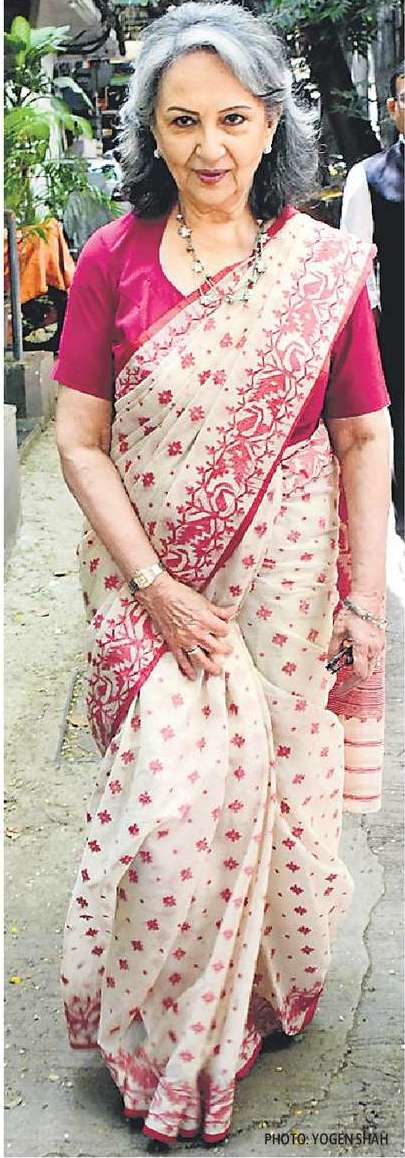
HINDUSTAN TIMES (April 16, 2025)
Ibrahim Ali Khan’s debut project Nadaaniyan, co-starring Khushi Kapoor, received negative reviews from critics and audiences alike. Now, Ibrahim’s grandmother, actor Sharmila Tagore, too, has dished out honest feedback about the film, saying it didn’t live up to expectations.
During a recent interaction, Sharmila spoke about her grandchildren Sara Ali Khan and Ibrahim entering the film industry: “Sara and Ibrahim are doing a wonderful job. Ibrahim’s film was not good, but he still looks very handsome. He has tried his best. These things shouldn’t really be said in front of everyone, but honestly, the picture isn’t great. Ultimately, the picture has to be good”.
Sharmila went on to praise Sara for her dedication and potential. “She is a good actress. She works very hard and is capable of doing a lot more,” the 80-year-old told Anandabazar Patrika.
In another interview, Ibrahim’s aunt, actor Soha Ali Khan, was asked about what advice she would give him after being trolled. Soha said that one needs to develop a thick skin if they want to be a part of the film industry.
I don’t think I’ll be doing any more films-Sharmila Tagore
8:09 AM

Ruman Ganguly (BOMBAY TIMES; April 15, 2025)
This Bengali New Year is extra special for Sharmila Tagore, as the veteran actress’ first Bengali film in about 14 years, Puratawn, has just released. Speaking to us at the Kolkata premiere of the film, the veteran actress tells us about her interpretation of Poila Boishakh. “Poila Boishakh isn’t about grandeur for us – it’s about the connection, the small joys, and traditions we’ve built over time,” she says.
In a chat with us, Tagore speaks about how the family celebrates different festivals “in their own ways”, returning to Bengali cinemas after a long time and why the recent film might just be her last.
‘We celebrate festivals in our own way’
“We celebrate every festival in our own personal way — that’s what makes them meaningful. Saif celebrates Eid, Kareena celebrates Diwali, and yes, Ganpati too. And wearing new clothes during Durga Puja? That’s still a must in our family,” she shares. Food, unsurprisingly, remains at the centre of it all.
“Goja banano hotoh barite mone ache amar (I remember we used to make deep-fried treats at home),” she recalls fondly. “My mother would prepare an elaborate anno bhog to offer to the almighty. Sweets were always part of the celebration, and they still are.”
‘TO RETURN TO BENGALI FILMS AFTER 14 YEARS IS SPECIAL’
It’s been nearly 14 years since Tagore last faced the camera for a Bengali film – but with the recently released Puratawn, she’s back in a language that remains closest to her heart. “I never really left cinema,” she says. “Even when I wasn’t doing films, I was still engaged – lecturing, working with NGOs, always involved with people. But Bengali cinema... it’s something else. To return after 14 years, and to do so with a film like this – that’s special.”
Puratawn, starring Tagore and Rituparna Sengupta, is a film about “a mother and a daughter – about ageing, memory, and how families navigate change.” Talking about the film, the actress says, “Ritu, who plays my daughter, is trying to fix everything — but the film shows that not everything in life can be fixed.”
The emotional layers of the film resonated with Tagore. “Many parents live alone today — their children are abroad or settled in different cities. Joint families are rare. Loneliness is real, and the film reflects that beautifully.”
‘MORE FILMS LIKE NAYAK SHOULD BE BROUGHT BACK TO THE BIG SCREEN’
Recently, Satyajit Ray’s critically acclaimed film Nayak (1966), starring Tagore and Uttam Kumar was re-released on the big screen across India, drawing first-timers from a younger generation and older audiences alike.
“Watching Nayak on the big screen after 60 years was a fabulous experience (smiles),” says the actress whose turn as a feisty but compassionate journalist in the film commands a fan following of its own till this day. “I’ve seen the film many times before, but only on a small screen. Getting the chance to watch it in a theatre is rare – you usually have to go to a film festival or wait for a special re-release.”
Tagore went not once, but twice – both times with close friends. “Uttam babu was absolutely fantastic, and Sumita Sanyal was so good, even in her short role. And I’ll be honest – I even enjoyed watching myself on screen,” she shares.
For the actress, the re-release was more than nostalgia – it was a reminder of how classic cinema continues to resonate. “I really hope more films like this are brought back. The impact, the enjoyment – it’s all so much greater when you see a film in a theatre. There’s something magical about it.”
A mother’s lullaby
In his exclusive interview with us, Saif Ali Khan spoke of a lullaby his mother sang to him in the hospital when he was recovering post the attack on him. “That hasn’t happened since I was a baby,” he had said. Tagore smiles when reminded of it. “I used to sing Khoka ghumolo para juralo... — isn’t that the perfect song to put a little boy to sleep? It’s apt, I feel,” she smiles.
‘I don’t think I’ll be doing films anymore’
The recently released Bengali film Puratwan may be the veteran actress’ last film. “I don’t think I’ll be doing any more films,” she says quietly. “Lately, I haven’t been keeping too well. During the shoot, I had to climb stairs, and while I managed, it made me anxious — will I be able to do everything that’s expected on a set? You need to be physically fit to shoot a film, and I’m not sure my health will permit that anymore.”
50 Years Of Chupke Chupke: The comedy of errors was shot in Amitabh Bachchan's Jalsa
9:14 AM
Compiled by Kavita Awaasthi (HINDUSTAN TIMES; April 11, 2025)
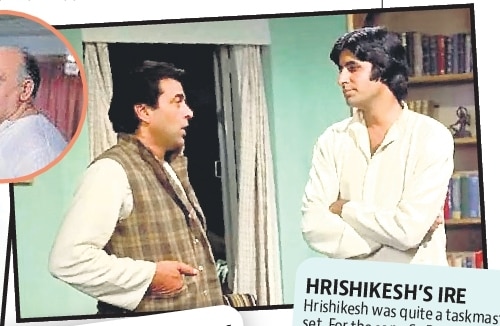
Filmmaker Hrishikesh Mukherjee’s breezy comedy of errors, Chupke Chupke (1975), which completes 50 years today, is nothing less than a cult classic. A Hindi adaptation of the Bengali film Chhadmabeshi (1971) is timeless for its simplicity, witty dialogues, situational comedy, and evergreen songs. Dharmendra, Amitabh Bachchan, Sharmila Tagore, Asrani, Jaya Bachchan and Om Prakash make up the ensemble cast.
The plot follows a botany professor, Parimal Tripathi (Dharmendra), whose wife Sulekha (Sharmila Tagore) is in awe of her brother-in-law Raghav’s intellect (Om Prakash). A jealous Parimal takes it upon himself to break this aura, by fooling Raghav. He poses as a driver, Pyaare Mohan, who is obsessed with the purity of the Hindi language. Amitabh plays Parimal’s friend, an English professor named Sukumar.
SHOT IN JALSA
Amitabh once shared that the song Chupke Chupke Chal Re Purbaiya and a few other scenes were shot at his current Mumbai residence, Jalsa. The bungalow was previously under the ownership of producer N C Sippy.
HRISHIKESH’S IRE
Hrishikesh was quite a taskmaster on set. For the song Sa Re Ga Ma, music composer S D Burman had recorded three antaras (verses). But the director snipped the second antara because he was furious with Dharmendra reporting late for the song’s shoot. In another case of Dharmendra’s tardiness, Hrishikesh chose to retain a shot of the actor adjusting his trousers after exiting the washroom as “punishment.”
LANGUAGE CONUNDRUM
Much to Jijaji’s exasperation (Om Prakash), Dharmendra’s Pyaaremohan is fluent in pure Hindi. However, in the latter half of the story, Pyaare stammers and ends up speaking in Urdu instead. To this Jijaji observed, “Gusse mein naacheez haklata hai aur Urdu bolta hai.” This dialogue was spontaneously added by Dharmendra.
CHUPKE CHUPKE REMAKE THAT WASN’T
In 2013, there were reports about filmmaker Umesh Shukla working on an adaptation with writer Sajid and Farhad Samji. Paresh Rawal was set to star. Then, in 2019, it was reported that producers Bhushan Kumar and Luv Ranjan had acquired the rights to the original title and would remake it with actor Rajkummar Rao in the lead. There were also rumours of filmmaker Farah Khan returning to direction with actor Varun Dhawan playing Pyaare. But none of these movies have materialized.
AMITABH-JAYA INSISTED ON JOINING THE FILM’S CAST
The director had originally imagined having new faces playing Sukumar and Vasudha. But when Amitabh and Jaya Bachchan heard about the film, they insisted on being cast and even chose to forgo payment. Hrishikesh said the roles were too small, but they didn’t mind it.
BT Exclusive: I don’t know how the intruder missed my carotid and jugular-Saif Ali Khan
11:03 AM

Anshul Chaturvedi (BOMBAY TIMES; February 10, 2025)
Was this a ‘real’ attack? How can someone get into a celeb’s house like that? Why would he need an autorickshaw? Did he really go with Taimur? What, there was a knife stuck in his back and he was still coherent? Arey, if he was injured so badly, how is he walking out like that from the hospital, waving?
Saif Ali Khan got support and sympathy, for sure, but as often happens with him, he got more than his fair share of questions, doubts and scrutiny even after fighting an intruder, getting stabbed, and undergoing extensive surgery. In his first interview after the attack, Saif thanks his well-wishers and also answers the cynics, in his trademark style – with a straight bat. Excerpts:
THE INCIDENT
What happened that night?
Kareena had been out to dinner, and I had some work in the morning, so I stayed in. She came back, we had a chat and went to sleep. After a while, the house help rushed in and said – ‘There’s an intruder! There’s a guy in Jeh’s room with a knife asking for money!’ It was around 2 am, I could get the time wrong slightly, but it was late...
Obviously, I kind of lost it, and went in there to see and I saw this guy holding (what I thought were) two sticks over Jeh’s bed – it was actually a hexa blade. So he had a knife in each hand and a mask on. It was a surreal scene. And something just kind of took over and I just grabbed him. I ran and pulled him down, and then we were wrestling. He was thumping me as hard as he could in my back, and it was just thuds. I thought it was...
You didn’t realize it was a knife?
I didn’t. It didn’t really hurt because there’s too much of adrenaline and shock at that moment. And then he was slashing at my neck, and I was blocking it with my hand. There were slashes to my palm and my wrist and arm. There was all this violence – slashing with both hands, most of which was kind of defended. And yeah, I fought with him, but I couldn’t handle it after a while because there were these two knives in action. And I was just barefoot, bare-handed in a kurta pajama.
And I was just praying that someone could get this guy off me at this point. And my incredibly lovely house help (Geeta) pulled him off me and shoved him away. And we both kind of rolled away, and closed the door. And at this point I was covered in blood, and I lost some feeling in my right leg. This was because I had been nicked in the spine, but I didn’t realize that at the time – I thought I’d been stabbed in the leg. I went upstairs to try and find something to fight this guy. Kareena, in the meantime, had taken Jeh out and gone to Tim’s room.
She had taken him out while you were still grappling with the intruder?
Yes. While this fight happened, Jeh was taken out. I remember Kareena screaming ‘Take the kid out!’
Jeh was sleeping all this while?
He had woken up, and seen some of it. I don’t know, you know because I was busy (laughs). And then we all gathered upstairs.
The intruder had escaped by then?
Geeta had held the door shut from outside – so we thought he was locked inside. But he escaped the way he came – though we didn’t know that. He had gone the way he came in – which was up a drainpipe into the kids’ bathroom. I don’t think he knew where he was.
And we all headed downstairs. It was a filmi scene where I was covered in blood and we took two decorative swords off the wall. And that’s what Taimur saw – me covered in blood and Hari, the other house help, holding two swords. So, it was vaguely heroic, at least that moment (laughs). We said – ‘let’s get him’. And Kareena said – ‘No, let’s get out! Because we’ve got to get you to a hospital, and I’ve got to get Jeh out of here because I feel he’s (the intruder) still around, and there could be more of them.’
So then we all went downstairs. Kareena was shouting for a rickshaw, or a cab, or anything. I said, I kind of feel some pain. There’s something wrong with my back. She said – you go to the hospital and I’ll go to my sister’s house. She was making calls frantically – but nobody was up. And we looked at each other, and I said, ‘I’m fine. I’m not going to die.’ And Taimur also asked me – ‘Are you going to die?’ I said, ‘No.’
Was Taimur composed?
He was absolutely composed. He was fine. He said, ‘I’m coming with you.’ And I thought, if something happens... I was getting a lot of comfort just from looking at him at that time. And I didn’t want to go alone.
My wife sent him knowing what he would do for me. Maybe it wasn’t... at the moment, it was the right thing to do. I felt good about it. And I also thought, if God forbid, something happens, I’d like for him to be there. And he wanted to be there also. So, we went – him, me and Hari – in the rickshaw.
The rickshaw guy saw the blood and he knew something had happened. But I think because of the kid, he kind of gave the whole thing some respectability. He saw that we were decent people, somehow. I don’t know how. And he was so amazing – he took a shortcut and took it easy on bumps. He drove me to Lilavati.
THE HOSPITAL
Did you actually walk into the hospital the way the doctor described – covered in blood and with Taimur by your side?
Yes! (Laughs) We just walked into that emergency room. I’ve been there before a couple of times, so I knew my way around. It took them a minute to understand that there’s a celebrity involved and this is a slightly bizarre, absurd scenario. Just took a minute to sink in, you know, that a movie star has been stabbed.
I had a lot of clarity and adrenaline. They brought a wheelchair and I said, no, I don’t think a wheelchair is good idea, get me a stretcher. And I pointed at my face and said – ‘I’m Saif Ali Khan’ (laughs). They did a double take – and then all hell broke loose.
They were very efficient after that. There was a doctor on duty in his blue scrubs and he took some right decisions. Then the head of the hospital came. I really wanted to go to the loo and they said, we’ll give you a catheter. I said, no, no, I’ll walk. They couldn’t believe that I could walk, because they had had a look at the back by then.
Then they said, we have to do an MRI. They looked at my hands, my neck and said it’s all slashed up, but the back is the main issue. So they did the MRI, and somebody took the right call and said, let’s call a spinal neurosurgeon. That was a great move. Dr Dange (Dr Nitin Dange), who had just gone to bed at 2 am or something – somebody rang him up, and he rushed to the hospital.
They said a good three-four inches of the knife has gone in behind the shoulder blade and has worked its way right to the bloody spinal cord. It’s a massive stab and it’s broken off, and it’s nicked the cover of the spinal cord. And there’s spinal fluid leaking out, which is why the feeling in the leg was going. That’s how close it came: Just one more millimetre and we’d be talking paralysis. It’s not like, you know, a back spasm or something that we’re underplaying.
And the doctors did a phenomenal job. It was a major surgery. It took six hours – the spinal thing alone took 2.5 hours. I was under anesthesia for like five hours or something. It’s pretty big, that’s the longest I’ve ever been in a surgery.
When did you begin to sort of understand that this is serious? When did you first hear about this ‘one millimetre short of paralysis’?
They didn’t tell me initially. They said – there is a foreign body in your back, and we need to get rid of that. I could walk and everything. So I didn’t think it’s very serious.
Then later on, the doctor told me in instalments. He said, ‘Listen, you have lost spinal fluid.’ And there’s still some numbness in my thigh. And two days later, he told me why. He said, ‘I’ve moved all your nerves around.’ It’s been an incredible, like pain-free recovery apart from some muscular ache, which I’m still experiencing.
That’s what gives rise to conspiracy theories that, he was this close to paralysis, how is he then strolling around like this?
Close is close. You’re either paralyzed or you’re not. That’s how life is, right? I mean – you’re either hurt or not hurt. There’s 25 stitches here and there’s 30 stitches there. If you start with the two slashes on my palm and my arm – they had both not even cut a tendon. They could have cut the artery and the wrist and the veins, they could have cut... It’s just a miracle that my hands and my fingers are working fine. A guy cuts himself in the palm in the kitchen and then he can’t move his little finger for the rest of his life, you know.
So that’s a miracle. I have like 30 most awful scars running down my neck. I don’t understand how he missed my carotid artery and jugular vein… it’s not possible to cut somebody’s neck the way my neck is cut, and not kill them.
THE COMMENTARY
There has been some degree of chatter about how come nobody drives? Why did it take him two hours to reach the hospital?
Yes, the question was what was he doing for 1.5 hours with a knife in his back? Absolutely not. I went downstairs and out. The first rickshaw was me going to a hospital, and then these guys went to Karisma’s house. There was no lag.
And people on social media asking – arey, such rich people, no driver at home at night?
Nobody stays here all night. Everyone has a home to go to. We have some people staying in the house, but not the drivers. Unless you are going out at night or there’s something needed, then you tell them to stay on.
I would have driven if I could have found the keys. Luckily, I didn’t. I probably should not have wiggled my back much. I’d have driven. I was completely lucid.
And you could not have just called the driver at 3 am?
But he could have taken time to come, na? I knew I had to go to the hospital pretty soon.
‘Was he acting?’ ‘Garbage’ – Any responses for this sort of language being used after the attack?
I think it is expected that there will be all kinds of reactions to something like this. There will be people ridiculing it. There will be people not believing it, people making fun of it. And I think that’s fine because it is what gives colour to the world. If everyone had a sympathetic reaction to something, it would be flat and dull. And I expected it, then there is no need to react to it.
And the thing that became clear to me is that there is so much kindness also in the world. There’s so many wonderful people who know how to make you feel better by saying supportive things. From the ward boys and the doctors to the rickshaw driver, they were all just angels, heaven-sent. There is a lot of kindness in the world and a fair amount of stupidity also. But that’s what makes it interesting.
THE WALK BACK TO NORMALCY
You had a very lucky day, basically.
It’s beyond. I don’t know what it is. It feels like incredibly lucky. A friend of mine said – ‘Let’s say, you were forced to roll a deadly dice. And you rolled a six.’ I think that’s a good way of putting it because I didn’t want to roll this dice. But it’s like you roll any other number and you’re dead.
But when you walk out of the hospital that casually, it doesn’t look like you had a brush with death.
The instinct was that I’d like to walk out of the hospital. I had walked in also, and I’d like to walk out on my own, and it wasn’t to show off or anything. It was just not to be alarmist and like my father (used to say) –‘let’s just kind of underplay it a bit’.
I never thought about how to present it. The more I consider the PR aspect of it, I’ve come to the conclusion that I think my life is pretty interesting for actually what it is, it doesn’t need a twist. It doesn’t need to be twisted and presented.
So, my thing is that it’s not an exaggerated injury. It’s a miraculous survival. Walking around after that, it’s still painful to stand for too long. The aches and pains are there, but they’re getting better every day. And I think it will be a complete recovery.
How has the family reacted?
The kids are okay, thank God. Jeh has given me a plastic sword, and said, ‘Keep this by your bed for the next time the chor comes’. He says, ‘Geeta saved Abba and Abba saved me.’
Taimur is a little concerned about security. Sara was very emotional and Ibrahim was also very emotional, more than he obviously normally is. He was there and has been spending a lot of time with me. It’s been really kind of nice for the family to come together (laughs), but also obviously, a bit of a shock for everyone.
How’s Kareena holding up?
She’s doing very, very well. Being very strong. Naturally, a bit shaken and concerned about things like security and that something like this should not happen again.
Does living in Mumbai, or the society you are in, feel unsafe to you now?
I’ve never believed in security. People were saying, ‘Why don’t they have more security?’ I’ve never believed in security. I don’t want it. I never wanted to walk around with three of these guys. I think it would be a nightmare for me. And I still won’t, because I don’t think this is an attack on me. I’m not under threat.
None of us are under any kind of threat. This is a mistake that happened. I firmly believe a guy climbed up a drainpipe and squeezed through a hole and arrived in our house. I don’t think he knew whose house it was. It’s not an inside job. It’s none of these things. And the police have done a fantastic job.
I feel very safe in Mumbai. I think it’s a completely safe city, but yeah, we hear about stuff like this. Like in every other place in the world, whether it’s New York or London or Paris, you have to lock the doors properly and you’ve got to lock the windows. You can’t tempt fate. You can’t leave stuff open. I mean, it’s not some village in Switzerland.
What I am getting from you is that there is no massive sense of a rebooting of life or paranoia. This is not a Monica Seles moment where an assailant with a knife changes your life’s trajectory?
No. It’s not going to change my life and it shouldn’t, because that would be... it would be wrong because, I mean, this is not one of those scenarios. This is somebody who is trying to steal something because of desperation.
Let’s talk about this ‘somebody’. What does the family feel about him? What do you feel?
Taimur said that he should be forgiven because he believed that the guy was hungry. I also believe I would have forgiven him. I feel bad for him – till where that knife comes in and my spine comes in and the fact that he tried to kill me (laughs). That’s where I stopped feeling bad for him. I understand why he did it. But he crossed the line when he went mad on me.
I don’t blame society and I don’t blame the police or Mumbai or anything. I blame myself for not locking that area properly. But I didn’t believe this would happen. I didn’t believe that this kind of thing would happen to us. This could have gone anywhere.
It’s the best possible outcome – apart from not getting stabbed at all (laughs). I used to have a gun also. Luckily, I don’t have that. I don’t know what would have happened.
Why don’t you have a gun?
I didn’t believe in that anymore. I thought some kid will get hold of it, and then there’ll be other problems.
I mean there are guns around at Pataudi. All the people who have guns – Rajwaras and the Rajasthanis – have been messaging me that they can’t believe that guy got away with it.
My father used to sleep with a shotgun by his bed. But sometimes, I believe accidents happen because there was a gun. Young kids would definitely play with it or God knows what can happen.
So, you haven’t kept any weapons in the Mumbai home?
No, there are no weapons. There are some talvars which are ceremonial and decorative. Some people are now like, you should have protection with you at all times. The world is not safe. Sleep with a gun.
But you still won’t?
I don’t think so. Nothing will change. See, if you start doing that... because I don’t feel I’m under threat. It was not a premeditated attack. I think it just was a burglary attempt gone wrong. That poor guy, his life is more screwed than mine.
So, very cliched question, but if you had to enter that room again, would you have done anything differently?
I would put on the light and firstly tell him, ‘Do you know who I am?’ (Laughs) And I think he would say, ‘Oh shit! I’m in the wrong house.’ And I’d say ‘Right, put the knife down and let’s talk about this’. I think I would have tried to reason. But it was a mixture of anger, outrage and a kind of defense. I don’t know. It was just... it was too quick. And it was completely instinctive.
I’ll tell you something funny – when we were fighting, I hit him as hard as I could with my bare hand on the back of the head. And I thought to myself – that is the most ineffectual punch in the history of punches. This guy is gonna kill me because (he has) a weapon – two knives – and (I’m) a barefooted, bare-handed man. I mean unless it’s a good movie, there is just no contest there.
Did you get a lecture from Amma?
(Laughs) Well, no, she was firstly, very supportive about Taimur being there. I thought she’d be more annoyed about that. But she said – ‘No, what you thought was right and you’ve exposed him in such a different way to so many things’ – that I mean he’s a different kind of kid.
She also completely understood the protective parental instinct. I remember her telling me when I was young that ‘I’ll get in the way if someone ever tries to hurt you’. It had an impact on me. So I guess it’s every parent’s instinct.
And she was very protective. The doctors were worried that there shouldn’t be any secondary infection. So she was making sure everyone wore a mask, including the doctors. So there was a bit of fear of the mother (laughs). She was also very nice. She held my hand and sang me a song, and it was very soothing.
Which one?
I can’t remember. It was a lullaby. That hasn’t happened since I was a baby!
Saif Ali Khan hugged me and offered help, says Auto driver; actor employs Ronit Roy’s firm for security
8:51 AM

V Narayan (THE TIMES OF INDIA; January 23, 2025)
Mumbai: Autorickshaw driver Bhajan Singh Rana (56) — who drove an injured Saif Ali Khan to Lilavati Hospital early Jan 16 after he was stabbed by an intruder — was resting when he received an unexpected ring from the actor’s personal secretary on Tuesday afternoon. Saif wanted to meet Rana in his hospital room to thank him personally before leaving for his Bandra residence Tuesday evening.
After the meeting, Rana told TOI: “The actor asked me how I managed to escape from the media glare at the hospital entrance. I said I wore a mask. The 5-10 minutes I spent with the actor will be my most memorable experience in the 25 years that I have spent in Mumbai facing hardships.”
Rana said, “The actor was very humble and I could not believe it when he hugged me in the presence of his family members and assured me of any help when needed. All of them greeted me when I entered the hospital room. I have been driving for 25 years in the city and this was the first time a star sat in my autorickshaw.”
Describing the incident, Rana said he was on night duty when he entered the lane where Khan resides. A woman hailed his rickshaw and he halted.
“I did not notice who the person was but his clothes were soaked in blood and he was in pain. I noticed cuts on his neck and back. I think his two sons, elder Ibrahim and younger Taimur, were with him, though I am not sure. He spoke to them during the journey.”
After expressing their appreciation, both Saif and his mother, veteran actor Sharmila Tagore, shared their contact details and offered him support when required. “In my native village in Uttarakhand, my family is getting recognition after reports of the incident,” he added.
---------------------------------------------------------------------
MID-DAY (January 23, 2025)
Actor Saif Ali Khan met auto driver Bhajan Singh Rana, who had rushed him to Lilavati Hospital in his auto-rickshaw following the incident. Saif thanked the driver, introduced him to his family, and expressed his gratitude. The actor also gave Rana some money and assured him of support in the future if needed
The auto driver shared that he met Saif’s mother, Sharmila Tagore, and even touched her feet as a gesture of respect. After the attack, Saif was taken to Lilavati Hospital by his son, Ibrahim, in an auto-rickshaw driven by Rana. Recalling the incident, Rana said, “The actor was wearing a white kurta and was injured. He kept asking how much time it would take to reach the hospital.”
Rana also described meeting Saif after the incident, “On Tuesday, I received a call from Saif’s team asking me to come to the hospital. When I visited, Saif Ali Khan met me, hugged me, and thanked me. I was so happy. I never expected to meet Saif Ali Khan. He gave me some money, including my auto fare, and assured me that he would help me if I ever needed it.” Rana added, “Saif blessed me and was smiling. I also met his mother, Sharmila Tagore, who gave me some money. I touched her feet, and I feel very happy.”
---------------------------------------------------------------------
Rishabh Suri (HINDUSTAN TIMES; January 23, 2025)
Following discharge from Lilavati hospital, actor Saif Ali Khan returned to his Mumbai house being lit up, akin to Diwali. The actor also met Bhajan Singh, the auto driver who drove him to the hospital following the stabbing incident. Later, police visited his house on Wednesday to record his statement.
The security of the building has been in question since the incident. In a major move, Saif has employed the services of actor Ronit Roy’s security firm. Upon reaching out, Ronit refused to divulge details on the cover being provided, but said, “We are already here with Saif. He is doing fine now and has come back.” Meanwhile, videos have been circulating on social media of additional CCTV cameras being installed around the building.
“Both the security guards in the building were sleeping when his attacker entered it by crossing over the boundary wall,” a police official told PTI, adding, “The accused entered the building from the main entrance where no CCTV camera has been installed. He removed his shoes and kept them in his bag to avoid making any noise and also switched off his phone.”
Officials also said that the accused had been lobbying the building for a while and just wanted to rob someone “rich” before escaping to his home country to take care of his ailing mother. He chose Saif’s house at random.
I was not happy with my performance in Chupke Chupke-Sharmila Tagore
8:44 AM

Sharmila Tagore's extensive filmography, her connection to poet Rabindranath Tagore’s family, her marriage to the late Nawab of Pataudi Mansoor Ali Khan, are bound to make for an engrossing book
Upala KBR (MID-DAY; December 29, 2024)
With her body of work and years of experience, legendary actor Sharmila Tagore has many stories to tell. While her daughter, Soha Ali Khan, has penned The Perils of Being Moderately Famous and co-written a series of children’s books with actor-husband Kunal Kemmu, Tagore has never had a biography to her name. Interestingly, Soha has often expressed a desire to write her mother’s biography.
When asked, Tagore reveals that she has often thought about writing it, but lacks the discipline. “It is not just about thinking; it is putting pen to paper and writing it,” she says, adding that she needs to find time to focus on it. “I am doing so many things besides shooting [the few] films. So, I have to find the discipline to sit at my desk and write every day. Right now, it’s all in my head, not on paper. Next year, I have 100 per cent intention to write.”
Her extensive filmography of about 100 films, two National Awards, her connection to poet Rabindranath Tagore’s family, her marriage to the late Nawab of Pataudi Mansoor Ali Khan, her children—Saif Ali Khan, Soha, Saba Ali Khan—and grandchildren are bound to make for an engrossing book.
When asked if she has any regrets in life, Tagore admits she always wanted to do more comedy films. “I was not happy with my performance in Chupke Chupke [1975]. It had too many mannerisms, but now I feel at ease. Dharmendra should have won the Best Actor award for Chupke Chupke, but [at that time] they didn’t consider comedy as ‘good acting’ or worth receiving an award. I was amazed that [he didn’t win]. Dharmendra was good, but I didn’t have his comic timing. Not that my role demanded it, but I would have loved to have done a nice comedy,” says Tagore.
Bigger movies like Kalki 2898 AD is attracting audience, but I like smaller movies like Laapataa Ladies-Sharmila Tagore
10:31 PM
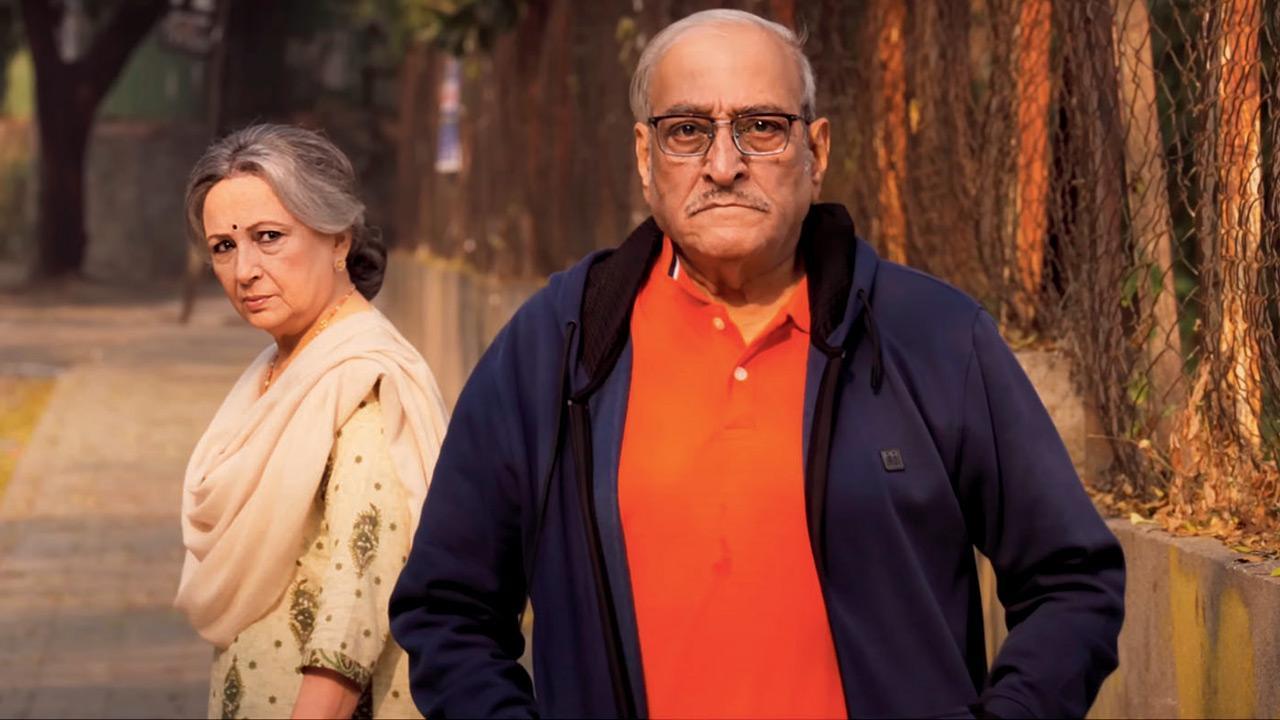
Noting that violent actioners are dominating the box office today, veteran actors Sharmila Tagore and Mohan Agashe say their feel-good film Outhouse serves as a ‘detox’
Upala KBR (MID-DAY; December 21, 2024)
Gulmohar (2023) reminded us how much we had missed seeing Sharmila Tagore on screen. Over a year later, the veteran actor has faced the camera again for Outhouse, teaming up with her Mississippi Masala (1991) co-star Dr Mohan Agashe. In Sunil Sukthankar’s directorial venture, Tagore plays a successful illustrator, who develops an unlikely friendship with an elderly neighbour while babysitting her grandson over a weekend. It was the director’s sensitive gaze towards the plight of senior citizens that drew her to Outhouse.
“The film brings forth the different needs of old age, and how the intergenerational gaps can be filled by communicating, with some humour and understanding,” starts Tagore.
The film, which hit the screens yesterday, marks Agashe’s last collaboration with writer Sumitra Bhave, who passed away in 2021. Having worked together in notable Marathi films, including Kaasav (2017) and Dithee (2019), the senior actor wanted Bhave to explore how the lives of elderly people are impacted by the breakdown of traditional family dynamics and a change in the caregiving system. But Agashe had a caveat—it should not be a tear-jerker.
Remembering Bhave, he says, “After I read the script, Sumitra asked me, ‘Do you think Sharmila would act in this?’ I told Sumitra that I would ask her. Fortunately, Sharmila liked the script.”
At a time of big-scale entertainers, the slice-of-life film comes as a fresh breath of air. Tagore believes it is a much-needed departure from the actioners that are currently dominating the box office.
“A lot of violent films have done well. I don’t mind violent films. If it has a theme or there is a reason for that violence, I’m open to seeing it. I can’t stomach films that are violent for the sake of violence. At the moment, films are going through a rough time. The actors are charging so much money. From what I hear, bigger films like Kalki 2898 AD and Brahmāstra: Part One—Shiva [2022] attract the audience. But personally, I like smaller movies like Laapataa Ladies,” she smiles.
Agashe echoes her sentiment, adding that “the world of movies is becoming a bit toxic”. “There is a lot of violence and sex in today’s films. When it hits a certain threshold of toxicity, it needs a good detox. I preferred this film because there is no sex, violence, killings or religious propaganda. It’s about the pure friendship between a child and a puppy, and the lives of two elderly singles.”
Sharmila Tagore told me, 'I don’t know if the audience will accept me as a queer lady character'-Rahul V Chittella
8:00 AM

Niharika Lal (BOMBAY TIMES; October 24, 2024)
Rahul V Chittella’s debut film Gulmohar won three National Film Awards, including Best Hindi Film and Best Dialogues. Rahul, who has worked with Mira Nair for over 14 years, has been producing, writing, and also directing short films.
Rahul says he stumbled into producing by chance when Mira Nair’s producer suddenly backed out. “I didn’t want to produce, but she said, ‘We have no option.’" So, he gave it a shot and ended up enjoying it. He was also all set to produce A Suitable Boy, but then Gulmohar was greenlit.
When Rahul set out to make this film, he knew he wanted it to be about family, as Hrishikesh Mukherjee's films had a huge influence on him. However, the idea of a house being packed up came to him when Mira Nair’s Delhi home of three decades was being sold.
His portrayal of Delhi in Gulmohar is so accurate that people often assume he is from Delhi and lives there. Rahul jokes, “Every time I meet someone in Bombay, they ask, ‘Oh! Aap kab aaye?’ And I’m like, ‘Arey, main idhar hi rehta hoon!’
In a chat after the National Film Awards, the director and co-writer of the film spoke about how Gulmohar came together.
'The idea of a home, family, the warmth comes from the influence of Hrishikesh Mukherjee's films'
Rahul says his approach to family and the warmth in his films is heavily influenced by Hrishikesh Mukherjee, whose films from Chupke Chupke to Guddi he has seen several times.
He shares, "That's where it comes from. I wanted to make a film about family and explore what that means. Mira’s house in Delhi became our home for 12 years. Every time I came from Bombay, I stayed there. My first short film was edited in that house. All our casting used to happen there. So, when the house was sold, it felt very emotional. I remember, one day while we were writing, we didn’t have the idea of a house being packed up. We were just fleshing out the characters. Then the movers came, and suddenly I got this idea of packing up the house as the backdrop. Weirdly, in the film, the packers you see are the same ones who packed up Mira’s house."
'When Mansi told me that Piku's house was not a real Delhi house but a set, I was heartbroken and hired her'
The production designer of Gulmohar is Mansi Dhruv Mehta, who also worked on Piku. Initially, the plan was to shoot the film on a set, similar to films like Roma and Parasite, where most of the action happens on a constructed set of home. Rahul recalls, "Piku’s house was a set built in a hotel in Bandra. When Mansi told me this, I was heartbroken. I thought it was a real Delhi house, but she said, no, it was a set. And that’s how I decided to hire her."
However, due to the pandemic and travel restrictions, building a set wasn’t feasible, and the search for the Gulmohar bungalow began.
In the film, dialogues are woven into the house itself, with stairs playing a symbolic role. Manoj Bajpayee’s character quotes his father, saying that a house with stairs is a sign of success, which made finding a double-storied house essential.
Rahul shares that they needed the house for three weeks and asked the family living there to move out with all their furniture - a tough ask.
Sharing how he got the bungalow, Rahul says, "I’ve always loved the culture of Delhi houses. Aise ghar toh Bombay mein hote hi nahi hain. When I approached the owner, he told me that when he was eight, Sharmila Tagore came to the house and took a photo with him and his family in the front yard. When he renovated the house, that photo got lost. He told me he wanted a photo with her in the same spot. That’s how I got the house - because of the owner’s love for Sharmila Tagore. I got it just three weeks before the shoot. Now, that man has told me he’s renamed the rooms of the house based on Gulmohar's characters."
He adds, "Bollywood is very powerful - we shouldn’t diss Bollywood."
The film also received a lot of praise for its aesthetics, with walls adorned with art, photographs, bookcases, and original paintings. Rahul, who was visiting an art gallery in Delhi before the interview, says, "My DOP Mansi and I are both very fond of art in real life. We had the privilege of exploring and had a lot of fun picking out each piece of art for every corner. I’m very fond of art. One of my friends created original paintings for the house in the film."
'I enjoy dialogues because, ultimately, you’re trying to say something or question something'
Talking about his collaboration with co-writer Arpita Mukherjee, Rahul says, "We have our similarities, and we have our differences, but we respect each other and value our friendship."
Rahul believes dialogue isn’t just about writing - it’s about how the actor delivers it. He says, "I love dialogues. Many times, when we write scripts and send them to colleagues, they say, ‘Arey! Silence hona chahiye, it’s too verbose, this and that.’ But I love dialogues because I have confidence in the actors I cast. The dialogues we wrote for Gulmohar became great not just because of the lines, but also because of how the actors spoke those lines. I had actors who were such good students of text. It’s quite a talky film, with a lot of dialogues, and then my direction came in - to keep it as colloquial and natural as possible. Aisa dialoguebaazi na lage. I enjoy dialogues because, ultimately, you’re trying to say something or question something."
Sharing an example, he says, “Manoj’s dialogue - ‘Do manzilon ka ghar to ban gaya, kamre bhi badh gaye, par iss ek ghar mein na jaane kab hum sabne apne-apne kamron mein khud ke ghar bana liye hain.’ It wasn’t something I consciously tried to write - it just came to me. I called Arpita and said, 'This is what our story is going to be about,’ because we were still trying to figure out the core of the story."
'I think dialogue writing is like conducting an orchestra'
What does he think makes a dialogue click with the audience or the jury? Rahul says, "I think it’s the whole experience of the scene that gets communicated through dialogue. There was another scene where Manoj goes to meet his biological father at a dhaba, and the man says, ‘Aap de sakte hain kyunki aapko di gayi hai.’ That idea came from Arpita, and we both agreed we wanted to show gratitude there."
At a time when silences are often seen as more telling in films and dialoguebaazi is frowned upon, how does a director decide how much the characters will say and what will be left unsaid?
He explains, "It’s not about the length of the dialogue. If you look at Srif Ek Bandaa Kaafi Hai, Manoj’s final monologue is about five pages long. But at the end of the day, it’s about whether that emotion gets communicated through the scene and the story, and whether it hits your heart. I think dialogue writing is like conducting an orchestra - you know when to start, when to slow down, and when to hit that note. In that way, it’s like music. You can’t make it mechanical. It only feels like dialoguebaazi when it’s obvious the line is written."
He says that’s where direction comes in - you direct in a way that doesn’t make it feel like dialoguebaazi. You’re seamlessly fooling the audience and suddenly grabbing them.
When does he know it’s a good dialogue? Giving example, he says, "One of my favourite lines of Sharmila ji in the film is, ‘Kabhi-kabhi zindagi ko apne panne khud likhne do.’ And then, ‘Yeh ghar humne int pattharon se nahi, dil se banaya tha...’ When I’m writing, I’m also visualizing. So, when a line doesn’t land, you have to keep working at it.”
'I feel OTT gives the kind of budget that retains quality '
Rahul says that when you're making a film, you're not going to work any less just because it's on OTT. "In fact, I sometimes feel that making a film for OTT is tougher because anybody can just pause and walk away. It’s much harder to engage and keep the grip. You can't undermine a film because it’s an OTT film - a film is a film."
Giving examples of films like Srif Ek Bandaa Kaafi Hai, Qala, and Bulbbul, he says, "I feel OTT gives the kind of budget that retains quality - not just for the actors but for production quality and standards."
'Love is love'
Rahul shares, "Sharmila ji took three days to read the script and then called me and said, 'Listen, at the end of the day, I’m Sharmila Tagore, and I come with this legacy of work, image, and audience perception. I don’t know if the audience will accept me as a queer lady character.' And I told her, 'Sharmila ji, love is love, just like in the film, and we should treat it like that. We shouldn’t sensationalize it. It’s a personal choice.' And she said, 'Okay, let’s have fun with it.'"
Rahul says that he knew Manoj Bajpayee for a very long time before he approached him for the role. He says, "In fact, there was a film that Mira and I were producing, and we were talking with Manoj. That’s how I met him. He had seen my short film Azad and said, 'Whenever you’re making your first film, I’m gonna do it.' And I thought - these stars, they keep saying it, but he won’t do it. But when I finished the script, Manoj and I read it together for three hours. After that, he asked, 'When do you want to shoot?' So first, Sharmila ji said yes in three days, and right after her, I went to Manoj. These two people I cast in 2019, and they stuck around for so long, saying, 'Whenever you want to shoot, we’ll do it.'"
He shares, "We keep joking, and I told Manoj, 'We’ve only seen you as a normal person, a cop, or a middle-class guy. Only in Zubeidaa have I seen you as a rich person.' He started laughing and said, 'Nobody casts me as a rich person.'
'If you don’t like the actor as a person, it becomes difficult to edit them, and then you’ll start hating the scene'
Rahul shares that he casts every part personally. He says, "Again, because in all the films that Mira and I have done together, we have always been very involved in casting. I thoroughly enjoy working with actors. Also, what people don’t realize is that you have to love your actors for two years - through casting, shooting, and then editing. You have to like the actor. If you don’t like the actor as a person, it becomes difficult to edit them, and then you’ll start hating the scene."
Rahul says that one can't alienate - 'Ye film Bollywood hai, ye un-Bollywood hai. Manoj is as Bollywood as it gets, Sharmila ji is a Bollywood icon. I completely love Bollywood."
---------------------------------------------------------
"The thing with Gulmohar that I realized is that yes, it was appreciated, but it was also deeply loved and watched a lot."
---------------------------------------------------------
"The film was always titled Gulmohar because, during a particular season, Delhi lanes are filled with Gulmohar trees. It’s a very Delhi-specific flower; it’s very poetic," says Rahul. Another reason for the title was his love for Gulzar’s song “Gulmohar gar tumhara naam hota."
Despite the trolling, Saif Ali Khan told me he was very happy with the look-Abhishek Roy
3:53 PM

After Saif is trolled for his Ganesh Chaturthi outfit, designer Roy says actor sported Bengal’s traditional Mayur Puchha dhoti as he is keen to explore his Bengali roots
Upala KBR (MID-DAY; September 12, 2024)
Crisp kurtas and pyjamas are his off-duty look, while on festive occasions, he will be his dapper self in a bandhgala. Over the years, Saif Ali Khan has built his signature style. But fashion enthusiasts must have noticed the actor’s penchant for dhotis in the past few months. Last week, Khan sported a golden dhoti, paired with a red kurta, at the Ambanis’ Ganesh Chaturthi celebration. Soon, he was trolled by netizens who were taken aback by the pleated dhoti—while many wondered whether he was wearing “a paper dhoti”, one remarked, “What has happened to Saif Ali Khan? Where has his dressing sense gone?”
Kolkata-based designer Abhishek Roy, who dressed the star for the evening, says Khan personally loved the attire.
“Despite the trolling, Saif told me he was very happy with the look. Saif is good to work with. He doesn’t behave like a top star; he connects directly and not through his team. It is encouraging to have one of the top stars standing like a rock beside me when people were trolling his [look],” says Roy.
Those familiar with this style of dhoti will know that it’s a common garment in West Bengal. The designer explains, “Saif wore a traditional Mayur Puchha dhoti from West Bengal. The material is brocade silk and has been woven in Benares. We are used to similar dhotis in Bengal, but people in the west and north wouldn’t know of it. Mayur Puchha dhoti carries forth the region’s craftsmanship, heritage and stories. Saif loves it also because it is pre-stitched and removes the need for draping, thus providing comfort and convenience.”
Roy’s association with Khan began last Diwali when the actor, keen to explore his Bengali roots, reached out to the designer.
“Saif was looking for something with Bengali aesthetics. He wanted to explore his mother’s [Sharmila Tagore] side of aesthetics. His brief was that it should be authentically classy and sleek. He doesn’t like too many embellishments on his outfits. We connected instantly during the first trial as he liked the materials [I used], like muslins from Murshidabad and Bangladesh. He liked what I designed for him last Diwali. Since then, I have been doing Saif’s personal outfits. He is choosy about the materials and cuts,” says the designer, who is curating the actor’s look for the upcoming Durga Puja.
Today they say, ‘No phones at the dinner table’, my father used to tell me, ‘No books at the dinner table’-Soha Ali Khan
9:17 AM

Onkar Kulkarni (BOMBAY TIMES; June 19, 2024)
“I was that child who always had a book in her hand. Today they say, ‘No phones at the dinner table’, my father used to tell me, ‘No books at the dinner table’,” says Soha Ali Khan, who, just like her other family members, brother Saif Ali Khan and mother Sharmila Tagore, is an avid reader. “You must make time for reading, else you become more of a book collector than a reader. I believe books really don’t want to be collected; they want to be read,” she tells us. On National Reading Day today, the actress talks to us about her love for books and her relationship with them.
‘I find libraries fascinating’
Soha looks back at the time she spent in libraries. “I am a member of a public library in Delhi. I find libraries fascinating. When you spend time in a library, you feel like reading something. Being there encourages you to pick up a book,” says the actress, who feels compelled to read a book every time she is in her daughter Inaaya’s school’s library.
The vibe there takes her back to her college days. “I was lucky enough to study at Oxford University, which has one of the best libraries in the world called the Bodleian Library,” she shares.
‘Looking at mom and dad read, got me interested in books’
In this digital age, Soha had a challenging time getting daughter Inaaya interested in reading. She says, “I enjoyed reading and back then, there wasn’t much competition from movies, TV or the internet. I saw mom and dad reading, and it got me interested. When it comes to Inaaya, I tell her that only when you finish reading this chapter you can eat the chocolate cake and watch TV. I know it’s not good to bribe your children, but I find it very effective (laughs). I also follow positive reinforcement of leaving books lying around her, something they do in her school too, so that kids pick up the books and read them.”
‘Since I am a reader, I don’t get bored easily. I enjoy being alone’
Talking about the habit of reading, “One needs to prioritize reading because it encourages focus and discipline. Just sitting with a book relaxes your mind. Since I am a reader, I don’t get bored easily. I enjoy being alone. Also, I don’t need music as a distraction and flights are not boring for me as I read. What you read shapes you as an individual. It improves your imagination, vocabulary and writing style.”
While Soha is not a part of any book club, she is fascinated by the idea. “Currently, I am not a part of any of these clubs, but I think it’s a great, inexpensive social diversion at a time when people are looking for digitally free habits and hobbies.” She does follow some celeb book recommendations.
“There are many celebrity book clubs. I follow Ellen DeGeneres’ book recommendations, even Oprah Winfrey’s summer pick. I read those, and now it is interesting to see how many reader-actors have online and offline book clubs. Reese Witherspoon and Dua Lipa have popular book clubs.”
Omkara was passed because Sharmila Tagore’s son Saif Ali Khan was in it-Pahlaj Nihalani
9:28 AM
HINDUSTAN TIMES (May 27, 2024)
Filmmaker and former chairperson of the Central Board of Film Certification, Pahlaj Nihalani has opened up on his controversial tenure at the helm of the censor board.
In an interview with TV-radio host Siddharth Kannan, the 74-year-old, whose tenure with the board was riddled with issues, made the shocking claim that actor Sharmila Tagore, who had earlier been the chief, passed Omkara (2006) because it starred her son, actor Saif Ali Khan.
“During Sharmila Tagore’s tenure, Omkara was passed because her son Saif Ali Khan was in it. People in the board accepted bribes to pass certain films without cuts. They went against the guidelines, I just made sure the rules were followed,” said Nihalani, who was the CBFC chief from 2015 to 2017.
He also alleged that it was actor Shah Rukh Khan who agreed to removing the word ‘intercourse’ from the trailer of his 2017 film Jab Harry Met Sejal. “I spoke to Shah Rukh about this, he said, ‘Cut it’. There was only one cut. I told him to send another version or accept the cut, and he said, ‘Okay, cut it’. The media targeted me because I was controversial,” Nihalani said.
On the long-drawn controversy around the 2016 film Udta Punjab (over profanities and depiction of drug use), Nihalani added, “I never allowed myself to be pressured by the government. I passed films on merit alone. They didn’t want the title ‘Udta Punjab’ to be passed, and I threatened to resign. I don’t have any regrets. I’ve done my work with honesty.”
Subscribe to:
Posts (Atom)