Showing posts with label Section 377. Show all posts
Showing posts with label Section 377. Show all posts
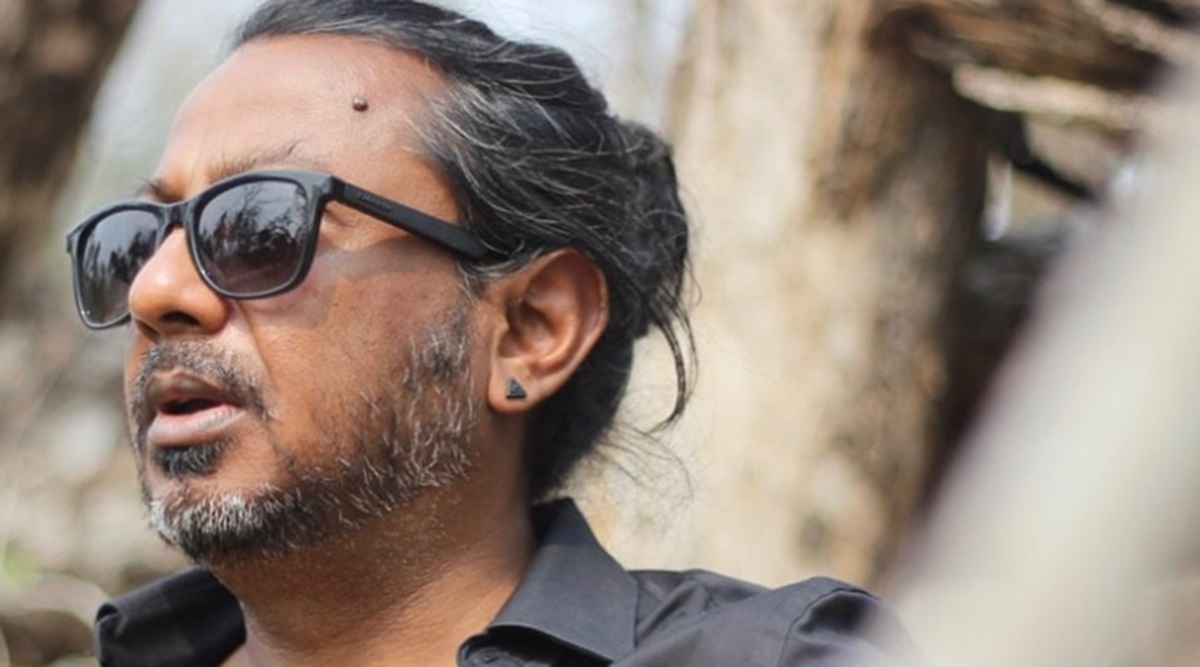
How many times will I cast Sanjay Suri or Rahul Bose?-Onir
8:01 AM
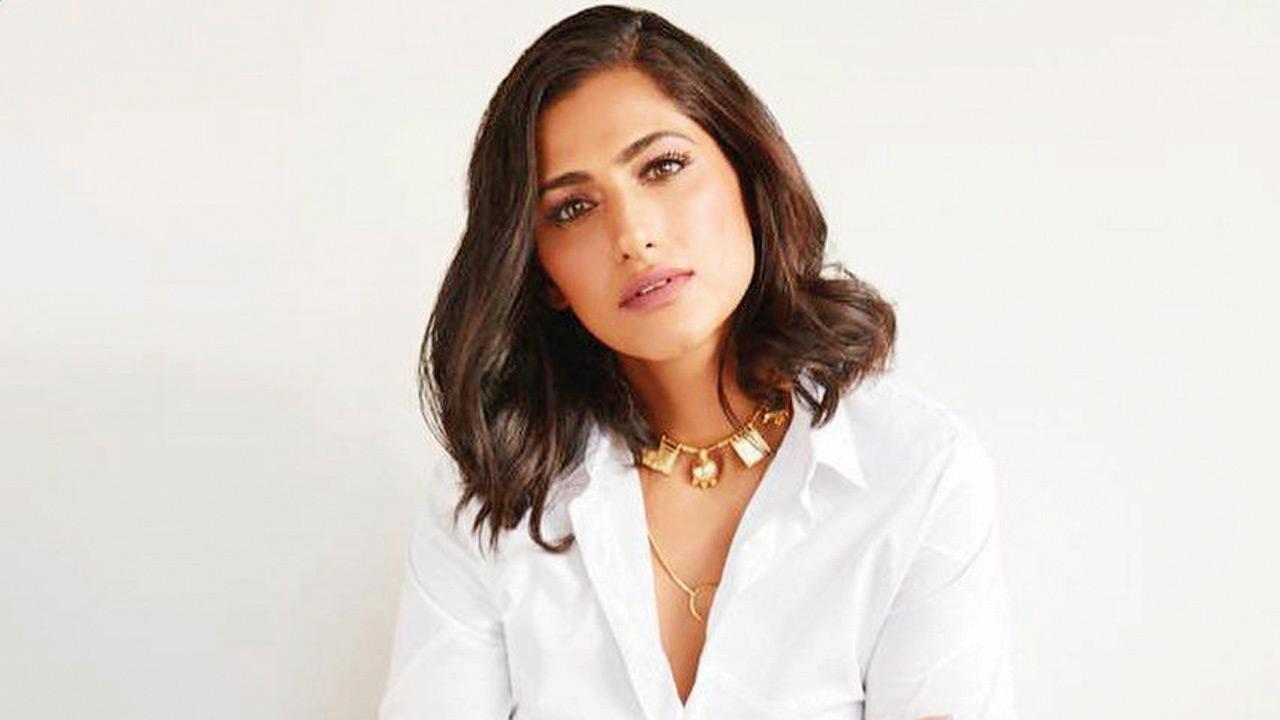
The sequel will star Kubbra Sait
Having recently announced sequel to National Award-winning film I Am, Onir says OTT platforms have refused to fund the anthology possibly due to its queer theme
Mohar Basu (MID-DAY; July 30, 2021)
Few filmmakers in India allow their personal identity and politics to reflect in their work. Onir has always believed in bringing stories of the queer community to the world, starting with the heartfelt My Brother Nikhil (2005) to the National Award-winning 'I Am' (2011). Last month, the director announced 'We Are', the sequel to the 2010 anthology.
“I had no idea that I would explore a sequel. The only thing I wanted to do was to celebrate the decriminalization of Section 377, and take the discourse forward to understand what needs to be done in terms of civil rights. During the lockdown, Devdutt Pattanaik sent me a concept of a gay love story, which I developed as a short film. Then, I started thinking whether we can whip up an anthology of four queer love stories, each with a fresh theme.”
The anthology will feature The Great Indian Kitchen actor Nimisha Sajayan alongside Sacred Games’ breakout star Kubbra Sait. In working with relatively new actors, Onir is trying to step out of “my comfort zone”. “How many times will I cast Sanjay Suri or Rahul Bose? I need to explore other actors,” he states.
One would assume that a sequel to I Am would be easier to make amid the current OTT revolution. However, the director rues that he is struggling to find investors, possibly because of the anthology’s subject. “As an out and proud filmmaker, with National Awards being conferred on I Am, I expected more interest from OTT platforms. The lack of interest shows that the world is full of closet homophobes. Many platforms have declined to fund the film. If they don’t believe in the theme or empower people from the community, great content will never happen,” says the filmmaker, who is developing the project with Pakistani-Canadian filmmaker Fawzia Mirza. “My belief in the film is such that I will shoot it on my iPhone [should the need arise]. No one can stop me from telling my stories.”
Onir intends to roll the project in September after honouring his commitment as the jury member of the Short Film Festival at Indian Film Festival of Melbourne.
My upcoming film We Are will celebrate queer love and is my tribute to the SC for repealing Section 377-Onir
7:59 AM
Titled We Are, the filmmaker’s next project is a sequel to his acclaimed I Am, and will feature a trans woman and drag artistes, apart from actors like Kubbra Sait and Nimisha Sajayan
Amrita Prasad (BOMBAY TIMES; July 30, 2021)
It’s been more than a decade since filmmaker Onir’s critically acclaimed I Am released. The film bagged two National Awards — Best Hindi film and Best Lyrics (Agar Zindagi) — and was lauded for stellar performances by Juhi Chawla, Manisha Koirala, Sanjay Suri, Nandita Das and Rahul Bose among others. Now, Onir is making a sequel to the anthology film. Titled We Are, the film will be a celebration of queer love and rights, shares Onir.
“It’s a sequel in terms of the essence. It won’t be a continuation of what was depicted in I Am, nor is the story being taken forward. In We Are, which too is an anthology of four films, the stories progress parallelly, before merging with each other. However, what remains constant in the sequel is the cities — Bengaluru, Kashmir, Mumbai, and Kolkata,” says Onir, adding that he wants the film to be independent in spirit.
Kubbra Sait and Malayalam actress Nimisha Sajayan have been cast in the film, but details about the rest of the cast are still under wraps. However, Onir shares that the film will have a trans person playing a prominent role.
Onir says, “You will see a mix of established, fantastic actors like Kubbra and Nimisha, along with some fresh talent. For the story that focuses on Kashmir, I wanted to cast someone who is actually from Kashmir, to bring originality to the character. We auditioned a lot of artistes from the region and finalised one. Similarly, for another story in the film that talks about a trans woman, we auditioned many actors from the trans community and I take pride in saying that I will be among the few filmmakers who will have a real trans woman acting in their film. The actor is undergoing training for the part. You will see also see two drag artistes and people from various regions of India in the film.”
Six languages will be spoken in the film, including Hindi, Bengali, Marathi, Kashmiri, Malayalam, and Punjabi, and the filmmaker says that they have ensured that characters in the film are played by actors from the parts of the country that the respective stories are based in.
When asked if finding actors from the queer community was difficult, Onir says, “We have to make an effort to find them and be open to giving them a platform. There is immense talent among queer artistes, but for the longest time, they have been sidelined. We had to audition at least 40 people to finalise one actor. It is the job of a filmmaker to do workshops to prepare their actors. When I can do it for my Kashmiri actor, who is new and raw, why can’t I do the same for the trans actor in my film?”
The filmmaker stresses that while We Are touches up the issue of identity and human rights, the prevalent theme is celebrating the LGBTQIA+ community. “The film is about celebrating queer love. It is also my tribute to the Supreme Court for its historic judgement of repealing Section 377 of the IPC. At the same time, the film will highlight how queer people are not treated equally in a democracy like ours. The fact that we are still fighting to legalise same-sex marriages tells us that we are far from being equal,” says Onir, on a concluding note.
This is hopefully the last time people talk about a same sex kissing scene-Jitendra Kumar
8:23 AM

Riya Sharma (BOMBAY TIMES; February 19, 2020)
 He wanted to do an entertaining romantic film, and in Shubh Mangal Zyada Saavdhan, Jitendra Kumar is doing exactly that. The only difference is, instead of romancing a girl, he will be romancing Ayushmann Khurrana. In a chat with us, Jitendra says that SMZS is actually a love story between two individuals with a family bhasad. From addressing homophobia in the film to his family’s reaction to his character, the actor talks about how the film aims to normalise same-sex relationships. Excerpts:
You play Ayushmann Khurrana’s love interest in Shubh Mangal Zyada Saavdhan — was it a calculated risk?
There was no calculation. I got to know that the makers were thinking of casting me in a film on a same-sex relationship, I met them and read some scenes with our writer-director Hitesh Kewalya. Hitesh could see in me what he wanted from the character. Then, I met Aanand (L Rai, co-producer) sir, did one more reading and I was part of the film. I was more keen to know how the story has been written. They were sure that I was the right person to play the character but I wanted to know more about the story. When I got to know the entire story, I really enjoyed it. The most interesting part was how the topic (of same-sex relationship) was normalised visually in the film. Joh hum general ‘conventional’ romance dekhte hain between people of the opposite gender, waisa hi romantic feel iss couple ke saath hai.
Many actors talk about how certain roles can be emotionally draining. In the trailer, we can see your character being beaten and dealing with parental disapproval. You are going through the same emotions that many others go through when they come out to their families. How did you prepare for that emotionally, since your character did not require you to change physically?
I have a few friends who have come out to me. When I got to know their stories, I realised how badly they have been treated by their own family. Mujhe zyada pata nahi tha, par jab Section 377 pe verdict aaya I was shocked to know that having a same-sex relationship was considered a criminal activity till then. As far as the movie is concerned, jab bhi aap ek naya character karne ja rahe hote ho toh aap physically changes laate ho — the way you walk or talk. So I started watching videos of people who are open about their sexuality. While watching their interviews and talks, I also got to know about the pain they went through and I felt emotionally connected to them. Then I realised that there are many who are ‘normal’ in the way they talk and behave and I felt stupid that why was I even looking for such stereotypical things? In the script also, my character’s requirement was that he should look like any other boy.
In metros, people are becoming more open about same-sex relationships. How do you think people in small towns, like the one in which the film is set, will react to two men in love?
This film is about people who have homophobia. And we have no education on the topic. In our textbooks, we are only taught about reproduction with the opposite gender and we get to know about samesex relationships only through negative information. It has been seen as taboo for long, so obviously, people won’t accept it as something natural in a day. This story is about them. I think the movies that have been made so far on the topic have reached only those who already knew about it and were evolved. This might be the movie that reaches the small towns and cities of the country. Ek raat mein kuch nahi badlega par unhe ye zaroor feel hoga ki ek natural cheez hai. It is not even a choice, we say ‘It is a choice, let them do whatever they want to’. But it is natural for them to love people of the same gender. The audience will get to hear these things a lot in the film so I think the next time, they will be a bit more accepting if someone tells them that they are homosexual. People won’t be shocked, kyunki ye movie woh shock khatam karne ka kaam kar degi.
The film has been pitched as a rom-com but the topic is sensitive. How did you maintain a balance and make sure you didn’t offend anyone?
Hitesh had done that as part of the script. When we all heard the story, we felt it was like any other love story. Family ki bhasad hai par romance normal hai. There were a lot of discussions on the set, all of us would give inputs, add a particular word to a scene to normalise the topic.
Your kiss with Ayushmann is being talked about a lot. Why do you think it is such a big deal?
This is the first time the audience has seen something like this on the big screen, and it’s natural for them to react. I remember the kiss in Raja Hindustani (between Aamir Khan and Karisma Kapoor), people talked about it a lot as well. Whenever we see something new on the big screen that we are generally awkward to talk about, toh thodi baatein hoti hai. This is the first, and hopefully the last time, people talk about a kissing scene between two people of the same gender.
How did your family react to it?
When I was finalised to play this part, they got to know that I am doing a lead role in a romantic film, but thodi different romantic film. Of course, my parents were a bit awkward and they didn’t talk about it openly for two-three days, but they were happy. Later, we discussed it and they were okay with it. But I think log ab dheere-dheere evolve ho rahe hai. Jaise meri family, jo middle-class, small town se hai, unka reaction waisa nahi tha jaise maine socha tha. But it is okay for people till the time it is being shown in a movie or is happening with someone else. The real reaction would come when it would happen in our family, but ek raat mein nahi hoga, time toh lagega.

Celebrating our Armed Forces doesn’t mean we’re promoting nuclear war-Celina Jaitly
8:52 AM

Actress and UN human rights equality activist Celina Jaitly opens up in the wake of Priyanka Chopra being accused of encouraging nuclear war through her tweet. She also talks about her army background and return to films
Renuka Vyavahare (BOMBAY TIMES; August 25, 2019)
 You haven’t been in the public eye for a while now. What have you been up to?
I have been through massive ups and downs in the last three years, but I guess that’s life. But now, I am looking forward to the release of my next film — Season’s Greetings, which is tribute to filmmaker Rituparno Ghosh. I tragically lost both my parents last year and the script of this film came along at a time when I was going through an emotional crisis. It helped me sail through the turbulent waters. It’s also special because, this was the first time that I got to shoot a film in Kolkata, a city that I consider my hometown. It brought back a lot of memories. I have spent my childhood all around India, but I spent considerable amount of time in Kolkata owing to the fact that my father was posted there. Kolkata reminds me of my struggling days, as I started off my modelling career there. At heart, I am a Bengali, and I hope the people of the city adopt me as one of them. I will always be a Kolkata girl.
Priyanka Chopra has been associated with UNICEF for over a decade now. Pakistan’s Minister for Human Rights Shireen Mazari sent a letter to UN on August 20, seeking her removal as their Goodwill Ambassador. She was accused of ‘encouraging nuclear war against Pakistan’, by a Pakistani-American influencer who was present at a beauty event in Los Angeles, where PC was invited as a guest. She called Priyanka a hypocrite and claimed that an old tweet of the actress supported the Indian Army and thus, encouraged war. What’s your take on this issue?
Priyanka’s simple tribute to the Armed Forces was completely blown out of proportion by a wannabe influencer. Celebrating our Armed Forces does not mean we are promoting nuclear war! Do you expect us to stop saying Jai Hind or dismiss the contribution of generations of our Armed Forces? This whole thing was unfair to Priyanka. I think it was done to evoke a hyper reaction from her, but she handled it with so much grace and dignity. First and foremost, we are Indians. Priyanka’s parents have served as doctors in the Armed Forces and four generations of my family have been in the Army. We are proud citizens of this country who stand united behind our armed forces. This does not mean we are propagating nuclear war! We are eternally grateful to the valiant services of our Armed Forces in keeping us safe and secure. India has always been a global ambassador of peace.
Do you think this was an attempt by a person to grab eyeballs and attention on social media by targeting a celebrity?
A dignified celebration of our Armed Forces’ dedication and selfless service does not mean in any way that one is encouraging nukes. Anyone who misconstrues the intent needs a reality check. This is just an insinuation by a wannabe instagrammer who wanted to increase her followers. Celebrities are often attacked on social media on baseless grounds to garner publicity. Voicing your opinion at a cosmetic event at a UN ambassador who talks about human rights does not make you a propagator of peace. You cannot accuse someone of encouraging nuclear war only because they respect their Armed Forces! Every patriot does that. There is not an iota of doubt that in order to achieve sustainable growth and development all over the world, we need to prioritise peace over war. Peace is often defined as the absence of violence, conflict, hostility and war. We can always propagate peace, but peace is not merely the absence of violence, but also vanquishing of oppression and terrorism if needed. I hate to say this, but sometimes war is needed to sustain peace... it goes both ways. Peace also comes at a cost. There is no history of continued peace in the world unless war intervened to maintain that peace. Even a soldier does not want war, but he has to go and defend his country.
Last year, in a landmark judgement, the Supreme Court scrapped Section 377 of the IPC. You are a strong advocate of the LGBTQIA rights. Hereon, where do you see things heading?
Many people from the LGBTQIA community have played an important role in my life. I started my career at 16 and all through these years, they have had a strong impact on me. In fact, they had such a strong influence on me that it made me stand up for what is right even before I joined the UN to support this movement of equal rights. Activism is a long process as changing mindsets is not easy. We have come a long way as we have finally overthrown an archaic law.
You married Austrian hotelier Peter Haag in 2011. How easy or tough was it initially to embrace the cultural differences?
I believe that marriage in itself is a work in progress, no matter who you are married to or which culture you are married into. I was very fortunate that my husband is an expatriate who came from a family of expats. He is openminded and was keen to embrace our Indian culture. Embracing each other’s culture is crucial in a cross-cultural marriage. Peter has taken a liking to all the crazy things I do in India. He likes street food like vada pav and paani puri. I love cooking and over the years, I have embraced cooking Austrian food in a massive way. He is Austrian, I am Indian and we have lived in places like Dubai and Singapore, and now, we are back in Europe for a while. Travel helps you evolve so much as a human being. Your children grow up as global citizens, which is fascinating because you see them imbibe different traditions and cultures. As an actor you think that you have seen it all and done it all. But no, the truth is that you haven’t. Once you live in different parts of the world, you grow by leaps and bounds.
It must be interesting to see your kids soaking in both the cultures. Moving your base from place to place has its challenges, but on the other hand, it could amount to life changing experiences for them. Do you agree?
Our kids are multilingual. Peter speaks with them in German and I speak to them in Bengali, Hindi and English. Coming from an army background, a lot of Hinglish was spoken at home. So yes, they definitely understand and speak Hindi, but not too fluently, as they have been studying in a German medium school. But the good thing is that, they have understanding of both our cultures. They look forward to festivals like Diwali and Holi. They ask for mithai after having a perfect German meal. It’s funny to overhear their conversations. The twins tell their friends from Austria, China and Japan what a paani puri is all about. They say, “It’s a ball filled with spicy water”.

Maanvi Gagroo to play homosexual in digital show Abnormal 377
8:09 AM

Four More Shots Please actor Gagroo to play homosexual in digital show Abnormal 377, that charts the dissolution of the IPC law
Mohar Basu (MID-DAY; February 21, 2019)
Taking a chip out of her last web show, Four More Shots Please — which saw co-actor Lisa Ray play a homosexual — Maanvi Gagroo is now set to essay the part of a lesbian in her next, Abnormal 377. The Zee5 show charts the journey of five petitioners who fought for the dissolution of Section 377 of the Indian Penal Code, which criminalised consensual intercourse that was “against the order of nature”.
Given the crucial subject that the show touches upon, Gagroo said giving her nod to it was a no-brainer. “I didn’t even read the script before saying yes. I knew this was something I had to be a part of. I remember the joy I felt after the Supreme Court’s verdict that decriminalised Section 377 last year. It wasn’t a victory for the LGBTQ community only, but one for the entire country. This venture is about that.”
Apprehension about playing a lesbian holding little merit, Gagroo is only thankful for the experiences she acquired when playing a character of this nature. “The beauty of being an actor is that one gets to feel and experience things she may not otherwise have. This journey introduced me to a new world and helped me understand sexual preferences in a beautiful manner. It is not people’s sex that one is attracted towards. It is the person. Whether that person identifies as male or female is merely incidental. This film helped me understand that.”
Apart from getting acquainted with the struggles that the LGBTQ community faces when the realisation of their sexual orientation dawns on them, Gagroo also had friends belonging to the community that she could take inspiration from. “I’ve read a lot on gender neutrality, because I have a background in psychology. I love sinking my teeth into research material on human experiences,” Gagroo signs off.
People won’t have to lead double lives anymore-Onir on scrapping of section 377
7:59 AM

Saptaparna Biswas (BOMBAY TIMES; September 13, 2018)
From being an openly gay person in the film fraternity to unabashedly presenting same-sex relationships on screen, filmmaker Onir had ensured his identity was never stifled. Amidst the struggle of presenting LGBTQIA themes in the most ‘normal’ way, when he heard about the historical verdict by Supreme Court, scrapping section 377 of IPC, he was among the first to celebrate the victory. When we met the jubilant director of I AM, he was more than happy to share his musings about the changing society and the way forward from here…
Let’s start right at the beginning, when you discovered yourself…
It was not the usual start, you know. Back in school, I used to be a desperate romantic, who would fall in love with every second girl and it was always disastrous. Eventually, I realised I like men, yet, I never felt the fear. All I told myself was that I won’t lead a double life and not lie to the girl I’m with. I thought of exploring my desire and attraction for other guys. I remember the early days when I used to go to online chat rooms and even go on blind dates, some of which were really catastrophic. For me, it has been a great adventure, and I’m glad my life went through all that. Most of my friends are not gay; I don’t define anyone by their sexuality. However, the true meaning of a person’s love has always eluded me. Since I was in the industry, it was difficult to understand why people love me. Is it because I’m who I am or because of the tag of a filmmaker that I carry. I have felt used at times, but I guess that has happened to everyone irrespective of their sexuality.
The scrapping of section 377 has been monumental for the LGBTQ community. What are your thoughts on it?
I am not a criminal anymore! It is truly empowering to have the law on your side. The community will now come out as they know people will treat them with respect. One won’t be scared to fall in love to fight for their rights. The whole secrecy which threatens the sanctity of many relationships will be gone. In fact, marriages would be better and by choice. People won’t have to lead dishonest or double lives anymore. I celebrate the fact that so much effort was put in by so many people, even when I had given up. Their efforts have paid off. Also, I am in awe of the bench and five judges who gave us more hope.
After attaining the legal right, what do you think is the way forward?
It is important to find a way to normalise people about the themes, that there is no difference between you and me, and it’s just the way we love is different. Each of us face similar relationship issues. As far as advocacy is concerned it should be handled a) at family level where they support choice of the individuals, important to counsel parents b) the schools and colleges should have inclusion of LGBTQ rights during sex education class. Because children are the future. My 14-year-old niece, had once started the conversation with ‘Mama, I know all about you, and I’m proud of it’ has now become my confidante too. It has also given her an opportunity to confide in me about her thoughts and musings on sexuality. This is the kind of confidence we have to instil in the upcoming generation.
What was your family’s take on your choice?
I have been fortunate that way. My family empowered me as right from day one I had complete acceptance from them and I know it means a lot. My parents, siblings, close ones accepted me as is, without even a discussion. I never had to hide myself. Similarly, in the workspace, I have not faced any issues because of my identity, but yes, the industry hasn’t been accepting of themes I want to present. Entertainment channels need to make concessions where such films and themes can be shown to bring more acceptance.
Currently, same sex love or attraction is portrayed in a manner of caricature. Do you think there will be a new thought process now?
It won’t change overnight, and honestly one cannot blame the industry. After all it goes according to box-office predictions. Even for me while I got the National Award for I AM, no television channel was ready to show it, despite having a U/A certificate because of the subject. So, filmmakers need support from every angle to be able to express such themes. Even now I’m struggling to fit Shab on satellite, yet it is not finding the due distribution for its subject. The audience will take some time to accept it, but we need to keep pushing the envelope. The more they see, the more accepting and understanding they will become. In Hollywood, there are films that are going to Oscar based on such themes. But that kind of support is missing here. Young filmmakers who want to work on such films don’t have the backing. We need the same celebration and support.
Millennials are more accepting of homosexuality. Do you think that will bring more progression in coming times?
I think ours is a divided society. There is a part of it that is educated, well-read and well off and accepts everything. But LGBTQ is beyond all these constructs. There are people from small towns who don’t know how to deal with it. So advocacy and awareness will have to go to the roots where people are facing this discrimination and start with them. There is a much wider area that we need to cover. The best way is to go back to our own culture. There is no book or adage in our culture that says it is a crime or a disease. None of our ancient scriptures claim this, and that is the biggest strength that we have. We need to reinterpret, redefine the beliefs. We should retain the good and work around the bad.
In the path ahead, what will be your contribution to the change?
My effort to tell stories the community connects with, will continue. It will take different shapes and forms as society changes. I will always be there as an artiste. But my definition is not just that of a queer identity, rather of a person who goes about spreading acceptance. This law means a lot to me, because during my relationships too, I have been with people where I have been open with, but the person due to fear of stigma quietly changes their stand last moment. I would realise how they left my side due to social pressure to get married or decide they are no longer LGBTQ. Such instances caused me a lot of pain. I feel now I can expect people I fall in love with to be more open and not be scared to be seen with me.

Heterosexual couples get respect by default. Even we want that-Apurva Asrani
8:28 AM

Renuka Vyavahare (BOMBAY TIMES; September 9, 2018)
In a heartfelt conversation with Bombay Times, Apurva Asrani, the award-winning editor and screenwriter of Aligarh, opens up on what it takes for a homosexual man to come out publicly and the storms that he must brave. He thinks, however, that the landmark Supreme Court judgement on September 6 will go a long way in empowering the LGBTQIA community. Excerpts...
COMING OUT
The day I came out to my parents, the biggest burden of my life was lifted. I was 20 at the time and I knew that this would cause them pain, but I also knew deep down that they truly love me, and will accept me eventually. People have said to me, ‘You come from a fairly well off, urban, educated family and so, coming out couldn’t have been so bad,’ but that’s not true. When I came out to my folks, my dad was so hurt, he didn’t talk to me for over two years. My mother was crushed, too. She said that the trauma reminded her of the time when her father was diagnosed with cancer. And my parents are well educated, city-bred people, who have travelled the world. So, acceptance has nothing to do with education.
BATTLING SOCIETAL PREJUDICE & FINDING ACCEPTANCE
Today, my mother tags me on every update that she shares about the Section 377 verdict with celebratory emojis. My father forwards me well-written opinion pieces about the case on WhatsApp. But it took years for my parents to stop being embarrassed about my sexuality and to accept me as I am. At the age of 20, when I got into my first long-term relationship (that lasted eight years), I could see my parents’ discomfort. Though he was a nice guy, they didn’t want me to discuss him with their friends and extended family. They have grown up in a society, which believes that the right way forward is marriage and children. They have looked forward to the fulfillment of that dream their whole lives — a beautiful daughter-in-law and cute grandchildren. So, when their son told them that he is gay, that dream came crashing down. Having said that, we have to be sensitive to their feelings and worries — about who will look after their son when they are gone.
So, we need to show them that a society is possible where their gay son can have a committed, long-term relationship with another man. A loving bond that extends to include the families of their partners, something close to what they call marriage (of course, we must define our own concepts of longterm partnerships). They need to see that this is not some fleeting, carnal encounter that will last a few days. They need to see that this is love.
Today, my parents enjoy a great bond with my partner Sid, as I do with his parents. We have been together for 11 years, our families have gone on vacations together, and they see us both as their own children. We are there for each other in times of need. And we are not alone, we know of several gay couples who enjoy the blessings of their parents. It is possible.
‘WHY SHOULD HETEROSEXUAL PEOPLE FLAUNT THEIR RELATIONSHIP AND NOT HOMOSEXUALS?’
For too long, we have lived in a democracy that is unevenly applied. Because of what I do with another consenting adult in my private space, the law has been able to call me a criminal. So, my heterosexual brother, for example, has different rights from me. He can fall in love with a person of his choice, get into a recognized union with her and then choose to adopt a child. I do not have any of those rights. If my brother chooses to stand for public office, he can, while I, till a few days ago, wouldn’t be able to, because my sexuality deemed me a criminal. Why should heterosexual people be allowed to flaunt their relationships and not homosexuals? My best friend can publicly hold her husband’s hand, rest her head on his shoulder, and even give him a kiss on his lips at a restaurant. But if my partner and I were to try that, we’d raise eyebrows, evoke discomfort, and maybe even get told off for it. I have been evicted from a housing society when they discovered that I lived with another man.
I refuse to accept this inequality. I am a citizen of this country and today, its highest court has given me a clean chit to live as I am. If you have a problem with two people being in love, and you want to stop us from being happy, there is something wrong with the way you think. It’s called bigotry and our Constitution doesn’t support that anymore. Heterosexual couples get respect by default. Even we want that.
THE SPECTRUM OF SEXUALITY
If you’ve seen Aligarh, there’s a dialogue where professor Siras says that he doesn’t understand what the word ‘gay’ is; it didn’t exist when he was growing up. He was once married to a woman, has recently been in a relationship with a man; but he doesn’t see it as a problem. He says that he is old and lonely and all he wants is someone to share the night with. Why should the sex of that person be an issue for the society? Or should an old man forego his need for companionship, and suffer alone, just to please society?
Today, the spectrum of sexuality has extended far beyond the word ‘homosexual’ and it includes terms like gay, lesbian, bisexual, transgender and queer. While it does seem inconvenient to understand so many terms in ‘LGBTQIA’, it indicates that one’s sexuality cannot be slotted into a ‘one size fits all’. People should be allowed to explore and figure out for themselves where they stand. As long as sex is consensual and between two adults, no one should have a problem with it.
NEW PHASE, NEW BEGINNINGS
I have immense respect for those who have worn their sexuality on their sleeve. It took immense courage for some of us to be like that when the world tried to ignore our existence. We needed to be flamboyant, dramatic and loud so that our voice was heard. But now, we have the world’s attention. On September 6, 2018, the Supreme Court awarded us not just long-overdue recognition, it also issued an apology for the suffering we went through while justice was delayed. It gave us respect. So, now, it is time for us to respect ourselves, to live our lives with dignity. We must ask ourselves; do we want to call attention to our ‘differentness’, or do we want to integrate? Do we want to become part of a society that we have stood outside of, or do we still want to rebel? It is time to build healthy communities that will stand as our support structures. To enter diverse fields and industries where we can become leaders. Leaders who don’t fear their ‘closeted’ secrets being called-out. An LGBTQIA person isn’t some deviant sexual being that lurks in darkened alleys, strutting his/her stuff. We are by and large, a conscientious and loving bunch. Having being denied our right for so long, we know what it is to be marginalised, discriminated against. We are therefore sensitive to the pain of others.
We are important members of a civil society. We are artistes, media people, doctors, engineers, politicians, hoteliers and accountants. We are even leaders of religious cults. We are a hard-working lot, most of us childless, who put in long hours at work, and strive for great results. Many of us stand as pillars of society and are dedicated to loving our country. We know that we contribute to India’s economy and we demand respect for that. Our sexual preference has absolutely no bearing on how we perform our duties, and nobody has the right to question us about who we kissed and how we loved. As Chief Justice Dipak Misra, while delivering the landmark 377 judgement said, ‘I am what I am. So, take me as I am’.

The verdict on Section 377 is a karara jawaab to all the stereotypical minds-Manoj Bajpayee
3:03 PM

Manoj Bajpayee reacts to the Supreme Court’s decriminalising of homosexuality, says it’s a fitting reply to those who claimed it could be ‘cured by yoga’
Anshul Chaturvedi (BOMBAY TIMES; September 7, 2018)
How much did Aligarh sensitise you to the issues faced by the LGBTQ community?
It wasn’t as if I got sensitised to this while shooting for Aligarh. From my younger days, I always thought that this is a natural part of society. It doesn’t define someone’s identity — sexual preference has nothing to do with anything else. And it kept getting consolidated with time. I had so many teachers who were gay — teachers who contributed so much to my learnings, who contributed so much to making Manoj Bajpayee who he is today.
And when I got to play Professor Siras, I was very sure that I was not going to give a stereotypical characterisation to his character. I had to emphasise on the person that he was, rather than giving him a stereotypical walk or posture. All the gay teachers or friends I have, none of them behave in that stereotypical way. So many films that I have seen in the past, Bollywood or Hollywood, gave me the creeps in the manner they depict gay characters.
This verdict has validated the fact that people like me who have been looking at the community as a part of our society, as people no different from us — we were right. And it has validated the fact that no matter who else goes wrong, the Supreme Court doesn’t go wrong in our country.
It was a unanimous verdict.
It was a unanimous verdict, yes! Der aaye, durust aaye! These kinds of primitive laws don’t reflect well on a democracy.
You see it as a legal victory or a sentimental turning point?
A sentimental turning point, most certainly. The past law had given the right to all conservative and stereotypical minds to come down very heavily on the community. Now, nobody will have the right to treat the community unequally. It’s a karara jawaab to all the stereotypical minds. And to all the people who said this is a disease that can be cured by yoga!
This isn’t a victory for just the community, is it?
No, it’s a victory for all of us, for people like me who always thought that this law needs to go — it has no place in our society. Verdicts like this give us faith, make us feel that no, we are not going in the wrong direction as a society. There is hope! Young minds, when they discover that their preferences aren’t the same as others, they don’t know how to react, how to handle it. This verdict will send a message to their parents, to the society that judges them, to welcome children who are different from us in any way. It’s a great relief and an amazing, confidencebuilding verdict for them.
People want to know if I’m transgender-Kubbra Sait
5:18 AM

Having put on a convincing act as Nawaz’s lover in Sacred Games, Kubbra says she wants to return for season 2
Mohar Basu (MID-DAY; July 28, 2018)
She had limited screen time, and was posed with the Herculean task of establishing herself amidst artistes like Nawazuddin Siddiqui and Saif Ali Khan, but Kubbra Sait’s name is certain to crop up when discussion around Sacred Games comes up. Romancing Siddiqui’s gangster avatar, Ganesh Gaitonde, Sait made her character, Kukoo, one among those that stay with you long after the Netflix show concludes.
That her character as a transgender is one that she got deeply involved with is evident when she says, “I am more empathetic and aware now. The implications of [section] 377 [of the IPC], the meaning of transsexual, Pride day and LGBTQ, all have a new meaning. Now, everything [transgender roles] will be compared to this [character]. Taking up this role has been a big move.”
In a social media-savvy world, success inarguably, can be determined by the place one finds on it. With memes on Kukoo filling networking news feeds, Sait reveals her favourite. “There’s one that places my character among the greatest real-life magicians, in a reference to the ‘Kukoo ka jadoo’ angle in the series.”
So narrow are the walls between real and reel that Sait says people have been taking to Google to search if she, in fact, is transgender too. “That according to me is their appreciation. I am a woman who likes men, yet, I have managed to convince the world that I have a willy. I played the character with the same honesty that I played a tree when I was a six-year-old, in a school play.”
Even though the significant aspect of her character was its sex, Sait says she hit the jackpot with her act by merely enacting her as another human being. “The character made a passing reference in the book. But, once they saw how it was being played out, they wrote more scenes for me. Most of what we shot was retained. Showcasing Kukoo’s humanity was important. The writing is such that her anatomy is irrelevant. Her emotions stay with you, because heartbreak is universal. I had to make her endearing, not trashy. Transgender doesn’t need to imply loud.”
As much as it won her positive reviews, Sait’s scene of breaking down after a heartbreak was exhausting to film. That it was her first scene which got canned was more bothersome. “I didn’t know anyone then. I remember, Nawaz took part in one narration with me, and quipped, ‘Kahan se utha laye ho iss pagal ko’. Anurag was jumping around on set that day and he randomly walked up to me and asked, ‘What’s your biggest heartbreak?’” A lover for whom she had once switched cities and arrived in Mumbai was the answer to Kashyap’s question. “He disappeared on me when I came here. I called, emailed and messaged him, but he didn’t respond. When I met him two years after that, I sobbed in his car. I remember every detail of that moment.”
Sait remembers Kashyap’s words when she had to cry for the cameras that evening. ‘Remember the time when the love of your life left?’ he had told her. “Then, I couldn’t stop crying. We took seven takes, and I broke down each time. In fact, after the shot, I even hugged Nawaz and cried, as though he was going to leave me.”
Asked about the role she now seeks, she says, “I started as a replaced actor and danced like a drunk uncle. Now I want the Sacred Games makers to bring me back for a dream sequence in the second season.”

We live in times where we are ready to bow down even before we are slapped by someone-Nandita Das
8:06 AM

Nandita Das, along with actor Jim Sarbh and filmmaker Onir, dwells on the topic of gender and sexuality in Indian cinema at a conference at IIT Bombay. Interestingly, the discussion coincided with the Supreme Court’s decision to review Section 377, which criminalizes homosexual behaviour
Pallabi Purkayastha (BOMBAY TIMES; January 11, 2018)
While the country welcomed Supreme Court’s decision to re-examine its view, which criminalises gay sex under Section 377 of the Indian Penal Code (IPC), the ‘South Asian Conference On Gender and Sexuality’ held at IIT Bombay recently was a hub of revelation as it touched on the alarming issue of exclusion of the LGBTQ community and representation in Indian cinema.
I DON’T THINK PEOPLE WILL COME ON THE STREETS TO SUPPORT A FILM LIKE FIRE: NANDITA DAS
Nandita Das spoke about how Fire (1998) was the first film to start a dialogue on homosexuality — a topic that was swept under the carpet in most households. “After having done 40 films in various languages, Fire is one of those few films that had an impact,” said the actress-director, who was a part of the panel, which included speakers like filmmaker Onir, actor Jim Sarbh, LGBTQ activist Dr Aditya Joshi, professor at Jamia Millia Islamia University Shohini Ghosh and lawyer and human rights activist Vrinda Grover. “Whether you liked the film, hated it or were uncomfortable about it, suddenly there was a reference point to start a conversation (on LGBT). For me, personally, it was a life-changing experience. I have understood homosexuality on an intellectual level, but I often get asked ‘Why do you care about LGBTQ community? You are straight. Is your brother gay?’ The problem is we have not thought about it as our issue. In fact, it is only after Fire that I realised what an insensitive world we live in,” she explained.
Nandita, whose upcoming biopic on writer Saadat Hasan Manto is set to release this year, feels that with every passing day, the society is succumbing to the fear of unknown and that, freedom of expression cannot be exercised as one could back in the 90s. “What has changed now? I think Fire released without a single cut despite the presence of self-proclaimed custodians of culture, who thought the film should be stopped. Today, if something like this happens, I don’t think people will come out on streets to support us like they did back in 1998. People talked about freedom of expression, whether they agreed or disagreed with the film. I don’t know if a film like Fire can be made today. Are we liberal enough as a society to make a film like that or even a film like Firaaq (2009)? I don’t know how Manto is going to be received. We live in times of fear and silence, where we are ready to bow down even before we are slapped by someone,” she said.
The award-winning actress also shared a rather disturbing anecdote, which was an offshoot of social media bullying. “Someone wrote that I said, ‘All men are potential rapists’. I would never make a generic statement like that, but people started tagging me on pictures of my five-year-old son and asking, ‘Is he a potential rapist, too?’ I was scared for myself and my family. I don’t know the source of the quote, but I had to clarify it,” she shared.

‘I AM TIRED OF BEING CONSTANTLY QUOTED AS THE ONLY OPENLY GAY DIRECTOR IN BOLLYWOOD’: ONIR
Celebrated director Onir spoke of how the world around him concentrates on his sexual orientation and not the variety of work he has done. “I am tired of being constantly quoted as the only openly gay director in Bollywood. I made My Brother Nikhil, it was my fifth script, which accidentally became my first film. I am always fighting this notion that because I am gay, I made My Brother Nikhil. I have made films that deal with child abuse or even Kashmiri pandits, but that doesn’t make me a victim of abuse or a Kashmiri Pandit. It’s just that you feel about certain issues,” said the director.
Despite winning a National Award for ‘Best Feature Film’ for I Am (2012), the director still struggles to get his films to the theatres. Talking about the humongous task of getting his films cleared across various boards, the filmmaker shared, “I went to the FCAT to get a U/A certificate for Shab (2017), I received a written letter from them, saying ‘It glorifies homosexuality’. At the end of it, I am really worried as to whether I really want to make another film.”

‘I HAVE NO INTENTIONS OF PROMOTING BOLLYWOOD’S IDEA OF HOW A MAN SHOULD BEHAVE’: JIM SARBH
Yet another popular name from the film and theatre world, Jim Sarbh shared a few funny anecdotes from his audition days. Reflecting upon the numerous instances of ‘stereotypical gay jokes’, the Neerja-famed actor said, “I was part of an advertisement where I was asked to repeat a take because they thought my walk was not manly enough. It is shocking that people are discussing these things the way they are. It is not because I come from an amazingly Bohemian family and even my family will have a tough time to come to terms with it, if I said I was gay or bisexual. People should express themselves the way they want to as long as they are not causing any harm to another person.”
Jim, who is well aware of the ways of showbiz, refuses to conform to stereotypes. “Men are expected to behave a certain way, especially in Bollywood and the idea is promoted vehemently. But I have no intentions of doing it, not unless you’re playing that stereotypical role of a macho man as the only representation of men. As long as the films are being sensitive to these gender roles, I will do it. But if a role says ‘that’s how men are’, I will fight that,” asserted the actor.

Subscribe to:
Posts (Atom)