Showing posts with label Section 375. Show all posts
Showing posts with label Section 375. Show all posts
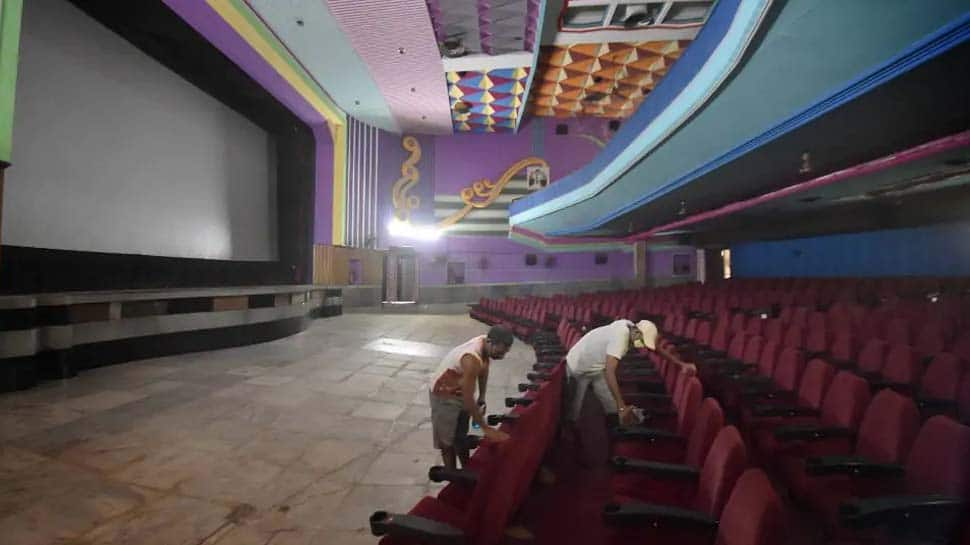
Nearly 5000 tickets on Day 1 sold as cinemas open in the post-Coronavirus world
8:32 AM
Box Office India Trade Network
Cinemas opened up in many parts of the country on Thursday though the
properties opening up was very limited as were the screenings in these
cinemas which opened and it is expected that more will open up today.
The response was muted which was expected but with nearly 5000 tickets
selling across the country, it is not that bad considering how many
cinemas actually opened and what sort of content was being played. It
would not have been a surprise if the number was in hundreds rather than
thousands. The biggest chain in the country PVR sold around 700 tickets
on very limited screenings which could well have been the all India
number considering the situation.
These ticket sales came from mainly English and regional content with Hindi having a minor contribution. This is expected also as its old films being screened and on top many of them are flop films like SECTION 375 and THAPPAD. The HIT titles like GOOD NEWWZ and HOUSEFULL 4 have been screened on television with the latter getting over a record breaking 10 crore impressions in screenings over the last 7-8 months. So there will not be an audience here either especially in these social distancing conditions. The biggest HIT of 2020 TANHAJI: THE UNSUNG WARRIOR also had screenings but this film had also ended its run when theatres shut though its possible it could find an audience in Maharashtra where it turned out to be one of the biggest blockbusters ever. But the state government have not given the green light for cinemas to open in Maharashtra.
These ticket sales came from mainly English and regional content with Hindi having a minor contribution. This is expected also as its old films being screened and on top many of them are flop films like SECTION 375 and THAPPAD. The HIT titles like GOOD NEWWZ and HOUSEFULL 4 have been screened on television with the latter getting over a record breaking 10 crore impressions in screenings over the last 7-8 months. So there will not be an audience here either especially in these social distancing conditions. The biggest HIT of 2020 TANHAJI: THE UNSUNG WARRIOR also had screenings but this film had also ended its run when theatres shut though its possible it could find an audience in Maharashtra where it turned out to be one of the biggest blockbusters ever. But the state government have not given the green light for cinemas to open in Maharashtra.
The numbers will get better as more properties open up but it cant go far without any new content and this is a huge issue. KHAALI PEELI will not make it cinemas this week due to an issue over print costs between the distributors and exhibitors though that is not the type of film which will get audiences into theatres in these times.
Its pretty much certain that distributors and exhibitors are going to have issues agreeing sharing terms with the new content as distributors will want more compared to the pre covid19 terms as business will be limited. So what happens here is an unknown. TENET which releases across the world in August had better than normal terms in most countries. This film will be the hope for some sort of audience in the Hindi markets while certain territories may get some public in with regional films.
More than 25 films registered with words ‘Section’ & ‘Article’ in titles
8:09 AM

Niharika Lal (BOMBAY TIMES; February 8, 2020)
Section’ and ‘Article’ seem to be the new favourite words in film titles as producers are making a beeline at the production association offices to register the titles of their films. Last year, after the central government revoked Article 370 (which granted Jammu and Kashmir special status), the associations received multiple applications for titles with Article 370 as well as Article 35 A, and Dhara 370 in them. An official of Indian Film and TV Producers Council (IFTPC) says, “Those titles which are registered with us are Section 364, Section 376, Section 302, Section 420, Section 484, Section 424, Article 14, Article 370, Article 35A, Dhara 370.”
An official of the Indian Motion Picture Producers’ Association (IMPPA), says, “IMPPA has received around 20 applications for the title of films which include the words ‘Article’, ‘Dhara’, ‘Section’ in them. As the films Article 15 and Section 375 created quite a buzz, many producers are also interested in having these words in the titles. A committee will look into the plot and other aspects of the films and then decide who should be granted the titles.”
A source from the Indian Film & Television Directors’ Association (IFTDA), says, “We’ve registered 15 titles with ‘Section’ and ‘Article’ in them for feature films. We also have several other applications for titles including Citizenship (Amendment) Act in them.” Gautam Chintamani, a film historian says, “It’s not surprising that filmmakers are making a beeline for these titles because filmmakers and audience both find movies with such titles intriguing. Also, titles with ‘Section’ or ‘Article’ are good for social media campaigns – in forming hashtags and get the film trending, making it topical. Article 15 should get the credit of coming up with the title first.”
PEOPLE INITIALLY WONDERED WHAT KIND OF NAME IS ARTICLE 15 FOR A FILM: ANUBHAV SINHA
While film experts now praise the film Article 15 for its title, director Anubhav Sinha says that his judgment was questioned when people from the film industry first heard about the title of his film. Speaking at a session in Delhi, he said, “When I named my film Article 15, people in the industry were wondering, ‘What kind of a name is this for a film?’ But that film did more business than many big budget movies and what’s more important is that the title Article 15 struck an emotional chord with the audience.”
Ajay Bahl, director of the film Section 375, adds, “When Manish Gupta wrote the film, he titled it Section 375 because that was the story (based on Section 375 of Indian Penal Code) , and it made perfect sense. But honestly, I thought that we should use another title instead. But we couldn’t come up with anything better than this for this film, so we kept it. And it worked.”
Pointing out how Bollywood has the habit of following trends, Gautam Chintamani, says, “Knowing the Bombay film industry, it’s likely that producers will tell the writers to just go through the Constitution and see on which Article/Section a film’s title can be based!”
There are several film producers’ associations and to avoid duplication of titles, all these associations cross-check with each other before registering the film titles.
KEY TITLES REGISTERED AND WHAT THEY MEAN
Section 364: Kidnapping or abducting in order to murder
Section 376: Punishment for rape
Section 302: Punishment for murder
Section 420: Cheating and dishonestly inducing delivery of property
Section 484: Counterfeiting a mark used by a public servant
Section 424: Dishonest or fraudulent removal or concealment of property
Article 14: Equality before the law or equal protection of the laws within the territory of India
Article 370: The recently abrogated article acknowledged the special status of the state of Jammu and Kashmir in terms of autonomy and its ability to formulate laws for the state’s permanent residents
Article 35A: The recently abrogated article empowered the Jammu and Kashmir state’s legislature to define “permanent residents” of the state and provide special rights and privileges to those permanent residents

I don't think I would have done a better job than Aamir Khan in Taare Zameen Par-Akshaye Khanna
9:20 AM

Actually sits down for one, and opens up on his professional and personal lives for the first time. Akshaye Khanna unplugged in the latest edition of Sit With Hitlist
Mayank Shekhar (MID-DAY; January 2, 2020)
There are two ways to look at a chat with actor Akshaye Khanna. One, that he is so painfully shy, no matter how hard you try, he's unlikely to dig deep and open up (about his life; or otherwise). That said, for the same reason, anything you pointedly ask is likely to elicit a response you haven't heard before. Because we know so little about him anyway — right down to something as rudimentary as his name, which is what we start this edition of Sit With Hitlist with.
Excerpts from the interview
If you Google 'Akshaye', ending with the letter E, the only person likely to show up is you! Is there a story to your name (is it different from 'Akshay')?
You know, I had asked my father this many times, as to why my name's spelt the way it is. There was a specific reason that he had given me, on two or three occasions. And I can't remember. My mum's gone, and my dad's gone as well, so I don't know who to ask.
Even the mystery around your name persists?
So, it was very logical. It has got nothing to do with astrology, or numerology — so there's no juggling or changing of spellings, or anything later. It is my name on the birth certificate. It does mean something that 'Akshay' does not. And there was a specific reason.
The other mystery: Where do you live?
I've lived at Malabar Hill (in South Bombay) all my life.
You're perhaps the only one in Bollywood who continues to work from South Bombay, which can often be a two-hour commute to where the movie industry is (Bandra northwards)!
No, a lot of people, even from my father's generation, lived in South Bombay — Shashi Kapoor, Shammi Kapoor… Suniel Shetty still lives there. Now with the Sea Link, I can [travel] in 50 minutes. In a couple of years, once the coastal roads come up, there won't be any real distinction between different parts of town. It will be an even easier commute.
Another thing I can't find: Which school did you go to?
I went to Bombay International, which is in Babulnath. Then I went to HR College for a year (for junior college), where I flunked. Then my parents sent me to a boarding school in Ooty, after which I started working. I am not very well educated, and I wasn't very focused on academics.
I'm told you always wanted to be a movie-star ever since you were a teenager. Where did that come from (doing stage in school, perhaps)?
Oh, from much before [my teens], I always knew this is what I wanted to do. But more than that, I never saw myself being able to do anything other than be an actor. I think it was more from seeing my father (Vinod Khanna). I spent a lot of time going to work with him as a kid, which influenced me a lot. I did amateur theatre in school, but I am not a fan. I have huge stage fright. Still do.
Somehow I always felt this [film] was the right fit for me. The first hurdle to cross was telling parents. Once I did that, then it was, kind of, out of my hands! Because dad said he wanted to make a film for me. I have always been naive in life — unable to plan things. Still am. I just go with the flow.
But you were sure of a movie-star career, 'launched' with Himalay Putra (1997), whereas your brother [Rahul Khanna], as anchor, became the face of American MTV in India. Couldn't have been more dissimilar, no?
You'd have to ask him [about that]. But entertainment is a funny industry, in terms of what you can start off with, and end up doing. There're so many who wanted to be directors, ended up being actors; or wanted to be actors, but maybe found love for cinematography, editing or sound design. It is that kind of place. You might know you want to be in this environment. But you don't always know exactly what you want to do [within it].
But you were clear about being the Bollywood star, as it were.
I have been, although it's unusual for me to be clear about anything. And I didn't say I wanted to be a movie star. I wanted to be an actor. But if you are a successful actor, then you're a star!
You're also asking me about what I thought about, a long time ago. It's impossible for me to remember. It's really scary how I can't remember things — events, faces, names, it's very blurry. So anything about the past... If you ask me two years from now what I spoke to you about [here], I wouldn't remember. It's always been that way, ever since I was a child. It's very embarrassing.
Okay, let me ask you stuff from (user-generated trivia on) the Internet, and check if you remember any of it being true. One, that Feroz Khan was supposed to launch you first with the film Prem Aggan, which he eventually did with his son Fardeen. And then, Janasheen, which again, he did with Fardeen. True?
No, he had signed me up for a film called Janasheen, I think. It wasn't Prem Aggan. And at that time Fardeen hadn't told his dad that he wanted to be an actor. He did, maybe about six to seven months after he (Feroze) had already signed me up. So obviously [Feroze] came to my dad and said that he will have to make a film with [his son] instead. So, yeah, that's true.
You were supposed to debut with [top director] Mukul Anand in 1994?
In 1994? I can't remember that. No, it can't be 1994, because I started [Himalay Putra] in 1994; it took about two and half years [to make]. But [Mukul Anand] died shortly after that. What year did Mukul Anand die? (1997).
According to Karan Johar, you wouldn't step out of your Alibaug weekend home, even if invited to pick up the Academy Award. True?
Yeah. I like my weekends in Alibaug.
You apparently have a laundry list of films that didn't roll after you signed up. One that caught our eye is Farhan Akhtar's Voice From the Sky, that he shelved, to make Don 2. True?
True. I've no idea [why]. You'll have to ask Farhan. I remember, it was a really good script. I would do anything with Farhan. He was really excited and keen to make it. He still hasn't.
[Coming to Farhan], you were originally cast in Aamir Khan's role in Dil Chahta Hai (DCH), Aakash, as against Siddharth, that you played eventually; true?
No, out of all three [lead] actors, I was the first person to hear the script [of Dil Chahta Hai]. When I first read it, the role that I wanted to instinctively play was Aamir's. And that's not the role that Farhan wanted me to play. When [Farhan] heard me out, I think he was a little disappointed.
He went and got the cast that he wanted [in place first], and then he came back to me and said, "I know this is what you wanted to do, but this [Sid] is the role I have written for you, and so will you please consider it again?" I heard [the script] again, and again, and again, until I was convinced that what Farhan was saying was right, and I was wrong. So I did that [role].

Aamir Khan returns to your life with Taare Zameen Par. Director Amole Gupte had actually approached you for the lead role?
[Amole Gupte] was a friend of Aamir's and he had approached him to get in touch with me. He asked Aamir if he could help [introduce him to me, and to make me hear a narration], since he didn't know me, and Aamir and I had worked together in Dil Chahta Hai. Aamir being Aamir said, "You know I can't recommend a script, unless I hear it first. If I like it, I will tell Akshaye."
He liked it [Taare Zameen Par] so much that he ended up doing it! I was once shooting at one of the studios — if I remember right, Mehboob. Aamir was also shooting on one of the floors. I went to his van to say hi. He was like, oh you know what —this happened. I said, okay, no problem.
Was that a miss?
I don't think I would have done a better job than Aamir. He was superb. So it was good that destiny took him, instead of me.
The other thing about your career are the big gap years —at least two or three blocks of them in your filmography.
Having worked continuously from a very young age, not working is the hardest part. It's depression time — not something that I seek, or look forward to. But somehow, destiny has played its cards in such a way that I've taken certain forced breaks in my career. They never have been by choice, and never will be in future. This is rare, especially in the Hindi film industry, because there are such few actors, and there is so much work.
How do you overcome that phase? Other passions you pursue, playing squash at Willingdon Club, maybe?
You don't. You just go through that phase. Can't play [squash] for three years, no? I am not going to tell you what my day looks like, when I'm not working. Why would you even want to know?
You mentioned somewhere that you had a personal reason for the last break that you took.
I wasn't getting the material that I liked. I didn't want to do anything that was offered to me. So I decided to not do anything, as opposed to something that I just didn't find my heart in, simple — nothing really complicated.
You lost your mom last year, only a year after you lost your dad. Did that have a huge impact on you, personally?
Of course, it would impact anyone. It was a deeply sad time. But everybody has to lose their parents at some point. It is tough. And it is always good that it happens that way; and not the other way round —where parents lose their kid. That would be even worse.
We know nothing about your mother (Kavita Khanna).
That's how she wanted it.
When your father (Vinod Khanna) passed on, the obituaries in the press revealed an incredibly committed yet uniquely free-spirited man. Are there any stories you can recall?
I think once a person who's been in public life for decades is gone, if there is a side of them that they wanted people to know about, they would have managed [to convey] that in their own life, right? So I don't know if there is any aspect of him that I'd like to throw light on, which maybe he didn't [want].
What's in public domain: a man who left everything at the peak of his career to join Osho. You were probably four or five then. Did you want to know, who's this guy [Osho]?
One doesn't look at it like that at five. Osho had nothing to do with my thoughts about why my dad wasn't there. That came much later. As one grows, maybe 15 or 16, you start learning, listening or reading about the person who…
Influenced your father so much...
To not only leave his family, but to take 'sanyaas' (renunciation). Sanyaas means giving up your life in totality — family is [only] a part of it. It's a life-changing decision, which he felt that he needed to take at the time. As a five-year-old, it was impossible [for me] to understand it. I can understand it now.
You can, in what sense?
In the sense that something must have moved him so deeply inside, that he felt that that kind of decision was worth it for him. Especially, when you have everything in life. And when life doesn't look as though there's much more that you can have.
A very basic fault-line/earthquake has to occur within oneself to make that decision. But also stick by it. One can make the decision and say this doesn't suit me — let's go back. But that didn't happen. And circumstances in America with Osho and the colony, friction with the US government — that was the reason he came back.
Oh, I was given to believe that a lot of people like him got disillusioned with Osho eventually, which led to their return.
From whatever memories I have about my father talking about that time in his life, I don't think that was a reason at all. It was just the fact that the commune was disbanded, destroyed, and everybody had to find their own way. That's when he came back. Otherwise I don't think he would've ever come back.
And you read up on Osho when you became older?
I've read a lot of Osho's discourses and seen hundreds of thousands of videos, I love him.
You could join an Osho commune? They still exist.
I don't know if sanyaas is something that I could do. But that doesn't mean I can't enjoy his discourses, respect his intellect, oratory skills, and his way of thinking. I have deep respect for him.

[Back to movies] and trivia list, your favourite director is Priyadarshan. True?
One of them. I've done five films with him. And if you take Malayalam, Tamil, Hindi, I'd say Priyan would've done 100-plus films, which is a rare achievement for any director. Some directors like to move on. But he's also tended to repeat actors he's enjoyed working with — Akshay Kumar, Paresh [Rawal], there're many. He has done 30 films with Mohanlal. I always know when Priyan likes an actor. He makes it obvious. When I was doing Aakrosh (2010) with him and Ajay [Devgn], I told Ajay, he'll definitely offer you a couple of films in the future. They did a film together right after.
You tend to protectively advise co-actors about directors, it seems. Saif (Ali Khan on Sit With Hitlist) told us about how you advised him about becoming warm and breaking ice with Abbas-Mustan during Race (2008), and that he was behaving too much like a star!
Did I? If he [Saif] says so, maybe I did. Abbas-Mustan are very gentle people. I've done four films with them. When they direct you, and even in their personal life, they are very soft. You have to be very soft with them, otherwise they clam up. You cannot be loud and aggressive. And Saif, sometimes, can be a little, you know how Saif is... I must have told him something to that [effect], I don't know. But I think they got along fine.
(Audience) Loved your film Section 375. What did you think of the timing of the film's release — coming a year after the #MeToo movement? How do you think it changed the narrative around the movement itself?
The timing was never the intention. Neither was it the purpose of making the film. It was just a great story. It [delved on a] topic of the time. Which it always will be, because there are always people from both sexes, who don't know how to behave appropriately. Having said that, Section 375 is a film that I am very proud to have in my filmography.
Sometimes, box-office numbers of a film are not always commensurate with the quality of a product. This film I will continue to be proud of. It will age well. Take Andaz Apna Apna (1994), it flopped, when it released. It is considered one of the comedy classics of Hindi cinema. Another example: Shawshank Redemption, it was a disaster at the box-office, but it tops all lists of greatest films ever. I'm not comparing Section with Shawshank, but it is an example.
Having been an actor for over 20 years — with Section 375, one sensed that you were totally stepping out of the usual tropes and mannerisms that we've of course admired you onscreen for. Would you agree?
On the contrary — to be able to engage an audience purely through dialogue, without other things, itself is not easy. And it's a combination of how you are directed, and how you perform. But the direction side is more important. That's why I felt very satisfied, creatively, with the way Ajay [Bahl] directed Section 375. It's very easy for a director to impose direction on an actor, when it's really not required. And I think Ajay has a very good sense of when to direct an actor, and when to not direct. That's very important. I don't know if I am making any sense.
Yes, you are.
Acting has been primarily one thing — being in the moment. Like, in the last few years, I've been noticing that we always do photo-shoots for a film's poster and publicity material. I just don't like the quality of photo-shoots — no matter how good the photographer or subject is. Since everything is digital now, a great alternative is you remove a frame from a scene of the film. It is always more honest. Eyes are more honest. The actor is acting. That 'being in the moment' doesn't come across in the photo-shoot. You understand what I'm saying?
Would you say that about dubbing as well, as against sync sound?
I wouldn't compare it with dubbing, no. But I know what you're saying. Sync sound is way more honest than dubbing. It has to be, right? It is like real life is more honest than fiction.
Saying this because Dil Chahta Hai also got credited with reviving sync sound in mainstream Hindi films in a way.
Yeah, the realism of sync sound was lost to Hindi cinema for many decades. I think millions of performances that have been dubbed for so many decades would have lost a certain edge [as a result]. I've worked the majority of my career dubbing in my films. Only in the last 10-12 years, we've been spoilt with sync sound. I really feel bad for actors who never had sync sound. Not that they knew the difference, because they never experienced it, but I still feel bad for them.
Do you closely follow latest releases/films?
Yeah. I primarily watch at home. I might wait three months for it to come on one of the platforms, but I will watch it.
Two back-to-back releases in 2019 were Bala, and Ujda Chaman (by the same producers as Section 375). Did you get to watch them?
Haven't watched yet. But will, when it comes (on web platforms).
They were both on premature balding, and how it affects confidence levels. You've had that situation in your life. Is it such a big deal?
Well, because it started happening to me at such a young age, it was like a pianist losing his fingers. It almost felt like that to me, in those days. Till you really come to terms with it, and then it starts bothering you less. It's like, I suppose, waking up one morning and saying, "Oh shit, I can't read!" So it would affect you, right? Or you get up in the morning and your knees are paining, and the pain just won't go away. You take a Combiflam for pain relief, and you might realise you need a knee surgery at a very young age. And you might be a sportsperson, so it is heartbreaking. You might lose a year or two of your career. So, as I said, it is like a pianist losing his fingers. Because the way you look as an actor is very important.
And especially this part (pointing to the face upwards). [Balding] at 19 or 20 is devastating. It can mentally like kill you. But, as I said, it is like anything else — someone needs glasses, someone needs something else... It's up to you, and what you are comfortable with doing [about it].
Did it affect your confidence levels as an actor at some point?
I think it did affect my self-confidence as a young actor — more than I'd like to admit, actually. Definitely.
(Audience) Lot of actors these days interact with their fans through social media. Do you ever intend on doing so?
Can't say for the future, but right now, whatever I hear from my colleagues, especially my friends on social media, I've never got a sense that it is something constructive. It just doesn't serve any purpose. I am not comfortable with it.
(Audience) Do you think you resonate more with the scripts being offered/churned out today than, say, 2001/2002?
People's memories are short. So they kind of think that what I'm doing now, is what I have always wanted to do, but never got those opportunities before. That's never the case. Your current choices in films, at least for me, are very instinctive. They are not well planned, or thought out. And some of those films might not appear to be hardcore commercial cinema.
But when I view myself as an actor, I see myself as a very hardcore commercial actor, given the choices of my films, right from the beginning of my career. I do understand, especially since I have started working more regularly in the last two to three years, that my choices have been a little cerebral — if that's a word you could use for, say, even Mom, Ittefaq, The Accidental [Prime Minister], or Section [375]. But that is just some choices of films. I don't intellectualise it. And neither should you.
Are there films you've seen lately that you wished were offered to you?
When I watch most films I always feel that the person who has done those parts has done them better than I could.
Any script you can remember saying no to, which turned out to be a pretty good film?
Yeah. Saif's role in Parineeta (2005). I didn't do it for some reason. I don't know why. After the film released, I called up [producer Vidhu] Vinod [Chopra] and said I really enjoyed the film, and wish I had done it. You know how Vinod is. He said, "Yeah, I told you, you should have; you're such a b******, d***, and this, and that!" I was, like, fine.
There are times you could be in a bad mood, when you hear a script. There could be so many things that influence your decision. So, yeah, sometimes things slip out of your hands. And sometimes things fall into your lap, which you never expected.
For example, I did an out-and-out negative role in [Abbas-Mustan's] Humraaz (2002), which I believe five or six major leading actors were approached for, and they'd said no to. But when I heard it, I loved it. That was one of the first negative roles I did. So it happens all the time.
Last question: You might be the only person in Indian showbiz to take a stand on an institution, and say that you'll never get married! And that you want to live alone "forever".
I have always known instinctively that I would very much prefer to live my life without someone by my side all the time. I find that suffocating. That's the only reason.
Do you go on dates?
All the time. But to commit to a lifetime of togetherness is virtually impossible for me.
Serially monogamous — is that what it would mean?
No, it means knowing oneself reasonably well enough to not ruin somebody else's life!
Okay, final question: Are you (mentally) exhausted (after this interview)?
No I loved it, really enjoyed it.

I have never felt neglected when I didn’t win an award-Akshaye Khanna
7:59 AM

Rachana Dubey (BOMBAY TIMES; December 29, 2019)
 Akshaye Khanna is considered to be a reclusive actor, but when he speaks, he doesn’t hold back. Ahead of the release of Sab Kushal Mangal, he spoke to Bombay Times about working with new talent, being a secure actor and why he was drawn to a comedy after all these years. Excerpts:
Your portrayal of a lawyer defending a rape accused in Section 375 was appreciated by the audience as well as the critics. When your name was skipped in the nominations at recent award shows, it created a stir on social media. Does winning an award affect the work you choose to do?
No, it’s always the writing. If people liked my work in Section 375, it’s because I was backed by good writing. As for awards, it’s for the jury, and not me, to decide if I really deserved one. The awards in India are based on popular choice, and they make no bones about it. In a lot of other countries, the box office does not count when judging. In fact, it’s the opposite. Once you win a BAFTA, Golden Globe or an Oscar, your box office takes off. It’s a matter of time before that happens in India. To answer your question, I’ve never been disappointed or felt neglected that I didn’t win an award. And how does one possibly know while signing a film that the role can get them an award?
You said that it’s the writing that attracts you, is that the reason you signed Sab Kushal Mangal, too?
Yes, a film’s writing is the first interaction you have with the subject. Your reaction to that matters and then, you go into other details like what’s in it for me, who’s on board and who’s producing it. It was the sheer sweetness of the story that got me in.
Sweetness does not mean sugar-coated. The world of the film is really sweet. The last Hindi film that I could compare it to is Badhaai Ho (2018), which had an awesome topic. People in India have always been attracted towards cinema that can add that dash of sweetness to their lives. Such films are not necessarily escapist, like Sab Kushal Mangal is not. It has a strong, meaningful story.
Sab Kushal Mangal has two newcomers, Riva Kishan and Priyaank Sharma, making their debut. Do you, as a senior actor in the cast, feel a sense of responsibility to land them well into show business?
Yes, I do feel a little responsible, but not entirely. There is a degree of fondness for someone who is starting out with you. However, they have put their trust into the project, not me. They chose this as their first film. So, a lot depends on them, as well. Priyaank and Riva are kids, and they are sweet, innocent and raw, so you feel protective towards them, but not responsible for their debut.
The scenario when you began your career in the 1990s was hugely different from what it is today, wasn’t it?
Right from my first film, I had the privilege of working with some very senior actors like Hema Malini, Danny saab (Danny Dengzongpa) and my dad (Vinod Khanna). In Border (1997), I worked with Sunny Deol, Suniel Shetty, Puneet Issar, Kulbhushan Kharbanda, Rakhee ji. I have even worked with Rajesh Khanna and Sridevi. I don’t think too many people from my generation or the one after me have worked with any or most of these actors. I worked with some incredible artistes, some of who were in the last years of their work life and were working very sparingly. Sridevi worked selectively; it’s rare, and I cherish the work that I did with her. I feel fortunate that so many people, apart from the actors, were so considerate towards me. They were so giving and caring that it is impossible to forget their gestures. Had they not been so, things could have turned out very differently. As a young actor starting out, you’re so vulnerable.
Why do you say that?
When you come into any form of public life, you put yourself out there for love, hate, appreciation and brickbats. It takes guts to allow people to assess you. Sometimes when I speak to aspiring actors, I ask them, ‘When you start in any career with the energy of youth, besides imagining the highs and adventures that you will possibly experience, do you also visualise what will happen if things go the other way?’ I ask this because I know that anything can happen. As a young person, you could almost block it all out and think that everything will turn out fine. When I ask these questions, most kids say that they haven’t thought about the other eventuality, which is interesting.
Sab Kushal Mangal is a comedy and you haven’t worked in one in a fairly long time. How different do you find the current world of a comedy film as compared to your last experience?
I think it’s got nothing to do with a genre, but less time is spent on writing and more time on other things. The audience notices everything. Yes, there will be those comedies that aren’t great, but they are money spinners. However, today, the audience also equally appreciates a film with quality writing. Karan V Kashyap, who wrote and directed this film, is familiar with the industry. He was the dialogue assistant on Dil Chahta Hai (2001) and has worked with Mani Ratnam as well. His sensibility in terms of humour, the world and the characters that he has created are of quality and standard. There is a certain cleanliness in his film.
Your co-actors Richa Chadha (Section 375), Priyaank and Riva, have said that you’re an extremely secure actor, who doesn’t hesitate to say or help another actor cope under pressure on difficult days…
Okay, first and foremost, I would only do that with a co-actor I feel comfortable with. Richa is an experienced actor. If I felt like telling her something that could help her on a tough day, it’s entirely because of who she is, and how I felt about her. A lot of people here are not open to that, they don’t like it, irrespective of whether they are seniors, peers or younger. Had I felt that Richa won’t accept a word from me or won’t be receptive to it, then I wouldn’t have approached her. I wouldn’t have the nerve to go to an actor if I don’t share that level of comfort with them. And I would never hold back on my own performance to make someone else look better, even if they are newcomers. There is not a single time when I felt like going easy to let Riva or Priyaank cope with a certain scene. To their credit, they never requested me to do things differently to help them out. Most newcomers, in their first few films, tend to have the entire unit focussing on what is good for them. These two kids didn’t have anything of that sort. Priyaank and Riva were being equally competitive; that distinction is huge. My respect for them as actors and debutants is even more for this very reason. Not many people would even be remotely bothered to give this any consideration, but it matters to me.
Does any newcomer remind you of a younger version of yourself?
No, and that’s because I was an extremely unprofessional guy. If I look back at my behaviour and attitude in the first five or seven years of my career, I feel it was unacceptable. I don’t see that in any newcomer today. What I did was a disaster. My immaturity and inability didn’t let me grasp my responsibilities; it didn’t strike me for a long time. Thank God, but I don’t see newcomers who are like that today.

I’m one of the luckiest few who enjoys going to work every day-Akshaye Khanna
8:37 AM

Akshaye Khanna talks about the choices that he has made and why he opted for risks over security and commercial viability
Roshmila Bhattacharya (MUMBAI MIRROR; December 21, 2019)
Even before you arrive at producer Nitin Manmohan’s office for the interview, you learn, to your surprise, Akshaye Khanna likes chocolates, but only one particular brand, and would order it even when they were shooting for the upcoming romcom, Sab Kushal Mangal, in Jharkhand. He is also always punctual, even when he has to drive to the ‘burbs all the way from town. Noon strictly means 12 pm. By the time we’re done, you know a lot more about the reclusive actor. Excerpts:
You have had two releases this year with one coming up on January 3. For someone who has always been super selective how does it feel?
It’s been a satisfying year as both The Accidental Prime Minister and Section 375 are films I believed in and I’m proud to be a part of them. That’s a great place to be.
So, we can hope to see you around for another five years?
Five years is just a number, a small one. I hope to be around till I drop dead. There’s a perception over the last few years that I tend to not do too much work, but it’s the opposite. Ayushmann (Khurrana) is doing three-four films a year, that’s the space I want to be in. I’ve always preferred a certain pace, but life has not always allowed it. If it happens, I’m the happiest. Sometimes a film requires 150-200 days of shooting, so you end up doing just one film a year. There are so many permutations and combinations in our business, it’s not like a factory assembly line where you can just churn out stuff.
Yet you seem optimistic about the future of Hindi cinema...
That’s because all kinds of films, be it Housefull 4, Bala and Pati Patni Aur Woh, are getting good releases. Ten years ago, if it wasn’t in the commercial bracket, a film wouldn’t get screens. Today, even Section 375 and Saand Ki Aankh get an audience and a voice. It’s like the social media, anyone can offer an opinion. The numbers may be small or large, but at least they get heard. The Accidental Prime Minister was the first authentic political film and that made it controversial in that it evoked different opinions. Ditto Section 375, as the topic itself was sensitive and so people reacted strongly and emotionally.
Yeah, one review described it as “a myopic ignorant train wreck” and another as a “gripping courtroom drama”.
That people would comment on both sides of the spectrum was to be expected. I might not agree with the one who calls it a “train wreck” but I can’t stop the critic from writing what he wants. I, too, have views about other people’s films. I might say I didn’t like it or that it could have been better...
In retrospect, would you have changed anything in the film?
Sometimes I feel—though it’s not my job or specific to one film that we can market and position our films better. You can never control a narrative, but you can balance it out. But that sometimes gets lost in too much information.
From the trailer of Section 375, one perceived a kind of a #MeToo trial so the twist in the tale was disappointing.
I’ve also got such preconceived notions and reactions. But that would be the obvious expectation and end, which is a choice my director didn’t make. Had it been a typical film, it might have fared better commercially. But the choice was to go in another direction. And that’s what made it interesting for me as an actor. If you believe in a certain premise, you have to live with the consequences. I really respected the thought process and the writing, and if I had to choose again, I’d go for the same. Unfortunately, in our country, while we have always celebrated democracy, freedom of speech and expression, and pluralism, when it comes to art—be it a book, an article or a film—if it offers a different perspective, we are not as accepting.
The upcoming romcom, Sab Kushal Mangal, seems less contentious even though it’s about a reality shows, goon politics and abductions.
It’s the sweetest script I’ve heard in a long time, a film I’d watch before I go to sleep as it leaves you with a nice feeling and no tension. I’d not done a comedy in a long time and my co-stars, Priyaank Sharma and Riva Kishan, are cute kids. Though they’re just starting out, I’m sure once people see the film, they’ll be pleasantly impressed by their performance. They have a certain maturity and focus which I didn’t in my first few films. This applies to all debutants across departments, which is fab and brave.
Brave? How so?
When you come into the public eye and put yourself out there as an actor, director or writer, you could be loved, hated, even ridiculed. So, that takes courage. You read about millennials in large numbers going into depression in their own private space, some even committing suicides over social media posts. Then, you see these kids who, irrespective of success or failure, are ready to give it a try. You can only win the game if you are playing it, not sitting outside. Life is about being on the court.
According to IMDB, you have signed up for two sequels, Phir Hulchul and Kick 2?
The information is incorrect.
Do you watch reality shows?
I rarely watch TV, I prefer movies. I’m getting less and less interested in information because anything you read or hear, unless coming directly from the source, arrives with layers of interpretation and so is never completely accurate. Even an article in the op-ed page of the newspaper, reflects someone’s opinions. Take the Talwar case. Despite years of articles, TV reports, films and a court case that cumulatively ran into thousands of hours, do we know the truth of what really happened the night Aarushi was killed? We don’t, which is why I’d rather read fiction, it’s always dependable.
Why aren’t our digital shows meeting expectations?
Our storytellers are used to the three-hour format. We have a history of television where shows go on for years. That’s why we are still struggling. But it won’t take our writers and directors too much time to get there. We are an extremely talented nation, look at the leap we’ve made technologically. We may not be there with the best of the best, but we can still produce a Baahubali which is a milestone in Indian cinema. It’s a beginning, we will build and improve on it. It’s happening already and the audience is rewarding the effort which is good.
 That wall behind you has posters of several Nitin Manmohan productions, including your dad Vinod Khanna’s Insaaf and your Deewangee.
(Turning to look) Insaaf was one of dad’s fave posters. What an amazing shot! There are so many actors up on this wall, but I don’t know anyone who had his kind of body language... So fluid! It’s nice to be on a wall which has so much talent. You want to hear a great story?
Sure...
Nitin had gone to Mumbai airport to pick up a relative. Two-three decades ago, the entire family would go to pick up or drop off someone. I’ve many pictures of my dad leaving for an overseas shoot, in a suit, with all of us waving. But that day, there was no one to receive dad when he landed in India because hadn’t told anyone in the family that he was coming home from the US. He’d planned on taking a cab, but Nitin recognised him, even with the long white beard when he walked out. Nitin’s dad, Manmohan, and mine used to be very friendly and he insisted on dropping dad home in his car. They must have chatted on the way and that’s how Nitin produced his first film, Insaaf, with my dad making a comeback.
And what’s the story behind Deewangee?
There’s none, it was just a good film and very different from Anees Bazmee’s other movies. After that, he only concentrated on comedies and larger-than-life magnum opuses. He was a delight to work with as he has a good sense of drama. We also did a comedy, No Problem, which didn’t do well.
Looking back, are you happy with your choice of career? At 40, do you wake up eager or are you unhappy about it like so many?
I’m one of the luckiest few who looks forward to going to work every day because our job and days are not filled with monotony. One day, I could be doing a dramatic scene in Ooty, the next, a song in London, and on the third, an action sequence in a city studio. We’re meeting different people. Of course, you never know when the party will pack up, but at least till then, you can do what you love and that’s a gift life gives very few.
You know, I skipped my exams in the first year of junior college on purpose as by then, I was not interested in continuing with academics. I was so underprepared, I knew I’d fail and didn’t go. I had decided this was what I wanted to do. It was a question of when I was going to tell my parents because I was just 17 then. You fear resistance about your career choice from parents, and that delays communication. As a kid you don’t have the power to say “Bugger off!”
How did your parents react?
They were disappointed. Any parent would be hurt. They felt it was not my place to do what I did at that age. Parents of that generation were conservative, taking such risks was frowned upon. Even today, society is chasing security, and for the masses a government job is priority. It’s amazing that millions put their heads down, complete 60 years in service, do their duty with honesty and integrity and retire. It’s an achievement.
You opted for jittery Fridays. How long did it take your parents to accept?
They were fine after a while. Parents always come around.

Producer Viki Rajani signs Manish Gupta to direct two suspense films
7:58 AM

BOMBAY TIMES (November 11, 2019)
After backing films like Munna Michael (2007), Table No. 21 (2013) R…Rajkumar (2013) and Phobia (2016), producer Viki Rajani has signed writer-director Manish Gupta to direct two suspense films based on true events. Manish, who had recently written the story, screenplay and dialogues of Section 375, said, “Viki is a dynamic and visionary producer who has an interesting slate of high content films lined up. Both my films with Viki will create two franchises; one is a murder mystery franchise, while the other is a legal drama franchise.”
Viki added, “I was impressed with Manish’s work in Section 375. I recalled that he had previously written the story, screenplay and dialogues for the Amitabh-Bachchan-starrer Sarkar (2005). When I saw Rahasya that was based on the Aarushi Talwar murder case, which was directed by Manish, I realised that he is has a good hold over the suspense genre. So, I decided to back his vision. I’ve just launched my banner Faith Films P L, through which I’m tying up with various studios and distribution houses. Manish’s films will hit the floors in a couple of months.”
People expect me to do a role like Bholi Punjaban where I have punch lines-Richa Chadha
8:14 AM

Chaya Unnikrishnan (DNA; October 5, 2019)
Richa Chadha’s last release, Section 375, was critically-acclaimed and she won rave reviews for her turn as a lawyer alongside Akshaye Khanna. However, people felt that she did not get much scope to perform as the courtroom drama was dominated by Akshaye. But, Richa is unperturbed. “I think it’s a childish thing to say, as it depends on the story. When I did Gangs Of Wasseypur, nobody said that Manoj Bajpayee’s role was meatier. That’s because people have started expecting me to do a role like Bholi Punjaban (Fukrey) where I have the punch lines. This is kind of a stereotype in the viewers’ minds. I don’t take it seriously. As far as the narrative of the film is concerned, I don’t have a balanced role and that happened after the edit, as there were some things that had to be taken out from my side of the story. And, honestly, he (Akshaye) is a senior actor who has been around for many years. I don’t know what the problem is,” she retorts.
The actress finds it ironic when audiences watch the most ordinary movie where the woman has nothing to do except a song, a couple of scenes, and don’t have a problem with it. “They confuse a real-life persona or a previous role that the actor has done. Every role can’t be the same. In Masaan, a lot of people told me, ‘Aapke toh dialogue nahi the’. I think Masaan and Section 375 have been my most low-key roles,” she shares.
Next, she will be seen in the second season of Inside Edge, in which she essays an actress who owns a cricket team. “Zarina Malik is quite the boss lady and in this season, she will be showing all her shades and true colours. I had fun because playing an actor when you are one, you can add a lot of things to it,” says Richa, who was appreciated for her performance in the first season of the series. She reasons that after seeing her as an actor who does only rural parts, people liked her as a sophisticated ambitious woman. “They like seeing me in a different avatar,” she smiles.
Recently, the trailer of Saand Ki Aankh, in which Taapsee Pannu and Bhumi Pednekar play women in their 60s, sparked off a debate about whether older roles should be played by senior actresses like Neena Gupta and Shabana Azmi. The Badhaai Ho actress even tweeted, “Hamari umar ke role toe kamsekam humse kara lo bhai (sic).”
Incidentally, Richa started off her career playing an older woman in Gangs Of Wasseypur. When asked about her take on it, she said, “Mine was a transition from a younger to older role. And I can’t say anything without watching the film. I don’t understand the market, but filmmakers have a certain compulsion. I empathise with Neena ma’am — what she is saying. At the same time, when she wins an award for Best Actress for Badhaai Ho, when Gajju ji (Gajraj Rao) becomes an overnight star even though he has been in the industry for so long or when Seema Pahwa, whom we have seen in Hum Log, is shooting non-stop and has date issues, I am so happy. All their points are valid,” she says and adds, “I take this opportunity to congratulate Shabana ji who will be doing a web series of Steven Spielberg, Dimple ma’am (Kapadia) who will be seen in Christopher Nolan’s film. They are doing such amazing work at their age, it is seriously cool,” she signs off.

Fenil's Bollywood Talk # 588
9:53 AM

SEPTEMBER TO END ON AN UNPREDICTABLE NOTE!
This Friday will see the release of no significant Hindi film as the much hyped War releases on Wednesday October 2. The three weeks of September have all been quite unexpected, in positive and negative ways.
The first Friday, September 6, saw the release of Chhichhore. The buzz was very limited and yet, it opened at a decent Rs. 7 crore. Saturday and Sunday saw huge jumps. But then came the weekdays and the film had the most extraordinary hold in a long time. Usually, Monday collections of a film are 50% or less than that of Friday. But in case of Chhichhore, the film collected more than on Friday on Monday, Tuesday and Thursday. Of course, the Muharram and Ganesh holidays played a major part. But one can’t deny that the content struck a tremendous chord with the viewers. The collections of the film till Sunday were Rs. 120.28 crore and the film is expected to have a lifetime earnings of Rs. 128-130 crore approx. Chhichhore stars Sushant Singh Rajput whose last film Sonchiriya shockingly had collected just Rs. 5.58 crore. As a result, Chhichhore’s super hit success was all the more a surprise.
The next week saw the release of Dream Girl, another super-hit film of the month. It’s success was in a way expected as the trailers and songs seemed highly entertaining. This was reflected in its opening of Rs. 9 crore. However, the film went beyond expectations and was an ideal laugh-a-minute riot after ages. On Tuesday, it crossed the Rs. 100 crore mark and it’ll have a lifetime of around Rs. 120-125 crore. Its collections hence will be less than that of Chhichhore. If it had an empty fourth week like Chhichhore, Dream Girl would have gone beyond the Sushant Singh Rajput starrer.
And then came September 3rd week. 3 films released on September 20 – Pal Pal Dil Ke Paas, Prassthanam and The Zoya Factor. All three had dismal opening as the excitement was just not there. Pal Pal Dil Ke Paas, Prassthanam’s poor performances were expected. However, trade and industry have been left shocked by how The Zoya Factor performed. Starring Sonam Kapoor and Dulquer Salmaan, it seemed like the first choice of moviegoers, at least in major multiplexes. But it had the worst opening, at Rs. 70 lakhs. Saturday and Sunday were flat at Rs. 80 lakhs each. The hope was that it’ll remain in the Rs. 60-70 lakhs on Monday at least. But Monday was horrible as it earned just Rs. 15 lakhs! The film won’t even cross the Rs. 3 crore mark! A bonafide A-grade film have not seen such disastrous collections ever as far as I can recall. Even outright rejected films with some sort of star presence and decent promotions like Helicopter Eela (Rs. 4.29 crore), Why Cheat India (Rs. 8.58 crore), Game Over (Rs. 4.69 crore approx) did better than The Zoya Factor.
So what went wrong when it comes to The Zoya Factor? Watching the film made me realize that the film’s major chunk is a sports drama, with the Indian Cricket Team trying to win the World Cup. But the marketing of the film focused more on Sonam Kapoor followed by her romance with Dulquer Salmaan. These promos however were strictly average. Sonam is no Alia Bhatt or Deepika Padukone who could pull of a film despite not-so-great trailers. Songs didn’t work much either. Sonam’s 5-year-old film Khoobsurat opened at Rs. 2.34 crore and it had far better promos and songs and perhaps, the makers tried to adopt the same kind of marketing tactics for this film too. Had The Zoya Factor capitalized more on the cricket bit, then perhaps the opening would have been at least more than Rs. 1 crore. The film would have still flopped but that would had happened with some respectable collections.
The other significant movie of the month was Section 375, which released on September 13, alongside Dream Girl. The film got noticed a bit thanks to its excellent word of mouth. The lifetime collections are expected to be around Rs. 12-13 crore, which is not much but for a film that has no songs and niche appeal, it’s a decent result.
I learnt that there are different rate card for girls-Meera Chopra
8:29 AM

Section 375 actor Meera Chopra chronicles what she learnt during her prep for cop act in upcoming web show, Kamathipura
Sonil Dedhia (MID-DAY; September 26, 2019)
Having earned accolades for her act as a rape victim in Section 375, Meera Chopra has trained her focus on her next, Kamathipura, a series that dabbles in the flesh trade. Essaying the part of a cop in the web show, Priyanka Chopra Jonas's cousin says she had to frequent the red-light area to acquaint herself with it.
"As a cop posted in that place, I had to familiarise myself with the area. My team took me to Kamathipura for three days, and we travelled across places like gully no 12 and 13, where access for the common folk is restricted," says the actor, who investigates a spate of murders in the area for the Amazon Prime series, helmed by Shravan Kumar.
While it was meant to be an educative affair for her act, the prep, Chopra admits, often posed facts that rendered her unnerved. "At times, I'd see [troubled] girls willing to be bitten by snakes in a bid to get intoxicated. I learnt that there are different rate-card for girls. Those standing on the ground floor are 'cheaper' than those on the floors above. For me, it was shocking. I never even imagined that a place like this existed in Mumbai."
The success of Section 375, she says, has been a validation of sorts for her. "I've been waiting for this acceptance for a long time. Often, I would be tempted to do projects against my will, merely for the sake of visibility. But, I always decided to wait for the right offer."
With Section 375, the idea is to make room for a counter narrative in the dialogue-Richa Chadha
8:01 AM

Swearing her support to #MeToo India, Richa Chadha on why Section 375 doesn't hinder the movement
Mohar Basu (MID-DAY; September 19, 2019)
 Of late, the world of cinema has seen a raging debate: Should a film be viewed only in its immediate context, or within the larger construct of society? Richa Chadha's latest release, Section 375, is the latest to be drawn into this debate. The courtroom drama released at a time when the #MeToo India movement could have done with unflinching support. Even as a section of the audience lauded director Ajay Bahl for his balanced view, many feminist groups questioned the stance of the film, which depicts how women often abuse the very law that was made to protect them.
"What if the motive of the film is to evoke fear in men who are in a position of power and coerce young women to have sex with them? The point was to educate people about the law, which is complex because it takes a position of power into account in the victim-aggressor dynamic. I have been a big supporter of the #MeToo movement and my empathy lies with the survivors. The intention was to never run down what they are feeling," clarifies Chadha, adding that she will continue to champion the movement.
Knowing the sensitive nature of the story, the actor signed the film only when fully convinced of its message. "When the script came to me three years ago, the movement hadn't hit India then. So, at the time, the film was set in a different context altogether, strictly taking on the law. The script evolved a lot after Ajay came on board. It was a moral dilemma for me, so much so that at one point, I almost said no to it. But I had faith in Ajay's intention."
Question her if she feels that the movie, unintentionally, serves as a setback to the movement, and she reasons, "The idea is to make room for a counter-narrative in the dialogue. Feminism is about creating an equilibrium in society, and that balance can never be achieved in the absence of an alternative opinion. Meera [who plays the complainant] is unapologetic for a reason, and the film sides completely with the law."
Rumours suggest that Chadha, who has Panga lined up for release, has been signed on for director Subhash Kapoor's next Madam Ji. "If we are talking about the rehabilitation of alleged rapists, we recently had Alok Nath in a mainstream movie. I was shocked to see that after three women corroborated accounts of his predatory nature. As far as a collaboration with Subhash is concerned, I will put out my statement soon."
Not working is an uncomfortable experience for me-Akshaye Khanna
8:34 AM

Akshaye Khanna on changing his work strategy, doing more than one film a year and his latest outing Section 375
Sonil Dedhia (MID-DAY; September 15, 2019)
Akshaye Khanna is a man of few words. The actor, who stole hearts with Taal (1999), Dil Chahta Hai (2001) and, more recently, Mom (2017) and Ittefaq (2017), accepts that the nature of filmmaking is changing because the "audience is evolving". Khanna sits down with mid-day to discuss his latest release Section 375, how it's a conversation starter and why the film is open-ended.
Excerpts of the edited interview.
What prompted you to take up Section 375?
I was particularly thrilled with the script because it was well written and an intelligent film, where everything was sketched out thoroughly. As opposed to films which tackle similar topics. Section 375 doesn't take sides or a moral stand. It allows the audience to decide. It takes you through a case and shows the different perspectives of the society, judges and the lawyers. I believe, if a film doesn't take a stand, the audience is bound to make an opinion. I don't know to what extent the film will be watched, but it would be a good thing if it encourages a conversation.
Do you feel that the film can bring about a change in the society?
Having a difference of opinion means controversy and it's not necessarily a bad thing. Controversies have been termed as a bad connotation but in this particular instance, if you would like to label it controversial, which it is, then let's look at it positively and start a conversation about it. It will have an influence on people from the legal fraternity or people in the parliament —basically people who matter. What happened in the Nirbhaya case? The law was forced to change because public opinion was strong and immovable. Section 375 encourages the conversation by citing one particular case.
NGOs and activists have been raising awareness about fair treatment to the victim and accused. They are of the opinion that law is tilted towards women.
As an individual, I am aware that a section of people feel this law is skewed in the favour of women. I am sure people debate over the laws of rape worldwide. These debates will go on as the society evolves. As a collective consciousness, we have to decide the direction in which we need to change.
Did you personally research about rape laws in the country?
It was not required thanks to writer [Manish Gupta] and director's [Ajay Bahl] extensive research.
How did you prep for the role without any homework?
It's difficult to put it in words as it's an internal process for me. As an actor, I am always absorbing things and noticing behaviour. So, I am constantly, but not consciously doing it. For me acting is being in the moment. If I am true to it, then I have done my job.
Since your first film in Bollywood, how do you think content in films has changed?
The audience drives the change in filmmaking. The changes are never internally driven by the film industry. Films are almost like politics. Politicians follow in the direction of the majority. Take the example of Kabir Singh. It has smashed the perception of how a typical Hindi film hero should be. The character was seriously flawed but the film was widely accepted by people; and now you will see many such characters coming in. Even Uri: The Surgical Strike was an amazing subject. Films are breaking stereotypes because the audience is ready to accept them.
Does the success of these films affect your film choices?
Yes, it does influence the decision making. It plays in your mind and registers as important indicators while choosing roles as an actor.
Is it a conscious decision to be less frequent on screen?
It's something I personally want to change. I want to reduce the gaps between films and be prolific in the amount of work I do. I am also open to OTT platforms because it is the future. People are watching more content on the web than the silver screen.
Does it have to do with the fact that you are not as socially active as your contemporaries?
I don't think so. If only everything was in my control, including the scripts. [Going forward] I'd like to do two to three films a year. Contrary to the popular belief, I am not a person who does not like to work. My entire adult life has been about work, so not working is an uncomfortable experience for me. People assume that I enjoy relaxing but that's not true.
Why did you decide to hire a PR manager to promote your work, something you've never opted for in your entire career?
There are certain things I am good at and I am not at the rest. The most obvious one is having a public relations manager. I resisted it for a long time but it is pointless and stupid not to have one now. Instead of doing it myself [interacting with the media], for which I lack skills, it's better to hire a professional. I feel it's a step in the right direction.
Fenil's Bollywood Talk # 586
9:44 AM

WILL DREAM GIRL TURN OUT TO BE AYUSHMANN KHURRANA’S 5TH CONSECUTIVE HIT?
Over the years, Ayushmann Khurrana has become a brand on its own. He had a bit of a rough time till 2017. But in the same year, he gave two films – Bareilly Ki Barfi and Shubh Mangal Saavdhan – that brought him back in the race. Last year was even better as Andhadhun and Badhaai Ho both became extremely successful. Both films earned numbers and were box office successes, with Ayushmann even getting a National Award for Andhadhun. Earlier this year, he came up with Article 15, a film that was too serious and yet generated excitement chiefly due to his presence. It was a well-made film too and both factors helped Article 15 earn Rs. 65.17 crores at the box office.
And now Ayushmann Khurrana will be seen in Dream Girl, which is all set to release tomorrow. The excitement for the film is tremendous due to its trailer and content. The actor plays the role of a person who fools gullible men (and even a woman) by talking in a female voice. Madness ensues as all these people fall for ‘Pooja’, the pseudonym adopted by Ayushmann’s character. The other actors in the film are Nushrat Bharucha, Annu Kapoor, Manjot Singh, Vijay Raaz and Abhishek Banerjee. Songs have also worked very well, especially Radhe Radhe and Dil Ka Telephone. A promotional track, Dhagala Lagali, was also released featuring Ayushmann Khurrana, Nushrat Bharucha and Riteish Deshmukh. It looks out of place since it’s a recreation of a Marathi song while the film is based in Mathura.
Nevertheless, the excitement is intact. Dream Girl is expected to take an opening of around Rs. 9-10 crore. If word of mouth is positive, a weekend of Rs. 38-40 crore can’t be ruled out. Even if response is not so great, the buzz is high enough and would still do decent business.
Dream Girl is not the only release. There’s also Section 375, featuring Akshaye Khanna, Richa Chadha, Rahul Bhat and Meera Chopra. It was to be earlier directed by Manish Gupta, who helmed The Stoneman Murders and Rahasya. But he had issues with producer Kumar Mangat Pathak which led to his ouster. BA Pass director Ajay Bahl then stepped in. The trailer of the film is powerful. With #MeToo still being fresh in people’s minds, it seems like a very relevant film. The excitement for the film is hardly there. And it’s a song-less film. Hence, the makers didn’t have the advantage of promoting the film through music. The opening will be less, around Rs. 1-1.25 crore. But the subject is such that if word of mouth is there, day 2 collections can be double of day 1.
The final release of the week is Pehlwaan. It is the dubbed version of the Kannada flick Pailwaan, starring Sudeep and Suniel Shetty. The Kannada version will take a smashing opening. But the Hindi version will open very poorly. There’s no awareness, forget excitement. It can open to around Rs. 30-40 lakhs.
WHICH FILM WOULD YOU LIKE TO SEE AND WHY? DO LET ME KNOW!
I have my own opinion on the subject discussed in Section 375, but I’ve not let it trickle into my work-Ajay Bahl
8:01 AM

Rachana Dubey (BOMBAY TIMES; September 12, 2019)
As a filmmaker who has spent five years between his first and second film, Ajay Bahl comes across as someone who doesn’t let ups and downs affect him. After making the acclaimed BA Pass in 2013, it took him a few years to reach a studio floor again. As a proud feminist, the directorwriter admits that he didn’t let his views on a sensitive subject like rape clutter his thoughts while filming Section 375. In a conversation with BT, Ajay spoke about hassles faced by women while battling rape cases and why a man, even when not found guilty, can seldom roam freely in society. Excerpts:
You had to wait five years after making a film like BA Pass to find your next assignment as a director. Didn’t the long interval get to you? It didn’t! What are friends for?
There was not one dull day; they would all come to my house and we would party. Aise karte karte, paanch saal beet gaye. After BA Pass, I had signed a film called Citylights, which didn’t work out. I have learnt one thing: never say no to a film and never leave a project midway. In the last five years, I wrote scripts that no one wanted to produce. I also spent time educating myself in different things. I came aboard Section 375 a year ago, with a friend’s recommendation. He’s a co-producer on this and he introduced me into the set-up. If that friend hadn’t helped, I doubt anyone would have thought of me to helm this film.
A film like this has the potential to be accused of taking sides, are you prepared for such feedback?
Look, the film doesn’t generalize anything and it’s silly to do that. It revolves around the proceedings in a single case. With this film, we’re definitely not trying to say that men are not guilty. There are thousands of guilty men all over the place. The issue at hand in the film is a complex one, and both sides think that they are right. The film doesn’t, however, take sides. We’ve left a lot for the audience to decide. As a man, I have my own opinion on the subject discussed in the film, but I’ve not let it trickle into my work. I am a feminist; but it’s a different story that feminism is itself a misconstrued idea today. Not everyone understands what it entails.
Was it very difficult for you to disallow your own views from interfering with the narrative?
Yes, it was. When you make a film like Section 375, you can’t let your feelings dominate the narrative, ever. If you let that happen, it becomes propaganda. I’m like many other people in society, whose views on the subject change with the passage of time, and with more and different kinds of instances being reported. Complex issues like the cases in the #MetToo movement can be seen in two different ways — emotionally where you immediately want to take the accused to task, and objectively where the law and facts become the lens.
Days after the trailer of your film released, a court in Pune summoned your team (including actors) and you for allegedly showing lawyers in a negative light...
The person who raised an objection didn’t realise that when Meera Chopra’s character is being questioned, she is with a medical examiner and a policewoman in the hospital, and not with a lawyer in court or at a police station. In the film, we have also explained why she was being examined by a male and not a female practitioner. The questions she’s asked are a part of the medical assault history, which needs to be corroborated with physical examination. The gaps between the two can benefit an accused. It’s a harrowing procedure, but for the want of justice, one has to bear with it. As for showing lawyers in poor light, I think we always show cops taking bribes and politicians being corrupt; if everyone starts objecting to their portrayal in cinema, we won’t be able to make films. There are all kinds of people in every field. So, that claim doesn’t hold value. It’s not fully shown, but even the proceedings in the film are shown happening with a two-judge bench in camera, behind closed doors. Only people in the room are the ones who have a direct connection with the case. We had a high court lawyer present on the set to ensure that we do not show any proceedings incorrectly.
(Crisp) Movie Review: SECTION 375 by FENIL SETA
8:50 PM

Section 375 is a hard-hitting courtroom drama and comes at a right time when the awareness of such cases and crimes is quite high. The on-going #MeToo movement further makes it even more relevant. The story is great and BA Pass director Ajay Bahl’s execution is topnotch. Viewers are in for a surprise as what seems like an open-and-shut case turns out to be a lot murkier. Unlike other courtroom films of Bollywood, the goings-on are not too filmy or dramatic as such. The realism is maintained and yet the impact is made. On the flipside, some of the developments in the second half are not very convincing. One expects more shocking stuff to come out in the second half but that doesn’t happen as such. The finale however is smartly done. Talking of performances, Akshaye Khanna is simply terrific and owns the film in a way. Richa Chadha too puts her best foot forward and is apt for the part. Rahul Bhat slips into his character easily and he surely deserves to be seen more. Meera Chopra talks a lot through her silences and surprises in the second half. Krutika Desai and Kishore Kadam (judges) are great, especially the latter who also adds to the laughter quotient. Shrikant Yadav (investigating cop) and Dibyendu Bhattacharya (medical examination officer) give memorable performances. Shriswara and Sandhya Mridul are fine in special appearances. All in all, Section 375 is a film that doesn’t carry a lot of buzz or even awareness but deserves to be watched. Here’s hoping this film manages to find acceptance among audiences!
My rating - *** ½ out of 5!
I have never had an issue with any character or its moralities, in any of my films-Akshaye Khanna
8:12 AM

Rachana Dubey (BOMBAY TIMES; September 11, 2019)
 With every film, Akshaye Khanna reminds us that there’s no role that he’s not at ease with. As someone who had pulled off a vanishing act between 2012 and 2016, the actor has three films releasing this year. Yes, he’s deeply committed to his acting career, even though one won’t say that he’s fiercely competitive or ambitious. He has his way of doing things, at his pace, and he’s glad that the audience doesn’t feel that they have seen enough of him. The actor spoke to BT about his upcoming film, Section 375, and why he doesn’t feel the need to socialise to a degree that makes him uncomfortable. Excerpts:
As someone who is so selective about his work, it’s quite a surprise that you have three releases this year...
This wasn’t planned (smiles). As an actor, one is constantly reading scripts and interacting with creative teams. Sometimes, things work and sometimes, they don’t. It’s never in an actor’s hands. I mean, I can’t predict what I might like in the near future and just how much work I might end up doing in a year or so. The thing is, I don’t go looking for anything. I’ve never consciously chased a particular kind of a film or role. I choose from what is offered. I am not a writer, so I don’t write my stuff. I usually don’t even suggest anyone to write something for me. Of course, I am trying to change that now.
In today’s day and age, it’s as important to be seen and heard as it is to act well. But you keep an arm’s distance from attending parties, events and even being on social media... Do you feel the need to change this, too?
I don’t enjoy being on social media or at events. Honestly, if my last film or any of my last 10 films had done Rs 200 crores, one would probably not ask me this. You wouldn’t see it as a gap that needs to be plugged. In my case, not just today, but for many years, it has been seen as a gap that needs to be filled. I don’t think I am doing any injustice to my fans by not being accessible socially. While there is nothing right or wrong, to me, being an actor or a singer doesn’t mean that I have to be everywhere. What makes it so compelling that one has to be social to the extent of feeling uncomfortable to continue being an actor? I don’t see the correlation at all. And honestly, I am sick of seeing some of the actors — as they are coming out of my nose and ears. Every day and night, they are everywhere, displaying themselves to the world. I admire the stamina, and I respect it. It’s so much display for public consumption, but I can’t do it and I salute people who can. It takes talent to keep yourself on display continuously. I understand where your question comes from, but I can’t wrap my head around it. If at all there are notional or actual disadvantages of being the way I am, I’ll happily go with them.
In recent years, your brother Rahul and you have lost your parents, has that changed your relationship in any way?
My relationship with my brother was independent of my parents. In that sense, it hasn’t changed. But the immediate family for an individual is parents and siblings, and once that starts getting smaller, you hold to what is left even more.
In 22 years, you have just 44 films to your credit, of which five have not released, which makes it less than two releases a year. Some of your peers have thrice the number of releases to their credit. Why have you been so excessively selective?
Nothing wrong with it, no? It irritates me when actors blame things on other people or circumstances. Be brave enough to take the onus for what you do and learn to take the bad with the good. This, what you see, is my doing, entirely. If someone feels that I have not done enough, I would take that positively because it essentially means that people have not seen enough of me. Which also means they’re not shouting, ‘Enough of this guy!’ The work that has come my way has given me a lot of space to display my skills as an actor.
Section 375 revolves around a rape case being heard in court. You are playing a lawyer who defends an individual, who, the society strongly feels, doesn’t deserve the defence. That is not an easy role to step into, and the premise of the film itself can lend itself to controversies?
I wouldn’t call this film controversial. The debate on whether the law is skewed in favour of a particular sex, could be the controversial part of the narrative at hand. If a section of society, big or small, feels a certain way, then it’s an interesting topic for a film, and it has the potential to strike a conversation. I looked at this film as something that could spark a conversation or debate and something that can lead to a positive outcome, not as something that can be seen as biased, unfair and titillation. It’s not that sort of a film. It doesn’t take sides. The writer and director, right till the end of the film, have not taken sides. The film depicts certain facts and circumstances and leaves you to make up your mind. Being able to stay on the fence is the USP of the film’s writing. I also liked the characterisation, dialogues and how the film not only shows what is happening in the particular case, but it gives a glimpse of what we call behind-the-scenes life in the legal system.
Did you ever feel conflicted about playing criminal lawyer Tarun Saluja in this film? Have you ever been at conflict with any role that you have played in the past?
No, I have never had an issue with any character or its moralities, in any of my films. It’s possible that an actor could feel uncomfortable with the morality of his character. Having said that, what is morally correct is so fluid, it changes with time. I mean look at Kabir Singh. It’s a flawed character. Traditionally, a lead character would not be expected to show such behaviour, but people accepted the film. Maybe my character is not going that far, but people can have an issue with his morality. People have issues with some of the biggest lawyers representing criminals in our country. Some of the biggest lawyers in the world have represented people who were alleged criminals. Sometimes, people in society decide someone is a criminal even if it is yet to be proven. That’s not how the law works. Even Ajmal Kasab got a fair trial, although one would have felt he didn’t deserve it. That is how civil society works.
While the law does not allow one to name a rape victim or a complainant, but nothing stops anyone from naming an accused. The trailer of Section 375 makes a statement about how an accused, whether found guilty or not, leads a tainted life. Many activists have been speaking out and raising awareness about the need to be fair to both the parties involved (until one is proven guilty). Your thoughts...
The laws pertaining to rape were amended after the Nirbhaya Case. The burden of proof in any other criminal case is on the person who is prosecuting, but not in a rape case. A man has to prove that he didn’t do it. Now, there are many people who feel against this. It’s an ongoing debate in legal circles. These are debates that will go on as the society evolves, and as a collective consciousness, we have to decide the direction in which we need the change. Right and wrong are difficult things to assess as one size doesn’t fit all. I think this is a tough phase for those in the legal system today. In a civil society, even if a man is not proven guilty, he faces public trial and his family suffers, too.
Section 375 was dragged to court in Pune over allegedly misrepresenting lawyers and court proceedings.
I’d rather let the lawyers on both sides discuss this. But I very strongly feel that if this person is so offended with the trailer and its content, he must go to court but if his claims are even slightly frivolous, he must not waste its time. There are thousands of cases awaiting trials; the courts are backlogged. Why should someone waste the court’s time on a film’s trailer? Whether one feels I’ve done a great job or not, is it fair to waste the court’s time? That’s the bigger question here.

The law around rape is being misused by men and women alike-Manish Gupta
7:59 AM

Manish Gupta on the courtroom drama he has scripted, which examines a case related to Section 375 of the IPC
Hiren Kotwani (MUMBAI MIRROR; September 11, 2019)
 Almost a year after the #MeToo movement arrived in Bollywood, filmmaker Manish Gupta is gearing up for his next, Section 375, which revolves around a rape case and features Akshaye Khanna and Richa Chadha as lawyers.
While many had speculated that the courtroom-drama is inspired by the Shiney Ahuja case, Akshaye Khanna, in an interview to Mirror (August 27), had said, “You’ll have to ask the writer. It could be one of the many cases that triggered someone to write a story, I wouldn’t know.” Pose the question to Manish, who has penned the script of this Ajay Bahl directorial, and he clarifies, “Like my previous films, Sarkar (as a writer) and Rahasya (which I also directed), Section 375 is based on my observation of what’s happening around us where the law around a heinous crime like rape is being misused by men and women alike.”
Coincidentally, he was to make a film with Shiney in 2009 and used to visit his wife, Anupam (who was also managing her actor-husband’s work) and him at their Oshiwara home. “One evening, I heard that Shiney had been arrested for rape. I rushed to the Oshiwara police station where the DCP said, ‘We’ve established intercourse, but we are not sure if it’s consensual or forced,’” Manish recalls, adding, “While Anupam explained to me that the DNA report is prone to error, when I read the charge-sheet, the girl’s traumatic statement sent a chill down my spine.”
Manish wrote the script after three years of research during which he attended over 160 court hearings, interviewed criminal lawyers, rape survivors and even the accused. “At the Sessions Court in Kala Ghoda, three courtrooms are dedicated to rape cases. I noticed that many cases had been filed by women against their ex-boyfriends, former live-in partners or even ex-fiancés after acrimonious break-ups. In some cases, they were not genuine accusations and the judges seemed to know this but they were bound by law to prosecute the men,” he shares, admitting that the real rape survivors are the worst affected by this. “The truth of their statements come under doubt due to the overwhelming number of fake cases,” he points out.
When asked if his film takes a stand, Manish states, “As filmmakers, our job is not to pass judgement on anyone but only to educate and entertain while holding a mirror to our society.”
Women in the film industry or the audience will not accept a frivolous rape scene in a movie anymore-Ajay Bahl
8:08 AM

Rachana Dubey (BOMBAY TIMES; September 10, 2019)
In the last decade, the depiction of rape in cinema has gone through a sea change. From being used loosely in a film, as a tool of revenge or a trope to titillate, such scenes now occupy a more sensitive space in a film’s narrative and are central to the plot. For instance, director Ajay Bahl’s courtroom drama, Section 375, revolves around the hearings in a rape case involving a Bollywood director, who is accused by a female member from his crew of raping her at his residence. Akshaye Khanna plays advocate Tarun Saluja, who represents the accused, while Richa Chadha will be seen as prosecutor Hiral Gandhi, representing the victim. Besides Akshaye and Richa, the film also features Meera Chopra and Rahul Bhat.

‘DEPICTION OF RAPE IN FILMS IS NO LONGER FRIVOLOUS’
 Talking about the depiction of rape in Hindi cinema, Ajay Bahl says, “Indian cinema has become far more sensitive when it comes to crimes, particularly in the depiction of rape and their placement in the narrative. It’s not frivolous anymore and it’s not just another plot point. I think the change in perspective happened towards the end of the 1990s. I can’t put a finger on what triggered it, but today, if there’s a rape scene in a film, it has to be important to the narrative. I would credit the change to the new generation of filmmakers, who think everything through before incorporating something in their stories. The audience, too, has evolved as they are widely exposed to all kinds of content. They are quick to perceive the intent if you’re doing something to titillate them. Cinema has changed from its formulaic ways to clearer and cleverer narratives. It’s sad, but at one point, rape was the ultimate revenge device in a story. But not anymore, thanks to education and awareness. Besides, the presence of women in powerful positions in the industry — as writers, technicians, editors and marketing heads — doesn’t leave room for anyone to act insensitively towards issues like rape. No woman in the system or in the audience will accept a frivolous rape scene in a film anymore.”
 ‘IN THE COURT OF LAW, IT’S ABOUT WHAT YOU CAN PROVE’
The film also explores the mindspace and the thought process of criminal lawyers. Elaborating on the latter, Ajay says, “This film presented an opportunity to explore the legal system and the world that these lawyers operate in. I got a chance to understand how a prosecutor thinks and how a defence counsel prepares arguments. Before this, my understanding of a criminal lawyer was similar to that of a layman. Even I wondered how could they sleep peacefully after defending someone, who seems to be a criminal. I’ve realised that they have a role to play in keeping the checks and balances, because everyone deserves a trial. Lawyers on both sides are clinical in their approach and they both argue to win. In the court of law, it’s about what you can prove.”

‘AKSHAYE KHANNA IS A MYSTERY TO ME’
Talking about Richa and Akshaye, who play strong characters in the film, Ajay says, “I don’t think anyone can do what they have. This film needed them.” He adds, “I knew just how much Richa was labouring to get into her character. She chose to hang out in courts and draw inspiration from Marcia Clark (lead prosecutor in the OJ Simpson murder case) to nail her role, but Akshaye is still a mystery to me. We met a few times and discussed the part and the film. And on the first day of the shoot, he was totally in character. I suspect that he kept meeting lawyers secretly. It is really strange, but even when he would take pauses between his lines, he would breathe like a lawyer in the thick of an argument. That’s why Section 375 could not be made with another set of actors.”
SCIPL presents Section 375, a Panorama Studios Production. The film is produced by Kumar Mangat Pathak, Abhishek Pathak and SCIPL, and co-produced by Sanjeev Joshi and Aditya Chowksey. The Anand Pandit Motion Pictures, PVR Pictures and Panorama Studios International release, hits the screens on September 13.

Subscribe to:
Posts (Atom)