Showing posts with label Sayani Gupta. Show all posts
Showing posts with label Sayani Gupta. Show all posts
In FTII, I was very close to shifting from acting to direction-Sayani Gupta
8:28 AM

Priyanka Sharma (MID-DAY; April 6, 2026)
“Finally!” That has largely been the reaction of her co-stars and batchmates at Film & Television Institute of India (FTII) when Sayani Gupta told them about her directorial debut. The actor has turned writer, director, and producer with the upcoming short film, Aasmani.
Gupta always knew that her work in the movies would go beyond acting. “I had taken specialization in acting, but I was always interested in understanding how films were made. While studying [at FTII], I was doing well in other departments. In fact, I was very close to shifting from acting to direction. A lot of my directors and co-stars have asked me about when I would make a film because I’ve always been a filmmaker and not just an actor on a set,” she told mid-day.
After the pandemic, Gupta took some time off from her acting projects and wrote Aasmani. “I never thought I’d make a short film. I always thought I’d make a feature,” she smiled.
The short film is the first-time director’s homage to the strong women who raised her. She found another inspiring woman in Revathy, her leading lady. “I lucked out with her. She has worked with a lot of first-time directors, all of them women, and being a director herself, her understanding is top notch. Yet, she was like a student.”
Professionalism begins with respecting everyone’s time-Sayani Gupta
10:39 AM

Neha Maheshwri (MUMBAI MIRROR; December 13, 2025)
In an industry known for long hours and rigid hierarchies, Sayani Gupta believes real progress will come only when time and labour are valued equally across film sets. “Everybody works hard. Yes, acting is a taxing job if you’re doing it right, but the person carrying huge lights and travelling long distances by train is working far harder than the actors do,” she says.
For her, professionalism begins with respect. “Professionalism begins with respecting everyone’s time. If you have a meeting with a CEO or a big director, you make sure you are not late because of their social standing. But when the meeting is with someone considered lower in the hierarchy, people feel they can afford to be late. Punctuality should come from valuing every person equally, not from where they stand socially.”
She admits filmmaking is unpredictable, but believes basic systems can still be improved. “In my 14 years in the industry, I have been on only three or four sets where people are not racing to finish the day… Most of the time, you are working against the odds… sticking to the schedule is almost impossible.”
Even essentials, she says, are inconsistently managed. “There has to be some system in place, whether it is paying overtime or ensuring that fundamentals are taken care of. Even basics like access to clean bathrooms for women, hygiene, courtesy, fair segregation within departments, and food arrangements are inconsistent. People are sometimes served different types of food based on hierarchy.”
For Sayani, it ultimately comes down to fairness. “Everybody here works hard… But there should be equity in the way people are treated, whether it is pay parity, minimum wage or working hours. A streamlined approach would help everyone.”
Everyone else suffers because people are coming four hours late-Sayani Gupta
8:42 AM

Taking the stipulated work hours debate forward, ‘Delhi Crime 3’ actor Sayani Gupta says star system is the root problem as several A-listers come hours late on sets
Priyanka Sharma (MID-DAY; November 10, 2025)
Sayani Gupta starts our conversation with a disclaimer. “I haven’t watched seasons one and two,” says the actor, who has joined Delhi Crime’s upcoming third season. Before we can ask why, she explains that the self-built distance from the acclaimed series, led by Shefali Shah, has a deeper cause. “I haven’t seen season one because I still feel triggered. Everyone says it’s so well-done and well-researched,” she shares. The opening season, created by Richie Mehta, was based on the 2012 Delhi gang-rape case.
Two editions later, when director Tanuj Chopra, who is also Gupta’s friend, offered her the Netflix series, it was an opportunity to be a part of an important story. The icing on the cake? Working with friends. “Every time Tanuj and I spoke [about the character], we were on the same page. Plus, it was a long-time wish to work with Rasika Dugal, who is like my sister,” she smiles.
Our conversation then veers into the ongoing discourse about unregulated work hours in the industry. Gupta has worked 20 hours, even 22, at a stretch. She admits those were aberrations, but the norm isn’t too healthy either. “For actors, someone drives us to and back from the sets. Except maybe 10 people on set, everyone is commuting by public transport. A lot of them are taking trains at night that don’t run after 1 am. [So, how will they commute in case of overtime?] There is no weekly off sometimes; it’s exploitative.”
She notes that one fundamental change is required — dismantling of the star system. “Actors in our country are undisciplined. Men and women, irrespective, if you’re given a call time, come on time. The problem is the star system. So, we have to say, ‘You could be an actor, but you’re as important as the guy doing the clap.’ Everyone else suffers because people are coming four hours late.”
Have we even accounted for the number of hours some male actors come late?-Shefali Shah
9:47 AM
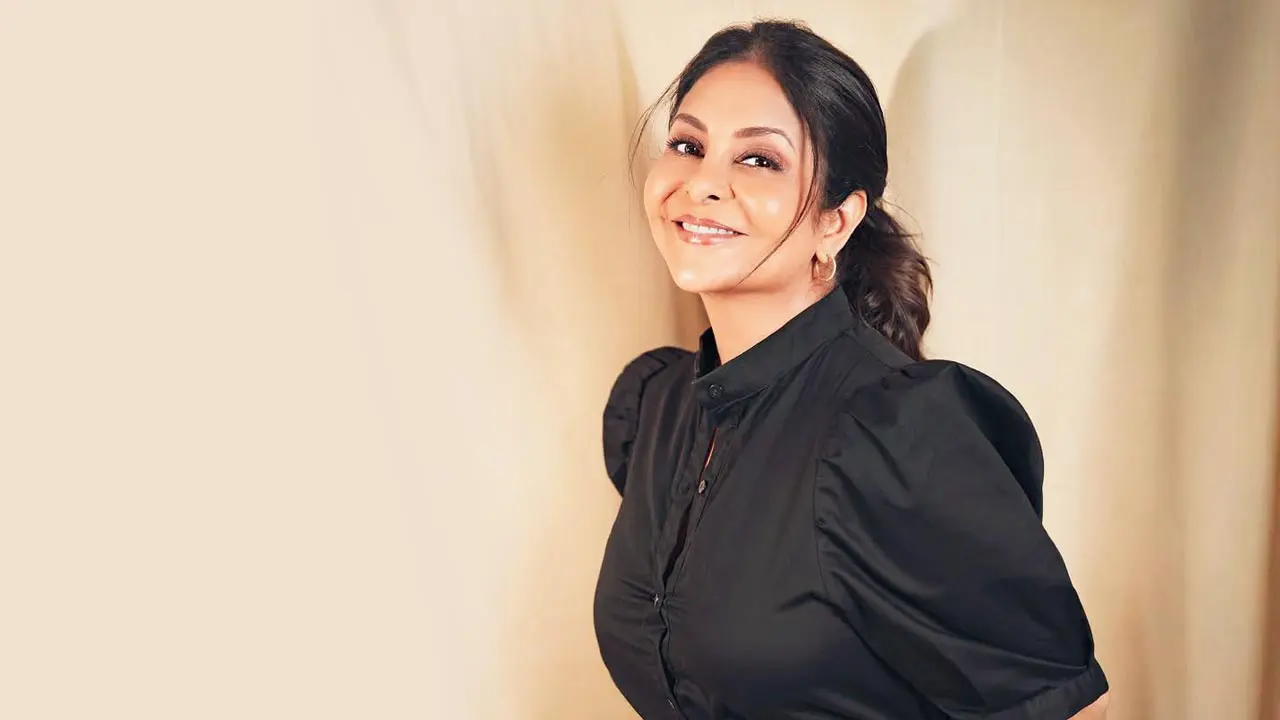
Batting for stipulated work hours in the industry, ‘Delhi Crime 3’ star Shefali Shah on how long shoot days go unchecked, affecting actors’ output and the crew
Priyanka Sharma (MID-DAY; November 7, 2025)
How long does it take for an actor to find her way back to a character when a new season is set to roll? Shefali Shah, who returns as DCP Vartika Chaturvedi in the third season of Delhi Crime, says she wouldn’t know, for a simple reason — she never let the character leave her system. “There are parts that you do and move on. This is something I can’t move on from,” she starts.
Her emotional attachment to the Netflix series is evident. But with the attachment comes nervousness, even though she has played the astute cop, who rarely misses a thing, for two seasons, even bagging an International Emmy nomination in 2023.
“My biggest fear is that I’ll let Vartika and Delhi Crime down,” she admits candidly, before saying how the show elicits conflicting emotions in her. “When I get to know we’re doing another season, I am the happiest. But I don’t let go of that fear. I just surrender.”
Surrendering to scripts and characters is something every artiste swears by. But surrendering to the industry’s functioning style is something more and more actors are voicing out against. With Deepika Padukone’s recent episode opening a dialogue about work-life balance and stipulated working hours in the industry, many actors — including Sonakshi Sinha and Konkona Sen Sharma — have batted for regulation of working conditions on sets. In an unregulated workplace like the film industry, can there be a way for actors to negotiate working hours?
“We need to have this discussion desperately,” emphasizes Shah. “We are reasonable people. So, we realize [the need to accommodate] if a location is not available tomorrow or something has to be done now. But it can’t be the norm.”
Shah says, “I take one-and-a-half hours to reach the set and the same time to return. For those hours on set, I give it my all. I go back home, and hopefully, I can go to the gym because that’s part of my job. Then I will shower, eat, go back to the script, and then wake up the next morning for another day of work. How many hours of sleep am I getting? And how are you expecting me to come with my A-game?”
The actor echoes what Sinha told mid-day recently about the crew suffering more than the actors (What takes 14 hours on set can be done in eight, Nov 1). “On one of the last films I shot for, which had a 10-hour schedule, some of the ADs said, ‘Thank God, she leaves because that way we get to go.’ The rest of the crew doesn’t get paid extra [for the overtime]. Is it fair to them?”
What only makes matters worse is the disparity of treatment between male and female stars. Some stars have pointed out how the same demands made by male actors are readily accommodated, but viewed as a problem when asked for by a female counterpart. Shah agrees, noting, “We [female actors] are talking about eight hours and 10 hours contractually, but have we even accounted for the number of hours some male actors come late? That’s not even considered!” She emphasizes that such long working hours over years can cause burnout, leaving artistes mentally and creatively bankrupt.
But undisciplined sets are not all that we’re talking about. There are the other kinds too — the ones that spark joy and creative stimulation. Like the one led by Delhi Crime 3 director Tanuj Chopra, where Shah was joined by cast regulars Rajesh Tailang, Rasika Dugal, and Jaya Bhattacharya, as well as new entrants to the universe Sayani Gupta, Mita Vashisht, and of course, Huma Qureshi, who plays the antagonist in the police procedural drama.
“Sadly Huma and I just had two scenes. I wish we had more work but when I heard that she is doing the series, I was so excited. When we met — be it Huma, Sayani, Mita ma’am — there was no such thing as breaking the ice. It was almost like being a part of something we wanted to create together. It’s one of the most powerful female ensemble casts you’ll ever see.”
In the film industry, sets populated by women have historically been called many things — difficult, filled with insecurity, and almost all wrapped up in misogyny. She smiles as she describes this set as a place of sisterhood. “I don’t want to undermine male actors because I have worked with some amazing ones, but I have felt a silent sisterhood. I feel that for other people around me, and the same was true [on this set]. You have to see how happy I get when I am with all these beautiful women.”
Even though Shefali Shah hasn’t met Zohran Mamdani, she feels a bond with the Mayor-elect of New York City. The actor, who worked with Mamdani’s mother Mira Nair in ‘Monsoon Wedding’ (2001), shares, “From the time we did ‘Monsoon Wedding’ to date, I get a Christmas or New Year’s card [from Nair], which has a picture of all three of them. So, I have seen him from his childhood to now. I don’t know him personally, but it [his recent win] feels so good.”
I prayed to God to give me a way back to Bollywood. He gave me Badass Ravi Kumar-Keith Gomes
9:26 AM

Priyanka Sharma (MID-DAY; July 30, 2025)
One would expect Keith Gomes to helm another mainstream entertainer after Badass Ravi Kumar, the spoof film led by Himesh Reshammiya. Instead, the director is returning to his roots of independent cinema. That is what he is inclined towards, insists Gomes, as his short film Dear Men — that shines a spotlight on child trafficking in India — releases today.
“I wanted to make a documentary on a community in North India, where they [give away] their daughters to the highest bidder. So, it’s a kind of prostitution, but parents do it to their own children. Then I met a friend, who told me a rescue story [involving] him.”
Dear Men is inspired by the true story of Dipesh Tank, who risked his life to save minor girls from trafficking. The director adds, “I got greedy to make it. So, that became the film.”
Set in Bihar, the short film stars Sayani Gupta, Gyan Prakash, and Mayukh Ray. Considering human trafficking continues to be a rampant social evil, Gomes, at one point, considered making a feature film on the same story. Noting that this was before he made Badass Ravi Kumar, the director reveals that he pitched the idea to several actors.
“I narrated it to Sanya [Malhotra] and Rashmika [Mandanna]. But the film just couldn’t happen. I gave up and prayed to God to give me a way back to Bollywood. He gave me Badass Ravi Kumar.”
Sayani Gupta believes having intimacy coordinators makes things awkward
3:17 PM

Despite working with professionals who taught her tricks to shoot intimate scenes, Sayani Gupta, who plays a part in her next, isn’t always in favour of their appointment
Upala KBR (MID-DAY; November 6, 2024)
The makers of Khwaabon Ka Jhamela have easily hit the bull’s eye by casting Sayani Gupta in the film that revolves around a finance whiz (played by Prateik Babbar) and a spirited intimacy coordinator, Ruby. After all, Gupta, who plays the role of the latter, has worked with several intimacy coordinators in her previous films, and has also taught her peers the art of filming tricky scenes.
“We had a professional on set in 2013 while shooting Margarita With A Straw. Back then, this was an alien concept, but director Shonali Bose got Monsoon Bisell and Adil Hussain to work with Kalki Koechlin and me. Later, we also had another intimacy coordinator, Aastha Khanna Bhardwaj, on board for Four More Shots Please. Having worked with them, I jokingly say that I have a PhD in the subject.”
Gupta has also taught her peers the tricks to shoot graver sequences in which violence may also be involved. “I have been part of scenes that were intimate and violent. Off screen, I have worked as a coordinator too. So, for this film, I didn’t have to undergo any prep work. I always say that the best research comes from life’s experiences. Of course, workshops and rehearsals help.”
Though the addition of intimacy coordinators on film sets may easily be seen as among the most progressive steps that the industry has taken to cater to women’s safety, Gupta isn’t always in favour of their appointment.
“Sometimes, it is great to work with one, but at times, having them on the set comes in the way of doing scenes in an organic way. As an actor, I know the kind of conversations I must have with my co-actor, and the presence of a coordinator makes things awkward. It can also hamper the flow of a scene that is naturally unfolding with two actors who share the same wavelength.”
As for Danish Aslam’s romcom that releases online on Jio Cinema on November 8, Gupta admits that no intimate scenes are involved. She describes it as a tale of two people who are “equally strange” in their own ways. “The film delivers a message but doesn’t get too serious. It talks about inclusivity and gay pride. We shot at a pride parade, so the film is truly inclusive and open; a celebration of love,” she says of the movie that reunites her with Babbar after the show, Four More Shots Please.
“I recommended Prateik for it. I had already come on board, and Danish was looking to cast for his role. We share chemistry on screen because we are good buddies in real life. We constantly make fun of each other and have seen each other [evolve] in certain ways.”
I was nervous about my Bengali debut-Sayani Gupta
9:46 AM

Navya Kharbanda (HINDUSTAN TIMES; October 30, 2023)
Having made a mark in Hindi films, actor Sayani Gupta is all set to venture into regional cinema with the Bengali film, Asukh Bisukh. “I was quite nervous in the beginning, even though I speak Bangla all the time as it’s my mother tongue,” Gupta tells us.
The social satire will be directed by Kaushik Ganguly, a filmmaker she’s “always wanted to work with”. Speaking about her transition to regional cinema, the Zwigato actor shares, “I hadn’t acted in Bangla in many years, and I had only done theatre before. I was wondering how it would be, but it was pretty much the same, so that was interesting. It’s a great exercise for an actor to be able to do that (work across industries).”
Gupta emphasizes the importance of adapting to different languages as an actor: “As an actor, you have to see how comfortable you are with that particular language. That comes in handy. A lot of people tell me that when I speak English or Hindi, I speak them as my language. As for the upcoming project, I enjoyed it and would love to do more Bangla films.”
Now that she’s worked closely in both Hindi and Bengali industries, are there any notable differences she’s observed between the two? “Operationally, the regional and Hindi film industries are quite different,” the 38-year-old states, adding, “The running of the sets, food and how people are; everything is different. The budget of the films is very distinct, as most regional films have smaller budgets. Also, in Kolkata, the shoots happen very quickly as compared to Mumbai.”
However, there is one change she would want to see in the Bengali film industry. “In Kolkata, they don’t use sync sound (using sound recorded during the filming); it’s all dubbed. It is not something that most actors of today prefer,” she ends.
Sayani Gupta, Gulshan Devaiah, Pratik Gandhi etc talk about essaying queer characters of impact
9:52 AM

Navya Kharbanda (HINDUSTAN TIMES; June 19, 2023)
REGINA CASSANDRA
I’m very happy to be someone who was in the initial phase of the evolution of the film industry. There has always been an audience for these stories but now, there’s more awareness. It was so surprising when a few years ago, a girl came up to me and said, ‘Ek Ladki Ko Dekha Toh Aisa Laga (2019) was my gay awakening’. It made me feel so happy that my role had actually impacted a set of people.

SAYANI GUPTA
A lot of people were scared of and said no to playing the queer character in Margarita With A Straw (2014) that I eventually did. Not doing a part like this is pure dumb. I did not care about the acceptance of the audience — I did it because it was a good part and a great script. The younger and even the older generation are becoming much more aware, open and inclusive now. Cut to 2023, people have become way more accepting and I believe my character in the film contributed to it.
GULSHAN DEVAIAH
In Badhaai Do (2022), I was just sincere and honest with the script, and it impacted the audience in a way. For instance, I was in Dehradun (after Badhaai Do), and coincidentally, Raj (Rajkummar Rao) was, too. So many times, elderly women would come to us to appreciate the film and say that we made a great couple on screen. We underestimate our society. It really depends on how things are communicated to people.

PRATIK GANDHI
The Indian audience is also understanding that it is much more beyond sex. Indian cinema, too, has also evolved in showcasing LGBTQIA+ stories with sensitive representation of characters. As opposed to earlier, when queer characters would be comic devices, now, it is more real and in-depth. The gay characters Ranveer (Brar, chef) and I played in Modern Love Mumbai were not at all typical. They were instead very simple and true to their own selves. The LGBTQIA+ community are our own and don’t need to be spelled out differently. The way Manzu (his character) stood for himself and tried explaining to his family and the way he manoeuvred around it was very real. Pyaar sirf pyaar hota hai!
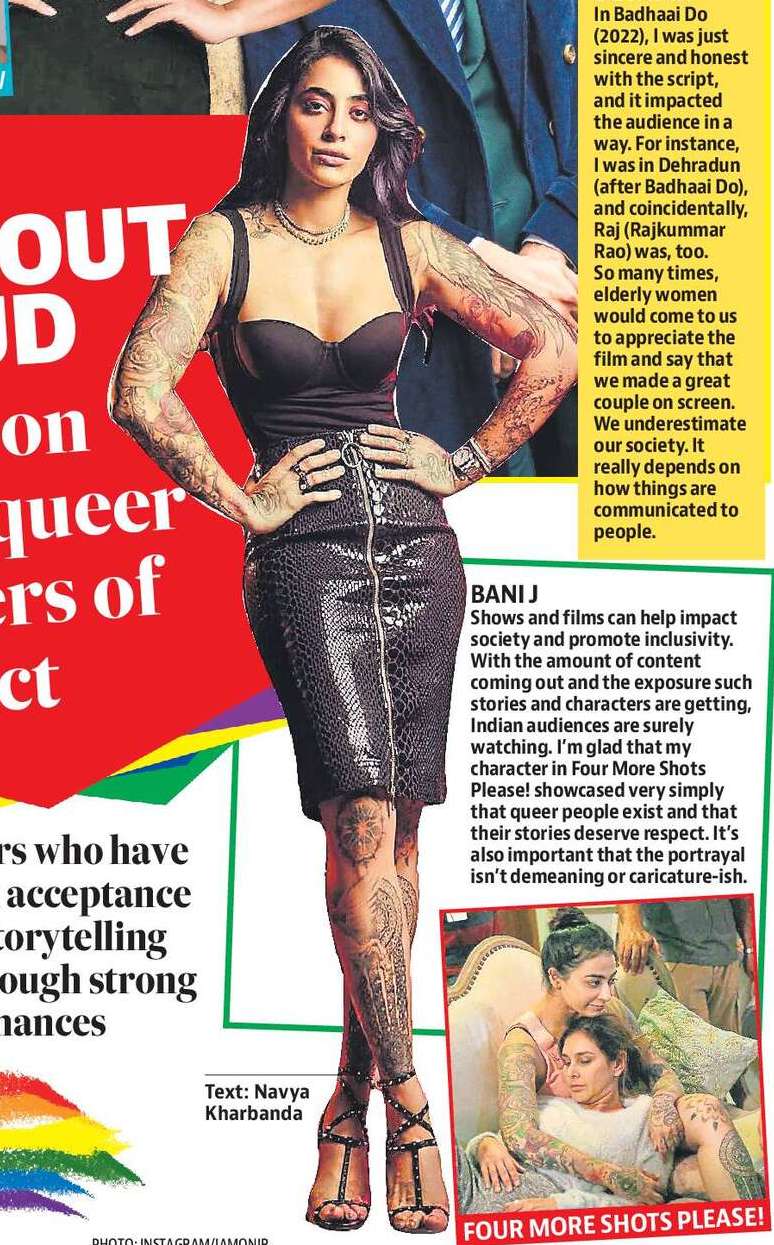
BANI J
Shows and films can help impact society and promote inclusivity. With the amount of content coming out and the exposure such stories and characters are getting, Indian audiences are surely watching. I’m glad that my character in Four More Shots Please! showcased very simply that queer people exist and that their stories deserve respect. It’s also important that the portrayal isn’t demeaning or caricature-ish.
The industry's inner circle is very well-knit, quite impermeable and impossible to enter-Sayani Gupta
8:33 AM

Sayani Gupta on Bollywood’s inner circle
Debarati S Sen (BOMBAY TIMES; June 13, 2023)
In the last decade, Sayani Gupta has worked with a range of filmmakers and has played diverse roles in films like Fan, Margarita With A Straw, Jolly LLB 2, Pagglait and Article 15. The actress says that the industry is changing for the better, but cliques continue to exist, and every outsider has to figure out a way to navigate around them.
However, Sayani, who was seen in the popular web series Four More Shots Please!, believes that OTT has changed the game for actors like her.
‘EVERYTHING IN THE INDUSTRY IS BASED ON CONTACTS’
Sayani says, “It is just way harder for people from outside to get in. Everything in this industry is based on contacts and how many people you know. Of course, talent and merit matter, but so do other factors like how many people are excited to see you on the screen.”
‘WITH CASTING DIRECTORS, THINGS ARE MORE STREAMLINED IN THE INDUSTRY’
Sayani shares, “Yes, there has been a change and OTT is a huge reason behind it. Now even with casting directors, things are more streamlined. A lot has changed for the better in the industry.”
----------------------------------------
“The industry's inner circle is very well-knit, quite impermeable and impossible to enter. There are few who enter it, but the core still is very dense, and even if you get close, you just can't get inside.”
In Four More Shots Please 2, she was the most loved character, and I feared in Season 3, she would be hated-Maanvi Gagroo
8:31 AM

Enjoying two releases in Four More Shots Please 3 and Tripling 3, Maanvi discusses her apprehensions of playing a bitter character in the women-led show
Letty Mariam Abraham (MID-DAY; November 8, 2022)
How does it feel to have two shows dropping on the same day? “It gets hectic with the promotions,” warns Maanvi Gagroo, before stating that she wouldn’t trade “the fantastic feeling” for anything else. The universes of Tripling 3 and Four More Shots Please 3 are far divorced from one another, so are her characters. While she had to portray the confused Chanchal in Tripling, she had to also be convincing as the irrational and impulsive Siddhi in the Amazon Prime Video series. Over to the actor as she talks about the juggling act.
Edited excerpts from the interview.
You had back-to-back releases with Four More Shots Please 3 and Tripling 3. Which show gave you more scope to perform?
In Four More Shots Please [FMSP], each character has a definite arc. So as Siddhi [her character], I had more to do in terms of performance. Tripling also [let me perform], but the show is about the fun element. Chanchal [her character] is not someone who cracks jokes or delivers punchlines. She doesn’t have that impact, but Siddhi does.
Tripling was conceived as a road-trip show. Was it a conscious decision to not go on one this season?
Yes, Sumeet [Vyas] and I had discussed that we had already explored road trips in the first two seasons. We knew the audience loved the three characters, their parents and the familial dynamics. We wanted to stick to these pointers. Sumeet and I [felt] that season two was scattered, where we were going from one place to another. We lost the crux — the siblings and the family. By constraining the story to the family and their dynamics, we got the essence of season one back in the new edition.

Why was the track about your character’s doubts in her marriage not pursued further?
I told the director [Neeraj Udhwani] that I wished we had delved deeper into this. Chanchal is comparing her parents’ marriage to her relationship with Pranav [Kunaal Roy Kapur]. If they broke up, she would lose hope in her own marriage. But I wish we had gone deeper [to figure out] how it is wreaking havoc on her marriage. Here, the problem gets solved simplistically. But relationship issues are not solved overnight. It may be [explored] in the next season.
In FMSP, your character underwent a shift. How did you navigate that?
During the pandemic, I was sh*t scared for my parents and the elders in my family. Right after the first wave, we shot FMSP. While performing [the track after Siddhi’s father’s death], I insisted on calling him dad, because I address my father as Papa. I had to avoid going in that direction. I was confused about what Siddhi goes through after [his demise]. I didn’t agree with Siddhi being so annoying and erratic. In season two, she was the most loved character, and I feared that now, she would be hated. While shooting, I hated her, but the makers made me believe that it will all come together in the end. Finally, when I saw the season, I understood that she didn’t know how to process her emotions.
How would you describe the camaraderie with your Tripling and FMSP co-stars?
My relationship with the actors is similar to that depicted on screen. With Sumeet and Amol [Parashar], it is like a brotherly relationship. I call up Sumeet whenever anything happens in my life. I am always bullying Amol and getting away with it. I have a different equation with each of the girls of FMSP. If I need to hang, I call Sayani [Gupta]. For gossip, I call Bani J, and when I want to discuss career choices, I call Kirti [Kulhari].

Sanjay Leela Bhansali to direct first 2 episodes and all the songs in Heeramandi
8:42 AM

Hiren Kotwani (MID-DAY; April 7, 2022)
With Gangubai Kathiawadi behind him, it’s now time for Sanjay Leela Bhansali to single-mindedly focus on Heeramandi. The eight-episode web series will see the auteur share directorial duties with Mitakshara Kumar, who served as his assistant director on Bajirao Mastani (2015) and Padmaavat (2018) before helming The Empire (2021). Where there is Bhansali, there is the promise of songs mounted on a lavish scale. It holds true for the Netflix offering as well.
“Bhansali will direct the first two episodes, while the subsequent episodes will be helmed by Mitakshara. However, given his unparalleled style of presenting dance numbers, SLB has taken the responsibility of directing every song. Each episode will have a song, bearing his signature style of grandeur. The compositions are ready,” says a source.
Madhuri Dixit-Nene, Manisha Koirala, Sonakshi Sinha, Huma Qureshi, Richa Chadha, Nimrat Kaur and Sayani Gupta are said to feature in the period drama that tells the story of love, betrayal and politics in the lives of the courtesans.
The source adds, “Bhansali will begin filming in the first week of May. The set is built on the same ground in Film City where Gangubai Kathiawadi was shot.”

Madhuri Dixit-Nene, Sonakshi Sinha and Manisha Koirala
Check out Sayani Gupta's look in her Bengali debut film, Homecoming
10:14 PM

Mohar Basu (MID-DAY; February 6, 2022)
It is truly homecoming for Sayani Gupta as she forays into Bengali feature films with Homecoming. The film will also have Hindi and English dialogues. Although her first Bengali film was Tasher Desh (2012), the actor considers the Sony LIV film as her debut.
“I didn’t have dialogues in Tasher Desh. Homecoming is my first full-fledged Bengali film,” says the actor, adding that she was nervous to perform in her mother tongue. “[While] there is a certain degree of comfort in speaking your own language, I was nervous [wondering] if my Bengali was chaste enough. There’s a twang that comes from living decades outside Bengal.”
The musical drama also starring Tushar Pandey, Plabita Borthakur, Hussain Dalal and Soham Majumdar is written, directed, and produced by Soumyajit Majumdar, who is making his debut with this feature. Homecoming revolves around a group of friends from Kolkata who reunite after seven years at their old theatre space, which is in danger of being converted into a heritage hotel. The film captures the college life of the theatre folks.
“It was heartwarming to shoot in Kolkata. The shooting at Park Hotel [reminded me of my] childhood when we did family lunches there; it was also where I first went to the disco. Life felt like a full circle,” added Gupta.
Homecoming was also selected for South Asia’s largest film market collection, NFDC Lab, in 2019.
Pay parity is very lopsided. It is hierarchical and very problematic-Sayani Gupta
8:25 AM

Actor Sayani Gupta wishes for changes to seep into the industry, starting with a fair pay structure
Sugandha Rawal (HINDUSTAN TIMES; January 24, 2022)
For the longest time, actors have been speaking out about gender equality as well as parity. But many believe that not much has changed in the entertainment industry. Actor Sayani Gupta, who has always been vocal, shares, “There have been conversations... But I don’t think it’s really there in practice.”
She continues, “Pay parity is very lopsided. It is hierarchical and very problematic. Actors don’t get paid as much as they should. I am not talking about stars… They are always trying to cut costs when it comes to paying actors.”
The Four More Shots Please! actor admits that the backbone of films, writers, too, don’t get paid as much. She mentions, “Writers don’t get paid as much as they should, and it is not about the five biggest writers in the industry.”
There is no denying that the fee structure of the film industry is skewed, and Gupta asserts that it is “in terms of class”. “A film set is very hierarchical, with a kind of pyramid structure, where it becomes lopsided when it comes to the fee structures. So, I really hope that in our lifetime, we are able to see a more fair pay structure,” says the actor.
After starting her journey in the industry in 2010, she has explored varied stories and characters, which also shines bright in her project report from last year, with names such as Pagglait, Kaali Peeli Tales and Inside Edge Season 3.
Opening up about it, the 36-year-old shares, “In the middle of last year, I started feeling extremely uninspired with the quality of work around me. Then, in the last couple of months, it has been exciting workwise… The lineup is good this year. But that doesn’t mean, I am satisfied as an artist.”
After spending two decades in the industry now, she wants to be undeniable. “I am not coming from a point of pomposity or ego. In the past, when I used to audition for a project, I was told, ‘It was good, but didn’t work out’. I don’t understand why. I want to be at a stage where, if I give an audition for anything, and I am good at it, then nobody else is able to deny me the opportunity,” the actor concludes.
Pankaj Tripathi kicks off shoot of Srijit Mukherji’s Sherdil that is centred on man-animal conflict
8:56 AM
Mohar Basu (MID-DAY; November 24, 2021)
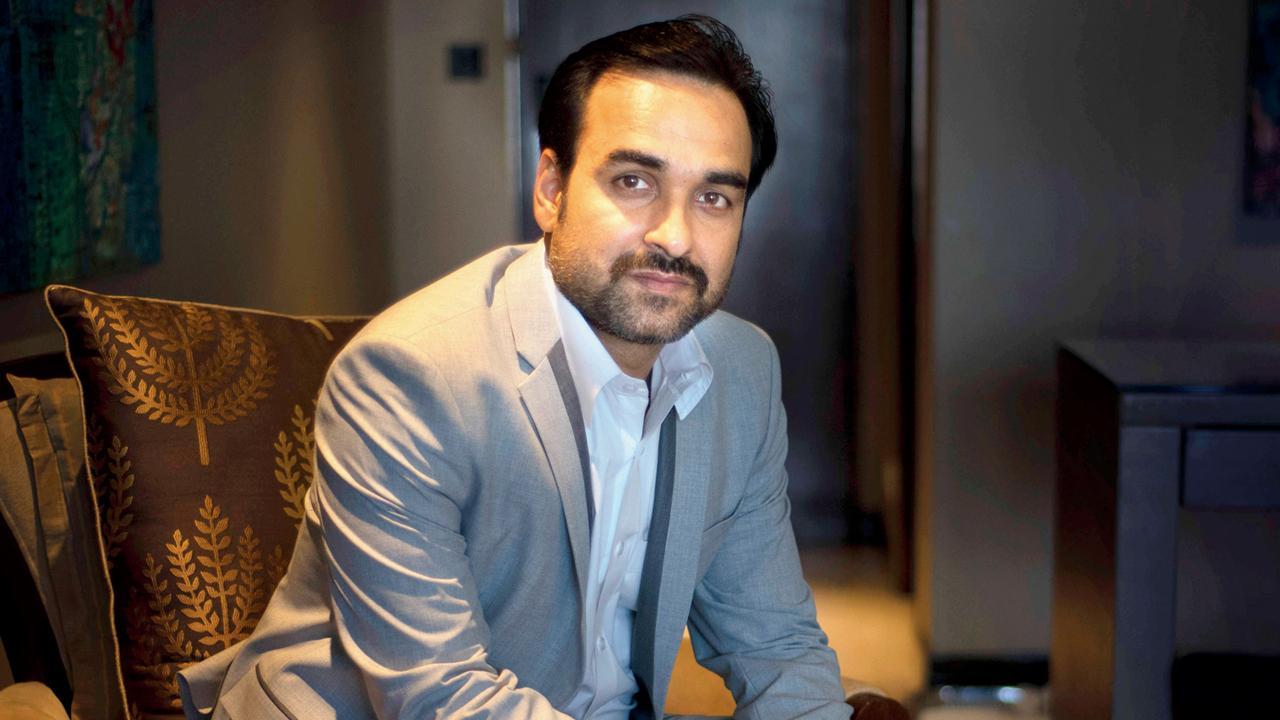
Srijit Mukherji has little time for a breather. Only days after wrapping up the shoot of Shabaash Mithu, the filmmaker has kicked off his next, Sherdil, with Pankaj Tripathi. The film’s idea came to him after he read a news article about poverty-stricken villagers living near the Pilibhit Tiger Reserve, who were suspected of sending their elderly family members to the forest as tiger prey so that they could claim compensation.
The idea, shocking as it was, piqued Tripathi’s interest as soon as he heard the script narration. The joy of working with Mukherji was another reason to give his nod to Sherdil. Currently shooting in Darjeeling, Tripathi says the noted director is every actor’s dream come true. “Srijit needs no introduction. His work speaks for itself. When Sherdil was offered to me, I jumped at the idea. It is a beautifully written script, and I trust Srijit to bring each character to life convincingly.”
The satire, also starring Neeraj Kabi and Sayani Gupta, was originally slated to roll in 2020, but had to be deferred due to the pandemic. Mukherji says he couldn’t envision anyone except Tripathi to play the protagonist — a villager who voluntarily goes to the forest. “Pankaj is one of the finest actors in the country today. Having him on set is half the battle won. He is always excited to try new things and improvise,” says the director.
Tales from Northeast find a voice on OTT
8:05 AM

Digital platforms have become instrumental in content and talent from the Northeast finding representation in the crowded mainstream
Juhi Chakraborty (HINDUSTAN TIMES; August 14, 2021)
The OTT platforms have not only given a break to new or less appreciated talents, but are also helpful in bringing a diverse range of projects to the screen. This includes content from the Northeast. Often these small budget films get lost in the crowded Hindi mainstream market. But now thanks to the digital medium, they are able to reach a much wider audience. Aamis, Axone, Bornodi Bhotiai, Village Rockstars and Raag are some such films that are now available on OTT, and have been able to strike a chord with viewers.
Actor Sayani Gupta, who starred in Axone which follows Northeast Indian migrants in Delhi, in their attempt to organise a wedding party, says, “It was the first film that ever came out in the mainstream that represents characters from the Northeast, and is authentic. There is a lot of interest coming from content makers and filmmakers about the Northeast and the people.”
Noting how there is a growing appetite for such stories, Siddharth Anand Kumar, vice president - Films & Events, Saregama India Ltd — who made Axone — says it’s heartening to see people being receptive towards these stories. “I think the interest will only grow from here, after India’s shining jewels Saikhom Mirabai Chanu and Lovlina Borgohain, who hail from Manipur and Assam respectively, returned home with Olympic medals. The region is brimming with talent and stories. And I hope they get support from the industry, and bring inclusivity and an end to stereotypes,” Kumar shares.
Manipuri actor Lin Laishram, who was a part of Axone, is glad that actors from the Northeast were cast in it. And while she agrees that OTT is helping with representation, she believes there’s still a long road ahead. “We need more of our stories to be told in the mainstream. We’re on the right path but there is a long way to go,” she says.
Not just films, now even web series set and shot in the Northeast, with actors from the region are making its way to our screens — for instance, The Last Hour. “It features a lot of actors from there, the locations are breathtaking. So it has an authentic feel to it. That’s what stood out,” shares actor Raima Sen, who starred in the supernatural crime thriller.
While this is a step in the right direction, many believe that Bollywood, despite being one of the biggest film industries in the world, has failed to adequately represent the region and its people, often resorting to cliches and stereotypes in the story.
To this, Kumar says, “Our vision has always been to make films with an underlying message, a potential to spark conversation and change mind sets. Axone was just the perfect platform to highlight the umpteen misconceptions and racism that people from the Northeast face in daily lives.”
Agreeing to this, actor Adil Hussain, who hails from Assam, says that while the growing lot of stories from the region are helpful, he feels it is a drop in the ocean. He elaborates, “I think what they are doing is fantastic, but the OTT giants should look for such stories rather than have people approach them... A lot of projects made there still don’t find their way in the mainstream.”

Stairways to stardom: Web helps revive careers
8:35 AM

Having tried their luck on both silver screen and the digital space, many actors credit the latter for being a catalyst in their career and giving them much fame and success
Juhi Chakraborty (HINDUSTAN TIMES; July 24, 2021)
The rise of OTT platforms is a win-win situation for both viewers and actors. While the former got more options to choose from, it also translated to bigger and better opportunities for the latter. No wonder, even the actors, who earlier went unnoticed in theatrical films, are now gaining fame for their performances in web projects.
Actor Amit Sial, who was part of films such as Phas Gaye Re Obama and Love Sex aur Dhokha (both 2010), came into the limelight after his web projects Inside Edge, Mirzapur and Maharani, among others. “Main toh shukraguzaar hoon OTT ka,” shares Sial, adding, “This medium has been life saviour for many actors like me. It does get frustrating when you don’t get the work you have set out to do, and the wait for getting a film project is so long… So yes, OTT helped me be discovered in a new way for sure.”
Another actor, whose career took off like never before after venturing into the digital space, is Sharib Hashmi. He worked in films Jab Tak Hai Jaan (2012) and Filmistaan (2014) but it’s web projects such as The Family Man, Darbaan and Asur, which helped him revive his career. “After Filmistaan, people, noticed me for the first time. I thought that I had arrived but destiny had other plans. I did sign a few films but they didn’t work out… And as the time passed people started forgetting me. But then because of the OTT platforms people are recognising me again,” shares Hashmi.
Actor Namit Das, who has worked in OTT projects Aarya, Abhay and A Suitable Boy, admits that the web space has helped many actors. “It is a huge avenue that has opened. Here everyone gets a chance to show their potential and explore themselves,” he explains.
OTT platforms have also proved to be boon for those who were struggling for years to showcase their craft. Grahan actor Anshumaan Pushkar admits waiting for six years to get the break. “When you look at films, who’ll give me a break? No one will. And no one did for so long. They want actors to be a certain way and kehte hai ki hum aap pe paisa nahi laga sakte. But thank God for OTT. Mere jeevan ka vardaan hai OTT. Mera career iske wajah se hai,” says Pushkar.
Four More Shots Please! actor Sayani Gupta too, lauds the web space for giving much needed impetus to acting careers of artistes. “We were craving to let out our creativity for so long and all of a sudden the wait is over, all thanks to this medium. As actors, you’re now able to showcase yourself and also not compromise on creativity,” she shares.

Of course, people are going to feel, ‘here comes the villain’ when they see Pagglait-Sayani Gupta
8:13 AM

Sanya Malhotra, Shruti Sharma and Sayani Gupta in Pagglait
Sayani Gupta on the judgment around women and the challenge of navigating a complex character in Pagglait
Uma Ramasubramanian (MID-DAY; March 21, 2021)
It has always been about finding the right rhythm of her characters for Sayani Gupta, who has often opted to play unconventional roles. Be it Axone (2019), Posham Pa (2019), Article 15 (2019), Jolly LLB (2017), or her OTT offerings like Four More Shots Please! and Inside Edge—big or small the actor has played her roles with gumption. With Umesh Bisht’s Pagglait, where the actor plays the other woman, Gupta explains the challenges of playing a character that has often been ascribed as the villain.
Portraying the role of Akshana, who happens to be the central character Sandhya’s (played by Sanya Malhotra) late husband’s paramour, Gupta says, “[The audience] would have already developed a soft corner and invested in Sanya’s story by the time Akshana enters the film. To then play the other woman becomes tricky. Of course, people are going to feel, ‘here comes the villain’, but she is not the villain of the story.”
Explaining the context further, the actor adds that there is a history to the character. “They have a past together, but that doesn’t mean she has wronged Sandhya in any way.” Set to release on Netflix on March 26, the film also starring Ashutosh Rana, Raghubir Yadav, Rajesh Tailang, and Shruti Sharma, echoes the expectations placed on women in a patriarchal society.
Ask her if she is comfortable with the prejudices and judgments placed on actors and Gupta retorts, “As women, we are always being judged every day. But being an actor and cribbing about being in the public eye, or being criticised, trolled, which is the byproduct of fame and money, is not right. Then don’t be here.”
We will shoot Four More Shots Please 3 in Mumbai till May end-Rangita Pritish Nandy
7:53 AM

Four More Shots Please creator kicks off the third season in the city, adhering to safety norms; says schedule unaltered despite rising COVID-19 cases in the state
Mohar Basu (MID-DAY; March 20, 2021)
Creator Rangita Pritish Nandy, who kicked off the shoot of the third season of Four More Shots Please last weekend after a year-long wait, believes her emotional state can be captured in three words: “We feel alive”. The all-women drama, headlined by Kirti Kulhari, Sayani Gupta, Maanvi Gagroo and Bani J, is being shot in South Mumbai. “After the year we’ve all had, being on set, exchanging ideas, discussing characters, and even squabbling over costumes — it all feels like coming home,” says Nandy.
The creator finds herself leading a 100-plus crew at a time when the impact of the second wave can be strongly felt as Maharashtra recorded its highest number of Coronavirus cases in a day since March 2020. Undeterred, Nandy says they are being cautious and following guidelines to the T. “Our protocols are driven by the government’s prescribed norms and Amazon’s exhaustive list of SOPs [standard operating procedures]. We’re testing [daily], masking up, using the private mode of travel, and not sharing food or liquids. We’re living in a bio-bubble — all this, while we keep a close watch on the changing situation to devise new precautions.”
The team is sticking to the original plan despite the adverse conditions. “We will shoot in Mumbai till May-end. We have another Indian city and an overseas location on the cards.”
The benchmark is set high for the third season. After all, the first edition bagged an International Emmy nomination and the second instalment became Amazon Prime India’s most-watched Indian original of 2020. “We wrote and prepped for season 3 before any of this happened. So, we don’t feel any pressure. But we have a duty to all the fans; we want to deliver a bigger and stronger season for them.”
The female gaze will help change the narrative in the industry-Sayani Gupta
7:59 AM

Amrita Prasad (BOMBAY TIMES; March 19, 2021)

‘IT’S ABOUT TIME THAT THE PORTRAYAL OF FEMALE CHARACTERS IN FILMS AND TV SHOWS CHANGED’
Sayani has feature films, short films and web series to her credit and she says that working with women directors, writers, and actors is inspiring. She says, “I think the narratives of our shows and films need to change. Aren’t we tired of seeing unrealistic heroes on the screen? Incidentally, I read a quote that said, ‘You don’t see as many fantastic men in real life as you see on screen, and you never see as many fantastic women on screen as you see in real life.’ And that is so true.”
“The constant hetero-normative narrative that has been fed to us through popular cinema, where the unimaginable glorious hero comes to save everyone, is problematic. The women are given the side dish. They are constantly playing the subversions or a subdivision of a narrative which, again, is extremely problematic. So, we as women, must do stuff for ourselves and I think the female gaze in helping change the narrative,” asserts the actress. Sayani urges that it is time to change the way female characters are portrayed.
‘GOOD WORK MATTERS, THE LENGTH OF A ROLE DOESN’T’
For Sayani, it’s not the length of the role that matters, but the gravitas that it brings to the table. She says, “I do independent films where I play the protagonist, and, at the same time, play relatively smaller parts in big films, both with equal zest.
However, I do hope to get big parts in big films. As long as you have enough to do and you’re good at it, you must make something out of it. When I say this, I don’t mean you hog the limelight, but do a commendable job and make your presence felt.”
Ask her if she would like to play a real-life character on screen, and Sayani replies, “I wanted to play Shakuntala Devi for the longest time. I never expressed it out loud fearing someone might take the idea. But Anu Menon had already made a film on the math genius with Vidya Balan in the lead. So that’s done now. But I would like to play Maa Sarada Devi in a film someday. I think she was a feminist, visionary, and, in many ways, tutored and helped push human rights, gender movement and the feminist movement.” Sayani adds that she wants people to know her for the work and look at her with dignity.
‘IT’S UNFAIR THAT MILIND SOMAN LOOKS SO GOOD WITHOUT ANY MAKE-UP’
The actress has shared screen space with Milind Soman in a web series and she fondly describes him as ‘childlike’. Speaking about him, she says, “He is enormously good looking, and it is a little unfair that he looks so stunning without any make-up! You just put him in any frame and his good looks do the magic.”
She further adds, “He is like a child in many ways. When we were shooting, I kept scolding him for not reading his script and not knowing his lines and he would be like, ‘Ab kya ho raha hai?’ We also bonded over our mutual love for travelling, food and sweets. We both are rice eaters and we enjoyed Bengali sweets and all kinds of desserts.”

Sayani Gupta films a black comedy, Film Club, from the confines of her home
8:11 AM

Sayani Gupta on taking acting cues over video-conferencing apps for the comedy, Film Club, shot entirely at home
Uma Ramasubramanian (MID-DAY; December 6, 2020)
Among the actors exploiting technology to make the most of the current situation, Sayani Gupta recently filmed a black comedy, Film Club, from the confines of her home.
Mesmerised by the way technology has redesigned their working process, Gupta tells mid-day, "The adaptability and inventive qualities of human beings that enable actors in various parts of the globe to shoot in this manner, is fascinating. Kudos to content creators who are meeting the demands of the concept, screenplay and storyline, and are creating interesting material despite the constraints. I found the concept of Film Club fresh, engaging and fun-filled."
American filmmaker Philip John's comedy series is based on characters who discuss movies on Zoom, and features actors like David Threlfall (Shameless), Shauna MacDonald (Georgie in Hold The Sunset), Sophie Melville (S4C's Bang), and Roger Evans (Da Vinci's Demons).
Ask her if India presents the same opportunities to its female actors to showcase their comic streak as western countries do, and she says, "There isn't a great lot of comedy written in our country anyway. The little that is, is done for the men. I loved Maanvi [Gagroo's part in Four More Shots Please.] But such characters are few and far between."
Subscribe to:
Posts (Atom)