Showing posts with label Sarkar. Show all posts
Showing posts with label Sarkar. Show all posts
Subrata Roy got front row seats of Air Sahara flight removed so I could be accommodated with stretcher-Vivek Oberoi
8:21 AM
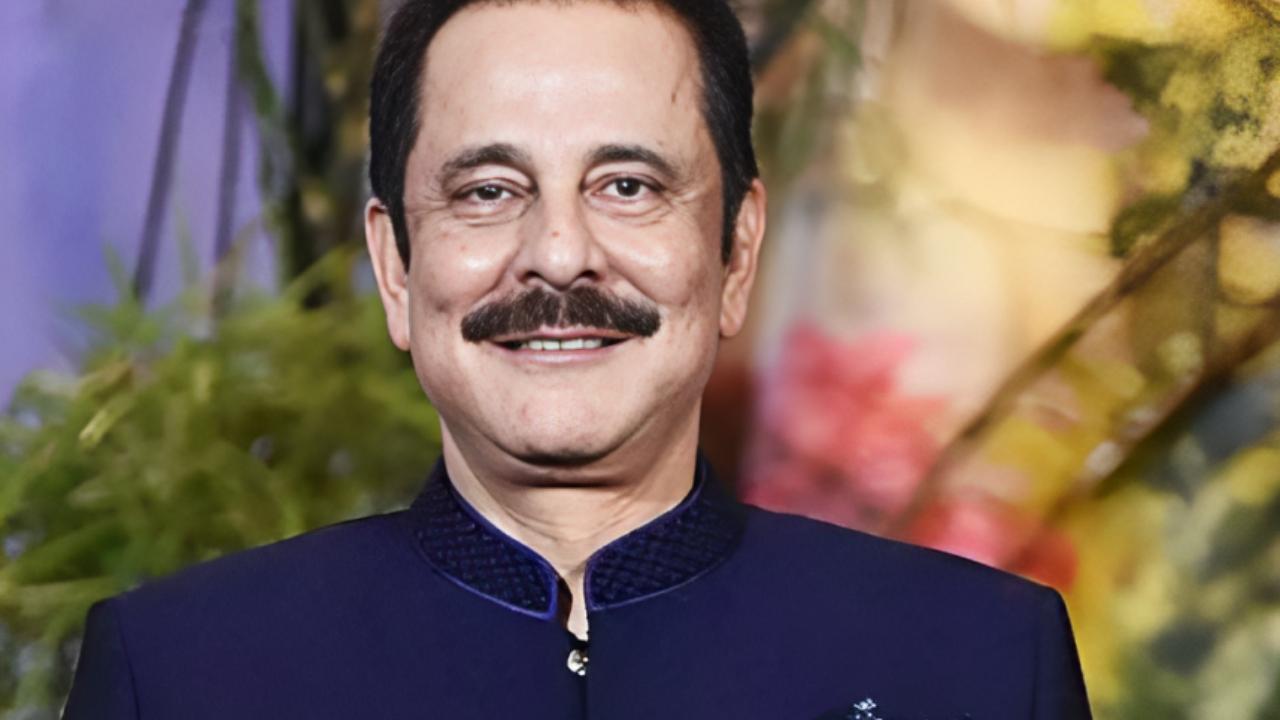
Entertainment industry grieves loss of Sahara Group founder Subrata Roy, who won stars and common folks over with his trademark humility and compassion
Hiren Kotwani (MID-DAY; November 16, 2023)
Subrata Roy, who passed away on November 14 at the age of 75 after a prolonged illness, played a key role in the careers of several film fraternity folks. Ever since his foray into showbiz in the early 2000s with Sahara One Motion Pictures, he not only backed several movies that set the trend with the advent of the multiplexes but also bailed out several actors and filmmakers from their financial crises. Apart from film production and distribution, Roy expanded his media conglomerate with news and general entertainment channels, too.
Revitalizer of careers
That’s not all. His studio gave a new lease to the careers of actors like Sridevi and Karisma Kapoor with television serials like Malini Iyer and Karishma: The Miracles of Destiny on the group’s general entertainment channel, Sahara One. Moreover, several B-Town celebrities like Amitabh Bachchan and Aishwarya Rai were on the board of directors of Sahara entities. Not surprising then, that whenever any Sahara event was scheduled in Lucknow, where the group headquarters were located, most of Bollywood would fly down to show their allegiance to and solidarity with Roy.
At the same time, it’s also not surprising that when Roy and his Sahara Group got caught in financial issues in 2011, several film industry folk began keeping their distance from the ‘controversial’ businessman.
Actor’s unforgettable memories
However, few continued to associate with Sahara Shri, as he was called. One of them is Vivek Oberoi, who forged a bond with the businessman-industrialist before he began working with the latter’s studio. Beyond the equation they shared, the actor remembers two unforgettable instances. One is when the actor got injured during the shoot of Yuva on the Howrah bridge in Kolkata.
“Even Mani Ratnam sir had a heart issue and had to be hospitalized. Ajay Devgn and Abhishek Bachchan were taking care of me. Sahara Shri called me, spoke to my father and took over—he organized the beat doctor and orthopedic for me at Hinduja Hospital. When I was to be flown down to Mumbai, he got the front row seats of an Air Sahara flight removed so I could be accommodated with the stretcher,” recalled Oberoi.
The actor was even more touched to see the business magnate had flown down to Mumbai to be by his side. He added, “After the surgery, while I was in and out of consciousness, Dada sat there by my side. It was great a gesture from Dada, a billionaire industrialist who had tons of things to do in his corporate empire.”
The other instance was when the actor was getting married to Priyanka Alva in 2010. Businessmen, industrialists, politicians and VIPs were invited to the wedding, besides his friends and colleagues from the industry. “Even though he was a VIP himself, he asked if there was something he could do. Dada was there on stage like a family member, receiving guests, ensuring they were looked after, asking if anyone needed anything. That is what set him apart as a person; his honesty and integrity also continued in his relationships,” reminisced Oberoi.
‘Rooted for home-grown tech’
That Roy later had issues with the authorities never changed Oberoi’s equation with him. The actor said, “Today, I genuinely miss the man who was like an elder brother and father figure who was there for me in my toughest and happiest times.”
Praising the magnate’s patriotism, the actor said, “Many years ago, Dada would talk about the self-reliant India that we are seeing today. He didn’t want to buy a Mercedes till it was manufactured and assembled in India. He was the first to speak to me about organic food and distribution. Also, telecom through satellites, which Elon Musk is doing through his space link now. He was fiercely Indian and rooted for home-grown technology. In case of foreign tech, he’d insist on transfer/sharing of tech for things to be made in India.”
‘An optimistic visionary’
While Oberoi was outside the country and regretted not being able to see Roy one last time, veteran actor and politician Raj Babbar was on his way to Lucknow to pay his last respects to his dear friend. Madhur Bhandarkar, who has known Roy for 15 to 20 years, called him a visionary.
He said, “He was always positive and helpful, not just towards those in the film industry and sports stars but also to people who worked in the Sahara Group. And irrespective of good times or bad, I’d always see him smiling. He would light up the room with his cheerful spirit. His positivity would cheer you up and dispel any negativity that was bogging you down.”
Recalling his meeting with Roy a couple of months ago in the hospital where he was undergoing treatment, the filmmaker said, “I spent an hour with him, we spoke about movies and current affairs. He was always down to earth and enjoyed tremendous goodwill. He treated everyone with respect and ease. He was humble with everyone, whether it was someone from films, sports or politics. When someone came to him for help, he ensured that no one went back disappointed or heartbroken.”
‘Mentioned OTT decade ago’
Sandeep Bhargava, who worked as the COO at Sahara India Motion Pictures (Sahara Movie Studios), credited the business magnate for ushering in corporate culture in the film industry. “The advent of the multiplexes had just about begun then. The kind of films we started with—Page 3, Malamaal Weekly, Sarkar, Bose: The Forgotten Hero—are proof of the kind of content he wanted to make and market through the studio. The other studios started following suit after 2006,” he said.
He revealed that while OTT is witnessing a boom today, Roy was the first to think of a streaming platform a decade ago. Bhargava added, “When I joined him again in 2013, he spoke about launching Sahara QCloud, India’s first OTT platform. He was a visionary in every sense of the word.”
‘His humility set him apart’
What made Roy an influential person for the film fraternity was not the clout he wielded, but his humility and compassion, said Bhargava.
“He was always there for those who needed his help or needed to be bailed out in difficult times. Not just the film fraternity, sports stars and politicians, but common people. For him, those working in the Sahara Group were a part of the family. He would always remember your name, the last conversation, address you by your first name, first ask how you are doing etc., before getting down to business. His human side is what set him apart from the others,” he said.
Two of my iconic films emerged from a failure-Ram Gopal Varma
8:16 AM

Rachana Dubey (BOMBAY TIMES; February 25, 2021)

Why have you left Mumbai and moved to Goa?
For most of the stuff that I am shooting, I am getting better locations in Goa. And frankly, it doesn’t matter where you are today. The visuals, the weather, and everything else is working out well for me over here. If I have some work, I will come back to Mumbai.
In one of our previous chats, you had spoken about how you want to work with credible actors who are not necessarily big stars. Going by your past record, you have worked with some of the biggest stars of our country. Has there been a mind-shift here?
Look, in a story, let’s say like Sarkar, I believe that without having the image or a personality of someone like Amitabh Bachchan as Sarkar, the narrative would not have worked. It would not have had the same impact with a new face playing the character. In Company (2002), I cast Ajay Devgn and Vivek Anand Oberoi. Ajay plays a character who is revered by people in his line of work, while Vivek’s character grows in stature from scratch. The characters influence my casting decisions. When I made Satya, I wanted an actor who could blend into the underbelly of Mumbai; he had to be someone who would fit in, easily. That’s the reason I cast Manoj Bajpayee and the rest of them.

The only thing I learned is that one can never fully learn. Every film you make is new. Even though you try to learn from your mistakes, you continue to make new mistakes. Anyone who says otherwise, doesn’t know what he is doing. We’re sum totals of what we have done in life. I don’t want to change anything about myself. A mistake could be in the perception of the outsider. Every failure has added to my personality. I don’t see them as mistakes because something which was bad at one point seems to be great at another time. I don’t quote box office when I pick on my worst works.
I think the worst film of my life was Drohi (1992) because I failed the material I had in hand. I botched it up. I don’t like Company for the same reason. I could not do justice to the material. But because of Drohi, I have a standing in the Hindi film industry. I met Urmila Matondkar while making it, which led to Rangeela (1995). I changed the backdrop of Drohi and made Satya. The credit for both those films rolls back to Drohi. I got two of my iconic films from that one film. Life, unlike a movie, goes on. Hence, you don’t need to look back every few moments for a lesson.

There is nothing anyone can teach you. You learn as much as you want to learn. Anurag’s style of filmmaking is different from mine and that is his individuality, and it is good for him. Manoj and he are talented people. I have never believed that I launched them in any manner or that I had taught them something. I have made a number of films and worked with numerous people. You brought up these two names because they have become names today. I am in touch with them, but they are busy, and we have not worked together (in recent years).
After Sarkar 3 (2017),you somewhat withdrew from Bollywood. Why?
I’m from Hyderabad. I got busy making political films there as there was a lot happening in that space. Then, I started making a movie based on martial arts, which I wanted to do for a while. It’s called Ladki. I had a balance of 15 days of shooting when the lockdown stalled everything. I’ve completed it now. You will get to see more of me. You will soon get to see a lesbian love story that I have made, it’s a crime drama. There’s another gangster drama that will shock the daylights out of people.
Do you ever feel the pace at which you continue to work can lead to burnout?
I have quadrupled my speed of work in recent times. I am doing much more now. I think people who don’t work much, burnout. I have so many stories to tell, and that is the only thing I do. I would rather ask people why they don’t feel motivated enough to clock every second of the day and do something with it.
When you introduced newcomers back in the day, there was no OTT space. Today, the digital space seems to have become a newcomer’s haven. What do you make of this trend?
The OTT platforms have helped filmmakers cut out the publicity and release costs, which were over and above the cost of making the film. One had to cast known faces so they could draw in people. Casting new faces was not seen as a reasonable decision. That’s not the case with the OTT platforms. They need content to feed their audience. If you’ve noticed, content works better than star faces in the OTT space. And like I said earlier, I never say that I have launched anyone. They were all casting decisions. In Sarkar, where a character called Rashid talks to Sarkar, I needed a new guy, an unknown person to walk in and talk to Mr Bachchan while looking him in the eye. That created a great impact. It’s not a question of modesty, but I am not here to launch anyone. I am a selfish filmmaker and every decision is for the best result.
Also, gangster dramas are back in demand today. What do you think of these new-age crime thrillers?
I’m not making a comment on anything specific, however, I see them very differently. I am into character studies. I see the emotional complexities of the people. Violence and crime are a very small part of the story. What I see is when people lead a difficult, complex life born out of tragedy — what happens to them.
Master is 7th biggest Tamil film in Tamil Nadu after 2 weeks
8:41 AM

Box Office India Trade Network
MASTER saw a big drop in its second week in circuits outside Tamil Nadu
but the home circuit has held up pretty well in the second week. The
film has grossed around 97 crore nett in its first two weeks in Tamil
Nadu and will cross the 100 crore nett mark soon enough. This has not
been done by many films in Tamil Nadu so far.
Basically even with the Coronavirus scenario, if this film was allowed 100%
occupancy in Tamil Nadu, then it would have become the highest Tamil
grossing film in Tamil Nadu and maybe even beat the numbers of BAAHUBALI 2: THE CONCLUSION. Still many theatres allowed 100% occupancy despite the
rules and that's why the film has managed to get these phenomenal figures
in Tamil Nadu despite the present scenario.
The NETT collections do not give the correct picture in Tamil Nadu as it
was tax free for almost a decade and then GST came in. The GROSS
numbers of MASTER in Tamil Nadu are 113 crore in two weeks which puts it
in seventh place. The final numbers look like going to 120 crore plus
and to the range of SARKAR and MERSAL which are among the biggest
grossers of actor Vijay. It could even get to 125 crore which would mean
his second highest grosser.
The top grosser in Tamil Nadu remains BAAHUBALI 2: THE CONCLUSION with 155
crore GROSS and the top Tamil films are BIGIL, VISWASAM and 2.0 with VISWASAM being the biggest BLOCKBUSTER in the state since ENDHIRAN in
2010.
Below are the top ten grossing Tamil films in Tamil Nadu:
1. Bigil - 1,40,14,00,000 (2019)
2. Viswasam - 1,31,87,00,000 (2019)
3. 2.0 - 1,28,85,00,000 (2018)
4. Sarkar - 1,23,72,00,000 (2018)
5. Mersal - 1,23,19,00,000 (2017)
6. Petta - 1,15,91,00,000 (2019)
7. Master - 1,13,00,00,000 apprx (2021) (2 weeks)
8. Endhiran - 1,01,59,00,000 (2010)
9. Darbar - 93,26,00,000 (2020)
10. I - 79,28,00,000 (2015)
Top five first week grossers in Tamil: Master takes up 5th position despite 50% occupancy
8:55 AM

Box Office India Trade Network
MASTER has seen the fifth highest first week collection of all time and
this has come with the 50% occupancy rule while all the others had
releases in a normal situation. Obviously there will be some theatres
which did not adhere to this as demand was there but still capacity
would have been far shorter than a normal situation.
The film could probably have had the second highest number for a Tamil
film and beaten the 2016 Rajinikanth starrer KABALI if things were normal.
2.0 had an excellent turnout in Hindi circuits so that film will remain
the biggest opener for the Tamil industry on all formats for sometime
to come.
It is interesting to see that the top two films are still Rajinikanth starrers. The man who became a superstar for the Tamil film industry in
1980 still has the biggest openers forty years later which is simply
phenomenal. The other three films are Vijay starrers who has become a
superstar over the last few years. But if we take actual value then Rajinikanth will dominate the top ten films with maybe a Kamal Hassan film, INDIAN (1996), among them.
The fact that Rajinikanth is still competing at the top after 40 years of insane superstardom in Tamil Nadu shows true legend status. Rajinikanth has probably been the biggest superstar ever from the South with blind following in Tamil Nadu and solid stardom elsewhere (even in Mumbai and CP and parts of East India he was saleable name in the mid 80's). The next best is probably Chiranjeevi with blind following in Andhra Pradesh and pretty solid in some other areas.
The fact that Rajinikanth is still competing at the top after 40 years of insane superstardom in Tamil Nadu shows true legend status. Rajinikanth has probably been the biggest superstar ever from the South with blind following in Tamil Nadu and solid stardom elsewhere (even in Mumbai and CP and parts of East India he was saleable name in the mid 80's). The next best is probably Chiranjeevi with blind following in Andhra Pradesh and pretty solid in some other areas.
The younger superstars are huge getting numbers be it Tamil Nadu and
Andhra Pradesh but its about how long you sustain and can you push the
numbers in other states in the South.
The top five opening week grossers
for the Tamil film industry are as follows. These numbers are GROSS as
they give better picture due to tax changes in the last few years.
1. 2.0 (2018) - 362 crore
2. Kabali (2016) - 157 crore
3. Bigil (2019) - 148 crore
4. Sarkar (2018) - 144 crore
5. Master (2021) - 135 crore apprx
2. Kabali (2016) - 157 crore
3. Bigil (2019) - 148 crore
4. Sarkar (2018) - 144 crore
5. Master (2021) - 135 crore apprx
Why Amitabh Bachchan won’t be seen as Sarkar again
8:06 AM

Filmmaker Ram Gopal Varma, who has helmed the Sarkar franchise,explains why Sarkar 4 is not on the cards
Rachana Dubey (BOMBAY TIMES; January 15, 2021)

Among other films, Varma has collaborated with the veteran actor for Sarkar (2005), Sarkar Raj (2008) and Sarkar 3 (2017), and over the last few years, there has been speculation about Sarkar 4 rolling out.
However, the filmmaker told BT that he had other plans of working with Bachchan, and Sarkar 4 is certainly not one of them.
“Sarkar 4 is not on top of my mind for sure, because it will be a case of overstretching a character and story. Even if you look at the three-film series of Godfather (1972, 1974 and 1990), no one let Francis Ford Coppola make part four. I’m sure they did it with good reason. The more you stretch something, the more impact it loses,” says the filmmaker.
He then goes on to reveal his plans with Bachchan, adding, “I’d rather do something new, and explore a genre with Mr Bachchan that I haven’t done before. I don’t want to go back to him to do Sarkar for the fourth time. In fact, I had something in mind, but Coronavirus threw my plans off-gear. Once I complete my current lot of films, I will go back to what I have in mind for him.” After the release of Sarkar 3 in 2017, the writer-filmmaker turned his attention to films down South.
Producer Viki Rajani signs Manish Gupta to direct two suspense films
7:58 AM

BOMBAY TIMES (November 11, 2019)
After backing films like Munna Michael (2007), Table No. 21 (2013) R…Rajkumar (2013) and Phobia (2016), producer Viki Rajani has signed writer-director Manish Gupta to direct two suspense films based on true events. Manish, who had recently written the story, screenplay and dialogues of Section 375, said, “Viki is a dynamic and visionary producer who has an interesting slate of high content films lined up. Both my films with Viki will create two franchises; one is a murder mystery franchise, while the other is a legal drama franchise.”
Viki added, “I was impressed with Manish’s work in Section 375. I recalled that he had previously written the story, screenplay and dialogues for the Amitabh-Bachchan-starrer Sarkar (2005). When I saw Rahasya that was based on the Aarushi Talwar murder case, which was directed by Manish, I realised that he is has a good hold over the suspense genre. So, I decided to back his vision. I’ve just launched my banner Faith Films P L, through which I’m tying up with various studios and distribution houses. Manish’s films will hit the floors in a couple of months.”
Makers of Vijay-starrer Sarkar to delete Jayalalithaa reference
8:10 AM

Gladwin Emmanuel (MUMBAI MIRROR; November 10, 2018)
On Friday, the makers of the Tamil film Sarkar agreed to do away with some “objectionable” scenes from their Diwali release in the face of backlash from members of the ruling AIADMK party. According to sources, a scene in which a character is shown discarding a mixer and grinder (given as freebie by the AIADMK) in a fire will be deleted. Additionally, the word ‘Komala’ from the name Komalavalli (an apparent reference to the late Chief Minister J Jayalalithaa), along with a few dialogues, will be muted.
The Vijay-starrer opened on Tuesday. Almost immediately, Information and Publicity minister Kadambur C Raju came out strongly against the above-mentioned scenes following which, several theatres screening the film were reportedly targeted by AIADMK supporters. They damaged publicity material and banners, forcing the filmmakers to throw in the towel.
Meanwhile, A R Murugadoss who has directed the film, tweeted that cops had visited his house late night on Thursday and banged on the door several times before leaving as no one was home. He later moved Madras High Court for anticipatory bail. The court has reportedly stayed his arrest. And according to reports, security has been provided at his leading man’s residence.
Extending support to the film’s team, Rajinikanth condemned the backlash against the film, saying, “It is against the law to hold protests seeking the removal of some scenes from a Censor Board-certified film and trying to stall the screening and damaging the banners.” Pa Ranjith, who has directed Rajinikanth in films like Kabali and Kaala, slammed the government as well, saying that those who use government machinery and violence against the film were already aware that democracy has collapsed in this country. Filmmaker and head of Film Employees Federation of South India (FEFSI), RK Selvamani also issued a statement in support of the film.
MUST READ: Bollywood’s Foley artists aka Sultans Of Sound create a bewildering variety of everyday sounds
8:38 AM

From thumps and thwacks in Dangal to Amitabh Bachchan’s ‘subtly intimidating’ footsteps in Sarkar, Bollywood’s Foley artists create a bewildering variety of everyday sounds
Kunal Guha (MUMBAI MIRROR; August 19, 2018)
When Karan Arjun Singh was tasked with creating the sound effects for the climax in Vishal Bhardwaj’s Rangoon, he was in a fix. The scene had the film’s leads Shahid Kapoor, Kangana Ranaut and Saif Ali Khan perched precariously on a dilapidated rope-and-bamboo bridge which eventually gives way. Since recreating a bridge inside his 10x16 ft studio wasn’t feasible, Singh had to innovate. “I removed the string from a charpoy and tied a thick metal wire across it. Then, I balanced myself on it and created all the sounds,” says the 45-year-old Foley artist who has produced sound effects for over 2,000 films including Tiger Zinda Hai, Dangal, Sultan, Neerja, Raees and Baahubali.
Initially referred to as ‘sound effects’ or ‘live effects’, the function was dubbed ‘Foley’ after Jack Foley, who pioneered various sound-effect techniques for Western films. Crushing a film reel to convey the rustling of leaves; gently shaking an ageing almirah to create the creaking of a bullock cart; or twisting a plastic bottle to produce the eerie ambient noises synonymous with horror films, are all part of Foley. “It includes reproducing everyday sounds such as footsteps, objects being placed, moved or broken, to even punches, crashes and explosions,” says Singh, who is among the top Foley artists in the industry today. Shankar Singh, who has worked with Karan on some 1,000 films, adds that since cinema is larger than life, the sound effects must be too. For instance, a punch is no longer a simple ‘dhishoom’ — it, too, must have character. Which is why the two Singhs once collaborated to create a distinctive punching sound. They recorded the ‘thud’ of a slab of meat being punched, and layered it over with sounds of a watermelon and a head of cabbage being hit. The cumulative effect — fine-tuned and assembled like a musical arrangement — packed a real punch, says Shankar.
Interestingly, some of the most commonplace sounds are produced in unusual ways. For instance, flapping a wallet recreates the sound of a flight of pigeons; waving a cloth through the air replicates the whooshing of wind; and one of the most popular effects — that of heavy rainfall — is made by dropping large granules of salt over an umbrella. And these touches cost filmmakers anywhere between a lakh and six lakh on an average per film. Depending on the level of customisation required, Foley for a film can be wrapped up in anywhere between 15 days to a month.
In these days of CG effects, one wonders why Foley artists are still relevant. But filmmakers attest that no software can deliver all the sounds required in a film. And if you want to be authentic — and original — you have to go to the experts. “Today, films are made with sync sound, but that largely captures the dialogue. Once the dialogue is cleaned by the sound engineer, the rest fades. So, to give the feel of a location, we come in,” says veteran Foley artist Karnail Singh, who has worked on over 3,000 films in the last 33 years, along with collaborator Sajjan Chowdhry of Aradhana Studio.
Right foot forward
Seated in his busy Goregaon recording studio, littered with props — from jewellery and shoes of varying styles and sizes, to door knobs, garage equipment and other curios — Karan points to a small dugout in a corner of the room. “That’s where we recorded all the thumps and thwacks for Dangal,” he says. Karan even invited a wrestler from Jaipur to the studio to recreate the body-to-body contact sounds. “A wrestler’s body is perfectly tuned to replicate the sounds we hear in the akhada,” he adds. The Olympic bouts shown in the movie required a more expansive, booming sound, so Singh recorded them at a larger studio in Andheri.
While production houses supply Foley artists with props used in the film, Karan says they don’t always deliver the desired sound. “In Singham, Ajay Devgn’s shoes couldn’t produce the firm-footed sound required to convey the determination of Bajirao Singham (the lead played by Devgn), so we used the shoes worn by Murali Sharma’s character instead, as they seemed more appropriate.” Apart from conveying the correct body-weight in every step, a character’s walk is moderated by various factors. “Har jootay mein alag tone hai, har character ki apni chaal hai,” he explains. “A regular office-goer’s footsteps won’t sound the same as a villain’s.” Syed Aslam, 53, another veteran Foley artist, specialises in this particular aspect and is credited with ‘creating’ the footsteps of stars such as Amitabh Bachchan’s Subhash Nagre in Sarkar and Hrithik Roshan’s Akbar in the historical, Jodhaa Akbar. “In Sarkar, Bachchan wore chappals and in Jodha Akbar, Hrithik wore mojris. But the characters’ mood, state of mind and personality still had to come through from the sound of their footsteps,” says Aslam, adding that “a badshah strolling imperially in his courtyard required a different sound from the footsteps of Bachchan’s Nagre, which had to convey subtle intimidation”. Aslam’s enterprising streak was evident when he replicated a canine’s footsteps in the animated film, Roadside Romeo by wearing long, artificial nails and tapping a table.

Sajjan Chowdhry and Karnail Singh recreate the clip-clop of a horse cart (PIC: NILESH WAIRKAR)
Sourcing sounds
Most Foley artists have a catalogue of stock sounds, which include the smashing of glass, the breaking of wooden objects and their signature interpretations of mundane, onscreen actions. But often, films demand an entirely new sort of sound. In Krrish 3, the supervillain, Kaal, had a serpentine tongue with which he lashes at his victims. “After testing various objects, we decided to create the ‘zupppp’ sound of the whipping tongue by whirling a long nylon rope in the air,” says Singh, with understandable pride.
While productions today are more helpful in enabling Foley artists achieve the precise sound by providing actual props, this wasn’t always the case. Old-timers Singh and Chowdhry remember having to recreate a fight sequence for the 1989 film, Parinda. They had to produce the sounds of footsteps on a tin roof, a body falling on the roof, and even the ‘clang’ of a dropped sword. “We used a metal sheet that used to serve as a makeshift bridge over a gutter between Natraj Studios and Seth Studios for that,” remembers Singh, who has kept the metal sheet in his studio as a memento. Today, however, the duo rarely goes prop hunting. In fact, they have filmmakers reaching out to them for suggestions. “While recording for Raazi, Meghana [Gulzar] came to the studio with the spy equipment used in the film, to explain the kind of sounds she wanted,” says Karnail.
Devil in the details
Karnail and Sajjan consider Bajirao Mastani as their most challenging yet gratifying work. “We sourced a ‘dandpatta’ (a gauntlet-sword) to get the precise swish of a sword being waved around in the air. But they didn’t actually use one in the film because it was too dangerous,” they explain. While Sajjan enjoys recreating the sound of “punches and clothes tearing”, Karnail is a master of more nuanced noises such as the ruffling of garments and the clink of cutlery. “When we worked on Parinda, Vidhu Vinod Chopra wanted a certain kind of mood for the grim scene in which Madhuri and Anil Kapoor’s characters are killed. So we created some wiretaut tension with just the sound of a creaking chair,” adds Karnail, whose forthcoming films include Paltan, Manmarziyaan and Rajma Chawal. The duo, however, has had to contend with the fact that 50 to 60 per cent of their work may get drowned out by a background score and often, even escapes the notice of the audience. “But some filmmakers ensure Foley sounds are audible alongside the score, since they help establish the mood.” He refers to the scene in Rajkumar Hirani’s Sanju in which Paresh Rawal, playing Sunil Dutt, invites his son to have a drink with him. “He pours himself a drink, sits down with a sigh and then gulps it down,” says Karnail. “I had to create the gulping sound as well, along with the others.” And, he says, it is simple sounds like these that often “create atmosphere for an entire scene and elevate it from the mundane”.

Karnail Singh sourced a dandpatta to create authentic sounds in Bajirao Mastani
Ram Gopal Varma has the quality of an honest man, and nobody wants to appreciate that-Amitabh Bachchan
8:23 AM

Madhureeta Mukherjee (BOMBAY TIMES; May 11, 2017)
His deep baritone spills on
to our pages, flowing into reams of stories and anecdotes, that often go
on to become 'quotables' for ever. Such is the power of his impeccable
voice and his unfettered memory. He has that supreme quality of keeping
you riveted in the movies, and stirring up a conversation on the couch
with as much passion. At 74, AB is cooler than the millenials of the day. He's a champ on social media - taking the good, the bad and the
trollers in his stride. Yes, he plays it safe with words, but his words
are seemingly unstoppable. At the same time, he's never lost the
emotional connect with the people or the 'golden' phase of cinema that
roots him to his beginnings. Long before he turned into a megastar. As
the third instalment of Sarkar, directed by Ram Gopal Varma (RGV),
awaits release, in a long-winding chat, he talks about trolls, timeless
classics of Bollywood, legends of yore and the superstars of the future.
Read on...
Ram Gopal Varma says that if you hadn't agreed to play Sarkar on screen, he wouldn't have made the film. He has also said, 'The Godfather can be made without Marlon Brando, but Sarkar cannot be made without Amitabh Bachchan.' Your reaction?
He is being too generous. Sarkar (2005) was my first film with Ramu, but even before it was made, I was always appreciative of his work. It was Abhishek who initiated the idea for Sarkar 3. Ramu and I kept meeting over the years and talking about it. We would discuss various aspects of life and movies and I would chat with him about palace politics. For instance, even in a king's home, there must be disturbances and domestic problems. We always wondered that if the king was emotionally upset about his personal issues and he had to make a decision that would impact the lives of others, would his choices be ridden by his emotional conflict. Would he carry the same vein of disappointment when he had to make a statement that would probably change the lives of millions?
That was one aspect. The other interesting aspect we explored was the several rings of power points around every powerful individual, be it a king, president, prime minister or any celebrity. Isn't it possible that each ring inadvertently becomes a power centre and has its individual influence? We thought of building a story which incorporates all of this. From Sarkar to Sarkar Raj (2008) and now Sarkar 3, the story has progressed. The main protagonist is being played by the same actor, unlike in The Godfather (1974). Marlon Brando finishes in one, and then Al Pacino takes over for the remaining two.
Talking about The Godfather, what impression did it leave on you when you first watched the film?
Who wasn't impacted by The Godfather? The whole world of mafia has been very intriguing, exciting and interesting... just to understand how it works, who are these people, what are their lives are and what is their thought process.
As part of Sarkar 3 promotions, you were interviewed for the first time ever by your director and that too, by someone like RGV who doesn't mince words...
I talk to all my directors about my movies and other films, which often leads to a healthy debate. For the first time, I was interviewed by my director (RGV) and it was filmed. I think a general interview makes for good reading, but there isn't any kind of documentation of facts and stories that go beyond the actor. I lament that and I feel that we are not leaving anything for posterity. I would love to know what went through Dilip (Kumar) saab's mind when he was doing Devdas (1955), how he prepared himself to say those lines in the way he did. What was Guru Dutt thinking when he was making Kaagaz Ke Phool (1959), which, according to me, is his most brilliant work... I would love to know why he used a certain kind of lighting or why he used a crane for a certain scene. Why did Raj Kapoor think of making Awaara (1951), and how did Mehboob saab conceive the idea of Mother India (1957)? It is sad that nobody talks about all this. So many greats have gone by and we have no documentation of these facts. After understanding those scenes, maybe you would want to go and watch the film again; it makes it so much more interesting. Somebody has to provoke actors to be able to do that. They do it in the West all the time, and not just with their own films. A friend of mine who was studying in a college in London, told me that she admired my films and wanted to meet me. When I was visiting London, she took me to SOAS (School of Asian Studies), and I went to a class where British students were watching one of my films, and the teacher (also a Brit), was decimating frame to frame. That is how they were being initiated to Hindi cinema. I am sure Indian institutes that have courses in film studies do that too, but it would be wonderful if such material reached more people. Our audiences are intelligent; it would only make them more aware if we have an archive or library where they can go and see and read all this.
In an interview, Ramu had said that while filming Sarkar, there was a scene that you wanted to shoot differently. You called him up at night and discussed it and there was a creative difference. The scene was reshot, but eventually, you retained the first cut. Do you often find it tough to detach from the character you are playing after you are done shooting for it?
Sometimes, after you finish your day's work, you go home and think about a particular scene or shot. Yes, there have been many times when I have called up directors in the middle of the night and asked them whether we should change a scene or do it better. Hrishida (Hrishikesh Mukherjee) would almost slap you and say, 'Rubbish! If you want a retake, you better pay for it'. As an actor, this is my personal attitude and I am fortunate that my directors often gave me the chance to reshoot a scene and improvise. Well, there were also times when I suggested something and it completely failed. It would happen with Manmohan Desai. I would tell him, 'Man...isko ek baar aur kar dete hai'. He would say, 'Ja, ja...sab theek hai'. I would request again and he would let us reshoot the scene. And once the shot was done, he would say, 'Pehle wala take rakhna, yeh bakwaas kiya hai isne' (laughs!). So, these are special moments we actors share with our directors.
Ramu is the kind of person who says what he feels. He is expressive, sometimes even politically incorrect, but he stands by what he says. How do you react to the flattering comments he makes about you on social media - in his own style (at times abusive, too)?
I think Ramu has the quality of an honest man, and nobody wants to appreciate that. He says what he feels, and there are very few who can express themselves. He is open-minded and he can tell you on your face that 'This is rubbish, I don't like what you are saying. I don't like what you are doing. How can you be working on this film? You have praised this film, but I think it is rubbish.' How wonderful it is to have someone who can be upfront and tell you what he is really thinking. That's his temperament and attitude and I don't think that there is anything wrong with it.
In an interview, Yami Gautam (your co-star in Sarkar 3) said that the name Amitabh Bachchan in itself is intimidating. Every time you work with actors from the younger generation, there is a process where they have to first get over their 'awe moment' and then move on to give the shot...
These are aspects in the mind of the media. We are all artistes and professionals who come on the set and act. Why should someone be intimidated by me?
Well, they would be nervous and conscious, at least?
No. In fact, I feel nervous around younger actors, because they are so well developed in their craft that I have great admiration for them. I see the ease with which the younger generation of actors work, that's the kind of ease that I never had in all these 48 years. I ask them how they are so comfortable doing what they are doing. It is quite amazing, really. I always tell Ranbir Kapoor that his face is God-gifted. He doesn't have to move his face or change his expressions much, he can just stand there and whatever he has to say is conveyed. For an actor, it is the most difficult thing to do. In Bajirao Mastani, Ranveer Singh was incredibly perfect. For someone who is not a Maharashtrian, the way he pulled off the role was impeccable. In Highway, there is a scene where Randeep Hooda is depressed and Alia Bhatt holds him close and consoles him. I cannot forget her expression in that scene. And then you see her in Dear Zindagi where she is unbelievably different. I see films of these actors and I learn a lot from them.
Lately, trolling has become a huge point of discussion and a growing concern, too. You have a massive following on social media and you are a prolific user of that platform. What are your views on it? Have you also become overcautious about what you write, tweet and blog, fearing how it will be interpreted?
I think initially, it was great fun to be able to express yourself, and more enjoyable when someone reacted to it. Then gradually, as I wrote certain things, I could see that there were people who were reading between the lines and making their own interpretations, and it appeared as though I was offending someone. I didn't want to do that. At the same time, I don't want to stop tweeting and I am not going to stop anyone from abusing me, but yes, I think I need to be a little cautious about what I say on social media and how I say it, because there could be people who could misinterpret it and perhaps, in a peculiar way, I could be responsible for either intimidating or insulting them. Sometimes, you have to be cautious about what you write. In the world that we live in today, where everything is open, known, spoken, heard and read, this has become an obvious issue. There are some who don't care about it and I admire them as they have the guts and the strength to express themselves and eventually face whatever happens. I feel that I don't want to insult anyone; therefore, I make an effort to check what I am saying and analyse it so that it doesn't offend someone.
Recently, the Harvard University Press came up with a book on your film Amar Akbar Anthony. Your thoughts?
Even around the time that it was being made (1977), there was an American author who had come down to Mumbai where I was shooting for Suhaag, and she had expressed her keenness in writing a book on Amar Akbar Anthony. There was an interest particularly in that film and many other films made by Manmohan Desai around that time. In this book, they have analysed the entire film and put it in the context of what India is today and what it means.
Do you think their perspective of the movie is very different from ours?
I don't know, I guess they would be able to say that better. I think that we make some very good cinema and when some people ask me, 'When are we going to make films like Hollywood?' I turn around and ask them, 'When is Hollywood going to make films like us?' Hai ki nahi, aisa films banake dikhao...

Ram Gopal Varma reveals exclusive, interesting details about his memorable films
11:21 AM

The filmmaker takes us through almost three decades of movie magic
Roshmila Bhattacharya (MUMBAI MIRROR; May 6, 2017)
SARKAR 1, SARKAR RAJ, SARKAR 3 (2005, 2008, 2017)
Strangely during all the films I have done with Amitabh Bachchan over the years, including the Sarkar series, only once have we had a difference of opinion. It was over a scene in the original Sarkar, where he throws his son Vishnu out of the house. I wanted him to play it cold-bloodedly, without emotion, as if the son he was chucking out were an insect. But he thought that given that they were father and son, he show some anger. I argued that when you take a decision like this, it means you have given up all hope so there should be no reason to rage. He disagreed and finally we did the scene his way. But that night, around 11 pm, he called me to say, "Ramu, I've been thinking about this scene and I feel now that you were right. Let's reshoot it tomorrow."

I see Subhash Nagre aka Sarkar as a realistic Superman, who people can look up to and depend upon to solve their problems when the establishment fails them. For me, he is a graphic comic book character who does not age, who I conceived for Bachchan, whom I, as a film watcher, had studied over the years. It was a culmination of the cumulative effect he had on me since Zanjeer. As the principal protagonist, Sarkar is integral to the franchise and I can't imagine any other actor playing the role. Sarkar has become synonymous with Amitabh Bachchan, just like doodh and milk.

BHOOT (2003)
I love to scare people. As a child, I used to hide behind the door and say, "Boo!" Now, I make horror fantasies even though I don't believe in ghosts. Yet, one night, after wrapping up the shooting of Bhoot at around 2 am, I returned to my apartment, where I live alone and in my L-shaped bedroom, I was lying on the bed when suddenly I got the feeling that the ghost from the film, Manjeet Khosla, was standing behind the wall.
I kept staring at the wall, but couldn't muster the courage to get up and check. I tried to laugh off my irrational fears, but the eerie feeling wouldn't go away. I turned my back to the wall and tried to will myself to nod off. But sleep wouldn't and I found myself turning to look at the wall again, this time calling out softly, "Manjeet? Manjeet?" I was greeted by silence and chuckling over how foolishly I was behaving, I turned again and shut my eyes resolutely.
Moments later, I heard the sound of footsteps and felt someone get into the bed with me. The soft sigh of someone breathing creeped me out. I turned, to be confronted by... nothing!
This time, I jumped up and, rushing to the phone, placing a call to Barkha Madan, the actress playing Manjeet whose ghost haunts the apartment. Only after speaking with her was I reassured that neither she nor her bhoot had entered my apartment.

COMPANY (2002)
I chanced to meet a gentleman who was very close to the D-Company, not a criminal really but more of a business associate. In the course of our conversation, he told me that in the fight between Dawood Ibrahim and Chhota Rajan a number of people had got killed, yet the two guys still had so much love for each other. "Even today, if Dawood bhai calls, Chhota Rajan will stub out his cigarette instantly. They hate each other because they love each other so much," he told me. The last sentence caught my fancy and was the genesis of Company.
The premise of a mentor and his protege whose relationship slowly sours over ego issues is true of any company. The only difference is that in a normal company, a person gets fired if he doesn't do his job well or falls out of favour with the boss. In D-Company, they get fired, literally. The gentleman, who was my muse, was shot dead just months after I met him.

SATYA (1998)
I was sitting with someone when we got the news that Gulshan Kumar had been killed. I had met Gulshanji a couple of times and was shocked. The gentleman I was with knew him well and had spoken to him just that morning at 7 am. He mentioned that he had called him back an hour later. We have this habit of recounting details when a violent death occurs. And listening to him, a thought flashed through my mind. If Gulshanji woke up at 7 am, then when did his killer jump out of bed, I wondered. Before or after killing him, did he have breakfast? I know that these questions may sound strange, even funny, but they are relevant even though we only think of assassins when they kill or when they are killed. But between the two acts, they are people like any of us leading normal lives. They could be walking on the street, sitting beside you in the bus or the movie theatre and none the wiser. To see a guy like this in his world is what sowed the seeds of Satya.
The film made Manoj Bajpayee synonymous with Bhiku Mhatre. He had caught my attention in a small role in Shekhar Kapur's Bandit Queen after which I cast him in a brief appearance in Daud. I was impressed by his focus and intensity, both as an actor and a person, and ended up giving him this iconic role in Satya.

RANGEELA (1995)
I have five favourite films—The Exorcist, Mackenna's Gold, The Godfather, Dr Strangelove and The Sound of Music. Rangeela was my The Sound of Music where every character is lovable; it's the situations that create conflict. A R Rahman was new back then and to visually interpret his music on screen was a challenge.
I didn't think there was anything special about Aamir Khan (who played the lovable Munna) as an actor, but when I met him I was impressed with his dedication, focus and earnestness. I had not seen another actor who was more sincere, which is why I cast him as the street-smart orphan who makes a living selling movie tickets in black.
Why Urmila Matondkar? Well, I had gone to sign Madhuri Dixit for a film titled Drohi. She was not available, so we signed Urmila instead. I loved her spirit, her expressive face and her happy feet. I remember once when the choreographer couldn't make it to the set on time as he had missed his train, I told her to do the song herself. I was mesmerised by the way she danced and when Rangeela came up, she was my choice to play Mili, the movie extra who aspires to be a star and ends up with two men in love with her.

RAAT (1992)
Raat was the first film I wanted to make, even before Shiva. It was a really special film in terms of camerawork, the six-track stereophonic sound, the music and Revathy's performance. But back in the '90s, when our audience was still watching Ramsay horror flicks, it was perhaps a little too subtle and sophisticated for their liking, maybe even too cerebral.
Raat aficionados have grown over the last decade. Today, I have young girls aged 17 and 18 coming up and telling me that their favourite horror film is Raat, which they have seen on TV. When I hear that it surprises me. I wonder how the film on whose technicalities we lavished so much time and attention, can work on television? I don't know if I'd want to remake Raat, but I am working on another horror film. And today, I think I have finally understood the core of this genre.
I have signed an intense film-Abhishek Bachchan
7:44 AM

After several comedic roles, Abhishek Bachchan changes course
Nayandeep Rakshit (DNA; July 22, 2015)
Abhishek Bachchan is on a comedy spree. In Happy New
Year as Nandu Bhide he drew the loudest cheers. His upcoming release All is
Well, also has comic connotations. Not just that, he’s already signed
up for Hera Pheri 3 and Housefull 3, both out-and-out madcap comic
capers.
Not afraid of stereotypes
While most of his contemporaries are trying out different genres, doesn’t Abhishek fear being stereotyped? “Not at all. I like to mix it up. I don’t think about stereotypes. In fact, most of my career has been invested in not trying to be stereotyped with a particular image. When I did Yuva and Dhoom, I was considered this intense, serious actor. Then I did a Bunty Aur Babli which was completely opposite. The audiences started loving my avatar in B&B when I did a Sarkar which was again a very serious character. I like breaking the mould. When they wanted to see me in action, I did a Guru. Straight after Guru, I did a Jhoom Barabar Jhoom,” AB Jr explains.
Satiated by comedy
Doesn’t he miss doing something like a Guru now? “I was in this frame of mind where I wanted to do comedy as I enjoyed the blaiseness of comedy. Hence I did a Happy New Year and All Is Well, Housefull 3, and Hera Pheri 3 back-to-back. I enjoyed that and wanted that. I have had my feel of it, I am happy with that. I am satiated with that fact. I have grown through that emotional gamut,” he says.
Let’s get aggressive
Now that he’s satiated, he tells us that he’s game for something different. “Now, I look forward to doing something more intense next. I want to do something which is more aggressive now. I think I am ready for that.”
Not just that, he reveals he’s already in talks with a filmmaker for the same. “Yes, of course, I have spoken to directors. I have also signed something. But I can’t really talk about that because I always like the producer to make these announcements.”
I care a lot for Ranbir Kapoor and feel protective about him-Katrina Kaif
8:13 AM

Priya Gupta (BOMBAY TIMES; September 23, 2014)
Katrina Kaif, 31, is intelligent, incredibly sensitive and self-made. She is not just one
of our most beautiful actresses, but she is absolutely honest and can
be loyal to a fault when it comes to her family and friends.She is
deeply spiritual and very funny. Over an hour-long conversation with
Bombay Times, ahead of her upcoming action entertainer Bang Bang, she
talks about her love for her family, her spiritual connection with
Alvira Khan and what makes her care for Ranbir Kapoor the way she does.
Excerpts:
How did you come into films?
I was born in Hong Kong. My mom is British, while my father, Indian and they separated when I was very young. I have six sisters and a brother and have three of my siblings younger to me. My mother always worked for non-profit charitable organisations. She first came to India at the time of tsunami and has been here for the past 6-7 years in Madurai, doing charity work and building a school for children that is now almost complete. Due to her charitable work, as kids, we travelled across various countries with her. We never had an elaborate life and so I wouldn't say that we would go shopping, until I started earning for myself or going to the mall or driving around in luxurious cars. Our life was very frugal, just how it is for the life of all non-profit organisation workers' kids. We were not financially secure. I was doing home school and little bits of modelling post school in London, when I first came to India at 17 to shoot for a magazine. So, I spent the last three years before coming to India in London. One of the first people I met in Mumbai was Anaita Shroff Adajania. I walked into her office in a ganji and shorts. And she asked me, 'You came walking on the streets like this? You will have to do a little bit of adapting.' And I then met Atul Kasbekar and Reshma Shetty as they were working together at that time. I had always been adventurous and fearless, but the difference was that this time, I had come alone to India. I somehow sensed a huge amount of warmth in everybody and felt that Mumbai is this one big cuddly city, where everybody is so nice. I was here for about two months and spoke to photographer Farrokh Chothia and told him, 'I am not really getting booked.' He asked me how long have you been here? I said, 'Two months.' He said, 'You are young and really impatient. Persist. People need to know that you are here. Take your cards with your picture and drop it at all the model coordinators and agents for ad films.' So, I would go to Famous Studios every day and stand in the long line, holding the placard with my name and number and audition for all kinds of ads. Very quickly, I started getting selected for a lot of my auditions. The only one I didn't get selected was where, in one of them, I was required to play kabaddi, as I didn't know what was kabaddi. I started modelling and after a few years of doing that, I got my first Hindi small but apt role in Sarkar. My first big break was in Maine Pyaar Kyun Kiya with Salman.
Did Salman Khan have a role in casting you?
At that time, for almost all the films that I was a part of, a lot of the actors had a say in it and of course, Salman was very supportive of me.
What are you like?
I still have a lot to discover about myself, but I know that I am intelligent. I have invested a lot of time from a very young age in actively pursuing work and wanting to establish myself in the world. Financial security was important to me and it was important for me to become something. I wanted to find my identity in whatever field it may be and finally found my identity in films. I worked with so much focus and passion, that maybe it not only helped consume a lot of my head space from a very young age, but also made me discover who I am. I know that there are things that life will throw at you, which will shake you up. God has helped me achieve a lot of my dreams and ambitions that I had set myself out to do. I wanted to achieve this against what people thought I could achieve, given my limitations. I learnt that with hardwork, you can always get and achieve what you want, but there are times when no matter how hard you work and what you do, how much you want something, there will be things you cannot change and you have to accept that. And the great thing of getting through that time of your life is that you know that things are not as bad as they may seem at times and you can go through a lot and still be happy. And still survive and still be strong and still come out.
Which was your lowest period?
I am very emotional and incredibly sensitive. I am actually very sensitive, shy and emotional, but closed to people who I don't know. So people who don't know me may feel that I am not a warm, friendly person, but I just have to know you and if I like you, then 99% I will love you till the end of my life and it would be very unusual if anything can change that. In my equations with people yes situations may change, the presence in their lives may change, but I believe I am loyal to my emotions and I don't think they are fickle. That has its plus sides and downsides. The downside is that a lot of people may take you to be cold as I may not say a hi beyond to two people, but they don't realise that even when I didn't know anybody I would still do that. It's a part of my nature I think. I am half the time daydreaming and my mind is somewhere else and that's a bad habit that I need to try and change. I also have high expectations from people that I like and thus can get deeply disappointed if I am hurt by them. And my emotional reactions are quite dramatic. Being emotional, while you may be career-focused and ambitious but your most strong emotions are evoked by love, so your lowest point turns out to be connected with heart breaks, as that's when you feel the most pain.
Barring Ranbir Kapoor, who are the people you care for the most in the world?
I love my mother the most and love all my sisters equally. In my head I think am a boy and feel responsible for my family and sometimes I am uncomfortable with my weaker feminist side as I am usually so adjusted to being the stronger one. I am equally close to each of my sisters and when it comes to the normal things and the boy problems, we are all equal and we sob, there is full judgment that happens and we all become just girls. I count it as a huge blessing in my life that I can look after any financial difficulty in my family and those are the moments you feel proud of yourself. In India the three women I am closest to are Reshma Shetty, Alvira Khan and Karishma who has been an AD on many of my films and is now my friend. With Reshma, I truly believe that she cares about me and I have seen her put herself in discomfort to try and help me with what I want.When I came here, I was very young, I would go stay at her house and would cry and she would fight for me and stand up for me. A lot of people can say that it is about work, but I don't believe that to be the connection. Alvira is very spiritual and I met her when I was very young. She would take me to so many religious places and people. I believe it gave me a lot of stability and peace in my life. Her spiritual beliefs and her conviction in it and her support in me, her love for me also gives me peace as I am deeply religious and a big believer in God.I may not get to see her as much, but I have almost the same feeling for her that I have for my sisters. I love her and I know that she loves me.
To your credit, you are one of the few actresses who has never talked about films you were offered but did not do, or about bringing down other actresses.
Yes, as you have to have some principles in life and I just feel that it is not dignified. Also, I feel that the only way you can maintain and achieve and sustain success is when you deliver. The only time I get emotional when it comes to work is when you become friends with a director and feel hurt if he doesn't take you in his film.
Which are the directors you are emotionally close to?
Ali Abbas Zafar (Mere Brother Ki Dulhan), Kabir Khan (Ek Tha Tiger) and earlier when I was worked with Vipul Shah on Singh Is Kinng and Namastey London. I am also very fond of Zoya Akhtar, Karan Johar and Ayan Mukerji. I will feel missed out if in the future they will cast others, but so far such a situation has not presented itself to me.
What is Ranbir Kapoor like?
In the time that I have known Ranbir since Saawariya released, I have seen a lot of change in him as a person. Not only from the proximity that I have known from, but also as an outsider, given how much he has matured and evolved as a person. The film industry is where he belonged and was immediately accepted, but I have seen him hugely grow even as an actor. Ranbir is like me, in the way that he is very loyal and emotional to the peo ple he really cares about in his inner circle, which is very small. He can come out very detached to people outside of that. The only difference between his behaviour and my behaviour, let's say on a film set, is that while he is incredibly charming and polite with everyone that he comes in con tact with, I don't think he yet realises what an important and amazing trait that is, I will get tired after saying a good morn ing to just three people. He is incredibly polite at all times and makes that extra effort to come out of that circle of intro spection and make that other person feel good. I see in him a lot of depth and he has so much in him that probably even he has yet to discover. I think he has the capacity to help people even more than he does and as time goes by , he will find even more strength and satisfaction in giving strength to other people. He can be detached, but I can't be. He is incredibly funny and charming. I guess to con nect with a person at such a deep level, our souls must be connected.
What does he like the most about you?
Maybe the way I think, my mind.
Who is brighter between the both of you?
Out of the two of us, let's pretend that both of us were scientists, then I think it would be me who would make the bigger discovery.
Who is more emotional?
I would say me, but then, every one gives themselves more marks.
He had told me last year that he can give his life for you. How special is he for you?
I care a lot for him and feel protective about him. He has the capacity to be an extremely talented actor and a deeply evolved, highly intellectual and sensitive human being at the same time. He has the capacity and I can see the height of his potential.
While doing aarti at Lalbaug, I looked at Ganpati & knew I'd win-Abhishek Bachchan
11:31 AM

Priya Gupta (BOMBAY TIMES; September 6, 2014)
While individuals and
mandals in Mumbai keep their own Ganpatis during the Ganpati festival,
the Siddhivinayak Temple too makes a replica of their own moorti, which
is then taken through a procession from the temple to Dadar beach for
visarjan on the 7th day of Ganpati called the Gauri visarjan day.
This special visarjan yatra is done in association with the Times of
India. Just before the visarjan yatra, there is a very special aarti that
takes place at the temple where the Ganpati bhakt Abhishek Bachchan
joined us this year. Excerpts from a conversation with him just before
the aarti:
You had gone to Lalbaugcha Raja just a day before the finals of Pro
Kabaddi and you won the next day. Did you ask Ganpati to grant you
victory?Two of the boys in my team are Maharashtrians, out of which
one of the boys, Prashant, keeps Ganpati in Kalyan and he had told me, 'Dada, if we reach the finals, you have to come to my Ganpati.' So, that
morning before visiting Lalbaug, I went to Kalyan and guess what had
happened the night before. My captain Navneet, this boy Prashant and
Jasveer had visited Lalbaugcha Raja a day before I went and Prashant
said to me, 'Every year we go to Lalbaug and stand in a line. But this
year, because kabaddi is a hit, they recognised us on the street and we
got VIP darshan.' But that night at Lalbaug, while doing the aarti, I
looked at Ganpati and just knew that I was going to win it. It was
almost like he told me.
Who named you Abhishek? My grandfather had something to do with it and it was my mother's idea, if I am not mistaken. The whole thought was to be Amitabh's Abhishek. How long have you been coming to the Siddhivinayak temple? We used to live in Juhu, so coming beyond Bombay Scottish was a weekend outing for us. I remember Siddhivinayak even before the temple was built, when it was a small hutment. I literally saw it grow and grow and I think it was in the early 90s, after I came back from boarding school that we first came in for aarti. That was the first time that the temple was built. After that, I remember trying for I don't know how long for coming in, but something would not allow me to come. Then, when I signed JP Dutta sahab's Refugee, JP sahab being a big believer in Siddhivinayak, said to me, 'You must go to the temple.' He is such a big believer that he has even named his daughters Nidhi and Siddhi. So after the mahurat it was late night, but I came to the temple, but found it shut. So from bahar only, I did darshan and went back. In those days, there was no barricading. Post that, before every release, I would come for some reason and always found the temple shut and I started thinking that maybe, he doesn't want me to come in and you can go only jab bulava aata hai. Then Sarkar was about to release in 2005. One night, dad and I decided to walk from our house barefoot to the temple. It was monsoon time and for the first time, I found the temple to be open. And I do really believe that things really changed for me after that, as Sarkar was a huge success. Since then, his doors have always been open for me. Dad, Aishwarya and I like to walk on Monday nights to the temple. Four or five times, we have walked barefoot. Once I remember, we had walked before the release of Guru. I had gone for the premiere to Toronto, where I was unable to walk as I had blisters on my feet from walking to Siddhivinayak the night before. But it's an amazing experience to walk. There are loads of people, who join in on the way. They will serve you tea and water on the way chanting 'Ganpati Bappa Morya' all throughout. Of course, you don't feel tired that time, but you can feel it the next day. I feel now, that for those years that he did not allow me to come, he had a big ger plan for me. I firmly believe that you should never ask God for any thing. When he is ready to give it to you, he will give it to you. And when he gives it to you, you know that you have earned it.     
|
|
Subscribe to:
Posts (Atom)