Showing posts with label Sairat. Show all posts
Showing posts with label Sairat. Show all posts
OTT adapted Black Warrant from a book but they fear to take a punt on original stories, say Garima-Siddharth
8:40 AM
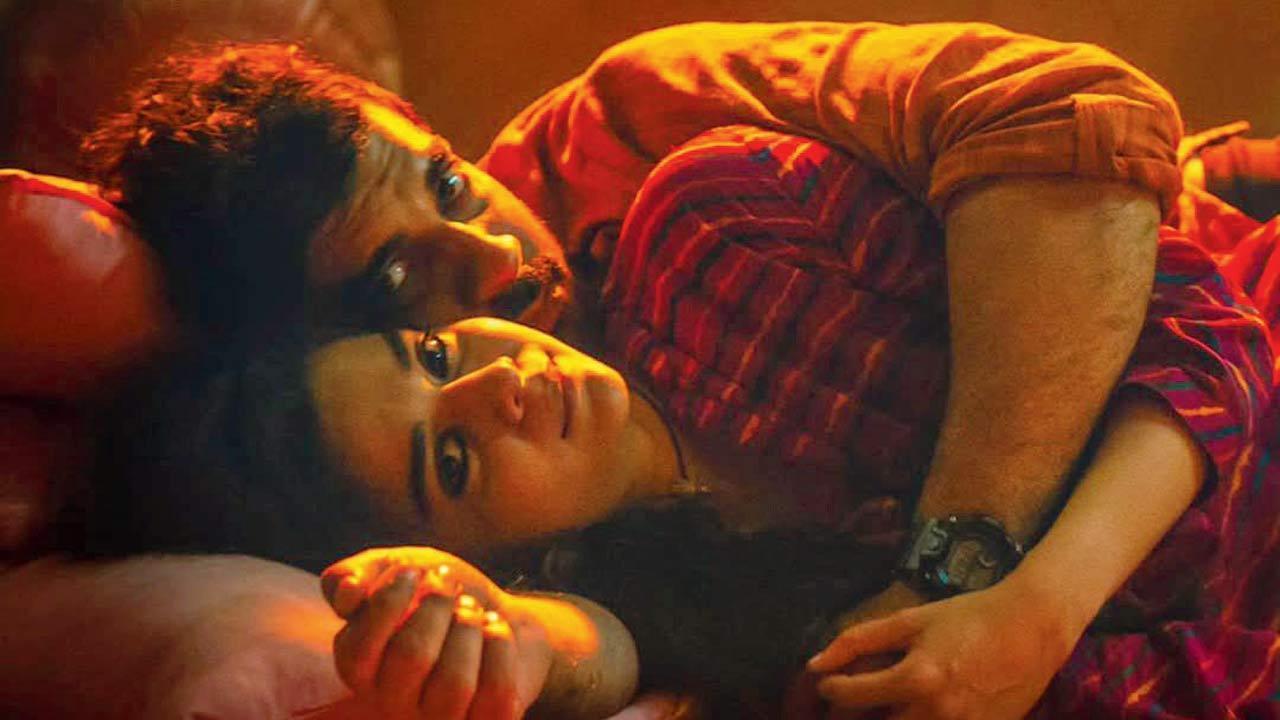
Stating that Saale Aashiq offers a different take on the violence surrounding inter-caste love, director duo Garima-Siddharth on how A-list stars were wary of playing the fiery leads
Mohar Basu (MID-DAY; January 22, 2025)
It has taken writer-director duo Garima Wahal and Siddharth Singh, better known as Garima-Siddharth, 10 years to bring Saale Aashiq from paper to the screen. But the duo, who was writing television shows at the time, knew they were on to something when they wondered why films about inter-caste romances ended with the couple paying the price for their love. “It used to anger us. If you see Sairat [2016] or any film on caste-based murders, the couple dies in the end. Instead, we decided that the couple has to win in the end. Cinema should depict what happens in real life. But then, what if somebody had a plan? That’s where fiction comes in,” says Wahal.
With that thought, the two wrote and helmed the Tahir Raj Bhasin and Mithila Palkar-starrer that will première on Sony Max on February 1. Selling the film was tough. “COVID-19 came in the middle. Plus, Love Hostel [2022], a similar film, got in the way. But our pitch was distinct. Our couple goes after the families,” states Singh.
Wahal recalls how OTT platforms as well as stars were skeptical about coming on board. It took them a long time to find their leads, but today, they can’t imagine anyone except Bhasin and Palkar as the fiery couple.
“OTTs didn’t want to take this up. OTT platforms prefer an existing story. For instance, they adapted Black Warrant from a book. But they fear to take a punt on original stories. [In terms of actors], we met the A-listers, but they were wary of playing these characters. Tahir and Mithila were a breath of fresh air. Mithila picked up the accent required for the role. Actors today want to stay in their comfort zone. But Tahir and Mithila dared to be Shatru and Gudiya,” she says.
After the film was made, the next step was the CBFC clearance. Singh says that despite Saale Aashiq tackling the theme of caste violence, they consciously steered away from making it gory so as to get the U/A certificate.
“The CBFC wanted to give it an A certificate. But, eventually, we convinced them [to grant a UA certificate], saying that more people have to watch this film. We want teenagers to know right from wrong. Some cuts were asked, some even ridiculous, but none that compromised the film,” smiles Singh.
Today, pan Indian films are our big attempt. Everything cannot be pan India-Ratna Pathak Shah
8:15 AM

Onkar Kulkarni (BOMBAY TIMES; May 8, 2023)
At the recently concluded FICCI Frames 2023 Ratna Pathak Shah, Renuka Shahane, Swwapnil Joshi and Manasi Parekh shared their thoughts on how regional cinema needs to hold its own amidst the current pan-India cinema wave during the session ‘One Nation: Many Cinematic Voices’. As they spoke about the survival of films from various languages across India, Renuka stressed on the constant competition Marathi cinema has faced over the years.
She said, “We have yet not really cracked the code of competition with Hindi or Hollywood films, which are released in Maharashtra. I think as an industry, we have not been able to crack the viability code because if we have to dream any further, then we have to crack that within our own state first before we experiment with audiences all over India.”
‘WE NEED A PARADIGM SHIFT IN THE WAY WE EXHIBIT AND DISTRIBUTE FILMS’
Marathi films, too, have excelled at the box office and made noise, but Renuka pointed out that the pace has been quite sluggish. The actress feels that Marathi cinema faces a lot of competition and the industry should come together to find a solution.
She elaborated, “Films like Me Shivajiraje Bhosale Boltoy broke records, and Sairat did exceedingly well. But these are exceptions, how do we make these exceptions a rule is a question. The industry must come together and find a solution for it. I think we need a paradigm shift in the way we exhibit and distribute films because there has to be space for experimentation, which is not in direct competition with the rates of commercial Hindi, Telugu or Tamil films, otherwise, our films are never going to cross that barrier. If we are constantly faced with that competition of viability, we just do not have the theatres where our films will be released or subsidized over a period.”
‘TODAY, THERE’S A NEW AUDIENCE WHICH WANTS MORE OF THEIR OWN LIVES REFLECTED IN WHAT THEY SEE’
We have ample and diverse stories to tell from across the length and breadth of our country. In such a scenario, Ratna believes that there’s no need to focus only on pan-Indian films. Sharing her, she said, “Today, kids in their teens pick up a camera and make something. So, there’s that enormous change in the accessibility to resources. There are cheaper resources available to make any kind of content on social media. All these things have led to different kinds of content being acceptable to different audiences. Our mistake is that we keep imagining that everything should be acceptable to everyone. Today, pan-Indian films are our big attempt. Everything cannot be pan-India!”
She added, “There’s a new audience now, which wants more of their own lives reflected in what they see. I think that’s the big difference. The audience doesn’t want only fantasy. They know that life is tough, and they want to see some reflection of that, so I think that is another big change. We are becoming aware that India is more than just a small band of people and a small band of ideas. That wonderful diversity of India, which I am so proud of and which we have read about in school books forever, is something we have genuinely managed to preserve over 5,000 years of civilization. We have kept our differences, isn’t that wonderful? But today, we are busy trying to homogenize and movies have played a part in that.”
I know every film won’t be as successful as Sairat-Rinku Rajguru
8:14 AM

Preeti Atulkar (BOMBAY TIMES; March 26, 2021)

‘FEELS GREAT TO BE SHARING THE SCREEN WITH MAKARAND DESHPANDE’
Rinku will also be seen in another Marathi film, Aathava Rang Premacha, directed by Khushboo Sinhha and co-starring Makarand Deshpande and Vishal Aanand, soon. Rinku says that this is “by far the most challenging role” that she has done. Without revealing much, she adds, “It’s a love story, but not a typical one. Aathava Rang Premacha is as close to my heart as Sairat. And to be sharing the screen with an actor of Makarand Deshpande’s calibre was a great opportunity. During the shoot, I used to observe him to understand the finer nuances of acting.” The film was shot in 2018 and will release soon.
‘IT’S OKAY IF PEOPLE DON’T LIKE A FILM OF MINE’
She got a dream launch with 2016’s massive hit Sairat and became a star overnight. However, despite a great start, her other films — Kaagar and Makeup — didn’t fare well at the BO. Ask her if she feels pressured by the audiences’ high expectations, and she replies, “I just give importance to the film’s story and my character while considering a project. I don’t really dwell too much on the fate of the film. It is a collective responsibility. I am well-aware of the fact that not every film is going to be as successful as Sairat. When Kaagar didn’t do well, I wasn’t really shattered or upset. It’s okay if people don’t like a film. I don’t let failure or success impact me too much. For me, the most important thing is to give my 100 per cent to every character that I portray. I want the audience to appreciate my work and remember me for my good performances.”
‘I MAKE IT A POINT TO DEDICATE TIME TO STUDY’
The 20-year-old actress is currently pursuing her BA from a college in her hometown, Akluj. However, owing to her packed shooting schedule, she hasn’t been able to attend classes regularly. “Even before the Coronavirus pandemic, I wasn’t able to attend college regularly. I haven’t been able to attend online classes either. But I make it a point to dedicate some time to study regularly and catch up with my friends,” she says.
No one is doing charity by making films on Dalits. Do them right or stay away-Somnath Waghmare
8:10 AM

Despite the occasional film centred around a Dalit character, Hindi cinema has pretty much skirted around the realities of the caste system. This week, the poster of a forthcoming film, Madam Chief Minister, drew criticism for its problematic representation of a Dalit politician. Filmmaker and researcher Somnath Waghmare spoke to Sonam Joshi about the controversy and the importance of Dalit filmmakers telling their own stories
Sonam Joshi (THE TIMES OF INDIA; January 10, 2021)
Your academic research at the Tata Institute of Social Sciences in Mumbai focuses on the portrayal of caste in Marathi cinema. What about Hindi films? Has there been a positive change?
Historically, the Hindi film industry has been dominated by savarnas and keeps putting out their stories. Even though Mumbai was B R Ambedkar’s city, he has zero presence in cinema. For example, Franz Osten’s Achhut Kanya came out in 1936 when Ambedkar was already a strong leader and had debated with Gandhi on the Poona Pact but it ignores this. Instead, the cinema of that time glorified Gandhi’s idea of Harjians but not Ambedkar’s social vision of ‘educate, agitate, organise.’ Bimal Roy’s Sujata, which was made in 1959 and has a Dalit protagonist, makes a reference to Mahatma Gandhi but not to Ambedkar. These were parallel and progressive filmmakers but they ignored the anti-caste discourse and portrayed Dalit women as victims and male Brahmins as saviours. This tradition continues in films till today, whether it’s Bandit Queen or Article 15. In the latter, the police officer who came from a dominant caste doesn’t know his own caste. Is this possible in India?
After criticism, actor Richa Chadha who plays the lead in Madam Chief Minister, which is loosely based on Mayawati, argued that it was better that she play the role rather than such stories not being told at all. What is your take?
This argument reflects caste arrogance. Let’s start with the poster which was problematic because there was no reason to show the protagonist with a broom in her hand.
Mayawati is a well-educated woman and a four-time CM. Was she ever seen sweeping with a broom? Her father worked in a post office and she was a teacher. It is a stereotypical idea of Dalits to give her a broom and make her look weak. Even if there aren’t enough Dalit stories being told on screen, no one is doing charity by making these films. If you don’t have the skill, capacity or understanding to deal with such issues, it is better to pass the mike to people who do.
Do you draw hope from the rise of filmmakers such as Nagraj Popatrao Manjule (Marathi) and Pa Ranjith (Tamil)?
Filmmakers such as Manjule and Ranjith have tried to break this narrative of victimisation. For instance, in Kabali, Ranjith takes a mainstream actor like Rajinikanth and then talks about Ambedkarite politics. Manjule’s Sairat takes the core caste question in the village to the mainstream with a lot of honesty. Fandry also talks about Dalit assertion because the character doesn’t die in the end. These filmmakers portray Dalits as normal humans. Most importantly, these films have an ideological position. For instance in Kaala, Rajinikanth is a Dalit don from Mumbai’s Dharavi and uses symbols like Ambedkar, Phule and Buddha. In Fandry too, you see the imagery of these social reformers and their ideas come across. We see more people from marginalised communities attempting this in regional cinema but in Bollywood, where dominant castes dominate, there are very few possibilities.
How can the film industry encourage more diversity?
There are many Dalits, Adivasis and OBCs in the Hindi and Marathi film industries but they hide their identity by changing their last names. In 2019, Neeraj Ghaywan put out a call on Twitter for assistant directors and assistant writers from Dalit, Bahujan and Adivasi (DBA) backgrounds. Actor Niharika Singh also launched a film training programme for the DBA community. This is the only way. People may abuse reservations but because of them there is some diversity in every government department today. There is an annual diversity report in Hollywood. Imagine if we had to create a report like this. The truth would come out.
What are the common caste stereotypes portrayed in films?
Filmmakers usually glorify their own castes while Dalits, adivasis and OBCs are shown as peons and criminals. Recently, there was an ad that showed a man with a Dalit surname as an online stalker, which was later withdrawn. I haven’t seen any character named Waghmare in films, who isn’t a criminal. During research, I found that post-Sairat, there were no Dalit stories but a reaction in the form of titles with dominant caste surnames such as Carry On Deshpande. There is a lot of anti-reservation discourse in cinema as well.
What about your own journey as a filmmaker?
I choose subjects that are close to my experience. I made Battle of Bhima Koregaon in 2017 because I heard stories of the battle from my mother and grandmother while growing up. I am making a film on Chaityabhoomi, the resting place of Ambedkar, where lakhs gather every year on his death anniversary on December 6. I am also working on a biopic of anti-caste activist and sociologist Gail Omvedt, who came to India from the US, and her husband Dr Bharat Patankar, who lived just 10 km from my college.
However, there is one thing that I discovered when I went back to my village in Maharashtra due to the lockdown — caste hasn’t changed at all. Your personal worth is still decided by your position in the caste hierarchy. Even if you do a PhD from Oxford University, they still see you the same way.
I wanted to work with Nagraj Manjule even before Sairat released-Riteish Deshmukh
8:17 AM

Riteish Deshmukh on doing a trilogy with the filmmaker, working with Tiger Shroff and staying away from action in their film
Himesh Mankad (MUMBAI MIRROR; February 26, 2020)
 After a negative turn in Marjaavaan, Riteish Deshmukh is returning to the marquee as one of the central characters in Baaghi 3. The actor is an unusual entrant in the Sajid Nadiadwala-produced series, which is fronted by Tiger Shroff and is known for action sequences. Conceding that he was surprised when the role came to him, Riteish says, “I knew what Nadiad was going to offer. When he asked me to listen to a story of two brothers and Ahmed (Khan, director) came over for a narration, I was game.”
The 41-year-old actor reveals that the dynamic between his and Tiger’s character is like that of a mother and son. “One is weak while the other is strong. My character may be the elder brother, but Tiger’s Ronnie behaves more like his mother,” Riteish smiles.
The larger-than-life action sequences were shot in Serbia, which is portrayed as Syria in the film. “I had seen huge sets while working on Housefull 4 but to be around blasts, five-six tankers, army guys and choppers was like being in a toy store,” gushes the actor. When asked if he felt the fear of missing out, since he doesn’t have adrenaline-pumping scenes like Tiger in the film, Riteish reasons, “Things are designed in a certain way. Besides, everyone can’t do everything. My job here wasn’t to do action.”
He has shared screen space with Tiger’s father, Jackie, in Housefull 3 but this is his first film with the former. “I share a close bond with Jaggu Dada. Tiger is disciplined, lovable and well brought-up,” he smiles.
 Next up for Riteish is a trilogy on Shivaji Maharaj, the Maratha warrior-king, which will be directed by Sairat filmmaker Nagraj Manjule. “A film on Chhatrapati Shivaji Maharaj is a big responsibility. We have to be true to real events as people respect this great personality. Hopefully, we will do justice to the subject,” he says.
The film goes on the floors this year. “I had wanted to work with Nagraj ever since I watched Fandry (the director’s debut film); this was before Sairat released. He, too, had wanted to make a film on Chhatrapati Shivaji Maharaj for a while. When we met, everything just fell in place,” the actor shares, adding that he will start prepping for the role soon.
Ritiesh hails his debut, Tujhe Meri Kasam (2003), as a gamechanger. “I have grown as an actor. In the early days, I was called ‘wooden’ and ‘furniture’. To get favourable reviews after that is a big deal,” he explains.
He has been a regular fixture in several franchises, including Masti, Kya Kool Hai Hum and Housefull. When asked to name one of his films that had the potential to be spun into a series, he says, “It has to be Bluffmaster. Once, Abhishek (Bachchan, co-star) and I had spoken to Rohan Sippy (director) to make part two, but some things are not meant to be.” And will there be Housefull 5 soon? “Akshay, Nadiad and I are already discussing Housefull 8,” he jokes.
People love and respect me. I, therefore, believe that I owe them something-Amol Palekar
8:10 AM

As veteran actor Amol Palekar returns to stage after 25 years, he speaks of his three-point guide to picking new projects
Vinaya Patil (MID-DAY; November 17, 2019)
It is the thrill of doing something "totally new" that has pushed Amol Palekar to give us all the beautiful movies that he has. His new play, Kusur – The Mistake, is no different. Written and co-directed by Sandhya Gokhale, the play is a social thriller, and "an experiment never seen before," according to her.
The play, an adaptation of Danish film Den Skyldige, sees Palekar's return to the stage after 25 years. It will be first staged at NCPA on November 24, the day Palekar turns 75. He plays the role of an ACP which is "extremely challenging, physically and emotionally, especially at this age," Palekar says, adding that even as the play is a thriller, it can be categorised into a niche socio-political genre. "In India, when you say political, one only imagines party politics. But that's not what this play is about; it has several layers to it that can open up to multiple issues," he explains, seated in his home-turned-studio in a quiet lane on Pune's Prabhat Road.
On what made him end his stage hiatus, Palekar says, "I am an actor by accident and director by choice. I hadn't acted in years. The reasons are many. Once I know that I have had a successful project—personally and for the audience—my interest in it vanishes. I, then, want to do something different. People love and respect me, which is overwhelming. I, therefore, believe that I owe them something, and this was my best possible chance—an extremely challenging script. It is nothing close to what I have done in the past."
But, even for the talented artiste, "unknown territory is always scary, especially when you are successful." It is his formative theatre days that have taught him to do it. Has it ever failed, his attempt at experimenting? "Very rarely, perhaps a couple of times: once with the 2013 Marathi movie Houn Jau Dya that I directed and with a French classic adaptation," he says. The couple of failures though were far too less in comparison with the numerous hits that the actor has delivered over the decades—from Chhoti Si Baat and Ankahee to Bhumika, Thodasa Roomani Ho Jaye and Apne Paraye.
What Then Does He Look At In The Projects He Chooses?
Three things. "It has to offer something new, to me and to the audience. It has to say something about contemporary spaces, and very importantly, if it is not a progressive thought, it must at least not be a regressive one," says the man who insists that he "acts with conviction". And in that case, he does not want to take up something regressive and present it convincingly. That is "supremely dangerous."
Which brings us to his idea of contemporary spaces and standing up for the right causes. Palekar, who has more often than not challenged the establishment, says he is not against parties but against "atrocities committed by the establishment." From speaking against The Emergency to protesting the government's idea of censorship, he says he must be the "only man to have protested the maximum number of governments—Congress, BJP, Janta Dal and more."
On the current state of cinema, Palekar says the scene in India is once again where it was during the Renaissance period of the early 1970s. "We are once again making some path-breaking cinema, regional cinema is rising yet again, and movies are going beyond pure entertainment." The one disappointing bit though, for him with regard to regional cinema vis-à-vis Bollywood, is that the latter has trained us to look at art from an extremely commercial point of view. Citing an example of the Marathi hit Sairat, Palekar says that all that was spoken about the movie was its crossing the Rs 100-crore mark. "[Nagraj] Manjule has done some phenomenal work with that movie. It is his filmmaking that has turned a simple story into beauty. But no one spoke about that," he sighs, hoping that the way we look at art and cinema evolves for the better, sooner than later.
It's always interesting to try something new-Sanjay Dutt
7:46 AM

As he forays into regional cinema with his production Baba, Sanjay Dutt says he is open to the idea of acting in Marathi films
Sonil Dedhia (MID-DAY; July 18, 2019)
 Months after announcing his foray into production with Prasthanam, Sanjay Dutt has ventured into regional cinema with the Marathi offering, Baba. The actor says that it was an emotional decision to back the project as the Deepak Dobriyal starrer revolves around the deep bond between a father and son. "When I sat for the narration, I was sure that I wanted to produce this film, as I want to be associated with good subjects. It isn't a deliberate attempt to dedicate the film to my father [Sunil Dutt], but he was my rock. I believe that the first person a child looks up to is his father."
The actor is fondly known as 'Baba' in Bollywood. Point this out to him, and he calls it a happy coincidence. "The credit goes to the director [Raj Gupta]. When they came to me, I was pleasantly surprised to hear the title." As he throws his weight behind regional fares, the star is also open to the idea of acting in them. "If something interesting comes my way, I wouldn't mind trying my hand. It's always interesting to try something new."
There is no denying that, at 59, Dutt finds himself busier than ever. While his recently opened production house needs his attention, the actor also has been dividing his time between his four films, Panipat, Shamshera, Prasthanam and Bhuj: The Pride Of India. But he shows no signs of slowing down — his banner is gearing up to bankroll a Punjabi film titled Bank Loan. "We want to create a balance between content-driven and commercial entertainers. A film like Sairat (2016) was a huge success, but at the same time, Lai Bhaari (2014) also did fantastic business. So the idea is not to compromise on content."
Sairat gets a TV version titled Jaat Na Poocho Prem Ki
8:00 AM

Natasha Coutinho (MUMBAI MIRROR; May 13, 2019)
 Nagraj Manjule’s 2016 Marathi film, Sairat (left), is all set to get a TV version titled Jaat Na Poocho Prem Ki. Kinshuk Vaidya and Pranali Suresh Rathore play the leads; the setting has been moved to Uttar Pradesh but like the film, it is a story of young lovers battling caste differences.
Confirming the news, Vishnu Shankar of &TV pointed out that Sairat was a beautifully narrated story of love and loss, a social evil that is deep-rooted in the Indian psyche. “I believe a strong message addressing this needs to reach every Indian household and television is best placed to achieve that,” he asserts.
The romantic drama had some beautiful songs composed by Ajay-Atul, and the title track, “Sairat Zaala Ji” is being recreated for the show. While the original tune has been retained, it will have fresh lyrics by Manoj Muntashir and vocals by Yasser Desai and Aishwarya Pandit. It was sung originally by Ajay Gogavle and Chinmayi Sripada.

The highest grossing Marathi film of the time, Sairat launched Rinku Rajguru and Akash Thosar. It bagged a National Award and 11 Filmfare Marathi Awards. It was remade in Hindi as Dhadak last year in Hindi with Ishaan Khattar and debutante Janhvi Kapoor. It also spun four other regional versions.
When I am here in the city, in Mumbai, I see women can go anywhere, do anything-Rinku Rajguru
7:43 AM

The Sairat sensation makes a comeback with her second Marathi film — and a determination to make a mark in the movies
Suktara Ghosh (MUMBAI MIRROR; April 21, 2019)
She became an overnight sensation as the fearless firebrand Archi in her debut film in 2016. Now, Sairat actress Rinku Rajguru is returning to the screen with her second Marathi film, Kaagar (Tipping Point) after a hiatus of three years. It’s easily one of the most-awaited films this year, with critics, fans, and the box office eagerly waiting to see if the 17-year-old can recreate the magic on screen.
“I was getting many offers but I didn’t want to play another Archi,” says Rajguru, who took a break to appear for her HSC examinations (“It went very well,” she nods enthusiastically). Kaagar, directed by Ringan maker and National Award-winner Makarand Mane — and co-starring Shashank Shende and Shubhankar Tawde — is a political drama set in small-town Maharashtra, and is set to release on April 26. Rajguru plays Rani, a girl who steps out of the confines of her home to join the world of politics.
“I have lived Rani’s life. I am from a village too [from Akluj in Solapur]. There, girls have many dreams and talents, but their lives are trapped within four walls. Every household has its own politics, and the lives of the women are governed by innumerable rules — you can’t go out without a dupatta; you must cover up; you have to return home within a stipulated time and can’t talk to boys — the list goes on. Rani comes from this background and wants to do something for these girls,” shares the National Award-winner while on a lightning tour of Mumbai, Pune, Satara, Sangli, Aurangabad and Kolhapur, to promote the film.
Rajguru has had a similar transformation herself. After the tremendous success of Sairat — it was the first Marathi film to earn Rs 100 crore and created enough waves for Bollywood to sit up and take notice with the remake, Dhadak — life is not the same.
“Going out is a problem because everyone recognises me now. Once I went out with my face covered with a dupatta, and people recognised me from my eyes. They asked if I am Archi, I said ‘no’. They said ‘your eyes are like Archi’s’, and I said, ‘accha?’ and thanked them,” she laughs. “But I really enjoy it. This is a new life, and it’s a lot of fun.”
Rajguru for all her youthful exuberance and confidence, seems to have a steady head on her shoulders. “I feel films should have some message to take back home, and be realistic — something the audience can relate to. And I don’t like films which revolve around brawny heroes who are saving the world all the time. I’m looking for characters that can inspire girls in villages and small towns to step out and achieve their dreams,” she says. Coming up after Kaagar is a film revolving around acid attack victims. Tight-lipped, Rinku denies any similarity with the much-talked about Chhapaak, starring Deepika Padukone. “Ours is a fictional story”, is all she says.
Taking inspiration from the exposure her stardom has brought, Rajguru says: “When I am here in the city, in Mumbai, I see women can go anywhere, do anything, own their own homes. This doesn’t happen in villages.” And then adds with a smile, “My village is now very proud of me.”
Playing her Kaagar role didn’t, however, come easy. “I don’t understand politics at all. I say whatever I feel like, I am very bindaas. Rani, on the other hand, thinks carefully before doing anything and knows exactly what she wants. So this was difficult for me. I studied our women in politics — observed how they sit, how they talk, and the issues they deal with. We also did workshops, which helped me bond with my co-actors, and that translated well on screen,” she says.
The Vicky Kaushal and Sridevi fan has shed quite a few kilos in the last three years and blossomed into a self-assured person. Bollywood offers have been coming her way too, but Rajguru, who once nursed dreams of becoming a doctor, is only up for meaty roles. Quiz her about feeling the pressure that comes with being in showbiz and she says, “I don’t take it as pressure. If you want to be an actor, you have to look good too. So it’s alright.” She also enjoys being the youngest on the sets. “Everyone gives me a lot of love — and chocolates,” she laughs.
Unlike her fellow Gen-Z compatriots, Rajguru largely steers clear of social media. “I only promote my films there; it’s great to see the energy of the fans. But I don’t like to use social media otherwise,” she says. Hand-picked by Sairat-director Nagraj Manjule when she didn’t even know what ‘audition’ meant, Rajguru’s journey is certainly the stuff movies are made of.
Security for Rinku Rajguru as she sits for HSC exams
4:25 PM

MUMBAI MIRROR (February 22, 2019)
When National Award-winning actress Prerana aka Rinku M Rajguru from Sairat stepped out to write her first HSC exam paper on Thursday, virtually the whole state wished her “all the best”. She arrived at the Tuljabhavani College of Arts and Commerce in her home village, Tembhurni, with her parents shortly before noon. Fans had gathered to catch a glimpse of their favourite heroine and cheered, “Do well”, “We pray for you” as she stepped out of the car and walked quickly in. A police posse requested by college authorities ensured her uneventful entry into the campus, which will be her exam centre for the next fortnight.
An external Arts faculty student, she will be appearing for papers in English, Marathi, Political Science, Economics, History and Geography. In 2017, Rinku had cleared her SSC exams with 66.40 per cent marks, two years after here acting debut. She wanted to beocme a doctor but ended up becoming a star at 14 and had to quit school, appearing for both exams as an external student.
A chance meeting with National Award-winning director Nagraj Manjule resulted in the role of Aarchi in Sairat, which set a new benchmark for regional films. The film has already been made in Hindi, Bengali, Odiya, Kannada and Punjabi besides being dubbed in several languages. Rinku’s next screen turn is in the Marathi film Kagar, due to release shortly.
Box Office figures don’t matter, people’s reactions do-Riteish Deshmukh
8:31 AM
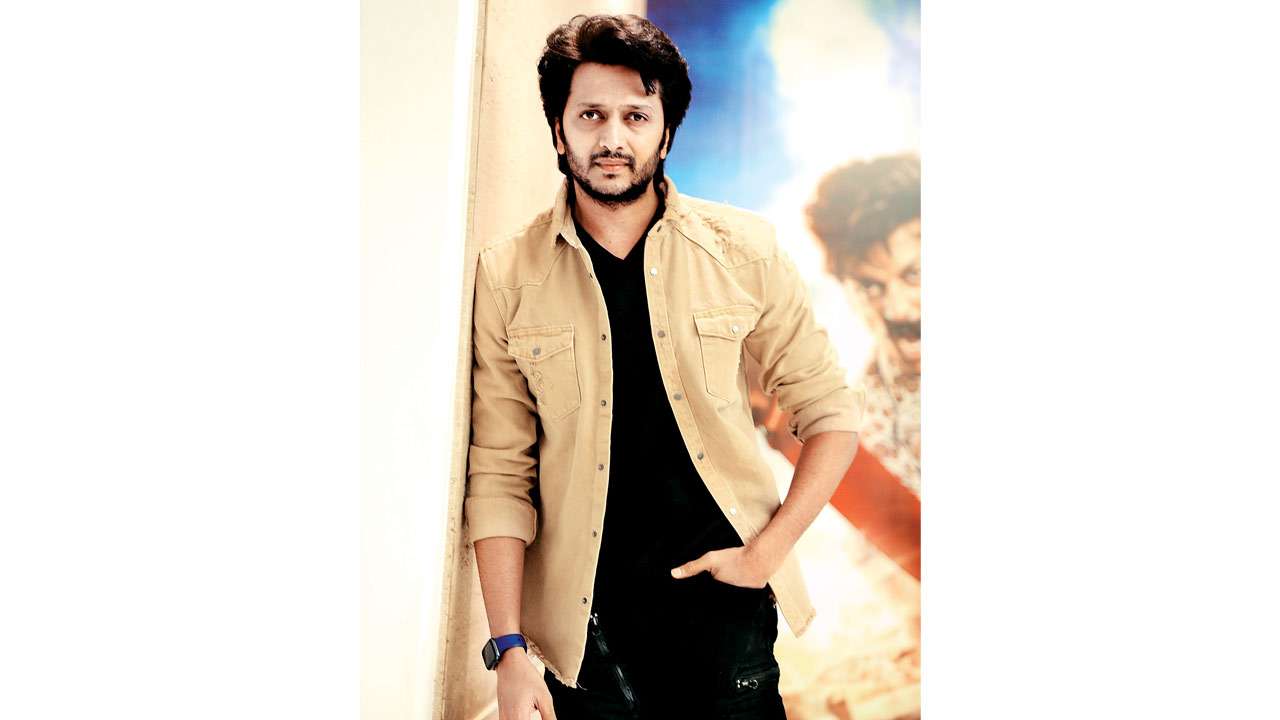
Nayandeep Rakshit (DNA; December 9, 2018)
Four years ago, Riteish Deshmukh made his debut in Marathi cinema as a producer with Lai Bhaari. His maiden venture went on to do over Rs 40 crore business at the box office. Proud of his Marathi legacy, the actor returns to the same space with Mauli. He tells After Hrs why there has been a long gap between both the movies, how he strikes a balance between regional and Hindi cinema as well as his learnings as a producer. Excerpts…
Would you say that Lai Bhaari is instrumental in changing people’s perception towards Marathi cinema?
Let’s not give Lai Bhaari that credit. It all started with films like Shwaas (2004) and Harishchandrachi Factory (2009), which won the National Award and were selected as India’s official entries to the Oscars. That’s when people started noticing the kind of content that was being generated in the Marathi industry. There are two parameters for films — content and commerce. But when the numbers started coming in, things changed. It began with Balak Palak (2013) which made Rs 12 crore. Then came Duniyadari that raked in Rs 25 crore. In 2015, Timepass 2 did around Rs 30 crore and after that, Lai Bhaari broke the Rs 40 crore mark as it had action and drama. So, Marathi industry was not only producing content but also making good numbers.
Natsamrat, which released in 2016, set the cash registers ringing with Rs 50 crore. Three months later, Sairat managed to cross the Rs 90 crore mark at the box office. Rs 90 crore in Marathi is almost like a Rs 300-400 crore film in Hindi. No Hindi movie, barring Baahubali, has done that much business in Maharashtra. Interestingly, all these flicks that have done these numbers opened in the same range of Rs 2-3 crore. So, now the aim is to increase the opening figures. But how do we do that? Do we increase shows? Because then, Hindi films will also take these shows up. So, it’s a double fight.
Regional and Hindi cinema fighting for screens has always been the case...
Yes, and it will continue to be so. There’s nothing bad with that. Everyone wants the best for their films. Now, it’s up to the audience to watch whatever they want to. But the only thing is that the other person should at least get a decent opportunity to showcase. Opportunity is an issue here.
You even moved your film, as a sign of love and respect for Shah Rukh Khan’s Zero...
Shah Rukh is doing the biggest movie of his career, in terms of production, and it’s an amazing film that he’s bringing to life. Mauli is the biggest film that my production house is making. The scales are completely different, and so are the budgets. I was releasing it on December 21 because it’s the holiday season. Initially, Total Dhamaal was supposed to open in cinemas on December 7. So, I wanted to keep a two-week gap between both my movies. With Total Dhamaal shifting to February 2019, I realised that if Mauli releases along with Zero, the business of both the movies would get affected. That’s when I decided that my Marathi movie should hit the marquee a week earlier. So, it has worked out well for Shah Rukh and me. And I’m glad we could do so for each other’s betterment.
What took you four years to come back with Mauli?
We were planning to release it sooner. We had developed it and announced it. However, later, we realised it’s not what it should be. After that, I got busy.
Does it become difficult to juggle between the two industries?
It is difficult but the responsibility I have for my Marathi films and productions is much more. I have to sit on everything — right from the font of the poster to whose name will be placed where. In the case of my Hindi films Housefull or Dhamaal franchise, I only have to do my photoshoots and promote the film. Life as a producer is challenging, engaging and extremely gratifying. It’s amazing to see how a script comes to fruition.
Is Mauli a takeaway from Lai Bhaari?
No, it’s not a part two. It’s a different story. But the essence and the premise remains the same.
People are increasingly remaking Marathi films in other languages…
There’s a certain sense of recognition today. Cinema and entertainment will soon be language agnostic. I’m watching a Spanish series with subtitles on my TV and enjoying it as it’s exciting. Mumbai is a true cosmopolitan city in the country where statistically 35 per cent of the population is Marashtrian while the remaining constitutes people from different corners. When a film becomes the talk-of-the-town, everyone gets excited to go and watch it. The non-Marathi speaking audience has also started watching our films, which is a great boon to our industry.
Have you ever thought of dubbing Mauli in Hindi and releasing it across India?
No, because if I had thought that way, I would have made it in Hindi. One should not confuse the basic core reason behind creating a movie. And that’s your audience. A Hindi version will take away a lot from the way I wanted to make the Marathi movie. Dubbing is an option. Mauli and Lai Bhaari both can be remade as great Hindi films too. But as of now, let’s see what happens.
Lai Bhaari was a huge success. So, the expectations from this film are quite high. Are you feeling the pressure?
No. Lai Bhaari, Sairat and other films were loved by the audience and that’s why they fared so well at the box office. If Mauli has to do the same business as Lai Bhaari, it has to be appreciated by viewers. Because of my debut Marathi film, I got the courage to make Mauli a bigger film in terms of budget, scale, action and songs. But if you think I’m looking at a business more than Lai Bhaari, then no, I can’t gauge that right now. Box office figures don’t matter, people’s reactions do. If people connect to the film, it will do good. Unfortunately, today we’re only discussing collections, which are immaterial. In recent times, smaller films have done Rs 100-crore business solely because of their strong connect.
Fenil's Bollywood Talk # 526
9:22 AM

WILL DHADAK MANAGE TO WORK DESPITE THE CRITICISM?
Launching newcomers has always been a risk. But if the newbies are already known (which usually happens if they happen to be star kids), then that can significantly help the film generate buzz. Janhvi Kapoor was one such star kid who has got noticed long back when she used to accompany her parents Sridevi and Boney Kapoor for public events. Everybody was of the opinion that she was a star in the making. More than a year ago, it became evident that she’s going to be launched by none other than Karan Johar. Finally, the reports turned out to be true. Janhvi was all set to make her debut in Dhadak, the official remake of Marathi cinema’s biggest blockbuster Sairat.
Dhadak also stars Ishaan Khatter, half-brother of Shahid Kapoor. He’s not as popular as Janhvi but had got noticed. Moreover, his first film released few months back, Beyond The Clouds, and it proved that he’s a fine performer. Dhadak is directed by Shashank Khaitan, who has carved a niche with his desi entertainers like Humpty Sharma Ki Dulhania and Badrinath Ki Dulhania. Dhadak also seems quite rooted and appealing. This would definitely give the film a pan-India appeal. As a result, it has chances not just in multiplexes but also in single screens, in B and C centres as well. Songs have worked well. A section of audiences criticized Zingaat, which also was there in Sairat and is a rage. But the song has only helped add to the buzz. Also, the soulful title song is already a chartbuster.
Dhadak releases solo on July 20. There’s a Hollywood biggie, Skyscraper, releases as well but it won’t be a big competition. Last week’s Soorma has underperformed and Sanju has already earned 90-95% of its lifetime earnings. And there’s no major competition till the release of Vishwaroop 2’s release on August 10. With 3 open weeks of sorts, Dhadak can earn big time at the box office. There’s also a chance that it can cross the Rs 100 crore mark. If that happens, it’ll be the first debutant film to do so. However, the reports have to be positive. Or else, it can crash in the weekdays. Nevertheless, a 8-10 crore opening is definitely on the cards!
WOULD YOU LIKE TO SEE DHADAK AND WHY? DO LET ME KNOW!
WOAH! Will Dhadak be the first debutant film to cross Rs. 100 crore mark?
10:07 AM

Sairat is the biggest blockbuster of Marathi cinema and also one of the most loved films of the regional industry. Released in April 2016, the film had made noise due to its impressive trailer, songs and debutant actors. But the film unleashed a wave of madness and craze like never before. It is the biggest Marathi grosser and it doesn’t look like any film in near future would be able to cross its earnings. Surprisingly, the non-Marathi audience also lapped up the film in a big way. The love and admiration for this film is unparalleled.
As a result, a section of audience was a bit apprehensive when reports emerged that Karan Johar is all set to remake Sairat in Hindi. The reports turned out to be true. The film was titled Dhadak and it became the launch vehicle of Sridevi’s daughter Janhvi Kapoor and Shahid Kapoor’s half-brother Ishaan Khatter (Ishaan appeared in Beyond The Clouds which released recently but the film was small, hardly noticed and hence, Dhadak would be his debut of sorts). Numerous posters were launched way back when the film went on floors and it looked quite nice. Still, the doubts remained.
However, most of the doubts were vanished as soon as the trailer was out. Both Janhvi Kapoor and Ishaan Khatter look great and their chemistry is electrifying. The look of the film is appealing and director Shashank Khaitan has kept the essence of Sairat intact. At the same time, he has added his own bits and the amalgamation of the two is just right. Some people were also worried whether Sairat’s popular song ‘Zingaat’ would have been recreated well in Dhadak. The song has got mixed response but more or less, it has added to the excitement for the film.
Moreover, the film has all the trappings of a commercial entertainer. It is very rooted and hence has a pan-India appeal. Moreover, the film talks about love, separation, class divide, elopement etc and all these factors will attract a large number of audiences. There’s a lot of curiosity about both Janhvi and Ishaan and this will also help the film at the box office. And of course, with Dharma at the helm of affairs, they have left no stone unturned in ensuring that the film makes a lot of noise everywhere pre-release. As a result, is it safe to assume that Dhadak would be able to cross the coveted Rs. 100 crore mark? The chances are very much there. Apart from the above mentioned factors, it releases solo on July 20. There’s not much of competition till August 10, when Kamal Haasan’s biggie Vishwaroop 2 releases. As a result, it can easily cross the said mark within the 3 week time frame.
If that happens, Dhadak would be the first film starring debutants to do so. In recent times, there have been around 5 significant films, all starring newcomers. Out of these, Student Of The Year has been the most successful. It was the launch vehicle of Varun Dhawan, Sidharth Malhotra and Alia Bhatt and had collected Rs. 62.94 crore. Coincidentally, this was also a Dharma venture and was directed by Karan Johar himself. Next on this list is Heropanti, starring Tiger Shroff and Kriti Sanon. The action entertainer performed impressively at the ticket window, grossing Rs. 50.51 crore. Then there was Shoojit Sircar’s Vicky Donor, which served as the debut film for Ayushmann Khurrana and Yami Gautam. It collected Rs. 41 crore. The other two flicks were Hero, starring Sooraj Pancholi and Athiya Shetty and Saawariya, starring Ranbir Kapoor and Sonam Kapoor, and both these films flopped.
So Dhadak’s target is to break Student Of The Year’s record of Rs. 62.94 crore which should be a cakewalk considering the hype and entertaining content. And then the Rs. 100 crore mark should also be crossed, if all goes well. And if that happens, just like how Sairat made a record of sorts at the box office, Dhadak shall also follow suit!
We didn’t make Dhadak to outdo Sairat-Ishaan Khatter
6:52 AM

Neha Maheshwri (BOMBAY TIMES; July 13, 2018)
Ishaan’s choice of his debut film, Beyond The Clouds (BTC), which released earlier this year, was unconventional and rare. However, his performance grabbed eyeballs and he left the audience impressed and eager to see more of him. Now, his second film, Dhadak, which is the Hindi adaptation of the Marathi blockbuster, Sairat, has added to the buzz around him. In an exclusive interview with BT, the young actor talks about Dhadak being compared with Sairat, his equation with co-star Janhvi, who is making her Bollywood debut, and why he is not bothered about being judged. Excerpts…
Sairat had amassed much acclaim from the critics as well as the masses. Since it has set such a high benchmark, are you feeling the pressure to live up to expectations?
Usually, I tend to feel the pressure more for other people than myself. However, this time around, I am feeling more pressure than during my first film, BTC. Having said that, the pressure doesn’t come from a negative space. It’s just that there is a lot of anticipation, nervous energy and excitement. The way the film is being presented and the banner (Dharma Productions) that’s backing it, make it rather overwhelming. Janhvi and I are deeply attached to this film, mostly for what we have been through during its making.
Talking about pressure, how are you dealing with the comparisons between Sairat and Dhadak on social media?
I have been enjoying some of the trolling, but it’s important to maintain your perspective amidst all of that. People are judging a full-length feature film on the basis of a two-and-a-half minute promo. What matters will be the opinions that come after one has seen the film. While the key elements of Sairat have been retained, Dhadak is a new film in itself. In fact, it’s the characterisation that makes it fresh. Shashank’s (Khaitan, director) imprint on Dhadak is huge. He has brought a lot of his own life into it. It’s his interpretation of Sairat, which is also a kind of template for the films we have been watching over the years, be it Romeo And Juliet or Qayamat Se Qayamat Tak. We didn’t make Dhadak to outdo Sairat. The idea is to present a story that will resonate with a larger audience. Sairat was a phenomenal film because besides being engaging, entertaining and artistic, it also had a socially relevant message. However, Dhadak is not its copy or made under its shadow. Sairat has inspired us to do something of our own.
Many feel that Sairat worked because of its raw treatment and the fact that it was a small-budget film. Dhadak, on the other hand, looks mounted on a larger canvas, and with faces like Janhvi and you..
I don’t completely understand the term ‘Bollywoodise’. According to me, it means a certain production value, feel and projection. But I think what’s important is to understand the film that you are making and the reality of the characters and their world. Also, the tonality of our film and the promo so far have been largely of the first act of the film, which is slightly dreamy and fantastical. I don’t think any attempts were made to Bollywoodise this film or to de-Bollywoodise it.
There is a perception that today’s generation isn’t capable of falling in love like the characters in Sairat and Dhadak...
I don’t agree with that perception. We live in a world where there are over seven billion people and there are many stories that make you hopeful and optimistic about love. The fact that we are making a film about love, with conviction proves that it exists. I am not somebody who can trick myself into believing something, though that’s an actor's job. Doing a film, which is primarily about unconditional love, would be a farce if I were just pretending. So, I do believe that the kind of love we are talking about, exists. Love is in smaller gestures. I am a romantic at heart, and I think I can fall in love like my character… I am capable of that (smiles!)

BTC wasn’t watched by a lot of people. Having said that, these are labels that people give. I have heard too many since childhood — star kid, industry insider, so on and so forth. I don’t use these terms. For me, Dhadak is a film and I am an actor. I got the opportunity to do BTC and felt strongly about it. Majidi Sir wanted me in the film and Karan (Johar, producer) was kind enough to allow me to it first. Then Dhadak happened and again, I am very happy to be a part of it. I am just 22 and feel very fortunate that I get to act. I always wanted to start early and I am just trying to grow.
One of the main highlights of Dhadak is your pairing with Janhvi, who is making her debut with this film. Tell us about your equation with her...
Janhvi is quite a comic relief on the set. She keeps doing these funny things unintentionally, cracking all of us up. She might seem a bit quiet, especially when she is representing the film, but that’s because she has her game face on. She is quite notorious (laughs!). When she feels at home, she is her uninhibited best and becomes a prankster. Actually, we played a lot of pranks and had great fun on the set. It’s been perhaps the most delightful experience of our lives so far, if I can say that on her behalf. We had a wonderful time prepping for the characters together. We got a lot of time to understand the cultural milieu, the mind-set of the characters and we also got a feel of Udaipur. We interacted with a lot of local people there. We were able to walk around without any restrictions.
Soon, you will be a known face, who probably won’t be able to walk around the streets without being noticed or being captured by the paparazzi. How prepared are you for this phase of life?
If people have to judge me, let them do it. I do believe that it’s important to protect your personal space. Encroachment into personal life is not something any celebrity asks for. Having said that, it’s important to be aware that people will have an opinion on your personal decisions as well.

Now, I am waiting for Nagraj Manjule to see Dhadak-Shashank Khaitan
8:31 AM

Chaya Unnikrishnan (DNA; July 12, 2018)
After helming two superhits, Humpty Sharma Ki Dulhania (2014) and Badrinath Ki Dulhania (2017), Shashank Khaitan is ready with his next directorial, Dhadak. The film, which is based on the Marathi blockbuster Sairat, will mark the debut of late Sridevi and Boney Kapoor’s daughter Janhvi. It also stars Ishaan who won acclaim for his debut movie, Majid Majidi’s Beyond The Clouds. Here, the director talks about working with the newbies, comparisons with Sairat and why he wanted to tell a new story set in a different region.
Humpty Sharma Ki Dulhania and Badrinath Ki Dulhania were based on original scripts. What prompted you to make an adaptation of Sairat?
I saw Sairat for the first time with my mother in Nashik. I remember I got out of the theatre shocked, excited and completely dazed. Immediately, the thought occurred to me that I should adapt it. I called Karan (Johar) and requested him to see Sairat. Within two days, I watched the film with him, again. Karan asked me why I wanted to adapt it, when it was already such a big hit. ‘What is it you want to tell that is different?’ he questioned. I took him through the changes that I wanted to make in terms of the set up, where I wanted to take the movie, how I wanted the characters to be slightly varied and the conflict that would be similar yet different at the same time. I wanted to take the essence of Sairat and make a film that would have my voice, which is Dhadak and give it its own identity.
What were the challenges while making Dhadak?
The challenges were the same as they were with my earlier films — to make an honest movie. Here, the responsibility was more because we were adapting not only a cult film of Maharashtra but also of India. I had to ensure that I made it with the same honesty, not try to justify anything but take the responsibility of making a good film. Also, Janhvi and Ishaan, who were entering the movie business, were completely depending on my guidance. I had to ensure that I got the best performances out from them. That’s been the approach — to keep it simple and not complicate it. While adapting the film, I had to make sure that I retained everything that I felt good about the movie and didn’t do anything different just for the sake of it.
Ever since the trailer is out, there has been talk about how you have given this story a better and glamorous spin...
(Cuts in) It’s not better. People are assuming that after watching the trailer. Udaipur looks exactly the way it is. I am not trying to make it glamorous. I am staying authentic to how the city is. That is the way people there dress or look. There is a little bit of royalty, which comes from a different class and that’s where I wanted to set the film. I understand that region better than if I had tried to go more rural or in the interiors. Sairat starts with a cricket match and I have played the sport as a youngster in places like Lasalgaon and Kolhapur. That is one of the reasons I connected to Sairat on a much deeper level. I know Marathi, I have studied it while living in Nashik. I understood the victory of language that was there. Having understood it, I wanted to tell a new story. If I set Dhadak in Maharashtra or in the interiors, then why am I making this film? I can just dub or subtitle the original. But I wanted to give it a different voice and approach in a different region. Udaipur is actually a nice conflict. It has amazing palaces, small gullies and places that look completely distinct. It’s an honest adaptation and not something done for the heck of it.
Are you prepared for the comparisons? How do you plan to cope with it?
I don’t need to cope with it as I am completely prepared for comparisons with Sairat. I know the pros and cons of what we have done. I am aware that people, who have seen the original, especially in Maharashtra, wouldn’t readily be accepting it. Even as far as the song Zingaat is concerned, there is a mixed reaction. People, who didn’t understand the original version, love the song. I am aware of the criticism as well. While making creative material, I am open to both praise and criticism. Even when Dhadak’s title track released, I knew what impact it would have. I knew how Pehli Baar, which is Yad Lagla in the original, would be received. The reason for retaining these songs is not commercial. It was done because they added something to the movie. Sairat’s music is world class, the melody is rich and universal. It ignites emotion. I am open to whatever people have to say, I have extreme faith in Dhadak and I’m proud of the film.
After working with Varun Dhawan and Alia Bhatt, how was it working with Janhvi, who was a debutante and Ishaan, who was just one film old?
This was to be Ishaan’s debut film, too, but he got a unique opportunity to collaborate with Majid Majidi and we were more than happy to let him do so. Working with Janhvi and him has been a lovely experience. Yes, this is the first time I am directing debutantes. When I worked with Varun and Alia, they were one film old and had learnt a lot from Karan Johar, but they were still new and young. Now, I am much older than when I first met Varun and have a fatherly instinct towards Janhvi and Ishaan. I have a certain process with which I direct my actors, so I took them over that journey as well.
Midway through the shoot, there was a tragedy when Sridevi passed away. It must have been difficult for Janhvi to resume after that. How did you handle it?
Janhvi resumed 13-14 days after her mother’s demise. It was difficult, but half the job was done by her family, who were extremely strong. They really took care of her. Janhvi herself is a brave girl. Her first day on the set was normal. We didn’t make any conscious effort to sympathise with her or try to be stricter or more disciplined. We just let the day go as it progressed. We wanted to get back to work as we had our commitment to our producer. Even Janhvi didn’t want to take a longer break because an empty mind is something which will trouble you more. It worked out well for her as she had a film to go and work on it.
Did you make any changes in the schedule or the scenes for her?
No, I stuck to the schedule. It was not one scene, we had a 12-hour shift. We kept shooting like maniacs. If you change a scene, it shows an effort to say that listen ‘I am feeling bad for you’. We didn’t want to take that approach. We didn’t want to sympathise, we can’t with a loss that great. There’s nothing I can say or do that will make her feel better. We didn’t try and change anything to suit her. There was one emotional scene and a couple of fun sequences. Some of them were tough scenes, but she approached it professionally.
Janhvi and Ishaan share a cute chemistry as is evident from the trailer. How did you achieve that?
I didn’t actually work on their chemistry. We just kept working on the script and in the process we were spending a lot of time together, especially Ishaan and Jahnvi, because they were reading and constantly performing. I had taken them with me on two recces and everywhere I went in Rajasthan. By the time we were ready for the shoot, they were not only comfortable with me but also with the entire unit. They automatically connected to the fact that Udaipur is home. They felt they knew their characters very well, they had trust in each other and that trust led to chemistry. You can look at that person with love and if the scene demands, you can fight with that person too because you trust each other. We spent 10 months together before shooting and that really helped because we got to know each other.
Did you tell them to see Sairat before shooting for Dhadak?
Ishaan saw it with me for the first time. Janhvi said she had already seen it. But once we decided we are making a film based on it, none of us saw it. I didn’t want to see it because when I was adapting and rewriting it, I wanted it to come from my own instinct rather than watching and writing the same scene. I wanted to flow with what I know naturally. I requested Ishaan and Janhvi also to not see it because the setting of the film is different. Since Dhadak is not set in Maharashtra, but Rajasthan, inherently they are different characters. I didn’t want those (Sairat) characters to influence them because they (Janhvi-Ishaan) might perform it well but it might be wrong for the region. I told them to just trust the script, flow with it and my direction.
Now that the film is a week away from release, what are your thoughts?
I am extremely excited for the world to see the film, and proud of both the kids. I am waiting for Nagraj Manjule (director of Sairat) and his team to see it. I am sure we will show it to them soon. As I said earlier, I would like to know people’s opinion. I would love it if they like the film, and if they ask ‘why did you do it’, I would respect that opinion, too.
Mom had told me to reconsider my decision of becoming an actress-Janhvi Kapoor
9:20 AM

Nayandeep Rakshit (DNA; July 7, 2018)
Janhvi, who is Boney Kapoor and the late Sridevi’s daughter, has shot into the limelight even before the release of her debut film, Dhadak. The 21-year-old has been closely followed by the shutterbugs and is quite popular on social media.
However, the ultimate test for her will be when her launch pad, which is produced by Zee Studios and Dharma Productions, opens in cinemas on July 20. Contrary to popular perception that she is quiet and reserved, the lissome lass tells us, “I’m animated and dramatic all the time.” Over the next 30 minutes, she tells us why her mother wasn’t too happy with her career choice and how Dhadak (an adaptation of the Marathi blockbuster Sairat) finally came her way. Excerpts…
Were you nervous before the trailer was launched?
When we were shooting the film, we were removed from all this. Ishaan and I never shot thinking, ‘Iss scene ka kya reception hoga, whether people will like it,’ etc. We were just the characters. I loved it because it was away from all this noise — the good, the bad and everything. When it came to the trailer launch, we were still soaking in the same feeling. Of course, there was so much positive energy that all of us were hoping for the best. It was only when I saw the promo that I realised we were finally letting it out to the world to judge. That’s when I got nervous. So, I was trembling during the trailer launch.
Did you always want to be an actress?
When I was a kid, I used to make up stories in my head and play characters. I loved entertaining people. I remember, in school, I would be animated and crack jokes. Also, movies have had a huge influence on my life. I’ve always been passionate about cinema. However, I wanted to explore other avenues like writing and study history. I thought I’d do all these courses, but when I started with an acting course, I realised this was my calling (smiles).
Who was the first person you confided in after you had made this decision?
I told my mom and she said, ‘Please reconsider your decision’. She always felt that I am too naive. Mom and dad are very protective of me. They didn’t think I was equipped to deal with the non-creative aspect of filmmaking. Mom wasn’t too happy. She felt she had worked so hard to give her children an easy life. But I didn’t want that, I wanted a fulfilling one. I aspired to have that creative expression, that experience in real life with the struggles. I am very thankful for everything I have, but I am hungry to experience more than whatever has been given to me.
Then, how did you convince her?
It didn’t take a lot of convincing because they knew I was serious about it. They just told me that acting doesn’t mean looking pretty and reading the lines. I knew that, so I wanted to do it. I have lived a wonderful life because of what my parents have given me, but at the same time, it’s been relatively sheltered. I’ve been protected all my life and I don’t know if it was because of who my parents were or the kind of people they were. Acting gives me the ability to experience different lives and expose myself to so many feelings. That’s why I wanted to pursue it because this was my one-way ticket to do everything.
So, how did Dhadak happen?
Karan (Johar) had come home after Manish Malhotra suggested he should meet me. Manish was the first person who thought I was capable of becoming an actor. Even before I could think of it, he asked me to consider it. Then, Karan came home, we had a brief meeting and he asked me to meet him at his office. I did readings with him — I would read poetry and act out scenes. Then, Dhadak happened.
Did you watch Sairat before you signed this film?
Yes, I had seen it with mom. It’s an unbelievable film. It’s such an important movie for Indian cinema. People have loved it because the characters are so relatable. The social message, which comes with the film, is poignant. And Rinku Rajguru is so raw. She has portrayed the character of Archi so beautifully.
How did you prepare for the role?
A lot of preparation went into it. Like I said, I love to act, which is why I wanted to learn everything. And I enjoyed that process immensely. I would have never learnt Mewari or known anything about the Rajasthani culture otherwise. I got the chance to do that, I spent a lot of time in Jaipur and Udaipur, interacted with locals and observed how they speak. Even in Mumbai, I met a few people who are originally from Udaipur. That was the research, but mostly, I sat with director Shashank Khaitan for readings and he would work with me on it. I would read my script every single day. Even when we were shooting, I would read everyone’s lines. The more I voiced the dialogues, the more it came naturally to me. Now, I think I speak Mewari better than I speak Hindi (laughs).
Pehli Baar is all about the innocent first love-Shashank Khaitan on the Dhadak song
8:09 AM

Nayandeep Rakshit (DNA; July 5, 2018)
Ever since its first look was unveiled, Dhadak, which is produced by Zee Studios and Karan Johar, has piqued the curiosity of film buffs. Not only is it an adaptation of the Marathi blockbuster, Sairat, but it also features new kids on the block — Janhvi and Ishaan. After the theatrical promo was lauded by everyone, the title track and Zingaat have got us crooning.
The romantic drama’s third number, Pehli Baar, which releases today, is a recreation of Yad Lagla that also featured in the original. Director Shashank Khaitan says, “We have retained two songs from Sairat because they lent themselves beautifully to Dhadak. Pehli Baar is about that innocent first love and a young boy’s desire for a girl he can never have. Without any set choreography, it captures the moment when Ishaan meets Janhvi and gets attracted to her.”
He is all praises for both the actors and adds, “They have worked extremely hard to understand their respective characters. The way they have expressed their feelings in this song is exceptional.”
He states further that Pehli Baar, which is written by Amitabh Bhattacharya and composed by Ajay-Atul, is different from the title track. “Dhadak is melodious but intense because it speaks of eternal romance, whereas Pehli Baar is like that moment of sunshine you experience when you fall in love.” It is sung by Atul Gogavale, who had also rendered the original. “As Ajay-Atul had created the Sairat album, too, you can notice the synergy. All the songs are distinct but belong to the same musical family. They have a great sense of orchestra and yet, there’s a strong underlying melody,” he signs off.
I salute Janhvi Kapoor's courage-Shashank Khaitan
8:14 AM

Director Shashank Khaitan praises his leading lady who returned to work soon after Sridevi’s sudden demise, says he is gearing up to live out a childhood dream and admits it will be exciting to return to the Dulhania franchise
Natasha Coutinho (MUMBAI MIRROR; June 20, 2018)
With the successful Dulhania franchise — Humpty Sharma Ki Dulhania and Badrinath Ki Dulhania – to his credit, Shashank Khaitan is one of B-town’s most promising young directors today who’s hoping to score a hat-trick with the upcoming Dhadak, featuring Ishaan Khatter and debutante Janhvi Kapoor. Talking about his decision to adapt the Marathi hit Sairat, the filmmaker reveals that he loved the film so much that as soon as he stepped out of the theatre, he called up mentor-producer Karan (Johar) and told him he wanted to make this film.
“I knew I couldn’t just make a blind remake so we changed the setting and the characters a bit but I have retained the soul of Sairat so the audience is proud of Dhadak too,” he asserts, adding that he has yet to meet the original filmmaker, Nagraj Manjule, but hopes it happens soon. About his own take on Manjule’s runaway hit, he says, “The idea was to direct the film my way but I hope I get to meet Nagraj soon.”
While the original was set in Maharashtra and Andhra Pradesh, Shashank has shifted his film to Rajasthan with the story in the second half moving to Kolkata. “I immediately thought of Rajasthan because I’m a Rajasthani and have travelled a lot in the region. I know the people well and know the conflicts of the place. Also, I was born in Kolkata and grew up there so again I know the place well and know how different it is from Rajasthan which is essential to the plot. We did a lot of readings but the dialogues are not Marwari or Mewari since we are making a Hindi film and I want it to reach the whole country, not just a particular region or state,” Shashank explains.
Though new to showbiz, both his actors come from film families — Ishaan is Shahid Kapoor’s halfbrother and Janhvi is Boney Kapoor and the late Sridevi’s elder daughter. But Shashank insists that as mentor he didn’t want to pressurise them with his expectations and instead shifted the focus to work. “My actors were instructed to stay with the script for six months. They just kept reading and absorbing every word, not just their scenes but the entire film. I wanted them to know the script like the back of their hand so that if they needed to incorporate an extra word they would know enough to pull it off,” he reveals.
The director is all praise for his leading lady who suddenly lost her actress-mother in the middle of the shoot but was professional enough to ensure that the film was completed on schedule.
“In the wake of the tragedy we tried to keep the atmosphere on the set as normal as possible, knowing that the more we tried to sympathize with Janhvi, the more the situation would affect her. We kept the focus on work and not on what had happened knowing that time is the best healer. I salute her courage,” he says emotionally.
Shashank’s date with the movies began in 2000 when, as an undergrad from the small town of Nashik, he started pursuing dance to understand the medium of entertainment. “I worked my way up, doing a lot of events till 2006 when I decided to do a two-year professional course in filmmaking after which I became an assistant. In 2013, Karan Johar approved my script for Humpty Sharma Ki Duhania and suddenly life turned around,” he says, grateful that he’s now getting to make the movies he wants and that his actors trust him. “The nature of the business is so fickle that one shouldn’t get carried away by success,” he reflects.
After Dhadak which opens on July 20, Shashank will start prepping for another period film, Rannbhoomi, with Varun Dhawan in the lead. It takes off sometime next year. “As a child while playing with He-man toys, I dreamt of making a warrior epic. I’m still in the research phase but happy that Varun is on board,” he says.
And will it have his ‘Dulhania’ Alia Bhatt teaming up with Varun again? “We have not spoken about Rannbhoomi because I’ve been busy with Dhadak. Once we are clearer about the script and sure of the casting ourselves, we will be in a position to reveal more. It’s a film we have dreamt of, so we won’t hide the leading lady,” he adds.
And are they planning a third instalment in the Dulhania franchise? “Let’s see after Rannbhoomi. I’d be excited to return to the Dulhania franchise which we built from scratch and are so proud of,” he says.

Mom and I had a long discussion about Sairat-Janhvi Kapoor
8:06 AM

Janhvi Kapoor on being a bundle of nerves on maiden day of Dhadak shoot, missing mom Sridevi at trailer launch
Mohar Basu (MID-DAY; June 12, 2018)
"I miss her today," said Janhvi Kapoor, as she remembered her mother, late Sridevi, at the trailer launch of her first film, Dhadak. Though she's venturing into Bollywood with a Karan Johar film, the jitters were apparent from the 21-year-old's demeanour. Dhadak is a remake of the 2016 Marathi hit, Sairat. "Mom and I had a long discussion about Sairat [after we watched it at home]. She wanted a role like that for me and then Karan called," recalls Kapoor.
The young actor didn't watch the original after receiving the first draft of Dhadak on director Shashank Khaitan's command. "My character is different from the female lead in Sairat [played by Rinku Rajguru]. I wanted to be honest to the part I was playing. Shashank helped me get the tone right. We went through multiple reading sessions before starting to shoot," says Janhvi Kapoor, who stars alongside Ishaan Khatter in Dhadak.
While the newbie was a bundle of nerves on the first day on set, she says the makers ensured she was comfortable. "The first day was fun. Shashank had established a safe haven for us and we were already feeling like a family. But I was nervous. I didn't sleep the night before we started rolling. We kicked off with Yaad Lagla [the song adapted from the original film]," she says.
Jahnvi will shine, says KJo
Karan Johar, who launched Alia Bhatt, Varun Dhawan and Sidharth Malhotra in 2012, met Janhvi Kapoor through Manish Malhotra. "When I met Janhvi, I was taken in by her innocence and excitement to face the camera. I made her recite poems and say dialogues, and she had the potential to shine, which was evident from her enthusiasm," he says.

Rinku Rajguru and Akash Thosar in a still from Sairat
I don’t want Janhvi Kapoor and Ishaan Khatter to be under undue pressure-Shashank Khaitan
8:10 AM

Shashank Khaitan on why working with star kids is not as unnerving as it is made out to be
Natasha Coutinho (MUMBAI MIRROR; June 9, 2018)
After almost a year of speculations around her acting debut and its making, Janhvi Kapoor is now gearing up for the release of her Bollywood launch, the Shashank Khaitan-directed Sairat adaptation, Dhadak, in which she features opposite Beyond The Clouds debutant Ishaan Khatter.
 Expectations
are huge from the film, given its origins and its leads, both of whom
hail from families of notable actors. But Khaitan, who has delivered
hits with the Varun Dhawan and Alia Bhatt-starrers Humpty Sharma Ki
Dulhania and Badrinath Ki Dulhania, is determined not to let anything
weigh his actors down. “I don’t believe in these expectations. No one
will forgive them or praise them just because they come for a certain
family. If the audience accepts them as their characters, only then will
they receive love. That’s how I’ve trained them, but I don’t want them
to be under undue pressure.”
Expectations
are huge from the film, given its origins and its leads, both of whom
hail from families of notable actors. But Khaitan, who has delivered
hits with the Varun Dhawan and Alia Bhatt-starrers Humpty Sharma Ki
Dulhania and Badrinath Ki Dulhania, is determined not to let anything
weigh his actors down. “I don’t believe in these expectations. No one
will forgive them or praise them just because they come for a certain
family. If the audience accepts them as their characters, only then will
they receive love. That’s how I’ve trained them, but I don’t want them
to be under undue pressure.”The director informs that his actors had been a part of the film’s journey much before the shoot began. “An integral part of the prep was that right from my first recce that began in Udaipur, both Janhvi and Ishaan accompanied me, they were part of the second recce too. It was the three of us exploring and trying to understand the city. That’s the advantage of working with newcomers — they have so much time to give you and are ready to grasp everything you want them to. We prepped for six months before we took the film on the floors. One part of it was getting them to live in the city so they know what people there look like and how they talk. That helped them get into their respective characters. Chemistry is just a by-product of them knowing their job,” Khaitan explains.
While his newest directorial has been widely written about as the remake of Nagraj Manjule’s Marathi runaway hit, Khaitan insists that it is more of an adaptation than a remake. “Sairat was an amazing movie that inspired me to take up this film, but I believe there are aspects of the Hindi film that are my own. I just hope we do justice to Sairat and people come out of the theatre happy,” he signs off.
Subscribe to:
Posts (Atom)