Showing posts with label Sachin Sanghvi. Show all posts
Showing posts with label Sachin Sanghvi. Show all posts
How cop goof-up let Sachin Sanghvi secure bail easily
9:53 AM

Court says police failed to provide Sanghvi with written grounds of arrest, as mandated by Supreme Court
Anamika Gharat (MUMBAI MIRROR; October 28, 2025)
Due to the investigating officer’s negligence and lethargic conduct, a Metropolitan Magistrate Court in Mumbai ordered the immediate release of music director Sachin Sanghvi of the popular composer duo Sachin-Jigar, terming his arrest “illegal and invalid.” The court found that the Santacruz Police failed to provide Sanghvi with written grounds of arrest, as expressly mandated by the Supreme Court, thereby rendering the arrest procedurally defective.
The police had detained Sanghvi in connection with a non-cognisable complaint filed by a 29-year-old singer, who accused him of establishing physical relations under the false promise of marriage and later coercing her into terminating a pregnancy.
According to the complaint, the woman alleged that she came into contact with Sanghvi through Instagram, where he offered her a music project. She claimed that he later developed a personal relationship with her, promising marriage after divorcing his wife, and had physical relations on multiple occasions in Mumbai, Budapest and Dubai between April 2024 and July 2025.
The police recorded her statement and registered an NCR, but before any legal opinion was sought to convert it into an FIR, the police took Sanghvi into custody and produced him before the court on October 23. On the same date, police informed his family about the arrest, although they failed to mention details of the case to the accused.
During the hearing, PSI Prakash Rathod, the investigating officer, was present along with the accused, who told the court that he had “no complaint of ill-treatment”. Police sought seven days of police custody, stating that “the offence is serious in nature and requires detailed investigation”.
However, the defence counsel for Sanghvi argued that the arrest itself was illegal as the police had not informed the accused of the grounds of arrest in writing, relying on the SC’s judgment in Vihan Kumar vs State of Haryana (2022). The magistrate perused the case diary, remand papers, and notice issued under Section 47(1)(2) of the Code of Criminal Procedure (CrPC).
The court observed that while the notice mentioned the crime number, section, and name of the informant, it did not specify the actual grounds of arrest. On inquiry, the investigating officer admitted that the grounds of arrest were communicated orally and not in writing. The magistrate noted that even the station diary entry failed to mention any written communication of grounds, thereby confirming the procedural lapse.
“In view of the judgment of the Hon’ble Supreme Court in Vihan Kumar vs State of Haryana and another, it is necessary that the grounds of arrest shall be communicated to the accused in writing,” the magistrate said in the order.
“The remand papers and station diary clearly show that this requirement was not fulfilled. Therefore, it is evident that the grounds of arrest were not communicated to the accused in writing by the investigating officer. Hence, the arrest is not legal and valid as per the guidelines of the Hon’ble Supreme Court.”
The magistrate further observed that while the investigating officer meticulously prepared the complainant’s written statement with signatures and section details, the same diligence was not applied to safeguarding the accused’s procedural rights. Accordingly, the court rejected the police’s plea for custody and directed Sanghvi’s immediate release.
“We had issued a 35A notice to the accused clearly mentioning his role and the grounds of the case. After obtaining his signature, we made the corresponding entry in the station diary and submitted all relevant documents to the court. However, the court’s decision came as a shocking outcome. We have now sent another notice directing him to cooperate with the investigation, and if he fails to respond, we will seek police custody once again through the court,” an officer from Vile Parle police station said.
Sachin Sanghvi arrested for sexual assault in Mumbai; granted bail
8:34 AM
V Narayan (THE TIMES OF INDIA; October 25, 2025)
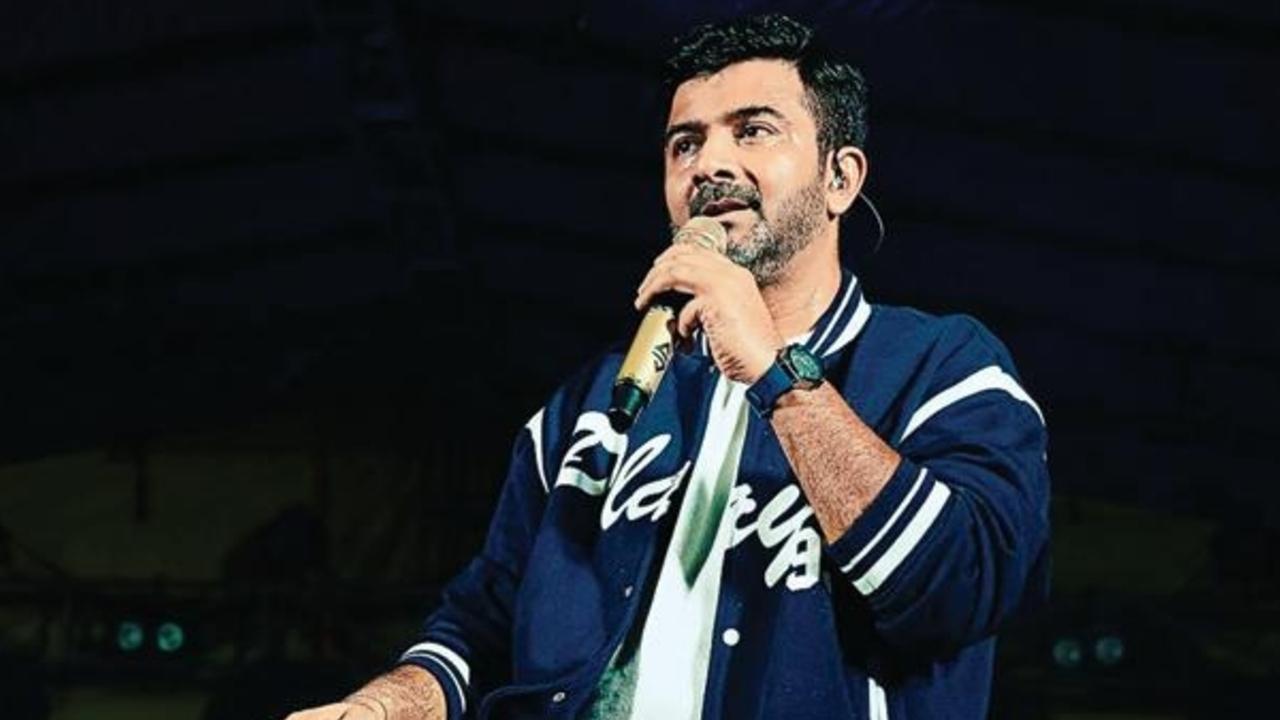
Mumbai: Santacruz police Thursday arrested music composer Sachin Sanghvi (45) after a 29-year-old singer he befriended on Instagram filed a complaint accusing him of sexual assault by employing deceitful means, outraging her modesty, & giving her abortion pills without her knowledge when she became pregnant. The Bollywood musician has secured bail.
Sanghavi is known for hit songs in films such as Stree 2, Bhediya, Zara Hatke Zara Bachke and the latest Diwali release Thamma.
The arrest was made following a complaint filed by a 29-year-old city singer, whom Sanghavi befriended on Instagram in Feb 2024. He was produced before the court and later granted bail.
The case was registered on Wednesday against Sanghavi by the Vile Parle police and subsequently transferred to the Santacruz police station. "Sanghavi was booked under the BNS sections 69, 74, and causing miscarriage without woman's consent," said DCP (Zone IX) Dikshit Gedam.
Sanghavi's lawyer, Aditya Mithe, told TOI, "The allegations in the FIR against my client are absolutely baseless and unsubstantiated. There are absolutely no merits to the case. My client's detention by the police was illegal and that is the reason why he was released on bail immediately. We intend to defend all allegations fully and unequivocally."
In the FIR, the singer stated, "I met Sanghavi via Instagram, where he praised my voice and offered opportunities. We exchanged numbers and began discussing work. He invited me to his Santacruz West studio where we met regularly in 2024. He claimed to have a troubled marriage, promising to divorce his wife and marry me, but later avoided my questions about marriage."
People think Gujarati music is only garba and dandiya-Sachin Sanghvi
8:23 AM

Syeda Eba Fatima (HINDUSTAN TIMES; October 31, 2023)
He’s at the peak of his career currently, with back-to-back hits in the Hindi film space such as Tere Vaaste and Apna Bana Le, but composer Sachin Sanghvi has decided to shift his focus to Gujarati music for a bit.
“People think Gujarati music is only about dandiya and garba. This misrepresentation at the global level pushed me to work in this direction,” shares Sanghvi, who is one half of the composer duo Sachin-Jigar, adding, “Also, there was a lack of quality music — so, instead of blaming others for not doing good work in Gujarati music, I wanted to take the first step.”
The composer wants to take Gujarati music beyond the hits of the ’80s and ’90s to make it “more palatable” for the younger generation. “I’ve been doing this since 2013, but now, I’ve decided to release indie Gujarati music on my own, without being dependent on music labels or production houses. If they support, well and good. Otherwise, I’ll take care of creating and marketing it,” says the singer-composer — who recently released his Gujarati song Dheeme Dheeme — adding, “I want people from Gujarat to not feel shy about creating regional music.”
While he’s at it, Sanghvi will also make sure to only work with local musicians. “In fact, in the last few songs that we did, everyone — from technicians to directors — was a local. The idea is to make them cultivate a sense of pride in their language and culture and also give them opportunity to work,” he ends.
"I don’t know if people even know that Sachin-Jigar are two people"
8:45 AM
Syeda Eba Fatima (HINDUSTAN TIMES; August 31, 2023)
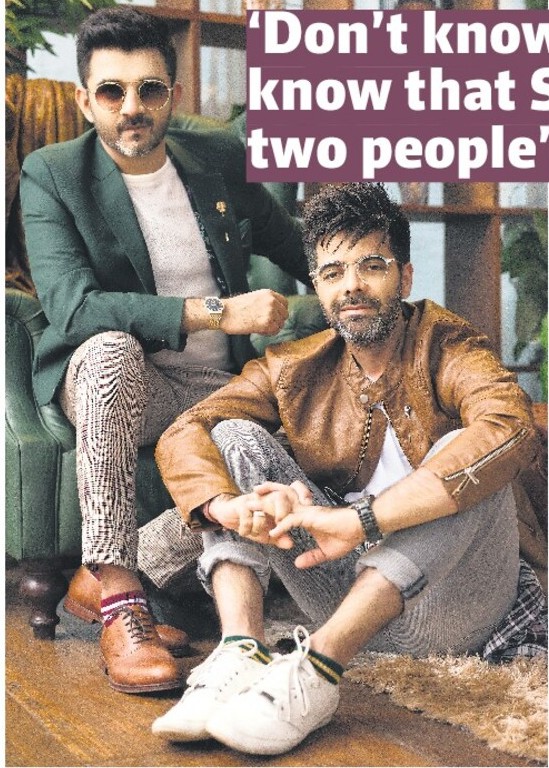
Sachin Sanghvi, one half of the composer duo Sachin-Jigar, laments that no one besides playback singers get enough recognition for their work. “If you are a singer-songwriter or composer in Canada who has worked for 30 films or someone who has delivered about 100 songs, every Tom Dick and Harry would know you for your work. But that doesn’t happen in India,” the Tere Vaaste (Zara Hatke Zara Bachke) and Apna Bana Le (Bhediya, 2022) hitmaker tells us
He adds, “I don’t know if, even after such great landmarks, the general awareness about composers is there. I don’t think people even know if Sachin-Jigar are two people.”
This isn’t just the case for composers, adds Sanghvi. “A lot of technicians do not get any sort of recognition. It’s very thankless to be an editor or the background music composer of a film,” says the composer, who has been a music arranger in the past. He feels it’s necessary to talk about it for a change to begin because it’s high time they get their due. He explains, “Songs of so many films that don’t perform well at the box office become chartbusters. So, why shouldn’t the composers, lyricists and technicians get the recognition for it?”
Whenever Bollywood has failed to offer good music, indie music has come to the rescue-Priya Saraiya
8:31 AM

Kanksha Vasavada (BOMBAY TIMES; March 4, 2023)
Singer-lyricist Priya Saraiya, who has lent her voice to Gulabi and Sun Saathiya, is creating awareness about the rights to royalty of composers and lyricists as a committee member of the Indian Performing Rights Society Ltd (IPRS). In a conversation with us, Priya talks about balancing Bollywood and Gujarati music and more. Excerpts:
‘ARTISTES CAN CLAIM THEIR ROYALTY NOW’
Priya strongly believes that music creators deserve due recognition for their work. On why bodies like IPRS are the need of the hour, she says, “The amount of music created and consumed now has increased many manifolds over the last few years. Now is the time when music creators across industries realize that they can claim the rights for their music, and earn royalty by reaching out to bodies like IPRS.”
‘WHENEVER B’WOOD HAS FAILED TO DELIVER GOOD SONGS, INDIE MUSIC HAS FILLED THE GAP’
An artiste sitting in the remotest part of the country can become an overnight sensation by simply uploading their music or a video on social media. On being asked how this has helped youngsters, Priya says, “There are so many talented musicians who did not get a platform earlier. Social media has bridged the gap now, especially for small town musicians. Earlier, doing playback in Bollywood was a dream for youngsters – now they can live it.”
Indie music’s comeback has changed the way we consume music. Priya says, “I grew up listening to songs from the ’80s and ’90s. Whenever Bollywood has failed to offer good music, indie music has come to the rescue. The ’90s was not an era of Bollywood music, that’s when Lucky Ali, Palash Sen, Shaan and Kailash Kher released singles and audiences loved the music.”
‘LANGUAGE IS NOT A BARRIER FOR GEN Z, THIS AMPLIFIES THE REACH OF A SONG’
While her Bollywood songs may have more recall value, Priya is no stranger to the Gujarati music industry. Ask her about how Gujarati music has evolved over the years, and Priya tells us, “There was a time when nothing was working for the Gujarati industry, neither the films, nor the music. I remember when the music of Bey Yaar, and the single Laadki, had released together; that was the moment when the audience knew they wanted good movies and good songs. The best thing is that, language is not a barrier for this generation, which naturally amplifies the reach of any song.”
‘SACHIN AND I SHARE A GOOD RAPPORT’
We ask Priya about her equation with her musician-husband Jigar Saraiya and his partner Sachin Sanghvi, as a fellow artiste. She says, “Jigar and I often discuss music at home. Sometimes when he is confused, I help him. And he chips in when I have a musician’s block. As for sharing constructive and honest feedback with them, yes, I am very frank with them. Why won’t I be? Ultimately, we share that kind of rapport and I can comment on their music. I only want the best for the two of them. Sachin and I share a devar-bhabhi relationship, we are family, so being honest with him isn’t too difficult.”
‘THE SHELF LIFE OF A SONG DEPENDS ON HOW LONG IT STAYS ON YOUR PLAYLIST’
In a day and age where the success of a song is based on the number of views or hits it garners online, Priya feels that a good song will always find its audience. “Audiences are not fools. If a song is genuinely good, if people really like and enjoy it, it will get real views. If not, the song might have several million views, but they won’t matter after a point of time. The shelf life of a song depends on how long it stays on your playlist.”
A man with a golden heart has won the Golden Globe, says Daler Mehndi on M M Keeravaani winning the Golden Globe
8:31 AM

Indian musicians weigh in on what sent M M Keeravaani’s composition Naatu naatu right to the top of coveted international film awards
Sonia Lulla (MID-DAY; January 12, 2023)
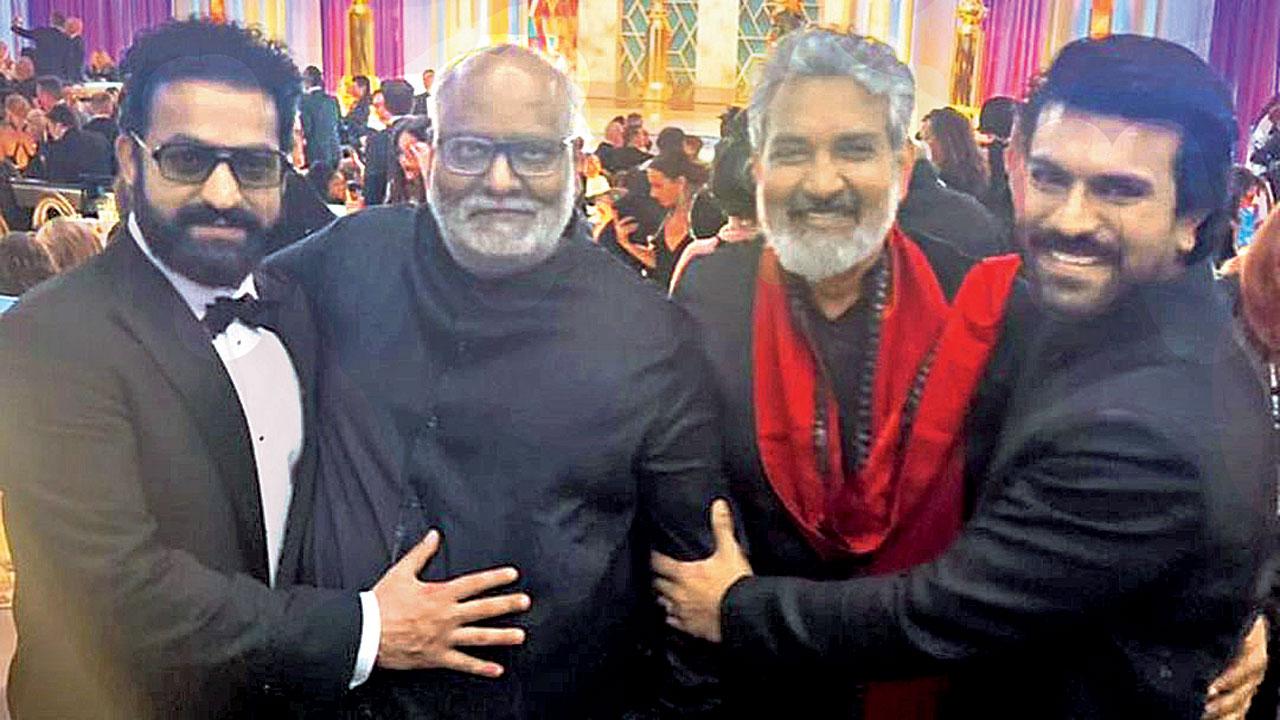
It wasn’t too long ago that foreign-film viewers would poke fun at Indian cinema’s song-and-dance routine. Slowly and surely, it caught their interest, and eventually won them over. M M Keeravaani’s win at the 80th Golden Globe Awards yesterday represented just that—a celebration of a song that was all things Indian. RRR’s Naatu Naatu, which was adjudged the best original song, has an upbeat traditional score and a choreography that’s as desi as it can get. Indian musicians say it is this rare combination that has been admired by the West.
Composer Sachin Sanghvi of Sachin-Jigar fame believes it is Keeravaani’s catchy beat, coupled with filmmaker S S Rajamouli’s vision, which made the song stand out. “Naatu Naatu is catchy and infectious. The world hasn’t seen this sort of energetic and crazy dance; it is a rarity for them. It is the song’s energy that has appealed to people, worldwide,” he reasons.
With this win, the RRR composer left behind American mammoths like Rihanna, Taylor Swift and Lady Gaga, who were vying for the gong. International portal Variety referred to the development as the win of ‘the underdog’. On home turf, though, Keeravaani is far from an underdog. His musician friend Sivamani is glad that the world has “finally recognized such a great composer”. “He is the king of melody.
Even his funk, rock music will have melody. This song is such an enjoyable watch. The choreography that sees the leading men compete, is a treat.” Singer-musician Daler Mehndi seconds his opinion. “Keeravaani’s music can be ethnic, folk, and classical, all at once. A man with a golden heart has won the Golden Globe.”
Keeravaani may have brought home the trophy, but no one would dismiss the role of choreographer Prem Rakshit in making the number — featuring Ram Charan and Jr NTR — the phenomenon it is. At a time when OTT viewers have the option of skipping a song, Naatu Naatu is one that they will watch a second time over. “Would a song be as impactful if a person simply stood at a place and sang it,” asks Lesle Lewis, making a case for the place of choreography in cinema.
“My dad [P L Raj] was among the biggest choreographers of his time, and has worked in films like Sholay and Sargam. It is the song-and-dance [routine] that the international audience consumes. Also, we have now incorporated elements from the West into our work. So, while this is novel for the international audience, it is not entirely alien to them. Indian music has been striking a chord after Jai Ho [Slumdog Millionaire].”
Everything was becoming too popcorn. Producers said remixing a hit song is less risky, say Sachin-Jigar
8:21 AM

Capping a horror trilogy with Bhediya, Sachin-Jigar on creating music that suits the genre, but can be consumed in ordinary settings as well
Sonia Lulla (MID-DAY; November 14, 2022)
With Bhediya, Sachin Sanghvi and Jigar Saraiya wrap up the final part of Dinesh Vijan’s horror trilogy. Asserting that their equation with Vijan is among the healthiest that composers can share with producers, Saraiya says, “We understand each other to the point that we can decipher why he would ask for a song, even if we don’t feel the need for it in a film.”
While working on each film, the duo has walked the thin line between catering to the genre of horror, and creating songs that can be consumed in ordinary settings. “If you hear the Stree [title] song, you’ll see that the lyrics [address a girl], but you’ll also understand that it is about the protagonist. We always think about delivering something that you can dance to, and can have on your playlist even on a happy day. We don’t think of it as a horror [soundtrack] alone. Similarly, we haven’t addressed the soundtrack of Bhediya as something that should cater to the creature alone. We think of viability in music.”
They intersperse the conversation with discussions on the “exciting” opportunity of creating music, should characters of the three films interact. We ask them if conversations of such an overlap are underway, and they respond with a simple, “Well, yes, and no.”
Showing complete disregard for the music industry’s tendency to latch onto frivolous commercial numbers under the pretext of promoting a film, Sachin-Jigar have instead focussed on consistently delivering musical albums with definite character. The duo points to films like Taal when establishing that a soundtrack’s longevity depends on the attention paid to each number of the album, an aspect that they have tried to address in every project.
Sanghvi admits that while he is seeing a reversal in the trend now, the industry’s “faith” in the traditional music-making process had depleted. “The belief in the process of sitting with the director, producer, lyricists and composers, and subsequently working on the songs, had depleted. During those interactions, there are discussions on songs — one may suggest that something about a track works, and something doesn’t. These are [productive] processes within a team. The producer needs to believe that the composers will deliver songs of all genres — romance, dance, and everything else — that is needed for the making of a comprehensive album. Everything was becoming too popcorn, and centred around the initial impact. Producers said remixing a hit song is less risky. Since it is already a hit, reworking it would be a wise idea. And this mentality was impacting originality. But, things are changing again. A large part of this shift is owing to the changes that have come about in the lockdown and the OTT [boom]. Producers are not depending on weekend collections alone, because they can build [an audience] on the web too. Some of the risk [is mitigated].”
Artistes can’t depend on Bollywood for a chance anymore, feel Sachin-Jigar
8:15 AM

Juhi Chakraborty (HINDUSTAN TIMES; December 30, 2021)
In the last two years, the music industry was heavily impacted due to the pandemic, but it also made artistes realise that they needed to be self-sufficient. Composer Sachin Sanghvi of the musical duo Sachin-Jigar, who suffered from Coronavirus himself, shares how it gave him time to re-evaluate.
“It has been a good time for artistes to understand that they cannot depend on films or a chance from Bollywood anymore. Everybody has to find their own sunshine. We are living in such times that every artiste has a chance to become as popular as a film star,” he explains.
The pandemic opened them up to new ways of making music. The duo came up with the entire album of Chandigarh Kare Aashiqui in the lockdown. Jigar Saraiya adds, “We both have always made music in studio, but the pandemic brought out a new side of making music at home. All the songs were made online, and we were recording and sharing them with Abhishek Kapoor (director) simultaneously.”
Looking back at 2021, the duo agrees that it has been a fulfilling year, as they were able to cater to the masses as well as the critics through their music. “With Roohi, Shiddat and Bhoot Police, we were pretty massy with what we did. But with Chandigarh Kare Aashiqui, we struck a balance between the masses and critics,” Saraiya tells us.
As for 2022, the has a jam-packed calendar, composing music for Dasvi and Bhediya along with two web shows and four Gujarati films.
Children of Shankar Mahadevan, Shaan Mukherjee, Salim Merchant and Sachin Sanghvi following in their parents’ footsteps
8:19 AM
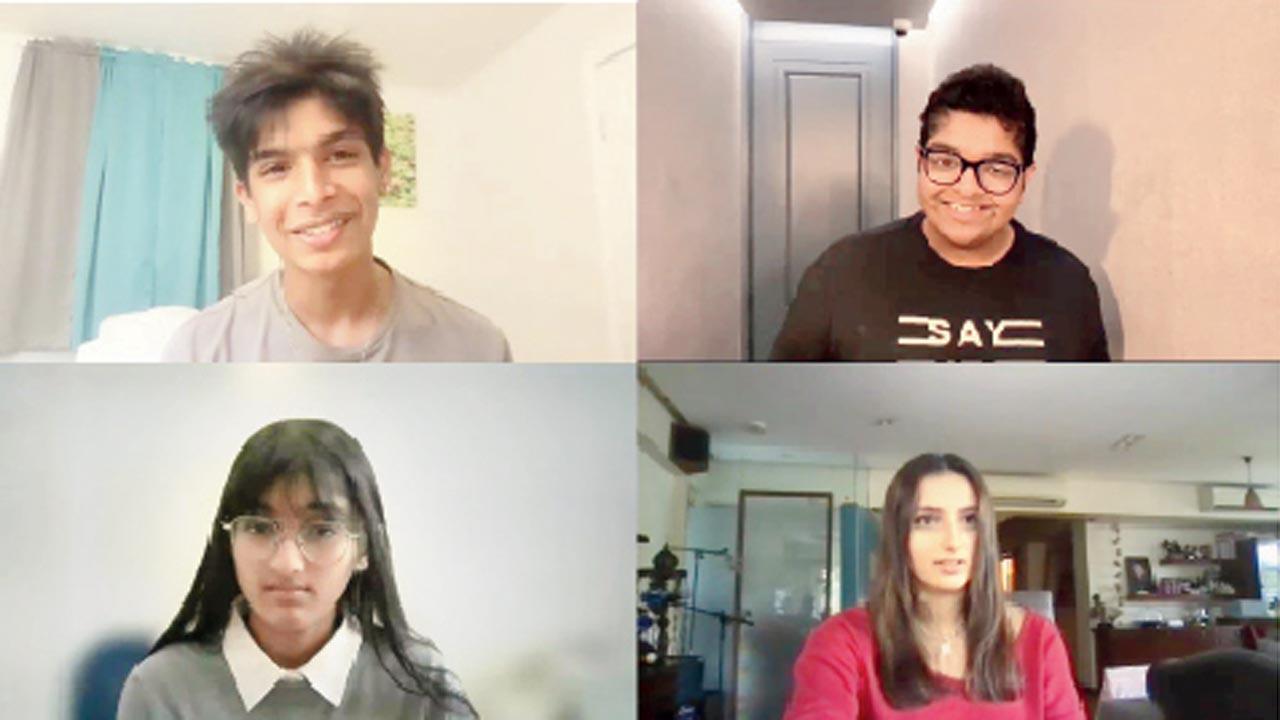
(Clockwise) Shubh Mukherjee, Shivam Mahadevan, Ayesha Merchant, and Shubh Mukherjee
Children of Shankar Mahadevan, Shaan Mukherjee, Salim Merchant and Sachin Sanghvi on following in their parents’ footsteps as young musicians
MID-DAY (August 30, 2021)

Ayesha Merchant, daughter of Salim Merchant
Your journey to becoming a musician:
I’ve been privileged to find support and guidance around me, given that both my parents are musicians. My father was among my biggest inspirations. Watching him compose and produce music, even when he is on the go, has inspired me to keep working on my craft even when it hasn’t been easy to stay motivated. Every now and then, while I’m practicing on the piano, or singing, my father will teach me new chords, or help me [train] my vocals. The best part about learning from him is that there is never a dull moment.
Why did you decide to become a musician?
I have a wide variety of interests, including dancing, painting and competitive swimming. But, as I grew older, I discovered that singing enabled me to express myself in a way that nothing else could.
Genres that gain your attention:
Via dad, I was exposed to Bollywood. My mother is a jazz singer, so I was introduced to jazz as well. But, I started to take keen interest in musical theatre. I’ve liked the process of learning and performing songs from the plethora of musicals I have watched, including the Phantom Of The Opera, The Lion King, and Wicked. I also like rhythm, blues, and classical music. Musical theatre enables me to sing songs for different characters, and tell stories through their personal experiences. Being a student of theatre, I find it fascinating.

Shubh Mukherjee, son of Shaan Mukherjee
Your journey to becoming a musician:
I was given the freedom to choose what I wanted to become, but being constantly exposed to music surely influenced my decision. I am a trained classical singer. While I initially didn’t enjoy the riyaaz sessions, I eventually developed a fondness. Dad often gives me impromptu lessons on dubbing and [creating] better harmonies, be it for live performances or recordings. I’m fortunate to have access to the wisdom and techniques he’s learnt in his career.
Why did you decide to become a musician?
I wasn’t a born singer. There was a time when it was evident that my brother was the more talented singer. Today, he is a skilled music producer, already making his mark in the industry. On the other hand, I fell in love with singing, later. I also love to play the guitar.
Genres that gain your attention:
Dad and I are different. When I am singing, you’ll find a guitar hung around my shoulders. But, dad is a pure vocalist. Yet, like him, I would also want to pursue independent and Bollywood music. I’d like to add western influences, and a hint of R&B, to my sounds. My goal is to make music that makes people smile. I want to make dance tracks, and playful songs. I hope my music will be associated with the sound of happiness.
Prominent work
I’ve worked with Disney for Duck Tales. I also partnered with [a music label] for a mash-up of 12 songs. I [made] a mash-up of Aankhon Mein Teri, and Night Changes.

Tanishkaa Sachin Sanghvi, daughter of Sachin Sanghvi
Your journey to becoming a musician:
My family members are avid listeners of music, with a keen interest in bhakti music, ’90s songs, and hip-hop. My first musical experience was at the age of seven, when I sang Laadki, which featured on Coke Studio. As I grew up, I started performing with my dad. The vibe on stage encouraged me to learn [music]. Working with dad taught me that every detail of a song is important, and that can only be perfected by observing [him]. He pushes me to explore new possibilities.
Genres that gained your attention:
I’m learning Hindustani classical music, and Trinity rock and pop. International pop has influenced me a lot. I also like indie pop and international hip-hop. I find [them] informal and conversational. Dad likes Indian classical music, but I’ve been drawn to western genres. My dad has appreciated listening to world music and encourages me to follow my heart. He says the genre is secondary; [what matters is that] the music touches the artiste’s soul.
Prominent works:
Apart from Laadki, I’ve sung in Hindi and Gujarati films like ABCD 2, Hindi Medium, Angrezi Medium, and Best of Luck Laalu. I want to be a singer, songwriter, and composer.

Shivam Mahadevan, son of Shankar Mahadevan
Your journey to becoming a musician:
I had many passions, including dancing, and teaching. Growing up, I dreamt of becoming a teacher, or being involved in the field of education. But, when I was four, my family was stumped by the flawlessness with which I sang Itni shakti humein dena. They discovered that I had the rare musical ability of [exacting] the melody I had heard. I had a knack of understanding whether or not I was singing correctly, and if I was maintaining the pitch. There was never any pressure to venture into the same field. But, I had raw talent that I chose to hone.
On the experience of learning from your father:
My father understood my strengths, and limitations, and analysed areas that needed improvement. Simply sitting beside him as he [jammed] was an invaluable lesson. Lessons involved playing the harmonium, and repeating what he did. Given how busy he is, every minute of these sessions was instrumental in my journey. The knowledge I’ve gained from him is extraordinary.
Genres that gained your attention:
Growing up, I was attracted to old Bollywood songs by Lata Mangeshkar ji, and Asha Bhosle ji. I would replicate the melody down to every single harkat. Then, I gravitated towards ghazals, and became a huge fan of Ghulam Ali Khan Sahib. I appreciated the nuances. These experiences fuelled my desire to pursue this genre.
Prominent work:
I made my Bollywood debut with Dhoom 3, while YRF’s Bande Hai Hum Uske was my first studio experience. I’ve rendered songs for Marathi, and Tamil films and web shows. And I’ve sung other numbers including Vadi-e-Kashmir, by Gulzar saab.
Angrezi Medium: Real father-daughter reunite for their reel counterparts
8:15 AM

Composer Sachin Sanghvi composes, while daughter Tanishkaa lends the playback for a song in the upcoming Irrfan Khan-Radhika Madan film
MUMBAI MIRROR (March 20, 2020)
 Among the several things that the Irrfan Khan-starrer Hindi Medium, one of 2017’s profitable and critically acclaimed films, left us with, is the climax song, “Ek Zindagi”, which celebrates the hopes and dreams of every child. The actor’s upcoming outing, Angrezi Medium, not only showcases a new version of the soulful track, but also reunites composer Sachin Sanghvi (of the famous duo Sachin-Jigar) with his singer-daughter Tanishkaa.
“It’s difficult for me to define how far I’d go for her, but I do know I’d do everything to see her happy. She was just nine when she sang in the first one (Hindi Medium) and it’s overwhelming to know that she’s doing it all over again,” beams the proud father Sachin.
The composer duo’s other half, Jigar Saraiya adds, ““Ek Zindagi”, has been the soul of the series, it defines the essence of the film and I’m happy that Homi (Adajania, director) and Dinoo (producer Dinesh Vijan) have retained it.”
Homi points out, “Chasing one’s dreams fearlessly is what 'Ek Zindagi' stands for.” Dinesh adds “I loved the original and I love this version even more. “Ek Zindagi, Sau Khwahishaa” (One Life, Hundred Dreams) reminds us to never let go of our dreams.”
The movie will see Irrfan as a doting single father who goes to bizarre lengths to fulfil his daughter’s dreams. Post the trailer’s release, a flood of messages from audiences across the globe requesting for the film to be released earlier have been coming in and the makers have done exactly this, brought forward its date with cinemas to March 13, 2020.
Jio Studios and Prem Vijan present Dinesh Vijan’s Angrezi Medium, a Maddock Films production, directed by Homi Adajania, which releases on March 13, 2020.
Sachin-Jigar keep maintaining a fake image; they are far from what they appear to be-Anonymous singer
8:46 AM

A playback singer opens up to BT about her unpleasant experiences with composers Sachin Sanghvi and Jigar Saraiya
Soumya Vajpayee (BOMBAY TIMES; October 25, 2018)
A playback singer, on condition of anonymity, exclusively told BT how Bollywood’s noted composer duo, Sachin Sanghvi and Jigar Saraiya, who have composed songs in films like Hindi Medium, Shuddh Desi Romance, Humpty Sharma Ki Dulhania and Meri Pyari Bindu, harassed her until a couple of years ago. Here’s a first-person account: “They are extremely shrewd and sly when it comes to maintaining a fake image, but they are far from what they appear to be. They keep making sexual moves on girls. They have tried putting their dirty hands on a lot of girls and exploited them. It all started in February, 2014. They would call me to their studio at late hours, just to make me sing a scratch, and despite knowing that I am not comfortable, they would continue to make moves and comments that would embarrass me. Since I was a newcomer, I would go and sing for them for free, only for the love of music.
Jigar would frantically call me at nights, wanting to “see me” or “meet me only for five minutes,” even after clearly telling him that I’m only interested in meeting him for music-related work. This was after a couple of inappropriate sexual passes he made at me. No one else in the industry has made me feel so small and insignificant as they have. Other people I have worked with have always treated me with a lot of respect.
Once I was in the recording studio with Jigar, and without wasting much time, he pulled me towards him and tried to kiss me, saying, “Whenever I see you, I feel like grabbing you and this doesn’t happen with everyone.”
I was sadly shocked at the hypocrisy of a married man, who otherwise keeps posting pictures of his wife and kid on social media. Such a bloody hypocrite!
Sachin also made inappropriate passes at me with the hope that I might just be ‘available’ for him. I remember once he said something that made me really uncomfortable. I was recording a song, when he stopped everything, looked at me and said, “You know if I ever watch you perform on stage, I would love to come up and make love to you, in front of everyone, while you would be singing. I don’t care if anybody is watching.” Disgusting isn’t it?
Jigar once asked me, ‘Hey what do you think of a threesome – Sachin, me and you, if you are up for it?’ I was so disgusted by that statement that I decided to never work with them, nor stay in touch with such sexual predators. It has almost been two years now, but I have heard similar stories from my friends/colleagues about them.”
BT tried reaching out to Sachin-Jigar for a response, but there was no reaction from their end till the time of going to press
Ghoul, Stree's music composers on the challenges of composing for creepy scripts
8:14 AM

The background and music composers of Ghoul and Stree discuss the challenge of composing for creepy scripts
Sonia Lulla (MID-DAY; August 27,2018)
 It's almost discomforting to visualise the picture that Ghoul background score composers Naren Chandavarkar (left) and Benedict Taylor (down; right) paint, when describing the lassitude of the environment that inspired their work. Having worked on Netflix's latest Indian offering - the horror that stars Radhika Apte at its front - Chandavarkar says the brief given to them from the onset was to focus on building an environment, instead of resorting to jump scares to keep the tension up.
 "A large part of the series is set in an underground bunker with no daylight and no sense of time. We were keen to create that claustrophobia and disquiet, with the score ticking away like some sort of a morbid heartbeat. There had to be the sense of impending doom and alarm."
As Taylor asserts that the "zone, pace, rhythm and mood" are kept at the fore when composing for a horror, it is evident by the duo's choice of words that a marked element of tenebrosity is up on offer. "Using scratchy synthetic sirens and martial drums, we created motivic elements. A siren like motif was created when we ran a synthesiser into a bizarrely fast tremolo, which resulted in a mosquito like, scratchy distorted buzz. We played with that pitch to create a rising, ominous and queasy sound. There's also [an element of] mythology [in the show], explaining the world of Ghoul, and the ancient Aramaic chants to summon it. We played with strange vocal techniques to arrive at a sound that worked for it," reveals Chandavarkar, adding that even Taylor's vocals were modulated for use in the score.
Interestingly, while a dystopian set-up is made evident owing to the methodology that the duo employed, another set of music composers, Sachin Sanghvi and Jigar Saraiya (below) reveal that composing songs for a horror venture is starkly different from creating its score. The minds behind the soundtrack of Rajkummar Rao and Shraddha Kapoor-starrer Stree, the composers point to the commercial angle of filmmaking that comes into play, which can even overpower the demands of the genre they are tackling.
"Music is the first part of the film that viewers are exposed to, and hence must be the defining factor that draws them to theatres," says Sanghvi. He adds that since they knew they needed to create tracks that could be played at discotheques and parties, they decided to tackle the theme of horror via the lyrics, not the music. "Having said that, we had to be certain that the songs could carry distinct contexts when seen in the film, and as solo numbers.
For instance, the lyrics of the song Milegi Milegi, which read: "Tujhe bhi milegi, mujhe bhi milegi", refer to the [paranormal] character in the film, but can easily allude to a lover a man seeks, when heard outside the theatre," Sanghvi adds. Having jetted off to Dubai to give their undivided attention to the creation of this soundtrack, the duo asserts that the commercial approach was essential since they had to draw viewers to watch the film featuring "young stars". "This is not a Shah Rukh Khan film where the music can be the secondary aspect. The songs had to serve as promotional material," Saraiya admits.

Inspired by R D Burman, Sachin-Jigar use bottles to compose Chad Gayi Hai for Gold
6:48 AM

Sonil Dedhia (MID-DAY; July 13, 2018)
Unveiled yesterday, the latest track of Reema Kagti’s Gold sees leading man Akshay Kumar in an inebriated state, entertaining a bunch of foreign dignitaries. To add an element of peppiness to Chad Gayi Hai, music composer duo Sachin-Jigar reveal that they played with an array of glasses and glass bottles for the creation of the beats. While the use of props to make music is common, Jigar Saraiya says it was RD Burman’s Chura Liya (Yaadon Ki Baaraat, 1973) that served as their inspiration.
“He had used a glass [to create music in] the song. In fact, he often used real elements to make his beats. Since the song was about getting intoxicated, we decided to use liquor bottles to add a distinct effect.”
Interestingly, the duo didn’t settle for a limited number of bottles, but requested for as many as 100 to create sounds of different frequencies. “The bottles and cans were from different brands, which helped us procure the right sound. We also imported a few. Eventually, only a limited number was used for the final song.”
Rendered by Vishal Dadlani, the track has been arranged by Zakir Hussain’s brother, Taufiq Qureshi, and took 20 days to be crafted. Sachin Sanghvi says, “We have been working on the film for over 18 months and this song was a last-minute addition. We created four versions before zeroing in on this final cut. We wanted a modern sound that didn’t deceive the era that the film is based in.”
Director Kagti, he says, was particular to note that Dadlani sang in Bengali accent, in accordance with the character.

Sanjay Dutt goes behind mic after 11 years, records song for comeback film, Bhoomi
7:48 AM

Mohar Basu (MID-DAY; August 15, 2017)
Sanjay Dutt is no stranger to the recording studio. In his career spanning over nearly four decades, the actor has displayed his singing skills quite a few times. But, in his comeback film, Bhoomi, it is no ordinary ditty — the actor has crooned to a song titled Jai Mata Di. “I am reciting shlokas in the song. I’m an ardent believer of Mata Rani, who has given me the strength to face hard times. When the makers came up with the idea, I was immediately sold,” says Dutt.
Composers Sachin-Jigar reveal that Dutt’s deep baritone made him an ideal choice for a song such as this. “We always wanted to use his voice in the track. His baritone is impactful and adds heft to any track,” says Sachin Sanghvi.
Despite his previous brush with music — his last being Samjho Ho Hi Gaya for Lage Raho Munnabhai (2006) — Dutt doesn’t consider singing an easy job. “It’s slightly easier nowadays because there are instruments to enhance your tonality and voice. But during my early days, I’ve seen legendary singers like Lata ji [Mangeshkar] record songs in a single take. During Rocky (1981), I was in awe of her prowess. We are fortunate that our singers make us sound so good on screen. Singers and musicians need to be lauded more than they are today.”
He knows with the Omung Kumar-directed film, the stakes are high. “I feel fortunate that the audience cares so much for me. It’s because of my fans that I have overcome the hard times and am still around.”
Sachin of Sachin-Jigar opens up on how Parineeti Chopra pulled off her playback debut
7:56 AM

Shilpi Sampad (MID-DAY; February 3, 2017)
"When she walked into the studio, we were hoping to get her to do a fair job at the least, leave the rest to us,” recounts Sachin Sanghvi, one half of music composer duo Sachin-Jigar, about Parineeti Chopra, who recently recorded her first Bollywood song. “But when she went behind the mic, we knew we wouldn’t need the help of technology.”
The actress plays a singer in her next, Meri Pyaari Bindu, co-starring Ayushmann Khurrana, and decided to attempt playback for an “unusual” track. “It is about a sweet agreement between two lovers who are parting, and carries the narrative forward. She sings for both, the guy and girl,” Sachin shares.
Although Parineeti is trained in Indian classical music, crooning for a film’s track called for flair and flourish. “She has sung bits for the film’s background score too. But for a full-fledged song, we decided to put her into a routine, where she had to devote at least an hour daily for riyaaz with us. That continued for over a month. Even when we weren’t available, she would do it on her own. Initially, she was scared about pulling it off, but with more practice and jamming, she grew confident,” reveals Sachin.
Unlike most cases, where actors turn singers for a lark, Parineeti was made to sing because it was central to the film’s story and her character, argues Sachin. “It’s not a gimmick. She has the dubbing experience, so she got the tonal expressions right. And since she is an actor, getting into the mood of the song was no big deal. Eventually, it was her preparation that impressed us. It [recording] was over in three hours flat. For someone who has never done playback, I think that’s quite something.”

One does not have to depend on crass words and objectify women to grab attention-Daler Mehndi
7:40 AM

Debarati Sen (BOMBAY TIMES; August 26, 2016)
Daler Mehndi's foot-tapping
numbers and energetic stage performances don't need mention. But one
might not be aware that he is an extremely spiritual musician, a rooted,
humble farmer and a loving family man, when he is not on stage. Daler's
latest, Raj Karega Khalsa (A Flying Jatt), a semi-rock song with
Punjabi robustness, is a duet with his son-in-law Navraj Hans. This is
the first
time they will be singing together. In a candid chat with us, he talks
about the number, his spirituality, raagas and more. Excerpts...
How did your song in A Flying Jatt happen?
The track had already been recorded by Navraj. Sachin (of Sachin-Jigar fame) felt it needed more life, so I was requested to add my bit. I introduced new words - Raj Karega Khalsa - to the song, and composed them impromptu. This became the new title. I requested Sachin to include the sound of nagaras to build it up.
When you are not singing, you are...?
I work in my farm, grow crops, take care of my cows and indulge in cooking or reading.
Tell us about your music...
I sing, depending on my state of mind or the current state of society. Tunak Tunak was written as a yearning soul communicating with God, but people danced to it. Chor Uchchakke and Athray were written out of angst towards those who maligned me. My fans danced on them as well. My intention is to make people forget their problems.
Your music is not accompanied by raunchy videos.
I believe one does not have to depend on crass words and objectify women to grab attention. To each his own, but music, dance and fine arts are gifts given to mankind to enrich the environment.
How did your song in A Flying Jatt happen?
The track had already been recorded by Navraj. Sachin (of Sachin-Jigar fame) felt it needed more life, so I was requested to add my bit. I introduced new words - Raj Karega Khalsa - to the song, and composed them impromptu. This became the new title. I requested Sachin to include the sound of nagaras to build it up.
When you are not singing, you are...?
I work in my farm, grow crops, take care of my cows and indulge in cooking or reading.
Tell us about your music...
I sing, depending on my state of mind or the current state of society. Tunak Tunak was written as a yearning soul communicating with God, but people danced to it. Chor Uchchakke and Athray were written out of angst towards those who maligned me. My fans danced on them as well. My intention is to make people forget their problems.
Your music is not accompanied by raunchy videos.
I believe one does not have to depend on crass words and objectify women to grab attention. To each his own, but music, dance and fine arts are gifts given to mankind to enrich the environment.
Subscribe to:
Posts (Atom)