Showing posts with label Sabar Bonda. Show all posts
Showing posts with label Sabar Bonda. Show all posts
Today, I can demand the money I deserve-Sai Tamhankar
9:34 AM

Mihir Bhanage (BOMBAY TIMES; July 31, 2026)
Sai Tamhankar has voiced her opinions against pay disparity in the film industry in the past and continues to bat for fair pay on the basis of what an actor brings to the table, not depending on their gender. It’s taken her time to reach a position in which she can put her foot down on the fee she quotes for a project. And now, Sai wants to pave the way for others to do the same. In a chat with us, the Matka King and Tumbbadchi Manjula actress speaks about pay parity, need for unity in the Marathi industry and using her privilege to back projects with potential. Excerpts:
‘Changing things is in your hands’
The demand for pay parity has consistently highlighted the gender divide in the film industry. Male stars are often paid more than their female counterparts. While equal pay is an ongoing debate, Sai feels that one can definitely demand the fee they deserve.
“If you consistently deliver good work, no one can ignore you or the impact you bring in. I’m in a position today where I can demand the money I deserve. I know my worth and people have that assurance that I will give my 100% to a project – from filming to release and beyond,” she says, adding, “It took time to build this reputation but it’s absolutely doable.”
The same authority doesn’t extend to newer actors. Irrespective of how talented they are, there’s always that fear of losing out on work for many.
On that, Sai adds, “I’ve been through that and I understand how it feels. But I genuinely feel that the emphasis should be on the hope that this can happen. Yes, you have to build credibility. At the same time, you know what you’re worth. When I demand my worth today, it opens doors for others to do the same. This needs to be a habit. Makers shouldn’t raise their eyebrows if a deserving artiste quotes a fee that justifies their worth.”
Unity, consistency and seriousness: Sai’s keywords for sustained success in the Marathi industry
Sai is one of the actors who has successfully balanced work on Marathi and Hindi projects. Her recent Marathi films – Bol Bol Rani and Tumbbadchi Manjula – have been buzzing too. Despite many stating a lack of audience for Marathi films in the recent past, the actress has had a contrasting take, something that multiple Marathi films in the last year have proved to be right.
“If your content is damn good, the audience will show up,” she says. True as it may be, what will it take for this recent spate of good films and good response to turn into a sustained streak of even better films and response?
“I think it is commendable that we managed to bring the audience to cinemas. We should celebrate this because we deserve every bit of it. Plus, movies from new filmmakers are being appreciated, which is a very positive sign,” says Sai,” adding, “To sustain this success in the long run, we need unity in the industry and in the ecosystem. If we have that and take the business very seriously, there is no looking back. We shouldn’t lose sight of the bigger picture.”
‘Don’t think I’m mentally made for producer duties’
Sai was one of the executive producers of the acclaimed Marathi film Sabar Bonda. Ask her how important it is to lend one’s name to small or independent projects and she says, “Very!”
Elaborating further, the Agni actress adds, “If I can use my privilege and name to stand behind a deserving project and strong voice in whatever capacity, I am more than happy to do it. It is also a learning process for me.” But would she also turn producer eventually? “I’m not sure about that yet. I don’t think I am mentally prepared for the ‘chal theek hai, ho jayega’ moments that come very often with producer duties,” she shares.
A chick flick with fellow leading ladies? ‘Absolutely yes!
Sai and her contemporaries, including Priya Bapat, Amruta Khanvilkar and Sonalee Kulkarni, have been part of some notable projects in the recent past. While they may have worked in pairs of two in some projects, there hasn’t been a film that has brought all of them together. With a hope to remedy that, we suggest – a chick flick. Sai's response is enthusiastic.
“Yes, absolutely!” she says, adding, “We are all in a space where there’s no internal competition or trying to one up the other. And a chick flick all of us sounds fascinating. A travel film on the lines of Dil Chahta Hai would be perfect.” Producers and directors, hope you’re reading this.
------------------------------------------------
“Between a brilliant script with less money, and an average script with more money, I would choose the former. You should understand where to be stubborn about your fee and where to surrender creatively”
------------------------------------------------
“The fear of being typecast pushes me to do projects that aren’t similar to one another. The effort is to create a portfolio so diverse that no one comes back to you with the same type of role”
I cannot struggle anymore. I will not keep pushing anymore-Kanu Behl
9:32 AM
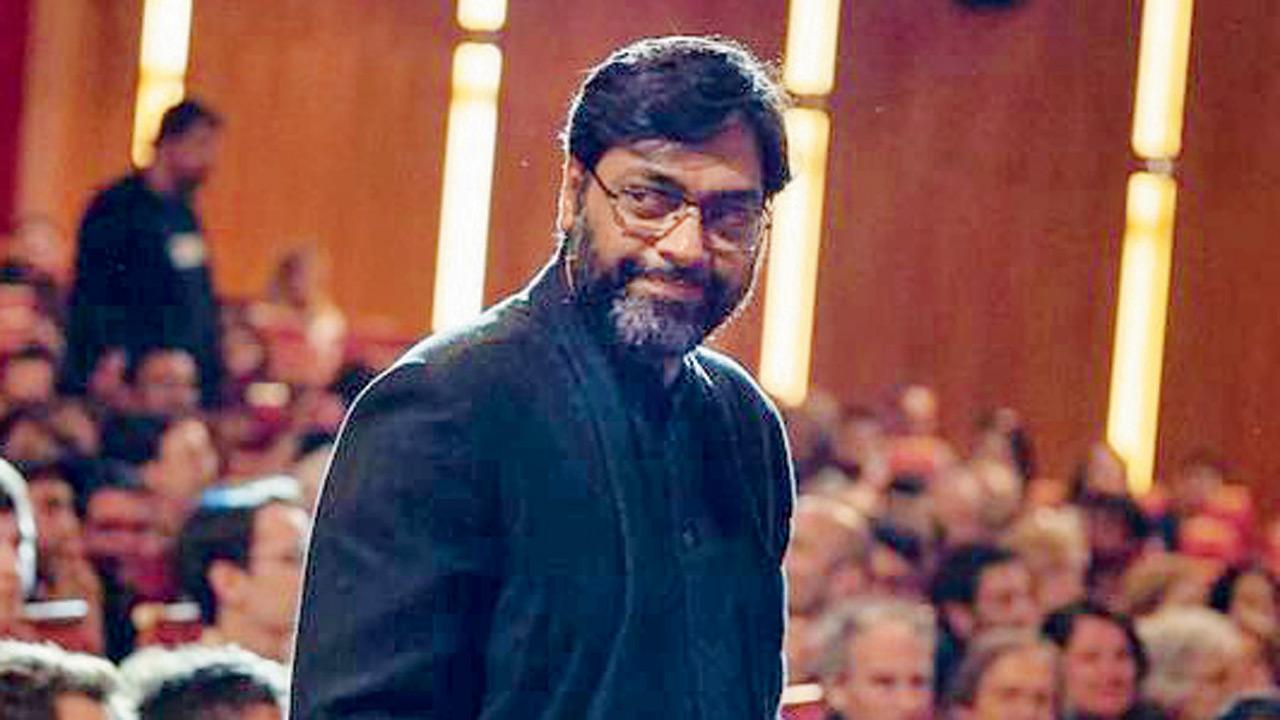
Priyanka Sharma (MID-DAY; November 15, 2025)
The morning of a release day for a filmmaker is usually filled with hope, excitement and anxiety about the audience’s response. But for director Kanu Behl, it was marked by struggle and disillusionment. After a wait of almost two years, Behl’s Agra released on Friday on 70 screens across the country. The filmmaker criticised multiplexes on social media over the film’s showcasing. “We’re being denied shows because small films ‘don’t fit into’ multiplex chain programming,” he wrote on X.
On a call with mid-day, Behl shared his frustration over the relentless fight he had to put up until the day before the release. “Till the last minute, we were told [by theatres], ‘We’ll figure, but nothing [happened],” he said.
When told that only four shows were available in Mumbai on the opening day, Behl pointed out the irony. “On Thursday night, we held a screening in Bengaluru. We had to turn away people because it was houseful. We got a standing ovation. I did around 12 pre-release screenings in India and at least 10 were with aam janta. It played to packed halls,” he said.
Agra has also gained recognition on global platforms, premiering at the Cannes Film Festival 2023. The anticipation was heightened because this is Behl’s theatrical comeback after the 2015 acclaimed Titli. It’s why the cold response of theatrical stakeholders has alarmed Behl — not for himself but for the future of young filmmakers.
“If this is their treatment of a film that opened at Cannes, I shudder to think what younger filmmakers and the next generation will go through. Then they [multiplexes] turn around and say, ‘Aisi filme chalti nahi hain.’ And those they run across 2000 screens, play to empty theatres. So when is this system going to change?”
Behl shared that releasing a film on the big screen is becoming a mental health crisis for independent filmmakers. “The illusion that multiplexes were there to accommodate all kinds of films is long gone. Now it is just about fighting for survival. But I am not going to fight for survival anymore. Either this system has to work or I’m out. I don’t want to do this anymore. How long will a filmmaker fight? This is a larger mental health issue within the industry. This happened with All We Imagine As Light and Sabar Bonda. It will keep happening,” he lamented.
Unless, the audience proves the decision makers wrong, Behl said. Even though the director never believed in putting the onus on the audience to make a film breathe on the big screen, this time he could only look towards the viewers for some hope. Behl said that if Agra doesn’t find audience support, he would quit filmmaking.
“I really want to reach out to the audience and say, ‘It’s in your hands. You come and watch this film and show these guys how much money a film like this can earn or I'm quitting filmmaking. Mujhe nahi karna. I cannot struggle anymore. I will not keep pushing anymore. I will leave filmmaking. (In any other scenario) I would never put this sort of a responsibility on the audience. It's not their responsibility. It is of the gatekeepers. It is these guys who should be doing their job. But in the absence of that, I think the responsibility finally comes upon the audience, including me. This has to be a protest and some sort of a coming together for the audience. So, if there’s only one show available, it should run houseful. If the audience wants to give them an answer and tell them what it wants, this has to come out of the social media echo chamber. Only that will wake these guys up.”
Shouldn’t the industry also unite against the crisis, we asked the filmmaker. The industry would never do it, he replied. “Because they are a cabal. They're a mafia. They all have their families. They all have the kids within the families to protect. It is an incestuous sort of mafianess. So they are not going to move,” he said.
Queer films should not be made commercially-Nikkhil Advani
9:30 AM

Nikkhil Advani and a still from Sabar Bonda
Onkar Kulkarni (BOMBAY TIMES; October 16, 2025)
Back in 2003, Nikkhil Advani directed Kal Ho Naa Ho. The film subtly depicted homosexuality through the comedic misunderstanding between characters played by Saif Ali Khan and Shah Rukh Khan, often mistaken as a couple by Kantaben (Sulbha Arya).
Sharing his thoughts on how queer narratives should be approached in cinema, the filmmaker, who stepped into the indie space as an executive producer for Sabar Bonda, said, “Queer films should not be made commercially! A queer love story has so many complexities. It’s not only about sexuality. It’s about so many other things. When you make commercial, mainstream cinema, you have to work within a box. You have to work as per the formula. You have to have certain things which you think the audience is going to accept.”
‘The hands of the directors are tied when it comes to commercial cinema’
Having helmed mainstream projects like Kal Ho Naa Ho, D-Day, Patiala House and Batla House, Advani believes indie cinema provides the creative freedom needed to do justice to sensitive subjects.
“The hands of the directors are tied when it comes to commercial cinema because they are catering to such large and diverse audiences. So, it’s just not possible. A subject like this should be treated with the kind of nuance, subtlety, respect and dignity which it can only get from indie cinema. So when it comes to commercial cinema, we are happy with films on spies,” he adds.
You can’t even name five mainstream filmmakers who are united-Nikkhil Advani
9:53 AM

Rohan Kanawade, Nikkhil Advani
Priyanka Sharma (MID-DAY; September 24, 2025)
Rarely does this emotion strike filmmakers, but when it does, it hits hard. Nikkhil Advani experienced it — that feeling of a filmmaker reminding you of your younger self — when he watched Rohan Kanawade’s Sabar Bonda. “Rohan is the filmmaker we set out to be 30 years ago. But along the way, we had to take other decisions,” he says. “The purity with which Rohan has made the film is beautiful.”
Sabar Bonda tells the story of Anand, who, while navigating the grief of his father’s demise, finds love in Balya. The Marathi film has Advani, Vikramaditya Motwane, Sai Tamhankar, and Nagraj Popatrao Manjule as its executive producers. It’s notable how the movie brought several filmmakers together. Not a rare phenomenon, according to independent producer Shiladitya Bora, who recently told us that mainstream Bollywood filmmakers have more unity than their indie counterparts.
But Advani disagrees. “You can’t even name five mainstream filmmakers who are united. In the 1990s, 44 Aram Nagar was Sudhir Mishra’s office where all of us — myself, Tigmanshu Dhulia, Irrfan Khan, Manoj Bajpayee, Anurag Kashyap — used to hang out. Today, there’s more unity among indie artistes because their struggle is the same.”
As an executive producer, Advani is happy to nurture Kanawade and hopefully ease some of his struggles. Asked whether he felt almost envious while watching the director’s work, and he admits, “When I saw Aligarh [2016], I said, ‘Wow! Hansal [Mehta], what have you done?’ When we saw Udaan [2010], we were like, ‘Who is Vikram!’ I want to be jealous of [good] films when I see them.”
Advani, who made his directorial debut with Kal Ho Naa Ho (2003), knows that preserving one’s voice is far from easy. For Kanawade, he has a simple advice.
“He has to learn from me. I made Salaam-E-Ishq [2007] as my second film. My [approach] was that since nobody is giving me credit for my first love story, I’ll make six love stories. The decision was wrong because it was [born] out of arrogance. But you have to tell yourself, ‘I won’t go against [my instincts]’.”
I know it’s very difficult to get a theatrical release nowadays, says Sabar Bonda director Rohan Kanawade
8:28 AM
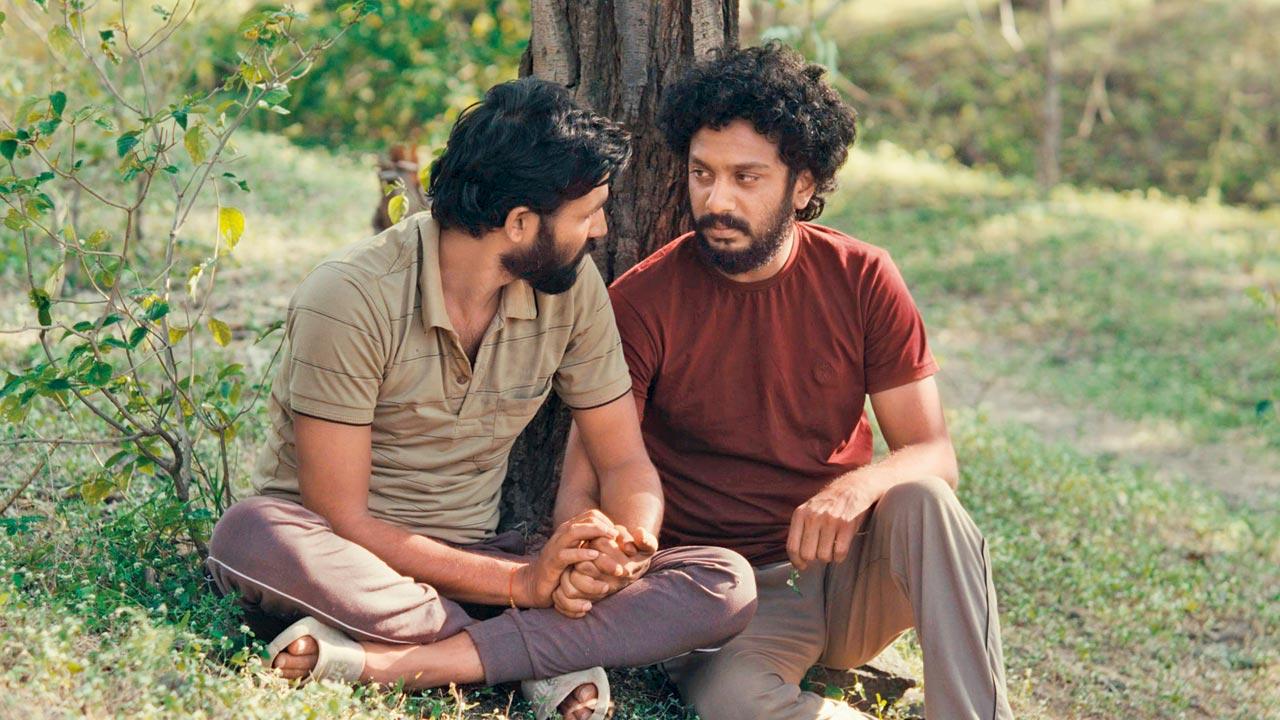
Director Rohan Kanawade reveals he was initially fearful of Sabar Bonda not finding a release in today’s market
Priyanka Sharma (MID-DAY; September 16, 2025)
Faith over fear — this principle has guided filmmaker Rohan Kanawade up to this point. His maiden feature film, Sabar Bonda, won the Grand Jury Prize in the World Cinema: Dramatic category at the Sundance Film Festival in January. Despite the win, the director wasn’t sure whether his romantic drama would be picked up for a theatrical release. Today, his faith in the movie has trumped his fear as actor and producer Rana Daggubati is bringing Sabar Bonda to theatres. “I didn’t know it would be this quick,” he chuckles.
“I know it’s very difficult to get a theatrical release nowadays. So many of my filmmaker friends have made their movies and they aren’t getting distribution. So, it was scary when we were making Sabar Bonda. But with all these people joining it, the release will be stronger,” he says, happy to have the support of filmmakers Vikramaditya Motwane, Nikkhil Advani, Nagraj Manjule, and actor Sai Tamhankar who have come on board as executive producers.
Starring Bhushaan Manoj and Suraaj Suman, the Marathi movie revolves around Anand who falls in love with Balya when he visits his ancestral village during the mourning period of his father’s demise. With Kanawade giving us a tender queer romance, we ask him about the love stories that influenced him in his childhood.
“My dad used to take us to watch films all the time. So, I used to watch all the Aamir Khan, Salman Khan, and Shah Rukh Khan films. I cried when I watched Kuch Kuch Hota Hai [1998],” he recalls.
But if there was a film that aroused his curiosity about what goes on behind the camera, it was the Marathi classic, Maherchi Sadi (1991). “While all the women in the audience were crying for Alka Kubal’s character, I asked my father all about the projector and kept on looking at all those colourful rays coming out of it.”
If the seeds of filmmaking were sown that day, they were further nurtured by Marathi filmmakers Jabbar Patel, Sumitra Bhave, and cinema legend Satyajit Ray, whose works Kanawade devoured.
“I realized how differently you can tell stories. There is not only one way to tell a story — I saw that in films made by these filmmakers. Sometimes if you feel jealous of other filmmakers, it inspires you to push yourself.”
Fear is another emotion he has come to terms with. “When you are writing something new, you have fears. But you have to force yourself to make what you want to.”
Subscribe to:
Posts (Atom)