Showing posts with label Roja. Show all posts
Showing posts with label Roja. Show all posts
I made Rangeela because of Urmila Matondkar-Ram Gopal Varma
8:40 AM

Renuka Vyavahare (BOMBAY TIMES; September 11, 2025)
Thirty years after its release, Ram Gopal Varma’s iconic Rangeela still enchants the audience with its blend of sweetness, sensuality and cinematic magic. The film has been restored in 4K and will be rereleased in India theatrically on October 10. We caught up with RGV to discuss his celebrated film, featuring Mili (Urmila Matondkar), Munna (Aamir Khan) and Raj Kamal (Jackie Shroff). Excerpts:
Rangeela was a sleeper hit. Did no one expect it to succeed the way it did?
Around that time, Aamir’s films hadn’t worked. Urmila’s films also didn’t work. I am from the South, so no one really knew what to expect from this film. In fact, even the music was a new form. Rangeela’s songs didn’t sound like the hit film songs of that time. Whenever something new comes, people tend to get disoriented, but by the time the release came close, the music caught on.
Munna’s “AC idhar ghuma, kanda kaatke la” dialogue is remembered even today, among other special moments from the movie. Three decades later, what do you think gives Rangeela its lasting appeal?
Huge credit to writers Neeraj Vora and Sanjay Chhel. What really makes a film last is how unforgettable its characters are, because no matter how much time goes by, human emotions remain the same. With Munna (Aamir Khan), Mili (Urmila Matondkar) and Kamal (Jackie Shroff) still etched in our minds, the passage of time doesn’t matter anymore. The story of Rangeela will find appeal today or 30 years before it was made.
What inspired you to make Rangeela?
Cinematically, I would say my inspiration was the 1960s Hollywood musical, The Sound Of Music. Although it’s not the same story, Rangeela is also a love story where there’s no conflict at all. There is no antagonist either. Everyone is nice – Mili, Munna and Kamal. There’s not a single bad person, but the situation creates the conflict. I love the aspect that Rangeela is a sad kind of a story where your heart goes out to Aamir, but at the same time, you can’t really hate the other person either.
You have made some memorable films with Urmila. Do you consider her your muse?
When you’re working together for a long time, and especially when a film becomes so successful, you tend to make the next film with the same actor.
Urmila can give versatile expressions, which I realized after seeing her in the song Hai Rama. That’s the reason I cast her in such a wide variety of films – a horror film like Bhoot, the gangster film Satya and a caper like Daud. I made Rangeela because of her. Why I wanted to make Rangeela was because I felt inspired seeing a song of hers in my Telugu film (Drohi with Nagarjuna). The origin of Rangeela stemmed from my desire to showcase Urmila’s sensuality and her beauty. She had never worn such revealing clothes in the films she had done before that, but I told her, if you feel beautiful about your body, you shouldn’t be conscious. That bindaas attitude, the fact that she’s not aware of herself, and the fact that she’s not intending to create an effect on somebody else created a wild, animal-like, exotic feeling in the audience. The most memorable aspect of Rangeela was to look at Urmila through the camera.
On roping A R Rahman for Rangeela’s music
When I heard the songs of Roja, I was blown away. The kind of new sound, packaging and production that Rahman created was something no one had ever heard. It was inspiring for me to capture that visually. When the music is generic, everyone from the choreographer to the actor comes up with a predictable output, but because it was so unpredictable that no one had a choice but to reinvent themselves.
For us, it’s a matter of pride if Pardesiya even gets compared to A R Rahman's work - Sachin-Jigar
10:41 PM
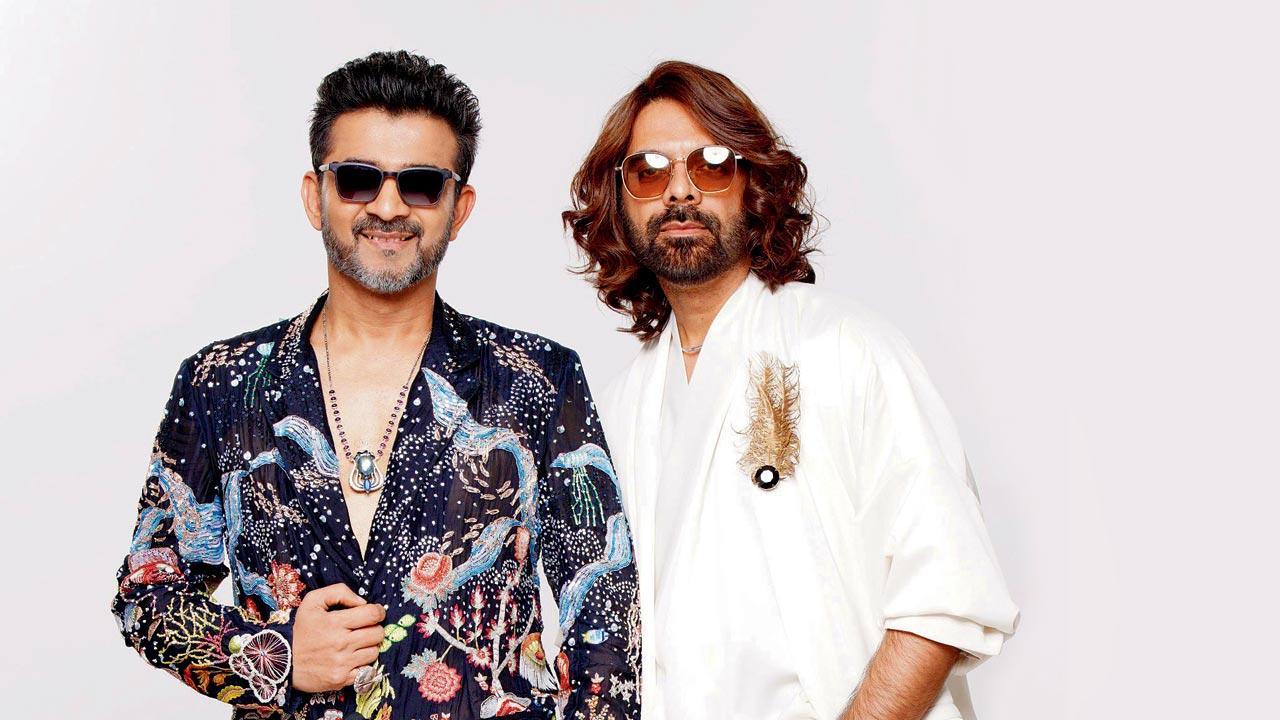
As listeners say that ‘Pardesiya’ is influenced by AR Rahman’s music, Param Sundari composers Sachin-Jigar reflect on how the album is their tribute to the maestro. They also share that they are proud that their work is being compared to A R Rahman's
Mohar Basu (MID-DAY; August 25, 2025)
Few composer duos in Hindi cinema today straddle madness and melody as deftly as Sachin–Jigar. Over the past decade, they’ve swung between quirky tracks like Kamariya, romantic numbers like Mileya Mileya, and chartbusters like Aaj Ki Raat. Ahead of their latest outing, Param Sundari, the duo talks about their mindset, music, and their tribute to the master. Excerpts from the interview.
What’s the secret of a long-term collaborative equation?
Sachin: It is destiny. We never sat in business meetings to plan this partnership — it just happened. I first met Jigar to share some workload, and there’s no way two people living so far apart could’ve just decided to become a jodi. It feels like something beyond us put us together. Let me give you a recent anecdote: I needed Jigar not just as my business partner but as family, and he came through for me. That’s when I realised I admire him beyond music. He’s five years younger but has this politeness, manners, and ability to communicate that I really look up to. He’s also the rebel in our duo, the one who pushes.
Jigar: The common thread between all of us is that we’re mad but sane enough to know that we’re mad! Otherwise, who decides to make a song “Baba Ji Ki Booti”? And when we did that track, everyone sang — Raj, DK, Anand, Kunal, me. Whoever was in the room. None of us was in it for stability. I think it’s that madness that connects us and keeps us together.
Last year was stupendous for you, with Aaj Ki Raat becoming 2024’s most-streamed song. When you start a new project after such a success, what is your mindset?
Sachin: Jigar doesn’t sleep — and he doesn’t let anyone else sleep either! (laughs) For him, the moment a song works, that gate is closed. He won’t allow us to repeat ourselves in the same way. That forces us to think differently, and that’s why we’ve managed to stay versatile. For me, that success gave me a certain ease. I’ve lived through the struggle of not finding popularity, so to be on the other side feels nice. But we were never in the game for just hits or flops. We came here to make good music, and even after success, that hasn’t changed.
Our mantra is never to define a “Sachin–Jigar sound.” We don’t want people to say, this is exactly what they always do. We move on, leave that sound behind, and try something new. If others want to pick it up, great. If not, no problem. That’s why after Stree 2, we thought, okay, we’ve done the madness in Stree, we’ve done dance numbers, now how do we break out again? That’s how Param Sundari happened. It’s become an unplanned pattern with us — one big dance number, then one big love song, then something unexpected.
Jigar : We’re also conscious of not getting typecast as “the commercial dance anthem guys.” So if we’ve just done a massive dance track, next time we’ll want to balance it with a love song or something soulful.
When the Param Sundari teaser dropped, it went viral, with Sonu Nigam’s voice everywhere on social media. How did that feel?
Sachin: A day before Jigar and I flew to Dubai for the Param Sundari music session, Dinesh Vijan called us to his office and told us this is a once-in-a-lifetime opportunity. Instantly, [A R] Rahman sir started playing in my head. Roja [1992] changed my life forever — if I’m a composer today, it’s because of those five years of listening to him. So working on Param Sundari felt like living a dream.
Jigar: South Indian music has also inspired us a lot because it stays rooted in its culture. Even in the most commercial films, you’ll hear classical influences. I trained in classical singing for 10–12 years, and often had to “unlearn” some of it to compose for cinema. But “Param Sundari” brought everything we wanted together, it felt like a dream we didn't want to wake up from. As for Sonu Nigam: growing up, albums like Yaad, Deewana, Jaan were my everyday listening. First it was a dream to see him live, then to hear him sing songs we produced. The first track we ever programmed was sung by Sonu Nigam. That was already a big moment.
But as composers, we never got to record him again. We always kept it inside us. One day, we have to make a tune worthy of his voice. I was such a huge fan, I would literally pray to him before going to school! (laughs) So when we composed Param Sundari, we both knew deep down: this is it. We didn’t even say it out loud to each other, but we knew this was the song for Sonu Nigam.
We called him, he heard it, came to the studio, and recorded it in half an hour. It was magical. For us, it’s the greatest tribute — to have the man who inspired us be part of our music. Recently, he called and told us how much love he’s receiving for the song. To hear that from your idol — that’s the biggest moment of the year.
With the first track going viral, the flip side is that the rest of the album has to match up. Do you worry about how people will receive a song?
Jigar: Definitely the latter. That’s not our job. Once we put our music out, it belongs to the audience. As fellow creators, we may form opinions, but as listeners, people have the right to completely own or dismiss what we make.
We learned early in our careers to detach ourselves from the fate of a song. It hurts when a track you love doesn’t do well, but once you release it, it’s no longer yours. You’ve shot the arrow, and it’s out in the world. What feels “good” to me might not land with someone else, and that’s okay. So yes, we’ve made peace with it. Especially today, when there’s such great indie music and such strong new artists coming through, we’re not greedy. We just try to give our best and then leave it to the universe.
Has it happened that you expected a song to be a big hit and it didn’t catch on?
Jigar: Many times! One example is Happy Ending [2014]. The album actually caught on months later. At release, it didn’t get the traction we hoped for, though we felt it was a true coming-of-age album in terms of sound and concept. The first song, Jee Phaad Ke, generated noise, but the other tracks didn’t bloom immediately. And because once a producer sees one song breaking through, he’ll naturally invest all his energy and money into pushing that one, the rest often get sidelined. We always believed the album would find its way — and it did, but very late. There are other examples too. A beautiful song like Pinjra Tod Ke in Simran, or Hoor in Hindi Medium with Atif Aslam. We thought they’d immediately catch on. They didn’t at first, but later people came back to them, and now they even request us to perform them on shows.
Sachin: It’s a part of the game. That’s why having the first song of an album break through is actually a huge victory. Because imagine if you’re waiting until the fourth track for something to click — by then the producer may lose hope, and the entire album can collapse.
Jigar: For us, every film’s music carries big stakes. Actors want to be seen in a good light, producers are investing heavily, directors have worked hard. If the first song doesn’t land, there’s panic. And in those moments, you have to put art aside and think practically: we have to make this work. When the first track works, it also gives us the liberty to experiment with the rest of the album. For example, because Stree worked, we could make Stree 2 completely different — even put a ghazal on a beat. That was a risk, and it only happened because the first one clicked. So yes, we’ve learned that “first song tracking” is the safer and better place to be in, even if the others don’t explode in the same way.
Dinesh Vijan, Amitabh Bhattacharya and the two of you almost function like a unit. And every time this unit comes together, it delivers. What makes it work?
Sachin: Dinesh is extremely critical of his own work, and Amitabh Bhai is the same. He’ll come back after six days to change just one word in the last line of an antara, or fight with us about a line even before a shoot mix is delivered. That level of self-criticism keeps the bar high.
The truth is, at the end of the day, no matter how many aspirations or ideas we all come in with, there’s only one song to be made. That perspective keeps us grounded. We keep checking each other.
Dinesh loves to experiment — he’ll come to us with a reference, or say, “Here’s this Afro-inspired song, can we make it a love track?” He’s always hustling, always infusing new ideas. Jigar, as I’ve said, is the rebel — he refuses to repeat himself, and he shares a bond with Dinesh that goes beyond work, which makes them almost like brothers.
Jigar: For me, I try to stay objective, to keep perspective when things get too passionate. And Amitabh Bhai has this magical ability to bring in a word or phrase that sparks a whole song. Among the four of us, someone always has the starting point.
Because this unit has delivered before, we have the courage to keep pushing further — to take one more risk, one more step. The balance of being able to check each other and push each other is what keeps us both grounded and moving forward.
Also, we’ve been through failures together — films that didn’t work, songs that vanished without a trace. That’s why now, even if something doesn’t work, it doesn’t shake the association. Our bond isn’t dependent on hits. It’s dependent on whether we’ve fulfilled each other’s creative soul. If between the four of us, we’ve inspired and satisfied each other creatively, then that’s success, no matter how far the song travels.
On social media, people are calling Param Sundari’s music derivative and influenced by A R Rahman. Do you worry about that?
Sachin: Never. From the beginning, this song came from a place of pure art, dedication, and a tribute to the master. For us, it’s a matter of pride if one of our songs even gets compared to his work. I look up to Rahman sir not just for his work, but for the person he is. On the inlay card of his first independent album [Vande Mataram], he wrote: ‘Hope to become the song of an independent India.’ That’s the man we’re paying homage to.
Jigar: When people say Param Sundari feels familiar, for us, familiarity isn’t bad. Familiarity can make you feel at home, and once you’re there, you can surprise the listener with new things hidden inside.
Kannappa makers wondered, ‘How will this delicate woman look like a strong warrior?’-Madhoo
8:14 AM
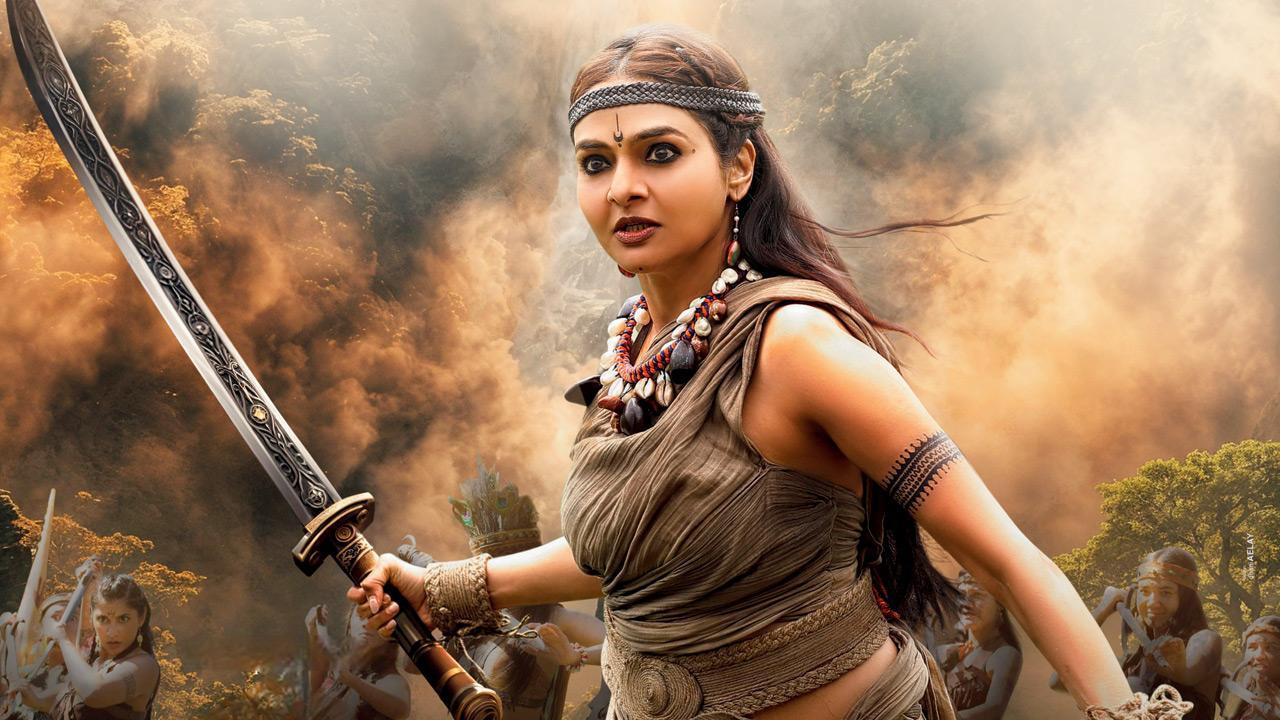
Madhoo, who plays a warrior queen in Kannappa, says she is being offered stronger characters in her second innings
Upala KBR (MID-DAY; February 25, 2025)
Playing a warrior queen in a big-budget action extravaganza is an opportunity that rarely comes in an actor’s life. Naturally then, Madhoo is delighted to be part of Kannappa that sees Vishnu Manchu play the titular role, and has cameos by Mohanlal, Prabhas and Akshay Kumar. Madhoo essays the role of Queen Pannaga, a fierce warrior queen. “My character leads her [all-women] army in their fight against the other clans. I had to do war scenes for the first time,” says the senior actor.
Director Mukesh Kumar Singh’s multi-lingual offering is based on the legend of Kannappa, a devotee of Lord Shiva. Shooting for the war sequences was a demanding experience, says Madhoo.
“Since I am slender, on the first day, the [makers] wondered, ‘How will this delicate woman look like a strong warrior?’ I didn’t have a fight master to train me nor did I have any workshops, so I trained myself. The stunts were like choreographed dance steps shown to me 10 minutes before my scene, and I could pull them off because I work out every day.”
Madhoo, who forayed into Bollywood with Phool Aur Kaante (1991), is enjoying the current phase of her career more than ever. Reason? She explains, “In my new innings, producers don’t come to me with soft roles. My characters are strong. In the old days, be it Roja [1992] or Pehchaan [1993], my roles had a softness in the beginning, but became strong eventually. Now, people are seeing me in a different light.”
After the first National award, I felt I must go higher-A R Rahman
8:08 AM
Niharika Lal (BOMBAY TIMES; October 15, 2024)
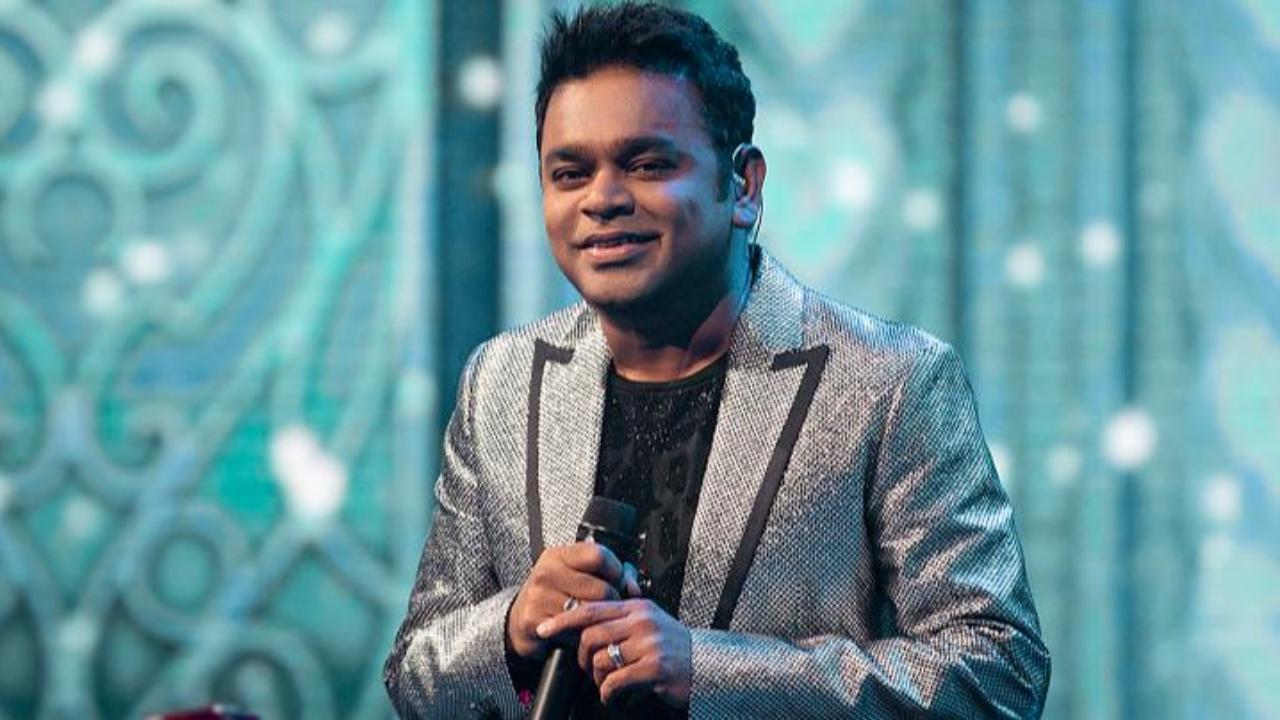
A R Rahman received his seventh National Film Award on Tuesday, and he says it definitely feels like a first all over again. “As an artist, you always feel like you're shedding your skin, evolving into a new person. The artist who has evolved is the one getting the recognition,” he shares. Interestingly, Rahman won his very first National Award for Mani Ratnam's Roja, and now, over three decades later, he's being awarded again for a Mani Ratnam film.
Music lovers say that the music of Roja still feels as fresh today as it did back then. Talking about what he does as a musician to create timeless music, Rahman shares, "From the very beginning, I had all these tick marks - the music should be recorded well, produced well, and the intention of creating the music has always been very pure. There is a big hero so I should do better music for this and there us a small hero so I should just...no! My music was never like that, the music has to be timeless. Whether it's a small hero or a big hero, the music has to be timeless. What I do should reach the full potential of what I can do. Sometimes, when you're working on a movie, a great tune comes for a small movie, and everyone says, 'Why are you putting this tune in a small movie? Use it for a Rajinikanth movie.' And I say, 'No, this tune came to me for this person, and I can't cheat. I can't take it out and put it somewhere else.' So that is the route I always took."
Excerpts from a conversation -
'After the first National Award, I felt like we have to go higher because the National Award is the highest recognition for any Indian musician'
Remembering how he felt when he received his first National Award, Rahman says, "I remember after I got my first National Award (for Roja), one of the reporters asked me, 'Do you think it is too early in your career to get a National Award for your first movie?' (laughs). After the first National Award, I felt like we have to go higher because the National Award is the highest recognition for any Indian musician. Even now, the National Award is something the whole nation acknowledges. As an artist, you always feel like you're shedding your skin, evolving into a new person. The artist who has evolved is the one getting the recognition. It's not the same thing - you've moved on from a lot of things, you're reinventing yourself, sometimes keeping what is good, sometimes letting go. So, this definitely feels like a first."
'I studied at Mani Ratnam university'
When the award was announced Rahman told us that it's a full circle, a National Award 32 years later, again for a Mani Ratnam movie. He says, "It is," and elaborates, "I think I was sitting with Mithun da and Mani Ratnam, and the minister Ashwini Vaishnaw asked something like, 'Where did you study?' I pointed at Mani Ratnam and said, 'Mani Ratnam university.' I think when you work with certain people, they bring out the best in you. And even without them asking, you understand. It's a telepathy that happens; after a while, they don't have to ask you. What they're asking comes as a mind impression, like, 'Okay, this is what he's thinking.' Then you go much further than what he's thinking, and he comes back and says, 'Oh! I like that. Why did you take so much time? Because you gave something far ahead of what I was thinking.' I'm like, 'Well, I had to take time.' So, we have a nice, interesting relationship."
Rahman says that because he had worked with so many traditional composers when he was young, he had to fight himself to break free from those influences. He says, "I had to take a 180-degree turn and say, 'I don't want to do what they did because I need to have a new experience.' So if they used one raga, I'd go and find another raga that was very unusual. Even in Roja, we used several ragas that were rarely used in Tamil. It was more of a North Indian raga, and when Tamil people heard it, it made North Indian people feel closer because they knew the ragas. Usually, Bhairavi, Yaman, and Todi are more common in South Indian compositions. So, I've consciously tried to move away from what is expected. Sometimes, some movies need a traditional score, and sometimes the director is ready to explore and gamble, and is ready for an adventure and then we have fun, which is what Mani Ratnam does."
'We can go into anthropology-driven details, but the ultimate goal is to create an experience'
Rahman says that a lot of research actually happened for the music of Ponniyin Selvan and he also had research material about what kind of equipment they had at that time, and then decided how to bring that sound from modern equipment and add it to the score.
He says, "Some of the instruments we got sound similar, and for others, we took some liberties and hid them in the score, which just adds to the musicality. We can go into anthropology-driven details, but the ultimate goal is to create an experience. It's about how truthful you are while giving people that experience because you're taking them to that era, and that era itself is a mystery because nobody really knows what happened. You imagine that, and imagination can be small or wild - most of the time, it's a wild imagination."
In Bond films, whether its composer Thomas Newman or John Barry - the theme is same
As Ponniyin Selvan has a sequel, so when he creates music for films which have sequels, how important is continuity? Sharing examples, Rahman says, "When it's a sequel, sometimes you have to continue with the score for continuity. Take the Bond movies. They have one theme that recurs. Different composers have done it too. Thomas Newman (Skyfall, Spectre) did it. John Barry (From Russia with Love, Goldfinger, On Her Majesty’s Secret Service, etc.) used to do it, and they all became the same theme.
It depends on the movie. If it's a continuation story, then it's better to have the same theme, like John Williams did for some of his work." (John Williams composed for many film series such as the Star Wars series, Harry Potter series, and Indiana Jones series.)
'I always feel like money comes as a blessing, but your work is more important'
Whether it's a big-budget film or a small-budget film, Rahman says it does not matter to him. Because his name is associated with the movie, when films don't have the budget, he has often paid from his own pocket.
He shares, "Sometimes, even for a big movie, a small score works, and it doesn't have to have 200 instruments every time. And sometimes, for a small movie, you need a big score. The film might not have the budget, but I say, 'It's fine, it's my movie, my name,' and I go ahead and book the orchestra. For instance, there is a movie Gandhi Godse - Ek Yudh (2023) that Rajkumar Santoshi directed, and it had a small budget. It required a very, very big sound, so we went ahead and did some of the score. He said, 'I don't have the budget for this,' and I said, 'No worries, I'm paying for this.' (Laughs)
How often does he have to do that?
Rahman says that he had these very strict standards from the beginning, and says, "See, for me, there is a truth, an honesty and that's important. I have to look at the music. To give an example - the first jingle that got me noticed, I was paid Rs. 2,000 bucks, and I used to charge Rs. 20,000 at that time. If I'd thought about money then, I wouldn't have worked very well on that. I always feel like money comes as a blessing, but your work is more important. How you work, what you give, should stand the test of time. I should feel proud of all my films and work."
I don’t put out any material that is anti government-A R Rahman
8:34 AM
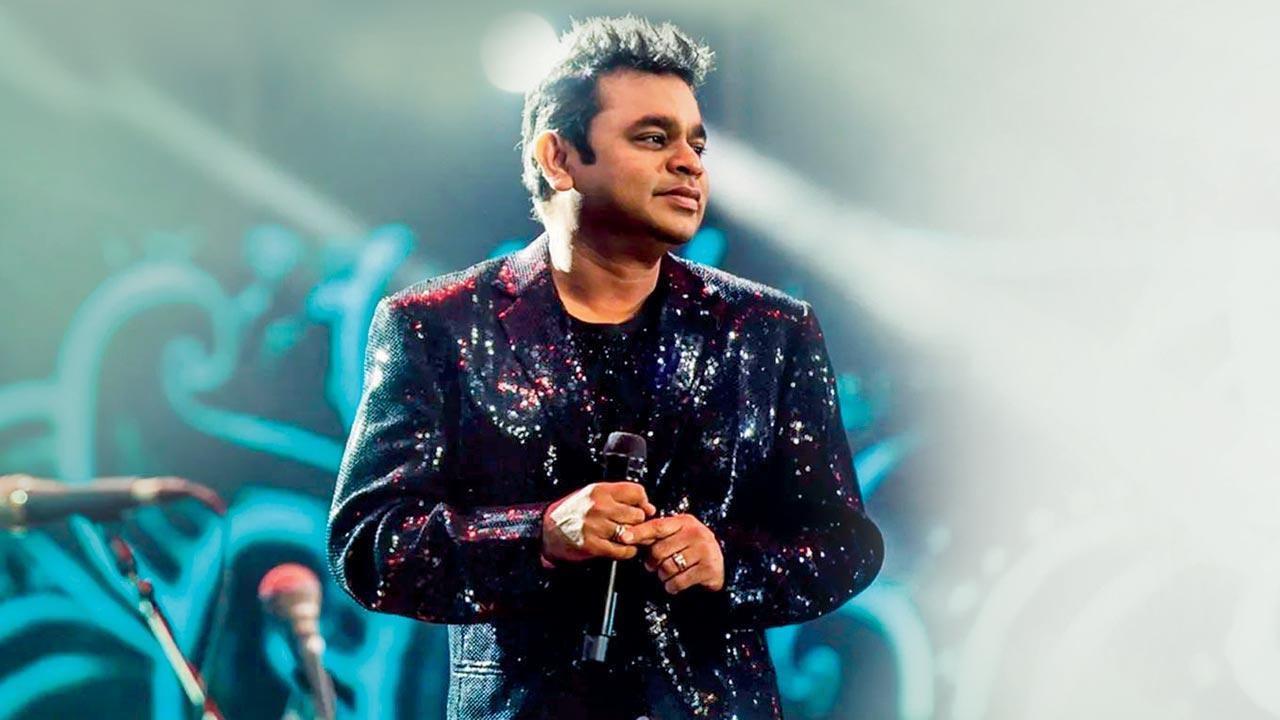
In a candid chat with mid-day to discuss his upcoming release, Headhunting To Beatboxing, A R Rahman discloses why he stays away from political banter, and the pain points in the Indian music industry
Priyanka Sharma (MID-DAY; June 10, 2024)
Touted as an offering that “exemplifies the energy, ambition and new-found confidence of Naga youth”, A R Rahman’s feature documentary, Headhunting To Beatboxing was unveiled at the 77th Cannes Film Festival in France. “From the ancient traditions of headhunting tribes to the musical renaissance in the state, the documentary promises to take audiences on an immersive and enlightening musical anthropological odyssey,” read a statement released by the Nagaland government.
In this interview, Rahman—who has also produced the film—chronicles how the artistes of the north-eastern state became the muse of his next piece of work. Edited excerpts of the interview:
What drew you to the story of Headhunting To Beatboxing?
It was a discovery. I was invited to Nagaland. I went with apprehension, because there are rumours relating to the history of Nagaland, [especially the practice of] head-hunting. I discovered this film organically and called Rohit [Gupta, director]. I told him that he should see the Hornbill festival that was taking place in Nagaland, where young people were also turning up. He came, and started shooting. The government was friendly because they wanted this to happen. They have a minister for music! It was fascinating to see the initiatives they have taken. I felt something needed to be done.
When you watch it, you will realize that two things stand out—one is that this [film depicts] India, and the other is that it is a reflection of the inclusivity that we should aim to inculcate in society. I see a section of the country that is completely ignored. That’s not good. It’s like, we have a family, but three people aren’t fed properly. It is odd.
You unveiled the film’s teaser at the recently concluded Cannes Film Festival. When you are present on an international platform, do you carry the pressure of being the Indian icon, A R Rahman?
I don’t try to be anybody else. On social media, and on our website, we are transparent about what we stand for. I don’t put out any [material that is] anti-government, because, as a musician, I should maintain a neutral stance. My music should be the haven that people seek solace in. I don’t have time for negative things. My music needs peace and healing.
But, while creating any piece of music, does the pressure to cater to your global audience play on your mind?
When Roja [1992] won a National Award, people said, ‘Isn’t it too early for you to get a National Award for your first film?’ The bar was set high. I felt I had nothing left to give, as I had given everything to my first film. But then, you meet a new team on a new film, and it gives you hope. You can create something new. For me, with the first film itself, that pressure has existed. That’s the reason I began to slow down. While others were producing songs in seven hours, I would take weeks or months to create [the soundtrack]. I slowed down intentionally, and the industry took note. They realized that we could move towards quality and be responsible instead of [urging musicians] to finish five songs in a day. Song-writing is an art that should be nurtured. Give it the spiritual energy that people can access.
At that time, my intention was to charge more and do less. It was also important to focus on the life happening around you. When you work, you become a slave, and you don’t derive anything from life. You are just cannibalizing what has come before. Unless you learn new things, how can you give people something novel? And to learn new things, you need to meet people, see what’s happening in the world, and spend time with your family.
How do you look at the music culture of today’s India?
It’s great that non-film music is becoming popular. If that didn’t happen, people would shell out a lot of money into [making] music that the masses don’t even like. They may say that the song has crossed many million views, but people won’t even know what the hook line is. The game of paid views is over. People are listening to different kinds of songs. But, there are certain lyricists who are bringing back the golden age of the ’50s and ’60s. Artistes like Irshad Kamil and Amitabh Bhattacharya have brought worthiness into lyricism. They bring a new kind of beauty to the words that they write. I feel, there could be more progress in lyric writing, especially in its ability to convey the philosophies of life, rather than simply stating, ‘I love you. Love me.’ I like lyrics that are symbolic. There’s scope for a revolution there.
From Roja to Satya, we have seen pan India phenomena earlier too-Rana Daggubati
8:01 AM
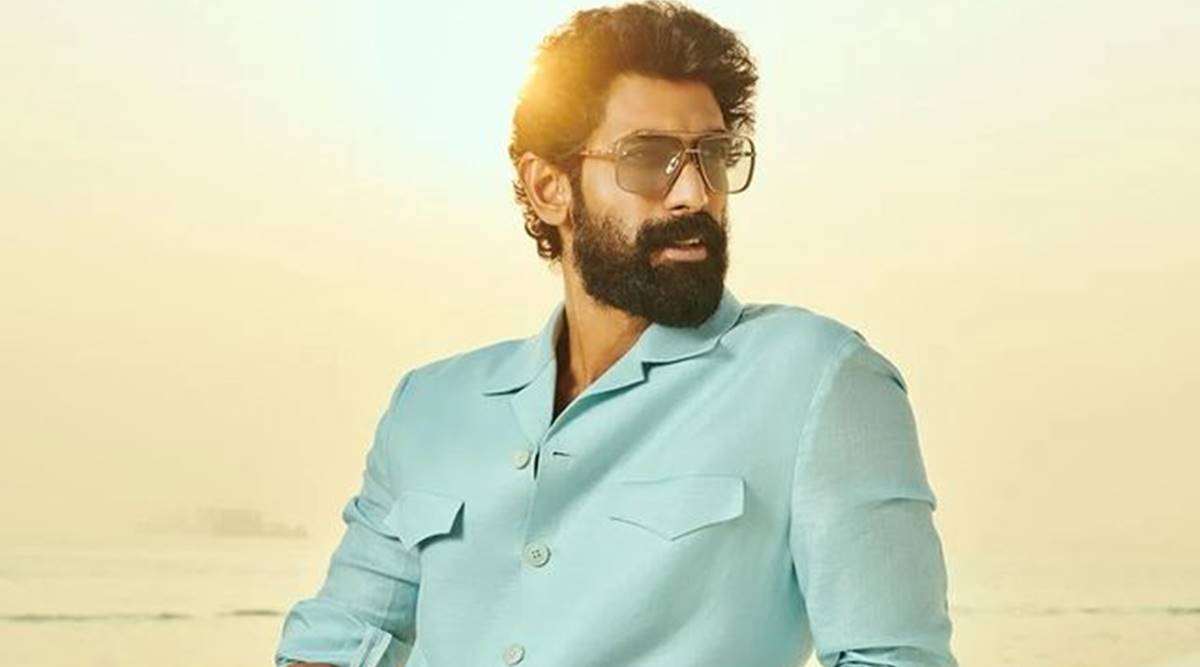
Niharika Lal (BOMBAY TIMES; December 2, 2022)
There was a time in his career, when people didn’t know which part of the country he was from or what language he worked in, says Rana Daggubati, adding, “And vice versa – people in the Telugu industry, or the Tamil industry, didn’t know what was happening in Mumbai.”
That’s what makes the shifting dynamics of Indian cinema all the more fascinating to the actor. At a session on film business at IFFI (International Film Festival of India), Rana shared, “It is the first year when we are addressing India as one film industry. What is happening in one industry is no longer alien to others.”
Rana said that OTT has definitely contributed to this shift. “Last week, I was at a party in south Bombay and they spoke to me about every Fahadh Faasil film they have seen in the last two years and this change is kind of incredible. The consumption of content is huge on OTT. You have so much choice on your phone and TV, which is high-quality, 4K, high definition. It gives you an opportunity to engage with those characters for a longer time. If you’re watching a show you’re hooked on those guys for 10 or 12 hours. It’s a different experience.”
‘PEOPLE ARE TAKING TIME OUT TO WATCH RRR & KGF ON THE BIG SCREEN BECAUSE THESE FILMS ARE LIKE EVENTS’
On the flipside, the audience is now more selective about which films to watch on the big screen, Rana said, adding, “When Black Panther: Wakanda Forever came out, everybody just got up, and left their offices, to watch it. People are still taking out time to watch KGF and RRR because those are events. If you sit in an auditorium with a giant screen, then you will only go for emotions or experiences that are extreme. Everything that is communal is more likely to be watched on big screens. Today you want cinema to be more authentic, and true to its genre. Whatever genre the filmmakers are making their stories in, they need to be extreme in narrative.”
Rana added, “What is extreme about Kantara? What it is showing you, you have seen it in photographs, you have experienced it. If you are from Karnataka, then you have heard of it or if you are from a different state then you have seen some other version of it, but to see all that together in a single frame. . . (pauses). Now, while I am talking about Kantara, my body is feeling the same effect it did when I first watched it. During the black and white films era, I remember my granddad used to keep talking about films that were devotional and he’d say that he felt God, and after this experience, I felt okay, maybe that’s what he meant...”
‘PUSHPA, KANTARA BROKE THE MYTH THAT PAN-INDIA RELEASES NEED BIG-BUDGET PUBLICITY’
Responding to a question on what’s next for cinema, Rana said, “We are just one year into it and we are all figuring out which films to make. I think all stories will find their place. But (it will take) three-four years of making, watching, and consuming them.”
Citing the example of Kantara, Rana said, “It didn’t matter what language the film was made in, everyone watched it in the language they preferred and ended up feeling the same. Earlier, we used to say that films should come out in all languages on the same date. But now we are seeing that if a film works in Kannada then 15 days later or a month later, it comes out in Telugu. And it still does the same job. You will see deferred releases and releases that can be localized. Earlier, this trend of pan-India films was (about spending) 10-15 crores in terms of publicity, otherwise, you would not even reach anywhere. But Pushpa and Kantara broke that whole myth. They spent what they had to spend in their region, and the whole country went to watch it. I think these systems (of pan-India mega-budget releases) will keep changing, and everybody will keep finding their type of affordable cinema.”
In response to the question of ‘why it took India so long for India’s cinema to become united’, Rana said, “When I was a kid, Mani Ratnam sir made Roja and Bombay. Those were Tamil films watched across the country. Everyone knows Roja’s music, no matter which part of the country you are from. Ram Gopal Varma made films like Satya, and again, it didn’t matter which language you spoke, you watched it. Time and again, there were films like these, which were telling us – ’Here you go, guys. We’ve done it.”
Addressing the narrative that in this flux, ‘Hindi cinema has somehow lost its way’, despite recent hits like JugJugg Jeeyo, Gangubai Kathiawadi and Brahmastra, Rana said, “Every time there is a certain change in the industry, the guy who is leading the pack is the first to get hit. I think somewhere Hindi cinema has been leading the pack. They are leading the entire industry in terms of creating music, creating value, and enterprise. And I think that they are closest to the change so they are taking a bit longer.”
‘STARDOM LIKE YESTERYEARS MAY NOT BE POSSIBLE TODAY, BUT GREATER THINGS ARE POSSIBLE’
About the changing definition of stardom, Rana said, “What is the star concept? The further away you are from a person, the more mystical they are. I don’t think you are going to have the same phenomenon as the yesteryear stars because there was just so little that you got to know about them. The only way to consume stars was through their films. Today, stars are always on social media, and you (the audience) also start treating them as entertainers. The star system will keep changing, and there will be characters that will last beyond stars.”
But are there still going to be stars? “The same thing may not be possible, but greater things are possible. Now you see platforms taking Indian culture, actors and films to a global stage. Becoming global stars is possible for Indian stars.”
Pan-Indian cinema is a trend now because people are open to watching such films-Mani Ratnam
8:21 AM

Prakash S (BOMBAY TIMES; April 28, 2022)
Pan-Indian film is a term that has come to be used often now in the Indian film industry, with Bãhubali and KGF franchises, and RRR attracting fans across the country. Though the Tamil film industry is churning out films that promise to cater to the sensibilities of pan-Indian audiences, there is a notion that Tamil cinema is not matching up to Telugu and Kannada cinema in this aspect.
Mani Ratnam, whose movies like Roja and Bombay have appealed to a pan-Indian audience, addressed this concern at an event recently, and said, “This is not something new. Since many films are coming out now and becoming a success in north India, too, we’re talking about it. Earlier, Chandralekha (S S Vasan’s 1948 film), which we made, became successful in north India. No one asked such questions then. Any growth is a positive element and no one can stop this. We’re watching Hollywood films being dubbed in Tamil; so, what’s wrong with watching a Kannada film? If you make good films, then it will become a success everywhere.”
So, if Chandralekha and Roja have done it before, pan-Indian cinema is not new. But why did it not become a trend then and why now? “Well, the first part of the question doesn’t matter anymore. Now, people are filmmakers are also adapting to it,” he answered.
The ace filmmaker further said, “The standard of Tamil cinema is very rich; there are a lot of brilliant filmmakers who are very good. Many young filmmakers are opening new doors for the industry.”
Touching on the role of technology in cinema, Mani Ratnam, whose multilingual period film Ponniyin Selvan – I is in its post-production stage, said, “Any tool which will help us make better films is welcome. Cinema is an expensive art form, and it’s very important to keep the budget under control so we can make better films. It’s wonderful to see a flux of techies entering with innovative ideas to make better cinema.”
Today, leading actresses like Deepika Padukone or Anushka Sharma do not have to choose between marriage & career-Madhoo
8:04 AM

Tanvi Trivedi (BOMBAY TIMES; November 25, 2020)
Popular as the Roja (1992) girl, after a great run in the movie industry (Bollywood and south films) for nearly a decade, actress Madhoo quit films for marriage in the 1990s. However, after two daughters and a happy married life, in retrospect, she feels it was a mistake to have left behind a full-fledged acting career. In an exclusive interview, the actress opens up about reuniting with her Roja co-actor, Arvind Swamy, the changes in the film industry and why ‘nepotism’ is not a bad word. Excerpts...
You have reunited with your Roja co-actor Arvind Swamy for the Jayalalithaa biopic Thalaivi after nearly 30 years. Did that make you nostalgic?
Arvind Swamy is playing MGR and I am playing his first wife, Janaki Amma’s role in Thalaivi. I joked with him about how he was a newcomer when Mani Ratnam cast him in Roja. He was not keen to do films then, but Mani Ratnam, who was his friend, convinced him. And we all know how the film fared at the box office; it’s history.
Now, he is a professional actor, who has done more than 20-30 films. He suits the role of MGR’s character so well. I may have done 60 films in the past, but I still get the jitters when I am on a film set. I was at ease when I came to know that I was working with Arvind. People will hopefully like our chemistry as much as they did in Roja.
You have done several films in the South film industry and in Bollywood before and after Roja, but people still remember you as the Roja girl...
Before Roja, I did many films in the South with stars like Mammootty, Mohanlal, Ravi Chandran and Hindi films with stars like Akshay Kumar, Ajay Devgn, Mithun Chakraborty, Govinda and Suniel Shetty, but Roja put me in the big league and brought me fame and adulation. However, every time I started promoting a new film, people would tell me how they loved me in Roja. I’d get slightly irritated when my other films got ignored. On the other hand, I am happy that people remember me for Roja. There were so many good actresses who did good work around that time, but no one remembers them today. Moreover, I can’t complain much because I worked for 10 years and gave it up all to get married. I was adamant to just settle down and not pursue films further, even though my family and husband were supportive. Now, when I look at it in retrospect, I feel it was a mistake because I missed doing films.
Actors like your first Bollywood hero Ajay Devgn, are doing interesting roles today. Even actresses, across age groups, have a variety of roles to choose from. Do you feel that today you have so many more opportunities presented in front of you?
There were many restrictions for actresses in the past. Now with so many alternative platforms and even films being made for different audiences, an actress does not have to hide her age. She is also under no pressure to look a certain way. Even if she puts on a bit of weight, you will find her doing interesting roles. Today, top leading actresses like Deepika Padukone or Anushka Sharma do not have to choose between marriage and career. Actors are finding themselves in a good, liberating space. Look at my co-actor Ajay Devgn, he is doing such content-rich films. He is doing roles that suit his age in films like De De Pyaar De. I am also a mother of two daughters, so I am okay playing one in a film.
Your daughters have expressed a desire to be in films…
Yes, both my daughters had expressed their wish to be part of the film business, but currently they are busy with their exams. They returned from London during the lockdown. I will surely support them if they want to become actors.
‘Nepotism’ and ‘favouritism’ have been the two buzzwords in the past few months in Bollywood. What do you have to say about them?
People talk from their experience and my experience is different. I got cast in my films on merit. I remember being told by my secretary to show my face at certain filmmakers’ parties for five minutes as that would get me a chance to be in their films. And I refused to be part of parties, because I believed that filmmakers would cast me if they liked my work. However, I don’t see a problem when a person likes you and wants to work with you. The film does well, and you begin an association, I don’t see that as camp politics. Nepotism is not a bad word; sabotage is! Tomorrow, even if my best friend’s daughter or son wants to join films, I will help them out. What is wrong in that? What is not right is when you try to take away someone else’s work or ruin their career.

I didn’t know I was a star when I was working in movies-Madhoo
7:50 AM

Kavita Awaasthi (HINDUSTAN TIMES; October 21, 2019)
She is the leading lady of Roja (1992), the film that went on to win three National awards. Whoever was associated with that film became a star. Yet, for a long time after, the female lead, actor Madhoo, didn’t register that she had become a name.
“I didn’t know I was a star when I was working in movies. It was only after I took a break that I realised how successful I was,” says Madhoo, who did films intermittently, as she got busy raising kids. She slowed down after 1998, did no films at all between 2001 to 2008, took up few projects afterwards. But she has had no film these past three years. Now she is reuniting with her Roja co-star Arvind Swamy.
Besides two Tamil films and a Hindi one, she has signed a bi-lingual film with Arvind. “Everything has its own time. I wasn’t actively working all these years. Now, that the word has spread that I am back, I’ve bagged these films. I was overjoyed to work with Arvind again. He is a friend and we’ve kept in touch over the years,” she says.
The Phool Aur Kaante (1991) actor adds, “I am an artiste, I realised that when I was on a break. In 2019, I’ve already paired up with actors I worked with in the past, including Prabhu Ganesan ji and Sarathkumar ji. My movies with them will release soon. I’d love to team up with new and young actors, and senior actors like Shah Rukh Khan and Rajinikanth sir, who are my favourites. But what excites me is that my former co-stars such as Arvind and Ajay Devgn are still working, teaming up with them will be fabulous.”
Recalling the success of Roja, Madhoo says, “When I was doing Roja, I never thought it would be an epic film or make my career or that it was an awesome role in a great film that would be remembered for years. I followed Mani (Ratnam; director) sir and he made a film that he did. I was childish, naïve and innocent back then. Only after I quit the industry is when I understood how huge the movie became. Even today, people call me the Roja girl. I am glad to have been part of a movie which will remembered in history,” she concludes.
Today’s Bollywood music is the demand of the changing times-Khayyam
8:41 AM

In an exclusive interview with BT, veteran composer Khayyam talks about the changing sound of Hindi film music, and why A R Rahman is his favourite composer
Soumya Vajpayee (BOMBAY TIMES; October 26, 2018)
 “By the grace of God, I’ve had a great journey in Bollywood. There were many hardships on the way, but God and my love for music kept me going. I fulfilled my responsibilities to the best of my ability,” says National Award-winning music director Mohammed Zahur Khayyam Hashmi, better known as Khayyam.
The man behind classics like Kabhi Kabhi Mere Dil Mein Khayal Aata Hai (Kabhi Kabhi, 1972) and Dil Cheez Kya Hai (Umrao Jaan, 1981), Khayyam embraces the changing sound of Hindi film music, rather than criticising it like many of his contemporaries. “I feel change is the only constant, and you should know how to go with the flow. The kind of music that’s made for a film completely depends on the subject of a project. My seniors, colleagues and I were privileged to get amazing subjects to work on, because the music, poetry and melodies were all dependent of the stories. The music you make depends on the demands of the filmmakers. So whatever is happening is the demand of the changing times,” says the veteran, whose favourite new-age music maker is Academy Award-winning composer, A R Rahman. “He does some amazing work. His song, Dil Hai Chota Sa, Choti Si Asha (Roja, 1992) is incredible, and among my favourites. I listen to it over and over again.”
Though the composer is 91, he’s still so passionate about music that he doesn’t mind stepping inside a recording studio. “Music is my only love. Though I’m not working on anything at the moment, if something interesting comes my way, I’ll definitely take it up,” says Khayyam, who is being conferred with the Hridaynath Award for Lifetime Achievement today.
“The Mangeshkar family is laden with the best gems from the world of music. Ishwar ne khaas taur par sangeet ki saari shaktiyan Mangeshkar pariwar ko de di hain. It’s a matter of pride for me to be honoured by the family,” says the composer.
Unfortunately, our theatres are not ready for my short film-A R Rahman
8:00 AM

Sonil Dedhia (MID-DAY; January 11, 2018)
When A R Rahman announced his directorial debut last year, many expected the project to be a musical for obvious reasons. However, the maestro threw a curveball by stating that Le Musk (below) would be a virtual reality (VR) film, which would use smell for an enhanced immersive experience. The composer, who is currently working on the post- production of the film, is well-aware that releasing it in India will be a challenge since theatres don’t support the virtual reality technology.

“For a short film like Le Musk, I thought VR was the perfect medium. Unfortunately, our theatres are not ready. We don’t have theatres that provide the head-mounted devices required for VR. Being one of the first few to make this kind of cinema comes with its own challenges,” says Rahman.
But he is hopeful that cinema screens will soon offer such an experience. “PVR has opened a VR lounge in Noida, so things are moving in that direction,” he points out. Shot in Rome, the short film features foreign actors like Nora Arnezeder, Guy Burnet and Marian Zohrabyan, and follows the journey of an orphaned heiress and part-time musician, Juliet.
Rahman says that despite the issues, he was convinced about making the film in this format as it is “the next level of cinema.” “I knew about the infrastructure limitations, but certain things require you to just jump in. I faced a similar challenge when I worked on Roja [1992] — I was working in stereo mode when the theatres still had a mono audio system. But things changed after Roja. So, I couldn’t have waited for VR to come to India and then made a film on it. My film will be more like an art installation rather than a regular release.”
After Le Musk, Rahman, who has been appointed the brand ambassador of Sikkim, is keen to helm a film on different Indian classical dance forms. “I’m passionate about that project, but right now, I’m focussed on this.”
If you make me Ranveer Singh’s mother & he calls me ‘mummy’, the audience won’t be convinced-Madhoo
7:42 AM

The actor and socialite on staying relevant and what it’s like for a Juhu girl to be labeled a townie
Anukra Roy (MUMBAI MIRROR; July 23, 2017)
Actress Madhoo Shah welcomes us into her tastefully done-up living room at her home in Malabar Hill with a warm smile. “My husband and mother-in-law are huge art collectors. Whatever I know about art is because of them. Every now and then my husband keeps changing the interiors of this place,” she says. Among the art decorations, the room was adorned with some balloons as well. Shah excitedly shares, “This is the decoration from the surprise party which my children organised for me because they saw the promo of my television show.”
The actress has made a comeback to television with Goldie Behl’s show Aarambh. “Earlier I used to be very unhappy with the word comeback. It meant that I had gone away somewhere and I am coming back. By right now, it feels nice. Now, to me, it means you are making a fresh beginning,” she says. Shah plays a queen in the tele-show and she’s hoping the audience would accept her in her recent role.
Bollywood, on the other hand, is known to typecast actresses as mothers after a certain age. Shah agrees that the audience won’t accept her in a role of a leading heroine. “The industry isn’t unfair, sexist or ageist; it’s just the way it is. I don’t have a problem in playing a hero or a heroine’s mother. But if the hero doesn’t look like my son and looks like my age, then it doesn’t make sense. It’s about looking the part,” she says. “If you make me Ranveer Singh’s mother and he calls me ‘mummy’, the audience won’t be convinced.”
The 48-year-old who made her debut with Ajay Devgn in Phool Aur Kaante in 1991 and had worked extensively in both Hindi and South film industry, is still known for her role in National Award winning movie Roja. “The fact that my work and I are still remembered in an industry where memories are fickle and people forget very easily, I feel blessed and grateful,” she says.
Brought up in Juhu, Shah moved to tony Malabar Hill after her marriage to businessman Anand Shah in 1999. Like many other fellow suburbanites, she too had her own preconceived notions about “townies”. “We had a perception that these (south Mumbai) people are snooty, vain and shallow. They are all about expensive clothes and handbags. I used to think they don’t have to struggle at all. Initially, the people here did not accept me and nor did I accept them. The belief system clashed,” she says. “But with time I met some people, the so-called townies, who were lovely people with beautiful stories to share. So what if they got it easy in life, we all are human beings on different journeys. The moment I changed this perception in my head, I made some amazing friends.”
And the fact that she herself became a “townie” helped Shah blend into the social circle. “I started travelling and carrying expensive bags. My husband loves to gift me pretty things. This kind of lifestyle doesn’t make anyone less or more; it’s just how things are. It made a huge difference and helped me to adjust here,” she says. During her sabbatical, Shah was mostly seen at parties and art shows which earned her the tag of a ‘socialite’. “We tend to tag everybody. ‘Oh! These are kitty ladies or kitty lunches’. I have attended these events and those have earned me some fantastic friends. It’s a way of connecting with other human beings,” she says with a smile.
Today, Shah counts Rajyalakshmi Rao, Chhaya Momaya and Queenie Singh as her inner circle of friends. “I am very close to all of them,” she says. “Queenie, in fact, is like my soul sister. She in a way helped me change my perception about people in this part of the city. When I got to know her, I realised she’s not just a socialite but she’s a super intelligent woman who has a beautiful story to narrate. I realised wearing make-up, looking good and going to parties does not make anyone vain.”
Apart from her television show, Shah has worked in two short films this year. Pocket Mummy, which released on Mother’s Day, with former child artiste Parzaan Dastur and Raja Mukherji’s Sab Theek Hai, which will be releasing at the end of this month.
She says, “I feel no matter how much good work you have done in the past, the only way to stay relevant is associating yourself with relevant minds. I know everything about the latest music as I’m aware what my children are listening to. There are so many new things that have come out. And, only if you associate with young minds, you can stay relevant.”
Actress Madhoo Shah welcomes us into her tastefully done-up living room at her home in Malabar Hill with a warm smile. “My husband and mother-in-law are huge art collectors. Whatever I know about art is because of them. Every now and then my husband keeps changing the interiors of this place,” she says. Among the art decorations, the room was adorned with some balloons as well. Shah excitedly shares, “This is the decoration from the surprise party which my children organised for me because they saw the promo of my television show.”
The actress has made a comeback to television with Goldie Behl’s show Aarambh. “Earlier I used to be very unhappy with the word comeback. It meant that I had gone away somewhere and I am coming back. By right now, it feels nice. Now, to me, it means you are making a fresh beginning,” she says. Shah plays a queen in the tele-show and she’s hoping the audience would accept her in her recent role.
Bollywood, on the other hand, is known to typecast actresses as mothers after a certain age. Shah agrees that the audience won’t accept her in a role of a leading heroine. “The industry isn’t unfair, sexist or ageist; it’s just the way it is. I don’t have a problem in playing a hero or a heroine’s mother. But if the hero doesn’t look like my son and looks like my age, then it doesn’t make sense. It’s about looking the part,” she says. “If you make me Ranveer Singh’s mother and he calls me ‘mummy’, the audience won’t be convinced.”
The 48-year-old who made her debut with Ajay Devgn in Phool Aur Kaante in 1991 and had worked extensively in both Hindi and South film industry, is still known for her role in National Award winning movie Roja. “The fact that my work and I are still remembered in an industry where memories are fickle and people forget very easily, I feel blessed and grateful,” she says.
Brought up in Juhu, Shah moved to tony Malabar Hill after her marriage to businessman Anand Shah in 1999. Like many other fellow suburbanites, she too had her own preconceived notions about “townies”. “We had a perception that these (south Mumbai) people are snooty, vain and shallow. They are all about expensive clothes and handbags. I used to think they don’t have to struggle at all. Initially, the people here did not accept me and nor did I accept them. The belief system clashed,” she says. “But with time I met some people, the so-called townies, who were lovely people with beautiful stories to share. So what if they got it easy in life, we all are human beings on different journeys. The moment I changed this perception in my head, I made some amazing friends.”
And the fact that she herself became a “townie” helped Shah blend into the social circle. “I started travelling and carrying expensive bags. My husband loves to gift me pretty things. This kind of lifestyle doesn’t make anyone less or more; it’s just how things are. It made a huge difference and helped me to adjust here,” she says. During her sabbatical, Shah was mostly seen at parties and art shows which earned her the tag of a ‘socialite’. “We tend to tag everybody. ‘Oh! These are kitty ladies or kitty lunches’. I have attended these events and those have earned me some fantastic friends. It’s a way of connecting with other human beings,” she says with a smile.
Today, Shah counts Rajyalakshmi Rao, Chhaya Momaya and Queenie Singh as her inner circle of friends. “I am very close to all of them,” she says. “Queenie, in fact, is like my soul sister. She in a way helped me change my perception about people in this part of the city. When I got to know her, I realised she’s not just a socialite but she’s a super intelligent woman who has a beautiful story to narrate. I realised wearing make-up, looking good and going to parties does not make anyone vain.”
Apart from her television show, Shah has worked in two short films this year. Pocket Mummy, which released on Mother’s Day, with former child artiste Parzaan Dastur and Raja Mukherji’s Sab Theek Hai, which will be releasing at the end of this month.
She says, “I feel no matter how much good work you have done in the past, the only way to stay relevant is associating yourself with relevant minds. I know everything about the latest music as I’m aware what my children are listening to. There are so many new things that have come out. And, only if you associate with young minds, you can stay relevant.”
Sometimes, Mani Ratnam doesn't even tell me the story-A R Rahman
4:43 PM

Suganth M (BOMBAY TIMES; April 7, 2017)
Twenty-five years, 15 film
albums, innumerable chartbusters...Mani Ratnam and A R Rahman are
arguably the greatest director-composer duo of our time. Ahead of the
release of their latest offering, Kaatru Veliyidai, the celebrated duo
takes a walk down memory lane with BT, talking about everything -from
the moment when Mani Ratnam heard Rahman's music for the first time, to
how their composing sessions are today. Read on...
What was the first thing that struck you when you listened to Rahman's music, way back in 1992?
Mani Ratnam (MR): When you listen to music, you listen to music. You like it very much or not. For me, his music was just amazing. It took me out from where I was sitting and transported me to a different world.
A R Rahman (AR): Not everyone gets a Mani Ratnam movie for their first film. So, imagine how cool it must have been for me!
MR: And not everyone gets A R Rahman's first film, too! (laughs)
Did you feel any pressure at that time?
AR: I had a lot of pressure. He was very kind, but outside, they were all looking at me like, 'What! You, composing for a Mani Ratnam film? What are you gonna do?' I wouldn't play the songs to everyone, but some people would come and listen. There was this gentleman who supplied music equipment. He had helped me get all my equipment. So, he came and listened, and he was silent. After a while, he asked, 'What have you done? This is a disaster. Where's the tabla? Where's the violin? They are what make a song. Not this stuff.' I was really concerned and told Mani Ratnam 'I'm going to add tabla and violin', and he told me, 'Don't do any thing. This is perfect.'
Were you concerned if the audience would find Rahman's music for Roja too ahead of its time?
MR: No. I looked at it as a director. And a director is a very selfish person. His first priority is his film. The film was set in Kashmir and the music that he played had the feel of winter - the cold of that place. I thought it was absolutely fantastic and it was just going to lift my visuals.
After Roja came Thiruda Thiruda, which, again, had a totally new sound, again...
AR: I think Roja's success made us work really, really hard. We were kind of masochists, and we were destroying ourselves. Vairamuthu sir, in fact, said, 'Anybody else would have died living up to what we did with Roja'. We were pushing ourselves and I think that's why it still stands the test of time.
MR: It was an experimental album, but we didn't think of it that way then. Still, Rahman tried every thing. The film was a wild film, so he could go that expansive in the music. It was a chance for us to open up a lot more.
Do you choose tunes that would work well in all languages?
AR: It is one of the most torturous things. We didn't even know that the music of Roja was going to work in Hindi, but it was so big in Hindi as well. So, Bombay was a challenge. This is one of the reasons why we settle for phonetics, like Humma Humma or Chaiyya Chaiyya. This way, we get away with not being region specific.
When you have Rahman, people expect songs. Are songs a compromise in your films?
MR: I like songs. It's a weakness that I have. A song is a burden that you carry happily. When you have a song, it is like a mini-film within a film. It has a wholesomeness within itself. And sometimes, the song is so good that it stands out more than the film. You know it is bigger than the film, still you are greedy and try to fit it in as much as you can. It's your love for it that matters.
Where does the journey of a Mani Ratnam-AR Rahman album start?
AR: Anywhere. Sometimes he doesn't even tell me the story.
MR: Yes, these days, I don't.
AR: He will ask me to play the tunes and say, 'I like this tune, this one' and pick them up.
Do you generally have tunes ready for him?
AR: Not exactly. I have a melody element that reflects feelings... like love, passion and so on. I keep sending him ideas and ask him to check them out.
How do you decide that he will like a particular tune?
AR: It's not about him liking a tune. When I compose something, I have to like it first. I have to be proud of it and feel, 'Ah, this is beautiful' or 'This chord progression is nice'... If it emotionally moves me, then I'm sure that he will like it as well. Sometimes, he might not like it, too. For instance, while composing for Kadal, my favourite was Nenjukkulle while his was Moongil Thottam. Both had the same tempo and were on accordion, with extraordinary lyrics. Finally, we ended up using both.
Is there any difference between how your composing sessions were earlier and how they are at present?
AR: I think we used to hang out more. I miss going to Maldives or to Bangalore for such sessions.
MR: Today, Rahman travels all over the world, but that doesn't stop us. He still sends me tunes whether he is here or abroad through Skype.
AR: But for background scores, we need to be face-to face, as the momentum is much better then. For lyrics, again, we have to sit together, which is what is beautiful about the process.
How is a typical session like?
AR: We will show it to you, on Periscope once (laughs). Actually, it is both fun and stressful.
Is the discussion only about the song?
AR: When he is doing a movie, if you talk something other than the subject, he'll just say, 'I don't care what you are talking about. Is it related to my movie?' So, I wander around, but he is very focused.
MR: I think that's good to wander once in a while because Rahman gets some random ideas and they work very well. When the three of us sit together, you can really feel the synergy.
What was the first thing that struck you when you listened to Rahman's music, way back in 1992?
Mani Ratnam (MR): When you listen to music, you listen to music. You like it very much or not. For me, his music was just amazing. It took me out from where I was sitting and transported me to a different world.
A R Rahman (AR): Not everyone gets a Mani Ratnam movie for their first film. So, imagine how cool it must have been for me!
MR: And not everyone gets A R Rahman's first film, too! (laughs)
Did you feel any pressure at that time?
AR: I had a lot of pressure. He was very kind, but outside, they were all looking at me like, 'What! You, composing for a Mani Ratnam film? What are you gonna do?' I wouldn't play the songs to everyone, but some people would come and listen. There was this gentleman who supplied music equipment. He had helped me get all my equipment. So, he came and listened, and he was silent. After a while, he asked, 'What have you done? This is a disaster. Where's the tabla? Where's the violin? They are what make a song. Not this stuff.' I was really concerned and told Mani Ratnam 'I'm going to add tabla and violin', and he told me, 'Don't do any thing. This is perfect.'
Were you concerned if the audience would find Rahman's music for Roja too ahead of its time?
MR: No. I looked at it as a director. And a director is a very selfish person. His first priority is his film. The film was set in Kashmir and the music that he played had the feel of winter - the cold of that place. I thought it was absolutely fantastic and it was just going to lift my visuals.
After Roja came Thiruda Thiruda, which, again, had a totally new sound, again...
AR: I think Roja's success made us work really, really hard. We were kind of masochists, and we were destroying ourselves. Vairamuthu sir, in fact, said, 'Anybody else would have died living up to what we did with Roja'. We were pushing ourselves and I think that's why it still stands the test of time.
MR: It was an experimental album, but we didn't think of it that way then. Still, Rahman tried every thing. The film was a wild film, so he could go that expansive in the music. It was a chance for us to open up a lot more.
Do you choose tunes that would work well in all languages?
AR: It is one of the most torturous things. We didn't even know that the music of Roja was going to work in Hindi, but it was so big in Hindi as well. So, Bombay was a challenge. This is one of the reasons why we settle for phonetics, like Humma Humma or Chaiyya Chaiyya. This way, we get away with not being region specific.
When you have Rahman, people expect songs. Are songs a compromise in your films?
MR: I like songs. It's a weakness that I have. A song is a burden that you carry happily. When you have a song, it is like a mini-film within a film. It has a wholesomeness within itself. And sometimes, the song is so good that it stands out more than the film. You know it is bigger than the film, still you are greedy and try to fit it in as much as you can. It's your love for it that matters.
Where does the journey of a Mani Ratnam-AR Rahman album start?
AR: Anywhere. Sometimes he doesn't even tell me the story.
MR: Yes, these days, I don't.
AR: He will ask me to play the tunes and say, 'I like this tune, this one' and pick them up.
Do you generally have tunes ready for him?
AR: Not exactly. I have a melody element that reflects feelings... like love, passion and so on. I keep sending him ideas and ask him to check them out.
How do you decide that he will like a particular tune?
AR: It's not about him liking a tune. When I compose something, I have to like it first. I have to be proud of it and feel, 'Ah, this is beautiful' or 'This chord progression is nice'... If it emotionally moves me, then I'm sure that he will like it as well. Sometimes, he might not like it, too. For instance, while composing for Kadal, my favourite was Nenjukkulle while his was Moongil Thottam. Both had the same tempo and were on accordion, with extraordinary lyrics. Finally, we ended up using both.
Is there any difference between how your composing sessions were earlier and how they are at present?
AR: I think we used to hang out more. I miss going to Maldives or to Bangalore for such sessions.
MR: Today, Rahman travels all over the world, but that doesn't stop us. He still sends me tunes whether he is here or abroad through Skype.
AR: But for background scores, we need to be face-to face, as the momentum is much better then. For lyrics, again, we have to sit together, which is what is beautiful about the process.
How is a typical session like?
AR: We will show it to you, on Periscope once (laughs). Actually, it is both fun and stressful.
Is the discussion only about the song?
AR: When he is doing a movie, if you talk something other than the subject, he'll just say, 'I don't care what you are talking about. Is it related to my movie?' So, I wander around, but he is very focused.
MR: I think that's good to wander once in a while because Rahman gets some random ideas and they work very well. When the three of us sit together, you can really feel the synergy.
Subscribe to:
Posts (Atom)