Showing posts with label Riteish Deshmukh interview. Show all posts
Showing posts with label Riteish Deshmukh interview. Show all posts
We have never revealed our films’ budgets. It isn’t anyone’s business-Riteish Deshmukh
3:51 PM

Actor-director Riteish Deshmukh opens up on Raja Shivaji’s box office pressure, wearing multiple hats on the film, and why audiences should focus on the cinematic experience, not the numbers
Sonal Kalra (HINDUSTAN TIMES; May 9, 2026)
Riteish Deshmukh is a relieved man, physically, mentally and emotionally. His latest labour of love, Raja Shivaji, has worked at the box office, especially in Maharashtra. His craft as a director, apart from acting, too has found praise. Speaking on The Right Angle show, he spills the beans on everything, from the obsession with numbers to politics and the paparazzi:
Raja Shivaji is touted to be the most expensive Marathi film ever made. Do you feel that the moment the public comes to know the budget, it creates pressure that the film needs to open that big?
About the figures floating around regarding Raja Shivaji’s budget, only the producers know the real budget. The last thing we need to do as filmmakers is discuss a film’s budget because it doesn’t affect anything. Budget se kya lena dena hai? If someone asks me the budget, I ask them, ‘How much are you paying for a ticket to watch it?’ They say ‘Rs. 100’ or ‘Rs. 250-300’, and I reply that’s the budget, it should just be worth your time. One should stop talking about it. Let it be magical, you just go and experience the film. When I would go to watch Amitabh Bachchan ji’s films like Sholay in my childhood, I would never think, ‘Iska budget kya hai?’ I just wanted the big-screen entertainment. We would never know how much it collected. Unfortunately, that’s the game today. People wonder how much actors charge for films… it’s our mistake, we feed these numbers. Those who feel this is right, it’s okay. We have made seven Marathi films under our production house, and we have never revealed our films’ budgets. It isn’t anyone’s business.
You have worn multiple hats on Raja Shivaji. How nervous were you before the release?
You have so much work at hand that you don’t really get the time to be nervous. I can be nervous about a film where someone else is doing all this work. But when you are the one making it and ensuring that the film reaches people on time, so much time goes into it… you can’t even think about what people will say about it.
To be a director, the lead actor and co-producer at the same time on a mega-budget film like this is a humongous task. Which of these three roles has been the most stressful for you?
Genelia (Deshmukh, wife-actor) and I are a team, of course, but most of the heavy lifting was done by Genelia. This is a production-heavy film. The heavy lifting was not on my shoulders, so it became easier. As for the subject, you can make a film on Chhatrapati Shivaji Maharaj from any angle, you just have to decide the narrative. We understand the connection he has with people. The biggest pressure, hence, is how do you write the right things when making a film on him? I would ask all such questions to myself. The prep as an actor for such a role was as long as the prep for being a director on it.
We saw you and Genelia getting emotional at the film’s trailer launch. You had been trying to make Raja Shivaji since 2016. How did this dream come about?
Chhatrapati Shivaji Maharaj hamare liye bhagwaan hain. He is the first superhero whose tales you hear right from childhood. As you grow older, you start understanding the depth behind his decisions and actions. I first tried making this film with director Ravi Jadhav in 2016, but it fizzled out. I tried again in 2019 with filmmaker Nagraj Manjule, but then Covid struck and it again didn’t materialize. In 2023, after directing Ved, Genelia suggested that I direct this film myself. I wasn’t sure because it was too big a personality. She told me, ‘You’ve been dreaming this for a very long time. Just start writing the film.’ After a year or so, I gained confidence.
How did you convince your son Rahyl to also act in the film?
We had not thought about it. There was a part that required childlike curiosity and innocence because the character is only asking questions. Rahyl isn’t trained as an actor, but I wanted that innocence. If it hadn’t worked, we would have cast someone else.
Now that the film has released and received such a response, do you miss your father, late politician Vilasrao Deshmukh, wishing he could see this?
I do miss him. I missed him when I made my Marathi film debut in 2014 too. In Hindi films, my name appears as Riteish Deshmukh, but in Marathi films, it appears as Riteish Vilasrao Deshmukh. I carry him with me in Marathi cinema. Just like he was my childhood hero, Chhatrapati Shivaji Maharaj was his hero too, like he is for all of Maharashtra. I truly wish he was alive to see this film.
You and Genelia are often called a green-flag couple on social media. Is there pressure to live up to the image of a ‘perfect relationship’?
Not really. We are not trying to paint a picture of being a perfect couple. Of course, we support each other and are deeply in love, that’s the strength of our relationship. But we also maintain limits and respect each other as well as the people we meet.
Your children greeting paparazzi with a namaste has become a signature thing. Maybe your family really is just like that…
I have seen the pap culture grow. When we debuted, it wasn’t like this. Earlier, you would only get clicked at functions. Now there are photographers everywhere, chasing pictures. I feel the kind of effort they put in to earn money should be respected. I once asked a pap, ‘Ek photo ke kitne milte hain?’ He said, ‘Exclusive ho toh Rs. 1,000.’ I realised if their livelihood depends on pictures and I can contribute to that, why not? Till date, I have never refused a pap picture.
What’s the harshest thing you have read about yourself on social media?
Nothing really. If you are smiling when people praise you, then you should also be able to embrace criticism. But when comments become personal and abusive, I don’t bother. If I engage, I give it value.
When you are with your brothers, politicians Amit and Dhiraj Deshmukh, is it politics or films that dominate conversations?
Their knowledge of my films is much better than my knowledge of politics...I have watched politics closely, but they are the ones executing it on the ground. An election war room is a completely different ball game.
Raja Shivaji has cameos by stars like Sanjay Dutt, Abhishek Bachchan, Vidya Balan and Salman Khan. You seem blessed with strong friendships in the industry…
These relationships are my real earning from 23 years in films. If I go to Abhishek Bachchan, Salman Khan, Sanjay Dutt or Akshay Kumar and they agree to be part of my film, that’s a relationship I have earned. A Marathi film commercially cannot afford these stars. But when they lend support without burdening the film financially, it becomes special. We all came together to see if we could push this film beyond regional boundaries.
What’s the story behind you and Akshay Kumar calling each other ‘Sundi’?
This is all Akshay. Me, Akshay and Sajid Khan started giving each other funny names. We used to call Akshay ‘Jagtap’ because of a character named Jaadugar Jagtap, and he started calling me Sundi with love. It just stayed.
What is one life lesson you would like to give people who look up to you?
I once read a beautiful line: ‘If you are on time, you are already late.’ If you want to earn respect, you have to respect people’s time. You can waste your own time, not someone else’s. You should learn this from Akshay Kumar. He comes on time, delivers, and look at the longevity he has had. My father once told me something beautiful about respect. He shaved every morning and would ask me to shave too. I once asked him why. He said, ‘You don’t do it for yourself. You do it because when someone comes to meet you, you should look nice and clean as a mark of respect for them’.
I am relieved that his descendants liked Raja Shivaji-Riteish Deshmukh
3:05 PM

Upala KBR (MID-DAY; May 9, 2026)
Don’t expect anything from your Friday release. That’s one lesson Riteish Deshmukh has learnt in his career. Luckily, the first Friday of May surprised him. Raja Shivaji, directed and led by the actor, opened on a strong note on May 1, and by the end of the first week, the domestic collection of the Marathi and Hindi versions crossed the Rs. 50 crore mark.
“More than anything, I am feeling relieved because I’ve been living with this dream for the past 10 years. We worked on the film for the last three-and-a-half years,” began Deshmukh, who also served as a co-writer.
The cherry on top came when Yuvraj Sambhajiraje Chhatrapati, the 13th direct descendant of Chhatrapati Shivaji Maharaj, praised the biopic after watching it at a special screening in Kolhapur.
“There is a lot of responsibility in making a historical drama. So, when the descendants like the film, you feel relieved that you dealt with the subject with utmost dignity and respect,” said the actor.
Making a biopic on the Maratha warrior king wasn’t easy. Deshmukh knew translating his decade-long vision would be a big commitment.
Decoding the process, he said, “Apart from Ketan Puri, we got more historians on board to understand their perspectives. The most challenging part was writing the script, which took two years.”
Then it was time to helm the ambitious biopic. Through it all, his biggest support system was actor and his wife Genelia Deshmukh, who doubled up as a producer. “When I am directing, the idea is to ensure I have only that on my plate and not production. Genelia did the major heavy-lifting on ground. She is a better producer than me.”
My father asked me, “You’re doing so much in Hindi films, what about Marathi films?”-Riteish Deshmukh
10:49 AM

Madhureeta Mukherjee (BOMBAY TIMES; April 26, 2026)
What does it really take to build a life and a career together? On the Bombay Times Lounge, the lovable couple, Genelia and Riteish Deshmukh, strip it down to the basics: trust, humour, and knowing when to step back. As they gear up for their next, Raja Shivaji, the two talk about partnership, individuality, and everything in between. Watch the full episode, which is now live, on the Bombay Times YouTube channel.
The two of you have been together for over two decades now — you met on the sets of Tujhe Meri Kasam — and what started as a film became a lifelong partnership. Did any of you have the faintest sense that this would turn into something so enduring?
Riteish: When we first met, we saw each other as friends. And that friendship bloomed into a love story. The good thing about our relationship is that we always think of growing together, with each other. It’s been an incredible journey so far.
Genelia: From the beginning, even before we got married, we didn’t give our relationship any tags. We never sat down and discussed… We will do this now, or after marriage, or this is where we are headed. We just enjoyed every day. For the longest time, Riteish would tease me with other people, and I would tease him with others.
Both of you have had very distinct career journeys — how do you make sure your individual identities don’t get overshadowed as a couple?
Genelia: I give Riteish a lot of credit for that because he’s someone who respects you as an individual. I might have a thousand opinions, he doesn’t have to accept them, but he will listen to them without imposing his views. We work together as co-actors and producers, but we have clearly different profiles — he looks into the creative aspects, and I am responsible for the logistics.
Riteish: When you are working with your partner, the most important thing is your relationship with your partner. You have to figure out what your partner is good at, what you are good at, because you cannot be a control freak. Knowing each other as friends or husband-wife is a different thing, but when it’s about working together, it’s a different ballgame. So, we have found a balance and that’s really important for all couples who want to work together.
Riteish, you were widely loved for your comic roles for years. Then Ek Villain (2014) made audiences see you in a completely new light. Around the same time, you made your Marathi debut with Lai Bhaari and went on to immerse yourself in Marathi cinema — as an actor, producer and director. What triggered this shift?
Riteish: Ten years into my career, my father (Vilasrao Deshmukh) asked me, “You’re doing so much in Hindi films, what about Marathi films?” Until then, I hadn’t thought about it. That was the trigger. We started our journey with our banner Mumbai Film Company about 13 years ago, and we have produced 7 films, all Marathi films and we take immense pride in that.
Riteish, in earlier interviews, you’ve spoken about how at one point, Hindi cinema was growing while Marathi cinema was shrinking. Did that make you feel a sense of responsibility to contribute, given your strong connect with your roots?
Riteish: There is a certain beauty in our regional cinema. I truly believe that while we are moving really fast towards the West, somewhere, we need to hold on to our roots, culture and language. We need to find our folklore and go back to the stories of our grandparents, to understand our value system which is embedded in our culture. And that culture is translated to us through language. The best way to help any language is through arts, be it poetry, cinema, theatre or literature.
Genelia, you have worked in multiple languages and across industries, so did you bring that experience while backing Marathi films through your own banner?
Genelia: Yes, I did films in other languages, long before it (pan-India movies) was a thing. And what I took away from it was that you get to tell so many more stories and understand so much about different regions and cultures. It’s beautiful for an actor because eventually, acting is about experiences. If you’re getting to do different kinds of roles in different languages of your country, then why not do it?
Riteish, the roles you take on in Hindi films versus Marathi cinema feel quite distinct —are those choices deliberate?
Riteish: In Hindi films, I get to choose from the films that have been offered to me. And in Marathi films, from the inception stage, I get to choose what kind of films I want to make. So, yes, the choices I make as an actor in Hindi films are far different from the choices I make as a producer or an actor in the films that we produce in the Marathi film industry.
Genelia, you stepped away at the peak of your career and returned to the screen after nearly a decade with Ved, directed by Riteish. I believe he played a big role in encouraging you to make a comeback?
Genelia: Yes! He just kept saying that this is something you love, right? You’ve got to do it. He didn’t even listen to me. He told me, “You have to do this.”
Riteish: I believed that she was perfect for the role in Ved. More than anything else, I told her… I think what you love the most is being in front of the camera. Parenthood, motherhood, it has a certain time and you are doing those roles. You are Genelia — the wife, the mother, the daughter. Now you need to go out there to meet the Genelia that you were — that is very important. The Genelia that you are is the person on the set, in front of the camera and you need to meet her.
People on social media lap up the reels you both create together. They are a vibe; they are hilarious and relatable. Do your kids (Riaan and Rahyl) get Riteish’s sense of humour?
Genelia: Yeah, totally! My younger son (Rahyl) is Riteish Deshmukh. We always say that no one can beat Riteish at his sense of humour and wit, but if one person can, it’s chhotu. I will share a funny story here - Riteish was in charge of the kids at home one day. Our younger one did something naughty. So, Riteish told him, “Go, stand in the corner and put your hands down.” He’s looked at Riteish defiantly for five seconds, and quickly put his hands up.
Riteish: That’s Genelia genes!
You’ve had great support from talent across both Hindi and Marathi cinema, with many even coming on board for brief appearances for your projects. Riteish, you clearly have a lot of goodwill in the industry — do you believe that eventually pays off?
Riteish: I think our industry has a lot of goodness that is not often spoken about. Everyone will have different experiences, but so many people have been good to me that I feel I should be good and pay it forward — that’s a philosophy I’ve always lived by. It doesn’t take much to smile and greet people. When I’m on a set, I make it a point to greet every department — it really doesn’t take much. It’s important to show gratitude to everyone, because while their contribution may seem small in the bigger picture, they are out there giving their 100%.
Location partner: Luuma House
Genelia is a toughie; I’d rather have her as a tough producer than a tough wife-Riteish Deshmukh
4:19 PM

Madhureeta Mukherjee (BOMBAY TIMES; April 21, 2026)
There’s a certain ease and an unmistakable warmth when Genelia and Riteish Deshmukh come together — and it’s exactly what played out on the latest episode of the Bombay Times Lounge. On the show, the actor couple brought their signature mix of humour, affection and high energy, keeping things light and real as they spoke about everything — from marriage and parenting to their evolving careers. While they also opened up about their most ambitious project yet, Raja Shivaji, the conversation was as much about their journey together as individuals as it was about them as a team. Here’s a glimpse from the chat — watch out for the promo today, with the full episode dropping soon.
On why couples can successfully work together
“There is this whole misconception that couples can’t work together. For us, I don’t think there is anyone he trusts more than me & vice versa,” Genelia elaborated.
Riteish on Genelia being a demanding producer
“She is a toughie! I’d rather have her as a tough producer than a tough wife. That’s a good thing!” Riteish joked.
On balancing stress before a film release
Genelia and Riteish are gearing up for their next release, and the actress opened up about how they handle pre-release nerves. She said, “We both have our levels of nervousness, but I think Riteish deals with it better than me. The great thing about us is, if he is rock bottom nervous, I suddenly become this strong person, and vice versa. I have never seen him break down. Sometimes, when he’s very stressed, he just goes to sleep!”
Genelia on a potential sequel to Jaane Tu... Ya Jaane Na
“I would absolutely love to do a sequel to Jaane Tu... Ya Jaane Na. Honestly, I believe that we don’t make love stories around people in their 30s - 40s. Why? Love also happens at that age. There’s something magical about mature love stories too," Genelia said.
On their weekly family movie tradition
Genelia spoke about a special ritual she and Riteish share with their sons. She said, “Every week we pick one iconic Hindi film and watch it with our kids. That is our special time together. We recently watched Jo Jeeta Wohi Sikandar. So, while Riteish started this custom and he says that we are doing it for the kids, once the movie is on, he’s the one who is most engrossed.”
On what to look for in a life partner
The couple shared their simple yet heartfelt advice on choosing a partner. “When people ask us what kind of a partner they should look for, we tell them…be with a person who can make you laugh. That’s what we do with our kids, too. We laugh a lot and enjoy being with each other. Life is too stressful and we all need some lightness.”
Riteish on their viral social media reels
Riteish reflected on how their reels have become a popular way to connect with audiences online. “A lot of people ask me, ‘Release kab hai?’ I say, ‘May mein picture release.’ They say, ‘Nahi reels ki.’ So now they don’t even look at me for movies (laughs). I just feel our reels are a great way to engage with people who are on social media. After a point, how many photoshoot pictures can you put? This love that we get from people who consume our reels is really heartwarming," he said.
Riteish’s take on success and longevity in the industry
When asked about his definition of success, Riteish said, “I always thought my first film would be my last film. But it’s been 23 years, and on this journey, I met the love of my life, I got to produce and direct films. It is all thanks to the people who have tolerated me for so long, and in my perspective, that in itself is nothing short of humongous success."
Location partner: Luuma House
Production is a thankless job; you feel like puraani filmon mein main ladki ka baap-Riteish Deshmukh
7:55 AM
Neha Maheshwri (BOMBAY TIMES; January 22, 2025)
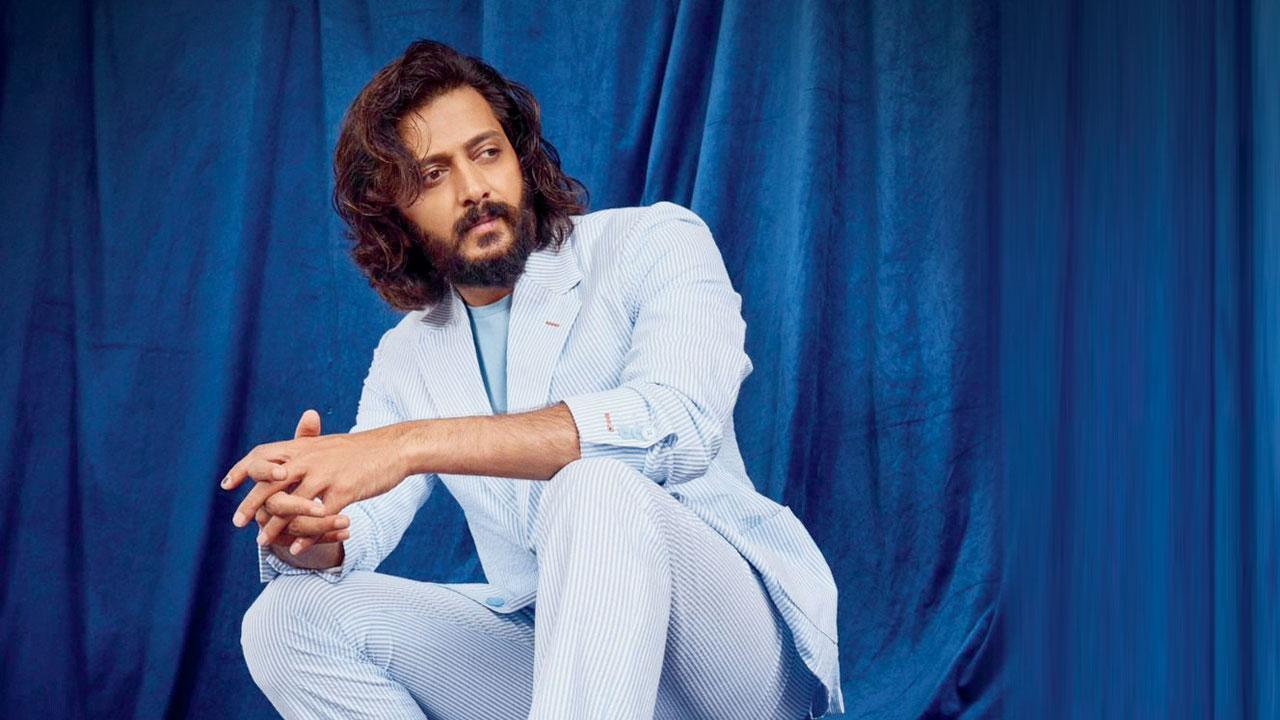
Along with acting, Riteish Deshmukh is enjoying his role as a filmmaker. The actor, who produced and directed the Marathi film Ved (2022), believes that though being behind the camera isn’t easy, it is rewarding as you own the film in totality. In a chat with us, he talks about his perspective on filmmaking and venturing into directing Marathi films. Excerpts:
‘Working with different directors reshaped my perspective on cinema’
Ask Riteish about his decision to turn director with the Marathi film Ved (2022), and he replies, “The most difficult decision for an actor is to decide he wants to direct. You always end up dilly-dallying. Stepping out of your comfort zone and moving behind the camera isn’t easy. On top of that, I am not a film student; I’ve learnt everything on the job. Working with different directors reshaped my perspective on cinema.”
‘My next directorial is a bilingual film in Hindi and Marathi’
The idea of directing first struck him nearly eight years ago, but it was his wife, actress Genelia Deshmukh, who gave him the final push.
He recalls, “While we were working on Ved three years ago, Genelia encouraged me to take the leap. She told me, ‘If you keep waiting, you’ll never do it. Just do it.’ That’s how I took the plunge. Now, I am eagerly waiting for the audience to watch my next directorial, Raja Shivaji, which is a bilingual film in Hindi and Marathi.”
‘Production is a thankless job’
Riteish, who continues to be busy with his acting projects, feels direction broadens one’s horizons. He explains, “Once you turn producer, you definitely have more respect for producers because you realize production is a thankless job. It’s like puraani filmon mein main ladki ka baap hoon and you ask others ki aap bataao main kya kar sakta hoon (laughs!). You have to manage everything, be cordial with everyone, and ensure the work gets done. As an actor, you can own a part of the film with your performance, but as a producer or a director, you own the film in totality.”
‘The success of recent Marathi films is a positive sign for the industry’
The evolving landscape of Indian cinema has put content-driven films in the spotlight, but Riteish believes this shift comes with unique challenges for Marathi cinema.
He explains, “In Hindi cinema if you have star power paired with strong content, it usually works. However, in Maharashtra, unlike Southern states, regional cinema isn’t the first choice. Here, Hindi films are the first preference. Add a good Hollywood release or a big-dubbed film, and Marathi cinema is pushed further down the list. This hierarchy makes it tough for Marathi filmmakers. To combat this, content-driven films are essential – they bring credibility. However, if they don’t perform at the box office, it’s all in vain. One has to find a blend where you deliver impactful stories and get the audience back to the cinema. Thankfully, this is starting to happen. The success of recent Marathi films is a positive sign for the industry.”
I always thought my first film would also be my last-Riteish Deshmukh
8:12 AM

Neha Maheshwri (BOMBAY TIMES; November 29, 2024)
While his comic timing in a string of Hindi films won him popularity, Riteish Deshmukh’s advent into Marathi films brought forth a side of him that the audience had never seen. Recently, the actor, who was seen as the host of the Marathi Bigg Boss, wrapped up the latest instalment of Housefull. In a conversation, Riteish talks about his journey in the Hindi and Marathi industries and how he defines success as an actor, director and producer:
‘The outcome of your efforts is not in your hands’
Riteish took over from Mahesh Manjrekar as the host of the recently concluded Bigg Boss Marathi Season 5. Ask him about the popularity of this season, and he replies, “I believe that instead of being weighed down by the success, one should be responsible towards the work that you’ve taken on and do it with utmost sincerity. I realized early in my life that the outcome of your efforts is not in your hands; it can succeed or fail. You have to give it your 100 per cent dedication regardless of the result.”
‘I’m just happy to dive into comedies’
The actor was also shooting for the fifth installment of Housefull alongside hosting the reality show. Talking about returning to a quintessential comic caper, he shares, “Although Kakuda was a horror comedy, it wasn’t the typical madcap one. So, I am just happy to get back to comedies, which are coming back-to-back with Housefull 5, Dhamaal 4 and Masti 4. In between, I will also be directing the Hindi and Marathi bilingual Raja Shivaji, a film based on the life of Chhatrapati Shivaji Maharaj.”
‘I didn’t deliberately choose to take on negative roles’
Reflecting on his early days, he recalls that his primary goal as a debutant in Tujhe Meri Kasam (2003) was simply to win the audience’s acceptance. He says, “When I debuted in 2003, all I wanted was for the audience to accept me. When comedies like Masti (2004) and Kyaa Kool Hai Hum (2005) worked, people started offering me only comedies.”
Ask him if he had to put in a lot of effort to break away from the genre, and he says, “No, I don’t think it was a deliberate attempt. It was just one of those opportunities that came my way. Ekta Kapoor and Mohit Suri were brave enough to offer me Ek Villain at that point, and I am very happy with the way it worked out.”
He adds, “I tried to do serious films like Naach (2004) and Rann (2010), but those didn’t work. I even did Aladdin, which didn’t click either. So, I was back to the comedy franchises. Breaking away from the comedy genre took time and films like Lai Bhaari (2014), Ek Villain (2014), Ved (2022), Visfot (2024) and Raid 2 (yet to release) helped me explore other aspects of my craft.”
‘Becoming an actor was never my plan’
Riteish has seen huge success in the Marathi film industry. Does he ever compare his journey in regional cinema with his work in Hindi films?
He says, “Becoming an actor was never my plan — I’m an accidental actor. In fact, I always thought my first film would also be my last. Everyone defines success differently. For me, success is something personal. When I reflect on my journey, as someone who grew up on movies, I feel immense gratitude for the opportunities I’ve had. I’ve worked with legends like Amitabh Bachchan, Shah Rukh Khan, Anil Kapoor, Madhuri Dixit, Mithun Chakraborty, Rishi Kapoor, Sanjay Dutt, Ajay Devgn, Akshay Kumar, and Salman Khan. These are the icons I admired onscreen. Sharing the screen with them is my definition of success. So, it doesn’t matter whether I’ve achieved great heights in Marathi cinema or performed reasonably well in Hindi. Those aren’t the metrics I measure myself against.”
BT Makar Sankranti Exclusive: Genelia is more competitive than anyone else in the family-Riteish Deshmukh
8:44 AM

Genelia and Riteish Deshmukh share their memories associated with the festival and how they plan to celebrate it tomorrow
Prathamesh Bandekar (BOMBAY TIMES; January 14, 2023)
Genelia and Riteish Deshmukh enjoy celebrating all the festivals with enthusiasm, and Makar Sankranti is no different. They indulge in a round of kite flying with their sons Riaan and Rahyl. The couple, who posed in traditional finery exclusively for Bombay Times, talk about following the traditions associated with the festival and how they interpret the phrase ‘Tilgul ghya god god bola’. Excerpts:
What are your childhood memories of celebrating Makar Sankranti?
Riteish: Makar Sankranti has always been special. When I was a child, it was all about the kites. My memories of the festival revolve around chasing kites when we used to live in a government bungalow, as my father was a minister then. People would cut each other’s kites, which would get stuck in the trees. We would try to get our hands on those by using tall bamboo sticks. After school, I would run back home to check if there were any kites stuck around our house.
Genelia: As a child, Makar Sankranti was all about til ladoos and flying kites. But post marriage, it means so much more. It’s one festival that has the kids excited as they get to fly kites.
How are you celebrating it this year with your kids? Is there an in-house kite-flying competition?
Riteish: Before the pandemic, it was probably the first time we celebrated Makar Sankranti with our children, but they were too young then. Last time around, they were helping me with the kites, but this year I think they would like to fly kites themselves. Of course, Genelia joins in! She’s more competitive than anyone else in the family. Genelia has two kids and I have three (laughs).
Genelia: While Riaan and Rahyl look forward to flying kites, they are extremely careful. They are particular about not hurting any animals or birds. We try to make the occasion special by personalizing the kites for them.
The phrase Tilgul ghya god god bola is associated with the festival, what does it signify to you?
Riteish: It’s a phrase that every Maharashtrian family knows well. Makar Sankranti is also when the new season begins. To me, it means sweetening your palette and speaking sweet words. However modern we become, it’s very important that we value our traditions. That is also how we can inculcate the values in our next generation. If you speak sweetly, others will respond kindly. So, let go of negativity and arrogance and fill your mind with positivity.
Genelia: The combination of til and gul is delicious. It also signifies that you can keep your words clear, pure, simple and sweet. Makar Sankranti is a festival of new beginnings. It’s right at the beginning of the year, so it’s like a reminder that you need to be grateful for the little things in life.
I grew up bursting crackers, but for my kids, it’s always about ‘Aai, we shouldn’t cause pollution’-Riteish Deshmukh
8:17 AM

Neha Maheshwri (BOMBAY TIMES; October 23, 2022)
This year, Bollywood is celebrating Diwali in full swing and the excitement is palpable. Genelia and Riteish Deshmukh, who have been soaking in the festive spirit at various Diwali Bollywood parties, say, “Diwali is the essence of India as it’s a culturally and traditionally strong country. This year, the festival is going to be more exciting as compared to the muted celebrations in the last two years of the pandemic. In fact, even people from our film fraternity have opened their homes. We have been to a couple of pre-Diwali parties at their homes in the last few days.”
Diwali, for the Deshmukhs, however, is a sign to head to their favourite place — their hometown in Latur. Riteish shares, “Having a big family is a bonus in many ways. The fact that we go from Mumbai to Latur to celebrate this festival in our village makes it even more special. It’s just us — no work, calls and parties. Those three-to-four days are spent with family and kids. We are three brothers, and each one takes a day to do something special with the kids. So, this is a nice time when the Deshmukhs and Genelia’s family celebrate it under one roof and the kids have a blast.”
Genelia and Riteish feel that the significance of Diwali is a lot different today. Genelia says, “Initially, the festival was more about crackers, food and parties, especially while growing up. However, today, it’s family-oriented, rooted and cultured. We look forward to this festival because it is about going home, going through the farms, meeting people, making rangolis and indulging in sweets and faraal. To be precise, Diwali to us means our home, our village, family, traditions and customs.”
What has also changed over the years is the way they celebrate the festival of lights. Genelia shares, “Our kids (sons Riaan and Rahyl) are actually our conscience and have taught us more. Even the step to go eco-friendly came from them. I grew up bursting crackers, but for my kids, it’s always about ‘Aai, we shouldn’t cause pollution’. Even while choosing our car, I remember them going to Riteish and telling him, ‘Baba, we should have an electric car because it doesn’t add to the pollution’. So, I think the whole thought is something our kids taught us, and we follow it with them. Honestly, I think that today’s generation is quite aware, and they want to do the right thing all the time, which I think is beautiful. During Diwali, no matter how small or big it is, we try to recycle the decorations like sheets of paper to make little diyas and rangolis. It’s these little things that add up to the beauty of the festival.”
Talking about the little joys of life that the festival brings along, the couple says, “We have always taught the kids to value their little gifts. It’s more about significance vis-à-vis noise.”
---------------------------
‘DIWALI IS ALSO ABOUT PASSING ON TRADITIONS TO THE KIDS’
At the Deshmukh household, there are certain traditions that Genelia prefers to execute on her own, like the decorations, applying ubtan and pehla paani. “Cleaning the house is followed as a ritual before Diwali, and I look into it personally. There is a lot of thought and preparation that goes into gearing up for the festival. For us, it’s also about passing on a few traditions to the kids and getting them involved in little things,” shares the actress, adding, “Well, the day primarily is about family and with family. We wake up in the morning, shower, get dressed in our finery and touch the feet of our elders. Then we have a puja in the evening. There’s authentic Maharashtrian food on that day, which we binge on. It’s a day just for the family.”
My son put things into perspective when he said, ‘Aai, you can’t love your dog and then kill a chicken’-Genelia Deshmukh
6:33 PM
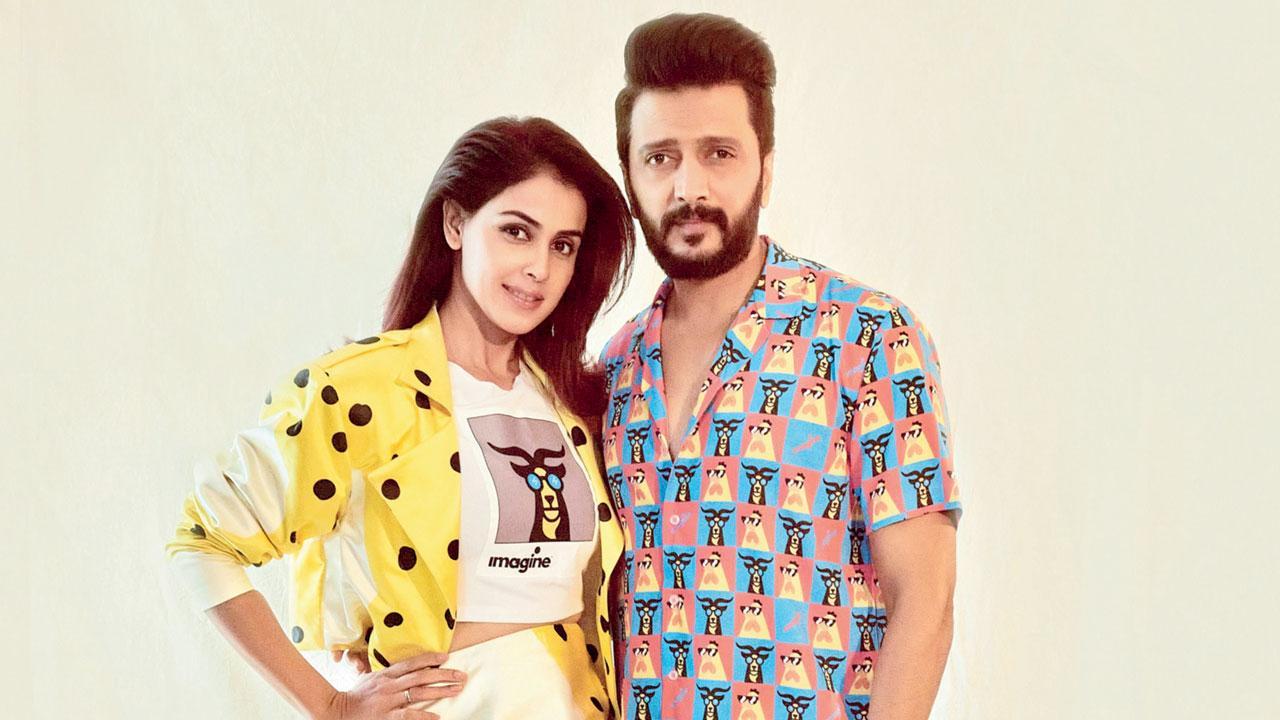
From meat lovers to vegans to now plant-based business owners, Bollywood couple Genelia and Riteish Deshmukh discuss their journey to saving the planet—one tasty meal at a time
Ela Das (MID-DAY; November 28, 2021)
We never imagined we’d be talking about this!” gush actors Genelia and Riteish Deshmukh when describing how they started their new plant-based meat brand Imagine Meats this year. As once-upon-a-time non-vegetarians who loved to gorge on all meats, it wasn’t until five years ago when they jointly decided to turn vegan. “I’d chosen to take a vow against animal cruelty and live a life that’s cleaner and more sustainable for the future,” says Riteish.
Of course, he did realise that this is much easier said than done. “Food is a source of happiness for most people. For anyone who chooses to make the switch, there’s always some sort of compromise where you live with the decision you’ve made and move ahead with whatever you can get. While I loved the idea of eating ethically, which, in turn, is healthier and good for the environment, I constantly wondered how I could continue eating food without compromising on the flavour and taste [I craved].”
At the same time, Genelia went on to pursue a course in nutrition from Cornell University to delve further into the subject. She, however, wasn’t entirely convinced at first. “I constantly wondered how I’d get enough protein in my meals. And, if it was a diet followed by my kids, as well, it had to be well-rounded and correct—I was never going to compromise on their health in any way.”
She discovered how most of us aren’t aware of what the right sources of protein and fats are, and that animals, in turn, get their proteins from plants. “It’s not that I felt or thought I was unhealthy before, but the moment I started eating vegan meals, I noticed an instant difference—I felt less lethargic.”
As a mother of two, Genelia says her life certainly orbits around her children, Riaan and Raahyl. “You realise you need to leave behind a better world for them. I was a lifelong guilty non-vegetarian—I used to say I’m against animal cruelty, but I can’t give up meat. My son put things into perspective when he said, ‘Aai, you can’t love your dog and then kill a chicken!’”
While food is a source of comfort, there has been a growing awareness about having mindful eating habits and the benefits of a plant-based diet across the globe. The most recent contribution to this over the past couple of years has been the 2018 documentary The Game Changers by James Cameron, Arnold Schwarzenegger and Jackie Chan, which highlighted the reasons why top athletes were slowly picking plants over meat for better recovery time, fewer injuries, faster pace, increased stamina and stronger focus.
The couple is quick to note that they’ve had the benefits of an all-round non-vegetarian diet growing up, and wondered if cutting out meats for their kids would hamper their energy or health in any way. However, the family now hikes up 15 kilometres a stretch without facing exhaustion.
A month into turning vegan, Riteish remembers experiencing strong cravings for meat. But he had to find a way around it. “We came across a few plant-based meats during our time in the United States, and picked up a few burger patties to cook at home. Genelia minced it down to whip up some kheema pav, and I thought, ‘If I get this every day, I won’t feel like I’m missing out on anything.’”
In order to get people to dip their toes into a plant-based diet, it was important to get the flavour and cooking time accurate for each dish. With Imagine Meats, the couple has launched nine ready-to-prepare meals that range from Afghani and Chettinad biryani to burger patties and “chicken” nuggets with prices starting at Rs. 395. They have consciously kept the price point affordable to make vegan dishes more accessible.
After working remotely with scientists in the United States and Berlin during the first lockdown last year, they came up with a way to bring the protein needed for these meals down to India and create a facility to prepare it here. “Sometimes, the meat would feel too pasty or the pieces would be too large, leaving the outside crust hot and the inside tasting cold and raw. Sufficient research and technological experimenting went in to get the right size, texture.”
When deciding what recipes would make the cut, the couple was keen to provide meals that could be eaten at different times of the day from breakfast to dinner, and even snack time. “Meat isn’t present only in generic dishes. Every community and city has their own recipes, masalas and preparations, and we want to create a plant-based alternative to continue celebrating and eating them,” he says.
While the younger generation is more supportive of following a mindful way of eating, Genelia thinks they often don’t have the right resources or options to turn to. “While researching for this venture along the way, I served nuggets on my children’s birthday. Any mother knows this is possibly the worst thing to serve your kids because it’s made up of waste meat. With a plant-based alternative, you’re getting to eat a guilty pleasure without feeling so guilty about it.”
If you have been a lifelong meat-eater, it is hard to know where to start. For Riteish, it’s not about becoming vegan overnight—you could try being a flexitarian and replace a few meats to do your bit for the planet and save animals. “A simple dal-chawal meal is vegan if you don’t add any ghee or butter to it. The important thing to focus on is how healthy a meal is and how much protein it has—especially in our country which is known to be largely deficient in it,” he says. Even being vegan one day in week makes a big difference in the long run, thinks Genelia. You won’t know until you try it.
Why plant-based meats aren’t just for vegetarians
- Vegan meats have a high percentage of protein that is derived from alternative sources such as pea protein and soy protein.
- These meats are cholesterol-free without any added animal hormones or antibiotics injected into them, making it cleaner and healthier to consume.
- When compared to regular meat, these plant-based alternatives have lower calories and saturated fats, with higher protein and fibre.
- Reducing the intake of saturated and trans fats can lower your risk of developing chronic diseases such as type 2 diabetes; while more fibre in your diet can reduce the risk of developing breast, colon, and other digestive-related cancers.
- However, most plant-based meats have been found to have higher levels of sodium to make them more palatable and shelf-stable. While it is eventually a processed food, it can fit into a healthy diet when eaten in moderation.
Genelia has given my life a structure-Riteish Deshmukh
8:10 AM

Onkar Kulkarni (BOMBAY TIMES; February 3, 2021)
From romantic pictures and funny videos with their boys to funky dance moves, Riteish and Genelia Deshmukh are often seen setting couple goals through their social media posts. The duo met and fell in love in 2001 during the making of their debut film, Tujhe Meri Kasam, which hit the screens in 2003. While there was constant speculation about them being in a serious relationship, they didn’t speak about it till they tied the knot on February 3, 2012.
Riteish and Genelia, who are parents to Riaan (6) and Rahyl (4), celebrate nine years of togetherness today. In a chat with Bombay Times, Riteish says that unofficially, it’s their 19th year together as a couple. “It’s been a wonderful journey. To be in a relationship or a marriage that is so good is a blessing. We have known each other for 19 years,” he shares.
Ask him what keeps them going so strong, and he replies, “Genelia and I keep our needs and wants limited. We are happy with all that we have. Once your circle of happiness is small, you feel satisfied and content easily.”
The actor adds that Genelia has added a structure to his life. He further elaborates, “She helped me better my food habits. I used to eat at 1 am or at any given time, but today, I am done with my dinner by 7 pm. In fact, I used to be a hardcore non-vegetarian, but for four years, I have been a vegetarian. It’s been nearly eight months now that I have turned vegan. Also, Genelia has given my life a structure. She has taught me time management. I didn’t know a day could have so much time (smiles!).”

This year, I am going to teach my kids to make kites and fly them-Riteish Deshmukh
8:06 AM

Onkar Kulkarni (BOMBAY TIMES; January 14, 2021)

Reminiscing memories from childhood, he adds, “We used to stay at a government bungalow by the sea. As soon as I’d come home from school, I would rush to the terrace hoping to find kites that have been cut by manjha. My friends would also come over to fly kites, but more than flying them, we would be busy chasing kites that would come crashing into our space.”
Now, the actor hopes to teach the art of flying kites to his boys. He says, “My kids are at the age where they will understand the activity. Last year, we did try our hands at it, but this year, I am going all out to teach them to make kites and fly them.” He adds, “2020 has been tough for kids. They are at an age where they have to learn social skills and flying kites will prove to be a good exercise in that direction.”
Apart from the morning puja and flying kites, Riteish plans to indulge his sweet tooth, too. “I am looking forward to the festive food and will gorge on some tilgul, which are extremely healthy. Even our kids love to have them,” he says, signing off with the popular Makar Sankranti greeting in Marathi, “Tilgul ghya, god god bola.”
I wanted to work with Nagraj Manjule even before Sairat released-Riteish Deshmukh
8:17 AM

Riteish Deshmukh on doing a trilogy with the filmmaker, working with Tiger Shroff and staying away from action in their film
Himesh Mankad (MUMBAI MIRROR; February 26, 2020)
 After a negative turn in Marjaavaan, Riteish Deshmukh is returning to the marquee as one of the central characters in Baaghi 3. The actor is an unusual entrant in the Sajid Nadiadwala-produced series, which is fronted by Tiger Shroff and is known for action sequences. Conceding that he was surprised when the role came to him, Riteish says, “I knew what Nadiad was going to offer. When he asked me to listen to a story of two brothers and Ahmed (Khan, director) came over for a narration, I was game.”
The 41-year-old actor reveals that the dynamic between his and Tiger’s character is like that of a mother and son. “One is weak while the other is strong. My character may be the elder brother, but Tiger’s Ronnie behaves more like his mother,” Riteish smiles.
The larger-than-life action sequences were shot in Serbia, which is portrayed as Syria in the film. “I had seen huge sets while working on Housefull 4 but to be around blasts, five-six tankers, army guys and choppers was like being in a toy store,” gushes the actor. When asked if he felt the fear of missing out, since he doesn’t have adrenaline-pumping scenes like Tiger in the film, Riteish reasons, “Things are designed in a certain way. Besides, everyone can’t do everything. My job here wasn’t to do action.”
He has shared screen space with Tiger’s father, Jackie, in Housefull 3 but this is his first film with the former. “I share a close bond with Jaggu Dada. Tiger is disciplined, lovable and well brought-up,” he smiles.
 Next up for Riteish is a trilogy on Shivaji Maharaj, the Maratha warrior-king, which will be directed by Sairat filmmaker Nagraj Manjule. “A film on Chhatrapati Shivaji Maharaj is a big responsibility. We have to be true to real events as people respect this great personality. Hopefully, we will do justice to the subject,” he says.
The film goes on the floors this year. “I had wanted to work with Nagraj ever since I watched Fandry (the director’s debut film); this was before Sairat released. He, too, had wanted to make a film on Chhatrapati Shivaji Maharaj for a while. When we met, everything just fell in place,” the actor shares, adding that he will start prepping for the role soon.
Ritiesh hails his debut, Tujhe Meri Kasam (2003), as a gamechanger. “I have grown as an actor. In the early days, I was called ‘wooden’ and ‘furniture’. To get favourable reviews after that is a big deal,” he explains.
He has been a regular fixture in several franchises, including Masti, Kya Kool Hai Hum and Housefull. When asked to name one of his films that had the potential to be spun into a series, he says, “It has to be Bluffmaster. Once, Abhishek (Bachchan, co-star) and I had spoken to Rohan Sippy (director) to make part two, but some things are not meant to be.” And will there be Housefull 5 soon? “Akshay, Nadiad and I are already discussing Housefull 8,” he jokes.
I didn’t know I'd love being an actor so much. Else, I would have come better prepared-Riteish Deshmukh
7:49 AM

Onkar Kulkarni (BOMBAY TIMES; November 13, 2019)
It’s been 16 years since Riteish Deshmukh entered Bollywood, but despite his experience spanning more than a decade-and-a-half, the actor says that the new generation is keeping him on his toes. Ahead of the release of his next, director Milap Milan Zaveri’s Marjaavaan, he talks to BT about what’s stopping him from producing a Hindi film, why he has no plans to enter politics and how he is happy with the opportunities he is getting. Excerpts...
You play a dwarf in Marjaavaan. In Indian cinema, many actors have previously portrayed vertically challenged characters — Kamal Haasan in Appu Raja (1989), Anupam Kher in Jaan-E-Mann (2006) and Shah Rukh Khan in Zero (2018). Who among them was your inspiration while playing this character?
I didn’t have any inspirations as such, but each of these actors have been revolutionary in their approach to their movies. Almost 30 years ago when Kamal Haasan did Appu Raja, it was seen as something innovative. I am also thankful to Shah Rukh Khan. In fact, we were shooting Marjaavaan at the same time when Zero was being shot, and Shah Rukh was gracious enough to show us certain VFX shots from his film. He had the best equipment available and the production was also on a higher scale. Sometimes, budget can be a limitation and at such times, it is all about how smartly you pull it off. As a director, I think that Milap has shot intelligently.
What’s the toughest part of playing a vertically challenged person?
The most challenging part is shooting with the VFX. Of course, VFX has made it easy to a great extent. For example, actors no longer have to tie their legs behind and wear shoes on their knees to portray such characters. But still, it can be a daunting task. When two actors perform, one of them playing a dwarf, it’s important to maintain the right eye level. Though both actors would be standing while enacting the scene, they can’t look each other in the face. This means that they can’t see each other’s facial expressions. There were times when I used to check out how Sidharth (Malhotra) reacted to my lines on the monitor. And then, I would be like, ‘Achcha, tune aisa expression diya hai, toh mujhe mera expression change karna padega.’ Also, to achieve the desired result on screen, we used to give five different takes of the same shot.
Given that you play a vertically challenged character in Marjaavaan, were you apprehensive that it could turn out to be gimmicky?
No, I thought that the role was great. Imagine, someone comes to you and says, ‘I have a role for you. You are the villain, but you are vertically challenged’. I was like, ‘Wow!’ The character is not gimmicky, as he thinks too highly of himself. He might be all of 2 feet and 5 inches, but he thinks ki poora zaamana uske saamne dedh foot ka hai. He might be looking at people with his head up, but in his head, he is actually looking down on them.
For a long time, you were associated with comedies and romantic films. And then, you played the villain in Ek Villain (2014). Now, Marjaavaan, too, features you as the antagonist. Is this a deliberate attempt to change your image?
I am happy that new opportunities are coming my way. I am thankful, especially to Ekta Kapoor and Mohit Suri, as Ek Villain was a big turning point in my career. Today, I have got a similar opportunity and I am happy and thrilled about it.
Marjaavaan reunites you with your Ek Villain co-star, Sidharth Malhotra. Once again, you are pitted against each other on screen...
Sidharth and I met after five years for this film. I see a lot of maturity and poise in him. There’s also Tara Sutaria, who’s marking her second outing with this movie. I haven’t seen her debut film, but when I saw her on the set of our film, I was impressed with her confidence. That makes you wonder what you were thinking when you were just two films old. Today’s generation is well-prepared, and they keep you on your toes. It is inspiring to work with them. To perform without dialogues (Tara plays a mute character) and communicate with sign language is credible.
Taking off from your last answer, what was Riteish Deshmukh like when he was just two films old?
I didn’t want to be an actor when I started off. I was called to meet a few people, who were looking for a new face. After the first meeting, they asked me to fly down to Hyderabad, and when I went there, they offered me a film. I didn’t have any understanding of what a camera is, or what lighting is. I had to learn everything on the job. During the initial years, the critics had panned me. But, I see all those people as my teachers. I didn’t know that I would love being an actor so much. Else, I would have come better prepared. That way, I could have been better at my work when I started off. But God was kind, and the audience was kinder that they accepted me with all my flaws.
From acting to turning producer, you have come a long way. You have already produced two Marathi movies, when will we see you backing a Hindi film?
Hindi cinema is exploring a lot of interesting subjects these days. The content is so good that you get confused about which one to produce. I want to pick up the right script and plunge into Hindi film production soon.
Last year, your wife Genelia (actress Genelia Deshmukh) did a cameo in your Marathi production, Mauli. When will we see her making a comeback to Bollywood?
I hope she does it soon, as she is such a fine actor. She keeps reading scripts. She was interested in a couple of films, but they didn’t work out because of time constraints. She is getting offers from Telugu and Kannada films, and over the years, Genelia has picked up Marathi really well from my mother. So, she can definitely act in a Marathi film, too.
Do your sons Riaan and Rahyl watch your movies?
Not at all. I don’t think they know what an actor is. They only see dance videos online, and think that everyone’s parents dance in them. I remember Riaan visited the set of Housefull 4 one day. This was his first visit to a film set, and we were shooting for the song, Bala. He found it too noisy and just walked out. He told Genelia, ‘You told me that baba is working, but I didn’t see him working. He was only dancing.’ So, he doesn’t think that I work (laughs!).
You come from a family with political background and even campaigned for your brothers (Dhiraj amd Amit Deshmukh). Have you ever thought about entering politics yourself?
Politics is not like a restaurant, ki acting ke saath woh bhi chala liya. It is a full-time commitment. You need to actively participate in it, right from the grassroot level. Having said that, I never knew that I would be an actor. One day, an opportunity presented itself and I took the plunge. I am enjoying what I am doing right now. My brothers are doing well in politics, and I am totally aware of what’s happening in my country and the state.

I leave politics to my brothers-Riteish Deshmukh
8:17 AM

Riteish with brothers Dheeraj and Amit Deshmukh
Riteish Deshmukh on why he’s not interested in rajneeti despite being Vilasrao Deshmukh’s son, what he finds fascinating about the Tanaji chapter in history, and fourth instalment of Dhamaal
Himesh Mankad (MUMBAI MIRROR; November 11, 2019)
 His mood is as cheerful as the red jacket he is wearing. With the sun on his back and the calming blue of the sea before him, Riteish Deshmukh sits back to take our salvos. And this time, he is not three-and-a-half foot, but all of five feet and nine inches tall. Excerpts from an interview:
Your last release, Housefull 4, was panned by all the critics as abysmal in its efforts to raise laughs. Did that worry you?
We knew what we were getting into with this franchise. May be the critics didn’t like it. But from its first Monday, the audience took over and then, there was no stopping it. Sometimes, we get carried away by what people are saying on the social media, but it is equally important to see what is happening on ground. People in large numbers have enjoyed and one must acknowledge that.
You once said that the adult comedy genre had reached its saturation point. Do you fear the same happening with family entertainers like Housefull?
It reached a saturation point from the perspective of the audience. The kind of material that I was offered at one point had nothing new to offer, it was all so monotonous. As far as comedies, there is still a lot of scope. For example, Housefull 4 was about reincarnation. And I would like to be a part of films which explore new dimensions in this genre.
You have another film with Sajid Nadiadwala, Baaghi 3, in which you play Tiger Shroff’s cop brother.
We were half way through the Housefull shoot when I got a call from Sajid. He wanted me to hear the script of Baaghi 3. I was surprised by the offer, but when I heard the narration, I discovered it’s an extraordinary story and was on board immediately.
This Friday, you have another release coming up in Marjaavaan and writer-director Milap Zaveri describes your character, Vishnu, as the Raavan of his plot. Would you agree?
(Laughs) Milap calls me the Raavan of his life. It’s a synonym for evil… the ultimate obstacle in one’s path. Gabbar was the Raavan of Sholay, likewise, Vishnu is the Raavan of Marjaavaan.
Did you take on the film for the challenge of playing a three-and-a-half foot baddie?
It all came together as a package. Yes, the role is challenging and blended well with the narrative. It doesn’t work when you have a great character in a bad script. I had to do every shot five times and act against the green screen. When I spoke my lines, I couldn’t look my co-star in the eye because our eye-lines didn’t match. Though technology helped, we didn’t go the whole hog like Zero (SRK’s space drama) due to budget constraints.
Do you think Ek Villain opened new avenues for you as an actor. Before that you were mostly cast in comedies?
That was off-beat casting at the time and I agree that it opened new doors.
Marjaavaan initially was perceived as a sequel to Ek Villain.
Was it? But when you see the film, you will realise that it is a distinctly different story. Calling Marjaavaan, Ek Villain 2 is like calling Ram Balram a sequel to Sholay because both films featured Amit ji (Amitabh Bachchan) and Dharmendra ji.
Mohit Suri is spinning a sequel now…
(Shrugs) Well, I died in the first film, so I can’t be a part of the sequel. But I am looking forward to it.
You have announced a film on Chhatrapati Shivaji Maharaj…
We have reworked it a bit and should lock the script soon. With a subject like this, it’s a huge responsibility to get everything right which is why the scripting took longer than expected but we should go on the floors next year.
Ajay Devgn’s Tanhaji is about his commander-in-chief, Tanaji Malusare, who fought various battles alongside Shivaji Mahara j. Won’t there be an overlap?
It’s a great chapter from our history and I am looking forward to Ajay’s film. In school text books, there’s just a paragraph on Tanaji. So it’s important to know what he stood for, learn about his bravery, his love for his land and Chhatrapati Shivaji Maharaj. I am fascinated with this chapter.
Despite coming from a family of politicians, you have managed to keep yourself away from rajneeti…
I am my own person and while I respect everyone’s views, my job is to act in films, and that’s what I am doing. I leave politics to my brothers.
But weren’t you ever attracted to power?
I have seen it all my life, so power has never really been attractive. I am happy acting, that’s power for me.
Has your script selection changed after becoming a father? What are the dining table discussions like with your wife (Genelia D’Souza)?
My script selection is still the same. As far as dining table discussions go, we discuss everything that a husband and wife do—from what our kids eat to what happened at their schools and our gym. We even read scripts together.
Finally, is Housefull 5 and a Dhamaal 4 in the works?
It’s too early to think about Housefull 5, but I hope it happens. And we have discussed an idea for Dhamaal 4. I am sure Indu ji (director, Indra Kumar) is working on it.

For Marjaavaan, we had to film every shot from five different angles-Riteish Deshmukh
8:30 AM

Playing a vertically-challenged antagonist in Marjaavaan, Riteish Deshmukh on how the film was physically demanding
Upala KBR (MID-DAY; November 10, 2019)
His filmography may be dominated by comedies, but Riteish Deshmukh likes to throw a curveball when you least expect it. After a spate of comic turns, the actor will be seen as the villain in Marjaavaan, which also stars Sidharth Malhotra.
Remind him how his psychopath killer turn in Ek Villain (2014) won him much acclaim, and Deshmukh states that the two antagonists are poles apart. "Rakesh Mahadkar [his character in Ek Villain] is, the boy next door, easily forgotten in a crowd. But Vishnu in Marjaavaan is a 180-degree turnaround from that. He is vertically challenged, but larger-than-life, arrogant and brash," he says, adding that empathy is the key to portraying troubled characters. "I try to find the emotional core. I need to understand why he is the way he is."
Understanding the psyche of a grey character can be challenging. But Deshmukh points out that shooting as a vertically-challenged character was equally arduous. "We had to film every shot from five different angles. Besides being on my knees all the time, I had several restrictions. I remember shooting for a sequence that comes right before the intermission in which I am required to stand in the muck. Once the director said cut, I was covered in muck, right from my knees to the thighs. I had to wait in that state for my next shot. In such scenarios, the performance is not the challenge. But, sitting in dirty, wet clothes for three nights becomes difficult and irritating."
Up next, he has an actioner in Baaghi 3. Having spent 15 years in the industry, Deshmukh says he only greenlights projects that "excite" him. "Even when attempting a comedy, I ask myself, if I can do something different [from what I did the last time around]."

I hope I get to work with Genelia again-Riteish Deshmukh
8:44 AM

Riteish Deshmukh admits that his wife has been looking at scripts and has her reasons to believe that no one can play the baddie better than him
Avinash Lohana (MUMBAI MIRROR; October 22, 2019)
Riteish Deshmukh is gearing up for a homecoming this Diwali with the Sajid Nadiadwala production, Housefull 4. The actor, who has been a regular fixture in the franchise with Akshay Kumar, says, “Housefull will always appeal to me for the reunions. Also, the subject is unique each time, like the reincarnation comedy in Part 4. There is confusion galore, and there is a plot too, which is interesting.”
The 40-year-old actor reveals that Khiladi Kumar and he became friends on the sets of the 2007 comedy, Heyy Babyy. “When we’re sitting together, we understand the space we are in. Sometimes, when there are people around and we need to say something that should stay between us, we communicate by simply looking at each other. Akshay is a friend and brother who’ll always be there for me and vice versa,” he says.
He also notes that Housefull 4 marks his seventh collaboration with Nadiadwala after Heyy Babyy, past Housefull instalments, his Marathi production Lai Bhaari, which the producer had penned, and now, the Ahmed Khan-directed Baaghi 3. “More than a producer, Nadiadwala is a friend. Our conversations range from politics and business to clothes and shoes. When we were shooting for Heyy Babyy and Housefull 1 and 2, he was on the sets every day. All of us had a great time going for movies and meals together,” he reminisces.
Last month, the actor started shooting for Baaghi 3. “I’ve been a part of four franchises— Housefull, Masti, Kya Kool… and Dhamaal—and Baaghi is the first one that I am entering in the third instalment. This is also the first time I am playing a cop in a Hindi film,” he informs.
 Then, there’s Milap Zaveri’s Marjaavaan, in which he plays the antagonist. “One day, Milap just said that he wanted to make this film. I’d grown my beard and hair for another film and we worked around the look, adding a tika, a gold watch and loose pants with oversized shirts. If you ask Genelia (Deshmukh, actress-wife), she will say no one can play a villain better than me, though she has her own reasons to say that,” laughs Riteish.
The actress was last seen in a song in their home production Mauli (right). Are there plans for a comeback? “I hope I get a chance to work with her again and that she returns on screen. She’s a unique actor and I love her work. She has been listening to scripts, but nothing has excited her so far,” he says.
On the production front, the actor shares that he and his team are working on a few subjects. “We will lock something in the next two-three months. I hope to find a subject I can produce in Hindi, but Marathi would be a constant,” Riteish asserts, pointing out that he is also gearing up to play Chhatrapati Shivaji Maharaj in National Award-winning filmmaker Ravi Jadhav’s next. “It’s a huge responsibility. We should be taking it on the floors next year.”
It’s important to bring something different to a franchise every time-Riteish Deshmukh
7:47 AM

Abhimanyu Mathur (BOMBAY TIMES; October 20, 2019)
For someone who started his career as a romantic hero, Riteish Deshmukh has done quite well in other genres of cinema. In recent years, he has been a part of some of the highest-grossing comedies in Hindi films and has another big-budget comedy lined up for release with the multi-starrer Housefull 4. Speaking to us while promoting his film in the capital, Riteish talks about the dangers of doing comedy, saying ‘no’ to crackers on Diwali, and the inevitability of being trolled on social media. Read on...
You often come to Delhi to promote your films, but the journey this time was a bit different. You came here in a train and not in a flight like you usually do. Do you remember the last time you took a train journey?
Last week, actually. I am a regular when it comes to train journeys. I often visit my native place Latur and I go there by train. Last month alone, I went to Latur two-three times. It’s quite a comfortable overnight journey. You get on the train, go to sleep and the next morning you reach your destination. But, this journey (the Housefull Express) started in the afternoon and we reached here the next afternoon. So, there is a lot of daytime journey. All of us get along really well and it was extremely exciting.
You have done quite a few comedies over the years. When you do similar content time and again, you run the risk of getting repetitive. How do you make sure you bring something new to the table each time?
When it’s a franchise, it becomes very difficult because people come to see you be a part of the film in the same tone and goofiness that they have already seen. So, it comes down to the characterisation. The writers have to figure out how different you can make it.
Is that where the reincarnation theme in Housefull 4 comes in? So far, reincarnation films have either been revenge sagas or romantic dramas. There haven’t been many reincarnation comedies.
I don’t think there has been one, at least in Hindi cinema. See, I’m not sure of the exact number, but across various budgets, every year, there will be 10-15 comedies on various issues. But eventually, there has to be that one big idea that makes people say, “Arre, yeh socha nahin tha.” It’s the same set of people in a franchise so you have to bring something new. And then, we are coming on Diwali so we knew we wanted to make a big film.
Your festive season is being spent in promotions for the film. What was it like when you were growing up?
Growing up, for me, Diwali was about the family coming together and probably bursting crackers. Today, when I look back, I think, “Why did I do that?” I don’t want to impart this to my children. We were not conscious enough then. Now, people are talking about being eco-friendly and I hope and pray that this year, the spending on and usage of crackers goes down considerably. Maybe one day we can go back to the original concept of Diwali being all about the lights.
Coming from a family that is quite active in politics, did you never think of a stint in politics?
It was happening all around me. In terms of actively taking part, no. Election mein khada hona itna aasaan nahin hota. It’s not like one day you wake up and decide “I’m going to contest the elections”. There are a lot of other dynamics that are involved, like where are you going to contest from, who are the people who will vote for you, do they trust you, and so on. When it comes to elections, being an actor can only get you to a certain point. Building a bond with the people takes time.
So I haven’t thought about entering politics yet. But then, I never knew I was going to be an actor. I have never been the kind of person who decides I’ll never do this or never do that in terms of opportunities in life. Tomorrow, I could be a businessman, a farmer, I don’t know.
Do you think the film industry as a whole has become more vocal about politics of late?
I think in the world of social media, it has become easier to voice your opinions. Earlier, one’s opinion never reached the public because one didn’t have these avenues that are available today, whether to vent or to praise. Of course, once you have a political opinion, you are going to get trolled. But there are some brave people who do it. And when I say brave I don’t mean only those who criticise the government. Even those who speak in favour of the government get trolled. And I feel it’s not only our industry. Be it in sports, business or any other field where one is an influencer, people have found a voice and have become political, which is a great thing.
And that comes with a fair share of trolling, like you said, and that can get pretty intense and ugly.
It’s not necessary that everyone has to talk about every issue. But when you talk about the one thing you want to, they ask you why you didn’t speak about it the last time. We’re actors, not newspapers. It’s not necessary or possible to pick every issue. If someone feels that we spoke about one issue so we should also speak about another issue as well, it’s their take.

Box Office figures don’t matter, people’s reactions do-Riteish Deshmukh
8:31 AM
Nayandeep Rakshit (DNA; December 9, 2018)
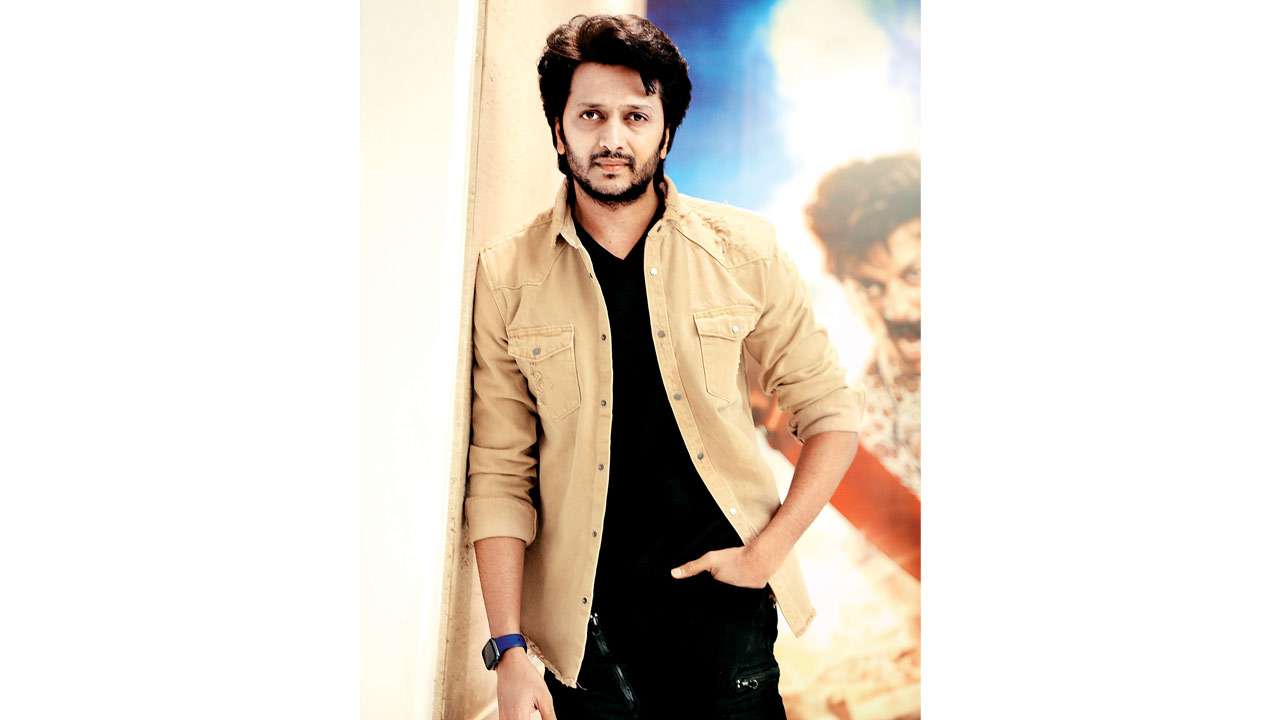
Four years ago, Riteish Deshmukh made his debut in Marathi cinema as a producer with Lai Bhaari. His maiden venture went on to do over Rs 40 crore business at the box office. Proud of his Marathi legacy, the actor returns to the same space with Mauli. He tells After Hrs why there has been a long gap between both the movies, how he strikes a balance between regional and Hindi cinema as well as his learnings as a producer. Excerpts…
Would you say that Lai Bhaari is instrumental in changing people’s perception towards Marathi cinema?
Let’s not give Lai Bhaari that credit. It all started with films like Shwaas (2004) and Harishchandrachi Factory (2009), which won the National Award and were selected as India’s official entries to the Oscars. That’s when people started noticing the kind of content that was being generated in the Marathi industry. There are two parameters for films — content and commerce. But when the numbers started coming in, things changed. It began with Balak Palak (2013) which made Rs 12 crore. Then came Duniyadari that raked in Rs 25 crore. In 2015, Timepass 2 did around Rs 30 crore and after that, Lai Bhaari broke the Rs 40 crore mark as it had action and drama. So, Marathi industry was not only producing content but also making good numbers.
Natsamrat, which released in 2016, set the cash registers ringing with Rs 50 crore. Three months later, Sairat managed to cross the Rs 90 crore mark at the box office. Rs 90 crore in Marathi is almost like a Rs 300-400 crore film in Hindi. No Hindi movie, barring Baahubali, has done that much business in Maharashtra. Interestingly, all these flicks that have done these numbers opened in the same range of Rs 2-3 crore. So, now the aim is to increase the opening figures. But how do we do that? Do we increase shows? Because then, Hindi films will also take these shows up. So, it’s a double fight.
Regional and Hindi cinema fighting for screens has always been the case...
Yes, and it will continue to be so. There’s nothing bad with that. Everyone wants the best for their films. Now, it’s up to the audience to watch whatever they want to. But the only thing is that the other person should at least get a decent opportunity to showcase. Opportunity is an issue here.
You even moved your film, as a sign of love and respect for Shah Rukh Khan’s Zero...
Shah Rukh is doing the biggest movie of his career, in terms of production, and it’s an amazing film that he’s bringing to life. Mauli is the biggest film that my production house is making. The scales are completely different, and so are the budgets. I was releasing it on December 21 because it’s the holiday season. Initially, Total Dhamaal was supposed to open in cinemas on December 7. So, I wanted to keep a two-week gap between both my movies. With Total Dhamaal shifting to February 2019, I realised that if Mauli releases along with Zero, the business of both the movies would get affected. That’s when I decided that my Marathi movie should hit the marquee a week earlier. So, it has worked out well for Shah Rukh and me. And I’m glad we could do so for each other’s betterment.
What took you four years to come back with Mauli?
We were planning to release it sooner. We had developed it and announced it. However, later, we realised it’s not what it should be. After that, I got busy.
Does it become difficult to juggle between the two industries?
It is difficult but the responsibility I have for my Marathi films and productions is much more. I have to sit on everything — right from the font of the poster to whose name will be placed where. In the case of my Hindi films Housefull or Dhamaal franchise, I only have to do my photoshoots and promote the film. Life as a producer is challenging, engaging and extremely gratifying. It’s amazing to see how a script comes to fruition.
Is Mauli a takeaway from Lai Bhaari?
No, it’s not a part two. It’s a different story. But the essence and the premise remains the same.
People are increasingly remaking Marathi films in other languages…
There’s a certain sense of recognition today. Cinema and entertainment will soon be language agnostic. I’m watching a Spanish series with subtitles on my TV and enjoying it as it’s exciting. Mumbai is a true cosmopolitan city in the country where statistically 35 per cent of the population is Marashtrian while the remaining constitutes people from different corners. When a film becomes the talk-of-the-town, everyone gets excited to go and watch it. The non-Marathi speaking audience has also started watching our films, which is a great boon to our industry.
Have you ever thought of dubbing Mauli in Hindi and releasing it across India?
No, because if I had thought that way, I would have made it in Hindi. One should not confuse the basic core reason behind creating a movie. And that’s your audience. A Hindi version will take away a lot from the way I wanted to make the Marathi movie. Dubbing is an option. Mauli and Lai Bhaari both can be remade as great Hindi films too. But as of now, let’s see what happens.
Lai Bhaari was a huge success. So, the expectations from this film are quite high. Are you feeling the pressure?
No. Lai Bhaari, Sairat and other films were loved by the audience and that’s why they fared so well at the box office. If Mauli has to do the same business as Lai Bhaari, it has to be appreciated by viewers. Because of my debut Marathi film, I got the courage to make Mauli a bigger film in terms of budget, scale, action and songs. But if you think I’m looking at a business more than Lai Bhaari, then no, I can’t gauge that right now. Box office figures don’t matter, people’s reactions do. If people connect to the film, it will do good. Unfortunately, today we’re only discussing collections, which are immaterial. In recent times, smaller films have done Rs 100-crore business solely because of their strong connect.
There is a lot of pressure while working on sequels-Riteish Deshmukh
7:48 AM

Rachit Gupta (BOMBAY TIMES; April 11, 2018)
Riteish Deshmukh has a busy year ahead, with two Bollywood films lined up for release. He says, “I’m working on Total Dhamaal and Housefull 4. The previous installments of both these films have fared well and hence, expectations are already high. So, there is a lot of pressure.”
Having said that, Riteish also believes that any film with strong content, if released at the right time, will do well. It really doesn’t matter if they are part of a popular franchise. “The genre of the film could make a difference to its box-office prospects. Comedies like Total Dhamaal and Housefull 4 have a better chance to succeed, but at the end of the day, it’s about getting your content and release date right. If those parameters are in place, the film will work well,” he says.
That’s not all. Riteish Deshmukh, who made his debut in Marathi cinema with Lai Bhaari in 2014, is all set for his second outing in the language. Riteish will soon begin work on Mauli, which was first announced in 2015. The film, however, was later put on the back burner because of creative issues.
The actor, who is also an acclaimed producer in Marathi film industry, says, “Mauli is going on floors soon. Sometimes, what happens after a success like Lai Bhaari is that one tries too hard to figure out what one wants to do next. You have already set a benchmark and you don’t want to slip. But then, it doesn’t always work out the way you planned. Fortunately, in Mauli’s case, we got the film back on track.”
Mauli, an action drama directed by Aditya Sarpotdar and written by Kshitij Patwardhan, will be produced by Riteish’s production house, Mumbai Film Company.
The Chhatrapati Shivaji biopic will roll next year-Riteish Deshmukh
7:59 AM

Riteish Deshmukh reveals that the film could be a Hindi-Marathi bilingual, his plans to produce another Marathi film, and his future in politics
Avinash Lohana (MUMBAI MIRROR; November 7, 2017)
After collaborating with National Award-winning filmmaker Ravi Jadhav for his first Marathi production Balak-Palak in 2013, following up with the director’s Bollywood debut, Banjo, three years later, which featured him in the lead, Riteish Deshmukh will now play Chhatrapati Shivaji Maharaj in the director’s upcoming biopic on the warrior king.
“We have just finished our first draft and after a few revisions we will get into prep. The film will roll next year,” the 38-yearold actor-producer informs Mirror, adding that he is actively involved with the scripting and has been reading books like Vedh Mahamanawacha, Shree Raja Shivchatrapati and Shivcharitra among others. “At the moment it is a Marathi film but by the time we go on the floors, it may become a Hindi-Marathi bilingual. We will take a call on that later.”
The Shivaji biopic is Riteish’s fifth production after Balak-Palak, another National Award winner in 2014, Yellow, followed by the super hit Lai Bhaari which opened the same year and the recently released Marathi crime thriller, Faster Fene. “I’m glad that the first few films we have produced have been in different genres and were appreciated by the audience. When you work with low budgets, one has no option but to work on content and within the space offered, scale up your product,” he reasons, admitting that limitations of regional cinema pushes him as a filmmaker to new creative heights.
He goes on to inform that it was his father, the late Vilasrao Deshmukh, who once asked him why he was only doing Hindi films and not looking towards Marathi cinema. “At that point no offers were coming my way but after a decade in the industry, I wanted to make films but wasn’t sure what I wanted to produce. So, then, I decided to dive into Marathi cinema. The success of Balak-Palak encouraged me to push for something different,” Riteish reminisces.
He goes on to say that Marathi filmmakers are now reaching out to him to present their films but he is quick to add that his company has taken a conscious decision to only back scripts they are involved with since the beginning. “We also want to get into the digital space now,” he asserts.
He maintains that his actress wife Genelia D’Souza and he are a great team. He picks out the scripts and bounces them off her. “I had shared the idea of Faster Fene which was set in the ’70s with her and she came up with the brainwave of transplanting it in the present time so it caters to today’s audience. She was the one who set up the entire production, right from getting the team together to overseeing minute details. I came into the picture only when the film was ready and had to be promoted,” he smiles.
The miya-biwi jodi had earlier acted in films like Tujhe Meri Kasam (2003) which marked their Bollywood debut, Masti (2004) and Tere Naal Love Ho Gaya (2012). When will we see them together on screen again? “I would love to do a Marathi film with Genelia but we need a script first. Also, she has to decide if she’s ready to make a comeback to films,” he points out.
On the subject of producing Hindi films, Riteish says that while in Marathi cinema you can go ahead once you zero in on a good subject, in Bollywood one has to take into account other factors like commercial viability and casting. “That’s another kind of mathematics altogether which while I understand, I’m not sure I want to get into it right now. For the moment I’m planning another Marathi film,” he says, refusing to divulge details.
He recently met his Aladin director, Sujoy Ghosh, over coffee and they discussed a probable collaboration. “We have been friends for years and while chatting about films, I asked him to give me a script as I want to produce more films and he agreed,” says Riteish. Meanwhile, is he doing Sajid Nadiadwala’s Housefull 4? “The production house will announce the cast at the right time,” he retorts, keeping it short.
His late father was the former Chief Minister of Maharashtra and both his brothers, Amit and Dheeraj, are into politics. Does he plans to shift from being an abhineta to rajneta someday? “I have lived with politics all my life thanks to my father and brothers, but one can’t get into it just like that, one has to work one’s way up from the grassroot level but having said that I have to admit that none of my decisions were ever planned. I studied architecture but then got an offer and found my way into the film industry. I enjoy politics and am keenly watching what’s happening in the country. I don’t know what the future holds for me but never say never to anything in life,” he signs off.

Subscribe to:
Posts (Atom)