Showing posts with label Reliance Industries. Show all posts
Showing posts with label Reliance Industries. Show all posts
Film studios see M&A wave as Reliance picks up stake in Guneet Monga's Sikhya Entertainment
10:10 AM

Javed Farooqui & Rajesh N Naidu (THE ECONOMIC TIMES; February 4, 2026)
Mergers and acquisitions (M&A) in the film studio business are expected to be a key theme in 2026, with Reliance Industries Limited (RIL) emerging as the latest player to scale up its presence by acquiring a majority stake in Sikhya Entertainment, the production house behind the Oscar-winning documentary film The Elephant Whisperers.
RIL, through its wholly owned subsidiary Reliance Strategic Business Ventures Limited, has acquired a 50.1% stake in Sikhya Entertainment for Rs 150 crore. The acquisition strengthens Jio Studios and deepens Reliance’s footprint in the media and entertainment space. RIL is also the majority owner of JioStar, India’s largest media and entertainment company.
As part of the partnership, Jio Studios will jointly own the intellectual property rights of future films and web series developed under the collaboration. Sikhya Entertainment is known for critically acclaimed films such as The Lunchbox, Masaan, Haraamkhor and Jugnu.
The transaction adds to a growing list of consolidation moves in the Indian film industry. Late last year, Universal Music Group acquired a 30% stake in Ritesh Sidhwani and Farhan Akhtar-promoted Excel Entertainment at an enterprise valuation of Rs 2,400 crore.
Earlier, RP-Sanjiv Goenka Group-owned Saregama invested Rs 325 crore in Sanjay Leela Bhansali’s Bhansali Productions. In 2024, Adar Poonawalla acquired a 50% stake in Karan Johar’s Dharma Productions, while in 2022, Nepean Capital bought a 50% stake in Maddock Films at an undisclosed valuation.
Industry experts say these deals reflect accelerating consolidation, as large corporations back proven creative studios to secure scale, talent and intellectual property. According to Sacnilk, total India gross box office collections in 2025 stood at Rs 13,415.21 crore across 1,572 films, while total India net collections were Rs 11,371.82 crore during the year.
“There has been a flurry of deals in this sector over the last year or so, with four transactions in the movie production space. This reflects heightened equity activity and highlights both the potential and growth opportunity within the industry,” said Nitin Menon, managing partner at NV Capital.
“Overall, these developments have strengthened sector sentiment and supported the broader growth of the film industry, while enhancing domestic and international recognition in terms of capital formation,” he added.
Anushree Rauta, equity partner and head of the media, entertainment and gaming practice at ANM Global, expects more such deals in the coming years. “Equity participation allows for deeper control over content strategy, rights exploitation and global monetisation. We are likely to see more studio, platform and music label-led strategic equity partnerships as companies move upstream to secure proven creative pipelines,” she said.
She added that such transactions require nuanced governance, particularly around multi-layered IP ownership, greenlighting authority, creative control and future exit rights. The acquisition of a majority stake also marks a shift from transaction-led content deals to long-term strategic ownership.
“A majority acquisition of this nature reflects a move towards long-term strategic ownership. For boutique production houses like Sikhya, the success of the partnership will hinge on preserving creative autonomy while leveraging institutional capital and distribution at scale.”
One of the clear advantages of this investment is that Jio Studios seals its presence across the spectrum of film-making—mainstream (big-budget, mid-budget) to indie films (passion projects of independent filmmakers made on shoe-string budgets). The studio has widely been associated with mainstream big-to-mid-budget films such as Dhurandhar, Stree, Mrs and Laapataa Ladies.
“Sikhya Entertainment is known for mid-sized indie films. So, one should look at the deal from that point of view. Jio Studios is already known for producing big-to-mid-budget films,” said Rahul Merchant, Partner, Mayavi Entertainment and a veteran who has been distributing indie films for more than twelve years in India.
Besides this, Jio Studios benefit from hard-earned experience of Guneet Monga and Achin Jain, founders of Sikhya Entertainment, in making strong in-roads into the global film distribution market.
“Both Guneet and Achin have in-depth understanding of the global markets. Therefore, this deal is likely to create path-breaking content which will travel across the diaspora audiences and get them more excited about Indian content,” added Merchant of Mayavi Entertainment
Concurring with this view, Utpal Acharya, chief executive officer of Content Engineers, said, “With Sikhya Entertainment’s creative strengths and Jio Studios’ scale, the partnership is well placed to contribute to meaningful growth in both cinema and series, rooted in India and aimed at global markets. I have personally witnessed Guneet’s journey in the Indian film space, and she truly deserves this.”
Reliance trims stake in Balaji Telefilms
8:24 AM

RIL now holds 21.07% stake, the largest by a non-promoter entity
Javed Farooqui (THE ECONOMIC TIMES; September 24, 2025)
Mumbai: Reliance Industries' stake in Ekta Kapoor-led Balaji Telefilms dropped to 21.07% in FY25 from 24.82% a year earlier, according to the production company's annual report. Nonetheless, Reliance Industries (RIL) remains the largest non-promoter shareholder in Balaji Telefilms. It had invested Rs. 413 crore in 2017 for nearly 25% stake through a preferential issue as part of its Jio content play.
The promoter group comprising Jeetendra, Shobha Kapoor, Ekta Kapoor and Tusshar Kapoor holds 32%, down from 34.21% last year. Among institutional investors, Vanderbilt University Atyant Capital Management raised its holding to 6.19% from 4.51%, Gothic Corporation to 6.68% from 4.76% and Atyant Capital India Fund to 5.77% from 4.02%.
To bolster its film business and create intellectual property, Balaji Telefilms raised Rs. 130.7 crore through a preferential issue to eight investors, including Ekta Kapoor, Atyant Capital India Fund I and Duke Endowment.
RIL is now sharpening its media and entertainment focus on JioStar, where it is the majority shareholder alongside Disney. It has infused nearly Rs. 22,000 crore in the business over two years, first into Viacom18 and later into JioStar after the Disney merger.
Balaji Telefilms, known for its TV dramas, is pivoting toward films and digital as broadcasters reduce content spends, eroding per-hour revenue from TV. Over the next three years, the company expects films to be its main growth driver, followed by digital, with television a distant third. It has signed a content deal with Netflix, which is expanding its mass-market offering in India. Balaji Telefilms recently shut down its over-the-top platform ALTT after the information and broadcasting ministry blocked it among 25 apps for obscene content.
Rush among filmmakers to register Operation Sindoor as a title
10:32 AM
Within hours of India’s precision strikes in Pakistan and PoK, the four film bodies reveal receiving over 20 applications to register the title
Yashika Mathur (HINDUSTAN TIMES; May 9, 2025)
India’s precision strike at nine terror hideouts in Pakistan and Pak-occupied Kashmir was followed by a frenzy in the film industry as producers scrambled to register the title Operation Sindoor and Mission Pahalgam.
As the process goes, producers must register titles through any one of the four film bodies — Indian Motion Picture Producers Association (IMPPA), Western India Film Producers Association (WIFPA), Indian Film and TV Producers Council (IFTPC), or Producers Guild of India. Sources tell us that IMPPA received 12 applications, WIFPA got two, and Producers’ Guild received 10 applications so far.
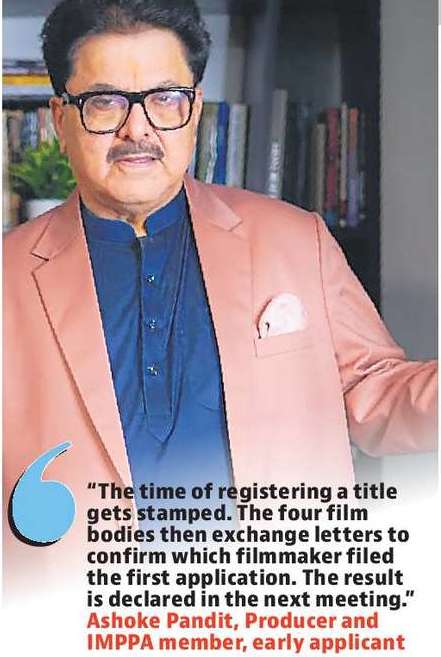
“The time of registering a title gets stamped. The four film bodies then exchange letters to confirm which filmmaker filed the first application. The result is declared in the next meeting.”
- Ashoke Pandit, Producer and IMPPA member, early applicant
“I’ve applied in the film and web series section under languages across the country. I’m thinking of my Operation story with women leading it, the way Colonel Sofiya Quraishi and Wing Commander Vyomika Singh briefed the country about the operation.”
- Vishal Saroye, Filmmaker
‘Shouldn’t make such films within 1-2 years of military operations’
Without confirming the number, J D Majethia, chairman, Television & Web Wing of IFTPC, says that several applications have been filed with the organization. However, he feels such films shouldn’t be made within one-two years of such military operations: “Manoranjan ke liye climax theek hai but in that process we end up showing our intelligence agencies’ investigations, sharing the big secret of planning process and intelligence agency of our country with enemies.”
Trademark wanted?
A source tells us that several filmmakers have also applied for the trademark of Operation Sindoor. While a title can only go to one filmmaker, a trademark means that several filmmakers can make the film on the same subject. Mukesh Ambani’s Reliance Industries was one of the proprietors, but later withdrew the application. A part of their statement read that it was filed by a junior person without authorization.
RIL ejects out of ‘Operation Sindoor’ trademark flight
10:25 AM
Co said it respects the significance, has no intention to claim rights, as it symbolises Indian bravery
THE ECONOMIC TIMES (May 9, 2025)
Mumbai: Reliance Industries (RIL) has decided to withdraw its application for trademarking the phrase ‘Operation Sindoor’, the company said on Thursday, a day after it made the filing.
RIL was among four applicants that made separate filings with the trademark registry on Wednesday to own trademark rights over the phrase, after the government announced hitting terrorist infrastructure in Pakistan and Pakistan-occupied Jammu and Kashmir under ‘Operation Sindoor’.
RIL and the others — Mukesh Chetram Agrawal, retired Group Captain Kamal Singh Oberh and Alok Kothari — filed the application for trademark under Class 41.
Class 41 covers services related to education, entertainment, sports and cultural activities, said Ashish Pyasi, partner at law firm Aendri Legal. Registration under this section helps organizations working in these areas to protect their brand and sometimes their work.
“Reliance Industries has no intention of trademarking Operation Sindoor, a phrase which is now a part of the national consciousness as an evocative symbol of Indian bravery,” the company said in a news release. “Jio Studios, a unit of Reliance Industries, has withdrawn its trademark application, which was filed inadvertently by a junior person without authorization,” it added.
Reliance Industries and all its stakeholders are incredibly proud of Operation Sindoor, which came about in response to a Pakistan-sponsored terrorist attack in Pahalgam, it said. “Operation Sindoor is the proud achievement of our brave armed forces in India’s uncompromising fight against the evil of terrorism,” the company said.
Application sparked public Media houses often register such titles to restrain others from making movies or other programmes with an identical or similar title, said Rahul Dhote, partner at law firm ANM Global.
“Titles based on similar events like ‘Balakot: Surgical Strikes 2’, ‘Pulwama: Surgical Strikes 2’, Pahalgam Files’, ‘Operation Safed Sagar’ and ‘Operation Khukri’, have been either applied for or registered,” Dhote said. “Having said that, such applications pass through a rigorous examination process and are also rejected if they do not fit within the parameters of conditions for grant, including their distinctiveness,” he added.
Explained: What the Rs 1000 crore deal means for Karan Johar and Adar Poonawalla
8:47 AM
Arijit Barman and Javed Farooqui (THE ECONOMIC TIMES; October 22, 2024)
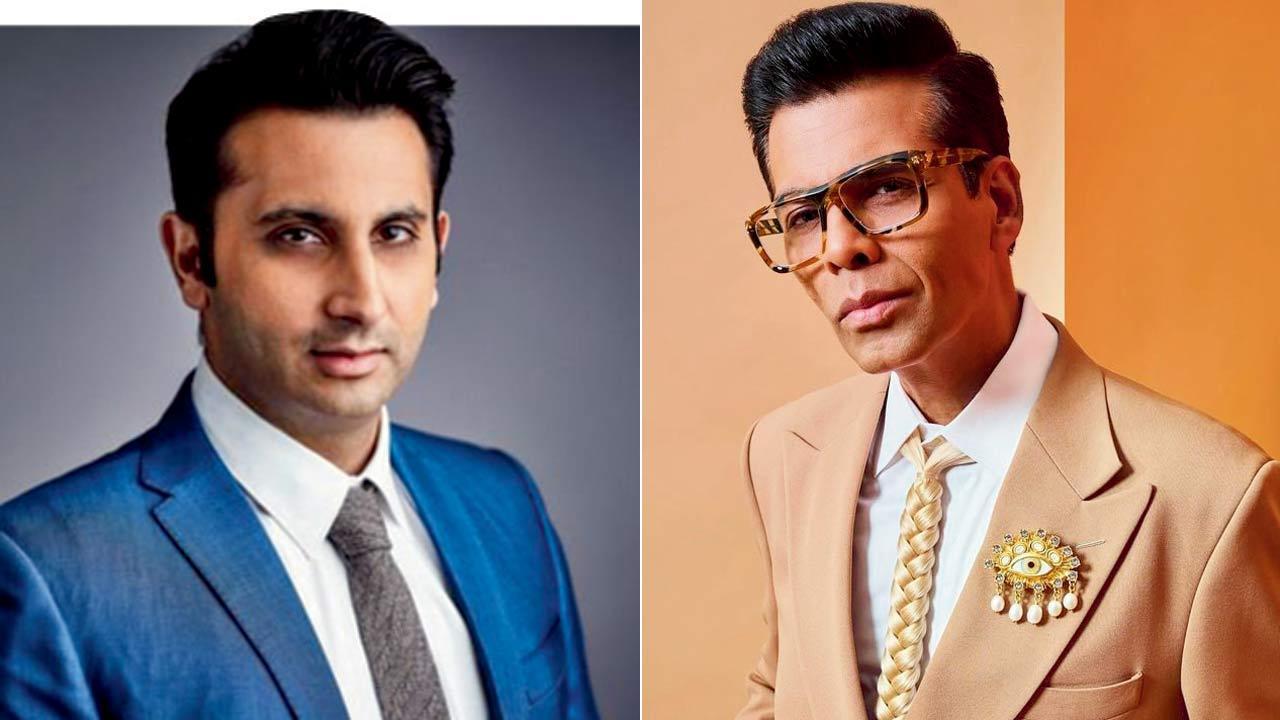
Billionaire vaccine maker Adar Adar Poonawalla, CEO of the Serum Institute of India, is picking up a 50% stake in Dharma Productions and Dharmatic Entertainment, for Rs 1000 crore, valuing Karan Johar’s film and television production and distribution flagship at Rs 2000 crore, further underpinning the ongoing flurry of consolidation in the entertainment industry.
ET broke the story online on Monday morning, ahead of a formal announcement.
Poonawalla’s is making this investment in his private capacity through Serene Productions. Dharma will retain the residual stake with Johar continuing to remain as the creative spearhead of the company, as Executive Chairman. Apoorva Mehta remains the Chief Executive Officer.
Dharma is owned 90.7% by Karan Johar and 9.24% by his mother, Hiroo.
“I do foresee consolidation in this industry. Internationally, we've seen a lot of consolidation due to new content creation methods and distribution channels,” Poonawalla told ET. “With the evolving landscape of content production and distribution, I see significant potential for such partnerships both internationally and nationally.”
The key factor that led to stitching together this alliance is Johar retaining creative control while partnering with a deep pocket family he is familiar with. The Poonawalla investment will help the production house with enough financial muscle to navigate the fast-changing demands of digitally savvy consumers who are often digital natives. The investment will also boost Dharma’s efforts to double down on content for new platforms and formats while continuing to deliver interesting stories for a global audience.
“This partnership will help us create more verticals within the organization and allow us to take creative chances. This gives us the bandwidth to expand Dharmatic Entertainment and create much more in the digital domain,” added Johar. “It also allows us to capture a lot of value in the value chain which comes with owning IP and catalogue – we have already been doing that and hope to double down on it with this capital.”
Film production is a volatile business with earnings linked to box office successes of films. Major Hindi film production houses, including Dharma, have been cautious in greenlighting new projects due to the unpredictable nature of the box office, which also impacts the value of streaming and satellite rights, ET had reported on October 14.
Johar said, the company’s attempts will be to increase the value and create more content. “We aim to produce a higher volume of films with this partnership compared to what we're currently doing. With shrinking audiences and an overreliance on streaming rights, Johar feels a strategic business shift is already underway. “Mid-budget films are the backbone of the film industry's economics, and we need to explore this segment further, alongside our tentpole productions, to create a more diverse and sustainable portfolio of films,” he said.
CHANGING DYNAMICS
The industry is experiencing major upheavals due to shifting consumer preferences, influenced by exposure to global content and the increasing dominance of on-demand consumption in urban areas. Additionally, the economic model is strained, with star salaries often consuming up to 70% of a film’s budget. Consolidation on the demand side, with the emergence of large broadcasters, streaming platforms, and multiplexes, is also putting pressure on content companies like Dharma. Satellite rights, once a steady revenue stream, have plummeted to historic lows, and the value of streaming deals, which was funding movie costs in many cases, is being corrected, further straining the economics of the film business.
In the theatrical space, multiplexes now dictate a film’s success, contributing an estimated 60–70% of Hindi films' box office revenue, while single-screen theaters continue to struggle. Post-COVID, many viewers prefer to wait 8–10 weeks to watch films on OTT platforms, leading to reduced footfall in cinemas.
Some industry players are already contemplating profit share model or box office linked payouts to offset rising star costs. “It's essential not to overload our above-the-line costs. While we respect actors' talent and craft and want to pay what's fair, all artists must understand the current challenges in the entertainment industry. There's enough potential in big films for everyone to gain,” said Johar.
Dharma has been actively seeking investments for a while and had engaged in talks with several large conglomerates and industrialists like Sanjiv Goenka’s Saregama, a company they already have business ties to become part of a cash-rich conglomerate. Some discussions with Reliance Industries and Jio Cinema also did take place.
Raine Group was the advisor to the deal.
Dharma Productions posted a nearly fourfold surge in revenue to Rs 1,040 crore in FY23, from Rs 276 crore the previous year. Net profit, however, fell 59% to Rs 11 crore due to a 4.5-times rise in expenses at Rs 1,028 crore, according to the company's latest available financial data accessed from Tofler. In FY23, the company earned Rs 656 crore from distribution rights, Rs 140 crore from digital, Rs 83 crore from satellite rights, and Rs 75 crore from music. This compares with earnings of with earnings of Rs 19 crore, Rs 167 crore, Rs 34 crore, and Rs 21 crore from these streams, respectively, in FY22.
HITS & FLOPS
Founded by Johar’s father Yash Johar in 1976, with its first venture starring Amitabh Bachchan in a film called Dostana, Dharma has been led by Johar and his team since his father passed away. Johar directed his first movie at 25, ‘Kuch Kuch Hota Hai’, and has gone on to produce close to 50 Bollywood including hits like 'Kabhi Khushi Kabhie Gham, Yeh Jawaani Hai Deewani, 2 States, Kapoor & Sons and Dear Zindagi’. Seen as a launch pad for several young actors, many from well-known film families like Allia Bhatt, Varun Dhawan, Janhvi Kapoor, Ishaan Khatter and Ananya Pandey among others. In 2018, the company launched Dharmatic Entertainment to diversify and create original content for global streaming platforms and has worked with global OTT platforms like Netflix and Amazon Prime to create and produce shows like “The Fabulous Lives of Bollywood Wives”, “Call Me Bae”. From blockbuster films Johar was also among the first of his peers to migrate to multi-media himself, becoming a chat show host for the popular Koffee with Karan show.
----------------------------------
Dark horse vaccine baron beats biggies for a 50 per cent stake in marquee Bollywood production house
Priyanka Sharma (MID-DAY; October 22, 2024)
Serum Institute of India CEO Adar Poonawalla-led Serene Productions on Monday said it will pick up a 50 per cent stake in Karan Johar’s Dharma Productions and Dharmatic Entertainment for Rs 1,000 crore.
The past few months had witnessed speculation in the entertainment industry that Karan Johar was planning to sell a stake of Dharma Productions. Saregama and Reliance were said to be frontrunners.
With this deal, Poonawalla—the CEO of Serum Institute of India (SII), and Chairman of Poonawalla Fincorp—is foraying into entertainment through his Serene Productions.
The deal, which sees Karan retaining his position as the Executive Chairman and Apoorva Mehta as the CEO, is being viewed as a win-win for both parties. In terms of numbers prima facie, this deal values Dharma— which includes its digital arm, Dharmatic Entertainment—at Rs 2,000 crore. Sources say it is an optimistic valuation.
An insider says, “Karan has got a good valuation. Technically, Dharma’s revenue fell by 50 per cent in the last financial year. In 2022-2023, its revenue was said to be at Rs 1,000 crore. Brahmāstra: Part One—Shiva [2022] was a major contributor to the profit. However, in 2023-24, even though the company witnessed a spike in its digital and music earnings, its total revenue had a 50 per cent drop as it did not have a blockbuster. But Adar has invested in the company, looking at its equity and Karan’s creative might. A part of the Rs 1,000-crore investment will be directed to the original investors—Karan and his mother Hiroo Johar—while the remaining will be allocated towards production.”
For Poonawalla, who has long been friends with Karan, it is a strategic investment as it gives him a significant stake in the media industry. Another source breaks it down, “For Adar Poonawalla, it’s a great diversification after dominating the pharmaceutical and financial sectors. This move will bring corporate culture into the corridors of Dharma. All the heavy lifting that Karan and Apoorva had been doing, in terms of cost management, will now be delegated.”
As is the norm with such deals, the company is expected to undergo restructuring. “Some of Adar’s people will take key positions at Dharma, and there will be a lot of lay-offs,” says another source.
It is understood that the roles will be clearly divided in the 50-50 partnership. Decades after his filmmaker-father Yash Johar founded Dharma in 1976, Karan took the company to new heights with his vision. He not only helmed many blockbusters—from Kuch Kuch Hota Hai (1998) to Student Of The Year (2012)—but also backed many directors, becoming something of Bollywood’s big daddy.
“Now, Karan will spearhead the company’s creative operations and lead it from the front. Adar wants to stay away from the creative aspect. So, everything related to films will be handled by Karan, including the star fees and the budget on which a film is to be mounted. Adar will look at the operational aspects, probably telling him how much money can be spent on the workforce, how much bonus to be given, and so on.”
The equal partnership that Poonawalla’s deal afforded was one of the reasons why Karan inked the deal. In contrast, Saregama, owned by Sanjeev Goenka, and Reliance Industries were reportedly in the bidding war to buy a majority stake in Dharma.
A source reveals, “Saregama was willing to acquire the stake for Rs. 800 crore. Adar outbid both the players. But another crucial reason is that neither of those giants would have gone into a 50-50 partnership. It has been seen historically that Reliance eventually acquires the companies it buys stakes in.” The partnership is being viewed as a huge boost for the Hindi film industry, which has been struggling since theatres reopened after the pandemic-induced shutdown.
When pharma meets films
- Adar Poonawalla is the CEO of Serum Institute of India, the world’s largest vaccine-producing company in terms of volume, which produced Covishield in India. He is also the Chairman of Poonawalla Fincorp.
- The Rs 1,000-crore investment in Dharma Productions marks the pharma tycoon’s foray into the entertainment industry with Serene Productions.
- In the 50-50 partnership, Karan Johar will retain his Executive Chairman position and spearhead the creative operations. Apoorva Mehta will continue as the CEO.
- Part of the investment will be directed to the original investors—Karan and his mother Hiroo Johar—while the remaining will be allocated towards production.
- Saregama and Reliance Industries were said to be in the bidding war to buy a majority stake in Dharma.
Reliance to retain Disney+ Hotstar as sole streaming platform for merged entity
2:08 PM

Javed Farooqui (THE ECONOMIC TIMES; October 19, 2024)
Reliance Industries is expected to retain Disney+ Hotstar as the only streaming platform following the merger of Star India and Viacom18, sources familiar with the matter told The Economic Times (ET).
Jio Cinema will merge into Disney+ Hotstar, positioning it as the central streaming platform for the combined entity, sources added.
RIL had explored various strategies for the streaming business. At one stage, it considered integrating Disney+ Hotstar into Jio Cinema, and there were discussions about running two separate platforms—one for sports and another for entertainment.
"However, Reliance's leadership opted to keep Disney+ Hotstar due to its superior tech infrastructure," a source aware of the discussions said.
ET first reported on August 19 that Reliance Industries Ltd (RIL), which will control the merged Star-Viacom18 entity, is inclined to consolidate Jio Cinema and Disney+ Hotstar into a single OTT platform.
Disney+ Hotstar, the streaming service owned by Walt Disney's Star India, has over 500 million downloads on the Google Play Store, compared to Jio Cinema's 100 million downloads, which is owned by RIL-controlled Viacom18.
In February, RIL and Walt Disney signed agreements to merge Star and Viacom18, creating an $8.5 billion media powerhouse with over 100 channels and two streaming platforms.
According to RIL’s annual report, Jio Cinema reached an average of 225 million monthly users. In contrast, Disney+ Hotstar had 333 million monthly active users in Q4 2023, according to Sensor Tower.
As of June, Disney+ Hotstar had 35.5 million paid subscribers, significantly down from its peak of 61 million when it offered content like the Indian Premier League (IPL) and HBO.
Earlier, Viacom18, controlled by RIL, had merged its various OTT platforms under the Voot brand into Jio Cinema. Viacom18 had previously operated three platforms: Voot, Voot Select, and Voot Kids.
Reliance Industries in talks to acquire stake in Karan Johar’s Dharma Productions
8:05 AM
Javed Farooqui (THE ECONOMIC TIMES; October 14, 2024)
Reliance Industries (RIL) is in talks to acquire a stake in Bollywood producer and director Karan Johar's Dharma Productions, said people familiar with the matter. A deal will strengthen the oil-to-telecom conglomerate’s position in the Indian content production industry. The size of stake on the table could not be ascertained.
“Karan Johar has been looking to monetize his stake in Dharma for some time, but past deals have fallen through due to disagreements over valuation,” said a person familiar with previous negotiations, requesting anonymity.
Dharma is owned 90.7% by Karan Johar and 9.24% by his mother, Hiroo. It has produced a large number of popular Bollywood firms.
Dharma Productions’ pursuit of strategic partnerships underscores the broader financial challenges facing the Hindi film industry, including rising production costs, declining theatre attendance and shifting consumer choices due to the growing popularity of over-the-top (OTT) platforms.
Several Gains from Divestment
“In the past, RIL acquired a minority stake in Balaji. A similar arrangement could be made with Dharma,” said a second person. A potential stake purchase would boost Reliance’s content production portfolio, which currently includes Jio Studios, Viacom18 Studios, Colosceum Media and a minority stake in Balaji.
Reliance Industries may have just Jio Cinema as OTT platform post merger
8:25 AM

Disney+ Hotstar may get combined with Jio Cinema after Viacom18 & Star India merger
Javed Farooqui (THE ECONOMIC TIMES; August 19, 2024)
Mumbai: Reliance Industries (RIL), which will control the Star-Viacom18 merged entity after regulatory clearances, is leaning toward having only one OTT platform, Jio Cinema, after the merger, said people aware of the matter.
Following the merger, RIL is considering a plan to combine Disney+ Hotstar with Jio Cinema, despite the former having higher downloads, said one of the persons.
Disney+ Hotstar is Walt Disney-owned Star India's streaming service, while Jio Cinema is owned by RIL-controlled Viacom 18.
According to Google Play Store data, Disney+ Hotstar had over 500 million downloads while Jio Cinema had over 100 million downloads.
In February, RIL and Walt Disney signed agreements to combine Star and Viacom18 to create an $8.5-billion media giant that would have had over 100 channels and two streaming platforms.
As reported by ET earlier, the company is also willing to shut channels across Hindi and regional markets to alleviate concerns of the Competition Commission of India (CCI) about the market dominance of the proposed Star-Viacom18 merged entity. The companies are awaiting CCI and National Company Law Tribunal's (NCLT) approvals.
According to RIL's annual report, Jio Cinema had an average monthly reach of 225 million users. In the fourth quarter of 2023, Disney+ Hotstar had 333 million monthly active users, as per Sensor Tower.
Disney+ Hotstar had 35.5 million paid subscribers in June, which is significantly lower than the 61 million that the platform used to enjoy at its peak when it also had content such as the Indian Premier League (IPL) and HBO.
Earlier, RIL-controlled Viacom18 had merged its OTT platforms under the Voot brand with JioCinema. Viacom18 had three OTT platforms-Voot, Voot Select and Voot Kids.
Prior to that, Jio Cinema was transferred to Viacom18 through an NCLT sanctioned scheme of arrangement that also involved RIL and Bodhi Tree Systems infusing Rs. 15,145 crore in Viacom18.
Both Disney and RIL declined to comment.
A second person aware of the development said having a single OTT platform will help in saving costs and building a one-stop OTT destination that will give strong competition to YouTube in the advertising video on demand (AVOD) segment and Netflix and Prime Video in the subscription VOD segment.
"Having two OTT platforms is pointless as it will result in more expenses," the person added.
Once Disney+ Hotstar merges with Jio Cinema, the latter will become the top streaming app in the country with the largest repository of entertainment, sports, and Hollywood content, comprising over 125,000 hours.
It will also have key cricket rights, including the Indian Premier League (IPL), as well as content from Disney, HBO, NBCUniversal and Paramount Global.
"Record viewership of the Indian Premier League on Jio Cinema underscored our ability to scale up audiences on our digital platform in a short time," RIL chairman Mukesh Ambani had said in the company's annual report.
As reported by ET recently, Disney+, Hotstar, and Jio Cinema have been valued higher than their parent companies' linear TV businesses. Disney+ Hotstar was valued at Rs. 16,040 crore, while Jio Cinema was transferred to a Viacom 18 subsidiary for a consideration of Rs. 24,186 crore.
Paramount to sell its remaining stake in Viacom18 to RIL
2:33 PM

THE ECONOMIC TIMES (March 15, 2024)
Paramount Global will exit Viacom18 by selling its remaining 13.01% stake to Reliance Industries for Rs. 4,286 crore, a deal that will value the Indian media company at about Rs. 33,000 crore.
In separate regulatory filings, the US media and entertainment major and the Mukesh Ambani-led Indian conglomerate have said the transaction is subject to the satisfaction of certain customary conditions, including receipt of applicable regulatory approvals.
The transaction is also subject to the completion of the proposed joint venture (JV) involving RIL, Viacom18, and The Walt Disney Company's Star India.
RIL's stake in Viacom18 will increase to 70.49% after the completion of the deal. It currently holds compulsorily convertible preference shares (CCPS), representing a 57.48% equity stake in Viacom18.
Former Star India chairman and CEO Uday Shankar's Bodhi Tree Systems holds around 16% stake in the company while the remaining stake of about 13.5% is held by TV18.
Paramount, which owns media brands like MTV, Vh1, and Nickelodeon, will continue to license its content to Viacom18. It has launched its streaming platform Paramount+ as a bundled service on Viacom18's streaming platform Jio Cinema.
Viacom18 is a subsidiary of TV18 Broadcast, which is in the process of merging with Network18.
Paramount Global (formerly Viacom), which had formed Viacom18 as an equal joint venture (JV) with TV18 in 2007, has been ceding control of the company to RIL after the latter's acquisition of Network18 from Raghav Bahl.
In 2018, RIL took control of Viacom18 by acquiring an additional 1% stake from Paramount for a cash consideration of $20 million to take its stake to 51%.
Paramount's stake in Viacom18 declined to 13.01% from 49% last year following a ₹15,145-crore fund infusion by RIL and Bodhi Tree Systems.
The fund infusion gave RIL-owned entities a 60.37% shareholding in Viacom 18, with Bodhi Tree Systems receiving 13.08%. Subsequently, Bodhi Tree hiked its stake in Viacom18 by purchasing an additional 2.89% stake from RIL for Rs. 953.23 crore.
Paramount Global had realised a non-cash gain of $168 million for the quarter ended June from the dilution of its stake in Viacom18, the company's regulatory filings show.
The stake acquisition by RIL comes close on the heels of the joint venture (JV) deal between RIL and Disney to merge Viacom18 into Star India, a company owned by the American media conglomerate.
--------------------------------------------
Buyout Follows Reliance’s Merger Deal With Disney India
Reeba Zachariah (THE TIMES OF INDIA; March 15, 2024)
Mumbai: Reliance Industries will buy out Nasdaqlisted Paramount Global’s stake in its Indian TV channel and streaming business for $517 million (Rs 4,286 crore), strengthening its play in the $28-billion media and entertainment sector.
The move comes a fortnight after Reliance decided to merge the business of Viacom18 with the India unit of Walt Disney. Reliance will buy Paramount’s entire 13% share in Viacom 18, increasing its stake to nearly 70.5% from about 57.5%.
The development highlights Reliance’s strategy of going beyond its mainstay business of refining and petrochemicals and upping its play in consumer-facing businesses. Towards this, it has been buying assets in retail, fashion and digital.
The deal will scale back the presence of Paramount, best known for owning entertainment assets like the eponymous Paramount Studios, CBS television net work, MTV, Comedy Central and Nickelodeon, in India, which it had entered more than two decades ago. It will, however, continue to license its content to Viacom18 after the deal is closed.
The transaction is subject to the completion of the Viacom18-Walt Disney India merger deal. The share-sale will help Paramount improve its balance sheet even though international media reports have deemed it as a potential takeover target.
In 2007, Viacom Inc (now part of Paramount) formed a 50:50 joint venture with TV18 India, a company then owned by Raghav Bahl, to establish Viacom18. This company launched Hindi entertainment channel Colors and managed Viacom’s TV channels like MTV, VH1 and Nickelodeon.
In 2014, TV18 India was taken over by Reliance and in 2023, Viacom 18 was combined with one of the entities of Reliance, making Paramount a smaller shareholder of the broadcaster. The 2023 transaction also saw Bodhi Tree Systems, an investment venture of James Murdoch’s Lupa Systems and former Walt Disney India head Uday Shankar, acquiring a 13.1% stake in Viacom18.
Once the businesses of Viacom18 and Walt Disney India are combined, Reliance will hold just over 16% in the merged entity, Viacom18 will own about 47% and Disney close to 37%. Like Paramount, Disney too will see its presence scaled back in India, one of largest economies in the world.
The Reliance-Disney combination will make the business environment difficult for smaller players like Zee and Sony as they will have to individually compete with a dominant player. Analysts expect the Reliance-Disney consolidation to benefit the unified entity as its bargaining power will increase, helping it to command better advertising rates. It could also see rationalization in content costs, leading to margin improvement, they said.
Zee and Sony had attempted to merge their local operations but the deal collapsed after Sony walked away from it. Had the merger happened, Zee-Sony would have been the largest player in the sector after Reliance-Disney.
JV deal with Reliance Industries will help Disney derisk in India-Bob Iger
8:22 AM

Javed Farooqui (THE ECONOMIC TIMES; March 9, 2024)
Walt Disney CEO Bob Iger believes the joint venture with Mukesh Ambani's Reliance Industries Limited (RIL) will enhance the company's bottom line and reduce risk in the Indian market.
Iger also said that the JV deal will allow Disney to own a significant stake in a larger media entity and also maintain a presence in the Indian market.
Mounting losses from the Indian sports business and the decline in Disney+ Hotstar's subscribers due to the loss of the Indian Premier League (IPL) digital rights had compelled Disney to consider strategic options for its India business.
RIL's Viacom18 will merge into Disney's Star India to create an $8.5 billion media entity. Viacom18 is valued at $4 billion, while Star India is valued between $3-3.5 billion.
In 2019, Disney acquired Star India for over $15 billion as part of its 21st Century Fox acquisition. Star India, which has been rebranded as Disney Star since, is India's largest media entity with dominant market shares in both TV and digital.
The Star-Viacom18 merger is set to become India's largest media entity, with a topline of approximately Rs 25,000 crore.
"We wanted to stay in India. We made a big investment in India when we purchased the assets of 21st Century Fox. We're one of the biggest media companies in India. But even though it's the most populous country in the world, and we felt we want to be there because of that, we also know that there are challenges in that market," Iger said while speaking at the Morgan Stanley Technology, Media & Telecom Conference on March 5.
"And we had an opportunity to align with Reliance, which is the company that has done very well there and one that we respect. And in doing so, we end up owning part of a bigger media company. And we believe that it should not only benefit us in terms of the bottom line but also derisk us there," he added.
Iger also termed the Star India-Viacom18 JV deal the best of both worlds because Disney has a great partner in RIL, which is India's largest telecom company with significant assets in the media sector.
"So, it's kind of the best of both worlds. We stay in the market at a significant level. We have a very good partner in Reliance, and we get to have a chance of growing a business and lowering the risk of doing so," Iger noted.
On February 28, RIL, Viacom18, and Walt Disney said that they had signed definitive agreements to form a JV by merging Viacom18's media operations into Star India through a court-approved scheme of arrangement. The Mukesh Ambani-led RIL has committed to investing Rs 11,500 crore ($1.4 billion) in the JV.
RIL, Viacom18, and Disney will own 16.34%, 46.82%, and 36.84% of the JV, respectively. RIL will control the JV as it also owns a majority stake in Viacom18. Bodhi Tree Systems, which is promoted by Uday Shankar and James Murdoch, also owns a roughly 16% stake in Viacom18.
The JV will comprise TV and streaming video platforms across entertainment and sports, including Jio Cinema and Hotstar, which have over 750 million viewers in India and the global diaspora.
Nita Ambani will serve as the chairperson of the JV, while Shankar will provide strategic guidance as its vice chairperson.
RIL, Disney announce a big, fat Indian wedding
8:41 AM

Pact to create $8.5b media behemoth after over four months of talks; RIL to be in driver’s seat with 63% combined stake, will inject Rs. 11,500 cr cash into venture
THE ECONOMIC TIMES (February 29, 2024)
Walt Disney's local unit Star India will merge with Reliance Industries (RIL) subsidiary Viacom18 to create the country's biggest media and entertainment business valued at about $8.5 billion. RIL will assume control with a combined stake of 63% in the merged entity. The joint venture will also dominate sports with all the key cricket media rights in its possession. It will have over 750 million viewers across the country and will also cater to the Indian diaspora across the world, the companies said in a statement issued on Wednesday. The merger will create a media giant with a combined FY23 topline of Rs. 25,000 crore.
Mukesh Ambani-led RIL and Bob Iger-led Walt Disney have signed binding, definitive agreements, capping over four months of hectic negotiations. ET was the first to report that Reliance and Disney signed a non-binding term sheet on December 25. As reported by ET on February 28, Nita Ambani will serve as chairperson of the merged entity, while former Star India boss Uday Shankar will provide "strategic guidance" as vice chairperson.
'Landmark agreement'
"This is a landmark agreement that heralds a new era in the Indian entertainment industry," RIL chairman Mukesh Ambani was cited as saying in the statement. "This strategic joint venture... will help us pool our extensive resources, creative prowess, and market insights to deliver unparalleled content at affordable prices to audiences across the nation."
Iger said the merger will create long-term value.
"Reliance has a deep understanding of the Indian market and consumer, and together we will create one of the country's leading media companies, allowing us to better serve consumers with a broad portfolio of digital services and entertainment and sports content," he said in the statement.
Viacom18's media business will be merged into Star India through a court-approved scheme of arrangement as part of the transaction. Additionally, RIL will inject Rs. 11,500 crore ($1.4 billion) cash into the JV for its growth strategy. With this fund infusion, RIL's total investment in the media business amounts to Rs. 22,000 crore in the past year. In April 2023, it had invested over Rs. 10,839 crore as part of a Rs. 15,145 crore fund injection in Viacom18 that saw Bodhi Tree Systems invest Rs. 4,306 crore. Bodhi Tree is promoted jointly by James Murdoch and Shankar.
On a post-money basis, the Star-Viacom18 venture will be valued at Rs. 70,352 crore ($8.5 billion). RIL, Viacom18, and Disney will own 16.34%, 46.82%, and 36.84% of the venture, respectively. Currently, the RIL group including TV18 holds 71.02% in Viacom18 followed by Bodhi Tree at 15.97% and Paramount at 13.01%.
Shankar said the venture "is poised to shape the future of entertainment in India". He had led Star under both Fox and Disney before calling it quits in December 2020.
Based on the shareholding in the joint venture, Viacom18's stake is valued at approximately $4 billion, while that of Star is slightly over $3 billion, a far cry from the $15 billion that it once commanded. Disney had acquired Star as part of a $71 billion Fox entertainment asset acquisition in 2019, during Iger's previous tenure at Disney.
The venture will be granted exclusive rights to distribute Disney films and productions in India, with a licence to more than 30,000 Disney content assets, providing a full suite of entertainment options for the Indian consumer, according to the statement.
The transaction is expected to be completed in the last quarter of 2024 or the first quarter of 2025, subject to regulatory, shareholder and customary approvals.
The deal will see the exit of Paramount Global from Viacom18. Last year, Paramount's stake was diluted to 13% from 49% after a fund infusion by Reliance and Bodhi Tree Systems.
The merged entity will have over 100 TV channels such as Colors, StarPlus, StarGOLD, Star Sports and Sports18, spread across entertainment and sports, besides two streaming platforms, Disney+ Hotstar and JioCinema.
It will have all the key sports rights such as Indian Premier League (IPL), International Cricket Council (ICC) and Board of Control for Cricket in India (BCCI) matches. It will also have the rights for the Indian Super League and the Pro Kabaddi League. Disney may contribute additional media assets to the venture, pending regulatory and third-party approvals.
--------------------------------
From September to a shaadi: How Disney found a new home for Mickey Mouse in India
Viacom18-Star India merger was sealed in 5 months, just ahead of pre-wedding festivities for Mukesh Ambani’s son Anant
Arijit Barman (THE ECONOMIC TIMES; February 29, 2024)
Ever since he landed in Mumbai a week or so ago to help give the final touches to the Reliance-Star India mega merger that was announced on Wednesday, Justin Warbrooke had been struck by a sense of déjà vu. Many years ago, Warbrooke, a Kiwi by birth but with a cool quotient that is innately Californian, had flown into and camped for weeks in India’s financial capital to play matchmaker and close another strategic transaction for his firm — Walt Disney Co’s buyout of Ronnie Srewvala’s UTV Software Communications Ltd, in tranches starting 2006. He was a young executive then, but handles a senior role in Corporate and Business Strategy.
A lot of time has lapsed between the two trades. Mumbai arguably is more polluted, a skyline that resembles a mashup between Singapore and Dubai but minus the infrastructure. Yet some things remain the same.
If the UTV investment and subsequent buyout gave Walt Disney a chance to make a comeback after its first India tie up with KK Modi Group in 1993 went south, the merger with Mukesh Ambani’s flagship Reliance Industries is expected to give the US media giant, a fresh lease of life in Asia’s biggest streaming market after several missteps ranging from losses in sports to losing top talent.
In retrospect, with the UTV deal also underachieving compared to what was originally envisaged, Disney-Reliance had to be a case of being third time lucky.
ET spoke to several executives and officials to piece together all the action that played out behind the scenes of this $8.5 billion stock and cash corporate alliance that is no less racy than a thriller. Most spoke on condition of anonymity. The genesis was in the fall of 2023 and a climax just before the grand pre-wedding party for Ambani’s youngest son Anant in Jamnagar this weekend -- all in a span of five months or so. That’s in sharp contrast with another mega merger that took two years to be called off last month.
Disney to the party
The entire Disney top brass including chief executive Bob Iger, advisor Kevin Mayer, Walbrook and K Madhavan Country Manager and President, Disney Star in India are expected to attend the three day jamboree in Jamnagar as special guests.
Interestingly, that is where the two main actors of this biggest media story playing across television screens and OTT platforms in India today -- Mukesh Ambani, the 66 yr old chairman of Reliance Industries, also the richest man of the country, and his peer Robert “Bob” Iger will meet in person for the first time ever since the negotiations between both sides began around last September. Both stayed away from the deal maths, manoeuvres or the merger minutiaes. Instead they sent two of their key lieutenants Manoj Modi and Mayers to hammer it out on the playing field.
Mayer, once seen as Iger’s likely successor, especially after the launch of Disney+, who had worked closely with the CEO on a series of acquisitions and was a key architect of Disney’s streaming strategy before leaving the firm to start Candle Partners, also a media group, only to be cherry picked and parachuted back last July to “turn around” Disney after Iger was brought in 2022 and then given a 2 year extension to fix the behemoth that was broken in every corner – soaring expenses, furious fans of its once vaunted theme parks, striking screenwriters, dipping revenues, uneven performance of Lucasfilm and Disney’s animation and live-action releases and activist shareholders baying for blood.
Mission India
Mayer’s India mandate from Iger was simple: a holistic solution and not piecemeal slump sale of assets or businesses. An exit from one of the most promising markets that is consuming content on terabytes of free data was also out of the question.
For both Mayer and his colleague Tom Staggs who also had left Disney to start Candle, with the backing of Blackstone, but brought back as Iger’s “advisors”, the world’s largest PE firm was an obvious pit stop.
They have a sizable presence in India and had over the years scoped several media assets including Sony’s local operations, Airtel DTH, Dish TV and Eenadu; and had bought into Jagran Media Network. It had also weighed a co-investment with Star in Asianet for a minority stake, after Rupert Murdoch bought a controlling interest in the Kerala-based network from Rajeev Chandrasekhar, a former telecom-and-media business magnate and the current minister of state for electronics and information technology. Madhavan, himself was the managing director and CEO of Asianet at the time.
In parallel, Madhavan too was talking to potential suitors including Carlyle to put together an investment consortium that would pump in at least a billion dollars and resuscitate Star India and consolidate his position, people aware said.
But for any financial investor, this was a tough call with Jio changing the rules of the game by offering free streaming and cheap data. The financial returns were just not stacking up. “Media in India is also a highly regulated sector with sparring media conglomerates,” said an executive in the know on condition of anonymity. “Which PE firm would want to take on Reliance in India.” None of those conversations therefore moved ahead much.
Return of the Jedi
Enter Reliance.
As talks progressed, Mayer had roped in Walbrooke, a rainmaker who now wears many hats -- head of international finance, CFO, direct-to-consumer business, and international head of business operations, to help him . Walbrooke, himself a company man, joined as a manager after a stint in consulting about two decades back, knew what his bosses and board were seeking.
Once the broad contours were in place, it gathered momentum after Walbrooke visited the Reliance Mumbai office in October followed by Mayer and Modi catching up just before Christmas at the Ambani residence in Stoke Park, London, to shake hands and sign a non binding term sheet with a February 17th deadline.
Both businesses too were to be treated as similar-sized ones, a far cry from Star India’s $15 billion valuation that was often thrown around after Murdoch family crown jewel was acquired in 2019.
Meanwhile, bankers, the valuation specialists from the big and a bevy of lawyers were already tasked to draw out the finer points. By November, the structure too was also clear – create a step-down subsidiary of Viacom18 Media, which will absorb Star India via a stock swap to avoid significant equity dilution of existing partners of Viacom 18.
Viacom18’s entertainment network in the country is a partnership between Ambani’s TV18 Broadcast, Paramount Global and Bodhi Tree Systems.
The combined business also needed money largely on account of the mounting losses of Disney’s sports franchise in India after its jaw dropping Rs 23,575 crore IPL TV rights for the 2023-27 cycle. Iger was not over eager putting more cash at this juncture considering globally it only just about “turned a corner” in the quarter ending February 2024 and announced a $3 billion share buyback programme and a 50% dividend increase to soothe its investors' nerves. So Reliance Industries stepped in with a cheque of Rs 11,500 crore (~$ 1.4 billion). That made Reliance Group (including Viacom 18) the controlling shareholder with 63.16% shareholding.
“Both Reliance, Disney are no pushovers. Both were looking at scale, and Disney retained a meaningful stake for future upside. This is a happy ending for both.” quipped a Reliance executive. “This is a merger but with unequal shareholding.”
Two sides are putting equity instead of one buying the other out for cash. Even the junior shareholder will have rights, added a Disney executive, just before picking his wedding wardrobe for Ambani Junior and Radhika Merchant wedding nuptials with echoes of another union in the background.
With Rihanna, AP Dhillon, Daljit Dosanjh performing in Jamnagar, you don’t want to forget your dancing shoes, do you?
RIL-Disney deal: Nita Ambani may be named chairperson
10:35 AM

Bodhi Tree promoter Uday Shankar could be named vice chairperson
Javed Farooqui (THE ECONOMIC TIMES; February 28, 2024)
Nita Ambani, founder and chairperson of Reliance Foundation, is likely to become the chairperson of Star India-Viacom18 merged entity, while Bodhi Tree promoter Uday Shankar could be named the vice chairperson, people privy to the development told ET.
Ambani has been deeply involved in Reliance's sports initiatives including the Indian Premier League team, Mumbai Indians, and Indian Super League, which incidentally is a 65:35 JV between Reliance and Disney. She is also the first Indian woman to be elected as a member of the International Olympic Committee.
Reliance Industries didn't respond to ET's queries.
As reported earlier by ET, the mega-merger deal between Star India and Viacom18 has been concluded. The contours of the deal have been finalised and it is expected to be announced on Wednesday, the people said.
"Nita Ambani and Uday Shankar will be the chairperson and vice chairperson of the merged entity," said one of the persons cited above. The person added that Shankar is likely to be Reliance's nominee on the merged entity's board.
The sole board seat given to Bodhi Tree is likely to be taken up by its investor, Qatar Investment Authority (QIA), the person said.
INQ Holding LLC, a wholly-owned subsidiary of QIA, had last year invested in Bodhi Tree Systems.
Both Reliance and Disney have set an ambitious deadline for completing the merger by October, another person stated.
However, legal experts cautioned that the completion of the merger will depend on the time it takes to receive Competition Commission of India (CCI) clearance. "Most merger deals have a two- to three-year sunset clause. This will be no different," the person cited above said.
People earlier told ET that Reliance may own 61% of the proposed combined company, with Disney holding 33% and Bodhi Tree having the remaining 6%.
Shari Redstone-promoted Paramount Global, a shareholder in Viacom18, is set to exit the company with Reliance buying its stake. Reliance is expected to invest $1-2 billion, primarily for infusing growth capital into the merged entity and the buyout of Paramount's stake.
Reliance, Disney may announce Star-Viacom18 merger this week
8:18 AM

RIL, which will buy out Paramount’s stake in Viacom18, may own 61%, while Disney will hold 33% in co
Javed Farooqui (THE ECONOMIC TIMES; February 26, 2024)
Mumbai: Reliance Industries and the Walt Disney Company have signed a binding agreement to merge Viacom18 and Star India, with the deal expected to be announced early this week, people privy to the development told ET. The deal, which has been in the works for over four months, will create India's largest media empire, spanning TV broadcasting, streaming, movies and sports.
The two media companies generated revenue of Rs. 25,000 crore between them in FY23. "The merger deal has finally been signed after months of negotiations. The announcement will happen early this week. It was expected to happen late last week," a top executive told ET on the condition of anonymity.
According to another person, Reliance may own 61% of the proposed combined company, with Disney holding 33% and Bodhi Tree Systems having the remaining 6%.
Despite being the larger of the two entities, Disney's Star India has seen its valuation drop to roughly $4 billion, accounting for the anticipated loss from its sports business. Viacom18 was valued at roughly $4 billion when Reliance and Bodhi Tree infused over Rs. 15,000 crore into the company in April last year. Paramount Global, a shareholder in Viacom18, is set to exit the company with Reliance buying its stake. In the US, the Shari Redstone-promoted company has become an acquisition target.
"Reliance is likely to invest $1-$2 billion, with a large part of that being deployed to infuse funds into the merged entity and a part going into the buyout of Paramount's stake," said a third person, asking not to be named.
Disney is expected to reduce its India exposure by diluting its stake in the merged entity, another person said. "Disney doesn't see India as a key priority since it wants to strengthen its position in the US, where it is facing major challenges," the person added. Reliance and Disney declined to comment.
Uday Shankar, who is the promoter of Bodhi Tree along with James Murdoch, is expected to lead the merged entity. Currently, Bodhi Tree owns 15.97% of Viacom18, while Paramount holds 13%.
The proposed combined Star-Viacom18 entity will be a dominant force in the TV broadcasting industry, with more than 100 TV channels like Star Plus, Colors and Star Sports. The entity will also have two streaming platforms, Disney+ Hotstar and Jio Cinema, with dominant market shares in subscription and advertising video-on-demand segments.
According to legal experts, the Competition Commission of India will scrutinize the merger deal due to the proposed merged entity's market share of over 40% in both TV and streaming. Star-Viacom18 entity will own sports assets like the Pro Kabaddi League and Indian Super League, which is a 65:35 joint venture between Reliance and Disney.
The combined entity will have the TV and digital rights of all key sports properties including the Indian Premier League; International Cricket Council; cricket boards of India, Australia and South Africa; PKL, ISL, English Premier League; NBA and Olympics.
The combined investments of the two companies in the sports business are pegged at $10 billion with IPL alone accounting for $6 billion, followed by $3 billion in ICC rights.
The development comes at a time when the proposed merger between Sony Group-Culver Max Entertainment and Zee Entertainment collapsed last month due to disagreement over who would lead the combined company.
---------------------------------------------------------
THE TIMES OF INDIA (February 26, 2024)
Walt Disney and Reliance Industries have signed a binding pact to merge their media operations in India, according to people familiar with the matter, as the US entertainment giant recasts its strategy amid intense competition in the country.
The media unit of Reliance, controlled by billionaire Mukesh Ambani, and its affiliates are expected to own at least 61% in the merged entity, with Disney holding the rest, the people said, asking not to be identified as the information is not public.
The latest milestone, along with other details, are likely to be announced early this week, the people said. A Disney representative declined to comment. A Reliance spokesperson didn’t respond to a query on the signing of the binding pact.
The stake split between the partners may change, depending on how Disney’s other local assets are factored in by the time the deal is closed, the people said. Disney owns a minority stake in broadcast service provider, Tata Play, which Reliance may consider acquiring, according to local news reports.
Disney has been grappling with challenges in India such as retaining subscribers and securing coveted media assets, while Reliance has cornered a larger slice of the local media and entertainment businesses in recent years. Together, they would make a formidable media behemoth in one of the world’s fastest-growing markets.
Disney+ Hotstar and Jio Cinema to merge; here's what will change
8:11 AM

With Disney+ Hotstar set for a merger with Jio Cinema, sources say upcoming seasons of its popular series Aarya and Criminal Justice to remain unaffected; streamer, however, stops commissioning new shows
Mohar Basu (MID-DAY; December 29, 2023)
For the past few weeks, all eyes in the entertainment industry have been on the merger between Disney+ Hotstar and JioCinema. It is heard that Mukesh Ambani’s Reliance Industries Limited (RIL) has signed a non-binding deal with Walt Disney Co, which includes the merger of the two streaming platforms.
Buzz in the industry is that while the deal will be finalized by February-end, it will be put into effect only after April 2024. With this merger, Jio Cinema—which got a boost earlier this year when it secured the Indian Premier League (IPL) streaming rights for five years—is en route to establishing itself as one of the country’s top OTT platforms.
One wonders what the on-ground changes will be at both streamers. While Jio Cinema announced a strong slate of originals in late 2022, Disney+ Hotstar has built a wide library over the years. However, the latter took a beating when it lost the rights to stream HBO shows in India, in April.
A production house representative, whose show has been commissioned by Disney+ Hotstar, reveals, “We have been told to go ahead with our show as expected. In my understanding, the producers, whose shows have been greenlit, won’t be affected. That said, the platform is not commissioning fresh shows at this stage.”
Aarya, Criminal Justice and Koffee With Karan have been among the platform’s most successful offerings and shouldn’t be immediately affected by the deal. Word on the street is that the next season of the Sushmita Sen-starrer is in development, and Criminal Justice’s next edition is set to roll in early 2024.
A Disney+ Hotstar insider breaks it down, saying, “In terms of operations, the platform has always been a facilitator instead of an active producer. That is coming handy in the current situation because the productions are running smoothly without much intervention from it. For instance, Special Ops’ new season is on floors and is unaffected by the change of hands.”
What about the fate of the new series like Karan Johar’s production Showtime, or Raveena Tandon’s Karmma Calling? A source reveals, “These two are the platform’s tentpole shows, and the idea is to release them on priority. The release of some other important series is also being expedited.”
It is being speculated that over time, Disney+ Hotstar will not be a separate entity. The source adds, “The domain name will cease to exist. The app will become a channel under the Jio umbrella, along the lines of what happened to Voot.”
Reliance, Disney ink non-binding agreement for mega merger
8:32 AM

Pact signed in London last week; due diligence and valuation may begin soon
Arijit Barman & Javed Farooqui (THE ECONOMIC TIMES; December 25, 2023)
Reliance Industries Ltd (RIL) and Walt Disney Co signed a non-binding term sheet in London last week to move ahead with plans to create India’s largest media and entertainment business, said people with knowledge of the matter. The 51:49 stock-and-cash merger in favour of the Mukesh Ambani-led group is expected to get finalized with a view to completing all commercial ratifications and regulatory approvals by February, even though RIL is keen to wrap it up by January end.
Kevin Mayer, a former Disney executive brought back in July by chief executive Bob Iger as an adviser to help him navigate the company’s legacy television business and the ESPN sports network and Manoj Modi, a close confidante of Ambani, were among those present in the meeting. Both have been negotiating for months now to finalise the term sheet document.
Following last week’s signing confirmatory due diligence, a valuation exercise by independent valuers will officially begin and legal and tax advisors will be brought on board. There is likely to be a 45-60 day exclusivity period that can be mutually extended.
The development comes even as the fate of the $10 billion merger between Zee Entertainment Enterprises and Sony Group Corp.’s local unit, the biggest in India media amalgamation announced till date - hangs in balance even after two years.
ET was the first to report about the proposed RIL-Disney term sheet in its December 12 edition.
A Disney India spokesperson declined to comment. Mails sent to Reliance on Saturday evening did not generate a comment till press time Sunday.
The plan, as of now, is to create a step-down subsidiary of RIL’s Viacom18, which will absorb Star India via a stock swap, said the people cited above. Reliance is pitching to be the larger shareholder with at least 51% in the merged company with Disney owning the residual 49%, they said. Both businesses are being treated as similar-sized ones, so RIL is likely to pay cash for the controlling stake. Jio Cinema, a part of Viacom 18 will also be included in the deal.
The two sides are also negotiating a business plan to inject cash as immediate capital investment, expected to be $1-1.5 billion. The final shareholding structure of the entity will get crystallised and its value established based on the cash infusion from each of the parties.
In the line of fire from activist shareholder Nelson Peltz for poor succession planning, Disney appointed two new directors – Morgan Stanley CEO James Gormon and former group chief executive at Sky Sir Jeremy Darroch, late November. In the same month, Walt Disney CEO Iger said on an earnings call in November that the company was “considering options” but that it would like to stay on in India and try and “strengthen our hand, improve the bottom line”.
That statement highlighted a clear intent of staying on in India. This is Disney’s third coming in India. The first in 1993 was through an alliance with KK Modi’s Group. It went south. Then in bought into Ronnie Scewvala’s UTV but that too did not go as per script and finally in 2018 when Rupert Murdoch sold his entertainment business to Disney globally for $71.3 billion Star India was billed as the “crown jewel.”
The board is expected to have equal representation from Reliance and Disney of at least two directors each. Uday Shankar-led Bodhi Tree, the second largest shareholder in Viacom18 after Reliance with a 15.97% stake, is likely to get a seat. A minimum of two independent directors are being considered. This may change in the weeks ahead, said the people cited above.
Investor enthusiasm for Disney’s India business started depleting in 2022 after the company lost the online rights to stream the popular IPL tournament from 2023-2027 even as it successfully won broadcast TV rights. The streaming rights went to Jio Cinema — a joint venture between Ambani’s Reliance Industries and Viacom18 — following a record $6.2bn auction.
While Viacom18 shelled out Rs 23,758 crore ($2.89 billion at Rs 82/dollar exchange rate) for five years and offered free streaming in 2023, Disney Star had to shell out Rs 23,575 crore ($2.87 billion) for the same period for TV rights. This was the first time a digital bid trumped legacy linear TV rights.
Back of the envelope calculations value the Disney Star India business at $5.5-$6.5 billion.
Viacom18, which also has TV18 and Paramount as shareholders, saw its FY23 net profit slump 98% to Rs 11 crore while revenue from operations rose 10% to Rs 4,554 crore. The company's expenses increased 33% to Rs 4,586 crore. In H1 FY24, Reliance 's entertainment business primarily comprising Viacom18 reported a 97% growth in revenue at Rs 4,277 crore on the back of IPL and other sports properties.
As of September 30, TV network’s share increased by 50 bps to 10.5%, driven by the performance of Sports and Movies channels. As of September 30, Jio Cinema was the top broadcaster-OTT app in the country with an average of 210 million Monthly Active Users as per the data from Data.ai.
Walt Disney-owned Star India's consolidated net profit for FY23 dropped 31% to Rs 1,272 crore from the previous fiscal year, according to its filing with the Registrar of Companies (RoC). Novi Digital Entertainment, the subsidiary that owns Disney+ Hotstar, has seen its net loss more than double to Rs 748 crore, while revenue rose 35% to Rs 4,341 crore. Novi is in the process of merging with its parent company, Star, which holds a 78.07% stake in it.
Reliance-Disney deal likely to face a valuation hurdle
9:23 AM
Disney reportedly eyeing a valuation of $10b while RIL is valuing Disney Star at $3-4b
Javed Farooqui (THE ECONOMIC TIMES; October 24, 2023)
Mumbai: Reliance Industries (RIL) and the Walt Disney Company may face a hurdle in striking a deal for the American firm’s India operations owing to the wide gulf in their respective valuations of the business, according to people with knowledge of the matter.
While RIL values Disney Star at $3-4 billion, Walt Disney is reportedly eyeing a valuation of $10 billion, as per a Bloomberg report.
Disney Star, the Indian arm of Walt Disney, comprises TV and digital assets, including about 70 sports and entertainment channels across languages and the Disney+ Hotstar streaming platform.
Star India was valued at a whopping $18 billion in 2017 when it was acquired by Walt Disney as part of the 21st Century Fox buyout. India (Star) and the UK (Sky) were two of the biggest drivers of deals between Disney and Fox, according to people in the know.
Disney bought Star India as part of its $71 billion acquisition of 21st Century Fox, but lost out to Comcast for the Sky asset in the UK. Comcast acquired Sky for $40 billion in 2018.
In April this year, RIL’s entertainment arm, Viacom18, was valued at $4 billion after a Rs. 15,000 crore fund infusion by RIL and Bodhi Tree Systems, which is promoted by Uday Shankar and James Murdoch.
The factors weighing against Disney Star, according to those in the know, include a drop in the paid subscriber base of Disney+ Hotstar, India’s largest streaming platform, and mounting losses from the sports business coupled with the overall decline in the payTV ecosystem.
Disney+ Hotstar has lost 21 million subscribers after losing the Indian Premier League (IPL) digital rights. The flight of subscribers is expected to intensify as the platform is streaming the ICC Men’s Cricket World Cup for free, besides the recently concluded Asia Cup. Further, Walt Disney’s regulatory filings show Disney Star's sports business in India reported an operating loss of $444 million for the nine-month period ended July 1.
“The biggest challenge for any player who looks at Disney Star assets will be servicing the sports losses in the coming years,” said a veteran media executive, who did not wish to be identified. Disney Star has committed close to $5 billion in sports investments between 2022 and 2027 on properties such as IPL TV rights and ICC digital rights.
On the entertainment side, Disney Star continues to be a strong player, with a 30% share of the broadcast market. The entertainment business, which includes channels such as Star Plus and Star Gold, particularly the southern business comprising channels such as Asianet, Star Maa, and Star Vijay, is highly profitable.
Experts said RIL might find Disney Star’s entertainment business much more enticing since Viacom18 lacks muscle on the entertainment side, barring Colors.
“Disney Star is very strong in regional markets, while Viacom 18 hasn’t made much headway in those, barring one odd market,” said the media executive.
Subscribe to:
Posts (Atom)