Showing posts with label Ramon Chibb. Show all posts
Showing posts with label Ramon Chibb. Show all posts
I took Fighter's story to Siddharth Anand in 2016; he aid it wasn’t massy enough-Ramon Chibb
10:38 AM
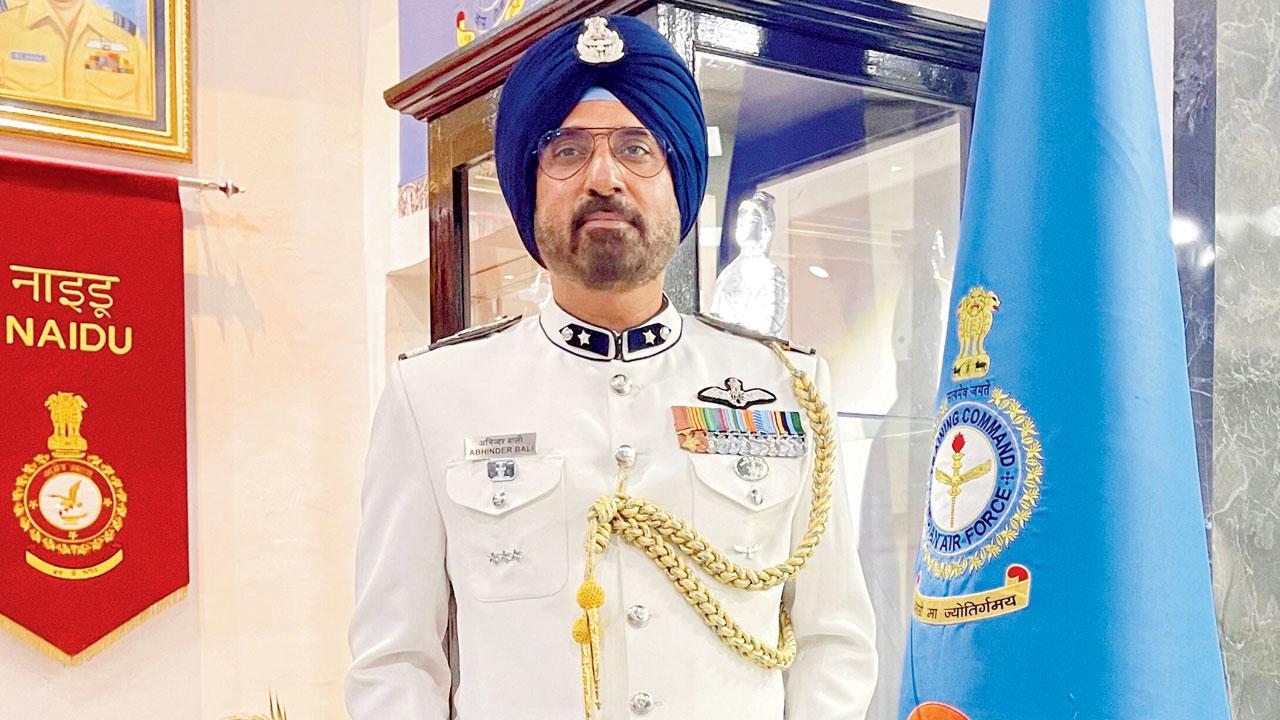
Fighter was so authentic that its screening got a standing ovation from the real heroes. Its co-producer, second unit director and writer, a former fauji, made it happen
Mitali Parekh (MID-DAY; February 11, 2024)
What the audience may not see, but any personnel from the Indian Air Force would is how the left shoulder of the uniform is the fun shoulder: “You can wear any badge you like there, with the permission of your Commanding Officer,” Ramon Chibb tells us over a video call from Goa where he is holidaying. “The right shoulder is for patches of the crafts you fly and the India patch.”
Minni [Squadron Leader Minal Rathore played by Deepika Padukone] wears a fun ‘Don’t Bug Me’ one as opposed to Patty’s [Hrithik Roshan as Squadron Leader Shamsher Pathania] and Bash’s [Basheer Khan, Akshay Oberoi] ‘Fighter Forever’. The lay audience may not register these details of authenticity, “but the Air Force did,” says Chibb gleefully, and you can tell that validation is enough. The screening of the movie for the armed forces ended with a standing applause.
Chibb co-produced the movie, wrote the screenplay and served as second unit director for Fighter. He also makes an appearance as Air Commodore Abhinder Bali, Chief Instructor at the Dundigal Air Force Academy in Hyderabad where Patty is transferred. Chibb served in the Infantry for five years, after being unable to follow his father into the IAF due to compromised eyesight. But he was, incidentally, at the commando training facility in Belgaum around the time Nana Patekar was preparing for his role in 1991 film Prahaar: The Final Attack. That movie, and 1982’s Vijeta are the two movies he credits with diving deep into research and firm marriage to authenticity. “It’s what Hollywood gets right,” he says, “When I see Gregory Peck in The Guns Of Navarone, I can see that they got the weapons he used right.”
Chibb, who later became a pilot and has a home next to the flight school in Hadapsar, Pune, wrote the story in 2015 and took it to director Siddharth Anand in 2016. “He said it wasn’t mass-y enough, ‘but let’s work on it together to make it into a film that could be understood by the audience’. Siddharth is a true cinema guy, he has a large vision.”
Pulwama and Balakot were added later, as was Minni, because women were allowed to serve as fighter pilots only in 2015. Chibb drew up a career sheet for each character: The posts they held, the medals they would have won, the crafts they would have flown and the wars they would have fought in to become the best air fighters in the country to be included into the Air Dragon team. It couldn’t be just because they were box office superstars.
So, Minni would be an all-weather pilot, a member of Sarang Aerobatic Display team, and be decorated with the Vayu Sena medal for an act of courage to be included into Group Captain Rakesh Jaisingh’s (Anil Kapoor’s Rocky) dream team. She would have been commissioned in 2010, have 1,500 hours of flying under her belt and served in Bikaner, Leh, Siachen, Ambala, and Hakimpet. Similarly,
“Fighters are split into two categories,” explains Chibb, fuelled evidently by enthusiasm, “into those who fly Russian and non-Russian aircrafts since we have a huge inventory of the former. Patty would have flown the Kiran, Pilatus PC 7, Mig 21 and 29, before coming to the Sukhoi 30—the first with a two-crew cockpit. It’s telling of his personality as a lone ranger and only child,” say Chibb, and it is also integral to the plot to have both protagonists—Roshan and Kapoor—in the climax.
“We had the blessing of the IAF from the beginning and shot at Tezpur, Dundidal and Pune air bases. Kudos to Siddharth that he let me run away with the details. ‘This is your world,’ he said, ‘Keep it real’. So even the walls of the houses are typically fauji—decorated with every photograph of the characters’ journey from being cadets to officers, with medals, emblems, swords of honour” of which we catch a glimpse in Bash and Patty’s homes.
Then there was the internalization of fauji codes: That there is a hierarchy that you obey without questioning; and manner of speech. Patty obeys his father’s orders to get tea for his friends more easily than he does his superiors. He asks for permission to speak from his superiors. “Hrithik bought into these nuances impeccably. He wanted to know all these things; he’ll make a great filmmaker,” says Chibb.
They also drop in easily into a peer’s place, as they do at Patty’s Jammu home, when a training gets cancelled. There are impromptu picnics and gatherings. “This is what I saw when growing up. People would land up at any time and say, ‘Ma’am khana khila do’. There is always the fear that one of them might not come back; so they party harder. We wanted to build all this into the film, and not just go, thak-thak-thak from one action scene to another.”
So, if you pay close attention to when we first hear Group Captain Jaisingh speak to his team, it’s in staccato. “That’s how officers brief. Anil sir would say to me, ‘Tu bol ke dikha’ and then repeat the dialogue, ‘Ab main bolta hoon’. He shadowed the Squadron Leader at Tezpur to get the mannerisms right,” he says. Squadron Leader Rathore’s character was based on all the women at flight school who were better than Chibb and “never let us hear the end of it. I always thought they made good pilots. They were more focussed, learned faster and of course, were not bogged down by us clowns.”
Chibb may not have realized his childhood dream, but it’s evident when we speak to him that he has been happy to do the next best thing: “I flew in those planes, shot them, and even rigged the camera on to them for some shots.”

‘Uri’ effect? Bollywood full of josh for military movies
8:32 AM

Wartime stories and biopics of heroes are the new favourite with filmmakers, many of whom are trying to make them more authentic with real weapons and research
Himanshi Dhawan (THE TIMES OF INDIA; January 28, 2024)
Bollywood is going to war! Well, not literally but visually. Don’t get us wrong. The staple Bollywood masala hero must still overcome insurmountable challenges, romance the girl and win in the end. But if a hero can also fly a plane, shoot enemies of the country, survive a couple of bullets, there is a better chance of box office success.
No wonder filmmakers have dusted off archival material to bring old war stories to celluloid — the 1971 war with Pakistan is a hot favourite. ‘Fighter’, starring Bollywood biggies Hrithik Roshan and Deepika Padukone who play fighter pilots in the Indian Air Force, released this week, and there are more such military-themed movies in the pipeline.
‘Ekkis’ by director Sriram Raghavan— slated for a 2025 release — is based on the youngest Param Vir Chakra awardee Lt Arun Ketrapal who lost his life during the 1971 war. Director Aanand L Rai has announced ‘Gorkha’ on Gorkha regiment’s Maj Gen Ian Cardozo and the pivotal role he played in the 1971 war, while Tamil director Rajkumar Periyasamy has begun shooting for a film on Major Mukund Varadarajan who killed three terrorists in J&K’s Shopian district and was awarded the Ashok Chakra posthumously.
‘Fighter’ co-producer and filmmaker Ramon Chibb has announced a film on Narendra ‘Bull’ Kumar recently. Col Kumar, who was awarded the Padma Shri, carried out multiple expeditions in the Siachen glacier area in the late 1970s and early 1980s which laid the basis for the Army’s success in Operation Meghdoot.
Last year, there were three Bollywood films on the armed forces, including the Sam Bahadur biopic starring Vicky Kaushal, and ‘Pippa’ that was released on OTT featuring Ishaan Khatter and ‘Tejas’ that showcased Kangana Ranaut as a woman fighter pilot helming a military spy operation. The first two received critical acclaim for their portrayal of the military. ‘Major’m based on NSG commando Sandeep Unnikrishnan’s bravery during the 26/11 Mumbai terror attacks, was released in 2022.
Military historian AVM Arjun Subramaniam says military movies have been an influential genre in the West that India is catching up to. “Indian filmmakers had it tough in terms of authentic research and access to material and people. Now, there are more sources of information, more books, and more articulate officers. Also, the defence establishment has realised that this is an effective form of outreach to show how the military that embodies the values of inclusiveness, secularism and multiculturalism has contributed to democracy.”
Subramaniam, who was advisor for ‘Sam Bahadur’, says it is amongst the few military biopic made after Independence and a good indicator of how nascent the genre is in India.
Many took their cue from the resounding success of ‘Uri: The Surgical Strike’ in 2019. “How’s the josh?” a dialogue by Vicky Kaushal’s character captured the public imagination. In 2021, ‘Shershaah’, based on Captain Vikram Batra who lost his life during the 1999 Kargil war, was also a success. ‘LOC Kargil’, ‘Lakshya’ and ‘Gunjan Saxena: The Kargil Girl’ have been some of the other films on the subject.
Chibb, who wrote the story for ‘Fighter’ besides co-producing it, says that there is a marked change in how Bollywood approaches the subject. For starters, it’s ditching the earlier clichés of bandook and badi mooch. “Filmmakers are more sensitive to historical facts and are veering towards realism whether it is action, operational details or equipment. Earlier, there were times when the film would carry the wrong medals, uniform and weaponry,” he says.
Cringe-worthy scenes like an army officer wearing police medals, or a 25 or 26-year-old being portrayed at a senior position like a Lt General that takes 25 years of service come to mind. Chibb says ‘Fighter’, which has extensive aerial manoeuvres and authentic weaponry and equipment, will hopefully show the way.
Chibb says that he would watch Hollywood films like ‘Guns of Navarone’ and ‘Top Gun’ and find that ‘cool’ quotient missing in Bollywood films. He singles out ‘Vijeta’ (1982) and ‘Prahar’ (1991) as exceptions and close to authentic. “The industry has realized that military stories lend themselves to the screen: they have action, mystery and drama. When big stars are willing to play the characters, it makes a huge difference. It raises awareness about the military and increases recruitment,” he says.
After the controversy sparked by the release of ‘Gunjan Saxena’, where the military felt that facts had been distorted to show the air force as gender biased, it mandated that scripts would be cleared by the Additional Directorate General of Public Information (ADGPI). ADGPI can also recommend defence consultants for projects.
“The military has also opened access to cantonment areas, equipment and even using real soldiers that adds authenticity to the film,” says Major Sandeep Sangwan who was a defence consultant for ‘Pippa’. The movie was shot at the Armoured Corps School and Centre in Ahmednagar, Maharashtra. In ‘Sam Bahadur’, Kaushal was allowed access to not only Field Marshal Sam Maneckshaw’s car but also his driver for the film scenes.
Filmmakers might have upped the standard with research, but critics say many of them still border on jingoism. Unlike films like ‘Dunkirk’ that examine military strategies or ‘American Sniper’ that explores PTSD in soldiers, most Bollywood films do not look at layered characters.
Subramaniam says, “Our DNA is not structured for an open investigation or learning from mistakes. Issues of national security are cloaked in secrecy. The public does not easily understand these matters.” This reflects in the paucity of books or availability of declassified archival material on the battles India has lost. Indian filmmakers also succumb to the temptation of adding romance and songs.
The military is one of the few institutions for which public support transcends regional and communal loyalties and that means serious moolah, an opportunity that Bollywood is gunning for.

Fighter: Hrithik Roshan’s 12-week transformation regimen commences
9:03 AM

With Siddharth Anand’s film on the Indian Air Force being penned by ex-Army officer Ramon Chibb, sources say cast and crew are aspiring to make film a visual delight
Upala KBR (MID-DAY; September 4, 2022)
By employing the knowledge he gained as an ex-Army officer, filmmaker Ramon Chibb has been helping Bollywood producers make movies that closely resemble reality. After serving as the creative consultant (army affairs) on Aamir Khan’s Laal Singh Chaddha, Chibb’s next project is the Hrithik Roshan starrer, Fighter, also based on the Indian Air Force.
Chibb’s association with the film is only fitting, given that his father served in the Indian Air Force. Also, Chibb was part of the Kumaon Regiment. For Fighter, Chibb takes on duties as screenplay writer, and shares story-writing credits with Siddharth Anand.
A source says, “Ramon’s knowledge of the Indian armed forces is detailed. He is known for creating television content on the Armed Forces, and has produced and directed Mission Udaan-Inside the Indian Air Force, Mission Navy and Mission Army. He wrote the plot of Fighter keeping the two leads, Hrithik and Deepika Padukone, in mind.”
Filming for the project kicks off on November 15 with high-octane action and dramatic sequences picturised on the two stars. The fact that the offering will showcase India’s first aerial action sequence has made it an anticipated one.
Physical prep has been on for a while, says the source. “Hrithik has started toning up to sport a lean frame. He will also don a crew-cut as Air Force pilots do. He has started his 12-week transformation regimen and will shed the weight that he had put on for Vikram Vedha. Fighter is a VFX-heavy film. Siddharth has kept the action realistic and believable.”
Meanwhile, Ramon and his wife, Anku Pande have acquired the rights to replicate the story of Col Narendra Kumar for the celluloid. Col Kumar was an Indian soldier who helped the Army during 1984’s Operation Meghdoot.
Subscribe to:
Posts (Atom)