Showing posts with label Raj Kapoor. Show all posts
Showing posts with label Raj Kapoor. Show all posts
Neetu Kapoor is most fitness-conscious Kapoor, says Armaan Jain
9:58 AM

Armaan Jain; (right) Raj Kapoor with Prithviraj Kapoor. Pics/By Special Arrangement, Instagram, YouTube
Priyanka Sharma (MID-DAY; July 31, 2026)
Some will tell you ghee makes all the difference in their dishes. Others swear by garlic. For Armaan Jain, the star ingredient of his recipes is something intangible — it’s a mindset. “Kanjoosi nahin karne ka. Even if you have Rs 5 in your pocket, feed people dishes worth Rs 10.”
That’s the culture Armaan, Rima Jain’s son and Raj Kapoor’s grandson, grew up imbibing. So, when he decided to turn his passion for feeding people into a business, this became the foundation for The Junglee Kitchen.
Kapoors and food is a love story as old as time. During the pandemic-induced lockdown, in the absence of cooks, Armaan thought of taking over the kitchen and experimenting with the recipes that he was raised with.
He told mid-day, “I didn’t ever imagine it becoming a business. [During the lockdown] I was missing some family recipes. So, I would keep calling up my cook who was on leave. Then, I innovated those recipes. When I fed my family, they liked them.”
That’s how The Junglee Kitchen was born. With the delivery kitchen that began operations out of his home in 2021, Armaan is serving the Kapoor khandaan’s favourite dishes, particularly his legendary grandfather’s, to the city.
The name isn’t exactly what you would associate with the Kapoor family. Is it an ode to his grand uncle, late Shammi Kapoor’s hit Junglee (1961)? Not really. The name, Armaan shared, has two personal meanings attached to it.
“The reason why I thought of the word ‘Junglee’ is because that’s my approach to cooking. I’m not a trained chef; just someone who has been exposed to food since he was five or six. Plus, our food is fiery and spicy,” he smiled, before adding, “One of our hero dishes is called Junglee Maas. It’s a dish the Kapoors have grown up devouring.”
Like Junglee Maas, each dish for Armaan is a walk down memory lane. One that evokes memories of the Kapoor family coming together, trading gossip, laughing, and bonding over food. While the entrepreneur, born in 1990, never got the opportunity to meet his grandfather, he vividly remembers the feast that his maternal grandmother, Krishna Raj Kapoor, would serve for the family. He is now serving that taste of his childhood — whether it’s the Junglee Maas that the Showman of Indian Cinema enjoyed or the dal makhani that his superstar-cousin Kareena Kapoor Khan swears by. The dishes start from Rs 250, going up to Rs 700.
“Whether it was a small get-together or big, Junglee Maas was always there. The table would always be full, with 20 dishes on it. The other fixture was dal. Then two-three sabzis and [multiple] non-veg dishes. I also have strong memories of Punjabi dahi pakoda kadhi,” recalled Armaan.
What is his favourite dish on the menu? “I am a Punjabi who loves comfort food. So, I like my dal makhani. We have always had a Punjabi smoked dal at home. I improvised into a nice slow-cooked dal makhani in the COVID-19 days.”
Going forward, The Junglee Kitchen will include ‘Desi Chinese’ in the menu. That’s almost expected, given how the Kapoor family members have often expressed their love for Chinese food. Armaan added, “I love my Chinese food. The dhaba Chinese — think Chicken lollipops, Chicken Manchurian, and Chilli chicken.”
While he expanded the delivery kitchen’s service to Bengaluru in 2025, the next goal is to make it a pan-India service. He wishes to incorporate flavours of India’s different regions while keeping his family’s recipes in focus. “I have currently four or five outlets. We’re looking to scale these up to about 100 outlets in the next two years, across five-six cities. I have always had people come over to our place to eat. There would be 50 people at a time at my grandmother’s place. So, I had the confidence that I could cook,” he smiled.
Quick Five with Armaan Jain
What was Raj Kapoor’s favourite dish?
Dal. It was a fixture in every meal
What do the Kapoors end their meal with?
Gulab jamun
Who is the most fitness-conscious Kapoor?
Neetu aunty
Who is the worst cook in the family?
All of them just eat; they don’t cook [laughs]
The Kapoor who won’t stop at one dessert?
Karisma Kapoor
From Ranbir Kapoor’s screen-worn jacket to Mogambo’s uniform, the afterlife of Bollywood’s material history
10:37 AM

In the absence of a formal museum, iconic artifacts — from Ranbir Kapoor’s screen-worn jacket to Mogambo’s uniform — are recirculated and stored across an unofficial ecosystem of godowns, trunks, and prop houses
Nisrin Saria (MUMBAI MIRROR; July 12, 2026)
A yellow Ambassador glides onto the red carpet. Flashbulbs erupt as Shanti Priya (Deepika Padukone) steps out in blush pink silk, her wave choreographed for stardom. Moments later, the fabric catches Om’s sleeve, setting in motion one of Hindi cinema’s most cherished meet-cutes. Years earlier, audiences had travelled to an altogether different world, where Helen danced to Mehbooba Mehbooba inside a cave lit by flickering torches. One film recreated the glamour of 1970s Bombay. The other conjured a ravine that never existed. Both persuaded millions that these worlds were real.
If you’ve ever visited the Harry Potter studio outside London, wandered through Warner Bros’ archives in Hollywood or admired K-pop exhibitions in Seoul, you know some entertainment industries preserve their history behind glass. Bollywood, for some reason, has never done so. Here, the cave comes apart plank by plank, the palace becomes plywood again, costumes disappear into garment bags and props are counted, labelled and packed into trucks. Still almost nothing is truly discarded.
“Most costumes and many props are hired,” says veteran filmmaker Prahlad Kakkar. “You use them for the shoot, return them afterwards and pay the rental.” Furniture, crockery, chandeliers, doors, windows and architectural fragments all begin another journey once the cameras stop rolling. Every item is checked against an inventory, packed away and stored until another script calls it back into service.
Ad filmmaker and photographer Sunhil Sippy says production designers often become collectors by default. “Many own prop houses themselves, or they’ve spent years building collections from Chor Bazaar and antique markets.” It’s not unusual for things from their own homes and studios to even find a way into frames. “For close-ups, I’d often bring something from my own house, an object I lived with every day because I knew I wouldn’t find it in a rental house. The right object gives a frame its truth.”
Cement brains and books
Not every prop returns to a rental house. Some end up at Many Many Things, a Versova prop studio run by production designers Shaira Kapoor and Dhara Jain, whose work covers Gully Boy, Bombay Velvet and The Archies. Over the years, productions have left behind what many would see as a museum-worthy collection of collectibles: a miniature red vintage car sourced for a Lays commercial featuring Ranbir Kapoor, gold bricks made for a smuggling sequence in Bombay Velvet, even two cement brains created as paperweights for a radio station set in Tumhari Sulu.
“We never planned to start a prop house,” says Kapoor. “Some pieces stayed back after productions, others came from family, and many were simply too special to let go.” Every object is catalogued, barcoded and tracked before heading out to its next assignment.
That, they insist, is how Bollywood has always worked. Doors, windows, plywood, lights, furniture and fabrics are dismantled, stored and reinvented. “We pride ourselves on making the same object look completely different,” Kapoor says.
“A new lampshade, fresh upholstery or different artwork can transform it.” Nothing illustrates that better than Zoya Akhtar’s The Archies. The pair sourced nearly 10,000 vintage books, along with vintage cookware and utensils, for Betty’s (Khushi Kapoor) home from Mumbai, Bengaluru, Ooty, Bangkok, and international Etsy sellers. Once filming ended, most were sold on. “We don’t know exactly where they went,” Jain says. “But they’re still in the ecosystem. They’ve simply moved to another shelf.”
History in mulmul
While a handful of props are preserved, Kakkar says that remains the exception. “Commercials work on rentals. Keeping elaborate sets after a shoot isn’t practical. The economics just don’t support preserving every unique creation.”
Costumes have had an even more uncertain fate. Academy Award-winning costume designer Bhanu Athaiya treated preservation as second nature, says her daughter, Radhika Gupta. “She never folded old saris or fabrics. She rolled them, wrapped them in mulmul cloth and stored them in steel trunks.”
Even that could not protect them from the weather and termites that infested them. Athaiya began designing in 1953, long before climate-controlled storage. Studio lights generated intense heat, makeup stained fabrics and colours faded under harsh lamps. “The costumes didn’t survive very well,” Gupta says, “More importantly, they belonged to the production houses, not to her.”
Until the 1970s, few studios archived costumes. Raj Kapoor was among the exceptions, though many garments, including costumes from Mera Naam Joker, were later lost in the RK Studios fire. Gupta still remembers actors arriving at their home to try on costumes as tailors and embroiderers worked around them. “My mother was a director’s designer,” she says. Directors described the character and mood of a scene, and Athaiya translated them into attire, even using colours in the black-and-white era to create tonal contrasts on screen.
Not quite Narnia
Looking back, Gupta believes preserving costumes is about far more than saving clothes. “As Indians, we don’t really have a strong culture of preservation,” she says. “We tend to discard things and take them for granted.” Conservation, she adds, requires time, expertise and sustained funding.
Some of Athaiya’s surviving work has reached the public through the People of Mumbai exhibition at CSMVS, where costumes, sketches and archival material traced both her career and the city’s cinematic journey. “Bhanu Athaiya became a natural choice because her journey from the Sir JJ School of Art to costume design reflects that evolution,” says the exhibition’s architect, Nandini Somaya.
Displaying the collection required a careful process. Costumes were protected under acrylic sheets, while larger garments—including the landmark sari worn in Gandhi—were mounted on custom plastic supports and enclosed in protective cases to prevent stress on the fragile fabric. But such examples remain rare.
Madhav Agasti, who tailored costumes for more than 350 films, including Mr India and Andaz Apna Apna, says costumes usually remained with producers once filming ended. Mogambo’s military-inspired uniform, he believes, is still with Boney Kapoor. Lead costumes are never really reused, Kakkar explains. Designed for one actor and one character, they often end up with producers, collectors or members of the crew. Sometimes they become personal keepsakes. Shivam Hingorani, an assistant director on Yeh Jawaani Hai Deewani, still treasures the brown AllSaints jacket worn by Ranbir Kapoor. “The moment I saw it, I knew I wanted it.” And once production wrapped up director Ayan Mukerji handed it to him.
And, thus, Bollywood’s best stories survive in fragments: a sari wrapped in mulmul, a villain’s uniform in a producer’s cupboard, or a prop on someone’s shelf. They may never draw museum crowds, but for the person who recognizes one from the screen, those ordinary objects still possess the power to collapse time, carrying them back to the moment the story first came alive.
Ahmed Khan on son Azaan’s debut: "Either the audience will like him, or he has to keep trying"
11:18 PM

Natasha Coutinho (HINDUSTAN TIMES; June 3, 2026)
Filmmaker- choreographer Ahmed Khan is all set to launch his son Azaan as a hero after the release of his upcoming directorial Welcome To The Jungle, featuring Akshay Kumar and a star-studded ensemble cast.
Interestingly, Ahmed and Azaan share the same birthday, which they celebrate today. “Even if I don’t remember my own birthday, I have to remember it because of Azaan. He is the best gift my wife could have given me,” Ahmed says with a smile.
Speaking about the launch, he says, “Yes, the film goes on the floors after the release of Welcome To The Jungle. He’s a choreographer’s son, so of course, there will be expectations about how he performs. I give him a good rank 7/10 when it comes to dance, but he’s even better when it comes to action.” He adds, “Haseen ladka hai, he just has to cut through.”
Ahmed says the nervousness is less on him and more on Azaan. “I don’t behave like his father, but his director now. I don’t go around saying ‘Mera beta superstar.’ Either the audience will like him, or he has to keep trying. Filmmakers like Raj Kapoor and Rakesh Roshan found the perfect balance between being a father and filmmaker, which is important to find.”
Speaking about trolls and preparing his son to be thick-skinned, he adds, “Once you have selected this profession, there will be people jealous of your position; you have to deal with it. Everyone has a job, and so do trolls; trolling is their job. I’m not on social media, I’m a zen person.”
Raj Kapoor’s ancestral Haveli in Peshawar partially collapses after heavy rains, earthquake
8:31 AM

The century-old Kapoor Haveli, once owned by (right) Raj Kapoor, was home to his father Prithviraj Kapoor, the first in the family to enter films. Photos: x
HINDUSTAN TIMES (April 6, 2026)
The historic Kapoor Haveli in Peshawar, Pakistan, once owned by the late actor Raj Kapoor, has sustained significant damage following heavy rains and an earthquake on Friday night.
Continuous rainfall had already weakened the structure, and late-night tremors on Friday further destabilized the building. Shakeel Waheedullah, secretary of the Heritage Council in KPK province, confirmed the damage, saying, “A section of the haveli’s wall caved in after the quake.”
The century-old Kapoor Haveli was once home to late actor Prithviraj Kapoor, the first member of the Kapoor family to enter the film industry. Built by his father, Dewan Basheswarnath Kapoor, between 1918 and 1922, it remains a significant cultural site and was declared a national heritage site by the Pakistan government in 2016.
Over the years, the estate has been visited by several members of the Kapoor family. Prithviraj’s sons, late actors Shashi Kapoor and Shammi Kapoor spent time there before Partition, while Raj’s sons, late actor Rishi Kapoor and actor Randhir Kapoor, visited in the 1990s and urged the Pakistan government to undertake its restoration.
When Sandeep Reddy Vanga narrated Animal to me, I found the character extremely scary-Ranbir Kapoor
10:58 PM

Priyanka Sharma (MID-DAY; February 6, 2026)
Such is the popularity of Animal (2023) among Ranbir Kapoor’s fans that they’ve kept their eyes peeled for Animal Park. As the superstar recently united with director Sandeep Reddy Vanga for a virtual press meet, ahead of the blockbuster’s release in Japan on February 13, the duo talked about the way ahead for the franchise.
Expressing his excitement to play two characters — Rannvijay and his cousin Aziz — in the sequel, Kapoor said, “I can’t wait to get back on set with Sandeep and play these characters. Sandeep and I keep chatting through the week or month and keep discussing different ideas.” Vanga, who is currently helming Spirit, shared that Animal Park will go on floors by mid-2027.
Besides Rockstar (2011) and Barfi (2012), Animal has become a career-defining movie for Kapoor. The actor admitted that Vanga’s faith in him convinced him to say yes to a “scary character”. “Before this, I was always playing the lover boy and coming-of-age characters. When Sandeep narrated Animal to me, I found the character extremely scary to approach for an actor like me. But [thanks to] his confidence, I believed I could do it,” he said.
Ranbir Kapoor said he felt a deep bond with Japan, thanks to his late grandfather Raj Kapoor. “I have such a deep connection with Japan. One of my grandfather’s most popular songs around the world is ‘Mera Joota Hai Japani’,” he reasoned, adding that he now wants to take his daughter Raha to the country. “I cannot wait to show Japan to her.”
We balance for vegetarians, health-conscious diners, and younger palates-Armaan Jain
8:28 AM
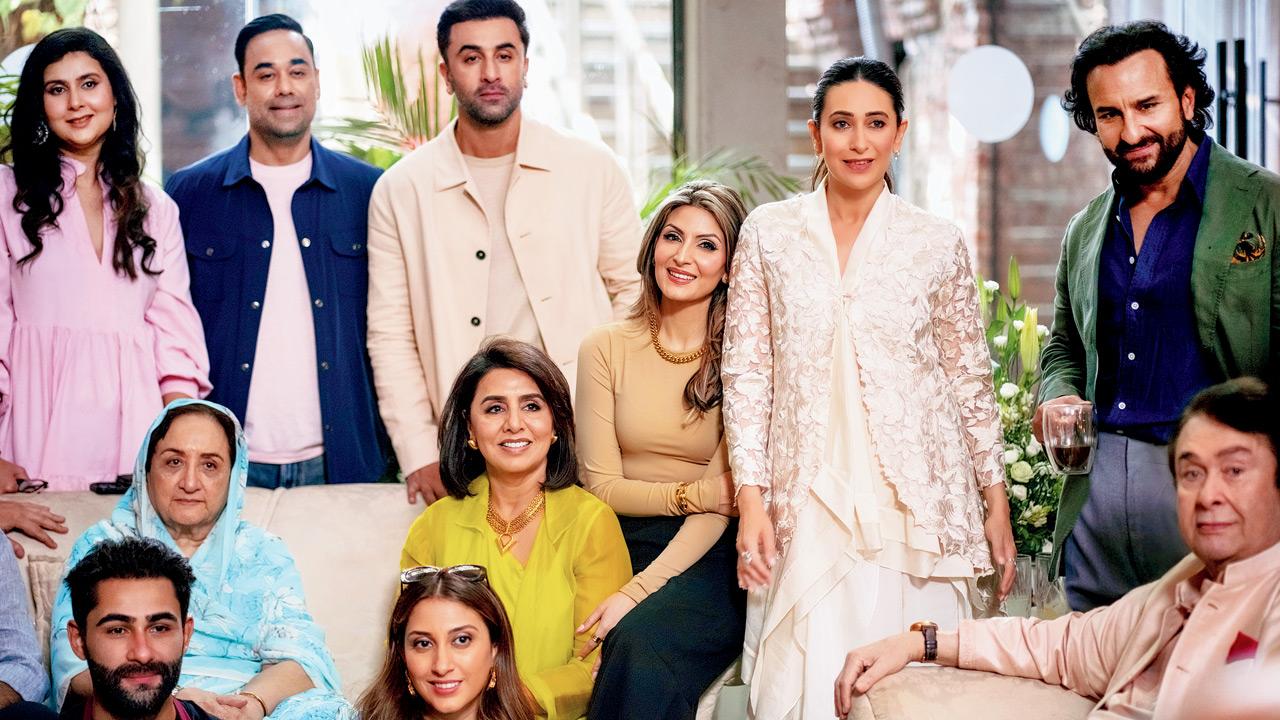
(Clockwise from left) Pooja Desai, Bharat Sahni, Ranbir Kapoor, Riddhima Kapoor Sahni, Karisma Kapoor, Saif Ali Khan, Randhir Kapoor, Anissa Jain, Neetu Kapoor (in mustard), Armaan Jain, and Neila Devi in Dining With The Kapoors. Pic Courtesy /Netflix
From classic family get-togethers to cloud kitchens across India, Armaan Jain is feeding the world, one recipe at a time
Nasrin Modak Siddiqi (MID-DAY; November 23, 2025)
Growing up in South Mumbai, Armaan Jain straddled two worlds: the cinematic legacy of his mother’s family, the Kapoors, and the finance-rooted pragmatism of his father’s. Armaan is the son of Rima Jain, Raj Kapoor’s daughter and sister to Rishi, Rajiv, Ritu and Randhir Kapoor, making him first cousin of Kareena, Karisma, and Ranbir.
“Although we had a film family, we didn’t grow up around film sets,” he recalls. “I first went on a shoot when I was 12, just because my friends wanted to see what it was like.”
Jain’s early twenties, however, were dominated by cinema. After deciding at 16 that acting was his path, he spent three to four years at Dharma Productions, learning production and direction. “Your first impression about cinema is the glamour — it’s all smoke. Once you start working, you realize all the hard work that goes into it, and learn to respect the craft.” The exposure to filmmaking proved invaluable later, as he established Aavashyak, a media company.
Jain recalls growing up surrounded by food and family. “My dad’s family is spread across Dubai, London, and other countries, so that meant a lot of travel and big reunions. My mom’s side was classic Kapoor — food, noise, endless get-togethers. For both, food was central.”
His earliest memories are steeped in kitchens. “Both my grandmothers cooked beautifully. From as young as five, I’d sit there for hours watching them. My dad would cook for the whole family — simple, home-style food. Weekends were spent shuttling between homes — some nights with my dadi, some nights with my nani. Those kitchens shaped who I am.”
On his maternal side, the scale was always grand. “Nani would feed everyone — carpenters, relatives, friends — who came home,” Jain recalls. “Food was never just sustenance; it was love, culture, a way to bring everyone together.”
The pandemic gave him the push to bring those flavours to a broader audience. Encouraged by his wife, Anissa Malhotra, he turned to his first love: cooking. “People have always praised my food. Anissa said, ‘Let’s test it out. Take these home recipes and serve them to people.’”
By 2021, The Junglee Kitchen was born. Jain cooked and packaged orders while Anissa handled logistics.
Today, The brand has seven outlets, partnering with Bengaluru’s Dil Foods, with plans to scale to 200 outlets within the next two to three years. “I see it as feeding the world, starting with India. The cloud kitchen model offers a reach that a single restaurant never could achieve.”
For Jain, the philosophy is straightforward: authenticity above all. The menu is built on generational recipes of dishes made at his grandfather’s home, Deonar Cottage, in Chembur. From kebabs to butter chicken to Junglee Maas and fragrant pulavs, some of these are family’s classics; others are what he has improvised over time.
“We balance for vegetarians, health-conscious diners, and younger palates, but the core Kapoor recipes don’t change. The ghee, the richness, the love — that stays,” he adds.
Food isn’t just a business for Jain; it’s a legacy. In his latest project, Dining With The Kapoors, that released on Netflix on Friday, one can witness his emotional attachment to the recipes. The project is life coming a full-circle moment for him. It began as a conversation with his mother around Raj Kapoor’s 100th birthday.
“We were chatting about the old days and we spoke of how food always brought us together — it’s how Indian families connect. I wanted to celebrate him in a way that was intimate, real, and not a documentary, beyond the glamour of cinema, and over one intimate sit-down meal,” says Jain who has played multiple roles — conceptualizing, writing, shooting, and producing it. He even took a brief sabbatical from his food business to focus on the film.
“Food and cinema aren’t just work for me, they are a part of my DNA. I was born two years after Raj Kapoor died. You only hear stories about him and his love for food and life, projects like this help preserve memories and traditions,” he signs off.
Ranbir Kapoor set to reimagine his grandfather Raj Kapoor’s Chori Chori; will co-star Deepika Padukone?
9:02 AM
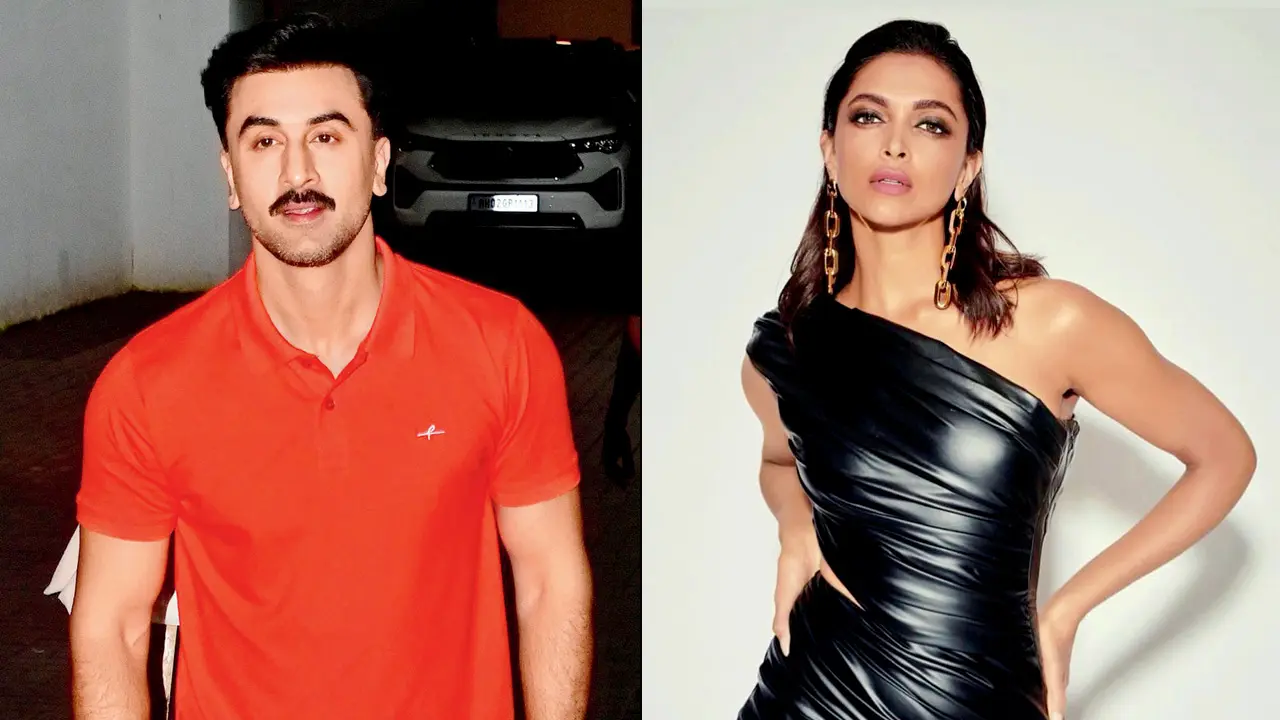
Sources say Ranbir Kapoor is set to reimagine his grandfather Raj Kapoor’s ‘Chori Chori’ as he revives RK Films, to star opposite Deepika Padukone
Mohar Basu (MID-DAY; November 29, 2025)
In October, mid-day had reported that Ranbir Kapoor is planning to revive the legacy studio, RK Films, which was founded by late filmmaker and his grandfather Raj Kapoor (Jeena yahan, marna yahan, Oct 31). Now, the chatter is that Ranbir has zeroed in on the first film under the banner. Rumours suggest that the actor will reunite with Deepika Padukone for a contemporary reimagining of ‘Chori Chori’ (1956).
Revisiting ‘Chori Chori’, one of the many iconic movies fronted by the legendary actor and filmmaker, would serve as the perfect way to restart the journey of RK Films.
An industry insider says, “There is a lot of excitement in Ranbir’s camp. He wants the RK Films’ comeback movie to feel like something his grandfather would have made, only told in today’s language.”
Ranbir has apparently given the directorial reins to his close friend Ayan Mukerji. The insider adds, “Ayan has been developing the script for months. He doesn’t want to rush it since it’s a prestige project.”
Murmurs suggest that the love story will be mounted on a big canvas, with a chunk shot in international locations. “It’s possible that the announcement regarding the studio’s revival will be made as early as December 14, which is Raj saab’s birthday. The movie, however, has yet to take concrete shape,” adds the source.
Kamini Kaushal, leading lady in first hits of Dilip Kumar and Dev Anand, passes away
8:35 AM
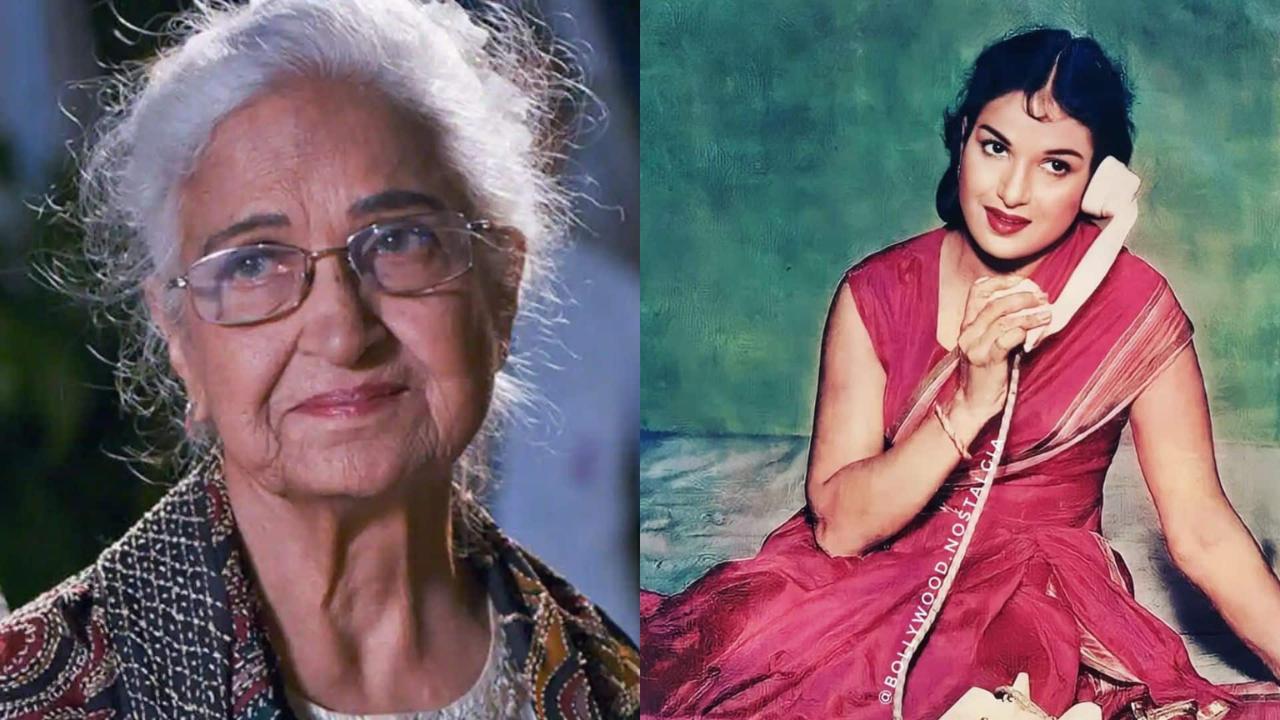
Avijit Ghosh (THE TIMES OF INDIA; November 14, 2025)
Kamini Kaushal, who made her film debut in Chetan Anand’s classic ‘Neecha Nagar’ (1946), who sparkled as the leading lady in the first box-office hits of Dilip Kumar (‘Nadiya Ke Par’, 1948) and Dev Anand (‘Ziddi’, 1948), and who enjoyed a fruitful second innings as character actor in films such as ‘Upkar’ (1967) and ‘Do Raaste’ (1970), passed away at her Mumbai residence late Thursday night. She was 98. The news was confirmed by Sajan Narain, a close friend of the family, to news agency PTI.
Like the leading character of her last film, ‘Laal Singh Chaddha’ (2022), Lahore-born Kaushal’s career too was marked by her presence in significant moments of film history. ‘Neecha Nagar’ was a Grand Prix winner at Cannes. Raj Kapoor also acted with her in his second film, ‘Jail Yatra’ (1947).
Kaushal was the first heroine with whom Dilip Kumar formed a winning pair. ‘Shaheed’ (1948), ‘Shabnam’ (1949) and ‘Arzoo’ (1950), being three other films. In the opening credits, she was billed above Kumar in all these films, which underscores her seniority and star value at the time.
Director Bimal Roy’s ‘Biraj Bahu’ (1954), based on Saratchandra’s 19th century novel, was the high noon of her acting career. Kaushal was pitch-perfect in the title role capturing the tone and tang of a rural Bengal homemaker whose life unspools from idyllic to calamitous.
The Times of India described her performance as “dignified, refined, sympathetic, beautiful, rounded to the last nuance and shade and tone of expression, a histrionic gem of flawless perfection, the finest of her career.” It fetched her Filmfare’s best actress award.
Her second innings as a supporting actor began with Manoj Kumar’s ‘Shaheed’ (1965), where she played his mother. She became a regular in his positive nationalism films. ‘Upkar’ (1967) offered her the stand-out part of a widow torn between two sons with opposing approaches to life. Another notable role came in Raj Khosla’s superhit family drama, ‘Do Raaste’ (1969), where she played an amiable bhabhi who tries her best to keep the family from falling apart. In Ravi Tandon’s ‘Anhonee’ (1970), Kaushal delivered a deliciously wicked surprise to her fans playing the devious and plotting stepmother willing to kill for money.
Life dealt her unkind cuts. Born on Feb 24, 1927, Uma (her real name) lost her renowned botanist father, Shiv Ram Kashyap, when only 7. The five siblings -- two brothers and three sisters -- were brought up by her mother. Undeterred, she graduated from Lahore’s Kinnaird College displaying a flair for sport and plays.
Then Kaushal’s elder sister died in a motor crash and she “came to Bombay to nurse her two little nieces and her brother-in-law BS Sood who had been seriously injured. She decided to look after him as a wife for the rest of her life” wrote Sushila B Rani in the book, Stars of the Indian Screen (1952). Sood was an officer with Bombay Port Trust.
At this stage, she was offered ‘Neecha Nagar’ by Chetan Anand, who named her Kamini Kaushal. In 1954, she also acted and produced ‘Chalis Baba Ek Chor’, a comedy with a bunch of kids that flopped.
Kaushal participated actively in public life and freely spoke her mind. While inaugurating a women’s section of the Indo-Soviet Cultural Society in Bombay in 1958, she underlined the need to build closer understanding between the peoples of India and the Soviet Union. “Cinema was never my be-all and end-all,” she told TOI in 2008.
In 1969, G D Khosla committee’s report on Film Censorship spoke up in favour of celluloid kissing which created a strong conservative backlash. Kaushal supported the report. “A kissing sequence done gracefully would be a good substitute for blaring erotic songs,” she said at a Lions Club function in Delhi that year.
Making puppets was a passion in her late life. She was also an active chairperson for the Children’s Film Society of India. Kaushal floored everyone with her spirit, elegance and self-deprecating humour while delivering the Filmfare Lifetime Achievement award acceptance speech in 2015. “Ours was a quieter period…may be our eyes spoke more than our bodies,” she said. The audience connected and clapped.
But there was also a tinge of sadness. “I am missing our gang today. Most of them are gone. Just not fair. I feel very lonely here today. All of them are disappearing and going away one by one. Which breaks your heart…,” she said. Everyone stood up when she finished her speech.
Now Kamini Kaushal has joined her gang.
I am Kareena and Ranbir Kapoor's cousin, but that doesn't allow me to get 50 films a year-Aadar Jain
3:35 PM

Vinay MR Mishra (BOMBAY TIMES; August 13, 2025)
Aadar Jain might have the legendary Raj Kapoor as his grandfather and share bloodlines with Bollywood stars like Kareena Kapoor Khan, Karisma Kapoor, and Ranbir Kapoor, but the actor insists his journey has been anything but easy. With two films, a web series, and years of auditions behind him, Aadar speaks to Bombay Times about why he doesn’t buy into the ‘nepo baby’ narrative, how rejection has shaped him, and why Bobby Deol’s career keeps him going.
'Our family is very bindass and chill, different from what people in the media might think'
Born into one of Indian cinema’s most illustrious families, one would assume he would be burdened under the pressures of proving his mettle for the legacy.
He, however, clarifies, “A lot of people ask me this question. But I would have been inspired. I have him (points at a photo frame of Raj Kapoor) over here every day to be inspired because he's my favorite actor, producer, director of all time. He's my biggest idol and my biggest inspiration. There's no pressure. Our family is very bindass and chill, different from what people in the media might think. We all have our own journeys. However big or small, I'm also contributing in my own small little way to Indian civilization. I love acting.”
‘I am Kareena and Ranbir Kapoor's cousin, but that doesn't allow me to get 50 films a year’
While the industry often talks about nepotism, however, Aadar sets the record straight that he is not the byproduct of it. “I've had two films that have come out. Unfortunately, the gap has been quite a bit. Everyone has their journey and I'm on that journey. So, I'm just enjoying what I do,” he says.
He adds, “I've not taken those gaps out of choice. It's also been very difficult to get films. Coming from a film family doesn't mean you get work here easily. That's a fact. People talk about nepotism, but I've not got benefits of it. Yes, I am Raj Kapoor's grandson, I am Kareena and Ranbir Kapoor's cousin, but that doesn't allow me to get 50 films a year or like doing five films and signing brand deals and endorsements nonstop. Unfortunately, in that sense I've not been a product of nepotism."
'It has been a struggle'
The actor doesn’t shy away from speaking about how difficult it’s been to land roles, the heartbreak of rejection, and the resilience required to keep going. “It’s not been easy,” he admits.
“It has been a struggle. I have auditioned for a lot of places. I've been rejected many times. It's hard to deal with those rejections. I love what I do. So, when you're not getting to do what you love as often, of course, it hurts. The idea is to keep picking yourself up and pushing yourself. Staying motivated is the most important thing in this profession. It's not an easy profession. It’s been a tough journey. Hopefully, my lady luck will give me lots of luck and love (smiles),” he elaborates.
He adds, "I keep looking at Bobby Deol's career. Look at the guy! He spoke on national television about how failure and rejection really bogged him down, but then how he picked himself up. And the idea of life is to keep moving forward."
He also adds, "I look at my own journey. I'm proud of myself. However long it's taken. Good, bad, ugly, flops, doesn't matter. It's all a lesson. The fact that I can even be part of two films and people are watching me and I'm now coming into other things. My first film was very critically acclaimed, but it didn't work at the box office. The second film came out in the time of COVID where it was seen by everyone but was also critically acclaimed. So, there has been also a big struggle for me to get the work that I want to do. I've been auditioning for the last 8 years, done two films. Luckily, I have Dining With The Kapoors coming out so hopefully things will pick up once people see my work. Because work gets you work. Until people see your work, you don't get work."
'A lot of actors who are getting launched have had three films already'
Aadar who has been part of movies like Qaidi Band (2017) and Hello Charlie (2021), confesses he has no regrets about the rejections he has faced. “All the rejections I had in my life, I realized they're all lessons. I have no regrets. Everything is a lesson. Everything teaches you, and eventually you will get okay. It took me a long time to get my third project. A lot of actors nowadays who I see are getting launched—they've had three films already done and they're waiting for those releases, and they're still signing more films and doing it right. It's taken me a little bit of time," he elaborates.
Anees Bazmee recalls first job at RK Studios, earned Rs 300
9:50 AM

(From left) Anees Bazmee with Rishi Kapoor during the shoot of Prem Rog
Bhool Bhulaiyaa 3 director Anees Bazmee on working with the showman of Indian cinema, Raj Kapoor. He started working there at the age of 16 and would take four buses to reach the studios in Chembur
Komal RJ Panchal (MID-DAY; July 25, 2025)
Most of us remember our first jobs vividly. For Anees Bazmee, his first job remains hallowed ground, and for good reason. The director worked with none other than late Raj Kapoor at the legendary RK Studios in Chembur. The mere recollection of his old self, all of 16, serving as an assistant director at the studio between 1978 and 1981, brings a smile to his face.
“Every day I’d take a bus from Malvani where I lived, to Malad station, then another to Vile Parle, where my colleague K K Singh lived. He later wrote Ram Teri Ganga Maili [1985].” From there, the two would travel together to Chembur. A long commute certainly. “Four buses in total, and one-and-a-half hours, one way,” he broke it down, before saying, “But we never thought of it as difficult. We were working at RK Studios. That was everything.”
The energy was unmatched, remembered the Bhool Bhulaiyaa 3 (2024) director. The reporting time was 10.30 am sharp. Pack-up time, in contrast, was never fixed. It could be 6 or 7 pm, or past midnight. Did they mind the long hours? Absolutely not. “RK Studios felt like home. There were four studio floors, and every day, shoots, rehearsals, and prep would be going on. It was like a creative mela.”
The biggest incentive of being a part of this mela? Seeing the showman of Indian cinema, up-close and in action. Bazmee recalled, “When you entered, Raj Kapoor’s office was to the left. He sat in a way that he could see everyone who came in or went out. So, we were always aware that Raj Kapoor was watching.”
Working at one of Hindi cinema’s biggest studios, that too under the tutelage of the legendary filmmaker, was not only an enriching experience, but it also left him with a treasure trove of stories. The director recounted an incident, where Singh and he were writing the censor script of a film. “It was well past midnight. Suddenly a voice boomed, ‘Who’s there?’ Raj Kapoor had come to check who was still working. We told him what we were doing, and he simply said, ‘Chalo’. At 3 am, he took us to his house, woke everyone up, fed us, and sat with us. That was the kind of man he was.”
The four years he spent at RK Studios went by in a flash. Bazmee may have joined at a meagre salary of R300, but the job felt priceless. “We learned so much about films, discipline, and loyalty. Dabbu sir [Randhir Kapoor] and Chimpu [Rajiv Kapoor] would come often. Chintu [Rishi Kapoor] was a big star by then. Raj Kapoor came every single day. He had a private resting space we called ‘the den’.”
The studio canteen, too, holds special memories. For months, he ate dal and roti as that was all he could afford. “On seeing that, Chimpu got emotional and told the canteen manager, ‘Whatever KK and Anees eat, put it on my tab.’ The very next day, KK went all out, ordering chicken, fish, and parathas. I told him not to overdo it, but he said, ‘Let me enjoy today’,” Bazmee laughed.
In 2019, the studio was sold, thus bringing the curtains down on the place that witnessed the making of classics like Awaara (1951) and Shree 420 (1955), and brought the industry together for the Kapoors’ famous Ganesh Chaturthi festivities over the decades. Bazmee said, “When RK Studios shut down, it felt like my house had been sold. Even now, when I pass by this space it makes me very emotional.”

Anees Bazmee (in a hat) in the company of Rishi Kapoor and Raj Kapoor at RK Studios
Restored Do Bigha Zamin to premiere at Venice
8:59 AM

The restored version of Bimal Roy’s film will have its world premiere at the Venice Film Festival in the Venice Classics section. Meanwhile, Bandini, Devdas and Madhumati are also being restored
Niharika Lal (BOMBAY TIMES; July 13, 2025)
Do Bigha Zamin (1953) marked a turning point in Indian cinema. While most films of that era were shot within the confines of a studio, director Bimal Roy broke the mould and took the camera to the streets, paving the way for realism in Indian filmmaking. Now the film, restored by the Film Heritage Foundation (FHF), the Criterion Collection and Janus Films, will be screened at the Venice Film Festival’s Classics section.
Gulzar, who worked with Roy, spoke to us about the film’s legacy. “It’s amazing that Do Bigha Zamin is restored and will be shown in Venice. The most important element is that all of his films were based on literature. Not many people know that Do Bigha Zamin is based on a poem by Rabindranath Tagore, with the same title.”
How was the film restored
Do Bigha Zamin was restored in 4K by the Criterion Collection and Janus Films, in collaboration with Film Heritage Foundation, at L’Immagine Ritrovata and Resillion, and in association with the Bimal Roy family.
The restoration process took over three years. It began in 2022, when the Criterion Collection/Janus Films and Film Heritage Foundation initiated the project. The FHF accessed the original camera negative and sound negative, which had been deposited by the Bimal Roy family at the NFDC–National Film Archive of India (NFAI) for preservation.
However, the sound negative presented several issues, including poor audio quality, interrupted dialogues, and missing sections. The original camera negative was also incomplete. A combined dupe negative - on Dupont/Kodak stock from 1954–55 was found at the British Film Institute (BFI) which was also used for the restoration
The restoration drew from the best surviving elements the 35 mm picture and sound negatives preserved at NFAI and the 35 mm combined dupe negative from the BFI.
Bimal da was the coolest director I have ever seen: Gulzar
I started working with Bimal da, who we used to call Dada, from the film “Kabuliwala” when I was his chief assistant. I have very fond memories of that time. People would say that Bimal-da was like a married print. In those days, the picture and sound negatives were separate and when they were brought together optically to make the release print, it would be called a married print.
Bimal da would shoot two shifts in a day – 7 am to 2 pm and 2 pm to 10 pm and would then sit in the editing room working till late night at Mohan Studios. People would say that he is married to films.
Bimal da was the coolest director I have ever seen. I learnt not only filmmaking from him, but the art of patience and stamina.
I am sharing a poetic portrait that I wrote on Bimal-da.
"The softly flowing river face shrouded in the evening mists
Eyes burning in the mistiness of a tawny visage
The spiral of smoke from the endlessly burning cigarette
The faraway voice heavy with sleep.
Shadowed below unknown thoughts that flew above
A face that seemed etched out of molten wax
The sound of every new dream transforms him
Making it seem he would neither sleep, nor wake, nor speak
A silent flowing river shrouded in evening mists."
(From the book “Caged . . .Memories Have Names”)
'Do Bigha Zamin changed the face of Indian cinema: Shivendra Singh Dungarpur, director of Film Heritage Foundation
Do Bigha Zamin changed the face of Indian cinema that brought filmmakers out of the studio to begin shooting on the streets. I am so happy that we were able to collaborate with The Criterion Collection/Janus Films to restore not only Do Bigha Zamin, but other classics of Bimal Roy like Devdas, Madhumati and Bandini, which are in the process of being restored.”
Do Bigha Zamin, is an unspoken autobiography of Bimal Roy: Rinki Roy Bhattacharya, Aparajita Roy Sinha, Joy Bimal Roy
After watching Vittorio De Sica’s film Bicycle Thieves, our father hoped Indian films would follow its deeply moving humanist vision. Do Bigha Zamin, is an unspoken autobiography of Bimal Roy who was cast off from his home in East Bengal in a similar episode like the hero, peasant, Sambhu Mahato. He never recovered from this cruel separation from his beloved birthplace.
Satyajit Ray on “Do Bigha Zamin”
“With his very first film Udayer Pathe (Humrahi in Hindi), Bimal Roy was able to sweep aside the cobwebs of the old tradition and introduce a realism and subtlety that was wholly suited to the cinema. He was undoubtedly a pioneer. He reached his peak with a film that still reverberates in the minds of those who saw it when it was first made. I refer to Do Bigha Zamin, which remains one of the landmarks of Indian cinema.”
Raj Kapoor on “Do Bigha Zamin”
Perhaps the best compliment came from Raj Kapoor, who upon watching the film, reportedly said, “I wish I had made this film.”
It always feels patriotic to do a film that goes to a prestigious festival-Neeraj Ghaywan
9:07 AM
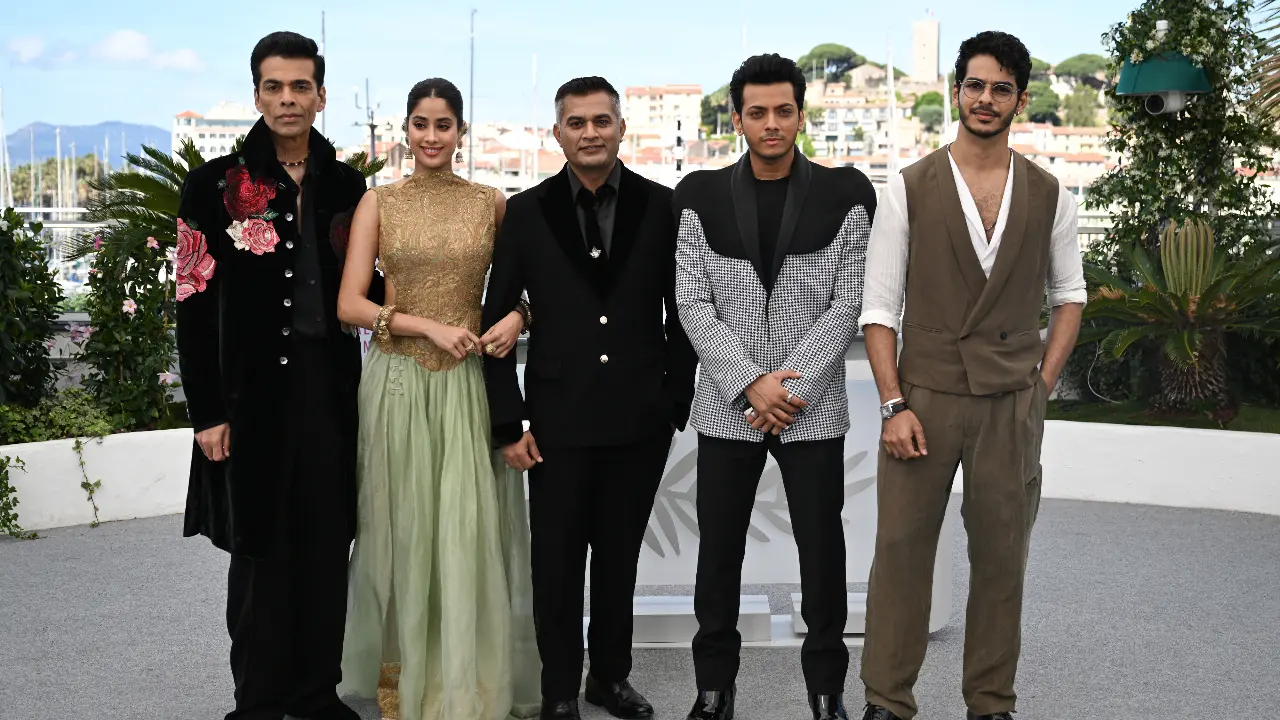
Niharika Lal (BOMBAY TIMES; May 22, 2025)
When Neeraj Ghaywan first attended Cannes, it was in 2015 for his directorial debut Masaan. The film was selected in the Un Certain Regard and won two awards – FIPRESCI Award and the Prix de l’Avenir Prometteu. A decade later, he’s back at the fest with Homebound (2025), another human story, but this time with a little help from some very big names including Martin Scorsese and Karan Johar.
As Ghaywan’s new film made the screening in the Un Certain Regard section this year, the filmmaker was joined by the team at the red carpet, the makers discussed Homebound at the Bharat Pavillion at Cannes.
‘WE SEE URBAN STORIES IN FILMS, AND THEN THERE IS A GAZE THAT IS TOWARDS SMALL-TOWN INDIA’
“The story that I wanted to say was about these two friends,” Neeraj said during a discussion at the India Pavilion at Cannes ahead of Homebound’s screening. He added, “What I also feel is that more than 60 per cent of our economy, our people, live in villages, and in our films, we don’t see villages anymore. We see urban stories in films, and then there is a gaze that is towards small-town India. But where are we talking about the stories from the heartland? That was one of the motivators for Homebound.”
The filmmaker continued, “Whenever we talk about films across the world, say, people of colour, creed, they’re all spoken of in numbers. They are part of the statistics. And when you say that, it’s like you’re trying to persuade your urban guilt – like hiding your apathy by showing false sympathy. I felt, what if we pick one person out of that statistic and see what happens in their life and how they arrive at this point? That will make for some great story, and will truly represent the kindness, empathy – that has been my intent so far.”
I feel this collaboration is quasi-disruptive in a way: Neeraj Ghaywan
Talking about collaborating with Karan, Neeraj said, “I’ve been wanting to work with Karan. (He also directed Geeli Pucchi, a part of the Ajeeb Daastaans anthology in 2021). I feel this collaboration is quasi-disruptive in a way. Independent filmmakers are always trying to figure out how to go about it.
Either we’re doing co-productions or seeking government funding, which comes with a lot of paperwork. But here, if Karan is producing my film, then it’s a different thing altogether – it paves the way for different kinds of possibilities. Our default perception is: go to a co-production, make it happen. But for me, this is a new model.”
NEERAJ AND I WANT TO TELL EMPATHETIC, HUMAN STORIES: KARAN JOHAR
“Neeraj Ghaywan and I come from two different schools of cinematic syntax,” Karan Johar said, “but I think one thing that lies common in both our belief systems is that we want to tell empathetic, sensitive human stories. That is common in both our cinemas. And it has nothing to do with syntax – it has to do with the heart the film offers.”
He explained, “I think when you see Masaan and when you see Homebound, you realize that interpersonal relationships, the handling of the emotional aspects of both the movies, and the spectrum of emotions they cover are the same.”
Karan said that’s what he tries to do in his films too. “My syntax is more theatrical, more opulent, a little more on-the-nose, because that is the kind of filmmaking I love and what I grew up watching. But even when I was eight or nine years old, while I loved the glory of Yash Chopra and the social drama with the opulence of Raj Kapoor, I also loved the empathy of Guru Dutt and the deep-rooted messaging of Bimal Roy. I could enjoy the brilliance of Satyajit Ray and dance to a song from a Raj Kapoor film in the same breath,” he said.
‘We’re beaming with pride that we have this kind of representation’
About Indian cinema finding global resonance, Karan said, “One important thing for me is: how to take our cinema to the world, apart from catering to our domestic audience. Last year, we had Payal Kapadia shine at Cannes with All We Imagine As Light (2024), and now she is on the Cannes jury.
This makes my heart so full. We are all beaming with pride.”
He added, “And the very next year, we have Homebound – this means we really are on the global map. I know these are baby steps. Every year, we have to make sure our stories continue to travel.”
‘Being at Cannes is proof that I’m not a one-film wonder’
“When Neeraj Ghaywan sir told me our film was selected, I was happy but didn’t grasp how big it was. After reading up, I understood its value – and it boosted my confidence as an actor,” says Vishal Jethwa, who made his Cannes debut this year.
“My dream was as simple as standing outside the Yash Raj Films (YRF) gate just to see what it looked like. Today, I’m part of a Karan Johar film directed by someone as brilliant as Neeraj sir. Attending Cannes with Homebound is a massive moment in my life. My debut (Mardaani 2) was successful, but some of my later films didn’t perform well at the box office. This film, however, has taken me to an international platform. It feels like proof that I’m not a one-film wonder – that I’m here to stay and meant for good things.”
Simi Garewal guided Samit Bhanja during intimate scene shoot in Aranyer Din Ratri-Purnima Dutta
10:10 AM

BOMBAY TIMES (May 14, 2025)
On Monday evening, Simi Garewal shared on Instagram that she will walk the red carpet at the Festival de Cannes 2025 for the world premiere of the newly restored Aranyer Din Ratri, Satyajit Ray’s 1970 cinematic gem. The actress will present the screening alongside filmmaker Wes Anderson and actress Sharmila Tagore.
The film will screen on Monday, May 19 at the Salle Buñuel, Palais des Festivals. The restoration has been carried out by The Film Foundation’s World Cinema Project at L’Immagine Ritrovata, in collaboration with Film Heritage Foundation, Janus Films, and The Criterion Collection, with support from the Golden Globe Foundation. For Garewal, this return is deeply personal. “The month-long shoot was enveloped in magic,” she recalled in a 2012 Mumbai Mirror interview.
“No electricity, no running water — just moonlit walks, Rabindra Sangeet, and the incredible good fortune of working with one of the world’s finest directors.”
In Aranyer Din Ratri, Garewal played Duli — a feisty young Santhal woman who embodied the conflict between the urban and rural ways of life.
With her sharp gaze and fierce independence, Duli awakens desire but bows to no one. “For a week, Manik da wouldn’t let me shoot. He took me to the baati khaana (the liquor shop) where the Adivasis would gather at night to drink — and let me just observe. I saw women who were exactly like Duli, my character (sic).”
Discovered by Ray after a chance meeting at Raj Kapoor’s house, Garewal vividly remembers receiving his letter offering her a role: “It’s only a screen test for make-up. Not for your acting abilities – because I have no doubt whatsoever about that.” What followed was an intense process of transformation – both in character and craft.
Simi guided Samit during the shoot: Purnima Dutta
Revisiting the experience of shooting the film, Purnima Dutta, producer, said, “Simi became like a family member during those days. Though she was staying in a hotel, most of the time, she used to be at our house. I still remember, when I got busy, she used to lay the dining table and make sure we all ate together – she’s an extremely homely person. I remember Samit (Bhanja, who played Hari) was a newcomer in the industry, and was apprehensive of the intimate scenes he had to play. Manik da told him to get rid of his inhibitions, and Simi, being a seasoned actor, helped Samit overcome his awkwardness with portraying the scenes convincingly.”
Awara then went on to become one of Mao Zedong’s favourite films-Swapnil Rai
8:29 AM

Diplomacy is not always about govts, or even intentional. Raj Kapoor’s ‘Awara’ enamored Mao Zedong, Big B was mobbed in Egypt, and SRK became a sensation in Germany. Swapnil Rai, a professor at the University of Michigan who has dived deep into this topic in her book ‘Networked Bollywood: How Star Power Globalized Hindi Cinema’, talks to Shruti Sonal about cinema as a potent tool for diplomacy
Shruti Sonal (THE TIMES OF INDIA; March 30, 2025)
Last month, a delegation from Indonesia surprised everyone by singing ‘Kuch Kuch Hota Hai’ at a banquet hosted by President Murmu. How influential is Bollywood as a tool for cultural diplomacy and have we used it well?
Since its inception, the mainstream Hindi film industry, or Bollywood, has had a very global value chain. Its films became popular in a lot of non-Anglophone regions, and that created soft power. However, that soft power remained very dissipated and stayed as a sort of undercurrent. It was never utilized in the way that it could have been by the Indian state or our embassies. Their programming was mostly focused on very traditional mediums like classical music, or classical dance. Even in terms of cinema, only parallel cinema was thought of as high culture. However, mainstream cinema has existed and circulated — especially with certain stars as its key drivers — outside of the nation state. This is quite different compared to countries such as China, that always wants to cultivate a kind of soft power through its English news channels like CGTN, or even the US through shows like Voice Of America. In the 1960s, for instance, a lot of American TV shows like Dallas were heavily subsidized and travelled around the world. India did not do any of that.
So then how did a film like Raj Kapoor’s Awara or Aamir Khan’s 3 Idiots become so popular in China?
Bollywood’s soft power has existed outside the confines of the nation-state. To understand its influence, it’s good to go back to archives. For instance, in 1952, India was sending a cultural delegation to China, being the first country to recognize Mao Zedong’s govt. Mao asked for mainstream films to be sent along so he could understand India and its culture through cinema. I found a few letters that were exchanged, showing how everybody was scrambling, and mulling over which films to send. Eventually, they picked ‘Awara’ and Marathi film ‘Amar Bhoopali’. Of course, ‘Awara’ then went on to become one of Mao’s favourite films.
Why was the influence of stars like Raj Kapoor so potent?
My theoretical framework is that these stars hold ‘switching power’. To put it simply, a star can be a switch, which connects a circuit and illuminates a connection that did not exist before, in this case, new global markets. Hindi cinema has been very unique in the way that it has evolved because stars have been so central to the industry as businessmen, right from Raj Kapoor’s RK Films to SRK’s Red Chillies Productions. These are more than production companies; they often act as vertically integrated large conglomerates that have a lot of influence. Even today, when Netflix comes to India, they first meet SRK and Aamir Khan to strike deals. By combining their business acumen with their emotional and market pull, these male megastars have helped cinema go global. Interestingly, Hollywood has always been based on conglomerate-led productions, and only now do we have productions led by stars like Brad Pitt and Reese Witherspoon. There’s almost a Bollywoodizing of Hollywood.
The Khans turn 60 this year and many have talked about whether this is the end of the superstar era. Do you agree?
These stars have established themselves so much within the business that they will continue to have that power. The question is what is going to happen with a new crop of actors? The industry is now different than before. A lot of intermediaries such as casting and talent agencies have come into play. The kind of power that the older stars could possess doesn’t exist anymore. But with the coming of streaming platforms, a lot of the hierarchies based around networks of families, friends and kinships that existed before are being recreated. It’s just a different kind of power and it’s not as expansive as it was before.
Why has this nature of cross-border influence mostly excluded female Bollywood stars?
It’s very interesting how female stars are perceived through a very gendered lens, not just in India but abroad as well. When ‘Awara’ became popular, Nargis also became a huge star, travelling to the Soviet Union as part of delegations. ‘Pardesi’, one of the first Indo-Soviet collaborative films, had her as the female lead with a Russian as the male star. But despite all that, she wasn’t received in the same way as Raj Kapoor. I cite a particular letter about how nobody bothered to even drop her off at the airport in Moscow. In contrast, in an interview I did with the late Shyam Benegal, he told me how when he was in the Soviet Union with Raj Kapoor, they travelled in a train coupe used for the tsars! Years later, there was Aishwarya Rai who had the global press gushing about her superlative beauty, her eyes, and the fact that she spoke English better than the Royals. But even then, she did not have the same kind of direct business power as the male stars. It’s only in moments of flux, when industry structures change, that women get to have momentary agency. When Priyanka Chopra went to Hollywood, things were in a state of flux with the coming of streaming and she found a talent manager in Anjula Acharia, who made her a crossover star. There was another moment of change in the ’90s with liberalization, which is when people like Juhi Chawla got into production with SRK.
Like Raj Kapoor, Manoj Kumar had an ear for popular music
3:11 PM

Avijit Ghosh (THE TIMES OF INDIA; April 4, 2025)
New Delhi: Some actors, who later became filmmakers, displayed a keen ear for good music and it reflected in the movies they acted in and made. Irrespective of the film’s box-office fate, the music was invariably chartbusting. Raj Kapoor was one such filmmaker. Manoj Kumar belonged to the same select bunch.
Most of the films Kumar made in the 1960s and 1970s were not only box-office biggies but embellished with platinum music albums. Songs weren’t an appendage in his films, rather integral to the narrative. Kumar, like Kapoor, made special efforts to film his songs in an off-beat manner as evident in Ek pyaar ka nagma hai (film: Shor) and Main na bhoolonga (film: Roti Kapada Aur Makaan). Both have a dream-like quality.
Kumar’s Roti Kapada Aur Makaan was a rare film which ended up capturing the top two spots in the annual show of Binaca Geetmala, the hit radio countdown parade. The songs being: Mehangai maar gayee (No 1) and Hai hai yeh majboori (No 2). Even the Nitin Mukesh-Lata duet, Zindagi ki na toote ladi (film: Kranti) was a chart-topper and finished second in the annual rankings. Laxmikant-Pyarelal were the music directors of these films.
Composer duo Kalyanji-Anandji provided the score for some of his early hits such as Himalay Ki God Mein, and the initial films produced and directed by him such as Upkar and Poorab Aur Paschim. Upkar’s Mere desh ki dharti remains mandatory in schools for special days. Suspense flicks such as Woh Kaun Thi (music: Madan Mohan) and Gumnam (music: Shankar-Jaikishan) and the romantic tragedy Do Badan (music: Ravi) also had unforgettable music.
Santosh Anand, a popular lyricist of the 1970s and 1980s, debuted in ‘Purab Aur Pacchim’ (1970). The film’s opening credit said, ‘Introducing Santosh Anand’, an honour generally reserved for heroes and heroines.
Anand, a librarian then, had become a popular poet in Delhi. The actor-director met him at the city’s Oberoi Hotel and listened to his poems. The long soiree, said Anand, was the actor’s way of establishing a poetic bond. A few days later, Kumar sent him an air ticket for Bombay. “I wrote about 50 stanzas for my first song, 'Purva suhani aayee re'. He chose the parts he needed,” Anand told TOI in 2018.
Later Anand also penned the chartbusting number, ‘Ek pyaar ka nagma hai' (film: Shor), for Kumar. The number scorched the web after an impoverished platform singer was videographed singing it.
We need stakeholders, not employees-Viveck Vaswani
9:27 AM

Producer, media-educator Viveck Vaswani fires fresh salvo in the new year on what’s ailing Bollywood; prohibitive prices of multiplex tickets, included
Viveck Vaswani (MID-DAY; January 2, 2025)
There’s a definite crisis in the Hindi film industry. Films aren’t working as they should. South Indian cinema has taken over the Hindi market.
OTT is the easier alternative to excel in. For one, every middleclass home has a big-screen TV. And you can eat your home-cooked snacks, fresh off the air fryer. We need audiences to come back in droves, into cinemas—to see Hindi films!
Why’s that not happening, in the way it should? Here’s the real deal, straight from logic.
I’ve witnessed enough actors/producers/directors escape from their one primary responsibility—you’ve got one job—to make films, that sell tickets!
Yes, independent cinema; yes, cinema as art; yes, cinema that has a voice; yes, noir; yes, abstract; yes, brave new cinema; yes, cinema for festivals; yes, niche cinema… Why not, yes, cinema, that sells tickets?
Because everybody in this generation knows cinema, that is taught at film school—cinema in theory, cinema as technology. Yet, technically, anybody can be a filmmaker, or actor, without that one basic qualification—knowledge of the audience!
They don’t buy tickets themselves; why should their audience? Why not straightforward entertainment, then? Why not understand what made Raj Kapoor and Vijay Anand tick, with their audiences?
Their retrospective tributes ran to full houses across the country in 2024, defying all logic. Why not great music, created by human beans, not machines and synthesisers? Because everybody is evading the real reason for the collapse—simply, enough tickets are not being sold!
OTT is free; watching films on gadgets is free. But it’s not only about the filmmakers. The other side of this coin is equally and completely scary!
Let’s now look at the prohibitive cost of multiplex tickets, that is equally to blame for the decline in ticket sales.
A country where merely over two per cent of the total population pays income tax means that almost 98 per cent percent of the population earns an average of, roughly speaking, between Rs 15,000 to Rs 40,000 per month. How can they pay Rs 250, Rs 360, Rs 500, upwards, per ticket? They can’t!
So, the multiplex chain caters to only about two per cent of the country; what about the rest? Are they not entitled to see big cinema on the big screen?
But ’plexes are shutting down the single screens, and most of the lower and middle class audiences are watching films, four to seven weeks post the cinema release, on OTT. Or, especially the kids, hacking sites and watching films they pirate.
The ’plex sells popcorn and beverages at humongous prices. And mine their real-estate—by showing hours of ads, through parking charges, and asking producers/distributors to pay to show promotional material of their films.
The production sector doesn’t know their audience; the exhibitors are not in the business of cinema, they’re in the food and real estate business.
Now, what?
The basic difference between South Indian cinema industries and the Hindi film industry is one word—the bulk of that industry is made up of ‘stakeholders’ of the business. The bulk of the Hindi film industry is made up of employees!
There are very few stakeholders left in Bollywood: Aditya Chopra, Rakesh Roshan, Suneel Darshan are three that I can name offhand. They own their films.
So, let’s go back to the drawing board: let’s create a simpler ticket-pricing package; let’s keep our ownership, and become stakeholders. Let’s have a stake in the success of each film we make, each ’plex we build, each deal we do! Let’s be makers, and then go back to the cinemas.
The audience will come!
Behind perfect shots, hard work for Bollywood’s animal advisers
8:22 AM

Priya Kothari (THE TIMES OF INDIA; December 16, 2024)
Pune: When Basanti in the movie Sholay said, "Chal Dhanno, aaj teri Basanti ke izzat ka sawaal hai," the horse galloped away from Gabbar's gang. It wasn't Basanti's order that Dhanno followed, but the behind-the-scenes command of the trainer. Tuffy, the Pomeranian from Hum Aapke Hain Kaun, stole the show by playing cupid to reunite Madhuri Dixit and Salman Khan's characters.
With an increasing number of ad films, documentaries, OTT shows and films involving scenes with animals, there is a huge demand for professional animal consultants to bring perfect animal performers to the silver screen.
Mumbai-based Nasir Khan, 52, runs Animals Films. He has been an animal advisor for 30 years. "My grandfather and father were also in the same field. They worked with Raj Kapoor, Raaj Kumar and many other actors in films like Kohinoor, Pakeezah etc to bring animals to the screen. I have lost count of how many movies I have helped supply animals for," he said.
Each animal advisor or consultant has a huge network of suppliers, trainers, permission agents and breeders they work with.
On receiving a request from the film director or team, the animal consultant works with the director to explain what kind of animal or breed would be best suited for the role, the sequences that could be shot and the timelines for approvals from the Animal Welfare Board.
"We make it very clear from the beginning about what the animal can or can't do so that the animal doesn't suffer if there are high expectations. We also inform the team how the animal should be kept on set and what would be the requirements," Chennai-based Vijay A R, owner, Tamed Pets, said. He has worked on movies like Kabali, Monster and others.
Shankar Narayan Iyer, who runs Alternate Solutions, has been in the field for over 30 years. In his career as an animal consultant, he has often been referred to as Kuttewala or Kabootarwala because of the work he did.
"One of my toughest assignments was to collect 500 rats for a film. The director was paying me Rs 100 per rat, so I took up the assignment thinking that it was good money. I spent many nights looking through gutters for rats. Collecting the rats, cleaning them and presenting them to the team was another challenge in itself," he recalled.
Shankar has done over 300 films and TV commercials. He owns 25-30 dogs, which he keeps at his Badlapur home and has a network of trainers, suppliers to cater to any other requests.
Despite the 3D animal computer graphics, a form of digital art that creates realistic representations of animals, advisors said that demand for real-life animals/birds has picked up post the pandemic.
To prevent cruelty to animals during shoots and to ensure that endangered species are not used, filmmakers need to take pre-shoot permissions from the Animal Welfare Board of India. Documents like the basic application letter, fees, pre-shoot fitness certificate of animals and letter of authorization need to be submitted to the Animal Welfare Board of India before the shoot.
A post-shoot NOC also has to be procured before the film/TV commercial is aired. The board has also imposed a ban on using endangered birds, animals and reptiles in films.
During the year 2022-23, the Board processed and issued pre-shoot permission to 656 films, ad-films, serials out of 876 and post-shoot certificate (NOC) to 1102 films, ad-films, serials out of 1,356, said the annual report of the Animal Welfare Board.
"Animals or birds are typically hired for a specific number of days and the sequences of the entire film are shot in those days. We have to bear per day rental charges of the animals, approval fees and other costs associated with re-take of the scenes etc. Sometimes, we use a combination of computer graphics and real animals in movies," a director working at a production house in Mumbai said.
The cost for renting out dogs for instance, ranges between Rs 6,000-10,000 per day and depending on the breed, work required. "All my dogs have been given basic training like saluting, attack techniques, sitting in a specific way etc. It becomes expensive to maintain the dogs if I don't have too many shoots during the month," Satish Kunder, a dog trainer, who has 10-15 dogs across popularly sought after breeds like German Shepherd, Labrador, Cocker Spaniel, Golden Retriever, Beagle, Shih Tzu etc.
A core part of being an animal advisor is being able to deal with patience, compassion, and a deep respect for animal's natural instincts. It is these unsung heroes who ensure that every chosen furry, feathered, or scaled performer strikes a chord with audiences.
PM Narendra Modi thought we’d bring Taimur and Jehangir to meet him-Saif Ali Khan
8:48 AM
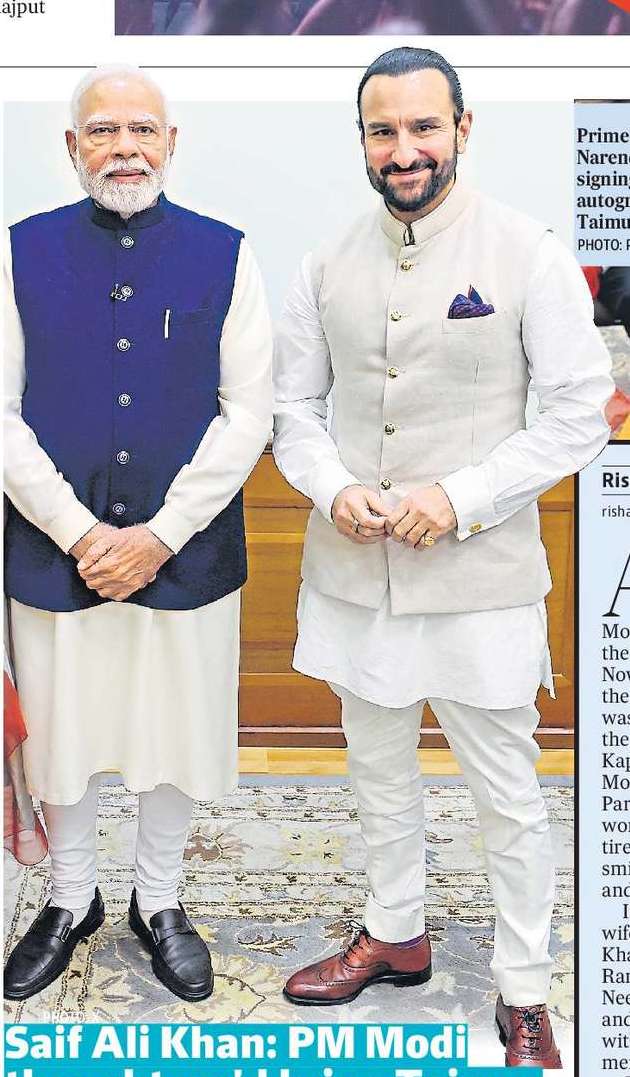
Rishabh Suri (HINDUSTAN TIMES; December 15, 2024)
Actor Saif Ali Khan recently met up with Prime Minister Narendra Modi in Delhi, along with the entire Kapoor family. Now, talking to us about the special meeting, which was organised to honour the late showman Raj Kapoor, Saif says, “He (PM Modi) arrived after a day in Parliament, so I was wondering if he would be tired. But he put on a warm smile and was attentive and charming to us all!”
In attendance were his wife, actor Kareena Kapoor Khan, Karisma Kapoor, Ranbir Kapoor, Alia Bhatt, Neetu Singh, Aadar Jain and Armaan Jain, along with other family members.
Saif adds, “I am happy that I could be a part of it. What a lovely honour for the family to have a stamp with Raj sahab to commemorate his 100th birth anniversary!”
Saif reveals that the Prime Minister also spoke to him specially about his parents, actor Sharmila Tagore and late cricketer, Mansoor Ali Khan Pataudi.
He shares: “He asked about my parents individually and said that he thought we’d bring (sons) Taimur (Ali Khan) and Jehangir (Ali Khan) to meet him! He also signed a paper for them that Kareena requested him to. To me, he looked like he was working very hard running the country and still taking time to connect on this level. I asked him how much rest he gets, and he said about three hours a night. We thanked him for taking out some of his valuable time to see us and give the family so much respect.”
He made us feel comfortable, says Ranbir Kapoor on meeting PM Narendra Modi
9:59 AM
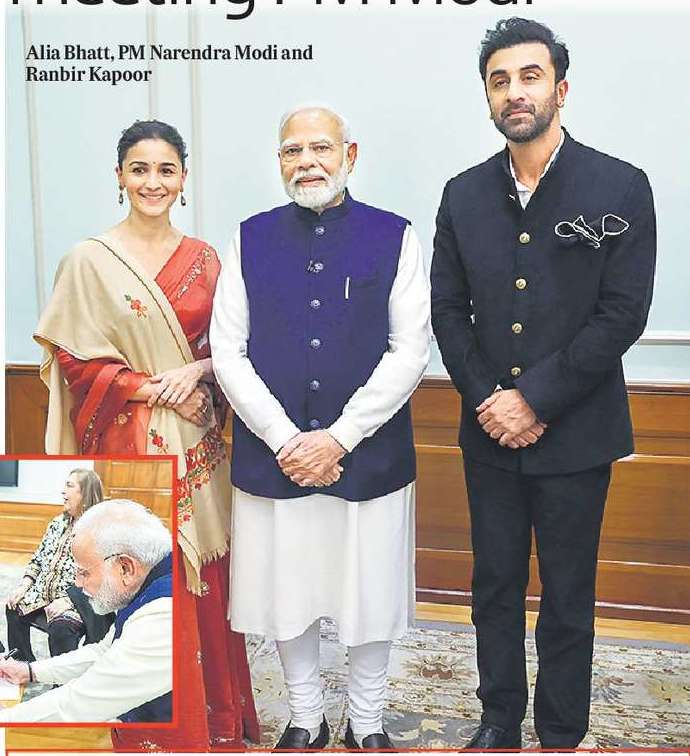
HINDUSTAN TIMES (December 13, 2024)
The Kapoor family flew down to New Delhi on Tuesday to meet PM Narendra Modi to mark late actor-filmmaker Raj Kapoor’s birth centenary. They also discussed the film festival being held in his honour.
In a video shared on the PM’s official YouTube channel, actor Ranbir Kapoor revealed that though they all felt anxious before their audience with PM Modi, the light-hearted exchange with the PM helped them break the ice: “Unhone bahut hi friendly nature se humse baat ki. Toh I think jo humare andar jo nervousness thi, hum sab ki hawa tight thi, lekin he was very good. He made us all feel very comfortable. And I really thank him.”
The 42-year-old further reflected on their interaction, saying, “Jab humari unke saath sit down, jaise gupchup hui, toh bahut maza aaya kyon ki humne unse bahut saare personal sawals bhi pooche.”
Besides Ranbir, actors Kareena Kapoor, Saif Ali Khan and Alia Bhatt were present, among others.
100th birth anniversary of Raj Kapoor: The phenomenon of India’s first major global star
9:18 AM
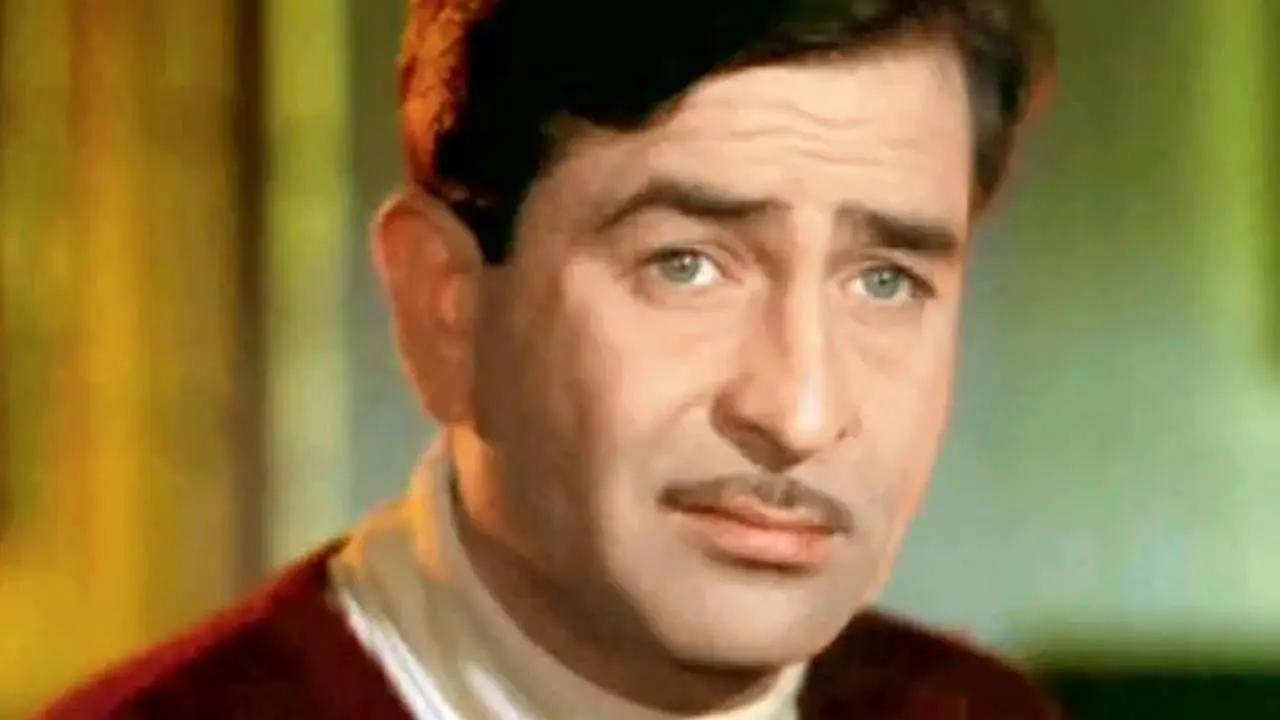
From USSR to North Africa and from South America to Iran, Raj Kapoor’s films swept the world in the 1950s and 1960s. On his 100th birth anniversary today, TOI rewinds to recreate the phenomenon of India’s first major global star
Avijit Ghosh (THE TIMES OF INDIA; December 14, 2024)
On arriving in Moscow in the summer of 1982, Raj Kapoor discovered that he’d left behind his visa papers. The actor-director was stopped by immigration. Frantic telephone calls were made. Nobody was sure what was to follow. But they need not have worried. A senior official soon arrived, embraced Kapoor, kissed him on both cheeks and warmly escorted him out.
“Is there anybody else in the whole wide world who could enter Soviet Russia without a valid visa? You should have seen that sight — it was a sight for the gods,” actor-director Sanjay Khan, who was also part of the film delegation, is quoted as saying in ‘Raj Kapoor: The Fabulous Showman’ by Bunny Reuben.
Another encounter of the fondest kind further underlines how Kapoor continued to command a hallowed place in the land of Tolstoy and Tarkovsky decades after the Awara craze swept the USSR like a forest fire in 1954.
In 1993, Russian president Boris Yeltsin told Kapoor’s daughter, Ritu Nanda, “I was in love with your father Raj Kapoor, and I remember him even today.” The anecdote is recounted in the book, ‘Raj Kapoor: The One And Only Showman’.
It wasn’t just the post-Stalin Soviet Union. In the 1950s, China, Iran, Turkey, Israel, Greece, North Africa and Eastern Europe were captivated by Kapoor’s movie and its title track. Slowly the film and its title song became an unofficial anthem, a cultural marker and a totem of national recognition.
It was also a diplomatic ice-breaker. TOI reported in 1994 that the then Chinese Premier Li Peng recalled Awara and its title track when he met India’s human resources minister Arjun Singh in Beijing. That hasn’t changed. “Every Chinese knows this movie,” goes a comment on YouTube. Awara anecdotes can fill a book.
As the nation today celebrates the 100th birth anniversary of India’s first actor-director who became a major global star in a pre-globalised era, what better time to re-appraise the magnitude of the impact that Kapoor’s movies have had across the world.
Inspiration For Turkish Poets
Awara has provided inspiration to much that is popular in Turkish culture: films like Genclik Hulyalari (1962) and Kader Bu (1976), songs and even novels, Turkey based academic and critic Ahmet Gurata told TOI. “A favourite of my mine,” Gurata said, “is a poem by Lale Muldur, which goes like this: ‘“Awaara hoon / Those kids who neither have a Barbie nor a Ken / They always wanted to be visited by Raj Kapoor one night / They would like him to enter their room and bring milk with gold-leaves... and baklava too / How many stories are embedded in the eyes of those shoeshine boys / Who have been paying the price for their genetic sins, / Did you know awaara hoon?”’
Muldur was born in 1956, a year after Awara was released in Turkey. The poem, taken from her ‘Book of Series’ (1991), is yet another testimony to how the gold hearted tramp continues to stir a generation’s imagination.
In his seminal article, ‘The Road to Vagrancy’, Gurata quotes a newspaper advertisement that says “the film was attended by 100,000 spectators during its first week and another 100,000 were unable to watch the film since it had sold out”. He also notes that Awara was voted as the best movie of 1955 by the readers of the popular daily Milliyet, beating Hollywood films such as Roman Holiday (1953) and Limelight (1952). “The film’s director and star Raj Kapoor ranked third on the list of best actors in the Milliyet survey,” he adds.
The title song was a top-selling record and even featured in official functions. “Several Turkish singers circulated it as a Turkish record in music markets. The song literally became part of folk culture when Turkish folklorist Ilhan Basgoz recorded a folk version in 1957,” Gurata writes.
‘Tramp’ Who Was Irresistible In Greece
Watching it under the title, ‘The Tramp Of Bombay’, Greeks too were besotted by the Nargis-Raj Kapoor pairing. Many Raj Kapoor films such as Shree 420, Aah, Anhonee, Paapi, Chori Chori, Pyaar, Amber, Sangam and Do Ustad made their way across over the next 10 years, film researchers from Greece say.
Indian films were not only shown in Athens, but also in villages at improvised open-air cinemas during summers. The songs were often rehashed with minor variations by Greek composers, creating a subgenre of such songs called Indo-Prepi.
Helen Abadzi and Manolis Tasoulas, who have extensively researched the influence of Hindi films in Greece, have identified at least 25 Greek songs whose melodies come from songs composed by Shankar Jaikishan for Raj Kapoor films.
“For instance, the song, ‘Ramaiya Vastavaiya’, from the film, ‘Shree 420’, became a Greek song titled, ‘When I kiss him and when he kisses me’, and was sung by Achilleas Koulaxizis and Filitsa in the Greek film drama, ‘Why was I born poor’,” Tasoulas told TOI.
Tasoulas also provides a fascinating anecdote that underlines the popularity of the Nargis-Raj Kapoor pairing. When in the early 1980s, Mehboob Khan’s film, ‘Aan’, was rescreened in Greece, the local advertisers wrote Raj Kapoor and Nargis as protagonists, instead of Dilip Kumar, Nadira and Nimmi, in the Greek posters. “Few understood the difference, because many years had passed since Kapoor’s films had been screened in Greece, and fans did not remember their faces as much as their names,” he says.
Sangam, Hindujas and Shah of Iran
‘Sangam’ (1964) floored Iran. Radhu Karmakar, who was Kapoor’s regular cinematographer, writes in his autobiography ‘The Painter of Lights’, that the film was a major hit, especially in South America and Iran, where it ran for over a year. Made approximately on a budget of Rs 1 crore, ‘Sangam’ earned over Rs 12 crore, including Rs 5 crore in foreign exchange, he estimates.
Karmakar remembers how the film’s success helped the Hindujas expand their business. The Hindujas, who distributed the film, invited Raj Kapoor and Vyjayanthimala for the golden jubilee celebrations in Iran and, in turn, got invited to a dinner reception hosted in Tehran by Iran’s ruling family. Karmakar says that the Hindujas “till then were film distributors and contractors, trying unsuccessfully to get bigtime business contracts... The Sangam golden jubilee reception opened the palace doors to the Hindujas and thereafter they moved into the big-time league with large arms contracts and business gains”.
“Everyone also knew the singing-dancing persona of Raj Kapoor in Bulgaria. His popularity was witnessed by many from my generation who grew up in the 1960s. This was mainly courtesy of Awara, which many people had seen more than once,” says Bulgaria-born Dina Iordanova, emeritus professor of global cinema at University of St Andrews, Scotland.
Secret of Kapoor’s Success
Kapoor, who produced and directed the film and played the male lead, was a prodigious 27-year-old when Awara was released in India in 1951. He created a Hindustani Chaplin — a survivor of class inequity and circumstance (Awara, Shree 420) — and the naive and sentimental underdog with a heart of gold who could stray but eventually return (Shree 420). These stories found a global echo, especially in places of limited cultural freedom. The sloshing of socialism and songs with a slice of the sensuous had an affirmative resonance for millions, converting RK Films into a premier banner. His name was synonymous with Indian cinema. As PM Narendra Modi said in his interaction with the Kapoor family on Wednesday, “He created India’s soft power before the term, soft power, was born.”
K A Abbas, who co-wrote the story with V P Sathe, remembered in his autobiography, ‘No Man Is An Island’, what a student told him during their 1954 USSR visit: “We are tired of the war, we went through it, and now must we relive it in every book we read, in every film or play that we see? Instead of war, we want to see love on the screen, we want to see carefree happiness, we want someone to make us laugh. That’s why we are crazy about Awara.”
Many young students bragged that they’d seen Awara 20-30 times. A young Russian interpreter noticed that a dialogue in the film was borrowed from Krishan Chander’s short story, ‘The Night of The Full Moon’. “No one had noticed it in India,” he wrote.
As Kapoor himself said once, “Awara was my little contribution to USSR-India friendship.”.
---------------------------------------------------------
When Kapoor met Chaplin
Ranjan Dasgupta (THE TIMES OF INDIA; December 14, 2024)
Raj Kapoor was a born serio-comedian whose face conveyed every emotion perfectly. According to Satyajit Ray, Kapoor was a better actor than a director. Mehboob Khan once confessed to Film India editor Baburao Patel that Raj Kapoor perfected his shots in fewer takes than Dilip Kumar.
Kapoor understood his limitations well. He modelled himself along the lines of Charles Chaplin. Kapoor always shared fond memories of his interaction with Chaplin at the latter’s residence in Montreux. Along with Dev and Chetan Anand, Nargis, Balraj Sahni, KA Abbas and Bimal Roy, Kapoor was part of the first Indian film delegation to visit Venice in 1953. Chaplin invited the delegation for a discussion.
During the interaction Kapoor spoke the most. He asked Chaplin how serio-comedy could be performed effortlessly. Chaplin was silent for a minute. Then looking into Kapoor’s eyes, he asked him to emote silently. Kapoor obliged the legend for three minutes. Chaplin was deeply moved by Kapoor’s performance and advised him to follow his own instincts. As they left, Kapoor kept waving to Chaplin with tears of joy in his eyes. Nargis simply told Kapoor to control his emotions, laughing her heart out.
The Kolkata-based writer interviewed Kapoor many times
Subscribe to:
Posts (Atom)