Showing posts with label Raazi. Show all posts
Showing posts with label Raazi. Show all posts
Bollywood armed its heroines, yet producers invest far less in women-led films
4:41 PM

Bollywood armed its heroines, promoted them to spies and handed them leading roles. Yet producers invest far less in women-led films, even though numbers suggest they are often the better bet
Anindita Paul (MUMBAI MIRROR; September 6, 2026)
For years, the question of women in commercial cinema was simply whether they were there. Today, women headline action films, lead spy missions and carry franchises. The change is visible. But visibility can be deceptive. A woman can be at the centre of the frame without being at the centre of the story. Alpha, the first female-led film in YRF’s spy universe, puts Alia Bhatt and Sharvari in a world historically dominated by male agents. Yet questions remain about whether the sexualization's of its female stars belongs to an older visual grammar. Toxic, directed by Geetu Mohandas and featuring five prominent actresses alongside Yash, was positioned as a film with a female gaze, but questions have also been raised about whether its female characters have stories independent of its male protagonist.
The female gaze is ultimately about point of view: whether a character has an interior life, and whether her choices carry narrative weight.
Where the money goes
Data journalist Surbhi Bhatia’s analysis of Bollywood from 2000-2022 found that female-led films received less than a fifth of the capital and resources invested in the top films in any year. Yet these films can be highly profitable, often delivering returns comparable to, or better than, those of male-led films. Bhatia illustrates the disparity through the returns on investment of women-led films. Lipstick Under My Burkha, made for around Rs 6 crore, generated approximately Rs 25 crore, a return of more than four times its investment. Raazi, starring Alia Bhatt as a spy, was made for around Rs 40 crore and generated Rs 195 crore worldwide, returning 4.8 times its investment. By comparison, a male-led film made for Rs 250 crore and earning Rs 500 crore delivers a 2x return.
The issue, she argues, is “not that women-led films perform badly, but that producers are less willing to assume the risk of producing, distributing and promoting them at scale.”
Bhatia will discuss these findings during her talk Kuch Kuch Data Hai: Bollywood, Visualized today at Woodside Inn, Bandra, as part of a Pint of View Lecture. Her research also shows that roughly one-third of working characters in paid occupations in films are women. They are more likely to be doctors, teachers, journalists, dancers, actors and models, while police officers, military personnel, politicians and criminals remain more likely to be male. Characters associated with power, danger or institutional authority are still more often written as men.
Aditi Govitrikar, actor, sees a similar gap between discussions and opportunities. “The conversation is happening, but whether it will translate into work or not remains to be seen,” she says, pointing to Delhi Crime, The Great Indian Murder and Made In Heaven as rare examples of women-centred storytelling.
Who controls the story?
That gap becomes more complicated once a film moves from the idea on the page to the finished product. Sidharth Jain, founder and producer at The Story Ink, explains, “Commercial filmmaking is inherently a collaborative process. Writers, filmmakers, producers, actors, studios and marketing teams all enter the equation, along with the pressure of the box office.”
With larger budgets and more stakeholders, an original idea is not necessarily discarded, Jain explains, but can gradually become something different from what the filmmaker first set out to make. Creative control can therefore be as consequential as casting.
A female lead, or even a woman directing the film, does not automatically determine the perspective through which her character is understood. That point of view has to survive from script to screen.
Arati Kadav, director of Mrs., takes the argument back to the writing itself. “We don’t depict women as whole people,” she says. Creators need to “step in the shoes of their characters” and “live those stories with the fullness they deserve”. Even smaller female characters, she argues, should have “a strong point of view, a proper backstory and some duality, rather than becoming too one-tone”.
Jain adds, “My biggest problem is that we don’t have a large pool of good screenwriting.” A filmmaker may have the right intent, but without the craft to communicate it, the idea, he says, can get lost in execution.
A shift, but a slow one
Revati Mahurkar, who has worked across Indian and international music videos including Qatal, Mascara and Tevar, believes that sensuality and self-expression can coexist beautifully when women have a say in how they are presented—from performance and costumes to the images that make the final cut. “I think women having agency in how they are presented changes the entire perception of their presence on the screen,” she says.
“It’s what moves us away from objectification towards having an active role in picturizing and presenting the content, whether a song or a film.” Mahurkar also feels that respect for women in the industry may be growing, but “entertainment only reflects what is happening in the real world around us.”
Jain, too, sees the industry moving beyond its traditionally male-star-driven model, in which “the heroine is just there for three songs”, towards a greater emphasis on story and content.
He sees it most clearly among younger writers, who are “more self-aware, more responsible” about how women are written. But he is wary of treating this as a complete transformation.
“It’s a generational shift,” he says, one that will happen slowly, as filmmakers and audiences continue to shape and respond to each other.
Change on the cards
Films such as Kabir Singh and Animal are reminders that stories built around male desire and violence still have considerable commercial currency. But their success does not cancel the growth of female-led cinema; it only exposes the marketplace in which those films must compete. Counting more heroines, too, tells us little about how much narrative power women have acquired.
Representation cannot, after all, be measured by counting women on screen. A heroine may have substantial dialogue, fight scenes and even a plot of her own while the film continues to view her chiefly through male desire. The real measure is whether she has an inner life, consequential choices and ambitions that do not exist merely to advance a man’s story. Bollywood may be changing the stories it is willing to tell, but the more difficult shift lies in who gets to shape them, and whose perspective is allowed to endure from the first draft to the final frame.
It’s hard to make any film, whether its budget is Rs 20 cr or 200 cr-Meghna Gulzar
11:10 PM

Director Meghna Gulzar returns with an investigative drama, Daayra, starring Kareena Kapoor Khan as a cop. She talks about justice, police brutality, budgets, and the box office
Mohar Basu (MID-DAY; September 6, 2026)
Meghna Gulzar has made a career out of walking into complicated, uncomfortable corners of reality and making visceral cinema of them — be it with her debut movie Filhaal, or her recent works like Talvar, Raazi or Chappak. With her new work Daayra, the upcoming investigative drama headlined by Kareena Kapoor Khan and Prithviraj Sukumaran, she finds herself once again dealing with a story rooted in real incidents and expecting strong reactions in all shapes and forms.
In her first conversation about the film, Gulzar sets the record straight on a question that has inevitably followed Daayra since its posters dropped — is it based on the 2019 Hyderabad gangrape and encounter case and subsequent police encounter? Her answer is unequivocal.
“It is based on true events. It is not a fictional story. But it has been researched and taken from many cases that have happened. It’s not one particular case in one particular town or city. Several incidents like this have occurred across the country and we’ve taken a little bit from everywhere to get a more comprehensive perspective.”
That approach also explains one of the film’s most intriguing creative decisions. Rather than locating Daayra in an identifiable Indian city, Gulzar has created an entirely fictional world for the story to unfold in.
“Apart from that, and because it’s not one particular incident, our entire world where Daayra unfolds is a fictional town in India. So I’m not saying it’s based in Pune or Aurangabad or Nagpur or Bombay or whatever.”
The film, in fact, began much earlier than its eventual production. Gulzar reveals that Junglee Pictures first brought her a 34-page story in 2020. “It grabbed me right at those pages, because it was so compelling and it was also extremely scary. And I could see where I could take the story once I got into writing with my co-writers, Yash and Sima.”
Daayra may draw from incidents that have already happened, but the questions at its heart remain painfully current, particularly at a time when police brutality, encounters and questions around the use of state power continue to provoke fierce public debate. For Gulzar, the way through that minefield was not to make a film that simply takes a position on the police, but one that attempts to understand the people inside the uniform.
“Daayra is basically a line. And what me, everyone on the film, and the story itself tries to explore is there is no right or wrong. It depends on where we are standing, on which side of the line. That defines what our perspective is, right? And so that is actually the fulcrum of what Daayra is about. For me, I think the main thing was showing the human being as well as the police officer. Why does that person make the choices that they make? We decide right or wrong later.”
It is a balancing act Gulzar is particularly conscious of because of the responsibility that comes with making films based on real events. She has been exploring institutions; people and events rooted in reality since Talvar, and says the responsibility begins even before the camera rolls.
“I’ve been doing that since Raazi. So you know that there is a tremendous responsibility that comes your way. Even if there is no uniform, the fact that it is based on true incidents already weighs you down with a sense of responsibility that you cannot be frivolous with it.”
The film has an unexpected cast — Kareena Kapoor Khan and Prithviraj Sukumaran, who were not simply cast for their star value; Gulzar had very specific reasons for wanting each of them.
With Kareena, it was almost a case of perfect timing. Gulzar was looking for someone who could break away from the familiar image of a female police officer in Hindi cinema.
“With Kareena, I think it was a moment of serendipity because I was looking at somebody to play this police officer and yet break the mould of the kind of female police officers we have seen in our film industry. I messaged her and she was like, ‘I was also going to message you that I want to work with you’. That timing was that synchronized.”
Prithviraj, meanwhile, was important for an entirely different reason. Gulzar wanted the casting to be geographically and culturally neutral, in keeping with the fictional setting of the film.
“With Prithvi, what happened was that I knew that I wanted an actor who was not from the Hindi film industry. Because, like I said, this is a film that can happen anywhere in our country. So I don’t want it to be a film about a case that happened in North India or a case that happened in South India.”
She had barely begun the conversation with him when he agreed. “I just told him the story in like 45 minutes and he was like, ‘I’m doing it’. I don’t know how, because I have three films back to back. But I will make time, I will do this’.”
For Gulzar, that early conviction from her actors became a responsibility of its own. “When you start off, when your first step is with so much conviction, and you know that you have that faith of your actors in you, it becomes your armour. And it also then becomes a big responsibility that you cannot let their belief down. You have to redeem their faith. What I did was that I made Prithvi and Kareena like the yin and yang of the film. So, where Prithvi has this inherent seething scowl, Kareena is doing everything and dismantling people and situations with a smile.”
For a filmmaker whose films have often been discussed in terms of their box-office prospects, Daayra also arrives at a time when mainstream Hindi cinema is wrestling with what kind of stories can command a theatrical audience. Raazi made over Rs. 150 crore at the box office. Gulzar, however, refuses to accept that making a film like this is uniquely difficult simply because the theatrical landscape has changed.
“It’s hard to make any film. Whether its budget is Rs 20 crore or its budget is Rs 200 crore. It’s never easy to make a film. The challenges may be different from film to film, but a film is never easy just because it has a big budget. That comes with its own problems.”
She points out that filmmakers have always faced changing commercial realities. “You want it to be successful because it is somebody’s money that has gone into it. Nobody sets out to make a failure of a film. Everybody wants their film to be successful. Every film has a challenge, no matter what the budget of the film is.”
And perhaps that is also why she is unwilling to tell an audience what it should take away from Daayra. Asked what she hopes the film achieves once it reaches theatres, Gulzar declines to prescribe a response.
“I never did that on Talvar also, I never did that on Chhapaak also. If you don’t have an opinion on my film, I have failed as a director because it has not touched you. It has not affected you. The worst thing can be indifference. I would rather that you are opinionated about it, whether that opinion is a positive opinion or a negative opinion. At least you are not indifferent to what we created.”
Meghna Gulzar wrote a nasty message to me after Raazi shoot-Harinder Sikka
4:27 PM

Natasha Coutinho (HINDUSTAN TIMES; April 1, 2026)
Author Harinder Singh Sikka, whose espionage book Calling Sehmat was adapted into the 2018 film Raazi, insisted in a post on X on Saturday that choosing Meghna Gulzar to direct the film was his “gravest misjudgement”.
Speaking to us, Sikka says he has been raising the issue for a while and is bringing it up again in light of the buzz around the spy franchise Dhurandhar. “I wasn’t willing to sell the rights of the book but agreed because of a promise to (poet-filmmaker and Meghna’s father) Gulzar,” he shares, adding, “My problem is that she removed the tricolour from the movie, while the Pakistani flag was flaunted. Even the Pakistani army was shown in a soft light. While in the book the protagonist was welcomed with (the Indian national anthem) Jana Gana Mana when she returned to India, all that was missing in the film. The climax was made to show that Sehmat made a mistake by fighting for India, which harmed the cause of Kashmiris.”
Recalling his first meeting with Meghna, he says, “I told her that I was appointing her on her father’s request, even though she didn’t have a good reputation in the industry. After the film’s completion, she wrote a nasty message saying, ‘I don’t want to speak to you anymore’. The director’s cut was shown to the armed forces but not to me.” He adds that he appreciates films like Dhurandhar for showing Pakistan in its “true light”.
We reached out to both Gulzar and Meghna for a comment, but received no response till the time of going to press.
Harinder says that the changes done from the book for Raazi “undid” his hard work. “Meghna changed the story and then got her father to write the song Ae Watan Mere Watan. There is not a word about Bharat in it. It was cleverly worded and presented. It took me eight years to write the book, and with one film, the hard work was undone,” he says, adding that while the film was a commercial success, he knew that it won’t win any National Film Award: “It isn’t worthy of that. The film did India dirty.”
The author adds that he also didn’t agree to the film’s title change from Sehmat to Raazi. “Meghna didn’t want to acknowledge Sehmat for who she was. I was taken for a ride,” he says, claiming that Gulzar also got him excluded from speaking at an event: “I have a letter by the Jaipur Literature Festival team, that says Mr Gulzar pushed them to not let me speak at their event. When I questioned him, he said it was a typo.”
Sikka expresses disappointment as he feels that films like Raazi are made to show that “the tricolour need not be celebrated”. “Even though that is what our martyrs come home wrapped in,” he ends.
Kareena Kapoor and Alia Bhatt dominate the list of day 1 collections of top 10 female centric films
8:55 AM

Box Office India Trade Network
CREW is the third highest opening ever as far as female lead driven films go only behind VEERE DI WEDDING and GANGUBAI KATHIAWADI though final numbers can even take it above the latter. It is a holiday which has pushed the film to the levels of GANGUBAI KATHIAWADI but even without that, it would have been in the top ten
The top ten list is dominated by films of Kareena Kapoor and Alia Bhatt who are probably the biggest female stars of the past two decades or so. There is also HEROINE (Kareena Kapoor) sitting on 11th place. CREW is an ensemble cast featuring other female stars like Tabu and Kriti Sanon. Hence, its a package but Kareena Kapoor is the main driving force as far as box office goes. There is only one double digit film and that is also a Kareena Kapoor starrer, VEERE DI WEDDING
There have been five heroines in the Hindi film industry who would be in the all time great list and were undisputed in their times and they are Vyjayanthimala, Mumtaz, Hema Malini, Sridevi and Madhuri Dixit and post this opening of CREW, Kareena Kapoor joins the list. Maybe the level of success is not as high as the other names above but the longevity makes up for that. If the success ratio of Alia Bhatt keeps up over the next few years, her name will also be up there with the all time greats, making it seven heroines.
The opening of the film is also boost to the films featuring the heroines as central leads as today most of the top female stars want such roles which makes it tough to get a top male star and a top female star in the same film catering to the mass audience as it will be male dominated.
The problem occurs that today films post pandemic have to cater to a wider audience to get an initial. As a result, it has to be more commercial and cinematic which is tougher with females. It leads the heroines towards action and they play avenging angels or spy agents and basically become the heroes. But the fact remains that heroines become stars due to their songs and glamour but this all goes out of the window in an action/thriller film.
Obviously its action which is going to take these opening numbers higher but how do you do it retaining the essence of the Hindi film heroine with songs and glamour as presenting the heroine like a male will not cut it with the wider audience.
The top ten opening days for heroine led films are as follows.
1. Veere Di Wedding - 10,42,00,000 (Kareena Kapoor)
2. Gangubai Kathiawadi - 9,62,00,000 (Alia Bhatt)
3. Crew - 9,50,00,000 apprx (Kareena Kapoor) (Holiday)
4. Dear Zindagi - 8,62,00,000 (Alia Bhatt)
5. Tanu Weds Manu Returns - 8,61,00,000 (Kangana Ranuat)
6. Mary Kom - 8,32,00,000 (Priyanka Chopra)
7. Ragini MMS 2 - 7,93,00,000 (Sunny Leone)
8. Manikarnika - The Queen Of Jhansi - 7,66,00,000 (Kangana Ranaut)
9. Jism 2 - 7,46,00,000 (Sunny Leone)
10. Raazi - 7,33,00,000 (Alia Bhatt)
It comes naturally that women in my films have agency-Karan Johar
5:40 AM

Niharika Lal (BOMBAY TIMES; November 23, 2023)
In recent decades, films with female leads have performed well at the box office. Yet, there has been an assumption that producers do not support female-led films, and that they are generally less successful. During a recent session at IFFI, Karan Johar spoke about how gender is not a criterion for judging a story.
‘I’LL CONTINUE TO TELL STORIES OF WOMEN’
“Telling the story of a female comes naturally to me. I’m not even thinking that it is something great I’m doing; it is something that comes naturally, whether it was Raazi, Gunjan Saxena, Ae Watan Mere Watan, or the short films I have directed like Bombay Talkies. It comes naturally that women in my films have agency. These are natural, organic decisions that come from the roots of my upbringing, and I will continue to tell those stories.”
‘ONLY FOLLOW THE CONVICTION OF STORYTELLING’
Talking about box office performances of female-led films, Karan pointed out how cinemas were written off, yet both cinemas and OTT have maintained their strong positions. Giving the example of 12th Fail, he added, “It was being said that small films would not be able to attract a theater audience, but look at the performance of 12th Fail. So, one can’t follow any trend, and the only trend that one should follow is the conviction of storytelling.”
‘FILMS MADE IN ALL LANGUAGES ARE OUTSTANDING’
Responding to a query on why he doesn’t make films in other Indian languages, Karan said that the language he is comfortable telling a story in is Hindi, as it’s the language he was raised in. However, he added that he is a fan of all Indian language films.
“I was one of the first people to introduce Baahubali to the Hindis-peaking audience of this country. I believe that films made in (all) languages, whether it’s Kannada, Malayalam, Telugu or Tamil are outstanding. Thanks to streaming platforms, we can now see these movies and fall in love with the power of these stories. I’m blown away by the impact of Mani Ratnam’s PS-I and PS-II films, by KGF which has opened doors for Kannada cinema, and equally by mainstream films like Pushpa or RRR. So much is happening in Hindi cinema, but at the same time, so much is happening in Indian cinema, and we should be proud members of Indian cinema.”

I’m quite okay with being underrated, because our industry is full of overrated people-Ashwath Bhatt
8:27 AM
Niharika Lal (BOMBAY TIMES; March 4, 2023)
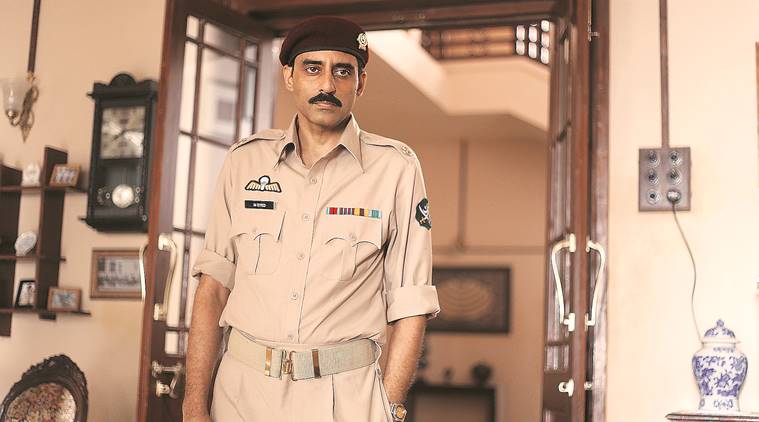
Ashwath Bhatt, who recently played the role of former Pakistan president General Muhammad Zia-ul-Haq in Mission Majnu, says that throughout his career, he has made a conscious effort to ensure that each of his roles is different from the other. Ashwath says that he doesn’t mind being called an underrated actor, but what he finds hurtful is that actors in a star-obsessed system often do not receive enough recognition or publicity, and even have to fight for credits. And so, whenever he sees someone finally getting the recognition they deserve, he feels it is divine justice for at least one such actor.
‘AN ACTOR’S JOB IS TO DELIVER THE DIRECTOR’S VISION’
Sharing an example of how he gets into a character, Ashwath says, “I’m playing a role in a film that is yet to come out, and before every scene I would start singing a song that transports me into that character’s world. Similarly, for my role in Raazi, I worked on finding answers (to questions) like ‘how would he look when he’s in family gatherings? How would he react? How would he address his father?’ These are small things. And one is fortunate when one has a director like Meghna Gulzar, who is a very tough taskmaster. I’m really lucky that all directors I have worked with, like Mira Nair and Vishal Bhardwaj, would come prepared with all their notes.”
What happens when the director is not as clear as Meghna? He says, “If the other person doesn’t know his job or is not clear about something, then you find a way to save yourself.”
‘I DON’T CARE ABOUT SCREEN TIME’
Ashwath says that when it comes to choosing films, he is more concerned about whether the role excites him rather than the screen time. He says, “Every time a role is offered to me – and they go into great descriptions – I always ask a basic question, ‘Yeh batao ki main kar kya raha hoon iss film mein?’ If you look at reputed awards like Golden Globes or the Academy Awards, you will find many examples of actors receiving awards for very short screen time. So screen time doesn’t bother me. But every part I take, there has to be something that triggers me to do it. There has to be something that clicks in my mind.”
‘OUR INDUSTRY IS STAR DRIVEN. IT WAS TRUE 15 YEARS BACK AND IT IS TRUE NOW’
Nawazuddin Siddiqui told us back in 2012, “Big films mein aisi soch hai ki ‘this man doesn’t have star status, toh isko paisa na diya jaaye’.” Has anything changed since then?
Ashwath says, “Our industry is star driven, and you have to accept this fact. You cannot deny this. It was true 15 years back and it is true now. Actors who put in huge amounts of efforts, who lift the film and bring credibility to stars are the most neglected lot.”
Talking about the nepotism debate, Ashwath says, “Everybody wants to promote their own kids, so what’s wrong with that? Suppose I give my life to the film industry and my kid wants to be an actor, I wouldn’t want them to go through all the struggles I have gone through. Aisa nahi hai ki kissi ko chance nahi mil raha. But what hurts is when talent is not promoted by production houses. They don’t even acknowledge (some actors) and that is something which is not nice. If you are promoting your child, then you must also promote those actors who are uplifting your child’s performance.”
‘I WAS NEVER IN THE RAT RACE’
Ashwath says that when he read that film critics described him as a highly underrated actor in Mission Majnu, he thought, ‘Thank God! I’m not overrated’. “I’m quite okay with being underrated, because our industry is full of overrated people. Somewhere, you have to find your own calmness, your own space and nothing is gonna come out of bitterness. I believe you just keep doing your job. Things will happen in their own time. I was never in this rat race,” he says.
Does that mean Ashwath is not in search of stardom? He says, “It would not hurt me if stardom comes to me. Well, stardom is (pauses)...if you nourish a tree then some or the other day, fruits will appear. ”
Ashwath says that his journey has been very challenging and enjoyable. “I won’t say satisfying, because the day I get satisfied is the day I will die. It’s been a beautiful journey. However, there’s still a lot to come. As an artiste, I’m hungry.”
Actors such as Shefali Shah, Jaideep Ahlawat and Pratik Gandhi became huge stars because of OTT, and Ashwath says that he genuinely feels happy for actors who get their due after putting in decades of hard work.
“It is cathartic for me, and I say, ‘Yaar, inko mila na, great! Inko milna chahiye’. Everything is not in your hands and that’s the nature of this job. One part can change your life. One song can change your life.”
‘FILMS WHERE ENTIRE CAST GET PUBLICITY ARE AN EXCEPTION’
Ashwath says, “In 90% films, the whole publicity is given to only two people, who are the leads. Of course, films like Raazi, Pink, Jolly LLB and Badhaai Ho are also there – where the entire cast gets publicity – but that is an exception. Everybody is not hungry for money, but every actor is hungry for recognition. Every artiste needs appreciation. It nourishes them. But we’re not even given proper credit. People tell me, ‘you got your fee, now move on’, but it is about respect and nothing else.”
The kind of music and story Sirf Tum had, it would have been a perfect OTT film today-Sanjay Kapoor
8:15 AM

Rishabh Suri (HINDUSTAN TIMES; August 17, 2022)
Actor Sanjay Kapoor feels it’s great that makers have started exploring different kinds of stories and are not hell-bent on making projects that cater to audiences across India: “Now, actors are offered different kinds of roles, something that didn’t happen earlier. The makers weren’t capable of taking risks and had to cater to the whole of India. Today, they are comfortable in making films for a certain target audience, which is great.”
Kapoor, 56, adds that makers have more confidence in their stories now and are certain that even a film with an offbeat subject will find an audience. “Sometimes, there are films that even run in the interior parts of India. Neerja (2016) by Sonam (K Ahuja, actor and his niece) and (actor) Alia Bhatt’s Raazi (2018) for example. Though they were very different, such films suddenly got a universal appeal. These were some breakthrough films,” shares the actor, who will soon be seen in filmmaker Ali Abbas Zafar’s Bloody Daddy and director Sriram Raghavan’s Merry Christmas.
Kapoor feels had his 1999 film, Sirf Tum, released today, it’d have been ideal for OTT. “The kind of music and story it had, it would have been a perfect OTT film today,” the actor ends.
The mainstream commercial films like Sooryavanshi and RRR also have a beautiful narrative-Sudha Chandran
8:15 AM

Sudha Chandran wonders why makers aren’t approaching her for film roles, adds she’s busy with TV but will make time for films if offered
Kavita Awaasthi (HINDUSTAN TIMES; April 10, 2022)
A popular face on television shows, Sudha Chandran has also been a part of many movies. The actor shares that she is often quizzed about not taking up films.
“I am really surprised when people ask me, ‘Why are you not doing films?’. My answer is, if I get an offer, I will definitely do it, but offers are not coming my way. And this is the saddest part. I don’t know why I am not being cast for films,” she wonders.
Having been a part of many Hindi films such as Pati Parmeshwar, Thanedaar (both 1990), Malamaal Weekly (2006), as well as regional films, she says that it’s just a matter of a good role coming her way.
“I have done such wonderful films. Maybe producers and directors think as I am busy with TV shows, so I might not have time for films. But if I get a good role in a film, I’ll definitely take it up and make the time. Especially today, when there are films like Gangubai Kathiawadi, or Ram Leela (2013). You want to be a part of such good films because they have such wonderful roles. Today, more than ever, there is so much scope for an actor like me to perform. But I don’t know why I’ve not been called or cast as yet. That’s the million-dollar question I’ve been asking myself every day,” she laments.
Talking about the kinds of films being made nowadays, Chandran says, “Look at the variety of films today — be it RRR, Gangubai Kathiawadi, The Kashmir Files (TKF), Raazi (2018), or Sooryavanshi (2021)! The genres, the roles, the stories are just wonderful. And audiences have received them so beautifully and leaves them with a great impact. The mainstream commercial films like Sooryavanshi and RRR also have a beautiful narrative and are like paintings on celluloid. I feel this is the best phase of the film industry,” she ends.
Gangubai Kathiawadi is the second biggest female-centric opener
9:02 AM
Box Office India Trade Network
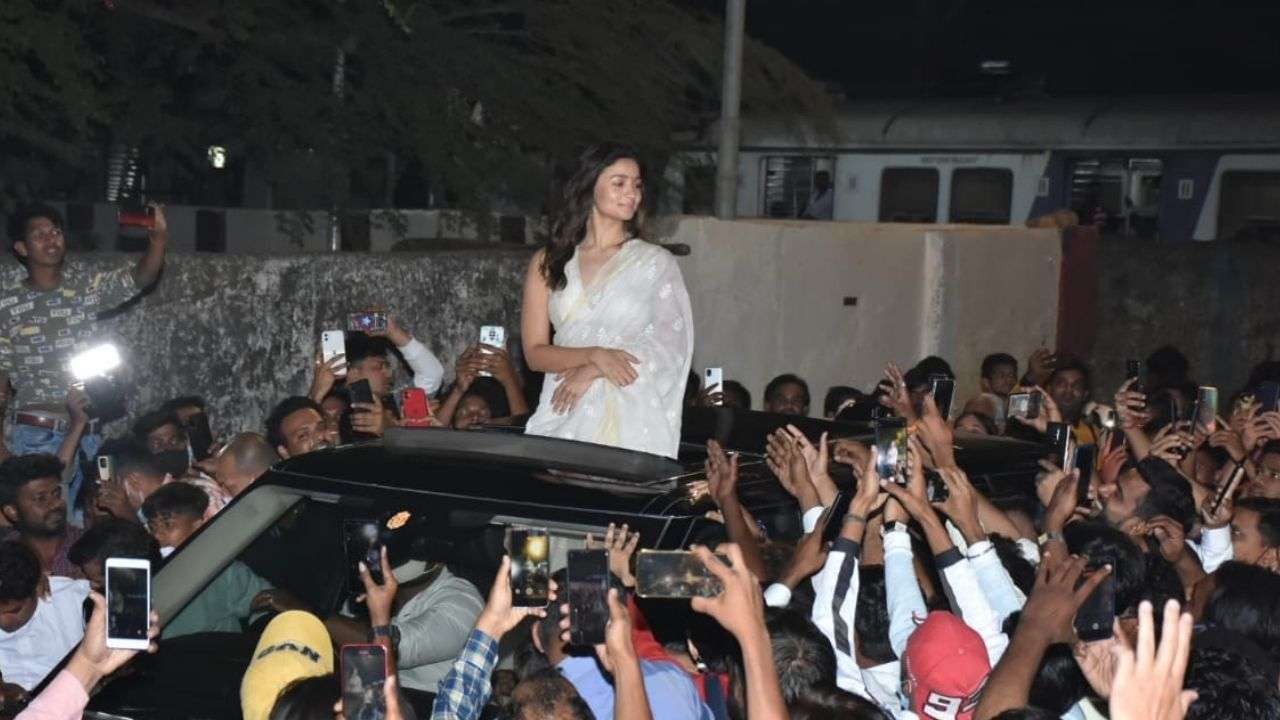
GANGUBAI KATHIAWADI has become the second biggest opener as far as female lead driven films go. If this film had released in normal conditions, then it would have been the biggest opener ever as the collections would have gone around 20% higher.
The top ten list sees mainly four female actresses dominating though the Sunny Leonne films are a lot to do with genre which was working well at a certain time. The others are Kareena Kapoor, Kangana Ranaut and Alia Bhatt who is now having three films in the list with the release of GANGUBAI KATHIAWADI. That first day is an issue with female driven films as many circuits just don't have a interest on that first day and its more about the content of the film post the first day.
A double digit first day is a huge achievement for a female lead and its not been done many times and going forward it will not be done many times. It can be said that GANGUBAI KATHIAWADI has Ajay Devgn in a guest role but looking at the numbers from various centres its pretty much certain that his fan base had a limited interest in this film.
The top ten opening days for heroine led films are as follows.
1. Veere Di Wedding - 10,42,00,000 (Kareena Kapoor)
2. Gangubai Kathiawadi - 9,75,00,000 apprx (Alia Bhatt)
3. Dear Zindagi - 8,62,00,000 (Alia Bhatt)
4. Tanu Weds Manu Returns - 8,61,00,000 (Kangana Ranuat)
5. Mary Kom - 8,32,00,000 (Priyanka Chopra)
6. Ragini MMS 2 - 7,93,00,000 (Sunny Leone)
7. Manikarnika - The Queen Of Jhansi - 7,66,00,000 (Kangana Ranaut)
8. Jism 2 - 7,46,00,000 (Sunny Leone)
9. Raazi - 7,33,00,000 (Alia Bhatt)
10. Heroine - 6,82,00,000 (Kareena Kapoor)
Love songs do so well as everyone has faced heartbreak-Harshdeep Kaur
8:01 AM

An MTV project that brings two musicians together sees Harshdeep recreate Dilbaro
Sonia Lulla (MID-DAY; August 9, 2021)
An assorted bunch of artistes will come together to flirt with varied genres of music for MTV’s latest property, Unwind. Each of the 10 episodes will see musicians collaborate with one another to give a new twist to old renditions, or debut fresh ones. Harshdeep Kaur, who shares the stage with Rochak Kohli to revisit her hit Raazi track, Dilbaro, creates a folk rendition for her episode. It is not unfamiliar territory for an artiste who has created a bunch of devotional songs recently, and considers the genre “ever-green”.
“For folk renditions, you need to maintain the essence and earthiness of the track. It should feel like an organic and real process. Also, collaborations introduce artistes to skills they never knew they possessed. For this track, Rochak helped me modulate my voice in a way that I wouldn’t have, in his absence. He egged me on to sing with a sense of ease and presence, and, as a result, my own song appears to have received such a different touch. This, despite the fact that I sing this song so often,” says Kaur.
Kaur is certain that with Kohli having successfully introduced new tunes while retaining the flavour of the original, this track will become the “new wedding anthem”. A specific climax section particularly piqued curiosity. “It is a breathless section. I needed to master certain techniques, because there are only a few pockets to breathe. We needed to up the energy towards the close of the song, and this section enables us to do that.”
Set to premiere on August 13, the show will see singers like Lucky Ali, Sonu Nigam, Kailash Kher, Badshah, Darshan Raval, Arjun Kanungo, Benny Dayal, Papon, Armaan Malik and Amaal Mallik, Monali Thakur, Asees Kaur, Sneha Khanwalkar, Aastha Gill, Reet Talwar, Lijo and King, mesmerising music lovers.
Meanwhile, having sung revered songs like Heer and Zalima, Kaur says she’s leant the recipe for delivering a successful track — create something that resonates with the masses. “That’s the reason love songs do so well! Everyone has faced heartbreak. People will accept anything that they can sing or hum. I’ve noticed that people give a lot of importance to lyrics and will try to connect with them.”
Meanwhile, Kaur recently wrapped up an international collaboration with Ezu for the track, Jannat. “I made it when my child was only eight months old. This song bagged the top spot on the BBC Music Asia chart.”
I wish women are given powerful roles & not portrayed as underdogs-Samantha Akkineni
8:03 AM

Lakshmi V, Sharanya C R and Sruthi Raman (BOMBAY TIMES; July 5, 2021)
After lockdown restrictions were eased across the country, Samantha Akkineni is back on the shooting floor. The actress, who is busy completing her Telugu and Tamil projects, has also made her digital debut recently and won a lot of praise for it. In a candid chat with BT, Samantha, who been a part of the film industry for over a decade now, speaks about how years of experience have shaped her film choices, her take on women-centric movies, and more. Excerpts:
Apart from the Telugu and Tamil film industries, you also ventured into the web space this year. Does being an actress with a pan-Indian appeal come with its own set of responsibilities?
Yes, absolutely. It comes with great responsibility for the reason that I have been in the industry for so long. Young people can get influenced pretty easily. The responsibility of it all really has pushed me to become the person that I am today. I don’t like shirking off responsibilities; I like taking them on, as hard as they may be at times. I have never been the person to take the easy route. I get hurt and sad, but I still end up taking the hard route.
When you are vocal about certain issues on a public platform, there are bound to be brickbats. How do you handle the repercussions that come with speaking your mind on issues that matter to you?
I have been in the industry long enough and I know these phases of love and hate. It does not surprise me anymore. But I wouldn’t say that it is not hard. I would not take bullying on social media lightly. It is definitely not easy. It could have a lot of repercussions on one’s mental health. So, I am not going to make it seem like it is a small issue. I can handle it, as I have experienced it over the years. Some others might not be able to, and they should definitely be able to seek help from friends and family.
So, what is your coping mechanism?
I have always given an appropriate answer to trolls, whether it is about something I wear or the work that I am doing. There has always been an answer to the questions that have been fired at me. But I have never been one to get down dirty in the mud.
You completed 11 years in the industry recently. Is there a difference between the Samantha who started out as a model for an ad film and the Samantha who shoulders big-ticket films today?
Well, I have always been very, very hardworking, but I have also been very insecure. I have had a lot of self-doubts. But over the years, that has changed. I have learnt to deal with my insecurities, learnt to take bigger risks.
Today, I’m confident; face my fears, deal with my insecurities head-on, and take bigger risks. These are the three biggest changes that I notice in me now.
Have your film choices changed? Do you look at scripts differently today?
Before, when I used to see scripts, I would ask myself if the film had the potential to become a big hit or not. If the answer was yes, I’d accept the offer. It was more like I was collecting hits in my kitty. But of late, I look for scripts that challenge me. The role has to excite me. It’s not about hits anymore; it’s about pushing boundaries.
Off late we’ve seen ‘women-centric films’ taste a lot of success at the BO. You’ve acted in a few yourself, what’s your take on them?
I believe women in lead roles are killing it, and this phenomenon is noticeable worldwide, across languages and industries. But I do wish that the roles that we are given are not just of underdogs; I want them to be of superheroes and heroines and the powerful. I’ve noticed that in women-centric films, the heroine is always portrayed as a weak girl who rises to the occasion. I wish that would change and we get portrayed from a position of strength. I believe that women should be headlining more films.
--------------------
I LOVE ALIA BHATT!
Every time I see an Alia Bhatt film, I can’t help but think how good she is. She is killing all the roles that she is being offered. She is setting the bar high, considering how young she is. I really loved her in Raazi.

I didn’t have a mentor who could constantly support me in the industry-Jaideep Ahlawat
7:52 AM

Onkar Kulkarni (BOMBAY TIMES; October 6, 2020)
When Jaideep Ahlawat began his journey as an artiste, Bollywood was not on his mind. While he performed on the stage in his hometown in Haryana, his dream was to join the Indian Army, but after several failed attempts, he turned to theatre. The actor, who has been a part of several notable films like Gangs Of Wasseypur (2012) and Raazi (2018) and some web shows, was seen in the recently released Khaali Peeli. Talking about his training days as an actor, he says, “I joined the acting institute in Pune and was there for two years. I got to train under some talented personalities like Naseeruddin Shah, Om Puri and Irrfan. It was there that I thought about moving to Mumbai.”
With no solid contacts in Bollywood, he went for auditions with the help of some of his peers, and after a couple of years, he got a break in films like Aakrosh (2010), Khatta Meetha (2010) and Chittagong (2012). “Woh kya hai, when you are new to a city and an industry, you get to learn new things. Initially, yes, it is tough, as you don’t know how and whom to approach, but that is normal. Tomorrow, if someone from a big city moves to Haryana to do farming, they will struggle, too, right? Ki kahan zameen leni hai, kaunsi zameen behtareen hai,” he explains.
The actor neither had a godfather nor a mentor. He shares, “In the industry, I didn’t have a mentor who could constantly support me or work with me. I am thankful to those who gave me good work. I was cast in Gangs Of Wasseypur at a time jab mujhe koi jaanta nahi tha. I got the part without an audition. It was my co-star, Manoj Bajpayee, who I did Chittagong with, who suggested my name. Likewise, Meghna Gulzar gave me an important role to play in Raazi. I am happy that I got to work in a commercial film like Commando: A One Man Army (2013) and also with Kamal Haasan in the Vishwaroopam franchise (2013 and 2018). Iss industry mein bahut saare log hai jinhone mujhpe bharosa dikhaya aur isi liye un logon ka yogdaan raha hai mere growth mein.”
In a career spanning ten years, Jaideep has worked with filmmakers like Priyadarshan, Imtiaz Ali, Anurag Kashyap, Meghna Gulzar and Dibakar Banerjee. He says, “I am a director’s actor. So, aap mujhse bahut kuch nikalwa sakte ho agar aap chahte ho toh. Working with these directors has worked to my advantage kyunki aap ek hi scene ko alag-alag tareeke se nibha sakte ho, and you get to learn that with them.”
Talking about Khaali Peeli, which featured Ishaan Khatter and Ananya Panday, Jaideep says, “When I heard the story mujhe kuch naya laga. I had a lot of scenes with Ishaan. Before the camera rolled and after the director said cut, we would be laughing. Thankfully, we were thorough with our prep, so we were ready to shoot the scenes.”
Letting Meghna Gulzar direct Raazi was the biggest blunder-Harinder Sikka
8:43 AM

Rishabh Suri (HINDUSTAN TIMES; July 26, 2020)
 Harinder Sikka, author of the 2008 novel Calling Sehmat is miffed with director Meghna Gulzar (who helmed the 2018 film adaptation, Raazi) and her father, lyricist Gulzar. He claims that he had promised the lyricist to let his daughter direct Raazi, and that was his “biggest blunder”.
Unhappy with the film, Sikka says the director “intentionally” made blunders. “The first one was her pro-Pakistani approach. In the book, when Sehmat kills Abdul, there’s a dialogue, ‘I’m sorry Abdul, but I love my country more’. Meghna removed it,” he says. The second, adds Sikka, was, “Sehmat came back to India to a royal red carpet welcome, saluted the Tricolour while the military band played the National Anthem. Meghna, instead, brought her back in a depressed state...” Asked why didn’t he raise these points when the film released, he says he did try to speak up, “but after a few of my interviews, I received a death threat on social media”.
Sikka alleges the Gulzar family tried to sideline him from the film. “When she was signed for Raazi, she began changing colours. After shooting ended, she sent me a nasty WhatsApp message, cutting off all relations,” he recounts. Sikka also claims he was supposed to see the director’s cut. “She didn’t invite me nor informed me,” he adds. Even the film’s title was changed, he says, without his knowledge or approval. “Their plan to checkmate me, the outsider, was in place. I was removed from promotions related to Raazi. I should’ve learnt that this was the trait of someone who’d soon back-stab,” rues Sikka.
When we reached out to the director about the author’s accusations, she wasn’t available for a comment.

I hope Paatal Lok's success translates into more choices-Jaideep Ahlawat
8:32 AM
Bollywood's most underrated actor and the toast of the town Jaideep Ahlawat on life after Paatal Lok
Uma Ramasubramanian (MID-DAY; JUne 16, 2020)
 In college, he was an Akshay Kumar fan, often deliberately missing a bus only so he could chase it like his screen idol did in a sequence in Khiladiyon Ka Khiladi (1996). He has, for so long, played the part of the avid admirer that Jaideep Ahlawat is surprised to find himself on the other side of the table today. Since Paatal Lok dropped online, there has been a constant celebration, and a deserving one at that, around Ahlawat, who plays inspector Hathiram Choudhary in the Amazon Prime Video offering. "I don't understand the term 'overnight stardom'. I don't know how to react when people acknowledge me as a star," says the actor candidly.
But describing Ahlawat as the product of overnight stardom would be lazy, if not uninformed. The actor, who graduated from the Film & Television Institute of India (FTII) in 2008, has been quietly laying the foundation of a solid career all the while as Bollywood obsessed over its next six-pack-abs hero or rolled out the red carpet for the next star kid. It's not surprising then that his first breakout role was in Anurag Kashyap's Gangs Of Wasseypur (2012), followed by Meghna Gulzar's Raazi (2018).
"Raazi was the turning point in my career. It brought me respect, and that happened only because Meghna believed in me," recalls Ahlawat, who hails from a world far removed from showbiz. "I come from a family of farmers in Kharkara, Haryana. However, when I told my parents I want to be an actor, they supported me."
 Life may have witnessed a turnaround post , but going forward, the actor hopes to continue finding compelling stories. "One must continue to look at the world from a lens that gives you a reality check. An actor must not get swayed by the praise. The idea is to tell different stories while exploring them from different angles. But that will be possible for an actor only if he has a variety of offers. So, I hope this translates into more choices."
One would imagine that he is flooded with offers, but he remains tight-lipped. "Nobody knows what the next move is. I am in talks with a few people, let's see how things work out." A second season of Paatal Lok, perhaps. "Anushka [Sharma, producer] had said it is a possibility. They have yet to decide. I hope it happens because I would like to be part of the second season."
The Sudip Sharma-created series won much acclaim for holding a mirror to society and showing how it plays an active role in creating criminals. However, a section of viewers felt that the nine-part offering normalises violence. "There are barely four violent scenes," defends Ahlawat, adding, "Unless you are shown the other side of the coin, you will never be able to figure out the bitter truth. Unless we show Hathoda Tyagi [the character played by Abhishek Banerjee] killing a few people, how can we give him the tag Hathoda? The show was not made to glorify violence."
These are tough times but this birthday is going to be special-Vicky Kaushal
8:31 AM

Vicky Kaushal plans to spend the day with his family, hopes to give them more time post-lockdown
Titas Chowdhury (HINDUSTAN TIMES; May 16, 2020)
“I have been working on most of my birthdays over the last few years. I try and make that happen. These are tough times but this birthday is going to be special,” says Vicky Kaushal who turns 32 today.
Talking about having a low-key celebration at home, he shares, “It’s going to be different this time because it’ll be a quiet one. It is going to be all about spending time with family. I’ll also be catching up with my friends over video calls.”
The actor says that the pandemic has made him realise the value of family and being there for each other. “From this point on, it’ll be a conscious effort to give more time to them. When the Coronavirus lockdown is lifted, I’ll make sure that no matter how busy I get in life, I’ll spend ample time with them, have meals with them and talk to them rather than blaming the fast-paced life for not being there with my family,” he says.
Kaushal gets nostalgic, fondly remembering his birthday celebrations from his school days and one of his main complaints. “I used to be very upset because my birthday would fall during the summer vacations. I couldn’t wear regular clothes to school on my birthdays and distribute chocolates to the entire class. But what I remember are the sweet parties at home where I would cut cakes surrounded by my friends. That was the time when technology hadn’t advanced so much and nobody was aware of the concepts of video calls and selfies. Those celebrations felt so real because we wouldn’t be busy clicking photos for social media,” he shares.
He says that a lot has changed since his birthday in 2018. His first big hit, Raazi, recently marked two years. With gratitude, the actor says, “By God’s grace, things only got better from that point on. Raazi came out after Masaan (2015), Zubaan, Raman Raghav 2.0 (both 2016) and Love Per Square Foot (2018). Raazi presented me to a wider audience and the way it was received and the love we got was too special. It was my first experience with the mainstream and things began changing post that.”
Raazi upgraded me as an actor-Jaideep Ahlawat
8:30 AM

After playing mentor to Alia Bhatt, Jaideep Ahlawat takes on the quintessential villain turn in Ishaan Khatter, Ananya Panday-led film
Himesh Mankad (MUMBAI MIRROR; May 14, 2020)
 Jaideep Ahlawat made his acting debut with Ajay Devgn’s Aakrosh and earned praise for his turn as Shahid Khan in Gangs Of Wasseypur. The Anurag Kashyap directorial led to roles in films like Vishwaroop, Gabbar Is Back, Commando and Raees. However, it was Meghna Gulzar’s Raazi, produced by Junglee Pictures and Karan Johar, that put him on the radar of casting agents looking for dependable actors. The Alia Bhatt and Vicky Kaushal spy thriller completed two years on May 11. “It’s a very special film. Raazi upgraded me as an actor and gave me a better understanding of scripts and characters,” Jaideep acknowledges.
Harking back to the first day of the shoot, the actor says, “Gulzar saab and Vishal Bhardwaj were on the set. I touched their feet, sought their blessings and gave my first shot. I had just one scene with Vicky in the film, but we go back a long way. He was an assistant director on Gangs Of Wasseypur,” Jaideep reveals.
The actor believes success brings responsibilities with it, but adds that it’s the writers and directors who give an interesting arc to his screen turns. “Characters in commercial cinema are infused with an element of quirk for entertainment. As an actor, I want to be associated with all kinds of films and commercial cinema is like a cheat day for those on a diet; it helps maintain a balance,” he laughs.
Next up for Jaideep is Ali Abbas Zafar’s debut production, Khaali Peeli, in which he plays the antagonist to Ishaan Khatter and Ananya Panday’s leads. “It’s a typical masala film with action, romance and drama. I play a quintessential Hindi film villain, like the ones we grew up watching. He is true to his word and has his own swagger,” he smiles, adding that his co-stars are hard-working, fun and energetic. “I don’t have much screen time with Ananya, but Ishaan and I share an interesting dynamic,” the actor signs off.
Don't mess with 'em!: Meet Bollywood's two brave stunt-women
8:26 AM

Sanober Pardiwalla and Geeta Tandon
Bollywood's stunt-women describe the lengths they go to, to be physically adept for the job, even though action films fronted by women are limited
Sonia Lulla (MID-DAY; March 25, 2020)
Sanober Pardiwalla
The anxiety owing to her work-related hazards that consumes us after browsing through Sanober Pardiwalla's list of stunt-work in Bollywood is rendered rather redundant when she takes us through the practices she has mastered, over the years. "I had a black belt in karate at the age of 12, and went on to learn other [forms of] martial arts, including muay thai and jiu jitsu. Six years ago, I also took up the Shaolin temple training in China, which even American [soldiers] fear trying," says the stunt-woman, who, apart from working in Hollywood films like Slumdog Millionaire (2008) and A Hundred Foot Journey (2014), has doubled for actors including Priyanka Chopra Jonas, Anushka Sharma, Katrina Kaif, Kareena Kapoor Khan, Deepika Padukone, and Sonakshi Sinha. "The [training] completely rips you apart. We lived two kilometres uphill from the training centre. [Partakers] have to walk down to the camp. To learn kung fu, one must forget everything that has been previously learnt. Training is conducted in two parts — three hours in the morning, and two hours in the evening. It is [brutal]. If you survive it, making the two-kilometres return uphill with the [equipment] is tough. And food is only available up there. What is available is boiled rice and cabbage. You need to eat that every day for a month. So, it teaches you mental endurance and enables the body to adapt."
Her achievements don't end there. An affinity for underwater stunts encouraged Pardiwalla to became an advanced deep-sea diver too, she tells us, prompting us to enquire if the challenges that Bollywood's action directors pose, rattle her at all. "The stunts that we perform seem 10 notches lower than what I'm used to practicing," she admits.

Sanober Pardiwalla with Hrithik Roshan
Pardiwalla is currently working on a spate of films, including Saif Ali Khan and Rani Mukerji starrer, Bunty Aur Babli 2, Ranbir Kapoor's Shamshera, and Atrangi Re, featuring Sara Ali Khan and Akshay Kumar. When she isn't fulfilling her Bollywood commitments, she doubles up as a fitness trainer for actors in the industry, and also guides them through the tricks of pulling off stunts. Juggling multiple jobs evidently implies she doesn't know when she'll be afforded the time to train herself. "On the days that I shoot, I ensure I train before calling it a day, even if the shoot runs for 16 hours. I take to smart workouts, like high-intensity training for 20 to 30 minutes. There's a lot of flexibility and cardiovascular work involved. I may alternate between gymnastics, strength training, and cardiovascular work." On a particularly demanding day that leaves her with no time to exercise, Pardiwalla may simply hoist her backpack over her head, and lunge-climb six flights of stairs to reach home. "But, in a week, I fit in at least five sessions."
Building a body capable of pulling off the kind of stunts that she does, while retaining the lithe frame that can enable her to "pass-off" as the actor she steps in for, is a tough feat. "Many actresses are lean. But they may not be fit. I must constantly strive to keep from bulking up, but still be strong and lean, so that I can match a body profile. The diet plays a major role in enabling me to do this. While carbohydrates have acquired a bad name in our industry, on a particularly demanding day, as much as 60 per cent of my diet includes carbohydrates. During a 16-hour schedule, if my shot is slotted for the 16th hour, I can't be tired and then under-perform. So, carbs are important. However, I have good carbs only, and balance it with lean protein. It also depends on how physically demanding each day is. If I'm not required to pull off stunts, I may stick to a meal plan that's high on vegetables only."
Geeta Tandon
Among the most celebrated stunt-women in Bollywood, Geeta Tandon wasn't afforded the privilege of learning an array of physical fitness forms, given that it was need, more than desire, that drew her to the industry. Every bit the fighter she is seen to be in cinema, Tandon is famed as the woman who fought her way out of an abusive relationship to make her life. The chances to hone her skills as a stunt-woman are then given to her in the form of training sessions on film sets itself. And Tandon doesn't take such opportunities lightly. "That's what helps us in our profession. [They are specifically important] because India doesn't have such training centres available at affordable rates," she says.
A month-long stint as participant of a stunt-reality show — that eventually never saw the light of day — formed the crux of her training. "That was eight years ago. We were training under Shifuji [Shaurya Bhardwaj]. Participants were made to wake up at 6.30 am and do squats and Suryanamaskars. Following breakfast and a short break, we would be called for bike-riding training, which involved racing, elevating and riding uphill. In the evening, at 4 pm, we'd have under-water training. This is where I learnt a lot of beneficial stunts, including how to manage cars at high speeds," says Tandon, who has worked in films like Raazi (2018), Saaho (2019), and Mard Ko Dard Nahin Hota (2018).
When she isn't shadowing female actors while the latter are being trained for an action film, Tandon continues to enhance her skills on her own accord. If she isn't filming, she will spend three hours each evening practicing kicks, punches and handstands. "I may run for 30 minutes, but pulling off 500 kicks is tougher. Kicks also tremendously enhance lower-body strength. If a few friends are also available, we gather at the beach to try stunts. It's easier to avoid injuries on the sand."
Maintaining her diet is another aspect that Tandon must be mindful of. "Body badh jayegi to match kaise karenge actors ke saath (How will we double for an actor if we put on weight?)." Her protein consumption makes for a big part of this discussion. "I depend on original protein sources, like eggs and nuts. When we enter rehearsals, we're exhausted by the end of it. So, we need to be well nourished to pull-off this lifestyle."

Geeta Tandon has worked in Rohit Shetty's films like Bol Bachchan and Singham
I can’t get too attached to success or failure-Alia Bhatt
8:24 AM

Alia Bhatt says she has ‘understood the balance’ required in her ‘obsession with work’ and that beyond a point, she has to withdraw
Prashant Singh (HINDUSTAN TIMES; January 22, 2020)
 It’s a rare feat of sorts that since her debut in 2012 [with Student Of The Year], Alia Bhatt hasn’t witnessed too many professional [box-office] setbacks. But 2019 was an aberration. While on one hand, she got rave reviews for her outing in Gully Boy, she also starred in Kalank that didn’t draw many to the theatres. And the actor readily admits the “disappointment” that came along with the failure.
“Anyone who goes on a journey that you have a lot of expectations from is going to feel a certain kind of disappointment. Till date, I have not had too many failures; maybe just two. And my learning through both of them has been very different. But the main thing I’ve learnt is that you’ve to keep your head down, work hard and give your best at everything you do. Sometimes, you’ll go right and at times, you’ll go wrong as well,” says the actor.
Alia, who has had several hits to her credit by now, feels that failures have only “taught her invaluable lessons”. “As an actor, an entertainer and even as a person, I have understood the balance that is required in my obsession with work, wherein I am very ambitious and passionate about films, acting, the art and everything. But beyond a point, I can’t get too attached to the successes or the failures,” says the actor, who has a packed line-up this year with several back-to-back biggies.
“I derive my joy and happiness from being in front of the camera and learning through people I interact with on sets — whether it’s my director, co-actors or even the technicians. That’s my bliss. And after that, whatever happens, is the result of the hard work that everybody puts in. Hopefully, one goes more right than wrong but I feel sometimes, you have to go wrong to understand the importance of going right. And that’s something that is not in your control,” says Alia.
Vis-à-vis her film choices, Alia has been mixing it up since the start of her career, and she continues to do the same in 2020 as well. But does she find a lot of difference in terms of approaching her parts in completely dissimilar films such as Raazi (2018) and Gully Boy? “Shooting for Raazi was a little emotional [experience], also because I shot it at one go, with no break. Probably, that’s why the character connected and stayed with me. But vis-à-vis Gully Boy, the way I looked at the character was really fun and easy. It was like a break from all my other intense characters,” she says.
Why is Alia Bhatt feeling guilty?
“Though Gully Boy was intense, I had a lot of fun when I was shooting for it, mainly due to Safina’s (the character she played in the film) infectious spirit. I remember feeling happy every day, which is very unusual for me because usually, I am self-critical and don’t like talking too much about my work. Now, when people tell me how amazing my performance is in it, I feel guilty as I wonder, ‘did I work hard?’ or ‘why do I deserve this kind of appreciation (laughs)?’ I also enjoyed watching my performance, which usually doesn’t happen. I enjoyed the film since it’s so beautiful, and was an unusual experience.”
I couldn't have Vikrant Massey do things that you'd associate with a filmy hero-Meghna Gulzar
8:55 AM

As Vikrant Massey's understated character in Deepika Padukone-starrer Chhapaak wins praise, director Meghna Gulzar discusses writing sensitive parts for men in times of machismo-driven films
Mohar Basu (MID-DAY; January 12, 2020)
 "I did not make this film to specifically give out a message to the men," begins director Meghna Gulzar whose Chhapaak—that highlights an episode of violence against women—has opened to rave reviews. The human drama may be a Deepika Padukone show all the way as she brings alive the story of acid attack survivor Laxmi Agarwal on celluloid, but the deft treatment of Vikrant Massey's character too has earned praise. Through his part, that is modelled on Alok Dixit (Agarwal's partner), the writer-director has given us a strong yet sensitive man, who joins Padukone's character in her fight against the sale of acid.
Ask her if women filmmakers weave more empathetic male characters as they mirror their own projections of what they hope from the men in their lives, and she says, "I don't have the lens for gender. If you can speak to humanity at a generic level, the gender issue will sort itself out. I have been fortunate to write and direct male characters that are noble and sensitive. With Vikrant, we were guided purely by the story we were telling, the real-life reference and the sensibility of the writer and filmmaker involved. I couldn't have Vikrant do things that you'd associate with a filmy hero. Such [supportive] men also exist as much as those we show on screen."
The writer-director has a knack for creating male characters that are refreshingly divorced from the macho parts that Bollywood often churns out. In her last offering, Raazi (2018), Gulzar brought depth to the role of Iqbal, that was enhanced further by Vicky Kaushal's performance. As a Pakistani major who discovers that his wife is an Indian spy, the character of Iqbal was valiant, yet vulnerable. She emphasises, "The acceptance that Vicky's character got proves that there's appreciation for characters that are not larger-than-life heroes. These are real men, and we have to celebrate them."
Acid is going beyond crime against women; even men are being attacked-Meghna Gulzar
8:52 AM

Kavita Awaasthi (HINDUSTAN TIMES; January 12, 2020)
“Chhapaak is an important story and we are all encouraged with the love being showered on us,” says director Meghna Gulzar about her recently released film, which she co-produced too.
While the film is based on acid violence, the issue of women’s safety in India is a burning issue, too. The filmmaker hopes that her film will contribute to the conversation and make people aware about acid attacks. She says, “There is a lot of awareness on sexual assault and rape, which are crimes of violence against women, but acid violence, although it is rampant in our country, there is lack of awareness about it. Acid is going beyond crime against women and being weaponised. Men are being attacked and property disputes end up in attacks. Let’s hope this film starts a conversation on what could be probable solutions.”
They say life imitates art and vice versa. Moreover, how impressionable people get influenced by crime depicted in films or the tube, has always been debated. The filmmaker gives her take, “The sensibility and intent of the presentation is important. Are you going to glorify the crime or the consequences? That approach is critical.”
While her movies, Talvar (2015), Raazi (2018) and Chhapaak have some elements of crime, Meghna says she was never interested in the genre, but has just stumbled into it. “I wrote Chhapaak after Talvar but I shot Raazi. After Raazi, I wrote the script on Sam Manekshaw but made Chhapaak. Scripts have their own destiny. My films straddle two-three genres — such as crime-thriller, social drama, police procedural. I want to give my audience a fuller viewing experience with many elements,” she says.
Meghna, 46, reveals that even before casting Deepika Padukone in Chhapaak, she was impressed with her acting abilities. “I saw her in Om Shanti Om (2007), which is one of my favourite films, and Farah Khan is one of my favourite filmmakers. I love the reincarnation theme that Indian films have and I have loved watching Karz (1980), Madhumati (1958), Karan Arjun (1995). For Deepika, to play a double role in her debut was impressive. She was hilarious in Chennai Express (2013) and adorable in Piku (2015). I was aware of her calibre, but she lived her character and became Malti beyond the transformation,” she shares.
Meanwhile, she is happy with the reception. She says, “It feels nice when your work gets validation, whether it is from actors or producers... the fraternity sending text messages that they loved your work. That pat is very reassuring. Every filmmaker needs validation.”
Subscribe to:
Posts (Atom)