Showing posts with label Raajneeti. Show all posts
Showing posts with label Raajneeti. Show all posts
15 Years of Raajneeti: We cast 8,000 actors for an authentic crowd scene-Prakash Jha
9:57 AM

As the Ranbir Kapoor and Katrina Kaif-starrer clocks 15 years, filmmaker Prakash Jha shares why the film was special; confirms that he’s working on the storyline of Raajneeti 2
Deep Saxena (HINDUSTAN TIMES; June 4, 2025)
Filmmaker Prakash Jha’s Raajneeti (2010) earned cult status due to the storyline, a huge star cast and a successful soundtrack. The film, which clocks 15 years today, was believed to be a modern adaptation of the Mahabharata, starring Ranbir Kapoor (Arjun), Ajay Devgn (Karna), Nana Patekar (Krishna), Katrina Kaif (Draupadi), Arjun Rampal (Bhima), Manoj Bajpayee (Duryodhana), Sarah Thompson (Subhadra) and Naseeruddin Shah (God).
SEQUEL IN THE WORKS?
Speaking to us as the film achieves the 15-year milestone, Prakash confirms that a sequel to Raajneeti is in the works. “Raajneeti (politics) ki yatra toh anvarat (constant) hai, chalti hi rehti hai! There’s always been a plan for Raajneeti 2. While there is nothing concrete in terms of casting and shooting yet, I am currently working on it,” says the director.
Stars and 8,000 actors!
The film’s pre-production went on for a year. “We cast 8,000 actors for an authentic crowd scene, which was quite a task,” says Prakash.
Sharing how he managed to put such a big star cast together, he adds, “The good thing about casting was that whoever we approached, liked the script and came on board. They felt challenged to perform well. People say it was a commercial success. For me, Damul (1984), Mritudand (1997), Gangajal (2003), Apaharan (2005) or Satyagraha (2013) are just films. But, it feels nice when people talk about them.”
Cult Music
The movie had a hit soundtrack, featuring four composers — late Aadesh Shrivastava, Pritam, Shantanu Moitra and Wayne Sharpe, with lyrics penned by Gulzar, Irshad Kamil, Sameer and Swanand Kirkire. Prakash shares that Aadesh came up with the song Mora Piya Mose Bolat Naahin “much earlier” during a creative sitting and it perfectly fit the situation in the film. He adds, “He sang it beautifully, too.”
Singer Kavita Seth, who also sang the song, says, “I took extra time to prepare the song, as the situation was intense. It is one of my biggest hits till date. It’s a part of my set list at all the concerts.”
Ranbir’s happy moment, ft. Manoj
The film’s assistant director Ritam Srivastava tells us, “Ranbir Kapoor was very excited when he shared the screen with Manoj Bajpayee. It was also the first time that Ranbir used a pistol in a scene.”
A scene to remember
Manoj’s chase sequence was shot over three days at multiple locations in Bhopal. Ritam shares: “While doing the chase, Ajay Devgn jokingly said: ‘Teen din ho gaye seene mein goli lagey, ab to marr jaao’.”
Of clothes and washrooms
Costume designer Priyanka Mundada used 40,000 metres to dress 8,000 cast members. Tea was used to age the dresses. To accommodate them, hotels, guest houses and lodges were booked in Bhopal. Extra bathrooms were constructed for junior artistes. Caterers were called from Mumbai.
One chopper, multiple scenes!
Separate helicopters were needed for different characters. So, to save the cost, one helicopter was painted in two colours on either sides. It was shot from different angles for different scenes.
Making global music our own
Cross-country collaboration was done to create “international, yet Indian music”. New York-based musician Wayne Sharpe, who also composed the score of the film, created western melodies and then recorded with Indian sounds. He recorded melodies in his studio in the US, the orchestra was recorded in Prague, Czech Republic, while the Indian instruments were recorded in Mumbai.
Reprinted Flags!
For authenticity, Prakash Jha refused “good quality” flags for the shoot just a day before filming. So, 12,000 party flags were printed with cheap material, shabby printing and cheap technology, and were aged.
Meet the BhoPALS
Katrina Kaif, Ranbir Kapoor and Arjun Rampal became friends during the film’s shoot. They would often be seen together playing cricket and savouring delicacies together. They named the trio BhoPALS.
Move beyond looks!
Katrina, who was seen in a saree in most parts of the film, was apparently not sure about her look. Ritam says, “She would ask the Director of Photography Sachin Krishn, ‘Will I look beautiful?’. He would say, ‘You would look real’.”
Industry treated me differently after Satya-Manoj Bajpayee
8:38 AM
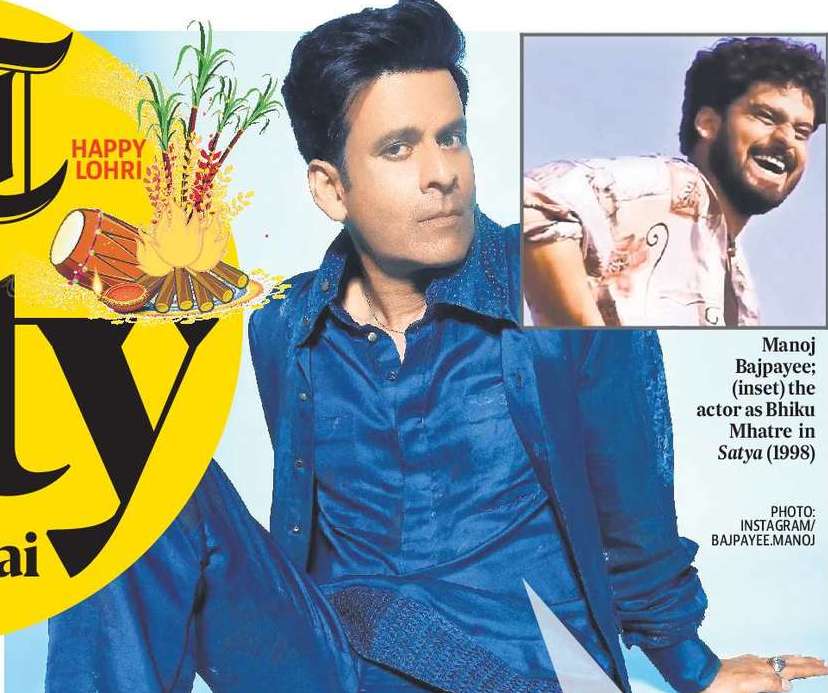
Rishabh Suri (HINDUSTAN TIMES; January 13, 2025)
Actor Manoj Bajpayee’s career took a dramatic turn with the release of Ram Gopal Varma’s iconic gangster saga, Satya (1998), in which he played Bhiku Mhatre, the head of a notorious Mumbai underworld gang. The role catapulted him into the spotlight, cementing his position as one of the most promising actors in the industry.
Now, with the film re-releasing in theaters on January 17, Bajpayee tells us, “There is a generation that has grown up without experiencing the magic of Satya. I am happy that they will get to watch on the big screen what they might have been hearing from their elders all these years. They can now find out for themselves why it was such a cult and unforgettable film.”
Not many know that Bajpayee sourced his outfits for the role, worked on his accent by picking it up from his cook, and devoted two months to preparation before the shoot. Reflecting on his career before Satya, the 55-year-old admits, “I wasn’t expecting anything for myself in this lifetime. However, I soon realized that God had different plans. I felt the difference in how I was treated by the industry post-Satya and I will always cherish the euphoria my character created.”
He adds, “For two years, whatever (films) I did after Satya was compared to it. For some people today, Gangs Of Wasseypur (2012) has created that magic, for others, it’s The Family Man, Shool (1999) and Raajneeti (2010). I am happy that I got an opportunity to experiment.”
“Satya not only changed my life, but also gave hope to so many people to leave their comfort zone and chase their dreams,” he wraps up.
Prakash Jha develops the third part of Ajay Devgn's Gangaajal, sequel to Ranbir Kapoor’s Raajneeti
4:49 PM
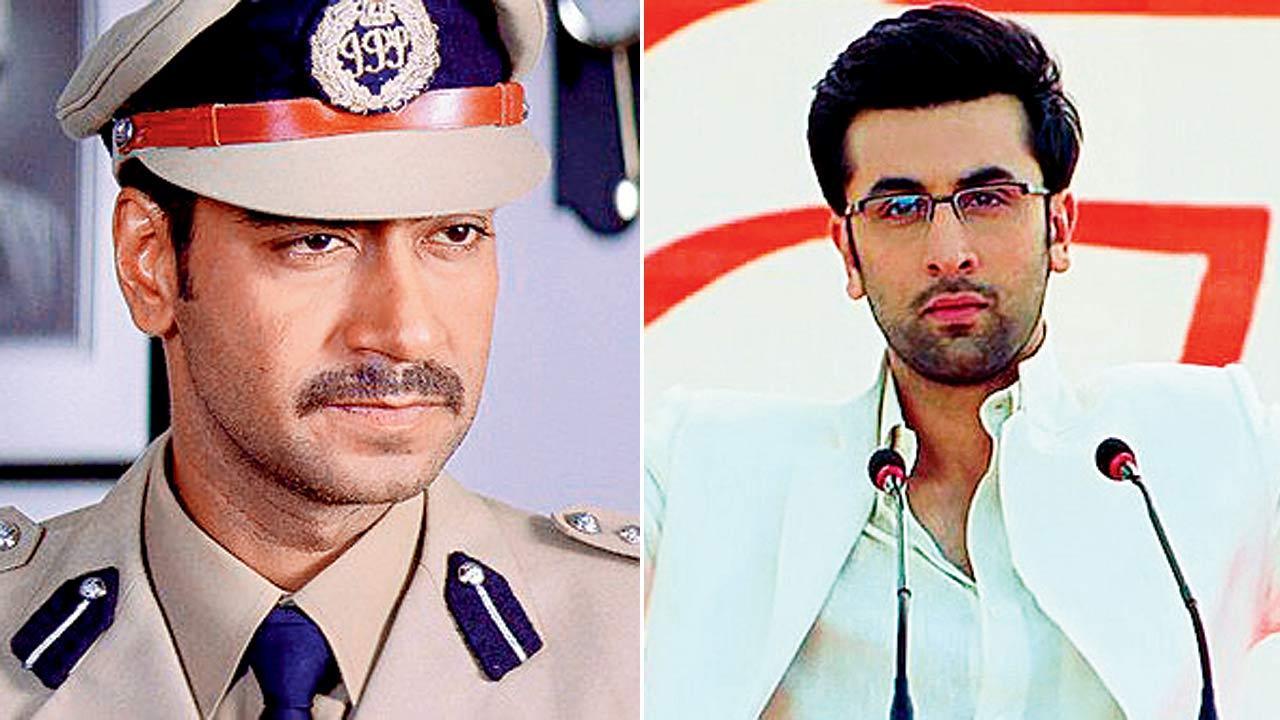
Even as he develops the third part of Ajay Devgn-led Gangaajal and sequel to Ranbir Kapoor’s Raajneeti, director Prakash Jha unsure of repeating heroes; rues having to approach stars via managers
Upala KBR (MID-DAY; November 23, 2024)
It has been over 21 years to Ajay Devgn-starrer Gangaajal (2003) and eight to Jai Gangaajal (2016), the second instalment in Prakash Jha’s cop franchise. Now, the filmmaker believes it’s time to bring another fiery cop’s story to the big screen. Jha reveals that he has penned the third instalment of Gangaajal.
“There is a script ready for Gangaajal. It’s tentatively called Dharamkshetra. It’s based on several stories about the police force, society and the dilemma they face with each other. It’s not an extension of Gangaajal. Instead, it’s about a head constable,” starts the filmmaker.
Interestingly, the cop fare is not the only franchise that has captured Jha’s attention at the moment. The director is also working towards turning his successful political drama, Raajneeti (2010), into a franchise. He believes the ensemble drama, which starred Devgn and Ranbir Kapoor, among others, has a story left untold.
“The second part is intended to be an extension of the first movie. Though Samar Pratap [Kapoor’s character] has gone abroad, he is there [in this story]. The story’s structure has been worked out.”
So, will the director approach Kapoor to reprise his role in the sequel? Or Devgn for Dharamkshetra, for that matter? “I cannot say anything about repeating the cast,” Jha admits candidly.
“There are few [compelling] actors, and they are managed by talent agencies. The actors cannot take the decisions themselves. A decade ago, we could just meet the actor, narrate the story, and convince them to make a decision. Today, you cannot. Actors don’t read the scripts; their assistants and managers do. You have to go through three levels of management to reach the stars.”
Is he not in touch with Devgn or Kapoor? “They are shooting for many projects. I’m not in touch with them, but if there is a project, they will be contacted,” he says.
I recorded an audition tape for Anushka Sharma's character in Zero; it moved Aanand L Rai-Katrina Kaif
8:51 AM
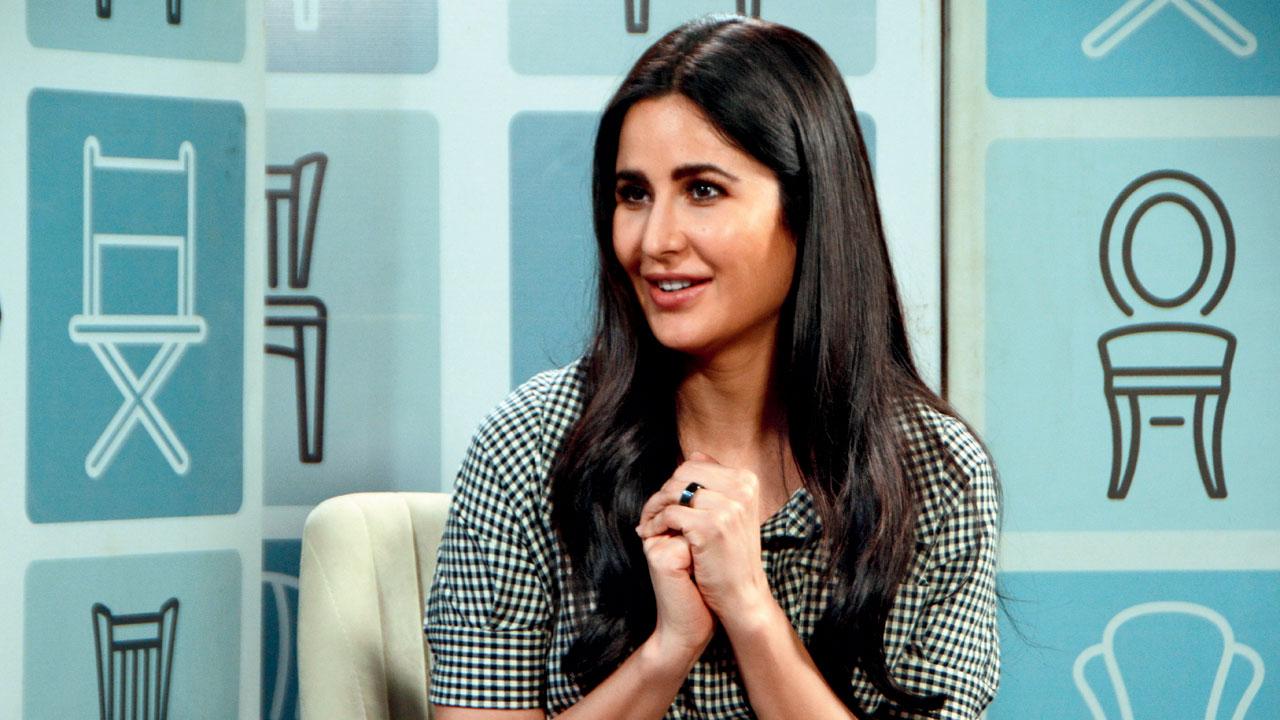
Bollywood’s unlikeliest top heroine, Katrina Kaif, on two decades of stardom
Mayank Shekhar (MID-DAY; March 2, 2024)
Surely, you’ve seen the film Bachna Ae Haseeno (2008). “If I’m not mistaken, it was Ranbir Kapoor’s second film, and his first for Yash Raj [Films],” Bollywood star Katrina Kaif informs us.
Now, there were four women in that movie. Three you know: Bipasha Basu, Deepika Padukone, Minissha Lamba. The fourth was? Katrina!
The film was, in a sense, a goal unlocked for her—she had been “vying for a Yash Raj production” for some time. Except that once she met producer Aditya Chopra, he said, “The script was getting too long—so we had to snip the fourth female part.”
Katrina recalls, “It was a limited role, yes. But I was, like, you gotta be joking! Shortly thereafter, Aditya called me to offer another film.
“He’d already taken me off a big commercial release. My response to the new offer was—he’s instead offering me a small, artsy film, with no songs, scale, dance, and with Kabir Khan, who’s a documentary filmmaker? I was not happy about it!”
Salman Khan convinced her to do the role. He had met Kabir before, discussing his debut, Kabul Express (2006), and was impressed enough—although they worked together on Ek Tha Tiger (2012) much later.
The Katrina film in question is New York (2009), a political drama, set in post-9/11 America. She says, “I walked begrudgingly on to that set, looking disdainfully [in my head], biting my teeth: such a small crew, where are the lights, cameras… I had just come off Singh Is Kinng (2008), that had been so massively loved by audiences.”
Cut to the wrap-day of the film’s shoot in New York, and she was crying: “Nobody wanted the shoot to end. Up until this day, New York remains the most amazing and eye-opening experience of my life in films.”
“The closest friends I have in the industry are from that film. It played a bit of a role in the journey of my life, thereafter. Kabir gave me the confidence to have my own voice. Something I hadn’t even considered.”
Until then, Katrina confesses, she went by a simple Bollywood playbook on sets: “Do as told. Quietly.” If you scroll through her filmography thereafter, full of male superstar-driven money-spinners otherwise, you do sense a particular pivot, post New York.
Next stop: Prakash Jha’s Raajneeti (2010), the Mahabharat, adapted into the heartland of India’s politics: “I mean, what an experience, what a shoot!”
Katrina remembers, “There was this sequence in Bhopal, where my character’s husband dies, and I take centre-stage. I look before me. There are 2,000-3,000 people, for as long as your eyes can see. I’m supposed to give a speech in front of them, like a politician, and with the film’s entire cast [on the podium]. My hands were trembling. I remember Nana [Patekar] Sir telling me, it’s going to be fine; just go ahead and do it. And it was fine!”
From here on, we can cut further to multiple parts in Katrina’s thoroughly mainstream career, with enough meat for her to juice out as an actor as well—Zoya Akhtar’s ensemble road-trip, Zindagi Na Milegi Dobara (2011, easily my favourite), to Bharat (2019), a synchronous history of contemporary India, told through the lives of its protagonists, with Katrina paired opposite Salman.
But she wants to zero-in, instead, on Aanand L Rai’s Zero (2018). TIL: Before Shah Rukh Khan (SRK) got onboard that picture, it was titled Katrina Meri Jaan, with Katrina playing a double role!
Well, to clarify, “That was a different script. It changed thereafter. But when Anand Sir was narrating me this [new script to play Babita Kumari], my ears and eyes kept perking up to the other female role [of Afiya, suffering from cerebral palsy].”
“Anand Sir said he had someone else in mind for it. I went home that day and recorded an audition tape on my iPhone for the part. I went back and showed him the recording on my laptop. It really moved him. That gave me hope, and we kept circling on it, for days.”
“I was so attached to the part [eventually played by Anushka Sharma] that I couldn’t even care if there was anything good in what was being offered to me.”
“It was Shah Rukh who said I was getting too emotionally attached, and that I should trust him, and do the film. That’s how I got a chance to do [Babita]. It’s one of the best roles I’ve ever done.”
These intercuts into some of Katrina’s more challenging parts are essential. If only to explain how she’s delivered arguably her finest role in films thus far.
That of Maria, in Sriram Raghavan’s Merry Christmas (2024), squarely shouldering a tough, tight plot, primarily set in a South Bombay apartment, flitting between a couple of male characters, while the camera stays on her, almost throughout a stunningly claustrophobic murder mystery!
It is, in many ways, a culmination of sorts. The person you’d instantly think of in that role is probably Tabu. Katrina agrees, “I think Tabu is fabulous, anyway. But I loved her in [Raghavan’s] Andhadun.”
That said, when Sriram and his co-writer, editor Pooja Ladha Surti, first narrated Merry Christmas to Katrina, she found herself asking several questions to do with the motivations of her character: “It’s at the end of this meeting, Sriram Sir said I should write the backstory of Maria—oh, no, wait, it’s been a while, it wasn’t him.”
“After that narration, I actually wrote down Maria’s backstory on my own, at home. This was during the lockdown. I emailed it to him, and he loved it. We achieved a more in-depth story, based on that. He’s the kind of filmmaker who gives you that space.”
And yet, if you go through a series of interviews with Katrina before the release of Merry Christmas, she appears to repeat one aspect of her time filming the suspense-drama—that she was crying so much, before and during the filmmaking. Strangely, none of the interviewers seem to ask her, why? Sounds awful—why would she have to cry so much?
Katrina laughs, “Some of the crying [during the shoot] was part of the script.” Clearly, that’s not all. Let’s revisit the timeline again then. “Firstly, there was a major time gap from the narration to when the film went on floors, which was literally three and half weeks after I got married [to actor Vicky Kaushal].”
“You’re in this celebratory, jubilant space. There was COVID in between. All I wanted to do was spend time with my husband that we hadn’t had together. Since I’m obsessed with my work, diving into this intense and darker film was getting difficult. In my head, I wasn’t in that zone. But once you realize it’s happening, you just have to dive into the deep end.”
The other thing, Katrina confesses she has, is a loosely streaming sense of “selective memory”: “Now, Sriram Sir had told me, and this got reconfirmed by my manager—but I had totally passed it over my head—that we had to shoot the film, separately, in Tamil as well!”
“One of those things about ignorance being bliss, but it can land you in trouble. Even Sriram Sir hesitated from bringing it up, until four days before he had to remind me, to start the film’s sequences in Tamil; after shooting in Hindi.
“I tried to convince him not to do it. I went so far as asking him to cast another actress for the Tamil part.” Why so scared? “I’ll tell you why: if this was any other film—take my last four releases—doing it in Tamil all over would be fine.”
“But this is a very conversational film. There are scenes, where there are 15 minutes of only dialogue. That much of talking, when it has to happen again in Tamil is different. That’s when the tears started.”
“The tears of quietness [before that] were for the Hindi portions. Three days, I cried a lot. I was working myself up as well. My [Tamil] dialogue coach, Deepa Venkat, came in, to drop the stress: ‘The moment you hear action, do not think; force yourself; trust what happens!’”
I’ve watched the Hindi and Tamil versions of Merry Christmas. She’s pulled off both breezily, looking equally effortless.
For most Indians, the mental image/portrait likely to emerge, once they hear the name, Katrina Kaif, is likely to be the unabashed dancing queen from Chikni Chameli, or Sheela Ki Jawani, aimed at the nation’s front rows, looking for carefree, ‘paisa-vasool’ entertainment.
In 2009, Leo Mattel modelled the Indian Barbie on the 10-on-10 Katrina, with a tote bag; then in her mid-20s. She’s been at the top of Bollywood blockbuster scene for two decades.
Yet, if you sit down to casually chit-chat cinema, series, etc—her eclectic palette could surprise you, sometimes.
For instance, in a clip sent over to me by a friend, before I meet Katrina for this edition of Sit With Hitlist, she’s seated with Vijay Sethupathi, her Tamil co-star from Merry Christmas—casually talking up Vijay’s films, Super Deluxe (2019), and 96 (2018).
Both movies would be considered prohibitively avant-garde by desi-commercial standards. Is that the ‘Vicky Kaushal’ effect on her, I gently tease—referring to how her husband, who made his debut with Neeraj Ghaywan’s Masaan (2015), could be exposing her to another world within Indian cinema!
Quick to respond, she says, “As a wife, I do pull Vicky’s leg about how he’s such an art-house film buff. And he’s, of course, totally in tune with all the latest shows and films, and what’s being made. That’s where he comes from.”
But, no, so far as the film 96 is concerned, “I got to see it, because I was approached for its Hindi remake.” Super Deluxe is her late-night OTT, as with any other movie-binger.
Even as an actor, Katrina says, “It’s not like I’ve lived in my own different land. I’ve always been in touch [with all other cinemas].”
“For example, Dibakar Banerjee’s films. It’s another matter that [a film together] couldn’t work out. That was because of me. And that’s destiny. But we’ve been in touch. Until about a year and half ago, I was regularly meeting [director] Vasan Bala, discussing ideas.”
Either way, what’s undeniable with any relationship, let alone marriage, is how one tends to inevitably expand interests and friends’ circles, as a result of the partner. With Vicky (they got married in December, 2021), Katrina says it’s been more with the meeting of large families.
“I have six sisters. He has a huge family still back in Punjab. Besides, he has a large circle of friends, from college—I think about 20 of them. Some of whom live in New York, so we meet them, when we’re there…”
Vicky’s father, Sham Kaushal is, of course, an old Bollywood hand—one of the city’s top action directors over decades, who’s equally straddled multiple movie universes within Mumbai; from Black Friday (2004) to Krrish 3 (2013).
Once you probe further, you realize Katrina isn’t as hung up in her head over off-stream and mainstream—the distinction isn’t as marked, or she hasn’t cared to creatively define it.
For instance, she says, “I want to portray myself in a new way now. I don’t wish to repeat myself too much. In several scenarios, I myself feel repetitive and bored. I’m pretty sure, the audiences will, too. I’m no more the 19-year-old, who entered this industry.”
At the same time, she’s clear, her big, 2023 release, Tiger 3, the commercial hat-trick instalment of the Salman blast-fest checks all of those novelty boxes: “Tiger 3 belongs to the amazing franchise—the space that gives me joy. It’s not repetitive at all. I found the way [director] Maneesh [Sharma] explored [lead character] Zoya’s backstory was really brave, within an action blockbuster. That’s a side of me close to my heart—I love the female action genre.”
Likewise, with dance, she adds, “When I walked into Dhoom 3, those songs, and dancing to them as a circus performer, looking athletic—that’s been my dream and passion; maybe it’s not someone else’s. Rehearsals in those dance halls is my solace. That’s who I am.”
The film New York indeed provided her a fresher “milieu”, but the film that brought her up to skill as an actor, a gamechanger of sorts, she reasons, was Vipul Shah’s Namastey London (2007): “Even though it was comical, with a romcom tone to it; it was such a great character, and story. Not the typical East meets West.”
In Namastey London, Katrina paired opposite Akshay Kumar, the other co-star, besides Salman, she’s delivered a string of roaring commercial successes with.
She thinks she’s done more films with Akshay than Salman; starting to count them on her fingertips, while this can be googled in a second. Quick search results in a tie, Salman: 7, Akshay: 7.
Besides the obvious longevity of their respective careers—both Salman and Akshay have been maxing mainstream box-office for over three decades—something she can lay claim to herself, I ask Katrina to decode these two superstars, in terms of how different they are to be on set with, as actors.
She says, “It’s just the morning and night thing—who you see more daylight with. With Akshay [a morning person], I just have to request him for a later call-time on the set. With Salman, it’s the opposite.”
“I have to ask Salman, ‘Please come early, no?’ That apart, they’re two totally different individuals. While it doesn’t look it, Salman is always thinking of the larger story of a film, rather than the scene at hand alone. With Akshay, there’s a lot more improvisation.”
Either way, her own riffing off the actors’ energies on shoot doesn’t change: “I’m not focused on what my co-actor is doing. I come prepared to the set. That’s what I do on my own. And then I incorporate that with the director and co-actor.”
To be honest, I tell Katrina, I was a little apprehensive myself, stepping into this interview. Not for the lack of prep, of course. And she’s perfectly genial, even genuinely happy/goofy, to converse with.
It’s just that she may not be the most giving of all interviewees, when it comes to delving further into her life, outside films, or her world, before films.
Even as the intention isn’t to pry on a private life; only to shine a better torch on a public figure. And so be it. A decade ago, I tell her, I had been commissioned by Caravan, a magazine of longform journalism to write a 7,000-word piece (way over twice the size of this profile) on Katrina.
I was drawing a complete blank, for days. Choosing therefore to fill up the space with more of context-setting, instead—history of Anglo-Indians in Bollywood; shift from silent cinema to talkies; the anatomy of the Hindi film dance; a growing expat sub-culture of heroines in desi-mainstream, etc.
While I had chatted with Katrina for a few hours for the piece, there were no expository personal anecdotes, at all. I had asked her then if I could speak to her British mother (Suzanne Turquotte), about her growing up years. She texted back, “Could we rather not?” Totally respect that, of course.
Yet, for a desi pop-culture story, there is none that matches Katrina’s scale—for someone who landed in Bombay, from London, in her late teens, with a friend.
Had only watched one Bollywood film (SRK-starrer, Asoka; 2001), until she made her own film debut, a couple of years later. She knew no one in town, upon arrival. She knew not a word of Hindi, before aspiring to be the quintessential Hindi film heroine, and inching towards the top-spot, soon after.
No, seriously, how? Let’s attempt a step-by-step, still. Even before she got a movie gig, Katrina had landed a contract with L’Oreal, which means she was a successful model, already. But, she says, “My heart was always here, in films. I don’t know how.” Target set, surely what followed was perseverance.
She says she would start her day at 6 am, to attend kathak classes, until noon, in a “small, non-AC room, with Guruji Veeru Krishnan—Priyanka Chopra, Lara Dutta were the seniors [in class].”
With Hindi, actor Jackie Shroff advised her to master the Devnagari script: “On the set, those days, often you’d be handed the dialogues, right before shoot. I didn’t want to be in a position, where I’m wondering what to do. The base in Devnagari saved me. There is then nothing complex [in the learning of the language].”
But beyond all of the above, it was, as Katrina puts it, “Naivete and innocence of the times. Barely at 17, I saw nothing as difficult back then. Today, I would say impossible to the same things. Which is strange. I guess that’s what happens when you have nothing to lose. At this point, of course, I have other goals—but I’ve achieved all that I’d set out to do. Yet, criticism would hurt and affect me far more.”
When she was starting out, though, “An instance, I remember, from a South Indian film, with Venkatesh [Malliswari, 2004]— I was shooting a song, and there was someone on the set, yelling, ‘This girl can’t dance.’ I’ve had people telling me to my face: ‘You will not make it. You won’t succeed.’ Somehow, I wasn’t pained. Never felt sensitive about it. For me, it was about taking in the info. It didn’t penetrate me to stop.”
“I would sit and cry, but believe in the process in the healthiest way; work a little harder to perfect my craft. Eventually, I worked with all those same people who said, ‘We won’t take you in our films!’”
In Bollywood, David Dhawan’s Maine Pyar Kyun Kiya (2005) was her second film, and her first hit (Ram Gopal Varma’s Sarkar must count as a cameo).
She debuted disastrously with Kaizad Gustad’s Boom (2003), the year’s most anticipated movie—albeit a film so deliciously bad, that it must rank up there among the greats.
As always, bad movies make for the most fun reviews—essentially, stand-up comedy on text/print. That review fetched me the job as a permanent film critic, I tell Katrina, off-record. Unwittingly, I owe her one!
Practically everyone involved with Boom pelted eggs on it, in public, post-release. Not sure about Bo Derek (also in the cast), certainly Amitabh Bachchan; also, Salman Rushdie (his girlfriend, then, Padma Lakshmi, was in the film). Katrina hasn’t said a word on it since. And she continues to maintain that stony silence. Respect her choice, of course.
Was it Tolstoy, who roughly said, a great story is one of two things—a man sets off on a journey, or a stranger comes to town. Katrina is both those splendid stories.
I offer an unsolicited advice—that she should someday write that story. Totally unfiltered, just the way she saw it, with all those things she’s kept to herself since.
She says, “No, thank you. Let’s leave some things unwritten. What I want said is the work I have done, and the work that I hope to leave behind.”
During Satyamev Jayate, people whistled and cheered on my entry-Manoj Bajpayee
9:31 PM
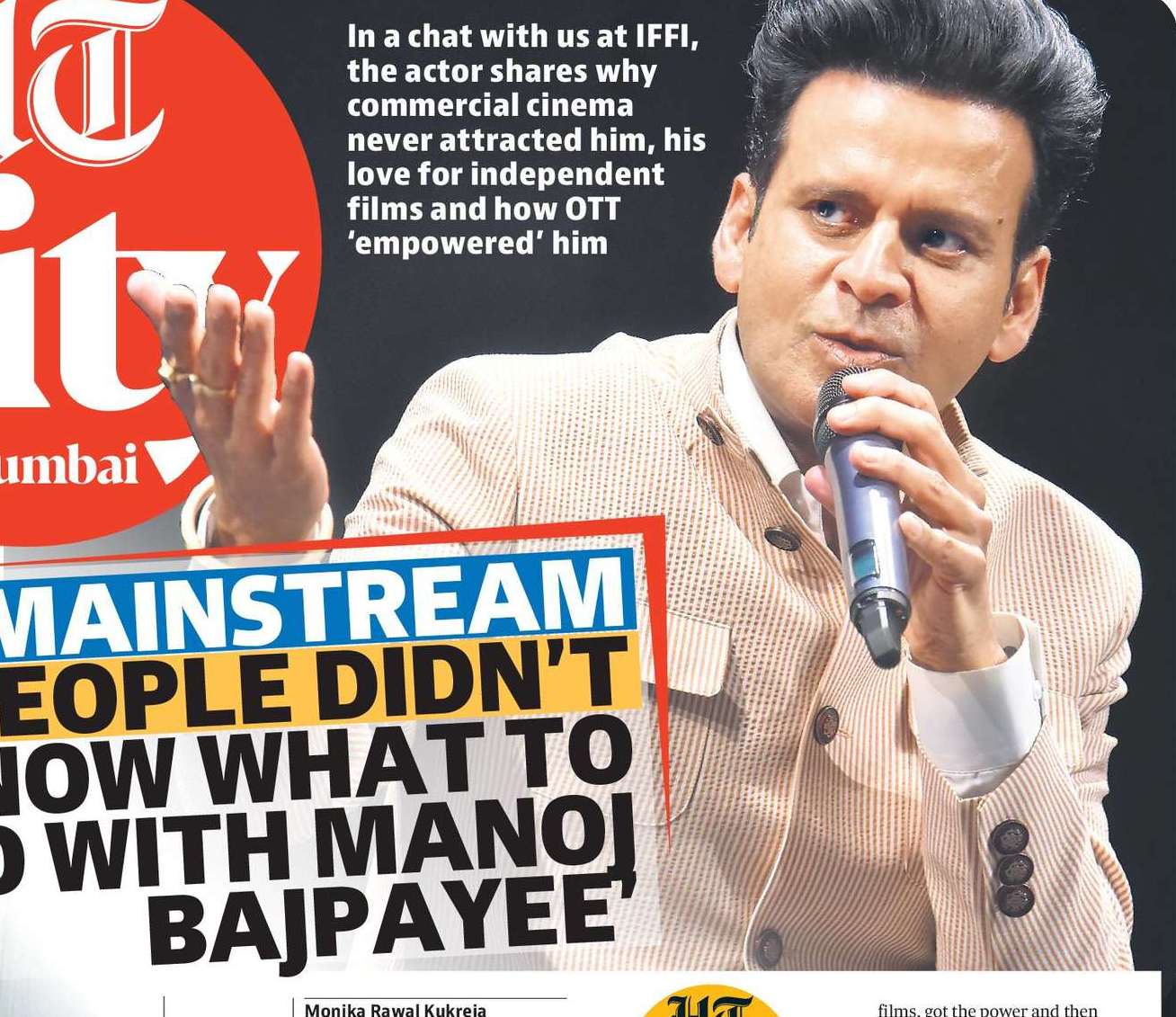
In a chat with us at IFFI, the actor shares why commercial cinema never attracted him, his love for independent films and how OTT ‘empowered’ him
Monika Rawal Kukreja (HINDUSTAN TIMES; November 27, 2023)
It has been three years since Manoj Bajpayee had a theatrical release, but the actor isn’t complaining. Instead, he has been making his presence felt in the OTT space with back-to-back releases. This year, his web projects — Gulmohar and Sirf Ek Bandaa Kaafi Hai — earned rave reviews. As the films were screened at the ongoing 54th International Film Festival of India (IFFI) in Goa, Bajpayee is grateful for all the love and adulation.
I have done very few films that gave me a chance to experience euphoria inside the theatre. Satya (1998) was one of them. It gave me a high. I would think that in this industry, I’d only get to do character roles, or play heroine ka bhai or the villain’s henchman. And suddenly, I had a career, which I never thought was possible. Then I got a high with Raajneeti (2010) and the dialogue ‘Karara jawaab milega’. Also, during Satyameva Jayate (2018), people whistled and cheered on my entry,” Bajpayee tells us the morning after his films were screened at a packed theatre at IFFI.
Ask why he feels he hasn’t done many mainstream films and the actor says the medium has never been a concern for him and all he’s cared for is good work. “In cinema, while I was dabbling in different genres, I just wanted to push and promote independent cinema and independent directors who I wanted to work with. And to do that, I needed that power for myself. So, I did a few mainstream films, got the power and then used it for my own independent films, which were quite a lot as I was enjoying my stint in independent films,” the 54-year-old says.
He adds, “I was looking for the directors because I realised that it was nearly impossible for any independent director to approach me. Also, it was evident that the mainstream people didn’t have a solid thing for me. They didn’t know what to do with Manoj Bajpayee. All they could think of me doing was [playing] a villain and that I never wanted to do. Such characters never excited me.”
And thanks to OTT, Bajpayee, who gave a masterclass on Crafting compelling web series for OTT at IFFI, witnessed an influx of diverse and experimental roles, which gave a new direction to his career. Saying that the web space empowered him, he adds, “It came at a time when the pandemic was at its peak and people were inside their houses. So, they got a chance to explore it deeply. Also, with streaming coming in, the choices became way too many [for actors]. And to my luck, The Family Man happened, which changed OTT’s demography. It empowered me. OTT was a turning point for me and many other talents.”
Making the chat with us more interesting, actor Manoj Bajpayee, who’s at the ongoing 54th International Film Festival in Goa for the screening of his films, talks about his upcoming theatrical release, Joram. He doesn’t mince his words, acknowledging that while most filmmakers would think “it’s apt for a digital release” due to the subject, the studio backing the film didn’t hesitate before taking it to the theatres, followed by OTT.
“It shows that makers now have a lot of confidence in Manoj Bajpayee and his talent. And I feel that confidence comes from what I’ve done in these four years. We (actors and filmmakers) have used the OTT medium very well to our advantage, helping expand the fan base and get the audience to watch the content they want,” he says, adding that going forward, his career is going to be a fine blend of OTT and theatrical releases.
“I’m not going to differentiate between them. The box office never bothered me in the past; it still doesn’t. It’s always about the content and the quality of the product that I am part of. This is where the buck stops [for me] because only [a project] that nobody knows how to do would get me excited [for the part]. The numbers will never decide how good the film is, and that will never change for me. My love story with the cinema will be whether it is on OTT or in theatres; it doesn’t matter,” ends the actor, who will be seen in the action-drama Bhaiyaaji next year.
20 Years of Gangaajal: A man told me that the film inspired him to become an IPS officer-Prakash Jha
8:27 AM
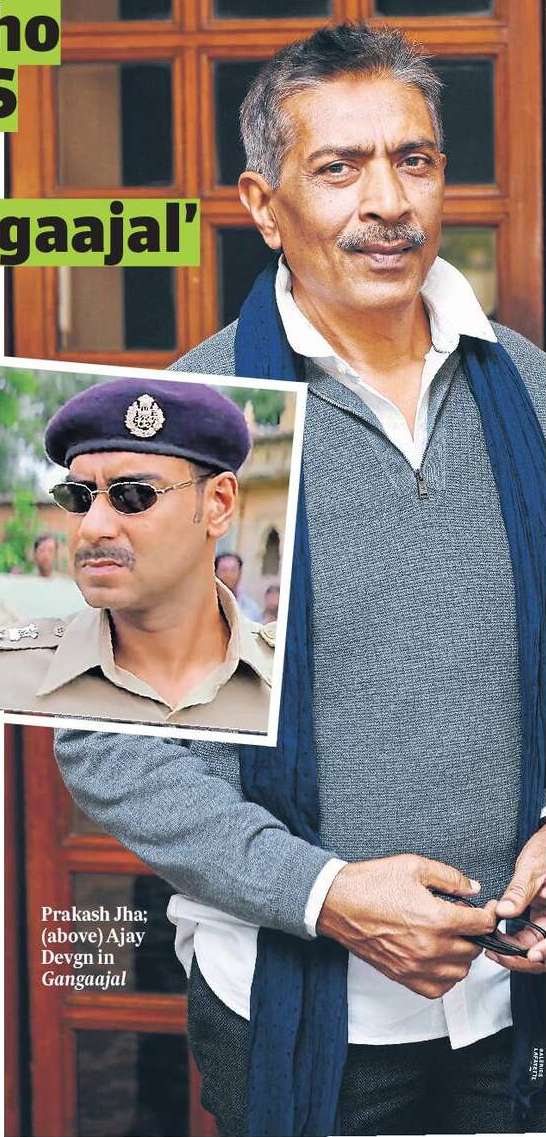
Syeda Eba Fatima (HINDUSTAN TIMES; August 29, 2023)
Most Bollywood films see cops as the righteous hero or the corrupt one in the system. But, filmmaker Prakash Jha, in his 2003 release Gangaajal, showed how a police officer can sometimes be a bit of both.
“Till date, questions like, ‘Why do we need the police?’ and ‘How does that very force who we have given the power to control us, turn corrupt?’ keep coming to my mind. Gangaajal was an effort to find answers to all these,” says Jha, whose film clocks 20 years of release today.
Actor Ajay Devgn played SP Amit Kumar in this film that also starred Gracy Singh, Mohan Joshi and Anup Soni. It delved into the reality of corruption and lawlessness in rural India. Jha, sharing how the film resonated with the audience, reveals: “Recently, I met an IPS officer who told me that Gangaajal inspired him to become one. It was only after watching the film that he started preparing for the exam.”
While the film inspired many, it also faced its share of backlash — something many films face today. As a filmmaker, how does Jha look at this? He says: “When you’re trying to tell a story, you have to be responsible... Our society is opinionated. Gangaajal ke time par bahut putle jalaaye gaye the. Even with Apaharan (2005) and Raajneeti (2010), we saw backlash. But, as a filmmaker, I am only trying to tell a story. Jo aap kehna chahte hain, wo toh kahenge hi na.”
If people do not have the foresight to experiment, I cannot help it-Arjun Rampal
8:13 AM
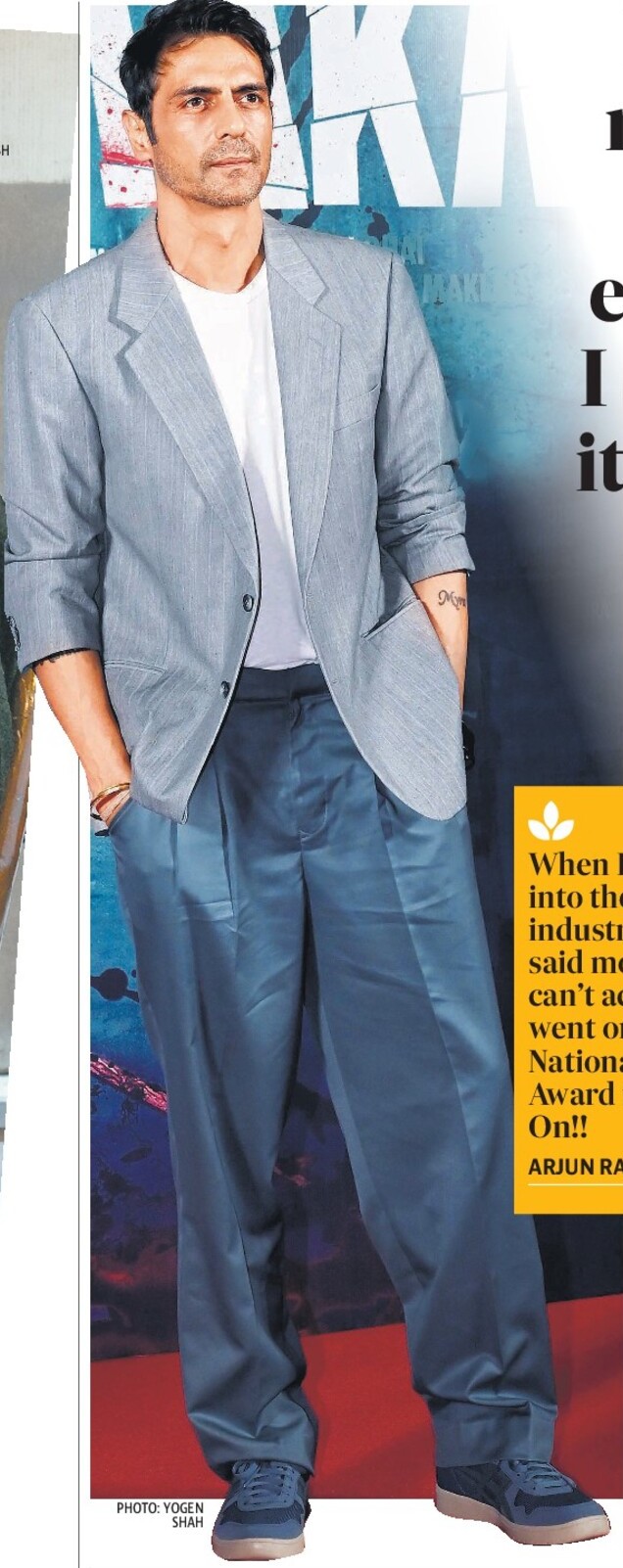
Rishabh Suri (HINDUSTAN TIMES; February 15, 2023)
Though actor Arjun Rampal has been doing films intermittently over the last five years, he is looking forward to a “hectic” 2023 as far as his filmography is concerned, with six releases slated for the coming months. “Two of them are ready and the rest are almost complete,” says Rampal, who was recently felicitated by Passang Dorjee Sona, the Speaker of the Arunachal Pradesh Legislative Assembly.
In a two-decade-long career, the Dhaakad (2022) actor has played diverse characters — from a romantic role in Dil Hai Tumhaara (2002) and a villain in Om Shanti Om (2007) to a musician in Rock On!! (2008).
The model-actor says he likes to transform into the characters he plays on screen, but the talent of the director matters too: “People thought I wasn’t fit for Raajneeti (2010), but (director) Prakash Jha felt I could play someone like Prithvi (his character in the film). If other people (directors) aren’t talented enough to have that foresight, I can’t help it.”
What makes Madhya Pradesh the most film friendly state in India
10:58 AM

Saptaparna Biswas (BOMBAY TIMES; July 26, 2022)
It was 1951 when Madhya Pradesh saw its first ever film shoot with Dilip Kumar’s Aan. 71 years and more than 600 film projects later, the state has added another accolade to its bag. At the 68th National Film Awards, Madhya Pradesh was declared the Most Film Friendly State in the country. The numerous films and shows shot across MP stand testimony to the fact that it has emerged as a preferred shoot destination for the showbiz industry. What makes MP shoot-friendly?
EASE OF PERMITS AND HASSLE-FREE CLEARANCE
Talking about the reasons that have put MP on the map of filmmakers, Sheo Shekhar Shukla, managing director of the MP Tourism Board, shares, “The award is certainly an impetus to keep working the way we do. We are also working on establishing infrastructure for film studios, post-production houses and virtual studios in the state.”
“With the initiation of Film Facilitation Cell, the department has added nodal officers in all major districts that are popular for shoot, who will be handholding the crew through different processes as and when needed,” he adds.
Umakant Choudhary, deputy director of the board, who handles the filming aspect, explains, “Single window clearance for the shoot permissions through the web portal has been a huge attraction for filmmakers. Between 2019 and 2022, more than 90 films, web series and TV shows have been shot in the state. Under MP’s Film Tourism Policy 2020 we have provided various subsidies to encourage more people to shoot here.”
‘THE VARIETY OF DESTINATIONS, FRIENDLY PEOPLE AND THEATRE CIRCUIT MAKE MP A PREFERRED SHOOT DESTINATION’
In the last 15 years, various destinations have seen shoots taking place. Line producer Syed Zaid Ali, who has handled the work for 350 plus projects, shares, “MP offers diversity in terms of locations, culture, talent and more. Prakash Jha, who shot Raajneeti here, spoke about the opportunities the state has to offer and that helped open more avenues. Even when we faced trouble while shooting a recent series featuring Bobby Deol, the issue was sorted soon, and shooting resumed the same day.”
Harsh Dave, another line producer from Indore, who has handled projects like Dabangg and Ponniyin Selvan: I, shares, “The state has so many beautiful destinations that can double up as options for showcasing any part of the country. The local people go out of their way to accommodate the shoot, even agreeing to temporarily stay at a different place if required. All this makes filmmakers want to return to the state to shoot.”
— Inputs by Mihir Bhanage and Rachana Dubey
I haven't managed to impress my daughter yet-Manoj Bajpayee
8:12 AM

As his maiden web project The Family Man wins praise, Manoj Bajpayee discusses what makes him tick
Shaheen Parkar (MID-DAY; September 22, 2019)
 He is counted amongst the finest talents produced by the industry. But at home, Manoj Bajpayee jokes that he has yet to measure up to eight-year-old daughter Ava Nayla's expectations. "She is crazy about Varun Dhawan and Tiger Shroff. I have still not managed to impress her," grins the actor.
Blame it on Bajpayee's choice of projects perhaps, which are often gritty and hard-hitting. However, his latest offering, The Family Man, walks that fine line between a comedy and a thriller. The actor plays Srikant Tiwari, an undercover agent for the Threat Analysis and Surveillance Cell, in the Amazon Prime Video show. And before you imagine a gun-toting hero in a hyper-stylised actioner, here's the caveat—director duo Raj-DK infuse this thriller with their signature brand of humour. Our desi Chembur-based Bond may be chasing terrorists, but he also can't afford to forget to pick up his kids from school. "Srikant is a man leading two different lives," explains Bajpayee, over sips of diet cola, when we catch up with him at a Juhu hotel during the promotion of his web series.
The show has come at an interesting juncture in his career. After 25 years in showbiz, the actor has decided to slow down and work at his own pace. "After Raajneeti (2010), I took a conscious decision to avoid being in a rush. I did not want my health to suffer from working round-the-clock. I wanted to enjoy my work and my life, too. I can choose the projects I want to do. By God's grace, there are people who still want me in their projects and I still get paid well for them. "
He has stayed away from camps in Bollywood and charted his own path, never trying to wriggle his way into projects with A-list stars. "With due respect to those who figure on the list, what is A to some, may not be to others. I would rather be on the list of good films and actors. It is heartening when today's youngsters talk to me about Bhiku Mhatre [his character in Satya, 1998] or Sardar Khan [Gangs Of Wasseypur, 2012]."
Of late, when the actor is not facing the camera, he is busy conducting workshops at the National School of Drama, New Delhi. "I am excited about the process of finding and guiding new talent. I have passed on the contacts of some of the talented lot to casting directors so that they can audition with them. I have made it my personal endeavour to promote fresh talent," asserts the actor, who burst on the scene with Ram Gopal Varma's Satya (1998).
The mention of Varma lights up his face. "I am still in touch with him, we often discuss cinema," he smiles, adding that he has forged strong bonds with some filmmakers over their shared passion for movies. As much as he loves brainstorming with directors over ideas and scripts, he insists direction does not figure on his to-do list. "It is better to do what I know rather than step into other people's territory," he reasons matter-of-factly.
Up next for the actor is the Netflix film, Mrs Serial Killer, helmed by friend and neighbour Shirish Kunder. "I admire his talent. I hope he gets his due." As 2019 nears an end, Bajpayee agrees it has been a landmark year for him. Not only was he honoured with the Padma Shri, but he also turned 50 in April — enough reason to host a bash. "I had never thrown a party all these years, but this time, I did it due to the coaxing of my friends. I don't celebrate birthdays or talk about my age. After all, an actor never ages."
Politics? No Way!
Bajpayee has been getting feelers from several political parties to join the electoral fray. However, he dismisses the idea. "I will never join politics. Bihar may be the hotbed of politics, but what do I know about politicking? I only know acting."

If I could pull off Raajneeti, it’s due to Prakash Jha's vocal appreciation & Ajay Devgn’s silent support-Manoj Bajpayee
8:28 AM

Roshmila Bhattacharya (MUMBAI MIRROR; June 8, 2019)
The war of words during campaigning, the wisdom of choices during electioneering and the political wheeling-dealing during government formation are all top of the mind given that it’s not even been a month since the 17th Lok Sabha elections, which makes Prakash Jha’s Raajneeti apt for this week’s column. The film opened on June 4, 2010 and with parallels from the Mahabharat, showcased a bloody battle for power.
“You can’t showcase the Mahabharat in two-and-a-half hours of screen time. But since I was telling a story about family politics, I thought of drawing out the texture of the epic drama which is a part of our socio-cultural fabric and encompasses every aspect of human life. Raajneeti is just a section of the Mahabharat, finding similes in some of its characters and their actions,” Prakash ji points out, almost a decade later.
As the eldest of the 100 Kauravas, Duryodhan, was undoubtedly the muse for Manoj Bajpayee’s character, Veerendra Pratap, the designated Chief Ministerial candidate of the Rashtrawadi Party. “He’s someone destined to be king, till his father takes his legacy away,” is how Prakash ji describes the character. Manoj remembers the filmmaker telling him about the film when he was waiting to receive the National Award for his performance in Pinjar. “It would be a few years before he came to me with the script and insisted on giving me a two-hour narration, asking me which of the roles I’d like to do. I immediately settled for Veerendra Pratap because I felt this would give me a chance to chalk up some grey areas and put across the perspective of Duryodhan, who has always been portrayed and judged as an all-black villain. But the fact is, that if the Pandavas were right, then so was he at times, if they were wronged, so was he,” explains Manoj.
A surprise bit of casting was Arjun Rampal as Prithviraj Pratap, “a contemporary Bheem who bulldozes everyone”, and an even bigger surprise was Katrina Kaif as Indu Pratap aka Draupadi as his wife and the lover of his younger brother Samar, the “reluctant king”, brought to life by Ranbir Kapoor. Quiz him on his unexpected choice of actors and Prakash ji admits that it was intuition which took him to Arjun who when told what he had in mind, asked, “Are you sure I can do this?” Katrina was also a part of the mainstream but then, as Prakash ji, points out, he went to Madhuri Dixit with Mrityudand when she was doing “Dhak Dhak”. “Katrina rehearsed for 25 days before the shoot, working hard on her dialogue which I’d recorded for her in my voice,” Prakashji shares.
Manoj remembers that the shoot in Bhopal was like a mela. Coming from a different kind of cinema, he was overwhelmed to see 20 vanity vans parked on the set, one of them for him. There were also huge crowds at all times and even after all these years, he marvels at Prakash ji’s handling of the star-gazers so there was never any untoward incident and he could pull off the magnum opus according to plan.
One of the highlights of the film were his fiery speeches, including the iconic “Babulalji ki hatya mehengi padegi inko, bahut mahengi…. Karara jawab milega.” Manoj reveals that Prakash ji gave him this dialogue just the night before the shoot and told him they would film the scene the following afternoon. “When I reached, I found he had placed three-four cameras. We did one rehearsal, then, canned the shot in one take. If I could pull off this performance it’s because of Prakash ji’s very vocal appreciation after every shot and Ajay’s (Devgn, who played Sooraj Kumar/Karna) silent support during our many scenes together,” says Manoj.
Prakash ji got drawn into politics, contesting from his native Champaran, but insists there is connect between reel and real-life raajneeti. Manoj confides that since Satya, he has been wooed with really tempting offers too. “But I didn’t come into the film industry to leave it all for politics. It’s been a tough journey to establish myself here despite being an outsider, create a filmography and earn name and fame for my work, and now I’m not going to throw it all away to get into something I have never done,” he reasons.
Meanwhile, Prakash ji admits he’s scripting a sequel. Manoj is excited about it though he’s quick to point out that except for Ranbir’s Samar and Katrina’s Indu all the other characters are dead. “But I’d still like to see Raajneeti 2, I’m curious to see if Prakash ji takes the story forward or scripts a new magnum opus,” he muses. For me too, this Raajneeti is just as exciting as the real thing.
My directorial debut with Manoj Bajpayee is about a genius who’s slowly losing his mind-Apurva Asrani
7:57 AM

Roshmila Bhattacharya (MUMBAI MIRROR; May 6, 2019)
 The Aligarh duo is reuniting after three years. Manoj Bajpayee who impressed as Professor Ramchandra Siras in the Hansal Mehta-directed 2016 biographical drama, now joins hands with its writer-editor Apurva Asrani for a film he will be co-producing, and which will be directed by Apurva. “It will go on the floors by the year-end with a completely bound script,” the National Award-winning actor informs Mirror.
Quiz him on his choice of director and Manoj says he has always believed that the writer-editor has the qualities to call the shots and should have changed directions a long time ago. “It’s already too late in the day but as they say, better late than never. It will be an amazing experience to be working under his direction,” he smiles.
Apurva adds that they bonded during the making of Ram Gopal Varma’s Satya and when he saw the edit, Manoj was the first person to suggest he turn director. “So, I took a tissue paper and wrote on it that he would act in my first film and paid him Re 1 as a signing amount back in 1998,” he recounts.
Prod them on their upcoming film and Manoj says that they’ve been toying with many ideas but when he suggested this one, Apurva was excited. “It’s an emotional story of a forgotten genius who’s slowly losing his mind. The film attempts to understand if compassion and faith can reverse a mental illness,” reveals the writer. When you react saying it’s the perfect role for Manoj, the actor says, “I’m so glad you think so, otherwise people only think I am good to play cops and gangsters.”
The idea of turning producer came to him a long time ago, when he hit a low, both physically and professionally, before Prakash Jha’s Raajneeti. “That’s when I realised that I couldn’t wait for people to come to me with good roles. I had to think up ideas myself and approach new filmmakers. There are three more films currently being scripted on subjects I suggested with three new directors. For this one I thought of Apurva because it’s a difficult subject and with his sensitivity and sensibility, I think he can pull it off beautifully and intelligently,” Manoj signs off.
I don't think Salman Khan will let Inshallah clash with Sooryavanshi-Katrina Kaif
7:47 AM
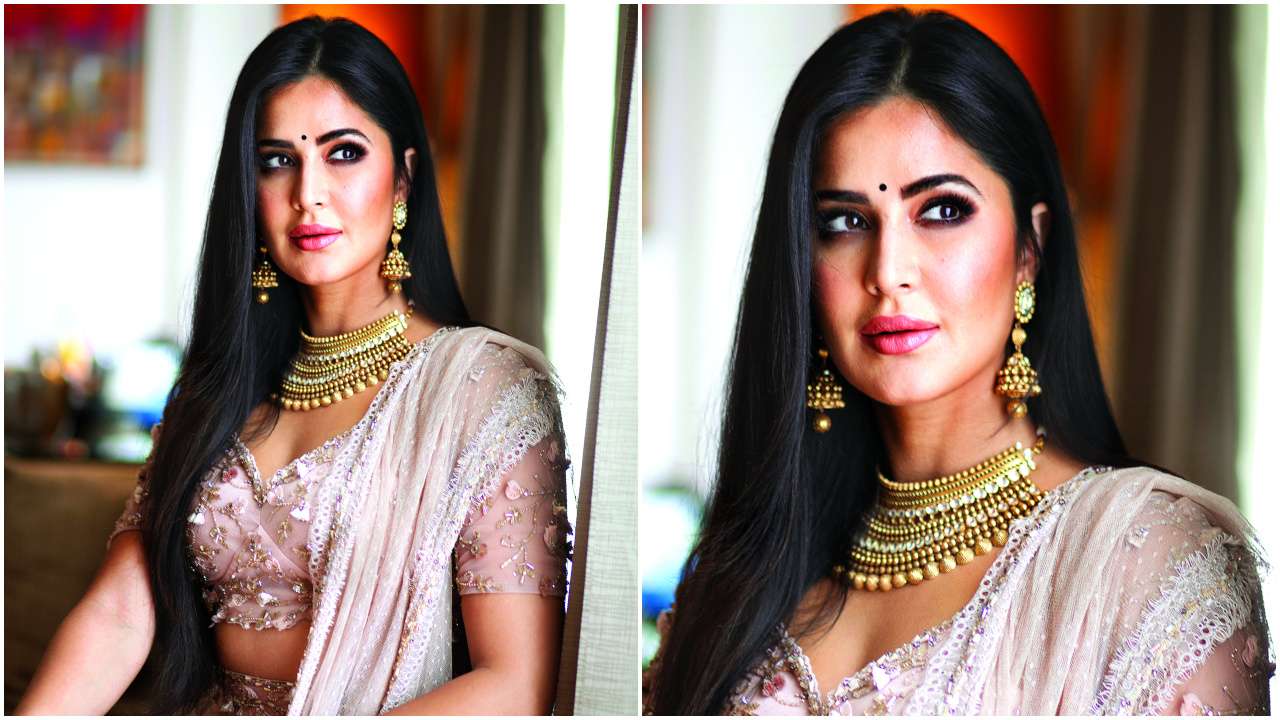
Meena Iyer (DNA; April 26, 2019)
It’s rare for a Bollywood star to regain lost ground. But Katrina Kaif has managed to do so. She was the ruling diva of Hindi cinema when she stepped back three years ago (for just a wee bit) to pursue her personal dream with Ranbir Kapoor. That chapter ended; perhaps, not in the way she wanted it to. However, to borrow a cliché, she rose like a phoenix from the ashes.
What’s commendable is that Kat didn’t waste any time in doing so. She just aced her game with convincing performances in big-ticket ventures like Tiger Zinda Hai (TZH, 2017), Thugs Of Hindostan (TOH, 2018) and Zero (2018). TZH netted Rs 339 crore at the domestic box office, but TOH and Zero were epic disasters. The fate of the films aside, Katrina has been the sole beneficiary in all of this.
Her journey as an actress has been noticeably good. As she readies herself for yet another magnum opus, Bharat, the leggy lass talks about the change in her craft and also about her personal transformation. Over to Katrina, the girl with the maximum stardom in B-Town.
Salman Khan and you are an evergreen jodi. TZH pushed the bar.
I feel the audience expects a lot from Salman and me as an onscreen jodi. We have received so much love and support from fans that we have that much more responsibility to deliver a good film. Nowadays, the tolerance for anything less than perfect is so little. Cinema has evolved; entertainment is available across so many platforms and there is an influx of digital shows. So, people are no longer in a mood to tolerate anything other than the best. They want quality, they want soul. No fancy, flowery words and image-building exercises will help make the cut. If your product doesn’t have quality, be sure it will be rejected. Your story and your film have to have soul. And Bharat has that, it has substance.
How do you think it will compare with the best?
I don’t mean to say that all our films need to compare with those of Steven Spielberg. There are all types of films. But, there has to be a super-honest quality about your work. As an actor, you have to make sure that when you are standing on that set, in whatever capacity, you are giving it your all. If you don’t, the audience will not spare you.
In your opinion, have Salman and you evolved as a screen pair?
Yes.
You stepped into the film post Priyanka Chopra Jonas’ exit?
Yes, I was not meant to do Bharat initially, Priyanka was. Just two months before the shoot, (director) Ali Abbas Zafar called me and told me there was a change of heroine. Initially, I thought he was pulling my leg because I was genuinely unaware of everything that had transpired on the PC front. Anyway, he asked me to read the script. What I like about Ali is that he is a straight-forward person. He was clear that I should do the film only if I liked my part. He didn’t want me to base my decision on the basis of our friendship. It took me three hours and 15 minutes to read the script and I was blown away by it. I was sitting with my script coach. And, I told him, ‘Isn’t this really good?’I called Ali and said I loved it.
Tell us more about your character Kumud.
It’s a strong, well-written character. I saw this as an opportunity to play a part that actually spoke to me, to portray a desi Hindustani woman. The closest that I had done to something like this was my role in Prakash Jha’s Raajneeti (2010). But even that wasn’t as desi as this. So, it was a challenge for me.
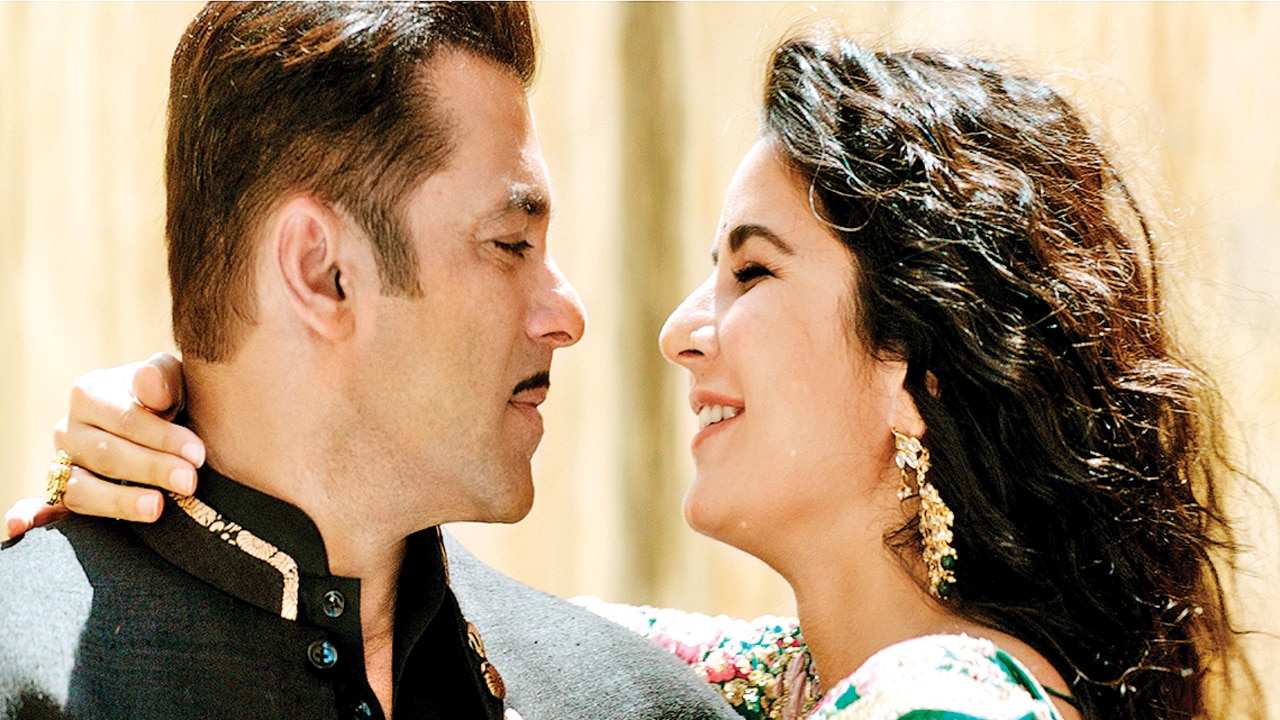
You are playing a woman from the ’70s?
Playing this character didn’t mean just working on one aspect. It meant a lot more. From the first day of the shoot to the last, I immersed myself into it. I slowed down myself to fit into the mould of a woman from the ’70s. You know the world today is so fast-paced. Everything is at the touch of a button. Whether it’s social media or something else, we’re so wired. However, Kumud is not from that world. I didn’t even want my usual gym-toned body. Instead, I stuck to yoga and some stretching exercises to stay fit. She works in a hot, sweaty employment exchange in Delhi. So, I had to display the mindset of a single woman battling it out in a man’s world back then. For the 20 days of the schedule, I behaved like Kumud. I didn’t run to the gym after pack up to pump iron or even begin to get out of character. Even after pack-up, I lived in this bubble; sticking to the way Kumud talks, keeping her attitude in mind.
Of late, you appear to be pushing yourself too hard. True?
I don’t think I push myself in an unhealthy way. Sometimes, you say to yourself — okay, this is not where I expected to be at this point. This is where I am. We don’t remain the same person we were. Each of us grows. Today, I have to be honest to the person who I am. I don’t know what the future holds. However, I feel the world has been a more welcoming place to me in the last two years. Earlier, I used to have a lot more fear. Now, that is gone.
But you’re still very work-oriented...
All of us try to be the best at what we do. I feel I need to be absolutely true to my work. I have been fortunate to have people who have come into my professional life and I am happy for their guidance. I have learnt that the deeper you connect to your work, the more enjoyment you derive from it. I have found that place of growth and connection. So, it is not as if I have been unkind to myself. I have just evolved.
You have become an expert at maintaining equations with people — whether it’s Alia Bhatt, Deepika Padukone or Ranbir Kapoor. You were seen exchanging pleasantries with them at a recent awards ceremony.
I will tell you something important. A certain thing is already playing out in a certain manner. My reaction to it makes no difference. I can sit here and feel anger and bitterness. I can make myself unhappy. Or I can take into consideration that, how miserable I am makes no difference to anyone else. So, instead, I can lighten my own burden and say — let me be happy and at peace. And what is meant for me, will come my way.
I’m not trying to be Ms Goody Two Shoes. I’m not some extra-terrestrial being. I do go through my own share of pain and angst. But I see no point in holding a grudge. Whoever it is (no names taken), I don’t see the point of holding on to anything unpleasant from the past. I would rather let bygones be bygones. I don’t think anyone is out there to hurt me. People are trying to do the best for you. But, sometimes, in trying to do the best for you, you get hurt. Too bad. However, I would rather have a friend than an enemy.
Profound…
Believe me, I would genuinely prefer having a friend than an enemy. I like to laugh, I like talking to people. I like hanging out with people. Under the circumstances, I see no point in staying aloof. I believe in making friends.
You’ve signed yet another biggie, Sooryavanshi?
I am happy to be back on a set with Akshay Kumar and Rohit (Shetty) sir. On so many levels, Akshay is so special. Ours is a long association and that doesn’t go away with time. When I was standing next to him on the terrace shooting for the photograph that we did to announce the film, I was genuinely happy. It was a good feeling.
Rohit sir is someone whom I have always admired. The cinematic world that he puts together — the mega franchises (Golmaal, Singham, Simmba) which he has come to be known for — is incredible. People go to theatres to watch a Rohit Shetty film. The larger-than-life cinema he makes is admirable. He is a self-made man and his achievements are commendable.
One hears Salman’s Inshallah and Sooryavanshi will clash next Eid.
Salman loves Akshay, he loves Rohit. He will always be supportive of me in the work place. So, I don’t think he will let his film clash with Sooryavanshi.

Amitabh Bachchan is my godfather-Avitesh Shrivastava
8:43 AM
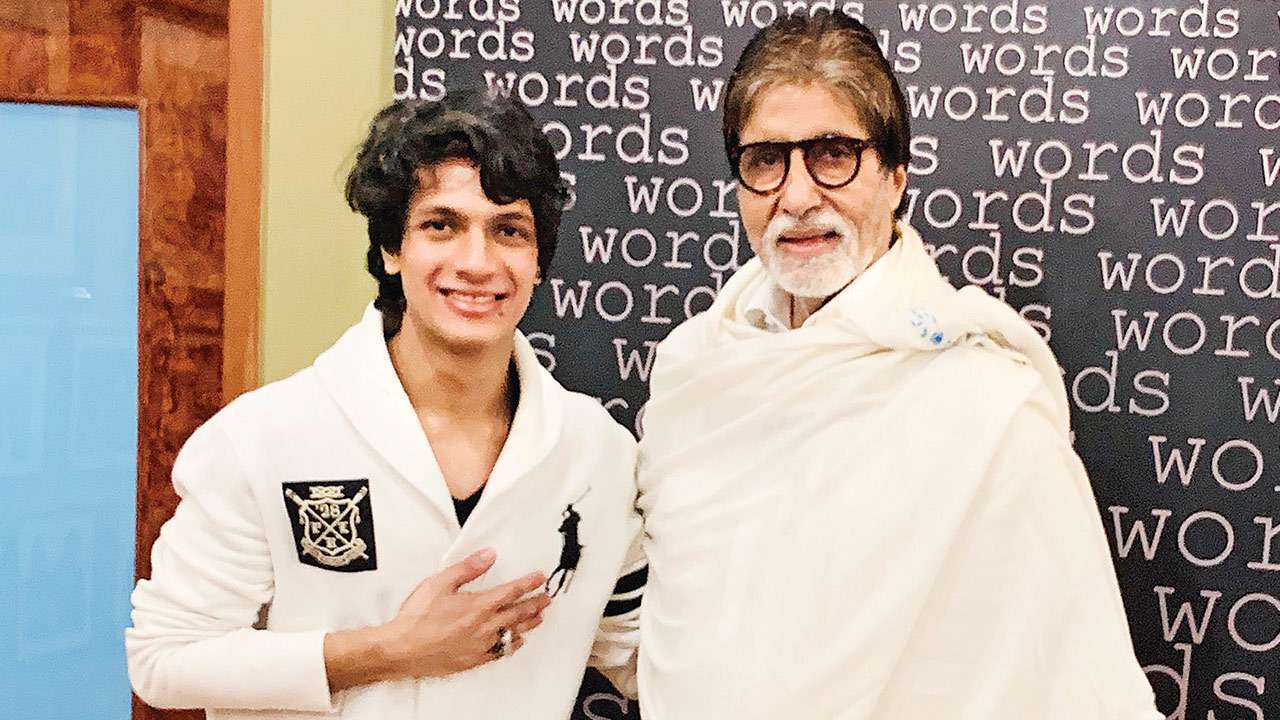
Dhaval Roy (DNA; November 25, 2018)
The first thing Avitesh Shrivastava says when we congratulate him on the release of his debut single Main Hua Tera is, “I hope my dad hears the song wherever he is and feels proud of me.” The late Bollywood composer Aadesh Shrivastava’s older son would have, needless to say, wanted his father to be with him in his big moment. “That’s my only regret. His reaction would have meant the most to me because he was my biggest admirer as well as critic.”
On the day of the track’s release, that place was taken by the Hindi cinema icon Amitabh Bachchan, who launched the song. “Amit uncle is my godfather and he is the only person in the industry who I look up to as a father figure; there’s no one else. Other than my mother (actress Vijayta Pandit), I was really glad to see him so happy and proud of me. When he praised my song, I felt like all the hard work had paid off,” he avers. The megastar worked with Aadesh in films like Major Saab (1998), Kabhie Khushi Kabhi Gham (2001), Baghban (2003), and Baabul (2006) among others. “He has been there for us constantly. Honestly, he is like God to my family and me,” the young musician says emotionally.
‘CANNOT LET MY DAD DOWN’
As a pop star, Avitesh would rather be known by the name AVI, not because it’s the abbreviation of his name, but as a tribute to his parents since it’s the acronym of Aadesh, Vijayta and I (for himself). “That’s the only identity I need. I prefer that to Avitesh Shrivastava,” Avi tells us. “Dad loved many of the English songs that I composed when I was 16. In fact, in his last days, he prayed to live for three more years so that I could take over the reins of his work. And it’s such a coincidence that my debut single has released exactly three years after he passed away,” says he, referring to the composer losing the battle to cancer on September 5, 2015, a day after his 51st birthday. “I can feel his presence and blessings. He had the belief that I could carry forward his legacy and I cannot let him down,” Avi informs us.
TAKING OVER FROM HIS FATHER
Avi was just 11 years old when he took the plunge into music with Aadesh. However, the one advice that the father passed on to his son was, “Get enough sleep.” Innocuous as that may sound, Avi explains, “Well, he was a cancer patient. So, good health mattered to him, and you know how crazy our schedules can get.” After Aadesh’s demise, the 22-year-old musician and budding actor worked non-stop. “I wanted to see where I stood without my father’s support and become who I am,” he reasons. Avi says that he grew up almost overnight after Aadesh’s demise. “I had to, because of my circumstances, as I knew I have to look after my family now,” he says as a matter of fact. “Obviously, every single day I feel he has gone too soon. He was not just my partner in crime but also a friend,” Avi points out, “But he was a strict father when he needed to be. He always pushed me to hone my craft. He trained me and made me what I am.”
SUPPORT FROM THE INDUSTRY
Not just Big B but others from the industry also rallied around Avi and his family after Aadesh was gone. “My father worked with almost everyone in the industry, whether Amit Uncle or Salman Khan. Shaan has also been a big support since the day dad left us,” says Avi. He continues, “Apart from being a father figure, Amit Uncle has also influenced me as an actor. I worked as an assistant director on Piku, so I have closely observed him and learnt a lot,” he says.
FAVOURITE TUNES BY AADESH
When Avi misses his father, he tunes into songs composed by him. “I listen to Baghban and Baabul. I really love Suno Na Suno Na from Chalte Chalte (2003) and Mora Piya from Raajneeti (2010) that he composed and sang,” he says. If he had to recreate his dad’s tunes, it would be Suno Na and Main Yahan Tu Wahan from Baghban, which Bachchan also lent his voice to. “I love that song and Amit Uncle is my mentor, so I would definitely like to remake it,” he signs off.
Raajneeti taught me how to stand in front of the audience and address them right-Arjun Rampal
5:33 AM

As told to Natasha Coutinho (MUMBAI MIRROR; February 19, 2018)
I’ve always wanted to play the guitar but never got down to learning it till I signed Rock On!! The director, Abhishek Kapoor, was very clear that all of us who were part of the rock band Magik had to get close to the instruments we were playing. For Purab Kohli it was the drums, for Luke Kenny the keyboard and for Farhan (Akhtar) and me it was the guitar. I took a lot of classes, around three-four hours of practice every day.
And that wasn’t all. I was also required to watch a lot of videos so the guitar would seem like an extension of me. I remember I saw a lot of Steve Vai videos and also bought a Steve Vai guitar of my own, one that I was comfortable playing. We had to make my character, Joseph Mascarenhas, look like one of the boys from the by-lanes of Bandra, with a guitar strung on his back and I think I eventually pulled Joe off on screen because the performance bagged me the National Award for Best Supporting Actor and also the Filmfare Black Lady.
 Another character that I could really dive into was Prithvi from
Raajneeti. He was a politician and the film’s director, Prakash Jha,
described him as a “caged tiger”, underlining the fact that he wanted
Prithvi to move in a particular way, with arrogance and aristocracy
since he came from a second or maybe it was third generation of a family
of politicians. I researched history of certain political families to
figure out how these guys dressed, their gait and the confidence with
which they spoke. At the same time, Prithvi was also a people’s person
so he had to be out there. Usually I’m more comfortable in a space where
I don’t have to overact but this character couldn’t be subtle and
underplayed. I had to make him loud without being a caricature.
Another character that I could really dive into was Prithvi from
Raajneeti. He was a politician and the film’s director, Prakash Jha,
described him as a “caged tiger”, underlining the fact that he wanted
Prithvi to move in a particular way, with arrogance and aristocracy
since he came from a second or maybe it was third generation of a family
of politicians. I researched history of certain political families to
figure out how these guys dressed, their gait and the confidence with
which they spoke. At the same time, Prithvi was also a people’s person
so he had to be out there. Usually I’m more comfortable in a space where
I don’t have to overact but this character couldn’t be subtle and
underplayed. I had to make him loud without being a caricature.When it came to his look, all the ideas came from Prakash Jha. He always wanted me to wear a stole and I was petrified because the last time I had carried one was on the ramp, during my modelling days and I was hoping that wouldn’t become an impediment. I realized later that the way the stole was draped made the character larger-than-life. My one input was to wear sneakers with kurta-pajama. I had observed that all politicians wear sneakers when they go campaigning because of the amount of walking they need to do. But the one thing that Raajneeti really taught me was how to stand in front of the audience and address them right. Actors also have to learn and deliver lines but a speech is something else. You know why politicians take long pauses between lines? It’s because they are waiting for the echo of loudspeakers and the noise of applause to die down before moving on.
 For Ashim Ahluwalia’s Daddy it was a different challenge. Since this
time I was playing a real-life character (Arun Gawli), I had to be as
close to him as possible. It was difficult because I didn’t get to spend
too much time with Mr Gawli as he is serving a jail sentence. Whenever
he came out, I would meet him and observe him like a hawk. I had about
three meetings with him but watched a lot of footage to learn his body
language and mannerisms. I also used prosthetic to look like him. We
flew down an amazing makeup team from Italy who worked with me for weeks
before we went on floors to get the look absolutely right. I also had
to lose a lot of weight, look smaller, because Mr Gawli isn’t very tall
while I am. So I had to shrink my body by stooping and hunching. But the
most important prep was getting the language right.
For Ashim Ahluwalia’s Daddy it was a different challenge. Since this
time I was playing a real-life character (Arun Gawli), I had to be as
close to him as possible. It was difficult because I didn’t get to spend
too much time with Mr Gawli as he is serving a jail sentence. Whenever
he came out, I would meet him and observe him like a hawk. I had about
three meetings with him but watched a lot of footage to learn his body
language and mannerisms. I also used prosthetic to look like him. We
flew down an amazing makeup team from Italy who worked with me for weeks
before we went on floors to get the look absolutely right. I also had
to lose a lot of weight, look smaller, because Mr Gawli isn’t very tall
while I am. So I had to shrink my body by stooping and hunching. But the
most important prep was getting the language right.I had studied Marathi at my school in Deolali since standard eight so I was familiar with it and only had to brush up on it by reading a lot of Marathi, and listening to people speak so I would get the words and accent right. Since it was a Hindi film at the end of the day I didn’t have to speak the language fluently, it was making it sound colloquial that was the real challenge.
I play characters that I believe in-Katrina Kaif
2:14 PM

Chaya Unnikrishnan (DNA; December 22, 2017)
Katrina Kaif has not exactly had a good year, what with her last few releases — Jagga Jasoos and Baar Baar Dekho — faring badly at the box office. But with Tiger Zinda Hai, which has the actress reuniting with her ex, Salman Khan on screen, five years after the hit espionage thriller Ek Tha Tiger, her fortunes might just turn around. Here, Katrina talks about reprising her character Zoya and being happy in her own space...
How was the experience of working with Salman again after five years?
In the first few scenes, we were getting used to each other and finding our feet again. Salman has so much gravitas as a performer now. It was always there, but I can see that with years he has gained in experience and maturity.
For me, it helped that we were playing the characters of Tiger and Zoya as we had already done a film together. It gave me a starting place to work from. I knew the dynamics between them and the love they share, etc. Also, as a person, Salman has a lot of love and warmth to give everyone around. I have known him since I was 17 and he is a very important person in my life. It was wonderful to work with him.
You are also reuniting with Shah Rukh Khan in the Aanand L Rai film and with Aamir Khan in Thugs Of Hindostan...
Yes, and I’m enjoying working with them. They are incredibly passionate about their work. Aamir has a brilliant cinematic mind and is a lot of fun to work with. As for SRK, he is one of the best actors in the industry. His energy, passion, and work level is so high that it’s great being around him on the set. And now that I know both Aamir and SRK well, there is a fondness for both of them. We joke around and it’s a friendly environment to work in.
Your contemporaries are doing films that are female-oriented. Aren’t you looking at doing a movie in that space?
If the story excites me, I have no reservations. I haven’t found any such film, that interested me. I also feel there is a slight (herd) mentality here — just because one does it, others have to follow. All my contemporaries are wonderful and talented. But sometimes when you are asked this question, you are also like, ‘Oh, why am I not doing that?’ I looked a little deeper inside for the answer.
All of us are different, we have our unique strengths. We should celebrate that rather than be on the same plane doing the same kind of cinema. Somebody might be fantastic in a female-driven film in XYZ space. I might be great in action, dance or a thriller space. Someone else might be good in comedy. We all might be good in different spaces at different times. Maybe I will go into comedy, next! Let everyone be in their different places at different times. Why do we all need to be in the same place at the same time?
But today actresses talk about playing a strong female character...
(Cuts in) People forget I have done films like Raajneeti in the past, where I played a strong character. Did that film have other strong male characters? Yes, but that is as it should be. Can it be without men? Yes. Can it be with the men? Yes. As a woman, you have the responsibility to portray women and to speak for women in a manner which relates to you. Zoya in TZH is a strong female character. She has the strength to pick up a gun and go into the battle field.
Today, women are joining armed forces across the world and also going into combat. This is a more literal example of strength, but to me, a woman like that standing equally besides a mega star, who has a slightly more macho image, is a beautiful statement. I believe in doing films that speak to you, which you feel right. If in a film a woman is struggling in her relationship which is not going right and is dependent on someone, it does not mean she is weak. These are phases of life that one goes through. I play characters that I believe in. I relate to all the characters that I have played so far except the one in my first film, Boom, which everybody knows.
After seven years, Ajay Devgn to have no leading lady in Total Dhamaal?
7:50 AM

Mohar Basu (MID-DAY; November 16, 2017)
Indra Kumar’s Total Dhamaal, the third instalment in the Dhamaal franchise, has been making news over its interesting star cast. While the news of Anil Kapoor and Madhuri Dixit-Nene reuniting after 17 years since Pukar (2000) brought much cheer, all eyes were on which B-Town actor will play Ajay Devgn’s leading lady in the laugh riot.
Now, mid-day has learnt that Devgn will not have an actor paired with him in the comic caper. This development comes amid rumours that Ileana D’Cruz was the top contender for the role. A source working on the film reveals, “There was no truth to the rumours about Ajay recommending Ileana for Total Dhamaal. It is true that the original script had scope for another actress besides Madhuri. But on second thoughts, the makers felt that it would be interesting to see Ajay without a love interest. If you see Dhamaal and Double Dhamaal, Sanjay Dutt’s character too didn’t have a leading lady opposite him.”
This is the first time in the last seven years that Devgn is going solo. The 2010 political drama, Raajneeti, which was a modern-day telling of Mahabharata, also saw him without a love interest.
The source adds that the film will go on floors next month. “The team is currently doing a recee in Uttar Pradesh. They will start shooting in Lucknow tentatively on December 15. Ajay’s role will be similar to what Dutt has played in the earlier instalments. The role will be adapted keeping in mind Devgn’s brooding personality and quirks.”
We hear the makers are eyeing the Diwali 2018 window for release. If all goes as per plan, the festival will witness a box-office clash between Total Dhamaal and Aamir Khan’s Thugs Of Hindostan. This will mark the second box-office war between Khan and Devgn — their respective releases Secret Superstar and Golmaal Again locked horns this Diwali.
Despite repeated calls, Kumar hadn’t responded till the time of going to press.
Fear is important. When I am scared, I know I am going to put my best foot forward-Arjun Rampal
7:58 AM

Lasyapriya Sundaram (BOMBAY TIMES; September 5, 2017)
In his career spanning 16
years, Arjun Rampal has not only won a National Award, but has also
consistently sought out roles that are performance-oriented. With Daddy,
the biopic on Arun Gawli in which he essays the tit
ular role and also dons the producer's hat, Arjun attempts
to tell a story without succumbing to the stereo
types of the quintessential Bollywood gangster saga. In a chat with BT,
the actor, who has comfortably essayed roles in
both commercial and contentdriven films, admits that he veers more
towards the latter. Excerpts...
 What drew you to a biopic on gangster-turned-politician Arun Gawli?
I love the genre of gangster films and movies made by directors like Brian De Palma and Martin Scorsese. The Godfather, Goodfellas and Scarface are some of my favourites because they have a certain energy. Gangster films are glamorous because somewhere, you know you shouldn't ape that in real life. It seems approachable and real, yet it's unreal. So, when you get an opportunity to portray a gangster in a real and true manner, you grab it. For me, there was no better subject than Arun Gawli. The film is not propagandist, but neither is it a documentary.
Eleven years ago, you produced a film, I See You. Did the fact that it didn't do well make you cautious? Is that the reason it took you almost a decade to try your hand at production again?
Well, after I See You, I was in ICU for a while (laughs). It may not have been a hit, but it didn't lose money either. I was young and it was my first brush with production, but Daddy is a different ball game altogether. It has taught me a lot about film production. Now, I can don every role. A producer's job is the most thankless. Everybody pounces on him for everything. He has to be like a saint to shoulder everybody's baggage. At the same time, it's a huge luxury to be able to make the films that you believe in.
Last year, you impressed the audience and critics as sub-inspector Inderjeet Singh in Kahaani 2: Durga Rani Singh. This year, you have taken on the mantle of playing a real-life don. These roles are in complete contrast to the ones you played at the beginning of your career. They were more on the lines of the quintessential Bollywood hero...
In the beginning of my career, I was doing films that were similar - triangular and rectangular love stories essentially (laughs). But at that point, you just want to just want to work, as you are still getting to know the industry. I was aware that I was going to make mistakes, but I didn't realise it while I was doing those films. But deep within, I was dissatisfied. So, I took a year-long break in 2005 and didn't sign any project. The first film I did the following year was Don. Farhan (Akhtar, director) was somebody I connected with instantly, as we were like-minded. Then I shot for a realistic film, The Last Lear, with Rituparno Ghosh in Kolkata before taking up the role in Farah Khan's Om Shanti Om, in which I played a 30-year-old guy with shades of grey. I had a lot fear in me when I was working with directors like Rituparno, Farhan and Farah. I was very conscious about getting into the character. Luckily, all those films gave me the opportunity to actually perform. During that phase, I realised that fear is important. When I am scared, I know that I am going to put my best foot forward. With Daddy, I was so petrified that I had sleepless nights. But, the excitement of putting something out there helps me overcome fear.
As an actor, do you prepare differently when you work with directors who come from diametrically opposite schools of thought like Farah Khan and Ashim Ahluwalia?
An actor should understand the director well. On the other hand, there's an innate actor within every director. Let me share an incident that happened while shooting with Farah. I had just wrapped up The Last Lear and was on the set of Om Shanti Om. The pitch and the projection of my dialogue delivery had to be a few notches higher than that in The Last Lear. I remember asking Farah, 'isn't this overacting?' She drew my attention to the fact that there was going to be background music and if I spoke like Marlon Brando, no one was going to hear me. Every filmmaker has a tempo or sur and an actor has to work in synergy with that.
Do you feel more satisfied with your roles in films like Daddy and The Last Lear compared with the ones you played in out-and-out commercial films?
The love and adulation you get for commercial films is huge. Being part of such movies also presented me with a lot of opportunities. Having said that, if I have to lean toward something, it would be the roles that are performance-oriented. They give you the opportunity to sink you teeth into the character and often, a part of that character remains with you for long.
So, is it difficult living the life of an actor considering the fact that a part of the character lingers on?
It's difficult for the people you are living with (laughs). During Raajneeti, nobody wanted to be around me. The role was very aggressive and I had become like that.
You said that today, you would choose a performance-oriented film over a commercial movie, though the latter brings you more love and adulation. But you must have done films just for the money at some point in your career...
Yes, you have to do films for money sometimes - either to buy a house or secure your family. Sometimes, you end up being a part of a film without your heart being in it. That's wrong. Yes, I have done films just for money, but I won't do that again. It's not fair on anybody.
Do you feel that you were typecast because of your good looks?
Being a good-looking actor has advantages as well as disadvantages. Some people might consider me only to play suave characters, but that stems from the limitations of the filmmakers who are not able to see me in different roles. So, all one can do is run away from people like that (laughs).
Do you also run away from the media scrutiny on your personal life? It gets especially hard when it involves your loved ones...
You have to learn to deal with it. People want to know about your personal life because you are a celebrity. While some people thrive on the negativity that exists in other people's lives, others focus on the positive side. It's a double-edged sword.
After having come so far and as someone with so much experience, how do you gauge success today? What does it mean to you now vis-à-vis when you started out?
Being successful means that you are able to create opportunities. You can't gauge it from a monetary perspective. To be in a good headspace when you are doing whatever it is that you are doing is success. Today, the fact that I can make the films I want to defines success to me.
While cinema has always been seen as a male-dominated industry, our society is strongly patriarchal as well. As the father of two young daughters, how do you strike a balance between being protective yet helping them grow into strong individuals?
I think it's important to be their friend and also teach them to be fearless. Children should be able to talk to their parents freely about anything and everything. Mehr (wife) and I give our daughters a lot of freedom. We encourage them and teach them to love themselves. Also, as parents, we try to be the people they can fall back on without any fear. Fear is what leads children to be dishonest.
I love the genre of gangster films and movies made by directors like Brian De Palma and Martin Scorsese. The Godfather, Goodfellas and Scarface are some of my favourites because they have a certain energy. Gangster films are glamorous because somewhere, you know you shouldn't ape that in real life. It seems approachable and real, yet it's unreal. So, when you get an opportunity to portray a gangster in a real and true manner, you grab it. For me, there was no better subject than Arun Gawli. The film is not propagandist, but neither is it a documentary.
Eleven years ago, you produced a film, I See You. Did the fact that it didn't do well make you cautious? Is that the reason it took you almost a decade to try your hand at production again?
Well, after I See You, I was in ICU for a while (laughs). It may not have been a hit, but it didn't lose money either. I was young and it was my first brush with production, but Daddy is a different ball game altogether. It has taught me a lot about film production. Now, I can don every role. A producer's job is the most thankless. Everybody pounces on him for everything. He has to be like a saint to shoulder everybody's baggage. At the same time, it's a huge luxury to be able to make the films that you believe in.
Last year, you impressed the audience and critics as sub-inspector Inderjeet Singh in Kahaani 2: Durga Rani Singh. This year, you have taken on the mantle of playing a real-life don. These roles are in complete contrast to the ones you played at the beginning of your career. They were more on the lines of the quintessential Bollywood hero...
In the beginning of my career, I was doing films that were similar - triangular and rectangular love stories essentially (laughs). But at that point, you just want to just want to work, as you are still getting to know the industry. I was aware that I was going to make mistakes, but I didn't realise it while I was doing those films. But deep within, I was dissatisfied. So, I took a year-long break in 2005 and didn't sign any project. The first film I did the following year was Don. Farhan (Akhtar, director) was somebody I connected with instantly, as we were like-minded. Then I shot for a realistic film, The Last Lear, with Rituparno Ghosh in Kolkata before taking up the role in Farah Khan's Om Shanti Om, in which I played a 30-year-old guy with shades of grey. I had a lot fear in me when I was working with directors like Rituparno, Farhan and Farah. I was very conscious about getting into the character. Luckily, all those films gave me the opportunity to actually perform. During that phase, I realised that fear is important. When I am scared, I know that I am going to put my best foot forward. With Daddy, I was so petrified that I had sleepless nights. But, the excitement of putting something out there helps me overcome fear.
As an actor, do you prepare differently when you work with directors who come from diametrically opposite schools of thought like Farah Khan and Ashim Ahluwalia?
An actor should understand the director well. On the other hand, there's an innate actor within every director. Let me share an incident that happened while shooting with Farah. I had just wrapped up The Last Lear and was on the set of Om Shanti Om. The pitch and the projection of my dialogue delivery had to be a few notches higher than that in The Last Lear. I remember asking Farah, 'isn't this overacting?' She drew my attention to the fact that there was going to be background music and if I spoke like Marlon Brando, no one was going to hear me. Every filmmaker has a tempo or sur and an actor has to work in synergy with that.
Do you feel more satisfied with your roles in films like Daddy and The Last Lear compared with the ones you played in out-and-out commercial films?
The love and adulation you get for commercial films is huge. Being part of such movies also presented me with a lot of opportunities. Having said that, if I have to lean toward something, it would be the roles that are performance-oriented. They give you the opportunity to sink you teeth into the character and often, a part of that character remains with you for long.
So, is it difficult living the life of an actor considering the fact that a part of the character lingers on?
It's difficult for the people you are living with (laughs). During Raajneeti, nobody wanted to be around me. The role was very aggressive and I had become like that.
You said that today, you would choose a performance-oriented film over a commercial movie, though the latter brings you more love and adulation. But you must have done films just for the money at some point in your career...
Yes, you have to do films for money sometimes - either to buy a house or secure your family. Sometimes, you end up being a part of a film without your heart being in it. That's wrong. Yes, I have done films just for money, but I won't do that again. It's not fair on anybody.
Do you feel that you were typecast because of your good looks?
Being a good-looking actor has advantages as well as disadvantages. Some people might consider me only to play suave characters, but that stems from the limitations of the filmmakers who are not able to see me in different roles. So, all one can do is run away from people like that (laughs).
Do you also run away from the media scrutiny on your personal life? It gets especially hard when it involves your loved ones...
You have to learn to deal with it. People want to know about your personal life because you are a celebrity. While some people thrive on the negativity that exists in other people's lives, others focus on the positive side. It's a double-edged sword.
After having come so far and as someone with so much experience, how do you gauge success today? What does it mean to you now vis-à-vis when you started out?
Being successful means that you are able to create opportunities. You can't gauge it from a monetary perspective. To be in a good headspace when you are doing whatever it is that you are doing is success. Today, the fact that I can make the films I want to defines success to me.
While cinema has always been seen as a male-dominated industry, our society is strongly patriarchal as well. As the father of two young daughters, how do you strike a balance between being protective yet helping them grow into strong individuals?
I think it's important to be their friend and also teach them to be fearless. Children should be able to talk to their parents freely about anything and everything. Mehr (wife) and I give our daughters a lot of freedom. We encourage them and teach them to love themselves. Also, as parents, we try to be the people they can fall back on without any fear. Fear is what leads children to be dishonest.

Shekhar Kapur told me to head to Mumbai, try my hand at films & earn money-Manoj Bajpayee
8:19 AM

Shilpi Mahapatra (MID-DAY; January 1, 2017)
I was in awe of Bachchanji (Amitabh Bachchan) after watching Zanjeer. It was that moment that I decided to become an actor. And so, during my college days, I started doing theatre. I wanted to join the National School of Drama, but couldn’t. So I attended workshops conducted by the Sambhav Theatre Group for almost a year. I would still keep trying to break into NSD, but I reckon it wasn’t destined. So, a friend, N K Sharma, and I started our own theatre company.
It was in 1992 that something that filmmaker Shekhar Kapur said changed my life. He told me to head to Mumbai and try my hand at films. He said that though theatre would satisfy me creatively, I would need the money for when I had a family. And so, I decided to take the plunge. Once in Mumbai, I started my struggle. It was tough since I didn’t know anyone. Luckily, I was called to act in Kapur’s Bandit Queen (1994) as a dacoit. I had auditioned for the lead role, which ultimately went to Nirmal Pandey.
After Satya (1998) released, there was no looking back, until a few year ago when I injured myself. For two years, I had to lay low and read false media reports about me. Everyone had written me off and I lost many projects. I was down to my last penny. And then Prakash Jha offered me Raajneeti, and subsequently, Aarkshan. It was the most challenging phase of my life, but it made me stronger and wiser.

Aadesh Shrivastava told me he had a special melody for me-Prakash Jha
8:51 AM

Prakash Jha never got to hear the track Aadesh Shrivastava composed for Gangaajal 2 before his untimely death
Roshmila Bhattacharya (MUMBAI MIRROR; September 7, 2015)
For almost five years Aadesh
Shrivastava battled cancer with a smile and a song. But two days after
returning from a concert tour in the US, he started bleeding from the
nose and was rushed to Kokilaben Hospital. It was his third relapse, but
for over 40 days he fought back.
Last week, when Mirror contacted his brother-in-law, as reports of Aadesh being critical surfaced, Lalit Pandit sounded weary but optimistic. The doctors were working tirelessly. Nita Ambani and Tina Ambani had been calling on him, Shah Rukh Khan had visited too, along with several others from the film fraternity, including Shekhar Kapur, Sonu Nigam, Shaan and Kumar Sanu. “We don't need financial assistance but thanks to all the emotional support, Aadesh stood up yesterday. We're hoping he'll walk back home soon,“ he had hoped.
But on his 51st birthday, September 4, the singer-composer's condition deteriorated. Filmmaker Govind Nihalani was at the hospital for an hour-and-half, leaving after 9 pm. At 12.30 am, on September 5, his 'buddy' walked out of the world on the day his film, Welcome Back, opened. Dark irony, some would say. That's the way it had to be, Aadesh would say.
Nihalani, who worked with him in Dev, recalls many meetings before the film rolled, but Aadesh hadn't been signed. “I invited him to the mahurat, he turned up, and I will never forget the look of surprise on his face when he saw his name displayed as the music director. That moment cemented a friendship that went beyond the film,“ he says.
The veteran filmmaker remembers his 'buddy' as a fearless composer, always ready to try something new. In Dev, they experimented with a fresh voice. “Kareena Kapoor was untrained but we processed the sound. Her voice had a certain texture which made Jab nahi aaye melodious. Aadesh's wife, Vijayta Pandit, sang another version of the song that we kept for the album,“ smiles Nihalani.
Aadesh started out playing the drums and got his first big break as a composer with Kanyadaan in 1993. Lata Mangeshkar reportedly sang his first song. “So I've been told, I can't recall, but ho sakta hai,“ says Lata Mangeshkar, who has vivid memories of Vijayta coming with her brothers, Jatin and Lalit, to their home, playing around and even joining them for meals. “Their father, Pratap Narain Pandit, was close to Hridaynath, and the kids were family. Later, Aadesh told me he had married Vijayta and I even visited their home,“ she says.
Aadesh got another chance to record a song with the Nightingale, Asha Bhosle and Jagjit Singh for a film produced by Tahir Hussain. “Even this film was shelved, but I believe the song was released later,“ she muses, remembering that Aadesh shared a great bonding with Amitabh Bachchan and that they made memorable music together in films like Major Saab, Lal Baadshah, Kabhi Khushi Kabhie Gham, Baghban and Baabul.
Renu Chopra, whose late husband Ravi made Baghban and Baabul, recalls how excited Bachchan was about singing Main yahan tu wahan. “He would leave shooting to go practise with Aadesh,“ she laughs. “For Baabul, he composed the classical Bawri piya ki. Sonu Nigam so loved it, he sang for free.“
Raajneeti also had the classical Mora piya, which he composed before the film started. Ditto, Satyagraha's Raske bhare tore naina. “When I was in Bhopal recently for Gangaajal 2, he called to say he had made a special melody for the film. I returned two days ago, we were supposed to meet but he was gone before I could drop by,“ sighs Prakash Jha.
The sigh is echoed by J P Dutta, who had known Aadesh as Laxmikant-Pyarelal's blue-eyed boy, who played in the rhythm section. He signed him to compose the background score for Border. “He did a brilliant job without any great inputs from my side. The theme music on the lines of Sandese aate hain was so good that had I heard it before, I'd have used it as a title track. He even came up with a thump thump on the saxophone, which he used to herald the arrival of the Pakistani soldiers,“ flashbacks Dutta, who went on to work with him again in Refugee and LOC: Kargil. “I was planning to work with him in my next film. He was full of life, laughter and music even after he was diagnosed with cancer. I was with him from 6 pm to 1 am the day he returned home from Jaslok Hospital. He was cracking jokes.One can learn from his positivity,“
 Dharmesh Darshan reiterates this sentiment. The
Raja Hindustani filmmaker had gone into hibernation after the death of
his mother in 2009, followed by his dad passing away on December 31,
2011. On the 14th day of his father's demise, he decided to do a Punjabi
film as a tribute to him. “I was still feeling low when the producer
introduced me to Aadesh, telling me quietly that he had been diagnosed
with cancer. He was stoic and vibrant during the two-three sessions we
had before I dropped out,“ he says. Soon after, Aadesh invited Dharmesh
to a show he was doing. On D-day, they learnt that Vijayta's sister,
Sandhya, had been murdered. But there was no question of cancelling. “I
watched, amazed, as he performed on stage, singing with Mr. Bachchan,
introducing his son and even calling his wife up. The family was in
pain, but the show had to go on,“ says an awed Dharmesh, admitting his
respect for the man went up manifold that day.
Dharmesh Darshan reiterates this sentiment. The
Raja Hindustani filmmaker had gone into hibernation after the death of
his mother in 2009, followed by his dad passing away on December 31,
2011. On the 14th day of his father's demise, he decided to do a Punjabi
film as a tribute to him. “I was still feeling low when the producer
introduced me to Aadesh, telling me quietly that he had been diagnosed
with cancer. He was stoic and vibrant during the two-three sessions we
had before I dropped out,“ he says. Soon after, Aadesh invited Dharmesh
to a show he was doing. On D-day, they learnt that Vijayta's sister,
Sandhya, had been murdered. But there was no question of cancelling. “I
watched, amazed, as he performed on stage, singing with Mr. Bachchan,
introducing his son and even calling his wife up. The family was in
pain, but the show had to go on,“ says an awed Dharmesh, admitting his
respect for the man went up manifold that day.
Lata Mangeshkar has the last word on her 'young brother'. “Aadesh was a shareef man, a nek insaan, with a large heart. That's why I was really sad to hear that he was ill. I'd hoped he'd get better but you can't fight destiny,“ she sighs.“He was really close to his wife, sons Anivesh and Avitesh, the whole family. And I know wherever he is, he will keep an eye on them.“
Last week, when Mirror contacted his brother-in-law, as reports of Aadesh being critical surfaced, Lalit Pandit sounded weary but optimistic. The doctors were working tirelessly. Nita Ambani and Tina Ambani had been calling on him, Shah Rukh Khan had visited too, along with several others from the film fraternity, including Shekhar Kapur, Sonu Nigam, Shaan and Kumar Sanu. “We don't need financial assistance but thanks to all the emotional support, Aadesh stood up yesterday. We're hoping he'll walk back home soon,“ he had hoped.
But on his 51st birthday, September 4, the singer-composer's condition deteriorated. Filmmaker Govind Nihalani was at the hospital for an hour-and-half, leaving after 9 pm. At 12.30 am, on September 5, his 'buddy' walked out of the world on the day his film, Welcome Back, opened. Dark irony, some would say. That's the way it had to be, Aadesh would say.
Nihalani, who worked with him in Dev, recalls many meetings before the film rolled, but Aadesh hadn't been signed. “I invited him to the mahurat, he turned up, and I will never forget the look of surprise on his face when he saw his name displayed as the music director. That moment cemented a friendship that went beyond the film,“ he says.
The veteran filmmaker remembers his 'buddy' as a fearless composer, always ready to try something new. In Dev, they experimented with a fresh voice. “Kareena Kapoor was untrained but we processed the sound. Her voice had a certain texture which made Jab nahi aaye melodious. Aadesh's wife, Vijayta Pandit, sang another version of the song that we kept for the album,“ smiles Nihalani.
Aadesh started out playing the drums and got his first big break as a composer with Kanyadaan in 1993. Lata Mangeshkar reportedly sang his first song. “So I've been told, I can't recall, but ho sakta hai,“ says Lata Mangeshkar, who has vivid memories of Vijayta coming with her brothers, Jatin and Lalit, to their home, playing around and even joining them for meals. “Their father, Pratap Narain Pandit, was close to Hridaynath, and the kids were family. Later, Aadesh told me he had married Vijayta and I even visited their home,“ she says.
Aadesh got another chance to record a song with the Nightingale, Asha Bhosle and Jagjit Singh for a film produced by Tahir Hussain. “Even this film was shelved, but I believe the song was released later,“ she muses, remembering that Aadesh shared a great bonding with Amitabh Bachchan and that they made memorable music together in films like Major Saab, Lal Baadshah, Kabhi Khushi Kabhie Gham, Baghban and Baabul.
Renu Chopra, whose late husband Ravi made Baghban and Baabul, recalls how excited Bachchan was about singing Main yahan tu wahan. “He would leave shooting to go practise with Aadesh,“ she laughs. “For Baabul, he composed the classical Bawri piya ki. Sonu Nigam so loved it, he sang for free.“
Raajneeti also had the classical Mora piya, which he composed before the film started. Ditto, Satyagraha's Raske bhare tore naina. “When I was in Bhopal recently for Gangaajal 2, he called to say he had made a special melody for the film. I returned two days ago, we were supposed to meet but he was gone before I could drop by,“ sighs Prakash Jha.
The sigh is echoed by J P Dutta, who had known Aadesh as Laxmikant-Pyarelal's blue-eyed boy, who played in the rhythm section. He signed him to compose the background score for Border. “He did a brilliant job without any great inputs from my side. The theme music on the lines of Sandese aate hain was so good that had I heard it before, I'd have used it as a title track. He even came up with a thump thump on the saxophone, which he used to herald the arrival of the Pakistani soldiers,“ flashbacks Dutta, who went on to work with him again in Refugee and LOC: Kargil. “I was planning to work with him in my next film. He was full of life, laughter and music even after he was diagnosed with cancer. I was with him from 6 pm to 1 am the day he returned home from Jaslok Hospital. He was cracking jokes.One can learn from his positivity,“
 Dharmesh Darshan reiterates this sentiment. The
Raja Hindustani filmmaker had gone into hibernation after the death of
his mother in 2009, followed by his dad passing away on December 31,
2011. On the 14th day of his father's demise, he decided to do a Punjabi
film as a tribute to him. “I was still feeling low when the producer
introduced me to Aadesh, telling me quietly that he had been diagnosed
with cancer. He was stoic and vibrant during the two-three sessions we
had before I dropped out,“ he says. Soon after, Aadesh invited Dharmesh
to a show he was doing. On D-day, they learnt that Vijayta's sister,
Sandhya, had been murdered. But there was no question of cancelling. “I
watched, amazed, as he performed on stage, singing with Mr. Bachchan,
introducing his son and even calling his wife up. The family was in
pain, but the show had to go on,“ says an awed Dharmesh, admitting his
respect for the man went up manifold that day.
Dharmesh Darshan reiterates this sentiment. The
Raja Hindustani filmmaker had gone into hibernation after the death of
his mother in 2009, followed by his dad passing away on December 31,
2011. On the 14th day of his father's demise, he decided to do a Punjabi
film as a tribute to him. “I was still feeling low when the producer
introduced me to Aadesh, telling me quietly that he had been diagnosed
with cancer. He was stoic and vibrant during the two-three sessions we
had before I dropped out,“ he says. Soon after, Aadesh invited Dharmesh
to a show he was doing. On D-day, they learnt that Vijayta's sister,
Sandhya, had been murdered. But there was no question of cancelling. “I
watched, amazed, as he performed on stage, singing with Mr. Bachchan,
introducing his son and even calling his wife up. The family was in
pain, but the show had to go on,“ says an awed Dharmesh, admitting his
respect for the man went up manifold that day.Lata Mangeshkar has the last word on her 'young brother'. “Aadesh was a shareef man, a nek insaan, with a large heart. That's why I was really sad to hear that he was ill. I'd hoped he'd get better but you can't fight destiny,“ she sighs.“He was really close to his wife, sons Anivesh and Avitesh, the whole family. And I know wherever he is, he will keep an eye on them.“

Subscribe to:
Posts (Atom)