Showing posts with label Prosenjit Chatterjee. Show all posts
Showing posts with label Prosenjit Chatterjee. Show all posts
Prosenjit Chatterjee on receiving Padma Shri honour: "Doing this for 45 years without losing interest is a journey"
9:43 AM

Standing against the regional cinema divide, Prosenjit Chatterjee says his Padma Shri honour is a win for the Bengali film industry and beyond
Komal RJ Panchal (MID-DAY; January 28, 2026)
Gratitude and joy coursed through Prosenjit Chatterjee when he learnt that he was conferred the Padma Shri, the fourth highest civilian award, by the government of India. At the same time, the honour evoked something else in the veteran actor — a yearning for those who shaped him.
“I’m missing my mom [Ratna Chatterjee] because she had a huge contribution in my life,” Chatterjee told mid-day, hours after the January 25 announcement. The actor, one of the biggest stars of Bengali cinema, also remembered his favourite filmmaker, late Rituparno Ghosh. “He gave birth to the actor in me. He made me understand that there was another actor that I needed to nurture.”
Chatterjee termed the Padma Shri “a deeply emotional milestone” in his four-decade-plus career in Bengali cinema. The veteran actor, who has been part of Hindi and Odia films as well, views his win as not just a representation of Bengali cinema.
“I’ve mostly done Bengali films, but I don’t see them as Bengali films alone. At the end of the day, we all produce Indian cinema. This is an honour for everyone who supported me. My entire industry is happy because everyone has contributed to this journey.”
Asked whether he saw the honour coming, he reflected, “In any profession, it’s our dedication, hard work, and discipline that matter. Doing this for 45 years without losing interest is a journey. At the end of the day, when you receive this kind of honour, especially from the Indian government and the Honourable President, it becomes a huge moment.”
Alia Bhatt can play Suman; Prem could be a mix of Ranbir Kapoor and Ranveer Singh-Bhagyashree
10:16 AM

Sundas Jawed (BOMBAY TIMES; December 13, 2025)
From holistic living to putting her family first, the actress talks about how she prioritizes the important things in life & more. It’s a pleasure going on the set now. There are so many enterprising women at work – right from directors, cinematographers, assistant directors and more,” said Maine Pyar Kiya star Bhagyashree about the transformation of the film industry since her debut. In a candid chat with us on the sidelines of a recent event in town, the actress and wellness advocate also shared insights into her acting career, her experiences as a mother, her wellness journey, and more.
‘Storytelling has evolved with society’
“That’s because cinema reflects society,” she said. “For instance, audiences now embrace women in roles once reserved only for men. Earlier, an on-screen cop had to be a man, but now, women are doing fine in those roles,” she added.
On her journey towards holistic wellness
Speaking about the turning point that led her towards wellness advocacy, she revealed it began with a shock. “I woke up one morning, unable to move my right hand. Initially, doctors explained the condition with clinical terms like calcification and cervical issues, but soon, I realized a lot of it was emotional and mental distress manifesting in my body. The pandemic also reminded us how important health is for everyone,” she said, adding that after recovering, she felt a sense of responsibility to share what she had learnt.
“I realized I must help women my age going through similar struggles,” she said, adding that her methods are accessible to all. “These are things people can do at home – no side effects, simple, but regularity is mandatory.”
On putting family first
Looking back on her decisions early in life – choosing marriage, embracing motherhood, and pausing her career – she said those weren’t sacrifices, but priorities. “Family needs nourishment like a plant needs water and sunlight till it can stand on its own. That’s what I did – nourished my family,” she said.
On a Maine Pyar Kiya remake
On the timeless appeal of the 1989 blockbuster, Bhagyashree pointed out why her character resonated with the audience. “People wanted a daughter or a daughter-in-law like Suman... The role embodied love, innocence, respect, and deep-rooted Indian values,” she said, adding, “No matter how modern we become, we want respect for elders and relationships. That belief system doesn’t change. That’s why Maine Pyar Kiya is close to people’s hearts even today.”
When asked which actors would do the film justice if it were made today, she said, “Honestly, I don’t think it should be remade. It would lose its essence. But hypothetically, if it was ever remade, I think Alia Bhatt would be perfect for Suman. She has the face, grace, naughtiness, and demeanour for the role. As for Prem, it could be a mix of Ranbir Kapoor and Ranveer Singh. Ranveer would bring the energy to the first half, and Ranbir, the sincerity in the second half.”
-------------------------------------------
Many of my in-laws stay in Kolkata, so in a way this city is my sasural. Puchka, mishti doi & gur ke rasgulle are my favourites
-------------------------------------------
I would love to work in a Bengali film someday. I’ve met Prosenjit Chatterjee, who everyone calls Bumbada, and we often talk and hope we can do something together
-------------------------------------------
When my son Abhimanyu told me he wanted to be an actor, I was against it. Not because I doubted his abilities, but due to my fear of the emotional toll, the intense competition, and the constant public scrutiny he would experience
I once had 26 releases in a year, a world record, I later learnt from a fan club. We never kept track-Prosenjit Chatterjee
8:45 AM

Neha Maheshwri (BOMBAY TIMES; July 6, 2025)
Prosenjit Chatterjee, fondly known as Bumba da, has long been a pillar of Bengali cinema, balancing commercial hits with bold, unconventional roles. Now, with over 350 films behind him, he’s looking beyond boundaries — embracing new languages, younger teams, and stories on a national scale. In this candid chat with Bombay Times, the veteran actor reflects on reinvention, letting go of the comfort of stardom and learning from the next generation.
‘Now I want to act in films that have a national scale’
Prosenjit recently impressed the audience in Khakee: The Bengal Chapter and is ready to broaden his horizons. He says, “I have always embraced challenges; there was a period when I was doing six to eight shifts a day, with 17 to 18 releases a year. My highest was 26, a world record, I later learnt from a fan club. We never kept track back in the day.”
Today, he remains as eager as ever for new roles. He shares, “I tell my directors to bring me something that is out of the box. Now I want to act in films that have a national scale.”
‘It’s hard for a commercial actor to let go of seetees and taalis’
Letting go of the larger‑than‑life image built through commercial cinema was not easy. He says, “The most difficult part for an actor who has found success in commercial films is letting go of the seetees and taalis. You may be willing to give up a lot, but not that curtain call. When a villain walks in and approaches the heroine, the crowd expects the hero to storm in and save her, and they love that moment. So, I had to consciously shed that baggage and recondition my thinking,” he says.
He adds, “I experimented constantly because I believed that in ten years the language of cinema would change — and I wanted to evolve too. I’m not in a race, which is why I’m branching out into Punjabi and Marathi cinema.”
‘The Bengali industry depended on me for two decades’
Ask him why he didn’t make the shift earlier beyond Bengali films, and he replies, “Back then, the Bengali industry depended on me; it was not just about hits, but also a responsibility toward producers, directors and technicians. If I went on a 20‑day outdoor trip, I would get calls saying ‘Dada, aap nahi hain to chhe-chhe shifts nahi ho rahe hain’. So, I stayed.”
He continues, “Being number one in any industry is not easy. If I had come to Mumbai and ended up as number ten, I would have felt I was letting down my Bengali audience who believe I’m their number one.”
‘Nawaz was the first to break the typical Indian-hero mould’
Prosenjit, who has been a part of OTT shows like Jubilee and Scoop, is deeply inspired by the new generation.
He says, “So many of them deliver great performances, not just in Hindi, but across all industries. I wonder, ‘Yeh log kaise acting kar rahe hain!’ That drives me to keep evolving. Acting has changed and cinema has changed. You either say, ‘Main aap logon ka pitaji hoon, main ghar par rahoonga’, or you work with younger teams and learn new things. I choose the latter.”
He especially praises Nawazuddin Siddiqui and Rajkummar Rao. “Nawaz was the first to break the typical Indian-hero mould; he changed the game. And now there are many such actors. Rajkummar, too. The actors today are not chasing stardom alone; they are chasing variety,” he notes.
Prosenjit Chatterjee, Rituparna Sengupta celebrate 50th film together
3:50 PM

Yashika Mathur (HINDUSTAN TIMES; July 1, 2024)
In the 1990s, Prosenjit Chatterjee and Rituparna Sengupta were Bengal’s beloved on-screen pair. Earlier this month, these stalwarts of Bengali cinema celebrated their 50th film together — Ajogyo.
At 61, Chatterjee has been a part of the industry since 1983. For him, acting alongside Sengupta signifies a confidence in the film’s success, as their pairing continues to resonate with audiences. “I’m in my 40th year, she’s in her 30th, and yet people adore seeing us together,” Chatterjee reflects. “In Bengal, our pairing has become legendary.”
Chatterjee and the 53-year-old Sengupta have delivered numerous hits over the years, including iconic films such as Sasurbari Zindabad (2000), Jamaibabu Zindabad (2001) and Praktan (2016).
Recalling their journey together, Chatterjee mentions Sengupta was a “child” when they first collaborated on Nagpanchami (1994). He takes pride in the fact that even today, younger generations appreciate their old commercial films. “The views on YouTube for songs from our older films are remarkably high,” Chatterjee notes, adding, “It’s gratifying that today’s youth still listens to our songs.”
Highlighting the significance of a good co-actor, Chatterjee, whose role as Mr Roy in the web series Jubilee received acclaim, emphasizes that filmmaking is a collaborative effort. “One person alone cannot make a film work,” he asserts, adding, “Co-actors play a crucial role in making a scene believable. Every element contributes to the magic of cinema.”
When your car drives to KIFF at Nandan cinema, Kolkata, you know the energy is full of cinema-Aditi Rao Hydari
8:11 AM

Ruman Ganguly (THE TIMES OF INDIA; December 15, 2023)
Aditi Rao Hydari, who was in town to attend the closing ceremony of the 29th International Film Festival on Tuesday, had a candid chat with us over a cup of coffee.
“Kolkata is home to some incredible cinema, so I feel this sacred energy here as an actor. The city has a positive vibe that one cannot miss. My life has a lot of Bengali influences, so I feel comfortable and extremely loved whenever I come to this city,” she told us, adding, “Bangla cinema has always been spoken about in the world. I grew up watching Bangla films and I must admit that my taste for films has a lot to do with that learning.” She also spoke about her connection to Bengali cuisine, how Mani Ratnam helped shape her career and more. Excerpts:
‘BANGLA IS SUCH A SWEET LANGUAGE’
Speaking about the Bengali influences in her life, Aditi said, “Our cook at home is Bengali, and so was my childhood nanny, Nomi di. So, I love Bengali dishes such as Sorshe bata maach, Patla macher jhol, Mochar ghonto, shukto, chorchori and many more. I had aloo posto and bhaat for lunch; it tasted heavenly. I also love sarees from Kolkata, the cotton ones – Dhaniakhali. I don’t have time to go saree shopping this time, but I’m going to buy ghee to add in the shukto I have at home. Everyone at home loves notun gurer rosogolla, so I’m buying that too.”
When asked if she can speak Bangla, the actress said, “I can understand it, but I’m not a fluent speaker. Nomi di used to keep telling me, ‘Tatari koro, taratari khaoa sesh koro’ (laughs). Bangla is such a sweet language.”
‘I’M A DIRECTOR’S ACTOR’
Speaking about her approach to acting, Aditi said, “I am 100 % a director’s actor, but at times I do ask questions so that I can internalize the character. The director has a vision for the film and we actors just support that, so I prefer to listen to my director. But great directors give you room to explore and ask questions, make mistakes. And I feel it is good, as you learn from it.”
She added, “As an actor I don’t judge the characters I play, but at the same time I must be responsible for what I do on screen, as those films are watched by a lot of people. We need to feel responsible for what we put up on the big screen.”
-------------------------------------------------
Bengali films are so rich in content. The industry boasts of directors such as Satyajit Ray, Ritwik Ghatak, Mrinal Sen, Rituparno Ghosh… the list is endless. I’ve also watched Bengali films by many contemporary directors
-------------------------------------------------
It was wonderful to work with Bumba da (Prosenjit Chatterjee) in Jubilee. He is just amazing! He was the first one to be on the set and the last to leave. A true front bencher, I must say
-------------------------------------------------
I’ve come up from a mixed family, heritage, and lineage, whatever you call it. And I feel lucky to be an actor of Indian cinema, which is so diverse in nature. There are so many stories to be told in different languages
-------------------------------------------------
I’m very proud to be a Mani Ratnam student; I became an actor because of him. I enjoyed doing two films with him so much. Cinema is magical and I love magic. I want to be part of it all my life
-------------------------------------------------
Rhythm, musicality, silences and finding music in silence are things I’ve grown up with. My teacher used to tell me dance is not just about showing a mudra, it’s about how you use the silence between two movements. To me, acting is about finding the music in the silences
-------------------------------------------------
I couldn’t be part of dada’s (Arindam Sil) film Har Har Byomkesh due to date problems. But if he offers me a Bengali film again, I’ll be honoured to be part of it.
-------------------------------------------------
When your car drives to a film festival, you know the energy is full of cinema and that is exactly what I felt when I came to Nandan. Everybody here loves cinema so that energy is infectious. KIFF is such a prestigious film festival of the country. It is an honour to be part of prestigious film festivals as you are surrounded by artistic people with a vision and great filmmakers.
-------------------------------------------------
Awards are huge inspirations for me. I feel like a little child. It’s so exciting when you bag an award. When you get that love through an award it is indeed fascinating and inspires you more to do good, better work. It is lovely for your work to get recognized.
-------------------------------------------------
I have never lived in Kolkata, but my mother, who is a classical musician, used to visit the city. So, I used to come here with my mother.
-------------------------------------------------
Everybody should be a child forever in their heart. I get teased a lot by everybody that I am still a five-year-old child within, and I’ll never grow up. That’s fine, as I learnt that from my nani (grandmother). That’s the only way to be in life. I guess I love the company of little kids and animals the most, as they are the purest and unafraid of what they say. So, I am a five-year-old forever.
Raj Kapoor and my father Biswajeet would call each other up and plan their parties-Prosenjit Chatterjee
8:31 AM
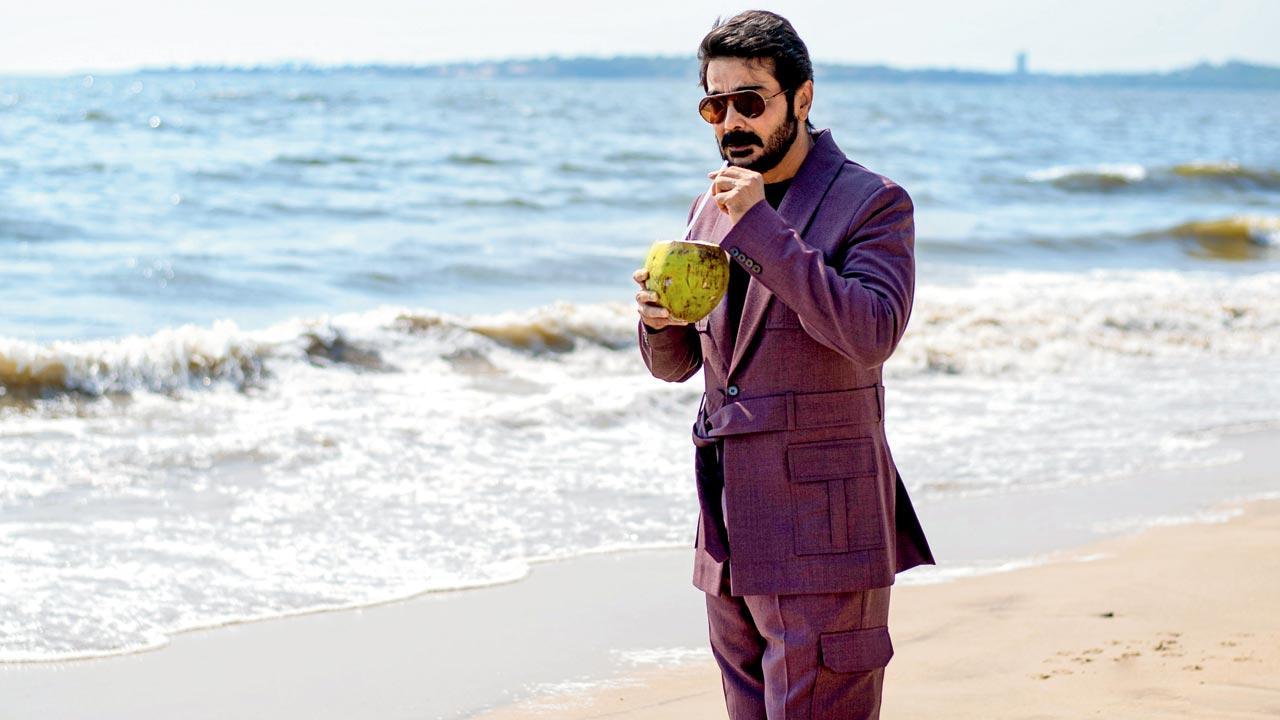
Prosenjit Chatterjee, Bengal’s ‘all three Khans rolled into one’, on finally taking the leap, with a permanent address in the city, where he’s been an on-off guest for 60 years
Mayank Shekhar (MID-DAY; July 28, 2023)
Bhalo kore bujhte paari, bolte paari na [Can understand Bengali, can’t speak it],” is how we break ice with actor Prosenjit Chatterjee, lovingly known as Bumba Da, over a Zoom call, because he’s on a shoot outside Mumbai. He’s suitably impressed.
Although, it must be said, such rudimentary understanding of Bangla, or Bengal, for that matter, can barely equip you to grasp the superstardom of Chatterjee, 61, from Kolkata. For whom Mumbai is now the new home: “I’ve bought a place in Andheri, got a car, driver, the full set-up.”
Younger Hindi audiences have lately discovered him in Vikramaditya Motwane’s series Jubilee (Prime Video), as the fit, dapper, Srikant Roy—a Don Corleone-like patriarch of the Hindi film industry, modelled on Bombay Talkies’ Himanshu Rai. Or as Jaideb Sen (based on crime journalist J Dey) in Hansal Mehta’s Scoop. Jubilee, his OTT debut, was his 349th production (mostly as the lead).
In the ’90s, when Chatterjee was a young lead actor in Bengal, and producer Pahlaj Nihalani “a star-maker in Bollywood”—having launched careers of the likes of Chunky Panday, Neelam, Suniel Shetty, Divya Bharti, Govinda—Nihalani sat the latter down once to introduce Chatterjee.
“Chi Chi,” he told Govinda, Bollywood’s hero no 1: “What are we even doing? Just look at this boy—he’s already crossed 200 films!” A one-man industry, alright.
Since his breakout hit in Bengali cinema with Sujit Guha’s Amar Sangi (1987)—the song ‘Chirodini’ from its soundtrack is an anthem in Bengal, still; the film ran for over 75 weeks in theatres—Chatterjee says he would “open around 12, 16 to 18 films a year [in Bengal]. In one of the years, I had 22 releases!”
Nihalani first got him over to Bombay/Bollywood, in 1990, Chatterjee recalls: “Pahlaj ji had produced a Bengali film with me. During the shoot, he’d tell me about what a star I am! Those were the days, you know—arrey, tu fight bhi itna accha karta hai, dance aur romance bhi, look good [you fight, dance, romance so well].”
His Hindi debut hence followed: “A grand launch party was held at Hotel Sun-n-Sand, with all Bollywood biggies attending. It was a big Bombay party.” Nihalani’s film Aandhiyaan, directed by David Dhawan, also marked the return of the living legend Mumtaz, who’d by then moved to America.
Mumtaz played Chatterjee’s mother in the movie (available on YouTube), which is a bizarrely Oedipal love story, if you may, between mom and son, with young Chatterjee as an overgrown school-kid, also literally dancing around trees with Mumtaz.
That said, Chatterjee recalls, “I got lots of offers from Bombay producers. People say I wasn’t pushy. But I was already working 20-22 hours a day in Kolkata, and booked for the next three years. Also, I am an emotional man. I knew my stardom came from the work of great many Kolkata directors, technicians, co-actors… I had to be with them.”
Chatterjee is quick to point out, on his own: “It’s not about being in your comfort zone. It’s playing to your strengths, to get to where you want. It’s the same with stars from the South. Look at Kamal [Haasan] ji—after Ek Duuje Ke Liye [1981], he didn’t shift base to Mumbai. I’ve learnt from my seniors.”
Which is in contrast to female, Bengali stars in Bollywood: “Oh, they’ve always ruled. There is the concept of the ‘Bangali beauty’. But they’re also great actors.
“I was speaking to Moushumi [Chatterjee] Di, recently. Or you take Sharmila [Tagore] ji. Jaya [Bhaduri/Bachchan] ji changed the pattern of acting, when she did films like Guddi (1971).
“People wanted to see Dharam [Dharmendra] ji and Rakhee [Gulzar] ji together.” Evidently, the male equivalent of the Bengali beauty standard in Bollywood have been Punjabi heroes.
Chatterjee himself is hardly new to Bollywood, or Mumbai, though. His association goes back to early ’60s, when his father, the popular Hindi film actor, Biswajeet, moved to the city. Biswajeet owned a bungalow on 7th Road in Juhu, and now lives in a swanky apartment nearby. He’s been in Juhu for “60 years since”.
Chatterjee recalls, “In 1963, when I was about five or six, along with my mother, sister, and [paternal] grandfather, we shifted to Bombay as well.
“I started schooling here. Only that my grandfather developed health issues. The water didn’t suit him. In those days, the bahu [daughter-in-law] had to take care of the sasur [father-in-law], since my grandmom was no more. And so we moved back to Kolkata.”
The parents subsequently divorced. Ever since, he says, his father has been “a guest in Kolkata, and I’ve been a guest in Mumbai—visiting every year during summer holidays, when I was a child.”
The Bombay of his growing up years doesn’t sound too far apart from his period piece, Jubilee: “I’ve played on Dilip [Kumar] Sahab’s lap. I think Biswajeet ji and Saira [Banu] ji were doing a film together. They’d go out for late dinners. Dilip Sahab liked to stay in. He’d asked to leave the bachcha [the kid] behind with him!”
“We spent a lot of time in Shakti [Samanta] Da’s house. And with Raj [Kapoor] ji. In fact, Raj ji and my father shared their birthday, December 15. They would call each other up and plan their parties, accordingly—Raj ji would host his on Dec 14, and my dad on Dec 15, and alternate it the following year.”
What does he miss from that Bombay? It’s an easy question, clearly: “Oh, the studios, the peculiar smell of raw stock, and the make-up room, where everyone gathered. Spot boys, that belonged to the studios then, who knew everybody’s personal tastes/requirements.
“The huge shooting floors, that could capture so much depth on camera. You can tell from the films of the time—there were no green screens and CGI then. Vikram [Vikramaditya Motwane] captured that really well in Jubilee. I know that technology has changed, and we don’t need such studios anymore. But those were our temples. RK Studio, in particular.”
RK is quite close to where we’re speaking to him over Zoom. It’s just turned into a posh apartment block: “I know. I feel something inside me, when I see it!”
Surely, it’d be the same with similar establishments in Kolkata. The other thing peculiarly common to Mumbai and Kolkata film sets, regardless, is the use of the endearment ‘Dada’ (elder brother), for all males in the technical crew—‘Spot Dada’, ‘Make-up Dada’, etc.
The ‘dada’ in Mumbai sets, of course, comes from Marathi. Which, Chatterjee reckons, has far more in common to Bengali cinema than one recognizes: “For years, I’ve been great friends with people in the Marathi film industry. They share their works with me. I share mine. Our storytelling styles are quite similar.”
His reasoning is simple: “Cinema bears its roots in literature and theatre, that are strong in both Bengali and Marathi cultures. I’m sure other cultures too. But in Bengali cinema, 49 out of 50 actors come from stage. As with Marathi. Likewise, both Marathi and Bengali languages have deep bases in literature.”
And how’s Mumbai and Kolkata different, outside the set, of course, given that the former is also now his home base. Culturally, in the absence of the ‘adda’, he says, “In Kolkata, if you’ve worked for a few hours, it’s fine for you to go, ‘Okay, bahut ho gaya kaam [enough work]. Aadha ghanta adda maarte hain [let’s chill for half an hour]. It’s impossible to do that in Mumbai. People interpret this [trait] differently [as lethargy, perhaps]. But I don’t see it that way.”
Also, he adds, “Both cities are changing a lot. Look at the night-life. Kolkata has gone ahead of Mumbai, in that regard. In Mumbai, I have started seeing streets clearing up after a point in the night. On Park Street in Kolkata, it feels like Christmas all year! People have really started enjoying life a lot there, especially after the pandemic.”
Chatterjee’s own social scene in Mumbai, it seems, starts and ends with Hotel Sun-n-Sand! The Juhu hotel, known as an adda for ’70s Bollywood, especially—you can watch it in practically every other film of the era—that, Chatterjee confesses, has been his home away from home, all along.
“I’ve been coming to Sun-n-Sand for the last 30 years. Now that I live in Andheri [West], my gym is still in that hotel. And if I’m free for even an hour, I just drive up for a cup of coffee there. My father had a suite in the hotel, I think, for a year and half, when he got his break in Bombay, with Bees Saal Baad (1959). I had a suite for quite a long time too.”
Which is true for several stars of the bygone era, the likes of Raaj Kumar, Dev Anand, who used to have an earmarked, year-round, staycation suite, in the sea-side hotel, that appears boutique, only by current standards. Waiters and old-timers often point to those suites as city landmarks of sorts. Which one was his? “402.” Okay, his Bangla fans got a shrine in Mumbai!
Chatterjee comes across as a creature of habit—something that might show in a lot of his mainstream works, that rightly kept the Bengali film industry’s fire burning, all through the decades, that he’d fuel it with dozen-odd movies a year. There was a switch of sorts, he reckons, in his head, therefore his career—“for about 10-12 years now.”
Its genesis lies in the much loved, middle-of-the-road director, Rituparno Ghosh (1963-2013), who offered him a “special appearance; just two days’ work” in the decidedly artsy, Unishe April (1994).
Chatterjee says, “He lit up a matchstick that was inside me. [Until then], I was making films for the audience, and I love them. If they don’t exist, neither do I. But while I am a star, I have to be the actor as well.”
Chatterjee worked with Ghosh for nine films. Dosar (2006), we tell him, is our favourite. The big one, of course, was Ghosh’s Chokher Bali, where he starred with Mumbai’s Aishwarya Rai.
He argues, “You know, people these days talk of ‘pan-India’ films. But Ritu Da, and Mani Ratnam [from Chennai], have been making them forever. When [Ratnam’s] Roja [1992] or Chokher Bali released, we just watched them in theatres, no matter where we were in the country. We never called them ‘pan-India’ films, did we?”
Working with artistic directors like Buddhadeb Dasgupta, Gautam Ghosh, and others, Chatterjee says he began travelling to international film festivals: “When I went to Toronto first, I realised, this is a completely new world, and they should equally look forward to my films. The idea is to win a new audience every day. In Mumbai now, it’s gratifying when people, who don’t know me from my past works, come up to me, in the gym, or when I’m out.”
And that’s been his North Star since. Especially, when he was offered Jubilee, before the pandemic: “I haven’t ever said yes to offers [from Mumbai] right away. As with Dibakar Banerjee’s Shanghai [2012], when he came to meet me in Kolkata. Or Vikram [Motwane]. I want to be convinced about why they want to cast me, first. When Hansal Mehta called me for Scoop, I just knew it was the sort of character that was missing from my repertoire.”
Also, this time on, Chatterjee could sense a wider tectonic shift taking place, among both the audiences, and the Hindi film industry: “It’s become possible for actors from across India to perform together. And it’s not just about films.” Meaning, the braver new world of OTTs as well.
Hence, Chatterjee, bought himself a permanent address in Mumbai: “I had done it before the pandemic. But, of course, I couldn’t move in then.”
And he’s also clear-cut about his professional goal. “I want to do big productions in Bombay, bearing in mind our treasure of [Bengali] literature, that our forefathers had so beautifully tapped into as well. Having been a student of cinema for 40 years, I want to direct now,” Chatterjee reveals.
As for Mumbai and his acting career, the most legendary story about him is how he’d turned down Maine Pyar Kiya, offered to him by the Barjatyas, before the role went to Salman Khan: “Well, I don’t like talking about it. The fact is the film gave Indian cinema its hugest star.”
Evidently, not the one who enjoys looking back much, Chatterjee is only excited for what’s ahead: “David Dhawan was the first person to call me, after he watched Jubilee, you know? He just went, ‘Yaar, tu phaad diya yaar, woh [Bollywood debut] Aandhiyaan ka hero nahin hai tu abhi’ [Killed it, you don’t seem like the hero from Aandhiyaan anymore].” Well, he’s also a Mumbaikar now.
Mumbai meri jaan?
Love about Mumbai
From the film industry perspective, it’s a city that hugely respects talent. They shower you with love and hugs for your body of work alone.
Hate about Mumbai
Honestly? Traffic. It’s gone to another level now, and it scares me. I’m sure things will improve with the metro.
Expectations from Mumbai
I hope, in the next four to five years, Mumbai will give me a home for my creative expression—an intellectual shelter, as a student of cinema, to reinvent myself.
Did Mumbai live up to it?
Especially, after Jubilee, I’d say, yes.
Will it remain forever home?
As it is, it’s my mother, who connects me to Kolkata, and my father [actor Biswajeet], to Mumbai. And now I have a home here as well.
Working across mediums doesn’t take away from my stardom, it elevates it-Prosenjit Chatterjee
8:18 AM
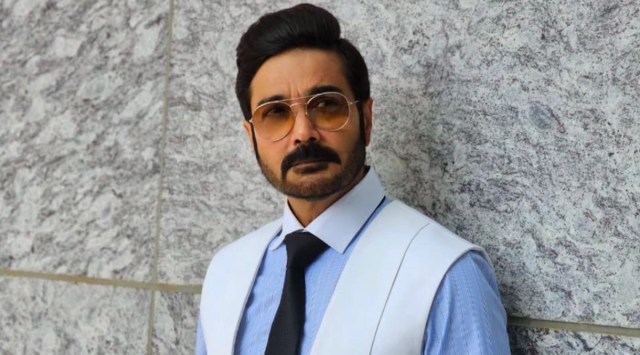
The actor, who made his web debut with Jubilee, talks about experimenting with various mediums, his long, successful career in films and more...
Madhureeta Mukherjee (BOMBAY TIMES; July 2, 2023)
Superstar of Bengali cinema, Prosenjit Chatterjee, recently made a remarkable debut on OTT with Jubilee. The actor, who has reigned in his industry for over three decades, as a leading commercial star and has also shown his acting prowess in parallel cinema – which is rare, says that even today, he feels like a frontbencher on set. And in his words, Prosenjit says, “I am ready to take on any challenge to do different kinds of roles, such is my hunger as an actor.” In a conversation with us, he talks about how he lives and breathes cinema.
You recently made a remarkable web debut with the show Jubilee and followed it up with Scoop. Prior to this, in the Bollywood space, you were seen in Shanghai. As a superstar in Bengali cinema, didn’t you want to explore more roles in Hindi cinema, or was the work that was offered to you here not creatively exciting?
After my debut film in Hindi (David Dhawan’s Aandhiyan), while I was shooting in Mumbai for a Bengali film, Pahlaj Nihalini told me, ‘You are a big star, chalo film karte hai.’ I did some more films here, but I never planned or structured my career in Bollywood. I was a rockstar in mainstream Bengali cinema. I had 22 releases in one year. I felt that I was not alone and that I was taking an industry along with me. In Bengal, people would say that I was number 1 and 2, 3, 4, in mainstream cinema. I wasn’t sure that if had come here (Bollywood), I would have become Shah Rukh Khan. If I had taken that chance, I probably wouldn’t have done justice to the filmmakers in Bengali cinema, as they were the ones who believed in me and made me a star. Today, I can do that because I don’t have those challenges. My intent is to get one new audience every day. I like the fact that my audience cuts across generations. I love to work with new directors. Yes, I am a star, but I broke that image for my films. OTT is the future, and all the big actors are doing it. I don’t think working in different mediums takes away from my stardom, it elevates it.
You made a shift from mainstream to middle-of-the-road Bengali cinema at some point, was that well thought through?
Yes, it was planned. I knew back then that the language of cinema would change. Even before I did Srijit Mukherji’s Autograph, I saw the growth of multiplexes. Every ten years, in our cinema, there has to be a shift in the audiences’ tastes. In my own way, I have observed and studied the change that is going to happen. For over 30 years, I have been a mainstream commercial actor, and I am grateful that this is not my area now. I had created a record of sorts—where I was shooting in my own city (Kolkata) for 19 days at a stretch but didn’t go home for 19 days. Back then, there were no vanity vans, so I would sleep in my car. Now I tell the younger actors, ‘Abhi aap log isko aage le jao (laughs!)’. I am enjoying what I am doing now.
But you do believe that commercial cinema needs to thrive, right?
Yes, absolutely! It has to survive, but we have to do it differently. What is commercial cinema – one that will be watched by people in large numbers? But why do we think that the audience will not understand good cinema – whether it’s commercial or not? We are underestimating the audience. Rituparno Ghosh would tell me that he cast me in Chokher Bali, as he, too, wanted to cross that border. So, I feel I need to support this kind of cinema (middle-of-the-road). Chokher Bali that was made 20 years ago, was a pan-India film, but at that time, no one would talk about it. We didn’t do it for business, today, it is a business model.
Bengal has given us so many iconic filmmakers and actors, what do you think the Bengali film industry needs to do to expand the reach of their cinema and get their footprint pan-India?
Cinema of every language has its own strength, and we need to tap that. Bengali cinema won’t be able to do a Baahubali or an RRR right now, and it’s not because of the budget. Bangla’s strength lies in its literature. We need to make subjects that stem from there and resonate across audiences. Why did I like Kantara? It’s because it struck a chord as it spoke about something close to their culture, which I wasn’t aware of. We need to give the larger audience those subjects that are close to our culture. I would love to do South films and Marathi films. The Marathi film industry has such great actors and directors.
Is your son Mishuk showing a keen interest in becoming an actor?
He is a big fan of Shah Rukh Khan and Bengali actor Dev. He’s a good footballer, and now he’s turned 18 and I feel ki usko actor banna hai. I have told him that I will help him prepare and guide him as I know what a commercial actor needs to do and be. But then, mein usko market mein chhod doonga. I have told him that I am not going to launch him, even I wasn’t launched by anyone. His journey has to be his.
Initially, OTT was all about sex and violence, which is not the case any more-Prosenjit Chatterjee
8:30 AM

Actor Prosenjit Chatterjee feels this is the right time to explore the digital space
Sugandha Rawal (BOMBAY TIMES; June 10, 2023)
The latest addition to the growing list of mainstream actors foraying into the OTT space, Prosenjit Chatterjee made his web debut with Jubilee, and followed it Hansal Mehta’s investigative drama, Scoop. Calling it the “right time” to explore the digital space, the actor feels the medium has moved on from the “sex and violence” phase — that it heavily relied on initially — and is now embracing wholesome stories.
In Jubilee, the actor, mainly known for his work in Bengali cinema, essayed the role of a fictional yesteryear film tycoon, Srikant Roy — a ruthless, ambitious yet vulnerable movie maker. Meanwhile, in Scoop, he portrays the character based on late journalist Jyotirmoy Dey, whose murder in 2011 shook the entire media fraternity.
In a candid chat, Chatterjee opens up about his journey so far and comparisons with other mediums that’s inevitable.
After your OTT debut, there wasn’t much gap before your second show also released. Was it a conscious choice to have back-to-back outings?
No, it wasn’t. While Jubilee was a very planned thing, I did not know Scoop would be out so soon. Jubilee was pushed almost by a year because of the pandemic. Such decisions are not in my hands. Also, I did Scoop only for Hansal, who is a dear friend.
Was there any particular moment that led to the decision that you want to venture into a new medium?
We can’t sit and plan such things. Like, we didn’t know OTT platforms would be so big in India, or Jubilee would become this big — critically, technically, and commercially. I started my career through Bengali films, and have seen the industry change in the last 40 years. I’m always keen on working with new directors. As an actor, it allows me scope to reinvent. And both these OTT shows did that.
You talked about the growth of OTT platforms during the pandemic, and we have seen content and talent from regional industries garnering a lot of praise. Do you feel these language barriers are finally being broken?
When we say India produces the largest number of films and shows, we are not just talking about Hindi, Bengali, Punjabi, Tamil, Telugu, or Marathi. But collective projects. With OTT platforms coming in, the best thing we all can say is that we are making Indian content. I might be sitting in Mumbai or Punjab, and making content that will be watched across the country. We are pan India in the true sense because of the medium. In terms of the storytelling, too, there are some stories which directors can’t do [justice to] in cinemas, but digital is a great platform to tell those stories. Not to forget documentation, which isn’t there is case of theatrical releases. For instance, Jubilee, even after 20 years, if somebody wants to watch the show, they can watch it.
The medium often gets called out for being too explicit and at times, vulgar — either in the language or scenes. Do you feel there needs to be censorship for the web?
Not censorship, but there has to be a way similar to television. The small screen has some rules and regulations. They should be for the OTT world, too. Also, the responsibility lies with the makers about the content they put out. However, I feel that phase has gone. Initially, it was [all] about sex and violence, which is not the case any more, at least not as much as it was earlier. That’s the reason why people are now watching [shows such as] Rocket Boys, Jubilee or Scam 1992. Audiences have also started watching content from a different perspective, which is great.
How do you define the present OTT phase?
OTT reaches out to a wider audience base. The vision is the same as television, though it will take some more time to get there.
After Prosenjit Chatterjee’s remark, regional actors call out Bollywood
8:28 AM

Bengali actor Prosenjit Chatterjee’s ‘Bollywood does not offer a lot of work to regional actors’ remark has found the support of a number of such artistes. Some of them share their tales of struggle and survival
Syeda Eba Fatima (HINDUSTAN TIMES; June 10, 2023)

Seerat Kapoor, Telugu actor
Yes, I have faced rejections [in the Hindi film industry]. But, I am not one to take rejections in a negative way. I believe that if you understand who you are as an actor and what you can bring to the table, sooner or later, you will attract people (makers) who will capitalise on that. If a movie has not worked out, it does not mean you don’t fit it. So, I am okay to let those [projects] go.
Pratik Gandhi, Gujarati actor
Forget getting rejected; regional actors from Gujarat are not even given opportunities to audition. Even if they do, it’s very hard to bag the project. Also, Gujarati actors trying to enter Bollywood are typecast. The characters offered are caricature-ish — someone who is loud, funny and has a very heavy accent. I did a few projects like those initially, like Mitron (2018)... It’s difficult to break that image.
Raima Sen, Bengali actor
They (Hindi filmmakers) use us mostly when the film is loosely based on Bengal. Also, in Bollywood, it’s about survival of the fittest. There are new faces trying to step into the industry every day. There is enough talent there; they (makers) want to protect their people and give them a chance. I understand all of this because we also make a couple of films with people from Mumbai. But, we also need to protect our industry and work with our own people.
Navin Prabhakar, Marathi actor and comedian
In the last 12 years, every time I tried to step into the Hindi film industry, I felt there is a lot of partiality. The first thing we get to hear is, ‘We need an upmarket look’. Also, there is a lot of negotiation that happens when it comes to our salary. Itna zyada ho jaata hai ki kabhi kabhi main kaam hi chhodh deta hoon.
Siddharth Jadhav, Marathi actor
I’m happy working in regional films. I take opportunities from Hindi filmmakers as and when they’re offered to me; I’m not desperately looking for it. Whatever work I am doing in Bollywood is because of my Marathi filmography. When they see me doing good work, I get good offers from Hindi filmmakers, like Rohit Shetty.

With Devi Chowdhuran, I wish to see Bengali films scale new heights-Prosenjit Chatterjee
7:59 AM

Prosenjit Chatterjee, Subhrajit Mitra and Sham Kaushal
Prosenjit on fronting Devi Chowdhurani, which is being designed as the first Bengali pan-India film, with Bollywood action director Sham Kaushal designing stunts
Upala KBR (MID-DAY; May 11, 2023)
In recent years, regional films have taken centre-stage, with the success of south movies showing that a strong story has a pan-India appeal. Encouraged by this, director Subhrajit Mitra is attempting his first pan-India Bengali movie, Devi Chowdhurani, which is based on the novel of the same name by Bankim Chandra Chattopadhyay. The big-budget historical drama stars Bengali superstar Prosenjit Chatterjee, Srabanti Chatterjee and Sabyasachi Chakrabarty, and has Bollywood action director Sham Kaushal designing the stunts.
Mitra, whose Avijatrik (2021) won the National Award for Best Bengali Feature Film, says that his period drama borrows as much from Chattopadhyay’s novel as it does from historical events.
He says, “The novel narrates the journey of a village girl who eventually becomes the first Indian woman freedom fighter, in the later part of the 18th century. Bhavani Charan Pathak led the first armed revolution by Indians against the East India Company.”
When reimagining the story, he could only envision Prosenjit as Pathak, a Hindu monk who took up arms to save his land.
It was a no-brainer to be part of the grand period drama, says the superstar. “I was fascinated with the film’s mounting and visualisation. This is an ambitious project. With this, I wish to see Bengali films scale new heights.”
Chakrabarty, who plays zamindar Haraballabh Rai — the character that sets into motion the chain of events — says, “After reading the script, I wanted to be associated with it.”
Claiming that it will be the most expensive Bengali film to date, director Mitra adds that the principal shoot will be conducted after the monsoon. The movie will be shot in Bengali, and dubbed in Hindi, English, Tamil, Telugu, Kannada and Malayalam. Action director Kaushal is naturally excited about his maiden Bengali project.
“Today, there is no such [demarcation] as regional cinema or Hindi cinema. Emotions are universal, and people across the world [connect with] a good story,” he says.
Earlier Poila Boishakh would see a lot of film mahurats, I miss that-Prosenjit Chatterjee
8:39 AM

Debarati S Sen (BOMBAY TIMES; April 15, 2023)
For Prosenjit Chatterjee, one of the leading stars of Bengali cinema, Poila Boishakh (Bengali New Year) has always been a day that holds a special place in his heart. For him, this day is an emotion and encompasses a lot, right from, “pujo (puja), traditional outfits, to Bangali khabar (Bengali cuisine) and much more”. The actor who was in Mumbai recently, spoke exclusively to Bombay Times as he shared some fond memories about this special day.
“Till a few years ago, this day would see a lot of Bengali film mahurats. Every studio would have about two to three mahurats of films. There would be pandals put up and shehnai would play at all the studios which were beautifully decked up for the occasion. People attending would be served hot luchi and alur torkari (puri and alu) and soft drinks. I would attend all the mahurats of not just my films, but also other films! Poila Boishak would mark the beginning of a new film. I really miss all that. This concept of mahurats has now gone out of fashion in our cinema,” says Prosenjit.
The actor has a special connect with this day and says that he loves the overall vibe of this day. “I love the ambience of this festive day, when everyone is in a holiday mood, young people are out on the streets in Kolkata, wearing traditional saris and dhuti panjabi (dhoti and kurta). For Bengalis, the first day of the New Year begins with pujo, wearing new clothes, eating home cooked delicacies and having family gatherings.”
Talking about his growing up years, the Bengali star who has also done notable roles in Hindi cinema and web shows, says, “When we were kids, things were different, but even today, I like to follow certain rituals like buying new clothes for my family members, and getting special delicacies prepared at home. For two days leading up to Poila Boishak, sweet shops in Kolkata have hundreds of people queuing up to buy mishti (sweets). ”
For Prosenjit, having sweets made at home holds a special meaning. “When we were kids, we would only have malpuas that were made by my maa, mashi, thakuma, didima, (our mothers, aunts and grandmoms). In those days feeding home cooked food was a sign of love and the immense love that our mother figures felt was showcased through the delicacies that they made on days like this. I love malpua and bonde aar doi (boondi with curd). That is the best sweet dish in the world, and the most delicious,” shares the actor.
I cried when Sufiyum Sujatayum released on OTT-Aditi Rao Hydari
8:28 AM

From initially being skeptical of the web world to landing a defining role in Jubilee, Aditi Rao Hydari credits directors for telling unheard stories and backing talent
Priyanka Sharma (MID-DAY; April 13, 2023)
At the start of 2023, Aditi Rao Hydari was yet to have a taste of web series. Four months on, she sits pretty with two OTT shows, Taj: Divided by Blood and Jubilee, behind her. Vikramaditya Motwane’s offering has won the actor rich praise for her portrayal of Sumitra Kumari, a much-loved movie star of the ’40s who finds herself a mere pawn in her studio owner-husband’s grand plans.
Despite her 14 years in the Hindi film industry, one senses it’s finally the long-format storytelling that has tapped into Hydari’s potential.
To the actor, however, the vision of filmmakers, not the medium, is key. “The onus of utilizing actors and their talent is on directors and producers. They have to be able to imagine us in roles and have the courage to feature us. Do they have the courage to tell those stories and fight those battles where they are nurturing talent? That is the question,” she asserts.
She cites the Amazon Prime Video offering as the perfect example of a project that gives equal footing to all its cast members — Prosenjit Chatterjee, Aparshakti Khurana, Sidhant Gupta and Wamiqa Gabbi — regardless of their stardom.
“It’s not like Bumba da [Chatterjee], Apar and I are the only ones on its poster; Sidhant and Wamiqa are too. It’s important to encourage people who are good [at their craft]. I have worked with Sidhant in the past, and he is a good actor. Wamiqa has extensively worked in Punjabi films.”
Distinguishing between OTT and big-screen releases is a myopic view, argues Hydari, who has another web series in Sanjay Leela Bhansali’s Heeramandi. She reveals that her own perspective on the so-called hierarchy changed when her Malayalam film, Sufiyum Sujatayum (2020), released digitally despite being planned as a theatrical offering.
“We had to release it on OTT as theatres were shut during the lockdown. I cried then because it was my first Malayalam film, and a beautiful love story at that. But when it released, the response [was overwhelming]. People told me they didn’t understand Malayalam, but it’s their favourite film. So, how does it matter how you reach the audience? I believe in working with good directors and being a part of good [projects]. It doesn’t matter if it’s a theatrical film, an OTT film or a series.”
When explaining the role of Srikant from Jubilee, Vikramaditya Motwane told me, ‘I just want The Godfather’-Prosenjit Chatterjee
8:34 AM
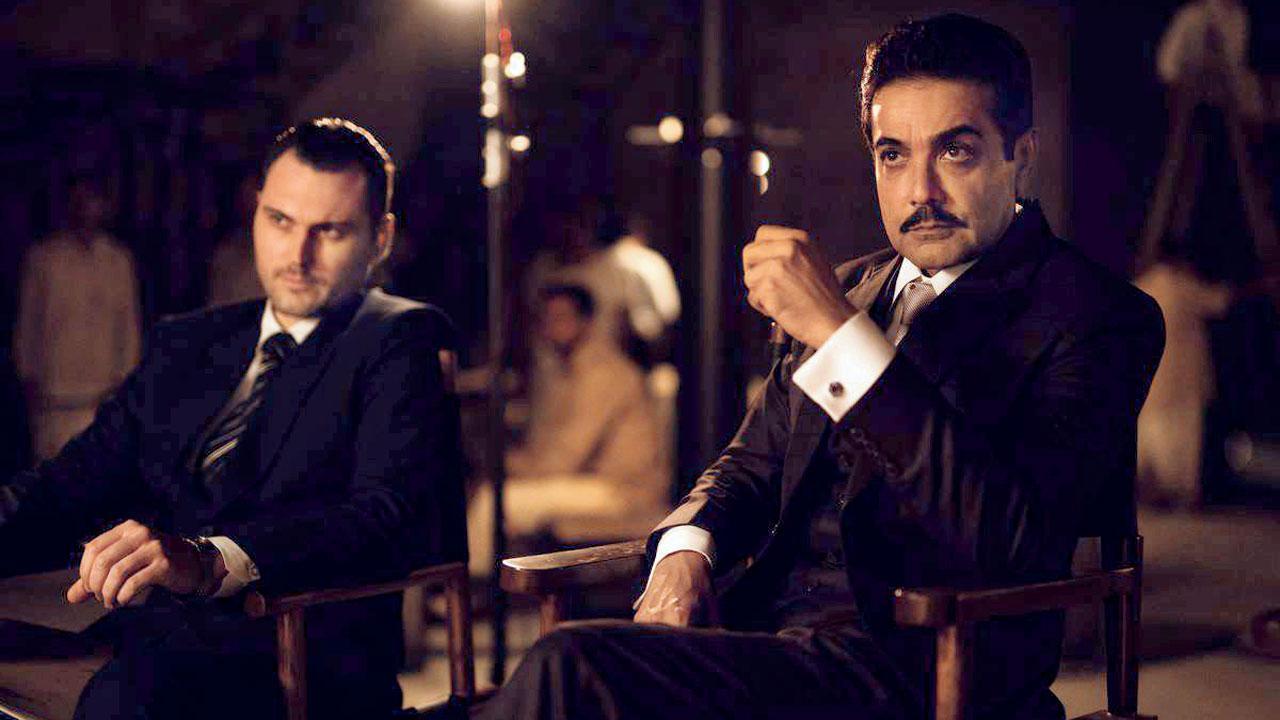
As he makes his OTT debut with Motwane’s widely praised Jubilee, Bengali superstar Prosenjit Chatterjee on how he approached his movie mogul role
Upala KBR (MID-DAY; April 10, 2023)
“Since Friday, his phone hasn’t stopped ringing,” Prosenjit Chatterjee says. Some calls are from members in the Hindi film industry, others from his peers in Bengali cinema. They all have the same thing to say — that Jubilee deserves a round of applause. “I couldn’t have asked for a better OTT debut,” beams Chatterjee, who has dominated Bengali cinema for almost four decades.
With Jubilee, creator-director Vikramaditya Motwane goes back to the Hindi film industry of the ’40s and ’50s. Chatterjee plays Srikant Roy, a powerful movie mogul owning Roy Talkies and a star-maker in his own right. The actor says he had two reasons to give his nod to the Amazon Prime Video offering — his love for that era’s cinema, and the opportunity to work with Motwane.
“Vikram is one of the finest directors of new-age cinema. When he narrated the subject to me, he said that from the day he started penning it six years ago, he had only me in mind for Srikant Roy. What makes him one of the finest directors is that even today, he [behaves like] an assistant director — he will do everything himself. Also, I know about people from that era, and their contribution to Indian cinema. One of my favourite films has been Guru Dutt’s Kaagaz Ke Phool [1959]. When I entered Jubilee’s set, I hugged Vikram and told him that he had fulfilled one of my dreams.”
Motwane’s character brief to the senior actor was pithy: “Srikant Roy is a king who only believes in his cinema”. Chatterjee brought in gravitas and restraint to the part.
“Aditi [Rao Hydari] and my characters are simmering with emotions, but cannot show them. After playing many roles, we get the maturity to handle such parts; expressing [every emotion] through our attitude, eyes and body language. [When explaining the role of] Srikant, Vikram told me, ‘I just want The Godfather.’”
The Bengali superstar is probably best remembered in Bollywood for his act in Shanghai (2012). Asked why he hasn’t been seen in Hindi cinema after Traffic (2016), he quips, “Vikram didn’t [consider] me for his last projects. I need good directors who know my body of work. Hindi movie directors, including Anurag Kashyap and Anurag Basu, have said that it’s not easy casting me as the roles are not challenging enough. I’ve been around for over 30 years. David Dhawan, who gave me my first Hindi film [Aandhiyan], told me I was mind-blowing in Jubilee. I have reached a position today where the roles have to excite me, not the project alone.”
Up next, he has the Bengali film, Shesh Pata.
Gujarat’s magnificent heritage sites continue to attract filmmakers
7:27 AM

Abhimanyu Mishra (BOMBAY TIMES; November 27, 2021)
Gujarat is home to a number of heritage structures. While some are known for their historical significance, others attract thousands of tourists for their structural beauty. And filmmakers are no exception. Be it Bollywood, the regional film industry, or filmmakers from the Southern film industries, a number of films have captured the timeless beauty of these heritage monuments that sizzle on the silver screen adding more beauty to every scene.
Be it the Ahmedabad’s Adalaj Ni Vav, Jama Masjid, Ellis Bridge or the pol houses, or Vadodara’s Laxmi Vilas Palace, the fort of Devgadh Baria, Gondal Palace and Champaner’s Jami Masjid, these marvellous gems have remained in the backdrop in some memorable films. As we celebrated Heritage Week recently, we tell you what’s about these heritage sites that continue to attract filmmakers from across film industries:

‘THESE BEAUTIFUL MONUMENTS ADD SO MUCH TO A SCENE’
Giving a perfect take with the majestic Laxmi Vilas Palace in the background, shooting around the beautifully carved pillars at Champaner’s Jami Masjid, or capturing the beauty of Adalaj Ni Vav, the heritage sites add a lot of character to the scene, believe filmmakers. “The heritage sites in Gujarat are known for their architectural beauty and bring a very unique aesthetic to the film. It is hard to get that kind of essence anywhere else,” says filmmaker Vipul Mehta.
Others feel that heritage sites like the pol houses of Ahmedabad are so deeply ingrained in the culture, that shooting a scene there effortlessly brings that cultural nuance of life. Filmmaker Tapan Vyas says, “The heritage sites like the pol houses are such an important part of the Gujarati culture, that the moment you shoot a scene there, it adds that cultural richness into it. You can’t recreate that essence anywhere else.”

‘IT’S A DELIGHT TO SHOOT AT THESE MAJESTIC SITES’
Their architectural beauty and majestic structures not only make a scene look beautiful, but it also is a delight for the actors to shoot in such lovely locales. Several actors, who have shot at different heritage sites in Gujarat have gone back to visit.
Actress Nandana Sen, who shot for the film Rang Rasiya at the Laxmi Vilas Palace in Vadodara, had told us, “Shooting at the Laxmi Vilas Palace was magical and will remain one of my favourite memories in life. It’s a really majestic palace and also, the museum is a treasure trove of some great paintings by Raja Ravi Varma.”
In 2016, a Hindi film starring Prosenjit Chatterjee was shot at Darbargadh, a large haveli, in Bhadarwa. Bhadarwa, an approximately 45 minutes’ drive from Vadodara, was a princely state once. At that time, Prosenjit had told us, “When I stood at the terrace of Darbargadh, I fell in love with the location. I loved the view from the top. We don’t get to see too many havelis like this anymore and it was an absolute delight to shoot here. It is one of those rare locations which can add a lot of value to a film.”

‘THE PROCESS OF GETTING PERMISSION IS EASY, AND PEOPLE ARE QUITE HELPFUL’
For long, Gujarat has been one of the easiest states for getting shooting permissions. And getting permission to shoot at a heritage site is no exception. The only criteria film crew members must follow is that there should be no damage to the property. “The state government has made the process of getting the permissions quite easy. And it is a big help for the local industry as well as for filmmakers coming from Bollywood as such shoots help in generating revenue,” says producer Harsh Vasanani.
In 2012, some portions of the film Grand Masti were shot at the Laxmi Vilas Palace in Vadodara. Producer Ashok Thakeria had told us, “We loved shooting at the Laxmi Vilas Palace. It was an unforgettable experience. In Gujarat, people go out of their way to help and that makes shooting a cakewalk.”
— With inputs from Soumitra Das

A Hindi film starring Prosenjit Chatterjee was shot at Darbargadh, a large haveli, in Bhadarwa
Prosenjit Chatterjee trolled for seeking political ‘help’ over food delivery app
8:01 AM

HINDUSTAN TIMES (November 8, 2021)
Bengali superstar Prosenjit Chatterjee on Saturday took to Twitter to draw the attention of Prime Minister Narendra Modi and Chief Minister of West Bengal Mamata Banerjee to the “necessary” issue of non-delivery of items by an online food aggregator, and said talks should be initiated in the matter.
In an open letter, Chatterjee vented out his grievance, stating that “the status of the order changed to delivered” without him having received any food item.
The National Award-winning actor, however, clarified that money was refunded to his account. His tweet instantly triggered a mixed bag of reactions, with some mocking him for the open letter, and others coming out in support.
A few account-holders quipped that it was an “international” issue that calls for attention.
Chatterjee, in his letter, said, “What if someone relies on a food app to get food delivered for their guests and their food never arrives? What is someone is depending on these food apps for their dinner? Will they stay hungry? Thus I felt it was necessary to talk about it.”
The 59-year-old superstar, when contacted, said he held no personal grudge against these aggregators, but “there should be some accountability”.
“I wrote to the PM and the CM as I believe such services should be handled responsibly. If the elderly or those ill have to keep waiting for food after ordering items online. If the food doesn’t arrive, imagine their plight. Garments can be delivered late among other non-essentials, but the same does not apply for food,” he told PTI.
Asked if he has something to say to those who trolled him over the post and Chatterjee said that he wanted to raise the issue as a common citizen and not a celebrity.
He said he still uses delivery apps, adding, “I think they have been of great help to people. But my tweet focuses on a pertinent issue,” he added.
Buddhadeb Dasgupta's shots were like a choreographed scene-Prosenjit Chatterjee
8:08 AM
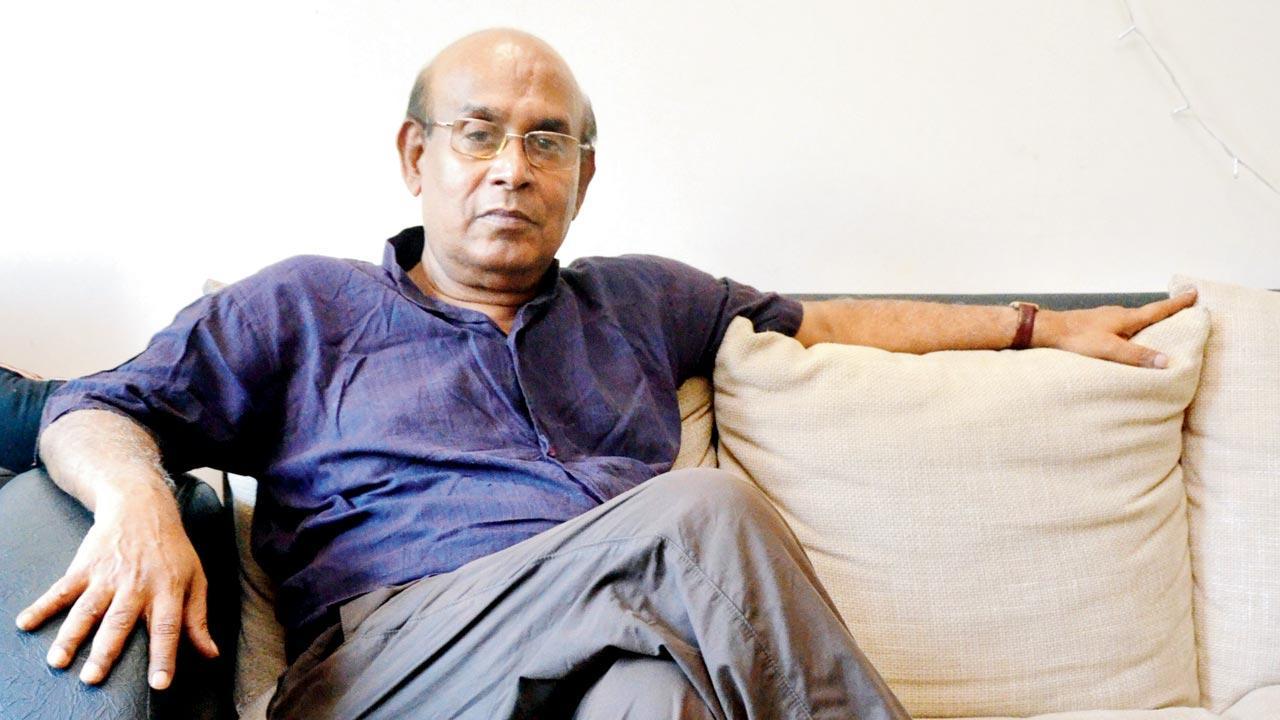
Prosenjit Chatterjee pays tribute to the legendary filmmaker, Buddhadeb Dasgupta, who passed away at 77
As told to Upala KBR (MID-DAY; June 11, 2021)
I was lucky to do two films with Buddha da – Swapner Din [2004] and Ami, Yasin Ar Amar Madhubala [2007]. Unfortunately, they never got a proper commercial release in India. Ami, Yasin Ar Amar Madhubala was screened at Toronto Film Festival and Swapner Din won the Best Film [gong] at the National Awards. He wanted me to do Kaalpurush [2005], where I was to play Mithun da’s [Chakraborty] son, but our dates didn’t match. [I couldn’t be part of] Uttara [2000] because I couldn’t go bald and put on weight [at the time].
Parallel cinema has a [restricted] budget, but we never asked for remuneration as we wanted to work in such films. When I went to meet Buddha da for the narration of Swapner Din, the first thing he told me was, ‘Ami tomake ekta gamchar taka debo [I can pay you the price of a cotton towel].’ I had to change my look to that of an ordinary boy and tone down my skin [colour]. He didn’t think that a successful mainstream hero would go out of his way, put his heart and mind into the role. He was happy. Buddha da would tell people, ‘Prosenjit is a dedicated director’s actor because he is always with the director — from the shoot to managing the sequences and coming up with solutions’.
Buddha da had a huge fan-following at international film festivals and his movies catered to that audience. Hence, all his movies had an international touch. The way he would set up his cameras, by putting one trolley on top of another, and choreograph their movements was different. He worked with the best cameramen and his lighting created magic. I remember we once shot with lanterns for a scene in a dhaba. [Despite] minimal light, it looked completely natural. If actors couldn’t understand the frame, Buddhada would call for me and ask me to rehearse with the rest of the actors.
Every sequence that I have shot with Buddha da was challenging. In Swapner Din, there was a chase sequence where the police were firing at us. Buddha da wanted a real gun for the shot [licensed and brought from Kolkata]. It was a scary moment for me, but dada wanted it. I will never forget that scene in my life. We did rehearsals and workshops at his home before the shoot began. He would take just two to three shots in a day. The first shot had to be filmed at 4.30-5 am to coincide with the sunrise. He considered it the magic hour. So, we rehearsed for the scenes at 2.30 am. [Post] 6: pm, it was pack-up unless there was a night scene. His shots were like one fully choreographed scene and if anything disrupted it — like a cow or person walking across the background — the scene would be shifted to the next day. Buddha da would not take another shot of the same scene that day.
I need to be convinced as to why a director wants to cast me in their Hindi films-Prosenjit Chatterjee
8:11 AM

Titas Chowdhury (HINDUSTAN TIMES; April 15, 2021)
Nine years after his film Shanghai (2012) released, Prosenjit Chatterjee has returned to Mumbai to shoot for his upcoming Hindi language project. The actor had recently kick-started the first schedule of his debut web series, titled Stardust, in the city. He says that the spike in Covid-19 cases and shoots getting stalled are surely matters of concern, but one has to push their fears back and keep working once they resume.
“The situation is tough not just for actors but technicians, too. Shooting during these times will be a major challenge. But this is an exercise that we need to learn and adapt to. There is a fear button within all of us, but we should know when to turn it off,” Chatterjee says.
Ask him about what kept him away from the Hindi entertainment industry for so long and the Bengali film star says, “It’s not like I consciously kept myself away. When Dibakar Banerjee (filmmaker) had approached me for Shanghai, my first question to him was why he wanted to cast me in his Hindi directorial. The same thing happened when Vikramaditya Motwane (filmmaker) approached me for my upcoming collaboration with him. I need to be convinced as to why a director wants to cast me in their Hindi films.”
On the occasion of the Bengali New Year, the 58-year-old says that had the situation been normal, he would have flown back to Kolkata (West Bengal) to spend the day with his family.
So, what is his wish for this new year? “It is going to be a year-and-a-half that we’re living with the pandemic. I pray to God that we overcome this and go back to our normal lives. The process of vaccination has started and I hope we all get vaccinated soon. I also wish for everyone’s good health,” he signs off.
Powerhouse performers Pankaj Tripathi, Nawazuddin Siddiqui to come together?
7:49 AM

Celebrated Bengali director Kaushik Ganguly keen to cast Pankaj, Nawazuddin for Hindi adaptation of his 2019 film Jyeshthoputro
Mohar Basu (MID-DAY; March 11, 2021)
Even as Bengali filmmaker Kaushik Ganguly is set to foray into Bollywood with Manohar Pandey, he has begun work on his second Hindi feature. The multiple National Award-winning filmmaker has decided to adapt his 2019 film Jyeshthoputro. While the original featured Prosenjit Chatterjee and Ritwick Chakraborty as two brothers, Ganguly is in talks with Pankaj Tripathi for the lead role. The director is apparently keen to cast Nawazuddin Siddiqui as the parallel lead.
“The story was originally conceived by the late Rituparno Ghosh. It focuses on the quiet discord between two brothers — one, a reigning superstar and the other, an arguably more talented but unsuccessful actor. Since the film heavily relies on performances, Kaushik dada wants powerful actors to lead the narrative. He is awaiting a nod from Pankaj sir,” reveals a source. In the meantime, the director and Gullak writer Durgesh Singh are working on the final draft of the adapted screenplay.
When mid-day reached out to Tripathi, he said, “There’s nothing concrete at the moment. It’s difficult to say anything about a project that will start in 2022. There is a possibility of working with him. I love his work, especially Nagarkirtan [2017]. Let’s see what the future has in store.”
Netaji’s charisma, Gumnaami’s enigma: How Prosenjit Chatterjee and Srijit Mukherji captured both
8:15 AM

Chandrima Pal (BOMBAY TIMES; January 24, 2021)

Is Gumnaami an articulation of the angst that Bengalis have always felt about Netaji not getting his due in Indian history?
Srijit: I generally feel the angst and not-getting-our-due kind of sentiments work majorly with Bengalis. But unfortunately that has expressed itself much more strongly and violently in the case of Sourav Ganguly than Subhas Chandra Bose. That sentiment came out whenever Sourav was unfairly dropped.
In the case of Subhas Bose, apart from the undying sentiment that he is going to return, politically he was considered to be a tragic hero, that is all. Unfairness or not getting his due, are phrases I would have liked our previous generations to come up with, and act upon and position themselves strongly. I have not seen evidence of that happening.
Prosenjit, what drew you to the film?
Srijit’s reasoning, his issue was different. I was not going for any controversy — my job was to deliver as per the director’s requirement. Initially for months, I tried to convince Srijit that I was okay with playing Gumnaami Baba, but I completely disagreed with his idea of casting me as Subhas Chandra Bose. I do not look like Netaji from any angle! But then, if any actor in the world got a chance to play any of the characters – Hitler, Lenin, Rabindranath, Vivekananda, Gandhi ji, will he not take up the challenge?
Srijit, you based your film on the various commissions, hypotheses, some facts and some hearsay. A lot of things were fictionalised as well. How did you sift through all this to arrive at your narrative?
Questions needed to be asked, theories needed to be discussed, truth is something which we can come to later. We need to ask the questions first. Systematically, over the last few decades, questions have been muffled, people have been misled, commissions made in a makeshift kind of manner, not with the rigour one of our greatest national heroes deserves. As a result, the common Indian who breathes free India’s air, he/she is pushed away further and further away from the truth. My narrative was about asking those questions. Think about it, how can you make a film like Gandhi without Subhas Bose? They were intrinsically entwined in the freedom struggle.
What happened when you raised these questions?
Srijit: I faced roadblocks, death threats, high court injunctions, was trolled, bullied. When these happen, you know you are on the right track. Because these questions put a lot of committees, parties, their fundings, certain lobbies, factions of Netaji’s family under the scanner. It was not an easy journey. But we owed this as a collective populace of a free country to a person who probably is the most important reason why we are free.
All the three theories – the plane crash, death in Russia and his return to India as Gumnaami Baba, need to be known and discussed. Sides need to be taken. And I have taken a side.
Prosenjit, while we are all more or familiar with Netaji — his appearance, his gait, his voice, there is a lot of intrigue about Gumnaami Baba. Which was the more challenging role for you to portray?
With Netaji, I could not get creative. I had to get the look, the gait, the jaw line spot on. But Srijit told me, Gumnaami Baba is a confusion, an enigma. Just as you have to be convincing as Subhas, as Gumnaami Baba, you have to be like him, but not entirely. So that there is some doubt in the audience’s mind.
So, I worked on the dubbing and the makeup. My voice as Gumnaami Baba will remind you of Subhas. But he is an older man and so he will sound different, even though his mannerisms would be similar. We worked for hours on just the dubbing to get it right.
Srijit, you’ve said in your film that Netaji was a man of contradictions. Is that why he’s a prime candidate for cultural and ideological appropriation?
So here, we’ve a devout Hindu who worshipped idols, but who’s very secular, whose right-hand man was a Muslim and an army full of Muslim generals, and yet the party which he formed eventually became a part of the Left combine. His venn diagram is incredible! On top of that he was a stupendous political strategist and a selfless son of India. He was a giant in every sense. It’s but natural for everyone to come and pick what’s convenient for them and appropriate Netaji for themselves.
Prosenjit, besides getting the look of Netaji right and that Gumnaami Baba’s voice inflexion, what gave you the most creative satisfaction?
What I liked about the script was that in the end, there was an emotional question from the director, not a statement to all Indians. Here is our greatest hero, and what do we answer to him? As an actor, I understood my director’s mind. He is not playing with Netaji the hero, but with emotions. My job as an actor was to support his vision and connect with the audience.
What happens when someone in the family goes missing? What do you feel when a loved one suddenly disappears and people all around you are getting into all kinds of speculations? As an actor, I learnt a few things in depth. And I sincerely believe, there was a time when he perhaps should have been back. Now, I don’t know. But looking back I feel it was a huge miss. We should have had him as our leader.

Why should I act in Meghna’s films if I don’t fit into a role?-Rakhee Gulzar
7:51 AM

Rakhee Gulzar and Prosenjit Chatterjee at the Kolkata International Film Festival
Zinia Sen (BOMBAY TIMES; November 15, 2019)
Ahead of Rakhee Gulzar’s press con at the 25th Kolkata International Film Festival Nandan for Gautam Halder’s Nirban recently, the message conveyed to all by the organisers was, ‘No personal questions to Rakheedi please.’ When the actress came, looking pristine in a beige sari, she not only gave Kolkatans information on their city that not many are privy to, won hearts and became everyone’s Rakheedi by the end of it all.
She said, “I came here thanks to the West Bengal CM Mamata Banerjee. She remembered me and called me with a lot of love. I had two reasons for coming here. First was the film festival and the second, the film I am a part of. I have worked in films for many years. But this time, I am doing everything to make this film reach out to all. I want people to see Nirban for the story. I want people to appreciate Bijolibala, not me.”
Based on Moti Nandi’s Bijolibalar Mukti, the film has Rakhee playing the protagonist. About how she landed the role, Rakhee said, “I did not know the director. But the day this proposal came, I was at the hospital. My grandson was born. Later, I called him to my farmhouse and when I heard the story, I suddenly felt like doing it. It’s very relevant in today’s time.”
The actress spends most of her time in Panvel, which is a couple of hours from Mumbai, however she does visit Kolkata regularly. “I roam around quietly. I go to the machher bazar, I know Radhubabur dokan, Tyangra, all the roads… Do you know there’s an amazing fish market after crossing Tollygunge? Not many people can identify me and that’s the best part,” she said, adding that she did not want to do more films. “When people can retire from jobs, why can’t actors do that? I wanted to spend my time amidst nature and with animals and trees, but that didn’t happen,” she said.
Not one to watch Bengali films regularly, she said she really liked a recent movie. “During Durga Puja, I saw a film called Bhooter Bhabishyat on TV. It had already started, but it was such a fun watch.”
On being asked why she hasn’t been part of any film by daughter Meghna Gulzar yet, the actress said, “I did not make Bosky (Meghna) an actress. As a mother, it was important for me to understand her knacks. She does films on serious subjects, a lot of research goes into them. Why should I act in it if I don’t fit into a role? Just because I am her mother? Why should I be a burden for her?”
As an actress, Rakhee said it’s important to know where to stop. “I used to work in cinema when it was very different. But I have no regrets about stopping or, about not working with directors I have not worked with. My favourite director is Tapan Sinha, I love the way he made films for everyone. As an actress, I have had the same beliefs,” she said.
‘RAKHEE AUNTY IS A FABULOUS ACTRESS AND A GREAT COOK’
Rakhee aunty is a family friend. She is a fabulous actress and a great cook. One of our films together — Maa — celebrated its golden jubilee. She would cook for me. I remember her playing a small role in Baghini (1968). From there, she went on to essay lead characters in many, many films. It shows where perseverance can take you
— Prosenjit Chatterjee
Subscribe to:
Posts (Atom)