Showing posts with label Producers Guild. Show all posts
Showing posts with label Producers Guild. Show all posts
Don 3 controversy: Producers Guild of India to address matter in February-end
10:52 AM

Amid Farhan Akhtar’s Rs 40 cr demand from Ranveer Singh over his ‘Don 3’ exit, sources say Producers Guild to meet both parties by Feb-end for resolution
Mohar Basu (MID-DAY; February 14, 2026)
Ranveer Singh and filmmaker Farhan Akhtar’s ‘Don 3’ took an unexpected turn in the past few weeks when the actor exited the project, following which the filmmaker’s banner Excel Entertainment demanded Rs 40 crore from Singh in damages. The conflict appears to be nowhere near its end. Sources from the Producers Guild of India have told mid-day that the matter has not been formally tabled at its general meeting yet, but is lined up for February-end.
“No formal complaint has been placed before the general body. But both sides will be heard informally,” said a senior Guild member. Another insider shared that following the informal meetings at the month-end, both parties will be given a 10-day window to attempt a mutual resolution.
“If talks fail, the body is likely to escalate the issue to the Cine & TV Artistes Association [CINTAA]. CINTAA’s involvement would ensure that both producer and artiste’s interests are balanced,” said the insider.
Beyond dispute resolution, the case — in which Akhtar’s production house demanded compensation for losses incurred due to pre-production, scheduling disruption, and entourage costs — is also expected to become a reference point for policy reform with regard to escalating production costs.
The insider added, “Producers today are bearing disproportionate financial pressure due to expanding entourage. Seeing that stars’ entourages remain bloated, as evident from this case, it’s best to put guidelines in place.”
PVR INOX faces CCI investigation over fair trade breach
3:27 PM

Banikinkar Pattanayak (THE ECONOMIC TIMES; October 1, 2025)
New Delhi: The Competition Commission of India (CCI) has ordered an investigation into an alleged breach of fair trade rules by PVR INOX, the country's largest multiplex cinema chain, on a complaint filed by a movie producers' body.
In the order dated September 30, reviewed by ET, the CCI observed prima facie violation of competition rules by PVR INOX in charging domestic movie producers, including small ones, a fee for deploying digital cinema equipment in its theatres.
The virtual digital fee, which has existed in India since 2007, was first proposed to be imposed on producers to help the transition of movie theatres from the analogue projectors and tools to digital equipment.
The Film and Television Producers' Guild of India, the complainant, has submitted that this practice was scrapped around 10 years later in Hollywood once the digital transition was complete. However, producers here are still forced to pay the fees even though the transition is long over in India, the body alleged, making its case against PVR.
The CCI has asked its director general (DG) to investigate the matter and submit its report in 90 days.
It has also asked the DG to investigate the role of persons/officers who may have been responsible for PVR INOX's alleged anti-competitive conduct.
"It is also made clear that nothing stated in this order shall tantamount to a final expression of opinion on the merits of the case and the DG shall conduct the investigation without being swayed in any manner, whatsoever, by the observations made herein," the regulator said in the order.
Producers Guild, IFTPC to meet to curb influencers who demand lakhs to post positive reviews of films
8:14 AM

Mohar Basu (MID-DAY; September 3, 2025)
Bollywood’s production houses are drawing battle lines against a new adversary — social media influencers. Eight months after the Tamil Film Active Producers Association (TFAPA) urged for an embargo on reviews for the first three days of a movie’s release, the Indian Film and Television Producers Council (IFTPC) has begun discussions on how to rein in review bombing. According to multiple producers, influencers with a large set of followers on YouTube and Instagram demand obnoxious amounts of money in exchange for favourable reviews. The filmmakers, who refuse, find their movies panned on the release day.
A senior producer consulting with IFTPC on the matter, requesting anonymity, told mid-day that it has become an “extortion” of sorts. He said, “We have influencers sending rate cards before release, demanding lakhs for ‘positive coverage.’ If you don’t play along, they upload a 10-minute slam piece the morning of release.” The damage can be irreparable, especially since opening weekend box-office collections are crucial in the post-pandemic market. Another producer pointed out, “If you notice, there was an unnatural amount of hate for War 2 and Param Sundari.”
The IFTPC is now in talks with the Producers Guild of India — which has Dharma Productions, Yash Raj Films, and Excel Entertainment as its members — to curb the menace. The two bodies have scheduled a meeting for September 26, where the IFTPC will propose a code of conduct. Some options being considered include blacklisting influencers found soliciting money, pushing platforms to enforce disclosure of paid content, and exploring legal remedies for defamation.
When mid-day reached out to Suresh Amin, CEO, IFTPC, he confirmed the development, saying, “We have drafted a robust set of suggestions and sent it to our solicitor. Once we receive notes from him, we’ll decide on the way forward. We’ll ensure that producers aren’t facing the brunt of this manipulation.”
The role of many producers, who were initially happy to cough up money to get positive reviews, cannot be discounted. Manish Goswami, vice-president, Producers Guild, noted, “It’s a vicious cycle. The entire system should be abolished.”
We issued a strict warning to Pratik Shah about his unacceptable behaviour-Juhi Sharma
8:31 AM
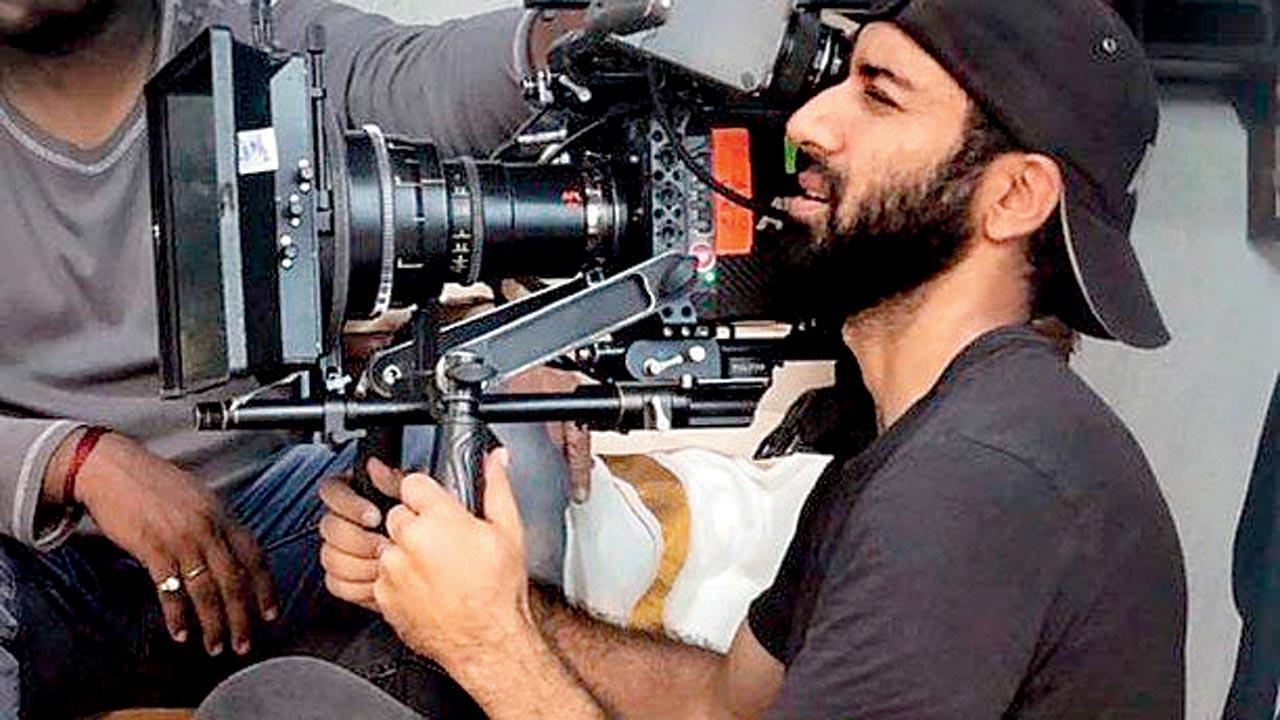
With Homebound cinematographer Pratik Shah under scrutiny for his alleged inappropriate behaviour, filmmaker Juhi Sharma details how the IWCC pulled him up in 2020 after a DoP accused him of sexual misconduct
Priyanka Sharma (MID-DAY; June 6, 2025)
In the past week, as Homebound cinematographer Pratik Shah was called out for his alleged inappropriate behaviour and sexual misconduct with women, and dropped from certain projects (After the allegations, time for action, June 2), news emerged that a complaint was previously made against him with the Indian Women Cinematographer Collective (IWCC) in 2020. When mid-day reached out to cinematographer and filmmaker Juhi Sharma, who had alerted the collective in 2020 about the alleged incident, she revealed that the episode involved a young cinematographer who admired Shah’s work and started following him on Instagram.
Sharma was first made aware of the episode by another cinematographer, who told her that her cinematographer-friend had an unsavoury experience with Shah.
Sharma recalled, “The cinematographer told me that the woman had started following Pratik [online], and in conversation, he suddenly asked for nude pictures. She felt very scared. She just wanted to work with him, and he was saying all kinds of [uncomfortable] things to her.” Learning about the alleged incident left Sharma shocked, as Shah and her were friends.
Her next step was to reach out to the IWCC. Soon, Sharma informed the collective of the alleged inappropriate behaviour. “I took it to the collective. I asked them if he had made advances towards anyone else. Nobody else had such an experience.”
Sharma believed that shaming him publicly was not the solution; holding him accountable was important. Concurring with her, the IWCC decided to issue a stern warning to the accused.
“I'm the kind of person, who doesn't believe that shaming someone to the extent of saying 'get out' is going to do anything. I'm of the opinion that yes, people have wronged, but they have to be given one chance to be told you have wronged. Now go back, take note of your actions, don't do it again and come back and tell us how you're going to change. As Indian women in the film industry, it's not like this is the first time it's happening. I've had this uncomfortable conversation with so many men that now I'm just exhausted. I have spoken to men and told them what did was horrible, and that I could go out in public and say this, but I would not. This is what we told Pratik as well, that we could but we wouldn't go public with the complaint. We issued a strict warning to him about his unacceptable behaviour.”
Sharma said, “He apologized and said that he couldn’t believe that he was being construed like this. Over a voice note, he promised that he wouldn’t do this ever again; he even said that he was a champion of women. I shared that voice note with the rest of the collective. After that, for years, I didn’t hear any complaints, and it seemed like he had changed. He even hired an all-women crew.”
The recent accusations, however, suggest otherwise. On May 29, filmmaker Abhinav Singh called out Shah, citing the testimonies of multiple women who accused him of being “emotionally abusive” and soliciting nude pictures after conversing with them online.
"We gave Pratik a chance to change, but he didn't. That time has passed."
How is the IWCC taking the matter forward? Sharma said, “We have a no-tolerance policy for such cases. On May 30, the senior members asked people, who have had such unfortunate experiences with him or anyone else, to come forward and speak up. The IWCC is taking cognizance of the matter.”
mid-day reached out to Shah, who did not respond till press time.
--------------------------------------------------------
In the wake of accusations against Pratik Shah, producers to propose appointment of an advocacy officer on projects to Producers’ Guild; role to entail investigation of sexual harassment cases
Mohar Basu (MID-DAY; June 6, 2025)
The rising accusations against cinematographer Pratik Shah have once again highlighted the subject of women’s safety in the entertainment industry. mid-day has learnt that in light of the recent events, 10 producers from Producers’ Guild of India are now rallying behind a plan to appoint an independent advocacy officer on projects. The proposal will be submitted to the Guild in the next meeting that is slated for mid-June.
A senior member of the Guild says that the need for an advocacy officer stems from the lack of a streamlined redressal mechanism for sexual harassment cases in the industry, despite the provision of Internal Complaints Committees (ICCs) in many production houses.
The Guild member, who is readying to kick off a project for Netflix, shares, “In Hollywood, advocacy officers are common. What separates them from an ICC is that they are an independent entity roped in to address sexual harassment claims by ensuring an impartial process for the accuser and the accused. They conduct thorough investigations by gathering evidence, interviewing the accuser, the accused, and any relevant witnesses while ensuring confidentiality. After investigating, they make recommendations for disciplinary action that can range from warnings to termination, depending on the severity of the allegations.” The responsibilities also include educating employees to recognize and prevent harassment, and ensuring that production houses have functioning ICCs. Often, lawyers and/or social workers are selected for the role.
In the draft proposal, the producers have recommended that the advocacy officer be funded through a pooled contribution from producers, guilds, and talent agencies. This will ensure the officer’s independence, reducing the risk of conflicts of interest that hamper ICC.

(From left) Siddharth Roy Kapur, Monisha Advani and Shibasish Sarkar are part of the Guild
Tussle over war films on Operation Sindoor
8:12 AM

Niharika Lal (BOMBAY TIMES; May 11, 2025)
On the morning of May 7, as the Indian Armed Forces carried out Operation Sindoor, a different mission kicked off in Mumbai’s film production circles – the race to claim Sindoor as a film title. Inside producers’ offices and association desks, phones buzzed. But the only response many got? A simple, “ Aap kataar mein hai .”
‘Everyone wants the title Sindoor’
The inboxes of the Indian Film and Television Producers Council (IFTPC), the Indian Motion Picture Producers’ Association (IMPPA), the Western India Film Producers Association (WIFPA), and the Producers Guild of India pinged with urgency. It hasn’t stopped really. “Suddenly, everyone wanted the same title – Sindoor ,” says a weary representative from one of the associations. “There’s been an overwhelming number of applications in the past couple of days for titles related to Operation Sindoor,” shared another official.
‘J P Dutta, south producers want to register the title’
Sources say, “J P Dutta’s banner JP Films has thrown its hat in the ring for Operation Sindoor. A renowned producer from the South, Dil Raju, has requested Sindoor: Ek Jung. “For a title to be accepted quickly, the trick is not to aim for what everyone else is chasing. The smartest titles are simple ones. The trick is to find something that uses the key words and still resonates,” adviced a producer.
‘There are already more than 15 applicants’
In this race, time is what matters. “The title will go to the one who applied first. But everyone else can either stay on the waiting list or get their money back. We receive title applications both by mail and as hard copies,” another representative explained, adding, “Now, when someone is walking in with a hard copy saying they want Mission Sindoor or Operation Sindoor, we tell them – don’t bother. There are already more than 15 applicants. You won’t get it.”
‘The timing of announcing a film based on Operation Sindoor may have caused discomfort’
After backlash for announcing a film based on Operation Sindoor, producer Nickky Bhagnani, brother of Pooja Entertainment’s Jackky Bhagnani, apologized in a post. He wrote, “My sincere apologies for recently announcing a film based on Operation Sindoor. Inspired by the recent heroic efforts of our Indian Armed Forces. The intent was never to hurt or provoke anyone’s sentiments. As a filmmaker, I was moved by the courage, sacrifice, and the strength of our soldiers and leadership. And simply wished to bring this powerful story to light. This project was born out of deep respect and love for our nation and not for fame and monetization. However, I understand the timing and sensitivity may have caused discomfort or pain to some. For that. I deeply regret. This is not just a film, it’s an emotion of the entire nation and a social image of the country globally. Thanks to our Armed Forces and Prime Minister Shri Narendra Modi ji who make us proud by working day and night for the country with the motto of always nation first. Our love and prayers will always be with the families of the martyrs as well as the bravo warriors who are fighting on the border day and night to give us a new morning. Jai Hind! Jai Bharat!”
Productions that applied for title registration
- Aditya Dhar Films
- John Abraham’s production house
- JP Films (J P Dutta’s banner)
- Vivek Agnihotri’s production house
- Madhur Bhandarkar’s production house
- Ashoke Pandit’s production house
- Super Cassettes
- Mahaveer Jain Films
- Bombay Shows
- Mumbai Films
- Almighty Motion Pictures
Rush among filmmakers to register Operation Sindoor as a title
10:32 AM
Within hours of India’s precision strikes in Pakistan and PoK, the four film bodies reveal receiving over 20 applications to register the title
Yashika Mathur (HINDUSTAN TIMES; May 9, 2025)
India’s precision strike at nine terror hideouts in Pakistan and Pak-occupied Kashmir was followed by a frenzy in the film industry as producers scrambled to register the title Operation Sindoor and Mission Pahalgam.
As the process goes, producers must register titles through any one of the four film bodies — Indian Motion Picture Producers Association (IMPPA), Western India Film Producers Association (WIFPA), Indian Film and TV Producers Council (IFTPC), or Producers Guild of India. Sources tell us that IMPPA received 12 applications, WIFPA got two, and Producers’ Guild received 10 applications so far.
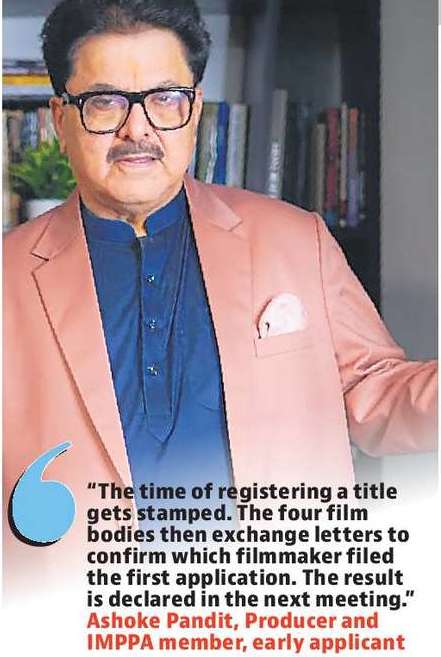
“The time of registering a title gets stamped. The four film bodies then exchange letters to confirm which filmmaker filed the first application. The result is declared in the next meeting.”
- Ashoke Pandit, Producer and IMPPA member, early applicant
“I’ve applied in the film and web series section under languages across the country. I’m thinking of my Operation story with women leading it, the way Colonel Sofiya Quraishi and Wing Commander Vyomika Singh briefed the country about the operation.”
- Vishal Saroye, Filmmaker
‘Shouldn’t make such films within 1-2 years of military operations’
Without confirming the number, J D Majethia, chairman, Television & Web Wing of IFTPC, says that several applications have been filed with the organization. However, he feels such films shouldn’t be made within one-two years of such military operations: “Manoranjan ke liye climax theek hai but in that process we end up showing our intelligence agencies’ investigations, sharing the big secret of planning process and intelligence agency of our country with enemies.”
Trademark wanted?
A source tells us that several filmmakers have also applied for the trademark of Operation Sindoor. While a title can only go to one filmmaker, a trademark means that several filmmakers can make the film on the same subject. Mukesh Ambani’s Reliance Industries was one of the proprietors, but later withdrew the application. A part of their statement read that it was filed by a junior person without authorization.
Media industry likely to seek reversal of Karnataka government decision on cess levy
8:16 AM

Javed Farooqui (THE ECONOMIC TIMES; July 26, 2024)
Media and entertainment industry bodies are planning to submit representations to the Karnataka government for a reversal of the 1-2% cess on cinema tickets besides TV and over-the-top (OTT) subscription fees, people familiar with the development said.
The Cine and Cultural Activists Welfare Cess will also be imposed on all revenue generated from related establishments such as cinema theatres, multiplex halls, OTT, TV channels and other such establishments notified by the government.
Apart from the state government, the industry bodies could also petition the governor and the ministry of information and broadcasting (MIB), the nodal ministry for TV, OTT and film industries, they added.The industry bodies that are likely to make representations include the Indian Broadcasting and Digital Foundation (IBDF), Internet and Mobile Association of India (IAMAI), Multiplex Association of India (MAI) and Producers Guild of India (PGI).
If the state government refuses to roll back the cess on movie tickets and OTT subscriptions, the industry bodies could also seek legal remedy by challenging the Karnataka Cine & Cultural Activists Welfare Bill's applicability to OTT platforms and TV channels.
"The bill may lead to similar legislation being passed by other state governments. It would also lead to increased costs for consumers," a senior media executive said on condition of anonymity.
Legal experts say that the proposed tax would disrupt the uniform tax structure envisaged under the Goods and Services Tax (GST) regime and create an uneven playing field for various forms of entertainment.
"The imposition of any cess on a supply or consumption will lead to tax cascading and ultimately increase the price of the supply. The cess should be imposed only under exceptional circumstances, as such additional levies will be against the broad objectives of GST, thereby leading to constitutional debates," said Abhishek Rastogi, founder of Rastogi Chambers.
The bill, which seeks to establish a welfare fund for artists and technicians in the film industry in Karnataka, has been passed by both houses of the state legislature and is awaiting the governor's assent.
PVR Inox chief business planning and strategy officer Kamal Gianchandani, who is also the president of MAI, said that the cess will be detrimental for the industry.
He also said the cess defeats the purpose of ‘one nation-one tax’ under the GST regime. While stating that MAI will raise its concerns with the state government, Gianchandani said legal remedy is always an option.
Karan Johar, Mukesh Bhatt and producers’ unions to meet multiplex heads to discuss slashing ticket prices
11:10 AM
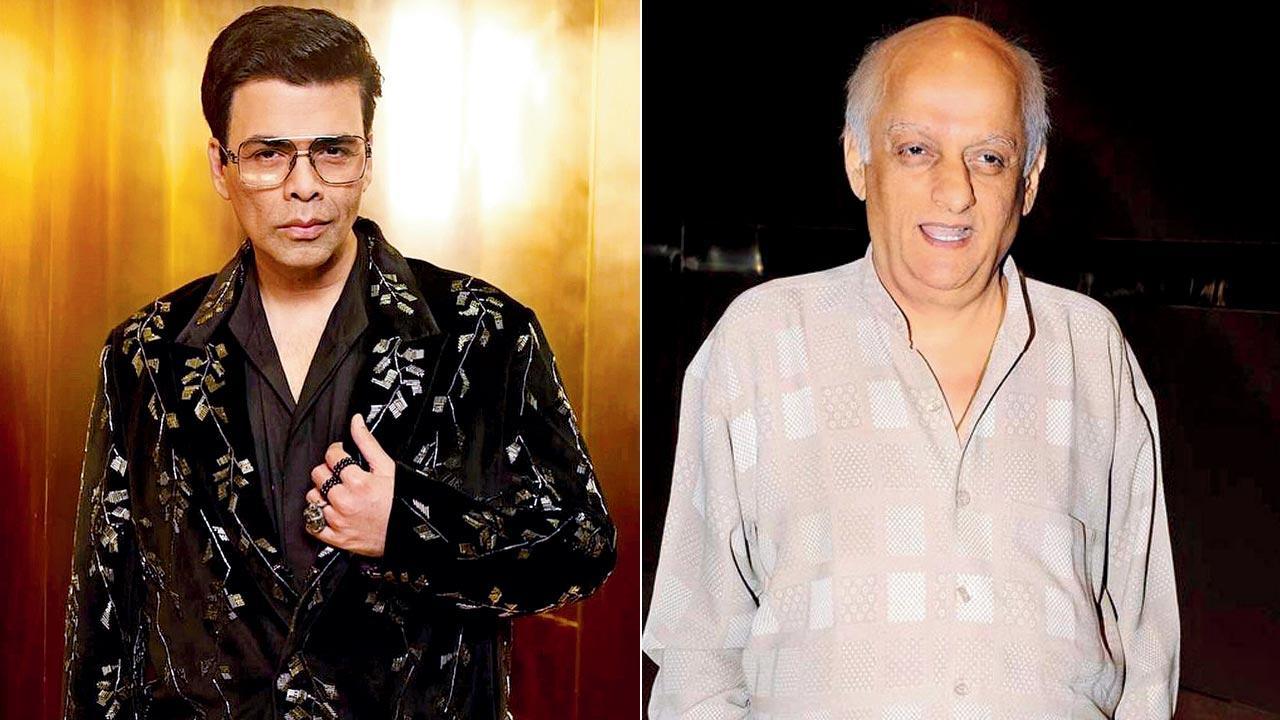
Aiming to increase footfall, KJo, Mukesh Bhatt and producers’ unions to meet multiplex heads today to discuss slashing ticket prices
Mohar Basu (MID-DAY; June 14, 2024)
Bollywood has been witnessing a dry spell at the box office, which has jolted producers into action. Over the past month, members of the Producers Guild of India, Indian Motion Picture Producers’ Association (IMPPA), and some Tamil and Telugu producers had three rounds of meetings with talent agents to discuss stars’ entourage costs (No frills is the new drill, June 8).
Today, the producers’ unions will have a big Bollywood meet-up with the heads of multiplex chains, including PVR Inox. On the agenda is a discussion about revising movie tickets to increase footfall.
Filmmaker Karan Johar and producer Mukesh Bhatt will be present from the Guild, as the parties contemplate a new price point and devise more promotional strategies to lure audiences.
A source tells us, “Most screens are running empty. A part of the reason is the steep ticket costs. Also, there has been a shift in the audiences’ mindset as they know a new release will be available on OTT after eight to 10 weeks. At such a time, it is imperative to lure them with reasonable prices. It was seen on Mr & Mrs Mahi’s opening day last month, when tickets were available at Rs. 99. Because of this, the film’s first-day collections were good. People are willing to step into theatres if the tickets don’t burn a hole in their pocket. That will be the focus of our conversation.”
Producer bodies to meet celebrity talent management agencies to find ways to reduce movie budgets
8:09 AM
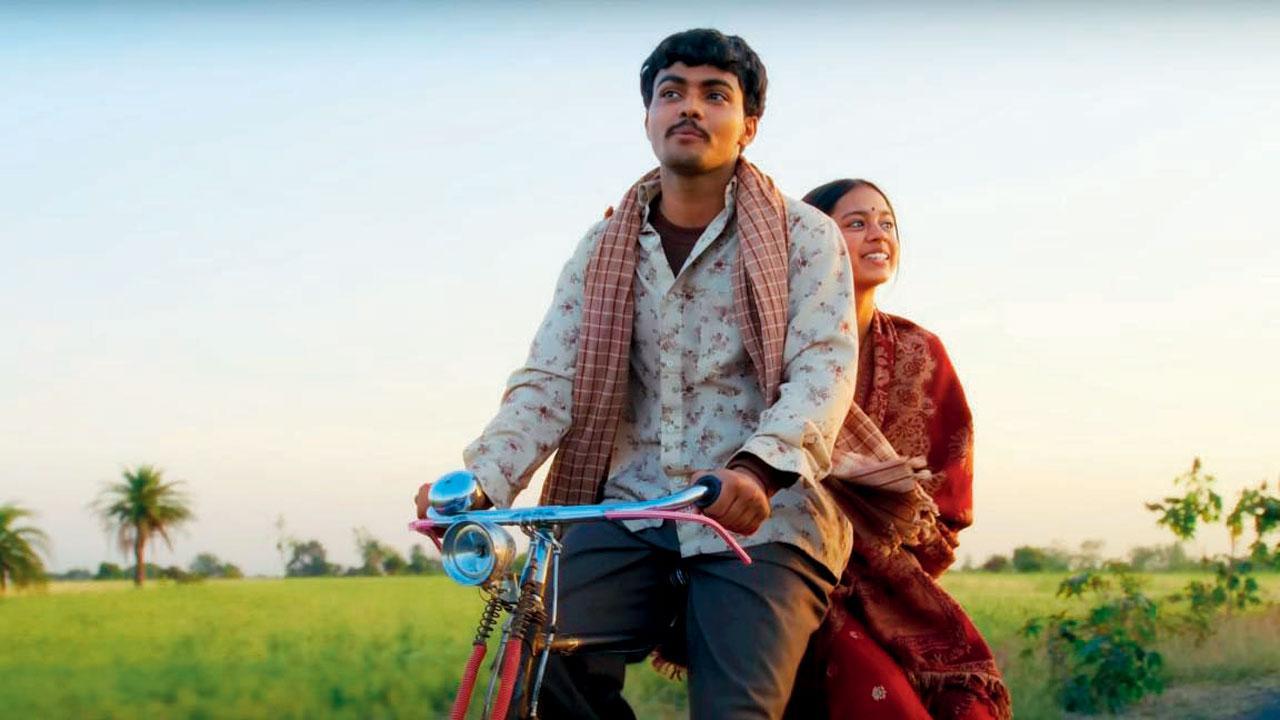
Eyeing to reduce film budgets, producer bodies to meet talent management agencies next week to discuss cutting down on entourage costs; want to encourage mid-budget movies for higher returns
Mohar Basu (MID-DAY; June 8, 2024)
Almost halfway into the year, Bollywood’s report card doesn’t look encouraging. So far, Hindi cinema has seen a handful of hits, including Shaitaan, Crew, Article 370 and Madgaon Express, while many tentpole movies had an underwhelming run. The lull has compelled producers to take stock of the situation. Next week, members of the Indian Motion Picture Producers’ Association (IMPPA), Producers Guild of India, Active Telugu Film Producers Guild, and Tamil Film Active Producers Association are set to meet six leading celebrity talent management agencies, for a third round of meeting. The agenda is clear—find ways to reduce the budget of movies.
While stars’ skyrocketing fees have long been a concern, the impending meeting will focus on cutting down entourage costs. A senior celebrity manager, who attended the last meeting held in May, told mid-day, “Our suggestion is to revert to the post-COVID norm, where an actor has an entourage of three.”
The manager reveals that the suggestion came from one of their clients, a senior star who shot three big films during the pandemic. “The star started out in the ’90s when entourage wasn’t a thing and vanity vans were reserved for megastars like Mr [Amitabh] Bachchan. He said that even today, a team comprising one spot boy, one make-up man and one additional hand is enough for him. For a female actor-host, we’ll consider an entourage of four.”
A senior member of the Producers Guild, who spoke to us on condition of anonymity, said that filmmakers have been struggling with budgets in the post-pandemic market. The high entourage costs came to the forefront with a recent episode.
“I agree that entourage cost is a part of the problem and not the whole issue. But recently, a studio’s CFO was shocked to see a Rs 7 lakh monthly bill from a make-up person. The CFO’s salary was lower than that! This can be brought under control,” he said.
Another subject that the producers will touch on at the meeting is to boost small and mid-budget movies. The months gone by have shown that they have generated high returns.
An IMPPA official said, “The box-office run of Crew, Madgaon Express and Article 370 has been good. Producers must seek high-concept films, spend more on writing, and pay reasonable fees to the stars and crew. We will also talk to OTT heads to widen the gap between theatrical and OTT release [in the hope that people will visit theatres]. Otherwise, people may stop visiting cinemas.”
Producers Guild requests CM Uddhav Thackeray to extend shooting hours beyond 4 pm
8:17 AM
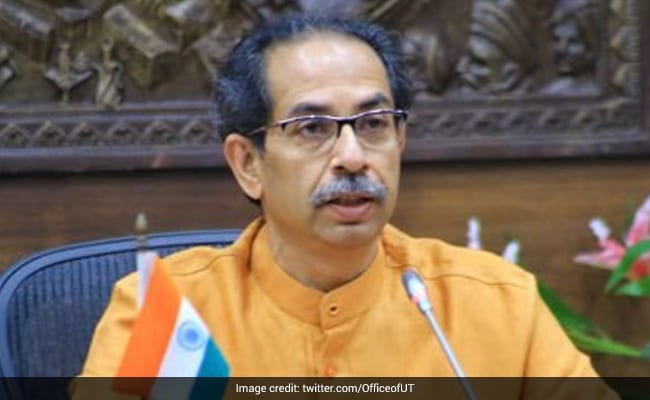
THE TIMES OF INDIA (July 18, 2021)
Mumbai: The clapperboard has been slapped down for film shoots to go beyond the current 4 pm deadline in the state. Chief minister Uddhav Thackeray has asked the Film and TV Producers Guild to follow all Coronavirus-appropriate norms at shoots and asked the city police to coordinate with them for permission. During a virtual meeting with the producers guild that has been demanding extension of shooting hours beyond 4 pm, Thackeray said the guild has to ensure vaccination of employees, Covid testing of the crew regularly.
Thackeray said that the state government is taking steps, slowly and carefully, to ease restrictions as cases in the state have not dropped a lot and the state was not yet out of the second wave. “We are trying to ease restrictions cautiously and safely, but everyone’s cooperation will be required for that to work,” Thackeray said, adding that despite a system being in place for sports events, spread of the virus has been reported.
Nitin Tej Ahuja, CEO of the Guild, said, “We are grateful to the CM for giving us a patient, responsive hearing. We requested that filming be permitted beyond the current deadline of 4 pm for a few reasons. Firstly, night scenes demand that they be filmed at night. This cannot be managed within the current restrictions. Secondly, talent and manpower is not replaceable, and it is not always possible to manage the time of key actors and technicians together within the 4 pm deadline. Thirdly, the risk [of Covid-19 infection] in fact reduces at night because there is less fear of crowds gathering.”
The guild informed the CM that unlike malls, restaurants, markets and public places, film shoots do not involve a floating population of outsiders. Ahuja said, “Our units consist of the same set of people, and now that studios and production houses are all getting their employees vaccinated, the threat of infection reduces. Of course, the CM said to us that he has to consider the larger picture and manage the threat of a possible third wave and we see his viewpoint...”
The Mumbai police should appoint a nodal officer to give permission.
Cinematograph (Amendment) Bill 2021: Bollywood puts up a united front
8:10 AM
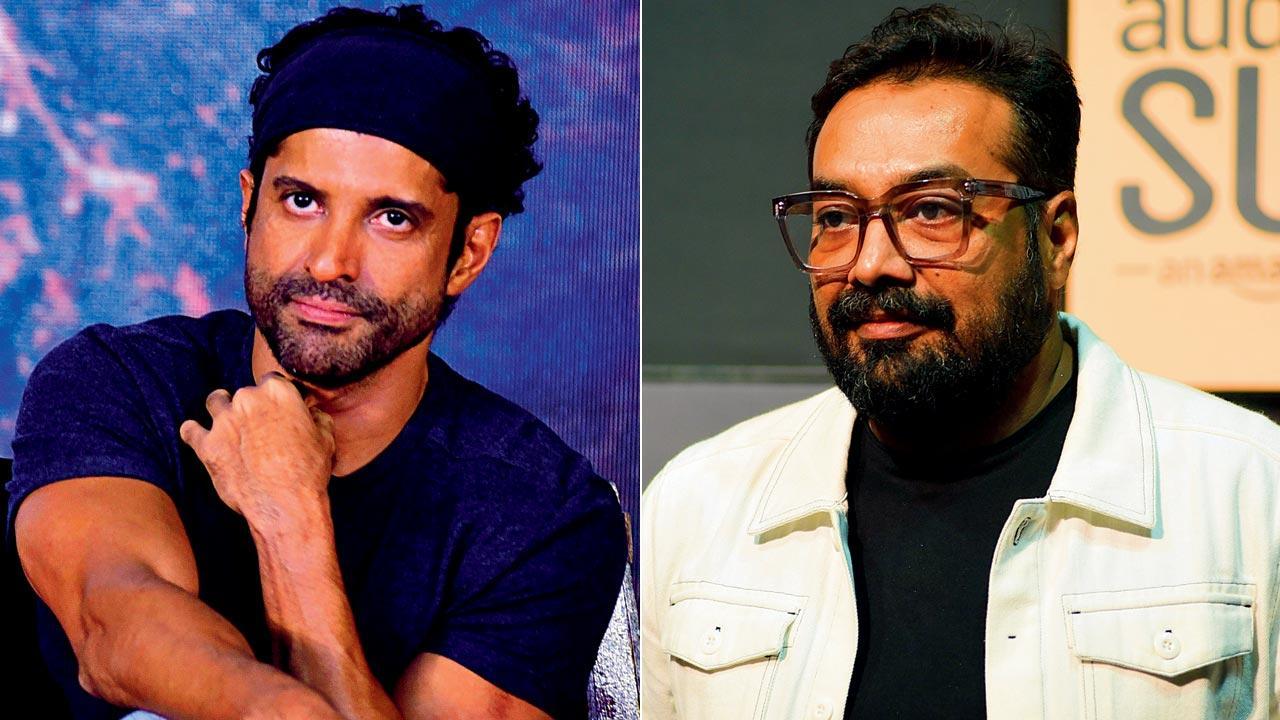
Farhan Akhtar, Anurag Kashyap and others wrote an open letter to the I&B Ministry. Pics/AFP
Six film bodies issue joint representation against Cinematograph (Amendment) Bill 2021; seek a reassessment of government's power to recertify films cleared by CBFC
Mohar Basu (MID-DAY; July 3, 2021)
In the past week, the studied silence of the Hindi film industry has given way to a unified criticism of the draft Cinematograph (Amendment) Bill 2021.
After several actors and filmmakers wrote an open letter to the Ministry of Information & Broadcasting, six film bodies — including the Producers’ Guild, and Indian Film & Television Directors’ Association (IFTDA) — issued a joint representation to the government on Friday. They expressed their reservation against the proposed amendments.
On Thursday, the Guild had also shot off a letter to the ministry in its personal capacity. The letter stated that the introduction of age-based certification, and central government’s revisionary power with respect to certified films were amendments that “needed further clarity/needed to be vehemently opposed.”
Manish Goswami, vice-president, Producers’ Guild, confirmed the development, stating, “After a meeting with the producers last evening, we have sent a detailed letter to the ministry to reassess the proposed amendment.”
In late June, the Centre released the draft, which gives the union government the power to recertify films that have been cleared by the Central Board of Film Certification (CBFC). It also proposed that content be subjected to age-based classification: U/A7+, U/A13+ and U/A16+.
Through the letter, the Guild highlighted that the proposed amendment circumvents the Supreme Court’s 2000 decision, which maintained that the union government could not exercise revisional powers. “Producers will never have certainty with respect to their film’s certification, as even after receiving a certification, they may be called upon by the CBFC to either make further changes or be faced with a different certification. In a multi-cultural country such as India, it is likely that different individuals/associations will have their own moralistic views, and will judge each film through such a cultural lens. If the proposed amendment is allowed, it will open the floodgates for a subjective and moralistic review of films already certified (sic),” the letter read.
Ashoke Pandit, president, IFTDA, reportedly opposed the move, stating that the entertainment industry should not become a “scapegoat.”
Cine bodies aim to inoculate 10,000 artistes, workers
8:16 AM
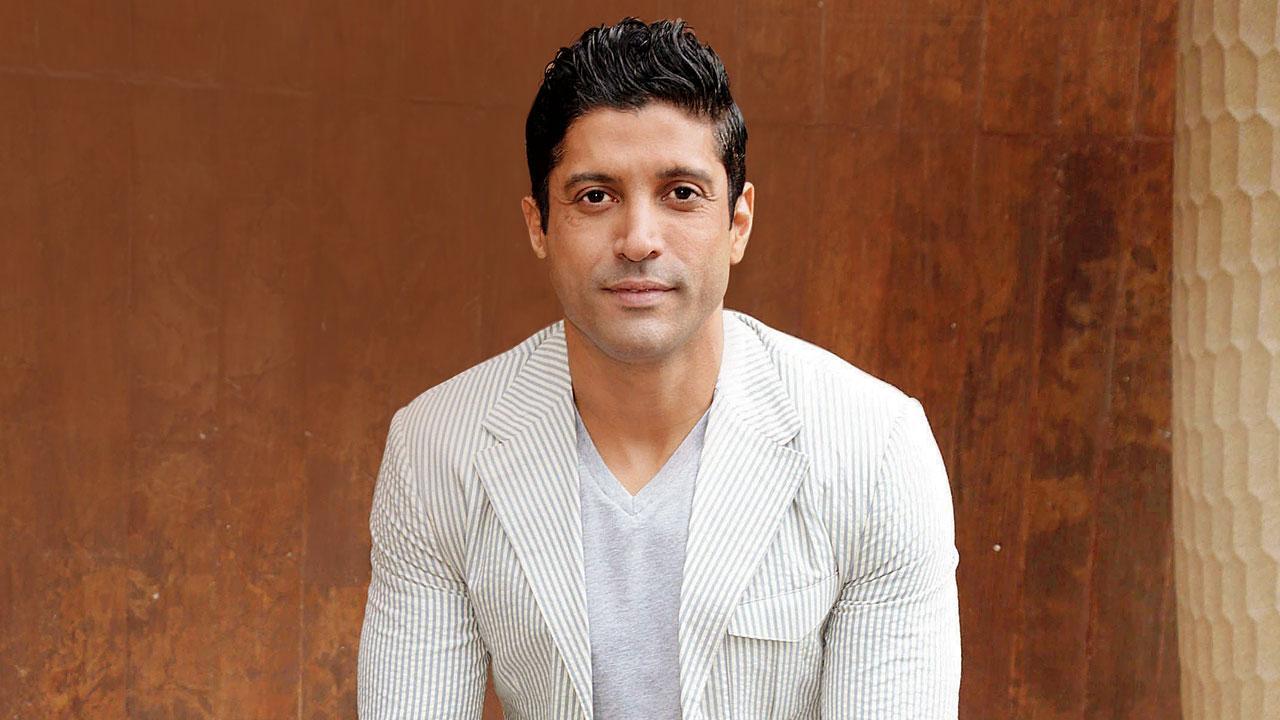
Farhan Akhtar’s studio played a role in securing the vaccines
Three umbrella bodies tie up with private hospitals to get vaccines for industry members; individual production houses will bear the cost
Uma Ramasubramanian, Mohar Basu (MID-DAY; May 31, 2021)
The first step towards getting Bollywood back on its feet is to ensure the vaccination of all involved. The Producers’ Guild of India and the Indian Film & Television Directors’ Association (IFTDA), in tandem with the Federation of Western India Cine Employees (FWICE), are organising vaccination drives for the cast and crews of film units in the coming weeks.
The unions are collectively aiming to immunise close to 10,000 people, including artistes, producers, daily-wage workers and freelancers employed with active productions.
The Guild, which consists of leading Indian film, television and digital content producers, will launch the drive for its members and their production crews tomorrow. The six-day programme will be held at Mehboob Studios in Bandra. Manish Goswami, vice-president, Guild, says, “We are targeting close to 5,000 people. Those registered on Co-WIN can receive their vaccination at the venue. This is being done in association with Bhakti Vedanta Hospital, and each jab is priced at Rs 1,000. The cost is being borne by the respective production houses.” They may increase the vaccine rollout, depending on the turnout.
Close to 25 studios, including Karan Johar’s Dharma Productions, Farhan Akhtar and Ritesh Sidhwani’s Excel Entertainment and Rohit Shetty Picturez, have signed up for the initiative. The cast and crews of OTT platforms, including Amazon Prime Video and Netflix India, are expected to participate.
Siddharth Roy Kapur, president, Guild, adds, “An activity of such magnitude cannot be carried out single-handedly. We are grateful for the support we have received, especially from Excel Entertainment, which played a pivotal role in securing the vaccines, and Mehboob Productions, which generously offered complimentary use of the spacious Mehboob Studios.”
The IFTDA and FWICE will conduct their parallel immunisation camp for 5,000 members at the Federation office in Andheri. “We have tied up with Surya Hospital, and will start the drive between June 10 and 15. All producers, technicians and workers will be eligible. The initiative has been organised by the Federation and sponsored by me,” says Ashoke Pandit, president, IFTDA. Aditya Chopra, head honcho of Yash Raj Films, had pledged to sponsor inoculation of 30,000 daily wagers. It is heard that the Chief Minister’s Office has sent its approval to proceed with the plan. Pandit adds, “YRF will vaccinate 30,000 workers [in the weeks to come]. After the Andheri drive, we plan to set up another camp at Film City.”
Producers' Guild issues two separate handbooks to explain on-set practices
8:20 AM

Radhe will be among the first films to resume shoot
As Producers' Guild issues two separate handbooks for producers and crew to explain on-set practices, FWICE to discuss adding rules that are daily-wager friendly
Upala KBR (MID-DAY; May 27, 2020)
 Earlier this month, mid-day had reported that the Producers' Guild was developing the first draft of the Standard Operating Procedures (SOPs) to be followed by the cast and crew when shoots resume. These guidelines have now formed the basis of two handbooks — a 12-pager for the producers, and a 14-pager for the cast and crew — that have been issued by the Producers' Guild.
In the latest development, the Federation of Western India Cine Employees (FWICE), while welcoming the SOPs, has proposed 25 additional guidelines, with an emphasis on the welfare of the daily-wage workers. While the Producers' Guild has approved 18 of them, the remaining seven clauses will be discussed by the two bodies, in the presence of the members of Indian Film and Television Producers' Council (IFTPC), in a virtual meeting today.
Birendra Nath Tiwari, president, FWICE, explains, "We believe every worker should have minimum security guarantee. So, we will be addressing vital points such as their shift hours, and their need for accommodation if they are reporting to a set. If a unit member tests positive for Coronavirus, we will urge the concerned producer to bear the expense of his treatment in a private hospital."
The Rules Under Discussion
- No crew member to go home while the shoot is on; s/he must be put up in hotels.
- All previous dues to be cleared.
- Monthly payment to be cleared at the end of every month.
- Daily-wage workers' payments to be cleared on a daily basis, even if they are shooting in their city of residence.
- Assuring minimum life insurance guarantee of Rs 50 lakh.
- Unit members to work on an eight-hour shift. Work to be divided into two shifts a day.
- A unit member who tests positive for COVID-19 during the shoot or during his travel for shoot should be mandatorily provided treatment in a private hospital.

Shoot with Akshay Kumar happened smoothly with maximum efficiency and safety-R Balki
8:26 AM

Director R Balki on his reunion with Akshay Kumar for an awareness campaign at Kamalistan Studio
Himesh Mankad (MUMBAI MIRROR; May 26, 2020)
On Monday, Akshay Kumar stepped out of his house during the lockdown to shoot for a Coronavirus awareness campaign at Mumbai’s Kamalistan Studio. R Balki, the director, and he have previously collaborated on the 2018 social-drama, Pad Man. The short ad film is to promote positive behavioral changes for hygiene and related practices in the fight against coronavirus.
“Akshay arrived on time, abided by all the formalities required and completed the shoot within an hour before heading back home. He wore a mask throughout, practiced social distancing and kept himself protected. The team shot with requisite permissions from the Mumbai Police and the Municipal Corporation and followed all the guidelines,” revealed a source close to the development.
It was shot with limited crew on the set, with no one allowed to stand close to each other. Every person entering the set had to pass through a disinfection tunnel, get their body temperature taken and hands sanitised, wear a face mask with other protective gear.
It was a village set, with Akshay in a white shirt, slippers and a gamcha. “The idea is to reach out to people in the interiors using Akshay, who is a popular actor,” the source shared.
When Mirror reached out to Balki, the director said, “Akshay and I shot this ad campaign for the Government of India to make people aware of their responsibilities post lockdown. Things might seem difficult, but through this ad we now know what all precautions need to be taken to shoot in the post lockdown era. Our producer Anil Naidu made everything seem so effortless as we all maintained social distancing. The shoot happened smoothly following all hygiene protocols, ensuring minimum crew with maximum efficiency and safety.”
--------------------------------
37-page document calls for medical aid, takeaway-style food and ‘anti-Covid boys’
MUMBAI MIRROR (May 26, 2020)
Almost a week before the Coronavirus-triggered nationwide lockdown came into effect on March 25, film and TV shoots across the country were brought to an abrupt halt. Ever since, there have been multiple discussions around resuming production and protocols that would be required to do so safely.
On Monday, after a virtual interaction with Chief Minister Uddhav Thackeray’s office, the Producers Guild of India issued a set of Standard Operating Procedures (SOPs). The guidelines are to be followed after CMO grants permission to resume production work and shoots. The 37-page document, titled “back to action… cut to: staying safe”, lists ways to establish technical and organisational measures to sidestep the contagion.
KEY POINTS
- Hand-washing and sanitising for everyone at entry, exit points and during shoot
- Triple-layer medical masks and gloves for crew
- Maintaining at least two meters of distance from colleagues
- Studio to be sanitised daily, before the shoot, by an authorised government agency
- Appointing personnel (Anti-Covid Boys) on sets to ensure guidelines are followed
- Daily temperature checks with contactless thermometer
- Two junior-level doctors, one certified nurse to be present on set for three months in different shifts
- An ambulance on stand-by
- All shooting equipment to be disinfected as often as possible
- Individual use-only microphones
- Food to be distributed among crew in take-away boxes, disposable plates, cutlery
- Entire sets to be divided in zones that cannot have more than 15 people at a time
- No movement from one zone to another
- Artistes to remain in rooms until required on set
- Artistes’ staff not allowed on set, except in case of an emergency
- No unnecessary guests or visitors allowed on sets
- Members in violation of safety measures to be removed from production
Industry divided over Gulabo Sitabo, Shakuntala Devi's direct-to-web release: exhibitors predict close to Rs 50 crore loss
8:42 AM

Producers' Guild says filmmakers compelled to move to OTT due to the uncertain times
Mohar Basu, Uma Ramasubramanian (MID-DAY; May 16, 2020)
 On Thursday, Gulabo Sitabo became the first Bollywood film to bite the OTT bait, inviting the wrath of several exhibitors and distributors who felt betrayed that the makers had bypassed a theatrical release. Leading multiplex chain Inox immediately warned of "retributive measures" while PVR Cinemas urged filmmakers to hold off their projects till the theatres re-open. The rift only widened on Friday with Amazon Prime Video announcing the direct-to-web release of seven films, including Vidya Balan's Shakuntala Devi.
With two big releases — Sooryavanshi and '83 — waiting in the wings, trade sources indicate the industry has made losses upwards of Rs 600 crore, keeping in mind their domestic and overseas business, satellite rights, and OTT and music deals. The recent move has only added to the exhibitors' woes. "The distribution sector earns around Rs 75 crore from a big film, and about Rs 15 crore to Rs 25 crore from a medium-budget venture. Exhibitors and distributors are looking at a collective loss of around Rs 50 crore from Gulabo Sitabo and Shakuntala Devi's OTT premiere," says a trade source.
Mohan Umrotkar, CEO, Carnival Cinemas, echoes the sentiment as he reasons that the two medium-budget films would have enjoyed strong footfalls once the theatres reopened. "Ayushmann Khurrana is having a golden run at the box-office, his film would have garnered close to Rs 75 crore. Couple that with Vidya's film, and the two would have generated close to Rs 95 crore at the box-office. So, we are staring at huge losses," he says.
However, he acknowledges that producers cannot wait indefinitely. "I understand there will be a rush of movies when the lockdown is lifted. That said, we were expecting them to stand by us because we are family."
Meanwhile, the Producers' Guild hasn't taken kindly to the aggressive stance adopted by Inox. Manish Goswami, vice-president, Guild, points out that producers have taken the step out of sheer necessity. "In such times, a stakeholder will only wait till a point, post which he will seek alternatives. After all, for the next six months, people won't have the confidence to go to theatres. They will not [take the risk of] community viewing unless it is a bumper project," he says.
Though refusing to take sides, trade analyst Taran Adarsh doesn't deny that filmmakers may be settling for less than their films' worth. "Assuming satellite deals stay intact, [the makers] are still losing out on their movies' overseas business. But my sympathies lie with the producers, who have been constantly asking about the possibility of theatres reopening. It's unfair to expect them to hold off their films [indefinitely]. It would help if producers and cinema owners enter a negotiation."

Will They? Will They Not?
Over the next few weeks, key players in the digital market may acquire the rights of several Bollywood films. Sources say makers of Gunjan Saxena: The Kargil Girl, Ludo and Jhund are in talks with streaming giants for a direct-to-web release. "They are all complete and awaiting release. Indoo Ki Jawaani, Roohi-Afzana and Shiddat are in the last leg of post-production and may explore the digital route," says a trade source.
Last month, this paper had reported that Akshay Kumar was contemplating releasing Laxmmi Bomb directly on Disney+Hotstar. "His films bring good revenue at the box-office," says Umrotkar, alluding that Laxmmi Bomb seeking an online release will be a severe blow for exhibitors.
Exhibitors vs Producers: In the wake of direct-to-digital releases, industry insiders offer their take on the row
8:40 AM

Industry insiders weigh in on crisis brought on by Coronavirus pandemic as the face-off between exhibitors and producers escalates
Himesh Mankad (MUMBAI MIRROR; May 16, 2020)
 On Thursday, after the makers of the Amitabh Bachchan and Ayushmann Khurrana-starrer Gulabo Sitabo announced a digital release for their film, given the looming uncertainty over theatres reopening, the multiplex chain Inox made its displeasure clear, calling the decision “alarming and disconcerting”. Inox said it will now be constrained to examine its options, and reserves all rights, including taking retributive measures in “dealing with such fair-weather friends”. The statement ended with a request to content creators to follow the age-old, established windowing pattern, which is in the best interests of all stakeholders in the value chain. On Friday, another Bollywood film, the Vidya Balan-fronted Shakuntala Devi, was announced for a direct-to-digital release, as did five south films, Ponmagal Vandhal, French Briyani, Law, Penguin and Sufiyum Sujathayum, fuelling the debate further.
 Pointing out the need to stay united in the wake of the “greatest public health and economic emergencies of our lifetimes”, the Producers Guild of India slammed the multiplex chain’s “unconstructive messaging”, maintaining that by calling for retributive measures, they do not lend themselves to constructive or collaborative dialogue, which is the way forward for the industry.
The Guild’s statement, issued on Friday, went on to reiterate that the production sector, like the exhibition sector, is suffering hundreds of crores of losses on a daily basis as insurers refuse to cover the cost. “Interest costs are mounting on amounts raised to fund films, with producers having to bear this additional burden with no date in sight for cinemas to re-open; in fact, with the knowledge that cinemas may be one of the last sectors of the service industry likely to be given permission to re-open,” it pointed out, adding that re-opening of cinemas, when it happens, is bound to be staggered across the country and the overseas market, which will impact the performance of a film. The Guild also reasoned that there will be a huge backlog of releases, and the smaller and medium scale films especially will suffer as a result.
 The statement concluded by stressing on the importance of emphasising the predicament of the other, rather than adopting an adversarial stance which is counterproductive for the entire value chain. It maintained that a theatrical release will always be the preference for movies that were conceptualised as cinematic experiences.
Reiterating this, Kamal Gianchandani, CEO, PVR Pictures, pointed out that his multiplex chain believes that a theatrical release is the best way for audiences to experience the labour and creative genius of filmmakers, not just in India but globally. He is confident that once this crisis is over, there will be a demand from cinegoers, who’ve been cooped up at home for several weeks, to open theatres.
 “We are disappointed with some producers for going straight to streaming platforms instead of acceding to our request to hold back releases till cinemas reopen. That said, this is not the first time films are being premiered on OTT. Cinema exhibition has regularly faced competition from new emerging distribution platforms over the last many years and still continued to enjoy the patronage of cinegoers,” he pointed out, saying that they appreciate producers who have publicly supported theatres and decided to reschedule their releases.
Shariq Patel, CEO of Zee Studios, who is co-producing Khaali Peeli and Gunjan Saxena, says he can understand theatre owners being disappointed, but points out that halls have been shut for the last two months and no one knows when they will re-open across India and the world. “So, every producer is well within his right to monetize asset that has been ready for a while. It’s a rational call and not a vindictive step. As and when cinemas open, there will be a steady flow of films again,” he promises, saying they are considering options like everyone else in the industry but no contracts have been signed yet and conversations are happening between theatre chains and distributors. “Equilibrium will be restored once normalcy returns.”
Shibasish Sarkar, CEO, Reliance Entertainment, reveals that they have been approached by digital platforms for all their films, including Sooryavanshi, ’83, The Girl On The Train and Anurag Kashyap’s next. “But we, along with our directors and the creative team, are clear on a theatrical release and be patient for the next three to six months,” he says, but concedes that both sides are right, in that every filmmaker aspires to take their film to the big screen, but given the current scenario, most are under a lot of financial stress. “At the same time, the theatre owners are also bleeding, so it natural for them to be disappointed. Ultimately, the ecosystem has to survive. But the tone of appeal is important, there has to be some warmth in every discussion. Both OTT and cinema halls will co-exist in the longer run.’
Akshaye Rathi, theatre owner, argues that exhibition and production are two sides of the same coin and it is critical that the sectors engage in dialogue before taking any action. “The least we can expect is the courtesy of getting a call given our long-standing relationship. Dream Girl and Bala did a business of Rs 100 crore theatrically, so in Gulabo Sitabo, the exhibitors would have been a solid stakeholder,” he avers, confident that Sooryavanshi, ’83 and Radhe will wait to come to the cinemas so people can enjoy an outing. “Some films are meant for big screen consumption. For instance, you wouldn’t enjoy a horror film on the small screen as the ambiance enhances the experience.”
Tanuj Garg, producer of Neerja and Tumhari Sulu, informs that seven-10 films due for release this year will have straight-to-digital premieres. “If these platforms record disproportionate subscriptions and viewership, this could well open the floodgates for more commissioning and acquisition of OTT movies, thereby creating a parallel economy in itself,” he reasons, but at the same time doesn’t think cinemas will or can disappear. “No one is denying the power of the big screen experience. But I see no issue with the digital medium emerging as a credible alternative to its cinematic counterpart. It just means that we’re going to have a lot more movies, and therefore a lot more new stories and new talent in our midst.”
Subscribe to:
Posts (Atom)