Showing posts with label Prasoon Joshi. Show all posts
Showing posts with label Prasoon Joshi. Show all posts
Prasoon Joshi appointed Prasar Bharti chairman
11:20 PM

THE TIMES OF INDIA (May 3, 2026)
New Delhi: The Centre on Saturday appointed noted lyricist and communications expert Prasoon Joshi as chairman of Prasar Bharati, filling a key vacancy at the public broadcaster that has been without a fulltime head since December.
Joshi, who is currently chairperson of CBFC, brings with him decades of experience across advertising, cinema, literature and public communication. His appointment comes at a time when the national broadcaster is navigating a rapid shift towards digital platforms and evolving audience preferences.
Union information and broadcasting minister Ashwini Vaishnaw expressed confidence that his leadership would infuse “renewed energy, deeper purpose and a fresh creative voice” into the organization.
The post had been vacant since the resignation of former IAS officer Navneet Kumar Sehgal in December last year.
Shreya Ghoshal’s tribute to Lata Mangeshkar moves Mumbai
9:55 AM

Debarati S Sen (BOMBAY TIMES; March 9, 2026)
Paying tribute to a legendary singer with an 80-year career spanning nearly 45,000 songs is no easy task. Yet, that is precisely what Shreya Ghoshal achieved at her concert Letters To Lata Didi held at Jio World Garden on Saturday night. The evening was unlike the typical large-scale concert spectacle. There were no confetti bursts, fireworks or pyrotechnics; only pure music, delivered straight from the heart. With no costume changes and no breaks, she sang non-stop through more than 50 songs, each unfolding like a musical letter to the timeless legacy of Lata Mangeshkar, whose voice defined generations of Indian cinema and music.
“Aaj ki yeh shaam mere liye sabse khaas hai”
She opened with a traditional Ganesh vandana, followed by the classic Aayega Aanewala. Setting the emotional tone for the evening, Ghoshal addressed the audience
“Aaj ki yeh shaam mere liye sabse khaas, most important, sentimental and emotionally close to my heart evening hai. And main shayad kitni bhi tayaari kar loon, aaj ke din ki tayaari poori nahi hai. I think you will sense my vulnerability my emotion today. We are all here celebrating the legacy of Maa Saraswati, hamari pyari Lata Didi. This tribute is from all of us fans, from me and the musicians and isko sametne ke liye humne yeh ek zariya apnaya hai. Didi ko hum itna upar rakhte hain, unka jo sthan bhagwanon ke jagah hai. Hum sab fans ke taraf se hai yeh show and iss legacy ko celebrate karne ke liye aap sab saath mein gaiyega zaroor. I am sure Didi is smiling upon us from the heavens.”
Memories, music and ‘letters’
The evening’s narrative unfolded through music interspersed with audio-visual segments featuring messages and memories from people who knew and worked closely with Lata Mangeshkar. Tributes from Nitin Mukesh, Anandji Shah (Kalyanji-Anandji), Prasoon Joshi, Sachin Tendulkar and Prakash Peters added a deeply personal dimension to the concert. Shreya also shared memories of how Lata Mangeshkar’s voice shaped her own musical journey since childhood.
“Uss choti si ladki ko zara bhi andaza nahi tha ke yehi woh awaaz hai jo uska haath thaamkar usse uske aane wale kal ki oor le jayegi. I was too young but Lata Ji ke awaaz ne mujhe iss tarah khincha ki maine music se pyaar karna shuru kar diya. We formed a spiritual bond, that’s the asar of her voice. Karodo Bharatiyon ki tarah maine unhe sunne se zyada mehsoos kiya. Aur inn jazbaaton ko hum sabne jiya hai, lekin shayad unhe poori tarah jata nahi sakein. Toh aaj ki yeh shaam unhi unkahi baaton ko inn khaton ke zariye aapko samarpit karte hain.”
The first meeting with Lata Didi
The singer also recalled her first meeting with Lata Mangeshkar in 2005. “I was recording in her studio and she came there. I ran down to meet her and when she saw me, unhone mujhse kaha, ‘Tum Shreya ho na?’ Main unhe kuch bhi nahi bol payi. I was so stunned, meri bolti bandh ho gayi. Uss din main unse mil nahi rahi thi, mujhe uss din Lata Didi ke darshan ho gaye the. Uss waqt kuch nahi sujha, main thank you bhi nahi bol payi. Aaj mujhe Didi ko thank you bolna hai, for the soul, music you were for me.”
Choosing from a legendary repertoire
Selecting songs from Lata Mangeshkar’s vast repertoire proved to be one of the biggest challenges confessed Shreya. “Today, we are trying to cover all the eras of Lata Didi’s blockbusters,” she said.
“There are songs with so many composers including S D Burman, Laxmikant-Pyarelal, Kalyanji-Anandji and so many hit duets with the likes of Mohamad Rafi, Kishore Kumar. She worked with Laxmikant-Pyarelal for around 35 years and sang around 700 songs with just them. There are so many eras of her songs, her repertoire is simply massive. Ek se ek behtareen gaane hain unke. Main kya chunu? Finally, we just had to pick chits of which ones to sing!”
Introducing the song Aa Jaan-E-Jaan, she noted with a smile, “This was probably the only cabaret that Lata Didi ever sang. If you listen to this song you will realize that even in a cabaret there can be so much divinity, spirituality and itna apnapan and pyaar, even though it is a seduction song.” The evening featured several Lata Mangeshkar duets performed with singers Javed Ali and Kinjal Chatterjee.
A feminist inspiration
Speaking on the eve of International Women’s Day, Shreya highlighted Lata Mangeshkar’s enduring influence beyond music. “Lata Didi has always inspired us. Woh sabse badi feminist hain and tomorrow we are celebrating Women's Day. She has inspired us not just as a musician but also as a human being, living by her own terms. She gave us a sense of purpose. Aisi kitni auratein thi 40s, 50s and 60s ke daur mein jinhone kitna kuch iconic kiya.”
Music in its purest form
More than 40 musicians performed live on stage, including the UAE Philharmonic Orchestra and a choir, recreating the grand orchestral feel of the golden era of film music. Praising the ensemble, Ghoshal said, “Aaj lag raha jaise Lata Didi ke recording studio mein sab kuch live hota tha, waise hi hum conductor ke haath pe tike hue hain. I feel all this energy is very much missing in today’s film music.”
Among the distinguished guests present were members of the Mangeshkar family, Nitin Mukesh, Anandji Shah and Shantaben, Sonu Nigam, Prasoon Joshi, Kumarmangalam Birla, Dr Neerja Birla, Virender Sehwag and Anjali Tendulkar.
After the concert, Usha Mangeshkar was invited on stage and blessed the singer. “Aaj mere samne sirf Didi dikh rahi hai aur uski awaaz aa rahi hai mere kaon mein. Bachpan se main Didi ke saath recordings mein jaati thi, aakhri gaane tak. Ek ek cheez yaad aa raha hai. Bahut accha gaya Shreya. Bhagwan aapko hamesha Didi ka ashirwad zaroor denge!”
A standing ovation for the finale
As the evening drew to a close, Ghoshal performed songs such as Lukka Chuppi, Ae Mere Watan Ke Logon, Naam Gum Jayega and Rahein Na Rahein Hum.
For the final song — which she described as “a hug from all of us to Lata Didi” — the audience switched on their phone flashlights as she sang the immortal Lag Jaa Gale. Overcome with emotion, Ghoshal teared up on stage as the crowd rose to its feet in a standing ovation.
You keep hearing shlokas and then one day you realise the meaning behind them-Gulzar
9:46 AM

Harshada Rege (BOMBAY TIMES; September 24, 2025)
At an event held recently to celebrate poet, lyricist, author, screenwriter and director Gulzar’s work in the literary world, including the Jnanpith Award, poet, lyricist and screenwriter Prasoon Joshi said that it is cinema’s good fortune to have Gulzar as part of its world. Prasoon, the moderator of this evening, also pointed out, “Filmonse judi baatein itni zyaada ho jaati hai ki hum yeh bhul jaate hai ki Gulzar saab ke dimensions kya-kya hai.”
During the conversation, Gulzar reflected on the skill of translating literary works, choosing to leave space for interpretation in his creations and welcoming change in both his life and creative space. Excerpts:
Gulzar on how Rabindranath Tagore's works influenced him
Gulzar, who has translated Rabindranath Tagore's works into Hindi, spoke briefly about how he was influenced by his writing. He shared, “Main school mein padhta tha, woh partition ka time tha aur tab bahut se libraries hoti thi. Aap chavanni deke hafte mein jitni bhi chaahein kitabein padh sakte the. Uss waqt main jasoosi wali kitbabein leke aata tha, aur raat mein padh leta tha. The shopkeeper got fed up and said, ‘How many books will you take for this amount?’ He pulled out a book and handed me what was the Urdu translation of Tagore’s work. See, you can be influenced even without understanding something. Shayari ka feel pehle aata hai aur uske baad usse samjhne ki koshish hoti hai. I think all education begins in a similar manner. You keep hearing shlokas and then one day you realise the meaning behind them.”
‘Mumbai mein chaar-paanch zabaanein har shaks ke kaan se takraati hai’
Upon being asked how he navigates a translation when he is unable to find a word that matches the original, Gulzar said, “I use the original word, phir main usse apni zubaan mein samjhata hoon. We have so many and such beautiful languages that you can’t avoid being touched by them. Aur Mumbai jaise shehar mein din mein chaar-paanch zabaanein har shaks ke kaan se takraati hai.”
‘Jo mehsoos karta hoon waise hi likta hoon’
Besides writing poems and lyrics, Gulzar has also penned screenplays and dialogues. Talking about the various forms and how he compartmentalizes them, he shared, “Whatever I have felt spontaneously, I try to say it in that form, jo mehsoos karta hoon waise hi likta hoon. For example, someone looks at a sunset and says it looks like a painting, and someone else looks at a painting of a sunset and says it looks like a real sunset. Mujhe yeh mehsoos hua tha ke mein roz jab shafaq ko dekhta hoon, toh jee chahta hai main isko haaton pe malke aaon, aur tere rukhsaaron ke upar mal doon. So, for me, it is nazm and it will stay that way. Aur maine isme kartab dikhani ki koshish nahi ki, ki I’ll also write a story or a screenplay, kyunki main literature ke saath kabbadi nahi khelta.”
Gulzar saab deepens the mystery of life for us: Prasoon Joshi
Prasoon also pointed out that Gulzar — the only creator to be honoured with both the Jnanpith Award and Dadasaheb Phalke Award — finds poetry in life’s smallest details. “There’s no hierarchy for him, ki yeh bahut ahem cheez hai, ispe kavita honi chahiye aur yeh chhoti si cheez hai,” Prasoon said. Talking about often leaving his works open-ended, Gulzar said, “You cannot give a conclusion of any feeling for life. Because what you have felt, someone might feel it differently, and their interpretation may differ.”
Prasoon added, “We see Gulzar saab not trying to solve life for us, but deepening the mystery of life, and sometimes he leaves you to navigate.”
‘Accept the growth of your language’
Many people have a grouse about how the purity of languages is being adulterated. When asked if that worries him, Gulzar responded, “Chinta nahi lagti, mein samjhne ki koshish kar raha hoon. Ya toh aap apni zameen choti kar le, and say that I will only talk this way. Ya aap apni zameen thodi phaila le kyuki doosre logon ke paas ek doosri zameen hai jiske saath aap talooq rakhna chaahte hain. There’s no compulsion to be bound to a language. You have to be aware of the change that your language is going through. When I wrote Naam Gum Jaayegaa (Kinara), people said it was wrong and that it should be naam gum ho jaayegaa. But I told them that when talaash karne ko talaasha bana diya, toh yeh kyun nahi? It’s the growth of your own language, accept it.”
We need to reduce and remove the mysticism around filmmaking-Prasoon Joshi
8:11 AM
Niharika Lal (BOMBAY TIMES; November 26, 2024)
Prasoon Joshi, now in his third term as the chairperson of the CBFC, spoke at IFFI about the role he never imagined himself in — regulation. He shared that he never thought he’d end up in a position where he’d have to tell people to change their work. During the conversation, he discussed his role as CBFC chairperson, his approach to writing, and why he believes creative people can’t operate like machines.
‘KISI KO PASAND NAHI HOGA KI AAP KAHEIN KI BADLAAV KIJIYE’
Prasoon said, “I’m a creative person. I never thought that I would get into something like regulation or a role where I have to tell people (to curb creative work). If I put myself in the shoes of creative people kisi ko pasand nahi hoga ki aap kahein ki badlaav kijiye. It’s a vantage point. Life is a vantage point.”
Explaining his point, Prasoon said, “If you’ll try to look at things from someone else’s point of view, then you’ll understand things. Let’s say there is a flowing river. Now, the one who is swimming against the tide of this river – you ask that person, how is this river? He might say that the river is aggressive. Nadi aakramak hai. But you ask someone who is standing at the riverbank, how is this river? That person will say, ‘This river is very quiet, beautiful. I have been meditating looking at this river.’ The same reality is seen differently from different vantage points. The river hasn’t changed.”
He added, “Hence, I felt that when I accepted my position in the film certification board, maine kaha vivaad nahi, samvaad. Aap baat cheet kariye aur aapko point of view samajh aa jayega. And there will be a way out. We are all human beings; we are creating something.”
‘AS FILM WRITERS AND CREATORS, YOU CAN’T BE A MACHINE’
Talking about the process of writing a song, Prasoon said that it doesn’t matter what he approaches – whether it’s a short film, a long poem, a song, or a script – it needs to have a vision. He said, “First of all, you need to have a very clear vision, a very clear belief. Your faith and belief in what you are trying to say are important.”
Recalling how he drew from his childhood memories to write the song Maa from Taare Zameen Par, he said, “I couldn’t write the song for days. The script format mentioned ‘separation song.’ There could be various ways of writing a separation song. I was challenged by it. How do I make it unique? The tone in it, the touch. As film writers and creators, we have a platform to share something very personal. If you don’t have that tone in it, the touch of yours, then you are a machine. You can’t be a machine. I kept struggling with it and I went back to my childhood when my parents were teachers. My mother had to go for a teacher’s training programme, and I was a young boy in Uttarakhand. You act brave, like ‘You are going? Fine. We’re fine without you. There’s no problem.’ But deep down, I didn’t know how to live without my mom. I just went back to that feeling – the feeling I had at that moment. That’s exactly what I wrote: ‘Main kabhi batlata nahin, par and here se darta hoon main, maa.”
‘FILMMAKING HAS TO BE MADE MORE ACCESSIBLE SO STORYTELLING DOESN’T FEEL INTIMIDATING’
In response to a question about how aspiring filmmakers can learn from established ones at IFFI, he said, “We need to reduce and remove the mysticism around filmmaking. People often say: himmatwala makes films, talent wala nahin. Filmmaking is a process that should be transparent and accessible. Those intrigued by the idea of making films should be able to do so the process needs to be simplified. Filmmaking has to be made more accessible so storytelling doesn’t feel intimidating. The fear that your ideas might not resonate with people, that’s what we need to work on. The process must be demystified.”
Aamir Khan is very conscious of the work he does. Taare Zameen Par made me a better person-Prasoon Joshi
9:00 AM
As he completes a three-decade milestone in his career, writer-poet Prasoon Joshi talks about his love for the lyric, the genius of Aamir Khan and why he disagrees with the notion that it’s difficult to make political films in today’s India
Priyanka Sharma (MID-DAY; September 22, 2024)
As far as he can rewind, Prasoon Joshi has always felt like a storyteller. “Writing mere hone ki shart hai (Writing is the condition of my existence),” he says. No wonder he has spent last three decades of his life dabbling in every possible extension of the art form—books, advertisements, poetry, short stories, songs and screenplays.
“I just wrote a musical, Radhiraaj: Love, Life, Leela. I am glad I can continue to experiment with different forms of writing,” Joshi says, as we try to decode his diverse career over an hour-long telephonic call.
Even before he entered the world of advertising, Joshi, all of 17 years of age, had published his first book, Mai Aur Woh. Born to classical vocalist parents, Joshi was surrounded by words from an early age. “It’s not like you decide one day, that from tomorrow, I will be a writer. It’s not a choice. It’s always there in you through your upbringing and how you are surrounded by that art form. I grew up reading poetry, Hindi poetry, a little bit of Sanskrit and folk music,” he shares. He knew his calling, but the question that Joshi struggled with was whether his pen could earn him a living.
“Hailing from a middle class family in a small town of Uttarakhand, I was sensitive about not being a burden to my parents,” he says. So after completing his Masters in Physics, Joshi pursued an MBA course and found the sweet spot for his passion.
“I found that the profession of advertising was where I could sustain myself and where there were takers for my storytelling.” Weaving sensitive, charming stories for numerous brands, Joshi revolutionized advertisements. Storytelling in Indian ads might not be accorded the same value as movies, but the poet-writer treated both the forms equally.
“People talk about higher and lower art forms but I don’t distinguish like that. In ads, I told stories for brands. In films, I told stories to bring across social values to people.”
Soon, Joshi began writing for independent artistes, including Mohit Chauhan’s Silk Route band and Shubha Mudgal, and his work reached the circles of the Hindi film industry. “I was fortunate that my work reached people before I did. I wasn’t knocking doors but my work had already opened their windows. Films were never on my mind because the kind of vocabulary I developed reading Hindi poetry, I wasn’t sure film industry people would like that. But here I was, writing my first film song for Lata Mangeshkar and Ilaiyaraaja.”
With Lajja, began Joshi’s stint in Bollywood. Hum Tum, Black, Rang De Basanti, Fanaa, Taare Zameen Par, Delhi 6 and Bhaag Milkha Bhaag stand tall as some of his most popular and acclaimed works as a lyricist. “My lyrics have always been poetic because I believe poetry is a gift that you are blessed with. You could be anyone in your professional space and still have a poetic eye.”
For Aamir Khan’s Rang De Basanti, Joshi also wrote dialogues, while Farhan Akhtar-starrer Bhaag Milkha Bhaag featured Joshi as its screenwriter. The Bollywood journey brought with it close collaborators, in the form of musician Shankar Mahadevan and Khan.
“Aamir is such a fabulous mind. We have collaborated on so many films. He is very conscious of the work he does. Taare Zameen Par really made me learn about children and dyslexia. It made me a better person. I am not a sportsperson but writing Bhaag Milkha Bhaag for two-and-a-half years made me realise what sportspeople go through.”
As he discusses one of his most powerful works, Rang De Basanti, Joshi reveals how his much-loved song, Luka Chhupi was an afterthought. “It’s the last track I wrote for the film. There was only a background score written for the scene. The tune was so special that A R Rahman said, ‘There can be a song.’ So, it occurred to me that why can’t it be about hide and seek between the mother and the son? And the mother is saying, ‘I can’t find you,’ and the child says, ‘You can’t find me now because I am in a place from where I can’t come back’.” His illustrious innings, however, wasn’t without its share of rough times. Joshi mentions the industry shows respect towards a lyricist only when he or she becomes popular.
While Joshi is considered one of the most prolific lyrical and poetic voices in the country, an aspect of his professional life remains under constant scrutiny—his position as the CBFC chairperson. Joshi, who was appointed as the chairperson in 2017, has faced his share of criticism over the board’s decisions on certain films. He admits that this journey hasn’t been easy.
“I understand I am on the opposite end of creative spectrum. But someone has to do that. A lot of people can be fence-sitters but nobody is ready to go into the field and do it. I am not someone who chickens out of responsibility. I distanced from films and a lot of my film work suffered after that. I had to do that to be absolutely objective. I always say that it’s a difficult job to balance artistic expression and society’s sensibilities. But I believe that creative people are not there to harm anyone. These things can only be solved through discussion.”
Over the last few years, the filmmaking fraternity has often felt and voiced that it’s not easy to make political films, especially those that are anti-establishment, in today’s India. Does he agree with the sentiment?
“All kinds of films will come out and there will be debates. Only through deliberation, will we understand. There are certain subjects that weren’t touched upon yesterday, but today they are. We are becoming more vocal. I don’t think there is fear among filmmakers that political films will be met with resistance or pressure.”
Recently, Anubhav Sinha’s Netflix series IC 814 had to add a disclaimer after a meeting with the I&B ministry as a section of the audience had taken offence over the Hindu code names that terrorists of the 1999 hijack had taken on during the attack. As we mention it, Joshi tells us he has to get to an event. “Probably we could talk about it later,” he says.
My role as the CBFC Chairperson led me to restrain my pen-Prasoon Joshi
8:28 AM

Prasoon Joshi explains his absence from lyrics writing for five years and his comeback with ‘musicals and web series’
Soumya Vajpayee (HINDUSTAN TIMES; August 29, 2024)
The last time Prasoon Joshi penned lyrics for a film was for Manikarnika: The Queen Of Jhansi in 2019. Ask the writer-poet about his absence since, and he shares, “I had accepted the responsibility of the Chairperson of the Central Board of Film Certification (CBFC) at a time when there were many challenges. My integrity and honesty demanded that I maintained a certain distance from work that is to be certified to remain unbiased. That led me to restrain my pen in the last few years. It was a phase, and I can see myself gradually moving on to what I love, which is writing and creation.”
Joshi recently forayed into play writing with the musical Rajadhiraaj: Love. Life. Leela. Recalling the “soul-enriching” experience, he says, “I had written many plays in college life, but the scale of this musical, the 20 original songs that are sung live and the music got me excited. I believe in venturing into underexplored and intricate subjects. Now, I am working on some more musicals, web series and a book.”
The Padma Shri recipient adds that striking a balance between his role as the CBFC head and a writer isn’t easy. “I accepted the role (at CBFC) when criticism about the certification body was all around. I tried to create as much positive change, be it digitizing processes or striking a balance between artistic freedom and societal sensibilities. Doing all that sans unnecessary confrontation did take a toll,” he says.
Meanwhile, speaking of the trend of recreation of old songs in Hindi films and OG lyricists expressing discontent for not getting their due, Joshi says, “Classics always have a place in the heart, but we need fresh, high-calibre work in film songs. Mindlessly catering to the lowest common denominator or being insecure about crediting high-calibre writing and not giving it its due isn’t right. The audience, too, needs to demand better-quality writing.”
I’ve been honoured for films songs, but a literary award is special-Gulzar
8:15 AM

Natasha Coutinho (BOMBAY TIMES; February 21, 2024)
As an author, poet, lyricist, director and screenwriter, he wears many hats. But Gulzar says that the Jnanpith – India’s highest literary award – is a special one, since an honour for literature is always close to his heart. Excerpts from a chat:
‘BIMAL ROY GOT ME TO WRITE FOR FILMS’
Gulzar feels that despite a literary body of work that goes back nearly 50 years, he has received more accolades for his film songs.
“I have got appreciation for film songs, but a literary award is special. I felt that maybe my literary work wasn’t reaching people. But then, this award proves that perception wrong, and I accept it with all humility. Literature has always been my principal fascination. In fact, I didn’t want to move to films, but it was (filmmaker) Bimal Roy who held my hand while I was working in a motor garage and brought me to write for films. I did not have much work in the garage so I would spend a lot of time reading. Even after I started working in cinema, I kept writing books.”
‘TAGORE IS A CLASSIC POET LIKE GHALIB’
Even today, the 89-year-old spends a lot of time reading the works of other writers and is aware of latest developments in contemporary Indian literature. He has translated contemporary Indian poetry from 34 languages and the works of nearly 300 poets.
“In recent years, the most dynamic and assertive poetry has come out of the Northeast. I’ve also been reading authors Ashok Vajpeyi, Dilip Chitre and Kishor Kadam, who writes under the pseudonym Saumitra in Marathi. As for writers and poets in Hindi cinema, Javed Akhtar has written poignant poetry in Urdu. Nida Fazli, who left us recently, has a wonderful body of work. Prasoon Joshi is also an important name in the field.”
Gulzar’s appreciation and love for the works of Rabindranath Tagore are well documented, and he has translated two volumes of the Nobel laureate. “Tagore is a classic poet like Ghalib. The more I delved into his works the more fascinated I was.”
‘PEOPLE ASSOCIATE ME WITH ROMANCE BECAUSE OF MY WORK IN CINEMA’
Gulzar has given the film industry some of its most iconic romantic songs. “People associate me with romance because of my work in films but I see romance in everything, even in the pain and struggle, and in my love for the nation. I would like to tell people, have an affair with life, you will enjoy it.”
Prateik Babbar opens up on losing Bhaag Milkha Bhaag, his marriage ending and finding love in Priya Banerjee
3:54 PM

Vinay MR Mishra (BOMBAY TIMES; December 14, 2023)
Nestled in the bustling Carter Road of Bandra, Mumbai, actor Prateik Babbar’s sea-facing abode is a gift to him by his mother, actress Smita Patil. Prateik grew in the very house with his maternal grandparents. “It was very different then,” the actor states, revealing that he redesigned the place all by himself. “Not many know but I like to design interiors. I love visual aesthetics,” he mentions.
As Prateik sits down, basking in the gentle lull of the Arabian sea’s whispers, he peels back the layers of his life. He ventures into his formative years, tainted by the shadows of addiction, to his tumultuous journey through matrimony and the newfound love. Excerpts of the interview as followed:
'It was hard growing up'
“I was a very happy kid but a big brat. I could never see a straight face in a picture. My nani would always say, ‘Vakda tond nako karu’. But it was also hard growing up, trying to understand where my parents are? But I had a lot of fun with my grandmother. She spoiled me. I remember she would wake up every morning by calling me Chew – it means sparrow. I was her sparrow,”
Prateik reminisces. The actor was quite close to his grandmother. Her demise was the “most difficult time” in his life. “I knew everything will change once she was done. And it did for the better. It was an overnight decision for me to not be slave to drugs and alcohol,” he states.
'I do think that life has been extremely unfair to me'
Prateik has been vocal about his tryst with substance abuse. “Addiction is a disease. I almost lost myself,” he says. At the age of 18, Prateik was "tricked" by his family to a rehabilitation center. "I was obnoxious, nobody could talk to me. I was always intoxicated. So, they had to trick me to get into rehab. And rehab was difficult. I remember waking up in a rehab in a bed, in a straitjacket. I was just screaming, crying. I was 18 and it scared me. It was dark, I was suicidal. I wanted to be with my grandmother. ‘I just want to be with you maa,’ is all I would cry. It was painful,” Prateik shares.
The second time drugs re-entered Prateik’s life was when he was 25, fresh off the debacle of his film
Ekk Deewana Tha and nursing a heartbreak with actress Amy Jackson. “Back then I was straight out of a heartbreak. That was a widely reported relationship so it was terrible. There was an avalanche of emotions. I was feeling life was unfair to me. Even today, I do think that life has been extremely unfair to me. It took away the most precious emotion a child can have,” he recalls.
'Still disappointed that I lost Bhaag Milkha Bhaag'
During his second row with alcohol and drugs Prateik recalls on losing out on several projects: “I felt like the industry was being unfair to me. When I slipped back to self-destruction the films were getting shelved as I was too drugged up to say my dialogues or show up on set. Then I had a slump in my career. Everything was just so fast, I didn’t understand. It was overwhelming for me. Everything, the politics, the vices, and then I crashed, everything came crumbling down.”
However, for Prateik the most disappointing loss was two years before him slipping into drugs. “Bhaag Milkha Bhaag,” he names, adding, “I was locked to play the role of Milkha. I remember Ranveer Singh walked out of the audition room, and I walked in. They just stopped the audition as they found what they were looking for. I started readings with Prasoon Joshi. I was shooting in Udaipur for Aarakshan
and Rakeysh Omprakash Mehra, came to see me. When it came to locking the commercials, my then manager told me they would handle it. I was 23-year-old, I didn’t know what to talk about money. But my agency ghosted them. Three weeks later I found out Farhan Akhtar was doing it. I am still disappointed."
‘I was an absolute mess for a long time after my marriage ended’
Prateik married Sanya Sagar in 2019, however, soon the two decided to split. Prateik has never opened up about what went wrong in that marriage. He, however, shares, “We were in love. That’s why we married. I want to give that relationship all the respect that it deserved. We were two different people. We didn’t have time to figure each other out. And I think it is extremely important to figure each other out before you jump into a marriage or something concrete. It (The marriage) was rushed. There was some family pressure. I was 32, and I wanted to have kids by 35.” Prateik and Sanya’s divorce came through on January 31 earlier this year.
Calling the divorce “complicated”, Prateik adds, “It was heartbreaking. I was an absolute mess for a really long time. I got married for all the wrong reasons. We thought we would figure out love and compatibility on our way. (But) It doesn’t work like that. You need to figure out everything before. Emotional frustrations led to bad choices and decisions. I felt betrayed in my marriage. But (in retrospect) if that marriage had not failed, I wouldn’t have met the woman in my life today.”
'I am so blessed to have Priya'
The woman in Prateik’s life is actress Priya Banerjee. The two have been seeing each other since 2020, however, they only made the relationship official earlier this year on Valentine’s Day. “I am so blessed and fortunate to have Priya. I have made so many mistakes, but I must have done something right for such a wonderful woman to come in my life. I was separated, going through divorce and Priya had broken off her engagement. It was then, when I slipped into her DMs in 2020. When we kissed first, it was game over. I knew it (she is the one). I was hesitant initially due to my divorce and how complicated it was. But she is my home. I am more obsessed with her,” he signs off.
10 Years of Bhaag Milkha Bhaag: Films that can stand the test of time, are the ones that mean something-Farhan Akhtar
3:02 PM

Renuka Vyavahare (BOMBAY TIMES; July 12, 2023)
Rakeysh Omprakash Mehra’s celebrated biographical sports drama Bhaag Milkha Bhaag (BMB) completed 10 years yesterday. Farhan Akhtar, who ably carried the huge responsibility of essaying the Flying Sikh on his sculpted shoulders, looks back at the film, its legacy and his own casting that was judged by many and other finer details in this interaction with BT. Read on...
When Lagaan completed 20 years, Aamir Khan had said that a film’s ultimate test is how well it ages. “Every film cannot stand the test of time,” he said. Do you think Bhaag Milkha Bhaag has aged well? Looking back, is there anything that you would do differently today?
My opinion on this will be biased because I truly loved the film. I genuinely believe without a doubt that it’s a well-made film with a powerful story. I am just very fortunate to be in it. I would have loved it as much if it was someone else’s. I agree with what Aamir has said that films that can stand the test of time, are the ones that mean something. They change the way you think or perceive and approach life. When you leave the theatre thinking something inside you has inherently changed, that emotion will always stay with you. I feel BMB is one such film.
What do you think the film truly stands for on a human level, beyond marking the sporting achievements of a legend?
It speaks about the triumph of the human will, of achieving things in the face of the most incredible odds and biggest adversities. It’s a tremendous human story of rising from nothing to great heights, which makes it so inspirational. What sets the film apart is how grounded and rooted the story is. It is a human story told in a simple, organic way by Rakeysh and Prasoon Joshi (writer). It didn’t manipulate you. From Milkha ji running for milk… to all the real-life moments of his life placed in the right order, touched people’s hearts. The film put the spotlight back on athletics and the role of fitness in one’s life. BMB has a legacy of its own.
Though the film back then was widely appreciated, some also thought it was too long (3 hours 9 minutes). Did you have any reservations about it?
We were talking about a person’s life story from the time that he was a little boy, all the way to his 20s. It required the viewer to feel what Milkha ji sees in the end, that cathartic moment when he goes to Pakistan and faces his past. That needed an understanding of the hell that he went through and his arduous life journey, so I never had any issues with the length of the film. There are many people who were moved by the film, and they too will disagree with this point of view. I feel these things are also subjective. Two people sitting next to each other in a theatre can have completely different opinions.
You have spoken about being judged when you were cast for the movie (for not being a Punjabi actor). It was also said that Akshay Kumar was the first choice for the film. Did these initial opinions pump you up to push yourself even harder?
Any form of adversity can lead to two things - you either crumble under pressure or you rise, face it and challenge it in the best possible way. I have always been someone who likes to challenge the status quo. It’s difficult for me to fall prey to a popular opinion or an opinion that someone has of me that I don’t agree with. It gave me a great impetus to perform better, to prove anybody who may have had a doubt about me in their head, wrong. It was one of the many driving forces through the making of that film. I feel that when it comes to casting, films have a destiny. I have directed and written films. When I start writing them, I have certain actors in mind, and it pans out differently. You end up working with someone else. When you look back, you realise that no one could have done it better than the one who made the cut. Films have a destiny. They eventually attract the cast that is right for them and vice versa. It’s what Rumi says, ‘What you seek is seeking you’.
A decade later, what about the film continues to stay with you?
It’s the entire process. Right from meeting Rakeysh in the edit studio where he first told me about the film until the final day of the shoot, I remember everything vividly. The most striking memory is of me meeting Milkha ji and his family for the first time and hearing his story from him. The lasting impression, the one that has stayed with me is seeing other sportsmen around Milkha Singh and the respect he commanded. They looked up to him for motivation and he took time regardless of what he was doing to speak with each and every athlete that he met. He asked them about their training and goals. For me that was fulfilling to see and learn from. Not many people know that Milkha ji came to our set just once. We were shooting one of the races in Delhi and I remember asking him why he won’t come again. He said it was a life he had lived a long time ago and seeing it happen again would bring back too many memories, so he’d just wait and watch the film instead.
Any inspiring words of Milkha ji that you still remember?
He spoke about his life in detail but otherwise he was a man of few words. He told me, “The only thing I expect from you is for you to work hard.” As an athlete he worked harder than anyone else. He is remembered for that. In that vein, as an actor my attempt was for people to recognize that hard work. My fuel for discipline came from him asking me, ‘I hope you are working hard (smiles).”
You were 38 when you worked on the film. The body transformation was insane. How tough was it to achieve that in your late 30s?
Whenever you need to undergo any sort of transformation in a shorter span of time, it’s essential to have a good team around you. I had the best people around me. It was less about what the body is going to look like and more about how I am going to feel as an athlete. To get into the mindset of an athlete was the larger challenge. When you train that hard, the body eventually follows. Your muscles don’t have a choice. The body will start looking good. It’s about getting the discipline of an athlete right. No matter where your friends are heading, who is celebrating what anniversary, you need to sleep, eat and work out on time. That for me was the bigger challenge.
Did you ever have a moment of self-doubt while prepping for the character? How did you overcome that feeling?
Especially when you are portraying someone flesh and blood, bringing someone’s real story to screen, there is always doubt. It keeps you on your toes. The minute you take things for granted, ‘oh I can do this with my eyes closed’ mindset, is when you begin to make mistakes. Going back to your earlier question, of someone asking me ‘Why you’ for this film, it’s a reason to perform better. It’s walking a really fine line between being confident in the performance but at the same time having an element of doubt. Someone as incredibly gifted as Mike Tyson, has said that every time he walked into a ring, he would portray that he was the most confident boxer who cannot be beaten but, on the inside, he was anxious. Instead of suppressing, you need to channelize that worry as your fuel.
CBFC has asked for changes in Pathaan scenes, songs-Prasoon Joshi
8:01 AM

Revised Version Sought Before Jan 25 Release
THE TIMES OF INDIA (December 30, 2022)
New Delhi: The Central Board of Film Certification has directed the makers of Shah Rukh Khan-starrer ‘Pathaan’ to make “changes” to the film and its songs in accordance with the Board’s guidelines, its chairperson Prasoon Joshi said on Thursday.
Though the nature of changes could not be ascertained, sources familiar with the certification process told TOI that it is likely that the suggested changes may be related to the alleged display of “obscenity/ nudity” in the film, rather than the use of the saffron colour, over which one of the film’s songs had courted controversy after it was released this month.
The CBFC (Censor Board) is understood to have asked Yash Raj Films to submit a revised version of the spy action thriller before its scheduled release in theatres on January 25 next year. Deepika Padukone’s saffron bikini in the song ‘Besharam Rang’ had run foul of the right wing and minority groups in India. Joshi, however, maintained that CBFC’s task is to strike a balance between the filmmakers’ creativity and the audiences’ sentiments and to accordingly find a solution.
“The film recently reached the CBFC examination committee for certification. The film went through the due and thorough examining process as per the CBFC guidelines. The committee has guided the makers to implement the advised changes in the film including the songs and submit the revised version prior to release,” he said.
Referring to Indian culture and faith as glorious, intricate and nuanced, Joshi added, “We have to be careful that it does not get defined by trivia which takes the focus away from the real and the true…The trust between creators and audience is most important to protect and the creators should keep working towards it.
----------------------------------
While the CBFC has not spelt out what changes were suggested, chairperson Prasoon Joshi said that as far as costume colours were concerned, the Committee had stayed unbiased
THE TIMES OF INDIA (December 30, 2022)
Following the controversy surrounding the Shah Rukh Khan and Deepika Padukone-starrer Pathaan, and the latter’s outfits in the song Besharam Rang, the Central Board of Film Certification has advised changes in the film, including the songs, and asked the makers to submit the revised version prior to its theatrical release.
Prasoon Joshi, Chairperson, CBFC, said, “Just to put all queries around the film Pathaan at rest, the film recently reached the CBFC examination committee for certification. The film went through the due examining process as per the CBFC guidelines. The committee has guided the makers to implement the advised changes in the film including the songs and submit the revised version prior to theatrical release. As far as costume colours are concerned, the committee has stayed unbiased. When the film comes out, the reflection of this balanced approach will be clear to everyone.”
When asked to elaborate on the rationality behind the suggested changes, Prasoon explained, “The makers have been advised to do modifications in the film with a balanced and holistic view as per the CBFC guidelines. We need to understand that the CBFC works under guidelines as per the Cinematograph Act and endeavours to do its best in certifying the films for the appropriate category. Certification as per the right category is important and the committee made sure thatdue care is taken in terms of the film’s age-appropriateness for the relevant category.”
Prasoon points out that there is a provision for the makers to voluntarily make changes to their film and further submit an agreed upon version. He added, “The CBFC is always committed to finding the right balance between creative expression and sensibility of the audience and believes that we can always find a solution through meaningful dialogue between all stakeholders. Whilst the process is getting duly followed and implemented, I must reiterate that our culture and faith is glorious, intricate and nuanced. And we have to be careful that it does not get defined by trivia which takes the focus away from the real and the true. And like I have said earlier as well, that the trust between creators and audience is most important to protect and the creators should keep working towards it so that there is little room for mistrust or misunderstanding.”
People are very harsh in their criticism towards the CBFC-Prasoon Joshi
8:27 AM
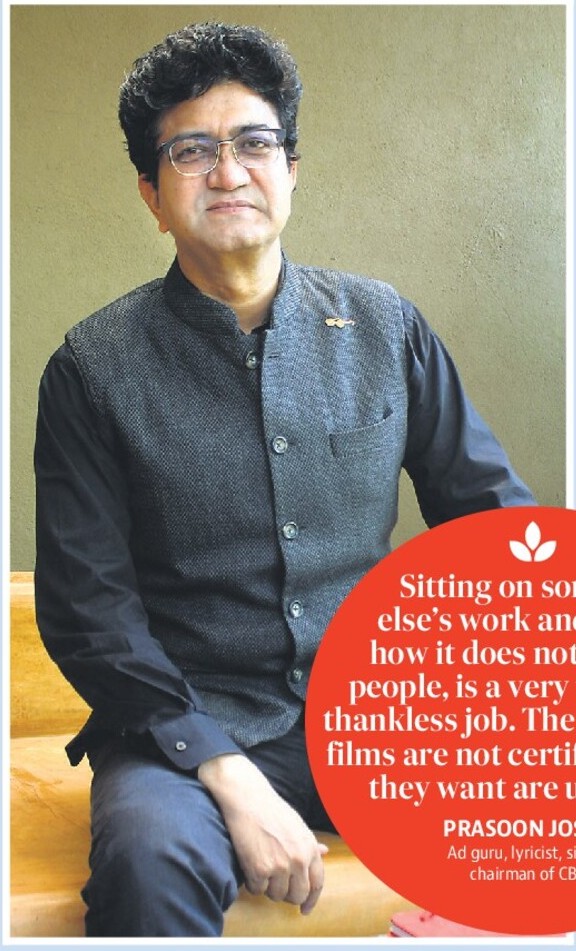
The Central Board of Film Certification chairman says his job is a challenge as he lacks the right temperament for it
Rishabh Suri (HINDUSTAN TIMES; November 28, 2022)
He wears many hats, including those of a noted lyricist, advertising guru as well as a talented singer. But the job which Prasoon Joshi finds the toughest to do is being the chairman of the Central Board of Film Certification (CBFC).
Explaining why it is a challenge, Joshi tells us, “It is something which is temperamentally not me. Sitting on someone else’s work and saying how it does not gel with people, is a very tough and thankless job. The ones whose films are not certified the way they want are unhappy. People are also very harsh in their criticism towards the CBFC.”
The 51-year-old, who was speaking to us at the 53rd International Film Festival of India (IFFI) after he delivered a masterclass, adds, “Even in advertising, you have to constantly evolve to meet expectations. But I have had fun creating brands for more than two decades. I love that job.”
Though challenges are present in advertising too, he says they are not ‘conflicts’. Similarly, there was hard work involved in recording songs as well. Joshi reminisces, “I would leave my office at 5 in the evening, take a flight and reach (music composer) A R Rahman’s office at 12 in the night in Chennai. I would then take another flight back to work at 8.30 in the morning the next day. But I did not mind the hard work.”
Despite managing the difficult responsibility at the CBFC, Joshi, however, also has a keen interest in imparting education to aspiring filmmakers, actors and technicians, which is why he chaired the jury for IFFI (International Film Festival of India)’s 75 Creative Minds of Tomorrow for the second time. This is why, he made sure to not miss the festival this year as well.
If certifying films fairly comes with a price, I’ve paid it-Prasoon Joshi
8:15 AM

At IFFI, the lyricist spoke about how his role as CBFC chairman has led him to maintain a distance from the industry, and the personal and professional price he’s paid for it
Niharika Lal (BOMBAY TIMES; November 27, 2022)
Prasoon Joshi, who has been the CBFC chairman for the last five years, says that he has maintained a deliberate distance from films, and written fewer songs, since taking on that role. “I was on the board of several major film companies and I resigned from them after becoming the CBFC head. Yeh mera style hai kaam karne ka. Main nishpaksh rehna chahta tha, main nishtha se kaam karna chahta tha. I am not part of certification of those films in which I’m involved. Somewhere, commercially, I’ve had to pay a price as well,” the lyricist said during his recently-held masterclass on Art And Craft Of Lyric Writing at IFFI (International Film Festival of India).
Prasoon continued, “I have been friends with a lot of people in the industry. But I have kept a distance to judge films judiciously and fairly so that everyone can reach out equally and everyone is judged fairly. If it comes with a price then I have paid the price.”
He added, “People can say whatever they want to, but all I can tell them is – main factory mein tarasha hua patthar nahin hoon. Main nadi ke kinare pada hua patthar hoon, jisne 50 thokrein khayi hain uske baad uska aakar gol hua hai. Aise hi gol nahin ban gaya hoon main. No one from my family was in films. No one came to Bombay with me and neither did I know anyone in the advertising world. I found my own way. Maine apni thokrein khayi hain aur un thokron ka prabhav ye hai ki kahin golayi aayi hai aur un golaiyon ka prabhav aap ko dikhta hai.”
‘IT IS IMPORTANT THAT THERE IS HIGHER REPRESENTATION OF WOMEN IN CBFC COMMITTEES, EVEN IF IT’S LOPSIDED’
Prasoon also said that 70% of the members in the CBFC committees today are women, and that it is really important for him to include more women members. “It is a bit lopsided. Who are these women? They are from all walks of life. Now, why is it important for me that women are in these committees? Kai baar woh maa bhi hoti hai, behen bhi hoti hain, receiving end pe hoti hain. It is important that they are comfortable. Since I have joined CBFC, I have ensured that there is unfair representation of women – lopsided representation of women – in those committees (i. e. higher ratio of women). I am not doing male bashing, but women take more interest in the shaping of the society. Unke upar dayitwa (responsibility) hota hai toh mujhe tasalli hoti hai.”
‘A FILMMAKER CANNOT SAY THEIR FILM IS JUST FOR SELF-GRATIFICATION IF THEY SEEK MONEY FROM A MOVIEGOER’
When asked if the CBFC sometimes tends to ‘unnecessarily use its scissors to cut films’, Prasoon expanded on his own philosophy on censorship during his tenure, saying, “We stay in a society, toh usmein kuch systems bante hain. Jaise hum sadak par chalne ke niyam banaate hain. Animal kingdom mein toh kapde nahi hote, but we celebrate wearing clothes, we make it an art form. Fabric design pe jaate hain. Koi usse yeh bhi keh sakta hai, aap mera freedom lerahe hain, mujhe kapde pehna rahe hain. But somewhere, there is an understanding in human civilization that we all want to see each other in a certain way. Aur bhasha ka istemaal hai, ki hum aapas mein public mein iss tarah se bolenge. Ek code of conduct evolve hota hai. It’s dynamic, ever-evolving. And kahin na kahin, doosre ke baare mein sochna important ho jaata hai. So, I have tried to handle this system (at CBFC) – jo pehle se chala aa raha hai – gracefully. And to solve these matters by asking ‘samaaj kya dekhna chahta hai?’. A filmmaker cannot say that a film is made just for their own gratification. If you’re seeking money from a moviegoer’s wallet, you can’t say that I don’t respect the opinion of the person from whose wallet I am seeking money. As long as we find the right balance between complete expression and responsibility and sensitivity towards the milieu and society we live in, I think we can solve it. And that has been my approach. As long as the intent is to solve it. The intent is not to play the blame game. The intent is not ki logon ko kathghare mein khada karo.”
‘LISTENERS SHOULD BE HELD EQUALLY RESPONSIBLE FOR THE TYPE OF SONGS BEING MADE TODAY’
Talking about the sexism in the lyrics of certain songs, Prasoon said that creators and listeners “should all be held equally responsible” for them. “If you want any change, then you have the biggest button. Uska bahishkar karne ka button aap ke paas hai. You can’t say that I will criticize objectification of women in songs during the day and in the evening, I will dance to those songs. Double standards are not going to work. Regardless of how harsh the market is, jo bikta nahi, woh tikta nahi,” he said.
Bollywood needs to do away with the victim mindset-Prasoon Joshi
8:16 AM

HINDUSTAN TIMES (November 21, 2022)
Central Board of Film Certification (CBFC) chairperson Prasoon Joshi has opened up about the string of box-office failures that the Hindi film industry has witnessed in the recent past.
The two-time National Award winner stated that instead of adopting a “victim mindset”, the film business must seek solutions to overcome this downturn. He went on to add that some introspection is needed at this point to ascertain how the situation can be improved, going forward, and that the industry went into a “bubble”.
“There is a need to do some introspection. It (Bollywood) needs to do away with the victim mindset,” he said at Sahitya Aaj Tak 2022 on Saturday.
The year 2022 has not been particularly productive for the Hindi film industry, as it saw many big-budget tickets fail to elicit much response at the box office.
What further marred chances of raking in the moolah were boycott calls that took over social media, targeting films such as Aamir Khan’s Laal Singh Chaddha and Akshay Kumar’s Raksha Bandhan.
When asked about the possible reasons for this slump in box-office collections, Joshi asserted that this was the result of the industry and its creators having lost touch with their roots.
“There was a time when Bollywood films had stories taken from literature and mythology. These tales were connected to their roots. Then, at some point, Bollywood became self-congratulatory and went into a bubble. There are mainly only people from Mumbai here. Many have never seen a farmer in real life. But then, they try to show farmers in films. They are cut off from their roots,” he said.
People think agar success chahiye toh English bolni padegi-Pankaj Tripathi
8:25 AM
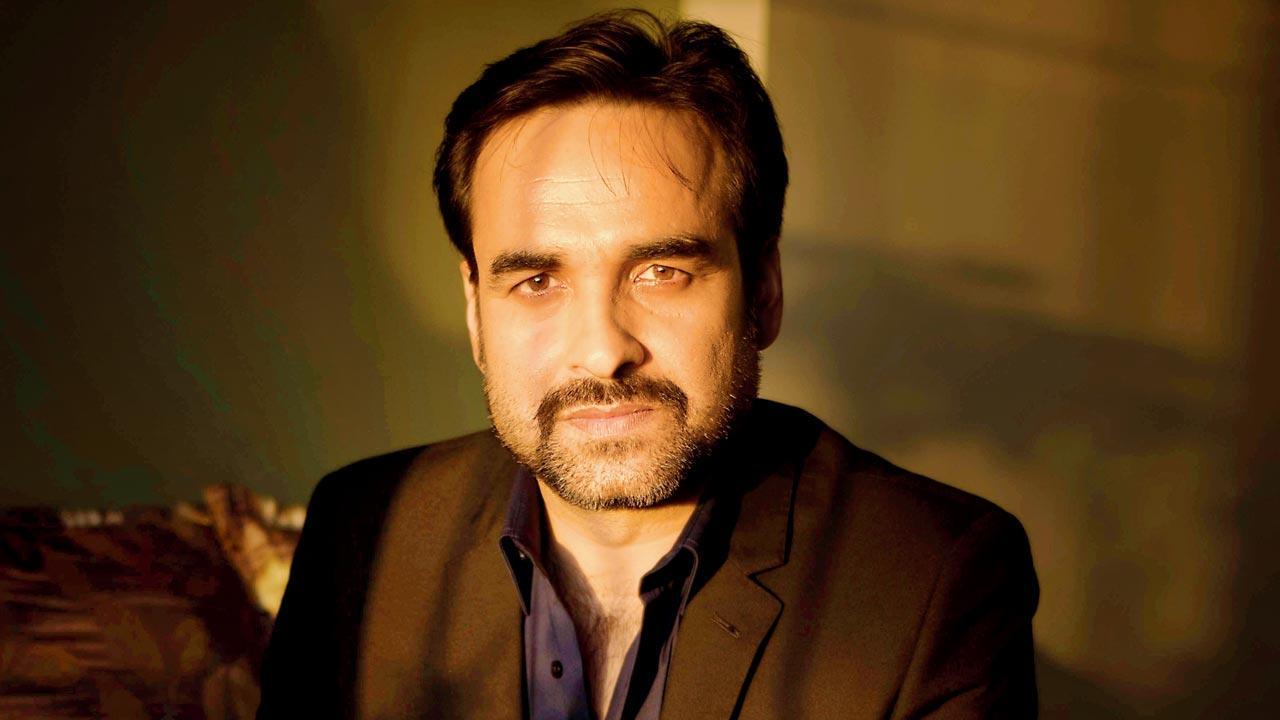
Actor Pankaj Tripathi says language shouldn’t be a parameter to gauge knowledge
Rishabh Suri (HINDUSTAN TIMES; September 15, 2022)
Pankaj Tripathi insists on talking in Hindi. It’s not that he doesn’t know English; he simply prefers to communicate in Hindi. The actor is quick to refute the idea that success in life is impossible for someone who does not speak English.
“That’s the colonial mindset, especially in north India,” he says, explaining, “Mindset is that ‘agar success paani hai, toh aapko angrezi aani chahiye, varna failure ho jaaoge’. English elite ki bhaasha samajh baithe, jabki woh toh colonial language hai. Cool aur educated lagne ke liye voh maap-dand ban gaya hai. People think ‘Angrezi bol raha hai, padha-likha hoga’.”
The 46-year-old, who made his debut in the Hindi film industry in 2004 with the film, Run, goes on, “Language is only a mode of communication, not a parameter of how much knowledge one has. Woh hangover hat jaana chahiye.”
Ask the Mimi (2021) actor what the scenario is like in the industry, as in, do people speak in Hindi or English on sets, and which language does he get scripts in, and he shares that he has never been made to feel awkward about choosing to speak in Hindi.
“I can’t generalise and say everyone speaks Hindi, but the majority do. Two-three percent, who belong to important departments on a set, speak in English. Earlier, I’d get my scripts in English, and I wasn’t in a position to ask for them in only Hindi. So, I’d write all my dialogues in that, as it is easier for me to memorize. Today, I only get my scripts in Hindi,” ends the National Award-winning actor.
-----------------------------------
To mark Hindi Diwas, Pankaj hosts special conclave discussing the language’s evolution with CBFC head Prasoon
Mohar Basu (MID-DAY; September 15, 2022)
Pankaj Tripathi's command over Hindi is evident in his effortless delivery of dialogues. Those who have worked with the actor will tell you that he insists on scripts being given to him written in Devanagari. Vocal about his love for the language, Tripathi was chosen to host a conversation with Prasoon Joshi, lyricist and chairperson of the Central Board of Film Certification, to mark Hindi Diwas yesterday.
The Hindi Diwas Samaroh Second Akhil Bhartiya Rajbhasha Sammelan, which took place in Surat, was organized by the Ministry of Home Affairs and Department of Official Language.
The chat revolved around the evolution of Hindi over the centuries, and encouraging the youth to embrace the language. The duo also discussed the changing vocabulary of Hindi dialogues in cinema. For Tripathi, it was a joy to celebrate the language and its legacy.
He says, “Hindi is a beautiful language with a vast history. We, as Indians, should take pride in it. While it’s good to learn about western culture, it is also important to know one’s own history and language. In our movies too, you can see a huge difference between the language used earlier and now.”
The event was also attended by Mahesh Manjrekar and Dr Chandraprakash Dwivedi.
India Forum at Cannes: 'How can Indian cinema embrace its Indianness, while still being a global player?’
8:03 AM

BOMBAY TIMES (May 23, 2022)
On Day 3 of the Cannes Film Festival, the India Forum panel session on ‘India: The Content Hub Of The World’, saw a discussion on increasing acceptance of Indian content among global audiences and a debate over how Indian stories should be positioned for the international audience. Should India give a more international flavour to content to gain wider acceptability, or be unapologetically Indian in the tonality of what it makes? The session is over, but the debate continues.
UNAPOLOGETICALLY INDIAN OR CATERED TO A GLOBAL AUDIENCE: WHAT SHOULD BE INDIA’S APPROACH TO THE WORLD MARKET?
In his keynote address, Anurag Singh Thakur, Union Minister for Information and Broadcasting said that Indian content has been appreciated by the global audience, since as far back as 1946, when Chetan Anand’s film Neecha Nagar won the Palme d’Or (then known as Grand Prix of the International Film Festival). A decade later, in 1956, Satyajit Ray’s Pather Panchali won the Best Human Document award.
“India intends to give the global audience a flavour of the country’s cinematic excellence, technological prowess, rich culture and illustrious heritage of storytelling,” he said, while discussing how the country is set to manifest into the ‘content hub of the world’.
While talking about how India should approach the global market and audience, Prasoon Joshi, CBFC chairperson emphasized that India can follow the Korean approach of storytelling – in the sense that the content need not lose its local cultural connect.
He said, “How can I take India and what can be produced in India and make it palatable for the global market and reach out to that market? That’s what Korea did with K-pop or K-dramas. They reached out with a distinct Korean flavour catered to the world market. Every culture in the world has something to offer, I would hate a world which is standardized. Another thing that’s important is that India understands diversity. We are so used to diversity.”
Scott Roxborough, Europe Bureau Chief, The Hollywood Reporter, was not convinced on some nuances and pointed out the fact that though China has an incredibly strong domestic market and is now the second largest box office territory in the world, it has still not been able to really find global acceptance, even though it makes very distinct films about its culture and history.
“They (China) have not really managed to cross over to the international market, and I would argue that India hasn’t either yet, despite having a very long history of cinema, and having great traditional storytelling. The type of Indian storytelling that is so appealing to the Indian market has not yet crossed over to the international market. ”
‘LIFE OF PI TO RRR – ‘TYPICALLY INDIAN’ STORIES ARE FINDING AUDIENCE WORLDWIDE’
Scott also made the point that there should be a point beyond which governments should perhaps not get involved in the space of culture. CBFC member and actress-producer Vani Tripathi Tikoo, who was moderating the event, asked Apurva Chandra, Secretary, I&B, “Scott says the government should not be getting involved in culture, and we were discussing yesterday about education and creation of opportunities in cinema, in governance terms, what do you think should be happening? How much involvement should governance have in terms of creation of content? How does it interconnect with you and the consciousness around governance?”
Chandra said that he would like to respond to Scott as a film buff and not as a government officer. Sharing examples of Indian films that resonated with the global audience, he added, “NFDC (National Film Development Corporation of India) was the producer of The Lunchbox, a very very typical story of the Mumbai suburb, and Mr And Mrs Iyer, a film on Hindu Muslim unity. There have been a lot of stories which the world has been interested in, like Lion, Life Of Pi,and Slumdog Millionaire – that are all by foreign filmmakers but are typically Indian. And then apart from that, there are a lot of Indian films that are getting attention in other parts of the world – 3 Idiots or Dangal did very well in China. I met Ahmad Bolchin, who is a producer of RRR in Dubai, and he said that he is translating RRR into Persian, distributing it in Iran. In Dubai, they are interested in Indian serials, and would like to dub them in Arabic. That’s how Indian stories are travelling in the Middle East, in America and in other parts of the world.”
‘WE INDIANS ARE MELODRAMATIC,SO THEN WHY BE DEFENSIVE ABOUT IT?’
Veteran filmmaker Shekhar Kapur, Prasoon, and R Madhavan were all convinced that the flamboyance, the melodrama and the cultural rooting of content made in India, or by Indians, should not be something that is treated apologetically.
Underlining the social and emotional USPs of content rooted in India, Kapur said that human beings are melodramatic people and “we Indians perhaps even more so, and there is no need to be defensive about that. For us (Indians in particular, and Asians in general) everything is mythology”.
He added, “In the West, there is some kind of shyness when mythology comes up. I did a film called Elizabeth (1998), my first film outside India and I am thinking – how am I gonna do this? This is the most famous queen in the world and I am an Indian filmmaker! I was like, actually, I have a mythic idea and to me everything about Elizabeth is mythic. And when I was shooting it everybody said, ‘Shekhar, it is so melodramatic’, and I said, ‘No, it’s mythic’. Reviews also said that it is a very melodramatic film. I said, ‘Yes!’ They said it is a Bollywood film, and I said, ‘Yes!’ And then we got nominated for nine Oscars and Cate Blanchett became one of the biggest stars in the world.”
STAYING AUTHENTIC VS MAKING CONTENT THAT CAN EASILY BE TRANSLATED GLOBALLY
Kapur pointed out that there is this conflict between the West and the East and the reason Chinese films are not coming abroad yet is perhaps not because they lack a connect but because the film critics in the West have not yet learnt to celebrate the idea of living mythically.
Scott responded by making the point that succeeding in the international market comes from translation, like what Kapur did – take a very western story and telling it in a very Indian way. He said, “What you did with Elizabeth was a very compelling translation of Indian cinema – emotional, melodramatic and mythic cinema-making, with a western story. You were able to combine that and translate the language into something which was then understandable for the international audience.”
He said that it is not that Chinese cinema is not producing big distinct cinema, but that the international audience doesn’t understand that language and culture. He added, “I would argue that this is what Korea has done. They tell very Korean stories, but they have taken so much western influence to their storytelling that they are very easily translatable, and very easily understandable. Parasite, for me, could have been a Spielberg movie. It is told in a very Korean way with a very specific Korean setting, but they have managed to find a translation. And that’s what I think India needs to do ifit has to go international with storytelling, and that doesn’t mean to be untrue to the core or mythic, but you can’t expect audiences to just understand the culture.”
Madhavan also reiterated the point of being unabashed about not tailoring content to deliberately make it more globally palatable. “One of the ways that content becomes international and consumed is the fact that it becomes aspirational. Koreans have become successful because they are unabashed about how they don’t want to appease the rest of the world. They are very Korean in their nature – and that’s why my son wants to see it. I think if we are able to make those stories aspirational, of which we have many opportunities in India, we will be as much a global player as Hollywood is. ”
‘GLOBAL COLLABORATIONS CAN HELP BREAK CULTURAL BARRIERS’
To ensure that Indian stories are not lost in translation and effectively reach foreign audiences, producer Philippe Avril advised to encourage co-production across countries.
Indian musician Ricky Kej – who has won two Grammys, in 2022 and 2015, both in the Best New Age Album category, and both in collaboration with international artistes – pointed out that some of the best films narrating Indian stories have either come from Indian filmmakers who lived abroad or foreign filmmakers who told an Indian story, and hence, collaboration is the way forward.
He added, “My first major collaboration (Winds Of Samsara) was with a South African musician (flautist Wouter Kellerman), for which I won a Grammy (in 2015). My second collaboration was this year with Stewart Copeland, a former drummer of The Police from America. I won my second Grammy for that. And both albums are very strongly Indian. It is just that I got a new perspective on how to dress up the songs. The same could apply to films. I think collaboration becomes very important to break cultural barriers. ”
Red carpet @ Cannes: Here’s who all will walk from India
8:38 AM

Niharika Lal (BOMBAY TIMES; May 11, 2022)
Actors Akshay Kumar and Nawazuddin Siddiqui, music maestro A R Rahman, Grammy-winning composer Ricky Kej and actor R Madhavan are among those from the field of cinema and music who will walk the red carpet at the opening ceremony of the 2022 75th Cannes Film Festival, as part of the Indian delegation led by Anurag Thakur, Union Minister for Information and Broadcasting.
Other names from the Indian delegation that will walk the red carpet include CBFC chief Prasoon Joshi, acclaimed director Shekhar Kapur, CBFC board member Vani Tripathi Tikoo, actresses Tamannaah Bhatia, Pooja Hegde, Nayanthara and folk artiste Mame Khan.
This year, Cannes’ Marche’ Du Film will celebrate India as its Official Country Of Honour. As part of these celebrations, the Palais des Festival premiere of R Madhavan’s Rocketry: The Nambi Effect will take place on May 19. The restored version of G Aravindan’s Thamp will also be screened at the film market.
This will be the first time that the market will have an official Country Of Honour and is expected to continue this tradition during its future editions. The India Forum will be the first event to open the conference program of the Marché Du Film on May 19, where the panel discussion, India: The Content Hub of the World, will feature Prasoon Joshi and Shekhar Kapur, among others.
The centenary celebrations of Satyajit Ray will continue at Cannes as a restored classic of the filmmaker — Pratidwandi— will be screened at the Cannes Classic section Cinéma de la plage.
In a first, India named the Country Of Honour at Cannes Film Market
8:16 AM

For the first time, the Marché du Film will have an official Country Of Honour this year,which also marks 75 years of India’s independence & Festival de Cannes
BOMBAY TIMES (May 5, 2022)
India will be the official Country of Honour for the Cannes Marché du Film (Film Market), at the 75th Cannes Film Festival, which will be held from May 17 to 25 this year. This will be the first time that the market will have an official Country Of Honour and is expected to continue this tradition during its future editions.
Union Minister of Information and Broadcasting Anurag Singh Thakur will be delivering a welcome address during a ceremony to kick off the market celebrations on May 18 at the Majestic Beach. The India Forum will be the first event to open the conference program of the Marché du Film on May 19, where the panel discussion, India: The Content Hub of the World, will feature Prasoon Joshi, CBFC chairperson and veteran filmmaker Shekhar Kapur, among others.
‘WE ARE DELIGHTED TO CELEBRATE 75 YEARS OF INDIAN INDEPENDENCE COINCIDING WITH THE 75TH FESTIVAL DE CANNES’
“We are delighted to have India as our Country of Honour this year at the Marché du Film; and even happier to be able to share the celebration of our anniversary that we have in common – 75 years of Indian independence coinciding with the 75th Festival de Cannes,” said Jérôme Paillard & Guillaume Esmiol, Executive Directors of the Marché du Film.
‘THIS WILL SEND OUT A MESSAGE TO THE WHOLE WORLD THAT INDIA IS THE CONTENT HUB OF THE WORLD’
“It is a momentous occasion for India, the land of storytellers and a feat in our soft power as India is the first Country of Honour at the 75th Cannes Film Festival,” Anurag Thakur told us, adding, “This has come at a time when India is celebrating Azadi Ka Amrit Mahotsav and the year 2022 also marks 75 years of diplomatic relations between India and France. I am also proud that India is also a Country of Honour at Cannes Next where five startups will get to pitch to AV industry.”
As one of the highlights of India’s status as the Country of Honour, a special screening of the restored Satyajit Ray film Pratidwandi is planned in the Cannes Classics selection. Anurag Thakur added, “We are happy that the the legendary cinematic excellence of Satyajit Ray will be on display at Cannes through his classic Pratidwandi. Through Cannes, we will send out a message to the whole world that India is the content hub of the world. With tremendous improvement in ease of doing business and industry-friendly policies, India is open to contributing in all aspects of filmmaking.”
The festival’s official press release also quoted Apurva Chandra, Secretary, I&B ministry, as saying, “We are taking giant strides in making India the content hub of the world, and this collaboration will be crucial in making the world better acquainted with what India has to offer.”
The Cannes Film Festival will also feature world premieres of a selection of Indian films, which will be held at the Olympia Cinema. India will also be spotlighted in their various other programmes, including Goes to Cannes, Cannes XR and Animation Day, stated the official press release issued by the festival.

Nay Varan Bhat Loncha Kon Nay Koncha ‘Obscene’ trailer: POCSO court reserves order on complaint
8:03 AM
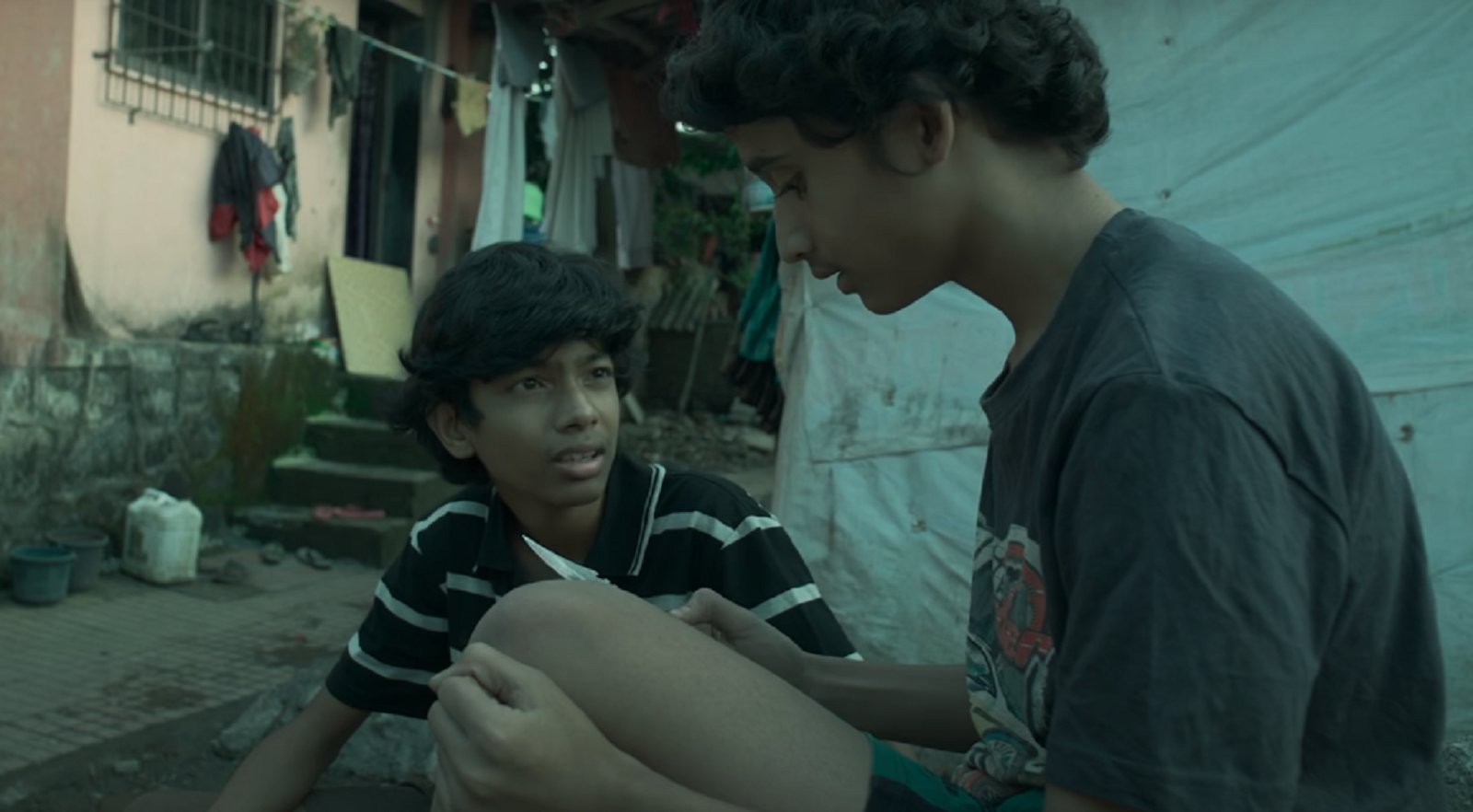
THE TIMES OF INDIA (February 2, 2022)
Mumbai: A special Protection of Children from Sexual Offences Act (POCSO) court on Monday reserved for order an application filed by a women activist organization seeking criminal action and probe against filmmaker Mahesh Manjrekar, two producers, a studio and Prasoon Joshi, the chairman of Central Board of Film Certification (CBFC) in Mumbai, for circulation of alleged explicit display of ‘child pornography’ in a film trailer.
Advocate Ashish Chavan, for the complainant Seema Deshpande, who is Mumbai city president of Bharatiya Stree Shakti, said Manjrekar is the director of the movie ‘Nay Varan Bhat Loncha Kon Nay Koncha’.
He claimed that the “trailer uploaded by the filmmakers and production house shows scenes of child pornography punishable under the POCSO Act and the trailer was freely accessible and downloadable. It has been circulated and transmitted”. Chavan also cited the details of the scene from the complaint and said Section 21 of POCSO Act is attracted in relation to the CBFC officers responsible.
The filmmakers have voluntarily removed the scene from the movie, but Chavan said the trial is still widely circulated.
NCW wants Nay Varan Bhat Loncha Kon Nay Koncha censored over sexual content
2:38 PM
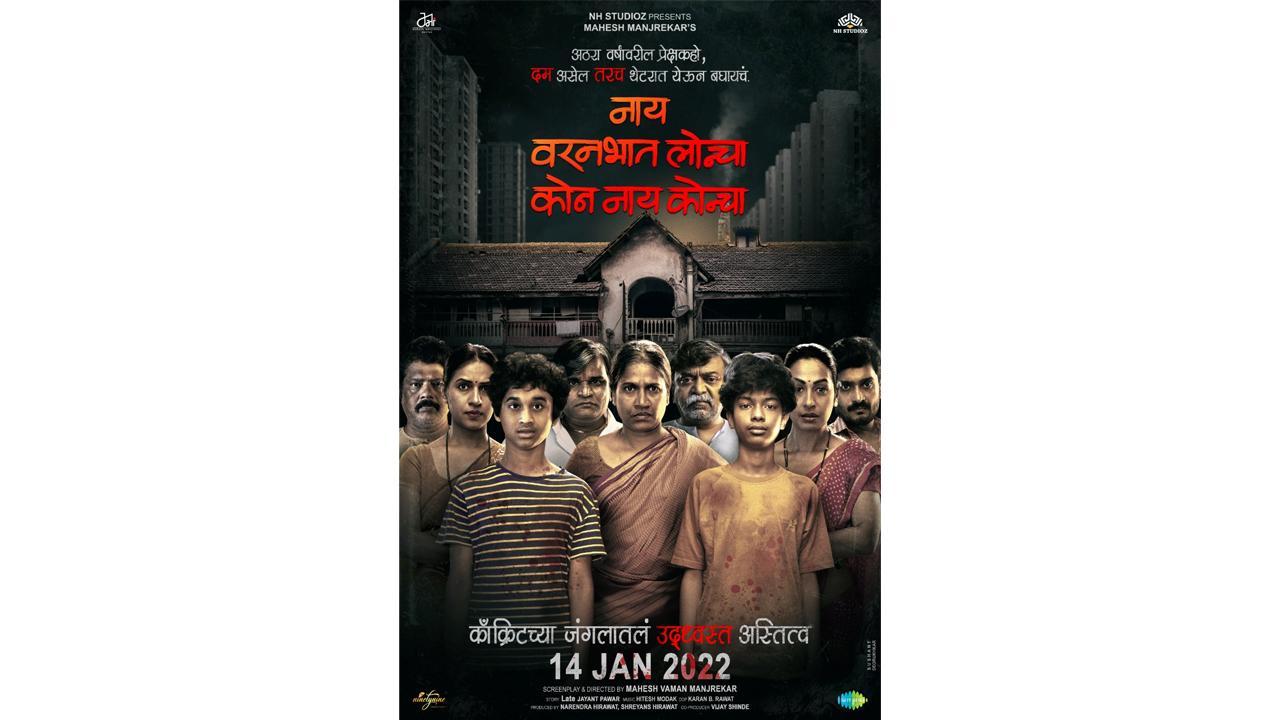
THE TIMES OF INDIA (January 13, 2022)
New Delhi: Taking note of a complaint regarding a Marathi film “Nay Varan Bhat Loncha Kon Nay Koncha” which is scheduled for release on January 14, National Commission for Women (NCW) chief Rekha Sharma has written to the ministry of information and broadcasting to immediately intervene and censor its trailer for sexually explicit scenes and objectionable depiction of women and minors.
The Commission has also asked the ministry to ensure that the sexually explicit scenes are not circulated openly on social media platforms. A copy of the letter has also been sent to Prasoon Joshi, chairperson, Central Board of Film Certification.
In a statement, the NCW said the Commission has received a complaint from Maharashtra-based Bharatiya Stree Shakti on the film. The complaint alleges that the trailer of the film which was released on January 10 shows obscene content depicting women and minors in objectionable ways.
“The trailer is being circulated on social media platforms like Facebook, YouTube, Twitter, etc without any age restrictions for viewers and hence is available even for minors to watch,” the Commission stated.
Many people have made films about villagers and farmers without interacting with them-Prasoon Joshi
7:45 AM

Rachana Dubey (BOMBAY TIMES; November 23, 2021)
If I have to choose between writing or singing something that I like and something that can inspire, I will choose the latter,” said screenwriter and lyricist Prasoon Joshi during his masterclass at the 52nd International Film Festival of India (IFFI) in Goa. He added, “When I wrote Bhaag Milkha Bhaag, I often thought to myself if this piece of work could inspire more people in this country. Self-expression should in some manner attach itself with the larger good.”
Lauding the film festival for handpicking budding artistes through the 75 Creative Minds of Tomorrow competition, launched as part of the Azadi Ka Amrit Mahotsav this year, Prasoon said, “Cinema has to have magic, but making cinema should not be magic. It is a serious craft. We have to make it by design and not by default. Tukka or chance has to be reduced. When a child in a family says that he wants to become a singer, filmmaker or lyricist, the family should be able to take them as seriously as they would take him if he said he wanted to be an engineer or a doctor. That will happen when we start working towards serious exposure and learning.”
He added, “We also have to focus on getting more authentic with our stories. Many people have told me that they have made films about villagers and farmers without interacting with them. Unless more and more filmmakers come from various parts of our country, different milieus, different language sects, we won’t see diversity. Filmmaking is a business that generates employment. It should not be seen as akin to gambling. One should be assured of their craft.”
As the head of the Central Board of Film Certification (CBFC), Prasoon has overseen the certification of over 25,000 films nationally in his tenure. Given that his run has been more or less dispute-free, he was asked about his approach to the job. “There is a certifying process, and it is complex because our country is one of the most complex in the world with its cultural diversity in place. My approach was to open a discussion to find solutions, understand and accommodate different points of view. While talking about commerce and share of wallet, you cannot ignore the share of voice,” he said.
Subscribe to:
Posts (Atom)