Showing posts with label Pran. Show all posts
Showing posts with label Pran. Show all posts
Family member and friends of Junior Mehmood recount the man and legacy he leaves behind
8:08 AM
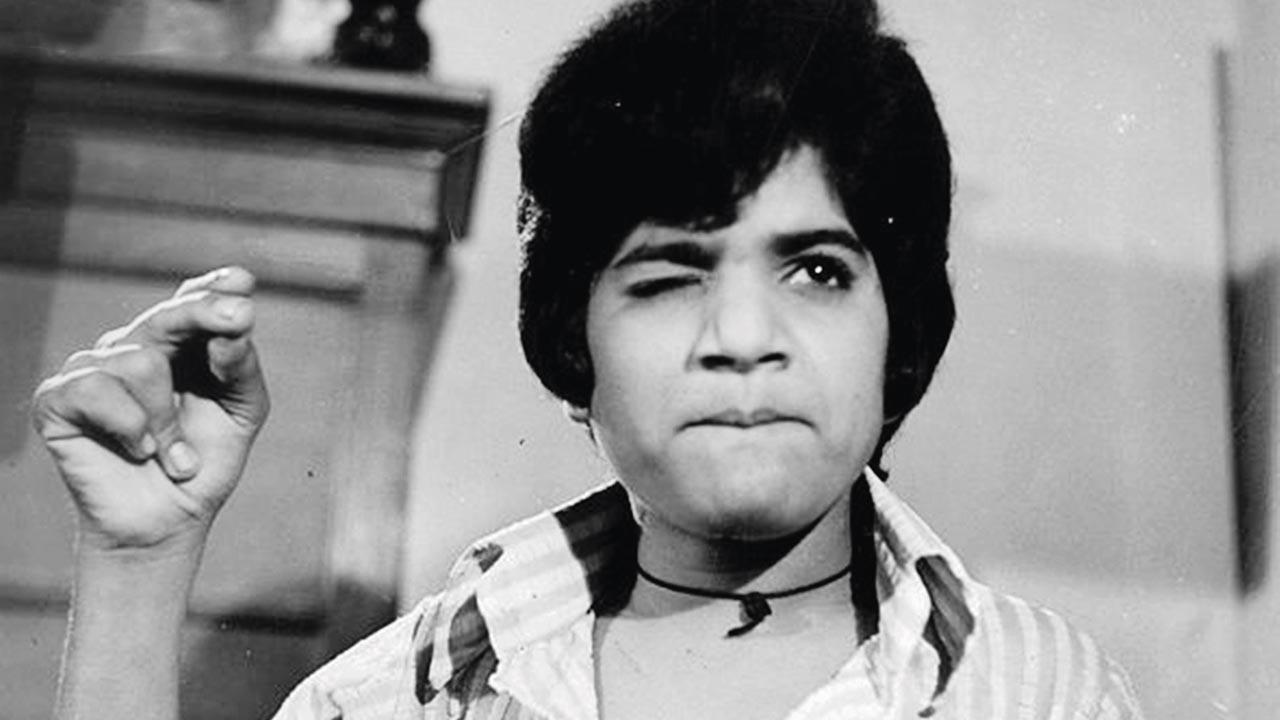
Family member and friends of the late Junior Mehmood recount the man behind the name, and the legacy he leaves behind
Gautam S Mengle (MID-DAY; December 17, 2023)
The year was 1981 and shooting for Shyam Ralhan’s Jeeo Aur Jeene Do was underway. The scene showed the legendary actor Pran as a dacoit who leaves the mountains of Chambal to come to Mumbai. Unfamiliar with the ways of the city, Pran’s character lies down on a pavement to rest for the night when the local goon’s sidekick shows up to demand hafta. The deadly dacoit responds by placing his leg on the collection bowl. The sidekick, not to be outdone, raises his fist and says, “Ae shaane, pair nikaal, haath jeb mein daal aur hafta nikaal.”
Placing of the leg on the bowl was not in the original script, and neither was the sidekick’s response. But Pran sahab, as he was known, was offended by the artiste’s improvisation, perceiving it as impudence. The shoot halted for over two hours, with the director having to intervene to soothe the veteran.
The actor who played the sidekick, too, was surprised. He had only responded the way his character would have. He was none other than Naeem Sayyed, better known as Junior Mehmood, who passed away on December 8 after a short battle with stomach cancer.
“I don’t know this specific story,” says his son Rafiq, “but it’s typical of Dad. I’ve grown up hearing stories about how, as soon as the camera started rolling, he would do something completely different than what was rehearsed. And not once did the scene have to be reshot. Directors always loved it when he pulled this on them.”
Over time, actors learned not to take it personally. By the time he passed away in 2013, Junior Mehmood had become ‘Mera Junior’ for Pran.
We meet Rafiq in the compound of the Dara House building in Khar. Rafiq and his younger brother Hasnain were both born in this house, which Junior Mehmood bought at the age of 12 in 1967. “Of course, the legal owner was our grandmother, but it was all Dad’s money. He was a star at the time and earning in lakhs,” Rafiq recalls.
Best remembered as the first child artiste to win a Filmfare award, Junior Mehmood’s legacy includes his unforgettable performance in Brahmachari, where he danced to a recorded version of Hum Kaale Hain Toh Kya Hua Dilwaale Hain, a song originally picturized on the actual Mehmood. He went on to give us a string of equally memorable performances in various films before moving on to TV serials.
The son of a locomotive pilot working with the Mumbai Port Trust, Junior Mehmood got his foot into the film industry at the age of ten, with Mohabbat Zindagi Hai that released in 1966, but he was only properly noticed during Suhaag Raat in 1968, when both Jeetendra and the original Mehmood appreciated him, and bestowed his lifelong sobriquet on him.
His last project was a Hyderabadi film named Majja Masti, which he directed this year and is yet to be released.
The loss is still fresh for the Sayyeds. The actor’s wife is observing the 130-day grief period of Iddah, and Rafiq has taken it upon himself to be the rock of the family. Just before we meet him, we see him talking to a gentleman. We stand at a distance out of respect but still overhear the words, “spoke to him only a few days ago”. Everyone seems shocked at the sudden loss. Nobody seems to have seen this coming.
It is only after the man leaves that we learn he was a lyricist, and that Junior Mehmood was collaborating with him for a project. Perhaps the reason why everyone is so shocked at his demise is the fact that he was fully energized till his final days.
“He performed at our building’s function in Diwali just a month ago!” says Inderpal Singh Kohli, who lives on the third floor of the same building. “He gave us a box of mithai with his own hands. My kids used to love him too. That’s just how Mehmood Uncle was, everyone’s favourite.”
Junior Mehmood was diagnosed only two months ago, and that too by accident. “He had been complaining of a constantly upset stomach for several days,” recalls Salam Kazi, who runs the YouTube channel India Asks. Kazi has been a family friend for 25 years.
“It got so bad that whenever we went out to eat, he’d first check if the place had a washroom, because he was unable to retain food in his system. I took him to a doctor, who prescribed a series of tests. When all the results were normal, we did a CT scan of his stomach. The doctor told us he had cancer,” Kazi recalls.
What followed was a series of tests at the Tata Memorial Hospital. As kindly as they could, the doctors told Kazi that chemotherapy would mean instant death, and that taking Junior Mehmood home was the best option. Since then, he had a nurse and a doctor tend to him, while he spent his days in the company of his family and close friends. Hundreds of well wishers came to see him, and Junior Mehmood recognized every one of them, and inquired after their well being.
“That is simply how sahab was. Every day, people would come to him for help, and not a single person would go back disappointed,” says Mangalaprasad Yadav, who has been working as a security guard at the Dara House since 1992. Yadav was at Junior Mehmood’s side during his constant visits to Tata Memorial.
Yadav recalls how Junior Mehmood would give him a Rs. 500 note to get him a pack of cigarettes and never ask for the change. Rafiq knows this too. “I asked Dad once and all he said was ‘uska ek din ka kharcha nikal jaega (he will have money to spend on a day’s essentials)’. I don’t recall Dad ever not thinking about someone else. He used to have a large amount of money in his bag, which he always carried. Whenever someone came for help, he would dip into the bag and give him whatever money came out, without counting.”
For Kazi, like countless others, it has been a personal loss. His phone has been ringing constantly. Everyone knew how close he was to Junior Mehmood, and he has been getting condolences from all over the country. He answers each call, thanks the caller and says the same thing: Dua kijiye unko jannat naseeb ho.
“I first met him on the set of a film around 25 years ago. I loved watching shoots. We got talking during the lunch break and he asked me where I live. When I said Wadala, he told me he too lived there till he shifted to Bandra,” Kazi tells us as we ride on his bike past Building Number 23 in Nadkarni Park, Junior Mehmood’s former residence. “I went back to the set to meet him and he not only recognized me but also put his arm around me like we were old friends.”
Kazi’s videos on social media alerted the world to Junior Mehmood’s plight. He posted it a week before the latter’s demise, and as a result, co-stars such as Jeetendra, Sachin Pilgaonkar and Johny Lever came rushing to meet Junior Mehmood. Also present throughout was comedian-actor Johny Lever, who arranged for Junior Mehmood’s check up at the Tata Memorial Hospital after hearing about his illness.
“I first saw him perform at a dance programme when we were both nine years old,” Lever tells mid-day on the phone. “We didn’t interact at the time, and the next time our paths crossed, Brahmachari had released and he was a big star. He was the chief guest at a dance audition in Bandra and I was too embarrassed to perform in front of him. I prayed to God that I should not be selected, and God answered my prayers.”
From then on, Lever never missed any of Junior Mehmood’s films and also tried to meet him several times, but there would always be a huge crowd outside his building. “This led to his father getting to know me!”
He says. “Then, in 1982, a cassette of one of my comedy performances was released and he sought me out because he loved it. Before we knew it, we were fast friends. We also performed together at live programmes and in films. Our kids have grown up playing with each other.”
Like many, Lever, too, can’t believe that the powerhouse of energy is gone. “We had a function in August to remember the original Mehmood, and Junior danced to and sang his songs. I’m not sure if he knew he was falling ill, but I believe he didn’t want his treatment to come in the way of his passion, and hence didn’t tell anyone,” Lever says.
“We never told him his diagnosis but I think he knew. Two days before his death, I asked him if he had any unfulfilled wishes. He said no, he just wanted to be remembered as a good man. I think even God will not deny this fact,” says Kazi.
He isn’t sure if he can say the same about many people who worked with Junior Mehmood, though.
“There are so many megastars who stay in the same city, who we have seen with Junior bhai in so many films. And none of them came to his funeral,” a pensive Kazi says. “They should have, right? I’m sure they could have, if they really wanted to.”
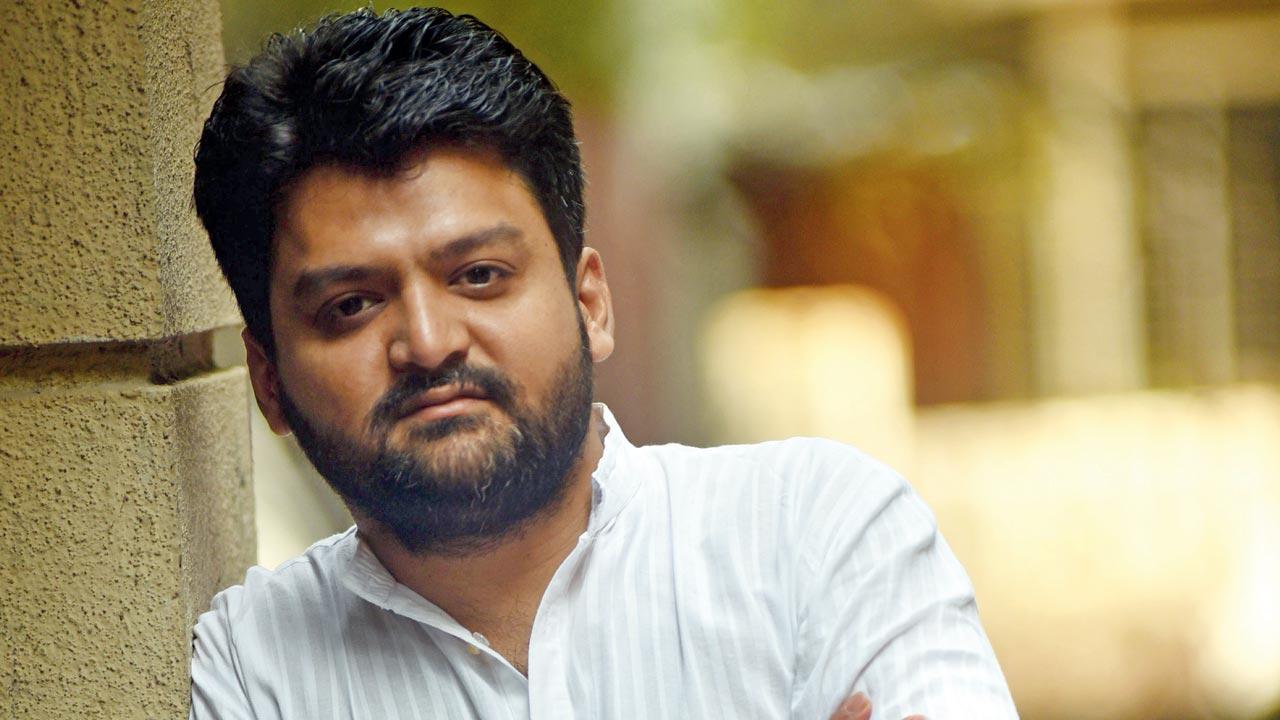
Junior Mehmood’s elder son Rafiq remembers his father who spared no effort to help the people around him, from old friends to rank strangers. Pic/Sameer Markande
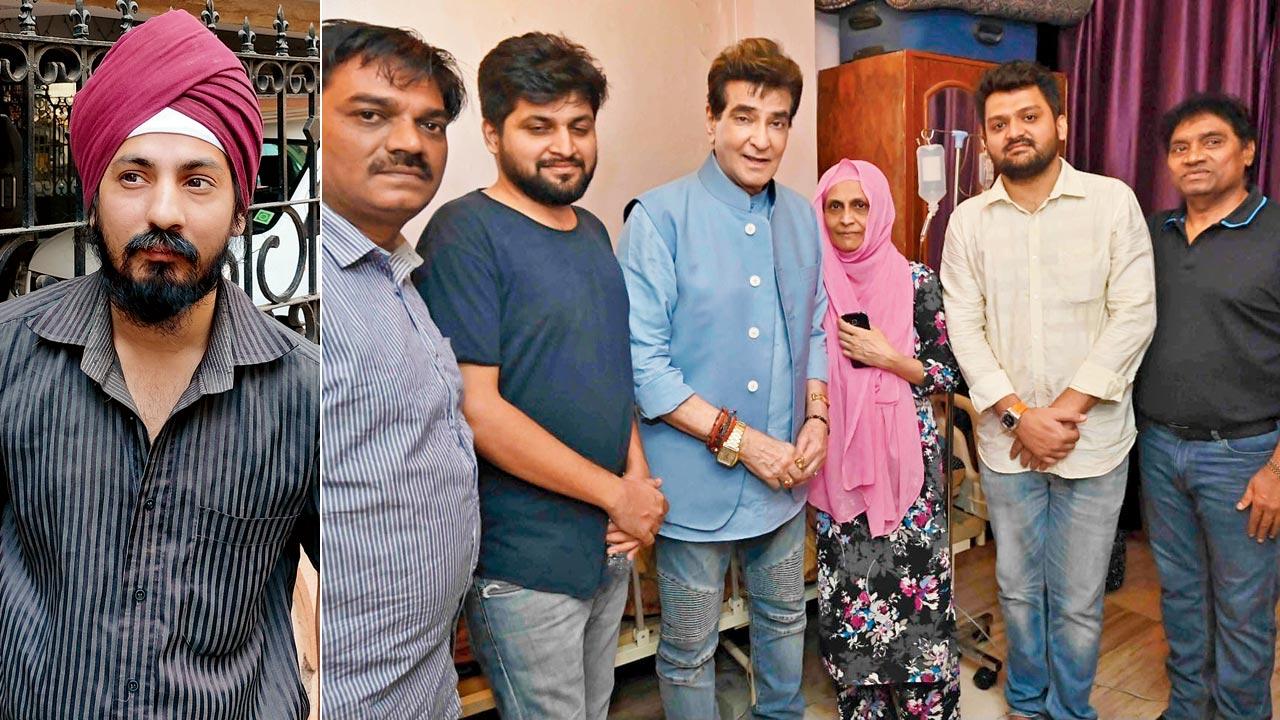
Neighbour Inderpal Singh Kohli recalls Junior Mehmood performing at the society’s Diwali function, and is still struggling to believe he is gone; (right) Stars like Jeetendra came rushing down to meet Junior Mehmood after learning about his failing health, while Johnny Lever, his old friend, was by his side throughout
We have stopped celebrating villains in Hindi films-Nikitin Dheer
8:05 AM

Rishabh Suri (HINDUSTAN TIMES; September 7, 2021)
Nikitin Dheer’s role as the tough antagonist, Thangaballi, in Chennai Express (2013) cemented his skills at playing the baddie. But even before that, the actor had played negative roles in Dabangg 2 (2012) and Ready (2011).
However, the recent release Shershaah gave Dheer a chance to break away from essaying similar characters, and play an Army officer. Ask him if he feels being typecast would hurt his career and he replies, “I don’t think anything is a roadblock as long as you are doing your job well. In other parts of India, be it Telugu, Tamil, Malayalam, or Kannada, the villain is celebrated just as much as the hero, not only in the narrative, but also storytelling.”
Recalling some iconic villain roles Hindi cinema has produced previously, the 41-year-old adds that the trend has been missing in the industry for the last few years. “I really hope that comes back to life, so that young actors like us can aspire to be the next Amrish Puri or Praan saab. It is not only negative, but a whole range of characters they explored. People never treated Amrish ji as villain, they loved him as Mogambo (Mr India; 1987). Aise characters roz-roz nahin likhe jaate. Villains can be celebrated again,” says Dheer, who will be seen next in Antim: The Final Truth.
Talking about the need for variety in the characters he chooses to portray, Dheer says that he has just “started off”, and is trying his best to not be repetitive. “I see my career, whatever little I have done, and it’s all different from one another. I don’t repeat any character, and I’m in a space that I’m comfortable in,” he signs off.
Once a villain, always a villain notion doesn’t exist anymore-Chandan Roy Sanyal
7:45 AM

Sugandha Rawal (HINDUSTAN TIMES; March 25, 2021)
For actor Chandan Roy Sanyal, playing a baddie onscreen is quite fun, as he believes one doesn’t have to worry about getting trapped in the image of a villain, now.
“A villain’s role has changed immensely in Bollywood. Previously, we have had some very famous villains such as Pran sahab, Amjad Khan and Amrish Puri. They were the quintessential villains of Hindi film industry,” Sanyal states.
The actor feels they kept on doing roles of a villain because “once a villain always a villain”. However, that’s how it was then, but not anymore.
In his career, Sanyal has explored the negative roles through projects such as D-Day (2013), Jazbaa (2015), and Jab Harry Met Sejal (2017).
“After I’ve played a villain, I take a break and do something else, or try a different language,” he reveals.
As for his motivation, Sanyal derives it from the script itself. “There is nothing special that I do, thinking that it is a role of a villain, and thinking how I will walk or act. I just play it like a role. In my vocabulary, there is nothing such as a villain or negative role,” says the actor, who is currently busy shooting for Sanak, co-starring Vidyut Jammwal, Neha Dhupia and Rukmini Maitra.
Pran birth centenary: How Bollywood got its baddie, by chance
9:00 AM

Pran's daughter Pinky shares memorable events of their life, as family marks his centenary birthday
Shaheen Parkar (MID-DAY; February 12, 2020)
 Hindi films' most celebrated villain Pran would have turned 100 today. The actor, who switched to playing character roles later in his career, passed away in 2013. While his family has not planned a mega celebration to mark the occasion, they will begin the day by visiting the Pran Chowk at Carter Road, Bandra, to pay floral tributes. The corner, which leads to Union Park, was named after him in 2018.
Pran's daughter Pinky Bhalla tells mid-day, "The family will get together at my place in Juhu. It will be a quiet affair, just the way he would have wanted it to be. We will go to the Pran Chowk in the day."
Though Pran's career spanned six decades, his three children kept their distance from the industry. An exception was son Sunil Sikand, who worked as an assistant to the late filmmaker Manmohan Desai, with whom Pran collaborated on several projects, including Dharam Veer (1977), Amar Akbar Anthony (1977) and Naseeb (1981). Sunil directed Farishta (1984) and Lakshmanrekha (1991), which featured his father, but did not pursue Bollywood, thereafter.
"Now, Sunil leads a retired life in Goa," informs Bhalla. "My other brother Arvind Sikand is a businessman, based in London. He has been [living] there for decades."
Bhalla recalls that in their childhood, they were kept away from the industry. "We barely watched films. Dad made sure we had a normal upbringing. We never went on the sets or attended filmy events."
This stemmed from the fact that before Pran, the family had no connection with the industry. "It was a chance meeting with a film writer that landed him [Pran] his first role. The elders of the family realised only later that he was pursuing acting. Dad was born in Delhi, and did his schooling there. The family moved to Lahore, but returned to Delhi before the Partition."
Pran did not resort to any over-the-top gimmicks to make the villain look like a caricature. Flaunting suits and boots, and with his penetrating eyes, deep baritone and trademark whiff of the cigarette, he emerged to be among the most stylish and suave baddies in B-Town. His iconic catchphrase "Barkurdhar" was enough to instil fear among audiences, so much so that it is suggested that parents refused to name their kids Pran, owing to his menacing on-screen persona.
The actor's other memorable performances include Upkar (1967), Johnny Mera Naam (1970), Victoria No 203 (1972) and Don (1978). One of his most applauded acts was in the Amitabh Bachchan-starrer Zanjeer (1973), which had the chartbuster, Yaari hai iman mera yaar meri zindagi.
Bhalla recalls that apart from acting, "dad was a cricket buff. He would not miss a single match when India was playing."
Even later on in his life, while he was ailing, he would stay abreast about matches, with the scores.

The family at Pran's 90th birthday celebration in 2010
My father was a chain smoker and one day, he quit overnight-Pran's son Sunil Sikand
8:58 AM

Roshmila Bhattacharya (MUMBAI MIRROR; February 12, 2020)
 Today, Pran saab would have turned 100 and even though he took his final curtain call seven years ago, at the age of 93, he remains unforgettable. I remember, as a young girl, I had been fascinated by the perfect smoke rings he blew on screen. The first time he did it was back in 1949 in the teary melodrama, Bari Behen, which featured Suraiya and Geeta Bali as sisters. It went on to become his trademark.
A couple of days ago, when I asked his son how he did it, Sunil Sikand appeared surprised by the query. “He was doing it even at home, when we were kids. My father was a chain-smoker and at one time had smoked 100-120 cigarettes a day. Then, one day, when he was 57, he quit, overnight. I never saw him smoke again. He was usually an easy-going, amiable man, but he could be strong-willed when he wanted, and that showed in his work too. He was dedicated to his craft, asking for the song on a cassette and listening to it several times, even learning the words, before he went for the shoot,” he recounts.
Sunil adds that when he started assisting Manmohan Desai (he worked with the director in Amar Akbar Anthony, Parvarish, Dharam Veer and Suhaag), his father told him that the best AD is one who, when he is not around, makes his director feel his absence.
His favourite films from his father’s repertoire are Halaku and Shaheed , a picture in contrasts. The former was a 1956 period drama with Pran saab in the title role, as the imperious Mongol invader, grandson of Chengiz Khan, whose obsession with a Persian beauty in love with another man, makes him wilful and vengeful, but cannot completely erase his sense of honour. Manoj Kumar’s Shaheed was a smaller role, of a death row convict, daku Kehar Singh, who meets Bhagat Singh at Lahore Central Jail. He goes to the gallows wondering why a dacoit and a freedom fighter should be meted the same punishment.
“My father enjoyed doing both these films, along with others like Jis Desh Mein Ganga Behti Hai and Upkar. But he never watched any of his films, apart from the scenes featuring him during dubbing. He accidentally stumbled upon Zanjeer one afternoon on television, 20 years after its release, and called up Amitabh (Bachchan) to tell him he had liked his performance,” smiles the younger Sikand.
Interestingly, Sunil directed Amitabh and his father in a reincarnation drama titled Karishmaa. “It also featured Shashi Kapoor, Sharmila Tagore, Parveen Babi and Danny Denzongpa, but since I had known Amitabh for a long time, I decided to take the first shot on my father and him,” he informs. The film flagged off in 1978 but for some reason, was shelved.
Long before mothers began using the spectre of Gabbar Singh to instilterror and put their little ones to sleep, Pran saab would make them cower, clap their hands over their eyes, as soon as he appeared on screen. They would return to the film only after he was gone. Did the dreaded khalnayak of the movies keep to himself even in real life, you wonder, and Sunil exclaims, “On the contrary, he was a man who enjoyed the company of his friends, even our friends.” Dilip Kumar, whom his father opposed in films like Azaad, Devdas, Madhumati, Dil Diya Dard Liya and Ram Aur Shyam, lived in bungalow close by and Sunil remembers that when he was around 14-15 years, Dilip saab, sometimes alone, sometimes accompanied by his sisters, would drop by for a game of dumb charades with the Sikand family.
“Despite his intense roles, my dad was a light-hearted man. Even his villainy in later years had a touch of comedy, in films like Kashmir Ki Kali and Khandan. In the latter, his character Naurangi Lal, was a spoof on Hitler, complete with a toothbrush moustache,” says Sunil who went on to direct Pran saab in two other films, Farishta and Lakshmanrekha.
In Lakshmanrekha, he played Naseeruddin Shah’s father who is killed by Danny and puts his son on the road to revenge. It had Jackie Shroff as a cop. Farishta, which came in ‘84, was written and directed by Sunil, with Pran saab in a small role of Khan chacha. “My father insisted on getting contact lenses and painting them over, so he’d looked convincing as a blind man,” reveals Sunil. And that’s what made him a visionary in B-town.
Noor Jehan had called me at least 10 times before boarding the plane-Pran
7:50 AM

Roshmila Bhattacharya (MUMBAI MIRROR; February 15, 2018)
I met him a couple of months after he had brought in his 78th birthday on February 12, 1998. I went expecting the bad man of my celluloid nightmares but found instead a frail fatalist reeling from his first visit to a hospital and the trauma of learning that one of the valves of his heart had shut down. Despite the youthful green of his kurta, Pran looked like a tired old man, often running out of breath, but unwilling to cut short our conversation.
As we meandered down memory lanes, he spoke about being discovered outside a ‘paan’ shop in Lahore by Wali Mohammed Wali, a leading script, dialogue and song writer of the time. Wali saab offered him the role of the villain in his upcoming Punjabi film, Yamla Jat, along with the address of Pancholi Studio where he promised to set up a meeting for him with his boss and the film’s producer, Mr Pancholi. But to the writer’s horror, the teenager did not turn up for the appointment the next day, convinced that the movie offer had been made in an inebriated state and not worth following up on. So instead of the studio, Pran Sikand headed to his photography shop and it was business as usual.
But the following weekend, he bumped into Wali saab again, at the Plaza theatre, and after cursing him roundly for the embarrassment he’d caused, the industry bigwig collared him to the studio the next morning, where Pran was signed for a monthly salary of Rs 50. The pre-Partition drama also featured M Ismail, Durga Khote and Noor Jehan as the heroine’s younger sister.
Yamla Jat which was unveiled in 1940 was a jubilee hit and two years later, Pran was signed as the leading man of Khandan opposite Noor Jehan. Their romance was limited only to the screen, a painfully shy Pran taking to his heels every time he was instructed to run after his heroine, but a real-life love story was playing out away from the camera. The film’s director, Shaukat Hussain Rizvi, was captivated by 17-year-old Noor Jehan and they tied the knot the same year and shifted to then Bombay. But after the Partition, Noor Jehan chose to move to Pakistan where she was born, settling down in Karachi. She mothered three children, before Rizvi and she separated in 1953. Later, she married Ejaz Durrani, a Pakistani actor-filmmaker popular for his portrayals of Ranjha and Mirza in Heer Ranjha and Mirza Sahiban, nine years younger than her, and took the curtain call after Ghalib in 1961 but never stopped singing. That marriage too ended in a divorce after three more children.
Meanwhile, Pran had married Shukla in 1945 and two years later was happily settled in Lahore, the proud father of a son, when communal fires that were sparking off across the city led to him sending his wife and young son to family in Indore. He promised to join them in time for the lil’ one’s first birthday and reached Indore on August 11 with a small suitcase. He never returned home and after the Partition, moved to Maximum City.
He was without a job for a few months, then in a span of three days signed four films—Ziddi, Apradhi, Grihasti and Wali Mohammed Wali’s own production Putli— going on to become one of Bollywood’s most hated khalnayaks. This was reiterated by the findings of a survey in the’60s across three states—Maharashtra, UP and Punjab—that threw up the startling fact that not a single school or college-going child had been named Pran during the time.
Over the years, the badmash metamorphosed into the widely respected Malang Chacha after Manoj Kumar’s Upkar and a much-loved Sher Khan after Prakash Mehra’s Zanjeer. When he was honoured with a Lifetime Achievement Award years later, he brought the audience to his feet and their standing ovation brought tears to his eyes. “Destiny, that’s the deciding factor. What has to happen will happen, even God cannot change your taqdeer…” These lines came not from any dialogue sheet but from his conviction that what’s written in the stars cannot be kept away from you.
Interestingly, while Pran was making box-office history this side of the border, his first leading lady was making history as Pakistan’s Malika-e-Tarannum (Queen of Melody) for lending her voice to the maximum number of film songs and becoming the country’s first female director. He never went back to Lahore but Noor Jehan did fly down to Mumbai to attend a musical gala in 1982, ‘Mortal Men, Immortal Memories,’ as the chief guest. “She was really nervous about that trip and had called me at least 10 times before boarding the plane. I reassured her that I’d be waiting for her at the airport here with a special bus,” Pran had reminisced. As her “Awaaz De Kahan Hai” resonated through Mumbai’s Shanmukhananda Hall memories came flooding back, of a time when borders hadn’t been drawn and countries hadn’t been divided.

Online fan armies turn passion into power
9:21 AM

Spread across 35 countries, SRK's digital admirers spend a lot of time and money promoting his films. Other stars too are relying on this unofficial PR machinery to boost their brand value
Mohini Chaudhuri (THE TIMES OF INDIA; April 17, 2016)
Ahead of the release of Fan,
Shah Rukh Khan was busy making TV appearances and giving in terviews to
market his movie. Far away from Mumbai, Muhammad Ashraf, 36, was
also
hard at work promoting the Yash Raj film. By day, Ashraf is HR head of a
business conglomerate in Maldvies, but in cyberspace he's hailed as the
founder of SRK Universe - the superstar's biggest global fan club. “We
hire a cinema in each city for his film's first show, print T-shirts,
and then cut a cake. This time I'm giving wristbands to 50,000 fans
worldwide who come for the first show,“ says Ashraf over a phone
conversation, adding that these activities eat up 90% of his earnings.
Obviously, Ashraf 's fan club is no ordinary one -- it's an empire with branches in 35 countries. Every Sunday he has a virtual general meeting with his counterparts spread over South Asia and Europe to discuss ways in which they can serve their idol better. “Sometimes, I feel like I work for him,“ admits Ashraf. And he does. Ashraf's biggest ammunition is his ability to constantly keep Khan alive on social media. “Ninety percent of the trends you see on Twitter about SRK are started by us. We have a 'trending army' of about 250 people. The moment I give them a hashtag about SRK, they will start tweeting, and within five minutes it will be trending,“ he says. Khan is well aware of SRK Universe and often retweets what they put out. Ashraf personally met the star only last year on his 50th birthday. “I was too stunned to talk to him,“ he says.
In a world where a celebrity's digital presence determines his or her worth as a brand, the power of fan clubs like Ashraf 's, with 3,59,000 followers, cannot be taken lightly. Actors today have multiple fan clubs on Twitter and Facebook with followers that run into thousands and lakhs. They doggedly track every tiny development about their beloved star - exclusive photos, videos, and interviews. “Actors like SRK, Salman Khan, Deepika Padukone and Priyanka Chopra have a huge digital presence and their fan clubs play a crucial part in that. Along with a manager and publicist, stars also have digital agencies to promote them online. Some of these agencies are hiring fans instead of professionals because they are so invested in the actors. These agencies work closely with fan clubs and keep them informed about important announcements,“ explains a celebrity manager who didn't want to be named.
“He is a star, but he still replies to every text of mine,“ says Deepak Suthar of his idol Arjun Kapoor. The commerce student, who runs the Twitter handle Team_Arjun, puts it in plainly: “We do almost everything that the PR is doing, but we don't get paid.“ He's not complaining. “I want to be like Arjun Kapoor. Losing 65kg is not a small thing. His dedication towards everything he does makes me his fan,“ he explains. Suthar has been developing a fan base for Kapoor since his debut film Ishaqzaade (2012). “I was the first person to bring all the Arjunzaades - Arjun Kapoor fans - under one roof. So far we've made 50-plus trends on Twitter and made many blogs and videos go viral,“ he declares.
The hard work hasn't gone unacknowledged. Celebrities go the extra mile to engage with their admirers - a practice initiated by Amitabh Bachchan three decades ago when he began the tradition of meeting fans outside his Juhu bungalow every Sunday. Over the years, Bachchan has cultivated an even deeper rapport with his followers through his personal blog. At last count, he had 20.2 million followers on Twitter.
When Ranveer Singh promotes his films, Falguni Upadhyay too sits up all night posting photos of his appearances. A student of jewellery design, Upadhyay first met the actor soon after the release of Band Baaja Baaraat (2010), when she told him about the FB fan club she had started. “He kept thanking me. He's always hugging people and spreading love. That's the best thing about him,“ she gushes. Years later, when Singh's team wanted to start an official FB page for the star, they asked Upadhyay if they could merge it with hers. She now runs the Twitter handle RanveerSingh_FC, and is actively invested in promoting the star's work online. Recently, Singh wished another female fan from Oman through a video of him animatedly singing 'Happy Birthday'. The young fan, Moumita Chatterjee, later posted on Facebook - 'Nothing in life has made me dance around the room, scream with joy, cry out of excitement and re-watch the same video a million times.' Suthar remembers feeling the same on his birthday last year when he met Kapoor at his home in Mumbai - a meeting organized by the actor's manager. “When I entered his home, he came out from his bedroom singing with a cake. I couldn't control my tears,“ he says. The youngster is now on texting terms with his idol.
There's a clear sense of ownership with which Suthar, Upadhyay and Ashraf speak of their heroes. The proximity they share with actors would have been unimaginable without social media. “In the '60s, I remember writing letters to Shashi Kapoor, Sadhana and Pran and they would respond with a picture and a thank-you letter. Sometimes it would be typed, sometimes handwritten. Pran would insist on writing to everyone. Now nobody writes fan mail anymore,“ says Dinesh Raheja, editor of Bollywood News Service and author. But Raheja feels the bonds made online are a wonderful thing for genuine admirers. “If you're a true fan, you should do something real to promote him. You can't just put up news about the star from a website, retweet it, and go back home,“ says Ashraf, passionately . But what's in it for him? “I can't explain it. I just need to do something for Shah Rukh,“ he says. His words sound eerily similar to the dialogue mouthed by Gaurav -the character playing Khan's fan in the film- 'Gharwale bhi na mere, samajhte hi nahi hain. Wo sirf star nahin hai, duniya hai meri'.
Courtesy Film Companion
Dadamoni would start a sentence and I would complete it or vice versa-Pran
12:20 PM

Roshmila Bhattacharya (MUMBAI MIRROR; October 13, 2015)
Ashok
Kumar's daughter, Bharti, recalls asking her baba why he had agreed to
play Raja in Brij's 1972 heist drama, Victoria No. 203. The character
had sprung a surprise, not just on her, but on several of his fans too,
who were used to seeing the by then 60-plus Dadamoni, as he was fondly
known in sober character roles, usually as the good father instead of
chasing after stolen diamonds and women.
"I was bored. I wanted to play a character with shades of grey, and this one presented me with the opportunity within the format of a comedy. Thoda different role tha," the veteran actor had explained. He had known all 36 dialogues by heart, many of the punch lines coming spontaneously while shooting with Pran who played his partner-in-crime, Rana.
Pran admitted that Ashok Kumar and he, who went on to make a viable jodi after this surprise hit, had shared an almost telepathic rapport. "Whenever any director would go to Dadamoni with a dialogue sheet, he would wave it away saying, 'I will do whatever Pran does.' Most of our lines in Victoria No. 203 were improvised on the spot. Dadamoni would start a sentence and I would complete it or vice versa. It was a kind of exchange you had never seen before on screen and it worked wonderfully," he says.
Raja and Rana are two small-time crooks who plan to walk the straight path after a stint in prison. But their noble intentions evaporate when they hear about a theft. The trail for the missing diamonds leads them to a horse carriage, Victoria No. 203, whose driver is Rekha (Saira Banu). She poses as a man during the day and is a secret agent by night, trying to seduce Ranjeet with a "Thoda Sa Thahro" in an attempt to gather evidence that will help her spring her father who is imprisoned for a murder he did not commit. The son of the kingpin of a smuggling racket, Kumar (Navin Nischol) with a mystery surrounding his birth, and a crowd of henchmen who are constantly switching sides, come together to stir up a potpourri which had all the Bollywood masala and a plot with plenty of twists and turns.
The film was produced and directed by Brij. His son, Kamal Sadanah, who was a boy of two when the film released, remembers that Victoria No. 203 was one of his father's most successful films, and brought along a financial windfall which made it possible for the family to move into a bungalow and scale up their lifestyle.
"I saw the film countless times on a projector at home, on birthdays, anniversaries, every special occasion," laughs Kamal, admitting that he still has the diamonds from the film. "Of course, they are not the real thing but specialised crystals. And the lamp of the Victoria in which they had been hidden, would hang from one of the walls at home for years, as a kind of a memento."
Pran and Ashok Kumar's song, "Do Bechare Bina Sahare", is one of the highlights of this comic caper, underlining their on-screen camaraderie. Twelve years later, Shibu Mitra made a film, Raja Aur Rana, with Ashok Kumar and Pran in the title role. But this time, they couldn't whip up another box-office hit.
In 2007, Kamal himself produced a faithful remake of the original film. Victoria No. 203: Diamonds Are Forever had Anupam Kher and Om Puri playing Raja and Rana. When he told Pran about the project, the actor asked Kamal to tell his actors to be spontaneous rather than rehearsed. "Many of our scenes were impromptu and that's what worked for Dadamoni and me," he reminded Kamal, who still chuckles over their antics, whether its serenading a fisher-woman or all at sea in the sea.
However, the new jodi couldn't pull off the classic act and the film failed to impress. "Maybe we should have modernised the script a little. You can't copy sequences and performances," admits the producer in retrospect.
However, a shot-to-shot copy of the climax, including the set and the action, worked for Aamir (Khan) and Salman (Khan) in the 1994 Rajkumar Santoshi directed laugh riot, Andaz Apna Apna.
I can’t understand why we need to have gaalis for the villain to get taalis-Shatrughan Sinha
7:57 AM

Subhash K Jha (DNA; March 16, 2015)
Shatrughan Sinha is widely considered one of the
silver screen’s most dreaded villains. But he never needed to abuse or
misbehave with women to prove how bad he was.
Sinha, who played the bad man memorably in a number of films in the 1970s is totally against the use of abusive language or the depiction of violence against women.
Says Shotgun, “I can’t understand why we need to have gaalis for the villain to get taalis. In my entire career as a villain (a good 10 years), I never used one cussword. I was very sure about my priorities. Bura banunga lekin bura nahin bolunga. Auraton ko kabhi zaleel nahin karunga.”
He shocks by revealing that he took a vow to never do a rape scene. “It was after I did a rape sequence in a film called Paras. I was the villain in that film and yet I was nominated for the Best Supporting Actor? After this film, I took a conscious decision to never do a rape scene again.”
He remembers how many times he was persuaded to do rape scenes. “I was firm about not doing anything that’d insult women. I remember a film called Babul Ki Galiyan where Sanjay Khan was the hero and I was the villain, I had to misbehave with Hema Malini. I flatly refused. I am glad I didn’t do anything that would have compromised my image permanently. At least I can hold my head up high today.”
He wonders why there is such a clamorous insistence on using expletives to portray evil. “It isn’t necessary at all. Pran, Danny Denzongpa and I never had to resort to cheap language or behaviour to show evil. Let today’s actors understand that being bad on screen has nothing to do with the number of teri maa ki and behen ki that you use on screen. You can induce evil without getting foul-tongued.”
Humshakals: A tribute to Kishore Kumar and Jim Carrey brand of comedy
8:30 AM

BOMBAY TIMES (June 20, 2014)
Sajid Khan's Humshakals,
which stars Saif Ali Khan, Riteish Deshmukh and Ram Kapoor in triple
roles, is a tribute to comic geniuses Kishore Kumar and Jim Carrey. Says
the director, “These stalwarts have entertained us over the
years. This film is a tribute to them in my humble way . It is the
funniest script I have worked on to date."
The movie's comic scenes have been inspired by some of Kishoreda's zany comedies like Jhumroo, Half
Ticket and Chalti Ka Naam Gaadi. The makers have even made Saif and Riteish repeat a memorable line from Half Ticket -`Hum pagal nahi hai, hamara dimaag kharaab hai', keeping the Kishore Kumar quotient in mind. The actors' mannerisms will also offer glimpses of Hollywood actor Jim Carrey's cult comedies Dumb And Dumber and Ace Ventura.
Apart from this, Saif will be seen imitating Amitabh Bachchan, the late Pran and his father-in-law Randhir Kapoor. Riteish, on the other hand, will mimic Dilip Kumar and Shatrughan Sinha.
Saif says, “This film is an attempt to bring back the era of slapstick comedies, which was once in vogue but got lost with the advent of romantic and action films." The film also stars Satish Shah and Chunky Pandey.
While the former plays a mental asylum warden, Chunkey will be seen as a Sindhi, owning an Indian paratha restaurant in London.
Humshakals, produced by Vashu Bhagnani and presented by Fox Star Studios, releases today.
Many young filmmakers sensitive towards crimes against women
7:54 AM

Seema Sinha (BOMBAY TIMES; March 11, 2014)
For over a decade now, incidents of rape have become more a part of our reality than our scripts. With sordid cases like the Nirbhaya gangrape in Delhi and the Shakti Mills gangrape in Mumbai occurring with alarming frequency, sensitive directors no longer see the need to include these in films in the name of titillation anymore.
Most Bollywood films set in the 1950s to the 90s had a set rape “formula”. The biggest villains — from Pran and Prem Chopra to Ranjeet, Shakti Kapoor and Gulshan Grover — played rapists over and over again, sometimes as simply dominating the fairer sex and sometimes, as a tool for revenge.

Says filmmaker Sudhir Mishra, “Almost every film in the 80s showed rape in a crude manner. But sometime in the early 1990s, Rajkumar Santoshi handled the issue very sensitively in Damini, where rape horrified rather than titillated the audience.”

In the last three years alone, rape, molestation and sexual harassment cases have gone up by as much as 50% across the country, with Maharashtra alone rising by 233%. On screen, however, rapes have greatly diminished. And this is perhaps because today’s youth just doesn’t watch cinema for titillation. Back then, rape was used more to stimulate and excite rather than being a script necessity. With today’s generation having ready access to different kinds of porn, mere skin show in films isn’t enough anymore. Director Imtiaz Ali further elaborates, “These days, we consciously make a distinction between a sex scene and a rape scene because with liberalisation in society, a consumer has access to all kinds of video footage. It is understood that a sex scene should titillate, while a rape scene has to titillate as well horrify and disturb you. Earlier, the intent of showing a rape scene was sexual impulse, but with time it has changed. If costumes and conversations can be bold, pornographic intent has no reason to survive in India. Sex content can be watched on the net and the audience doesn’t need to go for movies for that purpose.”
Mishra attributes the change in the thought process to “more evolved young filmmakers”. He says, “Post 2000, many young filmmakers, who are sensitive towards women-related issues, have entered the industry. They are much more evolved and gender conscious.” Director Soumik Sen adds, “And then the filmmakers don’t want to feed reality when there are so many channels that are bombarding us with the ugly truth.”

Most importantly, the brutal gang-rape of a Delhi girl in December 2012 that triggered a national debate over the portrayal of women in popular cinema and TV, has definitely had a huge impact on the filmmakers and their conscience. As Shabana Azmi says, “It led to a lot of soulsearching in different sections of society, including the film industry. Discussions were held amongst us as to what we can do to create more positive images of women, to resist commodifying and objectifying them. The newer lot of filmmakers are more conscious and leading ladies themselves are empowered enough to say no to crassness and gratuitousness. Even if rape is crucial to the film’s story, it can be filmed without deriving vicarious pleasure. Shekhar Kapur’s Bandit Queen is a prime example.”


Mahesh Bhatt says, “There were certain creeps who showed the heinous crime in a crude manner, but after the Nirbhaya case, deep introspection has gone into it. Commodification of women has been given thought to.” However, he also strongly believes that issues related to real and reel life cannot be linked. Bhatt adds, “You can’t link the problem in virtual space to the problem in real life; it trivialises the whole issue. People attribute too much power to films, but it is only limited. Films are a temporary climate of well-being. Books and films can play only that much of a role. Real life issues need to be tackled by actioning and strict vigilance.”
With viewers using more discretion, leading to directors becoming more imaginative, the future looks brighter. One hopes filmmakers will continue tackling serious issues with sensibility and sensitivity.
BOLLYWOOD’S FAVOURITE RAPISTS IN THE PAST


Subscribe to:
Posts (Atom)