Showing posts with label Prahaar. Show all posts
Showing posts with label Prahaar. Show all posts
(Crisp) Movie Review: PRAHAAR by FENIL SETA
11:16 PM

Prahaar is based on how public prosecutor Ujjwal Nikam exposed the wrongdoings of Ajmal Kasab in front of the world. There have been many films made on 26/11 episode and its aftermath, but there has been no films that shows how the trial was conducted. Director Avinash Arun meticulously and interestingly depicts the trial's happenings, making it a great watch. A few scenes are clapworthy and unlike most biopics made in India, this film doesn’t shy away from showing some of the mistakes made by Ujjwal Nikam. Moreover, it's not a propaganda film – it exposes Pakistan’s hand in the attacks but also doesn’t paint people from a certain nationality and community with the same brush. On the flipside, the makers downplay the biryani episode from Ujjwal Nikam’s life. The interest levels drop in some scenes while the Wamiqa Gabbi track doesn’t work as intended. Moreover, both Rajkummar Rao and Wamiqa Gabbi don’t look that old. However, Rajkummar Rao’s performance is stellar and award-worthy. He gets the mannerisms and dialect right and is fiery in some scenes. Wamiqa Gabbi puts her best foot forward, though the writing lets her down. Lalit Prabhakar (Ajmal Kasab) is terrific and the way he displays various shades of his character are seen to be believed. Ritvik Sahore (Aniket Nikam) leaves a huge mark. Sikandar Kher (Kazmi; lawyer) and Ashish Vidyarthi (M L Tahilyani; judge) deliver terrific performances. Jaideep Ahlawat (Chaudhary Zulfiqar Ali) is superb in a special appearance. All in all, Prahaar is a well-made film on an important chapter from history.
My rating - *** ½ out of 5!
My rating - *** ½ out of 5!
Rebel without a pause: Actor Nana Patekar no more
10:35 AM

Bella Jaisinghani (THE TIMES OF INDIA; October 9, 2026)
Mumbai: “I don’t know whether I will be here tomorrow,” he said at an event in Goa, days before his unexpected passing. “We all have to go someday. That time comes in the life of everyone. But before that time comes… we have to think… am I able to do what I want to do? Have I made the effort?”
In Vishwanath ‘Nana’ Patekar’s case, the legacy bears out the effort. His screen presence rarely depended on conventional heroism. His strength lay in making characters feel unpredictable, wounded, volatile or quietly dangerous, often within the same scene. Over a career spanning nearly five decades in Hindi and Marathi cinema, Patekar moved effortlessly between rage and restraint, menace and vulnerability, theatricality and deadpan humour.
On Thursday, the voice that had championed the cause of the underdog on screen and oppressed farmers in real life was stilled. Patekar (75) was declared dead at 5.20 am Octoober 8 after having suffered a heart attack in Goa’s Dona Paula. He was found lying on the floor and taken to Manipal Hospital where doctors tried unsuccessfully to revive him. He had reached out to a friend after experiencing discomfort around 2.30 am but his message went unseen till an hour or so later.
Patekar’s remains were later transported to Donje village, Pune, where he was cremated on the grounds of his own farmhouse.
Born on New Year’s Day January 1, 1951, Nana Patekar came from a working-class Maharashtrian family of Murud-Janjira. He had to shoulder the burden of earning a livelihood at the age of 13. Despite his sunburnt upbringing, his fondness for art prompted him to enrol at JJ School of Applied Art in Mumbai.
He had recalled in an interview how he would paint posters and occasionally even zebra crossings on the road to supplement his income. Nana worked in advertising for two years before making his way into theatre, onward to cinema. On stage he found a fitting mentor in director Vijaya Mehta. His play Purush ran for 16 years.
He made his film debut in Muzaffar Ali’s ‘Gaman’ (1978) which was followed by the success of Jabbar Patel’s ‘Sinhasan’ (Marathi, 1979). Nana’s career took flight with impressive performances in Salaam Bombay, Ankush and Parinda.
Awards and accolades followed with Krantiveer, Prahaar (which he directed), Yashwant, Ghulam E Mustafa and Tirangaa. His popularity grew through a screen persona that blended street angst with neo-nationalism. His personal reputation as a short-tempered artist with a mercurial temperament often fed into the public image. Occasionally, Patekar would break out of the mould to do a quirky, witty film like Raju Ban Gaya Gentleman or Thodasa Roomani Ho Jaaye.
The actor lived out the slogan ‘Jai Jawaan Jai Kisaan’ issued by former PM Lal Bahadur Shastri. Nana joined the Territorial Army as a captain in 1988, underwent training for his film Prahaar, and later served with the Maratha Light Infantry during the Kargil War. The public-spirited actor also instituted the NAAM Foundation to help tackle rural distress in Maharashtra.
Yet the ‘angry young man’ did face a few controversies, mainly allegations of sexual harassment levelled by actress Tanushree Dutta during the MeToo movement. Nana subsequently steered clear of the limelight for a few years. In later years, he made a comeback with films like Raajneeti, Natsamrat and Kaala with Rajinikanth.
He is survived by his wife Neelakanti and son Malhar.
(With inputs by Aarushi Mehrishi)
I’m glad that people think of me when they think of a biopic-Rajkummar Rao
10:42 AM

Vishakha Pandit (HINDUSTAN TIMES; October 2, 2026)
Having been part of the film industry for over 16 years, actor Rajkummar Rao recently opened up about how he steers clear of labels imposed on him by the industry or audiences.
The 42-year-old, who was part of a panel discussion at FICCI Frames on Wednesday, said, “Whatever terms people give you: star, superstar, brand, it does not concern me. My love for my art would always be first.” He added, “When I go on set, when I take a script in my hand, and I start working on that script, that’s the most powerful. And the purest form of perceiving my art.”
Rao emphasized that his relationship with his craft has always taken precedence over the labels that come with success.
“It’s been 16 years in the industry, but I have never seen myself as a brand,” he said, adding, “Growing up, when I started doing theatre, my dream was to be a film actor one day. It was never to be a brand.” He also said, “These are the terms that people give you. Or your colleagues give you.”
Rao added that he does not want the idea of being a “brand” to influence the choices he makes as an actor.
“When I am working on a character, I don’t want to deviate and think, ‘Is this story going to match my brand value?’ I don’t think like that. So for me, I am always going to be an actor. People can call you whatever they want.”
That approach is particularly relevant as Rao finds himself increasingly associated with biographical films. With Prahaar – The Ujjwal Nikam Story being his latest project, in which he plays public prosecutor Ujjwal Nikam, the actor says he is happy that filmmakers see him as someone who can take on the genre.
“I’m glad that people think of me when they think of a biopic. Biopics are a very difficult genre. And it takes a lot of guts and courage for everybody involved to make a biopic.” Rao also reveals that the biopics he has done are only part of the offers that have come his way. “I have been offered a lot of them apart from what I have done,” he says.
Prahaar, earlier slated to release on August 7, may clash with Mirzapur: The Movie on September 4
10:18 AM

Mohar Basu (MID-DAY; August 10, 2026)
When the teaser of ‘Prahaar’, which sees Rajkummar Rao step into the shoes of renowned prosecutor Ujjwal Nikam, dropped in late June, the makers announced an August 7 release. With the first 10 days of August having gone by, we’ve heard that director Avinash Arun’s feature is now eyeing a September 4 outing. But with that window comes competition.
‘Mirzapur: The Movie’, which marks the big-screen transition of Prime Video’s popular crime drama ‘Mirzapur’ led by Pankaj Tripathi, has already locked September 4 as its release date. An insider said, “That makes the decision tricky for the makers of ‘Prahaar’. ‘Mirzapur’ has three seasons of streaming history behind it and an established fan base. The question within trade circles is how much of that digital fandom will convert into a paid theatrical audience.”
The makers of ‘Prahaar’, which focuses on Nikam’s high-profile case against terrorist Ajmal Kasab after the 26/11 Mumbai terror attacks, are expected to announce the new release date soon. A source shared, “They are looking at a September window. They will announce in a week or so after they gauge the response to ‘Mirzapur’ trailer.”
I took Fighter's story to Siddharth Anand in 2016; he aid it wasn’t massy enough-Ramon Chibb
10:38 AM
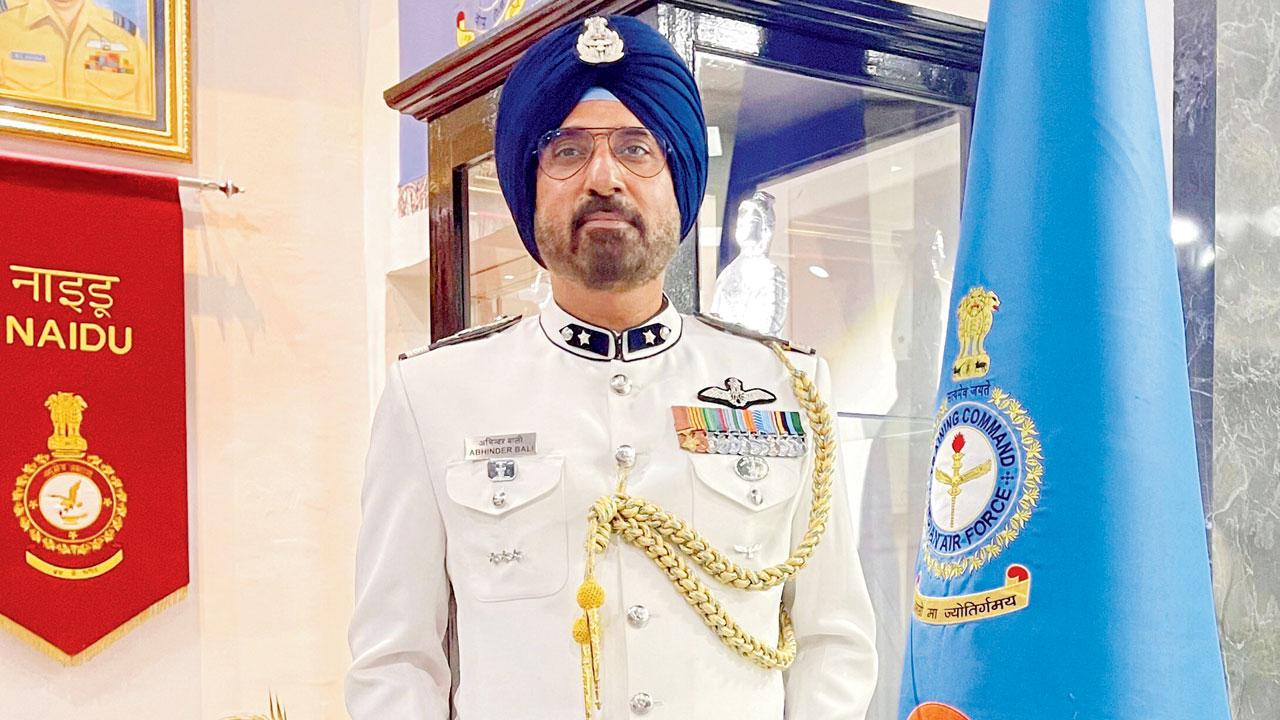
Fighter was so authentic that its screening got a standing ovation from the real heroes. Its co-producer, second unit director and writer, a former fauji, made it happen
Mitali Parekh (MID-DAY; February 11, 2024)
What the audience may not see, but any personnel from the Indian Air Force would is how the left shoulder of the uniform is the fun shoulder: “You can wear any badge you like there, with the permission of your Commanding Officer,” Ramon Chibb tells us over a video call from Goa where he is holidaying. “The right shoulder is for patches of the crafts you fly and the India patch.”
Minni [Squadron Leader Minal Rathore played by Deepika Padukone] wears a fun ‘Don’t Bug Me’ one as opposed to Patty’s [Hrithik Roshan as Squadron Leader Shamsher Pathania] and Bash’s [Basheer Khan, Akshay Oberoi] ‘Fighter Forever’. The lay audience may not register these details of authenticity, “but the Air Force did,” says Chibb gleefully, and you can tell that validation is enough. The screening of the movie for the armed forces ended with a standing applause.
Chibb co-produced the movie, wrote the screenplay and served as second unit director for Fighter. He also makes an appearance as Air Commodore Abhinder Bali, Chief Instructor at the Dundigal Air Force Academy in Hyderabad where Patty is transferred. Chibb served in the Infantry for five years, after being unable to follow his father into the IAF due to compromised eyesight. But he was, incidentally, at the commando training facility in Belgaum around the time Nana Patekar was preparing for his role in 1991 film Prahaar: The Final Attack. That movie, and 1982’s Vijeta are the two movies he credits with diving deep into research and firm marriage to authenticity. “It’s what Hollywood gets right,” he says, “When I see Gregory Peck in The Guns Of Navarone, I can see that they got the weapons he used right.”
Chibb, who later became a pilot and has a home next to the flight school in Hadapsar, Pune, wrote the story in 2015 and took it to director Siddharth Anand in 2016. “He said it wasn’t mass-y enough, ‘but let’s work on it together to make it into a film that could be understood by the audience’. Siddharth is a true cinema guy, he has a large vision.”
Pulwama and Balakot were added later, as was Minni, because women were allowed to serve as fighter pilots only in 2015. Chibb drew up a career sheet for each character: The posts they held, the medals they would have won, the crafts they would have flown and the wars they would have fought in to become the best air fighters in the country to be included into the Air Dragon team. It couldn’t be just because they were box office superstars.
So, Minni would be an all-weather pilot, a member of Sarang Aerobatic Display team, and be decorated with the Vayu Sena medal for an act of courage to be included into Group Captain Rakesh Jaisingh’s (Anil Kapoor’s Rocky) dream team. She would have been commissioned in 2010, have 1,500 hours of flying under her belt and served in Bikaner, Leh, Siachen, Ambala, and Hakimpet. Similarly,
“Fighters are split into two categories,” explains Chibb, fuelled evidently by enthusiasm, “into those who fly Russian and non-Russian aircrafts since we have a huge inventory of the former. Patty would have flown the Kiran, Pilatus PC 7, Mig 21 and 29, before coming to the Sukhoi 30—the first with a two-crew cockpit. It’s telling of his personality as a lone ranger and only child,” say Chibb, and it is also integral to the plot to have both protagonists—Roshan and Kapoor—in the climax.
“We had the blessing of the IAF from the beginning and shot at Tezpur, Dundidal and Pune air bases. Kudos to Siddharth that he let me run away with the details. ‘This is your world,’ he said, ‘Keep it real’. So even the walls of the houses are typically fauji—decorated with every photograph of the characters’ journey from being cadets to officers, with medals, emblems, swords of honour” of which we catch a glimpse in Bash and Patty’s homes.
Then there was the internalization of fauji codes: That there is a hierarchy that you obey without questioning; and manner of speech. Patty obeys his father’s orders to get tea for his friends more easily than he does his superiors. He asks for permission to speak from his superiors. “Hrithik bought into these nuances impeccably. He wanted to know all these things; he’ll make a great filmmaker,” says Chibb.
They also drop in easily into a peer’s place, as they do at Patty’s Jammu home, when a training gets cancelled. There are impromptu picnics and gatherings. “This is what I saw when growing up. People would land up at any time and say, ‘Ma’am khana khila do’. There is always the fear that one of them might not come back; so they party harder. We wanted to build all this into the film, and not just go, thak-thak-thak from one action scene to another.”
So, if you pay close attention to when we first hear Group Captain Jaisingh speak to his team, it’s in staccato. “That’s how officers brief. Anil sir would say to me, ‘Tu bol ke dikha’ and then repeat the dialogue, ‘Ab main bolta hoon’. He shadowed the Squadron Leader at Tezpur to get the mannerisms right,” he says. Squadron Leader Rathore’s character was based on all the women at flight school who were better than Chibb and “never let us hear the end of it. I always thought they made good pilots. They were more focussed, learned faster and of course, were not bogged down by us clowns.”
Chibb may not have realized his childhood dream, but it’s evident when we speak to him that he has been happy to do the next best thing: “I flew in those planes, shot them, and even rigged the camera on to them for some shots.”

Films often focus on the character rather than getting military details right, say experts
8:14 AM

The film Rustom (2016) got the Navy uniform wrong in many ways. Though it was set in the 1950s, Akshay Kumar’s character, naval officer Cdr K M Nanavati, wore the Kargil Star (1999) as well as other medals from recent decades. The name tag was also introduced in the 1970s
Niharika Lal (BOMBAY TIMES; October 22, 2021)
Soon after the release of the first poster of Akshay Kumar’s film Gorkha – where the actor is seen holding a khukri – former Army officer Major Manik M Jolly tweeted to Kumar, pointing out that a traditional khukri is different. He wrote, “Dear Akshay Kumar ji, as an ex Gorkha officer, my thanks to you for making this movie. However, details matter. Kindly get the Khukri right.(sic)” Kumar responded, “We’ll take utmost care while filming. I’m very proud and honoured to be making Gorkha. Any suggestions to get it closest to reality would be most appreciated.”
This isn’t the first time an officer has pointed out a mistake in Bollywood films. We spoke to a few officers from the armed forces and experts to understand why they often don’t get it right.
‘FILMMAKERS OFTEN DON’T DISCUSS DETAILS WITH MILITARY HISTORIANS, SO THEY GET THEM WRONG’
Experts say that most films can’t survive the test of accuracy because filmmakers don’t understand the nuances of the uniform, dialogues or weapons. A serving Army officer on condition of anonymity says, “The reason they don’t get it right is that they take shortcuts and do not want to get into details. While a war movie still has some nuances, if it’s a general movie where a character happens to be a military officer, it seems like they just randomly pick whatever uniform is available. Be it unit, core or colours – they get nothing right. Peace uniforms and combat gear is entirely different, but filmmakers do not differentiate.”
“Ribbons signify a lot in the military uniform, but they are used as an embellishment in Bollywood films, and so are caps. What usually happens is that filmmakers do not discuss this with military historians, and that’s why they don’t get those details right. I remember in the film Tirangaa (1993), there is a clip that introduces Raaj Kumar and it says that the Major was promoted to Brigadier. It is preposterous. But the focus for them was on Raaj Kumar’s character and not the wrong ranks they were using in dialogues. Similarly, in Jab Tak Hai Jaan, SRK’s character is so filmy, but then it is also the USP of the film,” says Gautam Chintamani, a film historian.

‘IN RECENT TIMES, URI AND SHERSHAAH HAVE GOTTEN IT RIGHT,THANKS TO ADVICE FROM MILITARY EXPERTS’
Film historian Gautam Chintamani points out that there are films like Govind Nihlani’s Vijeta (1982) or Prahaar: The Final Attack (1991), starring Nana Patekar, that have gotten it right. He says, “Even the war scenes in Chetan Anand’s Hindustan Ki Kasam (1973) were so good because they consulted the retired officers. In recent years, Uri (2019) and Shershaah (2021) were both bang-on in their depictions of the military. Right now there is a keen interest of the audience to see these characters, and even military officers are watching and responding, which is great.”
Uri, too, had former Army officers on board as advisors. Major General (Retired) A K Siwach, who was the Defence advisor for Uri, told us earlier, “I had asked for changes in the first draft of Uri and for them to revise the script again. I also told them to give the background of the operations and characters. Getting the nuances right is the most important thing for such films. For example, for the surgical strike scene, they wanted there to be a tunnel. I told them there are no tunnels there, make it caves. I have asked for changes several times.”

In Main Hoon Na (2004), Shah Rukh Khan’s character is of a Para Commando but the cap he wears is ceremonial
Captain Vikram Batra did his best on the battlefield, I’m doing my best to keep his legacy alive-Vishal Batra
8:27 AM
Rachana Dubey (BOMBAY TIMES; August 13, 2021)
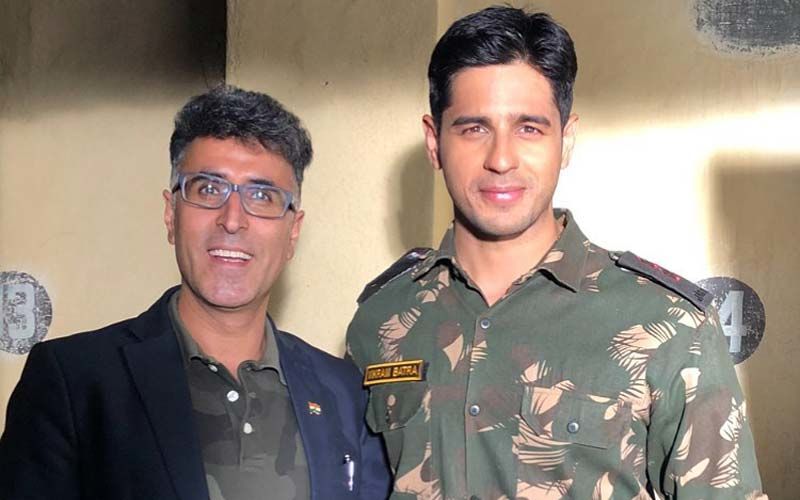
Vishal Batra, the identical twin of Captain Vikram Batra, PVC, had an emotionally difficult time watching the film Shershaah, starring Sidharth Malhotra and Kiara Advani. The film, directed by Vishnu Varadhan, narrates the story of his braveheart brother who was martyred on the battlefield during the Kargil War, 1999. Talking about the journey of putting this film together, he speaks about the huge void his brother, confidante and friend left behind and more. Excerpts.
Shershaah dropped on Amazon Prime Video on August 12. It was the culmination of your four-year-journey to document your brother’s life ...
It has always been a mixed bag of emotions for me to talk about him. I have been living with those emotions for 22 years. It’s not easy being Vikram’s twin — he was the best brother, confidante and friend. We shared every bit of our life together. It was a moment of pride for my family and me. We wanted every Indian to know his story, to know the man behind the epithet, Shershaah. There hasn’t been a day when we have not spoken about him. And each time we do that, we tend to miss him even more. I’ve contained an emotional havoc inside for years. I had to hold it till the film was over, and let it out somewhere, all alone.
The idea of Shershaah started rolling out about four years ago. The process of putting this film together the way you desired must have been a huge effort and emotional journey?
Shabbir Boxwala was the first producer to approach us to make a biopic on my brother. And eventually, Dharma Productions came on board. It was a dream knitted by dad and me in 2015 that we would document my brother’s life. We wanted to put together a book on him which was unveiled in 2018 and make a movie on his life. We wanted to make a film that talks about who Vikram was — his real character, the man behind the title Shershaah, the man inside the uniform. He was a loving Punjabi, who loved to live life kingsize, and typical yaaron ka yaar. He was an amazing sportsperson, too. I was blessed to be his twin. We just told the story to writer Sandeep Shrivastava and the entire team got behind putting the film together. Sidharth, in fact, has had long conversations with me. He didn’t leave any aspect out. I wouldn’t deny that there is about 10-12 per cent cinematic liberty taken in the narrative of the film, but we’re okay with it.
Sidharth, in his interview with us, mentioned how your family felt he resembled Vikram in many ways. Abhishek Bachchan has previously played your brother’s part in LOC: Kargil.Did you have any other name in your mind to play Vikram?
It was not in our hands, and we were more interested in the story and the screenplay. But I clearly remember when we met Sidharth in December 2016, he ended up chatting with my father and me for about three hours. When you engage with someone, you realise certain things about the person. Sidharth is a charismatic boy and a likeable personality and his face does resemble my brother. He is humble and lovable and somewhere when we came back, my father and I thought, ‘Do we need a second choice?’ Subsequently, Sidharth visited our home. He went through all my brother’s things which we have arranged in his museum in the house. He touched and felt everything, as if gauging something. The final choice rested with the producer. When we found out that he is indeed playing Vikram, we were delighted. Sidharth always said that he feels a tremendous sense of responsibility playing Vikram. He wanted to live up to our expectations, and he did.
Do you recall the last conversation or any communication that you had with Vikram before he died on the battlefield?
I met him for what turned out to be the last time on March 9, 1999 when he had returned from his commando training. Vikram and I had both wanted to join the army, but I was not recommended by the board on both occasions. We discussed a movie, Prahaar (1991), which was about commando training. He said the training is several times tougher than what they show in the movies.
The moral of that story was that their life wasn’t easy at all. The last conversations between him and me were four letters from the Kargil war front, dated June 16, June 23, July 2 and the last on July 5. In the letter he wrote about how he did not lose a single officer in his mission. On June 23, he had radioed the message, ‘Yeh dil maange more…’ despite the fact that he was struggling at an altitude of 17000 ft. In his second letter, he assured us that all the men in the troop were taken care of and that has stayed with me forever. He believed in the army and its might. On July 2, he wrote, sensing a rising risk to his life and said that I should take care of mom and dad should something happen to him. He was worried for all of us as much as he was worried for his fellow officers, who were fighting on the battlefield. In the last letter, he left me with his blessings and said that I should hold on to my dreams and keep going. He believed that God will reward me someday. He believed I would do well. He had told me, ‘Kush, dream big and go on’. His words have kept me moving for the last 22 years.
Each time I speak about him, my eyes are moist. No one can fill the void I feel each time I look into the mirror. He did his best on the battlefield, I am doing my best to keep his legacy alive.
Dimple Cheema, the girl your brother had a committed relationship with, remained unmarried after his martyrdom. What sort of an equation do you both share today?
She’s a loving person and like a sister to me. I met her on July 2 and on that day, she had told me that they would get married when he comes back. She had asked me, ‘Kush, tu hamari shaadi mein naachega na?’ I had promised her I would. Sharing the news of his demise five days later was extremely painful for me. It was tough on her. Vikram and she were extremely close and what they shared was special.
A star never makes a film, a film makes an actor a star. Uri did that for me-Vicky Kaushal
8:29 AM

Madhureeta Mukherjee (BOMBAY TIMES; August 18, 2019)
 Remember the classic Aesop’s fable of the Hare and the Tortoise? Where the overconfident and speedy Hare is assured about beating the slow and steady Tortoise in the race. That lesson is more about life, than a race. Actor Vicky Kaushal’s career is a page out of that story. One step at a time. Speed in check. Focus sharp. All engines fired and enough fuel saved to keep pace in the game. And there, seven films and four years later, this powerhouse of talent proudly walks away with the National Award. With his josh at an all-time high, the actor talks to us about his challenging journey, what drives him and how he plans to keep himself charged for the long race ahead. Read on…
Over the past two years, your career has witnessed several landmark achievements — successful films (Raazi and Sanju in 2018), critical acclaim and to top it all, a National Award (Best Actor) for Uri: The Surgical Strike (2019). Has it sunk in, yet?
Sometimes I feel that it has, but then, I get that rush all over again. Kabhi aisa hota hai ki you realise the intensity of a certain happiness after seeing the reaction of others. Just when I think that it has sunk in, I go home and see my parents so full of joy and pride, and it’s a rush all over again. It feels like abhi announcement hua hai. I feel blessed that I got this opportunity to give immense happiness to my parents (action director Sham Kaushal and Veena Kaushal). They came to Mumbai from a small village in Punjab, and they have seen real struggles in life. Sunny (brother) and I were lucky to enjoy the luxuries that they provided us with. Hence, I know how they are feeling right now. I guess, at some point, everyone who is part of films thinks kaash kabhi aisa kuch ho jaaye (like winning a National Award), and for that to happen to me within four years of my career in movies, is too much to fathom.
Your climb was slow, but steady. It wasn’t overnight success or stardom. So, when so much happened suddenly in the last one year, was it overwhelming?
I feel like I have climbed every step of the ladder. I started from scratch, from not knowing how to go about auditions, to getting smaller opportunities, doing theatre, landing my first film, and now this recognition — it was a tough, but interesting journey. After I got my engineering degree in 2009, I was sure that I wanted to be an actor.
However, I was in no hurry because I was clear that I wanted to understand filmmaking and know about all that unfolds behind the camera. The one thing I knew was that this wasn’t a trial and error process for me. Initially, even figuring out where auditions (for ads) were happening was tough, and when I reached there, I would find 400-500 people ahead of me. The first battle was how to be among the first ten, at least. As far as film auditions are concerned, by the time you come to know of them, the casting is mostly done.
Finally, in 2015, Zubaan (directed by Mozez Singh) came my way, and it was the first film I cracked as a protagonist at the audition level. Then Masaan happened the same year (but it released before Zubaan). At that point in my life, when I was struggling to crack it, I would wonder what’s lacking in me, little did I know that God has better plans for me.
Will winning the National Award change the way you view your career, choice of films and your overall perspective on how you see yourself steering the way ahead?
I think this is not the time for me to look around and see whether I am standing at the top, bottom or in the middle of the ladder. Instead, what I need to do is remember why I started this journey in the first place, and keep going on. I can’t take anything for granted. Now, I have to be more grounded and focused than ever before.
What would you say was the turning point for you?
Well, so many moments felt like a turning point. Starting from the point when I went to a multinational company (as part of an industrial visit while studying engineering) and realising that the corporate world is not for me. I knew for sure that I wouldn’t fit in there and I didn’t contemplate it for a single day. Bagging Zubaan, my first film, was a turning point. The kind of appreciation Masaan got, gave me tremendous confidence. Last year, Raazi, Manmarziyaan and Sanju collectively helped me reach out to a wider audience. Uri is certainly a defining film of my career. It gave me a hero-wala image in the eyes of the people, in the sense that, I was the solo lead. People knew that I was an actor, but that film gave people a perception that I can be a hero. Also, I always say that a star never makes a film, a film makes an actor a star. Uri did that for me. I will always say that what the Indian Army has given my family and me, I can’t express it in words. My father’s first film was Prahaar (1991, which was set against an army backdrop), and it was life-changing for him. Likewise, Uri won me a National Award, and that is indeed life-changing.
You just mentioned that you are an engineer by qualification. Why did you pursue it when you knew that your heart was in the movies? Was it a safety net or Plan B?
One thing was clear in our family — irrespective of what we wanted to pursue, we had to first complete our education. Tenth mein acche number aa gaye; so, I went with the flow. I am someone who believes that if I put my best foot forward, achcha hi hoga. At one point, as I mentioned earlier, I realised that this is not for me. Then I thought, I could pursue acting, possibly? I knew that I did not look like an actor, you know what I mean? I am talking about how it was 10-12 years ago, at a time when cinema was also different. It was not as evolved. There was this perception, that actor toh aise dikhte hai, aise hote hai. In 2009, I got my engineering degree and I also had a job offer letter in hand, which I tore into pieces, in full-on Bollywood style.
Honestly, I don’t believe in safety nets at all. Or making a Plan B. I believe that the extra one per cent that we all give, comes from our fear of survival and our fear of falling, when we have nothing to back us up. That’s where that added fire comes in and if you create a safety net, it could become the reason for complacency, and you could say, ‘So, if Plan A works, then good, or else, I have Plan B’. So, you are already thinking of your plans not working. I didn’t want to give myself that option. I told myself that this has to work, and I will make it work.
So, you were single-mindedly focused on being an actor. Whether you were a supporting actor, lead actor, or playing a small role, did not matter back then? Does it now?
Acting gives me the kind of joy that I can’t explain. Having said that, every actor in this country wants to be a hero. That’s one of the best things about being an actor. However, that was never the approach with which I came into the industry, ki hero banoonga, warna nahin. For me, being on a film set is like being in paradise. I don’t mind if you make me wait for two-three hours. If I am on the set, I am in a happy space. No matter how chaotic a film set is, it gives me peace. My focus was always on honing my skills as an actor, as I knew that my journey would not start off with a big launch. I had to prove my ability as an actor, and then, once I got my first break, it was about showing a certain kind of range with my roles.
Your father Sham Kaushal, has been an action director for years. Yet, your upbringing was far away from the world of movie sets and starry parties. So, when stardom happened, how did you react to it? And how did your family and friends react to how life has changed around you?
It is a beautiful feeling to receive so much love and affection from people. It’s humbling, and it took me time to get used to it. In the earlier years, whenever anyone requested for a photograph with me, I would ask them, ‘You know me? Have you seen my work?’ I started off with being called the Masaan guy. I don’t know how to react to stardom, I just feel humbled and grateful. My family is undoubtedly thrilled. Whenever we step out for dinner together and people ask me for pictures, they feel really happy. It is like their moment of pride. Sometimes, they even take ownership and tell the fans, ‘Haan, haan photo khichwao’. It is really funny. It is like they are watching some entertainment unfold. Of course, my friends are like all friends, they pull my leg about it. When they see people clicking selfies with me, they shoot videos of that, so that they can share it on our friends’ chat group and pull my leg further. These are the people who will always keep me grounded.
Now that you are considered a bankable hero, have the dynamics in the industry changed for you? I mean, the way producers and directors approach you and look at you as an actor who can bring in the numbers? It matters, right?
Of course, it matters. The kind of investment people would make in a Vicky Kaushal film has changed. It has gone up, and that happens when your film fares well at the box office. It also comes with a huge responsibility.
And it also adds immense pressure. In the beginning, it was more about proving that you are a stock of talent, and now, it is about picking great films that have the potential to bring in the moolah…
Yes, and that’s a good pressure. I have worked really hard so that I can feel this pressure on my shoulders. I have earned this pressure and I am cherishing it (laughs!). I want to put my best foot forward. I want to be as honest as I have always been, and not let all the attention (stardom) disturb that process, as everything that comes along is because of my honesty between action and cut. If I am honest in front of the camera, the rest of it will happen in the periphery. Like I said earlier, I can’t afford to lose focus or take anything for granted.

Vicky Kaushal gearing up for the ambitious film Uri
8:03 AM

Avinash Lohana (MUMBAI MIRROR; October 28, 2017)
Mirror (September 19) was the first to report that Vicky Kaushal will play a commander-in-chief in Ronnie Screwvala’s upcoming production Uri, directed by debutant Aditya Dhar, which revolves around the 2016 Uri attack. The 29-year-old actor has already begun prepping for the film for which he has to gain around 10-12 kg. Rakesh Udiyar, who was behind Aamir Khan’s metamorphosis as a wrestler in Nitesh Tiwari’s Dangal, is training him.
“I have three months for prep. I have to beef up and gain lean muscle as the aim is to not only build up the size but also strength. I work out for around two hours every day. This includes functional, core and weight training. My diet is a combo of high carbs and high proteins for now,” informs Vicky, who started training with Rakesh a week before Diwali, missing out on his favourite karanjis and laddoos.
He will start his paramilitary training after a month of bodybuilding. This will entail learning about how missions are conducted and basic physical drill. There will also be a few days of technical training during which he will learn how to use the ammunition, artillery and military sign language. “This will be followed by a month-long martial arts training. The action includes hand combat and martial arts is a must for it,” the actor adds. Will he take tips from his action director father Sham Kaushal? “I take his advice on everything, not just action. For now, he just wants me to give my 100 per cent. His first film Prahaar, directed by Nana Patekar, was also a military-based action film,” Vicky signs off.
Subscribe to:
Posts (Atom)