Showing posts with label Ponniyin Selvan - Part 1. Show all posts
Showing posts with label Ponniyin Selvan - Part 1. Show all posts
I don’t think Bollywood is overshadowed by south films-Ravi Varman
8:30 AM

Rishabh Suri (HINDUSTAN TIMES; April 3, 2025)
Cinematographer Ravi Varman’s work has influenced films in more ways than one can imagine. A member of the Academy of Motion Picture Arts and Sciences, he was recently inducted into the prestigious American Society of Cinematographers — becoming only the second Indian to do so after filmmaker Santosh Sivan.
Having created iconic frames across both Hindi (Goliyon Ki Raasleela Ram-leela, 2013) and Tamil (Ponniyin Selvan: I, 2022) cinema, does Ravi agree with the buzz that south films have begun “overshadowing” Bollywood?
“It’s not like that,” Ravi tells us. He explains that the streaming space has blurred the lines between Hindi and regional films: “After OTT platforms, [showbiz] became the Indian film industry. So many films from the south are now released all over India and do so well. And Hindi cinema has always had a classic quality of filmmaking.”
Given that he’s worked across industries, what sort of film has been the toughest to work on? Ravi replies, “I can’t say. I never thought I’d get into films — it was accidental. For me, every film is equally important.”
The 51-year-old feels audiences should rethink the parameters of judging a film. “Films that won at the Oscars this year were well acted, but not all of them were superhits commercially. It’s the quality that matters,” he ends.
After the first National award, I felt I must go higher-A R Rahman
8:08 AM
Niharika Lal (BOMBAY TIMES; October 15, 2024)
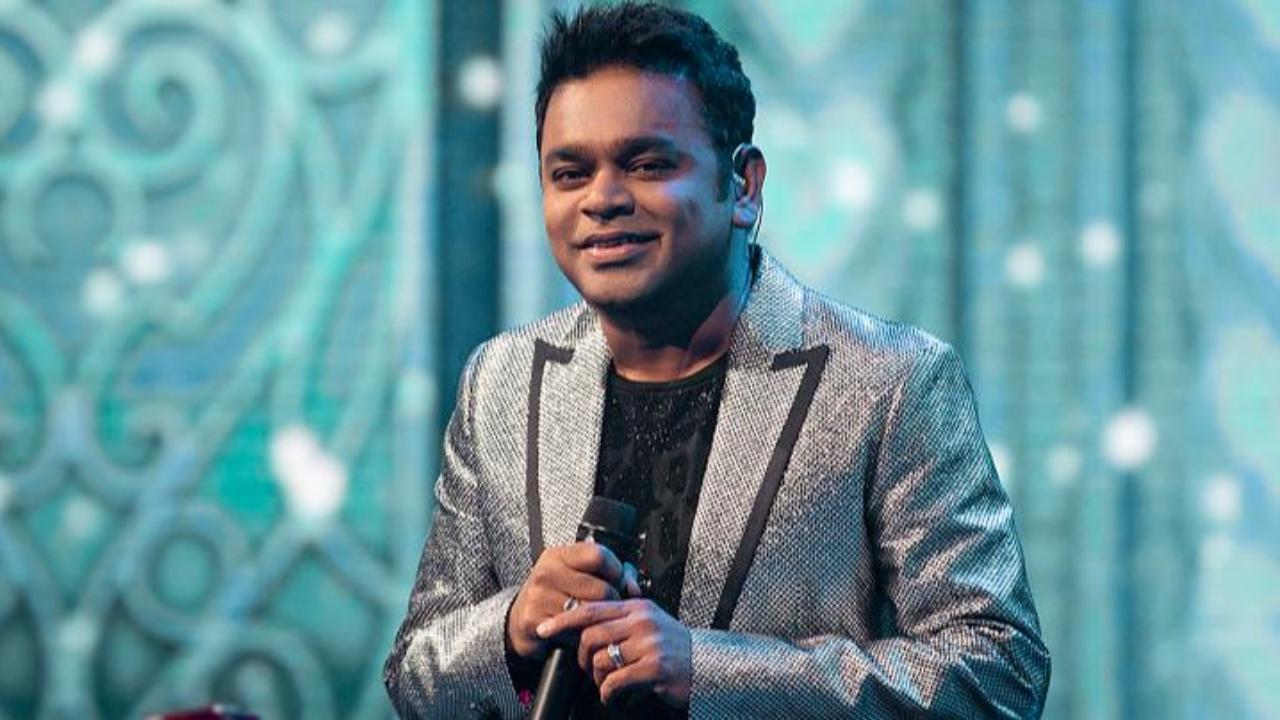
A R Rahman received his seventh National Film Award on Tuesday, and he says it definitely feels like a first all over again. “As an artist, you always feel like you're shedding your skin, evolving into a new person. The artist who has evolved is the one getting the recognition,” he shares. Interestingly, Rahman won his very first National Award for Mani Ratnam's Roja, and now, over three decades later, he's being awarded again for a Mani Ratnam film.
Music lovers say that the music of Roja still feels as fresh today as it did back then. Talking about what he does as a musician to create timeless music, Rahman shares, "From the very beginning, I had all these tick marks - the music should be recorded well, produced well, and the intention of creating the music has always been very pure. There is a big hero so I should do better music for this and there us a small hero so I should just...no! My music was never like that, the music has to be timeless. Whether it's a small hero or a big hero, the music has to be timeless. What I do should reach the full potential of what I can do. Sometimes, when you're working on a movie, a great tune comes for a small movie, and everyone says, 'Why are you putting this tune in a small movie? Use it for a Rajinikanth movie.' And I say, 'No, this tune came to me for this person, and I can't cheat. I can't take it out and put it somewhere else.' So that is the route I always took."
Excerpts from a conversation -
'After the first National Award, I felt like we have to go higher because the National Award is the highest recognition for any Indian musician'
Remembering how he felt when he received his first National Award, Rahman says, "I remember after I got my first National Award (for Roja), one of the reporters asked me, 'Do you think it is too early in your career to get a National Award for your first movie?' (laughs). After the first National Award, I felt like we have to go higher because the National Award is the highest recognition for any Indian musician. Even now, the National Award is something the whole nation acknowledges. As an artist, you always feel like you're shedding your skin, evolving into a new person. The artist who has evolved is the one getting the recognition. It's not the same thing - you've moved on from a lot of things, you're reinventing yourself, sometimes keeping what is good, sometimes letting go. So, this definitely feels like a first."
'I studied at Mani Ratnam university'
When the award was announced Rahman told us that it's a full circle, a National Award 32 years later, again for a Mani Ratnam movie. He says, "It is," and elaborates, "I think I was sitting with Mithun da and Mani Ratnam, and the minister Ashwini Vaishnaw asked something like, 'Where did you study?' I pointed at Mani Ratnam and said, 'Mani Ratnam university.' I think when you work with certain people, they bring out the best in you. And even without them asking, you understand. It's a telepathy that happens; after a while, they don't have to ask you. What they're asking comes as a mind impression, like, 'Okay, this is what he's thinking.' Then you go much further than what he's thinking, and he comes back and says, 'Oh! I like that. Why did you take so much time? Because you gave something far ahead of what I was thinking.' I'm like, 'Well, I had to take time.' So, we have a nice, interesting relationship."
Rahman says that because he had worked with so many traditional composers when he was young, he had to fight himself to break free from those influences. He says, "I had to take a 180-degree turn and say, 'I don't want to do what they did because I need to have a new experience.' So if they used one raga, I'd go and find another raga that was very unusual. Even in Roja, we used several ragas that were rarely used in Tamil. It was more of a North Indian raga, and when Tamil people heard it, it made North Indian people feel closer because they knew the ragas. Usually, Bhairavi, Yaman, and Todi are more common in South Indian compositions. So, I've consciously tried to move away from what is expected. Sometimes, some movies need a traditional score, and sometimes the director is ready to explore and gamble, and is ready for an adventure and then we have fun, which is what Mani Ratnam does."
'We can go into anthropology-driven details, but the ultimate goal is to create an experience'
Rahman says that a lot of research actually happened for the music of Ponniyin Selvan and he also had research material about what kind of equipment they had at that time, and then decided how to bring that sound from modern equipment and add it to the score.
He says, "Some of the instruments we got sound similar, and for others, we took some liberties and hid them in the score, which just adds to the musicality. We can go into anthropology-driven details, but the ultimate goal is to create an experience. It's about how truthful you are while giving people that experience because you're taking them to that era, and that era itself is a mystery because nobody really knows what happened. You imagine that, and imagination can be small or wild - most of the time, it's a wild imagination."
In Bond films, whether its composer Thomas Newman or John Barry - the theme is same
As Ponniyin Selvan has a sequel, so when he creates music for films which have sequels, how important is continuity? Sharing examples, Rahman says, "When it's a sequel, sometimes you have to continue with the score for continuity. Take the Bond movies. They have one theme that recurs. Different composers have done it too. Thomas Newman (Skyfall, Spectre) did it. John Barry (From Russia with Love, Goldfinger, On Her Majesty’s Secret Service, etc.) used to do it, and they all became the same theme.
It depends on the movie. If it's a continuation story, then it's better to have the same theme, like John Williams did for some of his work." (John Williams composed for many film series such as the Star Wars series, Harry Potter series, and Indiana Jones series.)
'I always feel like money comes as a blessing, but your work is more important'
Whether it's a big-budget film or a small-budget film, Rahman says it does not matter to him. Because his name is associated with the movie, when films don't have the budget, he has often paid from his own pocket.
He shares, "Sometimes, even for a big movie, a small score works, and it doesn't have to have 200 instruments every time. And sometimes, for a small movie, you need a big score. The film might not have the budget, but I say, 'It's fine, it's my movie, my name,' and I go ahead and book the orchestra. For instance, there is a movie Gandhi Godse - Ek Yudh (2023) that Rajkumar Santoshi directed, and it had a small budget. It required a very, very big sound, so we went ahead and did some of the score. He said, 'I don't have the budget for this,' and I said, 'No worries, I'm paying for this.' (Laughs)
How often does he have to do that?
Rahman says that he had these very strict standards from the beginning, and says, "See, for me, there is a truth, an honesty and that's important. I have to look at the music. To give an example - the first jingle that got me noticed, I was paid Rs. 2,000 bucks, and I used to charge Rs. 20,000 at that time. If I'd thought about money then, I wouldn't have worked very well on that. I always feel like money comes as a blessing, but your work is more important. How you work, what you give, should stand the test of time. I should feel proud of all my films and work."
We literally did the score for Ponniyin Selvan in buses while touring USA-A R Rahman
8:38 AM

Niharika Lal (BOMBAY TIMES; August 18, 2024)
Oscar-winning composer A R Rahman secured his seventh National Award for the background score of Mani Ratnam’s film Ponniyin Selvan - Part 1. The victory felt like a full-circle moment for Rahman, as his first National Award was also for a Mani Ratnam film.
Reflecting on the achievement, Rahman said, “It feels surreal because the first movie I ever got a National Award was with Mani Ratnam and Balachander sir (K Balachander for Roja). It’s a full circle, 32 years later, again for a Mani Ratnam movie. I’m very grateful for his guidance, mentorship and his extraordinary genius. I dedicate this to all my sound engineers, musicians, singers, lyricists, and all of them who worked because we were touring the US – we were literally doing the score in between in buses. We’d do a show and at night we would be talking to Mr Mani Ratnam. So, this is to all the hard work of my musicians, singers, and recording engineers.”
A list of 12 Indian films that crossed the 300 crore mark worldwide post pandemic
8:23 AM
Box Office India Trade Network
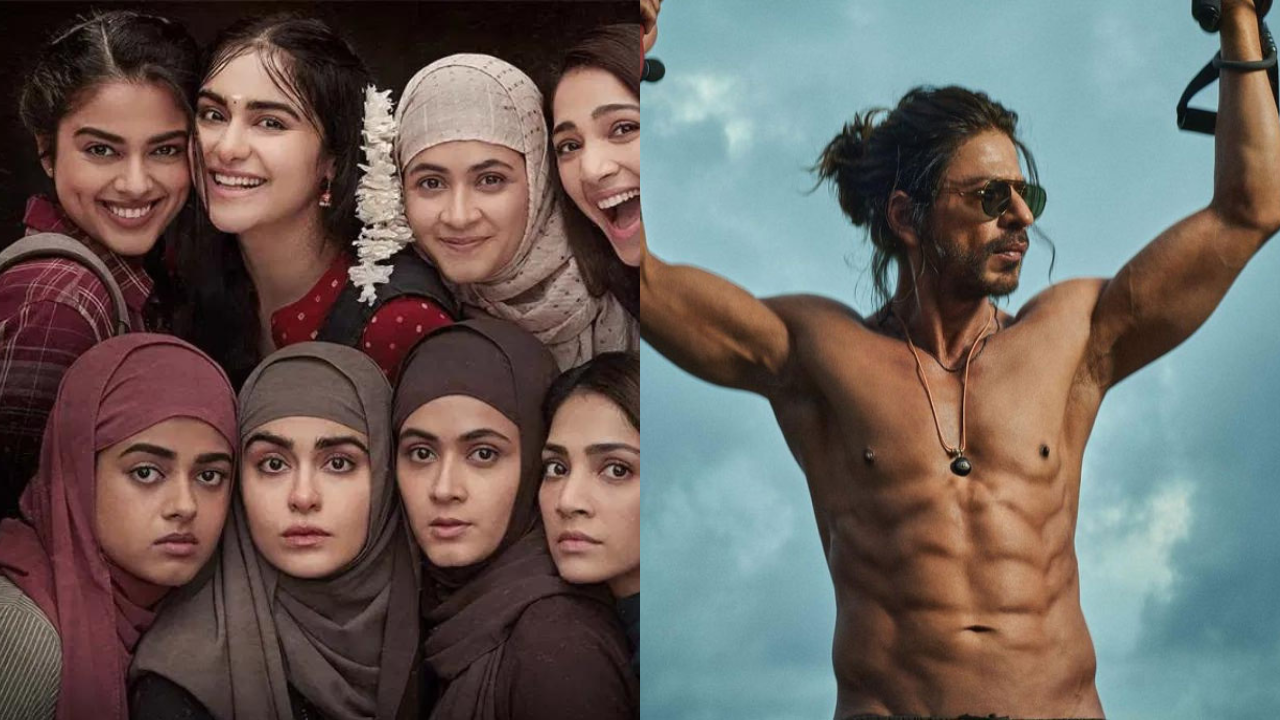
The pandemic has been over for more than one and a half years and we have seen just five Hindi films cross the 300 crore mark worldwide. Two of these are THE KASHMIR FILES and THE KERALA STORY which have have not done the business due to the films being cinema but other reasons.
The have been seven films reaching the 300 crore mark from the South which is actually a benchmark for most of the films for South barring the likes of RRR and KGF - CHAPTER 2 which have a wider market due to the scale and branding be it director for the former or the franchise for the latter. For Hindi cinema the benchmark should actually be 500 crore now which only PATHAAN has crossed and by leaps and bounds.
Tamil cinema has got a big boost in overseas business due to heavy migration from Sri Lanka and Tamil Nadu over the past few years. The numbers of big films from the Tamil film industry in the overseas market are really pushing this industry in terms of worldwide numbers. Tamil cinema had a 300 crore miss by a small margin with VARISU which hit 208 crore (GBOC) in India and 85 crore Overseas for a worldwide total of 293 crore. Hindi cinema also had a very near miss with SOORYAVANSHI which got 299 crore as India contributed 237 crore (GBOC) and Overseas was 62 crore.
The total of 12 films have crossed the 300 crore worldwide mark across India post the pandemic. The difference is that many Hindi films crossed 300 crore before the pandemic and only five have managed post the pandemic. While in South seven have reached post pandemic when before the pandemic there was only ENTHIRAN, KABALI, BAAHUBALI: THE BEGINNING, BAAHUBALI 2: THE CONCLUSION and 2.0.
The films to have crossed 300 crore post pandemic worldwide from different industries is below.
Hindi Cinema
The Kashmir Files
Brahmastra
Drishyam 2
Pathaan
The Kerala Story (Expected)
Telugu Cinema
Pushpa: The Rise - Part 01
RRR
Tamil Cinema
Vikram
Ponniyin Selvan - Part 1
Ponniyin Selvan - Part 2
Kannada Cinema
KGF - Chapter 2
Kantara
2022: A record-breaking year for south cinema on all counts
8:22 AM

From the highest revenue earned at the box office to global glory – it was a record-breaking year for south cinema on all counts
Sridevi S and Neeshita Nyayapati (BOMBAY TIMES; December 29, 2022)
The year 2022 truly belongs to the south Indian film industry, with two films raking in over Rs. 1,000 crores, and quite a few inching towards the Rs. 500 crores mark. It was undoubtedly a landmark year, with the south industry even overshadowing its Bollywood counterparts. Add to this the fact that these south films have and still are continuing to break records, and garnering accolades not just pan-India but globally.
The latest being RRR that has earned itself two nominations at the Golden Globes and made it to the Oscar nominations shortlist. KGF - Chapter 2, RRR, Vikram and Ponniyin Selvan - Part 1 (PS-I) were also the most watched movies at cinemas this year, with the highest number of tickets sold, according to an entertainment ticketing company’s report, with KGF - Chapter 2 selling most tickets on the weekend as compared to any other film.
This is a trend that’s been a long time coming. In 2021, south Indian cinema generated three times the box office revenues of Hindi films, with a total of Rs. 2,400 crores, according to the March
2022 EY-FICCI report. Many trace the origins to the post-Baahubali phenomena, when Prabhas became a nationwide sensation following the release of the film in 2017. This was followed by the post-OTT boom in consumption of content across the nation.
While it’s natural to pit south cinema’s success against Bollywood’s many dismal outings at the box office in 2022, KGF star Yash feels otherwise. “Don’t disrespect Bollywood for this one year where south films have performed better,” the superstar said recently, adding, “This is just a phase. Bollywood has taught us so much. It is time to forget the north-south divide and respect all film industries. Instead of fighting about which industry is great, one should make good films, have good infrastructure, build good theatres. That is when the world will truly appreciate and say, ‘India has arrived’.”
Several trade experts have labelled the rise of south cinema as ‘the post-Baahubali phenomenon’. S S Rajamouli – who directed the two Baahubali installments, that released in 2015 and 2017 – said in an interview that Hindi films had stopped catering to the mass audience, who started watching dubbed south films online. “Unknowingly, we were building a big fan base for action films for a long time. And when Baahubali landed, everything exploded.”

2022: NO MORE WOODS?
The rising popularity of south cinema has made Bollywood move beyond its comfort zone and blend in with regional languages. The biggest examples being Salman Khan’s Telugu debut with Chiranjeevi’s GodFather, and Sanjay Dutt and Raveena Tandon’s Kannada debut with KGF - Chapter 2 in 2022. Will this be the end of the ‘woods’ and the beginning of the Indian film industry?

IF ALL OF US GET TOGETHER, WE CAN CROSS 3,000 – 4,000 CR TOO: SALMAN KHAN
Both Bollywood and southern film industries can benefit from the cross-pollination of talents. People want to go to Hollywood, I want to go south. The thing is once you start working together, just imagine the numbers we will all have… If all of us get together, we can cross 3,000-4,000 crore.
GLAD TO SEE OUR CINEMA IS NOW GLOBAL, NOT JUST PAN-INDIAN: NAGARJUNA
There have been no language barriers for me since 1990 and I’ve always wanted to work in good films irrespective of language. It also used to be the norm for actors to settle across various film industries, even if they weren’t born there. I’m glad to see that cinema has now gone back to not just become pan-India but also global. There’s no need for there to be a divide.
NOT A FAN OF WOODS, CALL IT INDIAN CINEMA: ALLU ARJUN
I am personally not a big fan of words like Tollywood or Kollywood or Jollywood or Bollywood. This wood...that wood...no. I would love to call it all Indian cinema.

Advance booking discounts to special Friday offers: Movie tickets are set to get cheaper, but not every day
8:18 AM

While theatres won’t be dropping ticket rates to a uniform price of ₹75-100, they are open to rolling out more promotional offers on a per-movie basis
Niharika Lal (BOMBAY TIMES; October 7, 2022)
On September 23, cinemas celebrated India’s first-ever National Cinema Day in multiple states, with many theatres lowering their ticket prices to Rs. 75. With houseful boards back at several cinemas and people even watching movies back-to-back through the day, it was evident that lower prices can bring the audience back to theatres. As a result, cinemas are now discussing the need to reassess the current ticket pricing model. Several also offered movie tickets for a special festive price of Rs. 100 last Monday till Thursday, and many are planning to experiment with an affordable price model in the long run to sustain this momentum.
However, based on their learnings over the past two weeks, stakeholders say that while there will be “no uniform lower ticket price”, they are planning to offer discounts and promotional prices on a per-movie basis. Here’s more:
‘FLAT CHEAPER PRICES EVERY DAY OF THE WEEK DOES NOT TRANSLATE INTO HIGHER FOOTFALL’
According to Rajender Singh Jyala, Chief Programming Officer, INOX Leisure Ltd, “Even though we are still in the experimental phase, we have observed that last week’s footfall was higher than normal pricing days, but it wasn’t the same as National Cinema Day. The reason is that National Cinema Day was just one day, and so people didn’t want to miss it. When the promotional offer was spread out over five days, they must have thought, ‘if not today, then we can watch the film some other day’.”
Kunal Sawhney, COO, Moviemax also said during a recent discussion in Mumbai that keeping uniform lower prices is definitely not the way ahead, based on their observations from south India, where film ticket prices fall in the Rs. 100-200 slab on all days. He said, “A film’s ticket price can be fixed depending on the experience that film is providing. The right product has to be given at the right price.”
Regular, popular, blockbuster and mega blockbuster – prices are often decided on the basis of which category a movie falls in. Recently, for example, while Mani Ratnam’s Ponniyin Selvan: I’s ticket prices fell in the regular category, Hrithik Roshan and Saif Ali Khan-starrer Vikram Vedha’s ticket prices were revised from the blockbuster to regular category.
ADVANCE BOOKING DISCOUNTS TO SPECIAL FRIDAY OFFERS: EXPECT MORE PROMOTIONAL PRICES
For releases like the Amitabh Bachchan-starrer Goodbye, some cinemas lowered ticket prices on Friday, while for Ajay Devgn’s Drishyam 2, moviegoers got a 50% discount on advance bookings for a day. Jyala says, “In discussion with the makers, cinemas will keep offering lower rates on specific days for films or will roll out promotional offers.”
Kamal Gianchandani, President, Multiplex Association of India (MAI), told us, “There is a lot of experimentation being done by various cinema operators at this point. Disney, Dharma, and other studios, who have films playing in theatres, have been very supportive in this regard. We are constantly listening to our customers and other stakeholders in the business. We have always taken ticket pricing and other similar decisions keeping the interest of consumers and all stakeholders in mind. We will continue to do so in the future.”
(Crisp) Movie Review: PONNIYIN SELVAN - PART 1 (Hindi) by FENIL SETA
3:22 PM

Ponniyin Selvan - Part 1 (Hindi) has nothing exciting to offer to the Hindi audiences. It is based on a popular Tamil novel of the same name. If you are aware of the story and the characters beforehand, then it’ll make it easier for you to comprehend the goings on. If you go without homework, the film will go over your head. And since hardly anyone does research before going for a film, it’ll leave audiences confused. On top of it, it’s a lengthy film (167 minutes) and the action and scale are nothing extraordinary. We have seen better in period films like RRR and Baahubali. Even the confrontations and dramatic sequences don’t have the ‘Wow’ factor. Music is another minus point. A few scenes are well shot and the performances also save the day. Chiyaan Vikram is apt for the part. Karthi has an important role and is entertaining. Jayam Ravi puts his best foot forward. Aishwarya Rai Bachchan is stunning and it's great to see her on the big screen after ages. Trisha is decent. Aishwarya Lekshmi leaves a mark. Sobhita Dhulipala is memorable. R Sarathkumar, Prakash Raj, Rahman, Nassar and others are fine. All in all, Ponniyin Selvan - Part 1 (Hindi) turns out to be a disappointing film for Hindi audiences.
My rating - * ½ out of 5!
My rating - * ½ out of 5!
Subscribe to:
Posts (Atom)