Showing posts with label Pink. Show all posts
Showing posts with label Pink. Show all posts
Taapsee Pannu on Kirti Kulhari's Pink promotion snub: "I cannot discard her feelings"
10:10 AM

Vinay MR Mishra (BOMBAY TIMES; March 17, 2025)
During a recent interview, Kirti Kulhari spoke about feeling sidelined during the promotions of her film, Pink (2016). Kirti stated that during Pink’s promotions, her co-actor Taapsee Pannu became the ‘Pink girl’ and shared that it affected the equation between the two actresses.
When we spoke to Taapsee about Kirti’s statements, she said, “How would I know? She has the full right to feel the way she does. I would be the last person to tell someone what you are feeling is wrong. If someone has felt a certain way, I’m sure there’s a reason.”
Taapsee said, “That person voiced whatever they did. Had I known that she felt sidelined in any way, I would have liked to speak to her at that point and ask if there was something I could do to make it better. Unfortunately, I did not know there was an issue at that point. So, I don’t know what to do with it. I can’t discard her feelings.”
Talking about their equation, Taapsee acknowledges that Kirti and she might not be close friends but maintains that their professional relationship remained unchanged. “Since she saw our relationship or situation in a certain way, maybe she felt the distance from me. I always kept it professional with her, and I still do. I worked with her in Mission Mangal as well, and I don’t think professionally anything changed for me, because from where I saw it, I did not see any disparity. So, for me, it was the same girl who I worked with in Pink,” she said.
Meanwhile, rumours are rife that Taapsee will be stepping into Priyanka Chopra’s shoes for the sequel of Aitraaz. While the actress doesn’t deny the rumours, she explains, “These things are very confidential. Someone who’s investing too much money in this wouldn’t like it to be announced or talked about in any other way. So, I will let the right people talk about how they are approaching the casting.”
I would like to see some actors being papped outside an acting class too someday-Vijay Varma
4:38 PM

Renuka Vyavahare (BOMBAY TIMES; February 22, 2024)
No one does dancing-on-the-grave-derange better than Vijay Varma. Dahaad was a testament to his ability to take you to the darkest corner of the human psyche. While he excels at nailing unhinged parts, it was his big-hearted Moeen (Gully Boy) that made him a household name. From being overlooked at the red carpet to being stopped for a photo, he shared his journey with Bombay Times in a heartfelt chat on a quiet afternoon in his quaint seaside apartment in Mumbai. Excerpts..
Gully Boy put you on the map and it was a gamechanger for you. But it takes years of hard work to be an overnight success, isn’t it?
I belong to a Marwari family, born and raised in Hyderabad and we are into business. We don’t believe in education as that’s for people who want to do jobs and we do business (laughs). Before Gully Boy, there was a lot of trial and error, waiting, false starts, misstarts and non-starts. I was cast for something but that didn’t take off, did a film but it didn’t release, far too many defeats than victories. It was a tough 7-8 years of wait. Right before Gully Boy I was at my lowest low because I was waiting for some films to release. They finally released and did nothing for me. They went unnoticed. I felt I don’t stand a chance in the film industry. When Gully Boy casting happened, I went in all jaded thinking even if I do this film, no one is going to notice me anyway. I was so used to not being looked at. I had a small part in it (Moeen) and to my great fortune, it did wonders for me. It changed the course of my career. People didn’t want to know my name or look at my face before that. They didn’t care. It took me a decade just for casting directors to recommend my name to someone and that someone to know it. On the contrary, those who belong to film families, everyone knows them already and that’s a massive advantage.
How does it feel to be acknowledged and recognized today? You have come a long way.
It feels like insaaf hua hai. Justice has been served. This was in the works for long. It’s heartening to see that a lot of brilliant actors are getting the spotlight today. You need to up your game as well. From being a supporting actor to a leading man, it’s been quite a journey for me and it’s not a common graph. Irrfan was a massive inspiration for me because his journey was also tough. He became a pioneer of sorts, a role model for people like me. Also, you don’t always need to look outside. You need to have that insatiable hunger for work, and I have that even now. No appreciation should stop you from wanting to do more work.
The definition of a hero has also evolved over the years, isn’t it?
When we went to the film school, I remember there were people who taught horse riding, action etc because that was the making of a hero. Before that the focus was on voice and speech. Today it’s about ‘actor banna hai toh gym ja beta. Get the body and shed your clothes’. If you are someone who enjoys the gym, please go. If you think that it isn’t one of the main requirements for an acting job, you don’t need to. I would like to see some actors being papped outside an acting class too someday! It should be made fashionable to get papped outside an acting school.
As someone who excels at playing a range of dark characters, does the impact of a film or series on people weigh on your mind or do you view these roles as characters that exist in society, and hence deserve to be portrayed?
I want to act. I don’t want to be a role model because that’s a lot of weight on my shoulders. I am not a leader. I don’t want to change people’s lives. I want to have a great life myself. I am very clear about that. I want to make something of my life, and I have no other means to do that except through the work that I do. A role model is someone who is willing to take charge and be responsible for others’ choices and wellbeing. I don’t want the baggage of being a role model. I don’t have great leadership qualities either.
Isn’t cinema a catalyst for change though?
I was part of a film called ‘Pink’. It sparked a dialogue on ‘consent’ and made it a household conversation. ‘No means no’ became a thing so yes, cinema can be effective, but does it have the power to change the world? I don’t think so. Policies have the power to change the world. If you are a gullible vulnerable person who can be affected by certain content, you should be careful about what you watch. For someone like me who has an appetite for watching all kinds of stuff, I don’t think that can affect my life in a way that it can change me. It can give you an insight. It opens a door to looking at something that maybe I wasn’t looking at before but that’s about it. What I do with it is my choice, whether I act on it or not.
Glorification of negative characters has been an ongoing debate. Do you set any boundaries when you essay these characters?
I’ve played all kinds of men. Men who are terribly broken, evil, suffering, or torturing others. The projects that I have been a part of, never glorified these men. It has to do with how a director perceives the world. It’s their take, their moral and ethical graph. Actor is a medium for that story to be told and thus needs to be a blank slate or a canvas on which anything can be painted. If we start questioning the morality of each character, I don’t think I would be a part of any stories that I did. If I was too scared to play a serial killer or the wife-beating abusive husband, I wouldn’t have had the opportunity to play a deranged person, which is a lot of actors’ dream (role), to portray that unhinged side of human psyche. If I was trapped in the idea of masculinity, I wouldn’t have agreed to play a man who gets beaten by his wife and mother-in-law (Darlings). You must break these notions and step out of your comfort zone.
When people like you for taking the risk, it’s a different high. I also want to do roles where people say, “Isn’t he the sweetest” (laughs)! Kaalkoot is one of my favourite works. ‘Jaane Jaan’ was also quite refreshing for me as an actor. I am drawn to characters that surprise me. The reason I stay away from run of the mill roles is due to their predictability. I need to discover something new and discover myself through my roles.
Do you fear being stereotyped?
I did Pink at the time because I didn’t know the repercussions of playing a negative role. But soon after, I realized everyone wanted me to play a negative character. I was inundated with those offers. That was a wakeup call for me. People do start seeing you a certain way if something has worked. That’s when I chose to do different roles and not let that perception get to me. It just takes one good performance to break that stereotype and I knew I had that in me. I wasn’t worried because I knew I had Darlings, Jaane Jaan and Kaalkoot coming my way, too.
Pink director Aniruddha Roy Chowdhury’s next, starring Sanjana Sanghi, Pankaj Tripathi goes on floors
8:20 AM
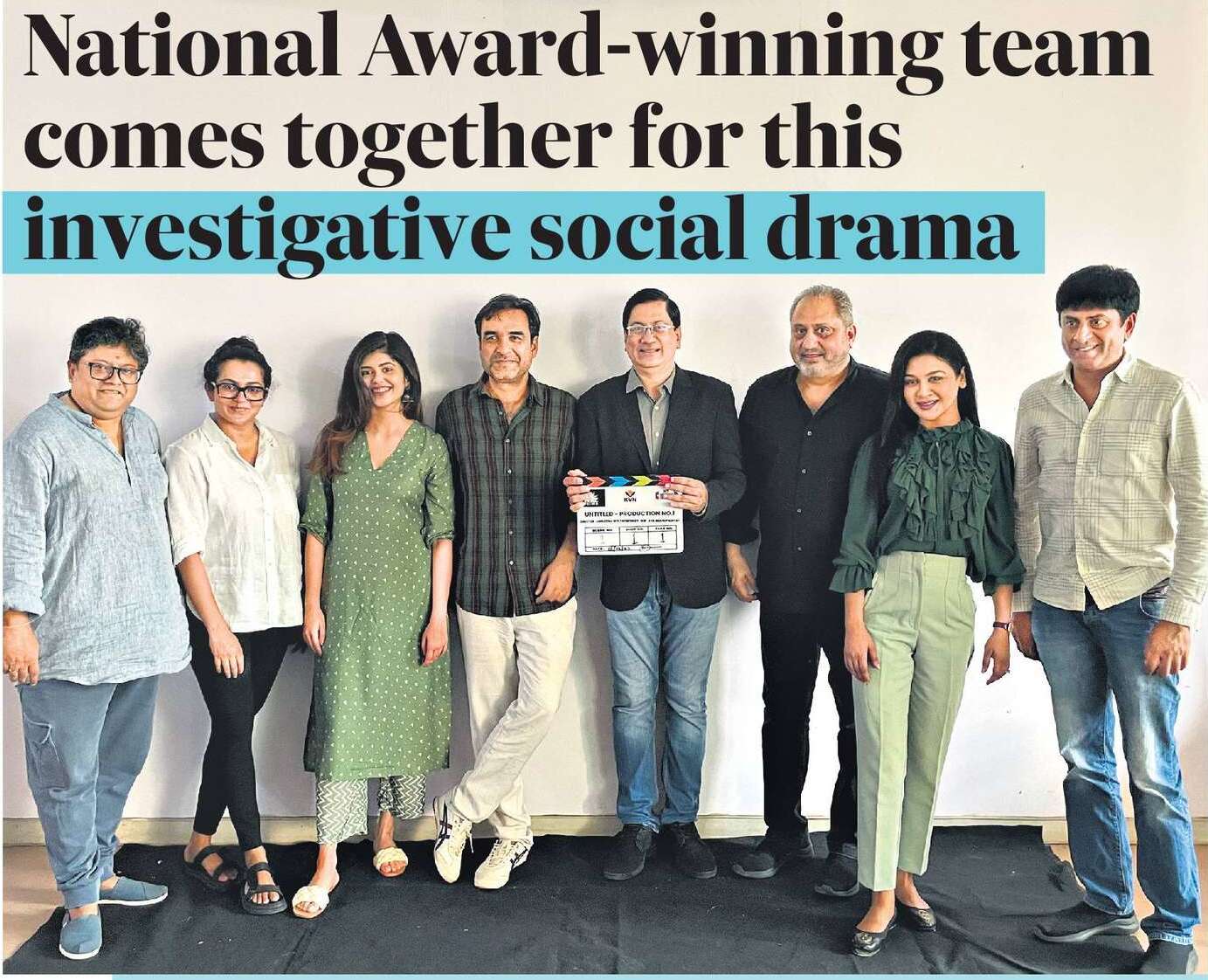
(L-R) Aniruddha Roy Choudhury, Parvathy Thiruvothu, Sanjana Sanghi, Pankaj Tripathi, Mahesh Ramanathan, Viraf Sarkari, Jaya Ahsan and Shyam Sunder Photo: htbs
HINDUSTAN TIMES (December 7, 2022)
Set to take movie buffs on a roller-coaster ride, National Award-winning director Aniruddha Roy Chowdhury’s untitled next went on floors yesterday and it promises to be high on content. Starring actors Pankaj Tripathi, Sanjana Sanghi and Parvathy Thiruvothu in lead roles, the film is an investigative drama with a heartwarming story of a dysfunctional family coming together.
Chowdhury, who has earlier helmed films such as Pink (2016), says, “I am happy to do this film that has an intriguingly layered story.” The first shooting schedule started in Mumbai and the team will move to Kolkata for the second schedule.
Producer Viraf Sarkari of Wiz Films is elated with their first feature film production. “We are delighted to begin this journey with a socially relevant film being put together by a multi-award-winning and talented team of actors and music director Shantanu Moitra,” he says.
National Award-winning producer Mahesh Ramanathan, CEO, HT Content Studio, says, “Aniruddha builds on his forte of exploring socially relevant themes with honesty and promises to deliver another impactful film that would entertain audiences while the message hits home. Coming from a team that has won over 12 National Film Awards and delivered box-office successes, audiences can expect a film that stays with them.”
Producer Venkat K Narayana from KVN Productions says, “We are very happy that our first Hindi feature film will be featuring one of India’s finest actors — Pankaj Tripathi.”
The cast, too, is excited to embark on this journey. Tripathi tells us, “I have read a lot of scripts lately and this was the most amazing one.”
Sanghi, who plays Tripathi’s daughter in the film, says, “It was that rare moment every artiste craves for, to hear a story that you resonate with. I can’t wait to bring our pure, yet complex tale to audiences.”
Thiruvothu calls this project a “massive opportunity” to “dismantle and unlearn”. She explains, “I’ll be working with Aniruddha sir and Pankaj sir. That’s always an amazing and scary process.”
The film, co-produced by Shyam Sunder and Indrani Mukherjee, is slated to release next year.
Sourav Ganguly told me, ‘Mithali Raj is legendary. You must do this well’-Srijit Mukherji
10:52 AM

Rachana Dubey (BOMBAY TIMES; July 12, 2022)
It took him five years to return to direct a full-blown Bollywood film after Begum Jaan in 2017. In a conversation with Bombay Times, National Award-winning director Srijit Mukherji talks about making his upcoming film,
Shabaash Mithu headlined by Taapsee Pannu, which is based on the life of ace cricketer Mithali Raj, his passion for the sport and the changing norms of content creation today. Excerpts:
Shabaash Mithu had a different director on board earlier and when you took charge, the film had already gone on floors. Was it difficult to find your space in such a scenario?
It was difficult. The pre-production work was already over and I had to restructure it. The original plan had to be changed. Looking at the way modern cricket-watching has evolved, we could not shoot matches for real. We decided to use footage, which was the more prudent thing to do. Also, we were shooting with COVID scare still in the air. A lot of locations became out of bounds and so on. So, we had to restructure the blueprint, which was challenging, but we managed well. As an ardent cricket follower, I was clear about how those portions had to be shot and shown in the movie.
We even cast many state-level players in the film, which is easier than training actors to become cricketers. Also, I reinstated certain things that had been taken out of the original screenplay. The points where your vision doesn’t match the writer’s or the studio that’s backing the film, is where you have to arrive at a consensus, which I enjoyed.
Since Taapsee had already prepped herself based on the vision of another filmmaker, how did you get her on board with how you wanted to shape the film?
It started with our first meeting where we started talking about her stance and I suggested some technical changes to the way she held the bat and her body language. Subsequently, it turned into a freewheeling chat about issues like how there is inherent sexism in the way cricket is perceived in India, the lack of focus on women’s issues, how Mithali has been vociferous about these matters and has fought a hard battle for several years. I’ve followed Taapsee on social media, and she has similar views about sexism, pay parity and so on. We also discussed how much the script emphasizes on these points, how the message in the film should be strong but put across subtly without being preachy and how we should do all of this without sacrificing the cricket portions. I was extremely excited to work with Taapsee. I had first met her when Pink had released, and we’ve been in touch since then. We always discussed stories, but I guess the stars aligned themselves for this special project. Taapsee lends herself wonderfully to the role — she’s incredibly hardworking and a natural athlete. Cricket is my first passion in life. I ventured into it as a writer, a commentator and a reader. I’m glad Taapsee and I came together to make Shabaash Mithu.
Women cricketers have not received that kind of adulation and attention that their male counterparts enjoy in our country. Given that this is a sports biopic, how did you strike a balance between talking about these topics while keeping the focus on a legendary cricketer’s journey?
Most of the sequences depicted in the film have happened in Mithali’s life. Our writer, Priya Aven, has articulated them wonderfully in the screenplay. I just shot them dramatically, which I felt was needed. Before every sequence, Priya, Taapsee and I would discuss everything — from the setting to the dialogues to how they had to be delivered to ensure that they don’t sound textbookish. While writing the film, Priya shadowed Mithali, interviewed her and spoke to her at length. After that, when I joined in, I also started interacting with Mithali. She would be at different tournaments and in bio bubbles, but she would answer all my queries. I had a lot of technical questions about the evolution of her stance, her grip, whether she had ever done any sledging on the field, her evolving body language and her stroke-making style. These were small, but extremely important parts of depicting her journey on screen. Shooting the cricket portions was the most difficult aspect. We were still in the thick of the pandemic. Also, there was a lot of rain to be battled. Shooting outdoors was a nightmare. Strangely, the only thing that favoured us was that the grounds could be kept empty. India mein women’s cricket mein stadium nahi bharte, so we didn’t have to show that, which was an advantage as far as shooting the film was concerned at that time.
As a cricket enthusiast, what took you so long to make a film revolving around the sport?
It took this long because of Sourav Ganguly. I’m fond of dada and I wanted to start by making his biopic. We kept exchanging notes and I had researched and figured out everything. We kept discussing things over three-four years, but he was so busy that we couldn’t make this work. I couldn’t translate my research into something concrete. So, when Shabaash Mithu came to me, I informed him and he was happy for me. In fact, he said, ‘She is legendary. You must do this well.’ Now, I hear his biopic is being made by another production house.
You made your first Hindi film, Vidya Balan-starrer Begum Jaan, in 2017. If one doesn’t count the anthology, Ray, in the online space, it took you five years to make another Hindi film...
My first Hindi film didn’t work at the box office. I got Ray because my direction was appreciated for Begum Jaan. Success begets success in Bollywood. Begum Jaan barely broke even. With that tag, it gets difficult. If it were a hit, I would have had more offers. But trust me, I didn’t mind it because I feel it’s important to tell stories, irrespective of the language. Today, I want to make films in different languages. I want to make a movie in Malayalam with Fahadh Faasil. I am in talks for a web series where I want to cast a brilliant artiste like Nimisha Sajayan.
OTT has broken the language barrier. Fahad and Nimisha have a following all over the country. In the last five years, I won three National Awards for my Bengali films. I have travelled to festivals with my material and had a blast. I am ready to work in any language, as long as I work on my terms. When I was making Sherdil: The Pilibhit Saga, I wasn’t getting funds because the hero of the film was Pankaj Tripathi. OTT platforms changed that barometer completely. The OTT revolution has given brilliant actors and directors their due recognition. Shefali Shah and Rasika Duggal are the busiest names in the market. I have a plethora of things that I’m in talks to make after this. So, irrespective of the language of the content, I have exciting times to look forward to.
I want to ensure a female-protagonist film shouldn’t be capped on its budget as it has a woman leading it-Taapsee Pannu
8:14 AM

Rachana Dubey (BOMBAY TIMES; May 26, 2022)
For an actress, who is known to work non-stop, Taapsee Pannu has decided to restrict herself to only three projects this year. And yet, she has several appointments with the audience across OTT platforms and in cinemas lined up in the months to come. In a chat with Bombay Times, the actress spoke about working with Shah Rukh Khan in her next venture and being a part of a major transition in the entertainment space. Excerpts:
You’ve recently started shooting with Shah Rukh Khan for Rajkumar Hirani’s Dunki. You’ve confessed to being a fan of the actor for most of your life. What is it like for you to share screen space with him?
I had kept my schedule completely free from early April. We started prep for this film around that time. I had experienced a similar kind of joy and excitement when I worked with Mr Bachchan (Amitabh) in Pink a few years ago. There are so many more senior actors who have been waiting to work with him. I felt that for Shah Rukh sir, too. I am a ’90s kid. He’s the first superstar I got acquainted with when I was in high school and college. I was, and I still am, a huge Shah Rukh Khan fan. Honestly, I am more fond of him as a human being, and I’m happy that I get to spend time around him, observing him, both as a professional and as a person. His humour, his charm and the way he conducts himself… I am just looking forward to spending more time around him, learning more about him and from him.
You’ve just wrapped up an anthology project with Sudhir Mishra. Apart from the project with SRK, what else do you intend to start in the year, given that you wanted to space out work this year?
I spent the first quarter of the year wrapping up a lot of spillovers from last year. But from April onwards, I have spaced out my schedule just as I had planned to do. My mind space was more relaxed, and I could focus more on the prep for this film (Dunki). So far, I have stuck to the plan of doing only three movies this year, apart from Sudhir sir’s anthology short. I don’t even intend to do more than that. I want to focus my energy on pushing the envelope further, and continue finding my voice through the right kind of projects. Even if I do fewer films in a year, I want to become a more bankable actor. At some point, I want to ensure that a female-protagonist film shouldn’t be capped on its budget because it has a woman leading it. Its feasibility should not be decided on the presence of a star director either. I want that to change. Budgets should not be proportional to these things. Since I started choosing projects that have me in central characters, I’ve consciously worked towards a larger goal. Yes, with time and experience, the choice pool begins to shrink, but it’s important to keep at it to bring about the change you want to see.
As someone who has worked across languages and has had releases in theatres and on OTT platforms, how do you think this transition in the business is working out for actors? Where do you think caution and care need to be exercised?
Lines between languages and platforms are blurring. So, today, when I hear a story, my mind automatically starts thinking about whether this story needs to be told through an OTT network or on the big screen. And I place my thought on the table, whether I want to do this for a digital release or a theatrical run. I don’t believe in compromising on either. We have to increasingly try and understand if something is meant for community viewing or a one-to-one experience. As for language, we have to ask and assess whether the content is being made as a bilingual or a trilingual or is good to go as a dubbed movie. The setting of the story also matters a lot. For instance, Pushpa appealed to the audience even as a dubbed film, with its setting deeply rooted in the culture of the state it came from. With changing times, one has to be cognizant of what we are making and where we are planning to release it.
Historically, it’s been observed that for decades, actresses from the South have made a far more successful transition to Hindi cinema than their male counterparts. Even from the current lot, Rakul Preet Singh, Pooja Hegde, and you are working across industries for a while now. Why do you think women’s achievements in this regard have seldom been lauded?
We’re waking up to the concept of a pan-India artiste when the male protagonist has crossed the barrier. Ours is a patriarchal society, and our cinema is largely male-driven. The other kind of cinema is still a minority, although I would say that we have come a considerable distance. If I think of my own journey, I have completed nine years in Bollywood and 12 as an actress. When my first Bollywood film Chashme Baddoor released, I was seen as a South waali heroine. That was my first reference for people. A lot of PR professionals would tell me those days to wash this image off, saying that if I don’t do that, the audience here won’t embrace me. I wouldn’t understand their logic. They would tell me that Sridevi’s acceptance across industries was a rarity. But I didn’t ever stop working down South. The frequency of the projects reduced, but I never left those films entirely. In fact, my Hindi film repertoire began to change the kind of films I started doing in the South industries. I began to choose movies that motivated me, even if they didn’t pay me big bucks. I wanted to be language agnostic. For me, broken right at the beginning of my career.
Doing good projects across these various dynamic industries, didn’t it get too taxing for you?
Back then, I wasn’t embraced instantly here. The Hindi speaking belt was not aware of my body of work there. I had to start from scratch, like a struggling newcomer, even when I was a dozen films old with good work on my CV. I didn’t get treated like I was a star who came from there. I used to wonder why that happened to me? Why was that respect not being given to me here? In the beginning, I thought it was unfair, but there was no other precedent for things being better at that time. It’s only with OTT, and the way releases are being planned as pan-India films that people are waking up to the stardom of actors from other industries. If I had crossed over now, I would not have had to do seven-minute roles to get noticed. Things would have been different.
I have come too far to just sing and dance in a film-Kirti Kulhari
8:27 AM

Onkar Kulkarni (BOMBAY TIMES; January 25, 2022)
In her repertoire of movies, Kirti Kulhari has been seen in a variety of films, however, not every time did she have lengthy screen time. But that doesn’t mean her performance didn’t grab our attention and leave a mark. While she faced her own struggles to create space for herself in Bollywood, it was through the OTT platform that reinstated her faith in her acting career.
In a candid conversation with BT, she talks about a new chapter that she began in her film journey this year, about her separation from husband Saahil Sehgal and how that phase was a liberating experience. Read on. . .
You have been a part of Hindi cinema for over 10 years. In the past few years, one has seen you pick strong parts that focused on your character. What has been the kind of shift you have witnessed personally in your journey up until now?
I grew up with the idea of becoming a Bollywood heroine who sings and dances. Only after I stepped into the industry, started doing theatre and watching foreign cinema that my vision widened. So, while I wanted to do the typical Bollywood stuff, I was mesmerized seeing varied content and from thereon, an inner conflict started growing inside me. I wondered if I would get to do such powerful roles here in Bollywood. Every time I was sort of given a choice to make, I did end up choosing the kind of films I actually enjoy watching.
Yes, I did start off with a Khichdi: The Movie (2010), but then I also did a Shaitaan (2011). Not every choice that I made worked commercially and that’s where I kind of lagged behind. If I chose the kind of cinema that I chose and it did commercially well, then I think it would have been easier for me to say, ‘Oh, wow I found my path. This is what I love doing and this is doing well, too’. That way it would have been a win win for everyone. But it didn’t happen that way. Pink (2016) bridged that gap between commercial viability of a film and critical acclaim. It assured me in a way that maybe this is your path. It was at that point that I consciously took a stand and almost became unapologetic about it. I think I have left a mark with almost every film I have been a part of, and I think that is also the reason why when OTT showed up in the country, I was probably among the first names that came to filmmakers’ minds. I never believed that anything you do goes unnoticed. If you have done something well, it will shine no matter what. Along with OTT (Kirti was seen in shows like Four More Shots Please!, Bard Of Blood, Criminal Justice: Behind Closed Doors), I am open to a lot more stuff in Bollywood. But I have come too far to kind of go back and say... Let me just sing and dance in your film.
So, would you say that filmmakers are now seeing you in a new light, and hence, you are being offered such interesting parts, the type that you always wanted to do?
I think filmmakers have been a little confused over how to cast me for Bollywood films. They are not sure how much I am willing to try in the commercial space. And then, some of the films that I did, didn’t turn out the way they should have, which distanced the filmmakers even more. It happens because Bollywood purely runs on box office. What you get to do, how much you get to do depends upon your box office success, for sure. For me, Uri: The Surgical Strike (2019) and Mission Mangal (2019) changed that in a big way. I believe that there might be filmmakers wanting to work with me, but then factors such as, throwing names (networking and recommendations), commercial viability and the commercial standing of an actor — that persists, and eventually stops them. So, while multiple times, I was at a point where I was losing my faith in the way this whole system works in Bollywood and wondering if my real talent would ever get recognised...it was OTT that reinstated my faith. As I moved along one project after another, I realised the power it holds and the kind of freedom it provides me as an actor.
The year marked your foray into filmmaking as you turned producer. What inspired you to take up this step?
It came from the fact that people have been taking me seriously and it has strengthened my position in the market. So now, I want to be a part of the storytelling process in a bigger way. I wanted more control. Also, every time I consumed content, I felt certain scenes should have been done in a certain way. So, I thought why not have a first-hand experience instead. The first project that I am co-producing is Nayeka, in which I play an actress and that way I get to essay multiple parts.
Last year you separated from your husband Saahil Sehgal. How much has your life changed since then?
My marriage pushed me in a way which has really made me evolve as a person. This whole experience that I have had with Saahil has really made me a better human being. It took a lot of contemplation to come to this decision.
But once I took it, the kind of strength and empowerment I felt is something that I never felt before. It was the toughest decision to make because it had an impact on a lot of people around me. It is liberating for me to stand up for myself. Liberation is all about feeling free to make your own choices to move on in life like you want to. It has, in a way, given me a lot of confidence to take more and more important decisions in my life and just stand up for myself. In that sense, it has been very empowering and very liberating. It has made me a wiser person. Today the views I have on marriage, the advice I can give to men and women about marriage are so different from what I would have had four years ago. So, surely this is the better and the best version of me for the world to see.
So, are you open to falling in love again, or giving marriage another chance in the coming years?
I am very open towards love, but is there a need for another? No! There is no need for another, because I have also really understood the idea of selflove. I think coming out of my marriage has also brought me closer to myself and made me connect with myself in ways that I have never before. I am very happy in the space that I am in. There is no need for another, but yes, if there is something out there for me, I would be more than open to it. I love kids in general and I want to do something for kids. There was a time I really loved the idea of being a mother and having my own kid. But the way life has panned out for me, the idea kind of faded away. If you ask me today, I see myself being unmarried and not being a mother for the rest of my life. That is the plan I have for myself for now. Rest, I don’t know what turn life will take, but this is how I see it now.

I have been offered big money to make sequels-Shoojit Sircar
8:35 AM

Rishabh Suri (HINDUSTAN TIMES; January 8, 2022)
Director Shoojit Sircar’s films have been loved by audiences — right from Vicky Donor (2012) and Madras Café (2013) to October (2018). And the filmmaker reveals that, naturally, people expect him to make sequels to them.
However, he has no such plans, despite being offered big amounts of money by makers. “You need to have a powerful story to do that (make sequels). I think, more or less, we’ve tried to put everything in that one film, so I don’t know what is left for the second film. I also get bored with the same idea, so I need to move on. I have been offered big money to make sequels to more or less all my films — Piku (2015), even Madras Café. People ask me for the next part of Pink (2016). But I have not found any story to move ahead and make a sequel,” explains the director, whose last release was Sardar Udham.
While actors and filmmakers tend to have multiple projects in different stages of production at any given point in time, it’s not the case with Sircar.
Admitting that he has no next project in mind, he says, “I am not a factory that I will keep churning out films. I am studying, doing gardening, playing football, and doing a lot of thinking and discussing. Let’s see what comes out.”
And what happens in a scenario where a good idea doesn’t come to him for years at a stretch? Is he willing to wait that long just for a good subject? Sircar replies in the affirmative.
“At the end of the day, art is an expression. It comes from pure passion, so it is not just my livelihood. Yes, I am dependent on it, but I am not doing all this because I have to churn out films and make sure it (livelihood) is running. It is purely what drives me. Only when it triggers me do I move, otherwise I don’t,” he concludes.
Censorship, for me, comes in the way of complete freedom of expression-Kirti Kulhari
8:36 AM

Kirti Kulhari shares why, as an artiste, she isn’t in the favour of censorship, and dictating ‘what should be told or how it should be told’
Rishabh Suri (HINDUSTAN TIMES; January 23, 2021)
Actor Kirti Kulhari is currently among the biggest names working in the OTT space. The year 2020 saw her show Four More Shots Please! returning with its second season and even bagging an International Emmy nomination for Best Comedy Series. She ended the year on a high note with Criminal Justice: Behind Closed Doors fetching her rave reviews. Even her next, The Girl On The Train, is set to release on a digital platform.
Her journey in films is cruising along smoothly as well, but it won’t be wrong to say that web has helped her gain a solid footing. Excerpts from an interview with the 35-year-old:
You must be getting a lot of web offers. How are you choosing from the lot? Any things that you won’t do?
There’s no particular criteria as such, also because I have a certain filmography now (Pink, Mission Mangal, Indu Sarkar, Uri: The Surgical Strike). People know the work I’m generally associated with, so I don’t get anything which is just random. Pretty much everything I’m offered is in a space I want to do, but obviously I can’t do everything.
So, how do you manage to zero in on the kind of work you want to do, especially on the web?
If I have five things, I want to be part of the most wonderful script and character. But, at the same time, I also need to see the team associated with it — the producers, platforms, the director... I look at all that as well. These are the few things. Also, the kind of energy that would go into preparing and doing a particular character, the tougher the better. But, I should also have the right people around for me to feel confident that this can be worked on and will come out well.
Has it ever happened that a script has been too good, but the backing wasn’t up to the mark? What did you do in such a scenario?
I generally back out because I know how much effort I put into what I do. If I don’t see the promise of it being made well and being done justice to, in terms of making and releasing it, I do not like to get into it.
Of late, there has been a looming fear of censorship on the web, and OTT platforms also came under the ambit of Ministry of Information and Broadcasting. What’s your comment on this?
With the way the world is today, anything is a possibility. I’m ready for anything... But am I in the favour of censorship? Of course not. I’ve always been in favour of certification in films as well, but not dictating what should be told and how it should be told. Censorship, for me, comes in the way of complete freedom of expression. As an artiste, I’m not in favour of that.
Last year really showed us the power of streaming platforms, with Delhi Crime winning an International Emmy and Four More Shots Please! earning a nomination. Do you feel that finally Indian talent and content is getting its due?
Yes, the world is opening up that way. This change has a lot to do with OTT as well; we owe a lot of things to it. Our work is reaching the world, and vice versa. Boundaries are kind of being destroyed for the better. I also feel that we cannot complain about not being a part of the international [scene] because I really think we don’t create enough stuff which is actually worthy of being showcased internationally. When I look at them and at what we create, I’m seldom satisfied with what we do. I think rather than thinking, ‘Oh my God, why aren’t we acknowledged internationally?’, we should work harder and be sincere towards what we do, to create stuff that’s worthy. It happened in some way in 2020. If we keep going after it with the right attitude, I’m sure it will happen this year and every year.
Woman have, so far, been portrayed as either virgins or sluts-Maanvi Gagroo
8:14 AM

Nominated in Best Supporting Actor - Series category at the mid-day and Radio City Hitlist OTT Awards, Maanvi reflects on her character in Four More Shots Please 2
Mohar Basu (MID-DAY; January 19, 2021)
The process of self-discovery that Maanvi Gagroo’s character Siddhi Patel undergoes in the latest season of Four More Shots Please 2, formed for a major chunk of the show. Deftly portrayed by Gagroo, the role saw her character come into her own and accept her flaws. “When the script came to me, I was amazed by the writing. Siddhi’s sexual awakening is a large part of the series. Female sexuality is written in broad strokes. Woman have, so far, been portrayed as either virgins or sluts. She is either goody-two-shoes or a vamp. So, normalising stories [of regular women] is imperative,” says the actor, who has been nominated in the mid-day and Radio City Hitlist OTT Awards in the Best Supporting Actor — Series category.
Gagroo credits films like Thappad and Pink for having showcased women’s concerns accurately. “Women’s stories must be allowed to shine and fall with dignity. I know women have found our show heartening. They find the abandonment with which these girls live their lives inspiring.”
The show has managed to appeal to women across age groups, and of different cities. Ask her how the makers managed to address a pan-Indian audience and she says, “The writing makes it palatable for everyone across socio-economic classes. We are responsible to bring authentic stories to the screen. Creating the show the way we have requires deft. People have been comparing it to Sex And The City, and that is the biggest compliment. That was our Holy Grail. When SATC released, it was given a late-night slot. The women watched it in secrecy and it only caught on after the second season.”
The third season goes on floors soon, and Gagroo says she is excited and nervous in equal measure. “The camaraderie that the actors share is organic. We don’t want to be preachy. We want the narrative to remain light and fun, even as it touches on important subjects.”
Cast your vote for the Hitlist OTT Awards
- Maanvi Gagroo has been nominated in the Best Supporting Actor (Female): Series category for Four More Shots Please.
The other nominees are:
- Anupria Goenka: Criminal Justice: Behind Closed Doors (Disney + Hotstar)
- Neena Gupta: Masaba Masaba (Netflix)
- Rasika Dugal: Mirzapur 2 (Amazon Prime Video)
- Sheeba Chaddha: Bandish Bandits (Amazon Prime)
- Tabu: A Suitable Boy (Netflix)
- Log on to www.hitlistottawards.com to cast your vote.
- You can also vote via SMS. Send HITLIST <space> category name <space> your choice (a/b/c as on the website) to 57575.
- Voting lines close on February 9.
Delhi is a city with a lot of power, more power than it can handle-Raj Kumar Gupta
7:55 AM

As the legal process comes to a close in the infamous Jessica Lall murder case with Manu Sharma being released from prison after spending 17 years behind bars, Raj Kumar Gupta, who made No One Killed Jessica, reflects on the strength of Sabrina Lall, Jessica’s sister, and the typical ‘Delhi’ power mindset that drives incidents such as this
Anshul Chaturvedi (BOMBAY TIMES; June 4, 2020)
 What do you recall of the events that led you to make No One Killed Jessica? In an earlier interview you had said that NOKJ ‘was a story born out of tragedy’ and that ‘I spent 20-25 days with Sabrina. I used to sit with her for two-three hours every day. It was not easy and you get overwhelmed’.
I had finished my first film, Aamir, and I was looking for my next film. We were all aware that this (the Jessica Lall murder case) could be a good subject to explore. Emotions were running high, there was tragedy, injustice and the media had done a good job of bringing that incident to the forefront.
The first step was to meet Sabrina, tell her that we wanted to make a film on it and see what she thought about the idea. That’s how it all started. After that there were two parts. The first was sitting with Sabrina and getting her thoughts and experiences, whatever she had been through. The second part was reading – there was so much to be read, so many versions, reports and stories. For 20-25 days, I spent a couple of hours daily with Sabrina. I used to go and meet her and go through the timeline and what she had gone through. It was so emotional, overwhelming... it affected me. It was quite a long process. By the end of it, I was emotionally overwhelmed.
As far as Sabrina was concerned, I found her very open. Of course, she was very emotional. She was also very strong. There was a certain angst as well about what had happened, fairly so. She had lost her sister, she had lost her parents. But I found her very strong, very emotionally balanced. She had specifically told me that she was not ready to forgive the person who had killed her sister, but then in 2018, when she was asked about Manu being pardoned early, she was okay with it. That again shows how strong her character is – she is somebody who is ready to let go. It made me remember a quote by Mahatma Gandhi, that ‘The weak can never forgive. Forgiveness is the attribute of the strong.’
So when you researched the story, you would have spoken to the nightlife sector, the bureaucracy, the police, lawyers, the system and so and so forth. What was the sense you got in the city’s vibes – how ‘typically Delhi’ was the incident?
In No One Killed Jessica, the monologue that comes when the film begins, it is the voice of the journalist (played by Rani Mukerji) who is talking about Delhi. She says that she has never understood Delhi. It is a city where people are ready to show power, ‘You don’t know who I am’. I tried to address that because I have lived in Delhi. I studied in Delhi and spent three-four years in the city, graduating from Ramjas College. So that side of Delhi is something which I had seen. The wrong side of masculinity. It really, really disturbed me.
Do you think Delhi has changed at all in ten years? Stories of people pulling out a gun at the smallest of provocations continue to be part of what Delhi — NCR, actually — is.
I would like to believe it has. But whenever I visit Delhi, I do not see it. Delhi is a city with a lot of power, more power than it can handle. I think that is something that really corrupts people. It has too much power to be impartial or to be fair. So I don’t know if it is as bad it as it was, but I think that not much has changed. That kind of power wakes up the monster, the evil.
 What is your take on Manu — not in terms of your movie’s character, but as someone who read the news, and followed what was actually happening?
From whatever I read or saw, it was a very typical representation of what power does. It was very typical of how these characters behave, you know, when they are drunk in a bar or when they think they can get away with it. It was a very typical kind of a character.
NOKJ is among many realistic films where a Delhi-based female character has to bear the brunt of what happens – Talvar, Chhapaak, Pink, even Thappad. As a filmmaker, does this make you feel optimistic that these topics are now discussed in the public domain, or disturbed at how NCR is such a fertile territory for such topics and stories? Do such movies make a difference to how we conduct ourselves?
As a filmmaker, you have to hope that these kinds of films might have an impact on the people who are victims and on the culprits as well. You would want to believe that, we don’t make cinema in a vacuum. Yes, we keep making such films but these incidents still happen. But that should not stop us from telling those stories. It takes a lot to tell a No One Killed Jessica, or Talvar, or Chhapaak, or Thappad. I don’t think we should stop reflecting or telling stories that put a mirror to ourselves and to the society.
-----------------------------
DIDN’T MEET MANU TO PREP FOR NO ONE KILLED JESSICA: ZEESHAN
Niharika Lal (BOMBAY TIMES; June 4, 2020)
 Mohammed Zeeshan Ayyub made his film debut with No One Killed Jessica, in which he played a character based on Manu Sharma. He says he never met Manu to prepare for the role. “Raj Kumar Gupta had told me that he didn’t want me to meet the real convict, so I didn’t really prepare for the role and just acted raw. I just had two scenes in the film and a few shots. I focussed on two things for the role – the character didn’t speak English properly, and he had a Haryanvi tone. But after the movie, I never looked back or followed the case. Honestly, I never followed this case, neither before doing the film nor after.”
Tiger Shroff was like a Shaolin Master in icy Serbia-Vijay Varma
8:26 AM

Vijay Varma raves about his Baaghi 3 co-star’s ninja-like disposition and reveals why he did Pink
Akash Bhatnagar (MUMBAI MIRROR; February 29, 2020)
 Hyderabad boy and FTII alumnus, Vijay Varma, entered films in 2012 with Bedabrata Pain’s Chittagong. Four years later, he was noticed as a well-connected brat in Shoojit Sircar’s Pink. With last year’s Gully Boy, in which he played friend-cum-benefactor to Ranveer Singh’s fledgling rapper Murad, the actor has hit his stride.
This year, he will be seen in the Tiger Shroff-fronted Baaghi 3. By Vijay’s estimate, it hasn’t been an easy ride. “Some of my films didn’t get a release and the ones that did, failed to work. How to survive that… they don’t teach you in school. It was a learning that required a lot of patience,” he sighs.
Describing his character in Baaghi 3 as “ambiguous, colourful, deceitful and funny”. “Akhtar Lahori helps Tiger’s Ronnie reunite with his brother (played by Riteish Deshmukh), but the role is written in a way that will make the audience wonder whose side he is on,” Vijay winks, going on to heap praises on his co-star’s almost ninja-like disposition. “While shooting in icy Serbia, we would be shivering even under multiple layers of clothes. But Tiger, like a Shaolin Master, was shirtless and doing stunts, not even seeking the warmth of heaters and blankets. We spoke at length about Jackie Shroff, the OG Gully Boy,” he gushes.
Vijay goes on to share that one of the biggest lessons he learnt on the job was that it pays to work with big names. “They can take care of you. I did Pink primarily for that reason, and it was the best decision I’ve taken”, he asserts.
Next up, the 33-year-old actor will be seen in the Nushrat Bharucha and Sunny Kaushal-starrer Hurdang. “It’s a passionate love story against the backdrop of the Mandal Commission and set in the Uttar Pradesh hinterland. I play Loha Singh, a pretty extreme and nuanced part,” he shares.
I hope that we are willing to give woman's perspective a chance-Taapsee Pannu
8:00 AM

Ahead of Thappad rolling, Taapsee Pannu makes a case for the importance of fronting stories told from the female gaze
Mohar Basu (MID-DAY; August 21, 2019)
With Mission Mangal behind her, Taapsee Pannu is now readying for the shoot of the tentatively titled Thappad, which has her reuniting with director Anubhav Sinha after Mulk (2018). It is easy to gauge that the duo — known to unflinchingly take on hard-hitting subjects, in their individual capacities — will bring another relevant subject to the fore.
"I play a married woman and the movie will showcase several woes that she goes through. It's not a troubled marriage per se; the film instead offers a woman's point of view in a marriage," informs Pannu, happy that filmmakers are increasingly looking at subjects through a woman's gaze. "People are ready for new content. So, I hope that we are willing to give woman's perspective a chance. If you talk numbers, the ratio of men walking into a theatre versus women is lopsided, which affects collections. If women start claiming better stories, there's hope."
The actor is aware that the audience response is heavily skewed towards films with a male gaze — a prime example being the recent release, Kabir Singh. "Manmarziyaan (2018) was also a love story of a flawed lover but told from a woman's perspective. In this society, we are conditioned to buy into a man's woes more easily. Kabir Singh has pushed back whatever good work we had done since Pink (2016) till now. But the success doesn't surprise me. Manmarziyaan wasn't accepted because it was a woman's story. Does that deter me? Not at all."
It is all about projection and PR imagery here-Kirti Kulhari
8:22 AM

Mission Mangal actor Kirti Kulhari talks about how she missed out on work in the industry due to her low profile
Sonil Dedhia (MID-DAY; August 15, 2019)
It can't be denied that she has chosen her films wisely — be it the courtroom drama Pink (2016) or Uri: The Surgical Strike. Yet, Kirti Kulhari candidly admits that she hasn't come as far in Bollywood as she would have liked to.
With her biggest release, Mission Mangal, opening today, the actor reflects, "I have been bad in PR [public relations], and in my case, it has affected my work. It is all about projection and PR imagery. But I cannot give out stories just for the sake of it. I got noticed in Shaitan (2011), and I am sure I could have followed it up with some good work with the support of the PR machinery, but I am not the kind who wants to tom-tom about the success. I didn't do it after Pink either, but people took me seriously as an actor after that."
Glad to team up with four women artistes, Kulhari says Mission Mangal is a step in the right direction. "The film shows how regular women were the heroes behind one of the most successful space projects of our country. Films primarily have been male-centric, but things are changing now."
Kirti Kulhari to play a British cop in Parineeti Chopra's The Girl On The Train remake
8:09 AM

The actress, who plays a Brit cop in the thriller that kicked off in London on Sunday, is excited to be a part of another woman-centric film
Avinash Lohana (MUMBAI MIRROR; August 6, 2019)

One day, the actress got a call from him to offer her the role. “It’s an interesting character with a unique look, something that I don’t think anyone has sported in Bollywood before,” says Kirti whose prep includes getting trained in kickboxing. “The training will give me the body language of a cop. We had toyed with the idea of a British accent but then Ribhu thought it would divert the focus from my performance. Instead I’m watching documentaries and murder mysteries to understand the job profile and working style of an investigative officer in the UK.”
While she knows Aditi Rao Hydari, who also features in the film, socially, she has never met Parineeti but is looking forward to work with both. “I leave for London on August 15 and start shooting the following day. Since my film Mission Mangal releases on Independence Day, the joke is that I am not going to Mars but to London,” laughs Kirti.
She enjoys being a part of ensemble films like Pink, Mission Mangal and now The Girl On The Train. “I love the fact that so many woman-driven stories are being made and I am happy to be a part of them. In Hollywood big stars come together to make a great film. Unfortunately that wasn’t the case in Bollywood. But now, people are opening up to the idea and things are changing,” Kirti concludes.

To portray a real life character is the toughest job-Angad Bedi
7:46 AM

Angad Bedi on staying true to his muse as he essays famed defence lawyer Karl Khandalavala in the web show, The Verdict, based on the 1959 Nanavati case
Mohar Basu (MID-DAY; July 1, 2019)
It is my most emotionally draining role" begins Angad Bedi, who has dived deep into the part of lawyer Karl Jamshed Khandalavala for ALT Balaji's ambitious outing, The VerdictL State v/s Nanavati. If the case hit headlines for being modern India's first crime of passion, Khandalavala — as the defence counsel — shot to limelight for being the man who held Commander Kawas Manekshaw Nanavati's fate in his hands.
Describing the challenges he faced to essay his role in the 10-part web series, Bedi says, "To portray a real-life character is the toughest job. It is easy to play your age. But here, I play [an older] man who is sure of himself and has never lost a case in his life. To internalise Karl, I spent time studying his body language. I also read up on the laws prevalent in the 1950s."
Before the Manav Kaul and Elli AvrRam starrer went on floors, the actor and his styling team dedicated weeks to zeroing in on his look, modelling it on the ex-Air Force pilot. "We decided to stick to suits while playing with accessories. So, the rimless round spectacles were brought in, and a pocket watch was added to lend [an air of] arrogance."
Considering he has previously been part of the courtroom drama Pink (2016), the actor admits that he found himself turning to the Amitabh Bachchan-starrer for inspiration. "In Pink, I was in the dock and Bachchan sir was the one questioning. During the shoot, I would keenly observe Bachchan sir. So, I took inspiration from his [lawyer] act and channelised it for my Karl act. The biggest challenge, however, was to stand up to Makarand Deshpande [who plays prosecutor Chandu Trivedi], who has had years of theatre experience. We had to be neck-and-neck in the courtroom sequences."
On all my legal documents, my dad actually kept my name as T-A-P-A-S-E-E - Taapsee Pannu
8:51 AM

Quintessential Bollywood outsider Taapsee Pannu breaks down her craft, speaks about her early life, entry into films and, of course, explains everything you want to know about her unusual name
Mayank Shekhar (MID-DAY; June 22, 2019)
Your uniqueness in showbiz starts with your name itself. Do you know any other Taapsee Pannu in the world?
I know Tapsi.
Double-A, P, S, and double-E?
On all my legal documents, my dad actually kept my name as T-A-P-A-S-E-E.
That's what's in your passport?
Yes. By the time I was old enough to say, "Dad, please don't do this to me," it was too late. T-A-P-S-I, for him, in numerology, wasn't good enough. It needed to have two Es, and an extra A, for some weird reason. That's T-A-P-A-S-E-E (my name). In school, during roll call, the teacher would stop at roll number 47, and go, "Taa Taa…" Being used to it, I'd just say, "Taapsee Pannu, present ma'am!"
I was not fine with correcting every Indian out there. That it is Tapsi, not Tapa-see. For screen, I just shifted (my dad's) two As, to make it Taapsee!
Starting out, did no South producer ask you to make it closer to say Jaya Prada?
Thank God. I wasn't ready to change these basic things about myself, for anything, or anyone. And I really like my unique name, among thousands of Poojas and Nehas, who simultaneously turn around, when their names get called!
No knock on Poojas, Nehas, before they started trolling you on Twitter, okay?
I'm used to people going after me on Twitter, so it's fine! But even they would agree, I'm sure.
The other intriguing thing about you is you'd never acted, before hitting the screen — not in even in school/college.
Well, I was pretty dramatic in life, so really didn't need the drama before camera, or audience. I'm a professionally trained dancer. In that sense, performing on stage has been my first love; and I was into public speaking. And I thought why should I pretend to be someone else [with acting]? A teacher did once force me to act on stage, in lieu of allowing me to host the show. I have no memories of that first and last stage experience, other than the fact that I moved back to hosting.
After all that, from Delhi, you land up straight down South, to act; that too in a language you didn't know at all?
I'm an experimentally unpredictable person. Even I don't know what I'm going to do next. During college, my parents would say, "Khud kamaoge, toh pata chalega, paise ki value!" So I said, "Dekh lete hai kamake kaisa hota hai!" I started modelling. It was simple. I could manage with studies, which I never wanted to give up for anything. In third year, I'd already got placed at Infosys. But in my final year, when I took CAT, I had got an 88 percentile. I could work. Or join a B-School. But I knew I could do better [in CAT]. So I decided to take a [gap] year…
Basically IIMs or none?
Yeah, my way or the highway. During that year, being the hyperactive person I am — just sitting at home, studying, was driving me crazy. Modelling went out the window, because it was getting too boring. I had stopped it in my third year itself. And then I began getting calls for films from the South. They get a lot of girls from North, who don't speak the language. They were like, "We can teach, you'll be comfortable." They were more confident about my skills than I was. So I thought fine, let me give it a shot. I wanted to try something different. I went down there with my CAT books, which I couldn't even open, because I was so deeply into those dialogue sheets, in a language I had never heard in my life. I didn't think it was going to be so difficult.
Back in the day, many Bollywood actors said, "1 2 3 4," for dialogues in the South.
Even I've heard that. I can't. I can't take prompting either, because it distracts me. Also, I'm a science student, so not good with 'rattofying' lines. I began to learn them by heart, because of which I was one of the first actresses from the North who dubbed for herself in Telugu. I wasn't as consistent with Tamil. But I learnt both.
Have seen some of your Tamil interviews. You reply in English.
Yeah, Tamil is only incoming; no outgoing. But Telugu, it happens both ways!
[Speaking of languages], you graduated in computer engineering.
Yes, I loved the study part of it. Basically I was a proud front-bencher, whenever I was in class, answering questions, following up with what's happening. This was of course rare. Because I was always outside for some competition, modelling assignment or the other. I have been a jack of all trades, master of none.
Were you the only girl in class?
Imagine that being Taapsee, good for the guys! [Laughs]. No, there were 12 girls in a class of 60. Not that bad. Yeah, the ratio is quite off. But it's not the same Taapsee Pannu as you're looking at right now. I'm sure they [my classmates] do a double-take every day, when they look at what I'm doing now!

In that sense, you defy the right-brain [creative], left-brain [analytical skills] theory, where one is supposed to be only strong at either.
Something really crazy happened up here [laughs]. There is a weird kind of balance that has co-existed within me since I was a child. Even now I have a certain bent of mind, where I run certain businesses, and I have fair idea about marketing of films as well. At the same time, I choose films that aren't conventionally market-savvy.
As an actor, you're what they call a 'one-take artiste', where you psyche yourself into becoming a particular person, and it all comes out in an unrepeatable go. Must be scary for the director, right?
I will give a second take. But I warn directors that it probably won't be as good as the first. That is how it is. And that is actually a negative that comes from not being a trained actor. I don't know how to get that [moment] back again. Once I empty myself the first time on, it's very difficult to fill myself up with the same ingredients.
Would you be scared though if they didn't like your first take?
No, because then they'll tell me that I'm going in the wrong direction. And that is a totally new thing for me. The scary thing is if there's a technical glitch in a crucial shot that they don't want to get rid of. I've had directors say they're okay —even if slightly out of focus.
Does it then become harder for you to get in and out of that shot/character as well?
I laugh about the fact that I'm becoming a crazy person, with every film. I rid 90 per cent of a character from my system, and 10 per cent stays, changing something in me.
Give an instance?
I'll give you an example. During Manmarziyaan, my sister and I went out for dinner. We were standing at the pavement, waiting for the driver to get the car. There was a man at the red signal, slyly taking out his camera on a bike. It's not like he asked for a picture. I'm a public figure; not a public property, like Qutub Minar, or something. There's a clear difference.
And you whacked the shit out of him?
I, in Rumi-mode, went, "Phone andar rakh le, nahi toh tod dungi!" My sister was like, "I'm not with her!" I also instantly realised, this is not me.
That guy should be glad you hadn't stepped out of Game Over.
[Laughs] My sister was actually worried after Badla, wondering who I'll kill, once I come back! I knew that's not a good character to bring home. With Game Over, I was getting borderline depressed. I had to keep thinking about my biggest fears, again and again, for 35 days, every single day, for 12 hours. I used to text my sister, since she is my only bouncing board. I don't freak my parents out. It would be quite scary for them to see their daughter going through these mental ups and downs.
Have you considered seeing a therapist after a role?
I thought about it couple of times. But I go on a vacation after every film as a ritual. If I feel it [the character] is still not leaving me, I will. Until now, it's been fine.
What happened after Pink? That's another character, who's been through trauma.
Before Pink, I never thought I could cry without glycerine. I never used glycerine in Pink. During that shoot in Delhi, thankfully, I was staying with parents. It was all fine. But after the film got over, I would cry at the drop of a hat. I'd look at a beggar, and cry. I'm watching Jana Gana Mana on television, and I'm crying. I don't know what had really changed.
You please take care, okay?
[Laughs] Yeah, I'm trying! I've some really good people around to keep me sane.
Guess movies like Judwaa 2, Chashme Baddoor help too?
A lot! Sometimes in that world, you're made to realise that you don't really belong here. It's almost like a favour that you're [getting to] do this [role]. In this [alternative] side of the world, where most of my filmography belongs, they wonder why I have to succumb, or downgrade [myself] to do that! So either way, I hear shit from both sides. [laughs]. I might be the only one to create that middle path that probably didn't exist before; at least you'll remember me for it.
If one were to look at turning point for Hindi films for you, I'd guess it's literally that kickass introduction scene in Baby. You just unexpectedly popped up like a storm, haven't looked back since. Take us through that scene?
I'd just finished Chashme Baddoor [first Hindi film]; looking for the next. And I wanted to up my game. I'd heard of a film with two girls — one cast opposite Akshay [Kumar] sir; the other, who's an agent, with around 10 minutes on screen, but an action sequence by herself. Something in me suggested I should go after that role. I kept pushing the casting director to fix a meeting with Neeraj [Pandey] sir, who had seen me as a coy, shy girl in Chashme. So obviously I wouldn't qualify. When I met Neeraj sir, he gave me dialogues, that I just read. It was not an audition, otherwise I would've failed. He just spoke to me about my athletic side. I was a lot into sport. Somehow he was convinced.
You'd done martial arts?
No, but I was extremely physically active. So it [martial art] would look natural on someone who's into sport. I began training for martial arts. Now I had this injury from my dancing days. While trying to do a split, I had once injured my ligament. That injury started resurfacing with those high kicks I was practicing for Baby. I was so scared to tell anyone about it, lest I lose that role. So I would train for two hours, then go for physiotherapy for an hour — every day, for six to seven weeks. The first scene we shot for Baby in the Nepal schedule was my fight. There were two days kept for it. We finished it in a day. I had also taken Vitamin B and D injections, to make sure it [the injury] doesn't resurface. After the scene, when I told them about this injury, and how I was so scared to lose the role. They went, "Stupid; we wouldn't have done that!"

That scene might as well be the first to inspire an entire film — Naam Shabana.
Basically I've realised, what works for me, is when people don't expect anything. People did not expect that in an Akshay Kumar film, anyone will have a substantial role. Or even in Pink, for that matter, with Amitabh Bachchan being there.
Mulk as a drama would be a natural follow-up to Pink?
Apart from the courtroom drama, I don't think anything else was similar. I think Pink was very vulnerable. Mulk wasn't.
Did you similarly go as deep into Mulk?
Mulk was more like an inner voice wanting to use my medium's power as an actor to say what I wanted to say. I was the first actor to read the script in Anubhav [Sinha] sir's office. I told him right there that I was on. That last summation dialogue was something I started preparing for in my head from the day I read the script. I was waiting to do that two-pager...
Single take?
Yeah. There were five cameras running together. We had 100-120 junior artistes, given the last day of courtroom sequence. I said, "Just keep [cameras] running, come what may. Call cut, only if there's something drastically going wrong. Otherwise don't." We rolled. A new actor on set started coughing. She didn't know how sync sound works. Or that she could just go out. I finished the whole sequence. Everybody stood up and clapped. It was a surreal moment. A junior artiste handed me a signed note saying "You'll be the number one actress of Bollywood very soon", and left.
What about the cough sound?
Then Anubhav sir walks towards me with the sound designer, and I was like, "I just want to go die, right now. Don't know if I can do this again!" That new actor was in tears. I can't even get angry at her, because poor girl, it's not her fault. I did that shot again. But eventually, Anubhav sir cleaned up [sound], kept the first take!
Was Badla a lot less stressful?
Yeah, I could just 'act', because she [the character] was 'acting' there as Naina Sethi. And I easily knew what I should do to make it look real.
Stupid question, fair warning. If I recall right, there's a scene in Badla, where your co-actor, surprised by some answer of yours, says, "If this is true, then I'm Amitabh Bachchan!" Now if Bachchan already exists in the fictional space the film is in, then you would know it's him when he walks through the door, no?
Nahin! That Amitabh Bachchan is not the Amitabh Bachchan in the head of the person saying that line! It was Manav's [Kaul] impromptu addition to the dialogue; not how it was written. Sujoy [Ghosh] found it very funny. I was, like, whatever, if you guys are fine.
You've called your character in Manmarziyaan the closest to you as a person. Did that make it easier for you to play?
The part that was hard to play was the fact that she goes back to the boyfriend, after getting married. I am not that confused in life. I'm very black and white, with everything. And Rumi is always grey. It was very difficult for me [to get audiences] to root for this character, who is not loyal to the husband. I took it up as a challenge, doing it innocently, but with much conviction. I'm hopelessly loyal as a person.

[Die-hard] romantic type?
I might have dated a lot of people, but I've been 100 per cent there. And if it doesn't work [out], and I feel like going with someone else, I will cut this off completely. And then go. So that overlap didn't make sense to me. What the writer Kanika [Dhillon] told me is that [if it wasn't for that conflict/scene], then it's a cakewalk [for the character]. And I agreed.
I liked that Abhishek Bachchan's Robbie, while being the corporate bore — compared to the happening Vicky (Vicky Kaushal) — wasn't shown to be a complete doofus, given how 'suits' are often stereotyped in popular films. Which of the two would you have picked in real life?
As Taapsee, I would have chosen Robbie any day. I am not comfortable with people who don't really know where their head, hand, and feet are. Vicky was that confused. He just never had a spine. Only had heart.
He'd be more fun to be with.
Yeah, but fun means I can be friends with them. Robbie had a sense of humour at times. And he had this whole thing of, "I am yours; will be yours"—that maturity level to handle someone like Rumi. Robbie was very close to the kind of man I'd want to be with.
You are also an entrepreneur, running a wedding-planning company, invested in a badminton team, which you don't talk about. How do you handle them on a day-to-day basis? [Mohar Basu]
Let me clear this misconception. It is not that I don't talk about it. It's people who don't want to acknowledge and glorify the fact that an actress from a middle-class background is doing this simultaneously. And not because she doesn't believe in her future as an actress. But because she just wants to. Only business magazines end up mentioning it a little bit here and there.
Have you seen the show Made In Heaven; does wedding-planning business really work like that?
[Laughs] The chaos behind organising a wedding and making it look like the way it does is the same. But as far as I know, my company doesn't delve into the personal life of the bride and groom, get them together, or separated... As for day-to-day management, I don't; my sister does. I only go for key meetings. And I'm part of marketing ideas on how to grow the business. With badminton, the tournament and auction happen once a year. I have a proper office working for the rest of the months.
Apparently your team hits bad luck, whenever you're in the stands?
[Laughs] That was happening! And I was sitting in the toilet in the same seat throughout, because we were winning! Trust me it was very difficult to get investors on board for this. I gave some 20-30 odd presentations, and I finally got one investor out of them. It is not easy, just because I'm an actor. But it's helped me grow as a person. I make time for it.
What's the craziest thing a fan has done for you? [Karishma Kakar]
There was this one guy, after my first Telugu film, who just felt like giving me his first salute, before he joined his IPS [police] training. And he did. I don't know why. That was quite crazy.

You've simultaneously worked in Tamil, Telugu [which are also distinct industries], and Hindi films. How different is the kind of reception you get from each?
Very different. In this I can generalise between Tamil and Telugu, to contrast it with Hindi audiences. They [in the South] are very passionate movie fans. Even if you're one or two-film old, and your film has worked, they might not be your diehard fans, but because they are movie fans, they will be crazy about you. Passion for films is that high.
For film stars, no?
You've come in a film; you're a star for them. It's a ritual for them to watch a film every weekend. And they'll give you a chance. It's not like in Hindi, where we get tired telling the public, "Meri picture aa rahi hai, please trailer dekh lo!" Here, only when the word-of-mouth spreads that you take time off your busy schedule, and give the film a chance.
Do you think Hindi audiences have become jaded?
Honestly, don't know the reason.
Do you feel more like a 'star' in Hyderabad/Chennai?
Yeah, you're larger than life, when you are a star, in the South. Here, everybody and anybody who is sitting on a set is a star!
Interesting. Which one would you prefer to be?
I should not complain either way. Because I am getting to live both worlds. If I want to feel like a queen, I can go down South. Or I can just do one Hindi film, and they make me see the reality — that you are nowhere, and you are here only [laughs].
Bollywood makes you feel that? You've spoken about how you still feel like the outsider.
I don't see that as a negative feeling. It is my big USP, or weapon of sorts. My point of view of a lot of characters probably looks real, because I've lived it, and I'm really happy for that. And to an extent I have kept myself away from the social circle of the industry. My day ends at 10 pm, begins at 6.30-7 am...
You sound like Akshay Kumar to me; you also do about four films a year!
I wish. Even if I would've achieved half of what he has, I'll retire. Also, I really don't want those conversations of films and the film industry seeping into my real life.
You've spoken about how you've been kicked out of films, because you weren't recommended by people from certain families.
Yes, and it still happens. And it is a rule of the game, and I accepted it long back.
But it pisses you off, right?
Of course, you feel really angry, and you vent it out. I do it in front of my sister. My sister always has the same answer —that I always knew about it. It happens in every industry.
You publicly sarcastically cribbed about it, when you were left out of Filmfare popular award nominations, despite having three big releases the same year.
Actually two years back, it affected me the most, when Pink happened, because I was snubbed then as well. [Filmmaker] Shoojit Sircar told me, "Apne kapde silwa le, iss saal bade award milenge tujhko!" People were just crying while interviewing me, because of the role that had touched them so deeply.
Which is true, yes.
After all that, you are not even nominated in a lot of awards, and totally snubbed that year. That broke my heart. I thought I'll do something. I'll give such films every year that people will start asking you [the organisers], "Why are you snubbing her?" I was snubbed last year as well. But, this year, things changed. Because it became so evidently shameless that people started questioning. Now they can't turn back and say, she's bitter, cribbing, or crying. I am not saying anything. My audience is.
You also speak about how you get far more recognition from the public than peers in the film industry.
Yes. But, since when did peer validation become the true hallmark? I am fine with being the underdog. I am still not in the so-called list of "5 actresses to be rated in the order of their performances!" But I am still the same actress whose films are the highest rated in the year. Let the validation come in from the public. None of these peers whose validation we expect are paying for the movie ticket. So it doesn't matter.

I would keep hoping for a shower on the day of the match-Angad Bedi
7:52 AM

As told to Natasha Coutinho (MUMBAI MIRROR; May 27, 2019)
 My first pay cheque was for Rs 300 which I got playing for the Under-16 cricket team for Delhi. To make some more money, I signed a contract to play English county cricket for various clubs. We would get around 50 pounds for a game and since the money came immediately it was a big deal.
I would even help prepare the pitch, operating the roller, because I got paid extra for that. When it started raining, I would help pull the covers over the pitch and got more, something as much as five to ten pounds. So, I would keep hoping for a shower on the day of the match.
I booked myself for maximum games and would even help the coaches. During this time, I would wear my father’s (legendary spinner Bishan Singh Bedi; pictured on right) shoes from his cricketing days. It wasn’t just for the nostalgia but because it made me feel like my father was with me all the time.
Every ground had a small bar and I helped serve the orders. I made two to three pounds for every table. After the place shut, we would pool all the tips we had earned and the kitty would be equally divided between all of us. These tips would help buy two meals at a restaurant and taught me how to value money.
I also learnt how to live on my own and manage the house. Detergent is expensive in UK, so four-five boys would share a packet. We washed our own clothes because the laundry was expensive. Whatever we saved, we used to buy something for ourselves or simply take it back home to splurge on the family. I still have some of those notes and coins, British currency fascinates me.
I enjoyed the English weather, no matter how erratic it was. It helped escape the heat back home and also got me some match practice. That was my life from 16 to 21.
Eventually though instead of following in my father’s steps and becoming a cricketer, I decided to pursue a career in acting. Subsequently, I shifted base to Mumbai. It’s an expensive city, I had to pay the rent for my pad and also all the bills. Someone suggested modelling and I decided to give it a shot.
Model-choreographer Marc Robinson spotted me and gave me a break at a fashion week. I did my first modelling job for free. But on my second assignment, I would do three shows and earned Rs 7,000 a day. I needed the money to survive in Mumbai.
Then, I landed my first film, Remo D’souza’s comedy F.A.L.T.U. which featured Jackky Bhagnani, Riteish Deshmukh, Chandan Roy Sanyal, Puja Gupta and me in the lead, and Arshad Warsi, Akbar Khan and Darshan Jariwala in supporting roles. The film opened on April 1, 2011 and I was paid Rs 3.50 lakh. I was ecstatic!
Unfortunately, after that I did not get any more films. I made a guest appearance in Anil (Kapoor) sir’s television series 24 which earned me Rs 10,000 a day. Then, I was offered Shoojit Sircar’s courtroom drama Pink. It marked the entry of Bengal’s National Award-winning director, Aniruddha Roy Chowdhury, in Hindi films. The film which also featured Mr Bachchan (Amitabh), Taapsee Pannu, Kirti Kulhari and Andrea Tairang, was a role with shades of grey. Pink made “No means no” the catchphrase of the nation and was a hit. Ali Abbas Zafar saw it and signed me to play Namit Khan, an expert at defusing bombs, in Tiger Zinda Hai, the Salman Khan franchise. And the rest, as they say, is history.

A young Angad on the field
I want to be an actor of repeat value-Taapsee Pannu
8:13 AM
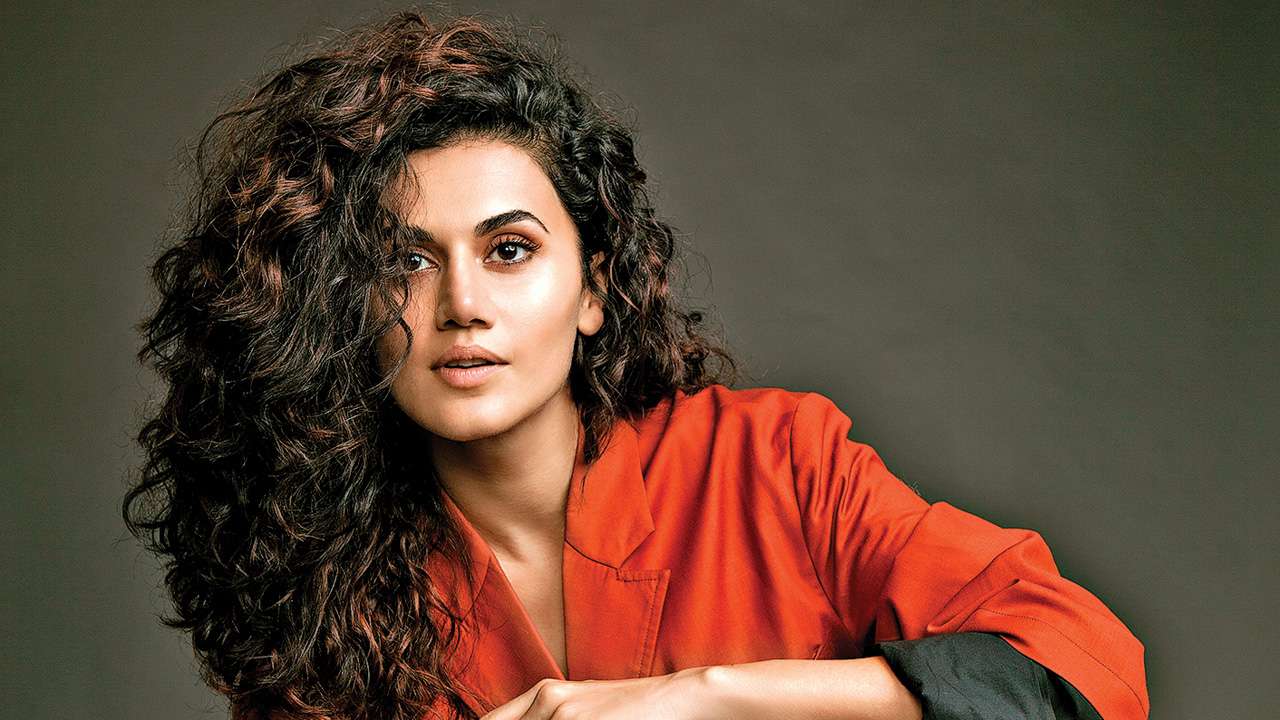
Nayandeep Rakshit (DNA; April 15, 2019)
In her six-year-old Bollywood career, Taapsee Pannu has worked with a bevy of filmmakers on more than one occasion. After delivering hits like Pink (2016) and Sujoy Ghosh’s Badla, which released last month, she is being considered as one of the most bankable heroines in B-Town. She feels that ‘the audience’s perception is changing now’. She reasons, “Earlier, actresses were easily classified as commercial or off-beat heroines. However today, it takes a while to tag someone. And that’s what I had always wanted for myself. I can’t be a part of a film that I’m not an audience to. I take up movies only if I feel I want to spend my money and time on them. Which is why I took this middle path. For me, entertainment is about holding your audience for two hours. Slowly, with success and effort, people have started noticing it.”
Today, Taapsee has filmmakers like Anurag Kashyap, David Dhawan, Shoojit Sircar, Anubhav Sinha and Neeraj Pandey, who are willing to collaborate with her again.
She laughs and adds, “That is the biggest validation for any actor. It means that my parent-teacher meeting has turned out well. Hopefully, my directors also feel that their student is good. Hence, it’s worth upgrading me to the next standard.” She adds, “I want to be an actor of repeat value. I’m keen to work with my directors again and again because I had an amazing time doing films with them. My social circle in the industry comprises the people who I’ve worked with. So, I share a great bond with my directors and co-actors. This industry works only on relationships — there are a lot of actors who might be really good, but the ties you form give you a slight edge because of the comfort level you share with each other.”
David Dhawan, who introduced Taapsee with Chashme Baddoor (2013), repeated her in his big-budget comic caper Judwaa 2 (2017). Then, Shoojit Sircar, who produced Running Shaadi (2017), gave her Pink, which not only got her noticed but also put her in the big league. The 31-year-old impressed Neeraj Pandey with her short stint in Baby (2015) and the filmmaker decided to produce an entire spin-off (Naam Shabana, 2017) on her character from the espionage spy thriller.
While Anurag directed Taapsee in his last film Manmarziyaan (2018), he’s producing her next movie Saand Ki Aankh, and has also signed her for another supernatural thriller. Anubhav Sinha and the actress did Mulk last year and are now teaming up for yet another social drama.
Taapsee says, “The filmmakers, who are repeating me in their projects, are extremely credible names. I must have done something good for them to come to me again. I feel comfortable with them. David sir is my local guardian here because he calls me every few weeks to check on me and see if I’m fine. Anurag is like a buddy and I can discuss anything with him. With these people, I can sit and have conversations, which doesn’t have to be about films.”
The Badla actress is happy that her bonds with these directors have got her a camp of her own. “This is the only way I can build my career in a structural manner. I have to prove that I am a professional worth repeating. I am happy all these big filmmakers have shown faith in me and I hope to live up to their expectations,” she signs off.

DIRECTORS SPEAK
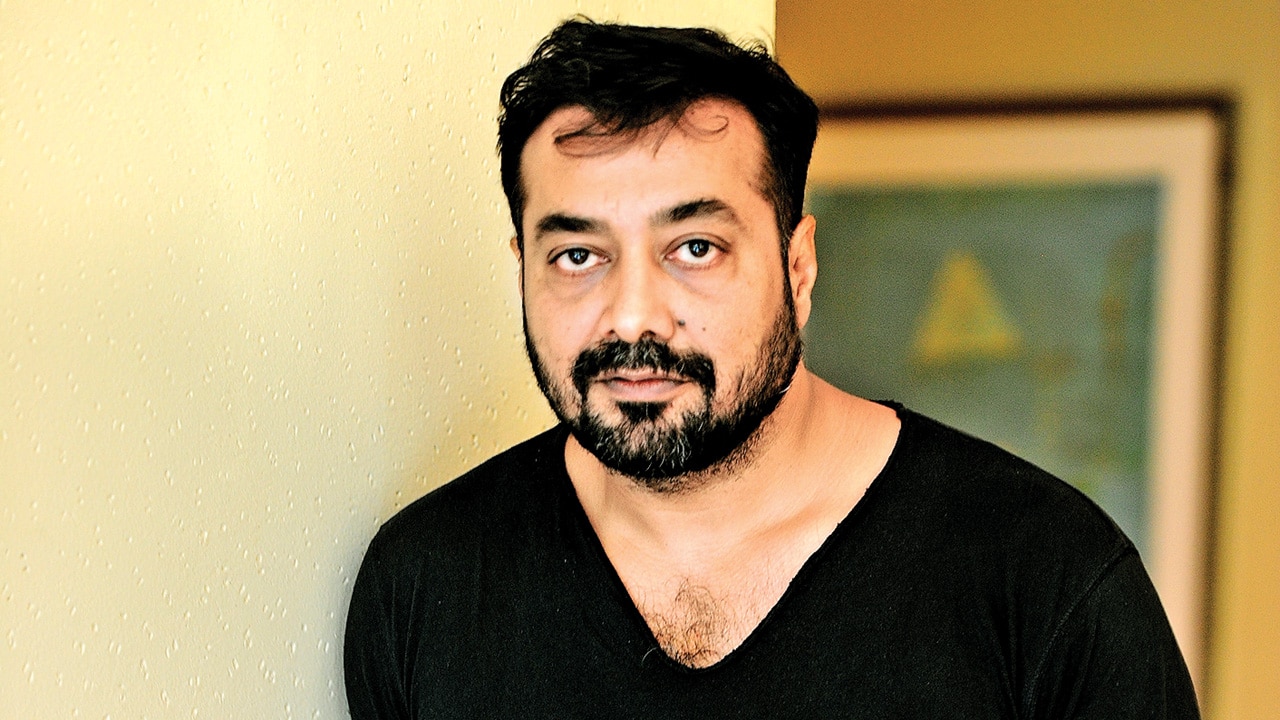
Anurag Kashyap: ‘Taapsee makes informed choices’
“Taapsee is not only a good actor but she also makes informed choices. She has a lot of integrity and is a courageous person. She fights for what she believes in and speaks the truth, no matter how bitter it is.”
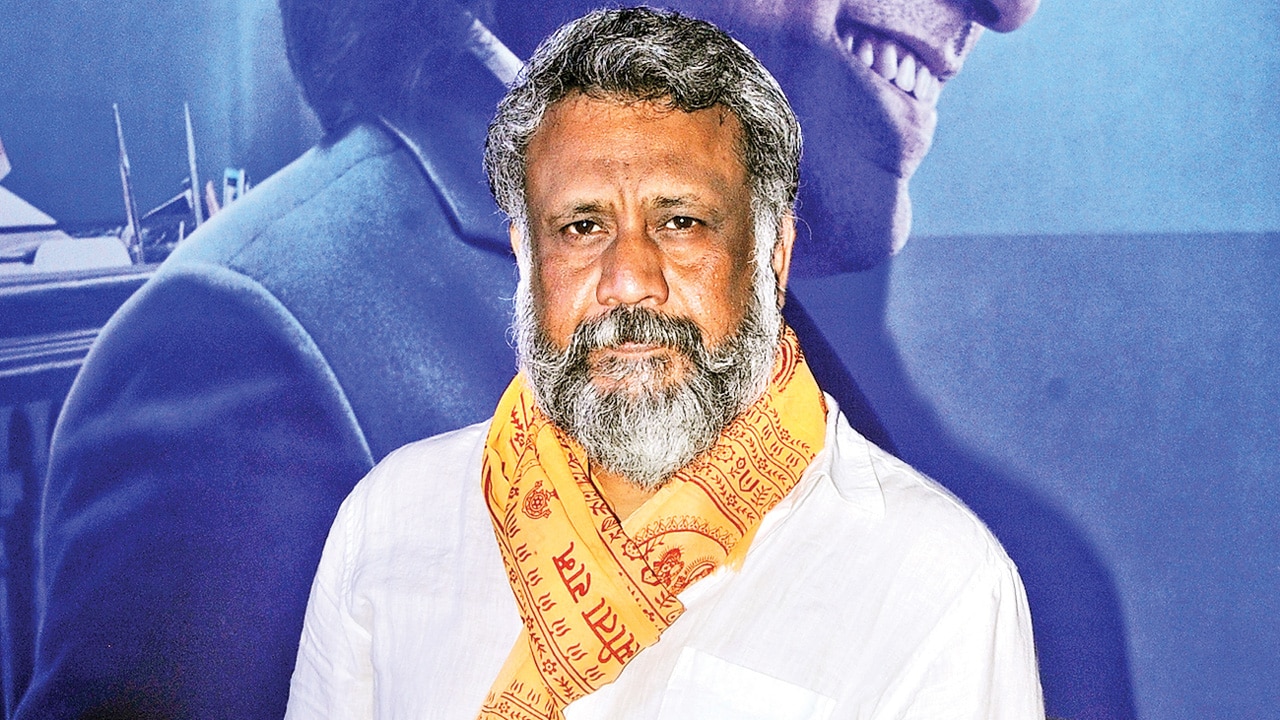
Anubhav Sinha: ‘She is an addictive actor’
Some actors are purely addictive. Taapsee is one such artiste. An eclectic blend of talent, pursuit for excellence, story over character maturity, team spirit and a relentless desire to make it work makes her so unique. I see myself collaborating with her more frequently in the near future.
David Dhawan: ‘Taapsee is better than many other actresses’
Taapsee’s a good artiste and an amazing person. She’s very humane and an easy person to work with. The fact that she is so committed and comes from a middle-class background keeps her grounded as she doesn’t have any airs about herself. I’m itching to work with her again and want to do a social drama with her.”

Shoojit Sircar: ‘Her choices are commendable’
Taapsee was first introduced to me by Running Shaadi director Amit Roy. I was not sure if she would be the right girl to cast. But then, he insisted I meet her and see her audition tape. As soon as I saw it, there were no doubts whatsoever. I was like, ‘Where is this girl from?’ We met and then I went to the shoot. When I saw her on sets, I had told my other producers that Taapsee will go places. Then, when I was working on Pink, she was our first choice for Meenal’s character. We straightaway called her and told her she’s doing it. She was fearless, even in front of Amitabh Bachchan. I enjoyed working with her on Pink. The way she owned up that character was extremely esponsible, as a human being. When an actor is like her, I love them more. She’s evolved and look at the kind of choices she’s making, which are absolutely commendable. I would love to cast her in anything that comes up.
Subscribe to:
Posts (Atom)