Showing posts with label Pallavi Joshi. Show all posts
Showing posts with label Pallavi Joshi. Show all posts
I have no intention of curbing art and expression while on the CBFC board-Pallavi Joshi
10:32 AM

Vishakha Pandit (HINDUSTAN TIMES; September 21, 2026)
The revised film-certification guidelines for the Central Board of Film Certification (CBFC), announced on September 16, have brought the debate around artistic freedom back into focus. As the newly constituted board begins its term, actor-filmmaker and CBFC board member Pallavi Joshi tells us she does not see her role as one that would curb artistic expression.
“I am personally against any kind of restrictions on art and expression,” she shares, adding, “I do not, as an artist, as a performer, as a filmmaker, like to be told that I shouldn’t be doing this and I shouldn’t be doing that. And I have no intention of doing that while on the board.”
Joshi, however, acknowledges that any new framework can reveal gaps once it is put into practice. “Anytime any new law is put in place, as you go forward, you realise that there are loopholes in it and it needs to be amended in certain ways,” she says.
“You see a lot of changes happening over the course of time until the law becomes comfortable for everyone. And I think we hope to achieve that with the given guidelines. We hope to come to a place where art and expression is not curbed. At least I would like to reach there,” she elaborates.
The 57-year-old also believes art should challenge audiences rather than simply entertain them. “I think art is a medium which should disturb people. It is not just song and dance. It has to be romance also. It has to be biopics also. It has to be thought-provoking also. It has to give you a jolt sometimes. Sometimes it has to slap you awake from your slumber,” she says.
Joshi reiterates that artistic expression can take multiple forms. “Art can be defined in many forms and there should not be any restriction on any kind of expression of art,” she says, while adding that it is still too early to comment on how the revised guidelines will work in practice.
The new CBFC guidelines retain the 1991 framework, with additions on drug-related warnings and age-based markers. The newly constituted board has not yet held its first meeting, Joshi says, adding that its members are yet to discuss how they will approach the framework.
Everything in India today is political, whether you like it or not-Pallavi Joshi
5:35 PM
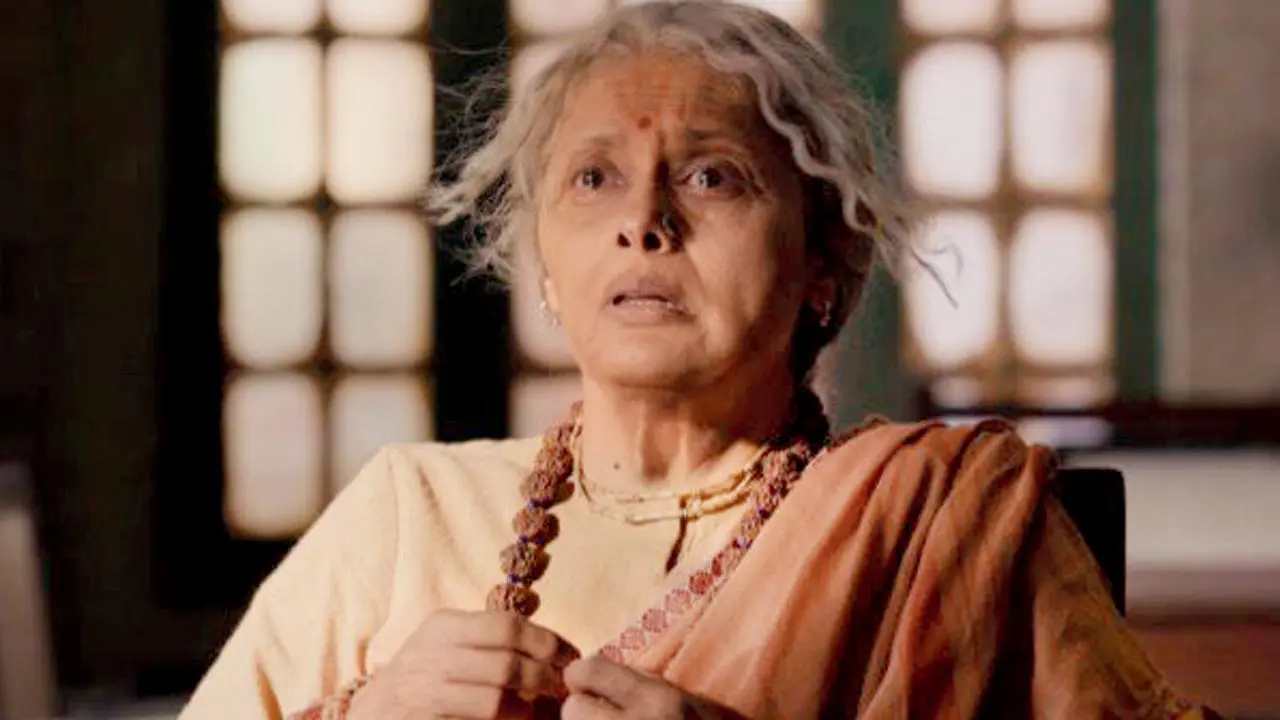
Chandrima Pal (BOMBAY TIMES; September 1, 2025)
Pallavi Joshi will appear in a pivotal role as Ma Bharati in Vivek Agnihotri’s upcoming film The Bengal Files, which releases in theatres on September 5. We caught up with the actress at her Mumbai apartment in the thick of a promotional blitz, dressed in a sari with bold typography about justice, courage and equality. Excerpts from the conversation:
What is it like to be part of the Files trilogy, that is always in the eye of a storm?
On a very artistic level, knowing what the content is, knowing what we have been trying to say through the Files films, it is an extremely proud moment for me right now to know that we have successfully completed the trilogy.
But I don’t understand this – nowhere in the world this kind of pushback happens when you try to show a slice of history. I understand that we live in very unique times, where the entire world is outraging. So maybe, we live in outrageous times and thanks to social media, everything is amplified.
What kind of response do you get, especially from the people whose stories you say you are trying to tell?
The one big takeaway from this trilogy is that they are feeling heard and acknowledged. For so long, they were invisible people whose pain never found representation. We all have a right to know what happened to our families. The past. After The Kashmir Files, I remember Kashmiri Pandits coming up to me, holding my hands and crying, saying, “Thank you for finally telling our truth.” Even now, Bengalis, especially those who have family histories tied to the Partition, are reaching out to us with similar emotions. That’s why we do this work.
How do you respond to the criticism that all your films are political?
I think everything in India today is political — whether you like it or not. The tragedy is that even history has become politicized. But what we are doing is storytelling. We’re taking documented events, survivor testimonies, and real experiences, and putting them into a cinematic form. If that is labelled political, then so be it. But our intention is very clear. We want to tell the truth of people who were silenced.
This National Award is an answer to those criticizing The Kashmir Files-Pallavi Joshi
8:59 AM
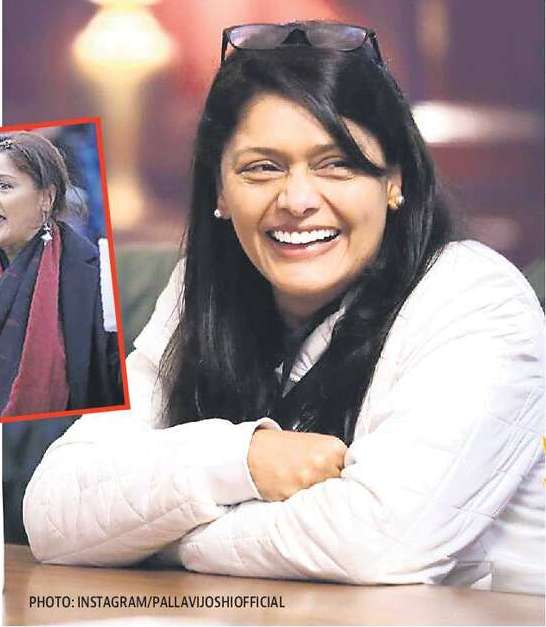
Navya Kharbanda (HINDUSTAN TIMES; August 26, 2023)
Pallavi Joshi was fast asleep when the 69th National Film Awards were being announced, naming her as Best Supporting Actress for The Kashmir Files (2022).
“I was asleep, it was 6 am here in Chicago. I started getting calls and that’s when I got to know,” she tells us, adding, “For the longest time, it didn’t sink in that I got the award. We are on a tour to promote our upcoming film The Vaccine War, so what better way to celebrate this.”
The film also won the Nargis Dutt Award for Best Feature Film on National Integration, calling for double the celebration. “Hearing that our film won in the category of national integration was the icing on the cake. What we wanted to say through the movie, I think, got underlined and recognized. So, it’s a great feeling. I am very thankful to the jury. I would like to dedicate this award to the entire persecuted community all over the world,” says Joshi.
The Kashmir Files was not free of controversy upon its release. But, despite the backlash, the film won several hearts. “Not many people disliked it; otherwise, the film wouldn’t have been a blockbuster. But yes, it (National Award) is an answer to those criticizing the film. It also brought great jubilation among the Kashmiri Pandit community. I am feeling great; let them (those opposing the film) feel whatever they have to feel now. I have done my job by spreading the message,” she signs off.
RRR wins 6 National Awards, Gangubai Kathiawadi 5; Allu Arjun wins Best Actor award
8:45 AM
THE TIMES OF INDIA (August 25, 2023)
New Delhi: ‘The Kashmir Files’, Vivek Agnihotri’s controversial film on the exodus of Kashmiri Pandits from the Valley, bagged the Nargis Dutt Award for best feature film on national integration at the 69th National Film Awards announced Thursday. Pallavi Joshi won best supporting actress for the film.
The National Awards for 2021, announced by filmmaker Ketan Mehta, declared Nikhil Mahajan best director for Marathi film ‘Godavari’.
The Indira Gandhi Award for best debut film went to ‘Meppadiyan’ in Malayalam while the prize for best film on social issues went to Assamese ‘Anunaad-the Resonance’. Telugu blockbuster ‘RRR’, which won six awards, saw M M Keeravani share the best music direction award with Devi Sri Prasad for ‘Pushpa’.
Asked about films releasing theatrically in 2022 winning the awards for 2021, Neerja Sekhar, I&B additional secretary, said, “As per regulations, the eligible films were certified and released from 1st January 2021 to December 31, 2021.”
--------------------------------------------------------
THE TIMES OF INDIA (August 25, 2023)
New Delhi: Hindi feature film ‘Rocketry: The Nambi Effect’ was adjudged best feature film in the National Awards 2021 announced on Thursday.
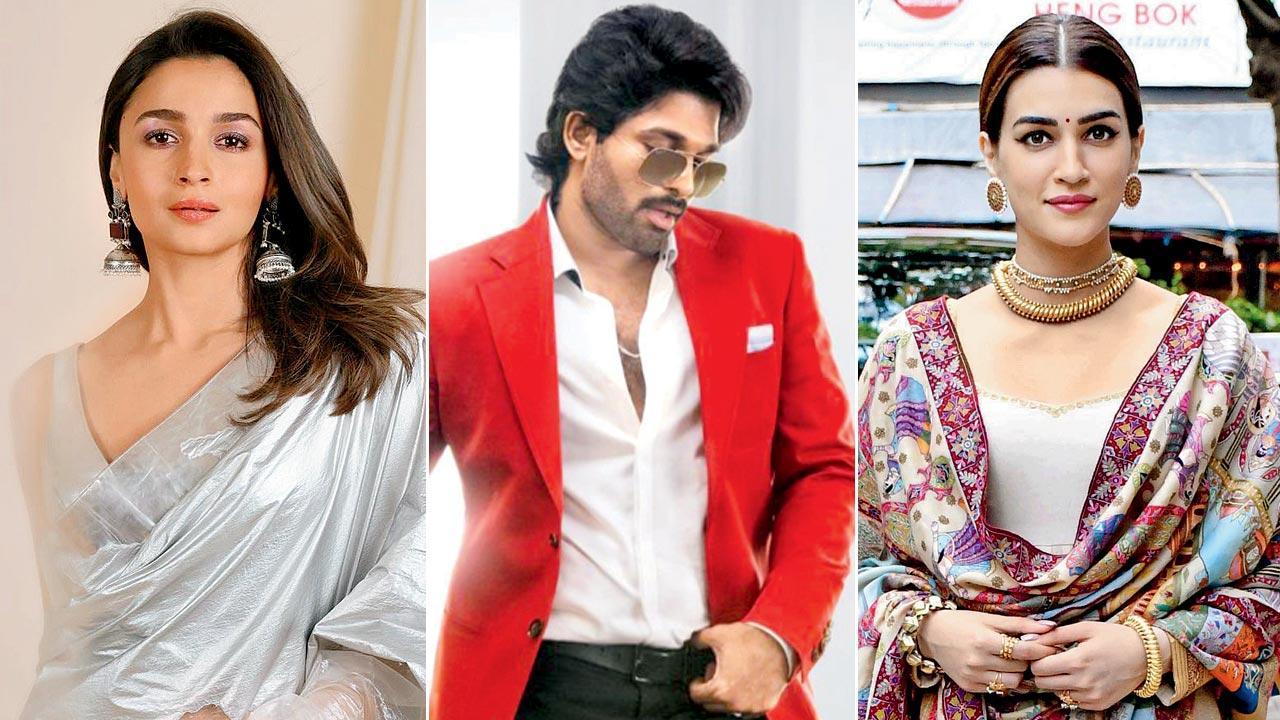
Allu Arjun, Alia Bhatt and Kriti Sanon won top acting honours for their roles in ‘Pushpa: The Rise (Part I)’, ‘Gangubai Kathiawadi’ and ‘Mimi’ respectively. Pankaj Tripathi won the award for best supporting actor for ‘Mimi’. Shoojit Sircar’s biopic ‘Sardar Udham’ won the award for best Hindi film as well as honours for best cinematography, audiography (re-recording final mixing), production design and costume design.
‘RRR’, directed by S S Rajamouli, won six awards including best popular film providing wholesome entertainment, best male playback singer to Kalabhairava, special effects, action director and choreography.
Sanjay Leela Bhansali’s biopic ‘Gangubai Kathiawadi’ was a close second with five awards. While Alia Bhatt won best actress, Bhansali won the award for best editing and screenplay writer (adapted), both jointly with Utkarshini Vashishtha.
Shreya Ghoshal won the best female playback award for her song ‘Mayava Chaayavaa’ for the film ‘Iravin Ninzhal’. The best original screenplay award, meanwhile, went to Malayalam film ‘Nayattu’ and its writer Shahi Kabir.
--------------------------------------------------------
MID-DAY (August 24, 2023)
Feature Film Awards:
Special mention: Kadaisi Vivasayi - Late Shri Nallandi, Jhilli - Aranya Gupta & Bithan Biswas, Home - Indrans, Anu: Eyes On The Sunshine - Jahanara Begum
Best Feature Film in each language:
Mishing: Boomba Rise
Assamese: Anur (Eyes On The Sunshine)
Bengali: Kalkokkho-House Of Time
Hindi: Sardar Udham
Gujarati: Chhello Show
Kannada: 777 Charlie
Maithili: Samanantar (The Parallel)
Marathi: Ekda Kay Zala
Malayalam: Home
Meiteilion: Eikhoigi Yum (Our Home)
Odia: Pratikshya (The Wait)
Tamil: Kadaisi Vivasayi (The Last Farmer)
Telugu: Uppena (Wave)
Technical Awards:
Best Action Direction: King Soloman for RRR (Telugu)
Best Choreography: Prem Rakshith for RRR
Best Special Effects: V Srinivas Mohan for RRR
Special Jury Awards: Shershaah director Vishnu Vardhan
Best Lyrics: Chandrabose for 'Konda Polam' song from Dham Dham Dham
Best Music Direction: Devi Sri Prasad for 'Pushpa' and M M Keeravani for 'RRR'
Best makeup artist: Preetisheel Singh D'Souza For 'Gangubai Kathiawadi'
Best Costume Award: Veera Kapur Ee for Sardar Udham
Best Production Designer: Dmitrii Malich & Mansi Dhruv Mehta for Sardar Udham
Best Editing: Sanjay Leela Bhansali for Gangubai Kathiawadi
Best Audiography: Chavittu, Jhilli and Sardar Udham
Best Screenplay: Shahi Kabir for Nayattu (original) and Sanjay Leela Bhansali for Gangubai Kathiawadi (Adapted)
Best Dialogue Writer: Utkarshini Vashishtha and Prakash Kapadia for Gangubai Kathiawadi
Best Cinematography: Avik Mukhopadhayay for Sardar Udham
Best Female Playback Singer: Shreya Ghoshal for Maayava Chaayavaa from Iravin Nizhal
Best Male Playback Singer: Kaala Bhairava for Komuram Bheemudo for RRR
Best Child Artist: Bhavin Rabari (Chelloo Show)
Best Supporting Actress: Pallavi Joshi for The Kashmir Files
Best Supporting Actor: Pankaj Tripathi for Mimi
Best Actress: Kriti Sanon for Mimi and Alia Bhatt for Gangubai Kathiawadi
Best Actor: Allu Arjun for Pushpa
Best Direction: Nikhil Mahajan for Godavari
Best Feature Film: Rocketry: The Nambi Effect
NON-FEATURE FILM CATEGORY:
Best Non-Feature Film: Ek Tha Gaon (Garhwali & Hindi)
Best Director: Bakual Matiyani for Smile Please (Hindi)
Best Film on Family Values: Chand Saanse (Hindi)
Best Cinematographer: Bittu Rawat for Pataal Tee (Bhotiya)
Best Investigative Film: Looking For Challan (English)
Best Educational Film: Sirpigalin Sipangal (Tamil)
Best Film on Social Issues: Mithu Di (English), Three Two One (Marathi & Hindi)
Best Environmental Films: Munnam Valavu (Malayalam)
Best Book on Cinema: Music by Laxmikant Pyarelal: The Incredibly Melodious Journey by Rajiv Vijayakar
Best Film Critic: Purushothama Charyulu
Best Film Critic (Special Mention): Subramanya Bandoor
People who say that The Kashmir Files divides communities should watch it first-Darshan Kumaar
4:20 PM

Rishabh Suri (HINDUSTAN TIMES; April 13, 2022)
Actor Darshan Kumaar is glad that his latest film, The Kashmir Files, has earned appreciation from the audience and that “it’s turned out to be a people’s film”. Said to be a true account of the genocide of Kashmiri Pandits in 1990, it invited naysayers, too, who alleged that the film was dividing communities.
But the 35-year-old disagrees: “The film is brutally honest, based on a true event. It is not against any caste, party or community. It shows what happens when there is no humanity. People who say that our film divides communities should watch it first and then decide.”
Kumaar played a character called Krishna Pandit in the movie and he calls it his most challenging part till date, “mentally, emotionally as well as physically”.
The Mary Kom (2014), NH10 (2015) and The Family Man actor explains, “I believe acting is the most difficult job in the world. It requires strength and hard work. The casting director called me and said that Pallavi Joshi ji (producer-actor) and Vivek Agnihotri ji (director-producer) wanted to meet me. They showed me the heart-wrenching stories of 700 families and I couldn’t speak a word after watching those videos. Then they gave me the script and said, ‘We want to cast you as the lead’,” he recalls.
People don't cry when politically motivated-Vivek Agnihotri
8:33 AM
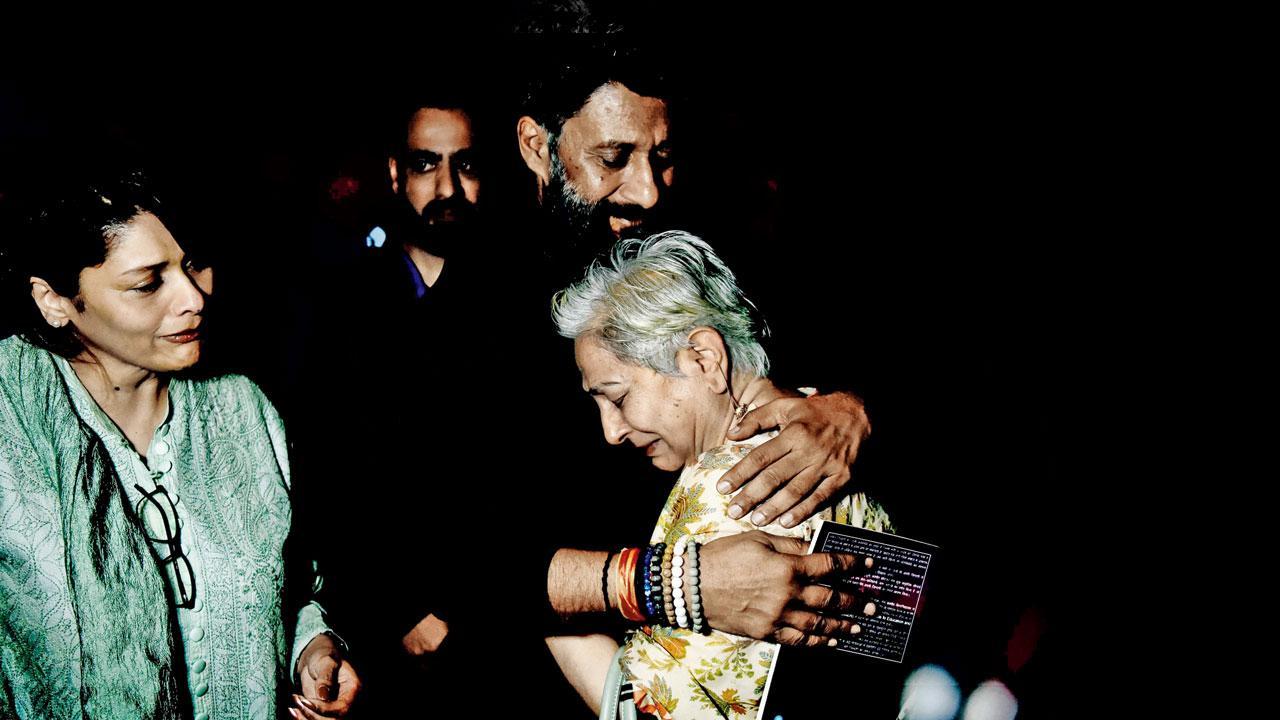
The most controversial man of the week, director Vivek Agnihotri says outpouring of emotions to his film is proof that this side to Kashmir’s insurgency had to be bared
Aastha Atray Banan (MID-DAY; March 20, 2022)
It's post noon on a Wednesday, when we manage to connect with director Vivek Ranjan Agnihotri. By then, it has been five days since the release of his controversial film, The Kashmir Files, based on the exodus of Kashmiri Hindus from the Valley following violent processions by Kashmiri Muslims who wanted an Islamist state. On day eight, its box office collections cross Rs. 116 crore. But, Agnihotri who describes himself as a “free thinker” on Twitter, an account which he deactivated briefly last month after he claimed to have received threatening messages to stop the release of this film, is drawing mixed reactions.
The emotions are raw, like in the videos of Kashmiri Pandit viewers crying inside theatres, as they sink in the torment that Anupam Kher’s Pushkar Nath experiences in the film. In a rare moment for the leader of a country, Prime Minister Narendra Modi applauded The Kashmir Files, and chose to meet the director and his actor wife, Pallavi Joshi, who plays JNU Professor Radhika Menon in the film. “His endorsement has come as a surprise. When the highest office has put faith in your work, it makes you even more responsible,” Joshi later told this writer.
But certain quarters have called out the film for being “exploitative”, “displaying half-truths” and being “anti-Muslim”. Agnihotri is unruffled by the hate. “I see only one opinion. There is no other view. Everybody seeing the film is crying... it was the biggest tragedy. These are the only reactions I have seen. There is no Left or Right wing, there is only the ‘India wing’, the humanity wing... terrorism has no side. People who see other sides are either naive, vicious or political,” Agnihotri says emphatically over a telephonic call.
He is speaking to us from the New Delhi airport, where our interview is interrupted once too many by approaching travellers, who we overhear thanking him for making the film. Two days after this interview, this in-person expression of fandom would have been restrained with the director being granted Y category security by the Ministry of Home Affairs (MHA).
For most part, Bollywood has been silent, with only a handful showing their support if any. Agnihotri doesn’t consider himself part of this tribe, he clarifies.
“When we [Pallavi and I] decided to quit Bollywood, and become independent filmmakers, we didn’t care about reactions [from people]. We want to make movies and tell stories that everyone else is scared to tell.”
Agnihotri says the film is important and had to be made. “What we know of Kashmir is through the media and the political lens. Everybody has spoken about the Kashmiri Pandits and their genocide, but nobody has spoken to them,” he says.
With very little material available to fall back on for research due to what Agnihotri claims is insufficient documentation, he decided he’d start by tracing the first-generation survivors. “Just like the Holocaust, where the testimonials of the victims were recorded, we decided to interview the survivors, who were directly impacted [by the events]—whose parents and children were killed, and houses burnt. We hunted them down all over the world—went to their homes, ate with them, spent time with them, and once they were comfortable, we recorded long-format video testimonials. We found the most common stories between them, and corroborated facts using available books, clippings, [conversations with] historians and documents, which are very few,” he adds. What, he says, he arrived at are facts “that can’t be disputed”. “Even the terrorists will admit this happened... we based the movie on that.”
The director feels that the first step to justice is to acknowledge what happened. “The thing about genocide is that you have to admit there has been a genocide. For 32 years, nobody has done that. Now that we have spoken to them [survivors], the process of healing has begun. People have told me that they didn’t speak about it [the event] out of fear, and now it’s out there. We are healing broken hearts.”
Even as several states, especially those ruled by the BJP, have made the film tax free, a political slugfest has erupted. Some have panned the BJP for looking at the Kashmir problem as a Hindu-Muslim one, rather than an issue of territory. But Agnihotri doesn’t hesitate to pin the blame. “Indira Gandhi was a Kashmiri Pandit. I can share a letter where it is clear what she thought. Everyone knows the truth. The slogan at the time was, ‘Ralive, tsaliv ya galive’, which means ‘either convert to Islam, run or die’. Is this a Hindi Muslim slogan, or one that addresses territory? Muslims are the majority. [But] Kashmir was originally a Hindu civilisation. The dispute was created by the British,” Agnihotri argues.
When this writer points out how there has been criticism over the film vilifying the entire Muslim community, he interjects, “It’s a wrong question. You are asking this, because your brain is wired in a certain way... Could you have written an article about the Nirbhaya [Delhi gang rape] case without vilifying the rapists? Terrorists must be vilified. In the case of Kashmir, the terrorists have been Muslim.”
Does that justify videos from inside Indian theatres roaring with “anti-Muslim” chants, surfacing on social media? “I haven’t seen them. But, I can’t expect people who have been affected, to control their emotions. They have the right to say it out loud. People don’t cry when they are politically motivated. They cry when they are emotional. After Schindler's List released, Jews came out on the streets. When you break open the lie, pent-up emotions will surface. And it’s important for society to heal.”
Agnihotri thinks to ask an audience to react to the film rationally, intelligently, is an elitist call. “It’s irrational. We make movies to evoke emotions, to portray the reality. People have the freedom to react how they want. I don’t support this snobbery.”
We remind him that some quarters have expressed concern over possible violence. “You are assuming that will happen. It’s the state that needs to maintain law and order. My job is to tell the truth, and if the truth is evoking a response, I am no one to control it. This question is not for me, but someone else.”
Kapil Sharma and IMDB ratings
Agnihotri had claimed in a tweet that his film was not promoted on the Kapil Sharma show because it didn’t have big stars, its producers were allegedly told. Sharma has denied the allegation on social media. Anupam Kher later clarified that he was called, but turned down the offer because the mood of the film didn’t befit a sketch comedy. “Kapil must have invited Anupam two to three months ago, and that was when the third wave was on, and they had no other celebrities available. I know what happened,” Agnihotri tells mid-day.
Online film and television database, IMDB said it had changed its rating method after noticing “unusual voting” on The Kashmir Files—the film now has an 8.3 rating. Agnihotri says, “I don’t understand algorithms. I have never decided to watch a movie after checking its IMDB rating. I read that people went and rated it 1,” adding, “They are vandalising it [the film]—some terrorists are with guns, some [dabble] with ratings.”
What you see in The Kashmir Files is what has happened-Pallavi Joshi
8:01 AM
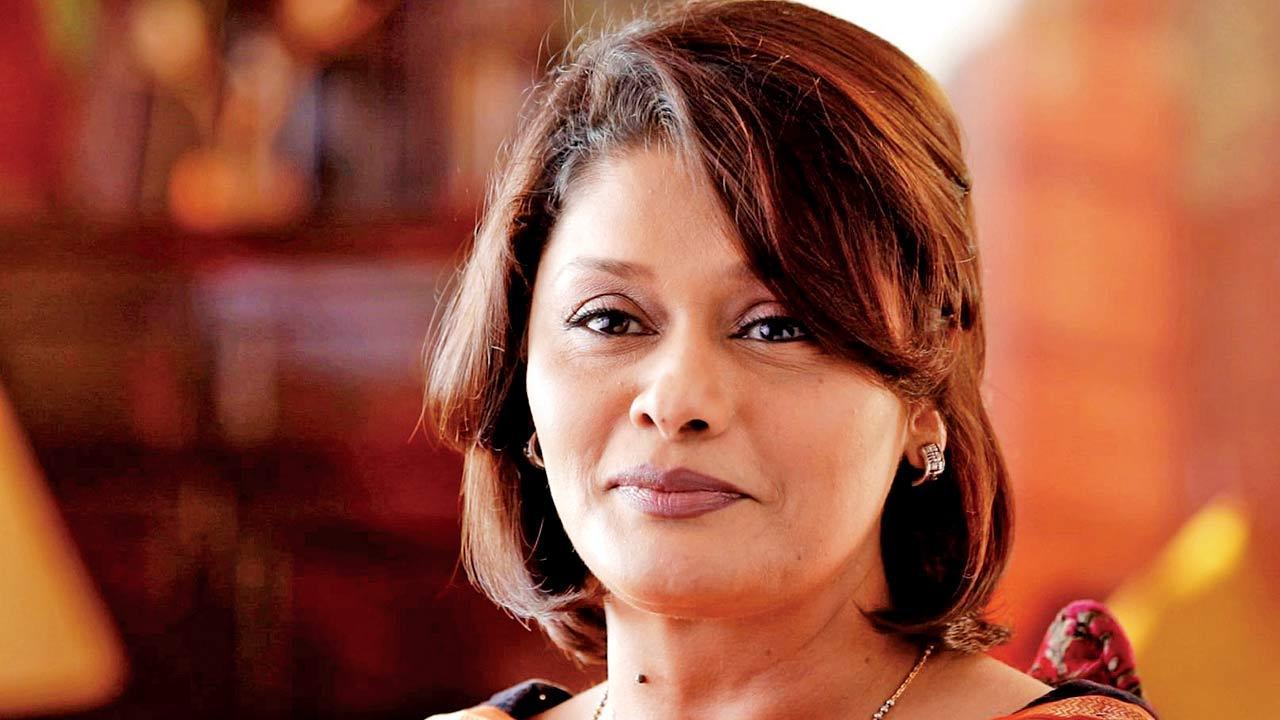
Hosting special screenings of The Kashmir Files in the US, National Award winner Pallavi says film based on extensive interviews of Kashmiri Pandits
Uma Ramasubramanian (MID-DAY; December 15, 2021)
Ahead of the release of The Kashmir Files in January 2022, Pallavi Joshi and director-husband Vivek Agnihotri are touring the USA, hosting special screenings of the film. The actor, who recently won the National Award for Best Supporting Actor for her performance in The Tashkent Files, claims that the upcoming movie has received a positive response at the screenings.
“There are two distinct responses to the film — some are feeling guilty that [the exodus] happened 30 years ago and they didn’t do anything about it. Another section is feeling betrayed that the government and the media didn’t let this story come out,” says Joshi.
With The Kashmir Files that features Mithun Chakraborty and Anupam Kher, the director has traced the exodus of the Kashmiri Pandits in 1990. While there may be polarising accounts of the circumstances of their departure, Joshi says their film has been designed after exhaustive video interviews of the first-generation victims.
“In 2019, we visited the victims’ families across the US, UK, Germany, Singapore and New Zealand. They shared their stories and incidents. Those incidents were then corroborated. What you see on the screen is what has happened,” she asserts.
The film was shot in Kashmir, Dehradun and Mussoorie.
Pallavi Joshi to host an indoor live music concert to collect funds for Covid-19 relief
8:00 AM
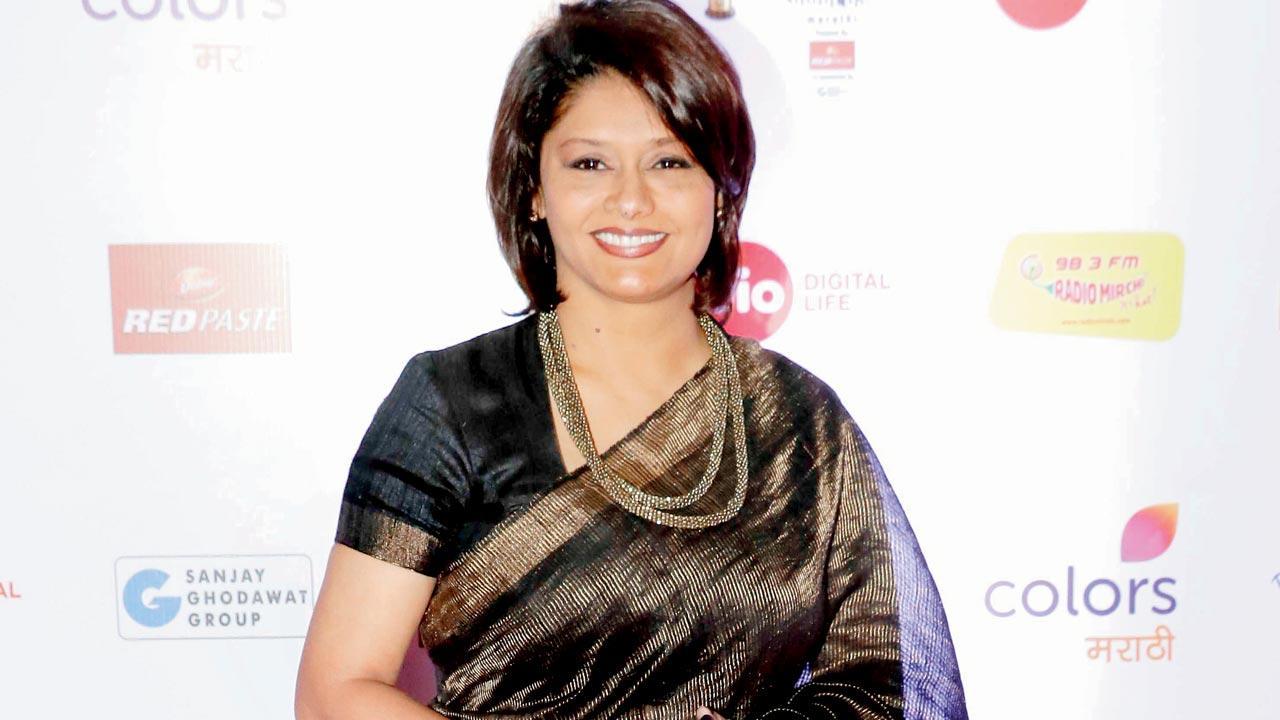
Mohar Basu (MID-DAY; May 29, 2021)
The entertainment industry has gathered again to do their bit for Coronavirus relief. While several have donated their time, money and social media space to the cause, Pallavi Joshi is set to host an indoor live music concert to collect funds. “Whenever the country has faced trials, we, as a society, have stepped up to help each other,” says the actor, who will be hosting singers Sonu Nigam, Talat Aziz, Pankaj Udhas, Hariharan, Prasoon Joshi, Alka Yagnik, Papon, Daler Mehandi, Babul Supriyo, among others for the music event called Ek Saath-India Will Rise Again, on June 5.
In the face of tragedy, Joshi asserts that the film industry has always come forward to help people. “When I was a kid, I remember actors — Sunil Dutt, Balraj Sahni, Amitabh Bachchan, Dharmendra, Shashi Kapoor — everyone had take rallies on streets to collect money to help drought-affected villages. The second wave has been devastating and we want to help orphans, daily-wage workers, women widowed, migrants, refugees and everyone who has lost their means to livelihood [during the pandemic].”
Now no one will question my ability-Vivek Agnihotri
7:57 AM

Juhi Chakraborty (HINDUSTAN TIMES; March 25, 2021)
Winning the National Film Award for Dialogue writing for his film The Tashkent Files (2019) is a victorious moment for filmmaker Vivek Ranjan Agnihotri for many reasons.
“It feels great. A National Film Award is something else altogether. I would be lying if I say I am not elated,” he says.
He also notes how this will now bring more credibility and respect for him as many had criticised the film and called it too verbose. “At least nobody can now challenge me about my script writing and dialogue writing. The Tashkent Files was stuck for a long time as everybody said this film will not work because it has no screenplay, no climax, no proper ending and it has too many dialogues. People were criticizing the screenplay and dialogues so much, but now look it got an award for that very aspect. Now people will not question me about my capabilities or my work,” shares the 47-year-old.
It is a double treat for Agnihotri as his wife, Pallavi Joshi, won Best Supporting Actress for the thriller on the death of former Indian Prime Minister Lal Bahadur Shastri.
“We both do very little work. Pallavi did this film after a gap of six years. She is very choosy. Even I make films araam se. This film took about four years to make. We put in so many years, so much money, emotions and passion has gone into it. When you get awards like this it gives you the courage and patience to make another film,” the director says.
On how he celebrated the win at the 67th National Awards, Agnihotri shares he went straight back to work. “People celebrated in office but I went inside the edit room and kept editing my next film, The Kashmir Files. I realised it has to be far better than The Tashkent Files. That responsibility is also on me now,” he adds.
67th National Award winners open up; explain why the trophy is 'a big deal'
8:46 AM
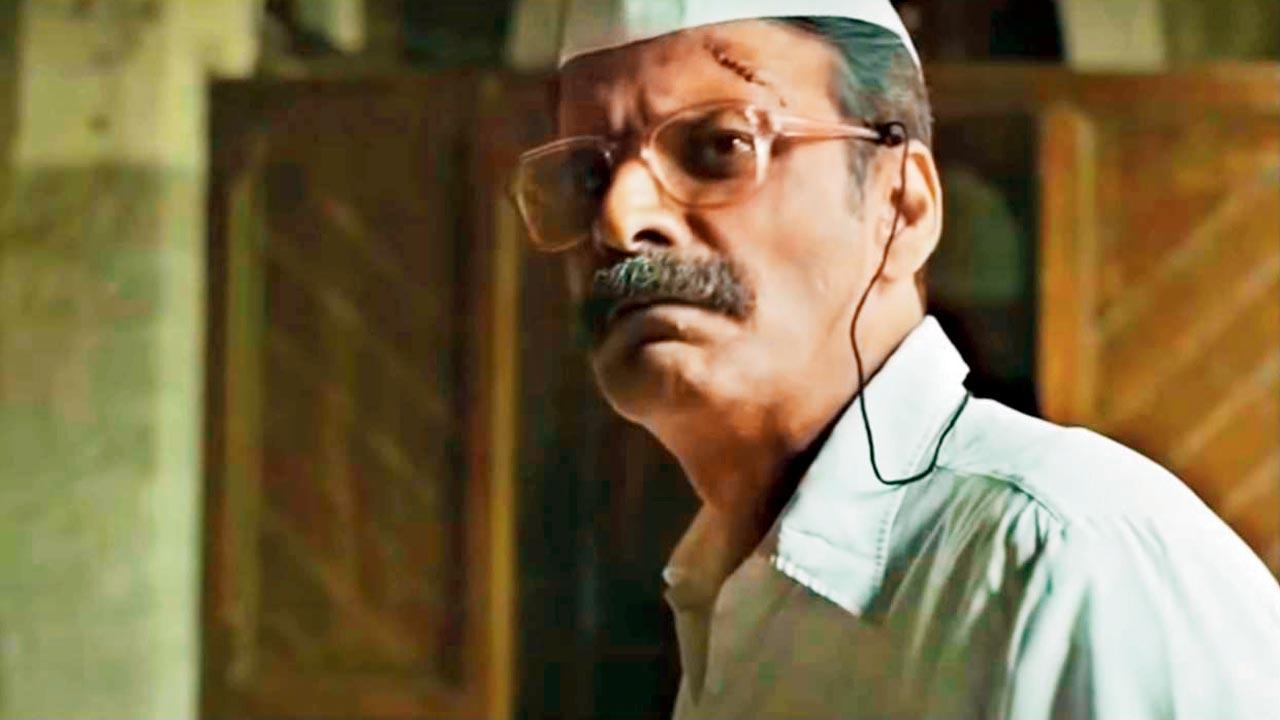
As National Award announcement evokes mixed reactions, winners tell mid-day why the title is prestigious
Mohar Basu, Uma Ramasubramanian (MID-DAY; March 23, 2021)
Kangana Ranaut, Manoj Bajpayee and Dhanush (Asuran) took home the big titles in the acting categories at the 67th National Film Awards, which were announced yesterday. Priyadarshan’s Malayalam film, Marakkar - The Lion Of Arabian Sea, won the Best Feature Film title, while Sanjay Puran Singh Chauhan was named Best Director for Bahattar Hoorain. Late actor Sushant Singh Rajput’s film, Chhichhore, directed by Nitesh Tiwari, took home the Best Hindi Film award. Producer Sajid Nadiadwala says, “I dedicate this prestigious award to Sushant. We can’t get over his loss, but I pray that this award gives a little bit of happiness to his family and fans, including me. And I am tremendously grateful to Nitesh for giving us this special film.”
Bajpayee, who won for Bhonsle, tells mid-day, “I thank my director, Devashish Makhija, [and producers] Sandeep Kapoor and Piyush Singh. I am grateful to everyone who believed in this film and supported it. ”
Best Supporting Actress Pallavi Joshi (The Tashkent Files) says she “wasn’t expecting” to win. “I knew that because of the pandemic, award functions weren’t being held. I assumed that they would either cancel it, or club projects across two years. When I heard Vivek’s [Agnihotri, husband and director] name, I was elated. This is his first National Award. It was a well-researched and well-written film. It took a moment for me to register my win because I had forgotten that I had acted in it. I was reminded of my first National Award win in 1994. Today is no different. This award is a big deal because it carries opinions of the finest talents. The icing on the cake is that the President gives you the award.”
The film picked up the honour for Best Dialogue. Agnihotri, who has also penned it, adds, “I was told this film has no screenplay and was too verbose. It was sabotaged after being stuck for a long time. We contributed in raising important questions about the right to truth in a democracy. When it released in 150 screens, it ran for 125 days, because the audience came to watch it. My view has been vindicated. I feel empowered to write good stuff. I dedicate this to Lal Bahadur Shastri.”
In a joint statement, the team of Marathi film Anandi Gopal, which won Best Production Design and Best Film On Social Issues, said, “We are humbled, honoured, and ecstatic. This was a labour of love; our first film and first National Award. The win has been a dream come true for all of us. We can only attribute the win to the passionate work of each and every one in the team.”
Other winners include Vijay Sethupathi, who took home the Best Supporting Actor award for Super Deluxe.
Should TV actors get royalty for the re-runs? Industry reacts
8:30 AM

Prashant Singh (HINDUSTAN TIMES; May 2, 2020)

 Makers, on their part, feel the subject [of royalty] can be discussed but the “timing is probably not right”. “What we are going through is a ‘difficult, adjustment time’ wherein there’s a question of survival. And the same [business] model has been there from the start. Re-runs of shows have been happening forever. It’s all a part of a broadcasters’ long-term investment plan. However, talks about royalty are a healthy sign. But maybe, the timing of monetary benefits talk isn’t right,” says TV producer Sumeet Mittal.
 Chikhlia has reportedly said that “money doesn’t harm anybody”, and how Ramayan actors “were [originally] paid peanuts”. While Joshi apparently feels “it should have been introduced long back”, Vashisht says the “industry is not thoughtful in terms of royalties”. TV director-producer Rajan Shahi adds, “If an actor has pointed anything, it must be respected, and discussed with the industry as a whole. It can’t be decided upon in isolation since there are various stakeholders involved.”
Experts feel everything also boils down to the contracts. “Vis-à-vis royalties, it’s all about a contract’s finer details,” says trade analyst Taran Adarsh. Shahi concurs and says, “Yes it all depends on the contract. But don’t forget that makers also take a lot of risk because only two out of 10 shows do well. But there can be a democratic discussion on it.”
Antakshari hosts team up for a virtual revival of the much-loved '90s musical game show
8:07 AM

Brush up on those long-forgotten earworms as Antakshari hosts team up for a virtual revival of the much-loved '90s musical game show
Mohar Basu (MID-DAY; April 24, 2020)
Ask any '90s kid and s/he will fondly tell you how Friday evenings were synonymous with Antakshari, the popular game show that aired on Zee TV. It's time to take a walk down memory lane as the much-loved show's hosts — Pallavi Joshi, Renuka Shahane, Durga Jasraj and Rajeshwari Sachdev — have joined forces to revive its magic in the virtual world.
As part of The Future of Life Festival on April 30, the four anchors will come together to discuss how creator Gajendra Singh brought a favourite Indian pastime to the small screen, and recount anecdotes about sharing the stage with longtime host Annu Kapoor. Of course, a chat about the game show is incomplete without a round of antakshari — the foursome will belt out their favourite numbers as they play the game online.
Joshi, who was associated with the series for four years, is thrilled about bringing back '90s nostalgia. "For Renuka, Durga, Rajeshwari and me, acting was the primary profession. Yet, it was music and our wacky sense of humour that brought us together and made us lifelong friends. I am eagerly looking forward to this session with my friends," she enthuses.

(From left) Joshi, Shahane, Sachdeva and Jasraj. Pic/Facebook
90s iconic show Antakshari to make a comeback on TV?
7:55 AM

Rachana Dubey (MUMBAI MIRROR; April 24, 2018)
Back in the 1990s, appointment viewing on a Hindi TV channel meant tuning into Antakshari every Friday evening. Starting from 1993, the show had 15 seasons and it has been hosted by many popular actors, including Annu Kapoor, Pallavi Joshi, Durga Jasraj, Rajeshwari Sachdev, Renuka Shahane and Shefali Chhaya.
And now, BT has it that the show, which is producer Gajendra Singh’s brainchild, is gearing up for a comeback, but with a modern facelift. The idea is to involve every viewer across the country with the help of digital technology.
At this point, there is no clarity on which channel will air the show. However, it is expected to go on floors in the next two months. Buzz is that the show will have younger faces as hosts, who can connect better with the youth. There are talks that actor-comedian Sunil Grover and TV actress Hina Khan, among others, have been approached to anchor it, but there has been no confirmation of the same.
The original show had three teams — Deewane, Parwane and Mastane — and rounds like Prelude, Dhun and Remix, which tested the contestants’ knowledge of Hindi film music. For the new version of Antakshari, nostalgia will be the underlying theme, but the makers will throw in other rounds that will appeal to the current generation.
BT reached out to Gajendra Singh, but there was no response till we went to press.
Vivek Agnihotri's next is a political gangster thriller; Pallavi Joshi bags one of the lead roles
9:21 AM

MUMBAI MIRROR (January 3, 2017)
After his May 2016-release, the socio-political film, Buddha In A Traffic Jam, Vivek Agnihotri has just finished scripting his next, a political gangster thriller. The film will roll mid 2017. Vivek’s wife, actress-singer Pallavi Joshi will play one of the leads.
Pallavi who bagged the Special Jury Award at the 41st National Awards for her role in the 1993-drama Woh Chokri, had also acted in Buddha In A Traffic Jam, playing the wife of Anupam Kher’s character, Professor Jamshed Batki, on her husband’s insistence. She had also crooned a ghazal, “Chand Roz”, penned by the late Faiz Ahmad Faiz, which was used as the film’s background score.
American courtroom drama 12 Angry Men gears up for Hindi adaptation
7:42 AM

MUMBAI MIRROR (June 17, 2016)
Vivek Agnihotri is planning a film on the judicial system on the lines of the 1957 American drama 12 Angry Men adapted from a teleplay by the same name. Written and co-produced by Reginald Rose and directed by Sidney Lumet, the film revolves around a trial and 12 jurors who deliberate the guilt or acquittal of a defendant on the basis of reasonable doubt. In 1986, Basu Chatterjee produced and directed a Hindi version, Ek Ruka Hua Faisla. In 1997, a TV remake with the same title was released by Metro-Goldwyn-Mayer.
"After Junooniyat, my next film will be on the judiciary system. It is an adaptation of 12 Angry Men," revealed Vivek, adding that the film will raise the question: What's the point of judiciary system in 2016 when it's so slow? "The script is ready and I will start shooting this year and release it next year."
This will be the first production of Telling Tales, formed by Vivek, wife Pallavi Joshi and an associate. He believes that by the time his film releases, there'll be no Censor Board. "The government is planning to abolish censorship and they will only have certification," he pointed out.
12 Angry Men is the highest rated courtroom drama on Rotten Tomatoes's Top 100 Movies of All Times.
Not everybody is privileged-Pallavi Joshi
7:24 AM

Pallavi Joshi talks about poor working conditions in the television industry, women’s safety concerns and her small screen comeback
Letty Mariam Abraham (MID-DAY; March 8, 2016)
You returned to TV after a decade. How does that feel?
It felt nice and some part of me had always missed it. When I came back, I realised what I had been missing. I didn’t do television because they have run-of-the-mill shows that continually churn out matter without second thoughts. But Meri Awaaz Hi Pehchaan Hai is different. After doing weekly shows, I found a story which had a beginning and an end. It has 130-odd episodes. Otherwise, soaps just go on and on depending on what the audience likes, what the channel demands and how TRPs go. I have produced two shows, so I know.
You are paired opposite a younger actor, Bhanu Uday. And you will be playing a mom to Amrita Rao and Aditi Vasudev. How do you make up for the age difference?
When I signed this serial, there was another actor opposite me who was my age. But I was shocked to learn that Bhanu would be playing my husband because I would look like his mother on screen. They made me walk on a tight rope for this one. On one hand I have to look 30-something and on the other, I have to look like Deepti Naval and Zarina Wahab’s mother. In the late 70s, I had played a young Zarinaji in Khoon Ki Takkar, so I was skeptical. When I heard that I had to play her mother, I want to leave the serial right away. Whenever little Ketki does something wrong, I slap her on the face lightly. But I have to repeat the same thing with Zarinaji. I am a bundles of nerves thinking about it.
Bhanu said you thoroughly supported him even when he gave a bad performance...
Bhanu is hardworking and passionate as an actor. I think his time at the National School of Drama worked wonders for him. Not all NSD passouts are talented. But he can switch between real life and stage with ease.
As an executive member of Cine and Television Artists’ Association (CINTAA), is there anything that you dislike about the way the industry functions?
Working conditions in the industry are poor. We have the law of land here where all these foreign companies (read: channels) come where they find cheap labour and there are no work restrictions. Sometimes, you end up putting in a few extra hours, which is normal provided it happens once in a blue moon. Otherwise, there is no family life for anyone, especially if you shoot in places like Naigaon and Mira Road, and it gets late for the actors by the time they reach home.
What do you think about women’s safety in the TV industry?
There is an issue regarding their safety but since there is no law, the producer is not obligated to give them conveyance. We are raising issues with the federation and I hope we come up with safety measures in near future. We got a complaint from a female artiste who found a hidden mobile phone recording her changing clothes inside a vanity van. I am still in a position where I have my own staff to make sure that my van is locked, but not everybody is privileged. I believe CINTAA is thinking of taking strong action against offenders. But the problem is that there are annual elections and members keep changing.
How is the payment made uniform in the industry?
CINTAA has passed a law, making it binding on producers to give daily conveyance allowance to actors being paid less than Rs 5000 a day. There are different grades of actors and their rates change as per their job. Sometimes, junior actors make more than character actors. Also, there are actors who have taken a junior artiste association card despite not being extras. It is a sad state of affairs.
What about producers who default on payment?
People not paying up, sometimes for over a year, is fashion. We often get such cases.
Why don’t they privatise the government-Adoor Gopalakrishnan
8:00 AM

Former FTII chairman Adoor Gopalakrishnan questions I& B minister’s veiled ‘warning’ about passing on the institute’s administration to the film industry
Gaurav Dubey (MID-DAY; July 7, 2015)
The ongoing students’ protest at the Film and Television Institute of India (FTII) has gathered steam with National Award-winning actress Pallavi Joshi quitting as member of the FTII Society. The agitation, which entered its 25th day on Monday, was launched to seek the removal of TV actor and BJP member Gajendra Chauhan (Yudhistir of the ’90s Mahabharata) as the institute chairman. While filmmaker Jahnu Barua and cinematographer Santosh Sivan had earlier rejected a position on the FTII board, Joshi’s resignation in support of the students has been a setback for the Information and Broadcasting (I&B) ministry which has been unsuccessfully trying to resolve the impasse.
Meanwhile, a row has erupted over I&B minister Arun Jaitley’s alleged warning to students on transferring administration of the famed institution to private hands.
 The
ministry, however, has strongly denied that such a reference was made at
the talks. Expressing disapproval of the idea of privatisation, former
FTII chairman Adoor Gopalkrishnan says, “The students’ stand is
justified. They feel that the institution will be in great danger
because those who have been inducted into the general body do not have
adequate credentials to hold such positions. Other than a few students
in the community, others don’t have any sense of eminence. Besides,
Chauhan and others make it sound like FTII is just another school. It is
a place where mature people across the lengths and breadths of the
country come to become filmmakers.” On Jaitley’s veiled threat at
privatisation of the institute, the renowned filmmaker asks, “Why don’t
they privatise the government, or the high court for that matter?”
Joshi, who has written to the ministry saying she does not want to be a
part of the FTII governing council, also scoffed at the idea of
transferring the reins of the institute to the film industry. “It is the government’s responsibility to make sure that the film
industry finds talent, just like it does with engineers and management
graduates through IITs and IIMs,” she says.
The
ministry, however, has strongly denied that such a reference was made at
the talks. Expressing disapproval of the idea of privatisation, former
FTII chairman Adoor Gopalkrishnan says, “The students’ stand is
justified. They feel that the institution will be in great danger
because those who have been inducted into the general body do not have
adequate credentials to hold such positions. Other than a few students
in the community, others don’t have any sense of eminence. Besides,
Chauhan and others make it sound like FTII is just another school. It is
a place where mature people across the lengths and breadths of the
country come to become filmmakers.” On Jaitley’s veiled threat at
privatisation of the institute, the renowned filmmaker asks, “Why don’t
they privatise the government, or the high court for that matter?”
Joshi, who has written to the ministry saying she does not want to be a
part of the FTII governing council, also scoffed at the idea of
transferring the reins of the institute to the film industry. “It is the government’s responsibility to make sure that the film
industry finds talent, just like it does with engineers and management
graduates through IITs and IIMs,” she says.
With the industry having three government- run film institutes — National School of Drama, Satyajit Ray Film and Television Institute and the FTII — privatisation would prevent many students belonging to economically weaker sections from realising their dreams, she argues. “The film industry is not a puny little organisation that you can ignore it. Look at the revenue it generates. Look at a private institute like Whistling Woods, their fee structure… do you think young students living in smaller towns or those who come from poor households can afford that? I am surprised that the film industry is not supporting this. I hope they do. This is going to affect the whole industry,” she adds.

Vikas Urs, who was part of the students’ delegate that met Jaitley asserts that while the government has made promises for the future of the institute and is possibly working towards fulfilling them, the primary demand of the students — Chauhan’s ouster — is yet to be addressed. “It is essential for us to make the ministry realise that it’s their responsibility to patronise art education in India. And FTII represents the best filmmaking talent in the world. We are only asking them to consider our demand because we all know that Chauhan’s appointment was unwanted. We will continue the strike till the government comes up with some solution,” he says.
 Support is
slowly but surely pouring in for the agitating students. Filmmaker
Govind Nihalani, who firmly believes that the government must consider
the students’ demand, says: “FTII is one of India’s most prestigious
academic institutes and therefore, rather than making it a prestige
issue, the government should consider the stats and success of the
institute. There should not be any political interference. The
students are the future of the industry, so their views have to be taken
into serious consideration. They are passionate and committed about
their work and are fighting to maintain the artistic integrity of the
institute. I support the students’ struggle and their point of view.”
Support is
slowly but surely pouring in for the agitating students. Filmmaker
Govind Nihalani, who firmly believes that the government must consider
the students’ demand, says: “FTII is one of India’s most prestigious
academic institutes and therefore, rather than making it a prestige
issue, the government should consider the stats and success of the
institute. There should not be any political interference. The
students are the future of the industry, so their views have to be taken
into serious consideration. They are passionate and committed about
their work and are fighting to maintain the artistic integrity of the
institute. I support the students’ struggle and their point of view.”The FTII alumni is also throwing its force behind the protesting bunch. Says ex-student Divyendu Sharma, “The panel that went to meet the minister has submitted a proposal which suggests ways and means to resolve the current impasse as well as procedural corrections for future appointments for the FTII Society. I hope the authorities concerned give serious thought to it. FTII is an institute of international repute and should be handled with the respect it rightfully deserves.”

Subscribe to:
Posts (Atom)