Showing posts with label Pahlaj Nihalani. Show all posts
Showing posts with label Pahlaj Nihalani. Show all posts
Ex-censor chief, producer Pahlaj Nihalani dies at 76
10:54 PM

Bella Jaisinghani (THE TIMES OF INDIA; June 5, 2026)
Mumbai: Producer Pahlaj Nihalani died at age 76 Thursday, reportedly of a liver ailment. He had produced successful films like ‘Ilzaam’ and ‘Aag Hi Aag’ which introduced actors Govinda and Chunky Panday respectively.
Nihalani’s first venture was ‘Haathkadi’ (1982) featuring Reena Roy’s song ‘Disco Station’, followed by ‘Aandhi Toofan’, ‘Paap Ki Duniya’, ‘Aankhen’, ‘Gunaahon Ka Faisla’, ‘Mitti Aur Sona’ and ‘Shola Aur Shabnam’.
He was also president of the (former) Association of Pictures and TV Programme Producers for 29 years.
Nihalani courted controversies during his tenure as chairman of the Censor Board of Film Certification (CBFC) from 2015 until his eventual sacking in 2017. His criticism of certain artistes raised concern, and his 98 edits of ‘Udta Punjab’ were defeated after the makers approached court. Critics said Nihalani’s moralistic stand over the depiction of Indian culture in cinema contrasted with bold portrayals and songs in his own films like ‘Andaz’ and ‘Julie 2’.
He is survived by his wife and three sons. The last rites were performed at Santacruz crematorium where Govinda arrived to pay respects.
He said, “Nihalani ji was like a foundation stone for many of us. Several artists, including me, who rose from impoverished backgrounds, received his support and encouragement. He shaped the careers of at least one dozen artistes. He had a rare ability to identify talent and help people rise to the skies of fame.”
CM Devendra Fadnavis said, “The news of the demise of renowned film producer and former CBFC Pahlaj Nihalani is heartbreaking. His contribution to the film industry will be remembered forever. With his passing, the film world has lost an experienced personality.”
CBFC asks Kangana Ranaut to drop Indira Gandhi’s assassination scene in Emergency?
9:06 AM
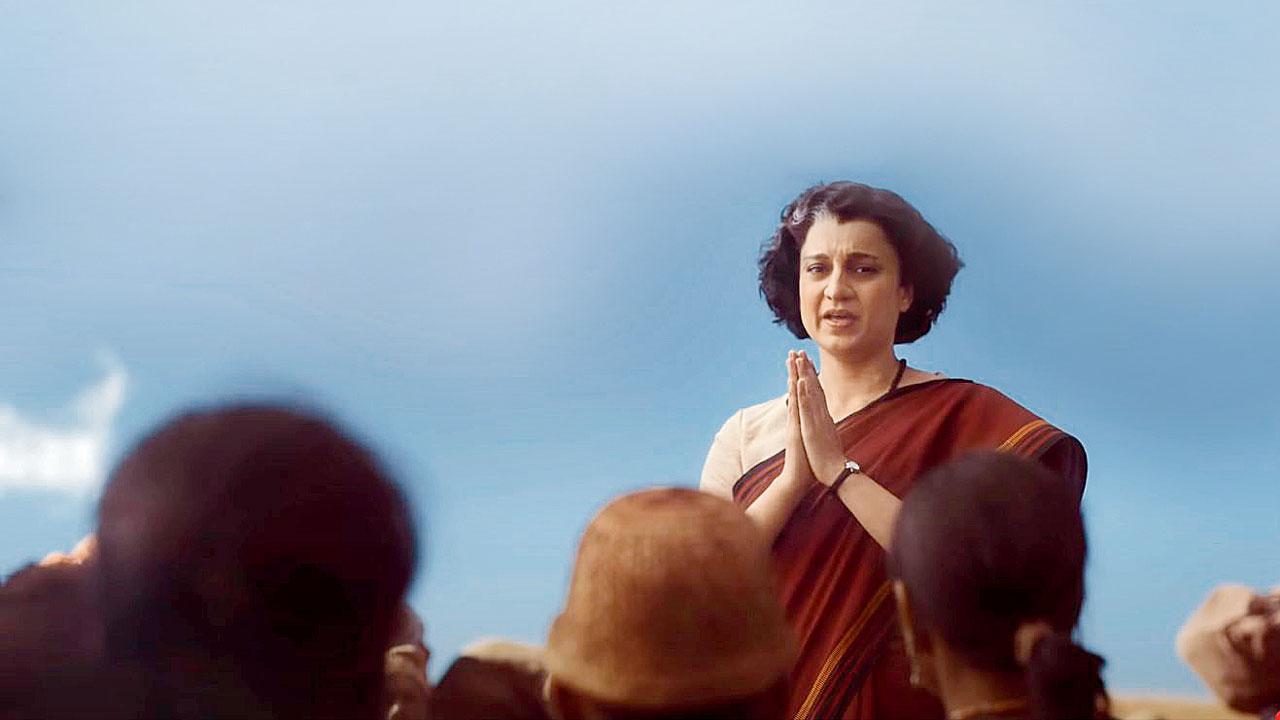
Emergency’s release postponed after CBFC delays granting certificate amid calls for ban; sources say Board asking Kangana to drop Gandhi’s assassination
Upala KBR (MID-DAY; September 3, 2024)
Ever since Emergency’s trailer dropped online on August 14, there were growing objections and calls for ban on its release. Now, the Kangana Ranaut-directed biopic, which was slated to release on September 6, has been postponed. Reason? The makers have not received the go-ahead from the Central Board of Film Certification (CBFC).
The political drama chronicles the life of the late Prime Minister of India, Indira Gandhi, with an emphasis on how she imposed the Emergency in 1975 and her assassination by her bodyguards. While it was heard that the movie was cleared by the CBFC on August 29, the body apparently had a change of heart after it received a legal notice from the Shiromani Akali Dal (SAD) on August 30 seeking to prevent its release. The group claimed that the film may “incite communal tension”, alleging that its trailer depicted “erroneous historical facts that not only misrepresent the Sikh community, but also promote hatred and social discord.” Several Sikh groups too objected to the film.
The postponement comes as a setback for Ranaut, who has not only starred in and helmed the movie, but also co-produced it.
A trade source says, “Kangana is deeply hurt by this unexpected turn of events. The CBFC had cleared Emergency on August 29. They even put out their list of suggested modifications—which included muting the word ‘saala’ in a dialogue, modifying the term ‘Mr President’ to ‘Rashtrapati-ji’ and submitting factual information for certain sequences—on their website, and stated that the film was given a U/A certificate. However, the makers didn’t receive a copy of the certificate. In the past two-three days, the CBFC started suggesting additional changes. Their most critical instruction is that the film shouldn’t show Indira Gandhi’s assassination by her security guards. This has shocked Kangana. If certain things are factually correct and documented in Indian history, why should she remove it from her film?”
On Monday, in a podcast, Ranaut expressed her views on Emergency’s deferral. The actor-director said, “An Emergency has been imposed on my film now… I’m disappointed with how things are unfolding here.” Sources indicate that the film’s team is hoping to resolve the matter and find an alternative release date.
Mid-day reached out to Ranaut as well as to CBFC chief Prasoon Joshi and other members of the body. However, they refused to comment.
Former CBFC chief Pahlaj Nihalani said, “This has been happening frequently during Prasoon Joshi’s tenure, where the CBFC [initially] clears a film, but stalls the certificate after it is sent a show-cause notice. The government may be [wondering] whether now is the right time to release Emergency, as it could [hurt] the sentiments of certain sections. So, they’ve kept it on hold.”
Omkara was passed because Sharmila Tagore’s son Saif Ali Khan was in it-Pahlaj Nihalani
9:28 AM
HINDUSTAN TIMES (May 27, 2024)
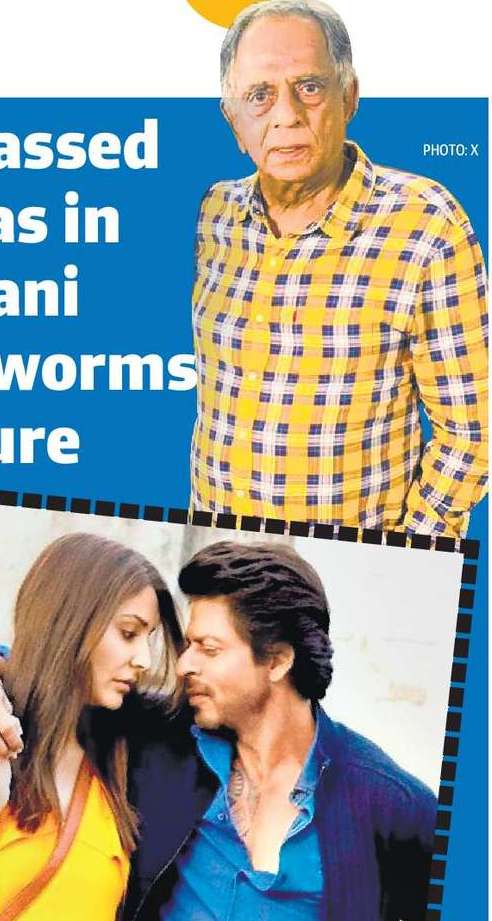
Filmmaker and former chairperson of the Central Board of Film Certification, Pahlaj Nihalani has opened up on his controversial tenure at the helm of the censor board.
In an interview with TV-radio host Siddharth Kannan, the 74-year-old, whose tenure with the board was riddled with issues, made the shocking claim that actor Sharmila Tagore, who had earlier been the chief, passed Omkara (2006) because it starred her son, actor Saif Ali Khan.
“During Sharmila Tagore’s tenure, Omkara was passed because her son Saif Ali Khan was in it. People in the board accepted bribes to pass certain films without cuts. They went against the guidelines, I just made sure the rules were followed,” said Nihalani, who was the CBFC chief from 2015 to 2017.
He also alleged that it was actor Shah Rukh Khan who agreed to removing the word ‘intercourse’ from the trailer of his 2017 film Jab Harry Met Sejal. “I spoke to Shah Rukh about this, he said, ‘Cut it’. There was only one cut. I told him to send another version or accept the cut, and he said, ‘Okay, cut it’. The media targeted me because I was controversial,” Nihalani said.
On the long-drawn controversy around the 2016 film Udta Punjab (over profanities and depiction of drug use), Nihalani added, “I never allowed myself to be pressured by the government. I passed films on merit alone. They didn’t want the title ‘Udta Punjab’ to be passed, and I threatened to resign. I don’t have any regrets. I’ve done my work with honesty.”
Mid-way into the reading, Ajay Devgn said he liked the story immensely and would do it-K V Vijayendra Prasad
8:54 AM
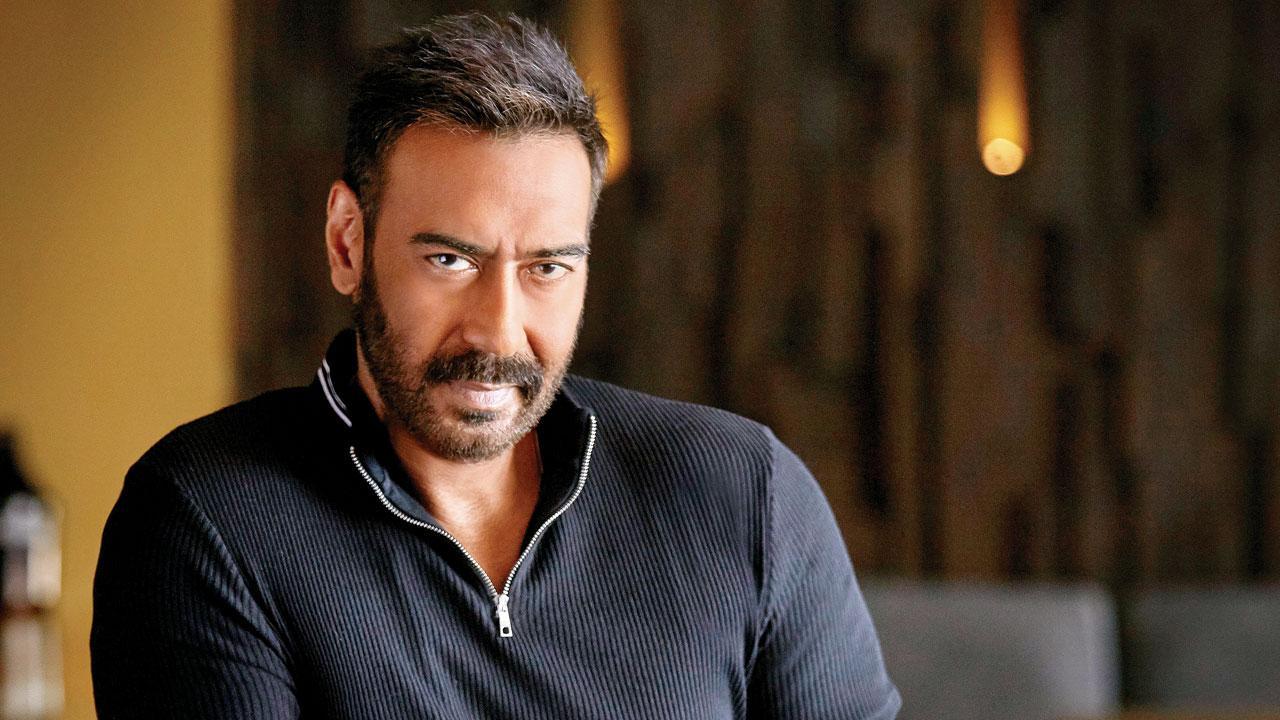
Amid rumours that Baahubali writer and Devgn are collaborating, Prasad recalls pitching film set against the 1992 Mumbai riots to superstar in 2018; rues that the ‘national integration’ drama didn’t materialise
Upala KBR (MID-DAY; January 25, 2024)
In 2018, rumours were rife that Ajay Devgn and famed writer K V Vijayendra Prasad were teaming up for a drama set against the 1992 Mumbai riots that followed the demolition of the Babri Masjid in Ayodhya. While the project didn’t materialise then, recent chatter suggests that the duo are revisiting it. However, Prasad—who was to also helm the film—dismisses the rumours, stating that he will be busy with his directorial venture, Bhagwa Dhwaj, this year.
The writer-director says the film, titled Ayodhya, captured the theme of national integration through its four central characters. He reveals the fictionalized story began with a 14-year-old boy Kabir.
“When the riots took place in Mumbai, many Muslims and Hindus lost their lives. [In the story], a Muslim family is killed by Hindu fanatics and their child Kabir [is the sole survivor]. He comes across two Hindu boys whose parents have been killed by Muslim fanatics. None of them have a family to rely on. Then, Kabir sees a temple of Lord Ram and says, ‘Just like Lord Ram and Lakshman, let us vow to stay together and take care of each other for the rest of our lives.’ They also adopt a one-year-old boy, without knowing which religion he belongs to. They promise that religion will never separate them.” The film would then follow the characters’ adult lives.
The Baahubali writer says he had narrated the script to producer Pahlaj Nihalani, and then to Devgn, who was to play Kabir. “Ajay had come to Pahlaj’s office for it. Mid-way into the reading, Ajay said he liked the story immensely and would do it. But afterwards, I don’t know what happened as they didn’t take it forward. This happened five years ago. How could I ask Ajay then, ‘Will you do it?’ At that time, I had thought of directing it, but now, I won’t.”
The writer strongly believes that the drama about national integration is a “relevant story today”. “Ajay can still do the film. We can show him as Kabir, a married man in his 30s with his children.”
When mid-day reached out to Nihalani, he said that he was never in talks for any such movie. “I’ve never been in favour of making controversial projects. Vijayendra Prasad ji, who is a good friend, and I were in talks for another movie that didn’t work out.”
Raj Kapoor and my father Biswajeet would call each other up and plan their parties-Prosenjit Chatterjee
8:31 AM
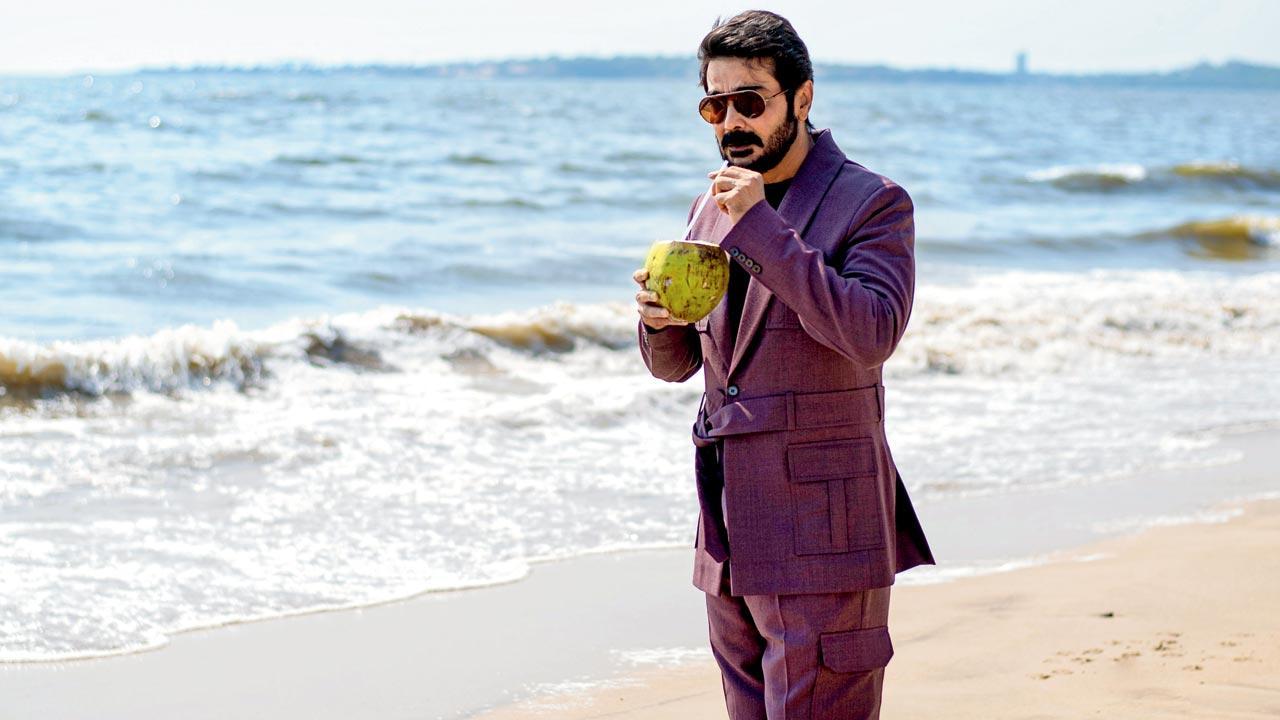
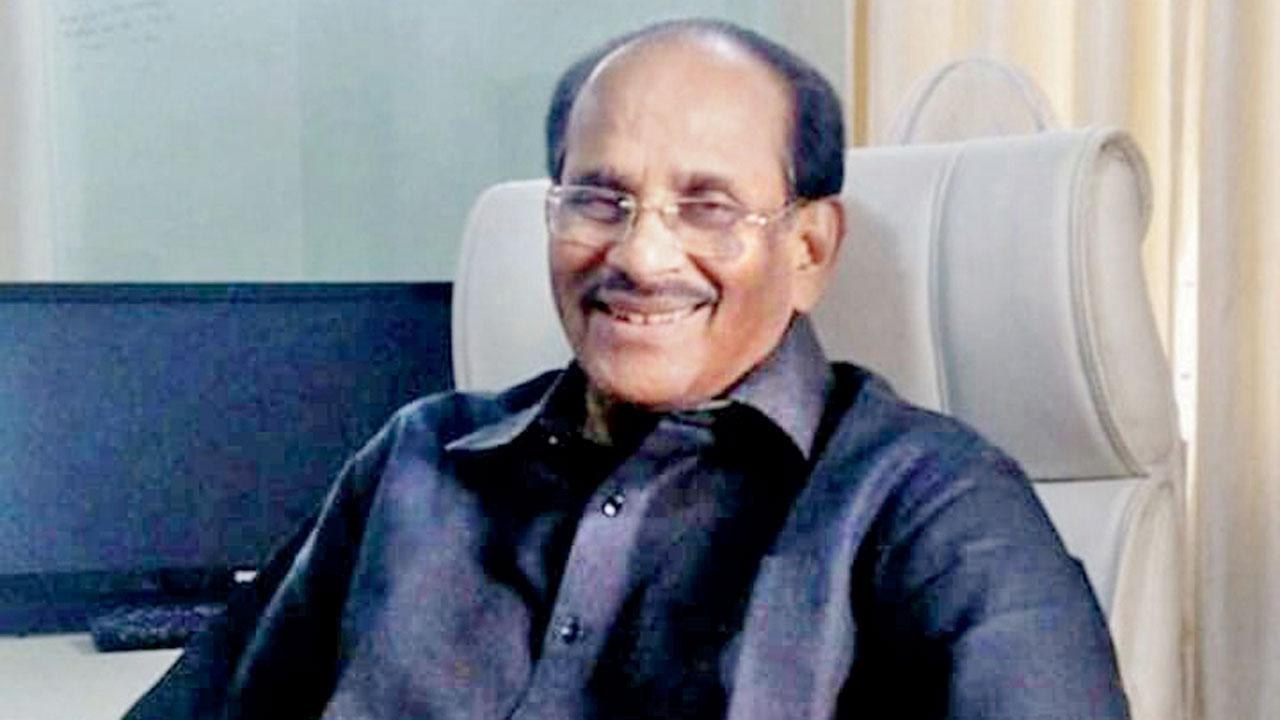
Prosenjit Chatterjee, Bengal’s ‘all three Khans rolled into one’, on finally taking the leap, with a permanent address in the city, where he’s been an on-off guest for 60 years
Mayank Shekhar (MID-DAY; July 28, 2023)
Bhalo kore bujhte paari, bolte paari na [Can understand Bengali, can’t speak it],” is how we break ice with actor Prosenjit Chatterjee, lovingly known as Bumba Da, over a Zoom call, because he’s on a shoot outside Mumbai. He’s suitably impressed.
Although, it must be said, such rudimentary understanding of Bangla, or Bengal, for that matter, can barely equip you to grasp the superstardom of Chatterjee, 61, from Kolkata. For whom Mumbai is now the new home: “I’ve bought a place in Andheri, got a car, driver, the full set-up.”
Younger Hindi audiences have lately discovered him in Vikramaditya Motwane’s series Jubilee (Prime Video), as the fit, dapper, Srikant Roy—a Don Corleone-like patriarch of the Hindi film industry, modelled on Bombay Talkies’ Himanshu Rai. Or as Jaideb Sen (based on crime journalist J Dey) in Hansal Mehta’s Scoop. Jubilee, his OTT debut, was his 349th production (mostly as the lead).
In the ’90s, when Chatterjee was a young lead actor in Bengal, and producer Pahlaj Nihalani “a star-maker in Bollywood”—having launched careers of the likes of Chunky Panday, Neelam, Suniel Shetty, Divya Bharti, Govinda—Nihalani sat the latter down once to introduce Chatterjee.
“Chi Chi,” he told Govinda, Bollywood’s hero no 1: “What are we even doing? Just look at this boy—he’s already crossed 200 films!” A one-man industry, alright.
Since his breakout hit in Bengali cinema with Sujit Guha’s Amar Sangi (1987)—the song ‘Chirodini’ from its soundtrack is an anthem in Bengal, still; the film ran for over 75 weeks in theatres—Chatterjee says he would “open around 12, 16 to 18 films a year [in Bengal]. In one of the years, I had 22 releases!”
Nihalani first got him over to Bombay/Bollywood, in 1990, Chatterjee recalls: “Pahlaj ji had produced a Bengali film with me. During the shoot, he’d tell me about what a star I am! Those were the days, you know—arrey, tu fight bhi itna accha karta hai, dance aur romance bhi, look good [you fight, dance, romance so well].”
His Hindi debut hence followed: “A grand launch party was held at Hotel Sun-n-Sand, with all Bollywood biggies attending. It was a big Bombay party.” Nihalani’s film Aandhiyaan, directed by David Dhawan, also marked the return of the living legend Mumtaz, who’d by then moved to America.
Mumtaz played Chatterjee’s mother in the movie (available on YouTube), which is a bizarrely Oedipal love story, if you may, between mom and son, with young Chatterjee as an overgrown school-kid, also literally dancing around trees with Mumtaz.
That said, Chatterjee recalls, “I got lots of offers from Bombay producers. People say I wasn’t pushy. But I was already working 20-22 hours a day in Kolkata, and booked for the next three years. Also, I am an emotional man. I knew my stardom came from the work of great many Kolkata directors, technicians, co-actors… I had to be with them.”
Chatterjee is quick to point out, on his own: “It’s not about being in your comfort zone. It’s playing to your strengths, to get to where you want. It’s the same with stars from the South. Look at Kamal [Haasan] ji—after Ek Duuje Ke Liye [1981], he didn’t shift base to Mumbai. I’ve learnt from my seniors.”
Which is in contrast to female, Bengali stars in Bollywood: “Oh, they’ve always ruled. There is the concept of the ‘Bangali beauty’. But they’re also great actors.
“I was speaking to Moushumi [Chatterjee] Di, recently. Or you take Sharmila [Tagore] ji. Jaya [Bhaduri/Bachchan] ji changed the pattern of acting, when she did films like Guddi (1971).
“People wanted to see Dharam [Dharmendra] ji and Rakhee [Gulzar] ji together.” Evidently, the male equivalent of the Bengali beauty standard in Bollywood have been Punjabi heroes.
Chatterjee himself is hardly new to Bollywood, or Mumbai, though. His association goes back to early ’60s, when his father, the popular Hindi film actor, Biswajeet, moved to the city. Biswajeet owned a bungalow on 7th Road in Juhu, and now lives in a swanky apartment nearby. He’s been in Juhu for “60 years since”.
Chatterjee recalls, “In 1963, when I was about five or six, along with my mother, sister, and [paternal] grandfather, we shifted to Bombay as well.
“I started schooling here. Only that my grandfather developed health issues. The water didn’t suit him. In those days, the bahu [daughter-in-law] had to take care of the sasur [father-in-law], since my grandmom was no more. And so we moved back to Kolkata.”
The parents subsequently divorced. Ever since, he says, his father has been “a guest in Kolkata, and I’ve been a guest in Mumbai—visiting every year during summer holidays, when I was a child.”
The Bombay of his growing up years doesn’t sound too far apart from his period piece, Jubilee: “I’ve played on Dilip [Kumar] Sahab’s lap. I think Biswajeet ji and Saira [Banu] ji were doing a film together. They’d go out for late dinners. Dilip Sahab liked to stay in. He’d asked to leave the bachcha [the kid] behind with him!”
“We spent a lot of time in Shakti [Samanta] Da’s house. And with Raj [Kapoor] ji. In fact, Raj ji and my father shared their birthday, December 15. They would call each other up and plan their parties, accordingly—Raj ji would host his on Dec 14, and my dad on Dec 15, and alternate it the following year.”
What does he miss from that Bombay? It’s an easy question, clearly: “Oh, the studios, the peculiar smell of raw stock, and the make-up room, where everyone gathered. Spot boys, that belonged to the studios then, who knew everybody’s personal tastes/requirements.
“The huge shooting floors, that could capture so much depth on camera. You can tell from the films of the time—there were no green screens and CGI then. Vikram [Vikramaditya Motwane] captured that really well in Jubilee. I know that technology has changed, and we don’t need such studios anymore. But those were our temples. RK Studio, in particular.”
RK is quite close to where we’re speaking to him over Zoom. It’s just turned into a posh apartment block: “I know. I feel something inside me, when I see it!”
Surely, it’d be the same with similar establishments in Kolkata. The other thing peculiarly common to Mumbai and Kolkata film sets, regardless, is the use of the endearment ‘Dada’ (elder brother), for all males in the technical crew—‘Spot Dada’, ‘Make-up Dada’, etc.
The ‘dada’ in Mumbai sets, of course, comes from Marathi. Which, Chatterjee reckons, has far more in common to Bengali cinema than one recognizes: “For years, I’ve been great friends with people in the Marathi film industry. They share their works with me. I share mine. Our storytelling styles are quite similar.”
His reasoning is simple: “Cinema bears its roots in literature and theatre, that are strong in both Bengali and Marathi cultures. I’m sure other cultures too. But in Bengali cinema, 49 out of 50 actors come from stage. As with Marathi. Likewise, both Marathi and Bengali languages have deep bases in literature.”
And how’s Mumbai and Kolkata different, outside the set, of course, given that the former is also now his home base. Culturally, in the absence of the ‘adda’, he says, “In Kolkata, if you’ve worked for a few hours, it’s fine for you to go, ‘Okay, bahut ho gaya kaam [enough work]. Aadha ghanta adda maarte hain [let’s chill for half an hour]. It’s impossible to do that in Mumbai. People interpret this [trait] differently [as lethargy, perhaps]. But I don’t see it that way.”
Also, he adds, “Both cities are changing a lot. Look at the night-life. Kolkata has gone ahead of Mumbai, in that regard. In Mumbai, I have started seeing streets clearing up after a point in the night. On Park Street in Kolkata, it feels like Christmas all year! People have really started enjoying life a lot there, especially after the pandemic.”
Chatterjee’s own social scene in Mumbai, it seems, starts and ends with Hotel Sun-n-Sand! The Juhu hotel, known as an adda for ’70s Bollywood, especially—you can watch it in practically every other film of the era—that, Chatterjee confesses, has been his home away from home, all along.
“I’ve been coming to Sun-n-Sand for the last 30 years. Now that I live in Andheri [West], my gym is still in that hotel. And if I’m free for even an hour, I just drive up for a cup of coffee there. My father had a suite in the hotel, I think, for a year and half, when he got his break in Bombay, with Bees Saal Baad (1959). I had a suite for quite a long time too.”
Which is true for several stars of the bygone era, the likes of Raaj Kumar, Dev Anand, who used to have an earmarked, year-round, staycation suite, in the sea-side hotel, that appears boutique, only by current standards. Waiters and old-timers often point to those suites as city landmarks of sorts. Which one was his? “402.” Okay, his Bangla fans got a shrine in Mumbai!
Chatterjee comes across as a creature of habit—something that might show in a lot of his mainstream works, that rightly kept the Bengali film industry’s fire burning, all through the decades, that he’d fuel it with dozen-odd movies a year. There was a switch of sorts, he reckons, in his head, therefore his career—“for about 10-12 years now.”
Its genesis lies in the much loved, middle-of-the-road director, Rituparno Ghosh (1963-2013), who offered him a “special appearance; just two days’ work” in the decidedly artsy, Unishe April (1994).
Chatterjee says, “He lit up a matchstick that was inside me. [Until then], I was making films for the audience, and I love them. If they don’t exist, neither do I. But while I am a star, I have to be the actor as well.”
Chatterjee worked with Ghosh for nine films. Dosar (2006), we tell him, is our favourite. The big one, of course, was Ghosh’s Chokher Bali, where he starred with Mumbai’s Aishwarya Rai.
He argues, “You know, people these days talk of ‘pan-India’ films. But Ritu Da, and Mani Ratnam [from Chennai], have been making them forever. When [Ratnam’s] Roja [1992] or Chokher Bali released, we just watched them in theatres, no matter where we were in the country. We never called them ‘pan-India’ films, did we?”
Working with artistic directors like Buddhadeb Dasgupta, Gautam Ghosh, and others, Chatterjee says he began travelling to international film festivals: “When I went to Toronto first, I realised, this is a completely new world, and they should equally look forward to my films. The idea is to win a new audience every day. In Mumbai now, it’s gratifying when people, who don’t know me from my past works, come up to me, in the gym, or when I’m out.”
And that’s been his North Star since. Especially, when he was offered Jubilee, before the pandemic: “I haven’t ever said yes to offers [from Mumbai] right away. As with Dibakar Banerjee’s Shanghai [2012], when he came to meet me in Kolkata. Or Vikram [Motwane]. I want to be convinced about why they want to cast me, first. When Hansal Mehta called me for Scoop, I just knew it was the sort of character that was missing from my repertoire.”
Also, this time on, Chatterjee could sense a wider tectonic shift taking place, among both the audiences, and the Hindi film industry: “It’s become possible for actors from across India to perform together. And it’s not just about films.” Meaning, the braver new world of OTTs as well.
Hence, Chatterjee, bought himself a permanent address in Mumbai: “I had done it before the pandemic. But, of course, I couldn’t move in then.”
And he’s also clear-cut about his professional goal. “I want to do big productions in Bombay, bearing in mind our treasure of [Bengali] literature, that our forefathers had so beautifully tapped into as well. Having been a student of cinema for 40 years, I want to direct now,” Chatterjee reveals.
As for Mumbai and his acting career, the most legendary story about him is how he’d turned down Maine Pyar Kiya, offered to him by the Barjatyas, before the role went to Salman Khan: “Well, I don’t like talking about it. The fact is the film gave Indian cinema its hugest star.”
Evidently, not the one who enjoys looking back much, Chatterjee is only excited for what’s ahead: “David Dhawan was the first person to call me, after he watched Jubilee, you know? He just went, ‘Yaar, tu phaad diya yaar, woh [Bollywood debut] Aandhiyaan ka hero nahin hai tu abhi’ [Killed it, you don’t seem like the hero from Aandhiyaan anymore].” Well, he’s also a Mumbaikar now.
Mumbai meri jaan?
Love about Mumbai
From the film industry perspective, it’s a city that hugely respects talent. They shower you with love and hugs for your body of work alone.
Hate about Mumbai
Honestly? Traffic. It’s gone to another level now, and it scares me. I’m sure things will improve with the metro.
Expectations from Mumbai
I hope, in the next four to five years, Mumbai will give me a home for my creative expression—an intellectual shelter, as a student of cinema, to reinvent myself.
Did Mumbai live up to it?
Especially, after Jubilee, I’d say, yes.
Will it remain forever home?
As it is, it’s my mother, who connects me to Kolkata, and my father [actor Biswajeet], to Mumbai. And now I have a home here as well.
Working across mediums doesn’t take away from my stardom, it elevates it-Prosenjit Chatterjee
8:18 AM
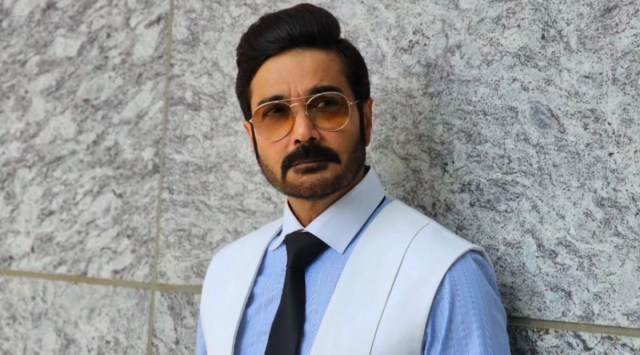
The actor, who made his web debut with Jubilee, talks about experimenting with various mediums, his long, successful career in films and more...
Madhureeta Mukherjee (BOMBAY TIMES; July 2, 2023)
Superstar of Bengali cinema, Prosenjit Chatterjee, recently made a remarkable debut on OTT with Jubilee. The actor, who has reigned in his industry for over three decades, as a leading commercial star and has also shown his acting prowess in parallel cinema – which is rare, says that even today, he feels like a frontbencher on set. And in his words, Prosenjit says, “I am ready to take on any challenge to do different kinds of roles, such is my hunger as an actor.” In a conversation with us, he talks about how he lives and breathes cinema.
You recently made a remarkable web debut with the show Jubilee and followed it up with Scoop. Prior to this, in the Bollywood space, you were seen in Shanghai. As a superstar in Bengali cinema, didn’t you want to explore more roles in Hindi cinema, or was the work that was offered to you here not creatively exciting?
After my debut film in Hindi (David Dhawan’s Aandhiyan), while I was shooting in Mumbai for a Bengali film, Pahlaj Nihalini told me, ‘You are a big star, chalo film karte hai.’ I did some more films here, but I never planned or structured my career in Bollywood. I was a rockstar in mainstream Bengali cinema. I had 22 releases in one year. I felt that I was not alone and that I was taking an industry along with me. In Bengal, people would say that I was number 1 and 2, 3, 4, in mainstream cinema. I wasn’t sure that if had come here (Bollywood), I would have become Shah Rukh Khan. If I had taken that chance, I probably wouldn’t have done justice to the filmmakers in Bengali cinema, as they were the ones who believed in me and made me a star. Today, I can do that because I don’t have those challenges. My intent is to get one new audience every day. I like the fact that my audience cuts across generations. I love to work with new directors. Yes, I am a star, but I broke that image for my films. OTT is the future, and all the big actors are doing it. I don’t think working in different mediums takes away from my stardom, it elevates it.
You made a shift from mainstream to middle-of-the-road Bengali cinema at some point, was that well thought through?
Yes, it was planned. I knew back then that the language of cinema would change. Even before I did Srijit Mukherji’s Autograph, I saw the growth of multiplexes. Every ten years, in our cinema, there has to be a shift in the audiences’ tastes. In my own way, I have observed and studied the change that is going to happen. For over 30 years, I have been a mainstream commercial actor, and I am grateful that this is not my area now. I had created a record of sorts—where I was shooting in my own city (Kolkata) for 19 days at a stretch but didn’t go home for 19 days. Back then, there were no vanity vans, so I would sleep in my car. Now I tell the younger actors, ‘Abhi aap log isko aage le jao (laughs!)’. I am enjoying what I am doing now.
But you do believe that commercial cinema needs to thrive, right?
Yes, absolutely! It has to survive, but we have to do it differently. What is commercial cinema – one that will be watched by people in large numbers? But why do we think that the audience will not understand good cinema – whether it’s commercial or not? We are underestimating the audience. Rituparno Ghosh would tell me that he cast me in Chokher Bali, as he, too, wanted to cross that border. So, I feel I need to support this kind of cinema (middle-of-the-road). Chokher Bali that was made 20 years ago, was a pan-India film, but at that time, no one would talk about it. We didn’t do it for business, today, it is a business model.
Bengal has given us so many iconic filmmakers and actors, what do you think the Bengali film industry needs to do to expand the reach of their cinema and get their footprint pan-India?
Cinema of every language has its own strength, and we need to tap that. Bengali cinema won’t be able to do a Baahubali or an RRR right now, and it’s not because of the budget. Bangla’s strength lies in its literature. We need to make subjects that stem from there and resonate across audiences. Why did I like Kantara? It’s because it struck a chord as it spoke about something close to their culture, which I wasn’t aware of. We need to give the larger audience those subjects that are close to our culture. I would love to do South films and Marathi films. The Marathi film industry has such great actors and directors.
Is your son Mishuk showing a keen interest in becoming an actor?
He is a big fan of Shah Rukh Khan and Bengali actor Dev. He’s a good footballer, and now he’s turned 18 and I feel ki usko actor banna hai. I have told him that I will help him prepare and guide him as I know what a commercial actor needs to do and be. But then, mein usko market mein chhod doonga. I have told him that I am not going to launch him, even I wasn’t launched by anyone. His journey has to be his.
Adipurush makers to change controversial dialogues; even in the past, scenes have been re-shot or removed
9:05 AM

Modifications post release aren’t common, but scenes have been re-shot or removed, and songs have been dropped, too, in the past
Niharika Lal (HINDUSTAN TIMES; June 20, 2023)
Adipurush dialogue writer Manoj Muntashir Shukla believes it’s a case of just five lines. “I wrote more than 4,000 lines as dialogues in Adipurush, some sentiments got hurt on five of those lines,” he wrote on social media.
The jury is still out on whether it’s five lines or more, but the fact remains that the dialogues of Adipurush have sparked caustic reactions from audiences, politicians and film critics alike ever since its release last weekend.
The film has been widely panned for showing divine characters – especially Hanuman – speak lines that the film’s makers call colloquial, but many film-watchers have found to be crass. Bowing to the pressure, the film’s team announced on Sunday that the dialogues would be altered, “valuing the input of the public and the audience”. The makers said that they are “revisiting the said dialogues, and the same will reflect in the theatres in the next few days.”
However, such moves of altering scenes and dialogues post a movie’s release are not unprecedented. Over the years, filmmakers from Guru Dutt and Bimal Roy to Sooraj Barjatya have sought post-release changes in dialogues and songs for various reasons.
ADIPURUSH DIALOGUES THAT HAVE DRAWN FLAK
“Jo hamari beheno ko haath lagayenge unki lanka laga denge”
“Teri bua ka bageecha hai kya jo hawa khane chala aaya?”
“Kapda tere baap ka, tel tere baap ka, aag bhi tere baap ki toh jalegi bhi tere baap ki”
“Aap apne kaal ke liye kaaleen bichha rahe hain”
“Mere ek sapole ne tumhare sheshnaag ko lamba kar diya, abhi toh pura pitara bhara para hai”
WE WILL REVISE SOME OF THE DIALOGUES: MANOJ MUNTASHIR
I wrote more than 4,000 lines as dialogues in Adipurush, some sentiments got hurt on five of those lines. In those hundreds of lines, where Shri Ram was glorified, Maa Sita’s chastity was described, I was hoping to receive praise for them, which I don’t know why I did not get. For me, there is nothing greater than your feelings. I can give countless arguments in favour of my dialogues, but this will not lessen your pain. I and the producer-director of the film have decided that we will revise some of the dialogues which are hurting you and they will be added to the film this week
– Manoj Muntashir Shukla, dialogue writer of Adipurush, on social media
WHY MAKERS CHANGE FILMS POST RELEASE
While there are no recent examples, films that saw post release changes include those that were banned in some states or where the makers have made fresh edits, voluntarily. For example, Prakash Jha agreed to some changes in his film Aarakshan on the eve of its release after Uttar Pradesh and Punjab banned it over controversial scenes and dialogues. Whenever a film makes any changes, it has to get the approval of the CBFC. Sometimes, these changes are also made for the film’s satellite or streaming rights.
NINE MINUTES OF DABANGG 3 (2019) WERE CUT
The makers of Dabangg 3 announced after the release of the film that they voluntarily removed certain scenes from the film’s title track, Hud Hud Dabangg. The film was trimmed by nine minutes. As per reports, about eight minutes were edited from the first half, which included a song, Awara, featuring Salman Khan and Saiee Manjrekar. Another song Naina Lade was also shortened. The film faced controversy when several groups objected to a sequence in the title song that featured saffron-clad sadhus dancing with guitars.
FILMMAKERS SOMETIMES VOLUNTARILY SEEK MODIFICATIONS AFTER CERTIFICATION: CBFC OFFICIAL
Elaborating on the topic, a CBFC official says, “It is not uncommon for filmmakers – especially in the case of well-known directors and big-budget films – to revise dialogues and scenes. Many filmmakers voluntarily seek modifications after certification. On an average, we receive eight to ten requests from filmmakers across languages. While the film retains the original certificate in the cinemas, any updated modifications are endorsed on back of the certificate.”
SONGS WERE CUT FROM HUM AAPKE HAI KOUN! (1994)
The initial reaction to Hum Aapke Hai Koun! after the industry screening was not very positive. The film, which has a running time of 3hr 26 mins, was even longer. In a recent documentary, the film’s maker, Sooraj Barjatya, said, “For Hum Aapke Hain Koun!, we had a screening and that show was a disaster. However, Adi (Aditya Chopra) told me, ‘Dhai gaane katoge toh nikal jayegi’. And honestly, it was on my mind for the last five months. He pinpointed the exact two-and-a-half songs, which I removed the next day (sic).”
GURU DUTT, BIMAL ROY ALSO CHANGED FILMS POST RELEASE
Film archivist and historian Shivendra Singh Dungarpur shares that it was quite common in the ’50s and ’70s for filmmakers like Guru Dutt and Bimal Roy to modify their films if they felt the audience was not connecting with the story. Dutt reportedly reshot scenes of Pyaasa after the release and also removed a song. When Dutt visited a cinema showing Sahib Biwi Aur Ghulam, he decided to reshoot the climax after seeing the disappointed audience but later changed his mind and didn’t change it. However, he did remove Meena Kumari’s song Sahil Ki Taraf and some dialogues. Similarly, Bimal Roy also changed some parts of Devdas post-release.
---------------------------------------
"Meghnad is reduced to look like a cheap WWE wrestler with tattoos all over his body and made to mouth chindi dialogues. 'Beta teri jali', how can these words ever fit Ramayan? Was he a tapori character?"
-Mukesh Khanna, who played Bhishma Pitamah in B R Chopra's Mahabharat
---------------------------------------
"In my understanding, the issue is not of VFX, but of characters'' representation. Mool bhawna ko barkarar rakhna chahiye tha"
- Arun Govil, who played the role of Ram in Ramanand Sagar's Ramayan
---------------------------------------
The controversy raises a larger question: How did a film that seemingly ridicules deities receive clearance from the Central Board of Film Certification (CBFC) without any objection?
Syeda Eba Fatima (HINDUSTAN TIMES; June 20, 2023)
The uproar surrounding Adipurush shows no signs of abating. From objectionable dialogue to problematic scenes and inappropriate character representations, audiences remain dissatisfied with the movie’s content. In a shocking turn of events, on Monday, the Kshatriya Karni Sena, during a press conference in Madhya Pradesh, gave death threats to writer Manoj Muntashir and director Om Raut. Amid outrage, Nepal banned all Hindi films in its capital Kathmandu and the tourist town of Pokhara.
INDUSTRY INSIDERS SPEAK
PAHLAJ NIHALANI
The producer and former chairman, CBFC, slams the censor board saying, “It’s filled with random officers, clearing movies without objections; chairman is not available to look after the operation. In the absence of a proper system, a film like this getting a certificate is obvious.”
KOMAL NAHTA
The trade expert calls it a “grave error” on the part of the writers, and he agrees that the censor also seems to have overlooked it. “Revising them now won’t change the fate of the film because there are more issues than just these few lines.”
TARAN ADARSH
The trade analyst says that while watching the film, he wondered how the censor could clear the movie considering the makers had made a clear mockery of religion. “However, CBFC comes into the picture much later. The onus is on the director and writer, and for me, they are to blame,” he adds.
APURVA ASRANI
The filmmaker says, “If you don’t like a film, don’t recommend it. If you don’t like its message, counter it with another story. But there are people keen to watch Adipurush. Also, if the makers are being threatened or pressured, we should stand by them in the name of free speech.”
ARUN GOVIL
The actor, who is famous for playing Lord Ram in TV show Ramayan, says, “Makers are revising the dialogue because they don’t want people to react further. Par jin logon ne film already dekh li hai, woh dobara dekhne toh jayenge nahin.”
DIPIKA CHIKHLIA TOPIWALA
“The damage is already done. How such a film was cleared by the censor board is surely something to think about,” says Chikhlia, who played Sita, in the same iconic TV show.
MUKESH KHANNA
“The problem is not only those five lines... What will you do about costumes, like Raavan made into Khilji or Hanuman made to look like a cartoon? Aur censor ko kya knowledge nahi hai hamare dharam ki?” questions Khanna, who shot to fame as Bhishma in the TV show, Mahabharat.
MAKERS ARE SAYING...
The makers of Adipurush, on Sunday, decided to change a few controversial dialogues (see box). Dialogue writer Manoj Muntashir said, “I can give countless arguments in favour of my dialogues, but this will not reduce [anyone’s] pain. I and the producer-director have decided that some of the dialogues which are hurting you, we’ll revise them. They’ll be added to the film this week.”
As the controversy continues to gain steam, Muntashir has sought protection from Mumbai Police. Meanwhile, in an interview with Zee News, he said that he trusted director Om Raut during the making of the film, and requested that any questions pertaining to the story and screenplay be directed to Raut.
“We have not shown the entire Ramayana; it is extracted from one corner of the epic, Yuddha Kand. The only questions that remain are about the dialogues. The producers and I have announced that those dialogues would be changed.”
30 Years of Aankhen: Isse pehle aisa success dekha hi nahin tha, says David Dhawan; Anees Bazmee reveals why he ran away to his village
8:23 AM
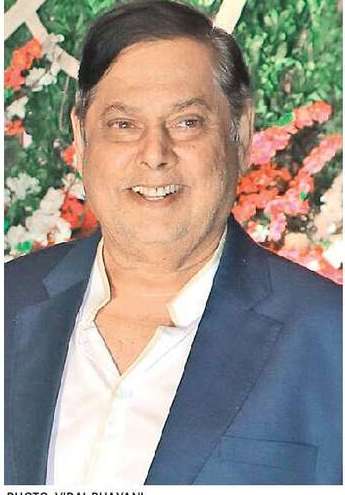
Syeda Eba Fatima (HINDUSTAN TIMES; April 9, 2023)
When Aankhen released on April 9, 1993, its director, David Dhawan, and one of the lead actors, Govinda, were in Bengaluru, shooting for another project. But, little did they know that the film had broken all records!
“Pahlaj Nihalani (producer) called me and said ‘You don’t know what this film has done’,” recalls Dhawan, adding, “Isse pehle aisa success dekha hi nahin tha.”
The filmmaker returned to Mumbai a week later. “From the airport, I directly went to a theatre where my film was being screened, and I was taken by surprise. There was chaos! The press was present, everybody wanted a picture of me. I could not believe it, as I had never experienced stardom of this level. Later that evening, there was a party. Every senior of mine congratulated me. I had tears in my eyes ,” shares Dhawan, adding that he has “never looked back” since that day.
“I started getting so many offers to direct films. People’s attitude towards me, the budget of my films, my dynamic with the [film] industry, all of it changed. Usse pehle kya haalat thi meri, mujhe hi pata hai. God gave me the right film at the right time,” he ends.
----------------------------------------------
Syeda Eba Fatima (HINDUSTAN TIMES; April 9, 2023)
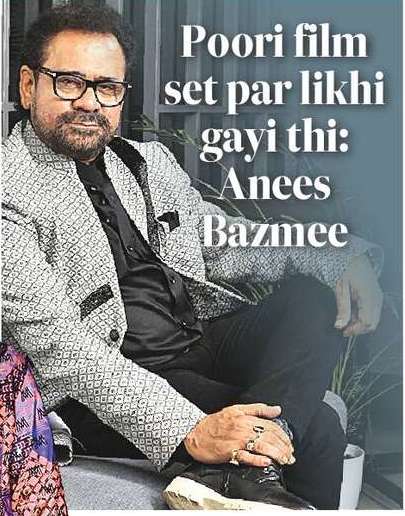
Filmmaker Anees Bazmee, the writer of Aankhen, says filming began sans a bound script in hand. He tells us, “Humare producer, Pahlaj Nihalani sir, chhadi lekar kaam karne wale the... Poori film set par likhi gayi thi.”
Bazmee then recalls how actor Shakti Kapoor’s character shaped up: “David Dhawan wanted to film the villain’s sequences and would question me about it. David ke darr se main gaon chala gaya! I wanted to have a strong negative character, as comedy films back then did not have a strong crime angle. But, I got a good idea and came back to write. It is my best script ever,” he shares, adding how writers today are “insecure” when it comes to writing a comedy.
“Whatever comes naturally will always be better than thinking a hundred times about sounding funny,” he adds.
The monkey in Aankhen was paid more than me and Govinda-Chunky Panday
8:20 AM
Syeda Eba Fatima (HINDUSTAN TIMES; April 9, 2023)
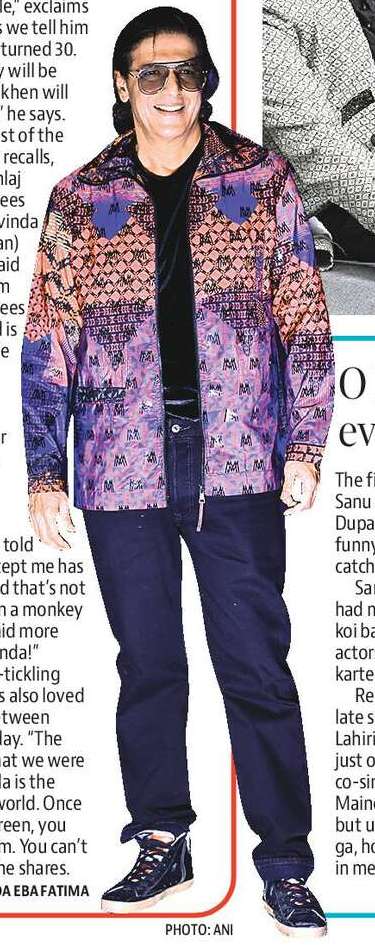
“Feels unbelievable,” exclaims Chunky Panday as we tell him his iconic film has turned 30. “If Chunky Panday will be remembered, Aankhen will be a big part of it,” he says.
Mention the cast of the film and the actor recalls, “Our producer Pahlaj Nihalani called Anees (Bazmee), me, Govinda and David (Dhawan) to his home and said ‘In one month, I am starting a film. Anees is writing it, David is directing it and the two of you are acting. Whoever else (actors) is available, get their dates and make a script’. Casting happened overnight.”
He adds, “I was told that everyone except me has a double role, I said that’s not fair. So, I was given a monkey (laughs). It was paid more than me and Govinda!”
Besides the rib-tickling comedy, what was also loved is the equation between Govinda and Panday. “The perception was that we were rivals. But, Govinda is the best actor in the world. Once you see him on screen, you will only watch him. You can’t see anyone else,” he shares.
30 years of Aankhen: Shilpa Shirodkar reveals she charged more money after this film; Kumar Sanu goes down memory lane
8:16 AM

Vinay MR Mishra (HINDUSTAN TIMES; April 9, 2023)
'Shilpa acting kar sakti hai' — this is the perception that developed of actor Shilpa Shirodkar after she starred in Aankhen. The film, she admits, changed her life: “Every Friday gives birth to a new star. That Friday was a changing point in my career. I signed many good films, worked with lovely directors. And I started charging more money!”
Her song Angna Mein Baba is popular even today. However, not many know that her part in the film was offered to actor Juhi Chawla, initially.
“I am glad whoever was approached said no, because I got a chance to do it,” says Shirodkar, whose character enters only in the second half of the film. Did that bother her, though?
“I was never such a big actor. For me, working with a producer like Pahlaj (Nihalani) ji, a director like David Dhawan and being cast opposite Govinda... It didn’t matter whether I came before the interval or after it. I just hoped ki aage jaake unke saath aur kaam mile,” she confesses.
----------------------------------------
Soumya Vajpayee (HINDUSTAN TIMES; April 9, 2023)
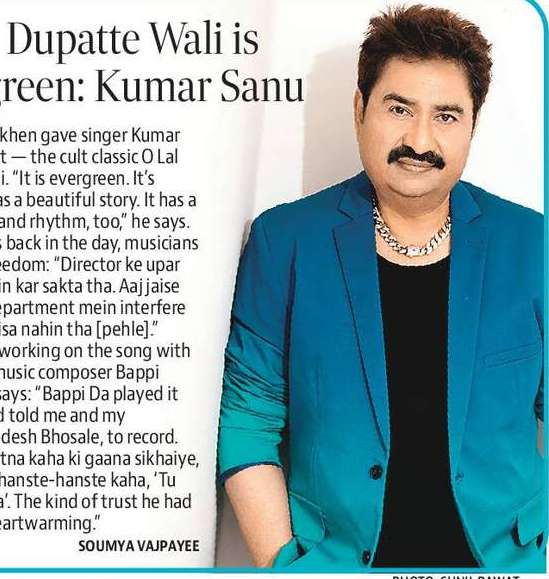
The film Aankhen gave singer Kumar Sanu a big hit — the cult classic O Lal Dupatte Wali. “It is evergreen. It’s funny, yet has a beautiful story. It has a catchy tune and rhythm, too,” he says.
Sanu feels back in the day, musicians had more freedom: “Director ke upar koi baat nahin kar sakta tha. Aaj jaise actors har department mein interfere karte hain, aisa nahin tha [pehle].”
Recalling working on the song with late singer-music composer Bappi Lahiri, Sanu says: “Bappi Da played it just once and told me and my co-singer, Sudesh Bhosale, to record. Maine unse itna kaha ki gaana sikhaiye, but unhone hanste-hanste kaha, ‘Tu ga, ho jayega’. The kind of trust he had in me was heartwarming.”
Trade experts discuss whether Pathaan has been intensely scrutinized by Censor Board
8:44 AM
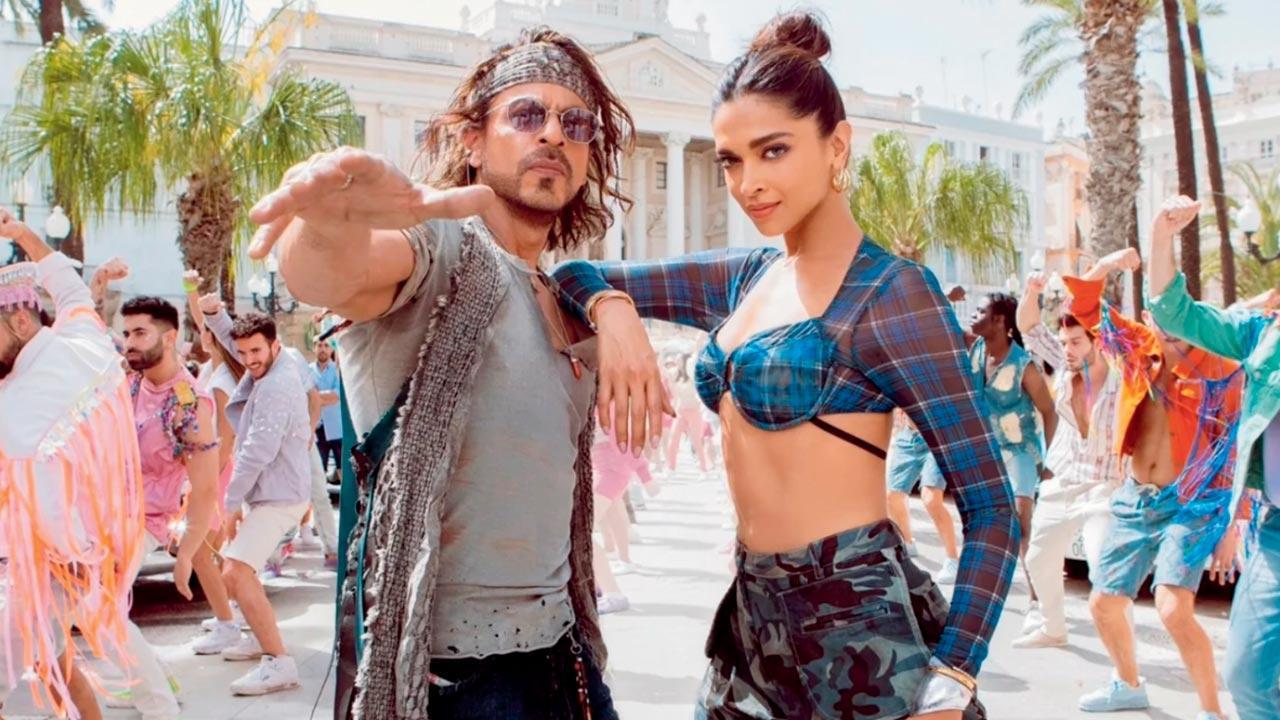
As CBFC grants Pathaan U/A rating with 12 edits, including replacing the word ‘RAW’ that has been used in past films, trade weighs in on changes
Upala KBR (MID-DAY; January 20, 2023)
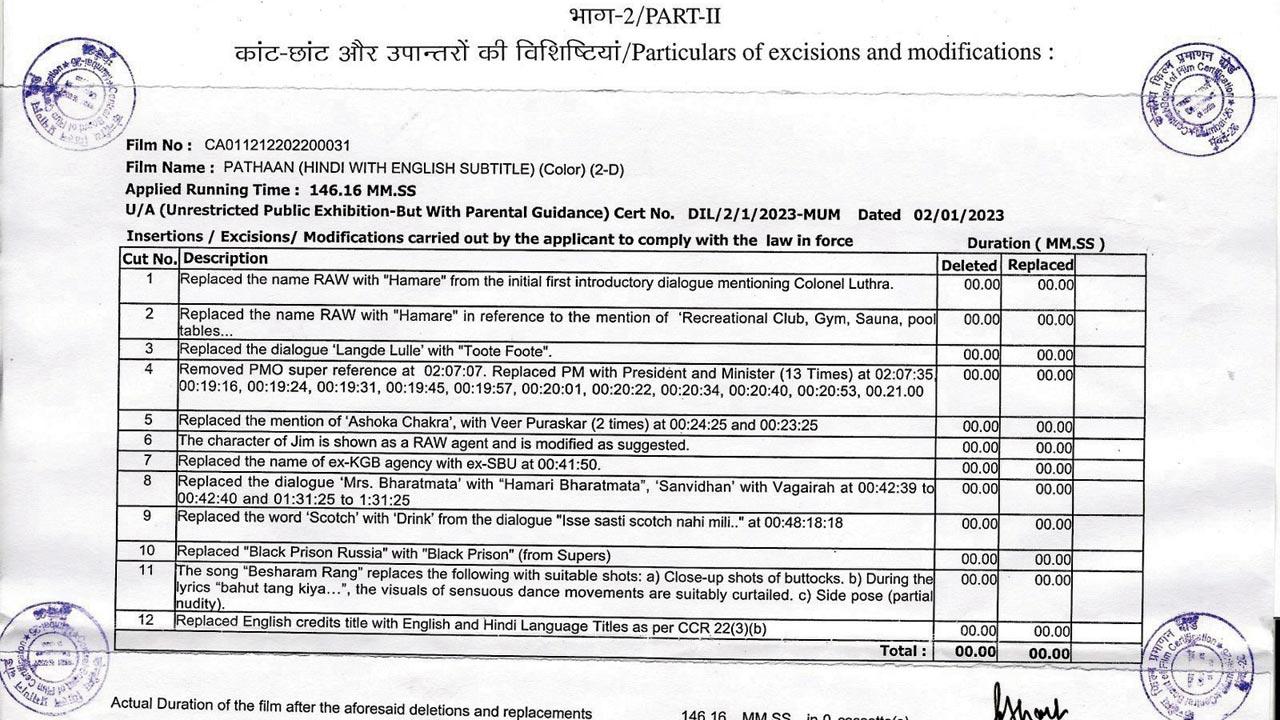
Over 10 days ago, Shah Rukh Khan and Deepika Padukone’s Pathaan was granted a U/A certificate by the Central Board of Film Certification (CBFC). The Censor Board greenlit the January 25 release after their recommended 12 changes were made (Cut the butt, Jan 6). While some modifications were related to the shots in Besharam rang, the Censor Board also suggested that director Siddharth Anand replace some words, including RAW, scotch, and Ashoka Chakra. This came as a surprise as the Indian intelligence agency, and scotch have been referred to in previous films.
Former CBFC chairperson Pahlaj Nihalani says, “The word RAW has been used in many films, including the recent Mission Majnu. That is the individual decision of the Censor Board committee.”
In a dialogue, the word ‘scotch’ has been replaced by ‘drink’. He elaborates, “You cannot use a liquor brand’s name in a movie, but the word scotch is allowed. I don’t understand why it was replaced.”
However, he adds that most of the suggestions are valid, citing the example of a scene where the CBFC objected to the use of the words ‘langde lulle’. “You cannot use ‘langde lulle’ in Hindi movies as the guidelines state that one cannot hurt the sentiments of the specially-abled.”
Some sections believe that the spy thriller has been intensely scrutinized, in the wake of the controversy that erupted after Besharam Rang was released. Trade analyst Atul Mohan points to the scenes where ‘PMO’ has been modified to either ‘president’ or ‘minister’. “I think it has been modified as a precautionary measure. Though I don’t know in what context it was used, I think ‘Ashoka Chakra’ was changed to ‘Veer Puraskar’ to maintain the dignity of the award. In my opinion, Pathaan has been filtered too much to ensure that [people’s] sentiments are not hurt.”
As per another recommendation by the CBFC, the word ‘Samvidhaan’ has been made ‘vagairah’.
Trade analyst Amod Mehra, however, believes that the suggested changes will only make Pathaan suitable for a larger audience. He explains, “The CBFC made these suggestions so that the film can get a U/A certificate, and larger viewership. RAW is a sensitive issue, and films based on them usually get an A certificate. The Censor Board only has the power to certify and offer suggestions. If the film is streamed on a digital platform, [the OTT platform] can reincorporate these cuts, as they give their own certification.”
Aditya Chopra remained unavailable for comment.
Vivek Agnihotri backs FCAT dissolution; Pahlaj Nihalani opposes the move
8:21 AM
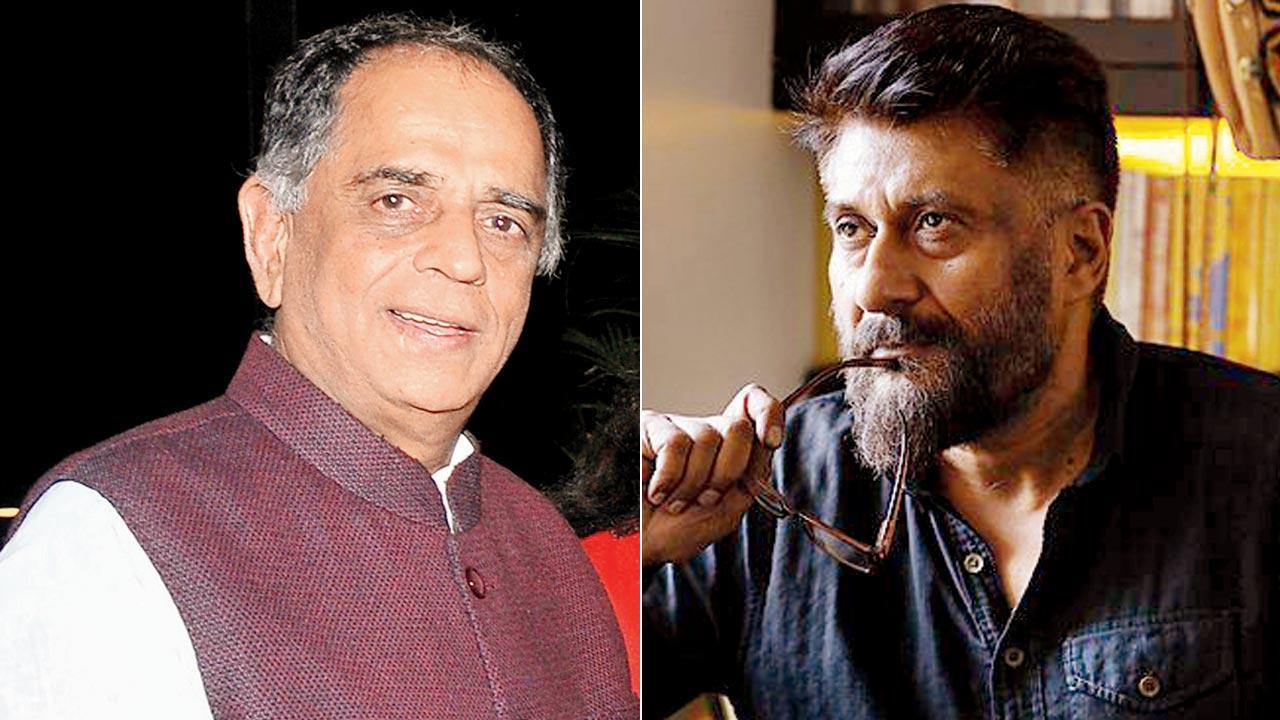
Former CBFC chief Pahlaj Nihalani ironically opposes move that gives board complete power over film certification; current board member Vivek Agnihotri backs FCAT dissolution
Upala KBR (MID-DAY; April 8, 2021)
The reported abolition of the The Film Certification Appellate Tribunal (FCAT), the statutory body constituted in 1983 to deal with filmmaker’s grievances, has invited mixed reactions. Usually dealing with cases against decisions of the Central Board of Film Certification (CBFC), the body enabled several films to see the light of day. Current member and filmmaker Vivek Agnihotri, however, is in favour of the move.
“Now, CBFC will have more control, and will be more responsible,” says Agnihotri, adding that he was always against the decision of making the Board a body whose decisions could be challenged.
“In the past, there was a lot of ping-pong, as a film went back and forth from the Tribunal to the Review Committee. Many agencies, departments and tribunals today, are redundant. If CBFC can be competed with, then what’s the point? I always wondered why we needed the FCAT. If [a filmmaker] has a problem with the board’s decision, he can go to court,” he says, adding that the industry has too many agencies, which, when not exploited to their potential, leaves the industry with “buildings, offices, and infrastructure that is not required.”
In a bid to make a case, Agnihotri highlights that following the appointment of Prasoon Joshi in place of the controversial Pahlaj Nihalani, “there has been no controversy” associated with their decisions. “In fact, we passed Sanjay Leela Bhansali’s controversial film Padmaavat,” he says, matter-of-factly.
Nihalani, whose reign as chief of the Board was mired in controversy given his tendency to demand for arguably unnecessary cuts, is, surprisingly, not in favour of the decision. “FCAT was an option for filmmakers to get justice, and that layer has been abolished. Dropping the Tribunal is risky, expensive, and time-consuming because a filmmaker will now need to pay an advocate, and wait for the decision of the court. It makes the CBFC the supreme power. If somebody wants to harass a filmmaker, then the option of appealing to FCAT [at a nominal fee], is no longer available,” says Nihalani, adding that should the government perceive the tribunal as a redundant body, then the CBFC’s entity too should be questioned. “If they feel OTT platforms and television don’t require certification and can function through self-regulatory bodies, why not have the same process for movies too? Or, follow in the footsteps of [American films], where a film’s suitability is decided upon by a self-regulatory body comprising industry members.”
Trivia
The FCAT was constituted in 1983
I have heard that Varun Dhawan's wedding is happening this weekend-Pahlaj Nihalani
8:34 AM

David Dhawan's frequent collaborator Pahlaj Nihalani confirms Varun Dhawan's shaadi lined up for January 24; Shah Rukh Khan, Salman Khan, Karan Johar invited to intimate beach reception
Upala KBR (MID-DAY; January 19, 2021)
After postponing his May 2020 destination wedding due to the pandemic, Varun Dhawan is ready to walk into the sunset with his 'dulhania'. It can now be confirmed that the actor and his long-time partner Natasha Dalal will become man and wife on January 24 in an intimate ceremony at a beach resort in Alibaug. Contrary to reports that the wedding will be a three-day affair, complete with mehndi, sangeet and reception, mid-day has learnt that the Dhawans have planned a one-day celebration with the shaadi during the day and a low-key reception in the evening.
Producer Pahlaj Nihalani, who backed several David Dhawan movies in the '90s, confirms the development, saying, "I have heard that Varun's wedding is happening this weekend. But I have not received an invite yet. David and I talk once in a while, but he hasn't mentioned the wedding to me. I wish the couple all the best."
A guest invited to the nuptials reveals that the family has drawn out a guest list of 50, as per safety restrictions. Needless to say, Varun's mentor Karan Johar, and idol Salman Khan will be present at the do. It is heard that the guests will board private yachts from Gateway of India to head to Mandwa jetty. From there, private cars will escort them to the beach resort booked out for the ceremony.
"The wedding will see only the families and the couple's school friends in attendance. Last week, the families sent e-invites for the reception. Shah Rukh Khan may not be able to make it as he is shooting for Pathan in a bio-bubble. Other guests include Varun's directors Remo D'Souza and Shashank Khaitan, Shilpa Shetty and Raj Kundra, and Vashu Bhagnani. Since David is diabetic and suffered a heart attack in 2013, sons Varun and Rohit don't want to risk his health by having a grand reception," says the source. While Varun's wedding outfit will be designed by couturier friend Kunal Rawal, Dalal will wear her own creation.

Ford v Ferrari censoring row: Dear Prasoon Joshi, you are STILL responsible for the fear atmosphere that you’ve nurtured!
2:33 PM

The Central Board of Film Certification (CBFC) has been a favourite punching bag for viewers and media ever since it became ‘too Sanskari’ from 2015 onwards. It was a time when Pahlaj Nihalani took over as the Chairperson and he introduced several changes, which made the whole process very regressive. Words like ‘lesbian’ were censored while kissing scenes were chopped off by few seconds. The heights were reached during the time of 2016 release Udta Punjab. Here, some 89 changes were proposed, including deletion of the word ‘Punjab’ and names of several cities! A huge section of film industry, media and moviegoers come together collectively to voice their protest.
More than a year after Udta Punjab’s release (with just a cut or two thankfully, courtesy the Bombay High Court), Pahlaj Nihalani was asked to step down. He was replaced by adman-lyricist Prasoon Joshi. He was seen as a much progressive and sensible person and the hope was that now these outdated ways of censoring will keep to an end once and for all. Sadly, that didn’t happen. The censoring continued, but probably in a much lesser scale than in Pahlaj Nihalani era.
Some of the cuts were extreme and it rightfully made it to the news. Last year, viewers were shocked when the Hollywood film Hereditary was mercilessly butchered, despite the ‘A’ certificate. A crucial climax scene had nudity and it was cut in such a way that moviegoers couldn’t comprehend what’s going on. Another adults-only Hollywood film that faced many cuts was John Wick: Chapter 3 – Parabellum. It’s a gory action film and the scenes of violence and blood and also abuses got edited out. This film released on May 17, 2019 and the same day the romcom De De Pyaar De also hit theatres. In a bizarre move, a scene featuring Rakul Preet Singh drinking in a wedding was censored. What was amusing was that the alcohol bottle was replaced by a bunch of flowers! An industry source says, “In the same sequence, actor Ajay Devgn can be seen drinking and that bit was retained. So, I guess the CBFC just had problems with a lady drinking in a shaadi. That’s quite a regressive mindset.”

The CBFC has always had problems with depiction of alcohol on screen. For every scene involving hard drinks, a ticker mentioning that consumption of alcohol is injurious to health has to be compulsorily inserted on the bottom right of the corner. The alcohol brands are a strict no-no and it’s common to see bottles being blurred for the same reason. This is not a justified move but it’s become very common. However, what’s not common is characters consuming alcohol in a glass where no company name is visible and yet, the blurring is done! This is what happened with the recent Hollywood release Ford v Ferrari. A few days before its release on November 15, the press screening was held from where pictures were clicked of scenes where glasses containing liquor were hastily pixelated. It affected the impact of the said scenes and angered the audiences. Even Farhan Akhtar tweeted about it.
The assumption was that the CBFC yet again has come in the way to force their diktat. As expected, it earned the wrath of the fans. A week later however, Prasoon Joshi spoke about this episode and made it clear that the said cuts were done ‘voluntarily by the makers’ and that he’s disappointed with the spread of the ‘false news’. The cut list of Ford v Ferrari confirms that Prasoon Joshi is indeed right. The only censoring that was done in the film was muting of abusive words.
This brings us to the new trend adopted by studios, especially the ones distributing Hollywood films. They themselves censor stuff they feel will be asked to remove and then submit for certification. The Independence Day release Once Upon A Time In Hollywood, of Sony Pictures, also comes in the same category. There’s not a single cut done by the CBFC! Many news outlets also made news out of it that how this much awaited Hollywood flick has been passed uncut by the ‘progressive’ CBFC! However, when viewers ventured out to see the film, they realized many words have been muted. And that’s because Sony themselves played the Sanskaari card and didn’t allow the CBFC to do so!
So why are these studios doing in-house censoring? “It’s simple,” says a trade source and adds, “By now, everyone knows which scenes and words will be edited out. And it’s a long process. The producer submits the film, then the CBFC views and asks for cuts, the cuts have to be made and shown to the CBFC and then the certificate is secured. Hence, in order to save time, the studios or the distributors feel it’s better they themselves blur or mute before the CBFC does so.” With regards to the Ford v Ferrari fiasco, the same source explains, “Fox Star Studios however went too far it seems. They even got alcohol glasses blurred, which is something the CBFC would have told them to do. But they did it anyway, not wanting to take a risk. And CBFC ka toh waise bhi naam kharab hi hai. So everyone naturally assumed that Censor guys must have played mischief, like they always do. But only this time, they weren’t to blame.”
Yet, Prasoon Joshi can’t walk away scot-free. There’s no guarantee that the Examining Committee of CBFC would have let the alcohol scenes go censor-free if those scenes weren’t blurred. He and CBFC have created this atmosphere because of which Fox and Sony are going the extra length of getting the censoring done themselves. To give credit where it’s due, Prasoon has indeed been progressive at times. For instance, he allowed the Sonia Gandhi reference and a reference related to Ram Mandir in The Sky Is Pink and Bala respectively. In one crucial scene of Article 15, the characters are discussing various logos of political parties and even here, no cut or mute was enforced. However, consistency is needed.
Sadly for moviegoers, no significant change can be expected in this regard. In the Ford v Ferrari controversy, Prasoon has proclaimed his innocence. He’ll also use this episode in future to show how progressive CBFC has become and that it’s not his fault if people are censoring and then submitting films for certification. And unlike how it was in Pahlaj Nihalani era, the industry is not up in arms against these cuts. And there’s a reason for that, it seems. In an exclusive interview to Bollywood Hungama last year, Pahlaj had alleged that “Prasoon Joshi has added a new clause that whatever modifications asked by the CBFC should remain confidential between the CBFC and the applicant. And if they don’t adhere to it, the certificate can even get revoked. Now tell me which filmmaker would stand the risk of revoking his film’s certificate.” To verify this huge claim has been a task but it won’t be surprising if it’s indeed true. In the last one year, this writer has tried to get a few filmmakers on record after their films got censored but they refused to speak about it at all. As a result, without the much-needed support of the industry, the sanskaari ways of CBFC will continue.
J Om Prakash passes away; Bollywood fraternity come out to pay last respects
8:15 AM

Akash Bhatnagar (MUMBAI MIRROR; August 8, 2019)
The funeral of J Om Prakash, who passed away in Mumbai on Wednesday, took place in Vile Parle around noon. His grandson Hrithik Roshan, who was present with mom Pinky (the late filmmaker’s daughter), father Rakesh and uncle Rajesh, performed the last rites. His ex-wife Sussanne Khan turned up with their sons, Hrehaan and Hridhaan.
Abhishek Bachchan, Kunal Kapoor, Madhu Mantena, Sanjay Gupta, Jeetendra, Prem Chopra with wife Uma and Pahlaj Nihalani were among the visitors. Amitabh Bachchan paid tribute to the late filmmaker with a tweet: “J Om Prakash ji, Producer Director of eminence, passed away this morning .. a kind gentle affable being .. my neighbor, Hrithik’s grandfather .. sad!! Prayers for his soul (sic).”
Actor Deepak Parashar told Mirror, “Mr Omprakash’s wife and my uncle’s wife are sisters. I got a chance to work with him Aap Toh Aise Na The. It’s very saddening and heartbreaking to see him leave us. I can relate to one of his songs right now, “Sheesha Ho Ya Dil Ho”.

Nazia recorded 'Aap Jaisa Koi', it was done in an hour, we returned home and forgot all about it-Zoheb Hassan
8:41 AM

Roshmila Bhattacharya (MUMBAI MIRROR; April 6, 2019)
She would have turned 54 on April 3 had death not snatched her away 19 years ago, but for many Nazia Hassan is still a star. “Jab Bhi Miltay Hain Hum Aur Tum, Aankhon Aankhon Main Hotay Hain Gum, Dil Bolay Boom Boom, Haan, Boom Boom ” echoes in the collective consciousness of those who grew up in the ’80s when the brother-sister duo of Nazia and Zoheb made us disco deewane. “We were very young then, barely into our teens, and had no idea what music we were creating. We were just being ourselves, growing up in London, the East-West fusion happened naturally and caught the attention of (composer) Biddu,” Zoheb reminisces from London.

While Biddu has become synonymous with Nazia and Zoheb, not many are aware that Bappi Lahiri who would meet them whenever he was in London, coaxed the siblings to fly to Mumbai towards the end of ’85, after Nazia’s sensational debut in Feroz Khan’s Qurbani with “Aap Jaisa Koi”, and during their week-long stay, recorded “Main Aaya Tere Liye” with them for Pahlaj Nihalani’s Ilzaam (right, above). “Nazia had a great voice and a distinctive style, the song was created specially for her. They came around 7 pm and by 11 pm we were done. It was filmed on Anita Raaj and Govinda became very popular but they never visited again. She was such a pyaari bachchi with such a beautiful voice,” sighs Pahlaj.
 Zoheb informs that living in UK, they were used to working in western studios with multi-tracking systems and were astounded when told the song would be recorded in one go with a live orchestra. “We had never seen anything like this before but everyone was so well-coordinated and I was thrilled to be told I was giving the playback for Govinda, the hottest actor of the time,” he reminisces.
 Soon after, his sister nervously told him that that she would be singing with the legendary Kishore Kumar (right) and was clearly rattled. Zoheb reassured her that she would fine and accompanied her to the studio for the recording of “No Entry” (left; above) for Main Balwaan. “Kishore Kumar had such an amazing voice, so much strength, clarity and control,” he raves. Bappida adds that his Kishore mama who usually sang with Lata Mangeshkar and Asha Bhosle at the time, was astounded when introduced to Nazia. “Such a young girl and so famous,” he marveled and was very encouraging, also collaborating with her on “Rock ‘n’ Roll.”
The brother-sister duo recorded one last song, “Aap Ka Shukriya” for the Shatrughan Sinha, Poonam Dhillon starrer Saaya with Bappida before returning home. “We were young kids from Wimbledon, Nazia, the star, and I her sidekick, yet India showered so much love and appreciation on us, shukriya,” says an emotional Zoheb who still can’t believe how stardom dawned on them.

Bappida informs me that they were working on an album when she fell ill and passed away. “Except for one song, 'Dil Ki Lagi', it remained unreleased. Nazia was a lovely girl, she went away too soon,” he trails off even as words of her first song resonate within me, “Aap Jaisa Koi Mere Zindagi Mein Aaye, To Baat Ban Jaaye, Baat Ban Jaaye.”
Public Accounts Committee of Parliament slams CBFC for preferential treatment to big filmmakers
8:24 AM

Swati Mathur (THE TIMES OF INDIA; December 19, 2018)
New Delhi: The Public Accounts Committee (PAC) of Parliament has censured the Central Board of Film Certification (CBFC) for meting out “preferential” treatment to big filmmakers and inordinately delaying certification of films even after they are cleared by the Board’s examining committee.
Even as allegations of favouritism have piled up against the Censor Board, the PAC report, based on its examination of the working of CBFC, admonished it for playing ‘partisan’. It also faulted the ministry of information and broadcasting for its failure to rein in the Board.
In recent months, the sharpest take-down of the CBFC was by its former chief Pahlaj Nihalani, who had alleged that even though he applied for a certificate for his film ‘Rangeela Raja’ first, CBFC allowed Aamir Khan-starrer ‘Thugs Of Hindostan’ to jump the queue.
Proving Nihalani’s allegations right, the PAC, in its report, said, “The committee was dismayed to note that CBFC, in order to help big filmmakers who had applied for certification very close to release date, granted certificates to their films ahead of other applicants even when there was no such urgency expressed.”
The PAC was also unconvinced by the ministry’s response to its recommendations. “The ministry apprised the committee regarding measures taken to correct the certification process. However, no guidelines have been issued for alteration of the order of certification, as desired... committee is of the view that clear instructions... are imperative to rule out any favouritism towards big banners,” it said. The PAC had recommended an internal audit system to ensure certification process works efficiently.
For many years, we have approached the portrayal of women in our cinema, casually-Prasoon Joshi
8:30 AM

Rachana Dubey (BOMBAY TIMES; November 27, 2018)
As a lyricist, he puts feelings into words. As a screenwriter, he adds visual imagination to what is a mere story. And as the chief of the Central Board of Film Certification, he strives to strike a balance between cinematic sensibilities and social responsibilities. At the recent International Film Festival of India, BT spoke to Prasoon Joshi about the importance of poetry and why certification plays a key role in India. Excerpts...
Just about everything in cinema, except writing lyrics and poetry, has become a profession. Can being a poet become a profession in India?
Poetry can’t be a full-fledged profession because certain things cannot be seen in a straight-jacketed or calculated manner. Can poetry be a factory product? No, but the significance of encouraging people to write poetry should be understood. You must have noticed that leaders and business bigwigs often quote poems in their speeches when straight sentences fall short and they want to express themselves. When people find poetry so helpful, I wonder why it is not taught adequately. If the poetic eye is dead, we lose a lot as a society. We should have more appreciators and nurturers of poetry to make our children better human beings. They will become more compassionate and we will have diverse views, become nuanced as people and have a more sensitive society.
With your role as the CBFC chief, Bollywood assignments and other engagements, how do you make time for poetry?
I make my plans broadly. Of course, I do miscalculate sometimes, but being a part of the advertising profession, which is more deadline-driven than films, I am disciplined with timings. It’s all a question of priorities. Life does take a toll on all of us, par kuch cheezon ke liye waqt churana padta hai.
Among your professional responsibilities, your role as the CBFC chief is probably the one that is more daunting. Do you agree?
CBFC’s work doesn’t come naturally to me because I am an artist, and assessing someone’s work while balancing cinematic sensibilities and societal responsibilities is not easy. It’s an honorary job that I have with the CBFC, but whenever I am asked for an opinion, I step in. For me, everything has been a learning experience. I believe in taking on challenges and when this role was offered to me, I decided to try my best. It’s easy to be an armchair critic; most people chicken out when the time comes to face challenges. I decided to brave the challenge. People in the industry were receptive with me, which is why things have been quite smooth so far. Film certification is an important part of filmmaking. You can’t tell a consumer that I love your share of the wallet, but I don’t want your share of the voice. It’s a different matter when you do something for your own satisfaction, but the moment you do it commercially, you have to act responsibly. My fundamental belief is that artists don’t want to harm and that makes things easy for me. Sometimes, people are so engrossed in creating their work that they can’t think of how things will be perceived. People listen to me, they understand my point of view, and so, we have a peaceful dialogue to reach a common ground.
Pahlaj Nihalani has been crying foul about the cuts being suggested in his film Rangeela Raja…
As creative people, we have to understand that there are certain issues which are more important than ever before and we can’t take them casually. One is the portrayal of women. The objections/suggestions/modifications that were suggested for Rangeela Raja were around that. In the name of humour, if you are glorifying violence against women, or if objectification of women is shown as entertainment, we need to take a call. Of course, you can bring in the age-old argument of freedom of expression and say, ‘I am free to express the way I want.’ Yes, you are free to express, but do it a little more sensitively. For many years, we have approached the portrayal of women in our cinema, casually. If we don’t introspect, we can’t change anything in that space. One important issue the CBFC faces is that when a film is offered an A certificate, which was the case here as well, the makers insisted on UA. When a film’s makers demand UA certificate for a film permissible only for adults, it puts us in a tight spot. We can’t allow children to watch content meant for adults. I don’t want to talk about Mr Nihalani here, because he is an elder and I have never commented on him as an individual. We need to understand that when a committee comprising 70 per cent women strongly feels that a particular film cannot be watched by children with their parents, we should respect that. The purpose of certification is to help people make an informed choice about a film.
Talking about the portrayal of women, you have written the dialogue and lyrics for Manikarnika - The Queen of Jhansi. Given that the film has been through plenty of ups and downs, how has the experience been? And how would things work when the film comes up for certification given that you are still the head of the CBFC?
Rani Laxmibai is exemplary, I have huge respect for her. It was a fantastic experience presenting her life on celluloid. Personally, it was a life-enhancing experience to learn so much about her. Bhaag Milkha Bhaag gave me an insight into the world of sports and the mind of a wonderful sportsperson. Taare Zameen Par helped me understand dyslexia. Manikarnika gave me an insight into our fight for freedom. While the fate of a film is not in anyone’s hands, a lot of hard work has gone into it over a period of time. When it comes to certification, I distance myself from every film that involves me. I did that for Vishwaroopam 2 as well.

Film Certification Appellate Tribunal watches Govinda's Rangeela Raja; puts verdict on hold
8:52 AM
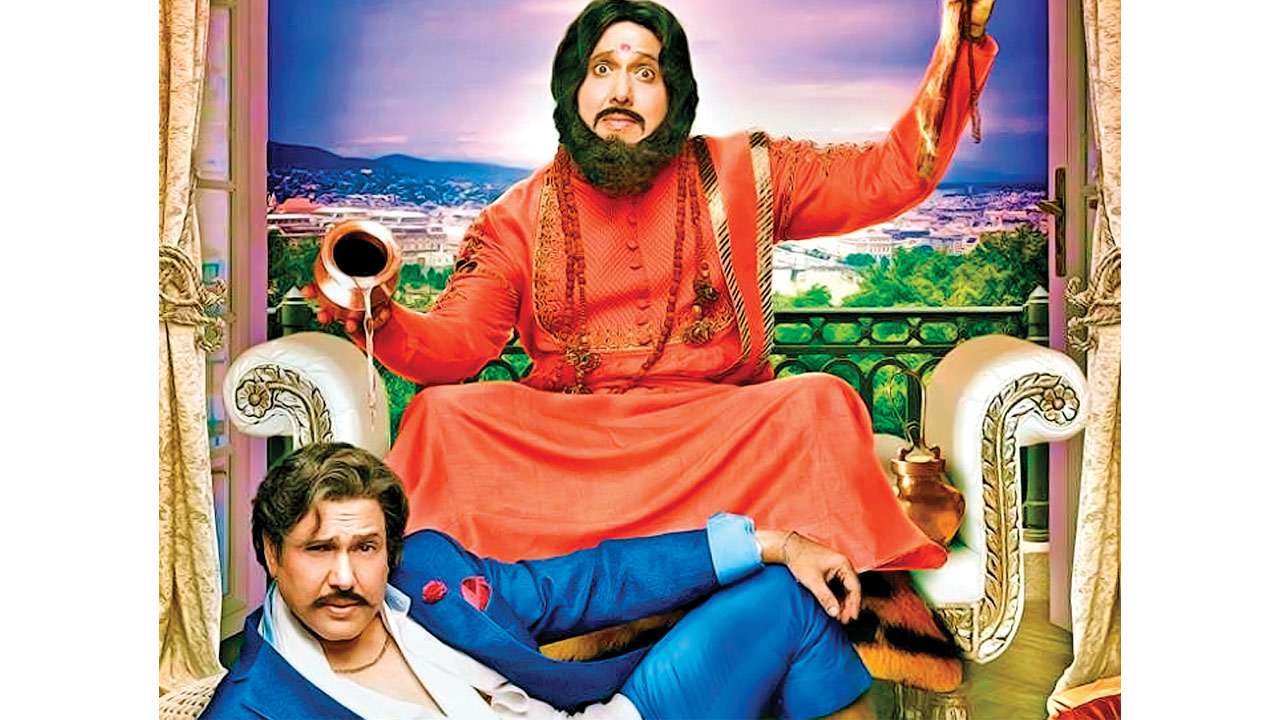
Hiren Kotwani (DNA; November 25, 2018)
The FCAT (Film Certification Appellate Tribunal) saw Pahlaj Nihanali’s film, Rangeela Raja, in Delhi on Friday. Also present for the screening was the CBFC (Central Board of Film Certification) team.
However, the verdict has apparently been put on hold till Monday. The Govinda-starrer got into a controversy when the filmmaker didn’t agree to the 20 cuts for the U/A rating and approached the Bombay High Court. Following the HC’s directive to exhaust his options first, Nihalani approached FCAT last Thursday (November 15). However, post the screening on Friday (November 23), the case was heard by the Tribunal. Says the filmmaker, “Usually, only the applicant and the Tribunal are there for the screening. This time, I think it’s after a long time that the CBFC team from Mumbai attended a FCAT hearing because they want to prove that they are right. It seemed as if the CBFC lawyer wasn’t aware of a number of things. He was saying that the song Yogi is vulgar, even though it has been certified ‘U’ and is playing on television and online.”
Nihalani summed up saying he was hopeful of getting justice on Monday. “Having been a chairperson of the CBFC, I’m very well aware of the guidelines and have made sure that I don’t have any objectionable content in my film. It’s a clean family entertainer. I believe there is some kind of vendetta against me that my film is being targetted while other movies are allowed to get away with much more,” he concluded.
Rangeela Raja Censor row is a clear case of double standards-Govinda
8:20 AM

Chaya Unnikrishnan (DNA; November 24, 2018)
His last release FryDay may not have fared well at the box-office but Govinda is supremely confident about his next release Rangeela Raja. Not only is it touted to be a massy entertainer, a genre the Hero No 1 actor excels in, but it also reunites him with his Aankhen (1993) producer Pahlaj Nihalani after 25 years. When we catch up with the actor at his residence, he looks upbeat and cheerful. His film is currently embroiled in a controversy with the Central Board of Film Certification (CBFC), and the release date has gone haywire, but Govinda is unperturbed. With his innate sense of humour, he takes on the Censor chief, and simultaneously takes digs at his director. Here, the actor talks about his upcoming film, making a career out of South remakes and more...
Rangeela Raja has been given 20 cuts by the CBFC. What is your take on it?
What happens is, when they feel something has the potential to be a hit, woh rok laga dete hai. I have seen films released in the last 10 years or for that matter even the last 30 years having much more controversial content than Rangeela Raja. I think this is a clear case of double standards. It can’t be about what you (censor) think or how it should be. You have to see what is happening in the society. I understand that if there’s a villain and the negativity in terms of language is too much, then woh maa-behen ki galiyan nahin dega. Brutal murders will not be shown. There won’t be lengthy smooching scenes. But apart from that, if he has to show he is wrong, explain how he should do it? I had told Pahlaj ji if you are taking on this subject, show the negative aspect the way it is. If the character is using abusive language, let him, as it will look contemporary. The film will get an ‘A’ certificate and at least that section of the audience will come in large numbers. But Pahlaj ji didn’t do that. He said, ‘My films are not like that, mujhe accha nahin lagta’.
Please continue...
I am amused that despite all that unka yeh haal hua (laughs). Which means being the former chairperson (of the CBFC) woh apeksha kar rahe the. He had a feeling ki mere saath aisa dhokha hoga. He was making the film with decency, but still got betrayed. Nowadays, everything is so personal. People talk and attack personally.
What is the film about?
It is about how in every household there are some people who are colourful by nature and because of them, the family members get into a situation. It is inspired by a South movie that was made around 30-33 years ago. It was directed by K Balachander and starred Rajinikanth. I don’t remember the name, but it was a superhit film of those times. I have done so many South remakes like Raja Babu, Aankhen, Shola Aur Shabnam and Haseena Maan Jayegi. I had followed Jeetendra ji’s idea of remaking South cinema. He would buy the rights, but I would get inspired by the thought and make it in our way. They would become successful. South remakes have proved lucky for me.
The Rajinkanth-starrer is nearly three decades old, have you contemporarised it in any way?
Some thoughts don’t get old or die... like a person mistakenly thinking that whatever he is doing is right. This has been there since the time of Lord Indra, who was a colourful personality and used to trouble the Gods. He felt that since he is the Lord of Gods, he can do no wrong. In Rangeela Raja, it is something similar. When things are explained to him, he changes to some extent within the framework of his character, which I think is the novelty of the film. We are not trying to convince that everything is fine, a concept which is very today.
About your last release FryDay, you said that it wasn’t given enough theatres and that your movies are being targeted. Why do you feel that?
I said it because it’s true and I don’t want to discuss that.
What are your expectations from Rangeela Raja?
It will do great business. It is a massy entertainer and there is no hindrance to it because Pahlaj ji is a distributor himself. Reach ki problem nahin hogi. Yes, it might get delayed a bit and if they are stubborn it will get an ‘A’ rating.
Earlier in your career, some of your songs like Sarkaile Khatiya (Raja Babu) had run into trouble...
Nahin, ussmein jo thoda sa bindaas tha, ‘U’ certificate ke saath chhod diya (laughs). In fact, I was taking objection during the shoot. David (Dhawan) told me, ‘Sadhu ka chola pehenkar baahar nikal jao, film line mein nahin chalega’. So, I gave the shot and thought yeh cut jayega, par aisa nahin hua (laughs).
But there was a controversy...
Yes, people didn’t let me enjoy the success (laughs).
Don’t you think it’s time for a reinvention?
I have already done it. If you watch FryDay, you will realise it. Eighty per cent of the film is shot in a house, but despite that, it is not boring. It has been handled in a classy way. If you ask me, I think it was a masterpiece. Critics gave it three-and-a-half stars, and they are not fools.
Yet, it didn’t do well...
(Cuts in) It wasn’t allowed to do well. I don’t believe in Rs 100 crore business. It is fake, it’s a drama. If something is allowed to run (in theatres), and then it does well or not, it’s your fate. And, it’s not just with me, this has happened to several people including some big stars and they, too, have fought.
David Dhawan is remaking Hero No 1 with Varun Dhawan...
I don’t want to comment on it.
Any plans of exploring the digital platform?
Right now, I am focussing on films because I think with FryDay I have started again. At least it got released, warna pehle release ki problem hoti thi. Kitne films dabbe mein reh gayi. Next, Rangeela Raja will hit the theatres with cuts or no cuts — depends on Pahlaj ji whether he accepts or not — or how successful Prasoon Joshi ji is in having his way. I will probably do a film or a series on the digital platform mid-2019, not before that. I had an offer in 2017, but I didn’t take it up.
Subscribe to:
Posts (Atom)