Showing posts with label Om Shanti Om. Show all posts
Showing posts with label Om Shanti Om. Show all posts
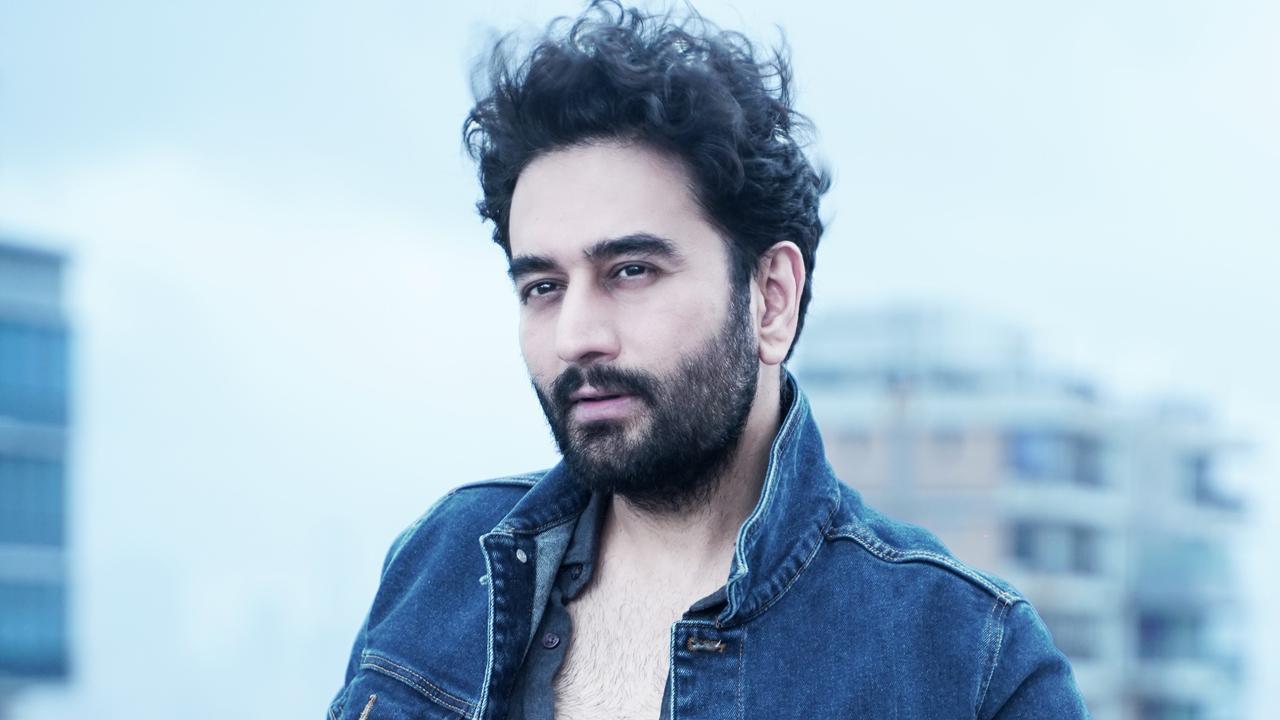
Audiences in the south have showered love on Chammak Challo, Om Shanti Om-Shekhar Ravjiani
8:16 AM
Fahad Hussain (BOMBAY TIMES; March 19, 2025)
“Music, for me, is about freedom and expression. It’s a way to cut through challenges, to meditate, to emote. I’ve been fortunate to listen to diverse musical styles from across India and the world,” says singer and music director Shekhar Ravjiani, who is part of the popular Bollywood composer duo Vishal-Shekar and is known for hit songs like Chammak Challo, Ishq Wala Love, Meherbaan, among others.
The composer, who was in Chennai recently, shares his fond memories of the city, his perspective on the divide between the north and south music, his favourite South Indian musicians, and more...
The popular notion these days seems to be that Bollywood music’s golden era is over. What’s your take on this?
I don’t believe Bollywood music’s golden era is over. Our films and music are still celebrated globally. Look at Chhaava — it has broken all box office records. If a film is honest and well-made, it will always be successful, and the same applies to music. If music is truthful and heartfelt, the audience will always connect with it.
Why do composers from the north find it difficult to break into south Indian films?
I don’t see music as north vs south or east vs west. Music transcends all boundaries. If you go to dance classes in Mumbai, Tamil songs are hugely popular. People don’t think of them as ‘South songs’ — they just enjoy the music. Similarly, audiences in the south have showered love on my songs like Chammak Challo and Om Shanti Om.
Do you think the role of music directors will change with the rise of AI-generated music?
AI can make things more convenient and speed up certain processes, but it can never replace human emotions. AI doesn’t have a heartbeat, it doesn’t feel pain, and it doesn’t fall in love — so how can it write a song? I might use AI for research or administrative tasks, but never for creativity. That’s where human beings excel.
How do you approach composing a song? What’s your creative process?
For film music, I start with the director’s vision — understanding the character, their emotions, and the scene where the song fits. Once I have that clarity, I build the melody, rhythm, and ragas accordingly. For independent music, the process is entirely different. Here, I am my own director. I decide the theme, the emotions, and the lyrics. It’s a personal expression — there is no screenplay, no restrictions, just pure creativity. I love learning, experimenting, and collaborating with different musicians.
As someone who has been to Chennai several times, what are your fond memories of the city?
I have been coming to Chennai since Om Shanti Om (2007) for string recordings and arrangements. Many songs for Chennai Express (2013) and Home Delivery (2005) were produced here, too. One of the highlights of my career was recording at S P Balasubrahmanyam sir’s studio. That moment felt like a milestone in my life — like I had achieved something in life. Chennai’s musicians, people, and food are truly special. On every visit, I look forward to stopping by this popular hotel chain just to have podi idli!
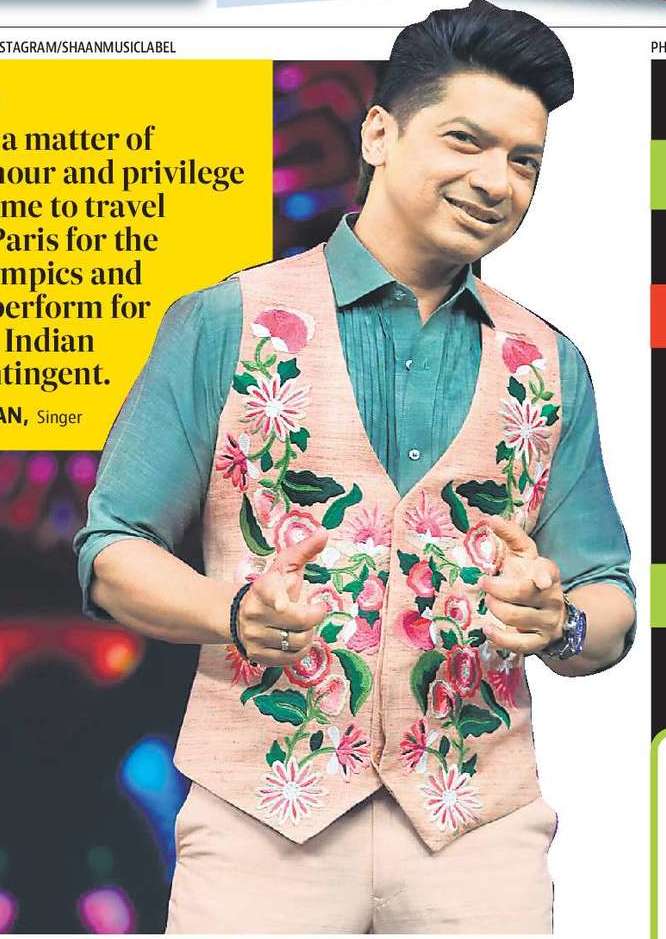
I have a family connection with the Olympics-Shaan
8:03 AM
Akash Bhatnagar (HINDUSTAN TIMES; July 24, 2024)
Paris 2024 Olympics will commence on July 26 and singer Shaan will give a soulful start to it with a performance at the first-ever India House in Paris, France. “It’s a matter of honour and privilege for me to be there at the inauguration of the India House to perform for the Indian contingent and encourage all Indians cheering for the Indian athletes,” he exclaims.
Shaan reveals that he has a special connection with the Olympics. “My first cousins Rahul Banerjee and Dola Banerjee, who have represented India at the highest level in archery, will be there as coaches this time. So, I have a family connection with the Olympics,” he says, adding that sports and music go hand-in-hand: “A lot of my friends in sports tell me that music plays a huge role in getting them in the zone and helping them relax.”
India House at the Olympics has been conceptualized by businessperson Nita Ambani’s Reliance Foundation, and Shaan will deliver a 90-minute performance on day one.
“There’s a song that I recorded for Chandu Champion, but it wasn’t used in the film. I will be performing that for the first time, dedicating it to the Indian athletes. We will also perform a medley of songs related to sports and patriotism. Besides that, I will also sing songs such as Deewangi Deewangi (Om Shanti Om; 2007), Dus Bahane (Dus; 2005) and Koi Kahe Kehta Rahe (Dil Chahta Hai; 2001), among others.”
This is Shaan’s first time at the Olympics and he’s excited to be there. “For the first time, I will see some of the Olympic events live,” he ends.
I studied Satyajit Ray in my university film course-Michael Douglas
9:38 AM

Niharika Lal (BOMBAY TIMES; November 30, 2023)
Michael Douglas was in Goa with Catherine Zeta-Jones and their son, Dylan to accept the Satyajit Ray Lifetime Achievement Award at the 54th IFFI. Reflecting on how meaningful the award is to him, Douglas, 79, said, “When I was studying in University of California, I was taking a film course, and one of the directors I studied was Satyajit Ray. This was about 1963-64. If I remember correctly, it was Pather Panchali, which was the first film (I came across), and then Charulata. While coming here, I was thinking about it.”
FILMS FROM ACROSS THE WORLD SHARE THE SAME LANGUAGE: MICHAEL DOUGLAS
Speaking at the press conference at IFFI, Michael added, “I think one of the strengths of IFFI is that it had so many foreign films’ participation. One of the best things about this profession is that movies share the same (emotional) language. Audiences from around the world can understand what is going on the screen. Indian films are known across the world, and streaming plays a big role in it.”
I LOVE OM SHANTI OM AND THE LUNCHBOX: CATHERINE
Catherine Zeta-Jones also spoke about her love for Bollywood movies and said, “I have always been a Bollywood fan, and I always dreamed that the British film industry would do a Bollywood type film so that I can be cast in it. When my kids were young, I showed them Om Shanti Om, which is one of my favourite movies. And when Dylan’s friends would come over, he would ask them, “Do you want to see a film from India?”
She added, “I would love to do some part in a film in Bollywood. In fact, one of my favourite movies is The Lunchbox. I came across this film on an international flight, and I watched it twice back-to-back. I called my agents, and I met Ritesh Batra, and I am still waiting for him to write Lunchbox II for me.”
Shah Rukh Khan has taught me most of the things I know about storytelling and Bollywood-Kanika Dhillon
3:19 PM
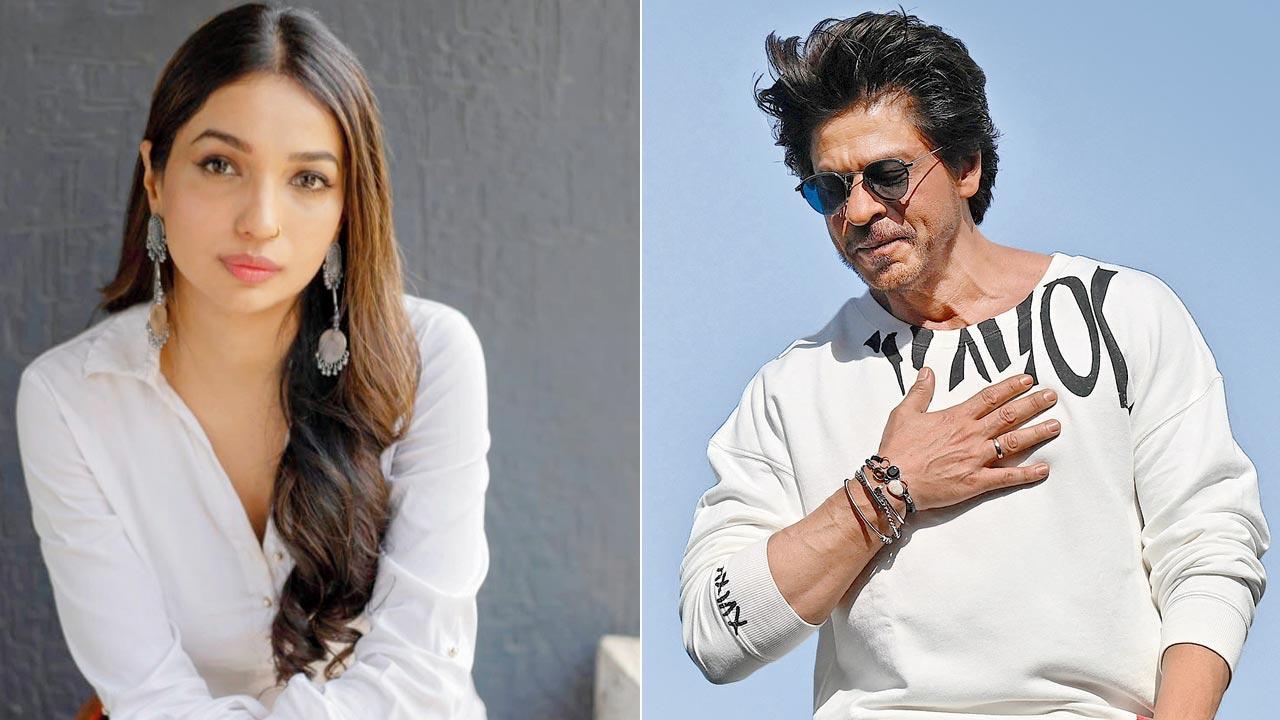
Writer Kanika, who started her career in Shah Rukh’s production house, on reuniting with the superstar for Dunki
Priyanka Sharma (MID-DAY; July 30, 2023)
With Dunki, it’s a homecoming of sorts for Kanika Dhillon. Over 16 years ago, she began her Bollywood journey with Shah Rukh Khan’s Red Chillies Entertainment as a script supervisor and assistant director. Today, she shares the writing credit on the superstar’s Christmas offering.
“I am a fan first, so I was happy that I got to work with him again. I hope I get to do more work with him because that’s the dream,” begins Dhillon, who has co-written Dunki with director Rajkumar Hirani and Abhijat Joshi.
During her four-year stint at Khan’s production house, Dhillon served as an assistant director on Om Shanti Om (2007), and wrote the screenplay and dialogues of Ra.One (2011). As she turns producer with Katha Pictures, she is reminded of her days as a rank newcomer.
“Shah Rukh is the best mentor I’ve ever had. He has taught me most of the things I know about storytelling and Bollywood. Also, I have worked with so many people, but I haven’t seen a producer like Shah Rukh. He is magnanimous, and teaches you to be a better human being.”
At the moment, Dhillon is busy with the prep of her maiden production, Do Patti that will be led by Kajol and Kriti Sanon. The thriller is set to go on floors in a month. What’s also keeping her busy is the sequel to Haseen Dillruba (2021), Phir Aayi Haseen Dillruba. While the Taapsee Pannu and Vikrant Massey-starrer was directed by Vinil Mathew, the sequel has been helmed by Jayprad Desai. Dhillon, who serves as a writer and co-producer, promises more twists with Phir Aayi Haseen Dillruba.
“It is twice as wicked and unpredictable as the first film. We were so happy with the love we got for Haseen Dillruba. So, we are coming with the sequel soon.”
From an assistant director to a writer to now a producer, it has been a long and steady rise for Dhillon. “I feel a sense of gratitude when writers come up to me and say, ‘Ma’am, your work has inspired us to write more.’ They can see that you can achieve milestones in your career.”
Om Shanti Om should have won awards for the dialogues-Farah Khan
8:31 AM
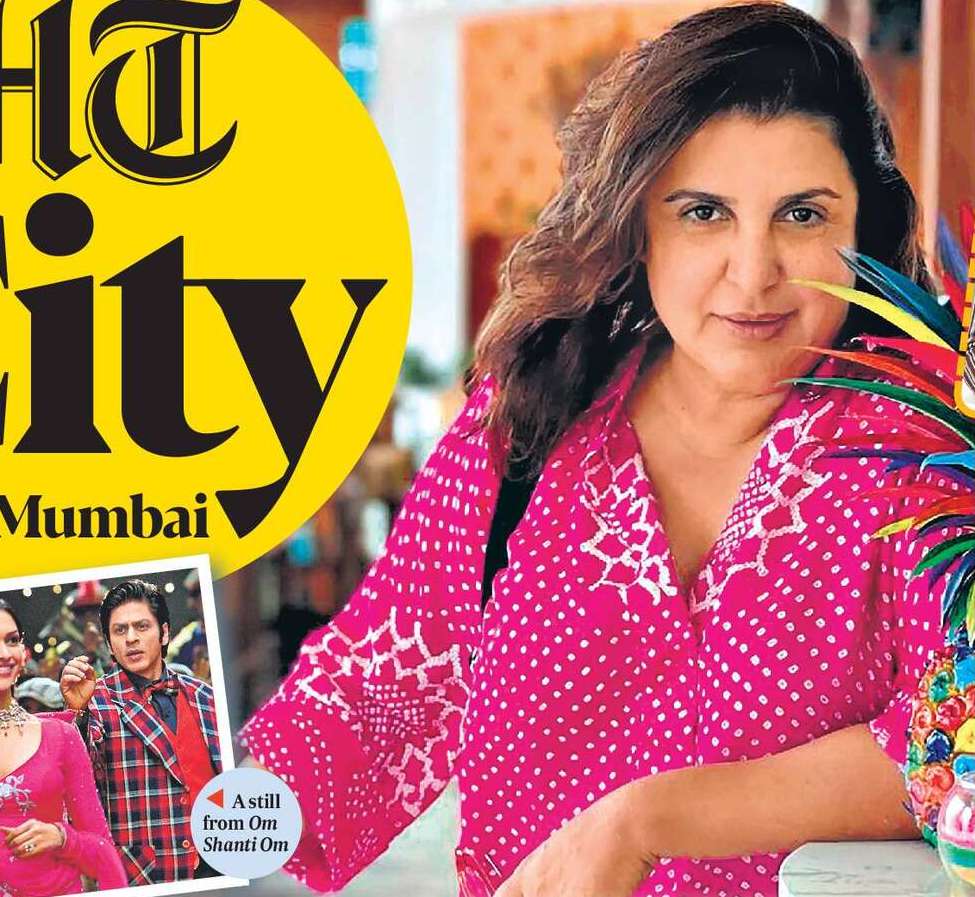
As Om Shanti Om clocks 15 years today, director Farah Khan Kunder speaks about the film and its iconic lines
Sugandha Rawal (HINDUSTAN TIMES; November 9, 2022)
It’s been 15 years since filmmaker Farah Khan Kunder penned a love letter to Bollywood with Om Shanti Om (2007), and the director is proud of the film’s journey. But, despite the dialogues of the Shah Rukh Khan and Deepika Padukone-starrer turning into iconic ones, they did not receive the appreciation they deserved, feels Kunder:
“The film should have won awards for the dialogues, but it didn’t. Cult lines like, ‘Picture abhi baaki hai mere dost’, ‘Itni shiddat’ or ‘Ek chutki sindoor ki keemat tum kya jaano Ramesh babu’ are so popular. Mayur Puri (screenwriter) should have been appreciated.”
Recalling the days when the film was being shot, the 57-year-old, who was pregnant back then, shares, “While filming Dard-E-Disco, I would throw up whenever Shah Rukh would be shirtless. He used to say, ‘You can’t be doing this every time!’ He had six-pack abs for the first time. It was Deepika’s launch [film]; she was raw back then. But now, she is so confident.”
Apart from the story, music and box-office numbers, the film also had unforgettable cameos of several stars. Kunder says it’d have been a difficult task to pull off today, as “Bollywood was one back then”.
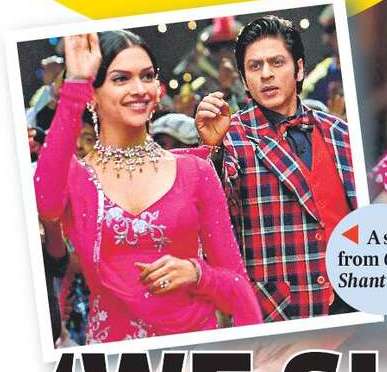
Shah Rukh Khan told me, ‘After a long time, I had a great time working with someone’-Shreyas Talpade
8:29 AM
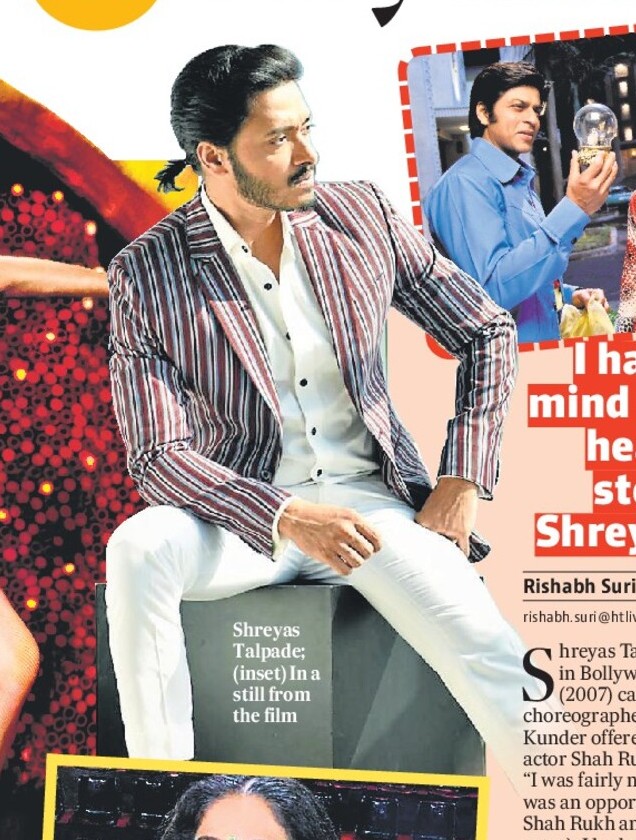
Rishabh Suri (HINDUSTAN TIMES; November 9, 2022)
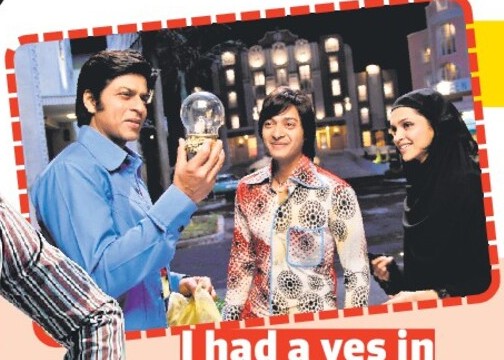
Shreyas Talpade was three films old in Bollywood when Om Shanti Om (2007) came his way. When choreographer-director Farah Khan Kunder offered him the movie alongside actor Shah Rukh Khan, he couldn’t refuse.
“I was fairly new in Hindi films and here was an opportunity to work with Farah, Shah Rukh and Deepika (Padukone; actor). I had a yes in mind even before hearing the story. The experience was wonderful. SRK is one of the best co-stars I have worked with,” he says.
The 46-year-old played the role of Pappu Master, a junior artiste in Hindi films in the ’70s, who was the best friend of Om Prakash Makhija, played by Khan.
Talpade recalls being praised by Khan on the second day of shoot. “Shah Rukh and I were waiting for our shot. He said, ‘Shreyas, after a long time, I had a great time working with someone’. We improvised so much throughout the day, I remember Farah coming to us and saying, ‘Improvisation bahut ho gaya, ab maine jo likha hai woh karo’,” he recalls.
I would come two hours early on Om Shanti Om's sets to get the makeup right-Kirron Kher
8:25 AM
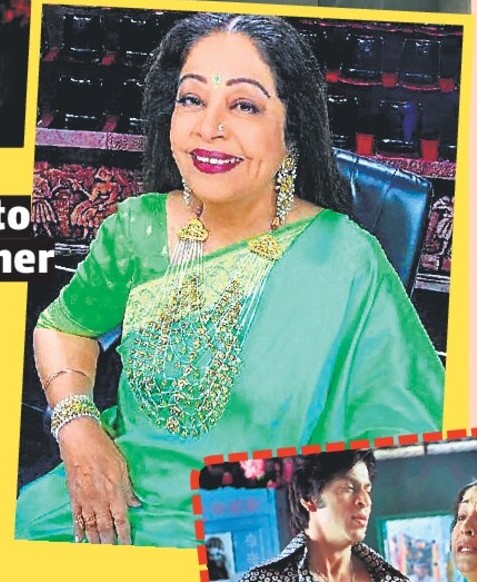
Syeda Eba Fatima (HINDUSTAN TIMES; November 9, 2022)
Kirron Kher played Bela Makhija, actor Shah Rukh Khan’s character, Om’s mother in Om Shanti Om (2007). The actor says everyone on the set knew the film was going to be a hit.
She explains, “Though shooting for the movie was fun, a lot of hard work went into it. From Om’s character, a supporting actor with big dreams in his eyes and his wrong pronunciations to my character of an extra (background actor) in the film industry, who imagined herself as Anarkali — it was all so well scripted and shot that even today, it is so much fun to watch the film.”
The 70-year-old goes on to address Khan as “the most generous actor I have ever met”.
Sharing memories from the set, she adds, “I remember, I would come to the set two hours early and leave an hour late only to get the makeup right. But Shah Rukh, who was also the producer of the film, was always considerate of the fact that we do not reach the set early for no reason. He would tell us, ‘Kal main 11 baje tak aa raha hoon, toh aap sab bhi jaldi nahin aaiyega’.”
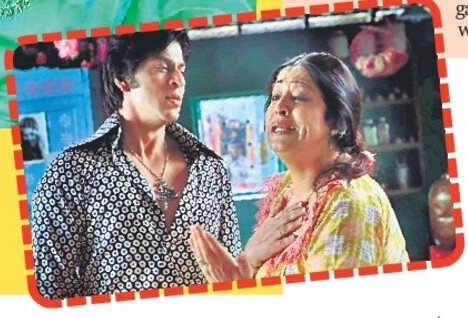
I want to attend red carpets and make that grand entry just like Deepika Padukone in Om Shanti Om-Mrunal Thakur
8:18 AM

Rishabh Suri (HINDUSTAN TIMES; August 2, 2021)
Life has just started to get back to normal with public places such as theatres reopening in phases. While they were shut, many makers released their films on OTT platforms. Mrunal Thakur’s recent film, Toofaan also had an OTT release.
Ask her if she’d be okay with her future lineup heading towards OTT if Covid plays spoilsport again, and she says, “I’m an actor and my first agenda is meri film bikti isiliye hai kyunki log dekhte hain. But their health is of paramount importance. I’m not going to risk my family and I don’t want my audiences to risk theirs by going to theatres”.
Thakur makes it clear that Coronavirus hasn’t disappeared and is still a part of our lives. “We haven’t conquered it. There’s vaccination and things are getting under control, but aren’t totally in control yet,” says the actor, who had also starred in the web anthology Ghost Stories (2020). Although she admits that it doesn’t matter if her projects come on OTT platforms, the actor in her does crave the thrill of a theatrical release.
“What matters to me is reaching out to people at their convenience. With OTTs, they can play or pause any time they want, they don’t have to spend more. Of course, as an actor, I want to attend red carpets and make that grand entry just like Deepika Padukone in Om Shanti Om (2007). But things are changing and I’ve to get used to that,” she explains.
Thakur, who turned 29 yesterday, has welcomed change in her personal life too. “I am not at all a birthday person, I get embarrassed when someone wishes me. We haven’t stepped out as a family for two years, so this was the first birthday when I planned a small getaway with my parents,” she ends.
Thank God, Ranveer Singh & I didn’t get locked down without each other-Deepika Padukone
8:23 AM

Deepika Padukone says this year, she is filled with gratitude for lots of things; adds she was fortunate to be not stuck separately, from husband Ranveer Singh, during the lockdown
Prashant Singh (BOMBAY TIMES; November 26, 2020)
Thirteen years back, she made a dream debut with Om Shanti Om. Since then, Deepika Padukone has had nothing less than a smashing journey in Bollywood. The actor though, on her part, is filled with gratitude for whatever she has achieved till date.
“When I think about it, it doesn’t feel like 13 years. But on that particular day (November 9), when you get all the messages, and look at social media, you realise, ‘oh okay, it’s indeed been 13 years’. Having said that, I do feel that it’s been an incredible journey with lots of learnings, as well as ups-and-downs. But at the end of the day, if I were to look back, there is only a feeling of gratitude,” she says.
Talking of movies, a few days ago, Padukone started work on Shakun Batra’s next yet-untitled directorial, amid the Coronavirus pandemic. How was it to get back on sets? “There was a lot of enthusiasm, and a little bit of nervousness, too. And more than the pandemic, it was due to being unsure of what the processes are going to be,” she says.
The Padmaavat actor admits that by now, all the protocols have “kind of become second nature”. She adds, “Now, we know what the drill is and all of us take extra precautions, in terms of following the guidelines, wearing masks, and even sanitisation, of not just our hands but all the equipments. So, that way, we work in a very safe environment. Initially though, it was exhausting as it’s not something you’re used to. But once you get used to it, it’s fine.”
Surely, the Covid-19 induced lockdown has wreaked havoc on a lot of people. But in a way, has it been a blessing in disguise for her as she got to spend the maximum amount of time with husband, Ranveer Singh after their marriage? “Absolutely. We were certainly not complaining (smiles).”
She further explains: “It (lockdown) has, of course, been a difficult time for a lot of people. And that’s why, the one thing that I absolutely feel, this year, is gratitude. Just to be able to be at home with each other, and being safe is a blessing. Thank God, we (she and Ranveer) didn’t get locked down without each other, which happened to quite a few people. So, what more can we ask for,” she concludes.
Aamir Khan remains the uncrowned king of bodily transformation-Michiel Baas
8:04 AM

The male ideal of bulging biceps and chiseled abs has become more attainable with the mushrooming of gyms in India. Anthropologist Michiel Baas’s Muscular India: Masculinity, Mobility And The New Middle Class is an ethnographic account of gym and bodybuilding culture in India and the relationship between fitness trainers and clients in the context of the desire for transformation — both physical and social. Baas talked to Ketaki Desai about how buff bodies became the ideal.
Ketaki Desai (THE TIMES OF INDIA; August 31, 2020)
You spent over a decade studying the fitness and bodybuilding world in India. What made you focus on India? And did you join local gyms to get the full experience?
I first became interested in India when the country celebrated its 50th anniversary in 1997. That year, international magazines were paying considerable attention to the transformation the country had undergone since the economic liberalisation of 1991. As a student of anthropology, I started wondering how Indians themselves experienced this change. Besides the rapid growth of shopping malls and new places of leisure everywhere, I couldn’t help notice the mushrooming of gyms everywhere. At first I had simply interpreted this as a sign that people were concerned about their health, but there seemed to be much more going on. While I visited gyms and attended bodybuilding and male modelling competitions across India, I particularly spent a lot of time in one small neighbourhood gym in South Delhi. This really helped develop a better understanding of the daily interactions between clients and trainers.
Indians once thought of potbellies as a sign of prosperity (what we in Hindi say ‘khate peete ghar ka’). Is Bollywood the trigger for body-building becoming a status symbol?
It really took three Bollywood movies to move away from the old potbelly ideal and popularise a lean, muscular variety instead. Pyaar Kiya To Darna Kya (1998) with Salman Khan was the first time men realised what could be achieved with their bodies. The actual fitness boom in India commenced in full only when Shah Rukh Khan revealed his freshly-baked six-pack in Om Shanti Om (2007). After that it became crucial for movies to highlight the transformation a star had undergone in terms of his body. Aamir Khan remains the uncrowned king of bodily transformation, something that started with Ghajini (2008) and reached new heights with Dangal (2016).
You have noted in the book that the relationship between trainer and client is one that trades “bodily capital” with the promise of upward social mobility. Could you explain?
Trainers are generally from lower (‘new’) middle-class and vernacular backgrounds while their clients belong to the English-speaking upper (‘older’) middle-class.
While we often think that the most important factor of difference is money, I found that social capital matters equally, if not more. This includes things like knowing how to behave in a particular setting, one’s fluency in English, what clothes to wear etc. For a person who is a new entrant to the middle class, this can be quite bewildering. During training sessions there is often time for banter which allows trainers to learn from their clients in terms of their lifestyles, to improve their English, and even pick up on business skills.
Fitness trainers and clients do get close, even romantic, across the world. Did the trainers you interviewed talk about things getting personal or are class differences keeping people apart?
It was often a source of gossip in gyms, especially when personal trainers also offered training at home. One thing that stood out was how it often led to confusion in terms of intentions. Upper middle-class female clients rarely appeared to think of it more than a one-night stand but trainers sometimes let their romantic feelings get the better of them which quickly revealed the social distance that continues to exist. Usually this would mean their contract with a particular gym was terminated. Photo shoots, modelling assignments and casting calls, on the other hand, often confront trainers with situations where they are asked for sexual favours by other men. Some men now supplement their income by offering semi-nude or pornographic content online, or by engaging in sex work. But for the majority, this is not something they are willing to consider.
Did you study any other professions that offer a similar mobility?
I have earlier published on the topic of Starbucks baristas. This is another example where employees are encouraged to bond with their regular customers, which offers the opportunity to learn from them. However, such encounters are more fleeting and less personal.
With gyms shutting down due to Coronavirus lockdowns and the need for distancing even when they eventually open, do you think it will be a body blow for the industry or can it bounce back?
While the boom in fitness is ongoing, the proliferation of gyms across India felt excessive in recent years. Under the pandemic, home-gymming has seen a huge surge with trainers making house calls. Another important development is outdoor ‘functional’ training which takes place in parks and nature. Most trainers are typically self-made men and they are by nature survivors but there has been a huge loss of income due to the pandemic.
Shah Rukh Khan's doppelganger rendered jobless by COVID-19 crisis
8:36 AM

Prashant Walde had taken up a job in Dubai after his Bollywood career took a hit. Now, he has lost that job, too, and is struggling to make ends meet
Onkar Kulkarni (BOMBAY TIMES; May 7, 2020)
Countless daily wagers have lost their jobs due to the economic crisis triggered by the Coronavirus pandemic. Among them is Prashant Walde, a lookalike of Bollywood superstar, Shah Rukh Khan. Prashant, who would work as SRK’s body double in Bollywood, was forced to take up a job offer from Dubai after there wasn’t enough work for him in BTown, as the actor has been spacing out his films over the past two years. And now, the #CoronaCrisis has left him jobless once again.
Back home in Mumbai, he tells BT, “I have been a handyman for filmmakers working on Shah Rukh bhai’s films and commercials. In his absence, they would use me for long shots and cheat shots, too.”
Prashant, who has worked in films like Om Shanti Om, Don 2, Chennai Express and Fan, apart from many commercials, says that his B-Town career took a hit a few years ago. “Hum lookalikes ki life hi aisi hai. Over the past few years, I wasn’t getting much work. The number of stage shows reduced, too. The last time I shot with Shah Rukh bhai was in December 2019, for an ad film,” shares Prashant, who used to earn ` 30,000 per day as an SRK lookalike.
With no work, debts mounted. He continues, “I have two children and my wife is a homemaker. So, I needed a steady job, but didn’t know anything else apart from being SRK’s body double.”
In December 2019, an opportunity knocked on the door and Prashant flew to Dubai. “I got an offer from a Bollywood theme park, where I had to work as an SRK lookalike in 12-hour shifts. I had to stage 15 shows, each lasting 12 minutes,” he shares.
However, within three months, he was sent back home following the Coronavirus outbreak. “I was lucky that I reached Mumbai on March 21, otherwise I would have been stuck due to the lockdown,” he says, adding that all his earnings have gone into clearing dues. “It’s become a matter of survival now. There are over 160 artistes like me in India and we had set up an All India Look Alike Association (AILAA), but it hardly has any funds. So, we recently approached the Federation of Western India Cine Employees (FWICE), and while they did offer some help, we are still struggling to make ends meet,” he rues.
Has he reached out to SRK for help? “I made a living out of his identity, so it feels embarrassing to go to him for help. I am sure some solution will come up,” signs off Prashant.
There was a stigma attached to the film industry-Deepika Padukone
8:34 AM

Rishabh Suri (HINDUSTAN TIMES; February 29, 2020)
In her 13 years in Bollywood, right from Om Shanti Om (2007) to Padmaavat (2018), Deepika Padukone’s choice of films has reflected her clarity of mind. The 34-year-old takes her time, often pausing while answering questions, but one can rest assured that she won’t mince any words. With a busy 2020 ahead, including a remake of Hollywood film, The Intern (2015), which she’s also producing, and a yet-untitled Shakun Batra film, the actor talks to us about Bollywood’s evolution. Excerpts:
A lot has changed since you made your debut — especially with more female-fronted films being made, and female actors turning producers. Is the difference very stark now?
It is... But my very first film, Om Shanti Om, was with a female director (Farah Khan). We have come a long way, at least in terms of the roles being written for women. Also, there are more female technicians. I think that’s also a function of women now being more comfortable with choosing this as a profession. More women want to be independent… and then there’s the broadening of the understanding of the film industry. There was a lot of stigma earlier as far as the film industry was concerned, specifically regarding women. There were all kinds of perceptions about the safety of women in this field. A lot of things have evolved and changed. Women are confident of following their hearts. I know so many women who have given up big corporate jobs to become writers and work in creative fields. There’s a lot more open-mindedness today. The kind of roles, even from an actor’s perspective… the roles I am being offered today vis-à-vis 10 years ago, definitely things have changed.
At a press conference recently, you were told ‘Ranveer sir bhi ek tarah se producer hain kyunki ghar ka paisa laga hua hai’, implying that the films you produce are then your ‘home productions’. You had to clarify ‘Mere khud ke paise hain’.
I do understand there are several things to it — one is to, at an event like that, look for a sensational headline. The other thing is the deep-rooted understanding that a woman can be, or rather cannot be financially independent! Or a woman is always dependent on her male, whether it’s her father, partner or husband! To be able to do certain jobs that for years we have always understood or assumed only a man can do… I think there were multiple layers to that question. There is that thing of maybe their own understanding, maybe of the fact that women cannot be financially independent. Without meaning it, it ended up being a very layered question.
You are doing the remake of a Hollywood film. But after xXx: The Return of Xander Cage (2017) you didn’t take up films in the West. Are you looking for more Hollywood projects?
I don’t look or evaluate films as Indian or international, but as a medium where I can express myself. If that opportunity is out of India, great. If that is out of the United States or another part of the world, I am happy to explore that too. For me, it’s always been content. I did Xander Cage because it was an extremely powerful, strong character to play. Eventually, it’s about the character and role, and of course, the film. It’s not like I’m actively seeking something in Hollywood. Whether India or any other part in the world, great content is what I seek.
There are rumours that you are going to star in Krrish 4?
That’s news to me! I haven’t heard that one before. Having said that, Hrithik (Roshan) is amazing and talented. As an actor, I would want to collaborate with him.
Acid is going beyond crime against women; even men are being attacked-Meghna Gulzar
8:52 AM

Kavita Awaasthi (HINDUSTAN TIMES; January 12, 2020)
“Chhapaak is an important story and we are all encouraged with the love being showered on us,” says director Meghna Gulzar about her recently released film, which she co-produced too.
While the film is based on acid violence, the issue of women’s safety in India is a burning issue, too. The filmmaker hopes that her film will contribute to the conversation and make people aware about acid attacks. She says, “There is a lot of awareness on sexual assault and rape, which are crimes of violence against women, but acid violence, although it is rampant in our country, there is lack of awareness about it. Acid is going beyond crime against women and being weaponised. Men are being attacked and property disputes end up in attacks. Let’s hope this film starts a conversation on what could be probable solutions.”
They say life imitates art and vice versa. Moreover, how impressionable people get influenced by crime depicted in films or the tube, has always been debated. The filmmaker gives her take, “The sensibility and intent of the presentation is important. Are you going to glorify the crime or the consequences? That approach is critical.”
While her movies, Talvar (2015), Raazi (2018) and Chhapaak have some elements of crime, Meghna says she was never interested in the genre, but has just stumbled into it. “I wrote Chhapaak after Talvar but I shot Raazi. After Raazi, I wrote the script on Sam Manekshaw but made Chhapaak. Scripts have their own destiny. My films straddle two-three genres — such as crime-thriller, social drama, police procedural. I want to give my audience a fuller viewing experience with many elements,” she says.
Meghna, 46, reveals that even before casting Deepika Padukone in Chhapaak, she was impressed with her acting abilities. “I saw her in Om Shanti Om (2007), which is one of my favourite films, and Farah Khan is one of my favourite filmmakers. I love the reincarnation theme that Indian films have and I have loved watching Karz (1980), Madhumati (1958), Karan Arjun (1995). For Deepika, to play a double role in her debut was impressive. She was hilarious in Chennai Express (2013) and adorable in Piku (2015). I was aware of her calibre, but she lived her character and became Malti beyond the transformation,” she shares.
Meanwhile, she is happy with the reception. She says, “It feels nice when your work gets validation, whether it is from actors or producers... the fraternity sending text messages that they loved your work. That pat is very reassuring. Every filmmaker needs validation.”
My kids have been brought up singing Om Shanti Om-Catherine Zeta Jones and Michael Douglas
6:22 AM

Hollywood power couple shares its India connection in a candid chat with Bollywood icon Anil Kapoor
HINDUSTAN TIMES (December 8, 2019)
 New Delhi : Actors Michael Douglas and Catherine Zeta-Jones confessed that their family is obsessed with the 2007 Hindi musical Om Shanti Om, and that songs from the film are played like Christmas carols at their house. Zeta-Jones also joined moderator and actor Anil Kapoor in dancing to the film’s title track at the 17th Hindustan Times Leadership Summit in New Delhi on Saturday.
“My friends Shah Rukh and Farah are going to be very happy,” Kapoor said, tipping his hat to the film’s lead actor, Shah Rukh Khan, and director Farah Khan. The film also served as the film debut of actor Deepika Padukone and featured several prominent Hindi film stars in cameos.
“My kids have been brought up singing Om Shanti Om,” Zeta-Jones said, while Douglas nodded in agreement. “It’s true,” he said, and added, “On Christmas, everybody in our country sings Christmas carols; our house sings all the songs from Om Shanti Om.”
A self-confessed “Bollywood fan”, Zeta-Jones continued, “I don’t think people understand my obsession with Om Shanti Om.” She suggested that it would have made for a “fantastic” Broadway musical. “But I can’t play it because I’m not Indian,” she said regretfully. “You look Indian; my niece looks like you,” Kapoor said, which Zeta-Jones took as a compliment. “I’m very honoured,” she said, “Some of the most beautiful women are from India.”
As a father of three children in the film industry, Kapoor asked the Hollywood actors about how their industry views the idea of nepotism. Children of actors “need to work twice as hard” as others because they are prone to more scrutiny, Douglas said.
Son of Hollywood icon Kirk Douglas, the Wall Street star said that he struggled to live up to the legacy of his father in his youth. Winning the Academy Award for his performance in director Oliver Stone’s drama about 80s excess, Douglas said, was especially important for him, “because I felt like I‘d stepped out of the shadow of my father and created my own identity”.
“Be very appreciative and very humble,” Douglas offered as advice to children of celebrities. “There are a lot of ways you could grow up in this world.”
He said that his father, who will turn 103 on Monday, was instrumental in shaping him as a person. “Ethics, tenacity and hard work,” Douglas said, is the key to success.
This is the advice that the actors have given their kids as well, because they “want to be actors.”
Her husband’s “desire to make the world a better place, a more peaceful place”, Zeta-Jones said, is what they have tried to instil in their children, Dylan, 19, and Carys, 16.
Unlike Douglas, Zeta-Jones said she didn’t have any “family connections to the film industry”. She had to make it on her own, first in London and then in Hollywood. “I had a fearlessness,” she said.
Kapoor, who has been married to his wife Sunita since 1984, asked Douglas and Zeta-Jones about the secret to their long relationship. The couple tied the knot in 2000. “Happy wife, happy life,” Douglas shot back, and Zeta-Jones joked that people said their marriage “wouldn’t last”.
“I was lucky enough to marry my best friend,” Zeta-Jones said. “The secret to our relationship is being kind to each other and having a sense of humour.”
She said that although they came close to appearing in a film together once — a part of it was supposed to be set in India — the project never materialised. If they ever agree to working together in the future, she said, she wouldn’t want them to appear as a married couple, calling the idea “voyeuristic”. “There’s something unsettling about watching a married couple on screen,” she said.
The couple could get a chance to work together in the future, because Douglas, 75, has no intention of retiring anytime soon. Having being exposed to a younger generation of fans through the Marvel superhero films in which he appears as Dr Hank Pym, the actor said, “I’m planning on working till they take me out.”
Douglas’s connection to both the Marvel movies and Netflix – he stars in the streaming giant’s half-hour comedy The Kominsky Method – affords him a unique perspective on the debate around theatrical distribution, initiated by filmmaker Martin Scorsese recently. Scorsese had compared Marvel’s brand of filmmaking to “theme parks”, and suggested that superhero movies were taking away the audience’s right to choose what film they want to watch in theatres, therefore relegating smaller films to streaming.
“There has never been a better time in the history of films and television,” Douglas said, praising the arrival of streaming, and giving a shout-out to Scorsese’s The Irishman and director Noah Baumbach’s Marriage Story, two Netflix films considered front-runners at the upcoming Oscars. “A TV actor you can watch for free; you have to pay to watch a movie actor,” he said, describing age-old industry hierarchy. “Streaming is breaking these barriers.”
He did, however, admit that movies these days need to be events. “This makes it more difficult for personalised pictures.”
Douglas and Zeta-Jones also briefly addressed US politics. “He just takes the air out of the room,” Douglas said about US president Donald Trump, and added that he thought he’d make it out of India without having to talk about him. “It’s a crazy time,” he continued. “I try to look outside our own country and there’s a strange populist movement that seems to be going on around the world, certainly in our country and you’re seeing it in a lot of countries in Europe.”
He added, looking at Kapoor, “I know you’re dealing with volatile issues here in your own country,” but that he wasn’t sure “where this polarisation is coming from”.

If films can be censored, why can’t songs?-Sukhwinder Singh
7:49 AM

Singer Sukhwinder Singh appeals to lyricists to refrain from using expletives in songs; adds that the music industry is his family and he would never want anything bad to happen to it
Nikita Deb (HINDUSTAN TIMES; November 24, 2019)
One of the most popular singers of Bollywood, Sukhwinder Singh, has been enthralling audiences for almost three decades. With superhit songs such as Chaiyya Chaiyya (Dil Se; 1998), Mitwa (Lagaan: Once Upon a Time in India; 2001), Bunty Aur Babli (Bunty Aur Babli; 2005), it wouldn’t be wrong to say that Sukhwinder was ruling the music scene then. But even now, the singer doesn’t miss a chance to mesmerise his listeners. With his latest hits, Isaaqbaazi (Zero; 2018), Kar Har Maidan Fateh (Sanju; 2018), and more recently, Chammo from Housefull 4, Sukhwinder seems to be as relevant as ever. The singer talks to us about his near 30-year-old career, if he would ever sing a remix, and how he keeps reinventing himself. Excerpts:
Your recent release in Housefull 4, has over 15 million views on YouTube…
Film kaafi badnaam ho rahi thi (laughs), but when I watched it, mujhe toh bada mazaa aaya. Every song that I sing cannot be a great one, but a lot of my songs are hits and even superhits. Every song can’t win an Oscar, right?
The film didn’t get great reviews. Do you think the reviews of a film affect the music, too?
Nowadays, a few people have turned social media into a tamasha and not a resource. Social media is a great resource where you can say anything independently and freely, dil khol ke. But you can’t say anything without limits. You can’t abuse or use bad words. There are a lot of people who feel that they should do something new, so they resort to doing negative things. I am not saying that Housefull 4 Mughal-e-Azam (1960) ke level ki bani hai or Sanju ke level ki hai. But when I went to watch the film, there were barely any seats available, which clearly means that the film did good business. The makers put in a lot of effort, too, and the canvas is also big.
After so many years of being in the business, how do you keep reinventing yourself?
For that, you need to actually avoid a lot of things. Humare film industry mein kitna glamour hai and some of our activities are very aggressive. But the most important thing about the film and music industry is the creativity. Along with that, there are a lot of different branches of it. There is aggression, insecurity, greed and impatience but all of them live under the same roof of creativity. I tried to find consistency in this. I started working on that. Even before Chaiyya Chaiyya released, I had started following this pattern. When I was in England and my albums would come out, I always looked for that consistency. I was always very aware of aggression, insecurity and everything else. After Chaiyaa Chaiyya, I waited for about 70 to 80 days for my next song. Along with Om Shanti Om (2007) came Chak De! India in the same year, but I sang only three songs in that year. Most of those songs were nominated at award functions. Many people said I was very picky and I was also appreciated, but I remained quiet. And that ended up suiting me a lot. My last song was Kar Har Maidan Fateh, and after a year I sang for Housefull 4. But I am relaxed and now, I am waiting for three or four good movies to come my way. I want to sing more. I have three to four more good movies with good songs coming out. I don’t really ask the names of movies when I get offers. I concentrate on the content of the song. I am really satisfied right now.
What is your take on the trend of remixes that has become ever so popular now?
I’ve always had one big problem with this trend — original composers not being credited for their songs. So, whenever I was asked to speak about it, even during my concerts in India or abroad, I would always bring up this topic. I have been speaking about this for seven to eight years now. Thankfully, this issue has now been solved. Another thing, that really bothers me, is the usage of vulgar and bad words in songs. I feel that is really wrong. I have always maintained that if films can be censored, why can’t songs? People keep saying why do I keep involving myself in these battles, but to them I say, ‘the music industry is my family. And I can’t see wrong things happening in my family’.
As far as singing a remix is concerned, I would love to sing a remake of a Kishore Kumar song because he was my favourite (artiste). But one thing is for sure — when I sing a remix, it won’t be like the usual songs. It will be very special.
After #MeToo movement, thodi tameez aayi hai industry mein-Sukhwinder Singh
7:36 AM

Srishti Dasgupta (BOMBAY TIMES; November 4, 2019)
Carefree, candid and one who shoots from the hip — that’s Sukhwinder Singh for you. Ahead of his concert at Kolkata this week, the Bollywood singer spoke about music reality shows, the #MeToo movement and why he thinks RD Burman is the greatest composer of all times. Excerpts:
What do you have to say about the quality of reality shows?
Reality shows are a very good platform to hone talent. The best show I ever witnessed was the one I worked in as the chief guest. But in the last five years, I have noticed that 80% of the contestants’ growth as a singer coming from reality shows has drastically gone down. I don’t get time to watch reality shows regularly on TV because of my riyaaz, yoga or intense travelling for concerts. I also need to sleep for a minimum of nine hours, and amidst all this, when a friend or an associate asks me to watch some episodes of a particular show, I make it a point to watch them. Ten to 15 years back, reality shows produced better talent.
Why do you think so?
We lead a fast-paced life nowadays, there’s no patience in us. So, the contestants do not devote enough time for riyaaz or to learn the nuances of music. The aggression level has also increased a lot in us. There’s a lot of talent, but they have to be nurtured properly. The rural areas of Bengal too are a treasure trove of raw talent. We just need to find them.
You judged Voice Of India’s second season years back. After that, we have not seen you donning the judge’s hat for any reality show…
Many offers keep coming my way, but shooting till 4 or 5 in the morning is a bit tough for me. Having said that, I don’t mind being a reality show judge. A saint in Chennai once told me, whenever you learn any good thing, you must share it with others. So, I would definitely want to don the judge’s hat and share with everyone my knowledge of music.
Reality show judges openly engage in war of words. Is it part of the script to garner TRPs?
I have always told people, ‘agar aap chahte hai ki tamashe se TRPs bante hai, toh main apko music se TRP banake dikha dunga’. I bet if I get back on the judge’s seat, I will generate TRPs through music, glamour, style and fun. If you want me to get into a war of words with the rest, woh mujhse nahi hoga. Also, I am sure I will be the best looking judge in a reality show (laughs!). Many a times, judges say ‘wah wah’, ‘kya baat hai’ after a contestant’s performance. I wonder why they do so even if the performance is average. I guess, they want to continue their stint in the coming seasons as well, so they want to make the producers happy. But I can never do this.
People from the music industry were also called out during #MeToo controversy. Do you think the movement has created the impact it intended to?
It’s good that unhone awaz uthayi. In our entertainment industry, there are some people who are very cheap. But I cannot ever say that Nana Patekar is cheap. He is one of the best actors in the country. But somewhere this #MeToo campaign did work well. But usko bhi corrupt karne ki koshish ki gayi. When the campaign gained momentum, many said there were other cases too. The common complaint was ladki dikhi nahi ke mooh se laar tapakne laga. But the moment the campaign became a tamasha, it stopped. But some women, who raised their voices, were right. Nobody was saying it openly, but andar se sabko ek satisfaction mila tha ke yeh movement hua, and some people’s true colours came out. I get disturbed when I hear people using abusive language with junior artistes. You can’t do that just because she’s not Alia Bhatt or Deepika Padukone. I think after this #MeToo campaign, woh tameez thodi aayi hai industry mein.
Given a choice, will you ever enter the Big Boss house?
Main tamashe mein nahin jata. They have approached me two-three times, but as I said earlier, if I have to create TRPs, I will do it only through music. I didn’t say no directly, but I gave the makers my reasons for not going.
What do you think about Jasleen Matharu and Anup Jalota’s relationship that blossomed inside the Big Boss house? They initially claimed to share a guru-shishya bond…
Log tamasha karke publicity chahte hai, but what they don’t realise is that they are only tarnishing their own image. They will not gain anything out of this. Woh jaan bujhke badnaam hona chahte hai. For me, I can never tolerate people saying that this man, who has given hits like Chhaiyaan Chhaiyaan, Chak De! or Dard-E-Disco and others, does such things on a reality show. I am not saying Big Boss is bad. It’s a different kind of a show, but I feel I will not fit into the show’s pattern.
It’s believed that the era of melody is over in Bollywood. Do you agree with this?
Woh era aayega wapas. Sukhwinder Singh jumped in and how (laughs!)! Be it romantic songs or peppy numbers, I have done it all. From this year onwards, a new journey of mine will start — the journey of singing romantic songs. When S D Burman, R D Burman, Kishore saab, Mohd Rafi saab, Lataji, Ashaji, Mukesh ji were there, it was the golden era of music. There is no replacement for these legends. Today, you will not find another Kaushiki (Chakraborty) or a (Ustad) Rashid Khan. Melody has become a minor part of music these days, but then why do people love Arijit Singh so much? It’s also because of melody. When people want sukoon, they listen to Arijit.
You spoke about having a huge crush on renowned classical singer, Kaushiki Chakraborty…
I am a big fan of hers. I have a crush on her singing style and am sure everyone in the country loves her singing. Whenever I see her performance, be it on online platforms or on TV, I am amazed to see how can she sing such difficult classical compositions so effortlessly. Her father, Pt Ajoy Chakrabarty, too is one of the finest classical singers in our country. Kaushiki is an extremely down-to-earth person, there’s no iota of arrogance in her and that makes her even more admirable. Ek Kaushiki hai, aur ek hai Pt Jasrajji, dono ke mathe pe kabhi bhi koi shikan nahi hai jab woh gaate hai. They always smile and sing such difficult classical songs.
You have worked with several music directors in Bollywood. Whom are you most comfortable working with?
I have worked with almost all the music composers in the industry. I am comfortable working with everyone. All of them are very passionate about their craft. When they approached me for the song, Kar Har Maidan Fateh of Sanju, which was composed by newcomer Vikram Montrose and written by newcomer Shekhar Astitwa, I instantly loved it and recorded it. The song too turned out so well. When I find lack of experience in a new composer or songwriter, I share my experiences with them. But I do respect their work.
You have sung a lot of songs for SRK. Which actor suits your voice the most?
I have sung more songs for Salman Khan and Ajay Devgn than Shah Rukh Khan. Three to five songs I have recorded for Ranveer Singh and Ranbir Kapoor also. The actors play different characters, and I sing for their characters. In 2007, Shah Rukh was simultaneously shooting for Chak De! India and Om Shanti Om. I had sung two songs for him that year, one for each film. The title track of Chak De! India and Dard-E-Disco. I always go by the director’s brief. Shah Rukh zuban pe zyada aata hai kyun ki he has a lot of appreciation for other artistes and their work. He praises everyone very honestly. If he wants, he will tell the director, ‘Yaar, ek gaana toh Sukhi ka hona chahiye film mein.’
There are a lot of promising singers presently in Bollywood. Who are your favourites? Do you see them as competition?
Competition does work very well. I have been a sportsperson since childhood. Competition works well in sports, but not in music. So, I don’t see anyone as my competition. Arijit Singh is a lot better than many singers; even Shreya Ghoshal and Sunidhi Chauhan are extremely talented and versatile singers. Today, most young and upcoming singers try to copy western artistes like Shakira, Lady Gaga and others. They see their style and stage presentation, but don’t notice their practice and hard work.
Who is your favourite music composer?
R D Burman — he was the best in the world. Agar R D Burman abhi hote toh unke paas kam se kam 20-30 Oscars hota. If he got the technical support that’s available now, he would have fetched us more than 100 awards by this time.

Recreating music is a tougher job than making new songs-Bhushan Kumar
7:42 AM

Neha Maheshwri (BOMBAY TIMES; May 4, 2019)
T-Series, which was once known for mainly churning out albums and dominating the music industry, has today become a prominent name in the business of filmmaking, too. Bhushan Kumar, head honcho of the company, talks to us about cracking the code in the movie business, producing films with big stars as well as backing fresh talent and small-budget movies, and the new generation that’s lured by remixes. Excerpts:
You have an interesting mix of as many as 15 films lined up this year. How involved are you in each of these projects?
Movies were one of my father’s biggest passions. He wanted the company to become a leading production house in the country. Like any other son, even I wanted to fulfil my father’s (Gulshan Kumar) dream after I took over around 21 years ago. It was my idea to move to films after taking over the company, which was primarily about music. I have tried my level best to achieve that and I think I have accomplished what I set out to do. I would say that Aashiqui 2 (2013) was the turning point for me. The film was a huge success and its music was a hit, too. Thereon, we moved on from making small films to joint ventures and multiple projects simultaneously with the simple idea that if I had to look after every project creatively, then I wouldn’t be able to make so many movies. And I didn’t want to compromise on the quality of the movies that I was backing. I am collaborating with people like Dinesh Vijan, Nikhil Advani, Luv Ranjan, Atul Agnihotri and Ajay Devgn. Having a good creative team is paramount. Money is important, but as a producer, I believe that it won’t be fair to the audience if we worked with only profits in mind. Besides, I personally watch every film to see what kind of content is working with the audience.
While it’s been proven time and again that content is what drives the audience to the theatres today, most of your films are headlined by big stars. At some level, do you think that getting big names for your projects adds more weightage to your films?
Gone are the days when people would flock to theatres after big names. Fortunately, I am getting to strike a balance between the two. So, while Bharat is headlined by Salman Khan, it’s a content-driven film as well. Likewise with Tanhaji: The Unsung Warrior, which stars Ajay Devgn. Also, no project is big or small today. The idea has to be big. Stree, which was made on a small budget of around Rs 17 crore, did great business. We are ensuring that we are either making a biopic, a real-life story, or a full-on masala action movie. The films that I am making with newcomers could probably be small budgeted projects, but they are high on content with a great business potential.
You are mostly into co-producing films. How does that model work for you?
Look, that’s the best model; otherwise, it would be impossible to make so many films. The success rate is high when you have different minds working together. If I have to make films on my own, I won’t be able to make more than two a year and the film might also suffer on a creative level. Filmmaking is a totally different ball game and it can’t be compared to the creativity that’s required for music. I can make a song in five minutes along with a music director and a lyricist, but when it comes to movies, the approach is very different.
Does your acumen for music come in handy as a producer?
My father had a tremendous sense of music. Every song that he picked connected with the audience. I have inherited that ear for music from him. I bought the rights of Aankh Marey and Tere Bin Nahi Lagda Dil Mera Dholna and told the team to recreate it for Simmba, as I knew both would become a hit. Rohit (Shetty) shot the two songs beautifully and they went on to become major hits. Similarly, my father would also suggest songs for several films and I am following in his footsteps. It applies to scripts as well; I might have gone wrong many a times, but we are getting there.
Today, music is incorporated in a film in a rather organic manner. Unlike earlier, songs are now a part of the narrative. How do you view this change?
For some films, music is really important, but then I have also produced a film like Baby, which had no scope for music. I incorporate songs in a film only if they don’t disturb the story. Earlier people would tell me, ‘Tum ye film kar rahe ho, usme aise gaanon ki jagah nahi hai’. But I want them to know that I am also ready to do a film without music. Aise hi nahi ki hero yahaan se bhaaga aur gaana chaalu ho gaya, or ye hua toh seedha Switzerland pohoch gaye. If there’s a romantic song, it comes organically and is placed depending on the narrative. There aren’t any dream-sequence songs in my films.
What do you have to say about the current music scenario with rap and pop becoming a rage? Since you’re a man of melody, was it difficult to adapt to these changes?
I am very happy. People are enjoying different kinds of music, which is opening different genres for creators like us. Earlier, a romantic or a dance track was supposed to be made in a particular way. But we are happy that new genres are opening up. If you observe, every song has a great melody apart from rap. Melody honi bohot zaroori hoti hai nahi toh woh gaana work nahi karta hai. So, melody never goes out of fashion, whether it’s a dance or a romantic track. Let me tell you, there is a great demand for sad romantic tracks in India. Once Shah Rukh Khan had mentioned in an interview, ‘Mujhe Bhushan ye bolta tha ki harr gaane mein dard hona chahiye, toh maine dance track mein bhi dard daal diya’. He was referring to the song Dard-E-Disco from Om Shanti Om (laughs!).
In one of your interviews, you mentioned that your father, Gulshan Kumar, would go to parties hosted by music composers just to understand what kind of music was working. How do you keep abreast?
Yes, he would do that. Today, you have everything on your mobile phone. I access the online platforms a lot. I keep track of new independent artistes, who put up their videos. If we like the song, we call the singer and buy the rights for it. At times, we adapt it to make songs in a similar zone. Most of the times, these artistes put up these videos expecting a big label to call them, take their song for a film and picturise it on a big star. That way their voice gets famous and, in turn, they get more shows.
As somebody who’s so musically inclined, what’s your view on recreating songs? Why aren’t we creating more original songs instead?
Recreating music is a tougher job than making new songs because you have to do it correctly. If you don’t make the song better than the original one, then it will be a wasted effort. Also, we make sure that most part of the song, which has been recreated, is new; that’s something you don’t realise while listening to it. For example, in Dilbar Dilbar, barring just two lines, seven lines are new — both in terms of the lyrics and the tune. So, for almost every song that’s recreated, we just take the hook line and then create new content for 90 per cent of it, including the tune, the sound and the lyrics. It is not that we are recreating tracks, because we are not getting new songs. We are purposely making it, because this is the demand of the market. We make a mix of recreated numbers and original songs for a film. The reason why these redux versions are working today is because people want to listen to them and that’s why they get millions of views. Also, what qualifies as a remix song for the older generation, is a new track for the youth. Many people from the industry criticise it, but the audience wants to listen to it. So, what's wrong in it?
What the progress on Mogul, a biopic on your father, which is an ambitious project for you?
That’s a very emotional and touchy subject for us, which we will definitely make. The only thing I can tell you right now is that we are starting the film in 2020. Everything else is under wraps.
I am no fluke… but I am an extremely flawed star-Shah Rukh Khan
8:35 AM

Madhureeta Mukherjee (BOMBAY TIMES; December 18, 2018)
Shah Rukh Khan is self-admittedly ‘flawed’. Reminds us of the hand-made fabulous Persian carpet. One where the artisans deliberately leave a flaw, because they believe that perfection only belongs to the ‘Almighty’. The actor says that he’s far from perfect and emphasises, “My flaws make me the star that I am.” Rightly so. He is indeed our ‘flawsome’ superstar (awesome with all his flaws). He’s enjoyed tremendous success, but it’s not like his career graph has been devoid of faults and failure. Yet, he still remains the die-hard romantic on screen, and a bonafide mega star. And a ‘Zero’ only multiplies his power. With his next coming up for release this Friday, he engages us in a chat where he talks about stardom — the conflict, complexity and simplicity of it all, how his fans repeatedly expect an SRK type act from him, and the story about how a simple gesture turned iconic on celluloid. Over to the mighty Khan...
 Most directors who have worked with you are always asked about how they look beyond the superstar, your larger-than-life persona and see you from the lens of their character. For Aanand L Rai, it must have been a bigger challenge, as he was working with a version of you that was visually many inches shorter...
I have not worked with any director in any different way than I have worked with the last one, or I will with the next one. Earlier, there must have been some directors who were probably wary of me, thinking that they would have to follow my diktat owing to my stardom. But that feeling was curtailed in the first few days of shoot and later on, I heard them say things like… ‘He’s very sweet and he doesn’t bring the star persona on set’. Why would I do that? I have never done that.
I don’t say this with any modesty, but I truly believe that I am an employee of the film. I do a lot of jobs as an employee and try to do them well. Also, I have never told anyone that let me be who I am. I say, ‘You tell me who you want me to be, and I will do that to the best of my ability’. Sometimes, I am different than me, sometimes I am not. But if the director is okay with it, I am assuming that he is happy. Unless, the director believes that I can’t do anything else and so, he leaves it at that. People keep on saying, ‘He is Shah Rukh Khan!’ Yes, I am and when you cast me you know that (laughs!). The director, writer and the actor create a character who is not bound by any limitations of the character. I am the character, so why do we say that he will not do this or that? The character will do what you tell him to do.
Aanand L Rai told me that there was never any conflict between him and you; it was between you (the character) and Shah Rukh Khan. He said that you have this amazing quality, where you can sit and look at Shah Rukh Khan (as a third person) and talk about him like he is someone else. That sounds extremely interesting and complex, could you elaborate?
People have a different expectation of me, and they have that expectation of me as a star who they believe I am. When I go to a public place, people know that I will come on stage and crack a joke, do a song for them or give a hug. This is what I feel like as a star, and this is what I do as a star, but I am not that star. I am not that person at all. It would be difficult for my wife and children to be living with this persona and it would be difficult for me, too. A few days ago, I was sitting with my team and I asked my stylist, can I just wear this (it was a simple shirt). They started pulling my leg saying, ‘No, no, you are a movie star! Dude, you gotta be like this’. Of course, when I am supposed to perform somewhere, or be in public view, then I leave it to my team. I don’t know how he (star persona) dresses up, they know that. It’s like in movies, generally songs are characterless (it is done more to play to the gallery), but I know that people like seeing me do a song, so then, there is a conflict. I also know that we have commercial parameters to adhere to and songs and dances are part of big movies. Fortunately or unfortunately, there is an SRK type song that needs to be done, and I understand that. If we are doing Jab tak jahaan mein mera naam hai (Zero), I know it is an SRK song. You can try and do it differently, but there are some tropes always. So often, my directors have turned around and said, ‘Sir ek Shah Rukh Khan wala kar do’.
So, there is no conflict between SRK the star, and SRK the real person?
There is no conflict between me and my star persona. As soon as I’m playing the star and being the star, I’m in a zone and I do all that’s expected of the star. I don’t even have to think about it. It’s not a lie or a hypocritical act, there are certain things you expect of me in public — good, bad, sweet, funny, larger-than-life and I do all that. The other day in Dubai, my team told me that I have to go and promote my film at some place. I went dressed casually in a T-shirt and when I reached there, I saw there were about a lakh people. I know that they expected a song and some dialogues from me and I did it. After that, I came back to my room and had a cup of coffee in my zone. Basically, what I am saying is that, I can slip back into my zone just like that, it’s not something that I even have to think about.
You play a vertically challenged character in Zero, but what remains unchanged is that we will see you falling in love and romancing on screen here, too. While talking to Aanand about this, he said, ‘SRK is not the King of Romance, he is romance. I told him that I am going to take away two feet from your height; now the arms that you spread out will be shorter, so let me see how you romance on screen’. Your response to that…
I never put my arms out to romance the heroine; I just did it and then it became a romantic gesture. I never walked in a certain way towards a girl, because I thought it was romantic. I never did romantic films in the beginning, as I didn’t think I was good-looking or sweet enough. I have always told people that it was a gesture to simply avoid dancing. Whenever I couldn’t do any step, I would tell Saroj ji (Saroj Khan), ‘Main aise haath kar loon, mere se yeh step ho nahin raha hai’. She would say, ‘Haan beta kar lo, koi baat nahin’. I could not do a lot of steps, even now I can’t. Sometimes, in these semi-romantic songs like Iss jahaan ki nahin hai tumhari aankhen (King Uncle), or Chaand taare tod laoon (Yes Boss), I found it odd to do steps, so I said, ‘Chalke bol deta hoon, haath aise kar doonga’, and it worked. Even my children tease me about it and I tell them that I didn’t do it for this kind of effect and I didn’t know it would become this thing; suddenly they have silhouettes of me in that pose. It’s happened to me on set, that I am shooting as directed and someone comes to me and says, ‘Sir aap woh ek kar do’. I don’t feel awkward doing it, as I’m aware that I’m doing it as someone else.
The film is about people who are challenged, flawed and they still find beauty in life and the strength to make the most of what they have. Do you acknowledge your flaws and try to work around and with them?
I am completely flawed. To me, that was the appeal of this film. I am no fluke… but I am an extremely flawed star. I think that the reason a lot of people like me to the extent they do is because they see my flaws and accept it. They think… ‘Here is a person who is not the best-looking guy, he doesn’t dance the best, he doesn’t even perhaps act the best, but overall, somewhere, he is celebrating that and he is trying to express a feeling. As long as he is celebrating, let’s celebrate along with him’. I am surrounded by beautiful people, physically and otherwise, and they all look like stars, I hardly look like one. Of course, I am smart, intelligent, educated, I speak well at times, but these are not the qualities that you normally associate with a star. I believe that I am an extremely flawed star and my flaws make me the star that I am. If I wasn’t flawed, I’d probably just be a perfect actor.
Have you ever wanted to or tried fixing you flaws?
No, maybe I should get a nose job done (laughs!). At the age of 42, I was sitting at home and casually chatting with my friends when I told them that I will work towards building the best body this country has ever seen. They turned around and told me, ‘No one likes you with muscles, don’t be silly. You don’t have to do what others do’. I said that I will do it, as it’s a thing in my head. I have never got tough roles to play and the general belief is that, you are tough when your body is tough. Unfortunately, even with my muscles, I looked lean, but I didn’t know it back then. All this body shaming is rubbish; I don’t think you have to be body perfect to express anything or to be the best person. And that’s why when I danced to Dard-E-Disco (Om Shanti Om in 2007) I made a joke out of it. I took off my shirt, flaunted a greased body, posed as a fireman in the song, and did all those things that you expect sexy men to do. And it was funny because my character was so non-macho that I wanted to spoof it. It was important that people don’t take it seriously. I have never tried to correct a flaw. I believe my flaws are me, my incompleteness is me. This is the only me I have got and I have to make the best of life with me. I am not being overconfident, but this is the best I have and there is no changing this. If you think it is less, I will still make the best of the less that I have. This is it. If the correction happens naturally, it’s okay. People tell me that I have started speaking very well now. Good then, it must have happened, but I didn’t sit down and learn to speak better with marbles in my mouth.
There has been a lot of talk about your daughter Suhana stepping into the movies, and someday, probably, Aryan will too. As a father, actor and filmmaker, what are your thoughts and concerns?
My son wants to learn how to make films and he is still doing that, he has two more years to go. I think that this expectation of a movie star’s son becoming a movie star is a little awkward. If an engineer’s son wants to be an engineer, he can’t just become one. He has to study for it, right? So, why do we assume that an actor’s son/daughter does not have to study to become an actor? I may be completely wrong about this and most of my actor and director friends tell me that I am wrong. They tell me that Suhana should be acting right now and that she will learn with me around. I reason with them saying that she hasn’t educated herself totally yet. I did theatre for nine years and I did Mass Communication, which was theatre and film-oriented. Then I got opportunities with shows on television (Fauji and Circus) at a time when the stakes were not so high. TV pe kuch bhi aaye toh logon ko accha lagta tha. Maybe, if my shows were running on TV today, they wouldn’t get as much appreciation. My first film was when I was 26 and soon after, I got a chance to work with some great actors that helped me even further. Of course, I truly appreciate some of the young people working today. My kids took this upon themselves. My daughter told me that she wanted to study to be an actor; similarly, when my son was in the tenth grade, he told me that he wanted to learn how to write and make films. I believe that you should not get into a profession to only ask what this profession will do for you. You have to get into a profession thinking that you can lend something to it. Aryan does not have any intention of being an actor now; I don’t know… it can change. My daughter has all intentions of being an actor, but that could also change. They have three-four years of education to complete and fortunately, genetically our family looks young even when they are older, so they have time on their hands.

Successes or failures actually don’t affect us in the same way that we imagine they would-Sushant Singh Rajput
8:24 AM

In an in- depth chat, held before a live audience at IFFI, Goa, the actor dives deep to reveal his fundas, on life and films
Mayank Shekar (MID-DAY; December 3, 2017)
AS we entered the Bioscope Village, a tent- pole cinema, temporarily created for the International Film Festival of India (IFFI) in Goa, the collective chants across the venue made it seem like we were at a political rally. If you heard closely, the audiences weren’t screaming, “Modi, Modi, Modi.” They were in fact yelling something sounding similar — “Dhoni, Dhoni, Dhoni” — looking at actor Sushant Singh Rajput, whose performance as India’s top cricketer M S Dhoni on screen, remains his best known work yet. Also the crowd, a lot of them kids, had returned from a show of Neeraj Pandey’s M S Dhoni - The Untold Story, held right before.
Rajput calmed the audience down a bit, repeating his favourite moment/line from the film, which is Dhoni’s mother telling herself that her son won’t be satisfied with little — he’ll always aim for more. That sort of set the tone for this interview, which appeared as much a psychologist’s take on life/films, as a motivational speech for the young. Excerpts from the conversation:
Here’s what you often confess in your conversations — that you’re an introvert, not much of a talker, suffer from stage fright (or at least did). Now, these are exactly the reasons why someone may not turn into an actor. In your case, you’ve mentioned, that was exactly why you did. What does that mean?
Genuinely, this is essentially the problem I have with the education system globally. We’re taught that there is one right, definite answer to a question. As a result, we are increasingly become good at thinking, and convincing ourselves, about the only one correct answer. Normally, what’s missing is the skill of asking questions. And that can come with the understanding of the fact that no matter how good or passionate you are about a job, you can create something new, only when you’re aware that you’re standing on an assumption. You have to question that assumption. If that question is engaging enough, you don’t think about results, or acknowledgements. Of course, you’ll like it if there is acknowledgement for your work. But that is not why you do it. Having a personal question, and moving in that direction, is important enough.
There is a thought I’d read once, which I didn’t understand then, is about how experts have the most informed answers. But they’re not experts at asking questions. The kids have the best questions. The pattern one notices about creative people, who do something new, is they’re a combination of someone who asks questions like a child, and attempts to answer employing the method of an expert.
Now to answer your question, we are all story-tellers, and we’re acting all the time. The issue I always had was over how I should pretend to not show what I’m feeling. This went on for many years. And then I learnt a little about acting. Since I had learnt some acting, then I thought I may as well become an actor, and earn from it. But that shyness, and the hunger to find a great way to tell a story, hasn’t left me yet.
You’ve in fact said that since you were shy, it seemed easier to hide behind other people, or characters.
Exactly. When you know you’re standing on assumptions, you don’t take yourself seriously. And when that happens, it becomes dramatically easier to play other people.
Your first brush with performance art was actually through dance; is that how you began to feel most comfortable, expressing yourself publicly?
Absolutely, I was never good at expressing myself. I would think something, but when I would say it, it would seem like there’s something amiss. And I didn’t think of it as an issue, because I was happy being a science student, studying engineering. Around the time I joined dance school, and when I was on stage, performing, I felt that I could actually communicate, even without words. I could see the audience getting affected by what I was doing on stage. That was a start for sure; and then I thought, let’s use the help of words also. I began doing theatre.
Let’s look at your journey: you were academically bright, worked with (theatre director) Barry John, moved from theatre, television, to films, and also moved from Delhi to Mumbai. That’s totally Shah Rukh Khan, isn’t it?
There’s also a line in Shah Rukh Khan’s film (Om Shanti Om), “Kabhi kisi cheez ko shiddat se chaho, toh saari kaynaat… (If you will it; it happens).” I was a little stupid, and so I took it rather seriously. But I can tell you one thing — that it works. Of course, we may all love the fame and the riches, but importantly, if something interests you a whole lot, it’s fine to aim for it, and dream big.
There’s a term in psychology that you quote often: Impact bias. By which you mean that when you actually achieve what you dream for, it doesn’t seem all that significant after all.
It’s a popular subject in behavioural economics, and it’s revolutionary, because it’s counter-intuitive to how we usually think. There was an experiment done with two groups. One had an extremely bright set of CEOs in their early 20s and 30s. The other group comprised people below the poverty line. Now the first group, for some reason, had become disabled — paraplegics. The second group had just won a million dollar lottery. There was a downward mental spike recorded in the case of the first group, and equally upward, in the second.
Now, I’m not talking about months or years, but after just 10 to 12 weeks, when the same two groups were tested, their mental spikes had stabilised to exactly the same levels already. This tells you something — successes or failures actually don’t affect us in the same way that we imagine they would. If you enjoy a process itself though, you get so good at the skill, that it automatically places you in the top percentile of people on the (happiness) index.
This ‘impact bias’ realisation, I’m told, happened to you once when you’d begun hanging out at malls. You’d become famous, thanks to television. You loved being recognised. Soon enough you stopped enjoying the attention. Is that true?
No, what I’m trying to say is that public acknowledgement is a good feeling, and one can’t be immune to it. But when we are actually at work — there is no one around, the pay cheque isn’t staring at you, neither is there fear or exhilaration at how people will perceive your work.
The work being good is all you care about. Sunil Gavaskar once said that if God gave him a super power, he would really want to get inside M S Dhoni’s head, and examine how and what he thinks. And Dhoni told me just this: As much as he loves this nation, and his team, when he’s actually there in the middle (in a match), he doesn’t think about those things. He can only see the ball. It’s the same in the Mahabharat, with Arjun only being able to see the fish’s eye.
Back to movies. Every few years, there’s often one film, quite out of the blue, that spawns a mini-industry of talents. Kundan Shah’s Jaane Bhi Do Yaaro (1983), with an almost all-new cast and crew (Sudhir Mishra as a young writer, Satish Kaushik as writer-actor, Vidhu Vinod Chopra as production controller) was one. Or Ram Gopal Varma’s Satya (1998, with Anurag Kashyap as writer, Saurabh Shukla as actor-writer, Vishal Bharadwaj as music composer, among others) was another. Of late, do you think Kai Po Che (2013) falls into that category? You debuted with it. Rajkumar Rao had his first big role in it. He’s had a great run. Amit Sadh’s popular, the film picked up top screenwriting awards…
Again, here I’d like to highlight that we have a tendency to sense a design, when something works out well. And I’m not just speaking about Kai Po Che. The same sense of design isn’t as strong, when we have to predict the future. Often, it happens, that we put together all the diggaj (veteran) talents with a great story to tell, and it doesn’t work out. There is a reason for that. When Rajkummar, Amit and I were working on Kai Po Che, with (director) Abhishek Kapoor, we were absolutely certain on what we must not do, given a strong understanding of the script. But none of us were sure on exactly what we must do, including the director, who was flexible enough to trust us, and let us be. It’s not that something great came out of every shot. We tried various ways. And this is important to understand — we derive security from prediction, which is evolutionary. But preparation is only essential to know what not to do. No one can be in control, when you’re creating something new — you have to cut yourself loose.
Looking ahead, now that you’re a star, what’s becoming far more essential for that job, unlike as much back in the day, is an incredible script sense. How are you honing that craft?
I just have to able to personally react to a script — without looking at other factors, like its possible resonance among the public, or its commercially viability. If there is something I want to understand about a character and I’m unable to, I know that would be engaging enough for me to spend five to six months on it. It’s like, when I was studying for engineering, I would get an hour and half of play- time. I would wait for that moment, and when I’d go out, I would be so engaged — that time would seemingly get over in five minutes! Now my instincts are very likely to go wrong. But this is absolutely the time to encourage failure, rather than success. To give you an example, according to research, 65 per cent of the school kids right now will eventually take up jobs that don’t currently exist. The disruptive technology to enable those jobs is yet to happen. We’re at the stage of deception, since we’re unaware. What can you teach those kids then? That it’s okay to fail, because the rate of change is such. Bearing that in mind, it’s important to stress on emotional intelligence, and lack of stress.
Don’t want to take names, still, if you do a film like Raabta, do you sense a disconnect between what was the script, and what became the film?
Absolutely, I’ve never done a play, TV show, or film, where what I’d thought in my head is exactly how it turned out to be — for better or worse. Because you have no idea the choices the director, the music composer, or the editor, will take. It’s too collaborative a process for anyone to know, no matter what our intentions, which are inevitably good. I’m absolutely fine with the idea of knowing that I’m wrong, nine out of ten times.
Speaking of the three media you’ve been part of, how important is the size of the screen for you as an actor anymore, given that theatrical footfalls are dropping, and the web is probably where the best of the world’s stories are being told?
There is in fact an even bigger thing on its way, on which I’d like to take a chance, while it’s foolish to predict. Let’s go back in time, for instance, and look at when the talkies came in, and all the actors (who were part of silent cinema) assumed nothing would happen. A whole lot did. The most important aspect of a visual medium is to create an illusion, and convince you, that what’s happening is for real. Along with visuals, sound took it to another level. But the one thing that’ll change everything, virtual reality (VR), is already here, and it’s not a small transition. Within five to six seconds in VR, you lose your objectivity on the fact that you’re viewing something.
You become part of an actual experience. This is going to disrupt cinema, like how! I’m not saying story-telling will die. But films, as we know them, will drastically change. Everyone should think about it.
Surely you’re looking at virtual reality closely, but your next big step apart from films, I’m told, is going back to theatre!
Well I’ve been planning a play for a year now. I have to look at too many small things on that front. Unless we are totally enjoying ourselves with every aspect, we won’t step out with it. When we learn acting — or think that we’re learning — we’re taught about the fourth wall, which can be a live audience, or a TV camera, or a film camera, depending on the medium. In every case, you’re taught to forget the fourth wall anyway. So the idea of theatre to TV to film, as natural progression or graduation, is wrong. It doesn’t matter.
Fear is not an emotion I have ever identified with-Deepika Padukone
8:05 AM

Roshmila Bhattacharya (MUMBAI MIRROR; November 18, 2017)
This year has been more eventful for Deepika Padukone than many would have envisioned. She completed a decade in Hindi films — her debut, Om Shanti Om, released in 2007 — and made inroads into Hollywood with a Vin Diesel franchise. Now, she is gearing up for a hat-trick with one of her favourite filmmakers, Sanjay Leela Bhansali, with the upcoming Padmavati, in which she has the titular role. The year in review with the actress:
Leela, Mastani and now Padmavati... How similar and how different are these three women?
The trio is similar in their spirit and courage, their vulnerability and belief. At the same time they are also very different. Leela had a childlike, playful innocence while Mastani was a warrior who literally took to the battlefield. Now, Padmavati is a warrior in her own right without weapons. Her power comes from her intelligence and her bravery, from the way she stood for what she believed in and the way she protected her people.
As an actress how difficult was it to bring these three women to life?
It was very easy actually, because as a woman I identified with all of these characters and so will every other woman. When talking about Leela and Mastani I would say this as well. Even though Mastani and Padmavati may have lived in different eras, their traits are easy to relate to even today. I have that resilience in me, of never giving up.
Yes, you've completed a decade in the Hindi film industry and it's not an easy place. Ten years is a long tenure for any actress to remain on top, did you ever imagine this would be your home for so long?
Yes, I did. I was welcomed with open arms from the day my first film, Om Shanti Om, came out, maybe even before that. The film's director, Farah Khan, had no idea what I could deliver since I had no film experience, yet to cast me in a film so important to her and her career at that point showed the kind of faith she had in me at a time when I had no faith in myself. And that attitude I see even today from my fraternity who always made me feel very comfortable.
Getting back to your upcoming film, each poster is a story in itself and one in particular, of a fiery maharani surrounded by women in red, encapsulates everything we believe Padmavati stood for as we know from what we've read of her growing up...
That's a powerful moment in the film and it haunts me even today. The energy with which the women come together, the fire within, is almost spiritual. It's one of the most memorable moments of my career to date.
The debates around the film and its portrayal of the queen are getting more ludicrous by the day with detractors now demanding your head or wanting to cut off your nose. How do you react to all this?
Well, at this point, as a woman, an artiste and a citizen of this country I feel angry, I feel let down and I also find it amusing.
It's telling that you didn't say that you were scared...
I will never feel scared. Fear is not an emotion I have ever identified with.
With all the controversies that keep cropping up with every other film do you feel that the creative freedom that the filmmakers and artistes have been enjoying in the world's biggest democracy is being curtailed by the pre-release tamasha?
Yes, people are allowed to express themselves without having even seen the film. And having worked in the film, I can assure you it's one film every Indian will be proud of. I'm glad we are showcasing Padmaviti's journey. Her story needs to be told not just to people in this country but across the world.
Growing up what was your impression of Mastani and Padmavati and has it changed since?
Your understanding of a woman, of these women, as a young girl from reading about them in a chapter in a textbook is very different from your understanding of them as a grown-up. The understanding today is much larger.
There have been allegations of you hogging the limelight from your co-actors and jumping into promotions alone and before them...
Well, to be very honest the film is titled Padmavati but my incentive is to tell the story of this woman's courage. We have had a Mother India in the past with a Nargis and a Sunil Dutt, Razia Sultan with Hemaji (Malini) and Dharmendra. I've always chosen films based on my instincts and I'm proud I've been given this opportunity to play a protagonist who people idolise, revere and some people even worship. But for me it's about the woman and everything she stood for, and as an artiste I feel grateful to have played her on screen.
It's been an interesting year for you as you moved from Serena Unger in XXX: Return Of Xander Cage to Padmavati.
They are both brave, strong, independent individuals, in different ways, different eras and different cultures. As a woman I identified with both and made them relatable in that situation. Serena was a different character from Piku, Mastani or Padmavati but their spirit is alike.
The director of XXX, DJ Caruso, has confirmed that you will be in the next instalment of the franchise?
It's too early to say anything at this point.
You just mentioned Piku and you are reuniting with Irrfan Khan again for Honey Trehan's directorial debut which has been scripted by Vishal Bhardwaj. You are moving from one strong woman to another?
Yes, I keep saying I need to do a film that is less draining, emotionally, and challenging but I keep getting drawn to these characters. Yes, this will be my next film, another powerful woman, and at a creative level I'm excited to be collaborating with Irrfan again as I loved every moment with him on the Piku set. He brings out the best in me as an actress.
There's another actor, Ranveer Singh, who also brings out the best in you, even as a person.
Yeah, I think I'm blessed to have some very special people, whether it's my family — my sister — or my friends and the people I work with. I have a solid support system and some really good people in my life.
And Ranveer is one of them?
Absolutely!
Subscribe to:
Posts (Atom)