Showing posts with label Nishant. Show all posts
Showing posts with label Nishant. Show all posts
I wanted to be a superstar when I was 20, but art films found me-Naseeruddin Shah
8:29 AM

Sundas Jawed (BOMBAY TIMES; February 27, 2025)
Naseeruddin Shah was recently a part of the screening of Shyam Benegal’s Manthan at the ongoing French film Festival at Nandan. The actor reminisced the making of the film and said that the Cannes premiere of the restored version of the film was an emotional moment. From Benegal to method acting, the veteran actor paid tributes to Benegal in more ways than one.
‘It was only after Manthan that I started getting work’
Calling Manthan the movie that gave him recognition, the veteran actor said, “It was my second film as an actor. The first was Shyam Benegal’s Nishant, which was successful and brought work for everyone in the cast, except me. My work received good reviews but was also left wondering what I had done wrong that I wasn’t getting any work. Then Shyam told me he was thinking of another film and Manthan happened. People started recognizing me after that.”
The actor also remembered how everyone thought it would be like a documentary but turned out to be one of Benegal’s most successful films. “If you see the ratio of the film’s making cost and the money it made and also in terms of the effect it had. The village where it was shot had no co-operatives back then. Cooperatives sprung up all over the country over the next 10 years,” said Shah.
‘I don’t believe in identifying deeply with a character I play’
Shah said the idea of identifying deeply with a character isn’t something he believes in. “Method actors, who forget that they are playing a character, are the ones who get in all sorts of trouble. I don’t buy that logic, because when you become the character you are playing, then you are of no use to anyone else.”
The scorpion who cured Shah of his method acting
Recollecting the making of Manthan, the actor said how he had expressed to Benegal his wish of living in the village to experience the character before shooting for the film. “I was allowed to do so, and lived in the village the way the people lived there – wore the kedias, learnt how to milk cows, and became friends with the farmers and even the cattle. But on the first night I spent in the hut, I saw a scorpion crawling toward me, and I didn’t dare enter the hut again! I think that moment cured me of my method acting (laughs).”
Quotes:
For me, Manthan is a very special film, not only because people have realized its worth, but also because it was the film that got me recognition
Like any other actor, I also wanted to be a superstar when I was 20 years old. It was just a coincidence that art films really found me
The reason I didn’t watch Manthan today is because it brings back memories of so many people like Smita Patil, Girish Karnad and Amrish Puri, who were crucial in its making but aren’t there with us today
Whenever someone would ask me what’s the most difficult part of acting in movies, I would say it’s doing the song-and-dance sequences, and that too with actresses half my age
A junoon without parallel: Shyam Benegal sowed Ankur of new cinema, rediscovered Bharat
8:13 AM
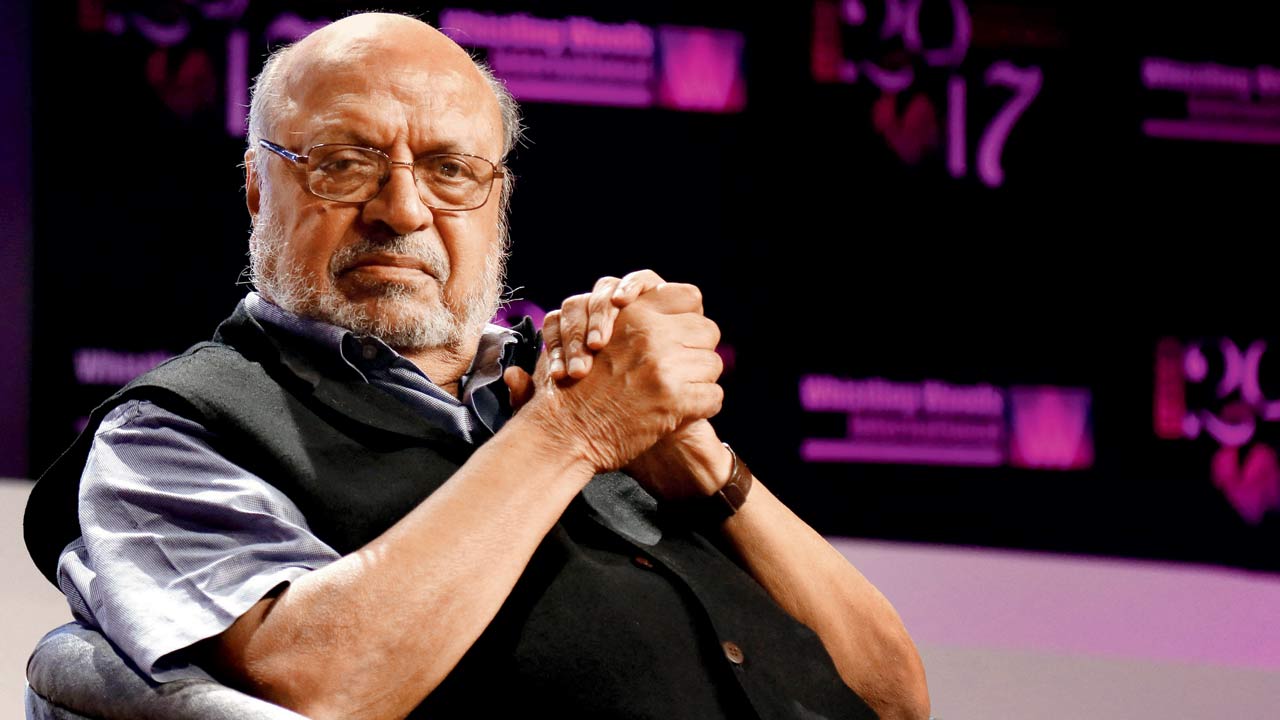
Benegal Pioneered New Wave Cinema, Created Cult Classics
Sunil Nair (THE TIMES OF INDIA; December 24, 2024)
Shyam Benegal came out of nowhere and lit up the Hindi film scene in the 1970s at a time when the industry was "an absolutely closed shop", as a close associate recalled it. It was the age of melodrama and action - 'Roti Kapda Aur Makaan' and 'Sholay' were big hits - and every release flaunted a roll-call of stars. "There was no possibility for any young filmmaker to get into it at all," is how Girish Karnad, who was then director of the Film and Television Institute of India, described it.
Benegal's neorealism struck a deep chord with a generation keen on films that would mirror the social and political tensions of their time. His debut film 'Ankur' (The Seedling), a tale of sexual exploitation set against a feudal background with a cast of unknown yet riveting newcomers, ran 25 weeks at the landmark Eros theatre in Bombay. He had begun writing the script of 'Ankur' when he was in college in Hyderabad and spent 20 years looking for a financier before an ad film distributor agreed to produce it. Its success staked out new ground for the 'art/parallel cinema' movement that over time showcased new talent such as Naseeruddin Shah, Shabana Azmi, Smita Patil, Om Puri, Govind Nihalani, Vijay Tendulkar and Vanraj Bhatia.
Benegal, who pioneered parallel cinema in India and created the 53-episode Bharat Ek Khoj, and whose last project was a 2023 biopic on Mujibur Rahman - 'Mujib: The Making Of A Nation' - passed away in a hospital in Mumbai, days after he turned 90 on Dec 14.
Shyam Benegal grew up in a cantonment town near Hyderabad in 1930-40’s where his father, a professional still photographer, introduced him to the camera. The obsession with movies began early, his appetite whetted by Hollywood and Indian releases screened at a local hall for the morale of the troops. “There used to be two programme changes a week,” he once recalled. “…like in Cinema Paradiso, I befriended the projectionist so I could see both...”
Shifting base after his education, he began working at Lintas in Mumbai as a copywriter. The next decade and a half were spent on a prodigious number of ad films and documentaries. Traces of the social concerns underpinning his cinema are evident in the shorts he made, including the earliest ones, such as A Child Of The Street, which took a compassionate look at juvenile vagrancy, and Close to Nature, a colourful take on tribal life in Madhya Pradesh.
His stint as a teacher at the Film and Television Institute of India (FTII) drew him closer to celluloid. But his bleak stories still had no takers among financiers. Lalit Bijlani of Blaze Advertising eventually stepped in. Both Ankur and Nishant, which came a year later, were set in the feudal lands of Telangana, a region under the Nizam. It was a world Benegal had seen up close in his formative years. Touted as his most striking works, the narratives and characters were situated in a rural milieu with a distinct dialect and attendant class-caste equations. Coming around the time of the Emergency, the two films spurred a movement of sorts and cemented his reputation as the high priest of the ‘New Wave’.
Benegal’s eclectic interests showed in the diversity of subjects. From Gujarat’s milk cooperatives (Manthan) to the life of a silent film era actress (Bhumika), from 1857 (Junoon) to feuding business families (Kalyug), his projects spanned periods and themes. A bearded, Renaissance figure at the centre of the ‘art film’ circuit, he was equally a mentor to actors, musicians, writers and technicians.
At a felicitation to celebrate Benegal’s 25 years as a filmmaker, actor-playwright Girish Karnad spoke of his innate ability to help artistes tap their potential. “He was not just a director but also a doctor, a psychiatrist, a father figure and a banker,” said Karnad.
The latter part of Benegal’s career was marked by biopics, including one on Gandhi’s years in South Africa and a tetralogy on Muslim women (Mammo, Sardari Begum, Hari-Bhari and Zubeidaa). By then, the ‘art film’ movement had dissipated. He had turned to a new set of collaborators, many from commercial cinema. His standout work in this period, however, was a part elegiac, part quirky interpretation of a Dharamvir Bharti novel, Suraj Ka Saatvan Ghoda. Occasional forays into television too made for interesting viewing: Bharat Ek Khoj, the mega-series based on Jawaharlal Nehru’s Discovery of India, and Samvidhaan, on the making of the Indian Constitution, were the best examples.
Benegal’s influence on the Indian film industry extended far beyond his own body of work. He headed a govt committee set up in 2016 to streamline the film certification process and lay down a framework that would allow more room for artistic expression.
--------------------------------------------
'Benegal told raw & real stories about ordinary people'
Bella Jaisinghani (THE TIMES OF INDIA; December 24, 2024)
Mumbai: The passing of Shyam Benegal, the torchbearer of New Wave cinema, evoked a lament of loss across the film fraternity Monday night. It was Shyam Babu who discovered and mentored an entire generation of the finest natural actors including Shabana Azmi, Naseeruddin Shah, Smita Patil and Om Puri, having fathered the parallel cinema movement with 'Ankur' in 1974.
In fact as recently as Dec 14, the entire clan met to celebrate Shyam Babu's 90th birthday, with happy pictures featuring Azmi, Shah, Kulbhushan Kharbanda, Kunal Kapoor of Prithvi Theatre, Divya Dutta and Rajit Kapur.
Filmmaker Shekhar Kapur posted: "He created 'the new wave' cinema. Shyam Benegal will always be remembered as the man that changed the direction of Indian Cinema with films like Ankur, Manthan and countless others. He created stars out of great actors like Shabana Azmi and Smita Patil. Farewell my friend and guide."
Actor Manoj Bajpayee whose career was baptised by his prince's act in 'Zubeidaa', termed it a "heartbreaking loss for Indian cinema. Shyam Benegal wasn't just a legend, he was a visionary who redefined storytelling and inspired generations". Actor-singer Ila Arun said, "I feel as if I lost my father. It is the end of a golden cinematic era."
Filmmaker Mahesh Bhatt said, "Shyam Benegal was a giant of Indian cinema. He told stories without pretense. They were raw and real, about the struggles of ordinary people. His films had craft and conviction. He changed Indian cinema, not with noise, but purpose."
Filmmaker Sudhir Mishra said, "Not many talk about the fact that there was a lament in his films and a sadness about the fact we were not living in the best of all possible worlds."
People from all walks of life mourned his loss. Congress leader Rahul Gandhi said, "Saddened by the passing of Shyam Benegal ji, a visionary filmmaker who brought India's stories to life with depth and sensitivity. His legacy in cinema and commitment to social issues will inspire generations. Heartfelt condolences to his loved ones and admirers worldwide."
Congress MP Shashi Tharoor recalled how Shyam Babu during his early years as ad filmmaker had photographed his sister and other children as "the first Amul Babies".
(With inputs by Swati Deshpande)
--------------------------------------------
He leaves behind a body of work so sprawling—shorts, documentaries, features, TV movies, series—that his CV alone might be longer than an obituary
Mayank Shekhar (MID-DAY; December 24, 2024)
Shyam Benegal’s last work, Mujib (2023), was possibly the most important film for Bangladesh; a biopic on the neigbouring nation’s founder, Sheikh Mujibur Rahman. He was 89, when the movie released. You did well, Mr Benegal. His first feature, Ankur (1974), was possibly the most important Hindi film for India’s art-house movement, heralding the Indian New Wave, from Bombay.
In between is a life so full of all kinds of cinema—shorts, documentaries, features, TV movies, series—that his CV alone, let alone its range, might be longer than an obituary can do justice. This would include a series of firsts; again, starting with Ankur itself, that was actor Shabana Azmi’s screen debut. Nishant (1975) was Naseeruddin Shah’s. He picked both actors, after they’d graduated from Pune’s Film & Television Institute of India.
One evening, while watching news on television, the anchor caught his eye, and he cast her in his children’s film, Charandas Chor (1975). That was Smita Patil. Bhumika remains, arguably, her greatest performance. Between Naseer, Shabana and Smita, forming an alternate, Bombay star-system of their own—besides Om Puri (Susman, Arohan), Anant Nag (Konduran, Kalyug), Rajit Kapur (The Making of the Mahatma, Suraj Ka Satvan Ghoda), and so many others—Benegal didn’t just make films.
He built an entire eco-system, for what came to be known as Hindi parallel cinema. Named such, because it did not intersect with the Bombay mainstream—remaining true to its realism, social consciousness, barely appeasing to audience’s baser instincts, or ignoring its intellect, while staying within commercial cinema, after all, for his features were still mostly privately funded (Blaze Productions, in particular).
An unassuming, gentle soul, gifted with gravitas, foremost, Benegal was a young mind. How else do you explain a career scripted over seven decades. Consider that when he made his first short, in 1962 (Ghar Betha Ganga), Jawaharlal Nehru was still India’s Prime Minister; man was several years away from stepping on the moon; and it’d be 20 years before we’d get Doordarshan (DD) for a proper national broadcaster.
Last checked, Benegal was still making movies. His partner, Nira, both in life and films, was his sounding board. He gave DD, and indeed Indian television, its greatest OTT slow-burn, decades before there was OTT, with Bharat Ek Khoj (1988), based on Nehru’s Discovery of India. He made India’s crowd-funded film, Manthan (1976), based on the life of dairy engineer, Verghese Kurien, with contribution of 500,000 farmers, decades before crowd funding became a term.
With Junoon (1979), he made the sharpest effort, until then, to take art-house into a big-budget space, with stalwarts of the time, adapting Ruskin Bond’s A Flight Of Pigeons. At the turn of the century, when multiplexes offered a short-lived window into exploring meaningful yet entertaining content, beyond simply the starry space, he brought forward intelligent comedies, Welcome to Sajjanpur (2008), Well Done Abba! (2009).
This is before he swiftly switched gear, and embarked on the astoundingly ambitious series, on the making of the Indian Constitution, Samvidhaan (2014), for Rajya Sabha TV. Yup, Benegal has always been there. Not just in terms of works, but also for how he inspired. What’s the final shot in Nagraj Manjule’s Fandry (2013), if not the stone-throwing finale of Ankur!
Given the widest possible gamut, surely, everybody has a Benegal Top 10. And each might read so different from the other. Kalyug (1981), modern adaptation of Mahabharat, set in Bombay’s corporate world, tops mine; Mammo (1994) might be a second; Mandi (1983) could be yours, or Zubeidaa (2001), if you’re younger.
A cousin of Guru Dutt, who got interested in cinema, because of his photographer-father Sridhar Benegal, who gave him access to a movie camera, when he was only 12—once Benegal moved to Bombay, from Hyderabad, he started out as a man of advertising.
It’s something he shared with Satyajit Ray, his inspiration of sorts. One of the most enlightening conversations on cinema that Benegal left behind for film buffs was his interview with Ray himself, for a documentary (that occasionally appears and disappears from YouTube).
It’s where you see Benegal for simply a curious movie mind. And a consummate movie buff, you would always spot at screenings at cinemas and festivals. The last I met him, in 2019, at his Tardeo office, which is a shrine of sorts in filmmakers in Mumbai—it was right after his Manthan actor and long-time associate, Girish Karnad, had passed on.
“Everybody’s leaving now,” he said. The very next minute, he began revealing how the then Bangladesh PM, Sheikh Haseena, had entrusted him with a film on her father, Mujib, along the lines of Richard Attenborough’s Gandhi. Benegal was 85 then—speaking about recommendations to the Indian censor board that never got implemented, or his public commitments in Goa, initiated from his Member of Parliament fund.
We discussed movies as a changing medium. He told me the cellphone was the best way to watch films—the eye’s distance should, anyway, be one and half times the length of the screen’s diagonal, and the sound doesn’t get better than a headphone. I’ve followed his advice since. There was so much more to learn. The movies remain. He lives on forever.
I didn’t even have money to buy a cup of coffee when I first went to Cannes-Shabana Azmi
8:14 AM
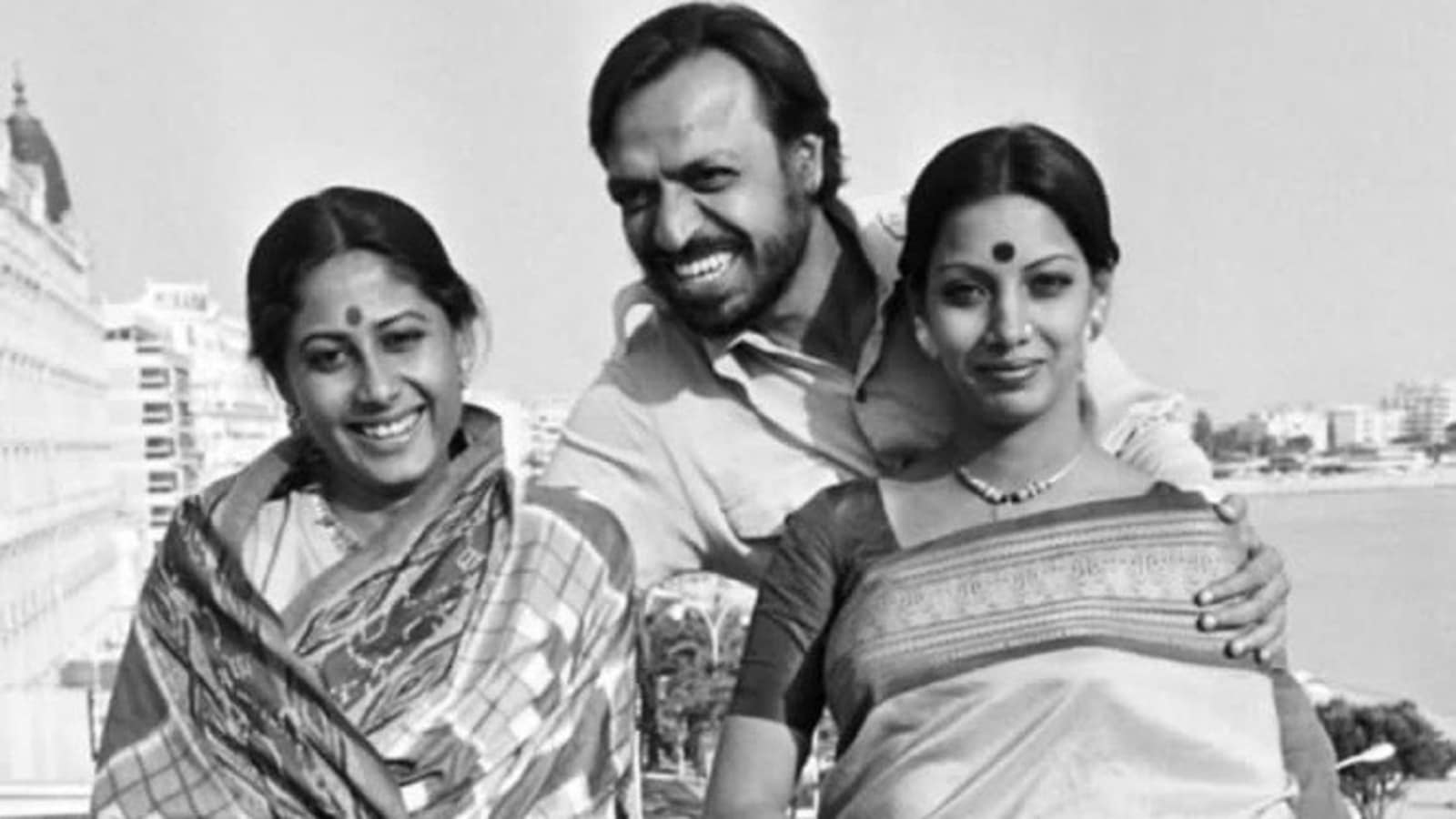
The actress recounts memories of her first experience at the Cannes Film Festival in 1976
Tanvi Trivedi (BOMBAY TIMES; May 21, 2022)
Veteran actress Shabana Azmi along with Smita Patil and filmmaker Shyam Benegal represented India at the Cannes Film Festival as early as 1976. The trio was at the prestigious film festivals to showcase their film Nishant. The actress in a recent post on Instagram shared how they had no publicity material or funds to promote their film, but they still managed a full house! BT spoke to Azmi about her experience back then and how she views the festival now. Excerpts:
You had recently posted on your social media about attending the Cannes Film Festival in 1976. What do you remember about your first experience there? How was it meeting people on a global platform?
Back then, we were not glamour struck by anything. We were experiencing terror at not having any publicity material or any money whilst others were throwing lavish yacht parties with caviar and champagne.
We were allowed the princely sum of eight US dollars in foreign exchange, so when I say we had no money, I mean it. Since breakfast was included in the room tariff, we used to fill our stomachs and survive on coffee and French fries during the day. Inevitably, we had dinner at many parties, where our intention was less to network and more to fill our stomachs! What was fascinating, however, was to have Shyam draw up a list of the films that we could watch, as we rushed from one screening to the next!
You spoke about the lack of funds. How did your team manage a full house?
Shyam came up with the idea that Smita and I should dress up in our best sarees and walk up and down the promenade to attract attention. We turned many heads because whilst there were many in bikinis and shorts, we looked like we were out of some oriental exotica! We would then rush to the curious people and say, ‘Please come and watch our film, which is in competition on so and so and this date!’ But the ruse worked, we managed a full house and even received a standing ovation.
After 1976, when did you go to the Cannes Film Festival next?
I was scheduled to go there for the screening of my film Genesis, an Indo-French-Belgian co-production directed by Mrinal Sen in 1986. A day before the trip, I decided to go on a hunger strike organised by the NGO Nivara Hakk with Anand Patwardhan and three slum dwellers for the rights of slum dwellers in Cuffe Parade, whose huts had been demolished. Five days into the hunger strike, Shashi Kapoor negotiated on our behalf with Chief Minister S B Chavan, and we managed to get the alternative land we were demanding. It was worth giving up going to Cannes and mercifully Mrinal da was very supportive. Later, I was invited to Cannes to give the award for the best documentary film in 1989. I was chuffed; I was now staying in a fancy suite of the very hotel we used to look longingly at; when we didn’t have money to even buy a cup of coffee at the Cannes Film Festival.
Celebs’ red-carpet appearances at Cannes become a talking point every year. How do you view the Cannes Film Festival now, with a huge focus on fashion, along with great cinema?
I remember some years ago it was said that any woman wearing flat sandals cannot appear on the red carpet. I was horrified and protested loudly. They received a lot of flak for it. Mercifully, they decided not to go ahead with that diktat. This business of the red carpet drawing so much attention is pure commerce. Many jewellers and fashion houses use it as an opportunity to advertise their wares. The celebrities are happy to look good without having to pay for it and so it’s a win-win for both. That’s the way the world functions today. But for me, the primary focus of a film festival remains the opportunity to watch the latest in world cinema. I am less interested in who wins the award and more interested in catching a distant film that otherwise I would be unable to.
If you were to go to Cannes now, how would you like to dress for the festival?
Without a doubt, in a saree. There is a timeless elegance to the saree, which is unmatchable.
Unique collection of foreign posters tells the global story of Indian cinema
8:19 AM

Curator Jahan Bakshi, who scours the globe for local reincarnations of movie posters, has found gems like Awara in German and Raju Ban Gaya Gentleman in manga style
Mohua Das (THE TIMES OF INDIA; February 4, 2021)

When Jahan Bakshi, a movie art curator in Mumbai, stumbled upon old Czech and British quad posters for Satyajit Ray films with neo-futurist fonts and colourful surrealism, he knew he was onto something special. His curiosity led him down a rabbit hole — of familiar yet outlandish — doppelgangers of Indian movie visuals from across the globe that revealed a fascinating yet undocumented history of how different countries reimagined Indian films.
“Looking for foreign posters of Indian films started as research for an article but soon became an obsession. It was a revelation to see what Indian films look like when seen through a foreign prism,” says Bakshi who has unearthed around 150-odd foreign origin Indian posters and acquired around 50 physical copies from places spanning Russia, Latvia, Bulgaria and East Europe to France, Germany, the UK, US, Japan, China, Thailand and Egypt. “They’re unique both aesthetically and conceptually... like watching an act of translation via a poster image. It was also eyeopening to see just how much Indian cinema had travelled globally in the past.”

Recast, often dramatically, to resonate in the local market, these foreign posters blend local language, sexual allure, religion, violence and intellectualism. If some are reminiscent of the myths and legends of that land — for instance, the Russian poster for 1990 action thriller Khoon Bhari Maang borders on a folktale with the magnified head of an alligator occupying centrestage against an intense pink background and the Hungarian reincarnation of Benegal’s Nishant has little dragons wrapped around Azmi’s face — many are visual time capsules indicative of the prevailing politics and censorship in the country.

More recently, Chinese posters for Andhadhun — a massive success collecting over $35 million at the box office in China — took on a darker shade with black and white overtones and a braille piano in the foreground as opposed to the popping colours and quirky vibe of the Indian version.
“Interesting patterns emerge from posters of other countries, too. The US posters tend to be text heavy with emphasis on captions and pull-quotes. Posters from Europe and Central Asia are surprisingly flamboyant, eccentric and at times exoticize Indian-ness. Japanese posters are bizarrely unpredictable varying from subtle to whimsical, gonzo to pulpy,” observes Bakshi who scours popular poster sites like New York’s Posteritati Gallery to obscure ones in Germany, Czech Republic and Japan in his rescue mission though the pandemic did delay some of his packages.
But he is fortunate to have found an ally — the Academy of Motion Picture Arts and Sciences. The 30-year-old who had started ‘Posterphilia’ — a hobby project of posting his favourite movie posters on social media two years ago — drew the attention of Anne Coco, the head of graphic arts collections at the Oscars library, last September. “She approached me, asking if I could help build their collection of Indian film posters which was quite scant,” recounts Bakshi, who over the past few months of sourcing Indian film posters for the Academy, pitched the idea of “also” exploring their foreign counterparts.
“Since then I’ve helped them acquire a bunch of Ray, Raj Kapoor and V Shantaram posters of foreign origin and hope we can build it up further,” he says with his fingers crossed. “Old movie posters are cultural artefacts and I want to reclaim this aspect of Indian film history,” he signs off.
Waheeda Rehman was not confident I could pull Ankur off, having never made a film before-Shyam Benegal
8:14 AM

Roshmila Bhattacharya (MUMBAI MIRROR; September 21, 2019)
 In early 1973, Shyam Benegal, an ad filmmaker, decided it was time to make a movie. He already had a story in mind, and also an actress—Waheeda Rehman, who had worked with his cousin Guru Dutt and whose work he admired to play the central character.
Laxmi, a maid from a lower caste, is married to a deaf-mute drunk. She’s seduced by circumstances and false promises into having an affair with the young landlord, Surya, only to be left high and dry after she discovers she’s pregnant with his child. What made Guide’s Rosie the ideal choice for Ankur’s Laxmi was that being from Telangana where the story was set, Waheeda ji could speak the local dialect Dakhini fluently. “But she was a big star at the time while I was a debutant director. She was not confident I could pull it off, having never made a film before,” Shyam babu reminisces with a laugh.
After Waheeda ji turned him down, he thought of approaching National Award winning actress Sharada who had worked in Telugu films. But he changed his mind when he learnt that not being from Telangana, she couldn’t speak the lingo, a mix of Hindi-Urdu, which was essential to fleshing out the character.
That’s when one of his assistants told him about this girl who, while studying at St. Xavier’s college, had impressed in a couple of stage productions. “Does she have a background in performing arts?” he wondered, and was told that her father, Kaifi Azmi, was a famous poet, while her mother, Shaukat Kaifi, had done a lot of theatre. She, too, was a graduate from the Film and Television Institute of India (FTII). Instantly interested, he asked for her to come and meet him.
“One look at Shabana (Azmi) and I knew she was perfect for Laxmi. Yes, she was young and looked young too, but I was willing to tweak the role for her. Going with my instincts, I immediately signed her on, after learning that since her mother was from Telangana, she spoke Dakhini. I didn’t even audition her like I had Anant (Nag) who played Surya, surprising even her,” he flashbacks.
Anant Nag had accompanied an actor whose name Shyam babu has since forgotten, for an audition. “He came to offer moral support to his friend and caught my eye. I auditioned Anant as well and finding him perfect, introduced him in Hindi films. He became a big star in Kannada cinema but always made time for a role in my films,” Shyam babu smiles.
And so, Ankur rolled, with a team of newcomers, with the exception of cinematographer, Govind Nihalani, who had some cinematic experience having assisted V K Murthy. Straightaway, Shyam babu, with his two first-time actors, along with Sadhu Meher (he played the deaf-mute husband), dived into a dramatic scene wherein Laxmi rushes to rescue Kishtaya who, accused of stealing toddy, is being mercilessly whipped by Surya.
Shabana Azmi turned out to be a real find. Her performance bagged her many awards, including the National Award for Best Actress. “She’s an incredible actress with a huge range. Give her a role and Shabana owns the part,” raves her mentor, pointing out that the actress who brought in her 69th birthday on Wednesday, has also earned a reputation internationally, on screen and on stage.
Ankur also bagged the Best Actor award for Sadhu Meher and was adjudged Second Best Feature Film at the National Awards. “It made me a filmmaker and I never went back to advertising,” points out Shyam babu, who’s seen as the pioneer of parallel cinema in India.
After Ankur, he signed Shabana ji for Nishant, Junoon, followed by Mandi in which she played the madam of a brothel. “She was a really slim girl then, I pushed her to put on weight because I wanted Rukmini Bai to be a well-endowed woman, who chewed paan, cracked betel nuts and kept the girls in place,” Shyam babu recalls.
The duo went on to do more films but haven’t worked together of late. Has his protégée changed as an actress or a person in the decades since, you wonder, and he quips, “No, except for the weight she’s put on, which, as I have told her innumerable times, I don’t like. I guess Mandi is partly to blame for it and I will always feel guilty for that.”
Why were 1,845 Indian films rejected at the Cannes Film Festival this year
8:30 AM

File photo of Amitabh Bachchan breezing through the French Riviera, 2002
While Bollywood glamour has been flashing on the Cannes red carpet, concluding today, as many as 1,845 Indian films were rejected this year by the festival’s decision-makers
Khalid Mohamed (MUMBAI MIRROR; May 25, 2019)
Sipping on a fruit smoothie, offseason on the French Riviera’s Croisette, Amitabh Bachchan had asked seriously, “So what does it take to get one of our films to compete at Cannes?”
“A serious theme and plenty of marketing,” an aide had replied succinctly, Bachchan had nodded, non-committally, and had completed his breakfast with a croissant.
This was circa 2002. Bachchan was travelling through Paris-Nice-Cannes-Monte Carlo in connection with the release of a fragrance named after him. Whether the superstar ever followed up the Cannes reverie, is doubtful – since no film of his has ever competed for the award of awards, the Palme D’Or.
Along with his The Great Gatsby co-star Leonardo DiCaprio, he did announce the opening of the event in 2013.
Despite constant grouses by trackers of the world’s most in profile international film festival, the Cannes bosses have still not opened the floodgates of its Palais des Festivals for Indian cinema.
In fact, this year – the 72nd edition of the event which ends today — marked a new low. A sizeable number of 1,845 films were submitted for consideration. None made the cut, except for the short film Afternoon Clouds directed by the Pune Film Institute graduate Payal Kapadia.
Neither was any filmmaker or actor included on the jury unlike Chetan Anand, Mrinal Sen, Shekhar Kapur, Mira Nair, Sharmila Tagore, Aishwarya Rai Bachchan, Nandita Das and Vidya Balan in earlier years.
Mira Nair, whose debut-making Salaam Bombay! way back in 1988 had bagged the Camera D’Or as well as the Audience Award, lately remarked in an interview, “The tastes and agendas of the selection committee and that of Indian cinema don’t necessarily align.” Quite.
Perhaps the usually feisty director was being polite. Without a doubt, she was left chagrined when her widely-hosannaed films Monsoon Wedding (2001) and The Namesake (2006) had been rejected. Ironically, Monsoon Wedding picked up the Golden Lion at the Venice festival.
Indefatigably, the late New Delhi critic, radio broadcaster and government civil servant, Indra Mohan Sahai, had addressed the festival’s then-President, Gilles Jacob, time and again about “the all to apparent prejudice” against Indian entries. To a degree, Jacob and the current President Pierre Lescure, did attempt to remedy this criticism but in fits and starts.
Suddenly Sanjay Leela Bhansali’s Devdas (2002) was showcased to mixed response among the Cannes cognoscenti. Steadily the Bollywood set, among them Shah Rukh Khan, Sanjay Leela Bhansali, Karan Johar and Preity Zinta, began fetching up for photo-ops at the Cannes famed Carlton Hotel.
Last year, Nandita Das’ Manto in the Un Certain Regard section and Rohena Gera’s Sir in the Critics’ Week had at the very least, stirred the attention of the festival goers.
Meanwhile over time, in lieu of Indian films, high-profile Bollywood heroines have been making a splash on the red carpet, merci beaucoup to top global beauty product conglomerates and fashion houses.
Cannes, then, in the public mind, is associated with the haute couture cool displayed most notably by Aishwarya Rai Bachchan and Sonam Kapoor. Ditto Priyanka Chopra. This time around, Kangana Ranaut, Deepika Padukone, Hina Khan, Huma Qureshi and the irrepressible Mallika Sherawat received their share of the paparazzi’s flash bulbs on the red carpet.
Director Anurag Kashyap and his team gained their share of the Riviera limelight with the screening of Gangs Of Wasseypur (2012). Four years ago, Neeraj Ghaywan’s Masaan, became an exception to the Cannes rule, by being laureled in the Un Certain Regard section besides bagging the FIPRESCI award, adjudged by the International Film Federation of Film Critics.
Yet, there’s no gainsaying that Cannes hasn’t opened up hidden masterworks by indie and rising auteurs of Indian cinema. Shyam Benegal flanked by his Nishant (1975) stars Shabana Azmi and Smita Patil, had made an impact. But were many of Benegal’s subsequent films screened there? No.
Ray’s Ghare Baire (1984) and Mrinal Sen’s Genesis (1986) did compete for the Palme D’Or, in vain.
Indian films which have aced Cannes are few and far between. Besides Masaan and Salaam Bombay!, count Ritesh Batra’s The Lunchbox (2013) declared as the Critics’ Week Viewers Choice, Murali Nair’s short film Marana Simhasanam (1999) lavished with the Camera D’Or for a debut director and Mrinal Sen’s Kharij (1982) presented the Special Jury prize.
Ray’s Pather Panchali (1956) was recognised as the Best Human Document, Bimal Roy’s Do Bigha Zameen (1954) was saluted with the Prix Internationale, V. Shantaram’s Amar Bhopali (1951) was thumbed up for Excellence in Sound Recording, and Chetan Anand’s Neecha Nagar was garlanded with the Grand Prix du Internationale du Film (the earlier name for Palme D’Or).
How many milestones of our cinema, in the last seven decades, have gone cavalierly ignored at Cannes is another story.
Perhaps the key reason for this rebuff is the fact that the nation’s meaningful cinema has been hardly marketed and promoted if at all. The National Film Development Corporation does set up a stall — complete with free cups of teas and samosas — at the Marche du Film. But do the spends of the ever-enlargening delegations fructify in monetary deals? Debatable.
To conclude on a positive note, here’s wishing Cannes unconditionally embraces the best of our quality cinema — and there’s plenty of that, I can assure you, compared to the best of Hollywood or any Wood.
And then who knows? Mr Bachchan will no longer have to ask, “What does it take to compete at Cannes?”

Richa Chadha, Neeraj Ghaywan, Shweta Tripathi and Vicky Kaushal at Cannes where their film Masaan premiered on May 19, 2015

Shyam Benegal with his Nishant actors Shabana Azmi and Smita Patil
We had no money for publicity; I told Shabana Azmi & Smita Patil to roam in Cannes in sarees-Shyam Benegal
7:40 AM

Roshmila Bhattacharya (MUMBAI MIRROR; October 19, 2017)
The first thing Shyam Benegal remembers about his protégé, Smita Patil, was her natural talent and reluctance as an actress. She was studying at St. Xavier’s College when he approached her to play the queen in a children’s film, Charandas Chor. “She was very hesitant. Her mother told her not to be silly and let the opportunity slip away,” he narrates.
Soon after, the filmmaker whisked her away to Chattisgarh for the shoot, where she was thrown in the company of Habib Tanvir’s village actors, some farmers, some local traders, who were reprising their roles from the original play. “Smita quickly became a part of the team, having no starry airs or pretensions, a quality that made her special even after she became Bollywood’s leading lady. She would haul the lights and the cables, serve meals. No one realised that she was homesick. Those days there were no cell phones, and in locations as remote as ours, you could at best book a lightning call from the local post office, which was not always possible. So Smita, who was away from her family for the first time, wrote a letter to her mother every day, but otherwise never let slip just how lonely she was,” he says.
The same year, she also played Naseeruddin Shah’s wife, Rukmini, in his Nishant, which went on to bag the National Award for Best Feature Film in Hindi and was only the second Indian film in competition for the Palme d’ Or at the 1976 Cannes Film Festival. “It was a huge honour, but being a poor ‘art’ filmmaker as compared to the other competitors who came from larger industries we had no money even to print posters. So I asked my heroines, Smita and Shabana Azmi, to drape themselves in gorgeous temple saris and walk up and down the Cannes Crussell. They immediately caught everyone’s eye and their photograph appeared on the front page of the local newspaper along with news of the Nishant screening and we had a packed house,” says Benegal, chuckling at the memory.
They did other films together, including Manthan and Bhumika. The latter was broadly based on the memoirs of Marathi actress Hansa Wadkar, Sangyte Aika, with Smita playing Usha, a role that spanned from 16 to 46. “It was a challenge as she was just around 22-23 at the time and had to literally grow up from an adolescent to a mature woman and to familiarise herself with the industry and its trappings. I had taken her to Cannes for Nishant, which was perhaps her first foreign trip. Bhumika fetched her the National Award and the Filmfare Award for Best Actress and she grew up to become one of our finest performers recognized the world over with a unique ability to blend into her surroundings,” he says, recalling the time when they were filming Manthan in Saurashtra, about 35-40 kms from Rajkot. “Smita who played a village woman, looked so much like one, that the college boys who had cycled all the way down from Rajkot after reading that a film unit was shooting in their part of the world, almost didn’t recognise her as she squatted on the floor of her home, leaning against the mud wall. They were whispering amongst themselves wondering about the heroine when one of them suddenly pointed to Smita.”
On October 17, Smita would have turned 62. Ask Benegal how he imagines she might have been today and he sighs, “I can’t, she never thought she would grow into an old lady. She would always say I’ll die young and though I would reprimand her for getting morbid, it happened that way.”
Subscribe to:
Posts (Atom)