Showing posts with label Nikhil Taneja. Show all posts
Showing posts with label Nikhil Taneja. Show all posts
Experts talk about Sharmin Segal and Babil Khan's trolling: "The Internet has made being a****les cool"
8:26 AM
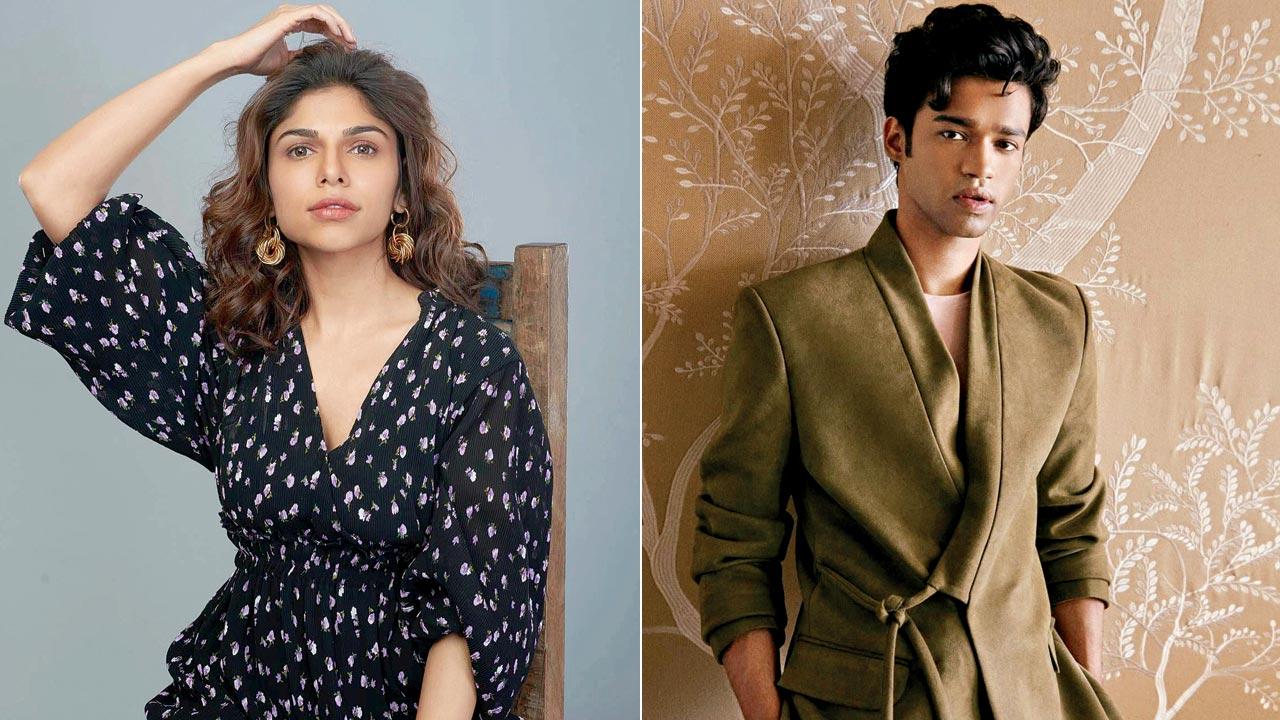
While a critic is concerned with the craft, a troll gets personal. And algorithm could be the reason the attacks on Heeramandi’s Sharmin Segal spiralled
Mohar Basu (MID-DAY; June 9, 2024)
It’s been a month since Sanjay Leela Bhansali’s ambitious OTT debut series Heeramandi dropped on Netflix and the one person who has been discussed the most is his 28-year-old niece, Sharmin Segal. This is her second project after Malaal, and the Internet has been picking away at her performance. Most reviews say Segal’s laboured performance sticks out next to that of seasoned colleagues. But the armchair critic on the ’Gram has also zoomed into the micro-expressions of colleagues as an unprepared Segal gives interviews.
Where does so much hate come from?
The industry consensus is that Segal and many young actors become soft targets for the Internet. “Hate for Sharmin comes from nepotism because she is Mr Bhansali’s niece,” says Tushar Joshi, a film critic with India Today. “In my interview, Mr Bhansali spoke about why he cast her. Alamzeb was meant to naïve, and if you watch the show with Sanjay’s words in mind, you realise that this was their vision for the character.”
Nikhil Taneja, mental health advocate and co-founder of Yuva (a Gen Z-focused media company) agrees that star kids have it worst. “The root of the vitriol towards Sharmin or Suhana Khan or Khushi Kapoor comes from the fact that people are struggling themselves; they naturally dislike those who have easy access. This happened with The Archies as well.”
While this normalized the conversation around nepotism, making it more than a passing discourse, it’s a fine line into harsh trolling. “The Internet has made being a****les cool,” says Taneja, “People need to understand that being unkind to people is not okay. To say that someone is a bad actor is understandable, but to shame people on how they look, behave and talk, you are projecting your understanding of the person.”
So much so that colleague Richa Chadha had to step in to shield her colleague to say, “Criticism has to be constructive. If someone doesn’t like your work, one could say, ‘okay the body language isn’t believable. [or] The voice tonality isn’t okay’. When we start operating like that, we help the actor grow. Actors bhi insaan hai, mental health sabka kharab hota hai.”
An image consultant adds, “The Internet and social media have simply allowed people to say things without being held accountable. We come from the culture of wanting to pull down the next.”
And, it doesn’t help, the professional says caustically that, “Gen Z stars want to be everyone except themselves. They invite hate by being inauthentic. If you are being hypocritical, you can’t cry about it.”
They say it may be their job to protect the client’s image, but that’s hard when they don’t have the personality they try to project. “A lot of it is their own doing,” the image consultant said, “They’re like: ‘Oh I wanna have Kareena’s sassy personality on the Internet’. You can’t become someone else if you are not naturally that.”
Recently, a clip went viral in which Babil Khan, actor Irrfan Khan’s son, is seen apologizing to a woman after he unknowingly bombed her red carpet pictures. One user wrote, “He makes Vanga look better as I can at least see straight forward toxicity”. Another said, “There’s something so spectacularly insidious about a man who makes a whole performance out of being nice. Like who even are u when ur not performing”.
Here, a digital content creator says, freedom of expression is rebellion against the careful curating of personalities. “Comedy is not bullying; it is a commentary,” she says, “My Babil Khan video did well because people are recognizing that his PR has a tendency of projecting him as a little saintly boy. He is already a kind, sweet, wonderful person; cut out the extra drama of buying memes saying, ‘Oh such a green flag’.”
She sees her role to be in line with the press’s: Cutting stars and their perceptions to size. “Be yourself, be authentic. Let us decide if you are a green flag,” she says.
However, Taneja, who shot with Babil last year, says, “He is a visibly anxious person. He has been very open about his grief, his mental health, losing his father so unexpectedly, his living parent. Being vulnerable has made him a soft target. His every move is analyzed, he has to live up to the pressure of carrying forward the legacy of one of the world’s greatest actors. People need to stop and analyse whether they are punching up or punching down. ”
Abhishek Thukral of the boutique PR Agency Hardly Anonymous Communications, says the hate for Segal is a case study on things going too far. And that it’s the publicist’s responsibility to coach a fresh actor on media perception, and check things when they go too far.
“No actor is great in every project,” he says, “And that’s okay. But when an actor is going for promotions of a big show or movie, they must be prepared better. There is a reason experts are hired to give sound advice to talents.”
He adds that young actors have to be trained in facing the press with mock drills to help them field questions better. “You can’t go into a Heeramandi underprepared,” Thukral says.
And in the case of someone who is being launched into the industry, a publicist’s role is to condition the audience to the new person. With star kids, it’s made to look organic with a slow trickle of snapshots from their personal life, with the more recognized or influential parent. “The world should be familiarized with the person before the launch,” says Thukral, “Who are they? What do they like?”
Where do film critics come in all this? In the era of social media, are they mindful of how far their words could travel? Are they aware harsh ones could set off a tsunami of hate?
“A reviewer’s job to take a movie or a show, recommend or fault it,” Raja Sen, film critic, says. “It is your informed opinion. You must present your perspective such that people have a solid idea as to why I like a certain show.”
The critic-filmmaker dynamic is professional, he says, and crucial for better storytelling. They serve as gatekeepers of entertainment and the craft. “Sometimes people in the movies think of criticism as a personal attack,” says Sen. “No it is not; we don’t know these people personally and we are reacting to the work, not the people. As critics, however, the review should lucidly explain what we are finding revolting so that the reader can make up their own mind.”
When the critic-audience-filmmaker is bound by this authentic service, everyone benefits. “Ram Gopal Varma once told me that bad reviews are the only ones worth reading,” continues Sen. “I am not telling a filmmaker where to start a scene; I am saying the movie was a traumatic experience for me. That should make them pause and ask why.”
Joshi agrees somewhat: “Reviews are feedback for course correction; I won’t write the person off. I won’t use harsh words; won’t slam beyond redemption. If a performance is abysmal, we need to ask ‘What isn’t working?’”
He agrees that the conversation is about the craft, not the person. “You ask if the actor getting better with their films, says Joshi, “It’s a conversation about Janhvi Kapoor right now, that her performances are of similar nature. I understand that the actor put themselves out there, [so] they have to be open to critique. But attacks can’t be of a personal nature.”
In a time when perception can be shaped through influencers, Sen believes the role of the critic is even more important. “When I look at criticism today, I see a lot of soft pedalling and pacifying in reviews. There are many agendas, many camps...” he says. “[So] the role of a reviewer is even more crucial now. A critic can’t be wishy washy. In order to stay relevant, they need to be honest.”
In many ways, Reels and other reactions on the Internet are the “authentic” response to this micromanagement of perception. “Through Reels,” opines Sen, “people are representing some authentic experience. It may not be cool, but they are true to their experience. The problem is that they are unfiltered, but they too are a work of passion.”
And once they are out there, algorithms take over, and everyone jumps on the trend to be seen. “We mirror the audience’s mood,” says content creator Arindam Thapliyal. “Our content only reflects what the public feels. Content creators are putting up videos only to stay relevant. They aren’t trying to attack any star.”
He says it’s the public mood that colours the conversation. “It makes a plain comedy video seem like an attack. The videos, if you notice say nothing; it is the comments that are hateful.”
Hate is best managed early, and the publicist we spoke to earlier believes Segal’s image spiralled out of hand. “Narratives can be controlled by buying media narratives, social media memes. The process of any damage control is different. If my client has said something elitist, ignorant, I would suggest acknowledging, apologizing and moving on. If it’s political, I suggest not meddling. If a newcomer is getting hate, you have to counter with positive narratives.”
Individual responsibility, unheard of on the web, will need to be practised soon. “The Internet is our second home and to keep it clean, hate free and non-toxic is as much our responsibility,” says Taneja. “It is not long before we all start being shaped by this hate.”
It's raining men: Why alpha males are in cine spotlight
2:44 PM

Macho action movies dominated the box office this year while female-led films have been releasing only on OTT
Shruti Sonal (THE TIMES OF INDIA; December 10, 2023)
Men in thick, flowing beards. Shotguns that seemingly come with infinite shells. Fights on top of helipads, trucks, bridges. A background score that drowns out everything else. And, a box office register that doesn’t stop ringing for angry young bros.
This roughly sums up the year’s blockbusters. Of course, nothing matches the misogyny of Sandeep Reddy Vanga’s A-rated ‘Animal’. It has the male character cracking jokes around menstruation, gratuitous violence and even the hero asking a woman to lick his shoes to prove her love for him.
“Like revenge tourism, 2023 was the year for revenge movie-watching in India,” says Girish Johar, Mumbai-based producer and film business expert. “Action has always been a safe bet. However, after the pandemic, filmmakers and producers know they need big-scale, larger-than-life films to pull audiences out of their homes. Other types of films, they prefer to watch on OTT,” he adds.
The statistics bear this out. The top seven grossers in 2023 all belonged to the action genre, including ‘Jawan’, ‘Pathaan’, ‘Gadar 2’, ‘Jailer’, ‘Leo’, ‘Animal’ and ‘Tiger 3’. ‘Rocky Aur Rani Kii Prem Kahaani’, which took the eighth spot, stood out as one of the only rom-coms that emerged a hit. There were several female-led films such as Kareena Kapoor Khan-starrer ‘Jaane Jaan’, Tabu-led ‘Khufiya’ etc but they did not hit the theatres and were directly released on OTT platforms.
ADRENALINE RUSH
Through the years, Hindi cinema’s male protagonists have shown several shades. The 1950s showed a tempered masculinity, gentled by the trauma of independence and partition, hopeful about the future. Think of Guru Dutt’s romantic artist — philosophical and doubting. Raj Kapoor’s tramp is bewildered by industrial modernity, Dev Anand is a louche charmer. None of them is particularly muscular, some even have an androgynous quality. In these early movies, there was a resistance to social norms, a questioning and conflict around tradition, even as many films implicitly reaffirmed gender conventions.
Of course, the straitjackets of virtue and good-girlism confined women. They were usually props and symbols, whether as deified mothers and bhabhis, vamps and ‘items’, or even ‘heroines’: love interests with no independent character arcs or complexity. But the men had range.
The ’70s moved from Rajesh Khanna singing about lost love, to Amitabh Bachchan’s smouldering rage at unfulfilled promises to the working classes. In the ’80s, this subaltern male anger turned into a darker thing, with lawlessness and vigilantism as central themes. It was pretty much standard to show stalking and harassment as a prelude to love. The movies lingered over rape, showing it as a titillating spectacle, and as a method to teach other men a lesson, as a loot of izzat.
The post-liberalization era saw themes of love and rebellion emerge, with romantic heroes grabbing the spotlight. However, a 2002 study of Hindi movies from the late ’90s said moderate sexual violence against female characters was “depicted as fun, enjoyable, and a normal expression of romantic love”. Now, a new hype masculine ideal has gathered strength.
While the depiction of violence in films isn’t new, the present surge marks a ‘shift’ in the use of it, says Geetanjali Chadha, professor of gender and cinema at Ashoka University. “During the ‘angry young man’ era, the violence had a purpose. It was more about the difference between the rich and the poor, and made the audience root for the underdog. Today, it’s closely tied to nationalism, strength, and glamour. The women too are no longer passive, often playing a key role in accepting it,” she says.
Economics plays a role too, points out Shrayana Bhattacharya, economist and author of ‘Desperately Seeking Shah Rukh’, which analyzed the moviegoing experience in India through the lens of gender and class. “Because men hold 82% of the country’s income, movies that depict strong men may do better at the box office than those that depict more vulnerable men or stronger female parts,” she explains.
SHRINKING SPACE
However, while the action genre means good business, it has also raised questions about the shrinking space for women moviegoers and women’s stories. Paridhi, a 22-year old from Delhi, says the rise of such ‘alpha male’ characters, shrinks her options. “The problem is not with violence, but the glorification of it. I also went to watch ‘Pathaan’ and ‘Jawan’ in the theatres, but with ‘Animal’, the clips really made me uncomfortable. Looking at its collections, other male actors will definitely gravitate towards this genre too.”
However, Nikhil Taneja, co-founder of youth-centred media organization Yuvaa, and host of the podcast ‘Be A Man, Yaar’, says he isn’t convinced that hypermasculinity is the only thing that works. “There’s a space for alternative conversations, even in action films. In ‘Pathaan’, for instance, Shah Rukh Khan has a female boss, and is saved by a female spy. In ‘Jawan’, he has an army full of young women,” he points out.
However, he adds that it’s important to understand why many young males today are tilting towards ‘alpha male’ content, espoused not only by films like ‘Animal’ and ‘Kabir Singh’, but also podcasters such as Andrew Tate. “I have interacted with over 15,000 students across campuses in the last four years for research work. While women dealing with various forms of patriarchy are often able to find sisterhood and community, men have told me they lack positive communities to talk about loneliness, which leads to bitterness, anger, and violence,” he says.
In a scenario like this, they often turn to characters they can relate to, or those who vindicate their emotions, he says, adding that therefore, filmmakers should have a certain degree of accountability of what they’re putting out there.
“Toxic characters should be represented on screen, but they have to be self-aware and have context. For instance, in films like ‘Darr’ and ‘Anjaam’, everyone knew SRK was the bad guy and he met his fate in the end. However, in some films being made today, if the directors put a cool background track as the character commits violence, they make it a character worth aspiring for. Men look at it and think it’s cool.”
Jasmeet K Reen,, writer of the critically acclaimed ‘Darlings’, feels that artistic freedom is paramount, and the audience can be the only judge. Her Alia Bhatt-starrer depicted a woman breaking free of a marriage filled with physical and psychological abuse. Some scenes were graphic, and the writer grappled with how to depict them.
“Every filmmaker has their own ideology which, whether they like it or not, reflects in their films. If I’m making ‘Darlings’, what I feel, what my ethics are, what I feel about sexism, what I feel about gender, what I feel about violence, it will show in the film. It also means that everybody has a distinct voice and I cannot control how other people should tell their stories,” she says.
Subscribe to:
Posts (Atom)