Showing posts with label Nasreen Munni Kabir. Show all posts
Showing posts with label Nasreen Munni Kabir. Show all posts
100 years of Guru Dutt: The filmmaker who changed the way we ‘see’ songs
9:14 AM

Namrata Joshi (THE TIMES OF INDIA; July 6, 2025)
Guru Dutt was a man of many parts — a consummate actor, a perceptive writer, a trailblazing director and an accomplished producer. A significant element of his oeuvre, worth a deep dive on his birth centenary this July 9, is his flair for conceiving and conjuring up musical set-pieces that haven’t just stood the test of time but become touchstones for visualizing a film song for generations of filmmakers.
Take the most popular composition in Dutt’s romantic noir, ‘Jaal’ (1952). It comes as a double bill — two different versions in two distinct situations. Lata Mangeshkar’s sad counterpart — Chandni raatein pyaar ki baatein kho gayi jaane kahan —to the preceding S D Burman-Sahir Ludhianvi song sung by Hemant Kumar— Ye raat ye chandni phir kahan — is striking in the way Dutt slips it into his storytelling.
Fisherwoman Maria (Geeta Bali) is pining for the stranger Tony (Dev Anand) she has fallen hopelessly in love with. Her father Carlos (K N Singh) has warned the bad boy to stay away from his daughter and got her formally engaged to Simon (Ram Singh). After the church ceremony, she returns to the same spot by the beach where Tony had once serenaded her — the guitar placed in the backdrop a symbolic reminder of lost love. Once Dutt sets up the scene, he opens it deftly with Hemant’s call for love playing in the background, as a prelude and launchpad for the Lata melody. He then keeps weaving the Hemant line in and out as a memory of Tony that won’t fade.
It’s a unique aural throwback. Voice as a memory. “Filmmakers commonly use flashback of images. Guru Dutt does an audio flashback through a song split over time,” explains author-filmmaker Nasreen Munni Kabir, who made ‘In Search Of Guru Dutt’, a three-part documentary on the actor-writer-filmmaker-producer and has written two books on him.
Another song used by Guru Dutt to great cinematic effect is in the romantic comedy ‘Mr and Mrs 55’ (1955). Unlike ‘Jaal’, here the song is in the same time frame but divided across two separate spaces. Geeta Dutt warbles Preetam aan milo (originally a 1945 non-film song of C H Atma) that Anita (Madhubala) is shown listening to on the radio. As her aunt Seeta Devi (Lalita Pawar) switches it off, Dutt cuts to Preetam (Dutt himself) packing his bags to leave town with the song playing on his radio as well. The song becomes a subtle representation of the couple’s estrangement. Later, in the climax, it again plays behind the scenes but this time as a marker of their reconciliation.
“Dutt had a unique understanding of the form, the shot-taking and editing across time and space. His songs are pure cinema,” says Kabir. Dutt’s songs were integral and drove the narrative, be it any genre he directed — the early crime thrillers, the romantic dramas in the middle and the two classic tragedies that have immortalised him. A Guru Dutt song had an identity of its own while always being in harmony with the larger picture. “Just listening to the songs can give you the vision of a Guru Dutt film even though you may not have seen it,” says film historian Pavan Jha.
The magic of black and white and his steady collaborator, cinematographer V K Murthy, were keys to his singular craft such as the signature tracking shots, the eloquent closeups, use of light and shade, the looming shadows and the elemental melancholia alongside slivers of desultory merriment. “The vision was Guru Dutt’s, but Murthy was the one to execute it,” says Jha. Their most potent collaboration was in Waqt ne kiya (‘Kaagaz Ke Phool’, 1959) with the play of light writing exquisite poetry on Waheeda Rehman’s face.
There are several seminal aspects to a quintessential Guru Dutt song. The special way he framed the scenes like the iconic “poet Vijay (Dutt) as Christ image” in Ye duniya agar mil bhi jaaye to kya hai (‘Pyaasa’, 1957). Or the way he designed Saakiya aaj mujhe neend nahin aayegi in ‘Sahib Bibi Aur Ghulam’ (1962), a film credited to Abrar Alvi with speculations of Dutt having ghost-directed parts of it. In the song, the lead Meenu Mumtaz’s face is brightly lit to keep the focus on her, while the background dancers stay in the shade. The years spent at Uday Shankar’s cultural centre in Almora would have been crucial in imparting Dutt a sense of rhythm that is reflected in the tempo and flow of his scenes and song sequences. Dutt alternates between the Baul singer and Gulabo (Waheeda Rehman) in Aaj sajan mohe ang laga lo in ‘Pyaasa’ to create an inimitable mix of the sacred and the profane as an expression of her inner desires.
Though he gets identified with melancholy, some of his best songs have a conversational beat and a sense of playful banter like Taqdeer se bigdi hui and Aaj ki raat piya (‘Baazi’, 1951); Chori chori meri gali aana hai bura (‘Jaal’); Mohabbat karlo jee bharlo, Ye lo main haari piya, Babuji dheere chalna, Kabhi aar kabhi paar and Sun sun sun sun zaalima, all in ‘Aar Paar’ (1954), the last one with another version, Ja ja ja ja bewafa.
On the other hand, a seemingly fun song like Sar jo tera chakraaye in ‘Pyaasa’ becomes an oblique but effective comment on class divides. And who can forget the scathing critique and protest embedded not just in Sahir’s words, but the many tableaus of nation’s troubles and the wry cynicism of Dutt’s face filmed in Jinhe naaz hai hind par wo kahan hain?
Guru Dutt is one of the rare Indian directors to have made a film both his crowning achievement and a grand box-office failure — ‘Kaagaz Ke Phool’ (1959). Instead of lengthy dialogue, the almost five-minute song Ud ja ud ja pyaase bhanware captures the once-successful Suresh Sinha (Dutt) — now lonely and forgotten — meeting his end on his rightful director’s chair.
It’s with the likes of Guru Dutt that songs have spoken louder, and more profoundly, than words.
I’d sleep under the porch of Khar railway station-Javed Akhtar
8:26 AM
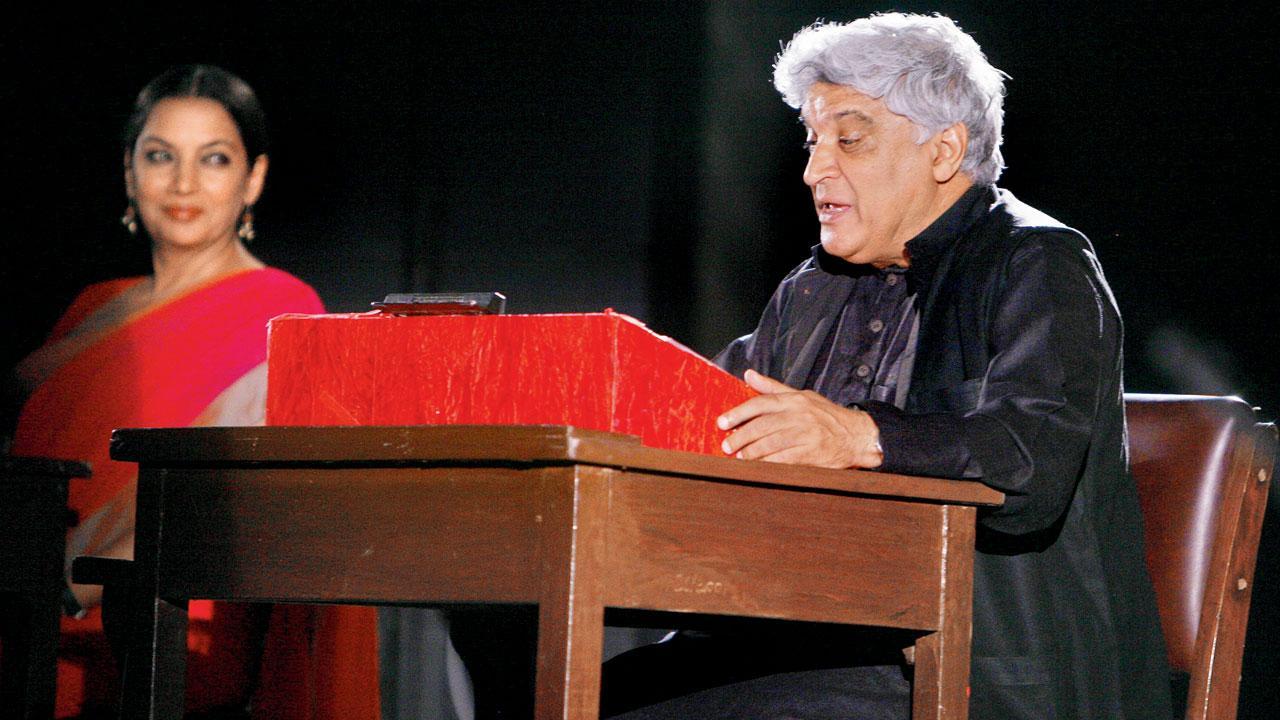
Thrown out of his father’s Bombay home by his stepmother, lyricist Javed Akhtar in a new book tells Nasreen Munni Kabir how good friends and Cha-Cha-Cha kept him afloat in the city of dreams
MID-DAY (January 29, 2023)
Nasreen Munni Kabir: Can we go back to the time you first came in Bombay to settle down here? I remember you once told me you arrived on October 4, 1964. You were 19 years old and that’s when you began looking for work in films. What drew you to films?
Javed Akhtar: There was no shame for a writer to work in films because almost all the important poets and prose writers were working in the film industry at that time; they were either writing dialogue, screenplays or songs.
Don’t forget, my father was already working in films as a songwriter. He had not reached the position of Sahir, Shailendra or Majrooh Sultanpuri, although he was doing well. I must admit I did not try to get into films because of those great writers—frankly, I came to Bombay because Dilip Kumar, Dev Anand, Raj Kapoor and directors like Guru Dutt, Mehboob Khan, Bimal Roy and K Asif were working in films.
I thought the film industry was glamorous and I was seduced by the world of Hindi cinema and I wanted to be a director. At 19, one does not always have a clear plan. The only thing I was certain about was wanting the dialogue writer Akhtar-ul Iman to write the dialogue for my first film. He was a well-known Urdu poet and wrote excellent dialogue for many films, including B R Chopra’s courtroom drama Kanoon. It was a film without songs, which is still a rarity in Indian cinema. His lines for Nana Palsikar’s character in Kanoon were sharp and incisive.
Akhtar-ul Iman also wrote superb dialogue for Yash Chopra’s Dharmputra and Waqt. He won the Filmfare Award for Best Dialogue for both these films. His Flat No. 9 was disappointing and not up to his usual standard, but I made it a point to see all the films with his dialogue.
NMK: When you came to Bombay, you said you stayed with your father for only five days. Why only five days?
JA: In a fit of temper my stepmother slapped me and threw me out of the house. This happened in my father’s presence. She just didn’t want me around. And there I was, not even 20 years old, on the streets of Bombay with 27 naya paisa in my pocket.
NMK: Didn’t your father defend you?
JA: No. There’s no point talking about it now—what’s done is done. I was accustomed to living a paradoxical life for years.
Whenever I had to go hungry because I didn’t have a rupee to my name, I would dream of daal-chawal. In my mind’s eye, I’d see steam rising from the hot daal and marvel at the whiteness of rice. Why daal-rice? Was it my favourite dish from childhood? After many years, I understood why. When you have an empty stomach for more than 36 hours, you can have a lot of acidity, and so your body cannot cope with spices and wants plain and simple food. And that is why your mind fantasizes about daal and rice.
NMK: Besides sleeping hungry on some nights, you once told me you slept in a railway station. Is that right?
JA: Yes, I did sleep a few nights under the porch of the Khar railway station. If I had nowhere to sleep, I slept in parks and on pavements. Though, for the most part, I was welcomed in their homes by my many friends, including Javed Mahmood and his sister Zohra Jamal. Zohra Jamal was a short-story writer and a former student of my mother’s. After spending some weeks with them, my friend Parvez, who was a film publicist, and another friend, Kamal Anand, and I shared a room costing ninety rupees a month. We paid thirty rupees each. Parvez is no more now, but I am still in touch with his wife. Her name is Shibani, and at that time she was his girlfriend. Her sister’s name was Nazar. I used to call them ‘Chhoti behen’ and ‘Badi behen’ because the maid who came to clean their house called them by those names.
Even today, I have Shibani’s number in my contacts under the name ‘Chhoti behen’. We became friends. They belonged to an upper-middle-class family and generously took me to the movies and insisted I eat with them, so every night I landed up in their home. Shibani and Nazar often asked me to accompany them to fancy parties, some hosted by big industrialists, including the owner of Himalaya Bouquet. He had a huge bungalow in Powai that had a plaque on the gate that I will never forget: ‘We may be vegetarian, but our dogs are not.’ [both laugh] At these parties, I made my presence felt by cracking jokes and telling stories. People seemed to enjoy my company. That was a plus point.
NMK: I can sense how moved you are by the kindness of your friends and strangers. I believe it was thanks to some friends you even learnt ballroom dancing.
JA: Yes. We had a common friend, Kishan Tinani. He was a few years older than me, and he was a dancer, so Shibani, Nazar and Parvez asked him to teach us ballroom dancing. That’s how I came to learn it.
NMK: Were you a good dancer?
JA: I don’t claim to have been exceptional. I was pretty good. I have a sense of rhythm and was graceful enough. My favourite dance was the Cha-Cha-Cha. It was crazy—I was without a job, without money to pay the rent, and yet I was learning ballroom dancing and attending fancy parties, thanks to my friends. There are good people in this world. It is not made up of only bad people who want to harm or hurt you. If life has dealt you bad cards, sorry, tough luck!
NMK: I’m amazed you managed to retain your sense of humour.
JA: Maybe it’s because of those days that I have it at all! Shock absorbers in a car are not for smooth roads but for bumpy ones, for roads with potholes. A sense of humour is a kind of shock absorber. It is meant for bad times and comes in handy for making horrid moments tolerable.
Excerpted with permission from Talking Life: Javed Akthar in Conversation with Nasreen Munni Kabir, Westland Books
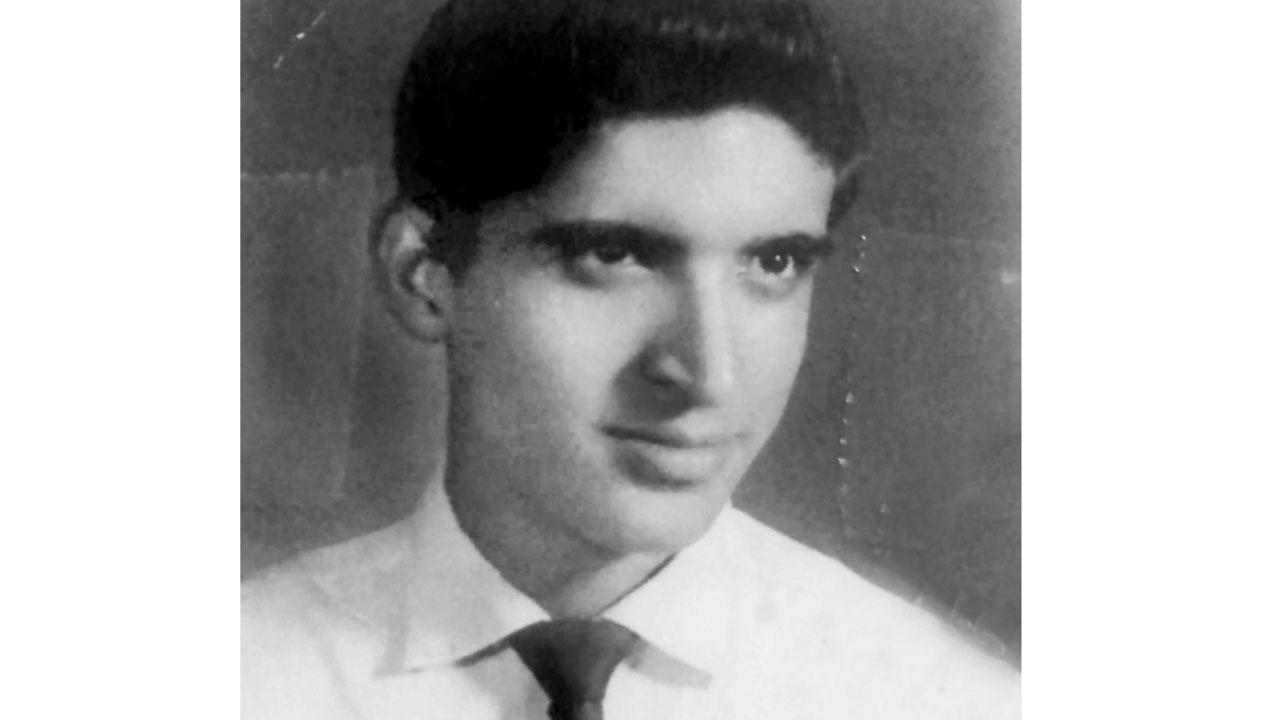
Javed Akhtar at 18 in Bhopal—this picture was taken from an ID card made for the Youth Festival, Delhi, 1963, where young Javed participated in a group discussion. It was at the festival that he happened to meet Amjad Khan who was representing the Bombay University in drama. He moved to Mumbai a year later, in the hope of becoming a director. Akhtar says his early years of struggle in the city made him develop a sense of humour. He is seen here (left) with wife Shabana Azmi during a screening of the play Kaifi Aur Main in 2010. Pic/Getty Images
I realized the women were no longer talking about Shah Rukh Khan. They were using him as a metaphor-Shrayana Bhattacharya
8:57 AM
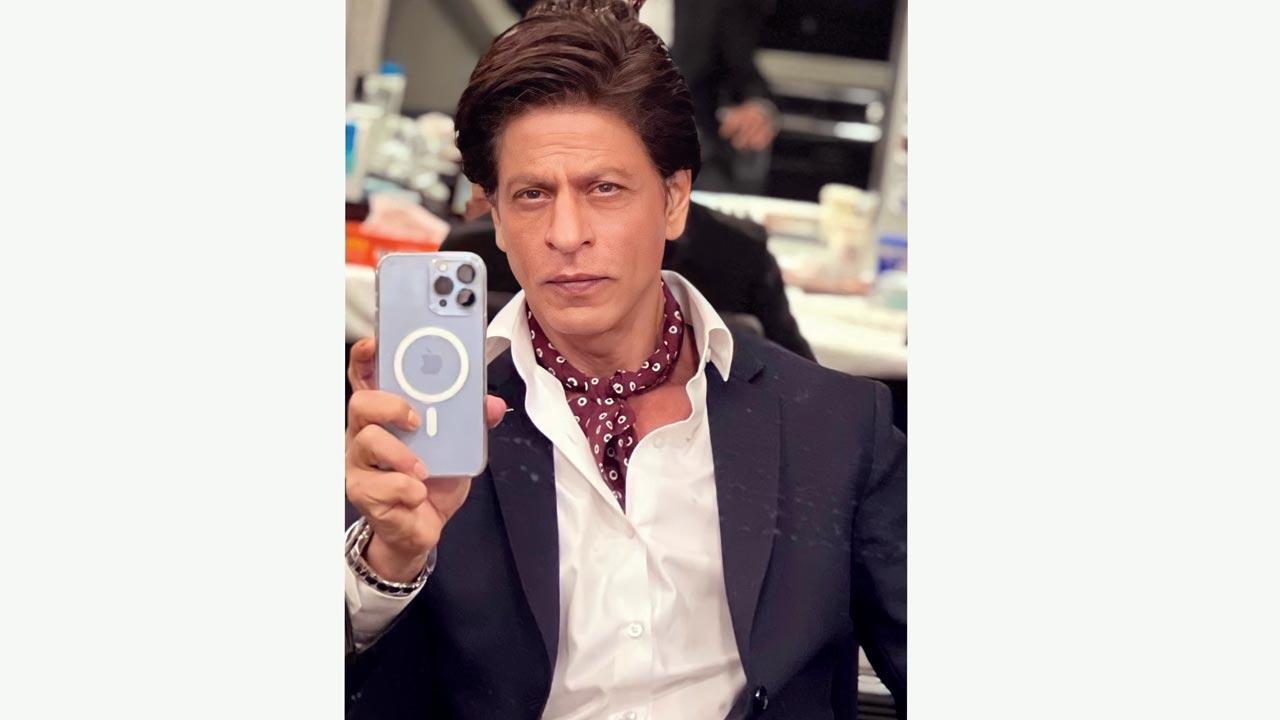
Thirty years after the Hindi film industry welcomed SRK into the movies, his legacy shines on. A social scientist, a documentary filmmaker, and his biggest fan deconstruct the myth and madness of Bollywood’s baadshah
Jane Borges (MID-DAY; July 3, 2022)
On our table at the Aquarius poolside restaurant of The Taj Mahal Palace Hotel, actor Shah Rukh Khan dominates the conversation. Writer-economist Shrayana Bhattacharya, who we are here to meet, teases the mid-day photographer, “Please, take good pictures… you never know, Shah Rukh might see.”
It’s been over half a year since her book Desperately Seeking Shah Rukh—already a bestseller—made it to bookshelves, and just about two months since her fortuitous visit to Mannat to meet the incidental subject of her book. “I am very happy to report that I didn’t faint. He is really presidential,” she shares.
On June 25, when Khan, Bollywood’s undisputed Baadshah, completed 30 years in the movies, Bhattacharya was among those who celebrated it with her two bits on social media: “An artist whose images and interviews changed the way I approach economics, writing, social science research, gender studies and myself. He is more than a ‘star’, he is a universe of concepts and meaning,” she wrote, with the hashtag #pictureabhibaakihain.
Bhattacharya tells us now, how she dislikes words like “star-struck”—often used callously for the actor’s admirers—to describe her work as a social scientist. “I am too ordinary a fan,” she confesses. What she was purely interested in, is telling the story of “what happened to women in post-liberalisation India”. “India is one of the few countries where as we have grown [economically], women’s employment drastically declined. Today, we are at the bottom five [when it comes to women’s employment],” says Bhattacharya.
“I wanted the reader to understand data, the different explanations, the technical substance of it, but of course, I wanted to do it in a way which would not bore them to death. It had to be interesting and accessible, and I was very committed to that for a long period of time.” As luck would have it, SRK came into the picture.
Her research began in 2006, when she was working on projects for Self Employed Women’s Association (SEWA) and Institute of Social Studies Trust (ISST) in rural hamlets of Gujarat and Uttar Pradesh. While investigating questions “about their employment and working conditions” she sensed a disinterest on their part. After all, they had answered these questions so many times before, she says.
“In research, we are taught to employ different methods [to eke out information]... like ice breakers. So, I started asking people about their favourite actor, and lo and behold, everywhere I went, I met these giant Shah Rukh fans. The energy and enthusiasm when talking about your favourite actor is much more, when compared to talking about your economic circumstances, which honestly can be quite depressing. We live very harsh lives in India, at least most people. I decided I will give energy to that [the conversations about Khan],” she says.
Her pursuit was a revelation of sorts. “For the next six to seven years, as I was sent to different areas of the country, speaking to women fans about him, I realized the women were no longer talking about him. They were using him as a metaphor.”
Fandom, explains Bhattacharya, is not a “silly cultural activity”. “It actually is an economic activity… to follow the work of an artiste requires money, free time, access to markets, media, public space, and even a mobile phone. None of these things, women in India [especially in rural India], can claim with ease.”
She learnt along the way that one of the ways in which Khan’s Indian female fans “flexed their economic independence was to buy a movie ticket or a television set, so that they could star gaze at their favourite actor”. He became a means to articulate their autonomy. Not to mention, a benchmark to critique masculinity.
There is a line in her book that Bhattacharya harks back to: “As real men retreat, superstars gain more glory. An ideal man is found in fantasy. You scour the landscape of everyday life, but he is nowhere to be found.” The idea of Khan, the King of Romance as that “ideal” is what Indian women continue to celebrate even 30 years on.
Khan represents the softer, gentler kind of man, thinks Bhattacharya. Having had her own “heart smashed” in 2013, when she was in the midst of research, made her realise this more certainly than ever. “All the ordinary frustrations of not being seen and acknowledged, and all the labour that women are doing... [in Khan] they see a man who is acknowledging that, not just in his films, but also in his interviews. Through the interviews I conducted with the women, I realised that he is not just some silly celebrity crush... he is a well-thought out formulation of a man who helps in a kitchen, performs emotional labour, a man who accords a certain kind of dignity to women’s experiences, and the burdens our society places on us. He is a powerful icon not just because he is a remarkable personality of our contemporary age, or because so many people’s memories and life experiences are bound to him, but because he is a language. How many people become language?” she asks.
People’s love for Khan, argues Bhattacharya, is a serious social and cultural phenomena. Even his interviews to the media elicit emotion, she says, while narrating the experiences of her interviewees mentioned in her book. “When these women would feel lonely, they’d listen to his stories of loneliness and the struggles he had. And, they drew a lot of solidarity from that.”
Back in 2005, documentary filmmaker, TV producer and author Nasreen Munni Kabir and Peter Chappell gave fans a peak into the life of their most admired icon in a two-part film, The Inner And Outer World of Shah Rukh Khan. The documentary, in a first, showed us Khan, beyond the veneer of his stardom—the family man, diligent actor and live performer, committed smoker, who was dealing with the tragedy of losing his parents at an early age, and fighting the insecurities that came with success. Kabir, who is now in London, says that since 1988-89, she had been documenting a number of film personalities. “My choice for my documentaries were those who in my view were history makers and left an imprint on the industry.”
Khan then was at the peak of his career with blockbusters like Dilwale Dulhaniya Le Jayenge, Dil To Pagal Hain, Kuch Kuch Hota Hai and Kal Ho Naa Ho under his belt. “This was the time before Facebook, Twitter or Instagram, so your connection with the stars was still quite fictionalized. To see someone [like him] in their daily life, came as a revelation.”
During the nine weeks she spent with him, Kabir saw a side of Khan, which was humbling—and that directly translated into how he came across in front of the camera. “He was a natural. He allowed you to film him, and was never really pretentious,” she remembers. “He was not vain. An actor, who is in front of the camera, would be constantly fiddling with his hair or checking himself out in the mirror... he was utterly the opposite of that. That was also the most endearing quality about him.”
Kabir says when you interview Khan, you realise that “he is, who he is”. “And when he is with you, he is completely there. That particular capacity of being totally present, even in a fictional film, makes him so relatable.” That he is also intelligent means that he can analyse himself and his craft with great clarity.
Kabir admits that it is impossible to make an absolutely objective film about anyone, leave alone Khan, but the attempt here, was to understand what he meant to people. She remembers the time when she and Chappell went with the actor to New Delhi, where he visited the grave of his parents. “Even there, in the graveyard, he had all these people following him. They really didn’t think about that moment he needed with the memory of his parents. Peter and I, however, were at quite a distance from the grave. We chose a wide shot [to give him privacy]. I remember he said something very nice after that; he said, ‘you are not greedy. You could have been up my nose, but you chose to keep a distance’.”
To understand the reason why Khan continues to be loved among fans, Kabir says, you must go back to the 1990s, when the romantic hero was adored across generations. “Stardom doesn’t come before the films. The films [of the actor] have to match up first, and have to be lived by the fans for a certain number of years, before this actor is proclaimed a star.”
In that, Khan had proved himself ably. “But there are some stars whose stardom is set in stone. So whether, the last film or the last two films are popular or not, nobody can shift them from their position. Shah Rukh is a bit like that... fans still have an attachment to him. He has become bigger than his films.”
Khan’s biggest fan, arguably, is Vishahrukh Singh of Lucknow. Vishahrukh’s fandom is both personal and public. He has christened his home Shah Rukh Palace, and his children, Simran and Aryan. His own birth name is Vishal, but he chose to keep Vishahrukh after director Subhash Ghai, who happened to see him on the set of Pardes, suggested that he take on the name of his favourite actor.
“My love for Shah Rukh ji only keeps growing,” he tells us over a video call. He is wearing a black T-shirt which has Khan’s name printed on it, and his brown hair is neatly parted in the middle, with strands inching close to his aviator glasses. It’s a “’90s SRK hangover,” we admit. Vishahrukh first saw Khan on Doordarshan, when he won acclaim for his roles in Fauji and Circus. “But, it was his character in the film Deewana [1992] that caught my attention. I had installed a music system on my bike, and I’d play two songs from the film and roam around every day... just like Shah Rukh ji.”
After he got married, he and his wife Ruchi came to Mumbai to meet Khan. This was in 1996. “We didn’t even know how far Bandra was from Colaba, where we were lodged,” he remembers. At the time, Khan lived in Amrit Building on Carter Road. On someone’s suggestion, the couple even dined at the Taj Mahal Palace Hotel, as they were told that Khan visits a particular restaurant there after shooting. “We spent the entire evening there, and also incurred a huge bill, but Shah Rukh ji never came.”
Vishahrukh finally came face-to-face with the superstar days later—it involved hovering around his building daily and befriending the security guards. He recalls creating a ruckus, when he tried to run behind Khan’s car, as it entered the gates. “I was screaming and wailing like a lover-boy for his attention. He had already read a letter that I had sent through the guard, where I had mentioned that I’d jump into the sea, if he didn’t meet me. So, he knew about me. He got out of his car, hugged and spoke to me. I was so emotional, that he had to remind me to get my camera out and take a picture with him.”
His love for Khan, he says, has only grown over time. Vishahrukh has since met the actor on several occasions, and each time, Khan has obliged him and the family. “He addresses my wife as bhabhi. When the world’s biggest superstar says something like this, who will not fall in love with him.”
In 2004, when Khan brought his fans to tears with his stoic performance in Kal Ho Naa Ho, where he is seen fighting a terminal heart condition, Vishahrukh was himself battling cancer. “I had bought the home I called Shah Rukh Palace around the same time... all this while I was undergoing chemotherapy. I drew strength from him and continue to do so,” says Vishahrukh, who has also launched a production house and an institute, where they teach dance and acting.
For Khan’s film, Fan (2016), he says the writers had reached out to him, to understand what obsessive fan worship can do. Vishahrukh was, however, disappointed with the character of Gaurav Chandna, the 20-something young man, whose world revolves around a mega movie star Aryan Khanna, based on Khan. “True fans won’t harm their heroes,” he tells us. His dream now is to make a film with Khan, titled Hum Bhi Hain Shah Rukh. “I have had many ups and downs in life, but Shah Rukhi ji has and always will remain a constant.”
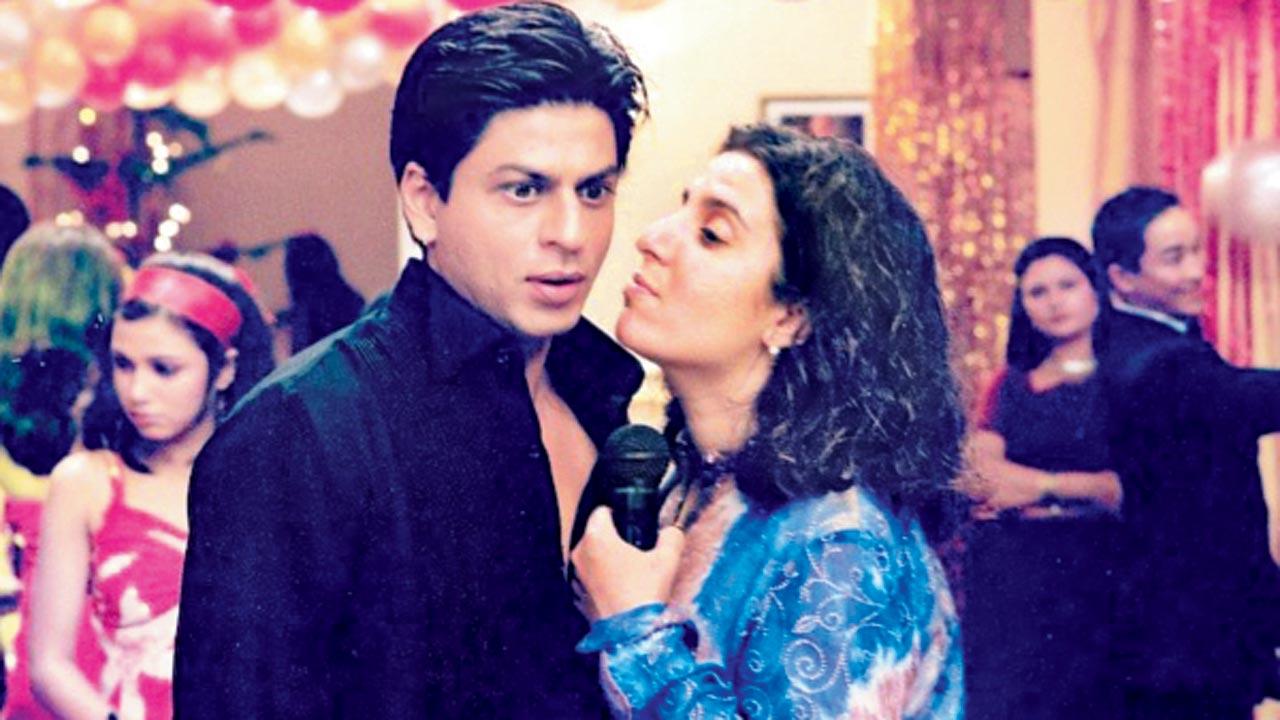
During the making of The Inner World of Shah Rukh Khan, 2004. On the set of Main Hoon Na, with director Farah Khan
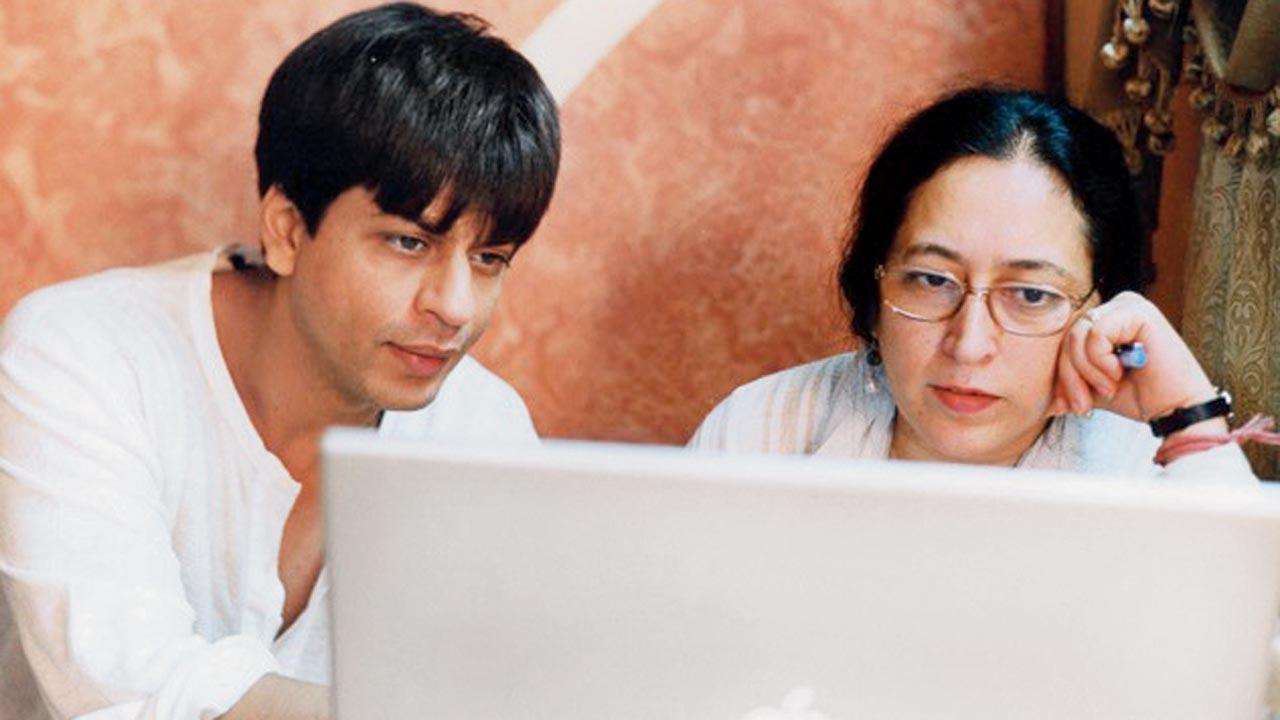
With director Nasreen Munni Kabir. Photographs by Peter Chappell. Pics courtesy/Hyphen Films, UK
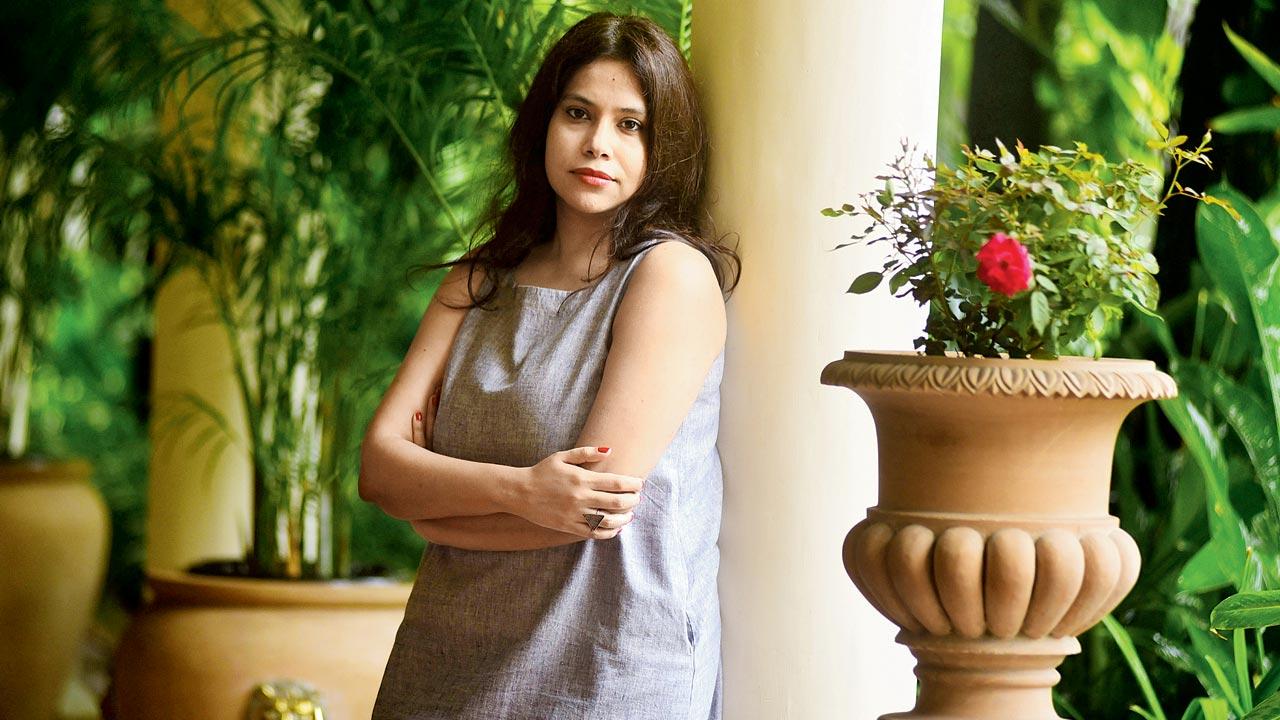
Writer-economist Shrayana Bhattacharya’s book Desperately Seeking Shah Rukh (HarperCollins India) uses the actor as a metaphor to explore the economic circumstances of women in post-liberalisation India. Pic/Shadab Khan
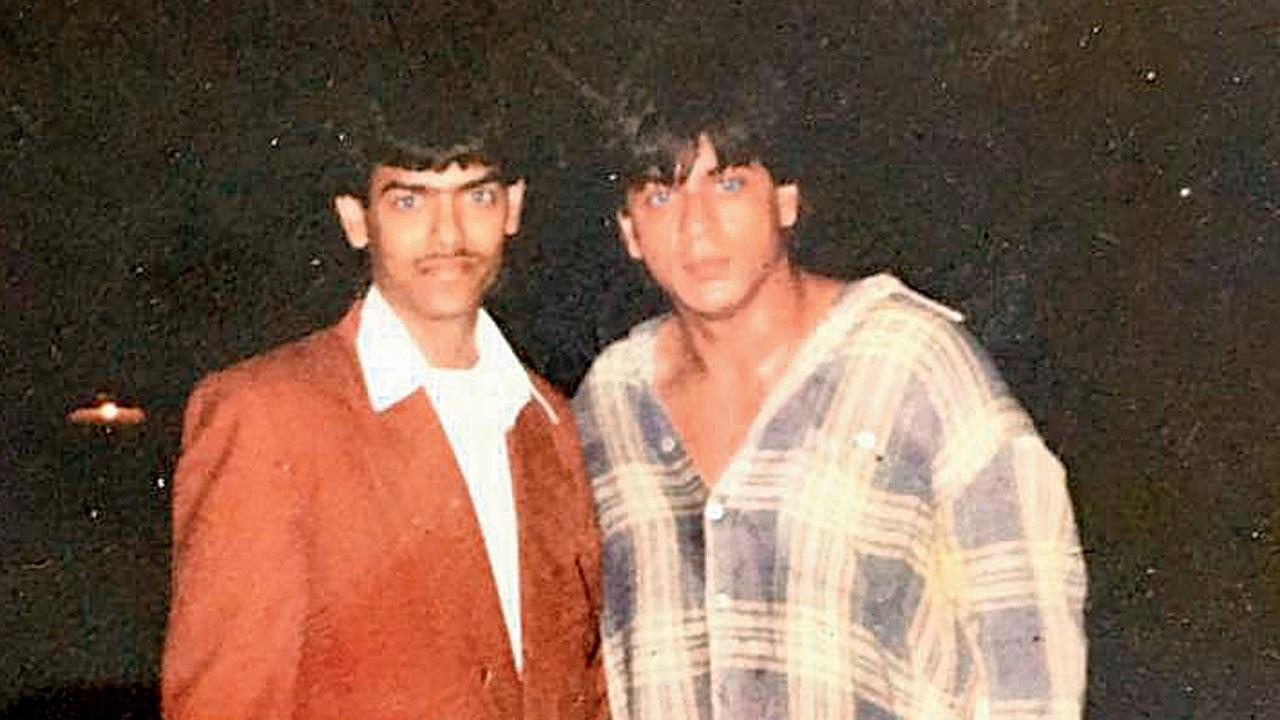
Vishahrukh wants to make a film with the actor so Vishahrukh Singh with Khan during their first meeting in 1996.
In search of Sahir Ludhianvi in 2021: By Nasreen Munni Kabir
7:57 AM

Nasreen Munni Kabir tells us how she put together a diary to pay tribute to the famous Urdu poet-lyricist
Nasreen Munni Kabir (MUMBAI MIRROR; November 29, 2020)
March next year marks the 100th birth anniversary of Sahir Ludhianvi, the extraordinary Urdu poet-lyricist, born on March 8, 1921. The diary, In The Year Of Sahir, is my attempt to celebrate this amazingly gifted man.
A wealth of articles, two biographies in English and a formidable publication in Urdu (Fann aur Shaksiyat) by the poet Sabir Dutt already exist on Sahir, not to forget the extensive blogs and websites dedicated to him, plus there are several editions of his poetry collections, which are continuously reprinted. In Surinder Deol’s biography, A Literary Portrait, he informs us that Sahir’s Talkhiyan is the only other Urdu poetry book, besides Divan-e-Ghalib, to have been published in many Hindi and Urdu editions. So, the question for me was to seek out a different way of presenting new insights into his work and personality that could be of historical value and fresh and engaging.
Following on from the cinema diary I produced in 2013, which celebrated a hundred years of Indian cinema, the concept of another diary seemed both appropriate and appealing; the idea was to present observations and memories from an array of contributors, interspersed with unseen and wonderful photographs of Sahir from the collection of Meesam Raza, a dedicated admirer of the poet.
With this in mind I went about contacting over 30 people — poets, singers, directors, producers, distributors, writers, academics, musicians, screenwriters, playwrights, actors, artists and theatre directors — all of whom generously gave of their time to share their experiences of working with Sahir or living with his songs and poems.
Gradually the diary took shape as one-by-one the contributors sent me their comments, each telling a unique story.
Asha Bhosle remembers the day she recorded the amazing “Aage Bhi Jaane Na Tu…” from Waqt: “As I sat rehearsing the song in Mumbai’s Famous Tardeo Recording Centre, I heard the familiar soft voice greeting me. I looked up to see a tall lanky figure dressed in his familiar white cotton shirt, dark trousers and open sandals. I complimented him on the lyrics of the song and mentioned that the meaning resembled the essence of the Bhagwad Gita. He acknowledged it with a smile and complimented me on my white sari which had a bright border… During the recording of ‘Woh Subah Kabhi toh Aayegi’, he jokingly remarked to music director Khayyam that his career’s ‘subah’ had dawned with this song.”
Ramesh Sippy recalls a time when he was eight years old, sitting in the corner of a room, when Sahir came to the family house to discuss a song with his father, G P Sippy. “Sahir sahib proceeded to recite the song words: ‘Ab vo karam kare ya sitam main nashe mein hun. Mujhko na koi hosh na ghum main nashe mein hoon.’ [Whether she’s kind or cruel, I am drunk. Unmindful of joy or sorrow, I am drunk]. My father liked the lyrics very much and wanted it for Marine Drive, but Sahir sahib refused point blank. He was offered double the money, but the answer was still a no. My father was a known teetotaller so Sahir sahib explained: ‘How can I give this song to a man who doesn’t even drink alcohol!’ That evening my father poured himself his first drink. And the song was his.”
Then there is the gifted musician Zakir Hussain, who observed Sahir’s approach to the required meter (wording the melody) is similar to that of a sitar or sarod player. As Zakir Hussain explains: “It’s how a tabla player instantaneously organises and reorganises rhythm patterns to aesthetically express the feeling of the piece. The example that comes to mind are the lyrics of ‘Abhi naa jao chod kar.’ His use of the word ‘zara’ is amazing. He uses it at the beginning of the line and suddenly switches it to the end of the following line; this I find masterful.”
Each comment and observation brings a new understanding of Sahir’s approach to song-writing — and then there is his formidable mastery of Urdu poetry. I think the proudest moment for me, when putting the diary together, was being able to track down and include K A Abbas’s long-forgotten translation of ‘Parchhaiyan’, a very fine work, first published in 1958 under the title Shadows Speak, a book that is now out of print. The idea of tracing the journey of this moving anti-war poem by Sahir and including a photograph of the book’s original cloth cover was most rewarding. This was possible thanks to Gulzar sahib, who had a signed copy of the first edition in his library.
In essence, this diary is not a history of Sahir but a personal tribute to a poet whose work is so impressive and enduring in its range and appeal. The only complaint I have heard so far about In The Year Of Sahir is from friends who say that although this is a diary, they do not want to write in it. My answer is that a diary is also about marking time, and as far as the writing is concerned, who can compete with Sahir’s words?
When Lata Mangeshkar failed to recognize Kishore Kumar and feared he's following her
8:37 AM

As Lata Mangeshkar turns 91, author Nasreen Munni Kabir remembers her conversations with the legendary singer
MUMBAI MIRROR (October 4, 2020)
It is entirely thanks to Sanjeev Kohli, Madan Mohan’s son, who is very close to Lata ji, that I came to make the six-part series Lata In Her Own Voice for Channel 4 TV in the UK in 1990. When we met for the first time, her gracious presence and impeccable manners stood out. When she spoke in her most familiar voice, I was struck by how softly spoken she was and how quickly she put me at my ease.
Eight years after the TV series was made, I was delighted when she agreed for us to use those filmed interviews as the starting point for a book of conversations. When we began writing, I was in London and she was in Mumbai, so we decided to speak on the phone for two hours twice a month, and did so for over a year (this was before WhatsApp and Skype).
A year later we met and read through the manuscript and, with the help of her niece, Rachana Shah, we selected photographs from her vast archive. In 1990, the book Lata Mangeshkar in Her Own Voice was published by Niyogi Books. Lata ji spoke in great detail of her childhood, of the days when her father, Deenanath Mangeshkar, taught her music from the age of five. Composer Sajjad Hussain once described her as a musical genius and these signs were evident from the start. One day when her father had stepped out of the room where he taught music, she heard his young student singing the notes of a raga wrongly. She promptly went to the boy, sang the notes to him, saying “Aisa nahin, aise...” [Not like that, like this...] It was also clear that her musical training didn’t stop her enjoying being the leader of a group of children: her own siblings, cousins and neighbours. Together they staged plays in the evenings and during the day young Lata ji climbed trees and rolled down the street sitting in the centre of a tyre. She admitted she was headstrong, fearless and immeasurably proud to be her father’s daughter.
Long years of struggle began after her father passed away when Lata ji was only 12. She immediately took on the responsibility of helping her family make ends meet and, as a teenager, she acted in a few Marathi films — but facing the camera or the need for wearing make-up was not something she enjoyed. She remembered coming home in tears one day after the director had insisted her eyebrows be trimmed because he felt they were too close to one another.
Instead of being bruised by life’s many struggles, I could sense her every experience was lived as a learning curve. We talked at length about her work and friendship with the many composers, lyricists, filmmakers, co-singers and actresses she had met over the years. Recalling her relationship with Pandit Narendra Sharma, the poet and lyricist, whom she called ‘papa’ and, regarded as a father figure, made her very emotional. He had died in 1989, and she continued to miss his wise counsel, adding: “We can sometimes be overwhelmed by problems and get upset. Listening to him gave me such peace of mind. I ended up feeling that I was worrying needlessly. The truth is one should not shy away from problems. One must face them. This is what I learned from Pandit ji.”
An amazing storyteller, Lata ji’s brilliant memory and powers of observation made every incident come alive. When she was working with Khemchand Prakash on Ziddi, she recalled with great amusement the first time she met Kishore Kumar on her way to the studio: “I would take the train from Grant Road to Malad and one day Kishore da got on at the next stop. I thought he looked very familiar and wondered who he was. We both got off at Malad. Bombay Talkies studio was a long way from the station and that day I decided to take a taanga. And Kishore da hired one too. We rode along and finally we both entered the studio. I thought to myself, ‘something strange is going on here. This fellow is following me.’ I asked Khemchand ji: ‘Uncle, who is this boy? He’s following me.’ He laughed and said: ‘He’s Kishore. Ashok Kumar’s brother.’ That day we recorded our first duet ‘Ye Kaun Aya Re Karke Sola Singar.’”
One of her answers that stood out for me was when I asked what aspect of her personality was most present in her singing. She became quiet and then said: “My concentration. I give full attention to a song. When I sing I forget everything else. I apply my mind to making it better.”
It wasn’t just her vocal abilities but her intelligent mind in understanding the emotions of the words and the intention of the scene, while not forgetting it was going to be mimed by an actress on screen — natural and multiple talents like these have made those songs immortal. Meena Kumari once said: “If Lata is singing, we don’t have to act.”
Lata Mangeshkar’s contribution to music is immeasurable, and despite the fact she must be one of the most famous Indians of our time, she wears her success lightly. A proof of true talent and humility. Perhaps I should have started this piece by admitting a complete bias when it comes to Lata ji. Sometimes when I’m working at home and one of her songs, “Chandni Raatein, Pyaar Ki Baatein”, “Tera Mera Pyaar Amar” or “Aap Ki Nazaron Ne Samjha” plays on the radio, I miss those special, privileged hours I spent in her company. While we were working on the book, and this sounds very obvious, but the way she expressed herself had a musicality to it and, in her gentle speaking voice, she was not just recounting slices of history but huge chunks of it.

I am wondering how they sourced pictures of my school days-Javed Akhtar on his 75th birthday celebrations
8:00 AM

As the family kicks off three-day celebration to mark his 75th birthday, legendary writer-lyricist Javed Akhtar thrilled to have a photo exhibition dedicated to him
Sonil Dedhia (MID-DAY; January 14, 2020)
 Shabana Azmi, who was stationed in Budapest over the past few weeks for the shoot of Steven Spielberg's web series, has returned to the bay in time for husband Javed Akhtar's big day. The noted writer-lyricist turns 75 on Friday, and a string of celebrations is in order for the milestone birthday.
mid-day has learnt that an exhibition of Akhtar's rare photographs, posters and paintings, titled The World Of Javed Akhtar, and curated by Pradeep Chandra and SMM Ausaja, will be held at the Nehru Centre in Worli. While Farhan and Zoya Akhtar will inaugurate the exhibition dedicated to their father tomorrow, it will be open to the public from January 17 to 20. Considering Akhtar has changed the vocabulary of Bollywood with his stories and songs, it is only fitting that the inaugural event tomorrow will mark the launch of a limited edition of The Javed Akhtar Pen — a creation of Abhishek Haritwal and Symmetry. Besides unveiling the signature pen, the celebrated writer will take to the stage to discuss his journey in the industry and his role in changing the narrative of Hindi cinema, with Nasreen Munni Kabir.
"I am nervous, especially about the exhibition because they are calling it The World of Javed Akhtar. I want to see how many people are interested in my life," jokes the legendary lyricist, adding that he was pleasantly surprised to see that the curators had sourced rare photographs from his heydays. "Some of the photographs go back to my school days. I am wondering where they sourced them from."
While Azmi plans to ring in Akhtar's birthday with an intimate '70s Bollywood-themed bash on Thursday, Zoya and Farhan will host a grand soiree on Friday at a suburban five-star that will see the who's who of the industry in attendance. "We want to salute the man that is Javed Akhtar — his indomitable will, tenacity, wisdom, intellect, and of course, his legendary sense of humour! Friends and family are trooping in from different parts of the world for the bash," says an ecstatic Azmi.

The customised Javed Akhtar Pen
Mani Ratnam often rejects my work if he doesn't like it-A R Rahman
1:40 PM

Sonil Dedhia (MID-DAY; September 10, 2017)
Parisian PR supremo Ophelie Oscar-winning composer A R Rahman, who has completed 25 years in the music industry, is keen to go beyond composing music through his foundation. His film, One Heart: The A R Rahman Concert Film, which has just released, is being touted as the country's first concert film. We caught up with the celebrated composer.
You have always been a private person, how did you agree to be a part of One Heart, a film about your stage shows?
When we finished our 2015 tour that took us across 14 cities in North America, it felt magical. I had a great time working with the team. We had been capturing candid moments on camera. One of my executive producers told me, 'You want to do something for the musicians and the music fraternity, why don't you release the footage of this tour as a film and let the collections go to your foundation One Heart.' I loved the idea and gave the go-ahead. We got Nasreen Munni Kabir [UK-based producer-director-writer] to edit the footage. After it was done, we realised it had shaped out beautifully. We have interviews with people who have worked with me. I have also added personal footage. When we did a test screening, everyone was in tears.
There are times when you are described in superlatives. How do you look at it?
I think it's important to know where you stand personally and professionally. I do this assessment every day and that happens from the responses that I get from the people I work with. I have never taken my work for granted. I am sensitive towards my work and what I deliver to the audience. That's why I don't talk much and when I do, I want to make sense. Although I am on social media, I don't use it to provide my daily schedule. I don't think that's important.
Is there constant pressure to deliver the best every time you score music?
I work with people who have high expectations, so my job is not easy. It is not necessary that my most popular songs are my best works. But I have enough time to come up with a score as films aren't made in a day. There have been times when we have to change the songs. Mani Ratnam often rejects my work if he doesn't like it and asks to me to compose again. Imtiaz [Ali] had already shot Agar Tum Saath Ho in Tamasha [his 2015 film] but I wasn't satisfied. I changed it completely. It's not about finishing the job for the sake of it.
Some of your fans walked out when you started singing in Tamil during a UK concert in July this year.
If I see 9,000 people in an arena out of which around 50 people aren't happy then I have to support the remaining 8,950 as they have come for the music. It is impossible to satisfy everyone. There are times when we find people who are in a bad mood [laughs]. Even the biggest of entertainers have faced criticism. I have received a mixed response for my music, but I feel we have to look at the larger picture. This wasn't the first time I was singing in Tamil. I remember doing it for the first time in 2000 during a concert in the US. Also, one needs to understand that the promoter is catering to people from across the country. This needs to be considered during a live act.
How do you look at the scenario where language is given more importance than the music?
It's sad when something like this happens. I look at the audience we are catering to. When I perform in south India, I perform more of South numbers than Hindi songs. It is the opposite case when I am performing elsewhere in the country. During overseas tours, the audience consists of people who have migrated from different regions and are living in a different culture. I have seen them celebrate all kinds of music.
Do you plan to make more documentaries based on stage shows?
It depends on how this film does, but we would love to. There are commercial and artistic films. Then there are films like One Heart. We live in times where people remember the music, not the musician. There are several unsung heroes in the world of music. I know many families who are associated with music for three generations, but nobody has heard of them and they die in poverty. Our foundation aims to contribute towards the betterment of these people founded Le Bal in 1992. Today, she's the CEO of the grand event that completes 25 years on November 25, 2017.

Why Waheeda Rehman cancelled her book launch
7:42 AM

Roshmilla Bhattacharya (MUMBAI MIRROR; March 28, 2014)
It took Nasreen Munni Kabir years to convince film icon Waheeda Rehman that her story needs to be told. Once she gave the nod it took 20 sessions of two hours each and over a year to complete Conversations with Waheeda Rehman. The 227-page authorised biography was to release yesterday but on Wednesday, March 26, Kabir got a call at around 11am from the actress. “She was in a flood of tears after learning that her best friend Nanda had succumbed to a heart attack. She told me that I’d have to cancel the launch because she couldn’t dress up and face the camera. It would be hypocritical,” recalls the writer. Both Kabir and publishers Penguin were sympathetic and Kabir has flown back to London as the launch has been pushed forward by at least a couple of months.
“We suggested a release sometime next week but Waheedaji needs more time. It was a friendship of almost 50 years. They met at a studio and Nandaji was piqued by the fact that Waheedaji didn’t return her smile. But a few days later, when they started shooting for Kala Bazar, Waheedaji invited her for lunch, told her she could use the bathroom attached to her make-up room and the two became good friends,” says Kabir.
The above instance is mentioned in the book along with Rehman admitting that Nanda and she would sometimes sit together and imagine adapting a novel into a film. "We discussed who could play the lead roles—Ashok Kumar? Rekha? We never cast each other,” she tells Kabir.
On another page, she remembers a family holiday to Munnar where they decided to stay overnight at an English club run by a strange-looking caretaker. A scared Nanda insisted that they keep their windows firmly shut through the night, convinced that he'd sneak into their room in the middle of the night. "It took some time before I could convince her not to worry about the poor fellow because he was unlikely to do us any harm. [Laughs] Nanda and I had some crazy times together.” Rehman recalls in the book. “That generation is dropping off one by one. And 50 years of cinema history is disappearing with them,” Kabir sighs.
Subscribe to:
Posts (Atom)