Showing posts with label Nashik. Show all posts
Showing posts with label Nashik. Show all posts
Irrfan Khan's fifth death anniversary: Why the legendary actor still lives on at Hiruchiwadi in Igatpuri
8:41 AM
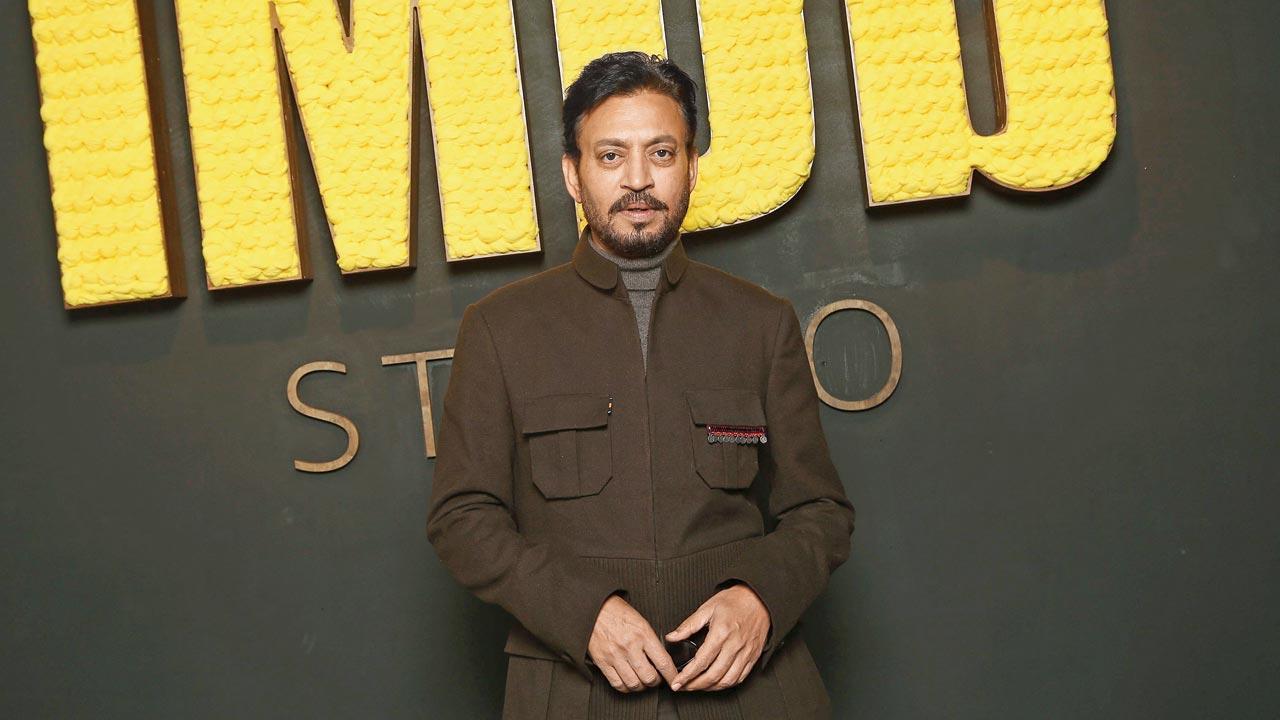
To mark his 5th death anniversary on April 29, Sunday mid-day travelled to Hiruchiwadi in Igatpuri—a village where Irrfan’s farmhouse lies untouched, and his legacy of generosity and kindness is still valued
Anand Singh (MID-DAY; April 27, 2025)
In 2010, when the late actor Irrfan bought a land parcel in a tiny hamlet in the lap of the scenic Sahyadri range in Igatpuri taluka of the Nashik district, very few people knew of him here.
By then, he was already an international star, having worked in Danny Boyle’s Oscar-winning film Slumdog Millionaire (2008), and classics such as Asif Kapadia’s The Warrior (2001), Vishal Bhardwaj’s Maqbool (2003), and Mira Nair’s The Namesake (2006), apart from many other Hindi box office hits.
It’s no surprise that people didn’t know him here, given that televisions are still a rarity in this tribal village called Hiruchiwadi. In the era of 5G connectivity, the network here is spotty, with just 3G connectivity if you’re in the right spot. When we asked a local farmer, Revati, 28, when was the last time she had watched a film, she responded, “Mee kadhi chitrapat naahi baghitla (I have never watched a film).” However, she came to know about Irrfan after he moved here, as he socialized with the villagers quite often.
It may be bewildering to many, but films are not the main source of entertainment in this tribal village. The closest film theatre from here, Victory Cinema, is around 11 km away, near Igatpuri railway station. With no state transport facility to connect Hiruchiwadi, travelling outside the village is not an everyday affair for everyone. Adults who have two-wheelers and a few families with cars are the only ones who frequently travel towards the city side.
Though just 120 kilometres from Mumbai, this tribal hamlet feels light-years away from modernity, still living in the 1990s. Old Hindi film music can still be heard on the radio sets if you stroll through the village on a quiet afternoon. The Sahyadri range surrounding it from all sides protects it in its soft fists, much like a mother coddles a baby in her lap.
It’s probably this simplicity and rawness that appealed to Irrfan, and he chose to build his farmhouse here, which was completely ready by 2015. It’s a perfect escape from the glitz and glamour of Mumbai, a city that always kept him busy and where everyone knew him.
Social media is full of stories and articles claiming that the village’s name has been changed to “Herochiwadi,” meaning “the hero’s neighbourhood” in Marathi. However, when Sunday mid-day spoke to the village Sarpanch, Ashok Pingle, it revealed what can be described as both coincidence and misinformation.
The Sarpanch explained, “The village’s actual name is Hiruchiwadi, named after Hiru Pingle, the mukhiya of the local tribal clan, who fought the British alongside the tribal revolutionary Raghoji Bhangre. Local NCP leader Suresh Bodke, who has worked for the village, proposed that the village’s name should be changed to ‘Herochiwadi’ to honour Irrfan after he passed away. But we didn’t want that. Because firstly, we are the descendants of Hiru Pingle and take pride in the fact that the village is named after him. Secondly, if two letters in the village’s name are changed—from ‘Hiru’ to ‘Hero’—it may bring popularity to the village, but it would also mean that all our documents, from Aadhaar to property papers, would need to be changed as well… It’s too long a process for changing just two letters.”
It’s a major coincidence that both “Hero” and “Hiru” have a very similar phonetic sound. The visit to the village was another lesson in the age of social media—do not trust everything you read online.
Regardless of the village’s name, the Sarpanch said the village loves its “Hero”. “The humility Irrfan showed by visiting houses around, providing livelihood to the locals by giving them jobs at his farmhouse, and his interaction with the children was something we did not expect from such a big film star. He could have arrived in his SUV with his bodyguards and chosen to stay in, enjoying the serene view and spending time only on his estate without stepping out. But he always chose to come to us.”
Ashok Pingle’s uncle, Damu Pingle, lives just a stone’s throw from Irrfan’s farmhouse, being the third house from his gate. When Irrfan learned that Damu was a tailor, he gave him the task of altering and tailoring all the drapery he had purchased for his farmhouse, including furniture covers for when the house would be closed. Damu refused to share how much he was paid for partly being involved in the “interior designing” of a film star’s house, but he mentioned it was more than all the money he made in the last five years.
When we asked Damu about his interactions with Irrfan, he said, “Aamcha bolnach zhaala nahi, kaaran tyaanna Marathi yaet nhavta ani mala Hindi bolta yaet nhavta. (We never spoke a word as he didn’t know Marathi, and I couldn’t speak Hindi).” But Irrfan’s staff did the translation for the two.
Another employment opportunity arose for Damu’s family as caretakers. It is his family that tends to the farmhouse during Irrfan’s family’s absence. As he showed this correspondent the farmhouse from outside, he further added, “I also worked on items like the tablecloths, kitchen cloths needed for regular use, and even doormats. Irrfan brought these items from outside, probably Mumbai, but they needed to be tailored to size. All the tailoring on this farmhouse is my work.”
But the real surprise came when he revealed that he had also stitched a few kurtas for Sutapa Sikdar, Irrfan’s wife. “She gave me a kurta that fit her well. I took the measurements and sewed many clothes for her for over two years.”
The trust Irrfan placed in the villagers was evident as we walked around his farmhouse. Villagers freely moved around, as there were no locks on the gates. A trophy he won for a film, along with various décor items, lay scattered on the façade of the farmhouse, yet nobody touched their beloved hero’s possessions.
Locals mentioned that Irrfan was deeply committed to community work. According to Subhash Mengal, a primary school teacher in the village, Irrfan was planning to have some films shot there, those that fit the village’s terrain—mountainous, rugged, yet green.
Mengal says, “In one of the interactions I had with him, he mentioned that film shootings would generate employment for the locals. It’s a location just three hours away from Mumbai, and it may help filmmakers save costs on VFX or travelling to distant locations. It was a very interesting prospect. You can see how disconnected the village is, despite being at the border of three major districts—Nashik, Palghar, and Thane.”
Though he never formally adopted the village, during his time here, Irrfan touched lives across all domains. A resident of the village, Eknath Pawar, told us that Irrfan had donated Rs 50,000 for a local temple, now the largest in the village.
“We mentioned that the Hanuman temple needed renovation. We didn’t care whether the donation came from a Muslim, as it was god’s work. He never cared about religion either. The funds arrived within a few days, around the time when he was already sick. It didn’t come directly from him but through Sutapa Didi.”
But closest to his heart were the children of Hiruchiwadi. Bhavrao Bandu Bangar, the former headmaster of the primary school in the neighbouring village of Patryachawada, knew how big a star Irrfan was. However, his approximately 100 students had no idea who he was. In 2015, when Bangar learned that Irrfan’s farmhouse was nearly ready and that he would be arriving soon, he went to the farmhouse to request him to meet the students. “It may have been their only chance to meet such a big film star. Meeting an influential figure at a tender age can make an impact,” he tells Sunday mid-day.
But Irrfan was seemingly busy that day, telling the headmaster, “I will come later in the day...” School ended at 5 pm, and the children waited until 5.30 pm, but Irrfan did not arrive.
Bangar says, “It was understandable. He is a busy man.” But, to his surprise, the next morning, Irrfan, along with his family, arrived at the school earlier than anyone else and waited for the students to come. Delighted that he had shown up with his entire family, the headmaster asked, “Why did you not come yesterday?” To which Irrfan replied, “I didn’t want to come empty-handed.” Bangar recalls, “He came with two cars full of school bags, stationery, sweets, and whatever he could get for the children from a nearby market in Nashik.”
A few years later, Irrfan visited the farmhouse again. By this time, the children knew he was unwell. Bangar told the students, “Hero aajaari aahe (Hero is unwell). Make bouquets for him from whatever you find on the farms.”
The students got to work immediately, and within a few hours, a hundred bouquets made from local flowers and leaves were ready. Bangar informed Irrfan that the children had brought him something this time. Soon, a hundred bouquets adorned the façade of his farmhouse. “He started crying when he saw the gesture,” recalls Bangar.
This happened towards the end of the monsoon season, and Irrfan had noticed the children walking to school with plastic sheets or nothing at all during heavy rains. Bangar shares, “Ten months later, at the onset of the next monsoon in 2018, I received two massive cartons. The sender’s address was from Rajasthan, where Irrfan originally hailed from. I had never asked for it, but even while he was receiving treatment in London for his illness, he remembered the children and the fact that the monsoons had begun, knowing they would need raincoats to go to school. I never got to see him again, as Saheb was very sick.”
Today, the plans Irrfan had for the village sit stalled, which included basic infrastructure for shooting, proper roads till the Trilangwadi Fort, modern classrooms in the primary school, and much more. Locals say his family does not visit as often, and they mostly keep to themselves, unlike Irrfan. He once told primary school teacher Subhash Mengal, “The film industry is a lonely place. I am glad to have you all.”
However, the work he did for the village remains. The children still cherish fond memories of spending entire days, multiple times, with an international star. Some now aspire to become actors. Bangar says, “Without him, even the thought of learning theatre or becoming a film star would not have occurred to these children. We are close to Mumbai, yet so far.”
The questions posed to the residents about Irrfan make them light up with pride, knowing that their village is recognised now because of their hero.
Today, the gate of his farmhouse, which opens directly in the village, has a seat that nobody sits on, next to an epitaph that reads, “We live because you reside in our soul.”
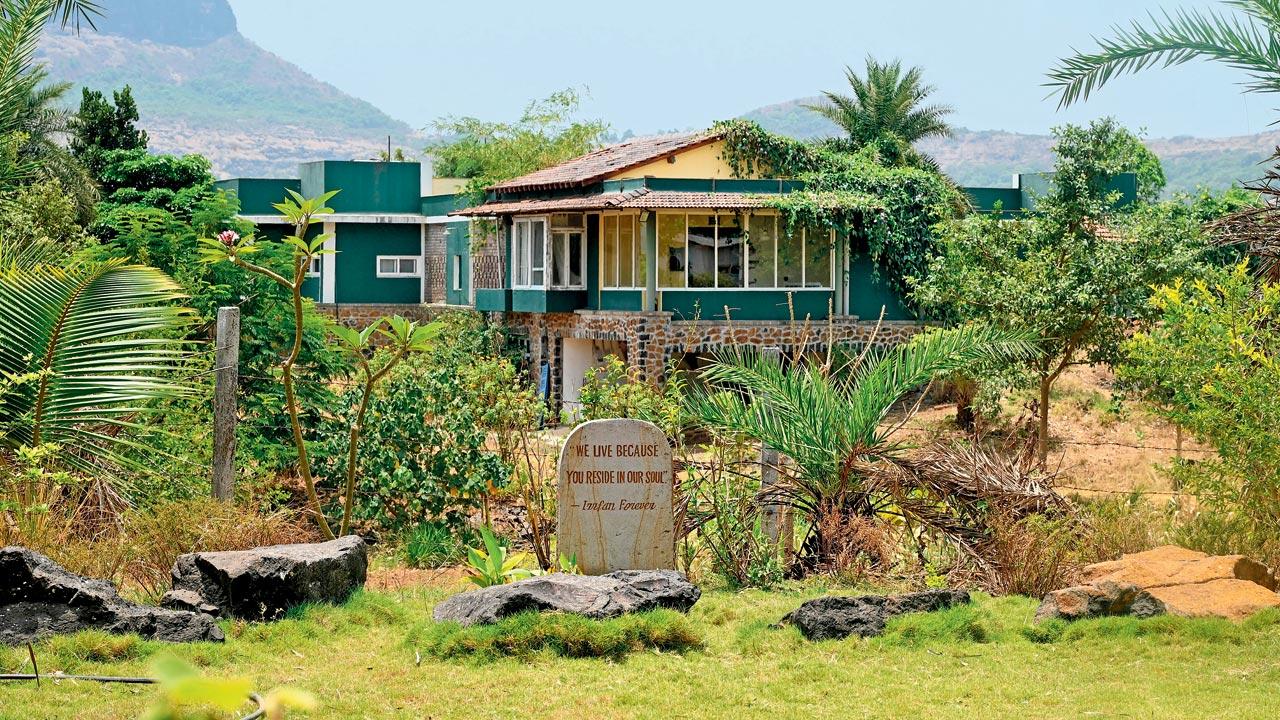
Irrfan’s farmhouse in Hiruchiwadi, Igatpuri—where he helped the village grow and found a second family. Pics/Satej Shinde
Yesteryear actor Smriti Biswas passes away at 100
8:38 AM

Smriti Biswas and Shekhar in the 1955 film ‘Chandni Chowk’
Avijit Ghosh & Abhilash Botekar | TNN (THE TIMES OF INDIA; July 5, 2024)
New Delhi/Nashik: Smriti Biswas, whose compelling performances in B R Chopra’s ‘Chandni Chowk’ and Navketan’s ‘Humsafar’ drew critical praise but who’s remembered more for her glitzy roles in films like ‘Dilli Ka Thug’, passed away at her Nashik residence on Wednesday. She was 100.
“My mother was suffering from various ailments and passed away peacefully at 9 pm,” her son Rajiv Narang told TOI.
The actor, who also modelled for Lux soap and featured on the Filmfare cover, had cameos in Raj Kapoor’s ‘Jagte Raho’ (1956) and ‘Neel Akasher Neechey’ (1959), an early Mrinal Sen film based on noted Hindi writer Mahadevi Verma’s story ‘Chini Feriwala’.
Biswas was in her prime in the 1950s, putting together a string of compelling acts. The Times of India review of ‘Humsafar’ (1953) said, “Biswas projects a strong personality with an alluring verve which does full justice to that difficult part (of a dancer).”
Her role in ‘Shaheed Bhagat Singh’ (1954) earned fulsome plaudits. “A truly memorable performance comes from a wholly unexpected quarter; Smriti Biswas, the seductive Bengali artiste in secondary roles. Though her part in this film is a departure from the femme fatale she plays so well, she gives it a performance which brings it alive,” the review said. Biswas played a revolutionary.
Similarly, the glowing ‘Chandni Chowk’ (1955) appraisal said, “Charming and convincing vignettes are provided by Smriti Biswas as a seductive Egyptian dancer, with a distinctive sinuous appeal.” Her roles in Guru Dutt’s ‘Sailab’ and ‘Aabroo’ (both 1956) were also received positively.
Hindi film lovers of the black & white era would remember her breathing glamour and sensuality to the rock & roll track, “O babu o lala’ in ‘Dilli Ka Thug’ (1958) and her free-spirited jiving to the joyful number, ‘Deewana dil ye gaaye’ (film: ‘Baap re Baap’, 1958). Film database IMDB lists 30 of her works but movies like ‘Maldar’ (1951), ‘Humsafar’ (1953) and ‘Aabroo (1956)’ are missing from the list. ‘Modern Girl’ (1960) was her last Hindi film.
Biswas left the industry after marrying film producer-director S D Narang, who delivered box-office winners such as ‘Dilli Ka Thug’, ‘Babul Ki Gali yan’ (1972), ‘Do Thug’ (1975). He died in 1986.
Born in Dhaka, now in Bangladesh, Smriti was the daughter of Harendrakumar and Jyotirmoi, both schoolteachers. She took to acting as a child in the Bengali film ‘Sandhya’ (1930). Some years ago, she had shifted to Nashik, where she lived in a small flat. “She had slipped into financial distress. The later part of her life was sad and troubled,” said actor Anju Mahendroo. Biswas was a friend of Mahendroo’s mother.
In a poignant 2020 article published in The Quint, film critic Khalid Mohamed had written about film archivist Shivendra Singh Dungarpur assisting her financially. It is learnt that filmmaker Hansal Mehta also helped her out. “She donated her photographs, personal letters and other film memorabilia to Film Heritage Foundation,” Dungarpur said.
Biswas is survived by her two sons, Rajiv and Satyajeet.
Doctors advise against running outdoors. So, it gets difficult to train-Saiyami Kher
9:05 AM

Her prep to participate in the Iron Man hit pause after the pandemic struck in 2020. Three years later, Saiyami is ready to take on the mammoth challenge again. She tells us how
Hiren Kotwani (MID-DAY; March 1, 2023)
In a matter of days, Saiyami Kher will undertake one of the toughest challenges of her journey in physical fitness. And though this would be her first attempt, this isn’t the first time the actor has prepped for the Iron Man challenge, comprising a 1.9 kilometre swim, followed by a 90 kilometre cycling bout, and culminating with a 21 kilometre run, to be executed within a stipulated time limit.
It was in 2020 that she was first set to take part in the challenge, having also made significant headway with her preparation. That was, of course, until the pandemic struck. “[At the time] when I was training, the conditions were much better. [Now], there is so much pollution in our city, that after you step out to exercise, you come back having developed a cough. Doctors too advise against running outdoors. So, it gets difficult to train,” says the actor, who now runs on her treadmill, and aims to increase the distance she covers by 10 per cent, each week.
Get Ready
“Ever since I finished my first full marathon in 2017, it was my dream to do the Iron Man,” says the actor, who completed her 15th half-marathon this year. “I’ve participated in Delhi, and Berlin too. So, I have participated in different parts of the world.”
Though the half-Iron Man also takes place in Goa in November, New Zealand was her preferred location since it is a “beautiful country, the air is clean, and the route is simpler”.
Set goals
Kher’s weekly routine involves executing one or two of the three forms. This will entail three running sessions, two swimming sessions, and four cycling sessions. “Once a week, I execute the brick-workout, which involves all three forms. This is usually done on Sundays. I consider it a blessing that my parents live in Nashik. I head there when I get a couple of days off. The roads are nicer, and there is less pollution and traffic. I swim in the lake, which is essential, since, at the event, I will be swimming in Lake Taupo in New Zealand. Swimming in a pool is different from swimming in a lake.”
Strength training, she admits, continues to find a place in her regimen. “No training routine is complete without it. I try to get two sessions in every week. I also practice yoga to keep injuries at bay. Also, flexibility work is imperative, and should not be ignored, regardless of which training pattern one adopts.”
On the Go
Kher doesn’t intend to stop at the Iron Man alone. Goal-setting, she says, is the mental fuel that keeps her going, both as an athlete and an actor. “For me, running the half-marathon earlier this year, or participating in the Iron Man, brings a sense of achievement. It’s not comparable to any other feeling. Actors like me live with insecurities. We are dependent on people, and need people’s validation. e are dependent on someone else for our next project. So, there is always this period of waiting, which can get exhausting. On the other hand, you have a lot more control on your achievements when you participate in races. The sense of accomplishment you get when you cross the finish line is truly unparalleled.”
Saiyami on her diet
I don’t drink alcohol, and never have in my life. So, that helps in training and recovery. I’ve reduced my sugar-intake, and pick jaggery instead. My breakfast comprises three to four eggs with toast, and some fruit. For lunch, I have a couple of bhakri rotis, with dal, and vegetables. Dinner comprises grilled-chicken or grilled-fish, and some salad. I eat home-made food, and consume a lot of fruits. When I crave for ice-cream or sugar, I may go for it. Since my caloric burn is high, I don’t mind indulging.
After completing Mumbai Half Marathon, Saiyami Kher now preps for half-Ironman triathlon in New Zealand
8:37 AM

Hiren Kotwani (MID-DAY; January 19, 2023)
Earlier this week, Saiyami Kher ran her 15th half-marathon (21 kilometres) at the Mumbai Marathon 2023. Now, she has her next goal carved out: the half-Ironman triathlon, which is scheduled to take place in New Zealand in March.
Originally, she was to tick the triathlon — which involves 1.9 kilometres of swimming, 90 kilometres of cycling and 21 kilometres of running — off her life goals by the time she turned 30 last year. However, due to the rescheduling of work commitments in the wake of the pandemic, she hopes to attain the goal this year.
Prep for the half-Ironman race is on in full swing, with the actor doing brick-training once a week. “I do three runs and two swims weekly. Plus, I cycle four times a week. With every passing week, I increase the distances by 10 per cent,” she reveals.
Pointing out that swimming in a pool is relatively easier than in a lake, she says that her prep is often taking her to her parents’ house in Nashik. “Whenever I have a few days off, I head there and practice swimming in the lake.”
Her diet has been modified for the purpose. It comprises home-made meals, and is devoid of processed sugar. But Kher admits that she gives in to her craving for ice cream. “Since I’m exerting so much, it is okay to indulge once in a while, as long as it is in moderation.”
Writers and citizens are losing their freedom because of the whims of those in power-Javed Akhtar
8:16 AM

Ambarish Mishra (THE TIMES OF INDIA; December 4, 2021)
Mumbai: Poet-lyricist Javed Akhtar has expressed concern over the steady encroachment of a writer’s space by forces inimical to freedom of expression. “If you try to say or write something which is in the larger interest of the nation, you are promptly dubbed a ‘rashtra-drohi’ (traitor),” Akhtar said.
He was speaking as chief guest at the 94th Akhil Bharatiya Marathi Sahitya Sammelan, which began its proceedings in Nashik on Friday.
“In the past, the nawabs, jahagirdars and zamindars used to patronise poets and writers—but only if the latter talked of love, stars and flowers. Poets who wrote about tears and sweat were not wanted. The present-day political nawabs and zamindars are no better. They don’t want a writer to portray the truth—the social reality which envelops us,” said Akhtar who has often been the target of rightwing radicals for upholding Nehruvian values.
Akhtar exhorted writers and artists to keep away from political parties as, he said, power muffles dissent. “Every political party has its thought process and discipline. They will ask you not to swerve and inch from the party's stated guidelines," he argued.
Stating that both writers and citizens were fast losing their freedom because of the whims of those in power, Akhtar urged the political establishment to not stifle voices of dissent.
Recalling the role of the Progressive Writers’ Association (PWA) in pre-Independent India, Akhtar said the left-centred body had, at its inpolitical party has its thought process and discipline. They will ask you not to swerve an inch from the party’s stated policies,” he argued.
Stating that both writers augural conclave held in Lucknow in 1933, resolved to write about the angst and aspirations of farmers and labourers, and thus give a push and citizens were fast losing their freedom because of the whims of those in power, Akhtar urged the political establishment to not stifle voito the freedom struggle.
He said it was time to draw strength from the PWA movement which, he pointed out, had inspired Annabhau Sathe, the iconic Marathi litterateur and one of the earliest voices of the Dalit identity.
Stating that a writer should record his creative experiences in a simple language which touches the chord of the masses, Akhtar said Marathi saint-poets such as Jnaneshwar and Tukaram wrote in an unadorned style. “So did Hindi saint-poet Tulsidas who wrote the Ram Charit Manas in Awadhi, which was the language of the millions in the Hindi belt,” he added. Akhtar said the Marathi plays of P L Deshpande, Vijay Tendulkar and Achyut Vaze offered him a set of new interpretations of life and times.
Praising Muktabai and Bahinaiee, the saint poets of medieval Maharashtra, Akhtar said that the duo wrote 800 years ago without fear or favour. In contrast, the Bronte sisters of England had to adopt a male pseudonym 150 years ago, lest the male-dominated literary establishment of Britain was upset. “And upset it was,” he said.
Babil does his first photoshoot for debut film Qala at Nashik farmhouse built by father Irrfan Khan
7:45 AM

Mohar Basu (MID-DAY; November 12, 2021)
In showbiz, it’s almost customary for budding artistes to do a photoshoot ahead of the release of their launch vehicle. While his first photoshoot was a personal milestone for Babil who is set to foray into acting with the Anushka Sharma-backed Qala, it also had a tinge of nostalgia.
When discussing with photographer Shivaji Sen about the possible locations for the shoot, the youngster suggested his Nashik farmhouse. He believed the place, which was built by his late father Irrfan, would serve as the perfect backdrop.
“The farmhouse is special for my family. It is the one abode my father returned to whenever he needed to unwind. I feel his presence strongly around the area. This is why I chose it,” says Babil.
He was styled by Isha Bhansali for the shoot that captured his many moods. “We spoke about what I wanted to [convey through the pictures] and the results are at par with what we set out to achieve.”
Even as theatres reopen, Maharashtra’s tent cinemas stay on pause
8:19 AM

Sharmila Ganesan (THE TIMES OF INDIA; October 31, 2021)
Till a few years ago, any resemblance of mass Telugu action hero Gopichand to mass Bollywood action hero Ajay Devgn was not purely coincidental, at least in pockets of Marathwada that film distributors refer to as ‘Nizam circuit’. Two researchers had found that die-hard Gopichand fans in Jalna, Beed, Nanded, Aurangabad, Osmanabad, Nanded, Parbhani and circuits such as Vidarbha used to believe Gopichand to be “Arjun Devgn”, Devgn’s dagger-wielding brother. This myth wasn’t the handiwork of fake news but that of morphed film posters and drunk announcers that populated the fast-shrinking world of Maharashtra’s tent cinemas.
Once an important 2000-strong Marathi cinema distribution platform, the state’s touring talkies—nomadic theatres that travel from village to village atop trucks appended with projectors to beam Hindi, Marathi and dubbed Telugu movies into ‘tambus’—have now been reduced to mere C-grade box office windows by the viral ravages of saas-bahu soaps, mobile phones, Wi-Fi and OTT platforms. Besides the recent freightload of Coronavirus-induced debts, shutdowns and job losses, the parked trucks of the 52 surviving tents are rusting under another fresh death blow.
“Tambu talkies is not on the state’s list of entertainment venues that were allowed to reopen recently,” says Sanjay Dhadwe, owner of Nashik’s Pushpanjali Talkies and president of Maharashtra Touring Cinema Association, who has been writing urgent, attention-seeking letters to the ministry of culture.
“We have spent our whole lives in this business. If we’re not allowed to reopen, we will have to shut shop forever,” says 43-year-old Dhadwe, speaking for the over-half-century-old fraternity for whom “rasoda” refers to the cost of the Rs 5000-odd, eight-day-long meals required to sustain the crew of gatekeepers and booking clerks and “batta” is code for the daily payments of Rs 50-per-worker for tea and snacks. Together with the under-andover-the-table payments made to tehsildars, village heads and cops, EMI-ridden owners now stare at an average bill of Rs 70,000 per movie.
The math wasn’t as complicated in the 1950s when tent cinemas began after a few farmers, lawyers and electricians carted off second hand Bauer projectors from a Parsi businessman who was selling them on a footpath in Bombay. In the remote villages that lacked concrete cinemas, they began screening mythologicals that had viewers taking off their footwear before entering the tents. Steadily, the tents rose to become eight-day-long jatra-time fixtures. Besides encore-demanding goons, drunks and dacoits, night shows here would draw benign housewives.
While reels would sometimes arrive on lumbering elephants, reviews would arrive in a flash. Once when the chartbuster song ‘Ganga Kinare wala’ from Amitabh's ‘Don’ was abruptly interrupted by technical issues, “some audience members tore the tent,” recalls 52-year-old Neeraj Kamble, manager of Buldhana’s Anand Touring Talkies. Mudslinging on the part of the crowd that arrives with blankets, isn’t necessarily a bad thing. Says Mohammed Navrangi—who rose from the errand boy who would plant flags atop posters signalling the show that is on to the smooth-talking co-owner of Buldhana’s Sumedh Touring Talkies: “If they like a scene or dialogue, some audience members take a bit of gravel from the ground and throw it in the air.”
It is this rustic earthiness that had compelled spunky Marathi actor Trupti Bhoir to bottle the kitschy world inside the 2013 Marathi film ‘Touring Talkies’. The movie contains her nods to projectionists who would sometimes pull the film reel so quickly that it would make Amitabh sound squeaky and to women viewers who would watch the film on the other side of the screen in overcrowded shows. “They would complain to the sarpanch saying though the film was in Marathi, it looked Gujarati as the women’s sari pallus were now to the left as the image was reversed,” laughs Bhoir who got half-century old trucks of tent cinema towed into Mumbai since vehicles over 15 years could not legally enter city limits.
The ordeal reopened Bhoir’s eyes to the many practicalities thwarting the growth of touring talkies—a pathos that had once prompted A R Rahman to adopt a tent cinema for a year. If saas-bahu serials robbed the tent cinemas of a good chunk of the Rs-30-a-ticket sales revenue, “today, boys sometimes show us their phones saying the film we are charging for, is available for free online,” says Kamble.
Recently, the state’s touring cinema association—whose economics includes electricity bills of Rs 5000, electricity testing reports of Rs 2500, gram panchayat rent, digital server rent, taxes, deposits, rasoda and batta apart from distributor quotations of over Rs 1 lakh for new releases such as the upcoming ‘Sooryavanshi’—sent a memorandum to the state demanding financial assistance of at least Rs 1 to 2 lakh per head. “We also need interest-free loans,” says Vijay Kulkarni, owner of three tent cinemas — Vijay, Vaibhav and Shriram — that aspire to a future of ACs, digital servers and a revolutionary piece of equipment that will make them resemble single-screens: “Chairs.”
How actor Prabhas’s ‘brother’ helped conman cheat many
8:16 AM

The fraudster cheated aspiring actors with the offer of this role; official of movie studio producing the film registered FIR after victims approached it
Diwakar Sharma (MID-DAY; March 4, 2021)
The ingenuity of fraudsters knows no bounds. The Amboli police on Tuesday took into custody a 24-year-old youth, who had been cheating aspiring actors of thousands of rupees on the pretext of giving them the role of the younger brother of actor Prabhas, in the upcoming romantic flick Radhe Shyam. The accused had been arrested in another case.
The accused, under the alias Pritesh Jain, pretended to be a casting director for T-Series. His offer proved too tempting to resist for many aspiring actors, whose numbers the police are trying to ascertain. The police also said the involvement of others in the fraud is being investigated.
How he scripted plan
“We have arrested the accused Pritesh Jain, whose real name is Harshad Anand Sakpal. We took his custody from Nashik. He is a history sheeter and was arrested in another case. He had created a fake letterhead of T-Series movie studio to lure struggling actors with the role of Prabhas’ brother in Radhe Shyam,” an officer from Amboli police station said.
“The accused had uploaded a fake advertisement on Instagram under the banner of T-series after which the aspiring actors started to contact him. He would ask for a copy of their passport and visa to particular countries, to ensure them that the shoot would take place abroad. In a bid to win the trust of aspiring actors, he would also ask for their COVID-19 status for the air journey in the pandemic,” he added.
“A number of aspiring actors contacted him. He then even sent them a QR code and asked them to send money for the audition. Once the money reached his account, he would block their mobile numbers,” the officer said.
The matter came into light after a number of victims started to go to the T-series’ office. “The liasoning officer of T-series, Joseph Leon, registered an FIR against an unknown person on January 18. During our investigation, we learnt that Sakpal was already in police custody. He is believed to have duped scores of people,” the officer said.
Doubly cheated
Another source at Amboli police station said, “The accused would take from Rs 80,000 to Rs 1 lakh from the aspiring actors. When one of the aspiring actors asked him if he had a role for his father, the accused even convinced him he had and duped him of double the amount.” Sakpal, booked under cheating and forgery, was produced before a court on Wednesday and has been sent in police remand for further probe.
Ad filmmaker Joyeeta Patpatia replaces Tannishtha Chatterjee as Four More Shots Please 3's director
8:18 AM

As Four More Shots Please 3 is set to roll, creator Rangita Pritish Nandy parts ways with director Tannishtha Chatterjee; ropes in ad filmmaker Patpatia
Mohar Basu (MID-DAY; January 28, 2021)
It was frustrating for creator of Four More Shots Please, Rangita Pritish Nandy, who was on the brink of kicking off the third instalment of her hit show in Italy, when COVID 19 pandemic forced everyone into a global lockdown. In a chat with mid-day, Nandy recounts the months of the pandemic, and the changes they've made as the show's shoot finally kicks off in February. "We moved from Italy and thought of shooting in Vietnam, which was minimally hit. They locked down too. Amazon India even suggested we shoot in Nashik. I was quite certain that's not what I want for this season," she says.
Through the months of the Coronavirus pandemic, there were cataclysmic changes that happened with the new season of show. For starters, the new season that was earlier to be directed by Tannishtha Chatterjee will now be helmed by well-known ad filmmaker Joyeeta Patpatia. "With timelines constantly getting knocked around, Tan couldn't do this season. We ended up changing the director. Joyeeta then came on board and then it was a natural process of bringing in the value of life post-coved into the show's narrative. Emotions were heightened and we took that energy back to the writer's room. We are very clear about where the girls are in season 3 and 4 in terms of the narrative but some things had to be tweaked. Story arcs are similar. This is not Grey's Anatomy where they can't ignore COVID happening but at the same time, this show doesn't need COVID to propel the story forward. We had a strong conversation about basing it in post covid times. We have finalised the draft of the season. The shoot kicks off next month now."
With great clarity, Nandy is kicking off shoot with an elaborate Mumbai schedule. "We start with Bombay followed by two outdoors. Europe stays and another elaborate one in India. Both of the outdoors have been snuck into the schedule's end. The reason we waited to shoot for so long is because we wanted to wait for more information. Coronavirus is a black hole and the vaccination conversation is intense but I am aware it is still a while before we get the vaccine. The protocols of the last 10 months stay strong. Amazon US is tight fisted and didn't allow us to work till now. On any given day, we would have 200 people on set. We are looking at exhaustive amounts of testing. COVID compliance officers that Amazon has identified and helped us bring on board, is reassuring. Additionally, we will take our time. What we would have done over two months will now be done over four so we are not rushing against time. It's nerve wracking."
Raja couple Madhuri Dixit and Sanjay Kapoor reunite after 25 years
7:56 AM

Uma Ramasubramanian (MID-DAY; November 23, 2020)
He was only one-film-old when he romanced Madhuri Dixit-Nene in Raja (1995), which went on to become a runaway hit. Almost 25 years and a long run in television and films later, Sanjay Kapoor has reunited with Dixit for the Netflix series, tentatively titled Actress. While the Karan Johar-backed show revolves primarily around a superstar who vanishes without a trace, it is heard that Kapoor plays a prominent role in the suspense drama.
"I have been shooting in Nashik since October 25 and will wrap up my portion by the first week of December. The show has an interesting premise. The year 2020 has been upsetting, but I have always been a positive person and I am happy to be back on the set," says Kapoor, refusing to divulge further details about his role.
After the shoot came to an abrupt halt in March due to the Coronavirus pandemic, showrunner-director Sri Rao resumed work on the project in October. To minimise the risk of contracting the virus, the unit has adopted a bio-bubble mode as it shoots at a bungalow in Nashik. "Shooting for this show has been a strange experience because everybody is in masks and PPE suits. After a while, you get used to it. We have a great production team that monitors our temperature and oxygen level daily. We were tested for COVID before we began shooting."
Meanwhile, his production It's My Life, which had been stuck in the cans for a decade, is finally set to have a direct-to-television premiere on Zee Cinema. "It was my first film as a producer, so it's close to my heart," adds Kapoor.

I am thrilled to get a chance to work with Madhuri Dixit-Bejoy Nambiar
8:41 AM

Bejoy Nambiar on being part of the directorial team of Dixit's web debut that rolls in Nashik
Uma Ramasubramanian (MID-DAY; October 24, 2020)
Unlike the entertainment industry that is gradually picking up the pace, director Bejoy Nambiar has been working at a frenetic speed. Only days after he shot for a Tamil short film in Chennai, the director is set to head to Nashik early next month to helm Madhuri Dixit-Nene's web debut, backed by Karan Johar's Dharmatic Entertainment.
"I am directing two episodes of the Netflix show, The Actress. Madhuri is one of the biggest idols of Hindi cinema. Naturally, I am thrilled to get a chance to work with her," states Nambiar, who serves as one of the three directors. Revolving around a superstar who vanishes without a trace, the suspense drama sees Sri Rao as the director-showrunner. Nambiar adds, "I have never worked on a project where somebody else is the showrunner, and I have to fulfil the directorial responsibilities. So, this will be a new experience for me."
The writer-director also has the ZEE5 original, Taish, on the anvil. "As creators, we are constantly attempting new things. It was a challenge to develop Taish in two formats — a film and a series."

You will really have to search for me in Apaharan-Pankaj Tripathi
10:32 PM

As told to Ankita Chaurasia (MUMBAI MIRROR; October 14, 2020)
The first time I faced a camera was in Patna when I played a prince in a Doordarshan documentary on festivals of the Mithila region. I was pretty clueless about where to look and what to do and just about managed to pull it off.
The next time, it was for the Kannada film, Chigurida Kanasu, which was shot in the Banaras Hindu University campus. I was a National School of Drama student at the time and a bunch of us were chosen to play the protagonist Shankar’s friends. Like most friends of the hero, we were happier than him in happy times and sadder than him when he was in distress. It was a very critical role, you see!
I then shot for Hrithik Roshan’s Lakshya when I was in Delhi. Unfortunately, my part was chopped off on the editing table and I didn’t make the final cut. When I came to Mumbai, looking for work, Prakash Jha’s associate asked me to audition for a role in Nashik. Upon reaching there, I realised I had already got the part, although a small one in Apaharan. But you will really have to search for me.
Since I didn’t come to Mumbai to be ‘launched’ and was only looking to making my passion into a profession, I wasn’t nervous. I just wanted to earn enough money while trying to do interesting roles. Someone who wanted to be a hero would never play one of five henchmen in films. By the time I landed Gangs Of Wasseypur, I had been working in films for eight years and had played a gun-toting villain so many times that I didn’t realise I would become a known face after it. But it was only thanks to Anurag Kashyap and the arc that he gave Sultan Qureshi that I got noticed.
I wasn’t ever lured by the glamour of showbiz. The first time I watched a film was when my father, a priest, was called to perform a pooja at a theatre, Vasant Talkies. It was Jai Santoshi Maa. I watched spellbound but never imagined that I would appear on the same screen one day, that someone would want to click a selfie with me or that a fan would visit my parents with a gift of clothes all the way from Delhi. My parents still don’t own a TV set and have no idea that people know me now.

Madhuri Dixit to resume shooting for Netflix series by month-end; project to roll in Nashik?
7:57 AM

Sources say Madhuri Dixit-Nene to resume shooting for Netflix series by month-end; project to roll in Nashik instead of city
Uma Ramasubramanian (MID-DAY; October 14, 2020)
Madhuri Dixit-Nene has utilised the lockdown to try her hand at new things, be it setting up a kitchen garden or whipping up exotic dishes. Now, it's work calling the actor again — with many projects rolling in the city, word is that Karan Johar's Dharmatic Entertainment has decided to resume the shoot of the Netflix series with Dixit by the month-end.
In March, Dixit had barely shot for a week in Mumbai before the Coronavirus-induced lockdown compelled the team to call time on the project. "The makers have decided to take the 15-day shoot to Nashik; they intend to film with a lean crew, adopting the bio-bubble mode. With the makers having already zeroed in on a bungalow for the leg, the production team has begun constructing the set at the site. Madhuri and the rest of the team are expected to drive down to Nashik by the month-end or early November," says a source. Tentatively titled Actress, Dixit's maiden web series is touted to be a suspenseful family drama that reflects the lives of those belonging to showbiz.
mid-day reached out to Dixit's team, which did not respond till press time.

We would appreciate if we’re helped with medication-Smriti Biswas's sister Neena
7:47 AM

Neena, sister of 93-year-old actress Smriti Biswas, adds that she was hurt by the riches-to-rags stories being circulated
Ankita Chaurasia (MUMBAI MIRROR; October 9, 2020)

However, the actress currently stays in a one-room apartment in Nashik, and over the past few weeks, reports of her being in dire straits and requiring assistance have been making news. Speaking to Mirror, her younger sister Neena, who sold off some of her own property to help relocate her from Mumbai, says, “I’m hurt by the stories being circulated about my sister. We may not be well-off, but we’re not staying in rented accommodation, nor are we begging,” she clarifies, adding that her nephews, who had had a fallout earlier, are now on cordial terms and look after their mother.
The nonagenarian, who turned 93 on February 17, is still full of life, with only a few age-related concerns that add to the medical expenses and throws their budget off-balance. “We would appreciate if we’re helped with medication, but painting a riches-to-rags story is very humiliating,” she reiterates, relaying how they often pack food, get into rickshaws and head out for picnics, besides going on walks every day since they stay in the same neighbourhood.
Ask her if, as reported, Smriti’s sons were cheated of their property and she answers in the negative. “They aren’t very good with finances and after their father’s death, sold off assets at a much lower price. Even the money that they received was blown away, with zero investments,” she reveals. So, now she provides them with enough money to buy groceries and essentials.
Though they are self-sufficient, the family is grateful for the help extended by the industry to cover the extra costs. Actress Anju Mahendroo, whose mother, Shanti, was friends with the veteran actress who featured in Bimal Roy, Guru Dutt, V Shantaram, Bhagwan Dada, Raj Kapoor, and BR Chopra’s films, has been in constant touch with her. “I help in whatever way that I can,” says Anju, unwilling to divulge details of her contribution.
For filmmaker Bimal Roy’s daughter, Rinki Roy Bhattacharya, Smriti’s name brings forth childhood memories of a charming woman who sported trendy clothes and a bob cut, unlike other Bengali actresses of the time, and was the heroine of her father’s film, Pehla Aadmi, a World War II story of a young man who leaves his bride-to-be to join the call of Subhash Chandra Bose’s Indian National Army, to fight the British, on the side of the Germans and the Japanese. Six years earlier, in 1944, she had also featured in Roy’s Bengali film, Udayer Pathey in a dance number. “I’ve set up a fundraiser and money has been coming in from committee members of the Bimal Roy Memorial, which was set up to honour industry veterans and help those like lyricist Yogesh, and Mubarak Begum, who faced challenging circumstances. We’ve just sent out the first shipment of medical supplies for her daily use and plan to do so every month,” she assures.
Generalisation can lead to the death of anything and anyone-Namit Das
8:12 AM

Nikita Deb (HINDUSTAN TIMES; September 16, 2020)
Like many in the industry, actor Namit Das, too, was itching to go back to work for the last six months. And now, the actor has started shooting for a web film in Nashik. He says that although, there is a lot of fear of the Coronavirus, he’s stepping out because he has to work. “I am not partying. It’s not like I am out there shaking my legs with 150 other people. In fact, my wife (Shruti Vyas) has also started shooting in Kolkata, and we both avoid meeting our parents because they are more vulnerable. One is apprehensive, but one has to move on. It’s been six months,” the 36-year-old exclaims.
But lately, even though Bollywood is trying to get back on its feet, there are reports about drug abuse and the toxic work culture in the industry, which has taken centre stage. Das feels that not everybody in the industry consumes drugs and this is just a generalisation. “Generalisation can lead to the death of anything and anyone. Putting everything under one umbrella is easy. Human beings exist in the society in different professions and we are far more complex. If someone is consuming drugs, you can’t say everyone does it. I don’t know why we are suddenly being looked at ki hum log toh aise hi hai. Every individual is different, and that is what I don’t agree with in today’s world, that negativity catches on much faster than positivity,” says the Arya actor.
Das is also a singer and he used the lockdown period to make some covers along with his band. “My lead guitarist told me ‘let’s do something fun’. So, our bass guitarist, who is in Virar, our drummer, who is in Vancouver, our saxophone player, who is in Ahmedabad, all worked remotely to make some Bollywood covers including songs like Badan Pe Sitare. We call it the Virar to Vancouver project,” says Das with a laugh.
I had many projects in my kitty, but they fell through after Mirzya’s box office failure-Saiyami Kher
8:29 AM

The actress talks about her struggle in Bollywood despite having filmi connections, and why it’s important to not let failure or success affect you
Onkar Kulkarni (BOMBAY TIMES; August 26, 2020)
Actor Sushant Singh Rajput’s demise in June has brought the focus back on many issues, including the pressures of showbiz and how it could lead to mental health issues. While dizzying highs and frustrating lows are a part and parcel of the entertainment industry, it is important to know how to handle both well, says Saiyami Kher, who has also been through a tough phase in showbiz.
The actress had a grand launch in Bollywood with Rakeysh Omprakash Mehra’s Mirzya (2016), opposite Harshvardhan Kapoor. However, when the film didn’t perform well at the box office, her plans came crashing down.
Recalling those tough times, Saiyami tells BT, “I expected a lot from Mirzya. In fact, even before its release, I was signed on for another film. But, I was replaced by someone else when Mirzya didn’t work. There were a lot of projects in my kitty, but they all fell through. Well, I guess that’s how the industry functions. Here, commerce speaks the maximum.”
She goes on to explain that though it was a difficult and disappointing phase, she didn’t let it break her spirit. “I have been fortunate to have someone like (actor) Adil Hussain in my life. He’s my acting coach and guide. He kept reminding me why I was in showbiz — it’s not for enjoying the fame and money, but because I like acting. That’s something that kept me going. If your purpose is strong enough, you can survive the failure that comes your way. Apart from this, my love for sports and my friends, who are not from the industry, also kept me going,” she shares.
Though she is actor Tanve Azmi’s niece and granddaughter of yesteryear actress Usha Kiran, Saiyami doesn’t like being called an industry kid. She says, “My parents wanted to keep me away from the glitz and glare of showbiz. And so, I was raised in the lap of nature at our home in Nashik. It is only recently that I moved to Mumbai. I think they made the right decision by bringing me up in a small town. It helped me lead a normal life with an amazing circle of friends, who are not from the industry.”
I don’t think I can be any more of an insider than I am, but, I still feel like a newcomer at times-Kunal Kemmu
8:30 AM

The actor was not invited by an OTT platform recently, at their virtual press meet to announce a line-up of their releases, including his movie. He talks to BT about how the system in the film industry will not change overnight and shares his take on the insider-outsider theory
Onkar Kulkarni (BOMBAY TIMES; July 22, 2020)
 A few days ago, when an OTT platform held a virtual press conference to announce a host of their films, which are now releasing directly on their platform, actors Akshay Kumar, Alia Bhatt, Abhishek Bachchan and Ajay Devgn, whose films are part of their roster, were present at the digital press meet. However, Kunal Kemmu, whose film is also dropping on the same platform, was not invited for the event. Expressing his disappointment over the incident, he had tweeted, “Izzat aur pyaar maanga nahi kamaya jaata hai. Koi na de toh usse hum chhote nahi hote. Bas maidaan khelne ke liye barabar de do chhalaang hum bhi oonchi laga sakte hai (sic).”
Talking to BT about his tweet, he says, “It was just a reaction to whatever I was feeling. The idea was not to put somebody in a spot or insult someone. Frankly, I have moved on.” He adds, “I am not offended or upset; it’s just that my film was going to come out on the same platform, so I expected an equal platform to promote it. This industry is not a level playing field in many ways. When it comes to the release of films, some people are not able to get better slots and better theatres.”
The actor, who is busy promoting the film these days, says that he can’t be selfish by taking harsh steps. “After all, a film is bigger than me. It is teamwork that goes in, so I cannot say that I won’t promote the film because I am upset,” he says.
Kunal, who is married to Soha Ali Khan, entered the industry as a child artiste in 1993 with Sir. He is the grandson of Moti Lal Kemmu, a Kashmiri playwright, and the son of Ravi Kemmu, an assistant director. Ask him about the ongoing insider-outsider debate in Bollywood, which has been raging since Sushant Singh Rajput’s death and he replies, “I have been working in this industry since I was seven years old, and I don’t think I can be any more of an insider than I am. But, at times, I still feel like a newcomer. The insider-outsider debate stands true for everybody. You are made to feel like an insider and the most loved person, if your films are doing well. However, when your films are not doing well, even a so-called insider might tell you, ‘I suddenly feel like an outsider, as the love and affection is not the same anymore’. Unfortunately, that’s the nature of the business we are in. Having said that, the industry is not like a movie where we can say that... ‘Yeh villain hai, isko hata denge toh industry saaf ho jayegi’. It is not a one-man show, but a system. The system needs to be modified, and it is not going to change overnight.”
Meanwhile, on Sunday, Kunal left for Nashik to shoot for a web series. “We’ll be in Nashik for 10 days. We have taken utmost precautions and are following all the safety guidelines. Before leaving Mumbai, the entire team underwent Coronavirus tests. We will repeat the tests before leaving for Mumbai as well. Soha and I had a discussion about me resuming shoot, and we both agreed that work must go on,” he says.
I will self quarantine for 14 days before returning home from Abhay 2 shoot-Kunal Kemmu
8:09 AM

Heading to Nashik for Abhay 2 shoot after a four-month lockdown, Kunal Kemmu on how he will take precautions before reuniting with wife Soha Ali Khan, daughter Inaaya Naumi Kemmu
Mohar Basu (MID-DAY; July 20, 2020)
"After 120 days, I have finally gone beyond 500 metres from my building," laughs Kunal Kemmu, who headed to Nashik for the shoot of the second season of Abhay, on Sunday. Like countless other projects, the crime thriller — that was to go on floors in May — was delayed due to the Coronavirus lockdown. The actor admits he is excited and cautious in equal measure as he gears up to film his first project in the post-COVID world.
"We are headed to Nashik with a small crew, and have planned the schedule intricately. Even though we will be shooting in a relatively safe zone in the city, we will ensure that safety guidelines are strictly followed during the seven-day stint," he says.
Much as he would like to run back into the arms of wife Soha Ali Khan and two-year-old daughter Inaaya Naumi post the shoot, Kemmu is aware that it could pose a threat to their health. "I will self-quarantine [for 14 days] before returning home. Every member of the cast and crew was tested before reporting to the shoot, and we will do another round of tests after we wrap up," says Kemmu, who is gearing up for the release of Lootcase.
Most of them in Jamtara live in bungalows fancier than that of Amitabh Bachchan-Soumendra Padhi
8:18 AM

Soumendra Padhi was inspired to make the show after reading newspaper reports about a village, Karma Tanr, in Jamtara
Shaheen Parkar (MID-DAY; January 10, 2020)
After his Manoj Bajpayee-starrer Budhia Singh – Born to Run (2016), based on Orissa's youngest marathon runner, Soumendra Padhi is set to bring forth the crime drama, Jamtara — Sabka Number Ayega.
The web series, which drops on Netflix today, is inspired by true events in a village in Jharkhand, considered to be India's phishing hub. mid-day had previously reported about the ongoings in Jamtara in a 2017 issue.
Padhi was inspired to make the show after reading newspaper reports about a village, Karma Tanr, in Jamtara. "I was astonished to know that most of these youngsters, despite dropping out of school, have the acumen to dupe unsuspecting people and siphon off lakhs, if not crores of rupees, from accounts. I was told that one of the guys used to work at a call centre in Bengaluru. He knew the advantages of phishing; now, it is considered a lucrative business in the region."
A visit to Karma Tanr proved to be an eye-opener for the director. "I was shocked to see their lifestyle. Easy money has afforded them an extravagant lifestyle. Most of them live in bungalows fancier than that of Amitabh Bachchan; they all have the latest state-of-the art gadgets too. Making fraudulent calls is as easy as making any other call, for them. The show focusses on a group of young men running a lucrative phishing operation till a corrupt politician and a cop make their life difficult. "
The cast includes Amit Sial, Dibyendu Bhattacharya and Aksha Pardhasany. "We shot in Jamtara and Nashik. There are several local actors from Jharkhand, and some from the National School of Drama, among the cast," says Padhi.

EXCLUSIVE: This GUJARATI film has created HISTORY and is running in cinemas since 8 MONTHS!
9:48 PM

In today’s times, when even completing 50 days in theatres for movies is a feat, a Gujarati film, Chaal Jeevi Laiye, has managed to do the unthinkable. Released on February 1, 2019, it is currently running in its 34th week in around 10 cinemas! What’s more, it’s still getting record occupancy, sometimes even more than that of latest releases!
To explain the madness, let us give you an instance of the film’s historic run in a theatre named Inox Raj Imperial in the city of Surat, Gujarat. In the previous weekend, the film had 42 admits and 57 admits on Friday September 13 and Saturday September 14 respectively, in a 75 seater screen. On Sunday September 15, it ran with full occupancy. On Sunday August 25, Chaal Jeevi Laiye was running with 4 shows a day in this Surat multiplex and the average occupancy was a mind-boggling 81%! During ‘dry weeks’, that is, when there were no major Hindi or English release, Chaal Jeevi Laiye was similarly allotted multiple shows and it did very well. Not just that, on May 17, the day the Ajay Devgn-starrer De De Pyaar De released, Chaal Jeevi Laiye was in its 16th week and the morning show occupancy in a 220-seater screen was nearly 68%, that is, more than that of the former! The nett collections of the film in Inox alone are a huge Rs. 6.40 crore.
However, lovers of Gujarati cinema are not aware of the monumental achievements of Chaal Jeevi Laiye. A chief reason is that producers never talked about it in the first place. Any other filmmaker would have promoted this fact but the producers of Chaal Jeevi Laiye – Coconut Motion Pictures – chose not to. Producer Rashmin Majithia explains, “We had pre-decided that we won’t boast about our film’s success by giving box office figures. Chaal Jeevi Laiye is an emotional film and its vibe would have been affected if we had gone all out by bragging about its record figures.”
That’s precisely the reason why the CEO of Coconut Motion Pictures, Ritesh Laalan, refused to share the exact all-India nett collections till date, to this writer. He however reveals, “The gross collections of the film are more than Rs. 50 crores. The film is in its 34th week and is running in more than 10 cinemas. Recently, our director Vipul Mehta was in Bhuj and he told us that the film was still running there.” He further adds, “In places like Surat this has not happened but in other centres, the exhibitors don’t give shows to Chaal Jeevi Laiye on Friday and Saturday due to multiple new releases. But from Sunday onwards, they cancel the shows of those films that are not doing well and replace it with that of Chaal Jeevi Laiye!”
A success of this sort must have been impossible to predict for most but Ritesh Laalan partly disagrees. He explains, “I used to tell people around me before the release that Chaal Jeevi Laiye would emerge as Gujarati cinema’s biggest film. But obviously, nobody believed me. Some of them used to even laugh at me and ask me ‘kitna kar lega’. When the film breached the Rs. 25 crore mark, I expected the collections to fall down rapidly. But the film crossed Rs. 35 crore mark. Again, I thought that this is it. However, I soon realized that people just want to see a good Gujarati film and this film is ideal in this regard. In the last six months, it’s only the repeat audience that’s coming to see the film as a well-made Gujarati film is missing.”
Rashmin Majithia adds here, “Moreover, we haven’t given the film on any OTT platform or on television. So the only option to see the movie is in cinemas. Viewers are going again to laugh and to cry with the characters. I believe that viewers are ready to accept Gujarati films with open arms but it has to be worth their time and money. And the way it has worked in urban and even semi-urban places like Bhuj shows that Chaal Jeevi Laiye has connected across various sections of audiences.”

What Ritesh Laalan and Rashmin Majithia were not able to pre-empt was how Chaal Jeevi Laiye would be received outside Gujarat. Rashmin exults, “In the first 20 weeks, Mumbai was dominating and was contributing to 25% of the film’s collections. Usually, Ahmedabad contributes 50% of a Gujarati film’s collections but for the first time, Mumbai outperformed. Ahmedabad did come up ultimately but still both cities were neck to neck. And that was unexpected since there’s a difference between Gujarati viewers in Mumbai, who are more inclined towards Bollywood, and that of Ahmedabad.” He then adds, “Chaal Jeevi Laiye ran for 26 weeks in Mumbai, in Carnival Moviestar and for around 22-23 weeks in Sangeeta Cineplex.”
What Rashmin Majithia shares next is surely impossible to believe. He tells, “In a city like Pune, it ran for more than 15 weeks, that is, it crossed 100 days. We couldn’t believe it. Not just that, it completed 8 weeks in Nashik and 4-5 weeks in Kolhapur. At a town near Kolhapur, it was there for around 3-4 weeks!” What about down South? “In cities like Bengaluru and Chennai, the film ran for only a week or two. After that, viewers would ask for special shows,” he says which also is an achievement for a Gujarati movie. Needless to say, Chaal Jeevi Laiye is the first Gujarati film to achieve these feats. “Even Chello Divas had a record run but not for such a long time in these centres,” says Rashmin Majithia.
Not just in India, but Chaal Jeevi Laiye made its mark overseas too where it released on March 15. As per Rentrak, it earned $130,000 in USA, $80,000 in United Kingdom, $50,000 in Australia, $15,000 in New Zealand and $25,000 in the rest of the world. So the total overseas collections of the film stands at $275,000, which is, Rs. 1.94 crore approx. Ritesh Laalan states, “Chaal Jeevi Laiye also released in Germany, Singapore, Canada and many countries of Africa and even there, it did very well.”
Even on weekdays and despite completing more than 30 weeks, Chaal Jeevi Laiye continues to get viewers. In the current week in Inox Raj Imperial, Surat, for instance, the film has been allotted two shows in Screen # 4 – one at 11:40 am and the other 5:05 pm. For the Monday September 23 5:05 pm show, already 4 tickets have been sold 2 and a half hour before.
The makers are not surprised however, at least not anymore! Rashmin Majithia says, “No show has run without any viewer. At Rajkot, on a Sunday, the film runs with 90% occupancy. We don’t disclose these numbers also because many people are not able to believe.” And it’s not just Gujaratis that are watching this film. Ritesh narrates, “Even Marwaris are coming out in large numbers. I was watching Chaal Jeevi Laiye in Mumbai and the entire auditorium was filled with them. I asked them whether they can understand Gujarati and they replied in the affirmative.” Mind you, there are no subtitles in this film either!
The Coconut Motion picture management’s next target is to reach the 50th week, which will happen on January 17, 2020. “We had done a celebration when the film completed 100 days, since we were not that confident about its run from thereon. But then it did silver jubilee and we celebrated that feat as well. Now I am sure very soon, we’ll be celebrating the 50th week completion of Chaal Jeevi Laiye too,” says Rashmin Majithia confidently.
To say that the producers are laughing all the way to the bank would be an incorrect statement. For they are donating the 100% of the share! Rashmin Majithia tells, “From 100th day onwards, we announced that whatever the film will earn, we’ll use it for the service of old people. Every week we publish an ad of the film in newspapers where we mention that if you are watching this film now, the proceeds are going to charity.”
Chaal Jeevi Laiye is the story of a workaholic son who takes his terminally ill father to a holiday in Uttarakhand to fulfil the latter’s last wish. On the way, they meet a girl named Ketki and the trio take an unexpected and most satisfying journey of their lives. Starring Siddharth Randeria, a superstar of Gujarati theatre and cinema along with Yash Soni and Aarohi Patel, it is directed by Vipul Mehta and has music by Sachin-Jigar, who has also made a mark in Bollywood. Even the Hindi film industry have noticed the film and praised it. Notable among them was Madhuri Dixit, who tweeted in praise of the film on May 22.
Chaal Jeevi Laiye was also one of the 28 films shortlisted by the Film Federation of India for official selection at the 92nd Academy Awards.
Just watched #ChaalJeeviLaiye & I must say what an endearing story with such a simple yet effective narration! Direction, cinematography, music... everything binds the film together. Kudos to #VipulMehta, @SachinJigarLive and the entire team on such a brilliant job 👏🙂— Madhuri Dixit Nene (@MadhuriDixit) May 22, 2019


Subscribe to:
Posts (Atom)