Showing posts with label Mumbai Saga. Show all posts

Humne Ranveer Singh ko ban nahi kiya, humne toh non-cooperation bola hai-Ashok Dubey

‘WE ARE
NOT BANNING
RANVEER SINGH’

Film body FWICE clarifies it has only issued a Non-Cooperation Directive, not a ban
Yashika Mathur (HINDUSTAN TIMES; May 28, 2026)

The Federation of Western India Cine Employees (FWICE)’s decision to issue a Non-Cooperation Directive (NCD) has sparked reactions across the film industry and on social media. While many questioned whether a film body can “ban” an artiste, FWICE General Secretary Ashok Dubey clarified that the organization has not banned anyone.

Dubey tells us, “Agar ye trend chalta raha to kaafi filmmaker aur producers nuksaan mein jaayenge. Humne Ranveer Singh ko ban nahi kiya, humne toh non-cooperation bola hai. Federation ke members ka decision hai ye. Film body ka internal decision hai that our members will not work with him until the Don 3 matter gets resolved.”

‘Hope issue is resolved soon’
Actor Manoj Bajpayee reacted to the controversy while speaking at the trailer launch of his upcoming film, when he was asked about safeguarding actors in such situations. As per PTI, while saying he hopes “the matter is resolved soon”, the actor clarified that he “does not have detailed information about it” and that the “industry currently only knows about the matter through social media”.

WHAT SANJAY GUPTA POINTED OUT
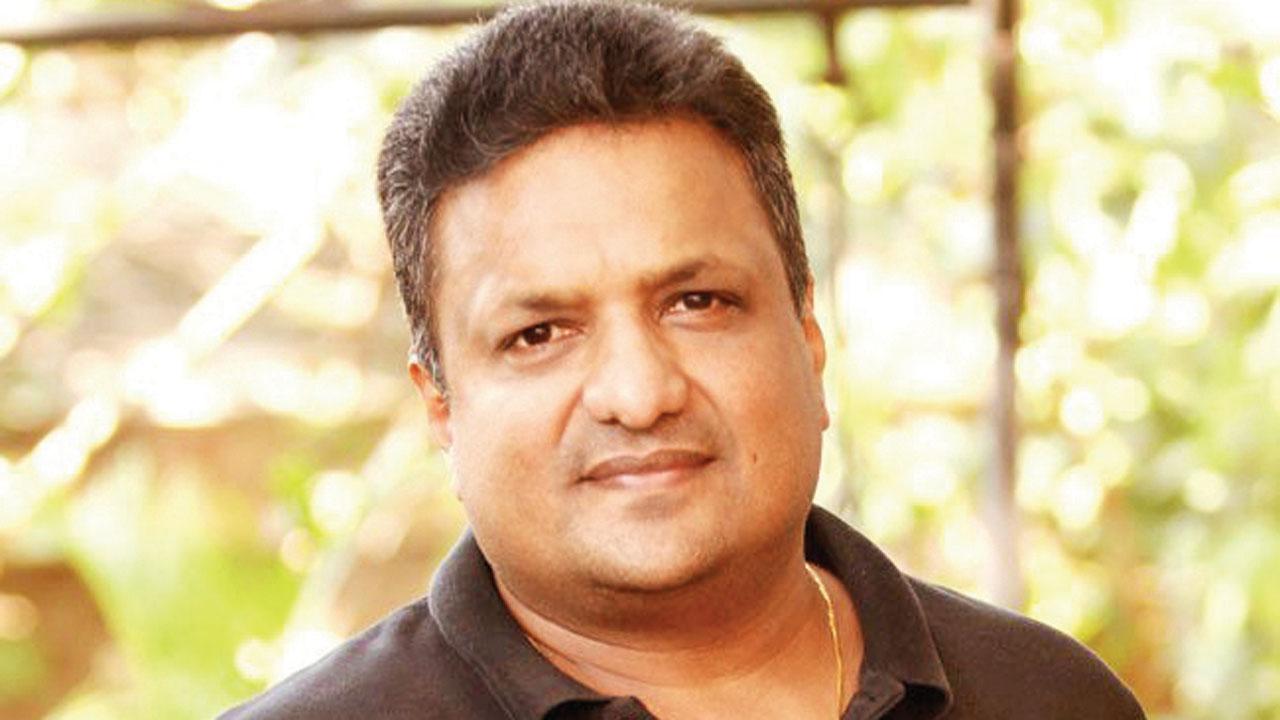
One of the first reactions came from filmmaker Sanjay Gupta, who questioned the move, arguing that banning an actor ultimately affects film productions and the livelihood of hundreds of crew members. Taking to X, Gupta wrote, “When an A-list hero shoots there are more than 300 workers working on sets. Ban him and you are not stopping him but depriving the workers of their livelihood. What sense does it even make???”

‘WHERE WAS THIS OBJECTION DURING MUMBAI SAGA...’
Reacting to Sanjay Gupta’s remarks, Ashok Dubey, General Secretary, FWICE, said film bodies have consistently supported filmmakers during production-related disputes. “I want to ask Sanjay Gupta ji that when his film Mumbai Saga (2021) was being shot and Jackie Shroff ne aane se mana kar diya, he came to us. IFTDA and FWICE intervened and sorted the matter. Where was this objection then?” he said.

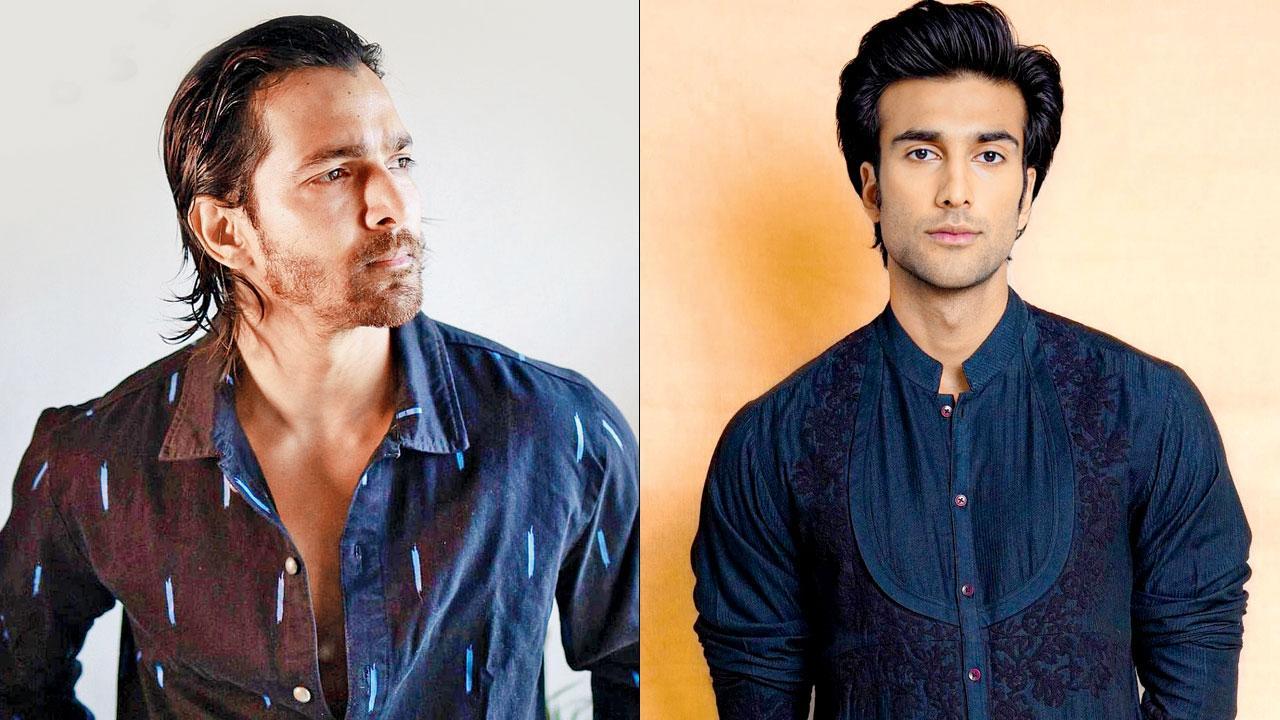
I cast Harshvardhan Rane and Meezaan Jafri as they were football players as well as good actors-Sanjay Gupta

Aiming for big splash on small screen

Having wrapped up his next with Harshvardhan and Meezaan, director Gupta says sports drama among five films he has developed for OTT
Priyanka Sharma (MID-DAY; November 26, 2022)

Sanjay Gupta’s romance with crime dramas continues. This time around, though, he has traded Mumbai’s grimy setting for the beaches of Goa. The yet-untitled film, starring Harshvardhan Rane and Meezaan Jafri, revolves around two brothers, who are also football players. After narrating several gangster stories, Gupta is relieved to move towards a modest setting.

“After Mumbai Saga [2021], I felt I was done with set-pieces. I came across this wonderful script, which is about two brothers and football,” says Gupta, who has co-written the drama.

The movie’s setting isn’t the only factor that sets it apart from the filmmaker’s previous offerings. Having collaborated with stars in the past, it was rejuvenating to work with relatively newer faces. “I wanted to first cast the actors with the right physicality and screen presence. I am quite old-fashioned [in my belief] that a hero [must] look like a hero. I felt these two boys have the potential to break through. I cast them because they were football players as well as good actors,” he says of Rane and Jafri.

Currently in post-production, the crime drama is among the five projects conceptualized by Gupta’s production house in 2021, for direct-to-OTT release. “We have no illusion of taking these movies to theatres and making big numbers. I was clear that it would take minimum two years for [Bollywood to recover after the pandemic].”

Besides the upcoming project, Fardeen Khan and Riteish Deshmukh’s Visfot is ready to stream next year. The remaining three are also thrillers set against different backdrops. Gupta adds, “One is a story of a day in Chandni Chowk, while the other is a comedy thriller. I will direct the third, which is a black comedy.”

Sanjay Gupta

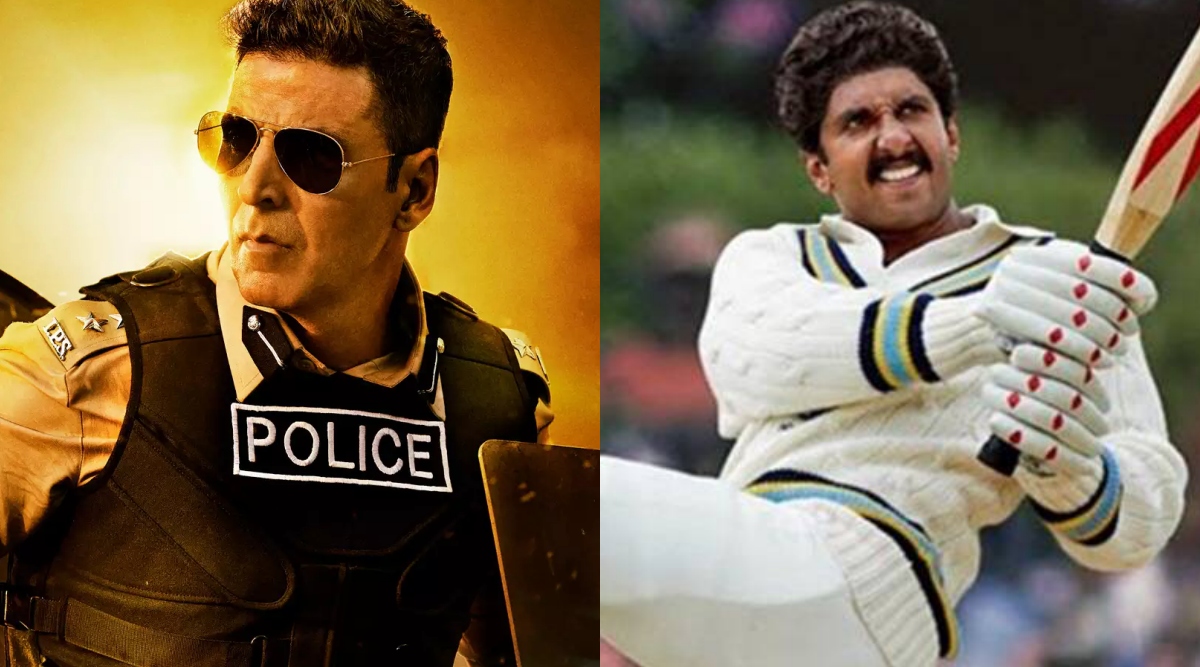
'83 is the top overseas grosser of 2021; beats Sooryavanshi

sooryavanshi 83 release
Box Office India Trade Network

The Overseas market was dull in 2021 like the Indian market as only '83 and SOORYAVANSHI managed to collect well but this is two films doing well as compared to one in India. The standout performance was SOORYAVANSHI although '83 collected a little more that came over the Christmas and New Year period which is easily the most lucrative period for the box office in Overseas with a prolonged holiday period. 

Also SOORYAVANSHI was that film for the mass circuits like Maharashtra, Gujarat and CP, CI. So an $8 million plus overseas total is actually more impressive than its India business. SOORYAVANSHI became the second highest Akshay Kumar grosser in Overseas after GOOD NEWWZ but that was a more overseas friendly film and released over the New Year period.

The rest fared poorly though TADAP surprised in United Kingdom as it beat the likes of BELLBOTTOM, ANTIM and CHANDIGARH KARE AASHIQUI. Overall TADAP could not do much in Overseas but UK has done pretty well as it has collected £187k till date and is still running after 9 weeks of release. It might add another £3-5k and a £190k final total which is not much less than films like BALA and DE DE PYAAR DE which released pre-Covid in 2019.

The top ten grossers Overseas ins 2019 are as follows.
1. 83 - $8.5 million (expected)
2. Sooryavanshi - $8.35 million
3. Bellbottom - $1.92 million
4. Antim - The Final Truth - $1.8 million
5. Chandigarh Kare Aashiqui - $1,060,000
6. Bunty Aur Babli 2 - $1,000,000
7. Tadap - $620,000
8. Mumbai Saga - $470,000
9. Thalaivii - $380,000
10. Chehre - $320,000

After Swabhimaan, people liked me so much that I thought I would be the next Shah Rukh Khan-Rohit Roy

Kaabil Actor Rohit Roy Stars In Vikram Bhatt's New Web Series

Tanvi Trivedi (BOMBAY TIMES; September 30, 2021)

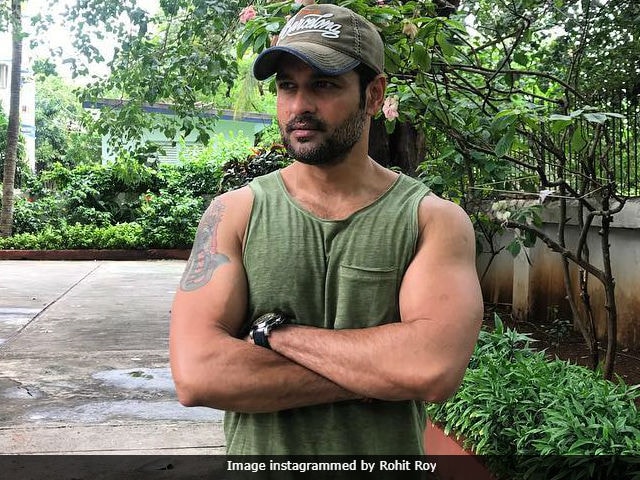
Rohit Bose Roy has had a few film outings, but he has been lucky to land good roles in movies. The actor had an important part in Sanjay Gupta’s Mumbai Saga, which was released in March 2021 during the second lockdown, and is now all set to don the director’s hat for a musical that is being backed by Sanjay Leela Bhansali. In an exclusive chat, Rohit, who hails from a television background, shares his views on how he is a director at heart, success going to his head many years ago and films releasing directly on OTT platforms. Excerpts:

Are you a bit disheartened because Mumbai Saga was released during the second wave of the pandemic?
Of course! After putting in hard work for one-and-a-half years and achieving a leaner physique, working out in the gym for six months, you feel a bit bad that the film had to release during the second wave of Coronavirus. From a regular physique, I worked towards a six-pack, and the film had a star like John Abraham, so you feel bad that not many people could come and watch it in theatres. Nevertheless, people are watching films on OTT platforms, so I feel good about that. We hope that things will improve and people will flock to theatres to watch a movie on the big screens.

You have essayed grey characters earlier, but you played a villain in the Hrithik Roshan-starrer Kaabil. Do you feel negative characters have helped you find a place in Bollywood?
I was chosen to play a villain against a superstar like Hrithik Roshan. Who wouldn’t want to act in the film? Many people called me after Kaabil, expressing shock and disbelief over how I could have enacted that role.

In a way, I surprised the masses and I feel good about it. There are many more shades in grey or negative characters and if I look convincing, why not?

You are turning director with a musical that’s being backed by Sanjay Leela Bhansali ...
Many years ago, I had directed a short story, Rice Plate, in the film Dus Kahaniyaan. I started my career as an actor, and thankfully, it also kept my kitchen running for so many years, but I am a director at heart. I had also assisted Sanjay Leela Bhansali in Bajirao Mastani. It’s a coaching class on acting when you are on his sets. Due to the pandemic, the musical I am directing has taken some time, but it will go on floors soon. It is a human-interest story that revolves around a father-son relationship. I am excited about the project.

Are you happy with the way your career in films has shaped up? Do you feel it takes TV actors longer to make it in Bollywood?
Many years ago, I had asked Anurag Basu why wasn’t he casting me in his films, and he had joked, ‘People watch you for free on television, why would they pay money to watch you in a film in theatres?’ That was quite a shocker, but I understood his viewpoint. Having said that, I am one of those few actors who has continued doing films and television simultaneously. Now, lines are blurring and you can bag great projects in both the mediums, and web shows are an added blessing.

Secondly, I would not blame anyone for my films not doing well at the box office or not bagging interesting projects, because after I did Swabhimaan (TV show), success had gone to my head. I have only started working hard in the last decade. When I did Swabhimaan, I was spoken about as the next big star, I felt I would be the next Shah Rukh Khan. So, if my career took a backseat for few years, it is because of my own assumptions. I was a very bad actor and never took work seriously. If I had put in the kind of effort other successful actors put in many years ago, I would have been somewhere else. I am happy that I am now getting to do interesting work in OTT and films. Maybe, I am one of those few actors who survived in the industry and is doing good work for the last 25 years.

All of Bollywood is sitting in Mumbai, so it feels like we are being victimized-Anand Pandit


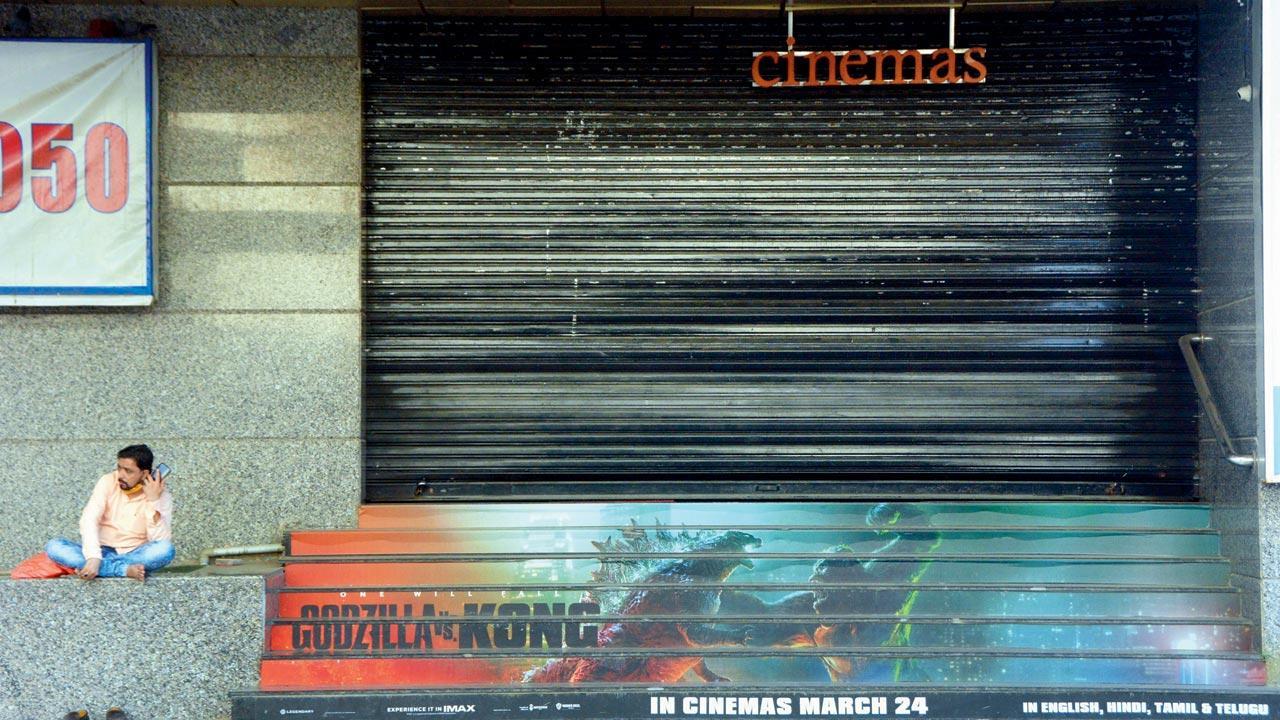
PVR ECX, a multiplex at Citi Mall, Andheri West, has remained shut since the first week of April 2021. Theatres across Maharashtra have been kept out of the state government’s unlock plans, until further orders. Pic/Satej Shinde

With Bellbottom and Chehre makers taking leap of faith to release their films in theatres despite 50 per cent occupancy cap and Maharashtra lockdown, industry says it may be time to show pluck. As one maker puts it, after all, we make movies for theatres. They survive, we survive
Jane Borges (MID-DAY; August 29, 2021)

In December 2020, over two months after the Centre had given its nod for movie theatres to reopen, theatres in Andhra Pradesh and Telangana were still relying heavily on Hollywood productions like Christopher Nolan’s Tenet to revive from the losses the industry had suffered due to the extended Coronavirus lockdown. A surprise Christmas Day release, Solo Brathuke So Better, a romantic comedy starring Sai Dharam Tej, nephew of film actor-politician Chiranjeevi, proved to be a glimmer of hope. 

Hyderabad-based Balgovind Raj Tadla, partner at two single screen cinemas, Sudarshan and Devi, says the crowd’s reaction almost felt like a “revenge-response to COVID-19”. “The movie garnered a lot of media attention,” he recalls.

It also set the stage for three big January 2021 releases, Red, Krack and the Telugu-dubbed Tamil film Master that had superstar Vijay in the lead. All three did phenomenally well with Krack leading the race. But it was Uppena, another romantic drama, which stole the show, collecting over Rs. 150 crore when it released in theatres in Telugu-speaking regions in February, followed closely by Jathi Ratnalu.

Tadla, who is also joint secretary of the Telangana State Film Chamber of Commerce, says this is when film producers and exhibitors predicted an upward swing. But, the second wave that swept the country soon after, came as a huge blow. “At this point, only 10 per cent of the big ticket films had been released. The rest were still waiting it out. [Actor] Pawan Kalyan’s Vakeel Saab was going to be the next big release. It hit theatres on April 9, but despite someone like Pawan in the lead, people didn’t turn up at the theatres.”

Another dry spell due to the more devastating second wave, put theatres out of business again, before cinema halls started opening up by end of July. “I would say that we are still in the first 20 minutes of the film. We are yet to get into the story. It will take another 20 days for us to see where this goes. It should pick up, unless of course, COVID haunts us again.”

The confidence the film industry in the South has shown right from the beginning of the unlock phase has been unparalleled, considering its more popular sibling, Bollywood, has been holding its cards close to its chest, daring only a few odd releases since March 2020. This changed last week, when Akshay Kumar’s spy thriller Bellbottom released in theatres across India. The film hit the screens on August 19 and at the end of the first weekend, it had made around Rs. 15 crore gross in India. It became the first superstar-backed Bollywood film to be released in the pandemic. According to news reports, the movie will release on OTT in September. 

Amitabh Bachchan and Emraan Hashmi’s Chehre, which released last Friday, is the next big ticket film to have hit the screens. What makes these new releases significant is that, in a first, they won’t be screened in Maharashtra due to Coronavirus pandemic restrictions, which is home to the heart of Bollywood, and contributes a lion’s share of the box office revenue.

Film exhibitor Vishek Chauhan, who is based out of Bihar’s Purnea, where he runs Roopbani, the oldest single-screen theatre in the district, says releasing Bellbottom, in such a climate, was “a very gutsy move” by the makers, producers and Akshay Kumar, as well.  “Maharashtra is more than 25 per cent of Bollywood’s market. So, effectively they were left with just 75 per cent of the market to begin with. Out of this, Kerala, Tamil Nadu and Assam theatres are still shut. That means the producers lost another five per cent. Add the 50 per cent occupancy cap, and curfew and other restrictions in some select cities and districts, and that left them with just 25 to 30 per cent [of their targeted audience],” says Chauhan, adding, “One might say that they didn’t make enough at the box office. But, for us that Rs 13-15 crore was pure gold. It has helped get the audiences back, and is now enabling cinemas to plan ahead.”

Though Bellbottom producer Jackky Bhagnani was unavailable for comment, Chehre producer Anand Pandit reiterates why production houses need to show more chutzpah. The film, directed by Rumy Jafry, was originally slated for release in July 2020. With cases peaking in March this year, it was pushed to August. “The narrative, storyline, and cast [of the film] lent themselves to the big screen. Watching it on the iPad or smart phone wouldn’t have justified the experience that we were trying to create for our viewers. I didn’t want to throw away such a film for Rs. 5-10 crore more [on OTT],” explains Pandit.

He says that filmmakers and producers shouldn’t forget that it’s the theatre industry that made Bollywood what it is today. “They have been by our side for the last 70-odd years. At one point, theatre was the only avenue to release films. Today, because of the pandemic, there are over 10 lakh people, connected to the business, struggling to keep afloat. Many have even lost their livelihoods. I think, those who can, should come out and extend their support by releasing their films in theatres.”

Not all risks are worth taking. Director Sanjay Gupta says he learnt it the hard way. Gupta’s Mumbai Saga featuring an ensemble cast of John Abraham, Emraan Hashmi, Kajal Aggarwal, and Prateik Babbar, made it to the big screen on March 19 this year. “We announced the release just a month prior, in February. At the time, the cases were down, and the second wave was nowhere around the corner. We were confident about our film, and also the fact that people would return to the theatres. Looking back, I think we were probably over-confident about the public’s mood,” he says.

When the film released, the second wave had just about begun. “We hadn’t expected COVID-19 cases to rise exponentially. A lot of theatres had opened just to screen our film. It was too late for us to back out by then.”

Having said that, Gupta feels that some measures need to be taken to ensure that the theatre chain survives. “Ultimately, we make movies for theatres. And if they survive, we survive. Most cinema halls have been shut for over a year-and-a-half. At some point, we need to resume. That’s the sentiment with which we had gone ahead. Unfortunately, it didn’t work out, and we suffered.”

According to box office numbers available on bollywoodhungama.com, the movie, which had a production budget of Rs 50 crore, made a gross of Rs 19.68 crore in India and Rs 2.61 crore overseas; its worldwide gross collection was estimated at Rs 22.29 crore. The movie later released on Amazon Prime.

Chauhan says now that most theatres are open, they’d need movies to keep the business going. Post Chehre, there will be a long gap. Kangana Ranaut’s Tamil political drama Thalaivii, based on the life of J Jayalalithaa, will arrive in theatres only on September 10. Bollywood is yet to make further announcements of any new releases. A few odd Hollywood films can help theatres tide through the lean phase, but what after that, asks Chahaun.

Sony Pictures Films India has announced its Hollywood line-up, with Don’t Breathe 2 releasing on September 17, and Spider-Man: No Way Home on December 17. There are a slew of Bollywood films that are ready, but a decision on their release hasn’t been taken for now.

Vivek Krishnani, managing director, Sony Pictures Films India, says that in the last few years the entire “content fabric” has changed. “There are only certain kinds of films, which drive people to the theatres. And this kind of content has to tick off certain boxes. First, it has to have mass appeal. Next, it has to be good enough for people to leave their houses, get into their cars, go to the cinema, find parking, and buy tickets. During the pandemic, we’ve noticed that people have started evaluating their own approach of going to the cinema, and that’s probably because of the kind of exposure they have had to diverse content on OTT. If they are going to be taking the effort to come to a movie theatre, they need to be rewarded for that effort with content that is different and exciting enough, and which they cannot get on the smaller screen. This [consumer behaviour] has forced us to rethink our own creative strategies,” he says, while discussing what parameters they consider, when choosing which film goes for OTT, and which film should wait it out for the big screen.

He alludes to the record turnout that the Tamil film Master saw, when it released on January 13. “People went into the cinema in a big way. Our release Godzilla vs. Kong also had a humongous box office earning, despite releasing in March. What we have seen is that when theatres are open, and the right content comes along, there is but a natural tendency for people to go into cinemas and consume this content. It’s held true in the past, and I don’t see why it won’t in the future.”

Krishnani, however, isn’t sure about the hybrid model, which is being widely discussed ever since Salman Khan’s Radhe released simultaneously across multiple platforms, including theatres outside of India, and via pay-per-view. The film’s collection in India till July 13 was at Rs 1.85 lakh, as it was released on the big screen only in three cinemas, that too in the state of Tripura, bollywoodhungama.com reported. 

“A hybrid model is where the movie runs in theatres and is also being offered as a premium video on demand (VOD). The VOD usually comes at a very expensive price point. This model hasn’t been embraced in India yet. And I think, the jury is already out on what it does to the theatrical revenue. Another issue is that in India, we aren’t used to paying for a one-time watch; we’d rather opt for subscriptions.”

There’s also the issue of piracy, which Krishnani, admits has spiralled with the OTT boom, thus, bringing about newer challenges for content creators. Delaying Hollywood releases in India doesn’t make sense for a similar reason, as most films have already released globally, and pirated content then becomes available online.  

“The truth is that there has been a sharp increase in content consumption [during the pandemic], and that’s because accessibility has increased. Though [OTT] subscriptions have grown, it is but obvious that there’s an audience that’s not paying for this. We do not have metrics to prove this, but this is something we have been able to infer,” says Krishnani.  

Sony Pictures Films India is waiting to release Major, a Telugu and Hindi co-production, which is based on the life of Major Sandeep Unnikrishnan, who was martyred in the 26/11 attack at the Taj Mahal Palace Hotel. “It’s a cinematic experience, because of the story, visuals, and the emotions it draws. I think it is important for stories like this one to be seen in a theatre.”

What’s then, holding back producers and filmmakers from releasing these films?

Shibasish Sarkar, Group CEO, Reliance Entertainment, says that the opening of theatres in Maharashtra will be key to deciding the future of big releases. “The situation is still quite uncertain. While theatres in a majority of the states have opened up, it’s not the case with Maharashtra, which is 25-30 per cent of our market [depending on the film]. At least for pan-India, Hindi films, it is quite a challenge to go ahead and release a film, without Maharashtra. So, while I think we will see a few-odd [Hindi] releases in the coming months, a majority of them are going to wait it out for Mumbai and the rest of Maharashtra to open.”

The release of Kabir Khan’s biographical sports film '83, starring Ranveer Singh in the lead, which has been co-distributed by Reliance Entertainment, has been postponed thrice already. “It was first set to release on April 10, 2020, then we had planned a December Christmas release last year, before pushing it to June 4 of this year. Right now, we are clear that we won’t make any announcement, until and unless there is a semblance of normalcy,” he says, adding, “When I say normalcy, the basic expectation would be that Maharashtra opens up. Only if that happens, can we even have a discussion. Otherwise, there will be no point in doing this exercise all over again. For us, it doesn’t make sense, creatively or business-wise, to ignore 30 per cent of our market.”  Director Rohit Shetty’s Sooryavanshi, starring Akshay Kumar, is also hanging in the balance for the same reason.

Pandit feels that by keeping theatres in Maharashtra shut, the state government is depriving “cinema owners the opportunity to revive their businesses”. “All of Bollywood is sitting in Mumbai, so it feels like we are being victimized. The [state] should, [on the contrary] be supporting the industry,” says Pandit.

Tadla, whose theatres in Hyderabad have been open for nearly a month now, however, has seen a worrying trend of late. Bell Bottom got a luke warm response in his city. “Suddenly, it feels like the audience has lost the habit of movie-watching. I think the second wave was damaging, and that has made people more cautious and wary. We [cinema-owners] are obviously concerned. There was a time, when, even if a movie wasn’t good, it would run for about four weeks at least.”

The digital boom, he feels, has made the audience less tolerant. Today, the fate of a film is sealed is one weekend.

Maharashtra would have been a great addition because it makes up for 30% of the business-Emraan Hashmi


Relieved to have shed the serial kisser tag in the past few years, Emraan Hashmi says upcoming films, starting with 'Chehre', will explore his potential to the fullest
Uma Ramasubramanian (MID-DAY; August 27, 2021)

In March, when few filmmakers were betting big on theatres, Emraan Hashmi’s Mumbai Saga pursued a big-screen release. Five months and the second wave of the Coronavirus pandemic later, producers continue to take the safety net of OTT premieres. Hashmi, in contrast, is theatre-bound again with Chehre.
  
Surely, the decision comes with its share of risks — movie halls in Maharashtra have yet to reopen — but the actor is ready to take the gamble. “Maharashtra would have been a great addition because it makes up for 30 per cent of the business. But we want to put the film out there before anything else happens. There is [little] doubt that India will go through the third wave,” he says, aware that box-office figures are of little consequence at the moment.

Numbers, in fact, have rarely influenced Hashmi’s decision over the past decade as he attempted different subjects. The serial kisser tag has been thankfully left behind. “I don’t get those offers at all,” he says, relieved. “Cinema in itself has changed. People have upped the [bold] quotient now. Back then, a kiss had shock value; now, the shock value is much more in OTT [projects]. The scripts offered to me right now are the kind of cinema I always wanted to do.”

A discussion about the actor often invites remarks about how his potential has remained untapped in Bollywood. Does he share the sentiment? “Every actor’s talent is untapped. You need a good director to bring out another side of you. You are only as good as the script and the director. If I have a mediocre movie, I will by default be mediocre in it. That said, you will see different facets of me in my upcoming films.”

That includes his latest murder mystery, which sees him rub shoulders with Amitabh Bachchan. “On the first day, I was a bit nervous to face him. I had to work doubly hard to match up to him.”

Cinemas start once again with Mortal Kombat, Mumbai Saga

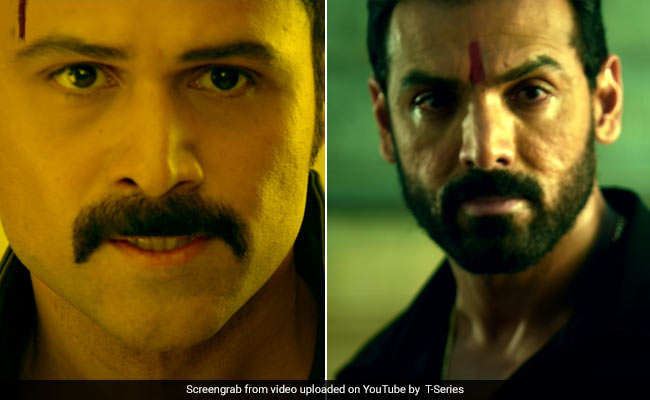
Mumbai Saga Teaser: John Abraham Wants To Rule Bombay But Emraan Hashmi Is Here To Stop Him
Box Office India Trade Network

Cinemas across India will begin to reopen from today (Friday) with MORTAL KOMBAT being the main attraction in the Hindi circuits. This film did a decent $40 million at the box office in the USA when it was released in April. The Hindi releases are awaiting for a decision as to when Maharashtra will be allowed to open and then announce release dates. There are some districts which are going to be allow cinemas to open and the hope is better news over the next week or two which may allow Hindi films to release sometime in August. The main Hindi film playing when cinemas reopen will be MUMBAI SAGA.

Maharashtra is crucial to Hindi cinemas as around 30% of the all India theatrical revenue for Hindi films in 2019 came from Maharashtra. The state has also suffered the most in India from the pandemic which has made the authorities very cautious. So an uptick in cases will push the opening up further down the line.

There have been many states which has been allowing cinemas to open for some time now but the cinemas were just not opening up due to no content. The Salman Khan starrer RADHE was screened officially in some cinemas and unofficially at other places with OTT print being screened. The small video theatres which have limited collections in Gujarat did play the film. The collections of the film would be in the 18-20 lakh nett range with most of this coming from Gujarat and also Rajasthan thanks to Raj Mandir cinema. Over 80% of the earnings is likely to be from these two circuits.

West Bengal despite extending their lockdown will allow cinemas to open which means films will probably be screened from next week as cinemas start opening. This leaves Maharashtra and Bihar as the main markets for Hindi films which are not allowed to open yet. Bihar was expected to open in early July but it did not materialize.

The process is going to be slow and the most important thing is not the turnout but no more lockdowns where cinemas have to close especially in the main contributing states. If this happens then eventually the audiences will return and the industry will be just one blockbuster away from normality or near normality.

The audience will watch a Salman Khan film irrespective of what he does, because his audience is fixed-John Abraham


Rachana Dubey (BOMBAY TIMES; June 13, 2021)

John Abraham is one of those actors who have been able to successfully carve a fairly off-centre path for themselves in the film industry, which boasts of a diverse mix of subjects in the capacity of a producer and an actor. The actor was launched in Bollywood in 2003 by Mahesh Bhatt and Pooja Bhatt in Jism. Since then, he has come a long way, charting a path that was unique. While the initial years were tough for John, films like Dostana, New York and Madras Café (which he also produced) turned the tide in his favour. This year, his movie Mumbai Saga was among the few films that saw a theatrical release. Satyameva Jayate 2, starring the actor, was meant to open on Eid this year, but was pushed ahead. Throughout his career, John has made the effort to stay relevant in an industry that’s fast-evolving, with plenty of new faces being launched each year.

Bring this up, and John says, “I’m only concerned about work. I have never been a part of rat races and have opted to work purely on instinct. Over the years, a certain space has come to be earmarked as mine. Sometimes, only the director and I have seen the films that I have been a part of, but that has not deterred me.”

Talking about other actors in the industry, who have a similar trajectory as his, John points to his Mumbai Saga costar Emraan Hashmi. Coincidentally, Emraan was launched in Bollywood in the same year as him by the Bhatts’ banner. He says, “Emraan and I are very similar in the way we are and the trajectories we have. I am secure in my space, and so is he, and that is our biggest advantage. We are far more relevant than we ever were.”

He adds, “We are now in a far more mature place as actors. We’re in that space where our audience does not float depending on what we’re doing. We have their trust. The audience will watch a Sanjay Dutt or a Salman Khan film irrespective of what they do, because their audience is fixed. It makes me feel great that, however small or big, we have a fixed audience. What is different about our careers is that over these years, while I had several action films, Emraan walked away with all the great songs.”

My boss Mahesh Bhatt is after me when I’m not doing enough. He is a taskmaster-Vikram Bhatt


Filmmaker Vikram Bhatt feels it is now time to stand together as a nation in our fight against Covid-19
Rishabh Suri (HINDUSTAN TIMES; May 11, 2021)

Everything has been thrown into a disarray, with the second wave of Coronavirus gripping India. The entertainment sector, which was just beginning to get back on its feet since late last year, is again seeing work get stalled. Filmmaker Vikram Bhatt says, the business was still being impacted even after things looked up around October last year, with theatres reopening after seven months.

“We are still reeling under the impact. Even Sanjay Gupta’s Mumbai Saga, which was released in mid-March, was badly hit by the lockdown. I’m sure he suffered losses on a film that’s complete,” shares Bhatt, adding that the situation is grim everywhere. “But, when you look around and see people dying, you realise your problems are very little compared to what others are going through,” he says.

While the 52-year-old admits that there is trouble around, he insists this is the time to come together to fight the virus; “Our theatres are in a lot of trouble, but the nation is in bigger trouble. Now is not the time to talk about personal losses. This is the time for us to join hands and come together as a nation.”

Bhatt was shooting for a project, Anamika, with actor Sunny Leone, but work got stalled as a lockdown was announced in Maharashtra, in the last week of April.

“I was almost done with the shoot when work was stopped yet again. We did rapid antigen tests every day and an RT-PCR every seven days. Luckily, I had another project, Bisaat: Khel Shatranj Ka (recently released web series), which I had finished in the interim period. We only had a few cases there,” he further adds.

Ask what keeps him occupied during this lockdown, and Bhatt reveals it is his writing. “I am writing a lot. My boss Mahesh Bhatt, an integral part of my company’s creative process, is after me when I’m not doing enough. He is a taskmaster. Thankfully, writing is something you can do when you’re in a lockdown,” he signs off.

Shah Rukh, Salman & Aamir Khan have been through high and lows and yet kept moving forward-Emraan Hashmi


Kavita Awaasthi (HINDUSTAN TIMES; May 2, 2021)

As someone who is secure in his talent and being, Emraan Hashmi says he enjoys working with actors, especially the established names.

Talking about his working relationship with John Abraham, he says while he’d at first met the actor socially, he didn’t know him well until they worked together in Mumbai Saga. “It is heartening to work with someone like John, who is a gem of a person, a professional... He doesn’t get into the politics of things. He likes to switch off when his job is done. We connected well as we don’t roam around with the baggage of our fame and the work we have done,” says Hashmi.

The actor is also awaiting the release of Chehre, co-starring Amitabh Bachchan, that got postponed due to the rising cases of Coronavirus. Admitting that he had a fanboy moment during their first meeting, Hashmi gushes, “I’d get those first-day jitters of meeting your hero, someone you idolise. But he puts you at ease and is so giving as an actor. I respect him as an actor because even after so many years, he still has the fire and the drive.”

While he has done two-hero films, he has not yet acted with the Khan trio — Aamir, Salman and Shah Rukh. He says, “I worked with SRK, who produced the web show, Bard of Blood, and I’ve met Salman and Aamir on occasions as well. They have stood the test of time and have been through high and lows and yet kept moving forward… It is a tough industry, and to be on that level and keep things going and constantly fuelling that fire is an inspiration for me. Their body of work has impacted me as an artist on a subconscious level.”

(Crisp) Movie Review: MUMBAI SAGA by FENIL SETA

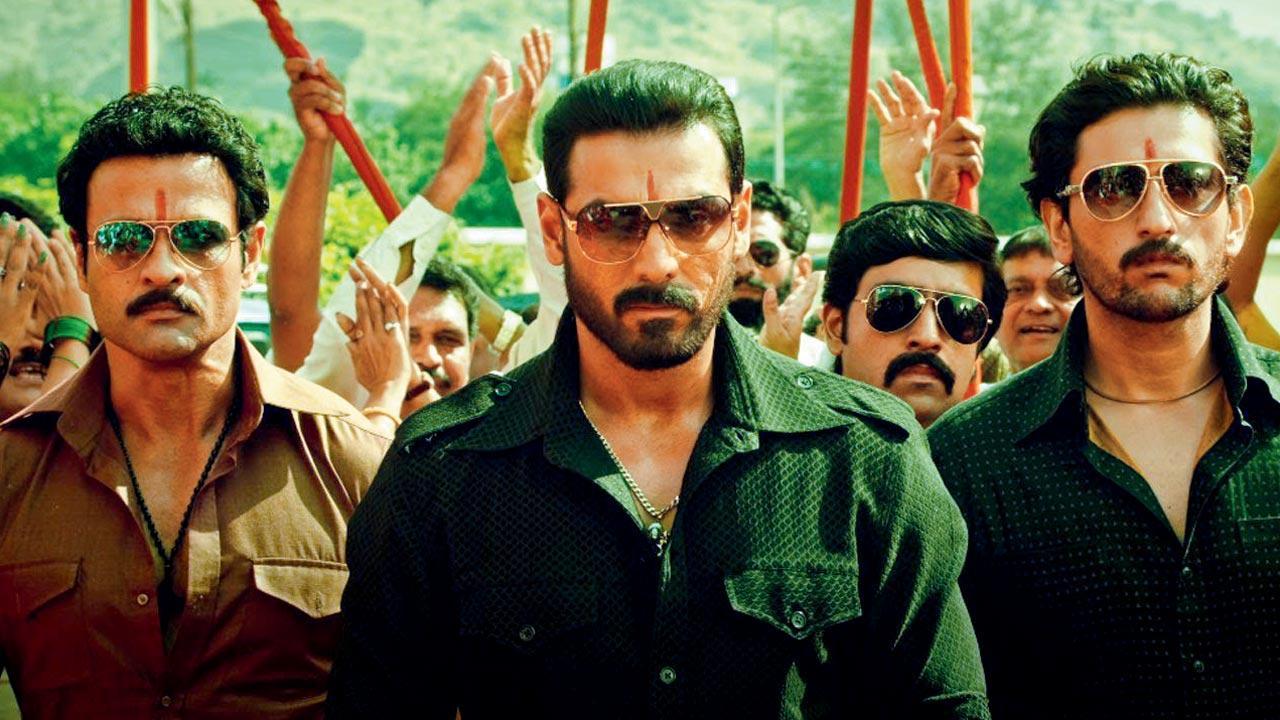
Mumbai Saga is a massy, action film depicting an interesting chapter from Mumbai’s underworld history. Thankfully, it tells a tale which many don’t know about and that adds to the fun. The film moves swiftly and packs in a lot in 127 minutes. The action scenes are truly exciting and even the dialogues compliment the massy goings-on. The twist in the pre-climax is unexpected. On the flipside, the first half is weak. John Abraham’s rise seems very easy. The first hour is also a bit stretched. The character development and backstories is absent for most characters. A few of them are interesting but don’t get the screen space they deserve. Also, the VFX is tacky. Speaking of performances, John Abraham shines. He is rocking in action scenes and he looks every inch a dreaded gangster. And the way he flashes his dimpled smile briefly is appealing. Emraan Hashmi unfortunately has a late entry. But once he enters the narrative, he makes the film better. His dialogues are sure to induce claps. Mahesh Manjrekar plays a character inspired from a real life legendary deceased politician and does justice. Amole Gupte is fair but his character is caricature. Prateik Babbar looks a bit off and could have done better. Kajal Aggarwal and Anjana Sukhani are wasted. Gulshan Grover, Rohit Bose Roy, Shaad Randhawa (Jagannath) and Vivaan Parashar (Sadashiv) do well. Suniel Shetty looks stylish in the special appearance. All in all, Mumbai Saga is a timepass action flick and a must watch for masala film lovers.

My rating - *** out of 5!

When Sanjay Gupta told me that he's planning to cast Emraan Hashmi, my eyes lit up-John Abraham


Rachana Dubey (BOMBAY TIMES; March 19, 2021)

John Abraham is known for his action-packed entertainers and concept-driven productions. Meanwhile, in recent years, Emraan Hashmi has been seen in movies that have given him ample scope to display his acting chops. Over to John and Emraan, who talk to BT about the central characters they play in Sanjay Gupta’s gangster-drama Mumbai Saga that releases today:

Both of you have been a part of gangster dramas before, what drove you to you give the nod to Mumbai Saga?
Emraan: I didn’t know anything about the character or the story, but even without the narration, I wanted to work with Sanjay Gupta. His films are among those pieces of work that make for a defining cinematic experience. I remember I had seen Kaante in a single-screen theatre and was blown away by it. This time, I wanted to know his characters, his process of working and how he tells his story. It somehow resonated with me. I really liked the character of Vijay Savarkar, and John was on board, too, and I wanted to work with him. Yes, in an ensemble, insecurities fly high before you go to the set. John and Gupta had worked together, but it was a new set up for me. It turned out to be a completely secure and fun zone to be in and the best that an actor can ask for.
John: I had worked with Sanjay on Shootout At Wadala and Zinda. But this film was completely different from the other two. It is more mature and complete as a film, especially when I compare it to Shootout At Wadala. That was Manya Surve’s story, but this is a story of conflicts, which makes it more interesting and rounded with so many different elements coming together. When Gups (Sanjay Gupta) told me that he was looking at Emraan to play Savarkar, my eyes lit up because he is an actor I have been looking forward to working with. It’s difficult for me to explain, but when you see the film, you’ll realise how much his entry benefits the story. The way the story moves, you will find yourselves invariably rooting for Amartya and Savarkar at different times.

Emraan, while talking to BT, Sanjay had mentioned that your character was not written in the stereotypical style of a two-hero film, although the screen time has been well-balanced. Did that trouble you?
Emraan: I have never been that sort of an actor who looks at the screen time. I have always opted for characters depending on what they lend to the story and the impact they have on a film. Having said that, when you see the film, you will feel that both our characters leave a mark, and everything and everyone in the film has been justified in terms of their character arcs. As actors, we all look at what our characters mean to the story and maybe, at times, even what others are up to. With Mumbai Saga, I loved the fact that I was playing a cop for the first time, and it was a brand new space to explore.

John, you’ve played a dreaded gangster in a Sanjay Gupta film earlier, how far has he gone with this one?
John: I feel safe working with Gupta. It would be a risk to do another gangster film with him if it was only the story of my character, like it was Manya’s story in Shootout At Wadala. Here, the story is about a larger conflict and my character is probably at a pivotal point in that. As for Emraan, his character is in the zone that I was in, in Zinda. While Shootout At Wadala had high levels of testosterone, this film has a more mature story.

This film captures a certain period that Mumbai as a city went through. Both of you were probably in school during the 1980s and 1990s when Mumbai was going through the transformation. What are your memories of that time?
Emraan: I was very young when kids used to talk about these gangsters like they were urban legends. There would be so much misinformation, but people used to talk about antisocial elements and all that was happening at that time. They would whisper and talk in muffled tones. And then, the riots shook the foundation of the city. We got three days off from school at that time. It felt like a jolt at that age when your world is all about books and cartoons. It is tough to comprehend that such people exist and such things happen. The film talks about how things changed and how the landscape changed from mills to malls and skyscrapers. There were so many hands in the pie. This is our way of revisiting the city’s most defining moments.
John: The reason this film will impact people is that it makes references to incidents that they have lived or been a part of, in some way. I remember, Balasaheb Thackeray, during a speech, had spoken about why the future generations will call this city Mumbai. It has happened, right? We have made a reference to that in the film. Mumbai Saga impacts you because it tells you why and how Bombay made way for Mumbai, in an entertaining manner.

At a time when the industry is still uncertain about releasing big-ticket films in theatres, with this film, you guys have paved the way for more films to opt for a theatrical run...
John: Whether you see it as a first-mover advantage or in any other way, we decided to have a theatrical release because this film deserves to be seen on the big screen. A lot of actors are always worried about their filmography in terms of box office and how it will look eventually. I would say we are gutsy as a team to release our film in theatres. Yes, we’re aware that Coronavirus cases are on the rise again. We don’t know what is going to happen in the next 24 hours, but we decided to release the film where it deserves to be seen. Emraan saw the movie before me, and he told me that, ‘John, this should go to the big screen.’ I don’t see it any other way either. It has heroism that people are missing. I would urge people to be responsible when they visit cinemas, but they should watch this film on a big screen. Today, we’re not worried even if we do take a hit. We understand that things won’t suddenly go back to what they were in 2019. We’ve gone past the stage of worrying about box office numbers. It’s important to bring the audience back.
Emraan: I think the entire team, including producer Bhushan Kumar and Sanjay, should be applauded for being brave and making such a strong decision. We could have taken the easy route out. We had the option of releasing the movie directly on an OTT platform, but we feel responsible for this film as it was designed to be a big-screen experience. Putting it out on a small-screen platform will be a disservice to this film. Releasing it in theatres should get a trickle-effect. The fear will take a while to wear off. Even if the collections are not as great, it’s an initiative and should be seen for what it is. We don’t know what will happen eventually, but this film was waiting for a long time to see its audience in a theatre. So be it!

Fenil's Bollywood Talk # 665

ROOHI IS A SUCCESS; NOW ALL EYES ON MUMBAI SAGA!

Since November 2020, we, through the Bollywood Talk, have been stressing that the mid and big films should release despite the pandemic. The first major release post lockdown, Suraj Pe Mangal Bhari, opened at around Rs. 55 lakhs. It became clear that if a film with a weak star cast and limited hype can put up such a figure, then a bigger film can do better. Later, in January 2021, Vijay's much awaited film Master released and it emerged as a huge hit, collecting more than Rs. 100 crore. It made it clear once and for all that audiences are ready to come to cinemas and that films can collect well, despite 50% occupancy. Bollywood, however, didn't agree. It's only when the central government allowed 100% occupancy that the industry finally woke up and drew a line up.

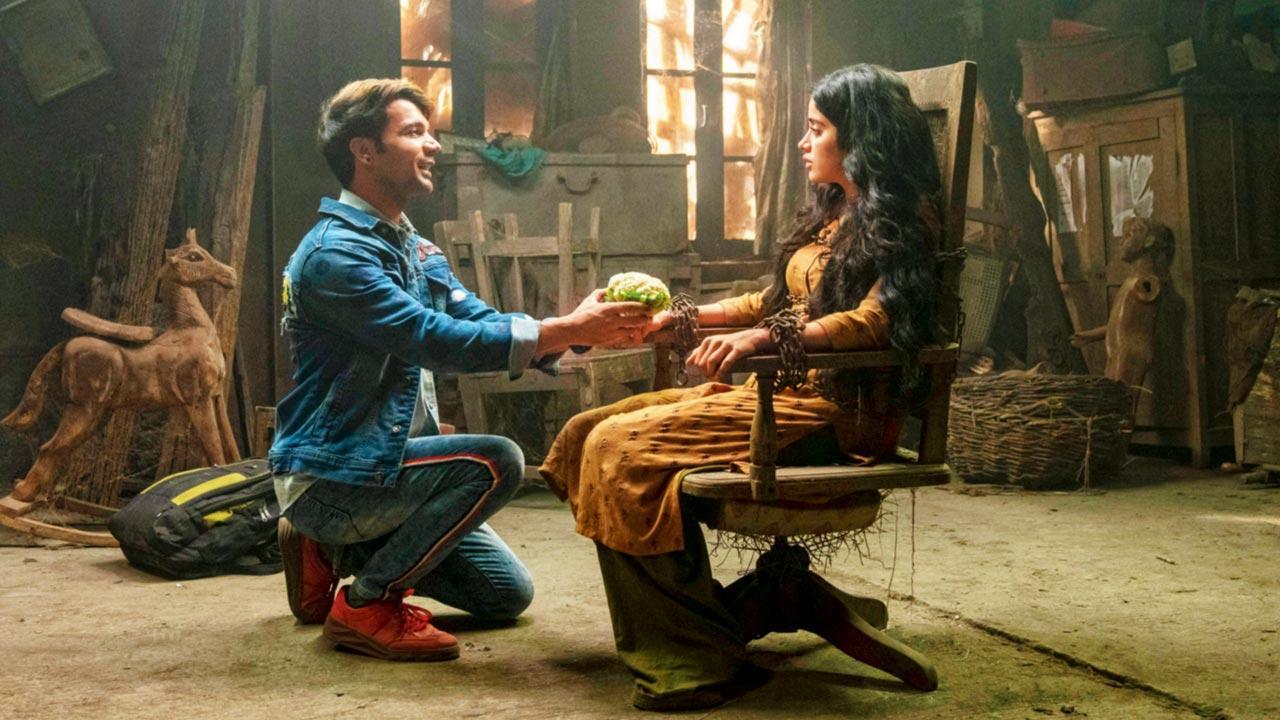
Sadly, the 50% occupancy rule still remains, in major centres like Mumbai and Pune. Still, producers Dinesh Vijan and Jio Studios went ahead with the release of Roohi, starring Rajkummar Rao, Jahnvi Kapoor and Varun Sharma. The hype was limited and we expected the film to open in the Rs. 1.50-2.50 crore range. Even the trade felt the same. Surprisingly, the film opened at Rs. 2.75 crore! It was released on Mahashivratri holiday and that also helped. The collections improved on Saturday and Sunday and ultimately it collected Rs. 11.35 crore in 4 days. The weekday drop is normal and the first week collections are expected to be around Rs. 15.50 crore.

This is a great result for a film like Roohi. The response is mixed and yet, audiences have thronged theatres to watch it. Many of these viewers have gone to cinemas for the first time in a year. This reiterates that there's tremendous pent up demand among audiences.

Now two more films are expected to release tomorrow and trade is hopeful that one of them will manage to score. The first one is Mumbai Saga. It is directed by Sanjay Gupta and stars John Abraham and Emraan Hashmi in leading roles. It is based on the Mumbai underworld and is in the same space as Sanjay Gupta's Shootout At Lokhandwala and Shootout At Wadala. The film looks like a massy fare and the casting of John Abraham and Emraan Hashmi has helped. They have a following in single screens and B and C centres. On the flipside, the film has limited buzz. Songs haven't worked much. But if a film like Roohi can open at Rs. 2.75 crore, Mumbai Saga can do better and have an opening of Rs. 3-3.25 crore. It can sustain well if mass audiences give it thumbs up.

The other release tomorrow is Sandeep Aur Pinky Faraar. It is a delayed film that was shot in 2017 and 2018. Directed by Dibakar Banerjee, it was finally scheduled to release on March 20, 2020. But the lockdown played spoilsport at the eleventh hour. The producers Yash Raj Films (YRF) had unveiled a trailer of the film last year which was very poor and dry. 10 days back, YRF came up with a new trailer and this one is much better. Yet, one thing remains - it looks like a niche fare. It has got limited shows since Roohi and Mumbai Saga have taken over majority of shows. The opening will thus be less than Rs. 50 lakhs.

If an actor is not confident of a film, he dumps it on OTT-John Abraham


Refusing to use pandemic as “crutch” for film’s fate, John Abraham says he batted for Mumbai Saga’s theatrical run from the get-go
Mohar Basu (MID-DAY; March 17, 2021)

As the leading man of Mumbai Saga, John Abraham played a significant role in ensuring that the film is theatre-bound at a time when many are opting for the safety net of digital premieres. “When I heard there were talks with Amazon Prime, I had a chat with Bhushan [Kumar, producer] and Gupta [Sanjay Gupta, director],” begins the actor. While he is confident that a big-screen release is the right move, Abraham is well aware that the film “won’t make as much money as movies did in 2019. All theatres across the country haven’t opened, but with this film, a few more will. After we announced this film, five more movies were announced [for theatrical run]." 

"Let’s be honest, it’s a common industry notion that if an actor is not confident of a film, he dumps it on OTT. Almost 90 per cent of movies that opted for OTT release were bad. I am not saying this film is spectacular, but we are not worried about its failure. I won’t use the Coronavirus pandemic as a crutch.”

Some may argue that the actor has explored gangster roles in all their shades, from the slick criminal in Race 2 (2012) to Manya Surve in Shootout At Wadala (2013). But Abraham says the good guy-bad guy dynamics, brought to life by Emraan Hashmi and him, made him gravitate towards the project. “I ran the risk of repeating my Shootout At Wadala act. I am wearing a tika again. But the conflict with Emraan’s character was interesting. Preparing for this role required following Gupta’s vision and reading up on the backstory of the man.”

In his 18-year career, the actor has chosen stories over the lure of big banners, not shying away from two-hero projects or from producing small films with a big heart. “I simply want to make the cinema I [believe in]. I am comfortable with my earnings, so money isn’t a driving factor. People often ask me about my wish list of directors, but I have none. Anyone who works with me is important for me. I can’t stand outside a big director’s door and ask for work. It’s not about ego, it’s about self respect.”

My character in Mumbai Saga in no way reflects the police force-Emraan Hashmi


Discussing the depiction of cops on-screen amid rising instances of police brutality, Emraan Hashmi says his role in Mumbai Saga is work of fiction
Mohar Basu (MID-DAY; March 15, 2021)

Emraan Hashmi is glad to be back in the groove following a year of uncertainty. With Mumbai Saga, he has the perfect potboiler for big screens that have been hit hard by the pandemic. “After watching the film three weeks ago, I told Gupta [Sanjay Gupta, director] that he has made the right move by opting for a theatrical release,” says the actor, who plays cop Savarkar to John Abraham’s gangster.

Actors are often skittish about featuring in two-hero projects. Hashmi had little reservations as the director and Abraham welcomed him with open arms. “I loved Kaante [2002], so working with Gupta was always on my bucket list. I’d be lying if I say actors don’t feel insecure, but the anxieties were put to rest on day one. They were warm and adopted an honest approach to what was on the page. Gupta allows his actors to interpret their characters, and doesn’t crowd you with his own thoughts.”  

On the surface, Mumbai Saga may appear as a classic good-versus-evil story, but Hashmi insists that the director has explored the grey areas. “There are films that have good-hearted, righteous heroes, but I find them boring. People can’t be boxed so simplistically. Painting [characters] in broad strokes doesn’t allow them to mirror life. Also, one has to understand that for cops to clean up the streets, they have to bend the rules. Savarkar had to adhere to certain morality, but the situation back then [the early ’90s] was tough.”

The past year has brought multiple instances of police brutality to the fore. When asked about the uneven depiction of cops on screen, he clarifies, “I am an actor who abides by the director’s vision. At the end of the day, this is a film. If we think of so many variables, no movie will ever get made. It’s not possible to capture the cause-and-effect of every tiny detail. I hope people know this is a work of fiction. Savarkar, in no way, reflects the police force. There are bad cops and bad politicians in films and in real life, just as there are good cops and good politicians.”

Ram Gopal Varma's D Company to release a week after Sanjay Gupta’s Mumbai Saga


With Varma’s D Company and Sanjay Gupta’s Mumbai Saga being in the same vein, sources say former trying to eat into the marketing strategy of other film
Upala KBR (MID-DAY; March 14, 2021)

Close on the heels of the announcement of the release date of Mumbai Saga, Ram Gopal Varma revealed that his passion project, D Company will hit theatres only a week later. Sources close to the filmmaker say Varma intends to cut into the audience of Sanjay Gupta’s gangster saga, which is among the lines of Varma’s offering, and also based in the 1980s.

The source says, “Apart from the fact that the film will release only a week apart, Ramu also unveiled his song, Khatam, only days before Mumbai Saga’s Danka Baja unveiled. [He has been taking to] a strategy that parallels that of Sanjay’s film to make sure that his dream project attracts the necessary eyeballs. It is likely that several real-life characters will be featured in both films.”

Varma points to the fact that both films are period films, and similarities are hence inevitable. “The subjects are similar but our interpretations as directors are different. [Gupta] has a stylised approach, and I believe in realism and characterizations. While I don’t know what Mumbai Saga showcases, D Company features real events, and real characters who have never ever been seen in cinema before. My sources are ex-gangsters who have been part of Dawood’s gang.”

Brave start for Bollywood’s first biggie, Roohi


Roohi opens across 3,000 screens at average of 15 per cent occupancy; trade hopeful of strong weekend for Rajkummar-Janhvi starrer
Mohar Basu (MID-DAY; March 12, 2021)

As Rajkummar Rao, Janhvi Kapoor and Varun Sharma-starrer Roohi kickstarted its run across 3,000 theatres yesterday, exhibitors across the country were jubilant. The horror comedy is the first Bollywood biggie to hit the marquee since cinemas were allowed to function at 100 per cent occupancy in February. It will be a tough road ahead for films as they lure audiences back to the movie halls, but trade analyst Taran Adarsh is proud that producer Dinesh Vijan and director Hardik Mehta have taken the brave step. “It is too early to gauge the collection, but horror comedy is a great genre, with Stree [2018] and Golmaal Again [2017] having worked at the box office. The occupancy is lean because of the pandemic. The national average is 15 per cent, with north India recording better occupancy than the rest of the country,” he says.

Exhibitor Akshaye Rathi hopes that Roohi and the upcoming Mumbai Saga will start the movie consumption cycle that has been put on hold since last March. Pointing out that the occupancy is varying from five to 50 per cent in different regions of the country, he adds, “In one of my theatres at Raipur, 50-plus people came to the noon show. It’s the best single-day collection since cinemas have reopened. Going by early trends, the film will do a minimum of Rs. 2.50 crore on day one and sustain well over the weekend. Largely, the pan-India picture looks reassuring.”

Fenil's Bollywood Talk # 663

MOVIE SEASON TO BEGIN WITH A BANG FROM NEXT WEEK!

The cinemas have been allowed to resume from mid-October in most parts of India and in the crucial market of Mumbai from November 5. Yet, we hardly have had a handful of Hindi films that have been released in cinemas. And the collections have been poor for all films. Suraj Pe Mangal Bhari is the biggest grosser post lockdown but even that, it managed to collect mere Rs. 4.06 crore. Meanwhile, the collections down South have been great as some big films got released there and even emerged as a success. It gave a clear indication that if big and mid-sized films release in theatres, then the viewers are bound to turn up. However, filmmakers here didn’t believe so. They felt that there’s still fear of the Coronavirus among viewers. Also, the government had allowed only 50% occupancy in cinemas. The ones with the big films in their kitty believed that this restriction will prevent them from collecting enough. The trade countered that even Master earned more than Rs. 100 crore with these restrictions but their plea fell on deaf ears.

However, on January 30, the union government allowed 100% occupancy in theatres. This was done after the Coronavirus cases began to fall gradually. This led to a wave of cheer in the industry and trade. And in the next 3 weeks, the filmmakers took the risk and announced the release dates of their films. What’s heartening is that unlike the October-January period, where one small film would release every 2 or 3 or even 4 weeks, this time, a line-up was announced. As per the schedule, there’s an interesting film releasing now almost every week.

The first film that’ll make it to cinemas is Roohi. It belongs to the same universe as Stree and stars Rajkummar Rao, Janhvi Kapoor and Varun Sharma. It releases on Thursday, March 11, to take advantage of the Mahashivratri holiday. March 19 will see the release of John Abraham-Emraan Hashmi starrer, Mumbai Saga. This massy fare is directed by Sanjay Gupta. The same day, Sandeep Aur Pinky Faraar, starring Arjun Kapoor and Parineeti Chopra, will also arrive in cinemas.

April 2 will see the release of the much awaited film Sooryavanshi, starring Akshay Kumar and Katrina Kaif. Directed by Rohit Shetty, the official announcement is yet to be made, however. Then there’ll be a clash on April 23 between Bunty Aur Babli 2, starring Saif Ali Khan, Rani Mukerji, Siddhant Chaturvedi and Sharvari Wagh and Kangana Ranaut-starrer Thalaivi. Amitabh Bachchan-Emraan Hashmi’s Chehre will make it to cinemas on April 30.

Eid 2021 falls on May 12 or 13 and this time there’ll be a clash, between Salman Khan’s Radhe and John Abraham’s Satyameva Jayate 2. 2 weeks later, Akshay Kumar will present his action thriller, Bellbottom, on May 28. A week later, June 4, will see the release of the highly awaited sports biopic, ’83, starring Ranveer Singh and Deepika Padukone. While June 18 will see the release of Amitabh Bachchan-starrer Jhund, June 25 will see Shamshera, starring Ranbir Kapoor and Sanjay Dutt, arriving in cinemas. Similarly, the release schedule for the rest of the months of 2021 is also more or less finalized.

However, there’s a small catch. Since mid-February, the cases of Coronavirus in the country have started rising. This is mainly happening in the state of Maharashtra, where the crucial markets of Mumbai and Pune, are located. This state along with Uttar Pradesh (barring Lucknow and Noida), Haryana, Himachal Pradesh, Rajasthan, Jharkhand, Odisha and Kerala haven’t allowed 100% occupancy yet. Punjab had allowed but went back to 50% after cases there spiked. Industry insiders feel that the important centres like Mumbai, Delhi, Pune, Hyderabad, Bengaluru, Kolkata etc should allow full occupancy and only then, it’ll make sense to release big films. When the central government had allowed 100% occupancy on January 31, the belief was that all states would follow suit by March-end. This would pave the way for Sooryavanshi to release with full occupancy on April 2. But now with the cases rising, it’s difficult to say if the 50% rule would go away or will it be retained for a few more months. This is one of the biggest reasons that Sooryavanshi’s release date isn’t announced.

As per the trade, the makers of Sooryavanshi will have to take a call by March 9 or 10 at the maximum. This will give the film a 3-week window for promotion which is bare minimum. Murmurs have already begun that the film might be postponed. But the makers can only delay its release by a week, on April 9. It can’t be pushed further as the holy month of Ramzan will begin somewhere from April 12. A chunk of audiences would then stay away from cinemas for a month. And there’s no way that Sooryavanshi can further postpone and come only after Eid. It’ll disrupt the whole schedule of the year.

Hence, it remains to be seen what happens next. But thankfully, the increase in cases isn’t alarming. Death rate is quite down and even hospital occupancy isn’t too much. Here’s hoping the situation improves in the next fortnight so that these exciting films can release as per schedule!

John Abraham wanted theatrical run since December-Sanjay Gupta


Stating that Mumbai Saga’s box-office run will be litmus test for the industry, director says he chose cinema over OTT release at Emraan, Abraham’s behest
Mohar Basu (MID-DAY; March 3, 2021)

It was widely known in the industry circles that Mumbai Saga was nearly sold to Amazon Prime Video for a lucrative deal. But now, the John Abraham and Emraan Hashmi-led gangster drama is primed for a theatrical release. Ask director Sanjay Gupta what led to a change of heart, and he attributes the decision to his leading men. “John wanted a theatrical run since December. Emraan backed him. They gave us the faith to take the risk of a big-screen release,” he says.

Gupta, known for his massy entertainers, admits that Mumbai Saga has been designed for a community-viewing experience.  “[When supervising] the sound design, I would imagine how it will sound in screen number 2 of Juhu PVR. My characters are mouthing one-liners that can’t be enjoyed on a smaller screen. If we were losing money, an OTT release would be preferred. But with theatres, we’re safe — we’re not making money, but we won’t lose either. Someone [in the industry] has to take the leap, so we are doing it. This film is a litmus test. In this competitive industry where people enjoy others’ failures, producers, for the first time, are hoping Mumbai Saga works so that other films have better scope.”

Even as he cherishes the big-screen experience, he asserts that audience safety comes first. “Wear masks, and watch the film only if you feel comfortable. I don’t want a packed hall.”

The tonality of crime dramas has changed in the OTT era with Mirzapur and Sacred Games deep-diving into the genre with long-format storytelling. Does he worry that viewers may not connect with his signature theatrics, having been accustomed to a different style of narrative? “The storytelling for big screens is different; here, you want quick payoff. The visual dynamics and music grab you. I have had innumerable offers to foray into OTT. I have refrained because I haven’t cracked that formula yet. Storytelling should never be at the mercy of harsh language or gory depiction. I remember the explicit scenes of Shootout At Lokhandwala had put off a section of my audience.”

If 100% occupancy rule is revoked, first-day collections of Master will be halved, feels trade

As Centre revokes Tamil Nadu government's order of 100 per cent theatre occupancy, trade rues move will make B-Town producers hold off films again
Mohar Basu (MID-DAY; January 8, 2021)

The Tamil Nadu government faced severe backlash over the past few days for increasing theatre occupancy to 100 per cent ahead of the release of Vijay's Master. On Wednesday, the Centre directed the state government to revoke its order, and fall in line with the 50 per cent occupancy protocol. While this earned a nod of approval from frontline workers who had argued that the previous order put public health at risk, trade circles are wary that the move will have producers playing on the back foot again.

"The first-day collections of Master will be halved. The only positive takeaway is that the loss made in each show can be covered by increasing the number of shows," explains trade analyst Akshaye Rathi. He reasons that while tentpole movies like '83 and Sooryavanshi can be held off, Bollywood producers should part with their mid-budget films, thus offering them fresh releases. "Red [Telugu film] is being released, as is the big-budget Bhojpuri film, Dulhan Wahi Jo Piya Mnn Bhaye. Hindi film producers can follow suit. Movies like Toofaan, Bunty Aur Babli 2 and Jayeshbhai Jordaar can be released. Mumbai Saga has been apparently sold to Amazon Prime Video, when it could have been a theatrical offering."

Satadeep Saha, distributor of Master in West Bengal, adds, "The cases are at a low. Theatre occupancy can be raised to 75 per cent."

Looking at the positive side, Ramesh Bala predicts that box-office clashes will reduce here on as they will be a no-win situation for producers and exhibitors. "In Tamil Nadu, there's talk of forgoing local body entertainment tax to support theatres. Everyone needs to come together to stop films from pursuing an OTT release."