Showing posts with label Mukkabaaz. Show all posts
Showing posts with label Mukkabaaz. Show all posts
It’s no longer possible to make films like Gangs Of Wasseypur fearlessly today-Anurag Kashyap
2:24 PM

Yemen S (BOMBAY TIMES; February 6, 2026)
Filmmaker and actor Anurag Kashyap says his biggest fear today is not being able to make the kind of cinema he truly believes in. Speaking at the 17th Bengaluru International Film Festival (BIFFES) 2026 during the Fearless Filmmaking session on Saturday, Anurag said films such as Gangs Of Wasseypur and Mukkabaaz would not be made in the current climate.
“Gangs Of Wasseypur or Mukkabaaz would not have been made today because of the themes I chose to tell those stories with. And even if they were released, they would be heavily censored,” he said.
Anurag also noted that several honest filmmakers are attempting to find ways around censorship. “India is still better, and that gives me hope. If filmmakers can make cinema in Russia and China, we can too,” he said in conversation with critic and writer Baradwaj Rangan. “Movies that spark important conversations will be made in India at some point. We just need to wait,” he said.
‘The OTT format has destroyed the way cinema is experienced’
Cinema, Anurag said, has always been meant for the big screen. However, with the rise of OTT platforms and the convenience they offer, audiences are increasingly consuming films on smaller devices. “When I made Nishaanchi, I envisioned it entirely for the big screen. But times have changed. People now watch films at their convenience. The format has destroyed the way cinema is experienced,” he said.
Emphasizing the importance of the theatrical experience, he added, “The joy of cinema is watching it on a big screen. You can’t watch Mera Naam Joker or Sholay on a phone. These films are made for the theatre, and it’s a disgrace if they’re watched otherwise.”
‘Reaction to Toxic trailer was blown out of proportion due to social media’s controlled narrative’
Responding to the backlash around the trailer of the upcoming Kannada film Toxic, Kashyap said he enjoyed it and felt the reaction on social media was exaggerated.
“When a woman is in control of her sexuality and enjoys it on screen, it becomes a problem. But when male actors do the same, no one says anything,” he said, adding, “Social media controls the narrative, and this was blown out of proportion.”
Earlier, people clicked selfies, but then asked my name; that’s changed now-Vineet Kumar Singh
9:51 AM

Akash Bhatnagar (HINDUSTAN TIMES; March 17, 2025)
Viineet Kumar Siingh has been a part of the film industry for over two decades, but the actor got his first big commercial success recently with the Vicky Kaushal-starrer Chhaava: “People now call me by my name, this has been the biggest change after Chhaava. Earlier, people would recognize me for Gangs Of Wasseypur (2012) and Mukkabaaz (2017). They would take selfies, but would then ask what my name was. Now, I don’t have to tell them that.”
Reflecting on the love for his latest release, Viineet adds, “I had told Vicky that the film would bring a big jump in his career. But we didn’t know the jump would be this big.” Though he has done some critically acclaimed films, the 46-year-old got recognition only after Chhaava, a commercially successful project.
Does it make him believe that box-office numbers matter more than talent? “You can pull off a film like that only if you have put in the hard work on honing your skills over the years. You need to keep believing that, ‘apna time aayega’. Even though my work wasn’t reaching a large audience before, the people in the industry always gave me respect,” he says.
Ask why this respect didn’t turn into commercial offers, and the actor says, “Badi filmon mein bahut kuch daav pe laga hota hai. So, the decisions are made keeping returns in mind.”
International film festivals are important as they celebrate cinema, not just box office numbers-Vineet Kumar Singh
8:04 AM

Yashika Mathur (HINDUSTAN TIMES; September 25, 2024)
It was déjà vu for Vineet Kumar Singh after his film, Superboys Of Malegaon received a standing ovation at the recently concluded 49th Toronto International Film Festival (TIFF).
The actor-producer — who first attended the festival in 2017 as part of of director Anurag Kashyap’s Mukkabaaz (released in theatres in 2018) — is grateful as he reflects on the importance of film festivals.
“It is said that OTT has removed boundaries in cinema. Similarly, when we attend international film festivals, we explore films from all over the world. If your film is good, it opens many doors for you internationally,” he says, as talks about taking Indian cinema to international platforms.
The actor adds that the festival circuit gives artistes the chance to meet people with diverse talents. “Film festivals yeh mauka dete hain ki aap bohot saare behtar filmmakers, writers, directors aur actors se communicate karte ho. Bohot saari possibilities discuss hoti hain. Yeh important hai, kyunki yeh cinema celebrate karte hain, na ki sirf box office ke baare mein baat,” he shares.
Ask about the standing ovation Superboys Of Malegaon received and the actor describes it as a “surreal and magical” experience. Singh goes on to tell us that the audience connected most with the film’s feeling of community. “I didn’t read the script keeping the sentiment of community,” he admits, before adding, “But the audience picked on these various sentiments in the story. What I picked up on [at TIFF] was that the audience saw the story of an impossible dream which is made possible by people coming together,” he says.
Now we have stereotyped the independent woman-Zoya Hussain
10:55 AM

Asserting that the industry has to take strides to enhance the portrayal of female characters, Zoya Hussain on why it took her a while to return to screen with Manoj Bajpayee’s Bhaiyya Ji
Mohar Basu (MID-DAY; May 23, 2024)
Four days after Zoya Hussain watched Sirf Ek Bandaa Kaafi Hai did she get a call to star in Bhaiyya-Ji opposite Manoj Bajpayee. Hussain made her debut with Anurag Kashyap's Mukkabaaz and then followed it up with Laal Kaptaan opposite Saif Ali Khan.
"I was very intimidated when they called for this film. I wasn't sure I could match his prowess. But when I met him, I realized he is very funny. This film is the rare time that I was on a set that was so happy. I really got a dream team to work with," she tells us.
But in the past seven years, despite a shining performance in one of Hotstar's most-loved shows Grahan, Hussain has been branded as picky. When we sit down with her, we ask why it took so long to see her in a Bollywood film again.
"It's not that I am so picky. I think because of Mukkabaaz, I got stereotyped. It was assumed I would only do these types of roles. I am not from Mumbai or industry or modelling. All my opportunities come organically. Apoorv Singh Karki and Manoj sir saw my film, thought I am good, and gave me a call. I have turned down some commercial films because in many of those offered to me, the female character is an accessory. There was literally nothing to do. I don't want to do such films because that's not a narrative I wish to contribute to. I am not saying stories have to be female-oriented. But why can't character driven good stories come to me. In this film, we haven't revealed my character yet. But when people watch, they will get to know why this movie was fulfilling for me. The film is set in a small town but this isn't an average subservient girl's part."
Hussain faults the writing of female parts in Bollywood and says the parts by and large are either sexy glam girl or helpless.
"This is a casting problem as much as writing people. When you write these characters, you look for women to fit these moulds. Writing has to be diverse. For decades we serve the male gaze where the protagonist is a man, ensemble of men and the women are thrown in as an afterthought. They are not well rounded characters. Now we have an attempt to have more female characters but now we are falling into the opposite trope and now we have stereotyped the independent woman. It doesn't mean she is smoking, drinking and rebelling. Rebels can be conservative too. Writing and casting departments have a lot of work to do."
Hussain has been through her own share of personal struggles which has hindered her from getting bigger projects greatly.
"I didn't make a big splash because all my work came out in Covid. I feel it all fell under the radar. It is taking a little longer than it takes for people who have a modelling background or industry support. They are more visible. It is tough to stay happy and motivated. In terms of casting, I faced a lot of struggles initially. A woman studio head told me in my first year - you are dusky, you are curvy, you'll be in indie type movies. It still makes me angry. Most actresses are tall and thin. In our industry - colour or size inclusion is still in its tokenist phase. That has to change. I am very rebellious about not wanting to change myself. I keep my head down and work. Now I am working alongside Manoj Bajpayee, and it is a reaffirmation that I am talented enough to work with him. Working with him helped my career, my confidence and my craft."
Today, when numbers matter the most, how can we compare 400 to 4,000 screens?-Vineet Kumar Singh
9:52 AM

Deep Saxena (HINDUSTAN TIMES; August 18, 2022)
Actor Vineet Kumar Singh feels in today’s times when the numbers game in the entertainment industry is at its peak, it is important for projects to reach maximum audiences. That’s the reason he believes that there is a need to strike a balance between OTT and theatrical projects.
“I feel it’s really important for our work to be viewed by a wide audience. Box office numbers have never been my focus, but now things have changed. For actors like us, it’s mandatory to learn the art of balancing both the mediums,” the actor tells us.
Giving an example of his film Mukkabaaz (2017), he elaborates, “As compared to 4,000 screens to a frontline film, my film got around 400 screens. Around 80-90% of people have watched it on satellite TV or OTT. Today, when numbers matter the most, how can we compare 400 to 4,000 screens?”
The 43-year-old actor calls the OTT set-up “purely democratic” and adds, “Your work reaches whoever has a subscription. Whether they will watch it or not depends entirely on the content.”
The Betal actor is elated about his recent OTT series, Rangbaaz: Darr Ki Rajneeti. He says, “Not just India, I am getting calls from every part of the world. This has never happened before. I think my hard work has paid off.”
Going forward, he has lots of projects in the pipeline. “I have Siya ready, Dil Hai Gray and Aadhaar. I’m currently shooting for an OTT series. I have written a script with my sister (Mukti Singh Srinet) and she has also penned another script that we will pitch to the makers soon, keeping the box office factors in mind,” the actor shares.
Those who sent us harsh texts apologized after watching Grahan-Ranjan Chandel
8:17 AM
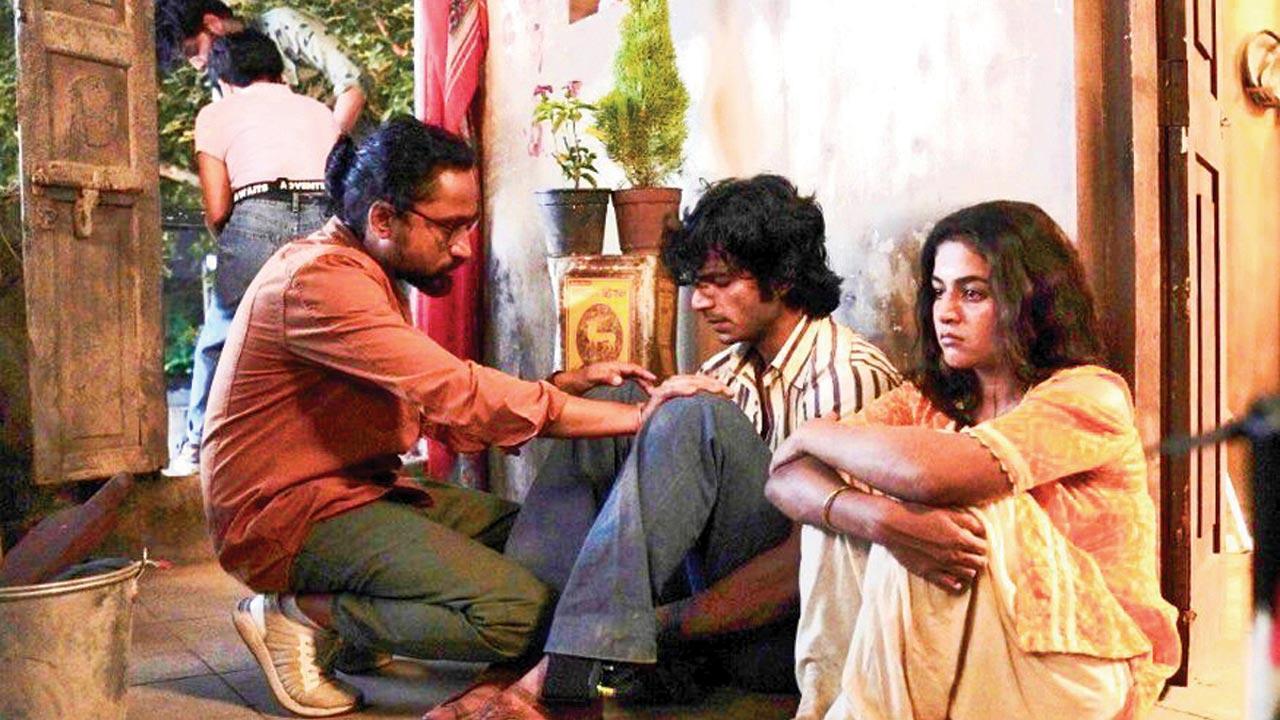
Director Ranjan Chandel explaining a scene to Anshuman Pushkar and Wamiqa Gabbi
Revisiting 1984 riots through the lens of a love story, Grahan director discusses how initial public opposition softened due to the sensitive handling of series
Mohar Basu (MID-DAY; July 13, 2021)
Among the most discussed web series since the stellar The Family Man 2 is 'Grahan'. Set against the backdrop of the 1984 Sikh riots, the eight-part series is being lauded for its balanced approach. For Ranjan Chandel, who has helmed and co-written the Disney+ Hotstar series, it is a product of divine intervention. He remembers working on the post-production of Bamfaad (2020) when he came across Satya Vyas’s novel Chaurasi. “I was attracted to its poetic storytelling, and the compelling love story. I considered translating it into a movie. But I got busy with other things. Then, producer Ajay Rai contacted me to adapt a book, and it turned out to be the same book. At that very moment, I knew I had to make the show,” begins the writer-director.
Creating the world of Grahan — which features Pavan Malhotra, Zoya Hussain and Wamiqa Gabbi — was not easy, especially since the narrative straddles two timelines, the ’80s and the present day. “The novel’s story is only a part of the series. We built upon it to make it relevant in the modern times. Writing was a challenge because we were dealing with sensitive subjects here, but in my heart, it remained a relationship drama. A love story from the ’80s marred by socio-political issues runs parallel to a father-daughter relationship as the daughter is handed a case from that decade. Socio-political elements were consciously kept in the periphery.”
Chandel developed draft after draft, knowing that sensitive treatment of the subject was imperative to its success. “Three months before the shoot, I started rewriting the draft because I didn’t want to leave any room for imbalance. Shooting was another challenge. We had done our recce at Bokaro, but due to the pandemic, the steel plant was shut. We initially planned to shoot in Ramoji Film City in Hyderabad, but eventually shot it in Lucknow after the Uttar Pradesh government allowed shoots.”
Upon the trailer’s release, the Shiromani Gurdwara Parbandhak Committee (SGPC) president Bibi Jagir Kaur slammed the series for portraying a Sikh character in an “objectionable manner”. A witness of the 1984 riots had also sent a legal notice to the makers. “I wasn’t worried because I knew when people watch the show, they will know our intentions are pure. A lot of those who sent us harsh texts, sent us apology messages after watching the show. Art speaks for itself. Our vision was clear — we focussed on how the riot wreaked havoc in the lives of the people; we never reflected our personal political leanings.”
If Chandel is able to take on such brave subjects, he credits mentor-collaborator Anurag Kashyap for the feat. Having co-written Mukkabaaz (2018) with Kashyap, he says, “I had no formal training in filmmaking. When I came to Mumbai in 2011, I had nothing but stories with me. For four years, I went door-to-door in Versova with my half-written ideas. When I met Kashyap, he probably saw promise in me. We started working on a script that never worked out. In 2015, we started Mukkabaaz, and that was my schooling. I learnt on the job; he honed my talent and his process brought out the filmmaker in me.”
Mera career ek-ek scene se bana hai; I’ve played the role of a dead body too-Vineet Kumar Singh
8:19 AM

Rishabh Suri (HINDUSTAN TIMES; March 3, 2021)
Vineet Kumar Singh, since he achieved fame with Mukkabaaz (2017), has become cautious while taking up projects. He has done films such as Gold (2018), Saand Ki Aankh (2019), Gunjan Saxena: The Kargil Girl (2020), and a web series, Bard Of Blood. While many actors would be happy going on a signing spree, it wasn’t the case with him, and he wasn’t even seen in any masala potboiler.
“Those kind of films didn’t come my way. I keep searching for better and read every script offered to me. I’ve grown up watching masala films. My upbringing was in Varanasi, and then I went to a medical college. Theatres were my only support. If I get masala films, I’d do them, of course,” he says.
The 36-year-old adds that, given a choice between a meaty role in a small film with a good script and a small role in a big film, he’d go for the former. But, he also confesses he has done the unlikeliest of roles, too. “In my career, I’ve performed as a body double, too. In a film called Padmashree Laloo Prasad Yadav (2005), I played Suniel Shetty sahab’s duplicate. There was a film called Rakht; there was a big star and the shot was about a dead body. It was the last shot, and they wanted someone with the same height and structure, it was me. I’ve done these uncredited roles. Mera career ek-ek scene se bana hai, maine jahan kaam kiya, wahan logon ne mujhe repeat kiya,” says a proud Singh, who will be seen next in the film Aadhaar.
While praise did come his way, there were hardly any offers for lead roles, which he wanted. “I did Bombay Talkies, Gangs Of Wasseypur... tareef bahut mili, lekin jis cheez ke liye main Mumbai aaya tha, woh nahi ho raha tha. That’s why I took this decision to write a story for myself, and I co-wrote Mukkabaaz with my sister,” shares the actor.
A break helps one maintain their sanity-Viineet Kumar Singh
8:39 AM

Titas Chowdhury (HINDUSTAN TIMES; December 22, 2019)
Actor Viineet Kumar has been working continuously. “Yes, I haven’t had time off since August, 2018,” says the actor, who has shot for seven projects over the last one year. So, the Gangs Of Wasseypur (2012) actor had recently flown to Goa for a mini vacation with his sister. “After shooting for the Hindi remake of Thiruttu Payale 2, I headed to Goa. It was my sister’s birthday and we had a small celebration there. The last few days of the shoot drained me completely as I couldn’t get enough sleep. I was mentally exhausted as well,” he says.
The vacation proved to be therapeutic for the actor. He shares, “I wanted to go to the mountains because they are very peaceful. But I had to listen to my sister. I spent my time at the beaches of Goa, watching sunsets and gazing at the starry skies at night.”
He further adds, “For the past year, I had been working on Bard Of Blood, Aadhaar, Saand Ki Aankh, Tryst With Destiny, Betaal, Gunjan Saxena – The Kargil Girl, and the Hindi remake of Thiruttu Payale 2. And so, I wanted to slow down the momentum, contemplate on life and prepare myself for the road ahead.”
Viineet says that the vacation was a stress buster for him, as some characters that he played took an emotional toll on him. “After playing certain characters, you feel completely drained. A break helps one maintain their sanity and helps strike a balance between personal and professional lives,” says the Gold (2018) actor.
He, however, wishes he could’ve extended his stay in Goa a while longer. “Soon, I started getting calls and I had to go back to reading scripts. I don’t know when leisure turned into business. After Mukkabaaz (2017), I was reading scripts for six months without taking any break. I wanted to experiment with my films and characters and I ended up committing myself to too many projects. So, leaving one character behind and moving on to the next became a taxing process,” he signs off.
I’ve been slogging it out for 19 years-Viineet Kumar Singh
7:57 AM

Dhaval Mehta (DNA; October 5, 2019)
Viineet Kumar made a foray into Bollywood in January last year with Anurag Kashyap’s Mukkabaaz. However, one cannot consider him a newbie because he has been around for almost two decades. The actor, though, emphasises that his innings only began in the first month of 2018. “For 14 years, I was writing Mukkabaaz and it released in my 18th year. So, I’ve been slogging it out for 19 years. But I only consider myself 18 months old in the industry. I’ve used all that experience in my acting,” says the actor-writer. Now, the tide has turned as he has Saand Ki Aankh (SKA), Gunjan Saxena: The Kargil Girl and Aadhaar lined up. “Mukkabaaz is one film that has given me 10 years of my life back,” says Viineet, as he talks about the six releases in the next seven months.
Tell us about your character in Saand Ki Aankh?
I play the role of Dr Yashpal, who belongs to the profession of shooting. He returns to and wants to contribute to his village in some way. He knew that Daadis (Chandro Tomar and Prakashi Tomar) had this talent and if they are trained well, something good could happen. If not for my character, Daadis couldn’t have won their first medal. So, it is a pivotal part. Also, I am happy the trailer has been appreciated.
But it also faced flak for casting Taapsee Pannu and Bhumi Pednekar as older characters...
Honestly, I read the script and was only concerned with what I was doing in the film. Casting is not my domain. It is the prerogative of the filmmaker. Even in the past, we have seen many actors portray older characters and they have been appreciated. This issue can be good for debate and many people can have different takes on it.
How much does it help as an actor to work with different personalities like Anurag Kashyap, Akshay Kumar, Reema Kagti and Tushar Hiranandani?
As an actor, it was important for me to work with different directors. Most people were under the impression that I only work with Anurag sir. I’ve learnt a lot from him and become a better actor. I try to fulfil the expectation of my director. It is good to collaborate with different directors and I am also getting repeated for their next projects.
How was it filming for the Bard Of Blood?
It was great but the weather was difficult in Ladakh as the temperatures were in the range of -8 degrees and -12 degrees centigrade from 4 degrees. We have grown up watching the works of Shah Rukh (Khan) saab and learned so much from him. It was nice working with Emraan (Hashmi), Jaideep (Ahlawat), Sobhita (Dhulipala) and Kirti (Kulhari).
You have spoken about struggling to get all this work. How did you deal with it and did you have a backup plan?
During difficult times, my father used to say, ‘Haariyon ne himmat, bigadiyo ne Hari naam’, which means never give up and always believe in the power of God. And I was not even given the opportunity to show my talent then how could I give up? I believed whenever I'd get a chance, I’d prove my mettle.
How important is screen presence vis-a-vis character while choosing a project?
I’m not afraid to experiment with my roles. When I choose a film, I’m concerned with the script, director, producer and what I am doing in the project. A good director can make an average script magical as it is their medium. I come with all my preparation but follow the script and director. It’s the filmmaker’s prerogative how he utilises me.

Mukkabaaz grew out of the shock of seeing a senior boxer working as a porter at Varanasi-Vineet Kumar Singh
8:34 AM

As told to Himesh Mankad (MUMBAI MIRROR; February 25, 2019)
Since I was not getting the kind of work I wanted, I decided to script a sports-drama. My sister, Mukti Singh Srinet, and I are basketball players. I have played six national games and seen from up close the struggle of athletes in our country in the face of indifferent officials, political pressures, lack of facilities and meagre finances. Mukkabaaz grew out of the shock of seeing a once-feted senior boxer working as a porter and lugging bags at Varanasi Junction railway station. When I started researching for my script, I learnt of other athletes who had sold medals to make ends meet. There was another one who had to take up work as a sweeper.
After completing the script, I decided I wanted to play the protagonist, a talented pugilist, Shravan Kumar Singh, and started training in the sport while scouting for a director. It was a long journey, spanning two-and-a-half years during which I learnt the basics of boxing, before Anurag Kashyap agreed to direct the film. I had worked with him in Gangs Of Wasseypur, Bombay Talkies and Ugly and he was ready to direct my desi Rocky. His only condition was that I should look as convincing as any professional boxer.
In Mumbai, it’s difficult to train in pure boxing as most of the coaches are into mix martial arts, so I decided to shift to Patiala where I had a chance of training with professionals. I prepped with them for a year without them realising that I was learning the sport for a film. Had they known, they would have never taken me seriously.
The training sessions were long and rigorous, replete with potential accidents. I broke my ribs once, but by the end of my prep, I had managed to impress my coaches with my dedication. I developed neuromuscular reflexes at an age when most boxers retire. It was a miracle because the body stops responding to training after a certain age. In all, it was a four-year prep till the film went on the floors.
We were determined to keep all the fights non-choreographed and real as the film featuring professional international boxers. The reactions, reflexes and punches were all spontaneous without us compromising on anything. By then, I was trained to put up a good fight even against a boxer representing a country on an international platform.
After Mukkabaaz, I wanted to take up another sports film and auditioned for Reema Kagti’s Gold which revolved around India’s first hockey win in the Olympics as an independent nation. As opposed to my bulky look in Mukkabaaz, this one required a leaner body since people didn’t hit the gym in 1930s and ’40s. So, I changed my diet plan as well as my workout schedule to break all the muscle I had built. The hockey training sessions with the team were not difficult because I had played the sport in my childhood. That aside, the extensive boxing sessions had given me the strength to train like an international athlete, so I only had to work on polishing my skills.
The hockey sticks used in the ’30s and ’40s, however, were very different from the ones used today. They were heavy with thick blades, and that made it difficult to control the ball initially. Another challenge was to play on artificial grass as I had played on the turf as a kid. But I think I managed to do a convincing job as Imtiaz Ali, who was a part of the Indian team but after Partition crossed the border and went on to captain the ‘other side’.
Every character I play has its own graph. I make it a point to discuss them with the writer and director first to get their points of view before jumping into the prep. For my upcoming films, Adhar and Saand Ki Aankh, I had to learn two different lingos, from Jharkhand and Punjab respectively. I interacted with locals for around four months. This helped me imbibe and incorporate local characteristics into my performance as well.

CBFC has to balance cinematic sensibilities & social sensitivities-Prasoon Joshi
8:24 AM

Anshul Chaturvedi (BOMBAY TIMES; November 3, 2018)
The news space for the past few months has been lacking the almost default quota of stories about censorship vs free expression, and the theatrics of leaked stories, inexplicable cuts, appeals and tribunals. In that rare noncombative space, the CBFC and its chairperson Prasoon Joshi have been doing other things, such as a recent workshop that was attended by both the CBFC’s board members and representatives of Hindi and regional film associations. Prasoon explains why such dialogue is both unprecedented and essential, and why, while very few films are facing restrictions, collective viewing through the medium of cinema cannot yet be treated on the even more liberal benchmarks as individual viewing experiences. Excerpts:
How effective have been the recent efforts of the CBFC to engage with the cinematic community? You have held a meeting and workshop with industry representatives recently.
Filmmakers talk of sensitising the panel’s members. And we, the panel, need to get filmmakers on board, so we can both understand how people are looking at cinema with changing times. So, activities like that workshop was very important. They had their own queries in their head. It was a kind of a Q&A which I had with them to make them sort of familiar with what we are trying to do. I keep telling them it’s not about censoring, the spelling has to change to sensor. You know, if it comes from sensitivity and sensorial, then it should be sensor, not censor.
The idea is to keep talking to the film industry, taking feedback, and making sure that the staff and the people who work every day are sensitised to that feedback. That sensitisation has reflected in the kinds of films that are coming through, where people sometimes wonder how they came out without any cuts — films like Mukkabaaz or a Raazi or Padmaavat or a Mulk or recently, the documentary The Argumentative Indian, where I personally sat with the filmmaker. Or Manto.
Also, there’s more to it than clearing movies. We have digitised the entire process. We are going back to as much as our old record is, to digitise every certificate, so that if people want to get their certificate — if people have lost it and if the third generation of people want to obtain the certificate, you know — they can get it. Lakhs of them have already been done, and the process is on. We are also introducing a more contemporary design of film certificates which will also have a QR code.
Do digital processes translate into quicker turnaround time for movies?
Some filmmakers want their movies sorted very urgently. Sometimes I feel a filmmaker also needs to understand that no matter how digitised we’ve made the process, still, a film reviewing process is a human process — people have to sit, watch a three-hour film, discuss it, go through the Cinematograph Act, and offer their advice. That’s a human process. That cannot be shortened, that cannot be digitised. No computer can certify your film. It has to be understood ki yeh nahi hai ki aap aaj apply kar rahe ho aur kal aapko certificate dega... they have to give a minimum of three weeks. The process gives us many much more time — 68 days — but we don’t take that much of time, we usually take much less time, try to do it as fast as possible. But sometimes people don’t understand the volumes being handled. This year we have issued 20,000 certificates already.
By that benchmark, in 2018, the ‘CBFC vs filmmaker’ headlines haven’t been frequent.
See, those stories, when I consider them even as a marketing person, I feel it’s a very dirty way of marketing. People trying to portray as if they are resisting pressure and saying that CBFC has done this, has done that. That doesn’t do justice to the people. If you come and see the people who are working in the CBFC, they are working day and night. On Saturdays also they are working, trying to clear the backlog of films because staffing has not gone up so much as the number of films over the years. The amount of films we are producing every year has been increasing, and so has the workload.
As far as sensibility is concerned, I have worked really hard in terms of communicating that. You can talk to the CBFC people and they can tell you that films don’t face unnecessary deletions. Most of the times, in fact, people are going for voluntary cuts and voluntary changes.
Like Manmarziyaan? We’ve often had headlines saying that the CBFC buckled under a community’s pressure — this time they did not, but the filmmakers still opted to take cuts.
Yes. So, I have said that we are trying to do as much — as sensibly as possible towards the filmmaker. And being an artist I understand that, but there is also what needs to be understood is that the job of CBFC is to strike a balance. A fine balance between cinematic sensibilities and social sensitivities. It’s a tough job. And I think the industry has appreciated that.
Our interaction with the industry was a first of sorts. The industry has, in the recent past, no memory of interacting with the CBFC and tabling their issues. They felt that we are doing mostly certification, not censoring. There is nothing like that ‘the CBFC is trying to resist our creative work’. They were very appreciative, and at the same time I could communicate to them that how difficult the job is – and in terms of a fine line and in terms of striking the balance. Main hamesha kehta raha hoon — vivaad se zyada vichar-vimarsh se kaam hota hai. Vivaad se nahi hota hai. Vivaad, you know, makes everybody’s life difficult. There is nothing that comes out of it. By talking, by sitting across the table, you can resolve difficult questions.
Many filmmakers, when speaking about projects they have made for the online/streaming space recently, say ‘Here we don’t have to factor in about what certification we will get. We make it and we screen it.’
That’s their choice. What can I say about that?
When people in the censor system come with their questions and their clarifications, what are the areas where you find gaps that need to be addressed?
In terms of sensibility or in terms of process?
Sensibility...
What I ask them to understand is that ki intent kya hai. Don’t see things in suspension. Out of context aap koi cheez dekhenge, usske maayne apni tarah se aap nikalenge. But the intent of the storyteller is very important while holistically seeing the film. The camera’s intent could be objectification or portrayal. You can clearly see that, and you know when your intent is just to objectify. I will give you an example of a girl who is a police officer, and the camera is constantly, you know, caressing her body or portraying her body in a way which only reduces her to a body. It is gross disrespect to a woman in India —imagine, who fights so much to get education, then fights to get into a service like police, and is in a dignified uniform. If even then if you only see her as an object —that’s something which concerns me.
And these are things which are very fine. It can’t be communicated over one talk. You constantly interact with the people, this whole workshop thing which we are doing, and which we will be doing again, and we plan these workshops in various other regions —in Chennai, in Kolkata, in Hyderabad, in Trivandrum. We are planning to do this, more interaction with the board members because see, on one hand you have got regular staff of the CBFC, and on the other hand you have the board which has more of people who are from the world of art and cinema. So, it’s important that they spend time and understand each other’s point of view. Art is constantly evolving, sensibilities are also constantly evolving.
The judiciary has been on a liberal trajectory, with the verdicts on adultery, on Section 377, on Sabarimala. As a country, we have been opening up on at least some questions that we are not comfortable with earlier. On the other hand, something as simple as a WhatsApp video forward has caused much stress, sometimes violence and sometimes deaths. How do filmmakers, and certifiers, balance the line between ‘anything goes’ and the fallout of controversial content?
Society has a collective conscience. Things don’t change overnight. I feel ye kehna ki jaise hum kehte thay ki kya cinema samaaj ka darpan matr hai? Is it only a reflection of the society? Or is it also shaping the society? It’s both — it reflects the society and also shapes the society. You can’t just say it is purely reflecting the society. And also, sometimes cinema goes a step or two ahead and makes certain points. And also starts the debate in people’s head. It’s a two-way process. It’s constantly shaping. In every sphere, what is acceptable for society’s collective conscience is not easy to decide.
The thing is that you push it when you feel that your society is not ready to accept it because eventually you understand there’s commerce is related to it. When commerce is related, especially to cinema, you cannot just say that I want your share of wallet, but I don’t like your share of voice. With the share of wallet, the share of voice will come —you’ll have to respect that. Because it’s a commercial world, you are seeking the share of wallet, so you’ll have to respect the share of voice as well.
Would you say that the trust level between the CBFC and the filmmakers has increased in the past year or so?
I would say that. I would believe that. That’s for the filmmakers, for them to say, but I feel it being part of the industry as well, I feel, yes. I feel that they want to listen, and I want to listen. I feel that there was a dialogue.
Well, at least fewer cases seem to be going to the FCAT in the last few months.
Yes, that’s true.
How relevant is certification/censorship for cinema at a point of time when the content you can watch online is close to completely uncensored?
If you understand human psychology — you would know that collective viewing is a very different experience, a very different experience from personal viewing. And that is the reason there are certain things you might not find that offensive individually, but in collective viewing, you start finding them offensive because the person sitting next to you is not comfortable. These are the things which need to be understood. It’s not easy to take a broad stroke and say, everything should go, this is a free world. That kind of thinking —it’s not nuanced. I think it’s layered in every country’s culture, especially India. India is a very unique country- so many languages, so many intricacies of cultures. And they all cross-fertilise, intermingle.
At a personal level, are any of your equations in the industry impacted by you having to work with the industry as an adjudicator?
I have not been brought up in the industry in any case, waise bhi main aa gaya industry mein bhatakte hue. Ab aisa nahi ki mera ki main yahin pala badha hoon. I know people and they respect my work. You know, I think the fundamental thing is that I came to the industry because of my work. They know that he has a job to do. My reputation is of that kind —I have always been very professional in my projects. I have never ever missed a deadline. I have always tried to go beyond my job description to make sure that I deliver to the best interests of the film that I was working on. Now, I am playing a role where I have to strike a balance, and I think most of the people who have experience of working with me, have respect for me, would know that I will try to do this also sincerely.

‘CBFC-film industry meeting was iconic and a constructive beginning’
Divya Kaushik (BOMBAY TIMES; November 3, 2018)
In September, a two-day meeting and workshop, held under the guidance of CBFC chairperson Prasoon Joshi, was attended by CBFC board members and representatives of Hindi and regional film associations like Indian Motion Pictures Producers’ Association, Indian Film and Television Producers Council and South Indian Film Chamber of Commerce.
It was apparently after 25 years that the CBFC chairperson had held such a meeting. CBFC member Vani Tripathi Tikoo tells us, “Apparently, the last time such a round table discussion happened was when Vijay Anand was the CBFC chief and he had met representatives of film associations. But even then, it was only Vijay Anand who had met them and not the board. This meeting was a two-day affair, we had a board meeting and we had a workshop with the panel members, the actual people who form the examining and revising committee for films, to understand their point of view and to have deliberations on what sensitivity we should keep in mind while certifying film and how the changing narrative of Indian cinema should be kept in mind. Meeting the representatives from the film industry was iconic. This is good and a very constructive beginning to bring them on board because you can’t just meet for one hour and expect them to understand what the board feels. Even when we talk about the board, there are various segments, zones involved and we all got to meet together.” She added that mainstreaming the discourse with the film industry was the biggest USP of such a meet. “We are very happy and it is a welcome decision on the part of chairperson. This is an iconic moment for the CBFC that we sat across the table and started the dialogue. It is a constructive one.”
Talking about how an initiative like this will help in strengthening the relationship between the board and the film industry, Vani said, “I think this is going to be a game changer. At the end of the day, both parties need to be on the same page. Certifying has always remained an issue and we met representatives from different film bodies to understand that there are various levels of sensitivity involved when you are making a film, whether it is socio-political or rights of various communities, including the minorities. They had a lot of observations and inputs to give us, which was of great value to us and we also had some things to say to them because there is a deeper level of understanding which needs to come. Most people don’t understand that we certify more than 18,000 films in a year. It’s not a joke, and this process is also human resource related.”
One point that Vani feels should be a part of such meetings is the objectification of women in cinema. “One thing which I always speak about is objectification of women. Filmmakers will have to realise that it is non-negotiable as far as the CBFC is concerned. There is a great responsibility on the part of the board to decide that we will not negotiate on women objectification, we never have, we never will, at least this board won’t, and that is how it is,” said Vani.
I like the contradictions and complexities in my life-Anurag Kashyap
8:15 AM

Rachana Dubey (BOMBAY TIMES; September 6, 2018)
His filmography is dotted with stories of psychopaths, crazy lovers and trigger-happy gangsters. With that, filmmaker-writer Anurag Kashyap has carved out a dark space for himself in Bollywood. After 25 years in the movie business, he’s realised he doesn’t have a point to prove anymore. With an urge to reach out to different sets of audience at different places, Anurag has found a method to the madness that ensues each time he decides to narrate a story. Excerpts from a conversation about complex relationships and his upcoming love story Manmarziyaan...
It’s been reported that you agreed to direct Manmarziyaan on the understanding that Aanand L Rai would produce Mukkabaaz...
The film happened out of the blue. I wanted to make Mukkabaaz and Aanand L Rai wanted to make Manmarziyaan. I was aware of the project. We spoke over the phone, met and exchanged scripts, and decided in the next meeting that we’d make both our films in quick succession. Manmarziyaan was partially shot but I didn’t want baggage. I got the freedom to start it afresh. I cast the film differently. It all happened thanks to the film’s writer Kanika Dhillon, who has stayed with it with three different filmmakers interpreting it in their own way. She and I agreed that we could see the story from Rumi’s (Taapsee Pannu’s character) point of view and threw out everything that was not needed. It is my dearest film and it depicts relationships the way I see them.
You’ve begun to do things differently with your films now. You seem to be exploring your stories a lot more softly, as compared to before. What’s prompted you to change gears?
I still remember Taapsee glaring at me and saying, ‘Listen, love story hai but please, U/A rating chahiye, A nahin’ (laughs!). I have done things the way I haven’t done them before because this is how I wanted to narrate a love story.
Your cast even joked about the fact that Manmarziyaan didn’t have a serial killer or blood and gore…
It’s a conscious change, which started with Mukkabaaz; of course, not many saw that film either, so I'm not sure if they’ve realised it. I wanted to make a film to reach out to a larger audience. I’ve seen Iranian films, which attempt all kinds of subjects, but don’t get abusive or offensive while narrating them. Also, it’s not like I write the expletives in the script; actors think Anurag ki film hai, muh mein aayega toh bol denge, and that is how it has happened on most occasions. I controlled that in Mukkabaaz consciously. Many people tell me they’ve seen my films but I wonder where. The numbers of my films are usually dismal at the box office. It took me 25 years to figure out that I have a wide audience, but people watch my films at their own pace. By the time they reach cinemas, my films are off. So, now I have become very determined, and I don’t want to prove a point to anyone. I want to make films more responsibly like Rajkumar Hirani does. I don’t want to change what I say, but I want to say it in a manner that people listen.
You’ve been fairly open about your relationships. Have you put your personal experiences into this love story?
I can make romance more real than most people, because I put all my experience into it. Here, the script belongs more to the girl than the guys. It’s a coming-of-age story for Taapsee’s character. I’ve always seen that there is a clear distinction. Girls of a certain age like boys who are like Vicky’s character in the film, and after a point, they transition to boys like Robby, which is Abhishek’s role. When Kanika and I would discuss scenes, I would tell her, ‘Yaar mere saath to aisa hua tha’ and then we’d tweak things keeping them very realistic. For me, romance is not filmy. It has to be believable; it has to be messy and grey because love in real life is like that. Right now, we have this need to understand things and so we try to define them with different words. I just let things be without defining them. If something like love could be easily defined, then what’s the point? I like complexities and the contradictions in my life.
Have your relationships been very complicated?
On the contrary, there haven’t been any complications in my relationships. Look, people try finding reasons for my break-ups. When I started dating Kalki in 2008, people said I dumped my wife Aarti Bajaj for her. The truth is that Aarti and I separated in 2005. Aarti understood my need to move on and we divorced. People miscalculate the timelines of my relationships. It’s important for people to address what is not working between them. As individuals, if we’re barely spending 15 days in a year together, why are we a couple? Also, those days, I had several twitter brawls which also took a toll on the partner. Today, we all hang out together. Aarti edits my films and Kalki is a friend. Ownership becomes a problem in relationships. Manmarziyaan addresses that. Being in a relationship doesn’t mean you own each other. This is how I look at the relationships in my life, and that’s how I’ve put it in the film, too.
You’ve chosen to narrate Manmarziyaan from Rumi’s (Taapsee’s character) point of view. There has been a gradual surge in the number of women becoming the crux of narratives. What’s your take on that?
Gulaal, Dev D and Gangs of Wasseypur — my films have always had strong roles for actresses. It’s all interconnected. The society gets the cinema it votes for. What do people want? A pretty heroine and a macho hero who mirror aspirations people can’t fulfil by themselves. As an audience, you will get the cinema that you pay to watch. The ones who complain about ‘mainstream’ cinema are not the ones who go to cinema halls to watch a sensible film. They’ll watch it online, and their representation in the ticket buyer crowd will remain low. The kind of cinema made is dictated by the kind of audience that’s ready to pay for it. If you want something hard-hitting like Mulk to be made more often, then you have to vote for it by going to a cinema hall and watching it there. I meet so many people who want to make such good films but I also know that no one will fund their films because no one watches these films in cinemas.
Director Rima Das had pointed out that her film Village Rockstars doesn’t have buyers although it has won a National Award.
Even if a studio releases it, no one will watch it because it’s an honest piece of work from Assam, which no one is interested in. The ones who complain about the lack of a content-heavy film should first make an effort to get such films released, watch it and influence others to watch it too. I am talking about the people within the fraternity who need to do that. Phantom Films also has a distribution wing but they, too, don’t want to do it. They grudgingly released The World Before Her and Katiyabaaz, but their reluctance was evident. This cycle will take very long to change. Thankfully, filmmakers have alternate platforms for the other kind of cinema to survive. It has set me free as a storyteller. What I can’t make as a mainstream film will go to other platforms.
Do you think excessive censorship has driven filmmakers to seek alternate spaces?
I’ve fought the Censor Board all my life but they are not a problem really. They were a problem when I didn’t know how things worked. When Paanch was rejected, I was told, ‘Yaar tum halla machao’. I did but I didn’t realise that the Board works in four stages and if you go up to the fourth stage, your film will definitely get cleared. The marked difference between consumers is actually the reason why filmmakers are looking for alternate platforms. I remember Gangs Of Wasseypur had a short run at the box office because it was caught between Ek Tha Tiger and some Sunny Leone film. Although it was doing well, GoW went out of cinemas because there was a bigger audience waiting for the other films. Today, most people have seen Gangs…, but there won’t be a Part 3. Mera dimaag kharaab hai kya? No one goes to watch such films in theatres. I made a show for an alternate platform and my audience there was far bigger.
Don’t you think filmmakers are also to blame for the kind of cinema consumed by most of the audience today?
Kitne saal se log koshish kar rahe hain but nothing changes. A lot of other things need to change before that. According to a report, 84 per cent of our population lives at 5.5 dollars or less, for a day. Education is the only key, but no government will take it on itself to provide basic education because the lack of it makes it easier to manipulate people. If people are educated, they won’t believe half the things that are said. So, cinema toh door ki baat hai. So many filmmakers have tried making different kinds of cinema, but everything boils down to business.
Do you think episodes like the Padmaavat controversy force storytellers to seek platforms that are not regulated by the authorities yet?
It’s a different atmosphere in the country today. Everyone is scared to stand up and speak and I don’t resent people for not standing up. Whenever people have stood up, their bank accounts are frozen under some pretext or they’re dragged into issues which take the attention away from the discussion. The media and the filmmakers are all pawns controlled by the powers to be. I have chosen to fight through my work which is better than fighting on social media or with a fist fight. Everyone thinks I am like the films I make — I am not a dark intense person. I am a straightforward realist.
What do you plan to make after Manmarziyaan?
Anticipation destroys my work. It’s a harsh lesson I learnt, thanks to Bombay Velvet.

Manmarziyaan is my take on a potboiler-Anurag Kashyap
8:21 AM
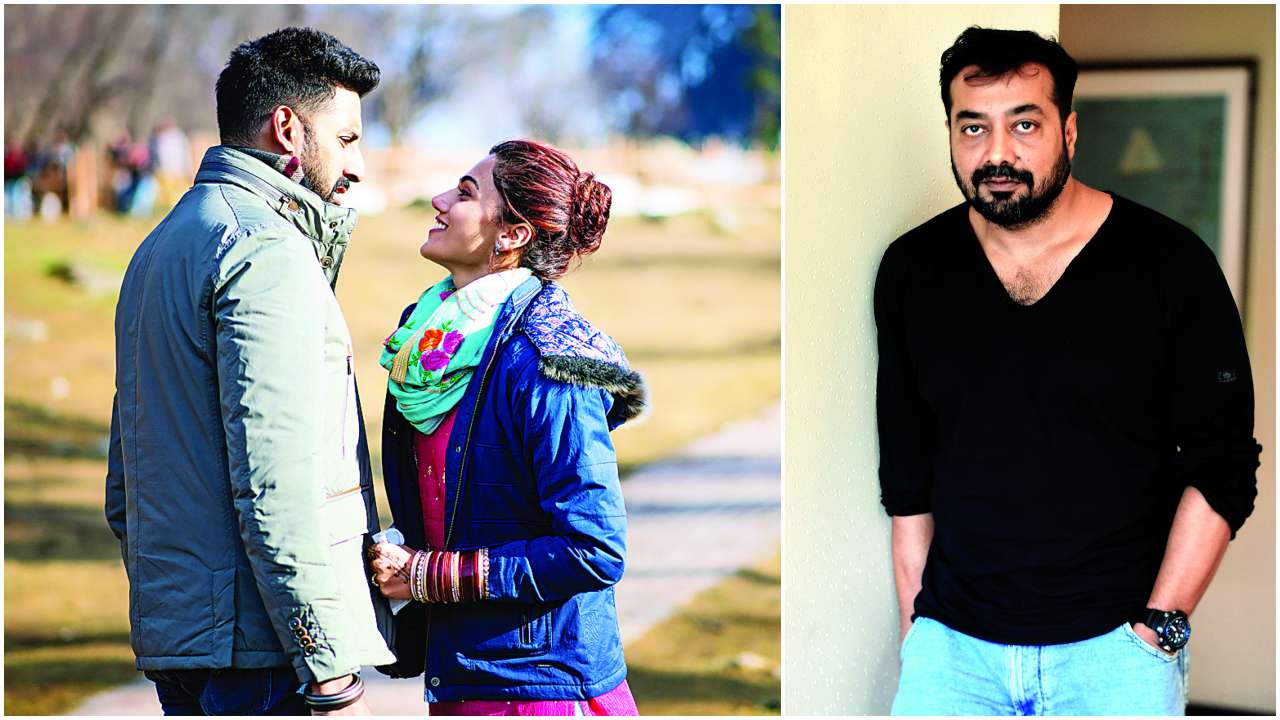
Rinky Kumar (DNA; September 4, 2018)
Anurag Kashyap is probably in one of the best phases of his career. His web series Sacred Games as well as one of the shorts, which he has helmed as part of the anthology Lust Stories, have got positive reviews. His performance as the antagonist in the recent Tamil thriller Imaikkaa Nodigal has been appreciated. The 45-year-old’s last directorial stint Mukkabaaz (2017) struck a chord with the audience for showcasing the trials and tribulations of a sportsman, who dares to take on the system. Now, the maverick filmmaker is gearing up for the release of his forthcoming movie Manmarziyaan, starring Abhishek Bachchan, Taapsee Pannu and Vicky Kaushal. As we settle down for a chat, Anurag says, “My Tamil film is getting good reviews. I’m only getting acting offers.”
However, in the same breath he adds, “I hate acting. I only want to direct. Someone had once told me, ‘Anurag, tu acting karega na, toh tu aur tera producer dono paise kamayenge. Tu direct karta hain, phir bhi paise nahin kamata.’ On that note, we begin our conversation and he tells us how cinema gives him a better perspective about life and why, in reality, he is a far cry from the aggressive filmmaker that he is made out to be. Excerpts…
What appealed to you about Manmarziyaan?
The character of Rumi played by Taapsee Pannu. We like love stories and aspire to have one in our lives. But I don’t believe most of that. Manmarziyaan is something that I believe in because it shows how people behave in love and how indecisive they are.
So, what’s your idea of romance?
The most amazing thing is the quest for it. Love isn’t there, we romance the idea of it. And everything else is included in that journey.
Dev D, which released in 2009, was a romantic musical. Your forthcoming film is also being termed as one. So, was it like homecoming for you?
Both the movies are different from each other. If I would say in filmmaker Neeraj Ghaywan’s words, ‘That was Dev’s story, this is Paro’s story.’ But I think it’s more than that. I don’t like to define things. We simplify things for ourselves by putting them in words that are understandable. I like things to be complex. And I would want people to talk about it rather than define it in one word.
All the characters in your films are quite angst-ridden. Do they come from a deeply personal space?
It’s not like that. I make crime films but that doesn’t mean I commit crime. I’m actually a peaceful person. I’m more peaceful as compared to other people who make lovely movies.
This is your second collaboration with Aanand L Rai after Mukkabaaz. How was the experience as both of you have different sensibilities?
It’s been good. I wanted to make Mukkabaaz, he wanted to make Manmarziyaan. We read each other’s scripts and decided let’s do both. As for our sensibilities, I never think about them. I connect with Aanand and always tell him whether I like his films or not. Aanand L Rai has been appreciative of my work. I enjoy a massive support system in the industry among the directors. I feel fearless while making my films because I know that tomorrow if no studio or producer will stand by me, the directors will. I get a great sense of security from Aanand. I know I will be allowed to be myself as a creative person while working with him because he gives me immense breathing space. And that gives me a lot more confidence to explore things because Manmarziyaan was his idea. Kanika Dhillon wrote it, it went to two sets of people before it came to me. I was clear that I would give it my own sensibility and interpretation. So, I changed the cast first and then the music.
Music plays a pivotal role in almost all your films…
My love for music comes from my inability to play it. You always desire what you don’t have. In the pursuit of becoming a Tansen, I became a Kansen (laughs). My thinking is that if you keep saying ‘no’ to what you don’t like, you are eventually left with what you like. That’s my process.
You also tend to improvise a lot on the sets…
I can’t deal with actors who come too prepared. They have to be in the moment. It’s not their job to keep in mind the graph of their characters.
Do you think it enhances their performance?
I don’t know, but that’s the way I work. I just want them to be believable. I want to do what I believe in, if I don’t, then it’s pointless.
In one of his interviews, Aanand mentioned that while working on this film, he felt you were much calmer...
Aanand knows me because we would meet at public events. He knew me as a filmmaker through my movies, blogs and interviews. I’ve been the same person all my life. Even when I made darker films, I was still the same person. Anyone who works with me for the first time is initially shocked because it’s the perception of me that has been with them.
On the first day of shoot, even Abhishek Bachchan was surprised to see you jumping and dancing on the set…
I was a writer for Yuva (2004). So, he and I didn’t interact much. I’ve always been an aloof person. I don’t get out of my room except when I’ve to work. But if you talk to people with whom I have worked on the first film, they will tell you I dance on the set, I never scream. Abhishek told me, ‘I expected you to sit in a corner with light falling on your brooding face’ and I told him, ‘I don’t brood.’ When I do, no one sees me because I am in my room. People have a perception of me that has been built by the media. I’m happy in my own space. Everyone thinks I’m super aggressive as I say things bluntly.
But you didn’t love his performance in Yuva..
I wrote in my blog that it could have been better. And I think Abhishek took it hard because that was a performance that everyone appreciated. He thought a writer usually doesn’t say such things. We didn’t talk to each other for 10-15 years.
So, how was it working with him now?
It was lovely; today, we have become good friends. You know when you work with someone, you think they have got your back. I felt the same with him.
You didn’t have reservations before collaborating with him?
I had reservations before I met him. But once I did, they disappeared.
What is it that drives you about cinema?
The possibility of exploring things and telling stories, baaki kuch nahin (smiles). I articulate through cinema. It’s also my process of understanding things. When I am going through something in life or something is affecting me, I put it in my film and figure out what it means in the process.
Do you enjoy acting?
Not at all…
But you usually get good reviews for your performances…
That’s because I’m a good actor. However, I like acting on stage. Recently, I met Makarand Deshpande who has directed me in his plays and he asked me, ‘Why don’t you act?’ I told him I like to do so on stage as theatre is an actor’s medium, but cinema is a filmmaker’s medium. I’m very selfish, I want it to be my medium.
How do you look back at your journey as a filmmaker?
I’m very happy. I’ve had 25 good years of filmmaking. I’ve done more than 100 films as a writer, director, producer. I came here to make one movie.
Will we ever see you helm a commercial potboiler?
Manmarziyaan is my take on a potboiler.
Vineet Kumar Singh bags Manish Mundra's next
8:04 AM

Avinash Lohana (MUMBAI MIRROR; June 1, 2018)
After featuring in Anurag Kashyap’s sports-drama, Mukkabaaz, which received a standing ovation during its premier in Mumbai, Vineet Kumar Singh has now signed National Award-winning Newton filmmaker Manish Mundra’s next production. Titled Adhar, it will be directed by another National Award winner, Bengali filmmaker Suman Ghosh, whose 2006 film Podokkhep featuring Nandita Das and Soumitra Chatterjee had won in the Best Feature Film in Bengali category.
“Manish sir praised my performance in Mukkabaaz and said that I reminded him of a young Naseer saab (Naseeruddin Shah) in one of my interviews. It’s a huge compliment for me and I love the films he has produced, right from Ankhon Dekhi to Newton. One day I got a call from his office saying that they wanted to narrate a story to me, after which I met director Suman Ghosh and immediately fell in love with the script,” Vineet says, adding that Suman is also a professor of Economics in Florida.
Prod him on the film and he says, “Taking a cue from the film’s title Adhar, there are two aspects to it — one: it means base and the other is the Aadhar card and we are exploring both these aspects among many other things that are happening in our society. Manish sir’s films are rooted, which is also the case with this one, but it will also appeal to the masses. After Mukkabaaz, I was looking for the right film and after being offered nearly 100 scripts I finally zeroed down on this one.”
Vineet reveals that he has never played a character like this before. “It’s the story of a common man left behind in the society’s race to development. We will start shooting in December or January at the Bengal-Bihar border and in Jharkhand. I will start prepping closer to the shooting date,” he informs.
Speaking of his life in the post-Mukkabaaz era, the actor-writer says that things have changed a lot and for the better. “I have never experienced all this — being identified on the streets and suchlike. I still ride a cycle as I had to sell my car and a few other things for my training in Mukkabaaz in which I had played a boxer,” smiles Vineet.
Is there another collaboration with Anurag on the cards too? “We are discussing something and hopefully it should work out,” he signs off.
Life isn’t all about attack; you’ve got to be prepared to defend yourself too-Vineet Kumar Singh
8:09 AM

Actor Vineet Kumar Singh on what kept him going in his 18 years of struggle before success in Bollywood
Deebashree Mohanty (TIMES LIFE; April 8, 2018)
The 38-year-old actor from Varanasi, who found success with Mukkabaaz, was so keen on the role of a boxer that he left everything and went to train in mixed martial arts (MMA) for two years before taking on the role in Anurag Kashyap’s film. Here, Vineet Kumar Singh tells us how boxing as a sport helped him rethink his failures, and prepared him for success.
Did the acting bug hit you early?
I was hardly 8. The only audience I had for my furtive performances were my younger brother and sister. They enjoyed every act. But the moment everyone at home came to know I wanted to join NSD, all hell broke loose. It was an earth-shattering moment, an ajooba (miracle) for my family because everyone was either into academics or sports. Acting was never a ‘real’ profession for a typical middle-class family like ours. I had to change my tactics and be smart about my options to realise my dream.
Your big break, Pitaah , bombed at the B.O.
That was a rude awakening. I had thought after the release of the film, my name would be splashed all across TV channels, producers would line up at my doorstep. I thought “Main toh hero ban gaya!” But boom! The movie came and went, I was hardly noticed.
How did you cope?
My elder sister, a professor in Banaras Hindu University, and I, secretly broke FDs that belonged to my siblings. I would take up any scene, any role that came my way. I would play a ghost, cop or a rag picker in DD afternoon serials. But going home was never an option.
You took your role of playing a boxer rather seriously...
I am a method actor. When Anurag Kashyap asked me to become a boxer; I packed my bags and left for Patiala. There was a year of rigorous training which included four schedules daily. The first one started at 5 am, then there was a gym session mid noon. The next boxing session was at 5 pm followed by one hour of swimming. I felt dead when I hit the sack.
How was it dealing with other boxers during the training?
The others had no idea I was an actor. They thought I was a crazy old man who suddenly wanted to bear all the blows for some stupid reason. After every injury, they were certain I would return to wherever I had come from.
Did boxing help you personally?
There is a popular saying in the sports world – anyone who is sure about their stamina needs to step into a boxing ring for 2 minutes. If you come out unscathed (mentally), you are a winner. Boxing actually makes you a calmer person too. Most of your angst, whining will find a way out with the punches and blows. I also learnt the importance of defending. Life isn’t all about attack. Sometimes, you have to be prepared to defend yourself too.
Fenil's Bollywood Talk # 499
7:46 AM

3 FILMS TO TRY THEIR LUCK TOMORROW!
It’s the second Friday of the year and hence, it’s the time when the significant films will start arriving in cinemas. Tomorrow, three films will be trying their luck at the box office. My analysis:
MUKKABAAZ: It’s directed by Anurag Kashyap, after the disastrous Bombay Velvet in 2015. This time, Anurag takes up a film that’s smaller in scale and cost, which has always been his domain. Vineet Kumar Singh is the lead along with newbie Zoya Hussain. Jimmy Sheirgill and Ravi Kishan also feature in the film in crucial roles. The film is a story of a boxer but isn’t any other sports film. It is at a heart love story and also tackles about caste system that’s deeply rooted in our society. The buzz is very limited but thankfully, the costs are limited. The opening will be very low and if reports are positive among the people, then it might have a chance at the box office.
KAALAKAANDI: It is a dark comedy, replete with abuses, in the zone of Delhi Belly. Incidentally, Delhi Belly writer Akshat Verma makes his directorial debut with this film. It has an ensemble cast comprising of Saif Ali Khan, Akshay Oberoi, Sobhita Dhulipala, Kunaal Roy Kapur, Deepak Dobriyal, Vijay Raaz, Neil Bhoopalam and Shenaz Treasurywala. The film is set in one night and has multiple tracks. The film was finished long back but faced issues at the Censor Board. Fortunately, the Tribunal passed the film with just one or two cut. But then the makers found it difficult to release the film in theatres and at one point, they even contemplated releasing it on online streaming platforms. Thankfully, that didn’t happen and now the film is up for release. The film has niche content but it is carrying excellent reports. Even Aamir Khan raved about it and he rarely does so for a film. The opening might not be great but if response is good, it can work in a big way in the high-end multiplexes which will be enough for the film to recover its investment.
1921: After the horror franchise 1920, Vikram Bhatt has now unveiled 1921, also a horror flick. Starring Zareen Khan and Karan Kundrra, it promises loads of horror, minus sex. But from the trailers, it looks anything but scary. Both Vikram Bhatt and Zareen Khan’s last releases – Raaz Reboot and Aksar 2 respectively – were flops and it doesn’t seem that this film will help in any way. But you never know – 1920 has been a hit franchise, with only the last part not working. Even 1920: Evil Returns, the second part of 1920, didn’t look exciting but people went for it as it had the horror element. So, 1921 can also get the initial crowd perhaps but as of now, chances seem remote.
WHICH FILM WOULD YOU LIKE TO SEE AND WHY? DO LET ME KNOW!
(Crisp) Movie Review: MUKKABAAZ by FENIL SETA
10:43 PM

Mukkabaaz is a very massy Anurag Kashyap film, replete with clapworthy action and dialogues, but it also has its share of substance. The film speaks about a lot of issues – sports, to begin with and why we lag behind. Yes, other films have taken up this issue but Mukkabaaz gives viewers a new insight. Then it majorly talks about caste system, goonda raj prevalent in several places, even beef related lynchings etc. All these things are well put up by the writers. Director Anurag Kashyap handles some of the moments deftly and leaves a tremendous mark. But on the flipside, the narrative gets a bit disjointed and incoherent. Songs are far too many of them. Although almost all of them are relegated to the background but many tracks begin in an abrupt way and that slightly dilutes the impact. Lastly, the film could have been shorter. All these reasons affect the film to an extent sadly Performance wise, all have done a fabulous job. Vineet Kumar Singh rocks the show. The actor has done very few films and more than half of them are the ones directed by Anurag. Hats off to him for giving a lead role to such an actor. Anurag brought Nawazuddin Siddiqui into focus with Gangs Of Wasseypur and here’s hoping the same happens with Vineet as well. He deserves it! Zoya Hussain plays a mute character but it doesn’t feel like as she manages to communicate her thoughts and wishes. Jimmy Sheirgill plays the villainous role with perfection while Ravi Kishan is terrific. Despite the shortcomings, it deserves to be watched!
My rating - *** out of 5!
Aanand L Rai has multiple genres lined up for 2018
8:27 AM

BOMBAY TIMES (January 9, 2018)
Over the years, Aanand L Rai has garnered appreciation and credibility as a filmmaker. His banner, Colour Yellow Productions, saw success twice in 2017 — with the quirky entertainer Shubh Mangal Saavdhan and India’s official entry to the Oscars, Newton.
Today, the filmmaker is collaborating with some talented actors and directors from across the board. The year started with a bang, with the teaser of Zero, Rai’s much-anticipated directorial with Shah Rukh Khan. He is also gearing up to release the Anurag Kashyap-directed Mukkabaaz on January 12, which is a love story of a boxer set in a small town. This will be followed by Manmarziyan, which will also be helmed by Anurag. Since Rai is synonymous with small-town romances, he will be releasing director Rahul Shanklya’s Nimmo, a small film with a big heart. Also awaited is Happy Phirr Bhag Jayegi, sequel to the 2016 hit Happy Bhag Jayegi. Directed by Mudassar Aziz, the film, which stars Sonakshi Sinha, promises double the dose of comedy. Rai is also collaborating with director Navdeep Singh (of NH10 fame) for a thriller, set in the late 18th century, which will see Saif Ali Khan playing a bounty hunter. Rai will once again be working with Newton director Amit Masurkar on another film that is expected to go on floors this year. Also in the pipeline is an unexpected comedy from Shubh Mangal Saavdhan’s writer Hitesh Kewalya and a riveting drama Heer scripted by Manmarziyan’s writer Kanika Dhillon.
On his part, Rai says, “2017 proved to be a successful year with entertaining and content-driven films doing well at the box office and 2018 looks equally promising with new collaborations. While we have been associated with family entertainers, we also want to present a gamut of genres to the audience. The process of scripting, casting, scouting for locations and putting together the entire project is very exciting and the team is ready and excited to start working with these immensely talented filmmakers.”
People in India only understand love stories-Anurag Kashyap
7:54 AM

MID-DAY (January 5, 2018)
Anurag Kashyap, the man behind gritty dramas exploring the dark worlds of criminals and gangsters, says he has learnt that the way to an Indian cinegoer’s heart is through a love story. But in true Kashyap style, his first love story, the upcoming Mukkabaaz, blurs cinematic genres with a romance that unfolds in a society dominated by caste, politics and religion.
He says, “I have learnt that in India whatever you have to say... say it through a love story. This is what people understand. This is my first full love story.”
The film, starring Vineet Kumar Singh and Zoya Hussain, is set in Bareilly. Singh plays a Kshatriya wrestler who falls in love with a speech-challenged Brahmin woman. This angers her uncle (Jimmy Sheirgill) who uses his position as the head of the state boxing federation to sabotage his career.
Kashyap, who describes Mukkabaaz as his first prem-pradhan film, has used the sports drama to dwell on the power dynamics in Uttar Pradesh. Discussing the widely held perception that he is at his best when dealing with sociopolitical issues and that his films reflect simmering anger, the director says cinema allows him the space to react to things that bother him. “What people call my anger is my reaction. Luckily, I have the medium to react through cinema. People want to react, but they can’t. This is why they connect with my films,” he says.
Hailing from Uttar Pradesh, Kashyap says he understands the milieu, its societal nuances and how caste casts a large shadow on day-to-day life. “It is deeply ingrained in us. It will not go. In UP, they ask your name to know your caste and then your gotra,” he says.
The protagonists in his film are on similar levels on the caste ladder but the differences persist. “In Haryana, marrying in the same gotra is reason enough for honour killing. The upper-caste versus lower caste issue is different with the whole dynamic of the oppressor and the oppressed. Here, the friction is between two similar castes.”
According to Kashyap, caste operates in the same way as religion. “It has to do with the sense of security. This is why we create ghettos. The Indians who live abroad — they have created a little India, Pakistanis a little Pakistan, Chinese a China Town. When you feel threatened, you seek familiarity and bundle up.”
He adds, “This is what religion does, it gives a sense of security. It is difficult for a man to stand up and say I did not have it in me to succeed. It is easier to say that it was God’s wish and we are caught in this loop.”
Maharashtra Bandh: Serial shoots disrupted, actors stuck on the sets, media interactions cancelled
8:12 AM

Shooting and media interactions cancelled, disrupted as protestors wreak havoc during the bandh on Wednesday
Natasha Coutinho and Avinash Lohana (MUMBAI MIRROR; January 4, 2018)
Sidharth Malhotra and Rakul Preet Singh were to rehearse for a promotional track in Neeraj Pandey’s upcoming Republic Day release Aiyaary at Feroz Khan’s suburban studio on Wednesday but the plan was cancelled at the last minute owing to unrest in the city. “The shoot was scheduled for January 4 at a Panvel college with approximately 5,000 students in attendance but has now been pushed to January 8,” informs a source close to the film in which Rakul plays an IT professional while Sid is an army officer.
Director Anurag Kashyap, producer Aanand L Rai and the Mukkabaaz cast of Vineet Kumar Singh, Zoya Hussain and Jimmy Sheirgill also had plans to assemble in Andheri for promotions on Wednesday but it was cancelled as well.
Schedules of TV shows, Bhabhiji Ghar Par Hain, Ishqbaaz, Yeh Rishta Kya Kehlata Hai, Haasil and Kasam Tere Pyaar Ki were also stalled due to the agitation. “We had a 9 am shift at Film City in Goregaon and some of the crew had arrived. But by the time the actors were to come in, the protests were nearing the studio with demonstrators stopping them from entering the location, so we asked everyone to go home. We have postponed the shoot by a day,” Yeh Rishta… producer Rajan Shahi told Mirror.
Shubhangi Atre, who plays the titular role in Bhabhiji…, said that shooting for her show was disrupted by rioters. “We were shooting master scenes when protestors landed on our Naigaon sets and demanded a shutdown,” she informed. Meanwhile, Pranitaa Pandit of Kasam Tere Pyaar Ki revealed that their shoot, at Killick Nixon studio in Andheri East, was also halted by miscreants. “A few hours into the shoot, we were mobbed by a gang of unruly men who forced their way into the premises. We rushed to the vanity vans and were holed up for hours even as they continued to damage everything in sight including vehicles and shooting props.”
Star Plus’s top-rated show Ishqbaaz suffered a similar fate. “We had a rather challenging day with telecast deadlines looming above. One of the schedules was canned due to growing unrest in Malvani but some of us continued to work in Madh Island,” show lead Nakuul Mehta shared.
Nikita Dutta of Sony’s Haasil had to return home even before making it to the sets. “We had an 11 am shift in Kanjurmarg and I live in Bandra. I was stuck on the highway for an hour. Then, I was informed that the shoot has been called off because nobody could reached the sets. It took me four hours to get off the highway and return home,” she added.
-------------------------------
Chaya Unnikrishnan (DNA; January 4, 2018)
Mumbai was on the edge yesterday due to a bandh called by some political groups and protesters causing disruptions by pelting stones and shutting shops at various places. Consequently, the shoot of several serials was affected across the city — while some were cancelled, others like Piya Albela shifted their timings. Serials that cancelled their shoots include Haasil, Ikyawann, Kasam Tere Pyaar Ki, Ishqbaaz, Meri Hanikarak Biwi, Bhabhiji Ghar Par Hai, Vani Rani and Kundali Bhagya, among others. While some actors who managed to reach the sets early in the morning shot for their serials unhindered, others despite being on the sets had to call for a pack-up as mobs barged inside the studios and forced them to shut down!
Sanjay Kapoor, who plays the lead role in Dil Sambhal Jaa Zara, reached the sets at Kanjurmarg at 8 am and shot for an episode. “It was fine in the morning, but later everything shut. So, even though I reached the set, my lunch from home got stuck. Even the food that’s served on the sets was unavailable, so we had to shoot without food. But the show must go on,” he says. However, for those who were shooting in Killick Nixon in Sakinaka it was nothing short of a nightmare! Ssharad
Ssharad Malhotra who is seen in Kasam Tere Pyaar Ki had reached the sets in the morning and was putting on his make-up when there was disruption. “I heard a lot of commotion, there was a mob of around 200-300 people outside the studio gates demanding we shut down the shoot. So, the producer called for a pack-up, but still the situation was frightening. They were pelting stones at cars and I saw buses burning,” he recounts clearly shaken up.
For Manit Joura, who was shooting for Kundali Bhagya, it was a scary experience. “I am facing this kind of a thing for the first time. When I reached the sets at 9 am, everything was fine. But, suddenly a mob barged onto the sets with lathis. The shoot was cancelled, but we were stuck as the mob was stopping vehicles and throwing stones and pieces of wood. We were advised to stay put and as a security measure the main door was chained. It was a very bad situation,” he says.
Pranav Misshra of Aisi Deewangi Dekhi Nahi Kahi also reached Future Studios in Jogeshwari only to have the shoot disrupted. “There was tod-phod outside the studio, and shops were forcibly shut down. There was a mob outside. It was saddening and I was worried about the situation. The government officials need to take strong measures to control these things,” he quips. Namish Taneja of Ikyawann was lucky. He was on his way to Film City for the shoot, when he got a call from the executive producer advising him to return home as protesters were not allowing anybody to enter the premises. “Thankfully I reached home safely,” he says relieved.
Nikita Dutta, who was travelling to Powai for the shoot of Haasil left home at 10 am and was stuck in traffic for four hours! She says, “I stay in Bandra but I couldn’t even reach the airport in one hour. I informed the producers that I’ll be late. However, within half-an-hour I got a message saying the shoot is cancelled. But there was such a huge traffic jam that I couldn’t even take a U-turn. Also, mobs ghearaoed my car and weren’t letting me go, finally after going round and round, I reached home around 1.30 pm. I was scared because there was nobody with me.”
Her co-star Vatsal Sheth, on the other hand, was about to leave the house when he got the message that the entire unit is stuck at Hiranandani and shoot has been cancelled. Since his in-laws weren’t well he went with them to the hospital but got stuck in the traffic on the way back. “My house is just five minutes away, but I had to take a detour as the protesters were obstructing vehicles. I have nothing against protests, but they should be peaceful,” he shares.
Ishqbaaz producers canned one shoot at Malvani as there was unrest there but another unit continued to shoot at Madh Island. Nakuul Mehta who is part of the serial says, “The problem of closing down the shoot midway is the danger of travelling on roads for the rest of the unit. It’s challenging as we have deadlines and telecast to meet. Hoping Mumbai can find a peaceful end to this without any more damage,” he says.
Producer Sumeet Mittal whose two serials Dil Se Dil Tak and Yeh Un Dinon Ki Baat Hai were being shot at two different places was happy that the former’s shoot was not affected. “That was shot in an enclosed compound at Mira Road, so there was no problem. But Yeh Un Dinon Ki Baat Hai’s shoot is in Film City, which got affected. Since we have a bank of episodes for a couple of days, it’s not an issue,” he informs.
According to J D Majethia, head of the TV unit of the Indian Film & Television Producers Council (IFTPC), the areas where mobs had a strong presence, the shoot was affected, elsewhere it continued uninterrupted. “However, the TV industry is strong and all the telecast deadlines will be met,” he signs off.

Actors (Clockwise from top left) Vatsal Sheth, Sanjay Kapoor, Ssharad Malhotra, Manit Joura, Nakuul Mehta, Pranav Misshra, Namish Taneja and Nikita Dutta
Subscribe to:
Posts (Atom)