Showing posts with label Mother India. Show all posts
Showing posts with label Mother India. Show all posts
We all have rough edges; I'm glad cinema is now embracing that reality-Madhuri Dixit
8:30 AM

Renuka Vyavahare (BOMBAY TIMES; July 1, 2026)
One look at Madhuri Dixit Nene, Indian cinema's timeless icon, and you're struck by her seemingly effortless perfection, the radiant smile, unmatched grace, and captivating screen presence. Yet, a conversation with her reveals a different perspective. The celebrated actor believes that true strength lies not in perfection, but in embracing one's flaws.
In a candid conversation with Bombay Times, Madhuri spoke about her recent film, Maa Behen, directed by Suresh Triveni, and how Hindi cinema's portrayal of mothers has evolved over the years. Excerpts...
A scene in Maa Behen shows your character warning her wayward daughters that if she goes to jail, they'll go with her. The writing portrays mothers as ordinary people capable of making mistakes, doesn’t it?
When we think of mothers in Indian cinema, the first name that comes to mind is Nargis ji in Mother India. Then there are iconic performances by actors such as Rohini Hattangadi in Agneepath, Nirupa Roy in Deewaar, and Rakhee Gulzar in Karan Arjun and Ram Lakhan. These characters were powerful and memorable, but they were also idealized. Mothers were often placed on a pedestal. They couldn't do anything wrong. They were expected to sacrifice everything for their children. What struck me about Maa Behen was its realistic approach. My character isn't the ideal mother or wife. She's independent, chaotic, and imperfect. Despite belonging to a dysfunctional family where everyone is constantly at odds, she deeply loves her children and will do anything for them when it truly matters.
As you mentioned, there's a moment when she tells her daughters, "Main jail jaaungi toh tumko lekar jaaungi." That's not something you'd traditionally hear from a cinematic mother. Characters today feel more real and relatable. These are women you encounter in everyday life. Everyone is flawed, and flaws are wonderful. We all have rough edges, and I'm glad cinema is finally embracing that reality.
You have ruled the film industry for decades. People often associate you with perfection, whether in your work or your appearance. Yet you see imperfection as a source of strength.
Beauty lies in the eye of the beholder. And honestly, imperfection is power. I don't believe perfection truly exists. No one can be perfect. My journey has always been about striving for excellence, about trying to give my best in everything I do. The pursuit itself is what fascinates me. The process of constantly learning, improving, and challenging yourself is far more meaningful than achieving some impossible standard of perfection.
As a Bollywood superstar, does working in the streaming space feel more liberating since there is no box-office pressure?
There is certainly a sense of freedom in the OTT space because you're not bound by commercial expectations. It is more relaxing. You're not worrying about how many crores a film or series will earn. The pressure of delivering a blockbuster doesn’t hang on your head. Instead, the focus shifts to creating something meaningful and engaging, something audiences genuinely enjoy watching. The goal is to tell compelling stories and create content that feels relatable and authentic.
What kind of work excites you at this stage of your career?
I want to explore characters that are different from anything I've done before. I enjoy challenges, whether it's learning a new dialect, stepping into unfamiliar territory, or portraying someone completely unlike myself. Anything that pushes me out of my comfort zone and makes me feel vulnerable, fascinates me as an actor. That's where growth happens. I have no reservations about playing any role, as long as it is well-written and offers something meaningful to explore.
25 Years of Gadar - Ek Prem Katha: Never had exhibitors seen such a response to scenes with the public going wild
10:52 AM
Box Office India Trade Network
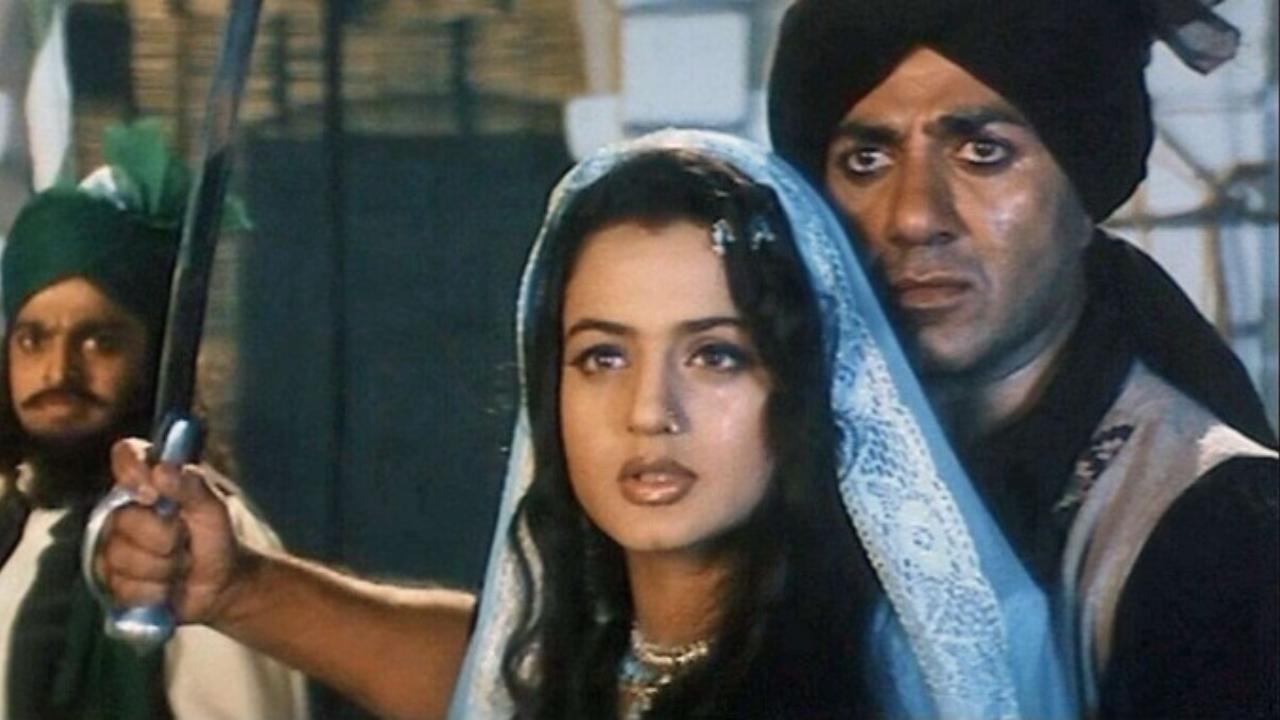
GADAR - EK PREM KATHA is celebrating 25 years today as it released on 15th June 2001 to a bumper response. The collections on day one were not a record but that was basically because it was not the biggest release in terms of prints. In those days, prints were important for the final number as generally most commercial films with a star cast were going to 90% plus occupancy on day one. GADAR - EK PREM KATHA opened to cent per cent capacity all over barring some stations of South India.
The collections of the film were never seen before type especially for those initial 10-12 weeks. The craze was unprecedented with the music and dialogues, certain scenes going to such a level that they became etched in public memory like never before. Never had exhibitors seen such a response to scenes with the public going wild and this was practically all over the country.
The film did an insane job at the box office when released and was one of the great films of India cinema but to get among the real cream there has to be a longevity. GADAR - EK PREM KATHA had this longevity as some scenes were such that the audience would never forget but due to the change in business, it never had that theatrical run of SHOLAY or MOTHER INDIA, which, even after twenty of years release, were a theatrical force. These films proved their relevance well after release. So, while GADAR - EK PREM KATHA had the same relevance their was no way to prove it. Yes satellite was a rage but then SOORYAVANSHAM was a bigger rage. Hence, when you want to be among the greats, you need something more than satellite.
Eventually GADAR 2 happened in 2023 and that initial and the response to the film rubber stamped the greatness and relevance of GADAR - EK PREM KATHA and how it had passed the test the time like very few before it. The reaction to GADAR 2 meant that that GADAR - EK PREM KATHA was probably the second greatest film ever seen in India after SHOLAY.
There are only 4-5 films in this bracket and time will tell if BAAHUBALI or DHURANDHAR can get there though it will be tougher for the former due to the faces in it and the music in the film as CHANDRALEKHA was a similar film in 1949. But ten years later, no one really knew about it. With DHURANDHAR time will tell though it does not have that mass appreciation at the level of a SHOLAY, GADAR or MOTHER INDIA.
GADAR clashed with another big film LAGAAN but in those days the clashes did not matter as both films had their chain of theatres in each circuit. LAGAAN had better industry reports and the general sense was that it will do better but this was related to media and industry. GADAR had been sold for higher prices and was a wider release. So, ground realities were different to what the industry and media thought even before release. The only thing was business was not about the weekend or week at that time. As a result, with the better industry reports they would have thought that the final business of LAGAAN would be better.
Decoded: India’s official film entries @ Oscars
8:17 AM

What’s the selection criteria for India’s official entry in the International Feature Film Category? Are period films or social satires more likely to make it? Does language or star power play a role? Here’s a quick look at the trends over the last two decades
Niharika Lal (BOMBAY TIMES; August 31, 2022)
In 1958, Mother India – India’s first official entry to the Oscars – was the closest the country came to winning an Academy Award in the Best Foreign Film category. The film, directed by Mehboob Khan, lost out by a single vote during the third poll to Federico Fellini’s Le notti di Cabiria (Nights Of Cabiria), in the category created the year before.
From 1957 to 2021, among all official entries from India only three films have received nominations – Mother India, Salaam Bombay! and Lagaan. No Indian entry ever won the prize, while no Indian official submissions have received nominations since Lagaan in 2002.
SO, WHY DON’T INDIAN FILMS MAKE THE CUT?
In 2019, during his India visit, then President of the Academy of Motion Picture Arts and Sciences John Bailey was asked this question multiple times. He replied, “I don’t mean to be rude, but why are Indian films not widely shown? Not just in Hollywood or the US, but worldwide. I know they are very popular in China, but are they popular in Korea or Japan? Are they popular in Southeast Asia? Are the French watching Indian films? Your PR organizations, your distributors, your government need to be asked why – ‘Why can’t Indian films be promoted across the world? The films that we are submitting, do they speak to other countries?’ I don’t know. But one thing you can do is to have an internal dialogue here, among yourselves.”
In 2010, Anurag Kashyap, who had been on various international film festival juries by that time, told TOI, “We need to make a film of international standards. We need a jury that is not chosen by the Film Federation of India (FFI) but by people who understand international cinema and are exposed to it... Most times, our films are just not good enough.’’
HOW ARE INDIAN ENTRIES IN THE INTERNATIONAL FEATURE FILM CATEGORY SELECTED?
India’s Oscar entry is picked by an 11-member independent jury set up by the Film Federation of India. However their selection process is never disclosed. Suparn Sen, General Secretary, FFI says, “Rules state that the film should be Indian, second – it should reflect the culture of the country, and third – the language should be dominantly spoken in the country.”
However, official Indian submissions have generated controversy over the years. Ahead of the 2021 Oscars, The New York Times’ film critics listed Chaitanya Tamhane’s The Disciple in their Oscar picks lists. Film critic Manohla Dargis picked the Marathi film for Best Picture and Best Original Screenplay, while AO Scott selected Aditya Modak for Best Actor. But The Disciple was not India’s official submission, neither was Jai Bhim, which some critics were in favour of. The Tamil film Pebbles was eventually selected as India’s official entry in the category.
In recent months, the film that has been creating a buzz in the West is RRR and in a recent interview, Anurag Kashyap said, “They (the West) find it (RRR) better than any Marvel movie. They’ve really gone crazy for it, even the silliness of it. And they are so blown away not only by the action sequences, but also the dance sequences. The West sees RRR differently than how we see it, and they’ve loved it. If RRR becomes the India selection, 99% it might get nominated for the Academy Award. That is the impact that the film has had in the world of Hollywood. India might actually have a nomination in the final five, if RRR is the film that we pick. I don’t know what film anybody is going to pick.”
We will see one of the most elusive original release versions of the Awara poster-Neville Tuli
8:18 AM
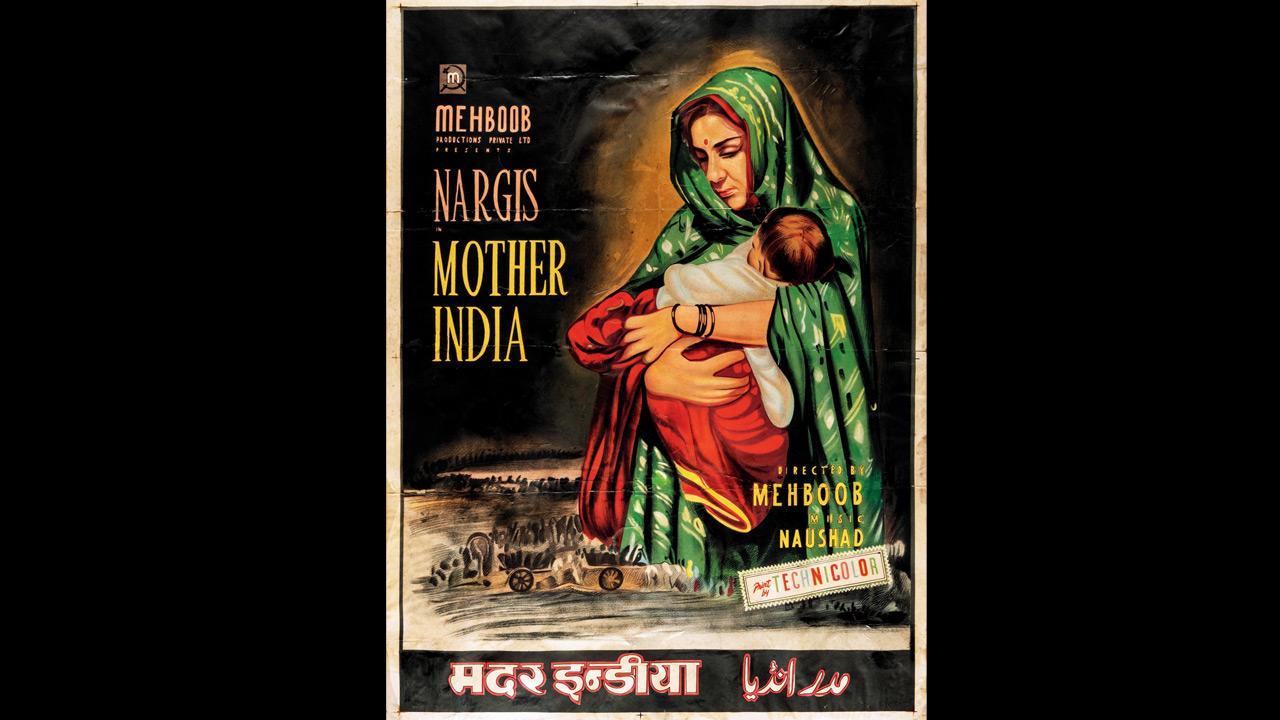
One of the last few countries to keep the film poster art alive is reason enough, says the team behind an upcoming auction, to see original cinema memorabilia as investment
Heena Khandelwal (MID-DAY; April 3, 2022)
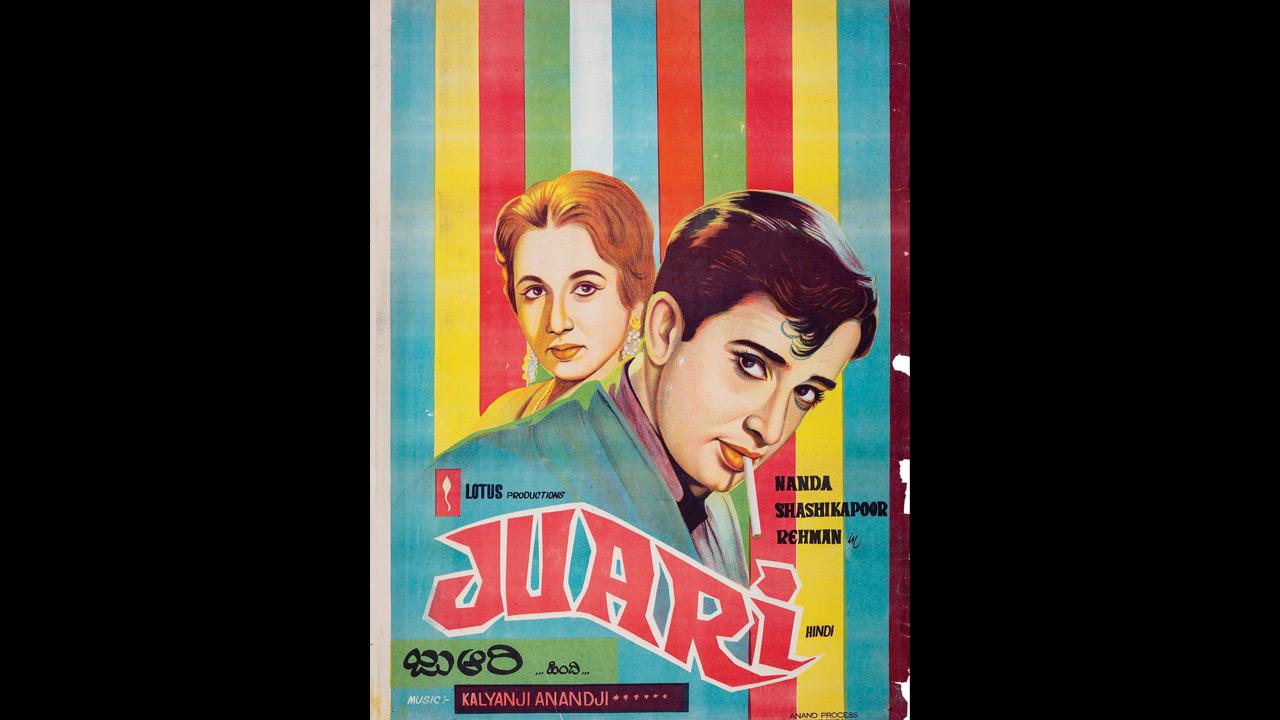
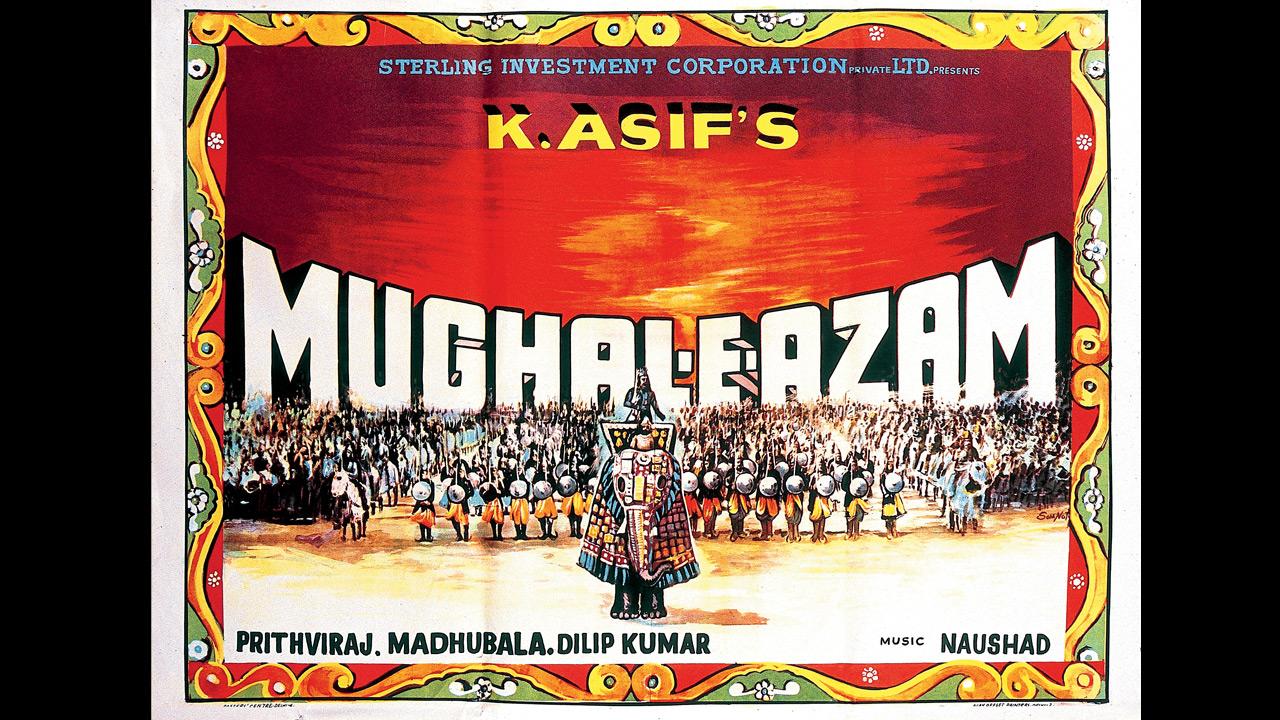
After their inaugural auction featuring paintings by leading modern artists F N Souza, M F Husain and V S Gaitonde, among others, online auction house deRivaz & Ives has returned with a focus on cinema. The first auction, scheduled for April 8 and 9, will see over 100 first-release original posters of films like Mother India (1957), Mughal-E-Azam (1960) and Yaarana (1981).
Neville Tuli, founder of Osian’s, chief mentor at deRivas & Ives, says that many of the original posters, like that of Tarana (1951) by S M Pandit—a painter from Karnataka who designed film publicity material for Raj Kapoor and others—are still not available on the Internet. “We still have minimal interest in preserving cinematic heritage. Posters, especially the hand-painted ones, represent a fragility. It is a dead art, which has come back to India in a way; we are one of the last few countries to keep it alive.”
The auction will specifically highlight designers and artists who are not well-known for their work as poster artists, including legendary filmmaker Satyajit Ray. Works of poster designers like D R Bhosale (Main Nashe Mein Hoon, 1959), Pamart Studios (Haqeeqat, 1964 and Khamoshi, 1969), Diwakar Karkare (Sholay, 1975 and Jaane Bhi Do Yaaro, 1973) and C Mohan (Khatta Meetha, 1978) will be up for the sale. “We will see one of the most elusive original release versions of the Awara poster; the imagery seen until now has been of re-release posters,” shares Tuli, adding that there will also be a focus on the first family of Indian cinema, the Kapoors. “Their cinematic journey will be highlighted through their poster art. Three unique versions of Shashi Kapoor’s Juari [1968] will be seen for the first time.”
The aim, he shares, is to establish new world record prices for Indian film memorabilia and get the film fraternity more involved in cinema-related art. While actors like Shah Rukh Khan, Aamir Khan, Anupam Kher and Dia Mirza bid and won art pieces during the Osian’s 2002 auction, the hope is now to widen this group by reaching out to the younger generation of talent. Tuli says, “Once the film fraternity comes on board, the rest of the public will follow.”
WHEN: April 8-9
WHERE: derivaz-ives.com
Amitabh Bachchan ji, Dharmendra ji have paid tribute to dad, says Kanhaiyalal’s daughter Hemaa Singh
7:58 AM

Kanhaiyalal played a shrewd money-lender in Nargis’s Mother India
Kanhaiyalal’s daughter makes a documentary on the iconic baddie, best known for his Mother India role; hopes to highlight his contribution to Hindi cinema
Upala KBR (MID-DAY; April 7, 2021)

“The reason behind making the documentary is to highlight the [role] of veteran actors during that era, be it Motilal ji, Ishwarlal ji or my father. The [feature] will showcase all that is not known to the public — right from his childhood days in Varanasi, his migration to Mumbai, his struggles, personal life and work,” says Singh, who is hoping to release the yet-untitled project in the coming months.
In his three-decade career, Kanhaiyalal served as the perfect antithesis to the well-meaning heroes, sharing screen space with Dilip Kumar in Gunga Jumna (1961), Rajesh Khanna in Apna Desh (1972) and Dharmendra in Dost (1974). Singh is touched that many celebrities have supported her endeavour. “Amitabh Bachchan ji, Dharmendra ji, Asha Parekh ji, Jackie Shroff ji and Govinda ji have paid their shraddhanjali [tribute] to my father in the documentary. When I approached them, they enthusiastically agreed to do it. Johny Lever went out of his way and reached out to other [stars] on my behalf. Sunil Dutt ji and Dilip Kumar ji were close to my bauji; unfortunately, Dutt ji is no longer with us.”
While he paved the way for Bollywood villains, Singh says her father was a real-life hero. “He offered financial aid to so many people, never turning anyone away,” she recounts, lamenting that he didn’t get his due. “He never got the Dadasaheb Phalke award for his remarkable contribution. He was an effortless actor who never rehearsed his dialogues.”
Mother India actress Kumkum passes away at 86; Naved Jafri pays tribute
8:23 AM

MID-DAY (July 29, 2020)
Mother India actress Kumkum breathed her last on July 28 at the age of 86. The veteran actress was part of a number of yesteryear hit films like Mother India, CID, Kohinoor, Ujala, and Naya Daur, among others.
Late veteran actor Jagdeep's son, Naved Jafri, took to Twitter to pay respect to the actress. He wrote, "We have lost another gem. I have known her since I was a kid and she was family, a superb artist and a fantastic human being, innalillahe wa innailaihe raajeoon. Rest in peace kunkum aunty #ripkumkum #kumkum"
Kumkum hailed from Hussainabad in Sheikhpura district, Bihar.
Her most memorable film appearances include Mr X In Bombay, Mother India, Kohinoor, Ujala and Naya Daur.
She also starred in the first Bhojpuri film, Ganga Maiyya Tohe Piyari Chadhaibo, in 1963.
But her popularity rests mostly on the songs that were picturised on her, be it Madhuban Mein Radhika Nache Re, from Kohinoor (1960), Kabhi Aar Kabhi Paar from Aar Paar (1954) or Yeh Hai Bombay Meri Jaan from 1956's CID.
She was discovered by actor-director Guru Dutt in the 1950s, who case her in Aar Paar in an uncredited role. She later earned a small role in Dutt's Pyaasa.
Baahubali 2 completes three years of release and is still the undisputed grosser
3:13 PM

Box Office India Trade Network
BAAHUBALI 2: THE CONCLUSION released three years ago on this date and remains the box office champion by a distance and this is no surprise with over 1100 crore nett. Even in the future, it doesn't seem that these numbers will be challenged though from the prices that the next S S Rajamouli directed film is fetching in the South, it is expected to challenge the BAHAUBALI numbers in the South. But that 500 crore nett plus from Hindi markets is another task all together.
The next best across India is BAAHUBALI: THE BEGINNING and even after that its another film from the South 2.0 and both these films have crossed the 400 crore nett mark. This 400 crore nett mark remains a target for films in Hindi language with even 300 crore nett becoming tough over the last 18 months.
In the history of Indian cinema BAAHUBALI 2: THE CONCLUSION though still remains second to SHOLAY and maybe behind MOTHER INDIA also. So despite South dominating today it is certain that in history a Hindi film is the biggest film of all time. BAAHUBALI 2: THE CONCLUSION smashed all Hindi film records in the Hindi markets by margins but it had to be dubbed into that language. SHOLAY set the South on fire without being dubbed. It was in Hindi language and yet, smashed all records of South films.
The top ten sees six Hindi films and four films from the South.
The top ten grossers across India in all languages and all formats are as follows.
1. Baahubali 2: The Conclusion - 11,15,86,00,000
2. Baahubali: The Beginning - 4,18,54,00,000
3. 2.0 - 4,13,30,00,000
4. Dangal - 3,87,29,00,000
5. Tiger Zinda Hai - 3,39,00,00,000
6. PK - 3,37,72,50,000
7. Sanju - 3,34,57,75,000
8. Bajrangi Bhaijaan - 3,15,49,00,000
9. War - 3,03,21,00,000
10. Saaho - 3,02,31,00,000
I made sure Sanjay got off drugs and his career started picking up-Sunil Dutt
8:28 AM

Sunil Dutt with Sanjay, Rhea, Priya and Namrata; A still from Munna Bhai MBBS
Roshmila Bhattacharya (MUMBAI MIRROR; May 25, 2019)
He was always Dutt saab for me. A real-life hero who had jumped into an inferno, raced towards his on-screen mother, then, as everyone watched with bated breath, had swept her up in his arms and made a dash back for safety. His spontaneous knight-in-shining-armour action had ensured that though bruised and slightly burnt, both Nargis ji and he lived to see another dawn. That incident which took place on the afternoon of March 1, 1957, in the village of Umra in Gujarat, on the sets of Mehboob Khan’s epic drama Mother India, is Bollywood history today.
Sunil Dutt saab and Nargis ji went on to quietly get married in an Arya Samaj ceremony the following year on March 11. The romantic in me loved the fact that in an era when cell-phones didn’t exist and traffic jams roadblocked you for hours, Dutt saab did not stir from his position outside the Arya Samaj Hall for three hours as he waited for the bride. Sitting in her car, Nargis ji was convinced her groom had left while he worried that if she turned up to find him gone even for a second, she might drive off. The marriage that happened close to midnight, was not expected to last even six months. It lasted 23 years till Nargis ji’s demise on May 3, 1981.
I met Dutt saab under trying conditions. Sanjay had been arrested under the Terrorist and Disruptive Activities (Prevention) Act (TADA), after being whisked off for questioning, minutes after he got off the plane on April 19, 1993. Dutt saab moved heaven and earth to get his son out of jail. On May 5, after Sanjay’s lawyers moved the High Court, he was granted bail. TADA was lifted, he was put under the Arms Act. There was a sigh of relief as Baba drove home to his Pali Hill bungalow past 9 pm the following day.
Sanjay however was still in Arthur Road Jail when I took a seat opposite Dutt saab at the same bungalow. He looked drained and admitted that he was in Germany, on his way to the US for a medical check-up, having undergone a bypass surgery just six months ago, when he heard that his son was in trouble over illegal possession of arms. By the time he reached London, the reports had got stronger. When his elder daughter Namrata got a call from Sanjay telling her to inform him that he wanted to return home from Mauritius where he was filming Aatish, Dutt saab didn’t think twice about booking himself on a flight back to Mumbai. “I knew he needed me,” he told me simply.
When Nargis ji was around, Sanjay had always been closer to his mother. By the time he lost her to cancer, he was heavily into drugs. Dutt saab didn’t work for three years as he tried to wean him away from drugs. “At that point of time he needed me. I stood by him. I made sure he got off drugs and his career started picking up. And I am still doing what I can… For my boy,” he told me that day, his elder daughter beside him, eyes tired from lack of sleep but spirit still strong.
After Sanjay returned home, I got a personal letter from him thanking me for all the support. A letter with a lot of heart that I still treasure.
Five years later, I spotted him at an award show. I was backstage when he strode past, fit and smiling. At the time of his death, on May 25, 2005, Dutt saab was a sprightly 75, Union Minister for Youth Affairs and Sports. He gave my locality in his Mumbai North-West constituency, a joggers’ track that still draws residents.
Last year, I saw Paresh Rawal play him in the Dutt biopic, Sanju. Dutt saab had himself returned to acting two years before he passed away in his sleep, as Sanjay’s reel-life father in Rajkumar Hirani’s 2003 film Munnabhai MBBS.
While discussing Sanju, Raju recalled that when they were shooting the last scene of his debut directorial, Dutt saab had a frozen shoulder and could not lift his arms to give Sanjay a proper hug. “Sanju whispered to me not to pressurise him,” Raju recounted. “Dutt saab heard him and told me not to worry, he would do the scene the way I wanted. And after a few painful tries, he finally gave Sanju a jadoo ki jhappi.”
Most senior actors refused the role as they didn't want to be seen de glam-Saand Ki Aankh producer Nidhi Parmar
2:41 PM

After Saand Ki Aankh team faces flak for casting Taapsee Pannu, Bhumi Pednekar to play 60-year-olds, producer, without naming names, claims several senior actors turned down Shooter Dadis' roles
Mohar Basu (MID-DAY; April 27, 2019)
 When the first look of Saand Ki Aankh was released earlier this month, netizens criticised the makers for roping in Taapsee Pannu, 31, and Bhumi Pednekar, 29, to play the country's oldest women sharpshooters, 60-year-olds Chandro and Prakashi Tomar. In an industry where roles are unfortunately hard to come by for senior female artistes, detractors opined that the Anurag Kashyap-production should have stayed true to the story and cast age-appropriate actors.
Taking the critique head-on, co-producer Nidhi Parmar claims that the team had approached almost 15 senior actors for the role, before tapping the younger bracket. "We approached actors in the age bracket of 55 to 60 since we felt the portrayals would be more convincing. However, most declined the role as they didn't want to be seen in an unglamorous avatar, or felt that they weren't ready for the physical preparation that the film demanded," she says, refusing to name names. "Even younger actresses had the same concerns. Bhumi and Taapsee have shown a great deal of pluck in essaying a role that's almost twice their actual age."
On her part, Pannu says that it takes gumption to age on-screen, especially since Bollywood is obsessed with the idea of young-is-beautiful. "I have played a college kid after turning 30, and no one questioned me then. Instead of making an issue, people should be surprised that we took up these roles, as there are few actors who take the risk of ageing on screen unapologetically."
Pednekar echoes the sentiment, stating that no part should be off-limits for artistes. "In the past, people have played characters older than their age successfully. Anupam Kher in Saaransh (1984) and Nargis ji in Mother India (1957) are great examples. If we can play characters younger than our age, why can't we play older characters as well?"
Mother India: How destiny played a huge role in bringing together Nargis and Sunil Dutt
9:05 AM

Roshmila Bhattacharya (MUMBAI MIRROR; May 31, 2018)
Every year, as the world gears up for the Academy Awards, at least one movie aficionado will remind you that an Indian film almost brought home the Oscar for India in the Best Foreign Language Film category. Many will immediately remember Aamir Khan’s Lagaan and sigh over the fact that the 2001 release was outpaced by No Man’s Land, a Bosnian drama. Few will recall that 44 years before Lagaan, Mehboob Khan’s epic drama Mother India lost out by a solitary vote in the third round to the Italian film, Nights Of Cabiria. However, it’s leading lady Nargis bagged not only the Filmfare Best Actress Award but was also feted at the prestigious Karlovy Vary International Film Festival for perhaps the most defining performance of her career.
With make-up and the power of histrionics, the 26-year-old actress had brought to life the trials and tribulations of a blushing bride who weathers every adversity imaginable, from floods and famine to drought and desertion, starvation and alienation. Suddenly a single parent and the family’s sole breadwinner after her weak-willed husband steals out of home never to return, she metamorphoses into Mother Earth, picking up the plough to feed her children. When life gets tougher, she transforms into the Mother Goddess, moving from a virtuous Sati-Savitri to a fiery Durga- Kali who shoots dead her rebellious younger son Birju to save the honour of the daughter of the village money lender, who had once offered her food in return for her body.
With plenty of drama and melodrama, Nargis turned into the archetypal screen mother even though in real life she was still unmarried and two years away from becoming a mother to son Sanjay, born on July 29, 1959, who was not unlike Birju, given his battle with drugs and his brushes with the law. Interestingly, her son’s real father, Sunil Dutt, played Birju in reel life.
On March 11, 1958, close to midnight, Nargis became Mrs Dutt. The wedding may not have happened had the nervous groom, who had arrived on the dot of 7 pm, got tired of waiting for the bride and driven away thinking he had been stood up. Caught in a traffic jam, Nargis reportedly turned up three hours late and the first person she saw outside Mumbai’s Arya Samaj Hall was Sunil Dutt who hadn’t moved an inch from his designated spot in all the time.
It’s strange how destiny charts the course of many a journey. Had Mehboob Khan not listened to his writers and stuck to his original casting, Dilip Kumar would have played both father and son in the film or maybe Hollywood’s Elephant Boy Sabu stepped into Burju’s shoes. Had Nargis not broken an almost-exclusive contract with RK, she might not have played Radha. And had these two roads not crisscrossed, maybe the love story of Mr and Mrs Dutt may never have even been written.
Or maybe it may have been plotted, anyway. Radio announcer Balraj (Sunil) Dutt had been roped in to play the good older son, Ramu (later enacted by Rajendra Kumar) and only landed this part after Sabu’s exit and then won Nargis’s lifelong gratitude and love by saving her from a fire.
It sparked off in a haystack on the afternoon of March 1, 1957, in the village of Umra, trapping her in a ring of flames. As everyone watched in horror, Sunil jumped into the blazing inferno, swept Nargis up in his arms and dashed back for safety, ensuring that though bruised and slightly burnt, they both lived to see another dawn.
From that day he was a real hero in Nargis’s eyes. Yet, when news of their marriage leaked, many were convinced it wouldn’t last beyond six months. It lasted for 23 years and only ended with Nargis’s death on May 3, 1981. By then, she had mothered not just Sanjay, but two daughters, Namrata and Priya, too.
Mother India was a remake of Mehboob Khan’s 1940 black-and-white film, Aurat, with his wife Sardar Akhtar in the lead. That film had its genesis in Maxim Gorky and Pearl S Buck’s novels, Mother and The Good Earth, and over the next half a century, many actresses have aspired to mould their own Mother India but the original remains an icon. Was it just a coincidence that Nargis and Sunil Dutt were born in the same month, just days apart, she on June 1, he on June 6. And like his beloved Mrs Dutt, he too quietly said goodbye to the world in May — May 25, 2005 — and so did their mentor–director Mehboob Khan on May 28, 1964. Maybe this was another of destiny’s designs.
An exhibition of movie memorabilia tracing female characters is a star attraction at IFFI
4:09 AM

Sanyukta Iyer (MUMBAI MIRROR; November 25, 2017)
An exhibition of rare posters and memorabilia from films tracing the journey of women characters in cinema has caught the eye of several filmmakers and technicians at the ongoing International Film Festival of Goa. Titled ‘Stree’, the collection of posters — each depicting the emotions of female protagonists — has been curated by the National Film Archives of India (NFAI).
“On the second day of the eight-day exhibition, A R Rahman walked in and was instantly taken up by the poster of Avvaiyar, the 1952 Tamil biopic on a poetess from the Sangam era (3rd century BC to 3rd century AD of Tamil literature). He was so mesmerized that he began recollecting his favourite songs from the film. To top it, he left bystanders spellbound with an impromptu rendition of songs from the film,” Prakash Magdum, Director of NFAI, told Mirror, adding that the two-time Academy Award winning composer went on to make an official request to the NFAI to send him copies of over 50 posters on display so that he can frame them for his personal collection at his home studio in Chennai.
Some of the most prized posters in the exhibition include Nargis’s Mother India, an English poster of Tapan Sinha’s Bengali film Adalat O’Ekti Meye, featuring Tanuja, the unreleased Bengali poster of Goutam Ghose’s Antarjali Yatra featuring Shatrughan Sinha and Basanta Choudhury, a handpainted poster of Hrishikesh Mukherjee’s Abhimaan with Jaya Bachchan, Jabbar Patel’s Marathi film, Umbartha, with Smita Patil, Dilip Kumar and Nargis’s Jogan by Kidar Sharma and Amiya Chakraborty’s Patita.
Among other star visitors to the exhibition was Iranian filmmaker Majid Majidi, who purchased what he referred to as “an iconic poster of Mahanagar, Satyajit Ray’s 1963 Bengali film. “Majidi was amazed by the red lipstick and the simplicity of the woman, actress Madhabi Mukherjee, on the poster. Interestingly, the first poster of Sanjay Leela Bhansali’s upcoming period-drama, Padmavati, is one of the only films in contemporary times to feature a woman — Deepika Padukone in the titular role— on the poster,” Prakash said.
After her visit to the exhibition, Bareilly Ki Barfi director Ashwiny Iyer Tiwari said, “The portrayal of women in cinema was initiated into the posters from as early as 1913. This glorious exhibition is proof that the history and evolution of Indian films has always focussed on women heroes. But somewhere, over the years, womanhood in cinema has got lost.”
Sridevi's Mom gets U/A certificate with no cuts from Censor Board
8:05 AM

Subhash K Jha (DNA; June 26, 2017)
Sridevi’s Mom has come in for high praise from the Central Board Of Film Certification (CBFC). The film has been granted a ‘UA’ with not a single visual or audio cut.
CBFC chairperson Pahlaj Nihalani describes Mom as a modern day Mother India. “Srideviji’s performance in Mom has the same impact as Nargisji in Mother India. They both define motherhood and the ingrained sacrifices that a mother makes for a child. I’d go as far as to say Mom is the contemporary Mother India. There will not be one dry eye in the theatres when the film opens.” The film which was viewed by the CBFC’s board members on Friday had the female members in tears. “It is probably Sridevi’s career’s best performance,” says a CBFC source.
The younger generation is far more accomplished than I am-Amitabh Bachchan
8:35 AM

Madhureeta Mukherjee (BOMBAY TIMES; September 17, 2016)
One would think blue is more
his colour. Or rugged shades of black and brown. Even suave greys and
olives. But one would've never associated the colour Pink with the macho
image of one who has had the swag to beat all swagger. Yet, he carries
off his role in Pink with panache, so characteristic of Amitabh
Bachchan. That's gumption. Yes, the movie is making waves and not just
for the colour he smote. He dauntlessly questions a woman in the
courtroom, “Are you a virgin?“ No jazz, no dramatic upheaval, yet, he
jostles you out of your comfort zone.And breaks the silence on a subject
that has been shamed and silenced in our society for generations. That's
the impact of just one of the many dialogues
the thespian delivers in his deep baritone. AB wears Pink with pride, a
new shade of pink -that's pretty, potent and powerful. Read on...
While shooting for the film you had tweeted, 'Work getting really tough on PINK... Scenes and the moment... days ahead are filled with apprehension.' Given the subject, was it very emotionally difficult?
Every film is a tough shoot, and I believe that every day is a test, a challenge. I always think about how the scene is going to be the next day and whether we are going the way the director wants. This film is not about women empowerment. It's not a documentary wanting to make any deliberate statements, but it is a story of three independent girls who live by their own rules. One day, they happen to meet these boys in a club and then an incident happens, which culminates at the courtroom. I play a character who lives opposite their building and observes them, and those are the mysterious moments of the story. What ensues in the courtroom is what you will find out after watching the film. Whatever has been written has been researched well and the makers have met several lawyers to ensure that the procedures, the language and protocol are as close to reality. When Shoojit Sircar shared the concept with me, I said yes to it within a couple of minutes. I strongly believed in it. I didn't know what role I was being offered; I didn't know how the screenplay was going to shape up and who would be cast in it. I just felt that since the concept is so strong, I had to be associated with this film. With Pink, we wanted to make certain statements which could be taken either way, but it was important that we say it. The film was also shot in a particular style where we had seven cameras working at the same time. Everyone who was involved in the frame and in the scene was active, and that required us to be shooting a 20-page scene at once. And so my apprehension was about how I would learn these 20-page scenes. It's like how some recordings used to be done in the olden days, when we had a live orchestra with 200-300 musicians and Lataji (Mangeshkar) and Kishoreji (Kumar) would sing live. At that point, even if one of the violinists went wrong, we had to stop and restart all over again. Of course, nowadays with modern technology all that has changed. So I was hoping that I didn't go wrong, because if did then the whole scene would have to be reshot.
Your first collaboration with Shoojit didn't work out, but ever since, both of you have done some commendable work together.
Yes, we did a film (Shoebite) which is ready but hasn't released due to some problem with the production house. But then we have done various other ad campaigns, Piku and now Pink. I am honoured to be working with him.
A lot of people from the industry argue with the term 'women centric' films. They think that by that logic, most films in our cinema would be called male-centric. What is your view on that?
Why should anyone think like that and what's wrong with a film that's women-centric? Such films have been made from times immemorial, like Mother India and several of Bimal Roy's films. Even in recent times, there are many movies made where women play the lead, and Piku is one of them. Actresses like Kareena (Kapoor Khan), Alia (Bhatt), Kangana (Ranaut) and Deepika (Padukone) are all playing pivotal roles in movies.
Do you think there are more roles written for women today as compared to the past?
I think it's important to realise that women comprise 50 per cent strength of the nation. Why women haven't been given prominence is a personal choice of the filmmaker. Jaya (Bachchan) has worked in so many films where she has played the central character. I think women should be given their place of importance and equality in society. Many thought processes with regard to women have changed over the years and I am happy as that is the way it should be. It's unfortunate that such an obnoxious and hideous incident like Nirbhaya happened for the issue to be given so much notice; while there have been many similar cases before. There is lot more focus on the issues now that should have been looked upon years and years ago. We have had several social issues or paradoxes, if I may say so, that have lived with us for centuries. All of that is changing now. Look at our own film industry, earlier the only woman on a film's set other than the actress, would be her mother. Today, there are so many women on the set and they are involved in several aspects of filmmaking. It shows how the temperament of people has changed over the years. I keep quoting two instances that show us how the thought process with regards to women has changed. One of them is a quote by someone as important and as valuable as William Shakespeare. In Macbeth, he says “bring forth men-children only.“ You can't dare say that today. Ek purani kahawat hai jo bahut sadiyon se chali aa rahin hai. Aaj kal aap woh kahawat nahi keh sakte -“Dhol, gawar, shudra, pashu, naari...yeh sab tadne ke adhikari.“ It means ki dhol, gawar, shudra, pashu, naari yeh sab pitne layak hai. You can't say that anymore. Dhol ke elawa baaki koi cheez aaj nahin hain jis par aap kuch keh sakte hain. So that makes you realise what women power is today and I think Pink attempts to open that conversation.
A lot has been spoken about pay parity in the entertainment industry - in Hollywood and our film industry. You recently said that Deepika Padukone was paid more than you in Piku and that was fair.
I feel that if Deepika played the central character in Piku and I played the side role, why I should be paid more than her? And the fact is that my value as an actor today is far less than the other stars, but so what?
So do you feel that the actresses are given their due monetarily?
That's a commercial decision of the filmmaker, how much is being invested and what are the budgets. If you have the biggest stars today like Salman Khan, Shah Rukh Khan Aamir Khan, Ranveer Singh, Hrithik Roshan and Ranbir Kapoor in a film, they have a certain attractive power and so they deserve that kind of money. They ask for that kind of money and they get it. Suppose, my first day collection is in the range of Rs 2-3 crore and other actors collection is in the range of Rs 30-40 crore, obviously they are going to be paid more, and you have to understand that it is a matter of commerce.
You are very active on social media, but a lot of negativity and criticism comes with it.
I don't block my views on social media; I feel that it is good to understand that everything you know is not absolutely correct. There's criticism and there's abuse on my blog. If you imagine and think that you are infallible and you are without any fault, then what the heck are you doing in this world? You might as well be sitting up in heaven, because we all have faults and we all make mistakes. If somebody points it out, I don't feel bad or block out anyone else's views. I only block out bad language and I warn them to stop using the F-word, as it doesn't suit this platform.
Director R Balki told me that while shooting for Shamitabh you were grouchy throughout the film, and when he asked you what was wrong, you said, 'I am in character.' When you are so absorbed in a character, does it take you long to step out of that zone?
He is joking, that's my natural temperament. I am grouchy, and I am always non-communicable with people. I am just joking (laughs!). Well, try sticking a beard on your face for 18 hours, you will be grouchy. So that's what it was. It was the beard that made me grouchy. Every time I put it on, I would say that this is the last time I am doing a film where I have to put a beard on my face.
Everyone who works with you says that you have a childlike enthusiasm on the sets. Do you keenly observe younger actors while working with them?
I am in great admiration of the younger generation as I feel they are far more accomplished than I am and far more alive. They are confident and determined, and I don't possess that quality. I have seen that they are so relaxed and easy, and as soon as the camera turns on they become incredible performers. I want to learn from them. This generation is remarkable and I feel very privileged to be in their company. I am 74 and the average age on the set is 30-40 years, so there is a huge difference. It is fantastic to see how aware they are about the world; they know what they are doing and where they want to go. They have a solution to every kind of problem and that's impressive.
You feel that they come more ready and prepared on the set than you were when you started out?
Yes, they are very prepared even before their very first film. I am pretty sure that they spend a lot of time studying, learning, going to training institutes before facing the camera. I am still learning, I'm not natural and as easy as I should be. I am amazed how they are and that is a quality that I don't have.
But I am sure, for them sharing screen space with you must be intimidating?
I don't believe that anyone should be intimidated by me. Are you intimidated sitting in front of me? No, of course not. Then why should they be? I should be the one intimidated, because I don't want to make any kind of mistake in front of the camera, or in front of anyone as that would be embarrassing.
While shooting for the film you had tweeted, 'Work getting really tough on PINK... Scenes and the moment... days ahead are filled with apprehension.' Given the subject, was it very emotionally difficult?
Every film is a tough shoot, and I believe that every day is a test, a challenge. I always think about how the scene is going to be the next day and whether we are going the way the director wants. This film is not about women empowerment. It's not a documentary wanting to make any deliberate statements, but it is a story of three independent girls who live by their own rules. One day, they happen to meet these boys in a club and then an incident happens, which culminates at the courtroom. I play a character who lives opposite their building and observes them, and those are the mysterious moments of the story. What ensues in the courtroom is what you will find out after watching the film. Whatever has been written has been researched well and the makers have met several lawyers to ensure that the procedures, the language and protocol are as close to reality. When Shoojit Sircar shared the concept with me, I said yes to it within a couple of minutes. I strongly believed in it. I didn't know what role I was being offered; I didn't know how the screenplay was going to shape up and who would be cast in it. I just felt that since the concept is so strong, I had to be associated with this film. With Pink, we wanted to make certain statements which could be taken either way, but it was important that we say it. The film was also shot in a particular style where we had seven cameras working at the same time. Everyone who was involved in the frame and in the scene was active, and that required us to be shooting a 20-page scene at once. And so my apprehension was about how I would learn these 20-page scenes. It's like how some recordings used to be done in the olden days, when we had a live orchestra with 200-300 musicians and Lataji (Mangeshkar) and Kishoreji (Kumar) would sing live. At that point, even if one of the violinists went wrong, we had to stop and restart all over again. Of course, nowadays with modern technology all that has changed. So I was hoping that I didn't go wrong, because if did then the whole scene would have to be reshot.
Your first collaboration with Shoojit didn't work out, but ever since, both of you have done some commendable work together.
Yes, we did a film (Shoebite) which is ready but hasn't released due to some problem with the production house. But then we have done various other ad campaigns, Piku and now Pink. I am honoured to be working with him.
A lot of people from the industry argue with the term 'women centric' films. They think that by that logic, most films in our cinema would be called male-centric. What is your view on that?
Why should anyone think like that and what's wrong with a film that's women-centric? Such films have been made from times immemorial, like Mother India and several of Bimal Roy's films. Even in recent times, there are many movies made where women play the lead, and Piku is one of them. Actresses like Kareena (Kapoor Khan), Alia (Bhatt), Kangana (Ranaut) and Deepika (Padukone) are all playing pivotal roles in movies.
Do you think there are more roles written for women today as compared to the past?
I think it's important to realise that women comprise 50 per cent strength of the nation. Why women haven't been given prominence is a personal choice of the filmmaker. Jaya (Bachchan) has worked in so many films where she has played the central character. I think women should be given their place of importance and equality in society. Many thought processes with regard to women have changed over the years and I am happy as that is the way it should be. It's unfortunate that such an obnoxious and hideous incident like Nirbhaya happened for the issue to be given so much notice; while there have been many similar cases before. There is lot more focus on the issues now that should have been looked upon years and years ago. We have had several social issues or paradoxes, if I may say so, that have lived with us for centuries. All of that is changing now. Look at our own film industry, earlier the only woman on a film's set other than the actress, would be her mother. Today, there are so many women on the set and they are involved in several aspects of filmmaking. It shows how the temperament of people has changed over the years. I keep quoting two instances that show us how the thought process with regards to women has changed. One of them is a quote by someone as important and as valuable as William Shakespeare. In Macbeth, he says “bring forth men-children only.“ You can't dare say that today. Ek purani kahawat hai jo bahut sadiyon se chali aa rahin hai. Aaj kal aap woh kahawat nahi keh sakte -“Dhol, gawar, shudra, pashu, naari...yeh sab tadne ke adhikari.“ It means ki dhol, gawar, shudra, pashu, naari yeh sab pitne layak hai. You can't say that anymore. Dhol ke elawa baaki koi cheez aaj nahin hain jis par aap kuch keh sakte hain. So that makes you realise what women power is today and I think Pink attempts to open that conversation.
A lot has been spoken about pay parity in the entertainment industry - in Hollywood and our film industry. You recently said that Deepika Padukone was paid more than you in Piku and that was fair.
I feel that if Deepika played the central character in Piku and I played the side role, why I should be paid more than her? And the fact is that my value as an actor today is far less than the other stars, but so what?
So do you feel that the actresses are given their due monetarily?
That's a commercial decision of the filmmaker, how much is being invested and what are the budgets. If you have the biggest stars today like Salman Khan, Shah Rukh Khan Aamir Khan, Ranveer Singh, Hrithik Roshan and Ranbir Kapoor in a film, they have a certain attractive power and so they deserve that kind of money. They ask for that kind of money and they get it. Suppose, my first day collection is in the range of Rs 2-3 crore and other actors collection is in the range of Rs 30-40 crore, obviously they are going to be paid more, and you have to understand that it is a matter of commerce.
You are very active on social media, but a lot of negativity and criticism comes with it.
I don't block my views on social media; I feel that it is good to understand that everything you know is not absolutely correct. There's criticism and there's abuse on my blog. If you imagine and think that you are infallible and you are without any fault, then what the heck are you doing in this world? You might as well be sitting up in heaven, because we all have faults and we all make mistakes. If somebody points it out, I don't feel bad or block out anyone else's views. I only block out bad language and I warn them to stop using the F-word, as it doesn't suit this platform.
Director R Balki told me that while shooting for Shamitabh you were grouchy throughout the film, and when he asked you what was wrong, you said, 'I am in character.' When you are so absorbed in a character, does it take you long to step out of that zone?
He is joking, that's my natural temperament. I am grouchy, and I am always non-communicable with people. I am just joking (laughs!). Well, try sticking a beard on your face for 18 hours, you will be grouchy. So that's what it was. It was the beard that made me grouchy. Every time I put it on, I would say that this is the last time I am doing a film where I have to put a beard on my face.
Everyone who works with you says that you have a childlike enthusiasm on the sets. Do you keenly observe younger actors while working with them?
I am in great admiration of the younger generation as I feel they are far more accomplished than I am and far more alive. They are confident and determined, and I don't possess that quality. I have seen that they are so relaxed and easy, and as soon as the camera turns on they become incredible performers. I want to learn from them. This generation is remarkable and I feel very privileged to be in their company. I am 74 and the average age on the set is 30-40 years, so there is a huge difference. It is fantastic to see how aware they are about the world; they know what they are doing and where they want to go. They have a solution to every kind of problem and that's impressive.
You feel that they come more ready and prepared on the set than you were when you started out?
Yes, they are very prepared even before their very first film. I am pretty sure that they spend a lot of time studying, learning, going to training institutes before facing the camera. I am still learning, I'm not natural and as easy as I should be. I am amazed how they are and that is a quality that I don't have.
But I am sure, for them sharing screen space with you must be intimidating?
I don't believe that anyone should be intimidated by me. Are you intimidated sitting in front of me? No, of course not. Then why should they be? I should be the one intimidated, because I don't want to make any kind of mistake in front of the camera, or in front of anyone as that would be embarrassing.

Ethiopians love Mother India
7:43 AM

MUMBAI MIRROR (June 13, 2016)
Mehboob Khan's 1957 epic
drama Mother India, has endeared itself to Ethiopians for the last 59
years. While Bollywood blockbusters like Veer Zara, Kuch Kuch Hota Hai,
Karan Arjun have earned their heroes, Salman Khan and Shah Rukh Khan, a
huge fan following, thanks to them being dubbed in local language,
Amharic, Ethiopians embraced the Nargis-classic without understanding a
word of Hindi.
“I watched Mother India some 40 years ago. Now a lot of people know and watch Indian movies even if they do not understand them as almost everybody now has a cable TV even in the remote areas,“ says Soloman Tadesse, CEO, Ethiopian Tourism Organisation .
Almost everyone who was asked about Bollywood in the country has a unique story to share about Mother India. “I love Mother India and cried for half an hour after watching it,“ said Dorse, owner of a souvenir shop.
With the advent of cable television, more movies are now being translated in the local language and made available to Ethiopians. “Cable TV brings Indian movies. Recently an Ethiopian company started dubbing the movies in Amharic. There is a lot of similarity in the mindset, culture and temperament among the people of both the countries,“ Tadesse said.
“I watched Mother India some 40 years ago. Now a lot of people know and watch Indian movies even if they do not understand them as almost everybody now has a cable TV even in the remote areas,“ says Soloman Tadesse, CEO, Ethiopian Tourism Organisation .
Almost everyone who was asked about Bollywood in the country has a unique story to share about Mother India. “I love Mother India and cried for half an hour after watching it,“ said Dorse, owner of a souvenir shop.
With the advent of cable television, more movies are now being translated in the local language and made available to Ethiopians. “Cable TV brings Indian movies. Recently an Ethiopian company started dubbing the movies in Amharic. There is a lot of similarity in the mindset, culture and temperament among the people of both the countries,“ Tadesse said.
No Indian film has come as heartbreakingly close to winning an Oscar as Mother India
1:33 PM

Anvar Alikhan (THE TIMES OF INDIA; February 28, 2016)
So this year, once again,
the Indian entry for the Oscar didn't quite make it. The closest we ever
got was when Lagaan, Salaam Bom bay and Mother India made it to the
final five, in their respective years. But of the three, the narrowest,
most heartbreaking miss was that of Mother India.
Mother India, the magnum opus of producer-director Mehboob Khan, was the threehour saga of Radha, an archetypal Indian widow, and her struggles and sacrifices in life, culminating in her killing her own son, who had grown up to be a dacoit.
The making of the film was an epic drama by itself, with its many troubles and triumphs. Its enormous scale led, for example, to correspondingly large cost over-runs - it cost Rs 40 lakh - which almost bankrupted even a producer of Mehboob Khan's financial clout. Legend has it that at one point, when production had come to a halt because he had run out of funds, the situation was saved by one of his protégés, the actress Nimmi, who went to his office, took a fat wad of notes from the pallu of her sari and handed it to his manager, saying, “This is to help complete the film. But please don't tell Mehboob Sahib.“
The film was finally released in 1957 and became, as expected, a huge blockbuster, which ran non-stop for over a year. As it happens, just the year before the Academy Awards had introduced a new category for the Best Foreign Language Film - and, naturally, a man of Mehboob Khan's ambition coveted this new Oscar for his own magnum opus. Thus, Mother India was entered for the upcoming awards (diplomatically taking the precaution of removing Mehboob Khan's Communist-inspired hammer-and-sickle logo from the film print, to avoid offending the political sensitivities of the Academy's voters).
Sure enough, Mother India was shortlisted as one of the five nominees for the Best Foreign Film. In fact, according to reports trickling back from Hollywood, it was tipped to win the Oscar. These reports became increasingly more confident, so Mehboob Khan decided, at the last minute, to fly to Los Angeles (not an easy thing to do in those far-off days) to collect his Oscar in person - and, obviously, to network with the power-elite of Hollywood for subsequent deal-making opportunities.
Mother India had not only impressed the Academy's voters with its story, film craft and acting, but - very important in the Best Foreign Language Film category - it presented an image of India that resonated with the voters' own image of the country. However, while Mother India might have been the big favourite, the competition in the category that year was particularly formidable - including The Devil Came at Night, a stylish film noir thriller by German-American director Robert Siodmak, The Gates of Paris by veteran French director Rene Clair and, most notably, Nights of Cabiria by the great Italian director Federico Fellini (who happened to have also won the previous year's Best Foreign Film Oscar for his classic, La Strada).
The competition was nail-biting, and Mother India, initially in the lead, eventually lost out to Fellini's Nights of Cabiria - by just a single vote. And to add to the drama, Mehboob Khan, shocked by his unexpected loss, had a heart attack and had to be rushed to hospital. When the news came back to India, there was public disappointment that bordered on national grief, and various theories started making the rounds about why the film had lost out. One cynical theory, for example, claimed that the immoral Americans just couldn't understand why Radha, the heroine, hadn't given in to the money-lender's sexual advances, which would have saved her from a lifetime of struggle and suffering. Mehboob Khan's own analysis, however, was more acute: he confided to his associates that he hadn't realized the kind of skillful publicity that was needed to support an Oscar contender... and that if only he had known earlier, he'd have played the game differently.
That need for effective marketing still remains a key factor in winning an Oscar today. Which is one reason why we haven't seen more Indian success stories. Indian films simply cannot afford to run such a campaign (one exception, perhaps, being Lagaan, which reportedly spent $2 million on a marketing campaign that helped the film succeed, but only up to a point). Mehboob Khan meanwhile vowed, back in 1958, that he would make a sequel to Mother India, and go back to reclaim his lost Oscar. And, four years later, he did indeed make Son of India. But by that time, his star had faded and the film, unfortunately, flopped without a trace. He never made another film again.
The writer is an advertising professional
Mother India, the magnum opus of producer-director Mehboob Khan, was the threehour saga of Radha, an archetypal Indian widow, and her struggles and sacrifices in life, culminating in her killing her own son, who had grown up to be a dacoit.
The making of the film was an epic drama by itself, with its many troubles and triumphs. Its enormous scale led, for example, to correspondingly large cost over-runs - it cost Rs 40 lakh - which almost bankrupted even a producer of Mehboob Khan's financial clout. Legend has it that at one point, when production had come to a halt because he had run out of funds, the situation was saved by one of his protégés, the actress Nimmi, who went to his office, took a fat wad of notes from the pallu of her sari and handed it to his manager, saying, “This is to help complete the film. But please don't tell Mehboob Sahib.“
The film was finally released in 1957 and became, as expected, a huge blockbuster, which ran non-stop for over a year. As it happens, just the year before the Academy Awards had introduced a new category for the Best Foreign Language Film - and, naturally, a man of Mehboob Khan's ambition coveted this new Oscar for his own magnum opus. Thus, Mother India was entered for the upcoming awards (diplomatically taking the precaution of removing Mehboob Khan's Communist-inspired hammer-and-sickle logo from the film print, to avoid offending the political sensitivities of the Academy's voters).
Sure enough, Mother India was shortlisted as one of the five nominees for the Best Foreign Film. In fact, according to reports trickling back from Hollywood, it was tipped to win the Oscar. These reports became increasingly more confident, so Mehboob Khan decided, at the last minute, to fly to Los Angeles (not an easy thing to do in those far-off days) to collect his Oscar in person - and, obviously, to network with the power-elite of Hollywood for subsequent deal-making opportunities.
Mother India had not only impressed the Academy's voters with its story, film craft and acting, but - very important in the Best Foreign Language Film category - it presented an image of India that resonated with the voters' own image of the country. However, while Mother India might have been the big favourite, the competition in the category that year was particularly formidable - including The Devil Came at Night, a stylish film noir thriller by German-American director Robert Siodmak, The Gates of Paris by veteran French director Rene Clair and, most notably, Nights of Cabiria by the great Italian director Federico Fellini (who happened to have also won the previous year's Best Foreign Film Oscar for his classic, La Strada).
The competition was nail-biting, and Mother India, initially in the lead, eventually lost out to Fellini's Nights of Cabiria - by just a single vote. And to add to the drama, Mehboob Khan, shocked by his unexpected loss, had a heart attack and had to be rushed to hospital. When the news came back to India, there was public disappointment that bordered on national grief, and various theories started making the rounds about why the film had lost out. One cynical theory, for example, claimed that the immoral Americans just couldn't understand why Radha, the heroine, hadn't given in to the money-lender's sexual advances, which would have saved her from a lifetime of struggle and suffering. Mehboob Khan's own analysis, however, was more acute: he confided to his associates that he hadn't realized the kind of skillful publicity that was needed to support an Oscar contender... and that if only he had known earlier, he'd have played the game differently.
That need for effective marketing still remains a key factor in winning an Oscar today. Which is one reason why we haven't seen more Indian success stories. Indian films simply cannot afford to run such a campaign (one exception, perhaps, being Lagaan, which reportedly spent $2 million on a marketing campaign that helped the film succeed, but only up to a point). Mehboob Khan meanwhile vowed, back in 1958, that he would make a sequel to Mother India, and go back to reclaim his lost Oscar. And, four years later, he did indeed make Son of India. But by that time, his star had faded and the film, unfortunately, flopped without a trace. He never made another film again.
The writer is an advertising professional
Kala Bazar: Mother India in a Dev Anand film
7:36 AM

Roshmila Bhattacharya (MUMBAI MIRROR; September 22, 2015)
When Vijay Anand was studying at St. Xavier's College, he often passed Metro Cinema and caught black-marketeers in action as they peddled tickets of blockbuster movies with the oft-repeated, "Dedh ka do..." The words stuck in his head and in 1960, inspired Navketan's Kala Bazar.
The film revolved around a black-marketeer, Raghuvir, transformed by the love of a woman who is pledged to another. Both the Anand brothers, Dev and Goldie, were vying for Alka, played by Waheeda Rehman, but never come face-to-face on screen.
However, Dev had many scenes with his elder brother, Chetan, who played an advocate whose money finances Raghu's black-marketing business. Once the money starts rolling in, the thief with a conscience returns to confess to his crime and repay his debt. This inspires the lawyer to defend him in court later, arguing that circumstances led him astray and he should be given the opportunity to repent.
"The film's message was that crime doesn't pay and makes a strong case for education which can change one's life. All three Anand brothers were well educated and Kala Bazar was the only film to bring them together," says Mohan Churiwala, a close associate of Dev.
One of the film's highlights was Mother India's grand premiere at Liberty Cinema, which its filmmaker, Mehboob Khan gave Dev permission to shoot live and incorporate it in his film. It was a star studded affair with a host of big Bollywood names, from Sohrab Modi, Nargis, Dilip Kumar and Nimmi to Raaj Kumar, Rajendra Kumar and Nadira, walking the red carpet. There were also 'cameos' by the star singers, from Geeta Dutt and husband Guru Dutt to Kishore Kumar, Lata Mangeskhar and Mohd. Rafi. Churiwala points out that Raghu sells tickets priced at Rs 2 for Rs 100. "This was happening outside Liberty too. Goldie saab mixed shots of real black-marketeers with Devsaab's play acting. Later, everyone went inside to watch the movie," he says.
For the first time SD Burman was collaborating with a lyricist new to Navketan, Shailendra, and the result is pure magic. Churiwala recalls the Rafi gem, Khoya khoya chand, which was filmed in Ooty. Shailendra hadn't delivered the song despite repeated reminders so Goldie sent his assistant to his house with strict instructions not to return without the lyrics. Shailendra confessed that he hadn't written it yet and suggested that they go for a drive.
"At Juhu Beach he went for a stroll in the moonlight, returned to the car with the words, 'Khoya khoya chand,' on his mind. Back home, he penned the song which the assistant took back to Goldie saab," says Churiwala.
He also remembers that while filming Manna Dey and Asha Bhosle's romantic Saanjh dhali dil ki lagi in Ooty, Dev tripped and fell, hurting his hand. It was a hairline fracture and he must have been in pain, but since the camera was still whirring, he picked himself up and continued with the shot till Goldie saab shouted, 'Cut'.
Geeta Dutt and Sudha Malhotra's bhajan, Na main dhan chahoon, crooned by Leela Chitnis and Nanda who play Raghu's mother and sister in the film, is also sublime. "Nandaji was overwhelmed when Dev saab approached her but disappointed when she heard that it was another 'chhoti bahen's role," says Churiwala. Her uncle, V Shantaram's Toofan Aur Deeya in '56, followed by Bhabhi, had slotted her as the long-suffering, deglamorised sister and almost triggered a nervous breakdown.
Dev assured her he'd cast her as his heroine in his next film, wowed when an emotional Nanda continued to shed real tears 10 minutes after a rona-dhona scene in Kala Bazar. "She was the leading lady of Teen Devian," adds Churiwala. "And even though the writer of Hum Dono was pushing for Meena Kumari, he signed Nanda as the Major's ailing wife."
Khalid Mohamed & Durga Jasraj remember Sitara Devi
7:38 AM


By Durga Jasraj [singer and producer] MUMBAI MIRROR (November 26, 2014)
 Kathak queen Sitara Devi breathed her last after a prolonged illness on Tuesday. She was 94. I had almost come to believe
that she would be there for us forever. Even at 94 years of age, she
still had ghungroos tied to her feet and was ever ready to dance to
the song of joy called Life.
Kathak queen Sitara Devi breathed her last after a prolonged illness on Tuesday. She was 94. I had almost come to believe
that she would be there for us forever. Even at 94 years of age, she
still had ghungroos tied to her feet and was ever ready to dance to
the song of joy called Life.I was merely 6 or 7 years old when I first watched her perform. She was accompanied by Ustad Allah Rakha's son on the tabla. She was so impressed with the young tabla player, that she gave him her garland and predicted that he will one day become a great artiste. The boy was none other than tabla maestro Zakir Hussain.
The last time I met her was at Zakir Hussain's house. I thought she would have forgotten me and avoided the formality of reintroducing myself.
However, as luck would have it, while returning home, we were in the same car. She suddenly said: “Why don't you come and meet me Durga? You do so much to promote music, but there is so much to do for dance as well...“ I felt really stupid and sheepishly apologised. It is then that I realised how sharp she was even at that age.
----------------------------------------

By Khalid Mohamed (MUMBAI MIRROR; November 26, 2014)
Scrunched up on a bed, she was sans her mandatory cosmetic coated face. No moon-sized bindi on her forehead either. She was caught off guard and detested that.
I had sauntered, unannounced, into the first floor Napean Sea Road apartment of her musician son Ranjit Barot, who was using a section of the apartment as a recording studio. Sitara Devi was accustomed to the stream of singers and musicians. A journalist suddenly gaping at her annoyed her.“That's mom,“ Barot said quickly hustling me towards the studio. And she laughed, “His mother and a big star in my time. Do you know of me?“ “Yes, of course. Who doesn't?“ I lied shamelessly.
Emaciated with age but her eyes flashing like torches, she ordered her son, “why are you whisking him away? Let me talk.“
Obviously, she liked borrowing an ear. Sitting up, ready for oration, she gestured, “Sit! I know who you are. My son thinks I'm deaf. I'd heard him saying, a journalist was coming over for an interview. Once they wanted to interview me... and I would mesmerise them. Now they come to interview Ranjit and I'm sure they are bored to death.“
Frankly, time had zipped past for one of the first divas, so to speak. She had oozed stardom and seduction in an era, which was a mystery. Or should I say barely chronicled. For the post-independence generation she was a hell-raiser, bold and brazen, as evidenced in the surviving photographs of the whoopee Holi celebrations at the R K Studios. She was a regular having the time of her life, literally let ting her down. For a kid bred on the Mumbai movies and the magazines, trade papers of the 1960s particularly Filmfare and Screen, I'd wonder, “who's she?“ She had appeared in a palmful of films take, Mehboob Khan's Mother India in which she was Lord Krishna to a coy Radha.
That was her last screen appearance, it seems. No, she wasn't a household name. Kukoo and Helen were. And her nephew, Gopikrishna, could dance up a thunderstorm, landing the lead role of V Shantaram's Jhanak Jhanak Payal Baaje. She could never grab that kind of grandstanding, which could have us lamenting her loss today at the age of 94. By 'lamenting' I mean according to Sitara Devi, the adieu, perhaps deserved by her.
Yes, there is no doubt that she was the proverbial woman of substance, fiercely independent and the sort who could drive the men in her life, insane, and bankrupt, or both.
The most vivid, and perhaps, the only pen-portrait of Sitara Devi was authored by Saadat Hasan Manto. It is not a flattering one; Manto makes her out to be a predator, a cougar. The very fact that Manto chose to write about her, indicated that she was not an ordinary citizen of showbiz. What Sitara Devi wanted, Sitara Devi got. Apologies? Forget it.
Her inflexible personality would inspire a spate of biographies in Hollywood, as they did of Jean Harlow and Marilyn Monroe. Besides Manto, no other dared to cross the path.
That day, at the studio-apartment, she wanted to talk about her passion for kathak, about her lust for life perhaps. She saw my eyes go blank, perhaps, as she elaborated on kathak. “You're not interested,“ she said correctly. “Go, go talk to Ranjit about music.“
I bolted from the bed. Ranjit Barot wasn't embarrassed. Clearly, he adored her, but wasn't going to let her hold forth, on kathak, for hours. “Get him a cup of tea,“ Sitara yelled out to the kitchen. “And lage haath mere liye bhi chaai le aana.“ That's the last I saw or heard of her.
Judiciously, Ranjit Barot has never discussed his star mother, rewinding to her glory days. Wikipedia talks about her brief marriage to the movie moghul, K Asif, about her transition from a child artiste to a woman who led her life on her own unwritten terms. Rabindranath Tagore had praised the child dancer. Manto had disparaged the woman, painting her scarlet. And when I pass by that apartment on Napean Sea Road, I feel guilty. Sitara Devi's story from her point of view will remain untold.

The Xpose re-creates famous Sunil Dutt-Nargis fire incident
8:07 AM

Roshmilla Bhattacharya (MUMBAI MIRROR; April 14, 2014)
 Back
in the ‘50s, while filming a fire sequence for Mother India, the wind
changed direction and Nargis was trapped in a raging blaze. Without a
thought for his own life, Sunil Dutt, who played her wayward son Birju,
dashed in with only a blanket to ward off the flames and carried her off
to safety. He ended up with painful burns and the love of his life, as
within a year Nargis became Mrs Dutt.
Back
in the ‘50s, while filming a fire sequence for Mother India, the wind
changed direction and Nargis was trapped in a raging blaze. Without a
thought for his own life, Sunil Dutt, who played her wayward son Birju,
dashed in with only a blanket to ward off the flames and carried her off
to safety. He ended up with painful burns and the love of his life, as
within a year Nargis became Mrs Dutt.“The hero rescuing the heroine for real is like a fable, the stuff movies are made of. But then Sunil Dutt saab was like a lion in many ways,” says director Ananth Narayan Mahadevan who met the veteran actor many times. “He’d talk to us about his years as a radio announcer and his initial years in films. We cajoled him to speak about the famous fire rescue but since Nargisji was gone by then, he’d brush it off.”
In his forthcoming thriller, The Xpose, Anant has recreated the incident as a twist in the plot. The scene revolves around Himesh Reshammiya (he plays superstar Ravi Kumar) who notices flames and smoke coming from an adjacent set. He strolls across to see actress Chandni (Zoya Afroz) trapped in a circle of flames.
“While others are shouting for the fire brigade, Ravi rushes into the inferno and headless of the pillars crashing around him, mounts the platform on which Chandni is standing,” informs Ananth.
Now for the fiery twist in the real story. Even though Ananth had booked the entire studio floor for the day and action director Ali Abbas Mughal had taken every safety precaution, there was a leak in one of the gas pipelines used to build the fire.
“There was a sudden explosion and huge flames leapt towards Himesh’s face and almost caught hold of Zoya’s billowing gown,” Ananth reminisces with a shudder. “Fortunately, they had the presence of mind to fall backwards and run towards safety. But for a moment it was touch and go.”
Like Himesh, Ananth too had a lucky escape when a fire broke out on the sets of the tele epic The Sword of Tipu Sultan. He was sitting outside the set at Mysore’s Premier Studio when the fire broke out, killing three and seri injuring Sanjay Khan. A few minutes before, Ananth had been inside the set before being told by Khan to check out the mahal where he was to shoot the next day.
“It was traumatic. I had quit my job with an ad agency as Tipu Sultan was a two-year shoot. After the accident I was without work,” says Ananth. “This fire brought along a feeling of deja vu.”
This time the fire was quickly brought under control and the shoot which had started at 7 am wrapped up close to midnight.
So have Himesh and Zoya fallen in love for real? “That would be too much of a coincidence. Sameer has penned a beautiful song, Dard dilon ke kam ho jaate, main aur tum jab hum ho jaate which brings back the romance of Nargis and Sunil Dutt's real love story,” he concludes.
Bollywood rewind: The tale of the first Bollywood crore
9:26 AM

In an era of Rs 400- crore hits, here’s a flashback to the first Hindi film to make a crore, and other financial milestones
Divya Unny (BOMBAY TIMES; March 16, 2014)
A few weeks ago, the unthinkable happened. A Salman
Khan film failed to hit the coveted Rs 100 crore mark in its first week
of release. This was a rarity for the Bhai of Bollywood, who has
delivered back-to-back super hits since 2010. Yet, Salman is unlikely to
be affected by the film’s flat performance. If trade experts are to be
believed, Khan made his Rs 100 crore even before Jai Ho hit screens.
Says trade analyst Komal Nahata, “The film, budgeted at about Rs 75 crore, including print and publicity costs, and was sold to Eros International for Rs 120 crore. Its broadcasting rights were about Rs 55 crore and music around Rs 13 crore. So, the film had made Rs 113 crore even before release. This isn’t too bad a start for a film.”
The current era though is a far cry from the times when films depended solely upon crowds filling up single screen theatres across India. There were no elusive ‘100-crore’ clubs.
First one crore movie

One of the first films the masses showered with love and money was Lanka Dahan (1917), a mythological silent film by Dadasaheb Phalke. Veteran film historian Amrit Gangar says coins from ticket counters were apparently collected in gunny bags and transported on bullock carts to the producer’s office. “Lanka Dahan was a silent film, but people went crazy about it. There were long queues at Majestic cinema in Bombay where people would fight for tickets and toss coins at the ticket counter because the film was mostly houseful.” However, it was in 1943, that Kismet, directed by Gyan Mukherjee, became the first film to reach the coveted box office milestone of Rs 1 crore. Who would have thought that the journey of the crore in Indian films would begin with a movie made for under Rs 2 lakh? It was a time when India was in the throes of patriotic fervour. The Quit India movement had just been launched. Kismet, a crime thriller with patriotic sentiments, tapped into this feeling.
In the lead role was Ashok Kumar, playing a Robin Hood-like character who doesn’t mind breaking the law for the greater good. Says film scholar and archivist PK Nair, “Ashok Kumar was a superstar and people loved his part as a pickpocket who dodged the system to help the public.” Kismet was produced by Bombay Talkies. “It ran in Calcutta’s Roxy theatre for almost three years. It was by all estimates the first film to make a crore. It was released in undivided India, so the crowd was bigger,” adds Nair.
The song ‘Door hato ae duniyawalon, Hindustan humara hai’ then became an anthem. “At that time, films were allowed to be made only on restricted raw stock, as it was expensive and had to be imported. Between 1939-45, films had to be made with a maximum 12 reels. However, the British made an exception for movies that were considered a boost to their war efforts. The song ‘Door hato ae duniyawalon’ took an indirect dig at the British, but they never found out how,” says Nair.
The golden ’50s
 Post-independence
was a golden era for Indian cinema, when the industry started to
flower. The Partition caused a disintegration of the hitherto
influential film companies, such as Lahore’s Shorey Studios and Pancholi
Studios, and the era of independent producers began. Producer-directors
like Raj Kapoor, Guru Dutt, Mahesh Kaul and Mehboob Khan, among others,
brought out one masterpiece after another. “Guru Dutt paid homage to
Gyan Mukherjee in his film Pyaasa, because Kismet was such a cult.
Pyaasa created history of its own,” says Nair. It was the showman Raj
Kapoor, however, who really flourished financially with films such as
Barsaat, Awara and Shree 420. “Shree 420 was the film that made over Rs 2
crore and broke Kismet’s record,” adds Nair.
Post-independence
was a golden era for Indian cinema, when the industry started to
flower. The Partition caused a disintegration of the hitherto
influential film companies, such as Lahore’s Shorey Studios and Pancholi
Studios, and the era of independent producers began. Producer-directors
like Raj Kapoor, Guru Dutt, Mahesh Kaul and Mehboob Khan, among others,
brought out one masterpiece after another. “Guru Dutt paid homage to
Gyan Mukherjee in his film Pyaasa, because Kismet was such a cult.
Pyaasa created history of its own,” says Nair. It was the showman Raj
Kapoor, however, who really flourished financially with films such as
Barsaat, Awara and Shree 420. “Shree 420 was the film that made over Rs 2
crore and broke Kismet’s record,” adds Nair.
Randhir Kapoor, Raj Kapoor’s eldest son, says “My father never thought of money. He used to make movies for the passion of it and he’d do anything to fulfill his creative urges.”
 Another filmmaker who did not compromise on his
grand vision was Mehboob Khan. After his film, Aan, become a massive
hit, he made Mother India (1957), included among the 100 best films of
World Cinema by Empire magazine, was made with 26-year-old Nargis Dutt
playing mother of two.
Another filmmaker who did not compromise on his
grand vision was Mehboob Khan. After his film, Aan, become a massive
hit, he made Mother India (1957), included among the 100 best films of
World Cinema by Empire magazine, was made with 26-year-old Nargis Dutt
playing mother of two.
In an interview to The Telegraph, the late Sunil Dutt, Nargis’ co-star in the film and her husband, had said “We were amazed with Mehboob Khan’s conviction to be able to pull off a film like this. We shot in several states across the country and he spent more than Rs 35 lakh on it, which was a big amount in those days.” Mother India, the first Indian film to be nominated at the Oscars (in 1958), made approximately Rs 4 crore and ran for over a year at Liberty theatre in Bombay.
 The star system started to gain prominence in the ’50s
as well. The decade marked the rise of Dilip Kumar, Dev Anand, not to
mention Raj Kapoor. Dilip Kumar became the first actor to charge Rs 1
lakh per film. Sidharth Bhatia, author of Cinema Modern: the Navketan
story, says, “In the ’50s some South Indian producers had approached
Dilip Kumar with an offer. When he refused to take it up, Sriramulu
Naidu, a producer from the South who was making Azaad, offered him an
exorbitant amount to act in the film, which Dilip Kumar accepted.”
The star system started to gain prominence in the ’50s
as well. The decade marked the rise of Dilip Kumar, Dev Anand, not to
mention Raj Kapoor. Dilip Kumar became the first actor to charge Rs 1
lakh per film. Sidharth Bhatia, author of Cinema Modern: the Navketan
story, says, “In the ’50s some South Indian producers had approached
Dilip Kumar with an offer. When he refused to take it up, Sriramulu
Naidu, a producer from the South who was making Azaad, offered him an
exorbitant amount to act in the film, which Dilip Kumar accepted.”
The advent of colour
At the start of the 1960s came another epic, K Asif’s Mughal-E-Azam. Asif’s dream was to release it in technicolour. But the film’s mammoth budget of Rs 1.5 crore kept the film under production for nine long years. Says Haya Asif, granddaughter of K Asif, “There was a scene in the film where they had to show pearls being thrown on the floor. He (Asif) wanted real pearls. The financers initially refused, but he got it done eventually.” The film ran for over three years and made over Rs 5 crore. “Ticket prices were hiked from Rs 1 to Rs 50 and Rs 100,” says Nair.
Interestingly, the advent of Eastmancolour in the ’60s was one of the biggest factors in the success of films in India. Then came foreign shoots, the trend starting with Shakti Samanta’s Shammi Kapoor-starrer, Singapore (1960). Raj Kapoor, too, filmed several films abroad. Manoj Kumar shot Purab Aur Paschim extensively in England, France, Rome and Switzerland.
Another expensive film of those times was Vijay Anand’s Guide (1965). Says Sidharth Bhatia, “Guide was made for about Rs 60 lakh and this budget doubled because the American filmmaker, Tad Danielewski, who was directing the English version, had a falling out with Chetan Anand after the first three schedules. So they had to revisit many places and reshoot the English version. Also, Guide was a rich film when it came to locations since a lot of it was shot in palaces. Though it did make money when it released, it was much later that people recognised it as such a cult.”
The ’60s saw ground-breaking trends with films such as Dosti where the producers (Rajshree Productions) spent on publicity. Says PK Nair, “I remember that Dosti was made for about Rs 20 lakh. They spent almost the same amount publicising the film because it did not have many stars. There were hoardings and full-page ads in newspapers, which was new for a Hindi film. The first film to put out a full-page newspaper ad was a South film called Chandralekha (1948).”
When multi-starrers ruled
 The
’70s saw the superstardom of Amitabh Bachchan, considered the first
actor to command a fee of Rs 1 crore per film. The decade also saw the
rise of the multi-starrers, a trend set by Manmohan Desai with films
like Parvarish and Amar Akbar Anthony. Rosie Thomas, professor of film
at London’s Westminster University, who has been studying Indian cinema
for the past 35 years, says, “I came to Bombay from England in the 1970s
and I spent a lot of time with Manmohan Desai trying to understand the
mindset of filmmakers. I distinctly remember a story session I sat in
on, where they were segregating Hindu, Muslim and Christian characters
with different coloured chalks on the blackboard. It was fascinating how
stories were deliberately being targeted towards sections of crowd so
that it reached maximum people.”
The
’70s saw the superstardom of Amitabh Bachchan, considered the first
actor to command a fee of Rs 1 crore per film. The decade also saw the
rise of the multi-starrers, a trend set by Manmohan Desai with films
like Parvarish and Amar Akbar Anthony. Rosie Thomas, professor of film
at London’s Westminster University, who has been studying Indian cinema
for the past 35 years, says, “I came to Bombay from England in the 1970s
and I spent a lot of time with Manmohan Desai trying to understand the
mindset of filmmakers. I distinctly remember a story session I sat in
on, where they were segregating Hindu, Muslim and Christian characters
with different coloured chalks on the blackboard. It was fascinating how
stories were deliberately being targeted towards sections of crowd so
that it reached maximum people.”
 In
1975 came Sholay, the highest grosser of all time for almost two
decades. Ramesh Sippy started to make the film with a budget of a crore,
but spent an additional Rs 2 crore. Among the many things that made
Sholay an expensive and challenging film to make was the number of
extras and production people on set, believed to be the highest in
Bollywood history. Sippy says, “There were more than 200 people on set
at any given time. We had to build roads from scratch for many action
sequences. The film ran for five years (amounting to Rs 15 crore gross)
because there were no DVDs or video tapes or multiple screens at the
time. If I release Sholay with 5,000 prints today, it’s never going to
run for that long. Today a film will have to make at least Rs 1,500
crore to be equivalent to what Sholay made in its time.” Sholay’s box office record was broken 19 years later by Hum Aapke Hain Koun (1994), which earned approximately Rs 69 crore.
In
1975 came Sholay, the highest grosser of all time for almost two
decades. Ramesh Sippy started to make the film with a budget of a crore,
but spent an additional Rs 2 crore. Among the many things that made
Sholay an expensive and challenging film to make was the number of
extras and production people on set, believed to be the highest in
Bollywood history. Sippy says, “There were more than 200 people on set
at any given time. We had to build roads from scratch for many action
sequences. The film ran for five years (amounting to Rs 15 crore gross)
because there were no DVDs or video tapes or multiple screens at the
time. If I release Sholay with 5,000 prints today, it’s never going to
run for that long. Today a film will have to make at least Rs 1,500
crore to be equivalent to what Sholay made in its time.” Sholay’s box office record was broken 19 years later by Hum Aapke Hain Koun (1994), which earned approximately Rs 69 crore.
Then came another monster hit, Dilwale Dulhaniya Le Jayenge. The film also marked the beginning of the end of the silver and golden jubilees. Very soon a new business model would redefine the industry, bringing in crores of money even though the film itself wouldn’t last at the theatre or in public memory beyond a few days.
The magic of multiplexes
Multiplexes and film studios changed the dynamics of the business. Increasing number of digital prints and extended weekend releases resulted in films raking in more moolah faster than expected.
 “Earlier,
a film released in about 25 cinemas with four shows a day, making it
700 shows a week. Today if a film releases in 100 cinemas with 25 shows
per day, that makes it 1,625 shows per week,” explains Nahata.
“Earlier,
a film released in about 25 cinemas with four shows a day, making it
700 shows a week. Today if a film releases in 100 cinemas with 25 shows
per day, that makes it 1,625 shows per week,” explains Nahata.
This and an aggressive marketing campaign paved the way for Aamir Khan’s Ghajini (2008) the first 100-crore film ever. The success of Ghajini was followed by 3 Idiots (2009), which garnered over Rs 202 crore till Shah Rukh Khan’s Chennai Express broke this record, Aamir’s film Dhoom 3 broke the record again with over Rs 260 crore.
But the winners are also the producers who make smaller budget films, and yet set cash registers ringing, leading to big profits.
 According
to filmmaker Mahesh Bhatt, that is an important yardstick for measuring
a film’s financial performance. Vishesh Films, owned by Mahesh Bhatt
and his brother Mukesh, have adopted this prudent approach. Mahesh Bhatt
says, “What gets lost in the hype over collections is profitability.
The mindset is to make expensive, big budget films, but the actual
profit of these films may not be very high. Unlike these, Aashiqui 2 was
made with a modest budget of 35 crore, and yet made almost Rs 100 crore.”
According
to filmmaker Mahesh Bhatt, that is an important yardstick for measuring
a film’s financial performance. Vishesh Films, owned by Mahesh Bhatt
and his brother Mukesh, have adopted this prudent approach. Mahesh Bhatt
says, “What gets lost in the hype over collections is profitability.
The mindset is to make expensive, big budget films, but the actual
profit of these films may not be very high. Unlike these, Aashiqui 2 was
made with a modest budget of 35 crore, and yet made almost Rs 100 crore.”
Filmmaker Shekhar Kapur says that in many ways, the most successful film in Bollywood history is Monsoon Wedding (2001). “That film was made within a crore and technically speaking is probably the most successful Indian film in years (it earned Rs 180 crore overseas). But they are not the people who aspire to be part of the crore clubs.”
Interestingly, Kapur’s Paani, being produced by Yash Raj Films, is said to be among the most expensive films to be made in India. “The budget will be not less than $150 million. At that rate my revenue should hit at least Rs 5,000 crore,” says Kapur.

Says trade analyst Komal Nahata, “The film, budgeted at about Rs 75 crore, including print and publicity costs, and was sold to Eros International for Rs 120 crore. Its broadcasting rights were about Rs 55 crore and music around Rs 13 crore. So, the film had made Rs 113 crore even before release. This isn’t too bad a start for a film.”
The current era though is a far cry from the times when films depended solely upon crowds filling up single screen theatres across India. There were no elusive ‘100-crore’ clubs.
First one crore movie
One of the first films the masses showered with love and money was Lanka Dahan (1917), a mythological silent film by Dadasaheb Phalke. Veteran film historian Amrit Gangar says coins from ticket counters were apparently collected in gunny bags and transported on bullock carts to the producer’s office. “Lanka Dahan was a silent film, but people went crazy about it. There were long queues at Majestic cinema in Bombay where people would fight for tickets and toss coins at the ticket counter because the film was mostly houseful.” However, it was in 1943, that Kismet, directed by Gyan Mukherjee, became the first film to reach the coveted box office milestone of Rs 1 crore. Who would have thought that the journey of the crore in Indian films would begin with a movie made for under Rs 2 lakh? It was a time when India was in the throes of patriotic fervour. The Quit India movement had just been launched. Kismet, a crime thriller with patriotic sentiments, tapped into this feeling.
In the lead role was Ashok Kumar, playing a Robin Hood-like character who doesn’t mind breaking the law for the greater good. Says film scholar and archivist PK Nair, “Ashok Kumar was a superstar and people loved his part as a pickpocket who dodged the system to help the public.” Kismet was produced by Bombay Talkies. “It ran in Calcutta’s Roxy theatre for almost three years. It was by all estimates the first film to make a crore. It was released in undivided India, so the crowd was bigger,” adds Nair.
The song ‘Door hato ae duniyawalon, Hindustan humara hai’ then became an anthem. “At that time, films were allowed to be made only on restricted raw stock, as it was expensive and had to be imported. Between 1939-45, films had to be made with a maximum 12 reels. However, the British made an exception for movies that were considered a boost to their war efforts. The song ‘Door hato ae duniyawalon’ took an indirect dig at the British, but they never found out how,” says Nair.
The golden ’50s
Post-independence
was a golden era for Indian cinema, when the industry started to
flower. The Partition caused a disintegration of the hitherto
influential film companies, such as Lahore’s Shorey Studios and Pancholi
Studios, and the era of independent producers began. Producer-directors
like Raj Kapoor, Guru Dutt, Mahesh Kaul and Mehboob Khan, among others,
brought out one masterpiece after another. “Guru Dutt paid homage to
Gyan Mukherjee in his film Pyaasa, because Kismet was such a cult.
Pyaasa created history of its own,” says Nair. It was the showman Raj
Kapoor, however, who really flourished financially with films such as
Barsaat, Awara and Shree 420. “Shree 420 was the film that made over Rs 2
crore and broke Kismet’s record,” adds Nair.Randhir Kapoor, Raj Kapoor’s eldest son, says “My father never thought of money. He used to make movies for the passion of it and he’d do anything to fulfill his creative urges.”
Another filmmaker who did not compromise on his
grand vision was Mehboob Khan. After his film, Aan, become a massive
hit, he made Mother India (1957), included among the 100 best films of
World Cinema by Empire magazine, was made with 26-year-old Nargis Dutt
playing mother of two.In an interview to The Telegraph, the late Sunil Dutt, Nargis’ co-star in the film and her husband, had said “We were amazed with Mehboob Khan’s conviction to be able to pull off a film like this. We shot in several states across the country and he spent more than Rs 35 lakh on it, which was a big amount in those days.” Mother India, the first Indian film to be nominated at the Oscars (in 1958), made approximately Rs 4 crore and ran for over a year at Liberty theatre in Bombay.
The star system started to gain prominence in the ’50s
as well. The decade marked the rise of Dilip Kumar, Dev Anand, not to
mention Raj Kapoor. Dilip Kumar became the first actor to charge Rs 1
lakh per film. Sidharth Bhatia, author of Cinema Modern: the Navketan
story, says, “In the ’50s some South Indian producers had approached
Dilip Kumar with an offer. When he refused to take it up, Sriramulu
Naidu, a producer from the South who was making Azaad, offered him an
exorbitant amount to act in the film, which Dilip Kumar accepted.”The advent of colour
At the start of the 1960s came another epic, K Asif’s Mughal-E-Azam. Asif’s dream was to release it in technicolour. But the film’s mammoth budget of Rs 1.5 crore kept the film under production for nine long years. Says Haya Asif, granddaughter of K Asif, “There was a scene in the film where they had to show pearls being thrown on the floor. He (Asif) wanted real pearls. The financers initially refused, but he got it done eventually.” The film ran for over three years and made over Rs 5 crore. “Ticket prices were hiked from Rs 1 to Rs 50 and Rs 100,” says Nair.
Interestingly, the advent of Eastmancolour in the ’60s was one of the biggest factors in the success of films in India. Then came foreign shoots, the trend starting with Shakti Samanta’s Shammi Kapoor-starrer, Singapore (1960). Raj Kapoor, too, filmed several films abroad. Manoj Kumar shot Purab Aur Paschim extensively in England, France, Rome and Switzerland.
Another expensive film of those times was Vijay Anand’s Guide (1965). Says Sidharth Bhatia, “Guide was made for about Rs 60 lakh and this budget doubled because the American filmmaker, Tad Danielewski, who was directing the English version, had a falling out with Chetan Anand after the first three schedules. So they had to revisit many places and reshoot the English version. Also, Guide was a rich film when it came to locations since a lot of it was shot in palaces. Though it did make money when it released, it was much later that people recognised it as such a cult.”
The ’60s saw ground-breaking trends with films such as Dosti where the producers (Rajshree Productions) spent on publicity. Says PK Nair, “I remember that Dosti was made for about Rs 20 lakh. They spent almost the same amount publicising the film because it did not have many stars. There were hoardings and full-page ads in newspapers, which was new for a Hindi film. The first film to put out a full-page newspaper ad was a South film called Chandralekha (1948).”
When multi-starrers ruled
The
’70s saw the superstardom of Amitabh Bachchan, considered the first
actor to command a fee of Rs 1 crore per film. The decade also saw the
rise of the multi-starrers, a trend set by Manmohan Desai with films
like Parvarish and Amar Akbar Anthony. Rosie Thomas, professor of film
at London’s Westminster University, who has been studying Indian cinema
for the past 35 years, says, “I came to Bombay from England in the 1970s
and I spent a lot of time with Manmohan Desai trying to understand the
mindset of filmmakers. I distinctly remember a story session I sat in
on, where they were segregating Hindu, Muslim and Christian characters
with different coloured chalks on the blackboard. It was fascinating how
stories were deliberately being targeted towards sections of crowd so
that it reached maximum people.”In
1975 came Sholay, the highest grosser of all time for almost two
decades. Ramesh Sippy started to make the film with a budget of a crore,
but spent an additional Rs 2 crore. Among the many things that made
Sholay an expensive and challenging film to make was the number of
extras and production people on set, believed to be the highest in
Bollywood history. Sippy says, “There were more than 200 people on set
at any given time. We had to build roads from scratch for many action
sequences. The film ran for five years (amounting to Rs 15 crore gross)
because there were no DVDs or video tapes or multiple screens at the
time. If I release Sholay with 5,000 prints today, it’s never going to
run for that long. Today a film will have to make at least Rs 1,500
crore to be equivalent to what Sholay made in its time.” Sholay’s box office record was broken 19 years later by Hum Aapke Hain Koun (1994), which earned approximately Rs 69 crore.Then came another monster hit, Dilwale Dulhaniya Le Jayenge. The film also marked the beginning of the end of the silver and golden jubilees. Very soon a new business model would redefine the industry, bringing in crores of money even though the film itself wouldn’t last at the theatre or in public memory beyond a few days.
The magic of multiplexes
Multiplexes and film studios changed the dynamics of the business. Increasing number of digital prints and extended weekend releases resulted in films raking in more moolah faster than expected.
“Earlier,
a film released in about 25 cinemas with four shows a day, making it
700 shows a week. Today if a film releases in 100 cinemas with 25 shows
per day, that makes it 1,625 shows per week,” explains Nahata.This and an aggressive marketing campaign paved the way for Aamir Khan’s Ghajini (2008) the first 100-crore film ever. The success of Ghajini was followed by 3 Idiots (2009), which garnered over Rs 202 crore till Shah Rukh Khan’s Chennai Express broke this record, Aamir’s film Dhoom 3 broke the record again with over Rs 260 crore.
But the winners are also the producers who make smaller budget films, and yet set cash registers ringing, leading to big profits.
According
to filmmaker Mahesh Bhatt, that is an important yardstick for measuring
a film’s financial performance. Vishesh Films, owned by Mahesh Bhatt
and his brother Mukesh, have adopted this prudent approach. Mahesh Bhatt
says, “What gets lost in the hype over collections is profitability.
The mindset is to make expensive, big budget films, but the actual
profit of these films may not be very high. Unlike these, Aashiqui 2 was
made with a modest budget of 35 crore, and yet made almost Rs 100 crore.”Filmmaker Shekhar Kapur says that in many ways, the most successful film in Bollywood history is Monsoon Wedding (2001). “That film was made within a crore and technically speaking is probably the most successful Indian film in years (it earned Rs 180 crore overseas). But they are not the people who aspire to be part of the crore clubs.”
Interestingly, Kapur’s Paani, being produced by Yash Raj Films, is said to be among the most expensive films to be made in India. “The budget will be not less than $150 million. At that rate my revenue should hit at least Rs 5,000 crore,” says Kapur.
Big ticket collectionBetween 2008 and 2013, over 25 films crossed the Rs 100 crore mark. Dhoom 3 holds the record for the highest grosser in Indian cinema, earning, over Rs 260 crore in India and Rs 169 crore in the overseas market so far
Subscribe to:
Posts (Atom)