Showing posts with label Monika Shergill. Show all posts
Showing posts with label Monika Shergill. Show all posts
Netflix to widen India content play with four weekly launches, creator-led shows
10:01 AM

Javed Farooqui (THE ECONOMIC TIMES; July 8, 2026)
Netflix India is ramping up its content slate in the second half of 2026, with plans to release four titles a week across original series, films and licensed content, as the premium streaming platform broadens its programming beyond finite scripted shows to include non-fiction, comedy, longer-format series and creator-led content.
“In the second half of the year, we are launching four titles per week. We are ramping up our overall volume, though not at the expense of quality. We are programming more than 20 genres,” Netflix India vice-president, content, Monika Shergill told ET.
The push comes as streaming audiences in India become more open to varied formats, languages and genres across mobile and connected TV screens. Shergill said streaming has changed viewing behaviour by combining cinematic storytelling with the depth and frequency earlier associated with television.
“Streaming has married cinematic storytelling with a larger footprint of audience tastes, in terms of genres and languages,” she said. “Audiences are becoming genre-fluid and format-agnostic.”
Netflix’s slate reflects that shift. While premium scripted shows such as Taskaree: The Smuggler's Web, Kohraa and Super Subbu follow shorter episode structures, the platform is also experimenting with formats that require higher frequency or longer engagement.
Reality format Lock Upp: Sach Ya Sazaa, for instance, is designed as a five-days-a-week show, while upcoming slice-of-life comedy Chumbak will have more episodes because of its character-led family world.
The platform is also working more closely with digital creators who have built large communities on YouTube. Bhuvan Bam’s Dhindora Season 2 will stream exclusively on Netflix, while Samay Raina’s India's Got Latent 2 will come to Netflix in a co-exclusive format along with YouTube. Raina’s next stand-up special will be a Netflix exclusive.
Shergill said Netflix is not looking at these creators merely as social media personalities, but as storytellers with a distinct voice and strong audience connection.
“For us, it’s not about where a creator comes from. It’s about identifying unique voices,” she said. “Many YouTube creators have spent years building highly engaged communities by developing distinctive storytelling styles and understanding what resonates with their viewers.”
Non-fiction and comedy are also becoming bigger pillars for Netflix India. Its unscripted slate includes The Great Indian Kapil Show, India’s Got Latent 2 and Lock Upp: Sach Ya Sazaa. Shergill said audiences are returning to non-fiction as the streaming ecosystem matures after its first wave of premium scripted fandom.
“At its core, non-fiction appeals because people are fascinated by real people,” she said. “We enjoy watching individuals make difficult choices, navigate relationships, confront challenges, reveal their vulnerabilities and showcase their talents.”
On content sharing, Shergill said Dhurandhar The Revenge, backed by Jio Studios, was an exception rather than a broader strategy.
“We are not sharing films as a strategy. Dhurandhar was a very unique case because we have such a strong partnership with Jio Studios. We are not looking at splitting licences more broadly,” she said.
Shergill added that as streaming matures, platforms are becoming more disciplined in evaluating content investments. “Building a sustainable business is about balancing quality, diversity of storytelling and disciplined investment,” she said.
Netflix is also investing in the creative ecosystem through the NextGen India Writers’ Program, a two-month hybrid mentorship initiative for emerging screenwriters with up to three years of professional experience. Participants will work on long-form storytelling, character development, world-building and series bibles.
The South is eating OTT’s lunch; Bollywood isn’t the main course anymore
9:49 AM

Once built around a Bollywood-first script, India’s streaming economy now finds its biggest growth engines and creative bets firmly rooted in the southern states
Javed Farooqui (THE ECONOMIC TIMES; November 26, 2025)
Over the last decade the gravitational pull of India’s entertainment economy has shi fted unmistakably southward. What began as sporadic national curiosity, gradually swelled into a full-blown cultural crossover. When Naatu Naatu from the Ram Charan-NTR Jr starrer RRR lit up the Oscar stage, it signalled that southern cinema was no longer rising quietly; it was asserting itself at the centre of India’s mainstream imagination.
That momentum has now spilled decisively into the OTT universe. For years, India’s streaming landscape ran on a Bollywood-first operating system. Budgets, narratives, and viewer targeting were all sculpted around the Hindi-speaking market.
But the lockdown years changed viewing behaviour dramatically. Housebound and hungry for fresh stories, audiences began exploring Tamil, Telugu, Malayalam and Kannada films in unprecedented numbers. The runaway popularity of Pushpa: The Rise - Part 01, Kantara and RRR ensured that southern storytelling was no longer incidental, it was central.
Among the southern-language industries, Malayalam cinema has emerged as the most intriguing outlier. Despite being the smallest in scale, it has consistently punched above its weight. Films like Manjummel Boys and Aadujeevitham - The Goat Life have travelled across states, while titles such as 2018 and Premam have shown modest overseas draws. Its combination of creative discipline and financial prudence has strengthened the entire value chain, making Malayalam cinema an appealing proposition not just for theatres but also broadcasters and streaming platforms chasing quality content with dependable economics.
Battle for Eyeballs
Today, the fiercest battle for subscribers, originals and film rights is unfolding in southern India. Tamil Nadu, Telangana, Andhra Pradesh, Kerala and Karnataka have become high-growth markets. Every major platform is investing aggressively, drawn by more than 250 million people, deep digital penetration, mature entertainment habits and a willingness to pay.
L V Krishnan, chief executive officer of TAM Media Research, notes that southern audiences have historically shown about 50% higher content consumption. “With growing digital penetration and diverse storylines, content consumption is being further boosted by streaming platforms. Easy and cost-effective AI-driven dubbing has broadened the appeal of southern content to a global audience.”
India’s streaming ecosystem has exploded to 57 OTT platforms, spanning national giants and regional players like Aha, Sun NXT and ETV Win. Ormax Media estimates the country’s OTT audience will touch 600 million by year-end, powered by rising connected-TV usage expected to hit 129 million. With 562 million smartphones and nearly 50 million connected-TV screens, digital entertainment is now the default mode of consumption.
Content Counts
Content supply has kept pace —India churns out close to 200,000 hours of original programming a year—from over 1,600 films to more than 2,600 hours of premium OTT series, says a FICCI-EY report. Paid streaming is also expanding, with subscription video users projected to rise from 47 million in 2024 to about 65 million by 2027.
Although platforms do not reveal regional subscriber splits, executives say the South contributes disproportionately to paid users and viewing hours. The region’s 143 million OTT users nearly match North India’s 151 million despite its smaller population base, according to Ormax. Half the southern population already consumes OTT content, the highest penetration in India.
The investment momentum reflects this energy. Platforms are building larger content teams in Chennai and Hyderabad, experimenting with new pricing models and aggressively commissioning original series that reflect local culture rather than merely ticking regional boxes. The era of token presence is over; depth is the new strategy.
For Netflix, Prime Video and ZEE5, southern growth is fuelled by blockbuster films and originals. For JioHotstar and Sony LIV, sports strengthen their entertainment pipeline. Local giants such as JioHotstar and ZEE5 also benefit from steady daily TV content that reinforces platform stickiness.
“Streaming created a watershed moment for South cinema. During the pandemic, high quality subtitles and dubbing removed language barriers and audiences discovered stories they never had access to,” said Monika Shergill, VP content, Netflix India.
On a New Platform
In 2022, South content viewership grew 50% year-on-year, with South titles appearing in Netflix’s global non-English Top 10 list in about 17 countries the following year. This number has now risen to 26. Last year, Vijay Sethupathi’s Maharaja became Netflix’s most-watched Indian film globally.
“South storytelling is not just becoming bigger in India, it is becoming mainstream. A large part of our slate today consists of South movies, and we acquire the Hindi dubbing rights along with multiple subtitle and dubbing language rights. This allows these powerful films to travel across different audiences,” Shergill said.
Early OTT investment focused heavily on acquiring South Indian films. Titles such as Pushpa, Kantara, Kalki 2898 AD and KGF fetched some of the highest digital acquisition fees. Films still trigger subscriber spikes, but platforms are now investing more in long-form originals to build retention.
Netflix recently announced six new Tamil and Telugu originals, underscoring long-term commitment.
“We currently have about 26 shows in development, negotiation or production for the South. This is the largest pipeline of South Indian content we have ever had,” said Nikhil Madhok, director and head of originals, Prime Video India, adding that 60% of users watch content in multiple languages.
Sony LIV is developing 13 regional originals, 11 of them from the South. Sony LIV’s business head Danish Khan said the South’s strong legacy in films and television raises creative expectations. “Tamil and Telugu are large markets both within India and internationally. Malayalam has become a supplier of strong stories across India.”
Khan noted that consumption patterns in South India mirror national trends—sports, films and originals drive engagement. Sony LIV acquires only select Malayalam films for cost efficiency. The subscriber split is around 80:20 male to female and viewership is 70:30 in favour of men. “OTT penetration in South India is already high and content consumption per user is higher than the national average,” he said.
“We anticipate a substantial rise in the volume of OTT content originating from the South in the coming years.”
JioHotstar plans to triple its South slate to 1,500 hours of original and acquired programming over the next year. JioStar head of entertainment, South cluster, Krishnan Kutty said one-third of the platform’s viewers are from the South and account for a disproportionately high share of watch time.
“The Tamil and Telugu markets are the largest in terms of heft and creative ecosystem. Kerala punches far above its weight because it has a strong pool of storytellers. Some of our most successful movies and specials have come from Kerala. In Karnataka, we are at an early stage, but we are very excited about that market too,” Kutty said.
ZEE5 chief business officer Siju Prabhakaran said, “South contributes up to 45% of our total OTT watch time. Language packs contribute roughly 60-70% of our new subscribers. Each market has a business head who understands local culture and stories. For us, content is the hero.” ZEE5’s language packs are priced at Rs. 99 per month and Rs. 699 annually.
Plot in Story-telling
Executives say South Indian audiences are shaping a distinct OTT playbook. The region’s entrenched TV habits and strong cinema culture push platforms to create habit-forming content. Films remain the biggest subscription catalyst, with Prabhakaran estimating 50- 60% of new subscribers still coming from movies. Prime Video also notes the South’s affinity for films.
To build retention, platforms are adopting TV style storytelling. JioHotstar’s 80–100 episode series are “breaking conventional norms of digital content” as viewers return weekly. ZEE5’s OTT-first reality shows are among its biggest non-fiction subscription drivers.
The South is no longer a regional appendage to the national entertainment market. It has become the creative engine powering India’s soft-power ambitions. As language barriers fall and audiences embrace Indian stories, creators from Tamil Nadu, Telangana, Andhra Pradesh, Kerala and Karnataka are leading the charge. Streaming has not only expanded southern cinema’s audience; it has reshaped India’s entertainment economy and its cultural centre of gravity.
THE GREAT EXPANSION
- JioHotstar plans to triple its South slate to 1,500 hours over next year.
- Prime Video has 26 South-origin shows in the pipeline.
- SonyLIV has 13 regional originals, 11 of them from the South.
- ZEE5 says the South accounts for 45% of its OTT watch time, driven by aggressively priced language packs.
- Netflix has announced six new Tamil and Telugu originals; says views of South content grew 50% YoY in 2022.
Netflix India expects a blockbuster year after Rs. 3644-crore content push
8:41 AM

Javed Farooqui (THE TIMES OF INDIA; February 7, 2025)
Mumbai: Netflix India is set for its biggest year in 2025 after Los Gatos Production Services spent Rs. 3,644 crore ($440 million) on content in FY24, even as streaming originals declined amid an industry slowdown, a senior executive told ET. The investment aligns with Netflix’s global strategy.
The streaming giant has raised its annual content budget for 2025 to $18 billion from $17 billion, with co-CEO Ted Sarandos recently saying the platform will feature its strongest programming line-up since it began producing original content.
“We are not changing our investment levels at all. In fact, we are doing several big things at a tentpole level,” Monika Shergill, vice president of content, Netflix India.
Netflix India’s 2025 slate will feature 28 original titles across Hindi and South Indian languages, spanning romantic comedies, crime, action, and returning seasons of major franchises.
Beyond original programming, line-up includes theatrical blockbusters such as Pushpa 2, reinforcing Netflix’s push to capture a wider audience in the Indian market. The number of streaming originals in India declined to 315 in 2024 from a peak of 383 in 2023, according to an Ormax Media report, reflecting a broader industry slowdown.
Amazon Prime Video, Netflix, Disney+ Hotstar dominate India’s 2024 streaming charts
7:59 AM
Javed Farooqui (THE ECONOMIC TIMES; January 24, 2025)
Prime Video and Netflix topped India’s 15 most-viewed Hindi streaming shows in 2024, while Disney+ Hotstar led in Tamil and Telugu, according to Ormax Media’s ‘Streaming Originals in India - The 2024 Story’ report.
The report emphasized the dominance of platforms like Netflix, Prime Video, and Disney+ Hotstar, which collectively have an estimated 70 million subscribers. It highlighted the growing role of regional content and franchise-driven formats in shaping India’s streaming landscape.
Netflix and Prime Video each had five entries in the top 15 Hindi streaming shows. Mirzapur Season 3 was the most-watched Hindi series with 30.8 million viewers, followed by Prime Video's Panchayat Season 3 (28.2 million) and Netflix’s Heeramandi (21.5 million). The viewership estimates were based on primary data, according to Ormax.
In the non-fiction OTT category, JioCinema's Bigg Boss OTT Season 3 led with 17.8 million viewers. Netflix’s The Great Indian Kapil Show Season 1 ranked second with 15.7 million viewers, while SonyLIV's Shark Tank India Season 3 secured 12.5 million viewers.
The report also highlights a wide variety of unscripted genres, spanning TV extensions, documentaries, game shows, and reality formats driven by influencers.
Netflix also dominated Hindi direct-to-digital films claiming 11 of the top 15 spots, with Do Patti leading at 15.1 million viewers, followed by Sector 36 (13.9 million) and Sikandar Ka Muqaddar (13.5 million).
“Audiences today seek more choices—across stories, devices—and we’re here to meet that demand,” said Monika Shergill, Netflix India’s vice president, content. “The sheer convenience of streaming with improved accessibility and broadband and CTV market growth is leading to a revolution in how we consume our entertainment. Exceptional storytelling enhanced by quality subtitles and dubbing in several languages is enabling more stories to travel and be consumed by more audiences in India and around the globe."
She further noted, “At Netflix, originals like Heeramandi: The Diamond Bazaar, Amar Singh Chamkila, The Great Indian Kapil Show, and blockbuster movie slates in Hindi, Tamil, and Telugu have demonstrated how entertainment and experience can together become the key drivers of streaming growth.”
Nikhil Madhok, Head of Originals, Prime Video India, stated that Indian audiences are open to good stories regardless of language, format, or genre. He highlighted Prime Video's success in engaging audiences across languages with titles like Mirzapur Season 3, Panchayat Season 3, Inspector Rishi, and global hits like The Boys and The Rings of Power.
"We are in a unique time, a renaissance in Indian entertainment, where all kinds of stories are being told and all genres are being explored on streaming. We will continue to collaborate with the finest creators and storytellers from India and around the world to offer our customers some of the most dynamic, fresh, out-of-the-box stories," he said.
Last year, Netflix and Prime Video unveiled ambitious content slates. Netflix’s 2024 slate included 14 shows and eight films, while Prime Video India announced plans to release 70 series and films over the next two years.
In regional content, Disney+ Hotstar's Save The Tigers Season 2 (5 million viewers) and Prime Video's Inspector Rishi (4.9 million viewers) were the top Telugu and Tamil shows, respectively. Disney+ Hotstar dominated the top 10 lists in both languages, with four Telugu and seven Tamil entries.
Netflix’s Squid Game Season 2 became the most-watched international show of 2024 with 19.6 million viewers, securing its place as India’s all-time leader. Among international films, Prime Video’s Road House led with 6 million viewers.
While the report excluded YouTube Originals, it acknowledged the success of India’s Got Latent on Samay Raina’s YouTube channel, which could have ranked in the top three.
According to Ormax, the report evaluated the top original shows and films released in 2024 in Hindi, International, Telugu, and Tamil across parameters such as viewership, marketing buzz, and content strength. It focused exclusively on original content, excluding theatrical films, catch-up TV, sports, and other non-original streaming content.
I don't have much knowledge about the IC 814 controversy-Rajiv Thakur
7:57 AM
Rishabh Suri (HINDUSTAN TIMES; September 4, 2024)
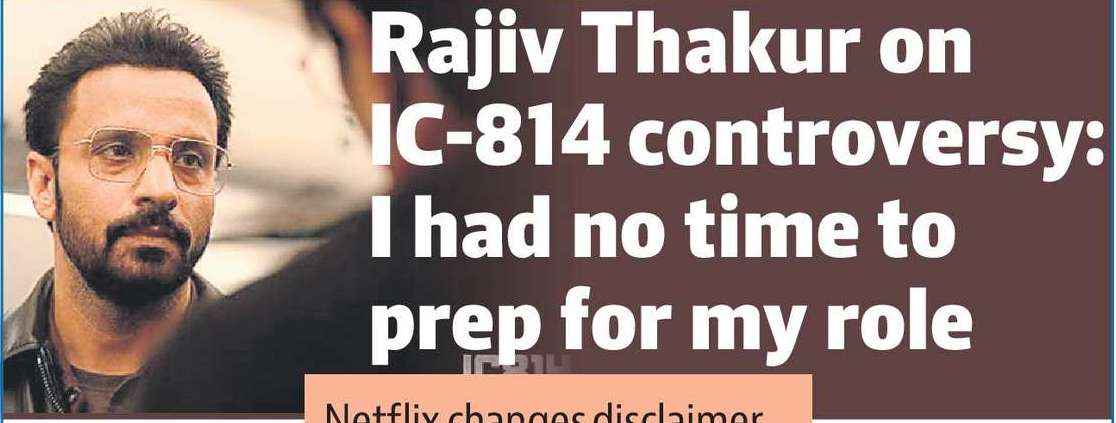
Actor-comedian Rajiv Thakur left viewers surprised with his recent role of the antagonist, named Chief, in filmmaker Anubhav Sinha’s IC-814: The Kandahar Hijack. While the web series gave him a chance to break out of his image as a comic, the raging controversy might just overshadow it all.
The series has been hit with allegations of distortion of facts about the real identities of the hijackers and has drawn criticism for naming the two terrorists Bhola and Shankar, instead of using their real names, while the other three are referred to as Chief, Doctor and Burger.
Thakur admits that he didn’t get much time to prepare for his role and doesn’t “have much knowledge about the controversy”: “It was such a big show and I should have done some prep. When I met the other actors who played the hijackers, they had read books. I am thankful that Anubhav Sinha sir, the associate director and the writers explained my character to me. In the series, I was only associated with Vijay Varma (actor) and (the character) Doctor.”
Thakur, 40, who played the mastermind behind the 1999 hijacking, is certain that his work will be noticed: “When someone does good work, it can’t be buried. I’ve got such good reactions for my role. My friends and Insta followers are sending me messages. Some said I was unrecognizable.”
Netflix changes disclaimer
After a meeting with the Ministry of Information and Broadcasting, the streaming platform issued a statement. “For the benefit of audiences unfamiliar with the 1999 hijacking of Indian Airlines Flight 814, the opening disclaimer has been updated to include the real and code names of the hijackers. The code names in the series reflect those used during the actual event. India has a rich culture of storytelling — and we are committed to showcasing these stories and their authentic representation,” said Monika Shergill, Vice President, Content at Netflix India.
India among key drivers of Netflix's paid net subscriber additions
9:05 AM
Heeramandi becomes Netflix India’s biggest series with 15 m views
Javed Farooqui (THE ECONOMIC TIMES; July 19, 2024)
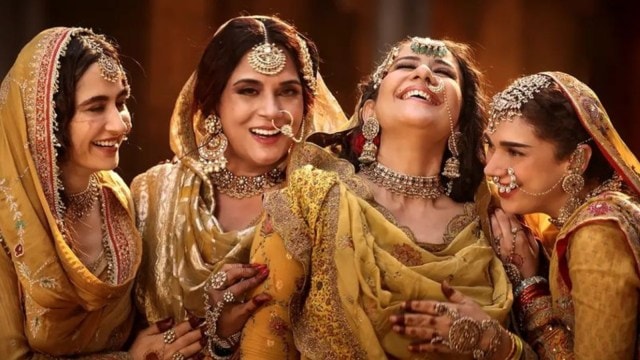
India ranked second in terms of paid net subscriber additions globally for video streaming giant Netflix in the June quarter, and third by revenue percentage growth, backed by a strong content lineup headlined by ‘Heeramandi: The Diamond Bazaar’ web series.
Netflix's paid net additions stood at 8 million in Q2 compared to 5.9 million in the same period last year. Its global paid subscriber base stood at 278 million.
Revenue for the quarter grew 17% to $9.5 billion, while net income rose 45% to $2.1 billion.
Netflix said in a letter to shareholders for Q2 2024 that 'Heeramandi' is its biggest drama series in India, fetching 15 million views. ‘Amar Singh Chamkila’ movie followed with 8.3 million views. Licenced films such as ‘Laapataa Ladies’ and ‘Shaitaan’ also helped drive subscriber additions.
Netflix also said ‘The Great Indian Kapil Show’ ranked among its most-popular shows globally in Q2 along with ‘Bridgerton S3’, ‘Baby Reindeer’, and ‘Queen Of Tears’.
According to Media Partners Asia, Netflix had 12 million paid subscribers in India. As per regulatory filings, Netflix Entertainment Services India reported a 24% growth in revenue at Rs 2,214 crore in FY23. Net profit jumped 75% to Rs 35 crore during the year.
“It's truly remarkable how our series and films have made a significant impact on a global scale. Heeramandi becoming our biggest Indian drama series to date is a testament to this. We are focused on engagement as the single most important indicator of success because when our members watch more, they stick around longer," said Netflix India vice president incharge of content Monika Shergill.
She noted that 2024 has been a great year for Netflix, with healthy engagement across films and series as well as a steady growth in subscribers.
Speaking at the MoffettNathanson Media, Internet & Communications conference in May, Netflix VP of finance, corporate development, and investor relations Spencer Wang noted that the platform is growing quickly in India.
Wang also said that India is an important country for Netflix and a very competitive one. While noting that Indian consumers have a lot of choice, Spencer said the platform's job is to just improve its offerings so that they resonate with the Indian consumer.
‘The Great Indian Kapil Show’ and ‘Heeramandi’ were among the popular titles, creating 1.1 billion organic impressions on Netflix India's social channels.
Netflix India had earlier announced it would release 14 shows and eight films in 2024. The platform has lined up non-fiction content including ‘Modern Masters: SS Rajamouli’, ‘Nayanthara: Beyond the Fairy Tale’, and ‘Yo Yo Honey Singh’.
Films and series on the platform include returning seasons of ‘Yeh Kaali Kaali Ankhein’, ‘The Great Indian Kapil Show’, ‘Fabulous Lives Vs. Bollywood Wives’, besides ‘Phir Aayi Haseen Dillruba’, and Anubhav Sinha’s gripping drama ‘IC 814: The Kandahar Hijack’. The platform will also stream feature films like Do Patti and Vijay 69.
Cops book Nayanthara, Netflix removes Annapoorani after Hindu group protests
10:41 AM

THE TIMES OF INDIA (January 12, 2024)
Bhopal/Jabalpur/Mumbai: Police in Jabalpur registered an FIR against actor Nayanthara and makers of the Netflix movie “Annapoorani” after Hindu Seva Parishad filed a complaint accusing them of hurting religious sentiments. The film was no longer available on Netflix at the time of going to print on Thursday.
In Mumbai, two separate police complaints were filed by Bajrang Dal and Hindu IT Cell activists against the actor and others associated with the film for remarks about Ram and for allegedly promoting “love jihad”.
PTI quoted an official as saying a complaint was submitted by Bajrang Dal activists to Oshiwara police station two days ago, and an inquiry was underway. Another complaint was filed at Lokmanya Tilak Marg police station by Hindu IT Cell founder Ramesh Solanki who alleged the film demeans Ram and was released to hurt the religious sentiments of Hindus.
In Jabalpur, Omti police station registered a case under IPC Sections 153 (wanton provocation with intent to cause riot) and 34 (common intention) following a complaint from the Jabalpur-based outfit on Wednesday. Apart from Nayanthara, the FIR names six others—Zee Entertainment CEO Punit Goenka, film director Neelesh Krishna, producers Jatin Sethi and R Ravindran, Shariq Patel and Monika Shergill of Netflix India.
Hindu Seva Parishad president Atul Jaiswani alleged that the movie has “inappropriate references” for Ram and promotes “love jihad”. In a scene, the daughter of a priest is shown wearing a hijab to cook biryani and is shown offering namaz. Ram is depicted as eating meat after hunting animals during his exile, the complaint says.
In another scene, PTI quoted the complaint as saying, Farhaan, friend of the character played by Nayanthara, brainwashes her into cutting meat and says Ram and Sita had also consumed meat.
“The complainant has so far not visited the police station. We are waiting for him to appear before the police so that we can take further course of action (sic),” the official in Mumbai was quoted by PTI as saying.
------------------------------------
HINDUSTAN TIMES (January 12, 2024)
After landing in legal trouble over allegations of hurting religious sentiments, Nayanthara-starrer Annapoorani: The Goddess of Food has been taken off Netflix. The film released in theatres on December 1 and started streaming on December 29. Sometime ago, protests erupted claiming it “offends Hindu religious sentiments”, and an FIR was lodged against the makers and cast in Mumbai on Monday.
The film follows a Brahmin woman (Nayanthara) who aims to become India’s top chef. Reportedly, the offensive portions depict the character cooking meat wearing a hijab.
The film’s co-producer Zee Studios has also issued an official apology and assured that the controversial scenes in the film will be removed for a re-release. Zee Studios are planning to release a statement soon, we have learnt from sources. Meanwhile, there was no response from Netflix till the time of going to press.
A story like Fauda resonates with us. Art has no borders; if you make a good story, it will have a global appeal-Rajkummar Rao
8:20 AM

At IFFI, Fauda makers Lior Raz and Avi Issacharoff, along with Rajkummar Rao, discussed what makes content globally appealing
Niharika Lal (BOMBAY TIMES; November 29, 2022)
Fauda creators Lior Raz and Avi Issacharoff, who’re currently on a two-day visit to India, attended the International Film Festival of India (IFFI) on Sunday. The two had a chat with Rajkummar Rao on the topic Storytelling in the Era of Global Entertainment and spoke about their desire to collaborate with Indian creators.
THE MOST IMPORTANT THING IS TO MATCH THE EXPECTATIONS OF THE VIEWERS: FAUDA CREATORS
Fauda creators shared that when they started the project, they thought that nobody would watch the show. Lior said, “After the release of the first season, it became a hit and we thought that now we have to bring in more action in the show. People love the show because of how it is. You (as a viewer) feel like you are part of what’s happening, you are a fly on the wall. And we didn’t want to change that. We are not trying to be something that we are not. We are not trying to make it a Hollywood show and we are not trying to make it a Bollywood show. We are trying to make it the same thing that we already did. And this is the secret of the show.”
Avi added, “The most important thing was to match the expectations. The expectations after the first season became very high, then the second and then the third. After the third season, people thought we are not gonna go further. We were very surprised that we could match the challenges of the show. One of the ideas here is to keep the authenticity alive. It is not true, it is not a documentary, it is fiction, but you have to make people feel that it is authentic. Fauda was a very local Israeli show that became an international show. ”
The makers of Fauda have also collaborated with Indian creators, and a collaborative project is in the pipeline. Appealing to Indian creators, Lior Raz said, “I want to say this to those attending the screening – if there are any creators or producers here, then we are very much open to collaborating with you. We really want to collaborate with the Indian industry.”
IF YOU MAKE A GOOD STORY, IT WILL HAVE A GLOBAL APPEAL: RAJKUMMAR RAO
Sharing how working in a web series helps an artiste, Rajkummar said, “It really helps when your work can travel globally. I remember after Ludo, even though theatres were not functioning, I got messages from people from the US, UK, Singapore, Australia and New Zealand, which meant that people were watching Indian content globally. That’s what we want. A story like Fauda resonates with us. Art has no borders; if you make a good story, it will have a global appeal. You need to be grounded and you need to be rooted with your content. You can’t really make something which is surreal or unreal. You need to be authentic. That’s why Monica O My Darling or Badhaai Do work well. They are pushing makers.”
Commenting on what avenues streaming platforms have opened for him, Rajkummar said, “I wanted to do a series. Doing a series really enhances you as an artiste because you get to play the character for a longer duration. That’s what I felt while doing Guns & Gulaabs. I love watching films on streaming platforms. Watching other people’s work really inspires you as an artiste. I saw Kantara recently, and I was really inspired because it was such a rooted story. You can’t make a film thinking that I want to reach out to a global audience. You have to be true to the content and your heart should be in the right place.”
Monika Shergill, Vice President, Content, Netflix India, added, “What exactly is global storytelling? Stories are stories. They have to have authenticity and emotions. If you are working in your own bubble and you pick a story and say that it is going to work for an international audience – well, there is no ‘international audience’. There is nothing called an international audience.”
‘NOBODY KNEW WHAT FAUDA MEANT WHEN WE STARTED THE SHOW’
Fauda was earlier named Undercover, but later the name of the show was changed. Talking about the title, Avi said, “Fauda means ‘chaos’ in Arabic. Why did two Israeli-Jewish creators pick an Arabic name? The reason was that it had a double-edged meaning. It also has an Israeli meaning. And for us soldiers, who worked in undercover units, that was the code used when things turned messy. This is the word that you report in walkie talkie – ‘Fauda!, Fauda!, Fauda!’ and that is a sign for the rescue team to come.”
Raz added, “It is a very common word in Israel. Now everyone in Israel talks like – Oh! there is fauda in football games, there is fauda in politics. Nobody knew what fauda meant when we started the show, but now it is what everyone talks about.”
#TrendingNow: Indian movies and web series across the globe
8:15 AM

Badhaai Do is among Netflix’s most-watched films globally this year, and the latest example of how desi OTT movies and series are striking a chord with audiences from Europe and Southeast Asia to Latin America
Niharika Lal (BOMBAY TIMES; March 24, 2022)
Since its release last week on Netflix, Badhaai Do was trending in the No 1 spot in India till March 20, and was in the Top Ten list globally in the non-English films category. In fact, Badhaai Do is the sixth Indian film this year to make it to the global top 10 rankings of the platform, as Indian content increasingly finds a vast audience overseas.
DESI FILMS AND SHOWS TAKE OVER GLOBAL OTT RANKINGS
In the last two-and-a-half months alone, six Indian language films and two series made it to the Netflix Top 10 list, which is published weekly. These include Minnal Murali (Malayalam), Sooryavanshi (Hindi) and Badhaai Do (Hindi) among other films; and Yeh Kaali Kaali Ankhein: Season 1 and Fame Game: Season 1 in the TV series category.
Similarly, Gaurav Gandhi, Prime Video Director & Country Manager, Amazon India stated last year, “Our Indian Amazon Originals enjoy incredible popularity both in the country and outside India. In fact, one out of every five viewers for these shows is from outside the country.”
As per the CII Big Picture Summit 2020 report by the BCG (Boston Consulting Group) and CII (Confederation of Indian Industry), the increasing acceptance of Indian content among global audiences includes, but is not limited to, the Indian diaspora of over 32 million spread across multiple countries. Countries with significant Indian language speaking population — such as Bangladesh (Bengali), Mauritius (Bhojpuri), Nepal (Maithli and Bhojpuri), Singapore (Tamil), etc — also consume Indian content, states the report.
Karan Bedi, co-chair, CII sub committee on OTT and Digital content and CEO MX Player, says, “MX Player’s shows are popular in countries such as Bangladesh, US, UK, UAE, Canada, and Australia. We focus on the Indian diaspora in these countries and the content is also curated for a global audience.”
‘LOCAL, AUTHENTIC STORIES ARE IN DEMAND EVERYWHERE’
With platforms like Amazon boasting of viewership in 240+ countries and territories worldwide, Girish Johar, producer and cinema business analyst, says that streaming platforms have helped Indian content reach not just the conventional top markets, but even countries which were out of bounds for traditional distributors.
He explains, “Traditionally, the top markets were the US, UK, New Zealand, and Australia. Some films did release in selected Southeast Asian countries, but now we are able to tap European countries, West Indies, Brazil, and so on. ”
He adds, “Through users on social media, too, we get this picture that Indian content is being consumed and liked in foreign countries. Be it south films such as Minnal Murali or Hindi films such as Gulabo Sitabo, Indian cinema has received a lot of praise from global audiences.”
Agrees Karan Bedi, “Some global OTT platforms are present in 150+ countries. For Indian content — films and shows, releasing the same day across these countries, now you have got (viewers in) countries in Eastern Europe and Latin America.”
Bela Bajaria, Netflix head of global TV, had said at a conference last year that the shows that have been the most successful globally have been “the most authentic and the most specific”.
Monika Shergill, VP-Content, Netflix India, adds, “Last year, Netflix’s 28 Indian original titles were across 7 languages, 8 formats and 11 genres across films, series, comedy, reality and documentaries. From blockbuster hits like Dhamaka, Yeh Kaali Kaali Ankhein to differentiated stories like Cinema Bandi, The Disciple and Axone, our aim is to have authentic stories and it is this authenticity that audiences love. Malayalam cinema’s first superhero film, Minnal Murali which trended in the Top 10 in 30 countries from Argentina to Nigeria, or Red Notice, which India enjoyed with dubs in Hindi, Tamil, Telugu — are examples of how great stories are universal.”
----------------------------------

SUBBING AND DUBBING OF FILMS BIG REASON FOR THEIR INCREASING POPULARITY
Due to subbing and dubbing in various languages, Netflix reached out to a wide audience. The Tamil anthology film Navarasa has been in the Top 10 in 10 countries, including India, Malaysia, and Sri Lanka. More than 40% of the film’s viewers came from outside India in its first week on Netflix. Likewise, in its first week alone, the Dhanush-starrer Jagame Thandhiram drew an equal share of audience from outside India as it did within the country, and was in the Top 10 in 12 countries outside India. It was also No 1 in 7 countries, including India, Malaysia, and the UAE.
Badhaai Do (Hindi), Minnal Murali (Malayalam) and Sooryavanshi (Hindi) were among the Indian films that made it to the global top 10 on Netflix. A Thursday, Atrangi Re and Maaran were among the Indian films that topped the global list on Disney+ Hotstar in the last month
*Lists not in order of ranking.
------------------------
INDIAN SHOWS THAT ARE POPULAR ACROSS THE GLOBE
MX PLAYER ORIGINALS:
Aashram, Indori Ishq, Bhaukaal, Cartel, Campus Diaries, Raktanchal, Ek Thi Begum (Hindi), Matsya Kaand, High, Samantar (Hindi) were among the global Top Ten
ON ALT BALAJI:
Lock Upp, Broken But Beautiful Season 3, Bekaaboo Season 2, Cartel, The Married Woman, Puncch Beat Season 2, Crimes And Confessions, Pavitra Rishta, His Storyy, and Girgit were among the most popular shows last year
ON DISNEY+ HOTSTAR:
Rudra, Human, The Great Indian Murder, Aarya Season 2, and Special Ops 1. 5 were most popular globally in Feb-March
ON NETFLIX:
The Fame Game, Yeh Kaali Kaali Ankhein, Aranyak and Mighty Little Bheem
INDIAN CONTENT SHINES @ INTERNATIONAL EMMYS
The 48th International Emmy Awards were a historic event for India as, for the first time ever, an Indian series, Delhi Crime ,won an Emmy for Best Drama Series. Series such as Sacred Games, Aarya 2, Made In Heaven, Inside Edge, Four More Shots Please!, the Netflix special Vir Das: For India and the anthology Lust Stories have also been nominated for Emmys.
Last year, Nawazuddin Siddiqui was nominated for the International Best Actor Emmy for his role in Serious Men. Siddiqui also became a household name all around the world for his stint as gangster Ganesh Gaitonde in his Netflix debut series titled Sacred Games. In an interview he mentioned that the locals of Italy recognized him as Gaitonde and appreciated his performance.

We have already done 70 Netflix Indian originals, 90 more are in the pipeline-Reed Hastings
8:21 AM

Reed Hastings, founder and co-CEO of Netflix is bullish about India. In an interview to Pankaj Doval, Sidhartha & Surojit Gupta, Hastings and the company’s vice president for content, Monika Shergill, detailed the India strategy and spoke on a range of issues from what Indians are watching to regulation.
THE TIMES OF INDIA (September 23, 2021)
Excerpts from the conversation:
What is India strategy for now and the content play you are engaged in?
Reed Hastings: Many of the shows that Monika is doing here are extraordinary. We have launched 70 Indian Netflix originals already. Some have won international Emmy. The White Tiger got a lot of positive accolades. Monika is expanding regional content from the South. Now we have got 90 shows in the pipeline already that are developed. 70 done, 90 commissioned and in the pipeline.
Monika Shergill: The way the Netflix model works beautifully as we have experienced across countries is that consumers come to Netflix for both quality and diversity. For us what actually works is diversity, because your Netflix is different from my Netflix. Which is why when we say we have done 70 titles in India — this is across doc series, this is across content like Indian matchmaking, content like the Emmy award-winning Delhi Crime, Jamtara which is on phishing, the crime dramas.
The new slate actually what we are coming out with will be a significant sort of step change in the market, also the way we have planned it, hoping very humbly that it lands like that, is the velocity of content, the kind of stories that we will bring at scale and at velocity which Netflix is globally known for. So that is what we are aiming to do from the end of this year.
Are you planning any acquisitions because there are very good production houses in the country and some of them in vernacular language space?
Hastings: Titles yes, but production companies like that we are not competing with them. So if we start buying one or two — all the others are worried. So we think all the commissions that we are doing is with local production companies, which builds their capacity. And then they contract with us, they do something with us, they do something with Prime. So they get to build strong businesses, without being dependant on us and that’s how we build the industry, with independent production. So I think we are better commissioning content or acquiring titles, not companies.
What kind of genres actually work in India? What are Indians watching?
Shergill: You can see that on the one hand, there is a Sacred Games which has done so well. And on the other extreme end, there’s a Haseen Dillruba which has actually exploded across 22 countries, and has been on the top 10 list and has worked in tier one, tier two cities and across. And then documentaries have gone up by 100%. Kids content on Netflix has gone up by 100% viewing. We have had K dramas, which have actually gone up nearly, I don’t know, 400%. Romance as a genre is very less serviced in India, it is in cinema. But the kind of romance people want to see which K dramas have been showing in a very small set of audience. But that audience base can expand is a taste. We are very, very big on crime.
Should streaming content be regulated?
Hastings: In every county we provide extensive parental controls. We really want each family to be able to set and enforce their standards. We give our families tremendous control. The Internet has changed the perceptions of control, broadcast television and movie theatres. In many countries, they are more controlled and the Internet is more open. So that’s a change societies are adjusting to. But the way we are reacting to it is to provide each family with the controls they want. If you and your wife are watching you don’t need any controls, if you got 14-year olds then you want a lot of controls. So we are very flexible that way.
Would you agree that the content that’s flowing in needs to be controlled or regulated, right from the point where you are broadcasting it and not at the point of consumption?
Hastings: It’s a little of both. Because look, we self-regulate too like the industry, and try to be thoughtful about that. So we don’t have any pornography. I mean, we don’t, there’s lots of things we don’t have. Okay, so we essentially self-regulate in terms of the kind of content we have. But some of our content, you know, as Sex Education. It’s very funny but you know, it’s not good for a 14 year old. So we have both.
What are the unique things that you notice about India when compared to other markets?
Hastings: I think as you said, the broadband, the mobile prices being so low in India, you know, Rs 200 or 300 a month, it is extraordinary and not like any other country.
What percentage would be on mobile? And how much on television?
Hastings: It’s about half and half on mobile and television in India.
India’s top web bosses confess how the cloud of COVID had a silver lining that no one could’ve predicted
8:23 AM
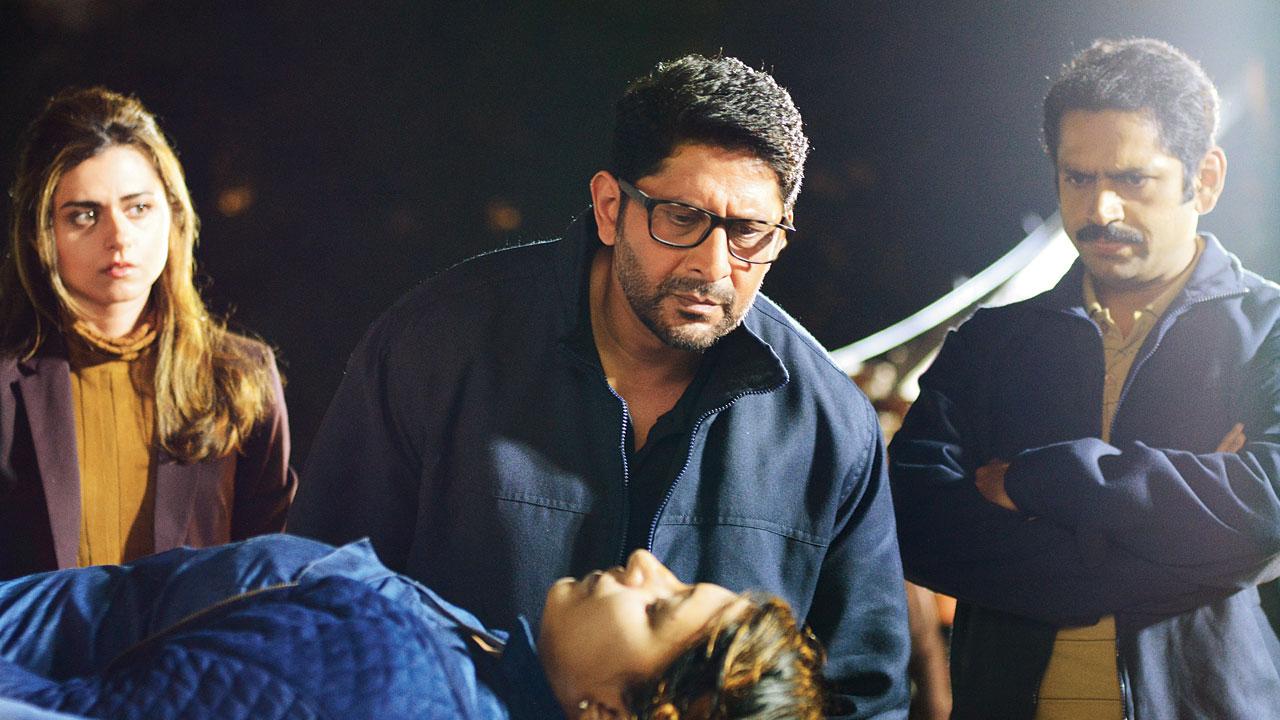
Ahead of mid-day & Radio City’s Hitlist OTT awards, India’s top web bosses weigh in how the cloud of COVID had a silver lining that no one could’ve predicted
Mayank Shekhar (MID-DAY; February 6, 2021)
Towards the end of 2019, Saugata Mukherjee, then with Disney+ Hotstar, switched job to head original content for rival, Sony LIV. Except, Sony LIV as a streaming app wasn’t quite Hotstar’s competitor in a real sense.
Because they had yet to develop a single web-only, original show or series. Which is strange, if you consider that Sony LIV is probably India’s first OTT platform - they’ve been around since 2013!
What was Sony LIV playing, up until early 2020? Catch-up TV - basically Sony broadcasting network’s shows downloaded on the app.
And then the pandemic struck. Production came to a halt. There was no new TV episode - only audiences with an insatiable visual appetite, sitting at home, staring at a screen, when not out of the window.
Mukherjee recalls, “Sony LIV re-launched right in the middle of the pandemic [with original web content]. One couldn’t have planned for the frenetic pace at which we had to recalibrate, from technology, business and content development point of view - [lead time on] all of which had to be crunched dramatically.”
Likewise for Ferzad Palia, from Voot, which as an app was also simply an advertising-led digital arm for Viacom as a TV broadcaster: “We’d been meaning to play the subscription game for sometime. We had to bring all the plans forward by about a year. Voot Select is a COVID baby. We launched on March 3, 2020. By March 16, we were working from home. To get tech like that so early in the game? It was chaotic as well, of course.”
But it paid off, as Palia points out, with audience numbers outgrowing estimates they’d made for both Year One and Two; and viewers from beyond top 10 Indian cities willing to pay for online entertainment, even post unlock!
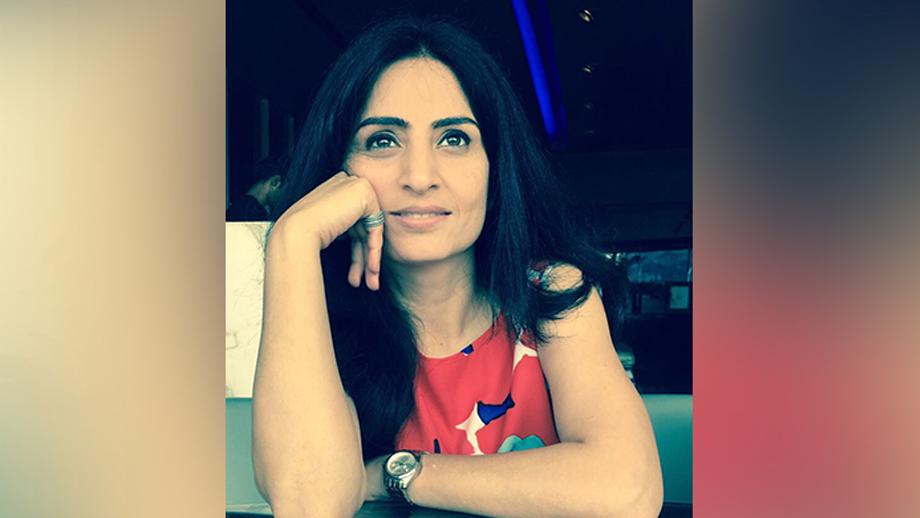
Monika Shergill from Netflix, the nascent OTT industry’s first-mover in India, calls 2020 the year of “intense connection, with an acceleration in adoption [of streaming services]; a whole new set of audiences [coming in].”
The thriller Asur was the flagship show for Voot Select. Like Scam 1992 was for Sony LIV. Both of which have earned nominations at the mid-day and Radio City’s Hitlist OTT Awards that this discussion is a heads up for. Netflix has totally dominated the films and non-fiction nominations. They had 28 Indian original releases last year anyway, besides international productions, making Netflix an entertainment industry of its own! Rather than just a streamer/app.
The best instance of an independent producer inadvertently benefitting from Coronavirus might well be Sameer Nair, from Applause Entertainment, who delivered 11 shows in 2020 alone, across platforms, including the nominated Criminal Justice: Behind Closed Doors on Disney+ Hotstar.
Hungry eyeballs were all there. Library shelves on OTTs needed constant replenishment. While Nair denies there was a hard-sell on among platforms to pick up shows, rumours suggest the big Bollywood films were indeed up for top dollars, at astronomical rates, over a fierce bidding war, since theatres had shut down!
Shergill clarifies, “There is in fact a lot more juicy speculation around this; very little truth. What really happened is that with most services, there is already a pipeline of films you look at for a post theatrical [premiere]. Barring a couple of [mainstream] titles, most platforms that premiered [Bollywood] films [during pandemic] had already been signed up [from before].”
Which doesn’t take away from the bad blood between the OTT and cinema/theatre industry, as we speak, with the latter accusing top Bollywood producers of leaving the traditional exhibition sector in a lurch. Having sold off their major releases directly to web.
To a point that in a chicken-egg situation, theatre owners argue that, sure, cinemas have re-opened; and people aren’t still coming in. But even if they did, what’s there to watch?
Some of this drought was of course unavoidable. For example the Tamil event pic Soorarai Pottru that Guneet Monga co-produced: “We had a big music launch on a plane in February, 2020. And then with the lockdown and pandemic, we just kept sending out press releases for updates. We didn’t know how long this would continue?”
Nair reasons, “You really can’t fault anyone. Cinema is a heavily cash-flow business. And it’s not like movies will stop getting made. You can fight another day, once you survive.” Shergill is glad that Netflix and other OTTs stepped in to partner with Bollywood at this hour of need.
Rangita Pritish Nandy admits, “Surely there was job-loss in cinema business; even theatres that have shut down may never open again. But for a producer, [investment on a] film is a [financial] ticking bomb, until the [point of] release.”
Nandy should know, having been a film producer for almost a couple of decades. Her nominated show Four More Shots Please 2 was declared the most watched Indian content on Amazon Prime Video during the early part of pandemic.
While much is made of the current fracas between OTTs and cinemas, the impact of the pandemic on the television industry — a more direct competitor, with people’s changed viewing habits — isn’t perhaps highlighted enough. Also given that traditional TV is dependent on advertising, which in turn relies on the health of the economy.
Nair says the ratio between earnings from subscription and advertising had already reached 50:50 ratio by 2020. As for advertising revenue, Palia (Voot Select) and Mukherjee (Sony LIV), both broadcasters in the OTT space, contend the numbers have nearly returned to pre-pandemic levels already.
This is no time for media obituaries whatsoever. Whether TV, cinema, web, broad consensus at the Sit with Hitlist huddle is that they will all co-exist. Both audiences and their options are potentially limitless.
Right down to an app like Mubi that shows only world cinema and art-house titles, and that Monga helped launch in India in 2019: “That library has completely captured the imagination of cinephiles.”
And, why, even Netflix could become network TV, no? Shergill says, “Taking our shows back to a linear feed on TV in France is something new for us. Either way, choice and ease for consumers will determine audience behaviour. Linear TV versus streaming, versus cinema, are all slightly different spaces.”
Hardly five years old, the Indian OTT industry has clearly outdone itself in terms of globally competitive content. Rare happy news of 2020 was Delhi Crime (Netflix) winning an Emmy, where Four More Shots Please (Amazon Prime Video) was also nominated. Some of this has to do with how, unlike cinema and TV, web platforms in India (like with other democracies) have so far grown without the restrictive shadow of external control/suppression/editing.
Panelists don’t deny that this might just change, for the worse; who knows, with cloud of COVID-19 receding, and the darkness of state censorship looming instead. OTT content bosses, I suspect, would prefer to sit out this part of the discussion.
Nair says, “We’ve grown up watching flowers kissing instead of humans, but we grew up, right?” Palia says, “Take heart from the fact that we’re still better than a lot of countries.” Monga says, “Iranian cinema is so beautiful, and then you see Korean content that’s travelling across the world.” “She’s just drawn those parallels straight, and given you the best quote,” Nandy suggests. Well.

OTT platform Netflix officials booked for Madhya Pradesh temple ‘kissing scenes’ in A Suitable Boy
8:06 AM

THE TIMES OF INDIA (November 24, 2020)
Bhopal/Khargone: An FIR was registered against two officials of Netflix in Rewa on Monday over the shooting of kissing scenes at Maheshwar. Khargone collector Anugraha P, however, said no action was needed as that portion of the web series wasn’t shot in a temple.
Madhya Pradesh home minister Narottam Mishra, who had ordered an ‘examination’ of the scenes, on Monday said: “It has been found that ‘A Suitable Boy’ hurts the religious sentiments of a community. So, an FIR will be registered under IPC section 295A against Netflix office-bearers Monika Shergill and Ambika Khurana.”
The IPC charge carries up to three years’ imprisonment for ‘deliberate and malicious acts, intended to outrage religious feelings of any class by insulting its religious beliefs’. It’s a cognizable, non-bailable offence, which means police can arrest without a warrant. Shergill is VP (content) and Khurana is director-public policies for Netflix.
TIMES VIEW: “Hurting religious sentiment” is a catch-all expression that can encompass anything. In any modern society, certain broad principles of creative freedom must be agreed upon. Art should be protected from such frivolous onslaughts. Otherwise it will be difficult to create anything without offending someone or the other.
I never accused Anurag Kashyap of stealing my idea-Wilson Louis
8:26 AM

After Wilson Louis notes how Netflix's Choked seems identical to his short film Choke, Anurag Kashyap calls him to clear the air; director to not pursue legal action
Mohar Basu (MID-DAY; May 25, 2020)
 Director Wilson Louis was in for a rude shock last week when he chanced upon the trailer of Anurag Kashyap's upcoming film, Choked. The almost identical titles aside, the Netflix film had a lot in common with the Louis-directed Choke — if the Saiyami Kher starrer revolves around a housewife who finds money flowing out of her kitchen pipe, the 2019 short film starring Seema Biswas tells the story of a BMC officer who hides gold in a choked pipe of his building.
On Friday, Louis, in a terse Facebook post, highlighted the uncanny similarities between the two stories. "Hansal Mehta, whom I have worked with in the past, reached out to me after reading my post. He had seen Anurag's film and was sure it's an original concept. By then, I had contacted Monika Shergill [VP, content, Netflix] who was taken aback by the similarities," shares the director.
Soon after, Kashyap called the filmmaker to discuss the matter. "I never accused Anurag of stealing [my idea]. But, let's admit that we live in an industry where ideas are often passed around. Writers don't feel secure about their material, and creators don't have the integrity to credit the original writers. In such a scenario, you assume the worst in everyone. After the conversation, we agreed that both films have an uncanny resemblance as far as the idea is concerned."
During the chat, Kashyap also informed him that writer Nihit Bhave had registered his script with Screen Writers' Association as early as June 2013. "I am not pressing charges of plagiarism. However, after consulting my team and lawyer, I want to put forth the fact that we created the film first and released its promo a year ago," adds Louis.
On his part, Bhave reiterates he had developed the story in 2013 with Choked as the title. "I have years' worth of correspondence on e-mail as I shared the script with multiple producers. Once Anurag decided to helm it, we developed it together over five years and tweaked it to include demonetization. Wilson and Anurag have agreed that there is no similarity between the two films, apart from the title and [the plot point of] the pipe. Also, since my script was registered four years before his, shouldn't I be the one worrying about similarities?"
FICCI Frames corroborated that Bhave had sold the script of Choked to Phantom Films in 2015 at their event, Frame Your Ideas.

Subscribe to:
Posts (Atom)