Showing posts with label Mehmood. Show all posts
Showing posts with label Mehmood. Show all posts
A lot of what you will see in Welcome To The Jungle was created on the spot-Akshay Kumar
9:22 AM

Madhureeta Mukherjee (BOMBAY TIMES; June 20, 2026)
Ahead of their upcoming ensemble comedy, Welcome To The Jungle, Akshay Kumar and Disha Patani were on the Bombay Times Lounge for a candid conversation packed with laughs, revelations and behind-the-scenes stories from the film. Akshay’s comic timing was as effortless off screen as it is on screen, while Disha brought honesty, warmth and quiet charm to the chat. The promo is out now, and the full episode will drop soon on the Bombay Times YouTube channel. Until then, here’s a sneak peek from the conversation.
----------------------------------------------------------
I actually do very few films, and I think you should enjoy what you do. One film shouldn’t define your entire journey. If you’re unhappy for six months or a year while making a film, then that one release day won’t mean much. The quality of your time while working matters more than quantity
— Disha on choosing happiness over chasing quantity of work
----------------------------------------------------------
I don’t actively post on social media, but I do keep an eye on what’s happening. Things are changing very fast these days. Even Gen Z language has changed. When I talk to my daughter (Nitara), she speaks in an entirely different language. Most of the time, I need her to explain what she’s saying, as they use so many words and phrases which are new to me
— Akshay on keeping up with Gen Z in a rapidly changing world
----------------------------------------------------------
Aisa koi din nahi gaya jab maine ugta hua suraj nahi dekha. Even if I have to work till late, I am up at sunrise every day of my life. Yes, I have cheat days when it comes to food, but when it comes to my mornings, that doesn’t change
— Akshay on discipline being a huge part of identity
----------------------------------------------------------
The funniest person I’ve met in the industry both on and off camera, was Mehmood saab. I was lucky to get a chance to work with him, though by then he was quite old. The other person who is genuinely hilarious is Johny Lever. And then there’s Asrani saab who has a unique sense of humour. Now, I am seeing Rajpal Yadav in that category
— Akshay on comedy legends who have inspired him
----------------------------------------------------------
A lot of what you will see in Welcome To The Jungle was created on the spot. Some of the dialogues were not in the script, they happened spontaneously. You can’t be stuck to the script all the time. Lakeer ke fakeer nahi reh sakte. In such films, you have to let the actors move and say dialogues the way they want. One person says something, another responds, and it keeps building. Comedy moves very fast. If you do it in bits and pieces, it doesn’t work. Comedy has a certain rhythm, it should not slow down
— Akshay on why comedy works best when actors are allowed to improvise
----------------------------------------------------------
Disha, the one thing you are still learning in this industry is…
Being okay with being around people I don’t know. I’m an introvert, so I get very nervous at times.
But that has changed over time, right? Become better?
I think I have become worse (laughs).
In fact, in an earlier interview you had said that the one place where you are not an introvert is in front of the camera
Yes, because it’s just one lens looking at you instead of people’s eyes.
I’m not a trained singer and I’m a bad actor-Lucky Ali
8:23 AM

Toshiro Agarwal (BOMBAY TIMES; May 25, 2026)
Lucky Ali has remained one of Indian music’s most emotionally resonant voices, a singer who made vulnerability sound timeless. Lucky inherited fame early but spent much of his life quietly walking away from it. From briefly dabbling in acting to redefining India’s indie-pop landscape with Sunoh, his journey has always been guided less by ambition and more by instinct. In a conversation with us, the singer reflects on fame, silence, authenticity, and why music, for him, still feels like growth. Excerpts:
You briefly explored acting before finally settling as a musician. Was acting something you genuinely wanted for yourself, or was it a path shaped more by circumstance and family expectations? And if the right opportunity came your way today, would you consider returning to acting?
I’m not a trained singer, and I’m a bad actor. Acting was more my father’s (late actor Mehmood) wish. I wanted to please him, so I did a few films — some bad ones. But I also got to work with directors like Shyam Benegal and Sanjay Gupta. But I would only act again if something genuinely touched my heart. Music feels different to me. It feels like growth. On stage, you can keep discovering things you couldn’t do before — that’s the beauty of it.
At a time when pop music was becoming more polished and commercial, your songs felt unusually raw and personal. Was that natural or did it come from feeling disconnected from the mainstream music industry?
The industry was what it was, and I never found the comfort of making music from within that system. Honestly, the music we made had a lot of mistakes — musically, even lyrically sometimes. But whatever happened, happened naturally. It made me feel good, and I believed it would make others feel good too.
You’ve said before that you don’t like being forced to make music for trends. In today’s algorithm-driven industry, how difficult is it to protect authenticity?
Not difficult at all. I just do my music when I feel like doing it. I’m not dictated to by the system, and I don’t follow it either. I’ve always worked with people who are independent in their thinking and music. For me, music has to be heartfelt. It shouldn’t be too prolonged or repetitive.
You’ve often spoken about impermanence and not getting too attached to fame. Did that understanding come from personal experience, or from closely observing the entertainment industry over the years?
You see it everywhere, not just in the entertainment industry. There’s always a rise, and then there’s a point where things slow down. That’s natural. Age plays an important factor, and there comes a time when certain phases stop. So, fame is a difficult thing because after a point, you’re not entirely your own person anymore. It’s different when we’re performing because that comes from the heart. But it becomes difficult to move around normally because people surround you. I deal with it by taking long breaks before coming back to it again.
While most artistes try to move closer to the spotlight, you often walked away from it. Looking back, was protecting your personal life more important to you than protecting your career?
There was already so much fame within the family — my father, my aunt (Meena Kumari) — and I had seen that closely. It never really appealed to me. For many people, fame is something they want to achieve, but for me, it was just something that was thrust upon me. My intentions were always different. I never even thought of myself as a musician who would last this long. I simply wanted to do what I had set out to do, which was to make that album. I had applied myself to music far more than acting or anything else.
There are divided opinions within the music industry about bringing deceased artistes back through holograms and AI. Is there someone you would have wanted to share a stage with in that form?
I always wanted to bring my father back on stage in some form. We had even discussed the idea of performing his songs with him appearing on stage alongside us. But something like that takes a lot of time, effort and money, and I never really pursued it further. The idea still exists though. Maybe I’ll do it, maybe I won’t. I don’t really want to go beyond my father when it comes to that.
-------------------------------------------------
On Sunoh resonating with the audience till date... Lucky says, “What I felt at that time, I wrote. And whoever listened to it carried those feelings within them. Now those people have grown up, and somehow the music has stayed with them. I don’t know why I got the opportunity to do what I’ve done. It’s not something you can plan. It’s just how the time was, and how things happened.”
-------------------------------------------------
“If people are still listening to the music, then clearly the feelings haven’t become old. Their realities may be different now, but the emotions are still the same. My music evolves, and so do I with it”
-------------------------------------------------
“For me, music and singing were the only forms of expression that truly made sense because they came more naturally to me than theatrics or other forms of expression”
My next dream? Main shaadi karunga phir se-Lucky Ali
8:34 AM
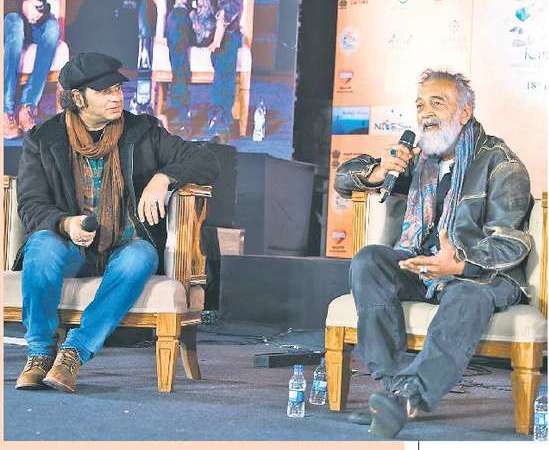
Rishabh Suri (HINDUSTAN TIMES; February 4, 2025)
Singer-actor Lucky Ali charmed his audience at the 18th Kathakar International Storytellers Festival, which was held at Sunder Nursery in Delhi over the weekend. In addition to belting out various hits, such as Ik Pal Ka Jeena (Kaho Naa Pyaar Hai, 2000) and Aa Bhi Jaa (Sur: The Melody of Life, 2002), Lucky also shared some interesting trivia behind his songs, much to the excitement of his many fans. The 66-year-old also revealed that he is going to collaborate with musician Faisal Kapadia next.
WHEN LUCKY PULLED HRITHIK’S LEG
Talking about the recording session of Ik Pal Ka Jeena, Lucky recounted the time he teased actor Hrithik Roshan: “The song had these lyrics — ‘Honthon pe pyaas hai, milne ki aas hai.’ And I remember I told Hrithik, ‘You are going to sing (lip-sync) ‘aas hai’ on screen? People would laugh!’ Then Hrithik went to his father (Rakesh Roshan, director) and told him, ‘Papa I don’t want to sing ‘aas’ on screen!’ Afterwards, Rakesh came to me and said, ‘Arey kya bol aur sikha raha hai isko?’”
‘I DON’T LISTEN TO MUSIC’
When Lucky was asked about a recent song that he would’ve loved to sing, he responded, “You are not going to believe this, but I don’t really listen to music. It’s all internal. Sometimes I do listen to artistes, though.”
Apart from singing, Lucky also had a brief stint in acting. Talking about the same, he opened up about how his father, the legendary late comedian-actor Mehmood, wanted him to become an actor. Although, that changed with time. “He was very happy when he saw me do well in music. He was my role model and I wanted to be like him. Before he passed on, he even helped me become more spiritually aware. [Afterwards] I started travelling a lot,” he said.
On a separate note, when the singer-actor was asked about his next dream in life, he revealed that he plans to marry for a fourth time: “Main shaadi karunga phir se.” Lucky divorced his third wife, model Kate Elizabeth Hallam in 2017.
55 Years of Padosan: I used to laugh uncontrollably so much that the unit would turn off all the lights-Saira Banu
2:25 PM

Saira Banu took to social media to share some fond memories of the shoot of her film Padosan (1968), which clocked in 55 years on November 29. The film featured her with Sunil Dutt, Mehmood and Kishore Kumar. She wrote, “We are talking about one of the most favourite films of my career, mine, and the public in general. It is Padosan, a film for all occasions and ages. I am glad that I did this because I had refused any work soon after my marriage. It was understood that I would not be carrying on with a professional career.”
She continued, “It was then that Mehmood Bhai as he had earlier approached me for this film came running to Sahib, hugged him close, and kept saying in a rhetorical tone, ‘Yousuf Bhai you have to let Saira do this film for me. I will not let go of you until you say yes please, please.’ Sahab was tickled to the bone and kept repeating laughingly, ‘Mehmood, it is entirely up to Saira, You have to convince her. You have my absolute permission’.”
The veteran actress added, “The cast was so perfectly chosen that even I was initially surprised to see Dutt Saab as a simpleton ‘Gaonwalla’, I mean who could have imagined it? Dutt Saab would humorously say, ‘Saira ji, yeh kyaa hain, yeh hum kyaa kar rahein hain? Hamein toh Anthony and Cleopatra mein kaam karna chahiye, something romantic and glamorous’ (sic).”
‘IT WAS DIFFICULT FOR ME TO STOP LAUGHING ON THE SETS OF PADOSAN’
Directed by Jyoti Swaroop, the musical comedy was a remake of the Bengali film Pasher Bari. Saira Banu concluded her note by saying, “Until Padosan, I hadn’t worked with Dutt Saab, who turned out to be lively and funny. On the contrary, Kishore ji was a very subdued gentlemanly star who would get up from his seat respectfully as soon as any lady walked in. The shooting was a killer. I used to laugh uncontrollably so much that the unit would turn off all the lights and say ‘Ruk jao, abhi madam hass rahin hain’. It was that difficult for me to stop (sic).”
------------------------------------------
ETIMES (November 30, 2023)
Saira Banu reminisces the magic behind 'Padosan' - where Mehmood Bhai's dedication, Sunil Dutt's rib-tickling humor, and Kishore ji's spontaneous creativity turned every scene into a timeless laughter symphony. From the quirky head-shaving ceremony to the stroll in 'Brindavan Gardens,' the film's behind-the-scenes tales are as delightful as its iconic melodies.
In her continued post she wrote, "Continuing with the PADOSAN series, I want to talk about Mehmood Bhai's dedication to his roles. At the "Vrindavan Gardens" Palace, Mehmood Bhai joined our unit to start shooting scenes with me. Soon after his arrival, he sat in the palace verandah with his barber and then we witnessed the funny ceremony of him shaving off his head, giving off his beautiful hair to portray the bald dance teacher Master Pillai with romantic intentions towards 'Bindu'. As the barber shaved, "Tup Tup", tears rolled down his cheeks. We were both sad and amazed, momentarily forgetting our laughter.
The funniest scenes were where Master Pillai alias Mehmood was constantly trying to win over the affection of Bindu. In one scene I am trying to make Bhola jealous when he is standing in the window opposite. In this, I had to hold hands with Mehmood Bhai and rest my head on his big shoulders! It was a scream for both of us because all our lives he had been like a lofty big brother and now doing this scene to enrage Bhola, Sunil Dutt was rib-ticklingly funny. Another favourite scene is where I am strolling in “Brindavan Gardens” with Master Pillai amidst the beautiful greenery and fountains all around, Dutt Saab, Kishore ji and other comedians are walking right behind us eavesdropping trying to hear what we two are talking about (hidden with mobile branches of leaves and trees).
We had an able director Jyoti Swaroop who tried to control us in our fun and frolics while shooting but the major contribution to the making of scenes was inspired on the spot by Kishoreji, Mehmood, and Dutt Saab. For instance, the song “Meri Pyaari Bindu” was choreographed from start to finish by Kishore ji.
"PADOSAN" gifted the world of cinema with timeless melodies and the music of the film was directed by none other than R.D Burman Saab, among them was "Bhai Battur," a melody delivered by the Nightingale of the Indian Music Industry, Lata ji. In one of her interviews, Lata ji expressed that singing "Bhai Bhattur" was a remarkable experience for her, given the song's unique and distinct nature compared to other tunes of the 60s. Similarly, I found shooting for this particular song to be an extraordinary experience".
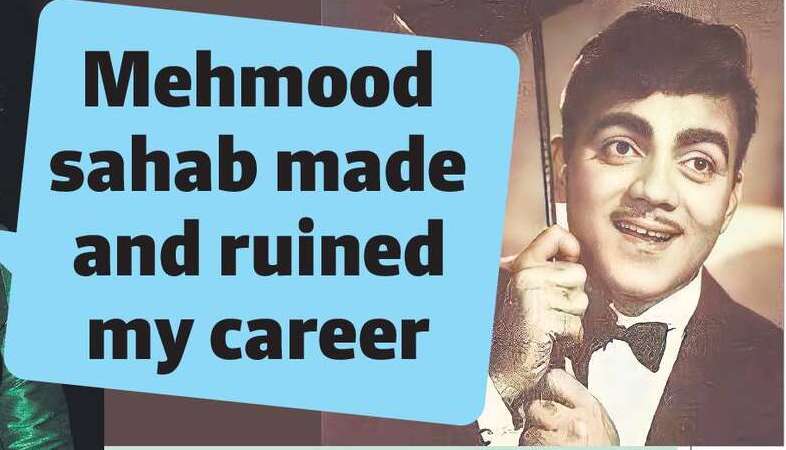
Mehmood sahab made and ruined my career-Aruna Irani
8:48 AM
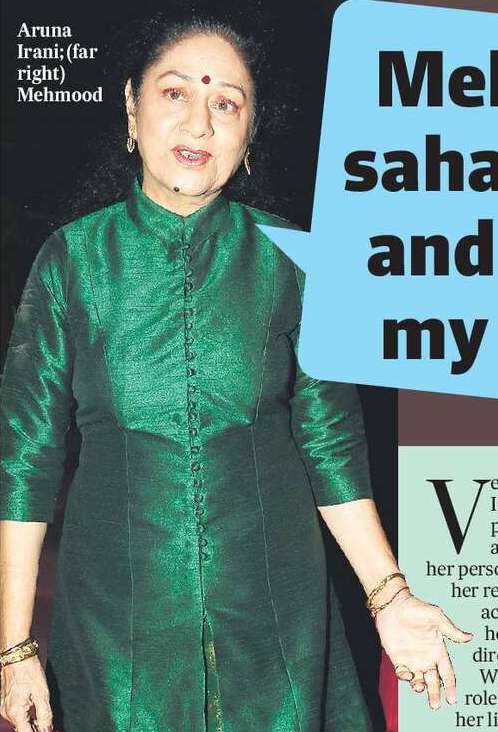
HINDUSTAN TIMES (February 4, 2023)
Veteran actor Aruna Irani, in a recent podcast, opened up about many aspects of her personal life, including her relationship with late actor Mehmood and her marriage to director Kuku Kohli.
When asked about the role Mehmood played in her life, Irani said: “Jab main industry mein aayi thi, mujhe koi kaam hi nahin de raha tha. Jab Mehmood sahab ke saath maine kaam shuru kiya, unhone mujhe kaam dilaana shuru kiya.”
The 76-year-old continued, “Toh mujhe lagta tha ki khuda ka bheja hua aadmi hai... liking badh gayi. I know he was a married man... That’s why hum bahut aage nahin jaa sakte the, lekin we were more than friends.”
Things, however, turned sour when rumours about the two getting married emerged. She recalled, “Jab Bombay To Goa (1972) release hui, ek rumour bahar aaya ki I am married to Mehmood. Mujhse koi puchne nahin aata tha. He was a star and a married man, so log unko hi pehle puchte the, ‘Suna aapki shaadi ho gayi?’ He just used to nudge. Na haan bolte the, na na... that spoiled my career. [People used to think] Mehmood sahab se shaadi ho gayi hai toh woh ab isko kaam nahin karne denge. See how he made my career and how he ruined it. Unhe lagta tha ki agar ye heroine ban gayi toh he will be left alone.”
Irani also spoke about Kohli, whom she married in 1990, while being unaware that he already had a wife and kids. “When you get married to a married man, it gets very difficult. She (Kuku’s first wife) had some problems, she died a year back. I never used to talk [about my marriage] as I didn’t want to hurt anyone. My affair, my relationship with Kuku Kohli was not to hurt anybody or snatch away somebody.”
I take responsibility for my music; agar chappal padne hain toh mujhe hi padenge-Lucky Ali
8:19 AM
Debarati S Sen (BOMBAY TIMES; May 16, 2022)
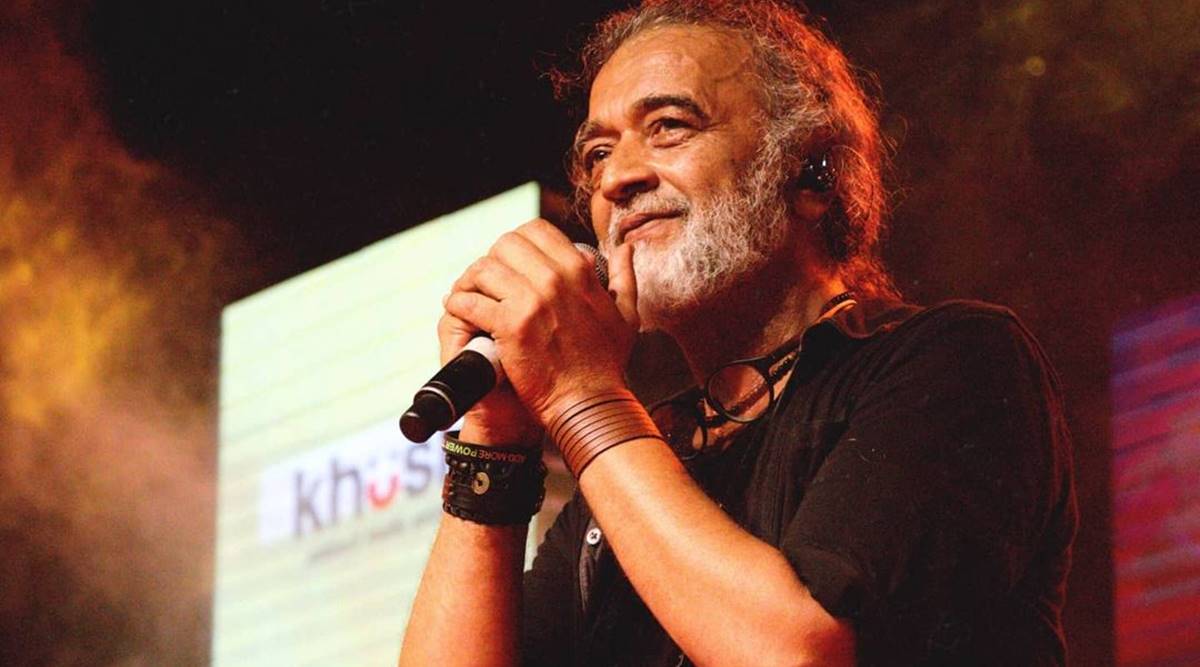
Lucky Ali’s popular songs, like Sunoh, O Sanam, Gori Teri Aankhen Kahen, Na Tum Jano Na Hum (Kaho Na Pyaar Hai), Aa Bhi Ja (Sur) and Safarnama (Tamasha), to name a few, continue to strike a chord with people across all age groups. The singer is known not just for his simple ballad-style rendition, but also for his elusiveness in his personal life. He likes to stay away from the limelight and surfaces only when he has something significant to share with his audience. In an exclusive interview with Bombay Times, he talks about his love for Mumbai, staying away from the city and the changing ways of the music industry. Excerpts:
It seems like you have a love-hate relationship with Mumbai. Why did you decide to settle down in Bengaluru?
I am not a person who stays at one place for a very long time. I need to move around, I need to wander, otherwise, I feel like I am stagnating. But when dad (veteran actor Mehmood) passed away, I realized that I, too, wanted to go away from here, because I felt that I did not belong here. I felt like a stranger in the crowd. I knew many people here, yet I felt like a stranger. I felt the need to go. Sometimes I feel like that in Bengaluru, too. When I feel the energy is dissipated, then I feel like moving away from there as well. I love Mumbai. It is just that the responsibilities that my parents left for me, took me to Bengaluru. I do visit Mumbai often, and I still have my ‘Bombayness’ in me. I watch the sea, I love going to Carter Road and Nepean Sea Road and all those places that I grew up around. For me, it is like returning home. Mumbai is like a mother to me. So, yes, Mumbai is my maika and I am Mumbai’s Mai ka lal!
You spent many years in Mumbai when you were growing up. What are your fondest memories of the city?
I remember I was 13 when they took me to Bengaluru, and I lived on the farm there. I missed Mumbai also because my mother would live here, so I would run away and come here. And three or four days later, they would catch me and take me back to Bengaluru. Mumbai is still a place that I love to come to. I like seeing life here. There are many places that are still the same and so is the vibe. There are so many endearing aspects of this city; all of Maharashtra, actually. Maharashtra is very special to me.
You have several popular Bollywood numbers to your credit, but lately, you have stayed away from Hindi film songs. Why?
For me, music and compositions are an aspect of fun. It is not really my career, and it’s not like I have to make a living out of it. I have not studied music, so I’m humbled when I work with the people I work with. I also learn from them. I never used to know the ragas that I sang. It’s only now that I have understood a bit of it because of the people around me. My being in this industry gave me access to all kinds of music. The musicians and the talent that was there in the early days are incomparable. They were masters. There was so much to learn from them when they sang or composed a melody. I’m grateful that I was there watching greats like R D Burman, Madan Mohan ji or Lata ji and Asha ji.
You are known to take time off between songs and albums. Don’t you fear that out of sight would also be out of mind?
I think it is just my bandwidth that makes me work the way I do. If music and singing were a commercial thing for me, I would continuously put out songs. Then I would have more numbers, too. But then, I would lose my soul on the way. It is very important for me to maintain that balance. I can’t exceed my ability. I want to be true to what I do. The music that I work on is not just about me alone, it is about the entirety of the team and everybody who is a part of the composition. I take responsibility for it, aur agar chappal padne hain toh mujhe hi padenge.
Your brother-in-law, Mikey McCleary and you have worked together right from the beginning, including the tracks Sunoh and O Sanam. Recently you two collaborated on a series of singles, tell us more about them...
My new track Intezaar is the first song from our new compilation. It has been sitting around for the last two years because of the pandemic. It was a big wait. Mickey shifted to America and I was in Bengaluru. We communicated online. Finally, in the studio, I recorded some 20 different versions of the track. It was all about getting it just right. Mickey is a taskmaster. We don’t accept anything that we are not convinced about. For this song, we have recorded a video at my home in Bengaluru.
You are known to be a private person, yet you have always been open about your personal life (Lucky married Meaghan Jane McCleary 1996, Anahita in 2000 and Kate Elizabeth Hallam in 2010. He separated from Kate in 2017). What are the family dynamics like? What about your children? How has your relationship been with them?
I’m in touch with all... and my loving children. We share a very warm understanding, we’re all mature and it’s all right! They have made me a better and more responsible man. I have beautiful children who carry the best of their parents and represent how we brought them up. I’m very peaceful and happy living with my children.
Hrithik Roshan is a boy with deep emotions, more suited to love stories-Rakesh Roshan
8:11 AM

Roshmila Bhattacharya (MUMBAI MIRROR; January 14, 2020)
 In March 1998, I arrived at Rakesh Roshan’s Santa Cruz office one afternoon for a chat with the producer-director on his next film, Kaho Naa… Pyaar Hai, which marked the debut of his son Hrithik. “You missed him by a few minutes, he just left” he told me regretfully. Looking at the photographs on the walls, I pointed out that Hrithik was still there with us.
With his lean six-foot frame, macho stubble and smouldering eyes, he looked like a ’90s Rambo rather than another turn-of-the-century Romeo. Papa, however, pointed out that “Hrithik is a boy with deep emotions, more suited to love stories”. He didn’t want to play around with the rich-boy-falls-in-love-with-poor-girl cliché. “I wanted a hint of mystery,” he reminisced. And one day, a story just came to him. “A story where the hero dies in the first half.”
Back then, Raj Kapoor’s granddaughter and Randhir and Babita’s younger daughter, Kareena Kapoor, was the leading lady. Eventually though, Ameesha Patel went on to play Sonia, Rohit’s girlfriend and Raj’s wife. The change in cast made little difference to the outcome. Kaho Naa… opened on January 14, 2000, to an overwhelming response. It was Hrithik’s film all the way and he went on to not only sweep the best debutant (male) awards, but also beat Amitabh Bachchan and Shah Rukh Khan to the best actor trophy, playing two contrasting characters with ease that came from months of hard work. Interestingly, at one of the award shows, Kareena presented him with the best actor award. When she opened the envelope and saw his name, she quipped, “It’s very obvious…” reinforcing public opinion.
Hrithik had worked with his father as an assistant for five years before he was signed for Shekhar Kapur’s Ta Ra Rum Pum, which was to also feature Preity Zinta. But the film didn’t take off. Then, one day, while he was doing the rounds of producers’ offices with his portfolio, his father dropped a bombshell, casually informing him that he’d be doing his next film. “I was so stunned I quietly walked out of the room. Dad followed, asking, ‘Aren’t you ready? Don’t you want to do the film?’ he had reminisced back then. Hrithik being Hrithik say much. He simply got a photo session done and it was only when his father liked the pictures, did he start prepping for a career in films, going on for voice training, dialogue classes and even learning music.
At an award function in 1999, before the release of his film, he had wowed a 5000-plus audience when he had rolled into stage in a snazzy blue sports car and twirled to one of my favourite numbers from the film, “Kyun Chalti Hai Pavan” with the grace of a ballerino. As part of the act, he also joined the velvet-voiced Lucky Ali who was crooning the song live, picked up the mic himself. And even though Aamir Khan in absentia bagged the best actor award that year for Sarfarosh, it was HR who was voted the Hero No. 1 of the evening.
Interestingly, Lucky Ali had never given playback for a film before and only did it because the Roshan brothers were good friends. In fact, Rajesh Roshan had debuted as a composer with Kunwara Baap, directed by Lucky’s father Mehmood, who also acted in the 1974 film. While on firsts, Rajesh Roshan was also the first music director to give Alka Yagnik a break in Basu Chatterjee’s Hamari Bahu Alka. Eighteen years later, she sang the title track of Kaho Naa… Farah Khan, the film’s choreographer, recalled how, while filming “Ek Pal Ka Jeena”, one of her assistants had given Hrithik some really tough moves as a joke. Unfazed, he kept rehearsing till he got them down pat. After seeing the rushes and realising what a super dancer he was, Farah decided to re-shoot portions of the song, giving Hrithik some really difficult steps. He pulled them off too.
It’s been 20 years… Hrithik’s still urging the audience, “Kaho Naa Pyaar Hai”, and the answer to that is still a resounding “Kaha Naa Pyaar Hai.”
Biswajeet turns 80; to perform in a concert in Mumbai on December 19
7:19 AM

The actor, who turned 80 on December 14, is bringing back his evergreen melodies
Labonita Ghosh (MUMBAI MIRROR; December 16, 2019)
“In the beginning, they called me a ‘suspense hero’, because of my first Hindi film, Bees Saal Baad. Later, when I started doing romantic roles, I became a ‘musical hero’,” says actor Biswajeet Chatterjee, best known only by his first name. The only thing the industry hasn’t labelled him as—even though that’s what he actually is—is a ‘singing hero’. Few know that the actor, who turned 80 on December 14, is actually a good singer as well, and has released several singles in his home state of West Bengal, including collaborations with music directors like Salil Chowdhury and Amol Mukherjee, singer Hemant Kumar’s younger brother.
Interestingly, the actor admits he’s never had any formal training in music. But, after he made it big in Bollywood, he was often invited to go on concerts with established singers. “I’ve toured all over the world,” Biswajeet informs, with understandable pride. “I’ve performed with Lata Mangeshkar, Asha Bhosle, Ghulam Ali and many others. In the ’70s, when these tours were organised abroad, stars like Shammi Kapoor would also join in, but they would get on stage to just say a few words, perhaps introduce a song. Only Biswajeet would actually sing.” He was so good that during one concert in Singapore Shashi Kapoor, who, was in the audience, turned to his wife Ira and asked in surprise: “Is that really Biswajeet singing?”
Despite his proven singing chops, the actor wasn’t keen on singing in Hindi films even though directors and producers constantly requested him to and that’s why he would never agree to concerts in the Maximum City. “Once Manmohan Desai, who was being quite persistent, asked me, ‘Why won’t you do it, Dada? You sing so well.’ That got me thinking,” Biswajeet reminisces. The actor, it seems, had a well-thought-out career plan. “I didn’t come to Mumbai to become a playback singer,” he says. “I came here to be a Bollywood hero. That had always been my ambition, and I didn’t want to get distracted. Besides, I realised that if singers like Mohd. Rafi or Hemant Kumar lent their voice to me, they would do an infinitely better job, and there was a good chance the songs would become superhits. Who do you think would benefit the most from that?” he asks, with a smile. Luckily for him, that’s actually what happened.
The only playback Biswajeet has done is a song from his film with Rekha, titled Do Shikaari. “The crew of Mehmaan had organised a birthday party for me,” he recalls. “By popular demand, I was asked to sing. Everyone was in high spirits, as was I, when producer Kuljit Pal — who later made Do Shikaari — extracted a promise from me that I would give playback for his next film. He insisted it was my birthday gift to him, so I couldn’t refuse.” The song, “Ae Dil Meri Jaan”, plays in the background all through the film.
Thanks to his love for music, R D Burman was a good friend, as was actor Mehmood. “He may have been a comedian, but Mehmood had an excellent ear for music and rhythm. It was he who gave Pancham his first break in a film called Chhote Nawab,” the actor points out.
The octogenarian, today, has become a singer too, and has a concert coming up on Thursday, December 19, in Mumbai, as part of his birthday celebrations. “Besides chartbusters from my films, I also sing songs from the films of others. I usually include six or seven songs in every concert,” says Biswajeet, who, last month had a successful concert in Rajkot which went on till 1 am, and in the audience was Gujarat Chief Minister Vijay Rupani’s wife, Anjali. Among the songs he likes to sing on stage today are some of his greatest hits like “Pukarta Chala Hoon Main” (from Mere Sanam), “Yeh Nayan Dare Dare” Kohraa), “Bequarar Karke Hamen” (Bees Saal Baad) and “Oh My Love, Nazar Na Lag Jaye” (Night in London). “If I had to sing only the hits from my films, we would need two or three backto-back concerts,” he says with a chuckle.
I felt the wrath of all those people who worked with my father and were afraid of him-Lucky Ali
7:37 AM

Samarth Goyal (HINDUSTAN TIMES; November 18, 2019)
There’s no denying the fact that Lucky Ali’s music is one of the very few things in this world that can brighten up one’s gloomy mood in an instant. A reason for that could be that the voice behind those soulful renditions has “too much conscience”, to sing songs which are only created for a commercial purpose. He is someone who, in spite of not releasing an album for nine years, only agreed to work on the album Lemalla with Israeli rocker Eliezer Cohen Botzer, because he could feel “a connect” with him.
“I don’t do music which everyone sort of agrees with. For instance, for me, love is liberating and it can never be sad. A lot of these songs that you listen to are so sad, but I don’t think love can lead to unhappiness. So I create music which does not cater to everyone’s thought process, it caters to mine,” he says with a big smile on his face.
This sense of self-worth is not new. Despite being the son of late actor Mehmood, and the nephew of late actor Meena Kumari— two of the biggest stars of commercial Hindi cinema— Lucky was drawn towards the “alternative” film space . “I started assisting Shyam babu (Shyam Benegal, filmmaker), with his work. One day, I just walked into his office in Mumbai and asked him if he could cast me in his movie. He asked me to come back in a week, and I got Trikaal (1985),” says The Sur: The Melody of Life (2002) actor.
However, contrary to popular belief, despite being a star kid, Lucky wasn’t exactly welcomed with open arms by those in the industry. Reason? His father. Lucky felt the wrath of all those people who had worked with his dad, and were “very afraid” of him, was projected on him. “They took it out all on me. They were like ‘what do you do? Are you an actor? Are you a singer? Why do you want to do a role in English and things like that.’ So I wasn’t enjoying cinema,” says the Kaante (2002) actor.
So Lucky ran away to work on an oil rig, off the coast of Puducherry. When he was not doing the “illegal job of painting the inside of the oil tanks”, he used to play the “guitar on the helipad”. “That was the time I realised I wanted to do this. Not being on the oil rig (laughs), but music. I really loved that feeling and being in that space, and then I think that was it,” he says.
Unlike those who want a career in showbiz, the Safarnama (Tamasha; 2015) singer rejected Mumbai and chose the quiet life on a farm in Bengaluru. And there is an emotional reason. “Mumbai reminds me of my mother. I was born there and I love the city. But ever since my mother died, I just get reminded of her when I am there,” he shares.
I realised that I want a man who is not divided between three families-Kate Elizabeth Hallam
8:02 AM

Kate Elizabeth Hallam, who got divorced from Lucky Ali last year, talks about her relationship with the singer
Debarati Sen (BOMBAY TIMES; September 25, 2019)
If you are a 90s’ kid, and a music lover, you’ve probably grown up listening to Lucky Ali’s iconic numbers like Ek Pal Ka Jeena, O Sanam, Aa Bhi Jaa and Hairat. However, it’s not just his soul-stirring music that made Lucky (aka Maqsood Ali, son of prominent comic actor Mehmood Ali) hit the headlines; his three marriages were also much talked about.
The singer’s last marriage — a court marriage in Bengaluru in 2010 — was to former Miss England, Kate Elizabeth Hallam, who is also an actress, presenter and bass guitarist. They have an eight-year-old son, Dani. Not many know that last year, the couple sought mutual divorce.
In an exclusive interview with Bombay Times, Kate said, “I don’t want to go into the details of why my marriage didn’t work out. Maqsood (Lucky) did his best as a man who was married for the third time and took on the responsibility of a third family. However, for a woman, it is hard when you get divided attention; that can be quite something to get used to and live with. My parents have been married for 50 years now, and are traditional in their beliefs. I guess, over the years, I realised that I want a man who is not divided between three families, but is focused on one family.”
When asked if the separation was amicable, she replied, “I separated from Maqsood in the end of 2017, as spiritually, I needed to find my way in life. After eight years of dividing my time between my parents in England, and then my husband and son in India, I needed to root down somewhere. And, deep down, I knew that my journey in this marriage had to come to an end.”
Kate said, “The only thing more unthinkable than leaving was staying, and the only thing more impossible than staying was leaving, but I knew that it was inevitable. People think women are foolish to enter a marriage where there are other wives, but that’s not the case. It takes a lot of inner strength to be in such a relationship and it taught me a lot, mentally and spiritually. I attained spiritual enlightenment from my experiences in India, it enhanced my faith.”
Kate and Lucky first met when she flew down to India in 2010 to do a South movie (Udayan Express), and Lucky had sung the soundtrack for it. “I was a foreigner in a new land, totally drawn by India’s beauty and mysticism... so, it felt right to get married when Maqsood proposed. At that point, I did not know who Lucky Ali was, or how popular he was in India,” she recalled.
Kate was fully aware of Lucky’s previous relationships. “I was aware that Maqsood had two other wives, but they were not living together at that time. Meaghan Jane McCleary (his first wife, who he married in 1996 ) was in New Zealand, while Anahita (his second wife, who he married in 2000 and divorced in 2011) lived in Mumbai,” she said, adding, “Anahita and Meaghan are strong women, who I respect a lot. They, too, have been in the same situation and we have that in common. We are amicable with each other.”
Talking about amicable relationships, she shares one with Lucky, too. “There is regular contact, as we want the best for our son, Dani. There is no animosity between us,” she said.
About eight-year-old Dani, the proud mother shared, “He is a caring and sensitive soul. He has a funny side to him, like his late grandfather Mehmood. Dani takes everything in his stride. Also, he gets a lot of love from both Maqsood and I, so he enjoys the best of both worlds.”
Since the divorce, Elizabeth has moved on and recently got engaged to music producer David Tickle. The couple also has a two-month-old son.

I almost gave up Padosan and Purab Aur Paschim. Today, I’m happy I did both-Saira Banu
7:47 AM

Mehmood, Saira Banu (top), Sunil Dutt and Kishore Kumar (below) in Padosan
Roshmila Bhattacharya (MUMBAI MIRROR; August 9, 2019)
One of my biggest regrets is that he went away too soon with the result that I never got to meet him. So, every year, on his birthday, August 4, I scout for someone who knew him, worked with him, someone who can share memories of the inimitable Kishore Kumar with me. This year, as I mulled over whom to turn to, a song came to mind. “Ek Chatur Naar Kar Ke Singar, Mere Mann Ke Dvar Yeh Ghusat Jat, Hum Marat Jat Are He He He…” I had first heard it in Jhoola, sung by and filmed on Ashok Kumar. Twenty-seven years later, it returned with Kishore da singing it on screen in the 1968 film Padosan. As I hummed it to myself, I texted his co-star from the madcap comedy, Saira Banu, whom you remember even today, half-a-century later, as the impetuous Bindu. Equally memorable are her lovelorn neighbour Bhola, her Tam-Brahm music teacher Pillai, his mentor-friend Vidyarthi and their naatak mandali.
Padosan, Saira ji recalls, was like a picnic. Every day on the sets felt more like a holiday than work with an ensemble cast which included Sunil Dutt, Mehmood, Kishore Kumar, Om Prakash, Agha, Dulari, Keshto Mukherjee and Mukri. “Everyone, right down to the smallest artiste, was stupendous,” she asserts, admitting that she was laughing uproariously not just during the rehearsals, but sometimes even messed up a take or two with her mirth. “They would literally switch off lights, saying, “Madam has rahi hain, let her finish laughing first, then we will continue with the shoot,’” she recounts.
Interestingly, she almost didn’t do the film, following the decision to marry Dilip Kumar. “Our wedding was supposed to happen a year later, but then we suddenly decided not to wait. I almost gave up Padosan and Purab Aur Paschim. Today, I’m happy I did both,” she smiles.
A remake of the 1952 Bengali film, Pasher Bari, the 1968 cult classic was directed by Jyoti Swaroop and produced by N C Sippy and Mehmood. “Mehmood bhai made some big sacrifices for this film, he actually went bald. I remember I was sitting in front of him on one of the royal verandas of Krishna Raj Sagar Hotel where the shooting took place. There were a few other team members around, watching as the barber shaved his head. With every lock of hair that was snipped, unke aasoon tapak rahe the. He cried as he slowly went bald,” she laughs.
Prod her on Kishore da’s reputation of being an eccentric and difficult, and Saira ji admits that she had heard weird stories too. “But he turned out to be a perfect gentleman. Every time I stepped out of my car and entered the studio in Chennai where we were shooting, Kishore saab would instantly stand up and give a lady the respect that she deserved, even if he was sitting between shots or discussing something with the team. It was wonderful!” she exclaims.
Mehmood saab’s Master Pillai, who almost marries Bindu, had a worthy rival in Kishoreda’s Vidyarthi, who takes on the challenge of teaching his tone-deaf friend Bhola singing so he can woo his pretty neighbour. While Bindu’s music teacher sported a bald pate and a choti, his forehead streaked with sandal paste, Bhola’s “guru” frequently tossed back his wayward forelocks, his eyes lined with kohl and his lips stained with betel juice. “A platter of paan would be dressed and ready, waiting for him to pop them into his mouth when he arrived for a shot. Kishore saab would chew on them, splattering his white kurta with the stains of his saliva as is typical of a paan-eater,” Saira ji informs, recalling how she burst into peals of laughter every time he flicked back his hair. “And we shot 'Mere Bhole Balam' without a dance director. Every move was improvised, choregraphed by Kishore saab. I can still hear him croon, 'Meri Pyaari Bindu, Meri Bholi Bindu, Meri Matheri Bindu. Meri Sindoori Bindu'. He was such a joy to work with.”
Ask her to pick a favourite scene from the film, and she zeroes in on the one of Vidyarthi teaching Bhola “Sa Re Ga Ma”. “Kishore saab kept such a straight face all through and Sunil Dutt’s response when he stumbles in places was so hilarious, that I fell off my chair laughing. It had even my family, including my grandmother, in splits, every time it played out on TV,” she says.
Quiz her on her favourite Kishore Kumar song and she is stumped. “It’s difficult to say given his genius and the quality of his voice. All of them are beautiful, out of the world, from Padosan to Kora Kagaz to Aradhana ,” she signs off, humming “Gun Guna Rahe Hain Bhanvare.” Now, that’s another column for another day.

Recreating Mehmood’s magic wasn’t easy-Aasif Sheikh
8:05 AM

Ankita Chaurasia (MUMBAI MIRROR; July 11, 2019)
 The song from the 1968 cult comedy, Padosan, “Ek Chatur Naar”, in which a lovestruck Mehmood challenges moony-eyed Sunil Dutt to a musical duel to impress Saira Banu, is being recreated for the TV show, Bhabi Ji Ghar Par Hai. Angoori bhabhi wants to learn classical Carnatic music but her usually brusque and stingy husband, Manmohan Tiwari, refuses to let her hire a teacher. Their neighbour, Vibhuti Narayan Mishra, overhears their conversation and transforms into Master Pillai, complete with a bald pate, dhoti and kurta, and offers his services.
Speaking about his transformation, Aasif Sheikh, who plays Vibhuti, shared, “Recreating Mehmood’s magic wasn’t easy, I had to closely follow his mannerisms and comic timing to bring the character to life.”
Shubhangi Atre Poorey, as Angoori Bhabi, revealed that she has watched the film over 20 times. “Recreating this cinematic classic has been an amazing experience,” she gushed.
Why Nargis said ‘Meena Kumari, Maut Mubarak Ho!’
7:50 AM

The Mother India actress wrote a piece on Meena Kumari’s death in 1972 which was published in an Urdu magazine. Excerpts from a translation by Yasir Abbasi
THE TIMES OF INDIA (December 2, 2018)
 Happy Birthday. Wishes for your wedding. Happy Diwali. Eid Mubarak. I have often offered as well as received these wishes on numerous occasions. But… “Congratulations on your death” I have neither heard nor said this earlier. Meena, today your baaji [elder sister] congratulates you on your death and asks you to never step into this world again. This place is not meant for people like you… Meena always called me ‘baaji’. It’s so strange that despite being in the same profession and staying not too far away from each other, we didn’t meet for several years… One day I received a call from my husband (Sunil Dutt) who was away in Madras shooting for Main Chup Rahungi. Since it was going to be a long schedule, he asked me to come over with the kids. I reached Madras with Sanjay, who was two and a half years old then, and Namrata, who was barely two months old. Meena’s room was close to ours. Accompanying Meena was her sister Madhu and also Baqar Ali (Kamal Amrohi’s assistant)... She greeted me as soon as she saw me and said, “I have great regard for you and I hope you won’t mind if I call you ‘baaji’.” An instant friendship developed between us.
Once, Dutt saheb wanted to go out for Chinese food and an invitation was extended to Meena too but she said that she was tired after the day’s work and had already eaten early. She also offered to take care of the kids while we were away.
When we returned at 11 o’clock, the kids’ nanny informed us that both the children were still with her. Entering her room quietly, I saw both of them asleep on either side of Meena. The nanny told us that Meena had duly tended to all the duties — from taking Sanjay to the toilet to changing Namrata’s nappies and from preparing their feeding bottles to singing them loris… We didn’t meet for several days after that but one night I saw her walking in the garden of the hotel. She was panting and when I asked her the reason, she said, “Baaji, I eat tobacco and sometimes that results in palpitations.”
“Meena, this is not due to tobacco,” I told her. “You look very tired. Why don’t you rest for a while?”
“Baaji, resting is not in my destiny. I will rest just one time...”
That night there was some noise in Meena’s room — sounds suggestive of violence. Next day we came to know that she wasn’t feeling well and would not report for work. Once Sunil had left, I went to her room. Her eyes were swollen and I could sense that she had cried a lot… I caught hold of Kamal saheb’s secretary Baqar and spoke to him in direct terms, “Why do you people want to kill Meena? She has worked enough for your sake... For how long is she going to feed you?” Baqar saheb replied, “Baby (Nargis’s nickname), why don’t you understand? When the right time comes, we will rest her…”
We couldn’t meet for a long time once we were back in Bombay… but one day I heard that she had walked out of Kamal saheb’s home and had started living in Mehmood’s house (Mehmood was married to her sister). Meena had a showdown with Baqar on the sets of Pinjre Ke Panchhi and matters got so turbulent that she did not step into Kamal saheb’s house again… The stories about her alcoholism had begun to surface… Soon enough, excessive consumption of alcohol had weakened her liver and she was down with jaundice. When I visited her at Saint Elizabeth Nursing Home, I was careful that I didn’t mention anything that could embarrass or hurt her… Then, mustering some courage I added, “Manju (Meena’s nickname), you are free, but of what use is such freedom when you are bent upon killing yourself ?” She replied, “Baaji, my patience has a limit. How dare Kamal saheb’s secretary raise his hand on me? When I got the incident communicated to Kamal saheb, I thought he’d come running and immediately fire Baqar, but he said, ‘Come home and I will decide things here.’ What was there for him to decide? Now it’s me who has decided to not go back to him…”
Then, a new person entered Meena’s life — Dharmendra. She was so happy — it was almost as if she had got hold of the entire wealth of the world… If Meena has ever loved anyone passionately, the person is Dharmendra. If Meena has ever turned crazy in love for someone, it is for Dharmendra.
This was the most beautiful phase of her life. However, the good times were short-lived as a misunderstanding resulted in the two of them drifting apart. Dharmendra walked out of her life and left her heart-broken. She couldn’t cope up with the loss and hit the bottle… She would say, “Baaji, solitude is my destiny. I do not pity myself and neither should you.” Slowly, Meena started to inch towards death.
Excerpted with permission from Yeh Un Dinoñ Ki Baat Hai: Urdu Memoirs of Cinema Legends by Yasir Abbasi, Bloomsbury India
I have led an interesting life but I wouldn’t want a biopic-Dharmendra
8:24 AM

Deepali Singh (DNA; August 24, 2018)
The day I met Dharmendra at a luxury hotel, the veteran actor had posted a video of buffaloes grazing on his farm on his Instagram account. “I’m a villager at heart. A true villager will always remain that, even when he’s sitting in a five-star hotel like this,” he told me.
The octogenarian spoke to us about his upcoming outing — Yamla Pagla Deewana: Phir Se — the third instalment of the comedy franchise with his sons, Sunny Deol and Bobby Deol. Often, he broke out into poetry and only once, did I get to see his garam side when the waiter kept a jug of water on a table with a loud thud. “Bandh karo yaar!” he bellowed, adding that the noise was disturbing him. But the next instant, he was back to being naram Dharam, as the server placed another glass of water on the table, gently this time. “Shabaash, jeete raho,” he blessed him.
Recalling the time when Apne had released and the Deols were visiting the US, the actor said that audiences there had told him that they loved the movie, but it made them cry. “I told them, I will make you laugh next time. That’s when I picked the script for Yamla Pagla Deewana. If I can make people cry, I can make them laugh as well. For me, acting is reacting and an emotional person reacts faster. So, emotional people are blessed,” he added.
You have acted with your sons in three movies now. What’s special about doing Yamla Pagla Deewana: Phir Se, which is your fourth outing together?
We have made this film to make people laugh. When we made the first one, people liked it a lot. Doosri banayi, pit gayi. This one has turned out so funny ki dubbing karte huye hasi nikal rahi thi! It’s an entertaining film. People have some special feelings for me, my kids and seeing us together adds a beauty to the characters. There are some emotional scenes, too, which strike a chord with the audience.
You seem to enjoy the comedy space...
I do. I have done so many comedies. Right from Chupke Chupke, Naukar Biwi Ka, Sholay mein bhi comedy thi, aur kya tha? I think I have had that comic streak from childhood. Any person who wants to be an actor should know himself and the capacity he has. If you see Seeta Aur Geeta and then Chupke Chupke, you will see how differently I have played both the characters. Comedy needs timing. I’ve done several films with Mehmood bhai. Other heroes were scared of working with him. Maine usse kaha mere saath theek rehna. He was a good friend of mine. Main usko zyaada nahi karne deta tha, because I knew ki yahan yeh score karne ki koshish kar raha hai (laughs).
We met your son, Bobby, recently and he’s again back to his fit self. He gives a lot of credit to Salman Khan for this...
It’s your peer group that can inspire you. If the father says something, sometimes children don’t listen. If a friend tells them the same thing, they do.
He said you have been quite proud of his turnaround...
I’ve always been proud of my children. It’s the only relationship where you want your kids to be better than you. Others wouldn’t want you to go higher, only a father will want that for his son.
Your grandson Karan is all set to make his debut as an actor...
Yes, let’s see how that goes. I think star sons go through a tough time. People tend to think that they are born with a silver spoon. ‘Yeh uska beta hai’, they say. Aadha credit toh bechare ka aise hi chala jaata hai. With someone like me, they would say that he’s come from a village and made a name for himself. Woh credit inko nahin milta. Sunny deserves much more than what he is getting today. Bobby, too, is good. My kids are emotional and I think such people always make for good actors. They don’t know method acting. If you see my films, there were no mannerisms. I was never Dharmendra in my film. It’s human nature to want to be loved, liked and admired, so there is nothing like showbiz for me. Shauhrat toh nahi maangi thi maine, mohabbat maangi thi. Mohabbat dilon mein ghar kar jaati hai.
If a biopic was made on your life...
Nahi nahi, no biopic for me.
But you have led such an interesting life?
I agree, but I wouldn’t want a biopic. Maine toh apni biography tak nahi likhi, sabki char char kitabein aa gayi hain. I might make a travelogue or something. When I look at my old photos, I tell him, ‘tu ban gaya hero’. He (referring to himself) was dying to be a hero.
When you look back now, do you have any regrets?
You make some mistakes in life. I’m human. If I get to live this life again, I would like to rectify them.
And career-wise?
I don’t have any regrets when it comes to my career. If I get to live another life, I would want to be a hero again. Even today, I have girls tweeting to me, saying, ‘We used to have a crush on you, etc’. Everyone likes to be admired, liked and loved. There is no bigger high than that.
Playing Mehmood in a biopic would be my dream role-Vir Das
8:39 AM

Vir Das comments on actor Kiku’s Sharda’s arrest and lamenting over the lack of slapstick comedy in India
Melissa D’Costa D’Silva (DNA; January 30, 2016)
Vir Das recently took to Twitter to express solidarity
with fellow comedian Kiku Sharda, post his arrest. When we got a chance
to chat with Vir recently, we quizzed him about his stand, his
observations on the kind of comedy we have and its future as an
industry.
You tweeted in support of Kiku during his arrest. What’s your take on it?
What’s more upsetting with what happened with Kiku was not the getting upset bit. India is a country of 1.3 billion people. You put a picture of a bumble bee and a flower and 1,000 people will get upset with that too. What scared me was the legality of it. Fine be offended, but how quickly the police backed them and arrested him without any official inquiry. I wish we could be that efficient for domestic abuse or sexual abuse or assault or actual crime. Having said that I do believe that a majority of India understands that comedy is not to be taken seriously. When situations like these happen the only solution is more comedy. You have to keep making fun of the situation. You have to keep making light of the situation, until people understand that this is okay.
So you would not be wary of the acts or material you choose to perform with?
My understanding of the history of India is that it has the Mahabharata and the Ramayana and all the great religions in it. If you come from a place of intelligence, if your context is intelligent, you can pretty much say what you want. Even if your vulgarity is intelligent, you can say it.
Have you considered doing TV?
I don’t really get the time to do television. I am too busy shooting for films and touring for stand-up. Television would be a full six-month commitment. It’s like having a 9-to-5 job. I don’t have time for that right now.
What about the kind of comedy that we have? We have a lot of slapstick comedy...
(Interrupts) No, we don’t have a lot of slapstick comedy. I think Indians misunderstand what slapstick is. Humko kharab laga toh slapstick bol diya. Slapstick matlab Charlie Chaplin. Slapstick matlab Laurel & Hardy. Slapstick matlab The Three Stooges. I wish we had more slapstick in India. That’s tough comedy to actually accomplish. We have over-the-top-comedy but not slapstick. Slapstick is a cool genre of comedy. Humne over-the-top-comedy ko slapstick comedy bol diya. Lekin woh hai nahin. The greatest physical comedian in India is Johnny Lever and that’s amazing comedy, but outside of that, I don’t think we have very good physical comedians.
Do you think the digital space is the future?
I do a podcast where I sit on the pot and read the paper and we get a million views per episode. Digital is a very good supplement to the other things you are doing, but it’s not a living. There are YouTube stars with two-three million subscribers, who don’t have very large incomes and you have to do other things like live gigs. At the end of the day, comedy is going to boil down to two things: either you do films, television or live gigs. That’s how a comedian makes money. Whether in films or in any other industry the largest chunk of income comes from live acts. That’s where the real money is. Film stars make more money doing live performances than they do from actual films on an annual calendar.
So, digital space can’t take up a chunk of your life. You have got to have money coming from elsewhere. I think the digital space is a good tool to get other people to notice you, to market yourself so that people will buy your tickets or watch your films, but it can’t be the only thing you do.
Who would you like to play in a biopic?
Mehmood, it would be my dream role. I do a comedy festival and we paid a tribute to him in the first year. And his whole family came and spoke about him. Within 30 seconds, 3,000 people were crying after laughing for two hours. It was beautiful. Everybody from his family to Ameen Sayani spoke about him. We do this festival every year where comedy comes together and gives comedy an award. The first year was Mehmood because you have to begin with him. Followed by Johnny Lever.
Tribute to Mehmood to be flagged off by Amitabh Bachchan
7:41 AM

Shakti Shetty (MID-DAY; March 22, 2014)
 This year marks the 10th death anniversary of actor Mehmood. To mark the
occasion, his brother, yesteryear film producer Anwar Ali, is hosting a
week-long screening of the legendary comedian’s popular film, Bombay To
Goa in the city. Flagging off the event will be superstar Amitabh
Bachchan who also starred in the film.
This year marks the 10th death anniversary of actor Mehmood. To mark the
occasion, his brother, yesteryear film producer Anwar Ali, is hosting a
week-long screening of the legendary comedian’s popular film, Bombay To
Goa in the city. Flagging off the event will be superstar Amitabh
Bachchan who also starred in the film.The film will be showcased during the second week of April at select PVR screens. The screening is part of an elaborate tribute spanning nine months. The first event in this series was a comedy evening helmed by Vir Das and radio legend Ameen Sayani earlier this year.
Anwar says that they decided to screen only Bombay To Goa as it is an iconic film that holds relevance in today’s times as well. “It will be a delight to watch the film on the big screen after a gap of more than four decades. We’re glad that Amitabh Bachchan will be flagging off the week-long screenings,” he says.
But he adds that they also want to screen other Mehmood starrers. “But we are still in discussions about that,” says Anwar.
Bombay To Goa to be screened as tribute to mark Mehmood's 10th death anniversary
7:41 AM

Vickey Lalwani (MUMBAI MIRROR; March 21, 2014)
A week-long screening of Mehmood’s evergreen classic Bombay To Goa is in the offing, thanks to the efforts of the comedian's family members.
Amitabh Bachchan, who starred in the film with Mehmood, has been approached to flag off the retrospective in the second week of April, followed by the screenings of the film at a multiplex in Mumbai.
The tribute is the brainchild of Akaar Mathur Ali, the son of Mehmood’s brother Anwar. He plans to revive magical moments from Mehmood's career over a period of nine months through various events, culminating on his birth anniversary, September 29.
Confirming this, Anwar’s wife Mona Mathur said, “Bombay to Goa is an unforgettable film. It successfully transcended all barriers of age, caste, community and time and has remained an all-time favourite. It’s re-release will offfer an opportunity to oldtimers to relive the experience and for youngsters to catch it in theatres.
Subscribe to:
Posts (Atom)