Showing posts with label Masoom. Show all posts
Showing posts with label Masoom. Show all posts
Jugal Hansraj reunites with Masoom director Shekhar Kapur for Masoom: The Next Generation
10:07 AM

Akash Bhatnagar (HINDUSTAN TIMES; August 9, 2026)
Filmmaker Shekhar Kapur is reviving his 1983 classic, Masoom, for the new audience in a new way, with Masoom: The Next Generation. Veteran actors Naseeruddin Shah and Shabana Azmi have already been confirmed to be reprising their roles from the original film, and now HT City has exclusively learnt that another original cast member has come on board — Jugal Hansraj, who played Rahul, Naseeruddin Shah's onscreen son.
Jugal Hansraj made his acting debut as a child actor with Masoom alongside actor Urmila Matondkar. He played the innocent Rahul, whose entry into a typical family changes its dynamics forever. More than four decades after the film's release, Hansraj is now reuniting with his first director, Shekhar Kapur, as well as Shah and Azmi.
Speaking about the reunion, Kapur tells us, “There is something profoundly beautiful about coming home, not to a place, but to a story that has stayed alive in people's hearts for decades. Jugal was just a young boy when we made Masoom, and today, welcoming him back as an accomplished actor is both emotional and deeply fulfilling. Reuniting him with Naseer and Shabana is a reminder that some relationships transcend cinema. As we begin this new chapter, I hope audiences experience the same honesty, tenderness, and emotional truth that made Masoom so enduring.”
Hansraj resonates with the sentiment as he shares that he felt so happy when Kapur called him to offer the new film.
“Masoom has been a part of my life, my identity, for as long as I can remember. Even after all these years, I’m still that ‘Masoom boy.’ It’s been more than 40 years since the film was released, but people still remember the film with so much affection. I constantly get stopped by people even here in New York, and I’m told with a warm smile that their kids or grandkids listen to ‘lakdi ki kathi’. They meet me like I’m a member of their own family. I’m glad that I can be a part of this special family again. It’s like life coming full circle,” he shares with us.
Masoom: The Next Generation is a spiritual sequel to Masoom and will explore changing family dynamics, identity, and relationships across generations. Apart from the three actors, the film will also feature an ensemble cast including Manoj Bajpayee, Nithya Menen, and Kapur's daughter, Kaveri Kapur. Composer A R Rahman has come on board to compose the music and co-produce the project.
I hated myself during the shoot of Bandit Queen-Shekhar Kapur
9:55 AM
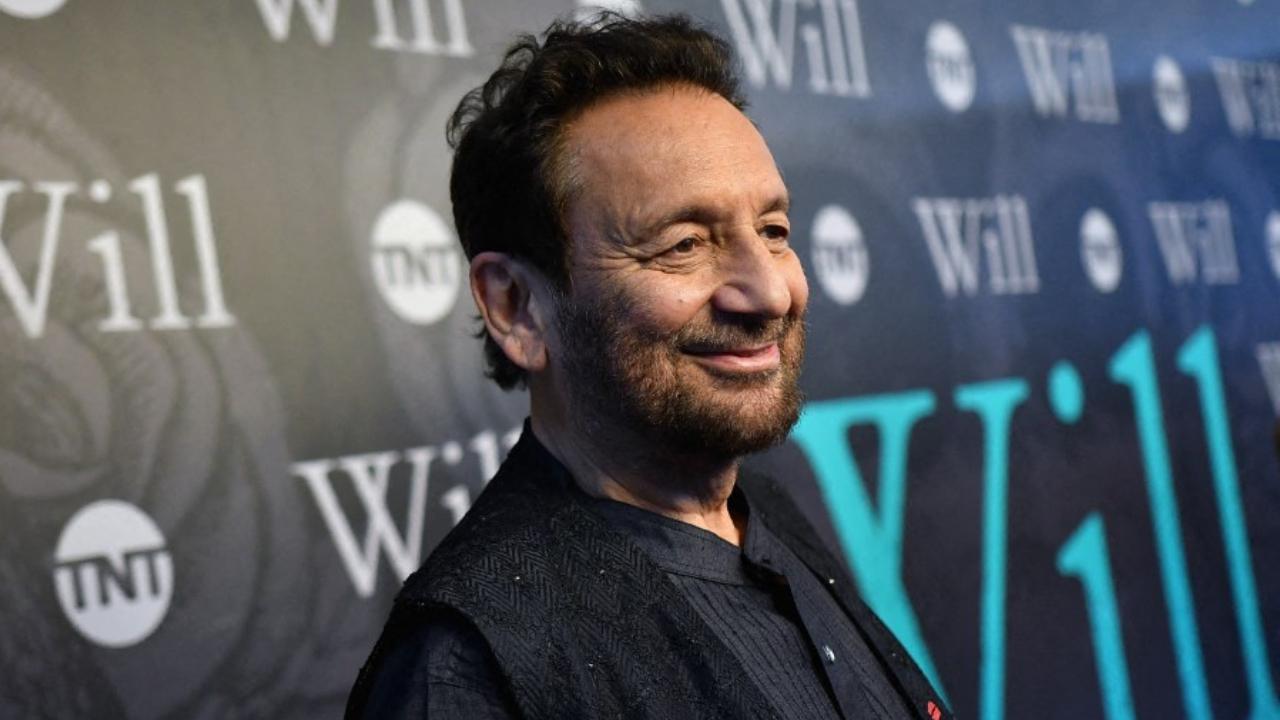
Niharika Lal (BOMBAY TIMES; April 8, 2026)
Shekhar Kapur is often asked when he will make another film like Bandit Queen (1994). The film, which won the National Award for Best Feature Film in Hindi in 1996, continues to stand out in Kapur’s oeuvre. But he has no plans to revisit it. “Kaise banaoon? Mar jaunga,” he said at the recently concluded International Film Festival of Delhi.
In a conversation with Vani Tripathi Tikoo, Artistic Director, IFFD, the filmmaker reflected on why he couldn’t imagine making another film like Bandit Queen, and how “everything about Masoom (1983) is Delhi.”
‘I APPROACHED BANDIT QUEEN FROM A PLACE OF GUILT – THAT I AM RESPONSIBLE FOR WHAT HAPPENED’
Discussing the journey of Bandit Queen, a film that chronicles the life of Phoolan Devi and lays bare the brutal realities of caste, gender violence and survival, Shekhar reflected on the emotional toll of making it.
“It’s difficult to describe the journey of Bandit Queen. I used to live in Nizamuddin at that time. I read about Phoolan Devi – it used to appear on the second or third page of the newspaper. Mujhe pata hi nahi tha ki yeh duniya hai kya. I didn’t know a world that existed right at my doorstep,” he said.
Shekhar elaborated how every film begins with an attitude. “Every filmmaker has to have an approach. I approached the film from a place of guilt – that I am responsible for what happened there. I have this tendency of becoming every character – as if it is me. Unless I become the character, I don’t know how to explain it to the actor.”
Discussing the everyday language used for girls, he told Vani, “In Punjabi, we say, ‘Kinni pyari hai, kinni soni hai, kinni sharmili hai’. Then I started thinking – this is the worst thing to say to a young girl. ‘Kinni sharmili hai’ means how submissive she is.” That thought shaped the film.
He shared, “Then I started asking – who am I in this film? I am a macho Punjabi man. It became a film that fundamentally said: rape is not a sexual act, it is an act of domination. It has nothing to do with sexuality.”
‘Bandit Queen was an expose of macho Shekhar Kapur’
At a certain point, he said, the film takes over. “Banate banate film ki ek marzi aa jati hai. And then the film takes over. You are no longer the director – you are following the dictates of the story.” After a pause, Shekhar spoke about filming one of the most difficult scenes of Bandit Queen.
He told the audience, “I was thinking for days – how do I shoot the gang rape scene? In films, such scenes are often shown as sexual. I sat locked in a room for two nights, trying to understand – what does it mean to be raped? What does it feel like? How do I shoot a rape scene and take the sex out of it? So, if you watch Bandit Queen – the scene is suggestive. Darwaza khul raha hai, band ho raha hai, log aa rahe hain – it’s all very suggestive. But I knew what was happening there. And so, while directing, I was constantly throwing up. The crew was watching me – ‘What is happening to him?’ I said, ‘Kal shoot karte hain, ab nahi ho raha.’ But they said, ‘Abhi shoot kar ke khatam karte hain.’ People ask me – ‘Bandit Queen jaisi film phir se kab banayenge?’ Kaise banaoon? Mar jaunga. I started hating myself, I hated myself during the shoot of Bandit Queen.”
After the film released, he recalled, even those close to him were unsure. They would tell him, “Film aise thode hi banti hai, Shekhar? Film mein gaane hote hain.” He said, “Par maine nahi banayi. Film ne khud ko banaya. Bandit Queen was an expose of macho Shekhar Kapur.”
‘Everything about Masoom is Delhi’
Speaking about Masoom (1983), Shekhar said, “Everything about Masoom is Delhi. At that time, Delhi was transitioning – from a bureaucratic city to a business city. Everyone I spoke to would say, ‘I do import-export.’ That’s how Saeed Jaffrey’s character’s profession came about. Masoom was not set in Delhi because it was easier to shoot there – it was because I knew these people.”
I was asked to replace the word chaddi from Jungle Jungle Baat Chali Hai-Gulzar
11:26 PM

Natasha Coutinho (BOMBAY TIMES; November 14, 2024)
Celebrated Indian poet, lyricist, author, screenwriter and film director Gulzar has penned iconic children’s songs like Lakdi Ki Kaathi from Masoom (1983), Jungle Jungle Baat Chali Hai from The Jungle Book (1989) and Panga from Makdee (2002), the latter two composed by Vishal Bhardwaj. Not many know that even the popular prayer Humko Mann Ki Shakti Dena from Guddi (1971) was written by him. On the occasion of Children’s Day, in a chat at his Bandra bungalow, Gulzar spoke to us about some of his favourite works for children.
‘Many are not aware that the lyrics of Humko Mann Ki Shakti Dena were written by me’
Gulzar explains that the idea behind the song was to portray what a young schoolgirl prays for and how she expresses her thoughts. He says, “Humko Mann Ki Shakti Dena went on to become the morning prayer at many schools. Many people don’t know the lyrics were written by me. I was recently working with Shaad Ali (director) at the recording studio, and he mentioned that they used to sing Humko Mann Ki Shakti Dena in school. He was taken by surprise when Shankar Mahadevan mentioned that the lyrics were written by me. If you speak from your heart, it reaches children. Back then, the great Indian poet Kedarnath Singh had told me, ‘Your work has gone beyond your name, which is a great thing.’”
‘Writing for children isn’t about getting the grammar right’
Talking about how he develops the idea that connects with children, he cites the example of Lakdi Ki Kathi (Masoom), a song that has resonated with children across generations. “The idea came from the thought that if you make a child sit on a walking stick and call it a horse, they know it isn’t real, but they still enjoy the experience because of their imagination. It’s also important to use places that they are familiar with, for example, they have heard their parents speaking about visiting the sabzi mandi (vegetable market) or Mehrauli and so on. So, the song must have a familiar environment. Writing for children isn’t about getting the grammar right, it’s about throwing grammar out of the window and connecting with the child’s thought process. Children enjoy tongue twisters, what we give them in textbooks is boring.”
‘I was asked to replace the word chaddi from the song Jungle Jungle Baat Chali Hai’
Recalling a controversy over the lyrics of another popular song, he shares, “NFDC had some objection to the lines, Jungle Jungle baat chali hai, pata chala hai, arre chaddi pehen ke phool khila hai (The Jungle Book, 1989).
“I was told, ‘Gulzar saab ab aap poetry mein chaddi bhi le aayenge.’ There was a silly suggestion to replace the word chaddi with lungi. I asked them if Mowgli in The Jungle Book had put on anything else throughout the film? Ab chaddi ko kuch aur bolenge? Vishal Bhardwaj (music composer for The Jungle Book) has a knack for understanding children, he made films like Makdee and The Blue Umbrella, but didn’t find encouragement from the trade. Vishal himself is a little child for me.”
‘I have been working with physically challenged children since 1972’
Gulzar shares, “Since the time I made Koshish in 1972, I have been working with physically challenged children. Every year these children come down from Bhopal and I walk with them at the Mumbai Marathon. These children feel so happy when they appear on television and that gives me immense joy, too. I wish to continue working with children till I’m alive.”
'Inspired to write poems during Covid'
He says, "I wrote a poem on a crow during COVID-19, when death was surrounding us, ambulances were constantly passing by, people were wearing masks but this crow near my house, was busy building it’s nest. Hearing the little crows caw was so inspiring. I ended up writing 14 children’s poems that were published by my friend Sushil Shukla with illustrations by Allen Shaw."
Photo: Prathamesh Bandekar
Masoom's sequel came from idea of what home means today-Shekhar Kapur
2:11 PM

Set to launch daughter Kaveri with Shabana-led Masoom: The Next Generation, director Shekhar Kapur says the second part will explore themes of relationships and family like the much-loved 1983 original
Upala KBR (MID-DAY; April 8, 2024)
In 1983, Shekhar Kapur made his directorial debut with the acclaimed Masoom, starring Naseeruddin Shah, Shabana Azmi, Urmila Matondkar and Jugal Hansraj. Little did the filmmaker know then that forty-one years on, he would direct its sequel as the acting debut for his singer-daughter Kaveri Kapur. Along with Shekhar, Azmi too will return to the film’s universe, playing Kaveri’s grandmother.
Masoom, which continues to be loved by audiences to this day, examined family and infidelity through a happy couple whose life changes drastically when a boy—who is the man’s illegitimate child—joins them. Shekhar says that the sequel, the working title of which is Masoom: The Next Generation, too will revolve around themes of family and relationships.
“It is not a continuation of Masoom. The story is based in India, and we will have two male protagonists along with Shabana and Kaveri as the female leads. We are working out the dates and cast,” says the director. If things go as planned, the project will roll in October 2024.
The thought of making another movie like Masoom always played in the filmmaker’s mind. It is only now that he found a fitting idea.
“Masoom: The Next Generation is my gift to the people of India, who have supported me for so long. It came from an idea of what home means to us today. To my mother, who was a refugee from Pakistan and had survived two earthquakes, it was more than bricks and mortar. Home meant family and memories to her. She wanted to build a home in Delhi that survives an earthquake. Today, my friends ask me to sell the house, but it’s an homage to my parents. Through my movie, I want to convey that home is an emotion, and within that, there is a family.”
Kaveri, like most of us, was deeply moved by the original. She says the sequel will focus on today’s generation and their issues. “I don’t know anyone in my generation who doesn’t have anxiety issues, and the script treats it with compassion.”
Being directed by her filmmaker-dad and sharing screen space with Azmi are experiences she is looking forward to. “It’s daunting to work with an actor of such international acclaim. But every time I meet Shabana aunty, I feel like I’m talking to a family member. My dad is constantly telling me that I have to bring who I am, to the part. I will also write and sing some of the songs,” she says.

I have never made a film which was a star vehicle-Shekhar Kapur
8:19 AM

Tanvi Trivedi (BOMBAY TIMES; February 19, 2024)
Filmmaker director Shekhar Kapur, who is known for his contribution to Indian cinema with masterpieces like Mr India and Bandit Queen, is all set to make a sequel to his 1983 directorial debut film Masoom. In a conversation with us, Kapur spoke about his inspiration for the sequel, his daughter Kaveri, who will make her acting debut with this project and how his films are all about the story, never the star. Excerpts:
You are making a sequel to your classic, Masoom, titled Masoom…The New Generation. What inspired you to do that after over four decades?
I have decided to make Masoom 2 - The New Generation for a reason. The story revolves around the next generation and their issues. The new generation is constantly thinking about who they are, where they are headed and so on. I want to make a film about them, their value system, how they relate to parents, single parents, and the entire debate about the old generation versus the new generation. There have been films on the new generation, but they have only touched the surface.
Your daughter Kaveri Kapur, who is a singer and songwriter, will make her acting debut in the sequel. Were you planning to direct her debut, or did this happen organically?
My daughter has been an artist for a long time and when I read her lyrics, I realized she is more of a philosopher. At her age, she talks about philosophy with Deepak Chopra. I have been discussing acting projects with her, but she kept saying, ‘No, that’s not me’. Then we watched a few Alia Bhatt films together, and she admired her work. That’s how she got interested in acting. I always knew she would act. When she was younger, I used to call her my entertainment machine; she would crack jokes and it is not easy being funny. She is talented like her mom (actress Suchitra Krishnamoorthi). The inspiration for the Masoom sequel came from Kaveri because she has often spoken to me about how their generation suffers from anxiety and how life is tougher as there are many opportunities, but the pressure is higher. I am currently writing her dialogues, but I hope that someone from her generation will share more about their issues. I don’t want my daughter to feel that I failed her. The film will also feature the old cast, including Shabana Azmi.
Among the many pressures that the current generation is facing, do you think social media ranks high?
Social media has definitely put pressure on Gen Z because it is creating an artificial aspirational life for them. Many young people I meet have become victims. People on social media keep sharing posts about how great their life is, which is not the reality. With ChatGPT and AI, it is a different life for Gen Z.
You moved to the West and made notable films in Hollywood. Looking back, do you think you could have made more movies in India?
In India, I agree (I did less work), but I did a lot of work abroad. I am proud of the fact that I worked with actors in Hollywood when they had started their careers, like Cate Blanchett and Heath Ledger (directed him in Four Feathers). After Bandit Queen, I figured that it was not easy to tell different stories. Now, with OTT, things have changed, and actors like Manoj Bajpayee are winning accolades. But, in those days, it was not possible to work with Manoj Bajpayee and make a film. You had to take a star, and when you work with a star, things change. I have never made a film which is a star vehicle, whether it is in the east or west. I have always worked on a movie where everyone is subservient to the film and story. Even when I worked with Sridevi in Mr India (1987), she was not a star; she had acted in Himmatwala (1983) and later became a star.
There has been a lot of speculation around a sequel to Mr India 2. Are there any plans?
I will never make Mr India 2 because I have already made the first part. But, I would not mind if they take another director and make the film and remember that the original was born because of the joy of filmmaking.
Big-ticket, tentpole films are ruling the box office today, while that’s great, do you feel we need to make more films that are socially relevant?
The big-ticket films do make sense because they are like a joy ride. But then, every now and then, we get a film like 12th Fail, and it reminds us how there are interesting films like these, too. I have enjoyed watching a lot of good content on OTT, like Panchayat, and many good writers have moved over to OTT platforms. I agree that social context is missing in films today, but then directors should be motivated to make films like Naya Daur and Pyaasa, which were so socially relevant.
Masoom wasn’t going to be my first film-Shekhar Kapur
8:24 AM

Rishabh Suri (HINDUSTAN TIMES; May 9, 2023)
Filmmaker Shekhar Kapur started his journey in the film industry with the 1983 film Masoom. Hence, 2023 marks his 40th year in Bollywood. He tells us that the Shabana Azmi and Naseeruddin Shah-starrer wasn’t going to be his debut film.
“My producer and I went to a financier to make a different film with a different story. My financier was into construction. While I was narrating my film, I saw him yawn. I noticed that his desk and shelf were full of pictures of kids. I thought, ‘this guy loves kids’. So, in the middle of that narration, I started telling another story. At that hour, I had to tell a different story to get the funding. I just kept building it on and the financier said, ‘That’s the film we are making’,” Kapur shares how the movie was ideated.
Today, the 77-year-old has films such as Mr India (1987) and Elizabeth (1998) under his belt. But would he have been able to pull off such a feat in today’s time, when scripts are treated as properties and everything is on paper for funding to pour in?
Kapur says, “Absolutely. It depends on how good a salesman you are. Today, every director has to be an entrepreneur. It’s your job, you have to do anything you can to get funding for your film.”
Sharing how filmmaking has changed, he adds, “I have been seeing some amazing stuff in the OTT space like The Family Man. So, makers do have the power to fight back. Every hungry man can’t get food. You have to fight for it. Creativity is our food and we have to fight for it.”

I don’t know why people still call me a Bollywood director-Shekhar Kapur
8:33 AM

Filmmaker Shekhar Kapur says he hasn’t made any projects in India for 30 years
Sugandha Rawal (HINDUSTAN TIMES; January 23, 2023)
Shekhar Kapur is back in the world of cinema with his Hollywood project, What’s Love Got to Do with It? The filmmaker’s last feature-length directorial effort was the Cate Blanchett-starrer drama Elizabeth: The Golden Age in 2007. He asserts that he might have been away, but he is not detached from Indian cinema.
“I haven’t made a film in India since Bandit Queen (1994). I don’t know why people call me a Bollywood director, unless you consider Mr India (1987) and Masoom (1983) Bollywood projects. I don’t know what describes Bollywood,” the filmmakers tells us in an exclusive interview, when asked about the long gap.
The 77-year-old continues, “It’s been 30 years since I made a film in India. I’ve been making films outside during this time. I’ve been doing theatre outside (of India). I teach at MIT. I have been a part of the World Economic Forum. I am an environmentalist. So, life was busy. Then I found time to make a film, found a script, and made What’s Love Got to Do with It?”
When it comes to the film, the cross-cultural project is led by actors Emma Thompson, Lily James and Shabana Azmi, and deals with the complexities of love, marriage, relationships and intimacy.
“When you see the film, you realise that at the end, the characters realise that we have to forgive, and be compassionate. Because relationships are not about saying, ‘I love you’.... Love is a mystery. It’s a question of exploring that sense of mystery,” he shares.
The film deals with the concept of arranged marriage in the age of dating apps, and the director admits that this became more of a reason for him to do the project: “We are all looking for intimacy in our lives. When we are born, we are put on our mother’s chest. That’s the first act of intimacy that a baby feels. When we die, we want to hold somebody’s hand. In between, we complicate things, like if I put my hand around my friend’s shoulder, we are dating. We developed these keywords that interfere with our desire and our need to be intimate.”
Explaining further, the filmmaker says, “In the film, one fundamental question is: how do you know if it will work if you haven’t had sex before marriage? When I was a chartered accountant, my mother took me to meet some girls. The question in my mind was, ‘How do I know if it will work unless I have had sex? What if sex on the first night was a disaster?’ There’s an exploration of how it might work the other way. I’ve asked them all my life.”
He has infused his memories of Lahore, Pakistan, into the films as well. But border tensions are something that continue to restrict the exchange of art between the nations. Ask him the same, and he says, “Art transcends boundaries, as it should.”
Vicky Kaushal was doing multiple things and still giving it his best shot. I learnt that determination from him-Samara Tijori
8:10 AM

Shaheen Irani (HINDUSTAN TIMES; July 9, 2022)
Ever since she made her debut with the film Bob Biswas, Samara Tijori has been a talent to look out for. The actor says she will “never forget” her debut. “The responses I got after Bob Biswas were insane, whether from the industry or from the audience. They told me they loved the character and really wanted to know what was happening in her life. That was so exciting as I played a character that wasn’t leading the film, but it still stuck with people,” she says.
Talking about her latest release, Masoom, she shares that it was challenging as well as fun. Tijori shares how the cremation scene really got to her, as it felt like her own mother’s last rites. Director Mihir Desai came up to her, laughed and asked her to “look at herself”, which snapped her back to reality.
While she’s the daughter of actor-filmmaker Deepak Tijori, her career was built with her own hard work. She auditioned for roles and was even out of work right after Bob Biswas. “I shot it at 24 and it released when I was 26. In that gap, I just auditioned and there were no [work] calls for months at a stretch,” she says.
Initially, she was confused between pursuing psychology and acting, and what helped her realise that acting was her true calling was assisting on Dishoom (2016). She was also inspired by actor Vicky Kaushal while assisting on Bhoot – Part One: The Haunted Ship (2020): “He was doing multiple things and still giving it his best shot. I learnt that determination from him.”
Where did the children’s songs disappear from Bollywood?
8:06 AM

On Children’s Day, industry insiders tell us that with fewer prominent kid characters in films and the focus on creating a hit song that caters to all segments, children’s songs are no longer considered essential or viable in Bollywood
Divya Kaushik (BOMBAY TIMES; November 14, 2021)
When curating a Children’s Day playlist, the most obvious selections are Lakdi Ki Kathi (Masoom, 1983), Nani Teri Morni Ko Mor Le Gaye (Masoom, 1960), Nanha Munna Rahi Hu (Son Of India, 1962), Hum Bhi Agar Bachche Hote (Door Ki Awaaz, 1964) and many others such classic tracks, that have remained a constant favourite with kids (and adults too!). Then came Chak Dhoom Dhoom (Dil Toh Pagal Hai, 1997), Chhota Bachcha Jaan Ke Hum Ko (Masoom, 1996) and Bam Bam Bole (Taare Zameen Par, 2007).
Once an essential part of Bollywood movies, the number children’s songs has gone down considerably in films, and the ones that are there could never match the popularity of songs like Lakdi Ki Kathi or Aao Tumhe Chand Pe Le Jaye. “There can never be a replacement for these old favourites,” says singer Udit Narayan, who has sung popular tracks like O Mere Papa The Great (Papa The Great, 2000) and Oh I Love You Daddy (Akele Hum Akele Tum, 1995), adding, “The reason is that the writing of those songs and the composition was so good that it connected with the audience of every age group, every generation. It is difficult to find those kinds of songs today.”

‘TODAY, THERE ARE FEWER MOVIES WITH PROMINENT KID CHARACTERS, THUS FEWER SONGS FOR CHILDREN’
Udit Narayan adds that when we talk about children’s songs in films, it is impossible not to talk about child artistes who would be an integral part of film plots earlier. But over time, as the role of child artistes in Bollywood stories reduced, songs specific to children were no longer needed.
Music composer and singer Salim Merchant adds, “Even the projection of kids has changed. Take the example of movies like Dangal or Bajrangi Bhaijaan, both of which features kids in prominent roles, but the storyline was communicating something that is not specific to only kids. So children’s songs today do not really fit in most of the stories that we are narrating in our films. There are fewer stories or situations which would demand such a song.”
Lyricist Raj Shekhar, who made his Bollywood debut with Tanu Weds Manu and has written children’s stories, says that in films he grew up watching, kids were an important part of stories. “What I liked was that they were treated as an important character, not a supporting element in the film, and even the songs were written keeping this in mind. If you take the example of the song Hum Laayein Hain Toofan Se Kashti Nikal Ke (Jagriti, 1954), the song is addressed to children. When that scenario changed in films over time, even writing for kids reduced, which I think is sad. We are failing in giving the present generation music that is written exclusively for them,” he says.

‘TODAY, THE FOCUS IS TO AT LEAST GET ONE COMMERCIAL HIT FROM A FILM AND A KID’S SONG CAN’T BE THE PITCH’
In times when social media hits decide the fate of songs, a lot of effort goes into making music that can be a commercial hit and also gain traction online. “In such a scenario, creating a kid’s song feels like a risk when the movie is not about them,” says singer Javed Ali, adding that out of many songs offered to him, he has barely sung two-three tracks which were for kids. “Not just me, this will be the case with all the singers, as there are hardly any songs being written for kids. These specifics that were once an important part of films — like a Holi song, Raksha Bandhan song or Diwali song — are becoming rare. Even if films have them, most of these songs just come and go.”

‘SONGS ARE CREATED OR AUDIENCE AT LARGE, NOT FOR A SEGMENT’
“Let’s not forget to talk about the changing preferences and choices of modern kids,” says Salim Merchant, adding, “I have seen kids in my own home and once they grow out of their nursery rhyme phase, what they consume are songs which are for adults. The songs that are created today in films can’t be created for any segment. To make them popular, it is important that they are created keeping in mind the larger audience, which also includes kids.”
FOREVER FAVOURITE KIDS’ SONGS FROM HINDI FILMS:
- Nani Teri Morni Ko Mor Le Gaye (Masoom, 1960)
- Lakdi Ki Kathi (Masoom, 1983)
- Nanha Munna Rahi Hu (Son Of India, 1962)
- Phoolon Ka Taaron Ka (Hare Rama Hare Krishna, 1971)
- Chanda Hai Tu Mera Suraj Hai Tu (Aradhana, 1969)
- Aao Tumhe Chand Pe le Jaayein (Zakhmee, 1975)
- Hum Bhi Agar Bachche Hote (Door Ki Awaaz, 1964) \ Railgaadi (Aashirwad, 1968)
- Ichak Dana Beechak Dana (Shree 420, 1955)
- Re Mama Re Mama Re (Andaz, 1971)
- Dadi Amma Dadi Amma Maan Jao (Gharana, 1961)
- Bachche Man Ke Sacche (Do Kaliyan, 1968)
- Hum Laayein Hain Toofan Se Kashti Nikal Ke (Jagriti, 1954)
- Chanda Mama Door Ke (Vachan, 1955)

Main hi tha jo ladta tha ki Sridevi ko National Award mat do-Shekhar Kapur
8:14 AM

Niharika Lal and Rachana Dubey (BOMBAY TIMES; April 14, 2018)
 While addressing the press conference for the 65th National Film Awards, jury head Shekhar Kapur said that after films continuously watching for 10 days, his opinion about the quality of Indian cinema has changed. Shekhar said that even though regional cinema doesn’t have “a Shah Rukh Khan”, Hindi cinema doesn’t come close to it.
He said, “Maine Hindustan mein last film banayi thi Bandit Queen, usske baad maine yahan koi film isiliye nahi banayi because I wanted to make better films. For years, I have been watching Hindi films and I’ve been saying, ‘it’s not good enough’. Main kyun wapas aaya? Kyunki aage badhna chahiye, naye challenges lene chahiye. After 10 days of watching films from 9am to 3am, it has changed everything. I was wondering about the quality of films — not of Hindi cinema, but regional cinema, the cinema that has never come up before. I didn’t even know Lakshadweep mein filmein banti hain. Main nahi janta tha ki Assam mein aisi films banti hain. Mujhe nahi maloom tha ki Bengali films itni aage badh chuki hain.”
About the selection process for this year’s winners, Shekhar said, “There was no award which was not debated. Bahut aasaan hai award dena — chalo kisi ko bhi de do. Mujhe 12 saal lage thay Masoom banane mein, idhar se bheekh maang kar, udhar se bheekh maang kar. Regional cinema ke paas Shah Rukh Khan toh hai nahi! Ghar se chori karte hain, ghar se bhaag kar film institute chale jate hain aur phir jod-jod kar film banate hain. We took no film lightly.”
He also explained the choice for this year’s Best Actress award, which was posthumously given to Sridevi, saying, “Don’t think we are giving the award to Sridevi because I am part of the jury”. Shekhar added, “Main hi tha jo ladta tha ki Sridevi ko mat do. Because we are all emotionally involved with Sridevi. But I used to say, don’t give her the award because she passed away, because otherwise it is unfair to the others. Unki kya galti hai, they have also worked hard for 9-10 years to reach here. But each time, it came back to Sridevi.”
----------------------------

This was long overdue for Sri. I wish she was here to hear the news and collect the award herself. It pains me to think that I will have to collect it on her behalf. Wherever she is today, she must be smiling.I miss my jaan every day and today, I’m missing her even more. Sri had worked so hard for Mom. She put life into every scene. She stayed away from me while shooting to avoid distraction; she wanted to concentrate on portraying the emotions correctly. I thank God and the jury for acknowledging her hard work
– Boney Kapoor, Sridevi’s husband and producer of Mom
----------------------------

This is my first National Award.This award is very special for me because I lost my mother while working on Irada. My mother and other well-wishers have always said that I deserve a National Award. So, their reactions to my win are making me feel euphoric. I am totally overwhelmed. This is the ultimate award.
– Divya Dutta, Best Supporting Actress, Irada
The 65th National Film Awards:
1.BEST DIRECTOR: Jayaraj (Bhayanakam)
2. BEST BOOK ON CINEMA: Matmagi Manipur. (This is the first time that a book on Manipuri films has got an award)
3. BEST FILM CRITIC: Giridhar Jha
4. SPECIAL MENTION: Marathi Film: Mhorkya; Odia film: Hello Arsi; Malayalam: Take Off; Pankaj Tripathi for Newton
5. BEST REGIONAL FILM: Ladhakh
6. BEST MARATHI FILM: Kaccha Limbu
7. BEST MALAYAM FILM: Thondimuthalum Driksakshiyum
8. BEST HINDI FILM: Newton
9. BEST BENGALI FILM: Mayurakshi
10. BEST ASSAMESE FILM: Ishu
11. BEST TAMIL FILM: To Let
12. BEST TELUGU FILM: Ghazi
13. BEST GUJARATI FILM: DHH
14. BEST ACTION DIRECTION: Baahubali 2
15. BEST CHOREOGRAPHY: Gori Tu Latth Maar from Toilet - Ek Prem Katha (choreographer, Ganesh Acharya)
16. BEST SPECIAL EFFECTS: Baahubali 2
17. SPECIAL JURY AWARD: Nagarkirtan (Bengali)
18. BEST LYRICS FOR SONG: Muthu Ratna, for Kannada film March 22
19. BEST MUSIC DIRECTION: A R Rahman for Kaatru Veliyidai
20. BACKGROUND SCORE: A R Rahman for Mom
21. BEST MAKE-UP ARTISTE: Ram Razak for Nagarkirtan
22. BEST PRODUCTION DESIGN: Santosh Rajan
23. BEST EDITING: Rima Das (Village Rockstars)
24. BEST SCREENPLAY ORIGINAL: Thondimuthalum Driksakshiyum
25. BEST ADAPTED SCREENPLAY: Jayaraj
26. BEST FEMALE PLAYBACK SINGER: Shasha Tirupati ( Vaan Varuvaan song)
27. BEST MALE PLAYBACK SINGER: Yesudas
28. BEST CHILD ARTIST: Bhanita Das (Village Rockstars)
29. BEST FILM ON SOCIAL ISSUES: Aalorukkam
30. NARGIS DUTT AWARD FOR BEST FEATURE FILM ON NATIONAL INTEGRATION: Dhappa

Original Lakdi Ki Kaathi girl Urmila Matondkar to launch new version
8:01 AM

Shaheen Parkar (MID-DAY; May 16, 2017)
Urmila Matondkar will come out of her self-imposed hibernation on Thursday to launch the new version of the Lakdi Ki Kaathi track from her 1983 film, Masoom. The iconic children’s track is being reprised in Ruchi Narain’s animation flick, Hanuman Da Damdaar, which has Salman Khan, Kunal Kemmu, Raveena Tandon and Chunky Pandey doing voice-overs.
Written by Gulzar with music by RD Burman, the original was sung by a bunch of kids. The rehashed version has been composed by Abhishek Arora and crooned by a few child singers.
Ruchi, who scripted Hazaaron Khwaishein Aisi (2005) and directed Kal – Yesterday And Tomorrow (2005), says she was initially apprehensive about approaching Urmila to unveil the song. “To my surprise, she agreed. Both the film and song are special to her.”
Ruchi recalls how Urmila had offered help to her, a complete stranger, when she once faced ticket issues at the Mumbai airport. “She came to my rescue as a co-passenger even though she did not know who I was.”
Urmila has been away from the scene since long and secretly tied the knot with Kashmiri model- turned-businessman Mohsin Akhtar Mir in March 2016.

Om Puri had no right to mistreat himself-Naseeruddin Shah
8:47 AM

Meena Iyer (MUMBAI MIRROR; February 10, 2017)
Naseeruddin Shah’s name still adds a certain gravitas and even excitement to a film; though his roster recently has more misses than hits. On the eve of the release of an upcoming social thriller, the veteran actor, known for his candour, admits to his follies, opens up about his late friend and reveals why he wants to give Shaad Ali a hug.
Irada releases a week from now, any thoughts on it?
I’m anxious because I will be held responsible for the quality of the film. It’s a grim thriller and hopefully will be accepted like A Wednesday. It has a couple of good twists and a socially relevant subject, talking about the poisoning of the soil and water by chemical industries and how it even affects the common man who drinks a glass of the contaminated water.
You once famously said that films are not arty or commercial but good or bad. Knowing this, how do you justify your mediocre choices?
Over the last few years, my output has not been outstanding, only Waiting turned out well. Some of the films I did for obvious reasons but it’s become embarrassing. Take Charlie Kay Chakkar Mein, which I did out of a sense of loyalty to a couple of my students who claimed they did not have any money. I agreed to a two-day appearance which stretched to five days and ultimately I ended up as the villain which I was not supposed to be in the first place. It was a dreadfully embarrassing movie which I couldn’t sit through myself. One review even said, ‘Naseeruddin Shah has now become the Messiah of mediocre cinema.’
It’s good that you can laugh about this?
Yes, of course. I did good films like Dedh Ishqiya which didn’t fare well and ghastly ones like Jackpot which deserved to flop. There were films like Dirty Politics, Bolo Raam and some whose titles I don’t remember which I did for various reasons. A couple were made by cash-strapped friends who needed a name to sell their projects. After 40 years of doing cinema, this is not a good enough reason for shoddy work.
So you agree you should be more discerning?
Yes, but there’s no way you can tell whether a movie will turn out to be good or bad. I had never heard of Neeraj Pandey before I did A Wednesday yet it’s one of my most memorable films. Ditto Shoaib Mansoor of Pakistan but again Khuda Kay Liye turned out good. Who was Shekhar Kapur before he made Masoom? It’s the roll of the dice. I am not embarrassed to admit that I’ve done a lot of movies for money. That is what we all work for. But there have also been cases where the money does not matter. Irada is one such film I’ve done because I believed in it.
But money is important to you?
I seriously suspect money can buy happiness but I’ve been a happier person since I started earning enough than when I was broke. I appreciate money and I work for it. I don’t expect something for nothing which is why I do not gamble. Money doesn’t solve every problem but it makes life easier and it’s better to have money than not have it.
Is there something like a typical day in your life?
No, there isn’t. Sometimes I wake at the crack of dawn, sometimes not until noon. It depends on bodily fluids and what I have lined up. I haven’t green-lit too many films and ideally I like to start my day with a game of tennis. Till a couple of years ago I was a cricket addict, now it’s tennis. I’ve been forbidden to play cricket and ride horses. I cannot even exercise because my back has given way.
Do you advice your children on the kind of work they should undertake?
You cannot influence or control your children’s lives. Parents overrate their influence. My parents had no control over me though they tried everything. I know better than to try to live my children’s lives for them. My only prayer for Imaad, Heeba and Vivaan is that they are happy and successful in whatever they do.
With Om Puri gone, you seem to be the only custodian of a certain kind of cinema…
Yes, I’m the sole survivor. Om is gone, Farooq (Shaikh) is gone, Amrish (Puri) is gone… It feels strange. I’m angry with Om, deeply grieved that he didn’t look after himself. He had no right to mistreat himself. But on second thoughts, who knows what he went through?
You couldn’t sit through OK! Jaanu because you were deeply disturbed by Om’s death, right?
Shaad Ali invited me to a preview a couple of days after Om passed away. I was deeply disturbed and left shortly after the film began. I’ve heard disappointing reports. I thought Mani Ratnam’s film was enjoyable and at a loss to explain what went wrong with the Hindi version. Shaad is sincere and worked hard, as did everyone else. I want to give him a hug because he must be feeling low. No one should feel like s**t after they’ve worked hard on something. He is a lovely chap! As that book on screenplay writing says at the end, no one knows a damn how things will work out as far as a film goes. After writing 400 pages on how to work on a winning screenplay, the last sentence is — no one knows a damn! That’s what filmmaking is all about.
During Masoom, I knew Urmila Matondkar would be a heroine; she danced like a pro-Shabana Azmi
7:42 AM

Roshmila Bhattacharya (MUMBAI MIRROR; November 24, 2015)
Shabana Azmi remembers Shekhar Kapur as a compulsive storyteller. "There was a joke in our family, "Bhago bhago Shekhar aaya hai, phir kahani sunayega!" That didn't deter him, he'd carry on undaunted!" she laughs, adding that he narrated the stories so cinematically, she was convinced that he'd make a good director even though he'd had no formal training or assisted anyone.
Devi Dutt, Guru Dutt's brother, who'd worked with her as production manager on many Shyam Benegal's films, wanted to cast Shabana in his first production. She suggested Shekhar's name as director and he debuted in 1983 with Masoom. It revolved around a couple DK and Indu (Naseeruddin Shah and Shabana Azmi) whose lives are disrupted with the appearance of Rahul (Jugal Hansraj), the 'proof' of DK's infidelity when Indu was pregnant with their first-born Rinky (Urmila Matondkar).
"Shekhar started with a long, complicated trolley shot to establish the hustle-bustle in the office where Naseer worked. It took several takes to get it right but the crew was visibly impressed," Shabana narrates.
A couple of days later, he decided to film the song "Huzoor Is Kadar Bhi Na Itra Ke Chaliye" without a choreographer and Shabana was aghast because Shekhar was not known for his dancing skills. She knew that having acted opposite him in Toote Khilone. "Naseer and Saeed Jaffrey were no Rudolf Nureyev either so I was certain he was on a suicide mission. He kept saying, 'Trust me, I just want them to indulge in some tomfoolery, choreographed steps will make the whole thing fake!' He was right. I saw Naseer and Saeed shed their inhibitions and have such a blast that the song continues to be a favourite even today at parties thrown by friends my age," Shabana admits.
Shekhar and Naseer hit it off really well and the children - Jugal, Urmila and Aradhana -- adored him. But Shabana wasn't entirely comfortable with her director. She complained to Naseer that he treated her like Dresden China. She argued that if he didn't like a shot he should say so upfront instead of handling her with kid gloves. He reasoned that Shekhar wanted his actors to feel protected and secure. "So don't force him to adopt a manner that's not instinctively his!" he warned. She kept grumbling.
She modelled Indu on a friend, Sushma Motwane, and visited her at home to observe her closely. "Delhi women are different from Mumbai women. I can't put my finger on it but it helped that I had a real person I could base Indu on," she acknowledges.
Bijon Das Gupta, a family friend, was the art director, and Shekhar encouraged her to personalise Indu's room so it felt like a home and not a set. "Have a box to put away your jewellery every night, a place to bring out the quilts from," he advised. She was delighted with a director who cared about details when dressing tables in mainstream films had the standard eau de cologne bottle, Ponds talcum powder, Charmis cold cream and black comb pulled out of the make-up dada's bag. Shekhar's ex-wife Medha was his assistant and in charge of the kids' costumes. She took pains to make them look authentic. Gulzar's dialogue was shorn off all artifice, with Shekhar borrowing the "You stupid" phrase from his nieces and adding it as a refrain the sisters, Rinky and Mini, hurl at each other.
Shabana confides she knew right away Urmila would be a 'heroine' as she danced like a pro, was always prepared, posed and sensitive. "The scene where she opens the door to find Naseeer and me fighting is etched in my mind. Years later, she played my daughter in Tehzeeb and confides in me like a daughter," she smiles.
The real hero was Jugal who looked like a beautiful wounded deer. Shekhar spent hours on the scene where he walks into the house for the first time. "Shekhar resisted the temptation of taking close-ups of the actors' faces. Instead he made me stand on the top of the staircase looking cold and forbidding, Jugal at the bottom looking helpless and unwelcome, Naseer guilty and unsure and the daughters awkward. The tension in the scene is palpable because the camera holds the frame in long shot," Shabana reminisces, saying 30 years later, people tell her Masoom is their favourite film. "Even kids like me though my character is so harsh with the young and innocent. I'm not complaining!"
Masoom 2 in the making?
7:41 AM

Shekhar Kapur is apparently writing the sequel to his 1983 classic
Gaurav Dubey (MID-DAY; October 21, 2015)
There may be no progress in Shekhar Kapur’s long-in-the-planning ambitious project, Paani, but speculation about a remake of his directorial debut, Masoom (1983) is doing the rounds again. The Naseeruddin Shah- Shabana Azmi classic was a desi retelling of Erich Segal’s bestseller Man, Woman and Child.
 Says a source, “When Kapur visited a city college last year, several students requested him to make Masoom’s sequel. After giving it some thought, he decided to develop a script. He even tweeted about his intentions to make the sequel.” Kapur’s post read: “Mr India 2 or Masoom 2? Just come out from an amazing interaction with students. Clamouring for a sequel. Equal votes. How would u vote? (sic).”
While the director remained unavailable for comment, a source close to him confirms that Masoom 2 is in the works. “The scripting is underway; nothing else has been finalised so far. An official announcement only after the casting and other logistics are worked out,” adds the source.
Lakdi ki kaathi girl Aradhana Srivastav all grown up; traced in Delhi
7:53 AM

Vickey Lalwani (MUMBAI MIRROR; February 7, 2014)

After Masoom, unlike her onscreen siblings, Aradhana just vanished into the blue. Mirror tracked her down to Delhi where she’s living with her husband, Prashant Kaura, and their child. And the media shy young woman had to be really coaxed into giving this interview.
Rewind to 1982 when playful Aradhana accompanied her father to writer-lyricist-composer Gulzar’s house. He recommended her name to Shekhar Kapur to play the youngest child in his 1983 Indianised cinematic adaptation of Man, Woman and Child. And before she could understand what was happening, she was in the film and had found a mother figure in Shabana who fondly called her Ijji-Bijji.
After Masoom, Aradhana was seen in V. Shantaram’s Khuda Hafiz with her Masoom co-star Urmila, (she did her own playback in this movie) and Ram Terey Kitney Naam with Sanjeev Kumar, Rekha and Vinod Mehra. She also featured in two ad films. But the films flopped and Aradhana faded away from public memory.
“I went back to my studies in Kanpur. Due to my stint in the movies, academics had taken a backseat and my parents wanted me back on track,” she reminisces.
She completed her studies at Pune’s Symbiosis College of Arts and Commerce and then took up an IT job but soon realised her heart was not in it. So she went ahead and did her Masters and got a PhD in Hindustani vocal music.
In 2002, she got married to Prashant, who runs a boutique investment advisory firm which specialises in raising institutional money in real estate. The couple have no links with Bollywood. Doesn’t she miss the glitter and the glam? “Not at all,” she says. “I don’t even see many movies apart from those starring Aamir Khan and Farhan Akhtar. I was always more interested in music. I had sung a bhajan on stage even before I was cast in Masoom.”
Today, Aradhana is teaching music in one of the best schools of the country. She points out that they put up at least five productions in a year, besides other stage shows and fundraisers, admitting that she did try to get a job with a music company but soon realised that her idea of music was not cutting albums or signing three and five year agreements. “But I have written the lyrics for the Delhi anthem, One Billion Rising, set to music by Karsh Kale and Gaurav Raina.”
She says she will continue with her musical journey. “My daughter loves music and dance and has a flair for acting too. She has seen Masoom and loves Lakdi ki kathi,” she laughs.
“I’m in touch with only Shekharji. Urmila and I kept writing to each other for nearly four years after Masoom. But then…” her voice trails. Then... Aradhana disappeared till Mirror resurrected her in public memory.
Subscribe to:
Posts (Atom)