Showing posts with label Maria Goretti. Show all posts
Showing posts with label Maria Goretti. Show all posts
Missing the beat: MTV’s OG crew recalls their wildest years
10:58 AM

’90s kids remember when MTV was the boss of cool. Malaika hosted Loveline, Cyrus hosted Bakra. As MTV shuts down some of its channels globally, we’ve hit Rewind
Rachana Parekh (HINDUSTAN TIMES; February 27, 2026)
First, let’s get one thing out of the way. MTV is going nowhere. Last year, Paramount Global announced that in some countries, the channel will stop broadcasting by December 25. Millennials around the world dropped their TV remote in panic. Turns out, the company was referring only to sub-channels such as MTV 80s, MTV 90s, Club MTV and MTV Live. Regular MTV continues, in India too, though we’re not sure who’s really watching.
The channel has been playing here for 30 years. At its peak, MTV was that glorious spot that filled the years between Chitrahaar on Doordarshan and YouTube on the internet. How else were Indians to know that Michael Jackson was the monster all along in his Thriller video? Or that Milind Soman was going to pop out of the wooden box in Alisha Chinai’s Made In India? Or that it was two grandpas who were actually singing Macarena?
Right off, MTV was always more than music. For a generation coming into its own in the 1990s, it was a rebellious older sibling who spoke their language, played their anthems, understood their angst. Sure, MTV played rock, pop and hip-hop. But it also taught a generation how to speak, dress, joke, rebel and belong.
Mumbai writer Shubarna Mukherjee Shu, 43, remembers sitting in front of the living room TV in 1999, landline in hand, when MTV’s Most Wanted played the top songs of the moment. “My friends and I would be on a conference call, collectively praying,” for any song from the Backstreet Boys’ album Millennium to air. “When they finally played one, we’d scream-sing along on the phone. It made our day.”
This kind of magic didn’t happen by chance. Here’s how it all was all part of a grand design.
Forever young
MTV India announced itself with swagger. In January 1996, Slash from Guns N’ Roses flew to Bangalore to jam with Indus Creed at the channel’s launch. Months later, MTV partnered with Michael Jackson for the Mumbai stop on his HIStory World Tour. There was an 11-city roadshow, MTV Get It, making stops on college campuses and getting a sense of what young India was all about.
“The Indian music industry was not developed,” says Seher Bedi, who joined MTV in 1995 as a producer, one of the first employees at the channel. “We had singers and bands, but no music videos. Outside India, nobody knew these artists existed.”
The team started from scratch, shooting videos, packaging live gigs, creating sets. “In that first year, the buzz was insane,” Bedi recalls. “Audiences went crazy when we just showed up to record concerts.”
The graduating class of Indian pop — Alisha Chinai, Daler Mehndi, Lucky Ali, Shaan and Sagarika, KK, Sonu Nigam, Euphoria, Colonial Cousins, Indian Ocean and more — all built their fame on airplay on MTV, and rival Channel [V].
“A R Rahman wasn’t known outside the south then,” recalls Cyrus Broacha, who hosted shows on the channel until 2008. “We were shooting Maa Tujhe Salaam in the desert, and I told him, ‘Bring that bag from the corner.’ I had no idea he’d become this colossal figure. Back then, he was just a colleague.”
International music was funnelled into simplified segments: Unplugged for acoustic recordings; Alternative Nation for indie and alt genres; Headbangers Ball for noisy metal and rock; Select for viewers requests. And, in a move that left Millennials ever grateful, MTV flashed the song’s name, artist, album and often the video director, with every play. What a time to be alive!
“The channel’s high-energy aesthetic left its mark on advertising, film, comedy, graphic design — everything. Show business as we know it today wouldn’t exist without it,” says Alex Kuruvilla, who led MTV India between 1999 and 2006. They called viewers the MTV Generation – kids who chomped on burgers, dared to wear jeans with kurtas, got bored in three minutes (the average length of a song), mourned Kurt Cobain, rapped to Baba Sehgal and knew the difference between RHCP and RATM.
The OG influencers
India needed a little hand-holding to process these new sounds. Enter VJs (video jockeys), young super-confident Indians who dressed stylishly, had radical opinions and jabbered between the songs. It was immediately the coolest job in the country.
“Rahul Khanna was based in Singapore then, so Tara Deshpande and I were technically the first local VJs,” Broacha says. In 1997, Malaika Arora joined to host Club MTV and Loveline. The same year, MTV launched its nationwide VJ Hunt, and discovered Maria Goretti and Nikhil Chinapa.
“I almost didn’t go,” recalls Goretti, who was a model then, and got asked to audition in the last week of the hunt. “I thought maybe they just needed more people on stage. My sister pushed me. I won. It changed my life.”
Chinapa, an architecture student, had been hosting radio shows and live events for pocket money in Bangalore. He participated on a whim. “Anything that popped up, I’d try,” he says. He moved to Mumbai, started off with hosting Select, eventually leaving to set up the Submerge and Sunburn music festivals and shape the channel VH1 Supersonic.
The job looked like fun, but it was relentless: VJs shot links, hosted on-ground events, visited colleges, met brand partners and distributors, attended parties. The pay was modest; the real currency was access — to artists, to ideas, to a rapidly globalising world.
“I don’t think any of us realized how much impact we were having,” says Shenaz Treasury, who hosted MTV Most Wanted and MTV Chillout and moved on to MTV Asia. “It hit me later, when people in Singapore would recognize me on the street and tell me how MTV shaped their style, humour, even their slang, that MTV was bigger than any one show.”
Beyond the music
In 1998-99, the channel went mainstream, including Hindi music in its programming. “While the brand’s DNA was global, everything else – the IPs, programming, the shows, the marketing was hyper local,” says Kuruvilla. “MTV took pride in its local successes.”
It’s most enduring hit: Bakra, in which Broacha essentially pranked unsuspecting folks on camera. No one was exempt – not even movie stars and cricketers. The MTV generation was fearlessly laughing at itself, at others, at life. It spawned 13 competitors within six months and ran for over a decade.
Broacha recalls feedback from an unexpected fan: “Someone called my landline and said, ‘Bal Thackeray speaking,’ He spoke clearly, in English, and said, ‘I just wanted to tell you I love this show. I stop all our meetings at 3.30 to watch it. Keep up the good work’.”
The channel took Indian music to the world. In 1999, Bedi was sent to New York to cover the MTV Video Music Awards, where A R Rahman won the International Viewer’s Choice: MTV India for Dil Se Re, the title track from Mani Ratnam’s Dil Se. “We shot with him across the NYC talking about his favourite places and music,” she recalls. “Later, we took Colonial Cousins to MTV London for the first Unplugged.”
Mini Mathur, VJ between 1999 and 2003, recalls interviewing Richard Gere at an Aids concert, stepping in last-minute to interview Deep Purple, and hosting Aamir Khan alongside the cast of Lagaan.
“The actors were nervous – it was their first big interaction with cameras. I moved easily between English and Hindi, and Aamir looked at me with respect.”
Goretti recalls being part of Gaana Masti, which parodied popular music. “Cyrus and I spoofed an Urmila Matondkar song. We also did Koi Mil Gaya: Mini was Rani Mukerji, Cyrus was Shah Rukh, and I was Kajol. Mad stuff!”
YouTube launched in 2005, Spotify launched worldwide in 2008 (and in India in 2019). Music videos, MTV’s lifeblood, were now free and on-demand. So, it pivoted to reality shows. It was a new MTV generation, one that dreamed of making it to Roadies and Splitsvilla, who understood the power of their own stories and voice.
“When people auditioned, they’d talk openly about trauma – facing abuse for being gay, skinny, fat, identity,” says Chinapa. “We encouraged young people to speak.”
We no longer need VJs, handholding or a chance to speak. We’re doing it all ourselves, editing, adding filters and clapping back at trolls. But MTV’s spirit – Indian yet international, irreverent but honest – it will take more than a channel shutdown to stamp that out.
How MTV's VJs defined pop culture before the arrival of influencers
9:34 AM

MTV India VJs who became style and cultural icons. (From left, seated: Malaika Arora, Cyrus Broacha, Maria Goretti, Shenaz Treasury, Mini Mathur, (standing) Cyrus Sahukar, with former MTV producers Seher Bedi and Preeta Sukhtankar
In India, the M(usic) had gone out of MTV long ago. Now, the channel is shuttering its music channels in Europe. But its VJs, who had made TV cool, have banded together and are now making everyday life look cool, one reel at a time
Mohua Das (THE TIMES OF INDIA; October 16, 2025)
After four decades of shaping youth culture and late night channel surfing, MTV is finally turning down the volume. But while MTV channels abroad — its parent, Paramount Global, announced on Oct 12 that MTV Music, MTV 80s, MTV 90s, Club MTV and MTV Live will go off air by the year-end — prepare for their swan song, MTV India remains alive. The catch? Here, the music died a while ago, somewhere between the last CD shop and the first streaming app.
What it left behind was a tribe of OG video jockeys (VJs) who defined pop TV and then outlived it.
Nearly four decades later, the faces that once invented what it meant to be young, loud and slightly ridiculous on Indian television — Cyrus Broacha, Cyrus Sahukar, Shenaz Treasury, Nikhil Chinapa, Malaika Arora, Maria Goretti, Mini Mathur, and others — have regrouped for an encore.
There’s a reason for that. The nostalgia had never really left. Every time a former VJ posts an old clip, comments flood in. “If you grew up in the ’90s, we were part of your life,” says Cyrus Sahukar. That shared history still binds the old gang.
“Everyone’s in touch and hangs out quite a bit. It feels like home,” says Shenaz.
The old MTV crew have remained unusually close now that ‘home’ has a new address: Instagram. Under the banner of Bratpack Studios, the collective they launched in Aug 2024, they’re doing what they’ve always done best — talking, laughing, oversharing, and making everyday life look cool.
The studio serves up weekly drops of music, travel, food and laughter but, more than anything, the nostalgia of everything they once stood for.
Back then, each VJ was a one-person brand before influencer culture even had a name. Its hosts introduced not just songs but a new way to talk, dress and laugh. While Doordarshan gave you discipline and family values, MTV gave you Cyrus Broacha in a short skirt and heels who got himself waxed for a Women’s Day gag.
For Nikhil Chinapa, the architecture graduate who won the VJ Hunt, MTV was never just a channel but an awakening. “I’ve met people from small towns who watched MTV and realized there was a world outside their world.”
One was rapper Raftaar, whose mother pointed at Chinapa on TV and said, “He’s from South India, too, so you can do it.”
“I’m not saying I’m the reason Raftaar became Raftaar,” he grins, “but that’s the kind of permission MTV gave.”
That sense of possibility was infectious. “There was a guy called Vishal from Bihar who stole cable TV from a neighbour’s house to watch MTV and later became its executive producer.”
To Chinapa, that was MTV’s real legacy. “It became an accidental torchbearer for empowerment. Through shows like Roadies, MTV spoke about gender equality, same-sex acceptance, even abuse within families but never in a preachy way.”
Shenaz, the bubbly boho face of MTV Most Wanted, still remembers how it began. A St Xavier’s student, she was spotted through an ad audition.
“I auditioned for Club MTV... Malaika got that, and I became her stylist, and also Broacha’s,” she recalls.
Within months, she had an offer from Singapore Airlines, but her boss convinced her to stay: “He said, ‘Either you see the world or the world sees you’.”
That spontaneity defined the era — a brief, unselfconscious decade. “Most Wanted didn’t have a director telling us what to do. I just did my own thing... I used to shoot 10 shows a day.”
That DIY energy served as training for the creator economy she works in now. “I learned filmmaking through MTV... producing, editing, everything,” she says.
Age Of Irreverence
Broacha — MTV’s original prankster — was the accidental VJ, a theatre kid who nearly joined Channel V in Hong Kong before MTV offered him a reason to stay home.
“In 1996, MTV wanted regular guys. The others were models, too good-looking, strange accents... I looked like a boy with no hope... so I represented a lot of boys with no hope,” he laughs.
Looking back, he shrugs with affection. “Fourteen years at that damn channel, getting paid nothing; of course, it shaped me. Being MTV VJ was a badge of honour. I’m embarrassed to admit it because it’s such a vacuous profession, but for a little while, you turned heads. People treated you with a lot of unnecessary respect.”
Sahukar, barely 18 when he won the VJ Hunt, brought satire to MTV’s scriptless comedy. His Fully Faltoo spoofs like Semi Girebaal — a parody of ‘Rendezvous With Simi Garewal’ — famously outrated its source material. “Can you believe that? It actually did better.”
Could they get away with that kind of humour today? “Dude, I’d be thrashed. I don’t think Simi was too happy with it either,” he concedes. “But back then, people didn’t have an opinion on everything. Outrage existed, but it didn’t have an audience. It was freer. You could be silly without overthinking.”
Broacha agrees. “Before 26/11, we had no problem being on the road dressed as cops, doing almost violent capers. We did end up in the lock-up, explaining we were just doing a silly show and then let off without much noise,” he says about shooting MTV Bakra, India’s first reality show based on candid camera pranks.
That mix of madness and camaraderie became MTV’s signature. “It was egalitarian... There was no star system,” says Broacha.
Sahukar agrees. “It was a golden time. No one cared about algorithms or likes. It was about doing things that were fun and stupid and hoping others found it funny, too.”
That was before the music faded, and the idea of a “music television” dissolved into the endless noise of non-music content.
“MTV became everything except music,” says Shenaz. “And lost its niche in 2003–2005, when they decided, ‘let’s just go mass and do reality TV...’ then it became like every other channel and stopped being cool.”
After MTV, the gang scattered but never really left the spotlight. Chinapa built India’s EDM scene from scratch, Shenaz became an actor and travel vlogger, Mini turned producer and anchor, Malaika a style and fitness icon, Maria a chef and cookbook author, Sahukar an actor and show host, and Broacha, keeps tickling funny bones like no one else can.
Could MTV ever be rebooted? “It would have to be run by the youth again,” says Sahukar. “You can’t have older people deciding what young people want to watch,” Broacha feels. “It could have become some sort of influencer-run OTT platform... but we’re the ‘Last of the Mohicans’.”
And yet, as Sahukar points out, MTV’s DNA never really disappeared, it just moved online. “You could cut what MTV did for 10 years into reels and you’d have a full-fledged network. But you’d still need to build culture. Because that’s what it really was. Pop culture.”
SEBI bans Arshad Warsi, wife Maria Goretti for 5 years
8:48 AM

THE TIMES OF INDIA (May 31, 2025)
Mumbai: SEBI on Friday banned 59 entities, including actor Arshad Warsi, his wife Maria Goretti, from the market for up to 5 years. The move is related to misleading videos on YouTube channels - like Moneywise, The Advisor and Profit Yatra - luring investors to buy TV channel Sadhna Broadcast's shares. The markets regulator fined the couple Rs 10 lakh, and they will have to disgorge illegal gains worth Rs 92 lakh from the stock price manipulation.
Warsi and his wife Goretti played a role in promoting the stock of Sadhna (now Crystal Business System) through videos on YouTube, which were uploaded by one of the masterminds of the scheme.
In its 109-page order, SEBI whole-time member Ashwani Bhatia stated that the way the whole incident played out painted "a disturbing picture regarding the increasing use of social media platforms, which have immense reach and influence in the digital age, as tools for market manipulation". SEBI ordered disgorgement of illegal gains totalling about Rs 58 crore and imposed fines of up to Rs 5 crore on the entities. The overall conduct of the people involved in the scheme revealed a classic pump-and-dump scheme, the report said.
"The price was systematically pushed upward through collusive trading, followed by aggressive promotional activity to draw in retail investors, and finally, a coordinated sell-off by the promoters. Retail investors, misled by this staged market activity, were left holding the shares at distorted valuations once the manipulators, including the promoters, exited," the report said.
SEBI found that three individuals, Gaurav Gupta, Rakesh Kumar Gupta, and Manish Mishra, were the masterminds. Subhash Aggarwal, a director with Skyline Financial Services, the registrar & transfer agent of Sadhna Broadcast, was the middleman. These individuals "were the central characters who planned and executed the manipulative scheme", SEBI said.
Modus Operandi: First, the entities executed trades among themselves to steadily inflate the price of the scrip and create a false appearance of market interest. Second, misleading promotional videos were disseminated across YouTube channels operated by Manish Mishra.
How ’90s VJs Shenaz Treasury, Nikhil Chinapa, Maria Goretti, Cyrus Broacha train in 2024
3:16 PM
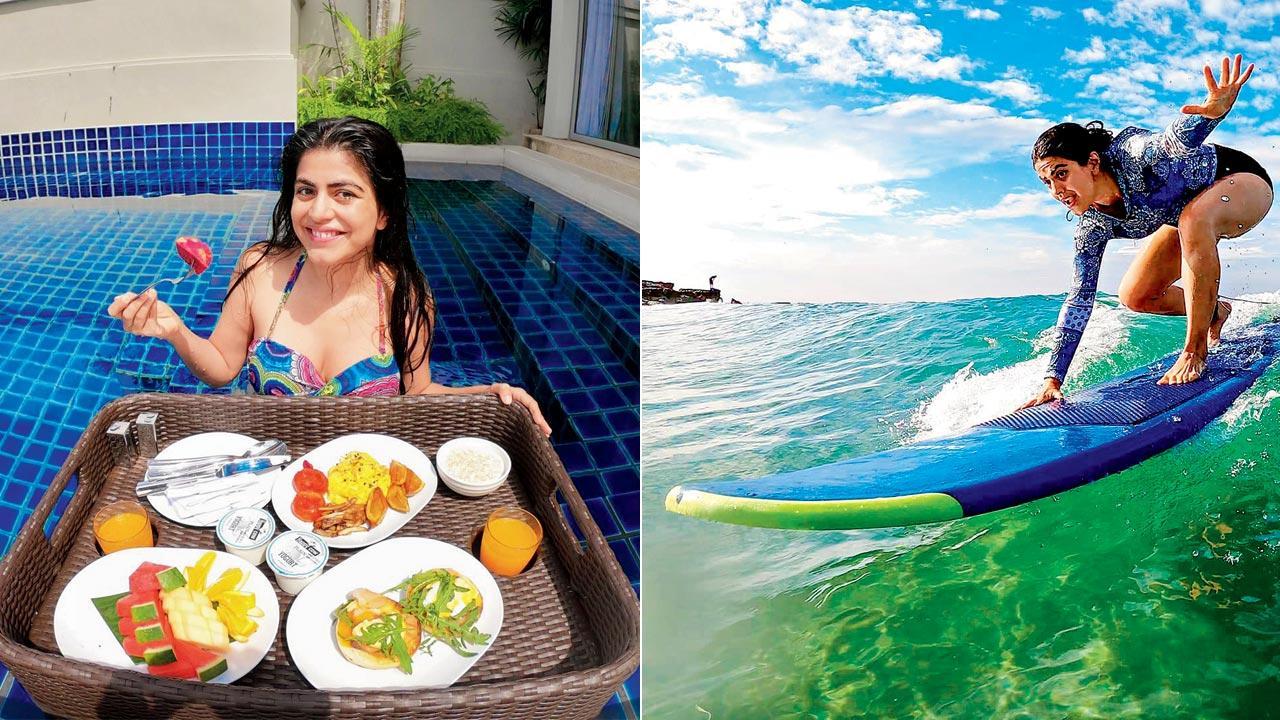
Video jockeys who are now thriving in their respective fields discuss how their varied requirements shaped their fitness trajectories
MID-DAY (August 23, 2024)
‘I am thankful for my thick and muscular legs’: Shenaz Treasury
Shenaz Treasury recalls a family vacation that she had taken to Singapore’s Sentosa island at the age of 12. Having headed into the ocean on a cycle along with her sister, she remembers having struggled to return to the shore as her father called out to her.
“My dad got worried because he realized that we were not fit, and made us start exercising. That’s when I was introduced to this world of fitness training,” recalls the host and travel influencer, who went on to practice multiple sports in her 20s. “Because my dad was a captain, I’ve spent a lot of time on the ship, and learned to swim [early on]. I’d pull off 40 laps.”
By the time Treasury entered college, she had a defined midriff, and was often picked for commercials. “But because I was always slightly plump, people would say [I’d benefit from] losing five kilos. I recall, even when I did Ishq Vishk [2003], Ken Ghosh [director] said I should lose weight because the other actress is so thin. [When I was younger], I took too many cardiovascular activities. I’d run across Bandra’s Bandstand and Pali Hill at noon, and also considered becoming a fitness trainer by certifying myself in step aerobics. Back then, no one told us how beneficial weight-lifting is. I wish I had [adopted] that sooner.”
Contrary to popular belief, Treasury says life as a travel influencer gives her enough opportunities to stay in good shape. “While travelling, I stay active. You’ll find me climbing, surfing, or swimming,” she says, adding that she also covers long distances on foot. “It is true that I love to eat, but I consume healthy foods. People call me a waiter’s nightmare because I instruct them to cook my meals with less salt and oil. I also don’t consume refined sugar and choose coconut sugar, dates, and fruits instead. Sure, they are still sugars, but I consume them because I don’t need six-pack abs. I just need to be healthy and feel good.”
Treasury also encourages young girls to avoid “hating their body parts”. “I spent my 20s stressing over my small belly, and no matter how well I eat, I will never lose it, unless I starve myself. Also, I was often [mocked] for my big thighs. I’d wear long skirts to hide them, and it wasn’t unless my first boyfriend gave me the confidence to [flaunt my legs] that I began to do so. Today, I love wearing shorts, and am thankful for my thick and muscular legs. Hopefully, they’ll take me through my 90s. As women, we tend to hate our bodies when we should be honouring them.”
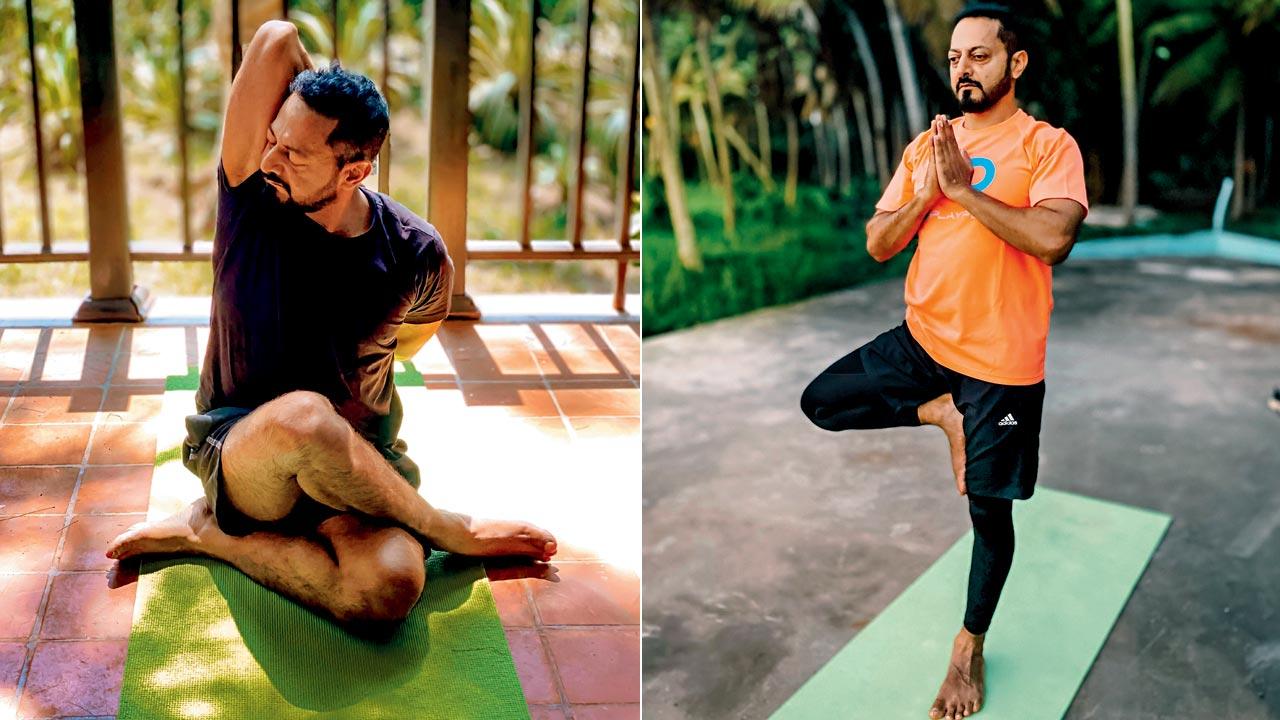
‘When I built some muscle, I stopped getting beaten up’: Nikhil Chinapa
Being a “skinny kid with a big mouth” often landed Nikhil Chinapa in hot water. “I’d get beaten up a lot because I would say smart things to people. At some point, I got tired of being beaten up, so I decided to go to the gym to build some muscles. When I did that, I stopped getting beaten up,” he says simply, adding that weight training has been an integral aspect of his life.
Among the most prominent figures in the thriving independent music industry in India, Chinapa recalls stepping into the gym as a 50-kilo youngster who struggled to gain weight. “I’d force-feed myself, or follow my lunch with a glass of milk. Initially, I found it difficult [to build muscle mass]. I’ve never relied on protein supplements, choosing instead to opt for sources that could be procured from a natural diet.”
As the face of a celebrated music brand, Chinapa spent most of his 20s and 30s travelling across places, and was fortunate to be “put up in hotels with good gyms”. “In the evenings, I’d spend time on the treadmill,” he recalls, adding that while he enjoys adhering to his fitness routine, he “did things in an ad hoc manner”.
“When I see how things have changed today, with so many fitness enthusiasts [educating us], I realize fitness is an intense [discipline] and requires focus.” And while an exhaustive profession like his can compel one to put their exercise regimen on the backburner, Chinapa says he was “fortunate to have good genes” that helped him “sustain my physique”.
It was on a Roadies trip with co-judge Neha Dhupia that Chinapa recalls having “enjoyed” a yoga class. “I’ve avoided yoga for a long time, but I enjoyed the class with her trainer. Having a yoga teacher who you can vibe with is important. I started doing it regularly, and found that it improved my mobility, and ability to lift weights. Both the activities complement each other.”
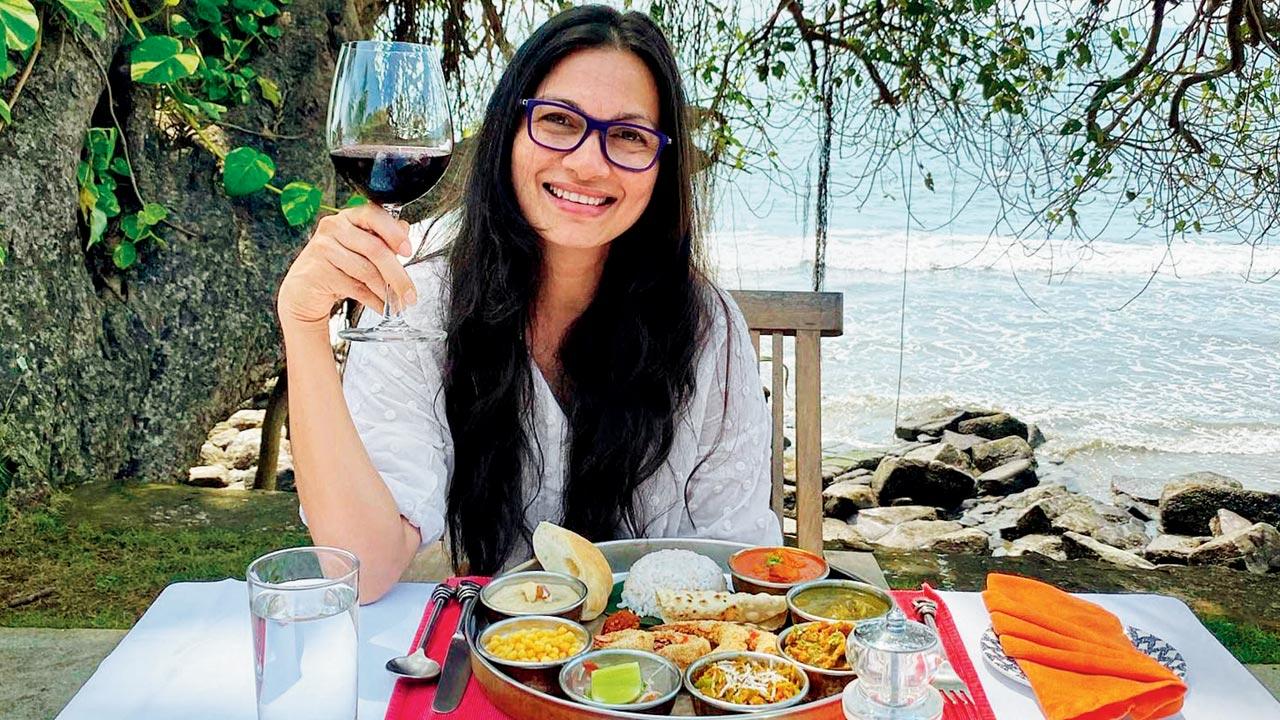
‘[Eggs benedict] is like heart attack served in a pan’: Maria Goretti
Maria Goretti says she set off on her “health journey” as soon as she learned to cook. “I have been trained in the art of French cooking. When I started to learn, I realized how unhealthy some food are. For instance, I would always order eggs benedict at a cafe, but after I learned cooking, I realized that hollandaise sauce was essentially [a mixture of] egg yolks and extra virgin olive oil. That’s like a heart attack [served] on a pan. While one part of me was soaking in the knowledge of cooking, another part was realizing that there were certain things that I should be eating only once a month,” recalls Goretti, who gained more knowledge in a bid to make “tasty, but heathy” meals for her kids.
“All of us at home eat differently. Soup is made for my parents, while I enjoy eating vegetables. Arshad [Warsi, actor-husband] eats according to his schedule. I’m usually always trying to figure out how to meet all these demands. [For my kids], I make a lot of stuff with ragi and other millets, and ensure that they get [enough] protein at night. But, my parents don’t digest it easily, so I don’t give them protein before bedtime.”
Goretti’s nutritional advice is fairly simple. She stays away from foods that have a shelf life longer than two days. “Such foods are filled with chemicals that enable them to be consumable for long periods, and this affects their freshness. A lot of brown breads available in the market are not made of wheat, but are simply caramelized or artificially coloured. The safest brown bread that you can eat is a roti.” She encourages people to minimize using additional flavours while consuming vegetables because “vegetables have their own unique flavour”.
“Also, when I cook at home, I make smaller portions so that I can cook each meal closer to the time it must be consumed. I understand that this isn’t possible for a lot of working couples because they will end up spending a lot more time in the kitchen, but it was beneficial for my kids. Finally, preparing for your meal is also crucial. For example, marinating meat and keeping it [aside] overnight enhances its flavour and softness. Finally, I do not mix raw meals with cooked food. So, I won’t eat a salad that has pieces of chicken in it, because the digestion of both these food items is very different.”
She encourages individuals adopting specific eating patterns to be vigilant about their choices. “Gluten-free”, she points out, need not necessarily imply that the food has health benefits. “When you opt for gluten-free foods, you may end up using nut flour, which is not particularly a low-calorie option. We have to be smart about the choices we make.”
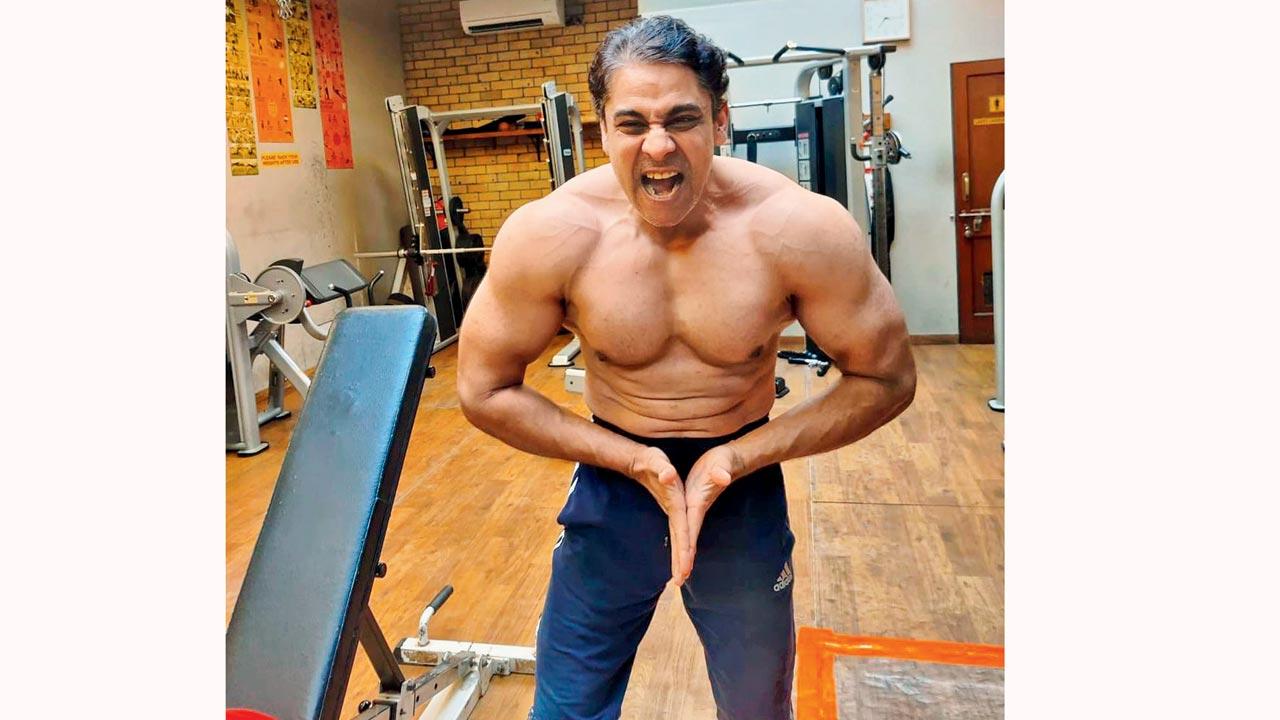
‘A gym is where a man should come to be a man’: Cyrus Broacha
Given that he developed a deep interest in the sport of body-building early on in his life, Cyrus Broacha says his weekly routines today “look pretty standard”. “On Mondays, I train my shoulders, on Tuesdays, I work on my legs, and subsequently train my chest and back muscles on other days of the week. I target one body part every four days,” says Broacha.
The host had first connected with mid-day to discuss how he was adhering to his regimen amid the lockdown, and today, lessons learned from the phase have encouraged him to adopt new practices. “I’m terrified after the pandemic, because that is when I saw that after a couple of weeks [of rest], it was tough to work out [at the same intensity]. I don’t mind training seven days a week today. When you are in your 50s, you have to use your muscles, or you’ll lose them.”
Broacha’s passion for body-building is easily expressed when the subject of the training patterns of “Indian men” is broached. He is irked by the thought of listless “men entering the gym without the desire to train”, and refers to cardio as a regimen that’s “ too boring for my mentality”. He gets his share of cardiovascular activity with fast-paced and explosive training routines, and chides those who “walk in, do some little stretching, and step on the treadmill at a leisure pace”.
“It’s not suited for the Indian body type. [Long-distance runners] end up with skinny-looking arms and legs. There’s no definition in their torso. A gym is a place where a man should train [aggressively]. It’s where a man should come to be a man.”
In the last two years, he has trained attention towards fixing his diet. “You have to think about how old you are. Once you tend to gain abdominal fat, it becomes hard to lose that. I don’t eat a lot of sweets, and don’t include carbohydrates in my first meal. When I have carbs, I consume it with protein to reduce sugar spikes. But, I will treat myself to them because I love rice. But, in the first half of the day, my diet is without flaw.”
Arshad Warsi is a very chilled out dad till the kids really piss him off-Maria Goretti
8:12 AM

She is a Cordon Bleu chef who has hosted several popular food shows on television. She’s also a poet whose book won the PragatiE Vichaar Award for English poetry last year. When you mention Maria Goretti, however, everyone still remembers her as the bubbly MTV VJ of the ’90s. She spoke to Neha Bhayana about dealing with teens (she is mom to 19-year-old Zeke Zidaan and 16-year-old Zene Zoe) and why her husband Arshad Warsi is a more chilled out parent
Neha Bhayana (THE TIMES OF INDIA; May 12, 2024)
We’ve seen you in many avatars. Which has been the toughest role?
The mom. I think being a parent is the toughest because there are no rules to follow. Each child is different, and each day is different. You wake up and you have no clue how the day is going to pan out. You have to find your way and figure out what suits you and your child the best. We were brought up in a certain way and we feel that’s how we’re going to bring up our kids. But things were very different then. Televisions were not the norm, forget computers. Today, every child is given an iPad or smartphone. It is tough to help kids navigate their life and try to put in the right kind of thoughts and actions into them. I clearly remember when my son was really small, I saw to it that he didn’t have too much sugar, maida or processed food. But when he went to school and everyone else’s dabbas opened, he realized there is so much more available than what mum is giving me. He would bring tiny pieces of his friends’ food and beg me to make them. That’s how it is. I feel that as a parent you are just trying all the time. What works for one child will definitely not work for other kids. So, I think we have to practise bespoke parenting. There is so much trial and error. You have to just figure out whether you can teach your children to make the right choices and pray that they do.
You took a break from work after kids. Was it difficult to be a stay-at-home mom after years of working?
No, I loved it. I started working when I was 17 years old and I wanted to stay home and enjoy my kids. I don't know whether what I did was right or not. I saw a lot of my peers go back to work immediately after having kids. There is no one-size-fits-all approach. But I was very happy sitting at home and looking after them. I enjoyed everyday things and had a lot of fun with them.
At what point did you decide to get back to work and what led you to becoming a chef?
Was cooking always a passion? Not at all. I started learning how to cook because I had to feed my kids, and then I realised how much fun it is. I felt the need to learn and understand how things work so I decided to study food. In 2011, I went to the Tante Marie Culinary Academy in London and did a certificate course in culinary, bakery and boulangerie. In 2018, I went to Le Cordon Bleu, Paris and London, and did a diploma in patisserie. Meanwhile, I did a book on food and recipes and did a few food shows on television. People started calling me to do food-related stuff. So, it was a very organic thing. I’m not someone who can plan things. I do what comes to me naturally. I have been writing poetry for a long time too. Whatever comes through in life is what I'm part of.
I am sure your kids loved sampling the dishes you experimented with when you were honing your skills …
They did. They loved the risotto I made and there was this one muffin they always wanted. I would hand roll the pasta too, so they were exposed to a lot of different kinds of food.
The toddler years or the teenage phase — what is tougher to handle?
The teenage phase is way tougher. When moms I meet tell me they want to get back to work, I always ask them how old their child is. I feel when kids are small, they just need to be fed and kept safe and they’re not going to go anywhere. It’s easier to look after them. When they are older, they can look after themselves but there is so much more that you have to stay attuned to. I do go out and work, but I end up calling them more often than when they were little. You have to ask them so much — ‘How was your day? Why are you not looking like your happy self today? What is going on?’ The issues they are dealing with become complex.
What’s the toughest part of dealing with a teen?
I think just getting through. They are going through a lot but unless they tell you exactly what they're going through, you are never going to know. Some things they want to share with their friends and not with you, and I feel that is okay. But they are the same age and navigating the same emotions, so they need a safe place to vent. Schools have introduced counsellors and I think that’s very important.
As kids grow up, they don’t need mom as much anymore. Did you find the change difficult to deal with?
It does pinch. I missed the cuddles and adoration with which they look at you when they are little. Teens look at you like you don’t even know what you’re talking about (laughs). But I am also happy to have the freedom to do what I like.
Disciplining a teen can be difficult. What’s your trick for getting them to listen to you?
I have not yet learnt how to discipline a teen. I have no tricks. Sometimes, I'm successful. Sometimes, I am not. They're 16 and 19. They have a mind of their own. Most of the time, we come to a compromise. Some things I have to let go of. It’s amazing how when we are bringing up our children, we want them to be assertive and vocal but when they enter their teens all that you have wanted them to be suddenly poses problems because they are trying that out on you. So, you are their first guinea pig.
Frankly, I am not the most successful parent while I am navigating their teens. I do make mistakes. But I am always open and willing to go and say, “Listen, I'm really sorry. I think I overreacted. I could have handled this better. Let’s try and figure out how to do this.” I have realized that parents are not perfect. We are also learning. So, I feel it’s okay to say sorry when you've messed up.
I also tell my kids, “You have to live with the choices you make. At the moment, you have a choice to study, to do well, to go ahead, whatever you do. If you don't make that choice and you don't use that, you lose that privilege of education. This period will pass and then you will be the one left behind.” I also remind them that I am older than them and do know a little more. But then they look at me and roll their eyes (laughs).
What are your rules regarding screen time?
Before the pandemic, I used to get really upset when they were on the phone for long. But during the lockdowns, we had to give them phones and laptops to attend online school. They were in front of the screen for seven hours daily. After that, it became very difficult to say, “Put your phone away”. The whole system changed. They even had to do assignments online. Now, there is no chance that they don't have a phone and laptop as part of their body. I’m sure that half of their body fluids flow through those things (laughs).
Arshad has this image of being a bindaas guy on screen. Is he the same at home, with kids too?
He is a very chilled out dad actually. He is very cool till they really piss him off.
What upsets him?
I think disrespect is what really, really upsets him. They are very lovely children but sometimes teens get so adamant. They feel what their parents are telling them is total rubbish and they absolutely have no idea. So, if we feel that something is harmful for them, then Arshad really puts a stop to whatever it is.
But he rarely gets upset because he’s not involved in the nitty-gritties of their everyday lives. He has a different equation with them. He has chats with them about life, work, about basic humanity and all of that. But the fact of the matter is that their everyday life is looked after by me. I am more hands-on which is why I have more altercations with them.
What are these altercations about?
It is the usual stuff. I am after them to pick up their towels or cups or books. Frankly, I actually don't like this role because I also want to have fun with them. But somehow, I am the one who’s constantly telling them this is right and that is wrong. It’s a bit much. Sometimes, I want to let it all go to dust. But then they’re your kids, you don’t do that.
When it comes to parenting, are you and Arshad on the same page?
No, there are lots of differences. If I am saying east, he is definitely saying west or north. I have made my peace with this though. I guess we have different approaches to parenting because Arshad grew up in a boarding school and I grew up at home with parents. The kids know the gap, and they sometimes slip in the middle. They are very smart.
What values have the two of you tried to instill?
We always tell them to be respectful to everyone, to treat everyone well, to be kind and generous. We tell them to not treat someone in a good fashion or a bad fashion depending on who they are and where they come from. They need to treat everyone with love and respect.
Arshad mentioned in an interview that he is not a star at home, nobody gives a sh** about him and nobody likes the work he does.
I think he was just being funny. Of course, he is not treated like a star at home. Nobody is pulling chairs out for him or rushing for his autograph. That is a given. This is his home and if he does not get treated like a normal dad at home, it would be a cuckoo situation.
Zeke looks a lot like his dad. Does he too have an inclination to act?
I have no clue about what he wants to do. He's in college and he’s studying. He does what any teen does. He goes out, hangs out with friends, sometimes he goes to dance classes, sometimes he is doing some fitness thing. I have always told the kids to do whatever they wish to do, as long as they are happy with it and able to make a living with it. I think he is in that phase where he’s also figuring himself out.
A lot of moms and dads try to be the child’s friend, not the parent. Do you think that’s a good idea?
I can’t be their friend. They already have their friends. But they don't have any more parents. So, I am their parent.
What are you strict about — any ground rules for the kids?
Sometimes, I feel like I’m strict about everything. And sometimes I feel I’m strict about nothing. Every day with parenting is different. I just go with the flow. If I don’t, I'll drive myself insane.
Do marks matter to you?
I think education matters. More than anything else, it is the discipline of education that really makes a difference. When my kids were younger, they were doing very well. Today, they want to do different things on the side besides their education. I feel that whatever their line of interest, they need to put 300% into that. I've always told them that education is a very big part of life, and it has to be done. You cannot just say I like dancing so I am going to stop everything and just dance. Of course, you can dance, but you also need education. And, education is there for a very small period of time. What you do in school and college shapes you. You may not use that education in the profession you choose later on, but the fact is what you do in those years — with your institute, your friends and your professors — plays a very important role in your life. You get a lot unknowingly; a lot more than your degree or diploma.
BT Exclusive: Arshad Warsi and Maria Goretti register their marriage after almost 25 years
9:54 AM

Arshad Warsi and Maria Goretti, who will celebrate their 25th wedding anniversary on Valentine’s Day, recently had a court marriage
Onkar Kulkarni (BOMBAY TIMES; February 12, 2024)
On February 14, 1999, Arshad Warsi and Maria Goretti walked down the aisle in a church ceremony, followed by a traditional nikah. Despite being married for almost 25 years, the couple never got down to legally registering their marriage. So, to celebrate their upcoming 25th wedding anniversary on Valentine’s Day, Arshad and Maria got their marriage registered in court on January 23.
‘Never thought that getting the marriage legally registered was important’
Talking about why it took so long for the couple to legally register their marriage, Arshad says, “It crossed our minds, but we never thought that it was really important. But then we realized that it is important to do it when you have to deal with property matters and even after you are no more. We did it for the sake of the law. Otherwise, I feel as partners, if you are committed to each other, then that’s all that matters.”
‘Maria and I are poles apart’
As the duo hits the silver jubilee mark, Arshad shares his mantra for a happy married life. “Well, not ‘happy married life’, it’s been a successful ‘married life’ (laughs). These 25 years have been insanely crazy. Maria and I are poles apart. We are completely different people and I think that is where the magic lies. As much as Maria is hyper, I am calm. She is well-educated and I am not. Maria is extremely practical and I live by where life takes me. I think that’s what works for us. Her madness and my calmness all put together works fine. She drives me up the wall and I drive up the wall (laughs). It’s exciting... I love it,” he says.
‘In matters of the heart, being practical doesn’t always work’
The Golmaal actor also talks about how times have changed and today, young couples often move on without trying hard to make a relationship work. “People are becoming impatient. Tolerance levels have gone down. We are not accepting enough and are in a hurry to move on. Mindsets have changed. Like, if this doesn’t work, then I will wrap it up and move on to another one. Life has become too materialistic and practical. I believe, in matters of the heart, being practical doesn’t always work.”
He adds, “My dad always told me, ‘In a relationship if you are not happy, then leave it and move on to the next one. But there’s no guarantee that you will be happy in that relationship’. You have to think of your partner and do what the other person likes to do. You have to change yourself a little bit for your partner. You can’t be stubborn and say that you better accept me the way I am or it’s the end of the story.”
I married the same man for the third time: Maria
Talking about their court marriage recently, Maria shares, “We had a court marriage because that was something we’d been wanting to do for some time now. We got married under the Special Marriage Act. Our kids could not attend it as we could not take them to the court. Just witnesses were allowed. We sat in those big chairs and laughed a lot. Yes, I married the same man for the third time! Who does that? (laughs).”
Getting married on February 14 was never intentional... Now I have the scariest memory of V-Day: Arshad
Ask Arshad how they came down to choosing Valentine’s Day to get married and he breaks into a laugh. He shares, “I hate to share my wedding date with anyone because it sounds so cheesy. Both Maria and I are embarrassed about this! It was never intentional though. Maria’s parents wanted us to get married soon. We couldn’t during Lent and then I was getting busy with work. We didn’t want to waste one year and the one date that looked feasible to us back then was February 14, so we went ahead with it. Now I have the scariest memory of Valentine’s Day - that I got married (laughs).”
I love the way Maria Goretti makes chocolates, it’s not all sugar-Arshad Warsi
3:05 PM

BOMBAY TIMES (July 8, 2023)
“I don’t remember the first time I ate a chocolate, but till today if you offer me anything with chocolate in it, I will have it,” says former VJ, actress and gourmet chef Maria Goretti, as she’s adding the final touches on chocolate lava cake and cookies spread on the kitchen table. On World Chocolate Day today, the chef and author gives a sneak peek into her kitchen and the chocolate goodies she’s baked for her hubby, actor Arshad Warsi and their children.
Arshad, who is all set to cut the cake and dig into it too, jumps in and explains how he used to cook for Maria when he started dating her. “When I was dating Maria, I was the one who cooked. I made different dishes to surprise and impress her because she never cooked. I would cook for her, and she just loved my raan biryani! I am not a big fan of chocolates, but I love the way Maria makes chocolates, it’s not all sugar, you get the real taste”.
The Asur actor added, "Earlier, I used to joke with Maria how the entire world’s kids say kabhi mere maa ke haath ka khana khaya hai and in our home, it would be kabhi mere baap ke haath ka khana khaya hai as I used to cook more than her, but now it will be both (laughs)."
Maria has hosted several cooking shows and authored a cookbook. Her book titled 'From My Kitchen to Yours' won the Gourmand award in 2017. And those recipes are now posted as videos on her insta id @TheMariaGoretticorner. She adds, “Chocolate is one of my favourite ingredients, it is more than just a dessert! I remember making chocolate pasta for my kids (Zeke and Zene) when they were very young. I used to make pasta with cocoa and boil it for my kids. Now my son Zeke loves baking and cooks on his own.”
Sharing how she moved to baking and cooking from veejaying, Maria said, "I remember I had nothing to do while Arshad was busy shooting for Dhan Dhana Dhan Goal (2007) in London, so I would go out shopping. One day, I came back to the hotel with some fresh veggies and the hotel chef helped me whip up some nice dishes. That’s what got me interested in gourmet cuisine. I was still new and experimenting and remember how I had cooked a lot of prawn curry and did not know what to do, and Arshad again bailed me out, brought his gang of boys home, in London and they all ate my prawn curry."
Maria shares how she spent the entire day yesterday baking chocolate cookies, chocolate tart, cakey brownie and choco lava cake. She said, “My friends and family love my desserts specially the ones with chocolate. Chocolate not only makes you feel good, but it can also relax you. One of the desserts I make that Arshad enjoys is meringue. I remember how I used to make hundreds of chocolate muffins and kept on baking them till my kids grew up. My house used to be filled with that chocolate aroma! I am glad we are celebrating the day with some of my favourite chocolate desserts."
The minute Maria Goretti saw a dead body with its fingers cut in Asur, she switched off the TV-Arshad Warsi
8:02 AM
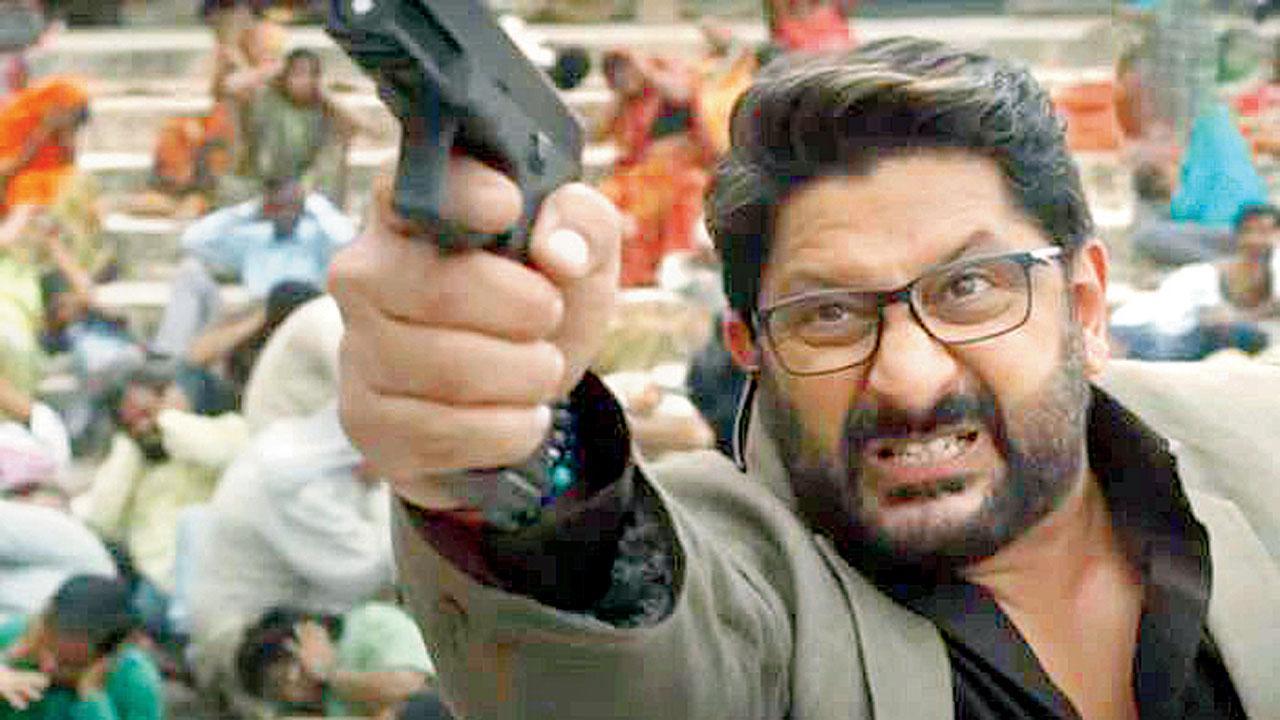
Admitting that his role in Asur 2 is ‘edgier’, Arshad on how it was the only character he struggled to shake off after shooting
Upala KBR (MID-DAY; June 24, 2023)
The upside of having a successful series is that the audience can’t wait for the second season. The downside is that the following edition has to match sky-high expectations. Arshad Warsi, who has reprised his role of forensic expert Dhananjay Rajput in Asur 2, admits that the pressure weighed on him through the shoot up to its release earlier this month. The actor believes his character took on more complex shades in the latest season of the mythological thriller, also starring Barun Sobti.
“Dhananjay is edgier, more unpredictable and intense than before. He is right in what he wants to do [catch the serial killer], but wrong in how he goes about doing it. It was not an easy character to play because Dhananjay is diametrically opposite to me. I’m an easy-going guy,” says Warsi.
In his 27-year career, rarely has any role affected the actor as much as this did. Warsi says that Dhananjay was one character he carried back home. “With most projects, you leave your baggage on the set and go home. But with Asur, I was with that darkness from the beginning to the end. It begins to affect you subconsciously.”
So, how did he shake off the character? “I kept telling myself, ‘It was work, it’s over. Now, move on to the next one.’”
While audiences across the country swear by the thriller, it hasn’t earned a fan in Warsi’s wife Maria Goretti. She hasn’t watched either season, he reveals. “She finds it too scary. After a lot of coaxing, she watched the first episode of the first season, but the minute she saw a dead body with its fingers cut, she switched off the TV and refused to watch anymore.”
Stock-rigging circuit: SEBI bans actor Arshad Warsi, wife Maria Goretti
8:25 AM
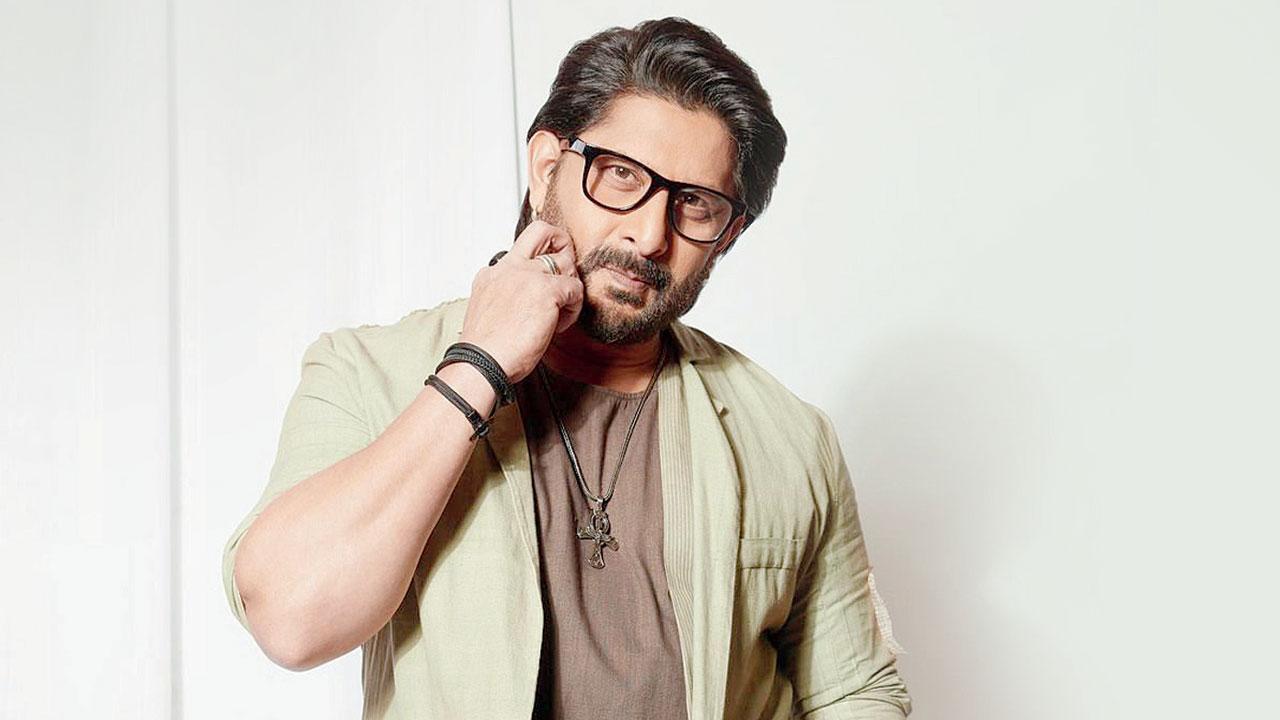
Misleading YouTube Videos To Lure Buyers For Sadhna Stock
THE TIMES OF INDIA (March 3, 2023)
SEBI on Thursday barred 31 entities, including actor Arshad Warsi, his wife Maria Goretti and promoters of Sadhna Broadcast from the market. The move is related to misleading videos on YouTube channels — ‘The Advisor’ and ‘Moneywise’ — luring investors to buy the TV channel’s shares.
Sadhna’s promoters who have been restrained from the market are Shreya Gupta, Gaurav Gupta, Saurabh Gupta, Pooja Aggarwal and Varun Media. The regulator has impounded illegal gains of Rs 41. 9 crore made after the videos were uploaded. SEBI noted that Warsi (who played ‘Circuit’ in the film ‘Munnabhai MBBS’) made gains of Rs 29.40 lakh, while his wife profited by Rs 37.60 lakh.
The order came after SEBI received complaints that alleged there was price manipulation and offloading of shares (also known as pump-and-dump) by certain entities in the Sadhna scrip.
Subsequent to the release of the videos, there was an increase in the price and trading volume of the Sadhna scrip. In this period, certain promoter shareholders, key management personnel of Sadhna, and nonpromoter shareholders offloaded a significant part of their holdings at inflated prices and booked profits.
One of the misleading videos on these YouTube channels was that Sadhna Broadcast is going to be taken over by Adani Group. Another video claimed a large US corporation has entered into a contract to produce four devotional movies.
---------------------------------------------
31 players made unlawful gains of Rs. 41.85 cr in Sadhna Broadcast case, 24 have allegedly gained Rs. 12.14 cr in Sharpline Broadcast case
THE ECONOMIC TIMES (March 3, 2023)
Mumbai: The Securities and Exchange Board of India (SEBI) on Thursday came down heavily on YouTube channel creators for manipulating stocks of listed companies by engaging in a “pump and dump” schemes.
The regulator in two separate orders barred 55 entities including actors Arshad Warsi and his wife Maria Goretti from the securities market for alleged price manipulation through YouTube and subsequently offloading the inflated shares of Sadhna Broadcast and Sharpline Broadcast.
SEBI said a nexus of 31 players made unlawful gains of Rs. 41.85 crores in Sadhna Broadcast case, while 24 players have allegedly gained Rs. 12.14 crores in Sharpline Broadcast, which it has directed to be impounded.
Arshad Warsi and his wife made a profit of Rs. 29.43 lakhs and Rs. 37.56 lakhs, respectively. SEBI has termed the roles of them in the scheme as ‘volume creator’ and ‘profit maker’.
The regulator said it received certain complaints alleging that misleading YouTube videos with false content, backed by a large marketing campaign for additional reach, were being uploaded to lure investors. Once these unsuspecting investors entered the stock, the said entities allegedly offloaded their holding at an inflated price.
These entities would upload false and misleading news about the said companies on the video streaming platform. These channels were — Moneywise, The Advisor, MidCap Calls and Profit Yatra.
SEBI said these YouTube channels had lakhs of subscribers and the YouTube videos had crores of viewership aided by promotion through paid advertising campaigns. Subsequently, the misleading YouTube videos ceased to be available for public viewing, SEBI said.
The regulator alleged that two YouTube channels The Advisor and Moneywise uploaded videos on Sadhna in July 2022. In the case of Sharpline, Midcapcalls and ProfitYatra had uploaded
videos in May 2022.
These YouTube videos “peddled false and misleading news”, recommending investors should buy these stocks for extraordinary profits, said the regulator Subsequent to the release of the YouTube videos, there was an increase in the price and trading volume of the Sadhna shares, according to SEBI.
The volumes appear to have been contributed by large number of retail investors likely influenced by the misleading YouTube videos, it said.
Amid the pick-up in trading volumes, certain promoter shareholders, key management personnel of Sadhna, and non-promoter shareholders who held more than 1% of shareholding in Sadhna offloaded a significant part of their holdings at inflated prices and booked profits, the regulator said.
The regulator also observed that the videos contained false and deceptive statements about the growth story and future prospects of the company. The videos recommended investors to buy the scrip to earn substantial profits.
Disabling the comments section on the YouTube Channels, prima facie appears to be an attempt to avoid any negative counter view to the messages disseminated through the YouTube videos, SEBI said.
“…the elaborate modus operandi adopted by the Noticees, including the egregious misuse of patently false and misleading YouTube videos, had led to drastic increase in the number of small shareholders (i. e. , from 2,167 to 55,343 shareholders) who ended up buying shares from the Noticee Net Sellers and Volume creators at inflated prices,” the regulator said in its order.
I had to rush to the hospital from the set-Arshad Warsi
8:18 AM
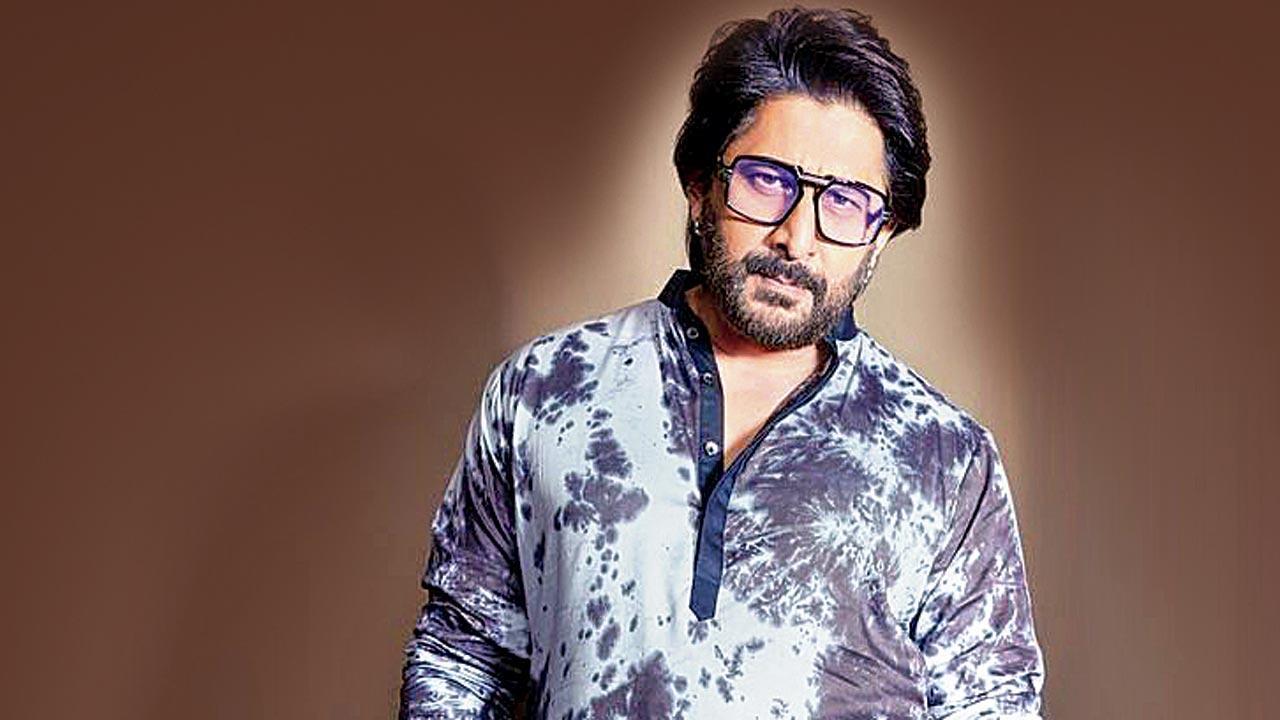
Arshad recounts undergoing kidney stone surgery after he complained of stomach pain while filming Jeevan Bheema Yojana
Upala KBR (MID-DAY; May 6, 2022)
On Thursday, Arshad Warsi wrapped up the shoot of Jeevan Bheema Yojana that sees him in a double role. The actor will remember director Abhishek Dogra’s crime comedy for more than one reason. It was while shooting this film last month that Warsi had to be rushed to the hospital for a kidney stone surgery.
Recounting the episode, he says, “This was in mid-April. I had gone for the shoot in the morning, and was feeling a discomfort in my stomach. Initially, I passed it off as indigestion, but the pain grew worse. After lunch, I realized it’s not a small matter, and had to rush to the hospital.”
Before heading to a hospital, Warsi decided to consult his doctor. The ride from Charkop, where he was shooting, to his doctor’s clinic was a nightmare. “It took me almost one-and-a-half hours due to traffic and roadblocks. As I [sat in the car], the pain worsened and I realised that I [couldn’t afford to wait] for my doctor.”
The actor consulted his doctor on the phone, who advised him to get a CT scan. “After that, I got admitted to the Kokilaben Dhirubhai Ambani Hospital, where they wanted to run some tests on that day, and have the surgery the next day. I told them that I wanted the tests and surgery scheduled for today, as I would have to go back to work tomorrow. It was a complicated surgery, and I am still on the road to recovery,” he says wearily. The actor resumed shooting for Jeevan Bheema Yojana within days of the operation.
Having completed the crime comedy and Banda Singh, Warsi has earned a well-deserved downtime. He plans to head to Goa, where he has bought a new house. “It’s an old Portuguese house and Maria [Goretti, wife] is doing the décor. I want to spend some time with my family,” he smiles.
I am thankful to John Abraham for changing Maria Goretti's mind about biking-Arshad Warsi
7:36 AM

As John Abraham gifts him a high-end bike for the new year, Arshad Warsi recounts how the superstar convinced his wife Maria Goretti to let him pursue biking
Upala KBR (MID-DAY; January 13, 2020)
 John Abraham's love for bikes is well-known. The actor seems to have met his match in his Pagalpanti co-star Arshad Warsi, who is an avid bike enthusiast and a proud owner of a Ducati and an Indian Scout. While the two would have endless chats about their shared passion during the filming of the comedy, it seems to have culminated into a gift for Warsi — Abraham gifted him a BMW F750 GS, which comes at a cool Rs 12 lakh, last week.
"Recently, John was considering buying a bike, and out of the blue, sent me a picture of the BMW F750 GS. He asked me if I liked it. So I asked him whether he wanted to add one more [vehicle] to his fleet. That's when he said that he wanted to buy it for me. I immediately told him no, but he kept insisting and showing me various pictures [of the model]. [He eventually sent it over] saying that I should try it," he says. The actor adds that it is typical of Abraham to shower his near and dear ones with presents. "I keep telling John that he doesn't spend a penny on himself. He is happy in his chappals, tees and jeans. I don't know if he even owns a formal suit," he laughs.
As much as he is thankful to Abraham for the beast, Warsi reveals that he is far more grateful to him for changing wife Maria Goretti's mind about biking. "After we got married, Maria had said, no more biking. They were completely out of the picture. Years later, when John and I were shooting for Kabul Express [2006], he asked me why I had stopped biking and I told him about Maria. Soon after, John called her up and persuaded her. So, I have to thank John for that too."

I couldn’t believe that one could make money from something they enjoy-Arshad Warsi on dancing for a living
7:48 AM

As told to Avinash Lohana (MUMBAI MIRROR; December 18, 2017)
I started working at 15 or 16 as I was eager to earn. My first job was in the developing department of a photo lab. I worked with chemicals to develop pictures from the rolls due to which the skin on my hands started to deteriorate so I left the job after a while.
I was back at work in a couple of months, this time selling cosmetics to five-stars and pharmacies for which I would get paid on consignment basis. In hindsight, I think that’s where I got my early lessons in acting as I would lie through my teeth to sell those products. That gig didn’t last too long either as it wasn’t my chosen career path.
Then, (DJ/choreographer) Akbar Sami saw me dancing in a nightclub with some friends and approached me, asking if I’d like to do shows with him. I had always enjoyed dancing but didn’t know I could get paid for it too so I wasn’t too keen on it initially as I was only interested in making money. Then, I watched the troupe perform and was a convert. When I got paid, I couldn’t believe that one could make money from something they enjoy (laughs). I stuck it out for a long time and eventually became a choreographer myself.
Once, Akbar was choreographing a play and when he was busy with something else, he asked me to take over. The director and producers were really pleased with my work as that was the first time we’d used recorded music, which was unusual then. I worked with slow tracks like Elvis Presley’s “Fever” at a time when makers used fast beats for impact. After that, I choreographed many musicals for Alyque Padamsee and Bharat Dabholkar among many others and even took part in the World Dance Championship in which I represented India.
I did a lot of odd jobs but dancing was where I actually got paid. For every show I would get between Rs 500- 600. I don’t remember what I did with my first salary, but I did buy my first car for Rs 75,000 from the money I had saved over the years. I had won a bike before that after winning the All India Dance Championship. That was my regular ride till I bought my car. Maria (Maria Goretti, wife) would sit behind me with bags of my costumes.
At one point I realised that there were many who wanted to learn dance so I started my own dance studio called ‘Awesome’. I would take classes from Monday to Thursday and focus on theatre on weekends. To earn more money, I also began choreographing ads and even assisted Mahesh Bhatt on films like Kaash and Thikana. Filmmaking was fascinating and I was impressed with Mr Bhatt. He was the kind of person I aspired to be like. But how long can you live on conveyance expense? I quickly went back to dancing and choreographing plays and commercials.
One fine day, God smiled at me and I got a movie offer. I used to host small Saturday night parties at my pad and Joy Augustine came to one with another friend. He was impressed with the way I was interacting and spoke to ABCL (Amitabh Bachchan Corporation Ltd.) about me. I was asked to send some pictures, I sent some really amateur ones as I was petrified of acting. But surprisingly, I still landed the lead in Tere Mere Sapne. I went to the set four days before I was asked to report and spent time watching Pran Saab in action. That was my crash course in acting. I took to the medium like fish to water.
I went on to script and produce a film, Hum Tum Aur Ghost, in 2010. Some day, I wish to direct one too. I’ve written a script and those who have heard it have liked it. I am hoping to get a good producer and an actor so I can now live out this dream.

Sanjay Dutt parties with his 'Circuit' Arshad Warsi, and Rajkumar Hirani
7:32 AM

Avinash Lohana (MUMBAI MIRROR; March 8, 2016)
Ever since he walked out of
Pune's Yerwada jail on February 25, Sanjay Dutt's Pali Hill residence
has been buzzing with a steady stream of visitors. On Sunday, the
56-year-old-actor ventured out for a quick reunion with close friend and
Munnabhai director Rajkumar Hirani and his Circuit, Arshad Warsi, at the
filmmaker's Goregaon residence.
“It was an emotional get-together and the trio had been looking forward to it ever since Sanjay walked out of jail,“ says a source close to the actor, adding that host Hirani had even arranged for a live band which played their favourite songs, most of them from Sanjay's films. “The highlight of the evening was all of them singing along when the Munnabhai title song came on. An emotional Sanjay gave everyone a big jadoo ki jhappi.“
While Sanjay and Arshad were accompanied by their wives, Manyata and Maria Goretti, filmmaker Vidhu Vinod Chopra and actor Boman Irani were in attendance too. “Raju is writing the third Munnabhai film. Plans of taking the franchise forward are afoot but nothing has been finalised as yet. The film will go on the floors in 2017 as the team is presently busy with other commitments,“ the source reveals. While Hirani is set to start shooting for the Sanjay Dutt biopic featuring Ranbir Kapoor, Sanjay is gearing up for Siddharth Anand's next and Arshad is busy shooting for Irada with Naseeruddin Shah.
The revelry soon spilled over to the outdoors when the gathered photographers requested to have their pic clicked baba with Sanju when he was on his way out. Manyata was quick on the uptake, volunteering to go click-click as the bunch posed. That's a Kodak moment for keeps.
“It was an emotional get-together and the trio had been looking forward to it ever since Sanjay walked out of jail,“ says a source close to the actor, adding that host Hirani had even arranged for a live band which played their favourite songs, most of them from Sanjay's films. “The highlight of the evening was all of them singing along when the Munnabhai title song came on. An emotional Sanjay gave everyone a big jadoo ki jhappi.“
While Sanjay and Arshad were accompanied by their wives, Manyata and Maria Goretti, filmmaker Vidhu Vinod Chopra and actor Boman Irani were in attendance too. “Raju is writing the third Munnabhai film. Plans of taking the franchise forward are afoot but nothing has been finalised as yet. The film will go on the floors in 2017 as the team is presently busy with other commitments,“ the source reveals. While Hirani is set to start shooting for the Sanjay Dutt biopic featuring Ranbir Kapoor, Sanjay is gearing up for Siddharth Anand's next and Arshad is busy shooting for Irada with Naseeruddin Shah.
The revelry soon spilled over to the outdoors when the gathered photographers requested to have their pic clicked baba with Sanju when he was on his way out. Manyata was quick on the uptake, volunteering to go click-click as the bunch posed. That's a Kodak moment for keeps.

Subscribe to:
Posts (Atom)