Showing posts with label Margarita With A Straw. Show all posts
Showing posts with label Margarita With A Straw. Show all posts
I wrote Amu around a mum and daughter to tap into my pain-Shonali Bose
11:11 AM
Yashika Mathur (HINDUSTAN TIMES; May 10, 2025)
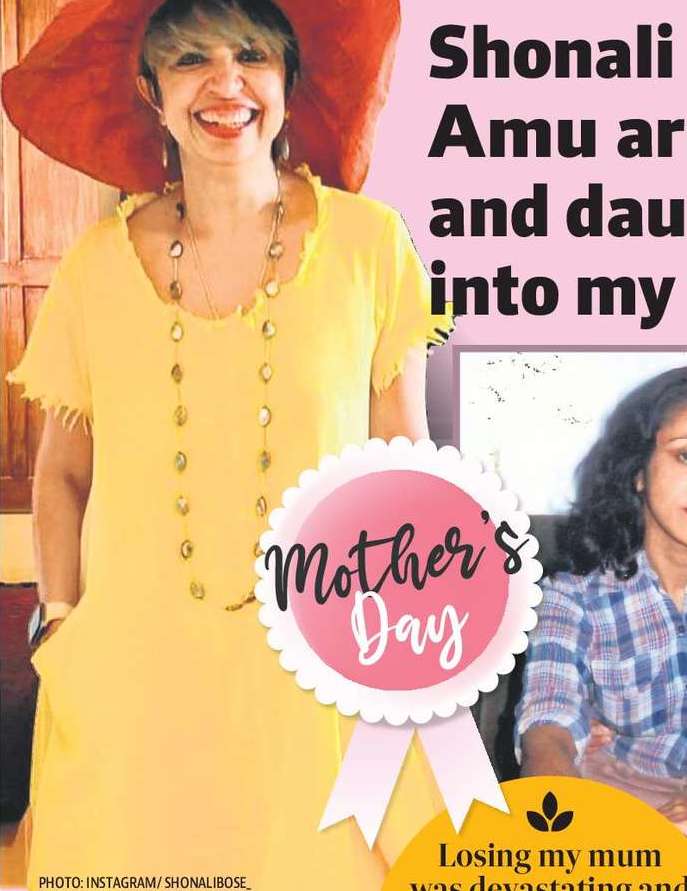
Shonali Bose has faced two devastating losses in life — first, as a daughter, when she lost her mother. And then, as a mother, when she lost her son. Ahead of Mother’s Day tomorrow, the filmmaker talks about how she has channelised her pain into her work, over the years.
Talking about her mother, Junie Dass’s death in 1986, Shonali shares, “Losing her at 21 was devastating and it changed my life. I have explored themes such as mother-daughter relationship and death in Amu (2005), Margarita With A Straw (2015) and The Sky Is Pink (2019). In Amu (her directorial debut), we consciously wrote a story around a mother and daughter to tap into my pain. Writing from the depths of your pain can be powerful.”
While Mother’s Day was a painful occasion for her for years, it changed when her son, Ishan was born. However, life dealt another blow when he died in 2010. So, when she directed The Sky Is Pink, there was a personal touch to it as well. “His death took me to another place… I felt a deep peace about death. In The Sky is Pink, the character played by Priyanka (Chopra Jonas; actor) wears a vibrant pink scarf to her daughter’s funeral. Just as I had worn red. To celebrate. Not mourn,” says Shonali.
Meanwhile, she takes us back to shooting for Amu, which starred her maternal aunt, politician Brinda Karat: “She just wouldn’t tear up. So, when a scene was being shot, I crouched under the seat of the car and after calling ‘action’, I took her through the memory of my mum’s last moments in the hospital. And, she couldn’t hold back her tears after that and we got the shot right.”
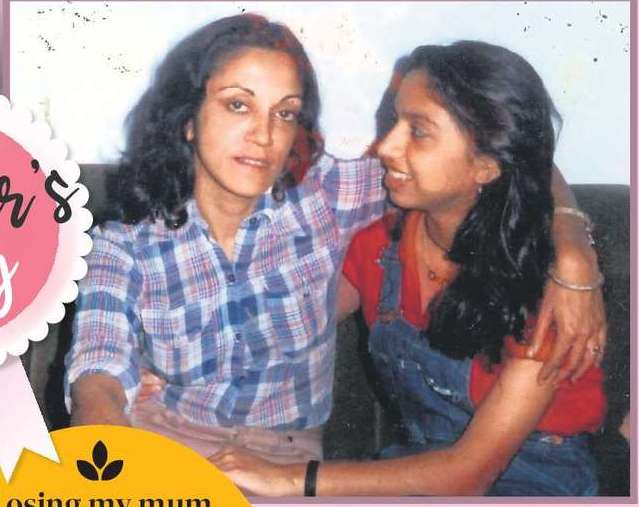
Shonali Bose with her mother, Junie Dass
Sayani Gupta believes having intimacy coordinators makes things awkward
3:17 PM

Despite working with professionals who taught her tricks to shoot intimate scenes, Sayani Gupta, who plays a part in her next, isn’t always in favour of their appointment
Upala KBR (MID-DAY; November 6, 2024)
The makers of Khwaabon Ka Jhamela have easily hit the bull’s eye by casting Sayani Gupta in the film that revolves around a finance whiz (played by Prateik Babbar) and a spirited intimacy coordinator, Ruby. After all, Gupta, who plays the role of the latter, has worked with several intimacy coordinators in her previous films, and has also taught her peers the art of filming tricky scenes.
“We had a professional on set in 2013 while shooting Margarita With A Straw. Back then, this was an alien concept, but director Shonali Bose got Monsoon Bisell and Adil Hussain to work with Kalki Koechlin and me. Later, we also had another intimacy coordinator, Aastha Khanna Bhardwaj, on board for Four More Shots Please. Having worked with them, I jokingly say that I have a PhD in the subject.”
Gupta has also taught her peers the tricks to shoot graver sequences in which violence may also be involved. “I have been part of scenes that were intimate and violent. Off screen, I have worked as a coordinator too. So, for this film, I didn’t have to undergo any prep work. I always say that the best research comes from life’s experiences. Of course, workshops and rehearsals help.”
Though the addition of intimacy coordinators on film sets may easily be seen as among the most progressive steps that the industry has taken to cater to women’s safety, Gupta isn’t always in favour of their appointment.
“Sometimes, it is great to work with one, but at times, having them on the set comes in the way of doing scenes in an organic way. As an actor, I know the kind of conversations I must have with my co-actor, and the presence of a coordinator makes things awkward. It can also hamper the flow of a scene that is naturally unfolding with two actors who share the same wavelength.”
As for Danish Aslam’s romcom that releases online on Jio Cinema on November 8, Gupta admits that no intimate scenes are involved. She describes it as a tale of two people who are “equally strange” in their own ways. “The film delivers a message but doesn’t get too serious. It talks about inclusivity and gay pride. We shot at a pride parade, so the film is truly inclusive and open; a celebration of love,” she says of the movie that reunites her with Babbar after the show, Four More Shots Please.
“I recommended Prateik for it. I had already come on board, and Danish was looking to cast for his role. We share chemistry on screen because we are good buddies in real life. We constantly make fun of each other and have seen each other [evolve] in certain ways.”
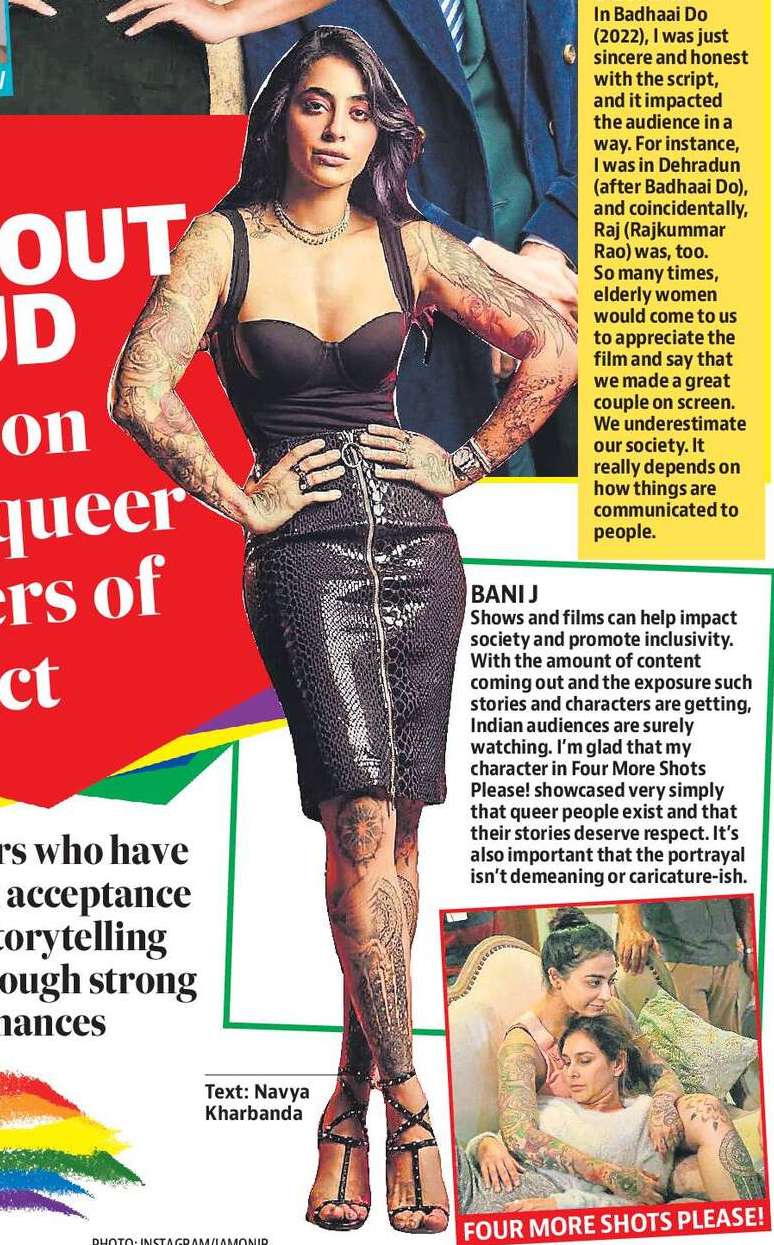
Sayani Gupta, Gulshan Devaiah, Pratik Gandhi etc talk about essaying queer characters of impact
9:52 AM
Navya Kharbanda (HINDUSTAN TIMES; June 19, 2023)
REGINA CASSANDRA
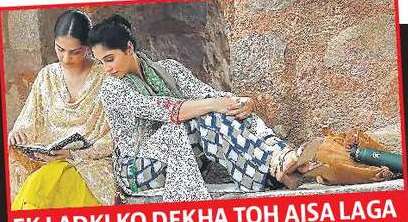
I’m very happy to be someone who was in the initial phase of the evolution of the film industry. There has always been an audience for these stories but now, there’s more awareness. It was so surprising when a few years ago, a girl came up to me and said, ‘Ek Ladki Ko Dekha Toh Aisa Laga (2019) was my gay awakening’. It made me feel so happy that my role had actually impacted a set of people.
SAYANI GUPTA
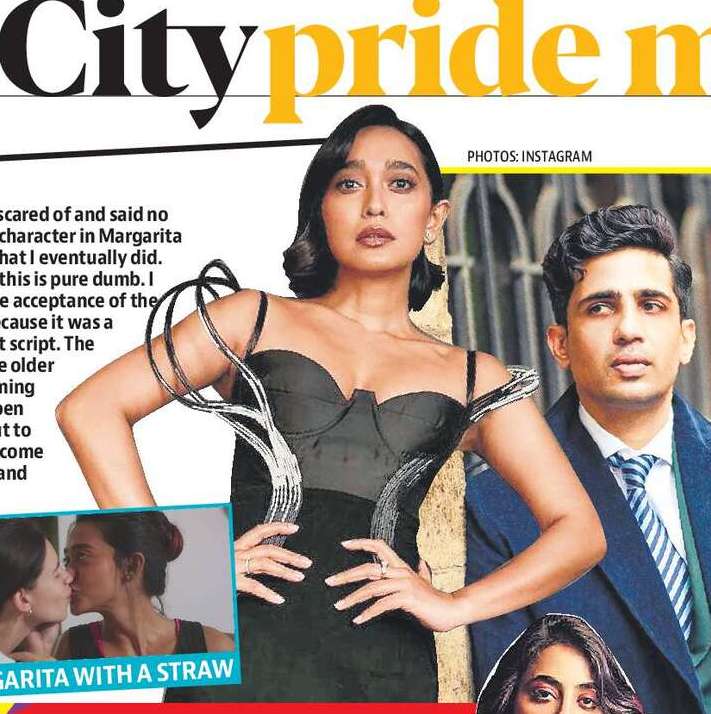
A lot of people were scared of and said no to playing the queer character in Margarita With A Straw (2014) that I eventually did. Not doing a part like this is pure dumb. I did not care about the acceptance of the audience — I did it because it was a good part and a great script. The younger and even the older generation are becoming much more aware, open and inclusive now. Cut to 2023, people have become way more accepting and I believe my character in the film contributed to it.
GULSHAN DEVAIAH
In Badhaai Do (2022), I was just sincere and honest with the script, and it impacted the audience in a way. For instance, I was in Dehradun (after Badhaai Do), and coincidentally, Raj (Rajkummar Rao) was, too. So many times, elderly women would come to us to appreciate the film and say that we made a great couple on screen. We underestimate our society. It really depends on how things are communicated to people.

PRATIK GANDHI
The Indian audience is also understanding that it is much more beyond sex. Indian cinema, too, has also evolved in showcasing LGBTQIA+ stories with sensitive representation of characters. As opposed to earlier, when queer characters would be comic devices, now, it is more real and in-depth. The gay characters Ranveer (Brar, chef) and I played in Modern Love Mumbai were not at all typical. They were instead very simple and true to their own selves. The LGBTQIA+ community are our own and don’t need to be spelled out differently. The way Manzu (his character) stood for himself and tried explaining to his family and the way he manoeuvred around it was very real. Pyaar sirf pyaar hota hai!
BANI J
Shows and films can help impact society and promote inclusivity. With the amount of content coming out and the exposure such stories and characters are getting, Indian audiences are surely watching. I’m glad that my character in Four More Shots Please! showcased very simply that queer people exist and that their stories deserve respect. It’s also important that the portrayal isn’t demeaning or caricature-ish.
Acting is not as easy or difficult as people make it out to be-Kalki Koechlin
8:12 AM

Actor Kalki Koechlin says a good actor will add layers to any character
Rishabh Suri (HINDUSTAN TIMES; December 22, 2022)
When people look at actors and film industry, they only see the glitz and glamour of the profession and may believe that acting comes easy. However, actor Kalki Koechlin believes that acting can be as easy or as hard you want to make it. She explains, “Acting is not as easy or difficult as people make it out to be.”
She adds, “I think certain characters require more than others. There are characters I didn’t prep for at all. For example, Yeh Jawaani Hai Deewani (2013), I just jumped in and had a great time shooting. But characters like Laila in Margarita With A Straw (2015), I had to prepare for six months. I did nothing else but that (method acting) completely,” says the 38-year-old. The actor will be seen next in the film Goldfish, with actor Deepti Naval, who plays her mother suffering from dementia.
A question that is posed to the actor regularly is one about her method of acting. And she says, she never knows how to respond to it. Regardless of the type of character, a good actor, Koechlin feels will “always try and add layers to it.”
Talking about late actor Irrfan’s method of acting, she says, “I remember the stylist for The Namesake (2007) told me about Irrfan’s character where he played a father — a pretty regular character. But, he told the stylist to add a heel to one of his shoes so that he would walk with a limp.”
It is roles like these, where an actor is allowed to prove their mettle and allows them to not be stereotyped into a certain role or character but the Zindagi Na Milegi Dobara (2011) actor says one has be patient and “wait as these roles don’t come by very often”.
“You have to detach yourself and be able to say ‘I do want to work, but can I wait for the right thing to come, which will shake myself up and challenge me as an actor’,” she ends.
I didn’t sleep for nights fearing that a cop would show up at the door and shame my parents-Apurva Asrani
8:15 AM

Rishabh Deb (BOMBAY TIMES; June 15, 2021)
For film editor and writer Apurva Asrani, 2020-21 has been a challenging phase. He lost several friends to COVID-19, and his 14-year-old relationship with partner Siddhant Pillai came to an end. Despite all the events that unfolded in the span of a year, he is taking things in his stride and trying to cope. He finds solace in writing new stories, taking long walks on the pristine beaches of Goa, playing with his cats and bonding with family. In a Pride Month special interview, we catch up with the Aligarh writer and editor and speak about self-love, coping with loss and more. Excerpts:
‘FOCUSING ON SELF-LOVE AND BONDING WITH FAMILY’
Mental health and self-care are his top priority and Apurva, who has moved in with his family after decades, is focussing on himself now. He says, “It’s been a difficult time for everyone since COVID-19 struck. I have lost friends, friends have lost loved ones, many are out of work… everyone I know is coping and surviving somehow. Most things are fine for me by the grace of god. Yes, my 14-year relationship ended during this period. But I am taking it in my stride.”
“Writing gives me a lot of clarity and peace. Bonding with my family, my cats, and playing online games; that’s how I am taking care of my mental health,” says the National Award winner. Sharing certain habits that he picked up during the lockdown to take care of himself, Apurva adds, “I have learnt that sometimes not doing anything and chilling is also okay. Living with my parents, for the first time in decades, allowing myself to cry when I’m down, meditating every day, finding joy, reconnecting with old friends that I had lost touch with; these are some of the things that I started doing in the recent past, things that I would normally not do.”
‘GETTING USED TO BEING SINGLE AFTER 14 YEARS’
Though Apurva and Siddhant parted ways, they continue to share mutual respect. “We may have gone separate ways, but he will always be a valuable part of my life,” shares Apurva, adding, “I haven’t been single in 14 years. Just getting used to the fact that I don’t need to seek someone’s approval before making a decision is something new.” After the two parted ways, Apurva moved in with his parents and is spending a lot of time with them. “There are times I miss the companionship, but I also recognise this as a time when I can rebuild myself into a better, more evolved person. My work gets a lot more attention. I am also taking care of my fitness and diet,” he says.
‘TIMES HAVE CHANGED SINCE I CAME OUT’
Apurva, who came out as gay back in 1998, says that life has changed for him ever since he came out. “Honestly, I have celebrated freedom from Section 377 every single day since the 2018 judgement. Earlier, Pride Month used to be more of a protest and visibility month for me. Now, it’s about having discussions with other LGBTQIA+ folks about how we can make life better for ourselves. We are no longer outliers, we are now looking to integrate in the mainstream and carve a legitimate, respectable place for ourselves,” says Apurva.
On how the scenario has changed in the last two decades for people from the community, he shares, “Circa 1998, you hardly read the word gay in the media unless it was referring to a joke, a crime or HIV. There were no respectable gay movies made in India. A little later they started underground parties where you could meet others like yourself, but these parties were fraught with uncertainty because they often got busted by cops. There was this one party I was at, where five police vans filled with armed cops swarmed down on us as if we were terrorists. They then lined us up and made a news cameraman film us. We were detained, our addresses taken, and they threatened to ‘out’ us to our parents. I didn’t sleep for nights fearing that a cop would show up at the door and shame my parents. It is one of the reasons that I began a sort of gay rights advocacy. I knew we deserved respect. The world has changed so much now, more so for the urban people, but at some level also for all LGBTQIA+ folk. We have so many movies, shows, openly gay celebrities, industrialists and even sportspeople to draw inspiration from. There are events, parties, and forums. I’m glad I’m still young enough to enjoy this time.”
‘REPRESENTATION IN CINEMA AND SHOWBIZ HAS EVOLVED’
While a hearing on the pleas regarding recognition of same-sex marriage in India is awaited, Apurva feels that it’s a basic right that should be respected. He quips, “Whether one believes in the institution of marriage or not, all LGBTQIA+ citizens should have the same right to marriage as their heterosexual brethren. By denying us this right, the constitution is not being respected.” And what about him getting married? “I would ask my mother to find a suitable boy to arrange my marriage,” he laughs.
Speaking about queer representation in Indian cinema, Apurva says the industry is doing well on that front. “In just the last five years, we have seen so much quality queer content. Margarita With A Straw, Aligarh, Kapoor & Sons, Made In Heaven, LOEV, Ek Ladki Ko Dekha Toh Aisa Laga, Shubh Mangal Zyada Saavdhan etc; each one is so different from the other and all cater to diverse audiences. We are doing well. In the West, they were at this juncture many years ago, which is why their content today normalises LGBTQIA+ folk. We, as a decriminalised community, are barely three years old. We still have the angst of our closeted lives to purge. We are still building our identity. And our content reflects that,” he opines.
‘NEED MORE AWARENESS ABOUT COUNSELLING’
Highlighting the plight of the community amid the pandemic where many have had to return to their parental homes and deal with families that do not respect their orientation, Apurva says, “Plus, the respite that they may have found by meeting, interacting with people from the LGBTQIA+ community has come to a standstill and they are stuck with people they need to pretend for. It might be a lonely time for them and the implications on their mental health might be far-reaching. We need more awareness about counselling and therapy in the future.

Will Shubh Mangal Zyada Saavdhan be the first ever proper LGBT hit film of Bollywood?
2:38 PM

Times are changing and more and more novel and unconventional topics are being tackled in our films. But homosexuality is one such subject where we have slightly lagged behind. Here, we are not talking about caricature gay characters inserted in films for cheap laughs but realistic depiction of such people. Interestingly, Hollywood and many of our web series too are based on this idea. Even regional films on homosexuality have thrived. However, a handful of Hindi films have had protagonists playing gays.
So what’s stopping Bollywood for getting into it full throttle like its contemporaries? The biggest problem is that despite Supreme Court decriminalizing homosexuality and increase in awareness, it’s something that still remains a taboo. And films made on taboo topics can be detrimental. Akshay Kumar’s film on sanitation, Toilet – Ek Prem Katha, worked very well as this was a still a topic that can be discussed. But when he attempted to spread awareness about sanitary pads in Pad Man, the desired result was not achieved. Toilet – Ek Prem Katha earned Rs. 132.07 crore while Pad Man, despite having better word of mouth, could reach only till Rs. 78.22 crore.
Shockingly, none of the LGBT film of Bollywood has even seen a commercial success. Fire was the first such film in this genre. However, it was met with violent protests due to which the film was withdrawn. Sometime later, it was re-released after the Censor Board imposed cuts. Though it ran without any problem, the earnings were paltry.
Then, Split Wide Open, Rahul Bose-starrer, came next in this genre. But it was so niche that it went unnoticed. Karan Razdan’s 2004 flick, Girlfriend, was a story of an obsessive lesbian. It had immediately come after Murder, which popularized the idea of films with intimate scenes. It had loads of steamy and sleazy scenes and hence, it didn’t do much for the LGBT movement. And it was an average grosser at the ticket window.
Many other films then came up but were mostly small-budget. My Brother Nikhil, Onir’s first directorial, came all of a sudden, and as expected sank without a trace. Margarita With A Straw got a bit noticed but didn’t have any commercial trappings. Same happened with Aligarh. Angry Indian Goddesses was a fine piece of cinema and had an unexpected lesbian angle but viewers couldn’t give it a chance because of its very elite feel. Dunno Y Na Jaane Kyun, meanwhile, is considered to be a success story, and even has a sequel. But those who have seen it call it shoddy piece of cinema. And in cinemas, it was a big time disaster.
Karan Johar made two films and both have done a lot to make homosexuality mainstream. His 2008 flick Dostana was an average grosser and many even criticized for being cheap. However, homosexuals call this film a blessing as it at least ignited the conversation. During 10th anniversary of Dostana, prominent LGBTQ rights activist Harrish Iyer had told this writer, “Dostana broke the taboo. It was a landmark film as it mainstreamed the issue. It brought the conversation to the dining table. Dostana almost became a word for gays. People would say ‘Yeh log dono Dostana karte hai’ instead of saying ‘Yeh dono gay hai’!” He futher adds, “Karan Johar has done a lot of service to the homosexual community by bringing the conversation out from the closet into the open.” 8 years later, Karan Johar produced Kapoor & Sons. This was a hit film but homosexuality formed a very small part of the flick.
Last year, a lot of expectations were rested on Ek Ladki Ko Dekha Toh Aisa Laga. It featured a mainstream actor like Sonam K Ahuja in the role of a lesbian. What’s more, her real life father Anil Kapoor played the part of her dad, and there was also Rajkummar Rao and two popular songs too add to the impact. Sadly, the film received mixed response. On top of that, the taboo topic obviously and also the serious nature of the film kept audiences away.
But now, we have a film that can finally emerge as the first box office success in this space - Shubh Mangal Zyada Saavdhan. It stars Ayushmann Khurrana and Jitendra Kumar as the lovers with Neena Gupta, Gajraj Rao, Manu Rishi Chadha and Maanvi Gagroo playing supporting parts. The trailer was unveiled few days back and has been loved for its clever writing and the feel good mood of the film. What’s great is that someone like Ayushmann Khurrana has backed it and that too at this stage of his career. Right now, he’s on a roll and how. He has had 6 back-to-back hits, and it all started with the first part of this film, called Shubh Mangal Saavdhan, which was based on performance anxiety. Ayushmann is known to take up such topics in his films like sperm donation, late pregnancy etc in his films and these movies are family entertainers, without too many embarrassing moments for the traditional audiences.
Due to these reasons, Shubh Mangal Zyada Saavdhan has a very high chance of becoming a hit at the box office. The costs also seem limited and even if it does a business of around Rs. 55-60 crore, it’ll be in the safe zone. One might argue that a value of a film should not be judged by the amount of money it makes. After all, films like My Brother Nikhil, Fire etc also have been significant films of this movement, notwithstanding their box office outcome. But when a film on gays becomes a hit and gets whole-hearted acceptance, it’ll encourage more and more producers and even mainstream actors to back such projects. And this, in turn, will serve the larger cause and bring social acceptance to LGBT in a small but significant way. Hence, here’s hoping that Shubh Mangal Zyada Saavdhan turns out to be a great fare and that it gets the success it deserves!

Priyanka Chopra would tell me that Nick was going to propose to her and whether she should marry him-Shonali Bose
8:12 AM

Onkar Kulkarni (BOMBAY TIMES; September 28, 2019)
After making films like Amu (2005) and Margarita With A Straw (2014), Shonali Bose is all set to present another heart-wrenching tale with The Sky Is Pink. The film stars Farhan Akhtar, Priyanka Chopra Jonas and Zaira Wasim, and is based on the life of Aisha Chaudhary, who was diagnosed with pulmonary fibrosis, and her family. In a conversation with Bombay Times, Shonali spoke about her late son Ishan, narrating an emotional tale on the big screen, shooting the film amidst Priyanka’s wedding preparations and a lot more.
The film sees Priyanka and Farhan share screen space four years after Dil Dhadakne Do (2015).What prompted you to get them on board as Aditi and Niren for The Sky Is Pink? Did it require some convincing on your part or were they on board right away?
Priyanka and Farhan were my first choice and so getting them on board was a dream come true. When I say first choice, it’s not in terms of the stardom, but purely as actors. Frankly, I was terrified and even intimidated with Farhan stepping in as an actor, because he is a director himself and he has even directed Priyanka before (Don and Don 2). I was thinking that I was going to be watched (laughs!) Also, Priyanka has done so many things (as an actress in her past films), so I was really nervous about teaming up with her.
I got a text (from Priyanka) on my son (late) Ishan’s birthday, in which she said that she wanted to meet me. I went to New York to meet her and discussed the film. The plot revolves around the death of a child, and I have been through that grief in my personal life as I had lost my nine-year-old son. She got teary-eyed and she even talked about her (late) father. It was interesting to see that for the first time I was meeting this big star and we immediately connected heart-to-heart.
As far as Farhan is concerned, we had asked him to read the script, post which he was going to meet us to tell us his decision. When I met him, he just stood up, looked deep into my eyes and said that he was terrified of doing this film because he thought it was a raw, emotional and honest script. He knew that I would demand an honest performance from him as a father. Giving such a real performance is much tougher than doing it in the typical Bollywood way. He told me that he was just going to put himself in my hands. I felt happy that he trusted me as a person because that’s what you want from your actors, right?
The film is based on the life of Aisha Chaudhary, what were your interactions with her family like?
Aisha’s parents told me that her brother, Ishaan Chaudhary, didn’t want this film to be made because he was very nervous about a Bollywood film being made on his sister. However, his mother said that she had no problems with the project and that we could go ahead with it. I told her that I wouldn’t make the film if her son didn’t want that. So, when I had the screening of Margarita With A Straw in New York, I invited him for it. He came for the screening. Later, we met at a coffee shop and he wept in my arms. His mother, who was surprised, told me that he had never wept in her arms even when his sister passed away. He cried and talked about his sister with me, and I talked about my son. I asked Ishaan, who is also a music composer, for an original song from him at the end of this film. Thus, the film ends with a song composed by Ishaan for his sister.
It was amidst the shooting of the film that Priyanka got married to Nick Jonas. How was that phase of filmmaking?
I have seen Priyanka’s journey from the time when Nick was not on her horizon, to the time when he became her husband. At the time, I felt like her mother as she would talk to me and tell me that Nick was going to propose to her and whether she should marry him. We have laughed, cried, talked for hours deeply about many subjects. This bond helped me direct her with ease just the way I directed Kalki (Koechlin in Margarita with a Straw) or Konkona (Sen Sharma in Amu).
Talking about the shooting phase, I feel that Priyanka has this ability not to get distracted by anything. That’s her forte as an actor. Once we got to know that she was going to get married and was hosting two big ceremonies in India and overseas, we just supported her. There was a separate room made on the sets where she held her wedding-related meetings. In between the scenes, she would go there, have a meeting about her wedding plans and then come back and give a shot. Initially, I was worried about how she would be able to do it, but, I could see that she did it with ease and that gave me confidence. It didn’t affect her performance at all. Once we were shooting in Chandni Chowk, post which she had to catch a flight, as they needed her to come to Paris to try the wedding gown. The next day she flew back, came to the set and continued shooting. In Delhi, we shot for five days right before her wedding. During Thanksgiving, it was Nick who came to Mumbai to be with her as she was busy shooting for the film. He even visited the sets. As a surprise, Priyanka arranged for a turkey from somewhere. After wrapping up, we had a party with him where we all danced together.
On the last day, we had decided to do a bidaai ceremony for Priyanka. We had called for a cake and champagne. That day, Priyanka had an intense scene, and suddenly, I heard some sniffs on set, I was surprised to see Nick standing next to me and crying seeing Priyanka give the shot.
This subject is close to your heart, was it tough, especially when you were shooting the emotional scenes?
I remember that when I was shooting Margarita With A Straw, there was a scene at the hospital where the mother is dying of cancer. We were shooting at a real hospital and the smell reminded me of being with my son at the time as he was admitted in the hospital during his last days. I started wailing and broke into pieces during the shoot. I was the director and producer of the film, I had 100 people around me and they wouldn’t know what to do when you are the leader and are supposed to be strong, but instead, you break down. As a filmmaker, I could have wrapped up the shoot for that day, but I decided not to give up and continued shooting. I went around hugging everybody on the set. Seeing me, a lot of people on the set opened up and shared stories about losing their near and dear ones. It’s been nine years since Ishan’s death. Shooting for The Sky is Pink was a joyride, and I was just laughing throughout the film. I must say that I have done a lot of grief work in order to process his death in terms of my feelings, pain and loss. I have reached that place where I can feel that he is always with me and I am not disconnected from him.
The day when we shot the death scene, I had called all the ADs (assistant directors) to my room and I did a light meditation where we all held hands. They all were feeling nervous. On that particular day, Zaira, Farhan and Priyanka cried as they had to perform an emotionally tough scene.
The film premiered at the Toronto International Film Festival. What was that experience like?
I felt so blessed that the project which began on Ishan’s birthday premiered on his death anniversary (September 13). On that day, we walked the red carpet, where there were over 1,000 fans. There was Farhan, Priyanka and the rest of the team with me, and I was surprised to see that people were screaming my name, too. They even took my autographs. Later, we went inside the auditorium, which was a three-tier space with seating for 2,000 people. The size made me extremely nervous, and my heart was beating faster. I told the audience that we were watching the film with them. We all could hear people laugh and even cry loudly. In fact, Farhan was crying, too. After the film ended and the credits rolled, I could see everyone standing up and applauding us. Later, at an after-party Aisha’s family joined us. They said that they felt as if Aisha has been reborn. Now, my terror is about the reaction in India. With The Sky Is Pink, I feel I have done a trilogy. The focus has been on the mother-child relation in all my three films. In Amu and Margarita With A Straw, the mother dies, while in the third one, the child dies. Though I did not set out to do this subject as a trilogy, I feel that I have explored the subject thoroughly. It just happened… Subconsciously, there was continuity in my work.


I stalked Pankaj Tripathi; I would follow him, listen to his lectures, watch all his shots-Kalki Koechlin
8:49 AM

Dhaval Roy (DNA; August 25, 2019)
Life seems to have come full circle for Kalki Koechlin with her latest web series. The actress debuted with Anurag Kashyap’s Dev.D in 2009 and a decade later, she has a major role in the show, which the filmmaker has co-directed with Neeraj Ghaywan. “The years have gone by so fast! But I still have lots to do,” she enthuses. At the moment, the actress is in news for her turn of Batya Abelman, a Palestinian-Jewish follower of Guruji essayed by Pankaj Tripathi, in the sophomore season of the Saif Ali Khan and Nawazuddin Siddiqui starrer. She is filming for her upcoming web series, Bhram, in Himachal Pradesh, and hasn’t watched the series seamlessly or followed the feedback to her portrayal. “I’ve been a little out of it because of the network situation here. I watched the episodes while the scenes were still loading. It was frustrating but worth it,” she laughs. A chat with Kalki...
What made you take up the web series?
I’d seen the first part when I was called for an audition. It’s a well-made show that has a rawness and realness. Even the smaller characters stood out even if they weren’t the leads. I found that really cool. The second season is different from the first. It’s a progression that goes into a more intellectual and deeper space, which I liked.
Batya does not figure in Vikram Chandra’s book. How did you prep for it?
Thank God, it’s not in the book otherwise I would have had to read 1,000 pages (laughs)! Varun (Grover) is a fantastic writer and he was hands-on, explaining things to me all the time. He gave me a backstory just so that I could prepare. But I also stalked Pankaj ji. I would follow him – listen to his lectures, watch all his shots.
What was it like working with Saif Ali Khan after Happy Ending (2014)?
It was really fun. We had a great time trying to figure out this creepy yet slightly vulnerable relationship that we have, sharing our insecurities with each other. Neeraj was lovely in terms of directing us.
You’re doing a lot of web series — Shockers, Smoke, Made in Heaven in the past and now Bhram...
It’s just that mediums are changing. I’m trying to keep up with it (laughs). I don’t really plan it like that. I still get 10 film scripts and out of those, nine are bad! It’s just that content is coming from different directions.
Why do you end up rejecting the offers?
Actors get put into a box after a role. There are certain limitations because I look like a foreigner. I won’t be able to take up some kinds of roles.
Do you regret that?
No, it’s my job to consciously find projects that challenge me and make me do something I haven’t done before. Everyone needs to push the boundaries. And I get to act in a project like Yeh Jawaani Hai Deewani (2013) and then I’m also offered Margarita With A Straw (2015), which is completely different. I try to keep that variety in mind.
What about security as an actor?
I’m lucky that there’s enough coming from other fronts. I do theatre, I have my podcast Kalki Presents: My Indian Life and endorsements. There are times when you choose something purely for the platform. I’d always say yes to Farhan and Zoya Akhtar’s production because they’re organised and they usually have a guaranteed good release. There are some practical choices you make but I wouldn’t say that’s my main priority; it’s always interesting work.
In retrospect, how have the 10 years in the industry been?
They have been eclectic. I feel lucky to have worked with such different kinds of directors — really mainstream ones like Ayan Mukerji (Yeh Jawaani Hai Deewani) and Zoya (Gully Boy) and then you have Anurag and Dibakar Banerjee (Shanghai, 2012) apart from completely new directors Konkona Sen Sharma (A Death in the Gunj, 2017) or Rakhee Sandilya (Ribbon, 2017).
Are there films you wish you hadn’t done?
Yeah, but I don’t like to mention them like that. Though, after each movie, I feel I could have done it better and there’s always room for improvement. Then again, that’s the point. If you think you’ve done a role perfectly, you’d retire.
And a movie you are proud of?
Margarita With A Straw. It was not an easy film to shoot but when I look back, it taught me so much. It has made me sensitive to the plight of disability. It made me alert to the amount of rehearsal you can do. I practised for six months and the character became a part of me. So much so that after the film, when I’d go out for a drink, I’d find myself grabbing a straw.
Gully Boy was a smash hit this year. Has it led to more projects in mainstream cinema?
No, nothing that I have signed on yet. I loved that film. Zoya makes really interesting movies and the script was so strong.
What else do you have in the pipeline?
I’m mainly focussing on my podcast — doing research for season two for the next two months. Then, there’s a play coming up end of this year, which is the modernised version of Uncle Vanya by Anton Chekhov.

Many of the spot boys would ask me “Were you in an accident?”-Kalki Koechlin on Margarita With A Straw
7:46 AM

Natasha Coutinho (MUMBAI MIRROR; November 13, 2017)
Director Shonali Bose insisted I take time off from all commitments and spend six months just prepping for her 2014 drama, Margarita with a Straw, in which I played a teenager, Laila, with cerebral palsy. She introduced me to her cousin, Malini Chib, who had the same condition and I lived with her for a long time, observing her in different environments. At home she was pretty relaxed as she moved around with her walker. She works at a centre called ADAPT (Able Disable All People Together) and I would accompany her there. They are equipped to cater to disabled people so it was easy to move around on a wheelchair. I had my own wheelchair and Malini had hers and we would spend the day wheeling around.
I would go with her to parties and restaurants and that’s where I saw the pressure someone with a disability faces. There are very few disabled-friendly restaurants and cinemas and I had to constantly ask people for help to get her up the stairs and suchlike. Malini is a fully grown, bright and functional woman who’s studied at the Oxford University and even written a book. For her to be constantly dependent on people to carry her in and out of places is very frustrating. I still remember something she told me after we had spent the whole day together in wheelchairs. I waved her goodbye, saying, “Okay, I’m going home now” and she quipped, “That’s the difference between you and me. At the end of the day, you can just get up and walk.” That really hit home. That’s when I decided that during the shoot, I would never get up and walk but would stay in the wheelchair throughout.
Yes, it was inconvenient when I had to go to the washroom and other places, but I stayed in character. There were a lot of people on set working with me for the first time who thought I was actually disabled because they had never seen me walk. Many of the spotboys would ask me “Were you in an accident?”
I also worked with Malini’s speech therapist and physiotherapist and understood that those with this condition have weak lungs and so are often out of breath. Also since the muscles are weaker, it’s tough to take a deep breath and in between sentences, they have to stop to take a breath and can never finish a sentence at one go. The tongue is also a muscle so it’s like someone is holding your tongue while you’re trying to speak. I’d experiment by putting marbles in my mouth and holding my tongue when I spoke. I worked on the breathing pattern too.
Another film that required intense prep was Ribbon since I’m not a mother myself and the film spans from pregnancy to when my daughter is four years old. I read up on pregnancy, all the hormonal and physical changes that happen to the body. My producer’s friend had a 10-day-old baby and I lived with the her and learnt how to massage the baby. I became a pro at changing nappies, using the breast pump, making a baby smile and sleep. We had babies from the age of one month to three and six months, from a year to five year old playing the same character and it was a great learning experience for me.
Priyanka Chopra and Kangana Ranaut paving the way for successful women-Kalki Koechlin
9:39 AM

Lasyapriya Sundaram (BOMBAY TIMES; January 3, 2017)
She may be a rank outsider,
but Kalki Koechlin has slowly and steadily carved a niche for herself in
Bollywood. In an industry that's known for diplomacy, she's known for
her candour. In an interview with BT, the actress gets talking about
feminism, friend
ships, industry dynamics and of course, what the New Year has in store!
Excerpts...
How would you describe the year that's gone by?
It was a year which had to get done and over with. Just in terms of world politics, in terms of the deaths we have seen. We had David Bowie leaving us, we had George Michael and there were so many more tragic stories in 2016.
While you have managed to create a space for yourself in the industry, would you say that breaking into it was a struggle?
Yeah, in the beginning, I had to find jobs because every month's rent was a struggle. I didn't depend on my parents for it. They didn't have the money; and you know that they were hippies. When I was studying in London, I worked part-time as a waitress. I was teaching drama to kids. I did a lot of odd jobs to pay for my studies. I see it as a healthy struggle. I don't believe in becoming famous overnight.
There's struggle regardless of the level you are at in your career. Right now, my struggle is to break stereotypes. You feel that you have been stereotyped?
I think you're stereotyped after every film. Post Dev D, I was only offered bold roles. Similarly, after Margarita With A Straw, I was offered roles where I had to play differently-abled people. So, no matter what type of film you work in, people tend to slot you. It's up to an actor to consciously break that image and challenge themselves. Choosing different kinds of scripts and creating my own work through theatre is my way of dealing with it. I write because I don't want to be stuck doing the same thing.
You have created a niche for yourself, but even in this space there is competition, right?
I was surprised by how actually everyone gets along quite well and most of these stereotypes are not true. We have this impression that everyone's having catfights here. A lot of this is PR-created. It's more business-oriented than personal. I was surprised by how much energy people in the industry have; they work hard and party harder. Somehow, everyone manages to work and socialise, too. I'm from a small town where the pace of life is slow. And here I am, multi-tasking.
Did you feel that you had to conform to the norms of Bollywood?
You can be yourself. I have always been. People often think that I am funny and crazy, but I think they have also come to love me for it. Being yourself gives you a personality which makes you last a lot longer. I think there are really no rules. Your personality is what makes you stand out in the industry and earns you respect.
 Do you think people in showbiz take themselves too seriously?
They do that, but a little less now. Maybe in the '90s and early 2000s, there was a sense of high respect for a celebrity especially for the older generation. But with the advent of social media, it's easier to access people and make fun of them, and as celebrities, we do try to take a lot of it on our chin. I don't think everything that's said on social media is justifiable or great, but the platform helps in making actors and stars more human and relatable.
Recently, Vidya Balan said that in Bollywood, everyone says there is equality, but it is not practised in reality. Do you agree?
Yes, but there are exceptions to the rule. People like Priyanka Chopra and Kangana Ranaut are really paving the way for successful women. It's encouraging. Generally, women are paid lesser than their male counterparts. Especially in commercial cinema, the hero is the most important element, which is why films like Piku and Queen feel like a breath of fresh air!
You've never shied away from being a feminist, unlike most artistes...
Globally, the word feminist has been used for different kinds of things. Feminism often becomes more about male bashing and about women's groups coming together and fighting for things which are more than just equal rights. Feminism is a big umbrella. But from what I gather, people don't want to be looked upon as those who don't like men. If you look it up the dictionary, feminism means equality of sexes.
Among your contemporaries, whose work do you appreciate?
Kangana always surprises me. I love the kind of films she does. She strikes a great balance between entertaining films and content-heavy ones. Nawazuddin Siddiqui and Irrfan Khan are great. Also, I just love Ranbir Kapoor. They are challenging the way performances have been seen in the last few decades. They are being realistic.
Among your co-stars, whom do you get along with on a personal level?
I'm not a threat to anyone in the industry and I'm not on bad terms with anyone, but I have an equation with Zoya Akhtar, the gang from Yeh Jawaani Hai Deewani including Deepika (Padukone), Ayan (Mukerji) and Ranbir. We don't meet regularly but whenever we do, we bond well. Basically, I don't get too competitive. I do my own thing.
How would you describe the year that's gone by?
It was a year which had to get done and over with. Just in terms of world politics, in terms of the deaths we have seen. We had David Bowie leaving us, we had George Michael and there were so many more tragic stories in 2016.
While you have managed to create a space for yourself in the industry, would you say that breaking into it was a struggle?
Yeah, in the beginning, I had to find jobs because every month's rent was a struggle. I didn't depend on my parents for it. They didn't have the money; and you know that they were hippies. When I was studying in London, I worked part-time as a waitress. I was teaching drama to kids. I did a lot of odd jobs to pay for my studies. I see it as a healthy struggle. I don't believe in becoming famous overnight.
There's struggle regardless of the level you are at in your career. Right now, my struggle is to break stereotypes. You feel that you have been stereotyped?
I think you're stereotyped after every film. Post Dev D, I was only offered bold roles. Similarly, after Margarita With A Straw, I was offered roles where I had to play differently-abled people. So, no matter what type of film you work in, people tend to slot you. It's up to an actor to consciously break that image and challenge themselves. Choosing different kinds of scripts and creating my own work through theatre is my way of dealing with it. I write because I don't want to be stuck doing the same thing.
You have created a niche for yourself, but even in this space there is competition, right?
I was surprised by how actually everyone gets along quite well and most of these stereotypes are not true. We have this impression that everyone's having catfights here. A lot of this is PR-created. It's more business-oriented than personal. I was surprised by how much energy people in the industry have; they work hard and party harder. Somehow, everyone manages to work and socialise, too. I'm from a small town where the pace of life is slow. And here I am, multi-tasking.
Did you feel that you had to conform to the norms of Bollywood?
You can be yourself. I have always been. People often think that I am funny and crazy, but I think they have also come to love me for it. Being yourself gives you a personality which makes you last a lot longer. I think there are really no rules. Your personality is what makes you stand out in the industry and earns you respect.
They do that, but a little less now. Maybe in the '90s and early 2000s, there was a sense of high respect for a celebrity especially for the older generation. But with the advent of social media, it's easier to access people and make fun of them, and as celebrities, we do try to take a lot of it on our chin. I don't think everything that's said on social media is justifiable or great, but the platform helps in making actors and stars more human and relatable.
Recently, Vidya Balan said that in Bollywood, everyone says there is equality, but it is not practised in reality. Do you agree?
Yes, but there are exceptions to the rule. People like Priyanka Chopra and Kangana Ranaut are really paving the way for successful women. It's encouraging. Generally, women are paid lesser than their male counterparts. Especially in commercial cinema, the hero is the most important element, which is why films like Piku and Queen feel like a breath of fresh air!
You've never shied away from being a feminist, unlike most artistes...
Globally, the word feminist has been used for different kinds of things. Feminism often becomes more about male bashing and about women's groups coming together and fighting for things which are more than just equal rights. Feminism is a big umbrella. But from what I gather, people don't want to be looked upon as those who don't like men. If you look it up the dictionary, feminism means equality of sexes.
Among your contemporaries, whose work do you appreciate?
Kangana always surprises me. I love the kind of films she does. She strikes a great balance between entertaining films and content-heavy ones. Nawazuddin Siddiqui and Irrfan Khan are great. Also, I just love Ranbir Kapoor. They are challenging the way performances have been seen in the last few decades. They are being realistic.
Among your co-stars, whom do you get along with on a personal level?
I'm not a threat to anyone in the industry and I'm not on bad terms with anyone, but I have an equation with Zoya Akhtar, the gang from Yeh Jawaani Hai Deewani including Deepika (Padukone), Ayan (Mukerji) and Ranbir. We don't meet regularly but whenever we do, we bond well. Basically, I don't get too competitive. I do my own thing.

Today, I’d like to believe, I am normal, and so is everyone else-Kalki Koechlin
9:00 AM

That’s what actress Kalki Koechlin wants to tell you. And that, to celebrate the differences in humanity, we need to redefine ‘normal’. Listen in
Jane Borges (MID-DAY; June 26, 2016)
There used to be a time when actor Kalki Koechlin found herself struggling with the idea of who she was, and what she was expected to be. “I was often asked, ‘why I was different, bold and unconventional’. Even today, I get to hear this often. It’s been a constant cloud that has been following me throughout life,” she says, between giggles.
But, does that work her up? Not anymore. Koechlin says she is more comfortable in her skin now. And that’s because she believes she is “normal”, as much as the world would not think her to be. “There are a thousand different types of normals,” she explains. “In our world, and in the way society functions, normal is a sort of way we behave in public, which is different from the way we behave in our personal life. That to me, is very difficult. I have never understood why we need to do that.” Koechlin will explore this idea at upcoming Mumbai Local event, Undefining Normal: Finding My Character, Finding Myself, where she will speak about playing Laila, a young woman with cerebral palsy, in the 2014 film, Margarita With A Straw.
“I was terrified,” she says, when filmmaker Shonali Bose first approached her to play the lead. When you are confronted with the idea of a character with a disability, you assume it is going to be challenging, mentions Koechlin. “But, they are just like all of us. When we talk about disability, we either glorify the person and their achievements, or portray them as being sweet and perfect. What I loved about my character was that she was just another imperfect, confused and bratty teenager, and that this was just another ordinary story,” she says.
Playing Laila, in a way, transformed Koechlin, and made her look at herself ‘differently’. “I used to be awkward around people with disabilities,” she says, but that was because of the lack of understanding of this difference. “Today, I’d like to believe, I am normal, and so is everyone else. But, that depends on what your definition of normal is. To me, if you are not spontaneous, crazy and unpredictable, then you aren’t really normal. Everybody has a hundred different thoughts running through their minds, but from a young age, most of us are taught to not express them. Being normal is acknowledging your vulnerability, your weaknesses, and the fact, that you are never going to stop learning,” she says.
That also makes ‘being normal’ a tricky affair, says the actress. “And yes, if you look closely at every single person, every one is different, and has a pretty unique personality.” Koechlin feels that the only way, you can celebrate these differences, is to live by example.
“The more I experience life in public, I find more and more reasons to live by example, rather than criticise somebody for who they are or what they are not. I think it is far cooler to inspire people to become someone you’d like to have around you.”
Where: Maharashtra Mitra Mandal (MCubed) Library, Princess Building, Near Bandra Gymkhana, Bandra (West)
When: July 2, 5 PM
To Register: 9833344173
Kalki Koechlin to anchor a travel show with her father Joel Koechlin
8:25 AM

Chaya Unnikrishnan (DNA; May 2, 2016)
The year has begun on a good note for Kalki Koechlin,
who won the Special Jury National award for her performance as a teenage
girl suffering from cerebral palsy in Margarita With A Straw. And now,
the actress is gearing up to host a travel show with her father Joel
Koechlin for Fox Traveller. The yet-to-be-titled show will see the
father-daughter duo taking a trip to North East India. “I’ve imbibed the
love for travelling from my father. He used to take me bike riding and
skiing. Every year in February, I’d go trekking and skiing go to Gulmarg
in Kashmir.”
The two were planning to take a trip together when the channel contacted Kalki for a travel show. “I suggested the idea of doing it with my father and they liked it,” she says. Why the North East? “It’s an undiscovered part of our country. Many are ignorant of the area and their customs. So, we decided to explore it,” she adds.
Besides the TV show, Kalki is excited about getting the National Award. “Yay! It’s really encouraging when a film like Margarita is being recognised at the National Awards because it’s a daring film. It questions a lot of things about how we are in our society about reality and disability. For me, it’s really special because it’s the biggest award you can get in the country as an actor.”
Having said that, Kalki clarifies she doesn’t work for an award. “It’s like an icing on cake, a bonus. But I don’t live for an award,” she quips. The actress is now looking forward to her upcoming film Waiting, which is about the special relationship shared between two people — Kalki and Naseeruddin Shah — who befriend each other in a hospital, when their respective spouses are comatose. Kalki says, “What I loved about the film was even though it’s all about grief and has a heavy subject there’s a real sense of hope and humour. I was laughing out loud in some of the lines. It comes from the fact that these two characters are completely opposite to each other. Naseer’s character is slow-paced, he’s a khadoos, old, Philosophy professor, while my character is fast-paced, is on social media and from the advertising world. What happens when their worlds collide, the generation gap is there of course, how they communicate, become friends and learn things from each other, was interesting.”
Ask her about working with Naseer again after That Girl In The Yellow Boots and she says this time it was much easier. “The first time I was completely in awe of him. I couldn’t remember my lines because I was intimidated. This time I was much more prepared as an actor. We were discussing our scenes and it was a much more collaborative process.”
The film has already been screened at a festival and appreciated. Kalki agrees that festival screenings create a buzz for the film, but what she is really happy about is the response for the trailer that was released a few days ago. She happily says that it has got over two million views, which means “people are interested in the film”.
Interestingly, out of the dozen or so films that Kalki has done, three of them have been directed by women. While Zindagi Milegi Na Dobara was helmed by Zoya Akhtar, Margarita With A Straw was directed by Sonali Bose, while Waiting is by Anu Menon. Her upcoming films A Death In The Gunj is Konkona Sen Sharma’s directorial debut and Love Affair will see Soni Razdan wielding the baton. Does it make a difference when a woman directs a film? “I don’t like to differentiate between genders. I have worked with three women directors so far, and they all have different personalities. The same is the case with men, everybody is unique. The only difference when you have a woman director on the sets is she understands better when you are having your periods! But maybe, in a film like Margarita With A Straw it helps because it is a little more comfortable while shooting intimate scenes.”
Kalki, who is known for her unconventional roles, has so far done a couple of masala flicks like Yeh Jawaani Hai Deewani and Zindagi Na Milegi Dobara, but they did not change things for her. “I think change happens in small and subtle ways. People will see and broaden their horizons once they see your capabilities. I just want to do something which pushes my boundaries as an actor. I like a script which raises my curiosity, and I have a lot of questions at the end of it.”
It’s this inherent curiosity that has prompted Kalki to make a documentary about how India has changed in the last five years. “It will touch various topics like politics, entertainment, sports etc, but I can’t talk more about it as I am shooting,” she signs off.
I am not dictated by social causes. I am an entertainer-Kalki Koechlin
7:41 AM

Rinky Kumar (BOMBAY TIMES; March 10, 2016)
With her unconventional
roles, strong views and an insa tiable urge to explore the unknown,
Kalki Koechlin has emerged as an actress who epitomises the modern
Indian woman. The 32-year-old follows her heart and likes to lead life on
her own terms. In fact,
these were the aspects that attracted her towards the role of Laila, an
18-year-old
who suffers from cerebral palsy, in Shonali Bose's critically-acclaimed
film Margarita With A Straw. The effort has paid off as Kalki has been
nominated in the Best Actress Critic's Choice category at the Times of
India Film Awards (TOIFA) 2016 for her adept portrayal of a disabled
character discovering her sexuality.
What prompted you to take up this role?
I liked the script. We hardly think about the sexual drive of disabled people. I have never thought about it myself. This movie opened my eyes. I loved the character of Laila. She is not a victim or someone who you feel bad for. She is naughty and loves to enjoy her life.
Has the TOIFA nomination come as a surprise?
I never expect a nomination as I rarely get nominated. So yes, it is a surprise.
You have vociferously expressed your thoughts about women's rights and matters close to your heart off-screen. Do you look for roles that reflect these values?
I don't have such grand plans when I write on social media or take up a role. For me, expressing my thoughts is writing or talking about something which deeply affects me. As artistes, we get an opportunity to explore human relationships and understand people who are different from us and then depict them on celluloid. I have played empowered characters as well as light-hearted roles in films. I am not dictated by social causes. I am an entertainer. I don't like to be stereotyped. I want to play roles that are real and want to make them believable.
Have you been stereotyped in real life due to your looks?
It's a funny situation as it's like two sides of the same coin. On one hand, we are obsessed with fair skin and on the other, I get to hear comments from people like, 'Go back to your country', 'You don't understand Indian values' or 'You have loose morals'. But those people don't know all of me. They don't know that I was born in Puducherry and can speak Tamil. Having said that, I have realised that it comes with the territory. Every celebrity gets criticised for some reason.
What prompted you to take up this role?
I liked the script. We hardly think about the sexual drive of disabled people. I have never thought about it myself. This movie opened my eyes. I loved the character of Laila. She is not a victim or someone who you feel bad for. She is naughty and loves to enjoy her life.
Has the TOIFA nomination come as a surprise?
I never expect a nomination as I rarely get nominated. So yes, it is a surprise.
You have vociferously expressed your thoughts about women's rights and matters close to your heart off-screen. Do you look for roles that reflect these values?
I don't have such grand plans when I write on social media or take up a role. For me, expressing my thoughts is writing or talking about something which deeply affects me. As artistes, we get an opportunity to explore human relationships and understand people who are different from us and then depict them on celluloid. I have played empowered characters as well as light-hearted roles in films. I am not dictated by social causes. I am an entertainer. I don't like to be stereotyped. I want to play roles that are real and want to make them believable.
Have you been stereotyped in real life due to your looks?
It's a funny situation as it's like two sides of the same coin. On one hand, we are obsessed with fair skin and on the other, I get to hear comments from people like, 'Go back to your country', 'You don't understand Indian values' or 'You have loose morals'. But those people don't know all of me. They don't know that I was born in Puducherry and can speak Tamil. Having said that, I have realised that it comes with the territory. Every celebrity gets criticised for some reason.
Lucky Ali was the reason I came back to India-Mikey McCleary
7:41 AM

Mikey McCleary talks about composing the soundtrack of Margarita With A Straw, and FIFI from Bombay Velvet
Kasmin Fernandes (BOMBAY TIMES; May 8, 2015)
Mumbai-based New Zealander
Mikey McCleary brings a refreshing new sound to Bollywood films. He's
the man behind Lucky Ali's most popular songs and the retro
Hindi-meets-jazz jingles you've watched on the tube. Excerpts from an
interview:
How did the soundtrack of Margarita With A Straw happen?
I've been working with the film's director Shonali Bose on it for two years. It's been a long process. I really liked the script and the whole idea of the film. We connected musically in styles that we liked and the way we saw the film. We didn't want it to be too melodramatic. We wanted to keep a lightness. Now the film has gone to so many different festivals around the world and released in India. It has been a wonderful journey working on it.
A song was specially added for the English version?
We did the English version first for the international film festivals. There's a song called Don't Go Running Off Anytime Soon, which I've sung myself. It's a nice romantic ballad with colloquial words, like conversational words. The brief was to have something romantic but light, something that captures the newness and excitement of the lead's relationship. I am going to New York in a couple of weeks and shoot a music video there, and then release it as an independent music video.
Tell us about FIFI and Mohabbat Buri Bimari from Bombay Velvet.
Mohabbat Buri Bimari is a composition by Amit Trivedi. I was asked by the producers of Bombay Velvet to make a catchy, commercial, upbeat version of his song for the promotions of the film. Out of the four, my version is sung by Shalmali Kholgade. She's a revelation in this song. FIFI is from an old song Jaata Kahan Hai Deewane from CID. The original was banned in the film, so it was a lovely opportunity to do a new version of it. I'd heard the song before and love it. They chose the song because within the film, we needed an upbeat, dancey promotional song. It's a little slow in the original form. I have done a jazzy, swingy, fast version with Suman Sridhar doing the vocals.
You've composed music for the albums of Lucky Ali, who's also your brother-in-law...
Lucky has been lucky for me. He was the reason I came back to India. In fact, I was born in Chennai, but I was only there till I was about five years old. I was working one day at a studio in Soho in London, and this Indian man knocked on my door and said, 'Hi, I am your new brother-in-law.' My sister always used to do things quite suddenly and she'd got married to an Indian man without telling the rest of us when she was travelling. I asked him what he was doing in London, and he said he'd come there to record with somebody else but it didn't work out. I told him to come back to my studio over the weekend. So, that's how we made Sunoh and O Sanam, the first songs he released. We did the whole album and after that we worked on his other albums.
Lucky and I have a very strong musical connection. We also have our differences but there's a common ground between us where there's a certain style of music that we both really liked. It's got a lot of western folk and Indian folk mixed in. After meeting Lucky, I started looking at India in a different way. I looked at it in terms of music and found that there were a lot of exciting things happening musically so I kept coming back. Around that time, I heard my first Bollywood song. It was Yeh Raat Yeh Chandni Phir Kahan from Jaal.
What's keeping you busy these days?
I am quite close to finishing the music for another film called Waiting. It stars Kalki Koechlin again and Naseeruddin Shah. I've done all the songs and the background score. I am also doing a couple of songs for Shandaar starring Shahid Kapoor. Right now, I'm writing the screenplay for a Bollywood musical which I will direct and compose for.
How did the soundtrack of Margarita With A Straw happen?
I've been working with the film's director Shonali Bose on it for two years. It's been a long process. I really liked the script and the whole idea of the film. We connected musically in styles that we liked and the way we saw the film. We didn't want it to be too melodramatic. We wanted to keep a lightness. Now the film has gone to so many different festivals around the world and released in India. It has been a wonderful journey working on it.
A song was specially added for the English version?
We did the English version first for the international film festivals. There's a song called Don't Go Running Off Anytime Soon, which I've sung myself. It's a nice romantic ballad with colloquial words, like conversational words. The brief was to have something romantic but light, something that captures the newness and excitement of the lead's relationship. I am going to New York in a couple of weeks and shoot a music video there, and then release it as an independent music video.
Tell us about FIFI and Mohabbat Buri Bimari from Bombay Velvet.
Mohabbat Buri Bimari is a composition by Amit Trivedi. I was asked by the producers of Bombay Velvet to make a catchy, commercial, upbeat version of his song for the promotions of the film. Out of the four, my version is sung by Shalmali Kholgade. She's a revelation in this song. FIFI is from an old song Jaata Kahan Hai Deewane from CID. The original was banned in the film, so it was a lovely opportunity to do a new version of it. I'd heard the song before and love it. They chose the song because within the film, we needed an upbeat, dancey promotional song. It's a little slow in the original form. I have done a jazzy, swingy, fast version with Suman Sridhar doing the vocals.
You've composed music for the albums of Lucky Ali, who's also your brother-in-law...
Lucky has been lucky for me. He was the reason I came back to India. In fact, I was born in Chennai, but I was only there till I was about five years old. I was working one day at a studio in Soho in London, and this Indian man knocked on my door and said, 'Hi, I am your new brother-in-law.' My sister always used to do things quite suddenly and she'd got married to an Indian man without telling the rest of us when she was travelling. I asked him what he was doing in London, and he said he'd come there to record with somebody else but it didn't work out. I told him to come back to my studio over the weekend. So, that's how we made Sunoh and O Sanam, the first songs he released. We did the whole album and after that we worked on his other albums.
Lucky and I have a very strong musical connection. We also have our differences but there's a common ground between us where there's a certain style of music that we both really liked. It's got a lot of western folk and Indian folk mixed in. After meeting Lucky, I started looking at India in a different way. I looked at it in terms of music and found that there were a lot of exciting things happening musically so I kept coming back. Around that time, I heard my first Bollywood song. It was Yeh Raat Yeh Chandni Phir Kahan from Jaal.
What's keeping you busy these days?
I am quite close to finishing the music for another film called Waiting. It stars Kalki Koechlin again and Naseeruddin Shah. I've done all the songs and the background score. I am also doing a couple of songs for Shandaar starring Shahid Kapoor. Right now, I'm writing the screenplay for a Bollywood musical which I will direct and compose for.
We are not homophobic-Pahlaj Nihalani lashes out at Hansal Mehta’s fears
7:57 AM

DNA (April 23, 2015)
Hansal Mehta’s fears, unfounded as they happen to be,
that the CBFC (Censor Board Of Film Certification) would clamp down on
his new film Aligarh, as it is based on the life of a homosexual
professor, has deeply offended the CBFC’s chairperson.
Questioning filmmakers’ right to jump the gun and presume that there would be trouble for their film is according to Pahlaj Nihalani, a sign of the growing insecurity among a certain group of filmmakers who specialise in creating cinema with a shock value.
“By talking about the homosexual theme of his film Hansal Mehta is deliberately drawing attention to the supposedly bold theme and how risky it is for him to venture into it. But when have we at the censor board ever said we are against bold films? As for films showing a gay relationship, we’ve just certified Shonali Bose’s Margarita With A Straw which contains explicit scenes of love-making. We’ve repeatedly said the certification process will be film-specific.We’ll look at the content of every film individually.”
Describing Mehta expressions of fear as attention-seeking Nihalani says, “Let his film be completed. Let him submit it for a censorship. Then we shall see. Why jump to a conclusion even before the censor board has viewed the film? You are creating an aura of defiance as a defence mechanism for your film against the censor board.”
Nihalani is worried about the growing paranoia of certain filmmakers about the censor board. “There is no respect for the censorial decisions. In every interview producer Mukesh Bhatt described Mr X as a ‘U’ film (film for all ages). When in fact the CBFC had granted it a ‘U/A’ (with parental guidance). Why come to the censor board then? If there is no respect for our certification filmmakers might as well certify their pictures themselves.”
Kalki Koechlin walks out of event when asked about her ex Anurag Kashyap?
7:56 AM

Sneha Mahadevan (DNA; April 21, 2015)
Kalki Koechlin and Anurag Kashyap separated two years
ago, but filed for divorce recently. Although they’d sent out a joint
statement about splitting at the time, they’ve shied away from
discussing what went wrong in their marriage. In the early days, the
actress did talk about her failed marriage but lately she felt it was
overshadowing her work and decided not to talk about her ex anymore.
She just finished promoting her film Margarita With A Straw. During a media interaction, she made it clear that she will not entertain questions about her personal life.
On Sunday, she stormed out of an event when she was asked about her ex. A source close to her reveals, “Kalki was perfectly fine at this event until a scribe asked her about her ex. She snapped saying, ‘I won’t answer that. I have said it so many times. Why do you ask this?’ She then walked out of the event.”
While she spoke about Anurag’s Bombay Velvet, she obviously does not want to discuss anything apart from his films.
Margarita With A Straw: Break the stereotype, learn to live, urges Kalki Koechlin
7:43 AM

MUMBAI MIRROR (April 21, 2015)
Margarita With A Straw with Kalki Koechlin in the lead, was out in theatres last week, and in a unique marketing strategy, Viacom 18 Motion Pictures, released a video featuring the actress, that conveys the message - Stop Judging, Start Living.
The video portrays how we stereotype people according to their looks, appearance and dressing without knowing a thing about them. It shows a beefed up, intimidating looking man with tattoos and pierced all over, reaching out to help an elderly woman cross the road. Then there is a young girl on the plump side coming out of a food joint with packets of burgers. Her size and the large food packets has passersby jumping to obvious conclusions. But the preconceived notion is put to rest when she feeds the hungry by the roadside. There is also a young, modern girl on a motorbike, who stops to pray in front of a temple. Kalki then makes an appearance sipping on a margarita with a straw, appealing that it is time we stop judging people.
Says Kalki, who plays a cerebral palsy-affected girl in the film, "The video is a lovely initiative, it focuses on the philosophy of the film which is about self-acceptance and not making judgment about others who are different from us. It is about learning to live life." Further explaining its relevance to the film, the actress says, "My character, Laila is as different as it gets. She is wheel-chair bound in the midst of insensitive people and is stared at all the time. She struggles to fit in and get acceptance from the society. She too judges people, makes mistakes and eventually learns to look within and embraces life. That is when she is able to love others."
She continues, "We spend a lot of our time judging others and obsessing about other people's problems rather than dealing with our own which shows our own insecurities. It's important to constantly break this stereotype and remind ourselves that we are all human beings and that we should have a fair and equal space to live. The video sensitises people to that."
Talking about the response to the video, she says, "It's positive. People relate to the diversity of the characters in the video and how we tend to judge purely on the basis of their looks."
Movie Review: MARGARITA WITH A STRAW by FENIL SETA
10:02 PM

Although not very regularly, but Bollywood has churned out films that deal with handicapped people, and most of them have been very sensitive and moving. But Shonali Bose’ Margarita With A Straw goes a step forward. The film doesn’t deal with the problems the protagonist has to face because of her handicap. Instead, the film faces on other pertinent issues that everyone faces in their growing years, whether or not they are disabled. And as evident from the promos, the performances are exemplary, especially by Kalki Koechlin. A movie and performance to watch out for, in short!
The story of the movie: Laila (Kalki Koechlin) suffers from cerebral palsy and is based in Delhi. Her mother (Revathy) is quite supportive and protective of Laila and wants the best for her daughter. Hence, she doesn’t mind at all when Laila gets an opportunity to go to New York for higher studies. Once in USA, Laila embarks on a journey of self and sexual discovery and how it improves or affects her perception of life and her relationship with her friends and family forms the crux of the film.

The beginning scene (the family in the van) gives a strong indication that Margarita With A Straw is going to tread a different path. The few scenes thereafter very well throw light on the apathy in our country towards disabled people. One of the best sequences in this regard is the ‘Battle Of The Bands’ contest – it is so novel, so impactful, so entertaining! The introduction of the characters of Khanum (Sayani Gupta) and Jared (William Moseley) take the film to another film altogether. And the characters and situations are very relatable. Laila just happens to be handicapped. Otherwise, she is just another girl who is curious, who makes mistakes and who wants to be in the company of her loved ones. And that’s what the film deals with. Moreover, the humour quotient is superb and quite smart as well. The ‘bai’ bit will surely get the house down! Also, Laila’s father talking about a certain Punjabi woman and standing on the weighing machine with a suitcase provides laughs but within the context of the film.
However, Margarita With A Straw could have been better. The film ends too soon. Also, the finale moves too fast and somewhere, the impact lessens as a result. But somehow, the climax saves the show.
There’s no doubt that Kalki Koechlin delivers an outstanding and surely the best performance of her career. And this is not just because she’s playing a handicapped person. Laila has a lot of layers and it was not an easy task to do justice. But Kalki pulls it off. Also, the manner in which she brings out the nuances of a person suffering from cerebral palsy is seen to be believed. Kalki, take a bow!
Revathy gives a terrific performance. She forms the emotional base of the story and the veteran talented actor gives it all to come up with a stupendous performance. Her interactions with Laila are lovely and will surely be remembered as one of the best parent-child relationships depicted in movies. Sayani Gupta is stunning and leaves a very, very huge mark in a supporting role. Watch out how her eyes do so much of talking.
Hussain Dalal (Dhruv) appears confident and has a great screen presence. Tenzing Dalha (Nima) and William Moseley look dashing and get a chance to display their acting prowess. Kuljeet Singh (Laila's father), Malhar Khushu (Laila's brother Monu), Shuchi Dwivedi (Sameera) and others do a very fine job as well.

Mikey McCleary’s music is well placed in the film. The best song of the lot however is the foot-tapping and energetic Dusokute (by guest composer Joi Barua). Laila’s Theme and Aai’s Alaap (Rajnigandha Shekhawat) are quite soulful. Anne Misawa’s cinematography is decent. Sound designing (Resul Pookutty, Amrit Pritam) is exceptional. Shonali Bose and Nilesh Maniyar’s story is impressive. Dialogues are well written and thought of – very organic without going overboard at any place. Screenplay is effective as well but could have been consistent, especially towards the end. Shonali Bose’ direction is beautiful and it’s praiseworthy the way she depicts Laila and her association with her family and friends. Margarita With A Straw boasts of some intense lovemaking scenes but it’s sensitively depicted. It’s almost like a lesson on ‘how to correctly shoot lovemaking scenes’ for our filmmakers. A great effort by Shonali, despite the minuses!
Some of the best scenes:
1. The intro scene
2. Laila’s late night chat with Nima
3. The song ‘Dusokute’
4. Laila goes out to buy vibrator
5. Laila meets Khanum
6. Laila-Khanum head to a bar
7. Laila gets intimate with Khanum and Jared
8. Laila tries to ‘come out’
9. The last 20 minutes
On the whole, Margarita With A Straw is a touching, moving, novel and yet entertaining tale that will surely touch your heart. The film rests on the brilliant work of four women – actresses Kalki Koechlin, Revathy and Sayani Gupta and director Shonali Bose. The best thing about the film is that it’s not about disability and deals with issues faced by everyone in their growing years. Hence, it definitely strikes a chord. Go for this film in theatres and let’s ensure that just like Queen and Dum Laga Ke Haisha, Margarita With A Straw too turns out to be a commercial success!
My rating - *** ½ out of 5!

Fenil's Bollywood Talk # 355
2:06 PM

WILL EMRAAN GET BACK IN THE BIG LEAGUE WITH MR X?
Emraan Hashmi, at one point, was one of the most bankable stars of Bollywood. But his attempts to do something unconventional didn’t really bear fruit. Many thought that once he gets back in the masala films zone, he’ll reconsolidate his position. But sadly, even so-called commercial films like Raja Natwarlal and Ungli flopped miserably. Now all eyes are on Mr X – it’s in a way make or break film for the actor.
Mr X is produced by Vishesh Films and directed by Vikram Bhatt. It’s a 3D film and deals with a protagonist who is invisible. However, it’s not like Mr India where the protagonist used to go invisible at will. Neither it is like Hollow Man where the lead character turns invisible after a lab test gone wrong. That’s what the makers have claimed and have assured that the film isn’t a copy or anything like the 2 films in question. Songs are melodious and have gradually caught on. Amyra Dastur, Emraan’s co-star, looks quite pretty and supposedly also has a pivotal role in the movie.
However, the excitement of the film is limited and the film can score only if the response is positive. Hence, a poor to average opening can be expected. Also, the entire Mr India-Hollow Man inspiration stories might prove detrimental. The film has to be genuinely unique and different. Otherwise, it will be definitely ridiculed by the netizens and as things are today, such things can go viral which might spell doom to the film.
Emraan is a great actor and here’s hoping Mr X works, especially for him!
-------------------------
The other 3 releases of the film are Margarita With A Straw, Marathi-Hindi-English film Court and Nanak Shah Fakir. The first 2 films have made a lot of noise at various film festivals. Hence, the buzz is very positive for these films despite the fact that the excitement is limited as both the films are sans stars and are not typical entertainers. Margarita With A Straw deals with cerebral palsy and has Kalki Koechlin play the leading role. It is directed by Shonali Bose and it promises to not be just another film on disabilities. The film has several intimate scenes and thankfully, all of them got passed from the revising committee of the Censor Board.
Court on the other hand comes at a great time as it just won a National Award. Again, it promises to be not just another courtroom drama. As evident from the promos, it attempts to present a real picture of courts function in India, without drama. However, those who have seen the film assure that it’s quite engaging.
Lastly, Nanak Shah Fakir is about the life of Guru Nanak as seen from the eyes of Bhai Mardana, the first Sikh of the world. Buzz is very limited but as evident from Chaar Sahibzaade’s success, film on Sikh history can do wonders. Hence, it won’t be write to underestimate Nanak Shah Fakir.
WOULD YOU LIKE TO SEE MR X, MARGARITA WITH A STRAW, COURT OR NANAK SHAH FAKIR AND WHY?

When life hands you lemons you can make a margarita: Pages from Laila's diary
7:44 AM

BOMBAY TIMES (April 16, 2015)
 HI DIARY,
I turned 19 a few months back. I feel even more adult now, like I can do whatever I want, whenever I want. But let me tell you more about my life first... Dhruv is my best friend, he's like my person - we gossip together, we laugh together, we hang out together. I even help the duffer check out girls. But I think he likes me...more than as a friend. I couldn't explain to him that he was not what I was looking for.
Talking about being more than just good friends, there's this guy - Nima.. he's so cute, he's literally a rock star! He's from Assam and is the lead singer of my college band. I love music and I guess our taste in music helps us to really connect. I'm the lyricist for the band - I actually researched Assamese phrases so that I could pen a special song that he could sing. It's called Dusokute, which means 'in my eyes'. I think I'll ask him out next week, when I meet him. Other girls ask boys out all the time, I don't have to wait for him to ask me out first. Maybe he's too shy.
 I was talking to Aai (mother) the other
day about him. She's Maharashtrian and my Papa is Sikh. They had a love
marriage and rebelled against my grandparents! So you'd figure she'd be
cool about love and all! But she was strangely silent. But God! She's
also annoying sometimes. She really doesn't get that I need my privacy
sometimes! I'm an adult now and I need my 'me time'... Why does she have
to barge in on me like that?
I was talking to Aai (mother) the other
day about him. She's Maharashtrian and my Papa is Sikh. They had a love
marriage and rebelled against my grandparents! So you'd figure she'd be
cool about love and all! But she was strangely silent. But God! She's
also annoying sometimes. She really doesn't get that I need my privacy
sometimes! I'm an adult now and I need my 'me time'... Why does she have
to barge in on me like that? But I also know that I'd be lost
without her...She is my strength. She fought with society to make sure
my life would be normal. She fought with my college principal to install
a handicapped toilet and a lift (which of course breaks down half the
time). When she married Papa she was docile (I'm told) and didn't even
know how to drive. But since there are no buses for the disabled, she had
to learn to drive the van to take me to school and college. Our family
has this van instead of a regular car so that it can fit my wheelchair.
But I also know that I'd be lost
without her...She is my strength. She fought with society to make sure
my life would be normal. She fought with my college principal to install
a handicapped toilet and a lift (which of course breaks down half the
time). When she married Papa she was docile (I'm told) and didn't even
know how to drive. But since there are no buses for the disabled, she had
to learn to drive the van to take me to school and college. Our family
has this van instead of a regular car so that it can fit my wheelchair.Papa is very quiet. He normally goes with the flow. But actually he is the spine of the family. And Monu, my younger brother, he needs a good beating from me. He has been put on this planet to push the limits of my patience. I hate it when he runs away before I can grab him. But, it's ok, Aai loves me more anyway. Ha! But wait, I forgot to tell you - I was born with cerebral palsy. Please, no pity. Cerebral palsy is a condition wherein I don't have control on my motor skills, SO WHAT? It's my life, I live it my way and I'm going to make the most of it. Life is complicated. Mine is, yours is... I believe that when life hands you lemons you can be bitter and sour or you can make a margarita and raise a toast to life! Let's all raise a toast this Friday, the 17th of April. Watch my story in a theatre close to you. Meanwhile I will call Nima. This is too exciting.
Margarita With A Straw, produced by Viacom18 Motion Pictures, Jakhotia Group, Kool Homes and Ishan Talkies, releases tomorrow.

Subscribe to:
Posts (Atom)