Showing posts with label Maqbool. Show all posts
Showing posts with label Maqbool. Show all posts
Once I started doing movies, theatre se darr lagne laga-Nawazuddin Siddiqui
10:54 AM

Onkar Kulkarni (BOMBAY TIMES; July 28, 2026)
For an actor who has spent over two decades redefining realism on screen, theatre has always been home. That’s where his story started. Now, after a 30-year gap, Nawazuddin Siddiqui is finally returning to the stage with Naqaab, directed by Paritosh Painter. This also marks a personal milestone — the acting debut of his 15-year-old daughter, Shora.
The play premiered in Chicago on July 17 and will do a nine-city US tour. Nawaz opens up about why films had begun leaving him creatively unfulfilled, why theatre continues to be an actor’s greatest school, and the reason he wanted Shora to make her acting debut on stage, instead of the screen.
‘I started feeling that as an artiste I haven’t done something challenging for long’
Speaking about returning to theatre, Nawaz says, “When I came from the National School of Drama (NSD) to Mumbai, it was a struggle and then I started getting smaller roles. Once I started doing movies, theatre se darr lagne laga. Camera ke saamne maza aane laga. Aur phir theatre kiya hi nahi. Over the years, I started getting the feeling that as an artiste I haven’t done something challenging for long. Mujhe lagne laga ki shayad uss type ka kaam hi nahi ho raha movies mein where I can experiment. I am not dismissing cinema. Great work is happening in cinema too, but sometimes you get that feeling when you are doing films year after year.”
‘Depth wale characters hote hain theatre mein. Cinema mein limitations hoti hain’
Explaining why theatre intimidates even seasoned film actors, Nawaz says, “Cinema has retakes. In cinema you don’t get to explore much. In this play I am playing four-five characters. Depth wale characters hote hain theatre mein. Cinema mein limitations hoti hain. In theatre I can play Hamlet, Othello, but it is not possible in Hindi films. When they make movies, they want to play safe, and after all, they have to make money. So, I wanted to experiment and theatre helped me do that.”
‘Theatre actors have brought realism into this industry’
When asked if one of the reasons to turn to theatre was because today’s films no longer excite him, Nawaz reflects on the cinema that inspired him to become an actor.
“When I saw Parinda, I was shocked to see Nana Patekar’s role. When I saw Seema Biswas’s performance in Bandit Queen, I was blown away. Films like Satya, Maqbool and Sparsh excited me. These experiments broke industry clichés. If you see these films, you’ll realize that it’s theatre actors who have delivered some of the most realistic performances on screen. They brought realism to the industry. Today, cinema is all about the box office. People ask, ‘How much has the film made? Rs 100 crore? Okay, let’s go and watch it.’”
‘Shora hasn’t even seen much of my work’
Equally special for Nawaz is introducing his daughter Shora to acting through theatre rather than films. At just 15, she is playing a 26-year-old character in Naqaab. “Shora also wanted to act, so she trained under Paritosh Painter who’s directing the play.”
He firmly believes theatre teaches what workshops cannot. “Shora did five-six workshops in London, but it wasn’t enough. I thought let’s get her on stage and make her learn. We started from 50 instead of zero and she needs to reach 100. The role is very difficult. It will be easier for her to do films now.”
Nawaz admits his daughter doesn’t go easy on him. He smiles and shares, “She doesn’t like my roles. She hasn’t even seen much of my work. She has seen Gangs Of Wasseypur. If I make a mistake on stage, she tells me. She is critical of my work. I am not.”
People call me the quintessential father in Telugu cinema, but I’ve never worried about being typecast-Murali Sharma
4:28 PM

Onkar Kulkarni (MUMBAI MIRROR; July 21, 2026)
Murali Sharma has spent over two decades slipping into vastly different characters across Hindi and South cinema. Now, as he makes his OTT debut with Super Subbu, he says the size of a role has never mattered as much as what he can bring to it.
“I only look at how much I can contribute to a character. I’ve never gone by the length of a role. I’ve been fortunate to play different roles. People call me the quintessential father in Telugu cinema, but I’ve never worried about being typecast. Every role deserves your absolute best.”
Sharma recalls that recognition didn’t come overnight. “My friends had something called the ‘Spot Murli Contest’ because I’d usually be standing behind the villain or a minister in a safari suit,” he laughs. He says things changed after Maqbool and Main Hoon Na released in 2004.
“I’m grateful to Vishal Bhardwaj and Farah Khan. Those films changed everything. I still remember a group of college students recognizing me at a theatre in Vashi. It was a thrilling moment,” he says.
‘I wanted my OTT debut to be special’
Talking about what attracted him to his character Kukuteshwar Rao or Kuku, in Super Subbu, he says, “I loved the way he walks, talks and carries himself. He’s irritating, yet interesting enough to keep you watching. I enjoy creating those little details. I wanted my OTT debut to be special. There were offers before, but I’m glad I waited because Super Subbu felt right.”
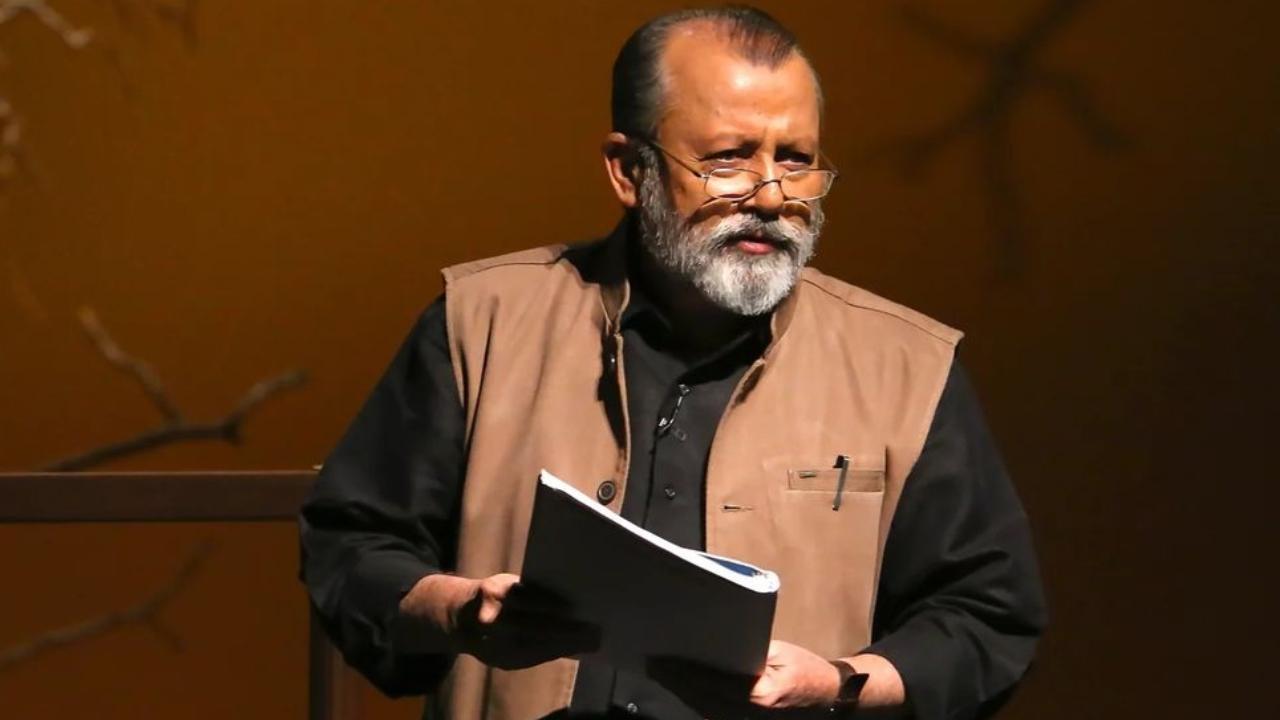
I wasn’t sure of doing Abbaji’s role in Maqbool-Pankaj Kapur
9:52 AM
Preeti Atulkar (BOMBAY TIMES; April 17, 2026)
At 18, when Pankaj Kapur shared his desire to pursue a career in acting, his father asked him if it was the glamour that he found attractive or if he truly had the ability to act. To find the answer, Kapur decided to join the National School of Drama. When he was leaving home to join NSD, his father, an English professor, told him — ‘Now, don’t look back.’ Kapur didn’t. In a career spanning five decades, the actor has excelled in different genres. During a recent interaction in Nagpur, the actor reflected on his journey in showbiz, recalled his NSD days and more.
‘DISCUSSIONS HELPED SHAPE ABBAJI’S CHARACTER IN MAQBOOL’
The conversation steered towards Kapur’s powerful screen performances and it would have been incomplete without the mention of Abbaji in Vishal Bhardwaj’s Maqbool. Interestingly, Kapur was initially hesitant to play the character.
“When Vishal Bhardwaj approached me with the role, I wasn’t sure of doing it. But he was insistent. So, I asked him to leave the script with me and said I would get back within a month. Eventually, I agreed,” said Kapur, adding, “I later got to know that Bhardwaj had offered the role to Naseeruddin Shah first, but he was interested in playing another character and suggested my name instead. Multiple meetings and discussions helped shape Abbaji’s character more effectively. For example, I had suggested to Vishal that Abbaji, who is short in height, be surrounded by tall, well-built bodyguards. The thought was that it will subtly reflect Abbaji’s authority and power,” said Kapur, who featured in the film with Irrfan and Tabu.
‘GRATEFUL TO ALKAZI SAHAB FOR GIVING ME A CHANCE TO DISCOVER MY OWN WORLD’
As Kapur spoke about his NSD days, there was a palpable happiness in his voice. “All the people who enter the world of acting hold Konstantin Stanislavski’s name in very high regard. In my first year, I went to the NSD library and took out Stanislavski’s An Actor Prepares,” Kapur recalled, adding, “Coincidentally, the then director of the institute, Ebrahim Alkazi, was walking in front of me. To impress him, I held the book up. He looked at me and asked which book I had taken and I, proudly, said, ‘Sir, I took out An Actor Prepares.’ To my surprise, he asked me to keep the book back on the rack.”
Kapur asked him why and Alkazi’s response changed his perspective. “He told me that Stanislavski wrote this book after 40 years of theatre experience and gave the world the concept of method acting. He told me, ‘You have to make your own way first. Once you achieve that, you can read this book’. Believe me, it’s been 50 years since I passed out of NSD and I have still not read the book. I am very grateful to Alkazi sahab for giving me a chance to discover my own world,” Kapur shared.
On Jaane Bhi Do Yaaro...
Kapur, who played the builder Tarneja in Kundan Shah’s cult comedy Jaane Bhi Do Yaaro, says that many have thought of remaking the film, but no one has till date. “I think such films are made only once in a lifetime. Many have contributed significantly to the film, but Kundan Shah’s name comes first in that list. It was commendable for him to think, write, and then execute with so much hard work and little money. It’s a film which will stay with the audiences for a long time to come,” Kapur shared.
‘Shahid has made right film choices’
Appreciating his son Shahid Kapoor’s professional moves, Kapur who has directed him in Mausam, said, “It is not easy to direct him because he is a huge star and a fine artiste. I would like to say that he is the best actor in his age group. The kind of characters he is picking need a lot of courage considering the fact that he is a star. He is constantly finding his way, which is a sign of growth for an actor.”
7 Khoon Maaf is a punk rock feminist film-Vivaan Shah
2:43 PM

Neha Maheshwri (MUMBAI MIRROR; February 18, 2026)
As 7 Khoon Maaf completes 15 years on February 18, actor Vivaan Shah, who made his debut with 7 Khoon Maaf, looks back at the film that shaped his understanding of cinema and confirmed his decision to become an actor.
With the distance of time, Vivaan places the film within a wider literary and cinematic tradition. He says, “I see 7 Khoon Maaf as part of a kind of Gothic trilogy by Vishal ji, which includes Maqbool and Haider. All three films contain elements of the Gothic and the macabre in the architecture, the aesthetics, and the emotional landscapes of the stories.”
He says, “Even Omkara and Kaminey carry shades of rural and urban Gothic respectively. 7 Khoon Maaf, Maqbool and Haider also hint at earlier classical literary influences such as Dante and Marlowe, who must have influenced Shakespeare himself. There is even a touch of Indian Gothic of the kind associated with Ismat Chughtai and Saadat Hasan Manto.”
Joining director Vishal Bhardwaj’s set at 19 proved to be a turning point. He says, “Working with Vishal ji was a dream come true. I had been a fan of his from a very early age. I never wanted to be a professional actor, but when this opportunity came my way, I plunged into it even before I had made up my mind.”
The experience led to an epiphany. He says, “On the sets of 7 Khoon Maaf, I decided that I was going to dedicate myself full-time to this profession. I learned an extraordinary amount, including language, speech, diction, tone, cinematic vocabulary, and the art of acting itself. Working with Vishal ji was like a masterclass, almost like film school. He is our Stanley Kubrick. The more you watch his films, the more you learn.”
The film demanded that Vivaan portray the passage of time, a challenge that went beyond prosthetics. He says, “We had an extraordinary prosthetics team from America, which helped immensely, but it was still a challenge from an acting standpoint. Watching Priyanka Chopra do this was one of the most illuminating experiences of my life.”
He says, “I have immense gratitude towards Priyanka for how kind, patient, and helpful she was. I was young, lost, and a novice, but she guided me through an extraordinarily complex character and story. She is one of the greatest actresses and human beings I know.”
Reflecting on her performance, he says, “She gave one of the most mind-blowing performances ever. It was almost like a Sunset Boulevard, Greta Garbo kind of performance. She has the grandeur of cinema icons like Bette Davis and Joan Crawford.”
Fifteen years on, Vivaan believes the film’s politics remain relevant. He says, “Great works of art remain immutable with time. 7 Khoon Maaf is extraordinarily progressive and forward-thinking. It is a punk-rock feminist film.”
Maqbool se mujhe itna faayda nahi mila jitna mujhe milna chahiye tha-Piyush Mishra
6:40 AM

Divya Kaushik (BOMBAY TIMES; October 26, 2024)
“Main film star to nahi ban paya rockstar zaroor ban gaya,” Piyush Mishra said this a few times as he sat on stage to introduce his band Ballimaaraan in Delhi before beginning his music tour Udankhatola. The singer, actor and writer was here to talk about his association with the band, his love for music and how at the age of 62 he has now became a rockstar.
“Gulaal, Maqbool karne ke baad bhi mai film star nahi ban paya kyonki mujh par koi paisa lagane ko tayyar nahi hai... Mujhe laga rockstar achhi upadhi hai ye li ja sakti hai. The kind of response I am getting from my concerts I feel agar mai khud ko rockstar kahunga to mujhe sharam nahi aayegi. I am enjoying this, I may be exhausted when I go on stage, but when I perform and if the show goes well, I am transported to other world. I feel like I have done something. Acting mein apna dum laga do uske bavjood woh response nahi milta hai, haan theater mein milta hai,” he said.
‘I think I am a gifted person that I can act, write, sing’
Piyush told the gathering that he started writing in his childhood and feels that this is something that comes naturally to him. He said, “I think I am blessed that I can act, write. I wrote Sharam Kar Lo (poem) when I was in class eight. Ye ho gaya, maloom nahi kaise ho gaya. I used to write, sing, paint, ye sab ho jaya karta tha. There was some force guiding me, I think I am a gifted person.”
“When I joined NSD I was a kid, but I became a youngster in NSD. When I moved to Mumbai, then Gulaal happened, Maqbool happened, Maqbool se mujhe itna faayda nahi mila jitna mujhe milna chahiye tha. Gulaal was a flop but was a hit on Internet. Then Gangs Of Wasseypur happened and I earned some money. I am 62 now, I only take work that I like.”
‘Jab mai Dilli mai tha Mandi House ke bahar jhaank ke nahi dekha’
Piyush shared, “I miss Mandi House a lot. Jab mai Dilli mai tha, Mandi House ke bahar jhaank ke nahi dekha. Mandi House mein toh meri jaan basti hai. Wahan ka ek bhi kona aisa nahi hai jahan maine rehearsal nahi ki ho. Mere samne kai generations nikli hain, Tigmanshu Dhulia ki generation, Adil Husaain ki, Nawazuddin ki, Pankaj Tripathi ki aur Zeeshan Ayyub ki generation. In sabko apni aankhon se dekhna aur mai ab bhi kaam kar raha hoon, ye bahut badi baat hai.”
‘I celebrated after Naseeruddin watched my play’
Going through the display reminded him of the “good old days.” One of the highlights of the exhibition was the red cycle.
“I don’t know how they (his bandmates) got it here. There is a brief story about this. On August 8, 1985 I did a play which was directed by the same person who directed the Hamlet, Fritz Bennewitz. Naseeruddin Shah came to watch the play, woh to khuda the uss waqt hamare liye. Naseer liked the play, he hugged me aur main toh bilkul hi pagal ho gaya tha. To celebrate that I decided to go to Badkhal lake in Faridabad on my brother’s bicycle. There was a milestone that read Gwalior 320 kms, I thought let’s go to Gwalior. I reached there in two and half days aur haalat kharab ho gayi thi. Ye cycle us lambi yatra ki gawah hai,” he shared.
Aadha lagta hai Irrfan Khan ke bina-Vishal Bhardwaj
10:07 AM

At an event titled Irrfan: A Retrospective, Vishal Bhardwaj and Naseeruddin Shah came together to talk about Irrfan’s unforgettable performance in Maqbool and share other anecdotes about the actor
Harshada Rege (BOMBAY TIMES; February 1, 2024)
It’s impossible to think of Maqbool without Irrfan, but few know that the actor was not the first or even the second choice for the role. Filmmaker Vishal Bhardwaj shared, “Ek actor ke liye toh Naseer bhai ne bola tha ke tumhe goli maar doonga (laughs).”
After the recent screening of Maqbool at an event titled ‘Irrfan: A Retrospective’, filmmaker Vishal Bhardwaj and Naseeruddin Shah shared many such anecdotes from the making of the film, which clocked in 20 years on January 30, and spoke about their association with the actor, who passed away in April 2020.
The first thing that struck me about Irrfan was his eyes: Naseer
Remembering his first meeting with Irrfan, Naseer said, “I met him for the first time when he was rehearsing for a play with Ratna (Pathak Shah). People had told me that he liked me a great deal. When I was introduced to him, he was very matter of fact, there was no fawning. Like everybody, the first thing that struck me about him was his eyes. He had absolutely amazing eyes. I had no idea of the depth of his range. There couldn’t have been a better choice to play Maqbool than Irrfan. Personally, he was very affectionate towards me, and I was very fond of him, but we didn’t meet very often. So, I can’t say that we were close friends, which is something I missed out on, but I continuously admired his work and his attitude towards it.”
Irrfan understood the silences in the script: Vishal
Vishal said, “During Maqbool, we were all discovering ourselves. Naseer bhai supported me a lot and did many workshops. The thing about Irrfan was that he was so effortless that at times, you would feel he hadn’t prepared for the scene at all. He understood the silences in the script so well. Dosti, dosti mein saara kaam ho raha tha, aur lag raha tha ke kuch special ho raha hai. We were grappling with many things, jaise ke paise kam the. Film release hone ke baad jo reaction aaya tab realize hua ke bahut extraordinary kaam hua hai.”

I wasn’t being modest when I said that I envied Irrfan as an actor: Naseer
Talking about Irrfan’s brilliance as an actor, Naseer had once said that he envied him. Elaborating on that, the actor said, “He always seemed to be performing so effortlessly, never did I feel, while watching him perform, that he was straining for an effect or trying to make an impact. My feelings about his movies are uneven. I haven’t liked them all, but there has never been any moment of falseness that I have detected in Irrfan’s work anytime. I wasn’t being modest or anything; I genuinely meant it when I said that I envied him because I know that at his age, I certainly was not that capable or had that much of an understanding of the craft of acting.”
No box-office success can match the pride that Maqbool gives me: Vishal
During the evening, Vishal played a song that Irrfan had sung and sent him during his cancer treatment that brought everyone to tears. The filmmaker said, “Irrfan had a great sense of humour. Even when he was unwell, he would make fun of the doctor. He had caught the doctor’s gestures and would mimic them. Sutapa would keep scolding him ke tameez se baat karo, tumhara ilaaj kar raha hai. Har baat mein Irrfan ka… Main toh andar se toot gaya hoon, kyunki aadha lagta hai Irrfan ke bina. Jab bimar the, tab mujhe messages bahut bhejte the aur gaane bhi gaake bhejte the…”
When asked if he would make any changes for better performance at the box office, Vishal said, “This reminds me of an actor who, after reading the script, said that the hero is a loser (laughs). No box-office success can match the pride that it gives me now.” Is there is anything he would change if the film were made today, Vishal said, “The only thing I would change is bring Irrfan back, but that isn’t possible.”
Vishal and Irrfan’s nok-jhok
Reflecting on the relationship they shared over their many collaborations, Vishal said, “Abhishek Chaubey ki ek film thi Ishqiya, uske pehle Anurag Kashyap ki ek film thi No Smoking. Both the producer and the director wanted me to be associated with it, toh maina apna naam de dediya. That movie flopped badly. After that, when we started shooting Ishqiya, Irrfan told me that he had given away all the dates meant for Ishqiya. He said, ‘Aapki film toh flop ho gayi, toh mujhe laga aap toh aage banaoge nahi.’ Toh mein bahut gussa hua, aur hum dono ki do-teen saal baat bandh hui thi.
Phir main jab 7 Khoon Maaf bana raha tha, I was unable to cast for the part that he eventually played. When I called him for it, I told him that I had a small role for him. He said, “Aap jo bhi bolenge main karunga, mujhe toh aapko manana hai.” Par jab editing ka time aaya, toh woh role kaatna pada. He got angry.”
He added, “For Haider, when I spoke to him, tab unhone kaha ke pehli shart yeh hai ki jo part kaata tha 7 Khoon Maaf mein usse YouTube pe release karo. Maine kaha theek hai, par aaj tak woh nahi mila. Haider ke waqt unhone kaha ke main paise bahut loonga tumse, kyunki tumne mere saath yeh gadbad ki thi. I said the role is yours and the money is also yours because I knew nobody could play the Ghost. After the trial of the show, he said, ‘Agar aisi entry deni thi toh paise kyun diye?’”
Sutapa's memory of Maqbool
Irrfan’s wife, Sutapa Sikdar, and son Babil were also present at the event. Sharing her memory of Maqbool, Sutapa said, “They were shooting the film in Bhopal, and I was pregnant with our younger son Ayaan. Suddenly, the doctor said that I might have the child. So, Irrfan rushed back, once he reached here, he started speaking to Ayaan, ke bahut nuksaan ho jayega Vishal ka, tu aisa mat kar. And the child actually seemed to have heard him. He was born two months later.”

Every time Shah Rukh Khan and I meet, he repeats, we have to do a film together-Vishal Bhardwaj
9:02 AM
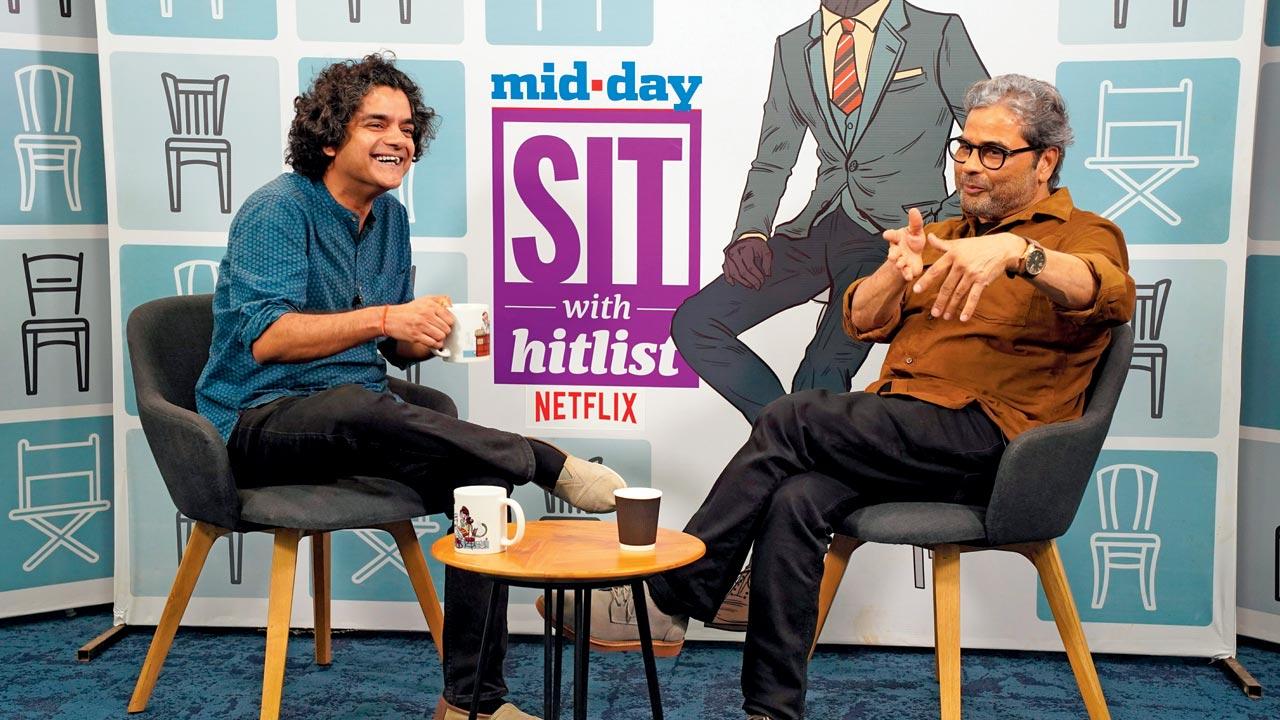
One of India’s greatest filmmaking talents ever, polymath Bhardwaj, opens up on the man behind the movies
Mayank Shekhar (MID-DAY; December 16, 2023)
Gulzar-Vishal Bhardwaj's musical combo is top of the charts’ stuff. But Vishal’s first mentor, from the world of poetry was, in fact Dr Bashir Badr, whom he calls the “greatest poet of the century, an asset to [his hometown] Meerut,” who had to flee Meerut, however, because of the riots in 1984.
Bashir Sahab had heard rumours of a likely attack on his house in Shastri Nagar. His home was indeed burnt down by a raging mob later.
In the rush that he fled for Bhopal, Bashir Sahab left behind his diary, with all his poetry, written over the past year. When he briefly revisited Meerut, he asked for two people—one, Mr Bhandari, who was 70 years old, and the other, Vishal, who was 19 then.
He asked both if they remembered the ghazals and his poetry from the destroyed diary. Bashir Sahab had gone into depression. Between the old man, Bhandari, and teenager, Vishal, they recalled all of the great poet’s works to him, word for word as he penned them back again: “This is how Bashir Sahab got out of depression.”
Vishal used to spend every evening, listening to Bashir Sahab’s words of the day. With poetry, he says he has a photographic memory: “At one point, I could recite the entire book of Gulzar.”
This Bashir Badr story I’d heard before, over drinks, with his former associates once. As is with such nights, I’d forgotten most of it the next morning.
Including details of the tragic events preceding Vishal’s father Ram Bhardwaj’s demise—which he recounted in detail, before a live audience, during this conversation. Only, a few weeks later, he sent in a word if that anecdote could be omitted. It’s about father and son. Too sensitive. We left it at that.
Earlier, he would cry, recalling the incident to do with his father’s death. But he says, “I found my catharsis in that scene in Haider [2014], when Shahid [Kapoor] returns to his home that’s burnt down, and he’s holding a cricket bat.”
The other story about Vishal that I have stored in my hazy memory, hanging with his former colleagues, is about how, as a kid in Meerut, he was caught in a crossfire, and he saw a dead gangster, right in front of him.
“Oh, those are actually two separate incidences,” Vishal says. “There was Tyagi Hostel in Meerut, where all these gangsters used to live. There was a wall, with a hole, between my school and the hostel. That’s the short-cut route we took to get to school. This is where the [chief] gangster used to live in the warden’s house. The warden used to live in the hostel!”
“On my way, I would see him lay out and dry his bullets, guns, grenade, in the sun. The gangster was very fond of me and other kids. He would offer us to hold his gun, tease us with pulling the trigger.”
“Once, during school exams, we heard gunshots fired. We went over to the gangster’s courtyard after. And he was lying dead, right there, with fresh blood, killed by cops, in a gang war! That’s the first time I saw a dead body. I was in Class VII, so must’ve been 12 or something.”
The other incident has to do with Hindu-Muslim riots, which Vishal says was common enough in Meerut: “But even then, the level of enmity [that we see now] didn’t exist.”
Vishal’s house was next to a Muslim family’s: “They had a large bungalow. The father was a learned gentleman. He had three daughters. My landlord was a police sub-inspector, with 10 children. Those kids decided ki hum Muslim kama lete hain, meaning score/kill Muslim people [during the riots]. That’s how it worked. I even heard them plan on going after one of the daughters.”
“There was word from the police station that these boys had an hour [to do whatever they liked]—kama lo toh kama lo. That’s before the police would charge in. This is also how it worked. I knew about these boys’ plans. They had bought country-made pistols. They intended to enter the house, and blast the gas cylinder.”
“The Muslim man inside had a Donali [double-barrelled gun] that he shot in the air. During what ensued, I got caught in the crossfire, and found my way out of it, into another house. My family got worried, because I had gone missing.”
This is when Vishal naturally pauses in the chat: “That’s the psyche of a mob. I have seen it. You ask an individual to kill another? They won’t. You get 50 people to do the same, without taking on guilt and moral responsibility? They will. This is why incidences like lynching and mob behaviour pain me. The support comes from the system.”
As with many great artistes, you only have to dig into Vishal’s past to figure what informs his life as a filmmaker and public figure too. Although pretty much all of his films, as a director, have been based on works of literature.
It might be fair to say, that’s only on paper. Consider his last feature, Khufiya (2023, on Netflix). It’s adapted from Amar Bhushan’s novel, An Escape To Nowhere.
I first read the book in 2013, basis a recommendation in Swapan Dasgupta’s column in The Times of India. Page for page, the film barely reflects the original text, which was more a survey of bureaucrats, fighting over foreign postings. Which is probably what R&AW really is, on a daily basis, anyway. Rather than Salman/SRK like James Bond agency, banging it in the killing fields.
Vishal says, “The book is a cold account of a surveillance operation. The detailing is so good. [Author] Amar Bhushan-ji was once the counter-espionage chief himself. Now, such a book is not even possible. Because the government has placed a ban. No officer can write such a book anymore.”
What about the leap of faith that he takes thereon from the book—surely, he had R&AW agents/officers vet the script, in case it seems too far-fetched? The original research, Vishal says, came from “seven to eight years spent”, working on a film based on the IC 814 hijacking (of 1999).
“I met Mr Ajit Doval [currently India’s national security adviser] several times. He had then retired [as the Intelligence Bureau chief]. Doval Sahab is a fascinating man, and a great storyteller! I also interacted extensively with ex-R&AW chiefs, Mr [A S] Dulat, Mr [C D] Sahay… Along with Mr [Vivek] Katju, the foreign secretary—these were the gentlemen chiefly negotiating with the hijackers. In any case, they really tell you what they want to. They might make you believe they’re answering your questions. But they’re not. It’s their point of view.”
Vishal’s film on the IC 814 hijack subsequently got shelved: “After the Tandav episode, Amazon Prime Video got paranoid. They pulled the plug on the project. They said they don’t want to touch anything political. The film actually had nothing to do with politics. The whole country was humiliated in that episode. It had nothing to do with a party. Now, Anubhav Sinha is making a series on it for Netflix.”
During the IC 814 homework, Vishal also met the IPS officer Arun Kumar, who was associated with the incident. In 2008, Arun became the first investigating officer from the CBI on the Aarushi-Hemraj Noida double-murder case (still unsolved, by the way).
Hence, Meghna Gulzar’s Talvar (2015), which Vishal produced and scripted, with precious/incisive details from Arun who, in turn, inspired late Irrfan’s character in the film.
Tabu, Vishal’s other muse, plays the lead in Khufiya, while the spy-thriller follows this R&AW sleuth’s story of love and loss with her Bangladeshi handler. None of which, of course, exists in the novel that the film is based on.
Citing his Shakespearean adaptations (Maqbool, Haider), to works of Ruskin Bond (The Blue Umbrella, Susanna’s Seven Husbands), Vishal says he’s essentially keen on the basic plot: “I have to know the drama I’m creating—and find a three-act structure, voice, characters, and my own politics and social environment in it.”
To illustrate this best, no better example than to go back to the aforementioned Tyagi Hostel, along with Meerut’s Kachehri Road, full of gangsters, Anand Shukla, Rampal Tyagi, et al. All of whom treated Vishal as their “blue-eyed boy.” Because he could sing and play cricket well. Watch them placed together in Omkara (2006), i.e. Othello. Shakespeare feels like an excuse.
One of the gangsters Vishal knew there was Langda Rathee, who got onscreen as Langda Tyagi. And that’s Saif Ali Khan, in what was easily the greatest casting-against-type for the decade. Vishal thanks Aamir Khan for this unusual choice.
Around the time, Aamir and him were zeroing in on a script, Mr Mehta & Mrs Singh, to work together: “Aamir was seeing the film a certain way. When we were close to the shoot of Mr Mehta & Mrs Singh, he was uncomfortable about how I was seeing the film. We are both headstrong people. We parted ways. But he’s great fun to spend time with, and during our chats, I told him about Langda Tyagi, the character I was writing.”
Aamir was fascinated by the world (of Omkara), and Langda Tyagi’s language, in particular, and wished to be considered for the part. He got busy with his next (Rang De Basanti).
Vishal was too eager to hit the set, rather than wait for Aamir, which would take long. But he realised, “Aamir is intelligent, and commercial. If this role can excite him, I’m sure it should excite another star.” Hence, Saif 2.0 (post Dil Chahta Hai).
There’s been was a similar hit-and-miss between Vishal and Shah Rukh Khan. They were to adapt Chetan Bhagat’s 2 States together (later filmed by Abhishek Varman on Arjun Kapoor, Alia Bhatt). What happened there?
Vishal says, “We had differences over the setting. I wanted to set the film in a bank like ICICI, and not in a college, or elsewhere, that Shah Rukh would’ve preferred. We felt the pain, though. I recently wished him for Jawan. Every time we meet, he repeats, we have to do a film together.”
While his sensibilities are innately artistic, it’s evidently clear, Vishal has throughout aimed for a spot in the mainstream, and achieved it, in his own right. He emphasizes, “Maqbool [2004] opened the doors for me!”
----------------------------------------------------
An apt way to introduce Vishal, as we did in this conversation, is as one of India’s greatest filmmaking talents, ever. There have been few polymaths with that many hyphenated top-end talents, within desi filmmaking—director, producer, music composer, singer, lyricist, writer of screenplays, and dialogues (often separate in Hindi cinema, because most don’t hold an equal command over language).
Vishal writes dialogues in pen on A4 sheets. But gets confused with his own handwriting later. One thing he misses his former associate Abhishek Chaubey (Ishqiya, Udta Punjab) for is deciphering what he’s written. Now, he has to figure it out himself. The instructions on the screenplay he keys directly into the computer.
The greatest polymath of all in Bombay was probably Kishore Kumar who, Vishal tells me, he shares his birthday with (August 4)!
But much before all of the above, Vishal was an “all-rounder” cricketer once—batter, and right-arm spinner—with an eye on international cricket. Former Test player Gursharan Singh spotted him in a match in Meerut, and suggested he move to Delhi. Which is the reason he did.
“I couldn’t have made it to the Indian team from UP. It was too big a state then [Uttarakhand hadn’t been bifurcated]. The facilities weren’t up to the mark. And the UP team barely made it up the chain in the Ranji Trophy. So, I would have never got noticed.”
In Delhi, he played with the likes of Manoj Prabhakar, Maninder Singh, Sunil Walson, Tilak Raj (who Ravi Shastri hit for six sixes), Chetan Sharma… Speaking of the latter, did Vishal whack Chetan out of the park, ever? “Yeah, I did.” That’s one thing he has in common with Javed Miandad!
Reminiscing those times is a lot like, as Vishal quotes Ghalib: “Yun hota toh kya hota!” Dealing in ‘counter-factuals’: “I came to Delhi. Right before the match, I broke my thumb. Couldn’t play the whole year. Next year, my father died. If cricket hadn’t left me, though—how would I have been in music, or the movies then? This world has no retirement age!”
“Since then, I’ve learnt that if something unlucky happens to me—a greater reward awaits. I feel bad, of course, when something happens. But I don’t get disappointed.” From an early age, Vishal used to dabble in musical instruments lying around. Music was internal to his home.
Although with a day-job, Vishal’s father Ram—“everyone called him Ram Sahab”—was a lyricist in Bollywood. He would often visit Bombay, from Meerut, with family.
This is when Vishal spent time with film/music folk in Bollywood. On one such evening, his dad mentioned to his friends about how Vishal, “around 18 then”, had composed a short tune over his father’s lyrics.
His dad’s friends were hugely impressed. They got composer Usha Khanna on the phone to hear it. Usha loved it enough to include it in the final composition.
“That someone like Usha-ji took my tune to expand into a whole song gave me my first validation. That validation gave me confidence.” The song, Khuda Dosti Ko Nazar Na Lage, is from the film, Yaar Kasam (1985). At 19, Vishal recorded his first composition. Asha Bhosle was on the microphone.
After college in Delhi, he moved to Bombay with a job at a music label to pursue music, professionally. Vishal also had a brother, Rajeev, seven years elder to him, in Bombay—struggling to make it in films as a producer: “He had no money. But he wanted to produce movies. How do you?”
Rajeev passed away early. Decades later, Vishal became a formidable producer in Bollywood. I wonder if he feels, in some ways, it’s the story of two siblings coming full circle? He just wishes his brother was around to see it.
Filmmaking itself was an invisible milestone in his head, he says. “I had no intentions. I had seen nothing. Manmohan Desai to Blue Lagoon [for the sex scenes] was the range of my film knowledge!”
It was during the making of Maachis (1996) that he was composing music for, Vishal recalls, “Gulzar Sahab told me, I’ll become a director in five years. He actually pushed me into it. I used to ask him too many questions during the filming, editing…” The children’s film Makdee (2002) marked Vishal’s directorial debut.
Given he was a musician first, isn’t it strange that he’s never attempted a proper musical in films? He reasons, “In my earlier movies like Omkara, Maqbool, I did have actors lip-sync to songs. Because I also wanted to retain my power as a composer. With time, the purity of cinema took over. How do you then justify lip-syncing? The background score is the director’s voice. Anyway, India has a long tradition of cinema and music. Even if I do a musical, it would have to be on a subject that is totally non-musical.”
By the looks of it, his current obsession may be mystery/thrillers. After Khufiya on Netflix, his series Charlie Chopra & The Mystery Of Solang Valley, based on Agatha Christie’s The Sittaford Mystery, dropped on Sony LIV. Which, he says, happened primarily because of the pandemic.
“The world was under lockdown. I was convinced we were in it for five to 10 years, or perhaps forever. How does one survive creatively for that long? Many years ago, I had been offered Agatha Christie’s entire library of Hercule Poirot and Miss Marple titles to adapt. Well, this is what we could do, I thought—shooting in constrained settings [during a pandemic]. I got back to the person, who had connected with me back then.”
What does he find in common between films and music, I ask Vishal. He says, “That they both work on the three-act structure, inspired from life, of course—bachpan, jawani, budhapa [childhood, youth, old age].
“Also, like with films, we don’t know what works in music. It cannot be calculatedly recreated, even though there are really seven notes.”
How about films and cricket—what does he find similar between the two: “Captainship. That you take along a team, especially when things aren’t going right. And they seldom do.
“Also, to accept defeat gracefully, and learn from the defeat.” Are there instances from his films that he’s learnt from, in terms of failure?
“It would be on the technical aspects. Take Rangoon [2017]. The release date was set. But we were not getting the VFX for the final scene right. I should have put my foot down. Held the release, like Sanjay Leela Bhansali does. I was making a Rs 70 crore film in a Rs. 35 crore budget. I had become overconfident from all that we had managed to achieve, even on the VFX front, coming from Haider.”
----------------------------------------------------
There is genuine integrity/sincerity that Vishal exudes during conversations, and in general too, as his former peers/associates always testify, when his name crops up.
At a recent concert in Mumbai with singer-wife Rekha Bhardwaj, their first time together—they met at Delhi’s Hindu College in the ’80s—she called him a “genius”. Which was one way to put it, as we watched Vishal go from soft ghazals to unexpectedly banging it with the vocals to Kaminey’s Dhan Te Nan on stage!
But along with the ‘shayrana’ mellow, there is also a hardcore side to his personality, I reckon. For instance, I point to him a tweet I came across long ago, where he made a political statement. A troll in the comments section taunted him, asking who did he thinks he was?
Normally, people ignore response, when none is merited. Scrolling down the screen, I noticed Vishal, 58, tell the troll: “Tera baap hoon [I’m your pop].”
He laughs, but declaims, in all seriousness: “There is a gangster in me. Maybe in retirement, the poet is taking over. But the spirit is there—against injustice, or if things aren’t going my way.” Consider this untold story of Maqbool (2004), his breakout film, that is on its 20th year.
One of the things I noticed about Maqbool, seeing it after long, is how little Bombay there is, in terms of live location, in a film about the Bombay underworld. Which can also be said for Mani Ratnam’s Nayakan (1987), upon re-watch.
Some of this is deliberate, Vishal says: “By 2002-03, the Bombay underworld scene had shifted to terrorism. We actually wanted to show a more old-world mafia with Maqbool.” He had knocked on every door to fund the film. Including the possible cast—for instance, Kamal Haasan was the original choice for the title role.
IDBI Bank had launched a scheme to finance films then. Vishal applied there as well. Producer Manmohan Shetty was on its script consultation committee. As was producer Bobby Bedi.
Manmohan had him over for a drink, simply to tell Vishal that he had saved his ass: “You have actors like Naseer, Om Puri, Pankaj Kapur… How would you’ve ever recovered a Rs 2.86 crore loan? I did you a favour, by rejecting it.”
Bobby, however, showed interest in the script, to come on board, with the funds. That’s how Maqbool kickstarted. How does one arrive at the old-world look?
Vishal says, “I had seen a haveli in Bhopal, which is exactly where we needed to shoot [Don Abbaji’s world]. So, 25 days in Bombay, 25 days in Bhopal. That was the shoot.”
“Only, that once we got to the Bhopal leg, Bobby said there was no budget for it. And that there is a mansion at the Films’ Division office [on Pedder Road in Mumbai]—it’s colloquially called the ‘Films Division haveli’—where we could shoot. I said I won’t. He said he won’t make the film then. I said, let’s not make the movie!”
It was a Friday evening, Vishal remembers. He got home, made himself a few stiff drinks, and switched off his phone for the next two days. Bobby came knocking at his door on Monday, asking why he’d gone incommunicado?
“I told him, what’s the point of meeting? My fees for the film, including music composition, direction, script, was Rs 30 lakh. Bobby suggested that the Bhopal shoot would cost Rs 60 lakh. And that he was willing to put in Rs. 30 lakh, and I could put in my Rs 30 lakh.
“I just said—if you had told me earlier, I wouldn’t have drunk so much on Friday! Even to this day, while I was the producer, I didn’t make a single penny from Maqbool. But how does it matter? Look at all that I earned!”
FICCI Frames: We are upset, deformed madmen who hang around here despite not being paid for many years-Sudhir Mishra
10:13 AM

Niharika Lal (BOMBAY TIMES; May 6, 2023)
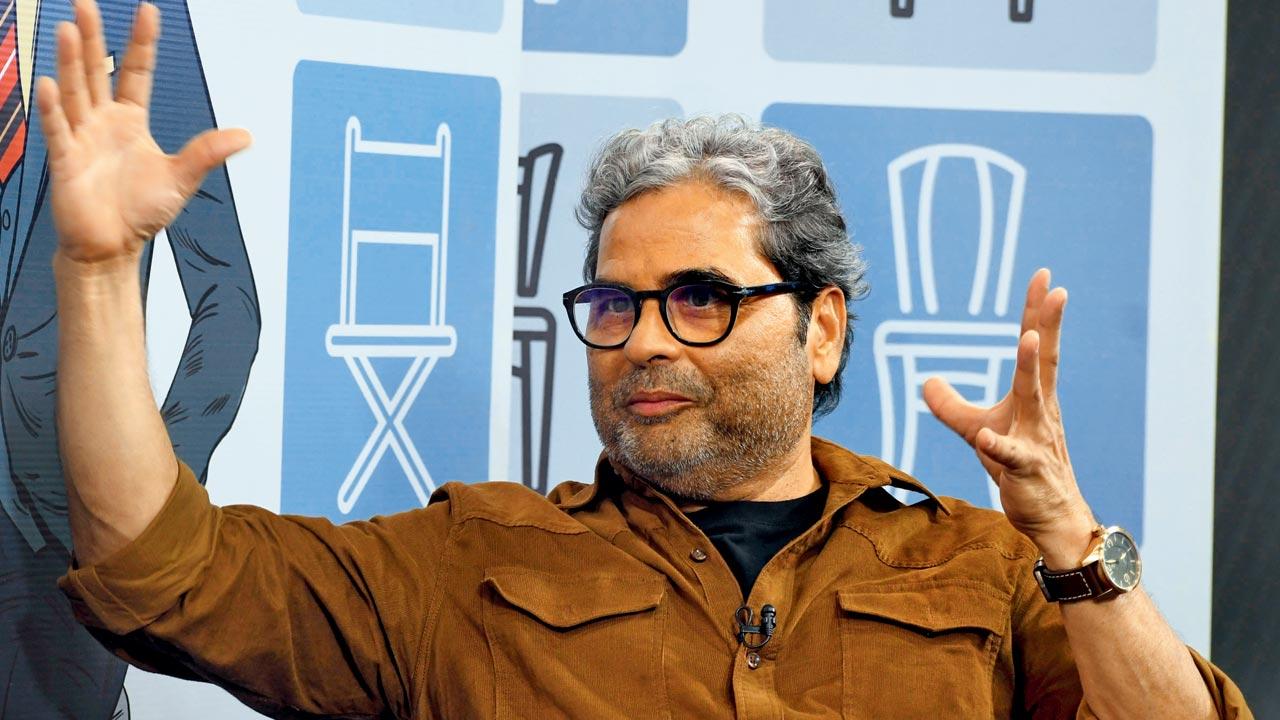
Does Bollywood exist? Is filmmaking an industry? Are filmmakers part of a system or are they freelancers doing their own projects? Is showbiz actually a business? When these questions were asked to four filmmakers – Sudhir Mishra, Hansal Mehta, Sriram Raghavan, and Abhishek Chaubey – at a session titled ‘Creating the magic of cinema’ at FICCI Frames, they shared how the magic of movies works on them.
The filmmakers, who have spent over 20-25 years making movies, spoke about how the industry is more than just the term Bollywood, it’s a place where people support each other, and that it’s an industry based on emotions.

‘BOLLYWOOD DOESN’T EXIST; WHAT EXISTS IS A RESPECT FOR EACH OTHER AND A DESIRE TO SHARE OUR WORK’
Talking about the film industry, Hansal said, “Bollywood doesn’t exist. There is no Bollywood. What exists is a lot of respect for each other and each other’s work. There is a desire to share what you have done with each other. Say, the preview of Udta Punjab – every director who was assaulted was there to support and watch the film. That for me is an industry – where you are supporting each other’s’ work.”
Agreeing with Hansal, Abhishek, who has directed films like Udta Punjab and Sonchiriya, recalled, “When Udta Punjab got into all sorts of problems, a press conference was organized. Literally, the entire industry turned up...They are talking in one voice for the film of a guy they don’t even know really well. In that sense, it was brotherhood or fraternity, or whatever you may call it. We are not an industry in the traditional sense, but we pretty much are. I love the medium of movies and I thrive on it. It is the only sensible thing I do in my life.”
Hansal said that for him, an industry is where filmmakers appreciate each other’s work and learn from it. He recalled, “When I saw Vishal’s (Bhardwaj) film Maqbool… I called him, and said, ‘Vishal, I wish I had made my first film after I saw this. I would have learnt from this and made a better film.’ That’s what happens when you see the work of a colleague and you see the work around you. When I saw Jubilee, I messaged Vikram (Motwane), ‘How do I even try to become like you?’ I think that, for me, is the beauty of the industry.”
Recalling when his first film (Jayate, 1999) made it to the Indian Panorama section (of International Film Festival of India), Hansal was told that Sudhir Mishra was on the jury. “I knew that Sudhir Mishra made Dharavi (1992). When I met him, he hugged me and said, ‘Bahut achhi film banayi hai yaar tu ne,’ and that was it! It’s now been 26 years since that day and I think that pat on the back, that hug was the industry. Everything comes out of passion and emotions. It is an industry based on emotions.”

‘WE ARE SLIGHTLY UPSET, DEFORMED MADMEN WHO HANG AROUND HERE DESPITE NOT BEING PAID FOR MANY YEARS’
Sudhir, known for films like Chameli and Hazaaron Khwaishein Aisi, said he “never liked the word Bollywood” and would rather call it “the Indian film industry”. He added, “That’s why I’m very comfortable with Vetrimaaran or somebody in the Kerala industry or Bengal, because we always grew up in the independent cinema movement. (It’s not) that people are understanding internationally our cinema (now)… they understood it with (Satyajit) Ray, no? Now, you have to set up stalls. When Ray was making films, you just had to walk around Cannes and say ‘Hey, Satyajit Ray film’ and everybody went to you. There has never been a person like him.”
Sudhir added that the money aspect of filmmaking is necessary, but that’s not what cinema is about. “I think we are all fanatics and we love this muse called cinema. We are slightly upset, deformed madmen who hang around here, and like he (Hansal) said, we have hung around here despite not being paid for many years. I often put in my director’s salary to complete the post-production. Why? It’s kind of lunacy... People who are in cinema can’t do anything else. I think that’s why they stick around. The medium loves us. It cured me. I’m sane because of it. There is so much that it does for me. Can I screw it for money? No.”

The dialogues have references to various Bollywood films as a tribute to multiple noir filmmakers-Vasan Bala
8:13 AM
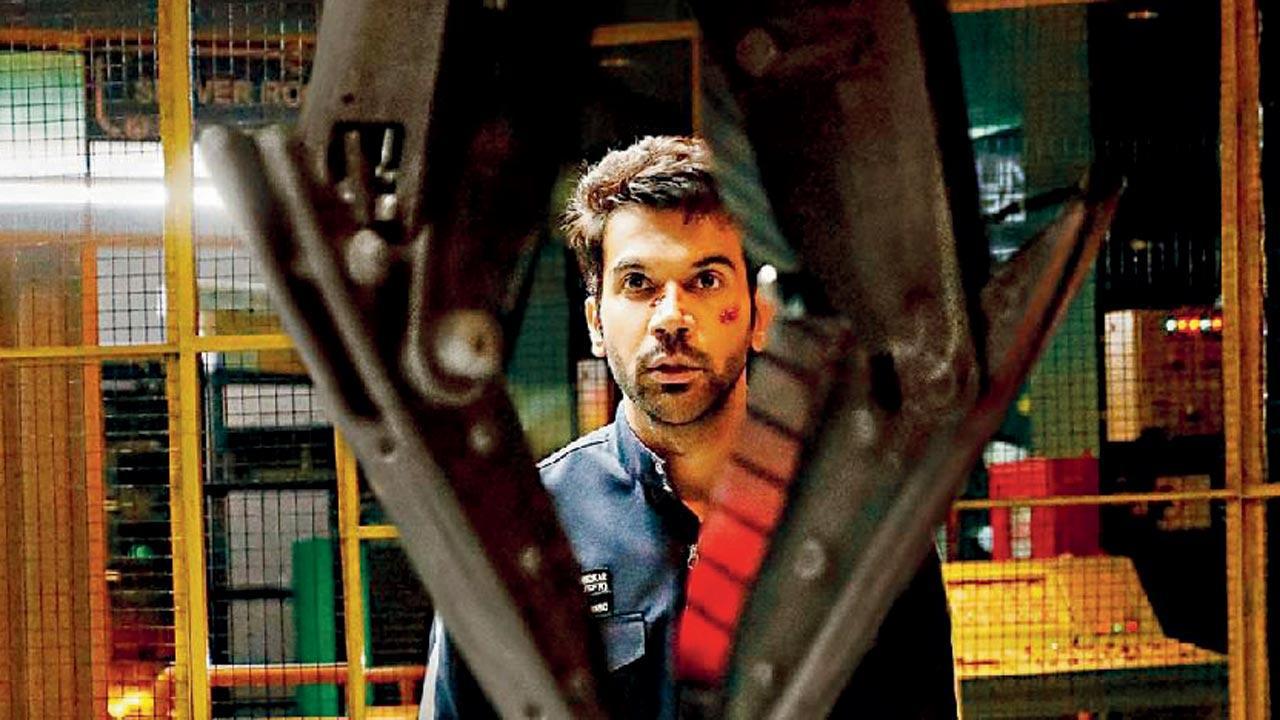
Monica O My Darling director thrilled to see audiences picking up on dialogues that are his tribute to filmmakers, including Vishal and RGV
Uma Ramasubramanian (MID-DAY; November 18, 2022)
From the get-go, it’s obvious that Monica O My Darling is Vasan Bala’s nod to his favourite noir films, from ’70s Hindi cinema to Hollywood. If the title is borrowed from one of R D Burman’s biggest chartbusters, Huma Qureshi’s opening scene reminds you of Helen’s dance numbers that were a staple in the decade.
And with that begins the 129-minute enjoyable game of spot-the-reference in the Rajkummar Rao, Qureshi and Radhika Apte-led noir murder mystery — from Nasir Hussain written on a pick-up tempo, to the name board of a building having Guru Dutt, Sriram Raghavan and Anurag Kashyap, among others, listed as residents.
Bala doesn’t stop there with his meta references. The clever dialogues too have caught the audience’s attention. “The dialogues have been placed cannily in scenes, and have references to various Bollywood films as a tribute to multiple noir filmmakers,” says the director, a follower of Raghavan’s school of cinema.
He is happy that the dialogues — a hat-tip to various filmmakers, including Vishal Bhardwaj and Ram Gopal Varma — are being enjoyed by viewers. “I didn’t think of the dialogues as punches. It started off as a fun exercise. The line ‘Main bhi dheel dene wali nahin hoon re, Chandu’ is a nod to Ramu’s Company [2002], and ‘Bol Monica, jaan meri’ to Vishal Bhardwaj’s Maqbool [2004]. After a while, it snowballed into many VHS, DVD cinema memories, and blended into the language of the characters. I am glad they gelled well with the characters who said them.”
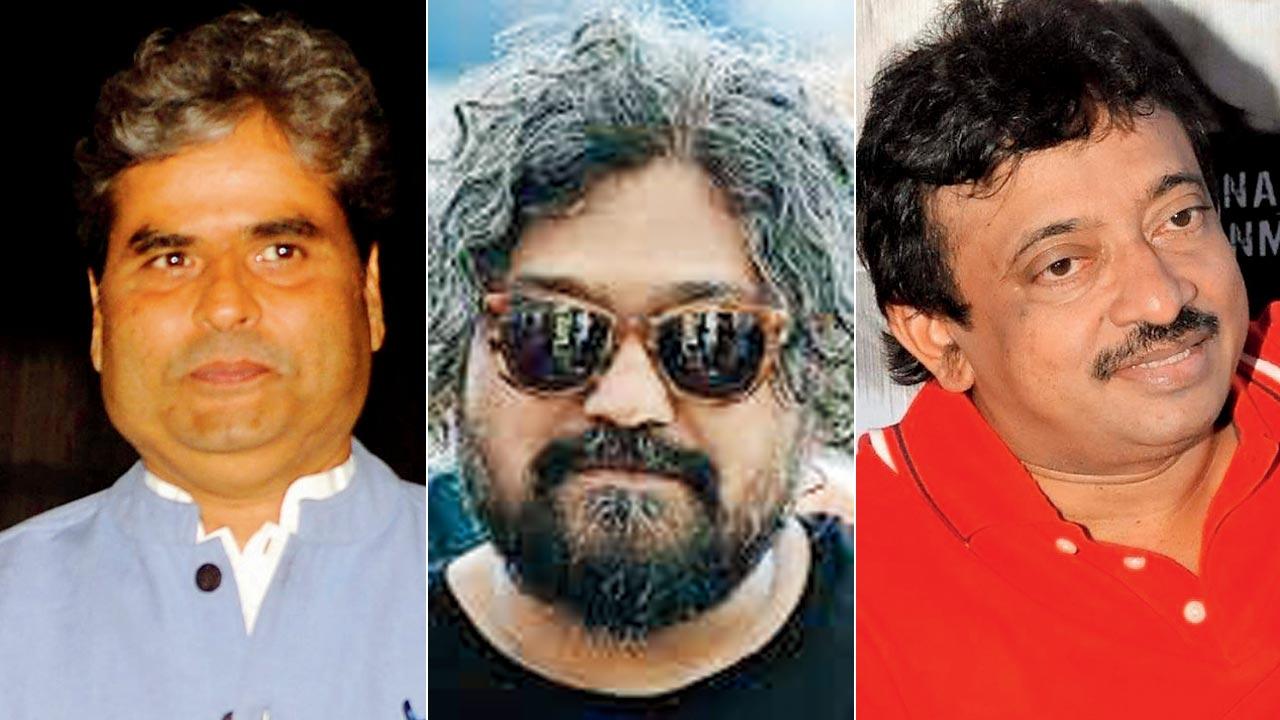
Vishal Bhardwaj, Vasan Bala and Ram Gopal Varma
Filmmakers cast TV actors when there is no other option-Ajay Gehi
8:03 AM

Tanvi Trivedi (BOMBAY TIMES; September 6, 2021)
Years ago, Ajay Gehi bid adieu to the small screen after he landed a role in Maqbool (2003). Later, he went on to do films like Raavan (2010) while his Gujarati film The Good Road (2013) was the official foreign language film entry at the Oscars from India. After dabbling in films, the actor is now back on the small screen with the TV show Hero - Gayab Mode On.
Ajay says, “I have landed an interesting role; I play the antagonist. To be honest, I had never really said goodbye to television. After slogging for many years and with film projects not releasing due to several issues, I felt it was a mistake to have left television.”
Ask Ajay what went wrong with his film career and he says, “I can’t complain because I landed an important role with the talented Irrfan in Maqbool. Then I did Raavan and went bald for the film, only to find out that most of my scenes were edited when the film released. Most of my films, either did not release or the production ran into trouble. Since I had to keep my kitchen running, I started doing voice overs, stand-up comedy, singing and performing on digital and live platforms.”
Ajay adds, “There are examples of TV actors making it to films, but very few. Filmmakers cast us only when there is no other option left.”
However, Ajay is optimistic about the future. He says, “In a way, the pandemic has made people realise that there are hard-working actors like us, too. Thanks to television, my career is getting back on track again.”
I was told to my face that I’m not quintessential hero material-Vikrant Massey
9:15 AM

Renuka Vyavahare (BOMBAY TIMES; August 14, 2020)
Born and raised in Mumbai (contrary to popular perception, he isn’t from Nagpur), Vikrant Massey was noticed in the popular TV show, Balika Vadhu. He made a foray into cinema with Lootera (2013) and though he’s had his share of struggles, he has made his presence felt in noted films like Dil Dhadakne Do (2015), A Death In The Gunj (2016), Lipstick Under My Burkha (2016) and Chhapaak (2020). In a conversation with BT, he spoke about the insider-outsider debate, nepotism, stereotypes and film elitism — why it is difficult for TV actors to get a breakthrough in films.
Vikrant said, “Sabke struggles alag hote hain, but we grow up in a culture where films are perceived as idealistic. We idolise filmmakers and what’s it like to be a film star. All those notions are destroyed when you try become a movie actor.”
‘TV ACTORS KO FILMON MEIN BADE PARTS NAHI MILTE’
Despite being a Mumbaikar, when Vikrant switched from TV to films, he had to swallow unsavoury comments. He revealed, “TV actors ko filmon mein bade parts nahi milte. Do-teen scenes ke role milte hai, yeh perception ban gaya hai and it’s true to an extent. People think since you’re a household name, you lack fresh appeal. Why does it take someone’s (Sushant Singh Rajput) death for us to be kinder?”
“I was told to my face I am not quintessential hero material. I am not the good-looking guy with biceps. Yeh sab sunke aapki himmat toot jaati hai. These comments weren’t positive and I took it personally. I was angry, but I used that anger to prove these people wrong. As an actor, I had over 10 years of experience in TV, but that wasn’t counted. You have to start from scratch and you have to adapt as these two are different mediums with different priorities,” said Vikrant.
‘STAR KIDS HAVE ACCESS TO INFORMATION THAT WE DON’T’
The actor believes that merit is given credibility today, but those who belong to film families are bound to have an edge. He elaborated, “Unless you are a good actor, you won’t survive. As far as the disparity is concerned, it is tougher for outsiders. Star kids have access to information that we don’t. Unko dhoop mein bithaake nahi rakhte, unko auditions nahi dene padte. Also, the respect you get on set is directly proportional to the length of your role and how important you are to them. I was lucky to get a Lootera. To be able to work with Ranveer Singh, Anurag Kashyap and Vikramaditya Motwane was a big deal. However, I wasn’t given the script of Lootera beforehand, because I was playing the supporting part. When asked, I was told, ‘We can’t give it to you now’. Ranveer got the script in advance and this is common for most films. Bade studios aapko script nahi denge, unless you play the hero. Heroes are treated differently. Things have changed for me now since I am considered as a breakout star. I get scripts today, but hierarchical system hai. If a person plays a servant in a film, he is actually treated like one on set, unless he is an NSD alumnus or leaves in a BMW. Then even the ADs treat you differently.”
Vikrant also blames the audience, media and actors for not breaking the chain. “Log utne hi important hai, jitna unko importance diya jata hai. Are the big production houses the only ones making films? Why is their validation so important to you? A leading production house had refused to cast me as the lead, because I played a smaller role in Lootera. They politely declined and said they admired my work nonetheless. I was told, ‘Hum aapko chhote roles hi de sakte hai.’ People are not obliged to give you the part you want. Life for everyone across the world is unfair. You need to grow a thick skin. The nepotism debate is being blown out of proportion. It exists, but it is not impenetrable.”
‘I CANNOT STRESS ENOUGH ON THE IMPORTANCE OF HAVING THE RIGHT PEOPLE AROUND’
For aspiring actors, clarity of thought is important. Vikrant said, “When I saw Irrfan’s performance in Maqbool (2004), I decided that’s the kind of work I want to do. I have grown up admiring actors like Balraj Sahni, Naseeruddin Shah, and now, Rajkummar Rao. Some actors want to be like Hrithik Roshan, while some aspire to be like Irrfan sahab. You need to know what you want. Having family and friends around, who you can rely on, helps a great deal. They make sure you don’t get carried away. I cannot stress enough on the importance of having the right people around.”
‘IT’S GOOD THAT WE ARE NOW FIGHTING FOR EQUAL OPPORTUNITIES’
“If nepotism exists, free and fair opportunities also exist. You have to be consistent and march on thinking accha kaam karna hai. After 16 years in this profession, I am still three-four years away from being in a position to decide the kind of work I want to do. There is no such thing as overnight success. You are in it for the long haul. It’s good that we are now fighting for equal opportunities and transparency, because genuine talent deserves those chances,” the actor concluded.

India's greatest acting export Irrfan Khan no more
8:08 AM

For all the worthy local tributes pouring in for an untimely demise, the fact is, if it wasn't for the West, the Hindi film industry wouldn't have known where to place Irrfan Khan
Mayank Shekhar (MID-DAY; April 30, 2020)
While Mira Nair's The Namesake (2007) introduced Irrfan to the art-house West, there was a 2012 profile of his in The New York Times (by Kathryn Shattuck) that, he reckoned, alerted many in the Hollywood establishment to the person behind the roles he'd done thus far.
This is a couple of years after the last season of HBO series In Treatment that I recall Irrfan calling up from the US to say he was particularly proud of. And a few months before the release of Andrew Webb's franchise reboot, The Amazing Spider-Man, where he played the antagonist.
Titled 'Bollywood Hero, American Everyman', the NYT piece went on to ask, "Could Mr Khan become the first Indian to capture the lead in a mainstream American movie?" It began with Irrfan himself declaiming, "Hollywood isn't ready for an Indian leading man." And Ang Lee later agreeing, while arguing, "But maybe he can do it for us [Asians]. He's definitely rare and very special." Irrfan was dubbing for Lee's Life Of Pi (2012) at the time.
The fact is, up until Irrfan had spent over a decade and half in Bombay, after graduating from National School of Drama (NSD), doing grunt-work on television, with shows after shows — some of them hugely popular, like Chandrakanta, Star Bestsellers, Banegi Apni Baat (that he also directed episodes of) — starting from late '80s, all through the '90s, let alone Hollywood, even Indian cinema wasn't ready for him as an Indian leading man!
That real deal happened only with the British filmmaker Asif Kapadia casting Irrfan in and as The Warrior (2001), in a slow, quiet, Himalayan Western, if you may, with his haunting eyes adding to the striking visuals. Thereon, young Kapadia scripted an Oscar-winning career as one of the world's top documentary whizzes (Senna, Amy, Diego Maradona).
Irrfan finally captured desi imagination with his inimitably insouciant, proper desi-cool turn as the rustic college goon in Tigmanshu Dhulia's Haasil (2003). A lot of local filmmakers, he said, could place him as the new villain in town. He refused a few such roles, only to mesmerise audiences even more as the obsessed lover in Vishal Bhardwaj's magical Maqbool (2004) — unreservedly a masterpiece that Bhardwaj found hard to match, forget with Irrfan (though Haider and 7 Khoon Maaf with the actor were decent attempts).
Thus, a star was proverbially born. Although he'd been around in Bombay all along. This is no time for rona-dhona on ways the film industry functions, while it was always a pleasure to chat about all of this on occasion with Irrfan. He never held back on what he felt or thought, about people and pictures.
Will never forget this one time he told me on a TV interview how embarrassed he felt watching Anil Kapoor jump around him and others at the Academy Awards stage for his role in Slumdog Millionaire (2009), while he hadn't even heard of Danny Boyle before signing up for the film! Or in another interview where he complained about why Shah Rukh Khan had to play out two schizophrenically different films (one with himself all over it) in Billu (2009), with no one ending up liking either, as a result.
That's how Irrfan was, even in public — candid, but meaning no malice, of course. Despite much that he'd been through. To be fair, just casually scan the timeline for when he moved to Bombay. This was the fallow phase when 'parallel cinema' that had inspired him to become a film actor in the first place, had altogether been phased out.
Many of the filmmakers had moved to television.
Irrfan got to do the historical docu-drama Bharat Ek Khoj (1988) with Shyam Benegal. He found a chance to work with Govind Nihalani in Drishti (1990) or Basu Chatterjee in Kamla Ki Maut (1989), in the evening of their careers.
The mainstream space almost wholly consisted of action stars, and thereafter, what he called "chocolate boys". Irrfan was neither. The key issue with him as a young aspirant, he said, was to imagine who he could be like. Until Naseeruddin Shah, from the generation before him, he confessed, metaphorically showed him the way — first from Jaipur where he grew up, to NSD, in Delhi.
An abiding memory of Naseer on screen, Irrfan recalled in a TV interview, was from Umrao Jaan (1981), where he's flirting with Rekha's character, who is visibly annoyed and asks what he's up to. He casually mentions, "Waqt hai toh kuch toh karein, saath (Since there's time let's do something together)."
The first time I saw Irrfan on the big screen was in an NFDC production, Fareeda Mehta's Kali Salwaar (2002), where he plays writer Saadat Hasan Manto, staring at the heroine in the balcony, from across the street. What are you up to, he asks her. "Jhak maar rahi hoon," she says. "Chalo saath mein jhak maarte hain," he retorts indifferently. Few have seen that film. Don't remember much of it either — impossible for me to erase that casually killer moment from memory.
For all the years he was altogether bored of bulk-acting on TV in Bombay, what Irrfan found hardest to do was keep that inspiration alive — even while he found none of it in his work. He found most of it in watching films, right from the time he bought a video player with his first salary in the city.
No actor I know from his generation was as well-versed with world cinema as Irrfan. One of his dreams was to be in the same frame as the French hero Gerard Depardieu. Can't thank him enough for introducing me to the Turkish-German star-director Fatih Akin, much before Akin became a thing. Or filmmaker Michael Winterbottom, who Irrfan, of course, worked with in A Mighty Heart (2007). It is said Wes Anderson specifically pencilled in a part for him in The Darjeeling Limited (2007). He was always ready with a recco.
Perhaps exposure of this sort could also frustrate an actor, in contrast to the work that surrounds him. Irrfan spoke quite often about having decided to quit acting altogether in his early years, since television was all he was doing, and the sort of movies he wished for weren't going to materialise anyway. This is the phase, he said, he actively worked on his craft, since he had nothing to lose. And much less to hope for. To keep himself busy, he said, he toyed with ways to gently seduce the camera, besides attempting to "live in the moment".
This became perhaps what critics/reviewers over-used as "nuance" to explain many of his performances that highlighted most of all, minimal face-acting — least amount of gestures that also kept space for dramatic revelations, when you least expected them. He was the finest film practitioner of 'less is more' — hitting its highest note perhaps with Dhulia's Paan Singh Tomar (2011) that, despite a fair festival run, remained in the can for the longest, before finding theatrical release to top Bollywood awards that year.
More specifically, he could hold a moment. Also there was something infectious about his performances, if you notice, say Deepika Padukone matching her smiles and telling eye-contacts with his, in Shoojit Sircar's Piku (2015). Same between Konkona Sen Sharma and him in Anurag Basu's Life In A Metro (2007). Or most recently, actor Deepak Dobriyal playing off Irrfan's thoroughly restrained yet feisty/OTT comic timing in Angrezi Medium (2020), his last release.
That's what earned him most respect from peers and public alike. I was at a breakfast interview with Naseeruddin Shah in Lucknow (while he was shooting for Dedh Ishqiya) when Irrfan joined in (he was there filming Dhulia's Saheb Biwi Aur Gangster Returns). Throughout Naseer, who's generally frugal with praise and an idol of sorts to Irrfan, called him "Khan Saab" — referring perhaps also to his aristocratic lineage, although he's had a fairly modest upbringing.
There was still something naturally royal about Irrfan's presence, both off but more so on screen. This was a handicap, at least according to one filmmaker critic of his I know. He was incapable of coming across as "low-status", even in roles that demanded so. This is where Nawazuddin Siddiqui held an advantage, apparently. There was minor tattle going on about a rivalry of sorts between Nawaz, 45, and Irrfan, 53. Much of it had to do with the phenomenal success of Ritesh Batra's The Lunchbox (2013), arguably the greatest Indian success abroad, that both starred in.
The fact is Nawaz could never do what Irrfan could, and vice versa. As is true for all unique talents. That royal demeanour no doubt would've helped Irrfan bag the role of Mesrani (probably named after Ambani), the Indian-origin richest man, who's the main villain in the gigantic Jurassic Park franchise film, Jurassic World (2015).
His last major outing in Hollywood was with Tom Hanks in Inferno (2016). Just look at that line-up abroad, even while he'd confound producers back home picking up a hardcore art-house film like Qissa (2013), although scoring huge in the box-office with the comedy, Hindi Medium (2017).
The common adage '50 is the new 40' (in line with people in other decades) couldn't have been more aptly applied than with Irrfan. He was at the cusp of something bigger, having kick-started his career with definitive, defining roles, only in his mid 30s!
At 20, he told me, he had trained all the actors of Mira Nair's Oscar-nominated Salaam Bombay (1988), but failed to star as one of the boys in it, because he was too tall to fit into the frame with them. He lived and learnt most about life from those street kids.
The Irrfan I knew came across as a deeply sensitive man. The ongoing wave of Islamophobia bothered him no end. He also had a dislike for traditional stars and the ways of Bollywood that hinged on them — mildly upset by stuff like, how much he was paid by a friend for a role, and how much was offered to his co-star, for the same picture.
But he also had a playful, roving-eye, happy-high side, behind that gambheer/serious exterior. He was surrounded by friends and well-wishers, I noticed, when graciously invited by his wife Sutapa (they met at NSD), to participate in his episode of the biographical show, Jeena Isi Ka Naam Hai (2012).
Some of this part of his personality you find organically channelled into madcap entertainers like Dil Kabaddi (2008) or Karwaan (2017). Or you could just watch him happily descend into YouTube level sketch-comedy with an AIB video gone viral!
Before he left for NSD, Irrfan's father had passed away. His mother Saaeda Begum was worried that he was going to become a "naach-ganewallah". Whatever that means, he promised her, "Aapko sharminda nahin hone doonga (I won't let you down)." He didn't. Saeeda passed away three days before him.

Irrfan in a still from Inferno
Hindi Medium gave Irrfan Khan & chance to catch up on lost time and conversations-Deepak Dobriyal
8:20 AM

Rachana Dubey (BOMBAY TIMES; March 9, 2020)
 In 2003’s Maqbool, he played Irrfan’s henchman. In 2017, he played his neighbour in Hindi Medium, and in 2020, he will be seen as his brother in Angrezi Medium. In between these, with films like Omkara (2006), 1971 (2007) and the Tanu Weds Manu series (2011 and 2015), he gained credibility as an artiste who can pull off any character with ease. Over to Deepak Dobriyal who talks about his journey so far, why he has never asked for a role and why he loves working with Irrfan. Excerpts:
Angrezi Medium brings you back with Irrfan, and this time, you both play brothers. Post Hindi Medium, you were seen in films which were relatively smaller and niche. This film must be really important for you?
It is very important for me because yes, the films that I did after Hindi Medium had a relatively niche and smaller audience, which would draw footfalls only on the basis of word of mouth. I had not done a commercial mainstream film since then. Being a part of commercial set-ups is just as important for any actor. My role in Angrezi Medium is not just long in terms of screen time, but also crucial to the story. I was getting a chance to work with Irrfan bhai all over again. In the last decade, we could have worked on so many films together, but things didn’t work out. Hindi Medium ke baad, dobara unke saath kaam karne ka chance meri sabse badi lalach thi. Our tuning had worked out so well in Hindi Medium; I was getting a chance to enhance it further. We had a great time off camera, which is evident in the way we have enacted our scenes together. Our chemistry as brothers seems natural. Also, films like Angrezi Medium are important because while you work to enhance your career graph and impress your existing audience, you also have to find inroads into the hearts of the younger generation. I’ve done so many characters, but youngsters don’t remember what I did before Tanu Weds Manu Returns. You have to make yourself accessible to the young generation of audience with the kind of work that they can appreciate. If you think that unko cute ke chakkar mein kuch bhi thama denge toh chalega, you’re wrong. They’re intelligent and discerning.
How do you think your equation with Irrfan has evolved over the years?
I was his henchman in Maqbool (2004), which was a small role. Irrfan bhai cared for me even back then. I remember, there was a patch when I fell ill. I reported to work despite having a fever and he figured that. He got me a three-day break and kept a tab on my health. A gesture like that can never be forgotten. I had promised myself that I will always be there for him, come what may. After that, we stayed in touch and met a few times as well. He loved my work and I loved all his films. I wanted to work with him again and when Hindi Medium came by, I grabbed it. It gave Irrfan bhai and me the chance to catch up on lost time and conversations. At that time, we used to shoot all day, go swimming at night and have meals together. On the shoot, he stopped people from interfering with the way I was trying to improvise my scenes. He supported me like a brother and he subtly showed that he trusts me. That helps enhance a scene so much more. Bhai khiladi aadmi hain. He can handle anything in a scene and make it look great. Iss baar, Angrezi Medium shoot karte waqt hum Thames ke kinaare baithte the London mein. We used to watch cricket together. All of us on the set made sure that we keep the atmosphere light and fun. When he would come on the set, we would first make him laugh and feel at ease, and then start work. Irrfan bhai’s enthusiasm kept the spirit of the team really high.
It’s taken the Hindi film industry a lot of time to start valuing actors who support a film. Was it difficult to hold your own and find your space in the industry in all these years?
I can’t believe it’s been that long! In these years, I never went around asking for work. I continue to audition for roles. The reason I never asked for work is that I always thought, ‘What if there is someone who can do the part better?’ By asking for that role, I am being unfair to that actor. And after asking for it, if I don’t do it well, it would be grave injustice to the role and to the person jiska mauka meri wajah se kho gaya. That’s the reason I don’t even approach my writer friends because I don’t want them to work with a bias. I’ve always worked with the mindset that if I deserve something, it will come to me on merit. That has earned me respect. Mohtaaji ka to angle hi nahi rakha maine. That’s why it took me a long time to get this far. I’ve always worked with the intention of being able to do something different and doing it really well. I don’t just want to be seen in a film. When you work with that in mind, it shows. In my downtime, I introspect and go back to Omkara. I always try to remind myself what it was about that role that worked for me. Also, I’ve learnt that to be able to play different roles and break out of your comfort zone, you have to keep learning new things. A footballer and a chess player have their energies in different places. You have to know kiski energy ko kahan channelise karna hai. Acting is like yog sadhana, you have to surrender to it, for it to work for you.
Recently, BT did a story in which actors, directors and writers underlined the importance of supporting actors in films today. Do you think it’s taken very long for the industry to value this talent pool?
Everyone is an actor in front of the camera, koi category nahi hoti hai. Accha idea, aur acchi performance koi bhi kar sakta hai. Character actors are called so because their dedication to a role is way higher. The first condition for anyone to be an actor is that they have to become a character. I find the term supporting actor or character actor derogatory. Sapne har actor ke bade hi hote hain, par haqeeqat har kisiki alag hoti hai.
You could be a great actor, but you probably don’t fit into every mould. No one invests money in an actor who will not be able to draw an audience to the theatre on his own, right? I didn’t have that guarantee in those early days, but I had the promise of a good performance. Even when I had a small role, I did it like it was the central character. It takes years to find your ground in this business. Once you find it, you will fly.

The first thing I said to Irrfan Khan was, ‘Hello pappa’-Radhika Madan
1:21 PM

Radhika Madan on working with the actor in Homi Adajania’s next and how she discovered veganism while prepping for her part
Avinash Lohana (MUMBAI MIRROR; March 6, 2020)
After making her Bollywood debut with Vishal Bhardwaj’s Pataakha in 2018, Radhika Madan was seen in Vasan Bala’s action-comedy Mard Ko Dard Nahin Hota. Now, she is gearing up for her third outing, Angrezi Medium, with Irrfan Khan, Kareena Kapoor and Dimple Kapadia.
In the film, Radhika plays a teenager who aspires to go abroad for higher studies. “Both Tarika and I are big-time dreamers. I wanted to go to Broadway to learn dance but acting happened and the plan took a back seat,” she informs, quick to point out that the common ground between them ends there.
The actress goes on to share that she discovered veganism while trying to get into the skin of her character. “Food is an important tool for our mindset. We hear it all the time but for the first time, I experienced that unadulterated food leads to an unadulterated mindset. I am a vegan now. The entire prep was an adventurous journey,” she says.
Working with Irrfan, who plays her father in the Homi Adajania directorial, was another high point for Radhika. “His performances in Maqbool and Paan Singh Tomar are my favourites. We met a couple of times for readings before shooting began. The first thing I said to him was, ‘Hello pappa’. He is extremely sweet, warm and endearing,” smiles Radhika.
The 24-year-old actress goes on to inform that the film’s schedule was planned keeping Irrfan’s health in mind. “He and Homi had been co-ordinating before work on the film started. On the set, Irrfan sir gave his 200 per cent. There was an amazing energy around because of him,” she reminisces, equally kicked about being on the cover of Bhardwaj’s book on her debut film, which was directed by the filmmaker-author and co-starred Sanya Malhotra. “It was humbling to see my face on the book. It details the entire process of making the film,” she informs.
While she would like to collaborate with VB again, Radhika reveals that she is constantly in touch with him. “I love him, and he loves me. I make it a point to meet him and Vasan (Bala, Mard Ko Dard Nahin Hota director) sir every time I am starting work on a new project. Their blessings are important to me; both are my mentors.”
It’s been a roller-coaster ride… We cried a little and laughed a lot-Irrfan Khan
8:21 AM

Irrfan Khan reveals that his illness has brought the family even closer, explains how his upcoming release is different from Hindi Medium and flashbacks to unforgettable moments from his films
Roshmila Bhattacharya (MUMBAI MIRROR; March 3, 2020)
In all these years, one never connected with Irrfan Khan with questions in mind. The conversations would be freewheeling; about life, living, learning, evolving, and along the way, we spoke about films, too.
But after an illness took him out of the country for treatment, one had to think of questions to touch base with him, and it felt like a challenge. So, I did the next best thing, I wrote him a letter, weaving some queries in and he responded to them, agreeing that interviews are about conversations. But, conveying a smile through an emoji, observed that “from where I stand every challenge challenges our creativity”.
After a year-and-a-half, he has a film, Angrezi Medium, coming up for release, produced by his Hindi Medium filmmaker, Dinesh Vijan. And while he hopes that everyone enjoys it, Irrfan is anticipating some “healthy criticism” as well. The film revolves around a father-daughter relationship, with the latter aspiring to go abroad for higher studies. Does Irrfan think it is important to give our children an education abroad, with reference to the film and his own sons, Babil and Ayan, in particular? One could picture him sitting across, frowning in concentration, as he mused, “Is it important? No. Is it crucial? No. It’s a very subjective thing… It depends on where your child’s passion lies. But it’s not imperative, for sure.”
He shared that his older son wanted to major in films and had got into the London (Film) School without his help. “Since it is Asif Kapadia’s (his The Warrior director) alma mater, I thought it will do Babil good. But if one is going (to study abroad) just because it’s cool, I think it’s a waste of time,” Irrfan pointed out with the practicality one has come to associate with him, saying his son will definitely like to come back. “He misses India very much. He is slogging hard and he is not a celebrity child in the institute abroad, which works for me,” he added.
It’s been over two years since we met, the last interaction being just before Hindi Medium and I wondered if he remembered ‘Roshomilla’, which is how he has always addressed me. “I cannot forget Roshomilla, but chances are I will call you rosogolla by mistake again because that’s what my Bengali wife (Sutapa Sikdar) is feeding me. Since I am unwell, whenever I have a sweet craving, she insists it’s healthy since rosogollas are made of chhena (ricotta cheese) and not mawa (dry milk),” he wrote back, and I could hear him guffaw across the miles separating us from him.
On the subject of Hindi Medium, he stated that the film had been accepted well as it struck a chord with the audience, more so with parents, some of whose dreams had died because they could not put their kids into their dream schools. “Our country does not pay for our education, it’s not free, so education from a good school is like a medal for most middle-class Indians and the admission process is traumatic,” Irrfan pointed out.
In the film, his Raj Batra, a nouveauriche boutique owner desperate to get his six-year-old daughter Pia into the school of his wife’s choice, takes the extreme step of moving with his family to a poorer neighbourhood to avail of the Right to Education (RTE) quota for the underprivileged. In response to my query of how much like Batra he is, Irrfan shared that for him personally, it doesn’t matter if someone is from Welhams or Stephens. “I sent my kids to an alternative school with hardly any facilities in the formative years. I have met hundreds of successful children from government schools, and very mediocre, highly nonstimulated children from private schools. So, essentially, it’s about the individual, the child. If someone has to bloom, they will,”
Irrfan asserted, going on to emphasise that as a person he would never do what Raj did in Hindi Medium. “But then, I am not him and he is not me. That’s the fun in acting! How to find the essence even if you are not the same. I am not as street-smart as the character, but I know people like him exist, so, I could relate to him.”
He went on to explain the process of getting into character, saying it’s enjoyable to be somebody who shares some of your thoughts and vice versa. “The character evolves from its relatability to the actor. Then, boom, it’s there, for the actor to follow,” he stated, adding that he is also not an extrovert, like Angrezi Medium’s Champak Bansal. “But I am a father and with that small essence, I went ahead. The character happened and was played by Irrfan.”
There are other ways in which the two films are different even though both take the discussion on education forward in a light-hearted way. “I had a wife (Saba Qamar) in Hindi Medium, so we were parents to our daughter Pia (Dishita Sehgal) while in Angrezi Medium I am a single parent, so it’s a bigger responsibility. And it’s special because one doesn’t want to f*** up in bringing up their child… You’re always scared of being judged by the departed partner. The child is not only your child, but also the memory of your wife. You want the best for your child, but at the same time, you don’t want to let her go away as she is your only surviving bond,” he reasoned, adding that the kids, Pia (Hindi Medium) and Tarika (Radhika Madan) are also in different age groups so pose a different set of problems. “Actually, in Hindi Medium the problem is more related to parents while in Angrezi Medium, the concern for the child is the bigger crisis. The most interesting part was that my character, Champak, wants to play the mother of the child in a patriarchal society. This has its own unique problems.”
It’s been almost two years since Irrfan left for treatment for neuroendocrine tumour. I wondered how he looked at life today and the people he was with, in particular his wife Sutapa and their sons. “It’s been a roller-coaster ride, a memorable one. Happy moments were underlined because of the inherent uncertainty. We cried a little and laughed a lot. We became one huge body,” he shared.
He went on to write that he has become less judgemental as a person because things have stopped mattering so much. “You screen out noises …You are selective about what you want to filter in. I have gone through tremendous anxiety but have somehow managed to control it, then, let go. You are playing hopscotch all the time,” Irrfan confided. However, the extraordinary situation, he admitted, has made his boys extraordinary in their own way. “And the best part is that I’ve had all the time literally to see them evolve… A crucial time for a teenager, like the younger one. The older one isn’t a teenager anymore.” One could see him smiling, the smile of a father, as he relayed this.
And his wife? “What to say about Sutapa? She is there 24/7. She has evolved in care-giving and if I get to live, I want to live for her. She is the reason for me to keep at it still,” he stated emotionally.
One had missed these introspective conversations with him and promises that the next time he is in Mumbai, one would drop by with the fish curry he had craved for once. “I wish we would one day have the fish curry and you would say ‘Bon Appetit.’ Amen to that.” Irrfan signed off.

Irrfan Khan with younger son Ayan; with wife Sutapa and elder son Babil (right)
------------------------

Irrfan describes his Angrezi Medium family
Radhika Madan (His daughter Tarika Bansal): A hard worker
Kareena Kapoor (Naina, an undercover cop in London): DIVA! I wish she does more roles to exploit her potential
Dimple Kapadia (Kareena’s mother): Nostalgia, warmth...
Deepak Dobriyal (His brother Ghasiteram Bansal): Jugalbandi
Director Homi Adajania: Outrageous fun!
Producer Dinesh Vijan: A rare learner
-----------------------
MOMENTS & MEMORIES WITH IRRFAN
Without creation of a moment there is no story. Yet with so many stories, so many films, it’s very difficult to pinpoint a single one. But it’s the creation of these moments which drew me to acting...

THE WARRIOR (2001): There was this moment in the film where I was holding a sword, ready to kill a girl, when I look at her locket and a time-machine starts working for me… Something happens… I am in the desert, I have the sword in my hand, I drop it and in the blazing sunlight it has specks of snow… That for me was a great moment.

MAQBOOL (2003): The scene in the hospital where my character Maqbool watches Nimmi (Tabu) from outside. Since my face is against the glass, my sweat drips from it and it looks like the glass is crying. I will never forget the cue Vishal saab (director Vishal Bharadwaj) gave me for the scene, “Irrfan saab, iss shot mein daaku se Balmiki bante dekhna hai.”

THE NAMESAKE (2007): My character Ashoke Ganguli goes with his family to a beach. I walk with his son Gogol, down a thin strip of land, at the end of which there is only the ocean. And as we stand there, I realise that we have forgotten to bring the camera and tell my son, “Remember that we went to a place where there was nowhere left to go…” That was something special for me… I enjoy when a sentence is not contextual to that situation only.

PAAN SINGH TOMAR (2010): That moment when my character, Paan Singh, says, “Ee ka jawab kaun dego?” In the context of what had made him a dacoit—the situation which led him to be what he had become—it was not just a question but a passage of time. A summation of brutality, casteism etc… That was one moment I will always remember.
QISSA (2013): The scene where my character, a Sikh Punjabi named Umber Singh, is leaving his home during the Partition, with his wife and his three daughters. They break everything, poison the well, then, lock up the house and leave. That was writing excellence from (writer-director) Anup Singh.

Subscribe to:
Posts (Atom)