Showing posts with label Mani Kaul. Show all posts
Showing posts with label Mani Kaul. Show all posts
Everyone told me he was a famous director, but that I should work with someone like Shyam Benegal-Mita Vasisht
4:47 PM
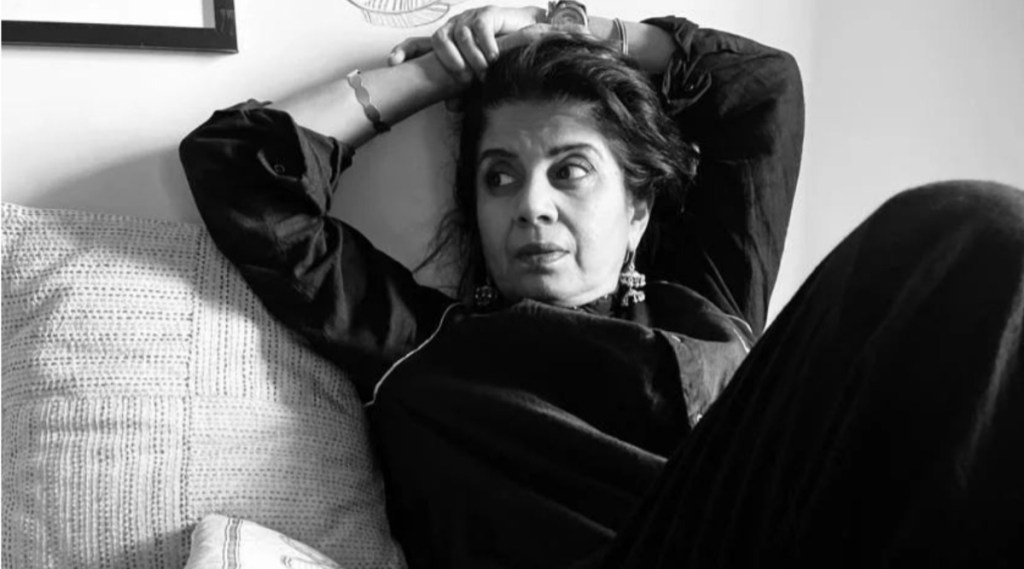
Veteran actress Mita Vasisht revisits the lessons she learned from filmmaker Mani Kaul, ahead of her feature’s Mumbai premiere
Soniya Pondcar (MUMBAI MIRROR; July 15, 2026)
It is easy to forget that before she became a familiar face across television, theatre and cinema, Mita Vasisht was simply another young actor fresh out of the National School of Drama, hoping for the role that would change everything. That opportunity came after her striking turn in Kumar Shahani’s 1986 short Var Var Vari caught the attention of Mani Kaul who, by then, had already secured his place among the defining voices of India’s New Wave cinema with films such as Uski Roti, Ashadh Ka Ek Din and Duvidha.
Kaul would go on to become her mentor, teacher and, ultimately, a lifelong guide. “It was after he saw Kumar Shahani’s film that he decided to offer me Siddheshwari,” Vasisht recalls, referring to the docu-feature on the Thumri artist that turned her from a budding actress into an arthouse regular.
“I hadn’t seen any of his films. I didn’t know who he was; I was just a young actress at the time. Everyone told me he was a famous director, but that I should work with someone like Shyam Benegal instead, to win National Awards. For some reason, though, I was drawn to him.”
Thirty-seven years after that breakthrough, Vasisht has chosen to honour the man who shaped her craft. Her film, Mani Kaul And That Thing Called The Actor, celebrates his mind. After a screening at the Film and Television Institute of India, Pune, on June 6, the anniversary of Kaul’s death, Vasisht brings the film to Third Bell Studios, Versova, on July 16.
An artistic paradox
Kaul was a man of many quirks, and one shaped the very title of Vasisht’s film: his distrust of trained actors. “He disliked trained actors,” she laughs. “I had trained for four years at NSD, and before that at the Department of Indian Theatre in Chandigarh. Yet he cast me in the lead role. I later realized he wanted to challenge me, to help me break free of every convention I had learned.”
This insistence, Vasisht discovered, was Kaul’s way of letting an audience find its own emotional response rather than have one imposed on it. “We were taught us things connected to acting: painting, sculpture, music, poetry,” she says.
“Most people considered him a non-actor director, but I found him deeply connected to the craft, with no patience for loud, outward performance.”
Real and reel
Capturing the life of such an unconventional figure proved a creative challenge. Vasisht refuses to call her project a documentary, preferring the term “fiction feature”. “It follows an actress and a young musician who travel through a director’s mind while they prepare for Siddheshwari,” she explains.
“The film moves before and after that making of the film, and deconstructs the process of its own making.” Vasisht wanted to present the auteur’s psyche, beyond the reach of a conventional biopic.
“I don’t know if Kaul ever wanted to be an actor. He thought he might, but he never appeared in a film beyond his diploma projects.”
After FTII, Kaul turned to direction and produced his acclaimed debut Uski Roti at twenty-five, “an extraordinary film by any measure.”
Both sides of the lens
“I studied Kaul closely and noted everything he told the cinematographer or the costume designer. Few realise how much work goes into a single moment on camera,” says Vasisht. Aside from him, though, she credits directors like Shahani and Govind Nihalani for her path into filmmaking.
“I observe directors very closely to see what they’re searching for. What they ask for isn’t always what they’re actually trying to achieve.”
The film is, in many ways, less a tribute than that conversation continued across time. Vasisht hopes it will introduce a new generation to not just Kaul but to ideas that remain as radical today as they were nearly four decades ago.
I have done it my way in my career-Mita Vasisht
7:47 AM
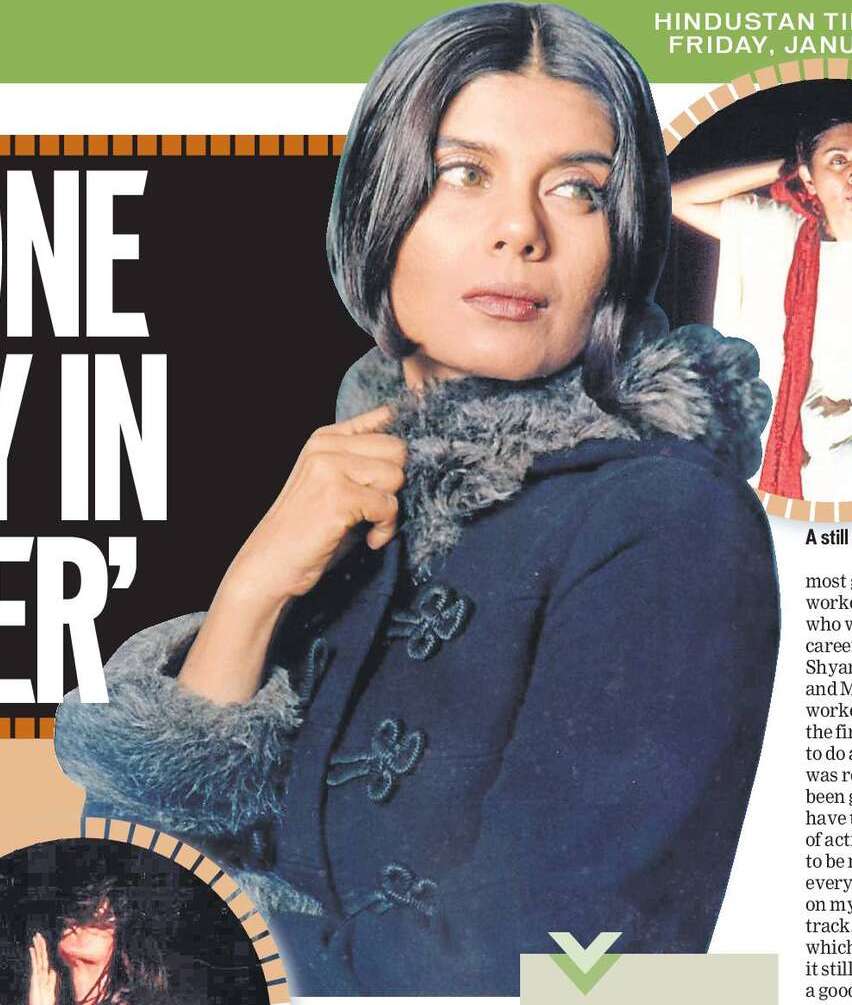
Actor Mita Vasisht opens up about why she keeps returning to perform her play, Lal Ded
Sanskrita Bharadwaj (HINDUSTAN TIMES; January 31, 2020)
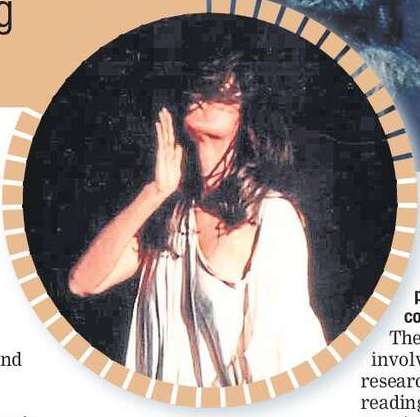
What does Lal Ded stand for?
She was a great mystique and a powerful poet. She has remained in the Kashmiri consciousness for years. When I travelled to Kashmir, people would talk about her as though she is still alive and they would refer to her in the present tense, “Lalla Kehti hai”. For both Kashmiri Hindus and Muslims, she is a shared icon. She was a Shaivite (tantrik), and the Muslims don’t want to change her at all, they accept her. Lal Ded represents Kashmiriyat.
Is this what makes Lal Ded so relevant even today?
She has always been relevant. Kashmiriyat itself means a culture, which is shared even if the religions are different. It’s about a society that shares everything together and religion doesn’t matter, and that is Lal Ded for you.
Could you talk about Shaivism in Kashmir?
Shaivism in Kashmir is very different from Shaivism in the rest of the country. They don’t believe in idol worship. They would believe that God is a vast form of life and we are all particles of that life.
Tell us a bit more about Lal Ded, the poetess...
She was highly individuated and she did not want followers. She emphasised on how God is within everyone. But at the same time, she wasn’t a boring mystique. She stood for individuating the self, which is a very Vedic concept. If each one of us is highly individuated, then we don’t need to follow anyone. You will not follow a sect, or a caste, you will follow your own calling. This is why people relate to her so much. She doesn’t push you into any kind of dogma and tells you to go deep within yourself. She also predicted natural disasters that would be brought about by us misusing the environment. That is exactly what is happening today.
What was her poetry like?
It was simple to understand. It wasn’t highly ‘Sanskritised’. It was like spoken words that was accessible to everyone. She spoke words that would just fall into the ears, and they were not complicated. The ideas were highly evolved but it was presented in the simplest of manners.
What does she represent to you?
For me, Lal Ded represents a person whom no time can confine. I find it enormously liberating. She is a person of the times. She goes beyond all ‘isms’. She has such high consciousness, that she could predict what’s going to happen in Kashmir.
Could you talk about the process of conceiving and co-writing Lal Ded?
There were so many people involved at the time of researching and writing. I was reading a lot about numerous mystique poets for about two years. I finally came to Lal Ded, and I stayed with her. Writing and putting the script together was a collaborative process between myself and Vishnu Mathur, who is a very senior filmmaker and another person called Rajesh Jha. The structures of the scripts happened then. From 2004 onwards, I made certain changes the way I wanted to. People have come along with me at different points in the play. Symbolically speaking, I walked a certain path with a certain collaborator, and then another path with someone else. But without them, it wouldn’t have happened. It wasn’t me doing everything. The play is also a great technical achievement in terms of light direction. It is very much the soul of the play.
What do you think about the way your career has panned out over the years?
When I came in first, I did the most fantastic work with the most great minds ever. I worked with Govind Nihalani, who was at the peak of his career then. I worked with Shyam Benegal, Mani Kaul and Mahesh Bhatt. I also worked with Gulzar Sahab. So, the first four or five years, I got to do a great body of work. I was really lucky. I feel I have been gifted with a talent and I have to look after it — the gift of acting that I had in me had to be nurtured. I also feel like every time I have not focussed on my craft, I have gone off-track. I was in an industry which was highly star-driven, it still is. So, if you were doing a good job in a non-lead role, your parts were brutally cut and you weren’t allowed to make much of an impact. It protects the stars to a great extent. There were these heartbreaks that I went through but now, in hindsight, over the years, I feel like I have done it my way. My career was made up of the right directors, I wouldn’t say I was arrogant, but I had the sense to respect myself and my craft.
Do you think you got better opportunities in TV than films?
I did the most amazing films. I think, I worked well in all the three mediums. You put me in a Mani Kaul film or a Mani Ratnam film, I will work. Tomorrow, you make me dance around the trees, I will do that, too. Even in theatre, I have done a lot of varied work. All the three mediums have given me the opportunity to explore all aspects of being an actor.
Which of your roles do you cherish the most?
I love all the roles that I did in my early days. The thing about me as an actor is that I love the roles because they’re different people for me. I would never say, ‘Oh my god, I did that!’.
What are the responses you have received on Lal Ded?
I have had some amazing responses from all sorts of people and they are not just Kashmiris. For instance, a 24-year-old actor, I met some years ago, came up to me and told me “I’m so glad I watched the play, because I learnt that I don’t have to do what the world tells me to do in order to be successful”.
Filmi memories up for grabs at an auction by Osian's on June 22
7:43 AM
MID-DAY (June 9, 2017)
Rare glimpses of Bollywood over the years will be put up for auction here later this month. Original artworks by the likes of Baburao Painter and M F Husain, publicity material of leading banner-hoarding artists and designers apart from vintage photographs since the '50s will be part of Osian’s The Greatest Indian Show on Earth 2: Vintage Film Memorabilia, Publicity Materials & Arts Auction on June 22.
Structured across eight major sections, it will have original artworks by Satyajit Ray, Mani Kaul and Deepti Naval, to a focus on thespian Dilip Kumar from Mughal-E-Azam (1960). It will also include unique jubilee trophies of Bobby (1973), Deewaar (1975) and original publicity material art for Andaz (1949), Anari (1959) and Guide (1965) to rare vintage posters.
There will be focus on the Kapoors — the first family of Indian cinema — besides rare posters, showcards, lobby cards, photographic stills from the golden 1950s period to the era of Amitabh Bachchan and the Khan trio — Salman, Shah Rukh and Aamir. An opening preview will be held on June 16 at Osian’s. Its chairman Neville Tuli spent nearly 20 years to put together the foremost archive, library and collection on India’s cinematic heritage.
Rare glimpses of Bollywood over the years will be put up for auction here later this month. Original artworks by the likes of Baburao Painter and M F Husain, publicity material of leading banner-hoarding artists and designers apart from vintage photographs since the '50s will be part of Osian’s The Greatest Indian Show on Earth 2: Vintage Film Memorabilia, Publicity Materials & Arts Auction on June 22.
Structured across eight major sections, it will have original artworks by Satyajit Ray, Mani Kaul and Deepti Naval, to a focus on thespian Dilip Kumar from Mughal-E-Azam (1960). It will also include unique jubilee trophies of Bobby (1973), Deewaar (1975) and original publicity material art for Andaz (1949), Anari (1959) and Guide (1965) to rare vintage posters.
There will be focus on the Kapoors — the first family of Indian cinema — besides rare posters, showcards, lobby cards, photographic stills from the golden 1950s period to the era of Amitabh Bachchan and the Khan trio — Salman, Shah Rukh and Aamir. An opening preview will be held on June 16 at Osian’s. Its chairman Neville Tuli spent nearly 20 years to put together the foremost archive, library and collection on India’s cinematic heritage.
Subscribe to:
Posts (Atom)