Showing posts with label Makarand Deshpande. Show all posts

Ekjute completes 45 years of making plays and moulding actors


Mohammed Wajihuddin (THE TIMES OF INDIA; October 4, 2026)

Razia Sajjad Zaheer, Urdu writer and wife of the Marxist ideologue Sajjad Zaheer (1905-1973)—one of the founders of the Progressive Writers’ Association—had a delightful way of describing the progress of her four daughters. When her third daughter Nadira graduated from National School of Drama (NSD) with a gold medal in 1971, Razia celebrated it saying: “Jo dramebaaz thi woh NSD se paas huee (the one who would do drama passed out from the NSD).”

Interesting anecdotes like this animate ‘Ek Lamhaa Zindagi: A Love Story 1938-1979’, a play depicting the love between Razia and Sajjad Zaheer, the famous couple whose South Mumbai home hosted many memorable events, including the nikah of poet-lyricist Kaifi Azmi with Shaukat Kaifi.

This was one of the plays that Ekjute, Nadira Zaheer Babbar’s theatre group, staged last week at Prithvi Theatre as the group turned 45 this year. Founded in 1981, Ekjute (meaning together) has evolved into a major theatre movement. With dozens of plays, hundreds of performances and annual theatre workshops, it doesn’t just stage plays, it mentors actors.

“When Raj sahab (Raj Babbar, Nadira’s fellow NSD alumnus, whom she married in 1975) and I moved to Mumbai in the early 1980s, I knew that I wanted to create a platform for aspiring actors,” says Nadira, whose group has produced acclaimed plays like ‘Sandhya Chhaya’, ‘Look Back in Anger’, ‘Begum Jaan’ and ‘Sakku Bai’.

Theatre critic Shanta Gokhale says she enjoyed ‘Begum Jaan’, based on the life of a classical singer on hard times, where Nadira plays the protagonist. “Though I have not followed all her plays, she and her group certainly played a role in creating a vibrant theatre culture in the city,” says Gokhale.

A place that has shaped Ekjute’e journey is Prithvi Theatre. “I couldn’t have done so much had Jennifer and Shashi Kapoorji not opened their hearts, home and this place for me,” she says. It was here that she staged her first production ‘Yehudi Ki Ladki’, reviving the Parsi theatre style of storytelling. Years later, Nadira and Raj’s daughter Juhi Babbar Soni would make her stage debut with ‘Yehudi Ki Ladki’.

Juhi was one of many actors and directors — including the late Sushant Singh Rajput, Richa Chadha and Rakul Preet Singh — who trained at Ekjute’s theatre workshops. “I grew up with Ekjute, imbibing its vibrant literary and acting culture,” says Juhi, who co-directed the critically acclaimed ‘Ek Lamha Zindagi’ with actor-director Makarand Deshpande.

Deshpande admires the way Ekjute has evolved. “Nadira ji’s knowledge of Urdu enables her to give powerful performances in plays like ‘Begum Jaan’. Few theatre groups have survived 45 years. This alone is worth celebrating,” he adds.

Ashish Vidyarthi, who plays a small-town man dreaming of joining Bollywood, but ends up a clerk in ‘Dayashankar Ki Diary’ says, “This story has universal appeal. I have played this character for 25 years and every show excites me.”

Both Nadira and Juhi say they carry the rich legacy of Razia and Sajjad Zaheer. Zaheer and writer Mulk Raj Anand formed the Indian Progressive Writers’ Association in 1935, while at Oxford. A member of the Communist Party of India, Zaheer was sent to Lahore in 1948 to establish the CPI in Pakistan, but was arrested along with poet Faiz Ahmed Faiz. Razia moved mountains, and even sought Nehru’s support for her husband’s release.

This scene appears in ‘Ek Lamha...’ a play marking Ekjute’s 45th anniversary.

Kritika Kamra says Shivaji Park student protest felt safe and united

Kritika Kamra, Atul Kulkarni and Navjot Gulati

Mohar Basu (MID-DAY; July 26, 2026)

On Friday, a day before Dharmendra Pradhan, Union Education Minister, sent his resignation letter to Narendra Modi, Prime Minister, the atmosphere at Shivaji Park buzzed with energy. 

Despite a heavy police presence around the venue, crowds poured in from all directions, clutching placards and backpacks, determined to make the government hear them. Blending into the crowd were actors Atul Kulkarni, Kritika Kamra, Manav Kaul, Geetanjali Kulkarni, and Makarand Deshpande, along with filmmakers Navjot Gulati and Hardik Mehta.

“The energy was beautiful and the young people of this country have shown how a protest is done,” shared Kamra, reflecting on how well-organized the movement had been.

“It felt safe and everyone was united. It was crowded but everyone was prepared. People were kind, helpful, and willing to cooperate. Young people were giving away tricolour wristbands [to everyone].” 

Kaul, who distributed water bottles to protesters, shared, “This is the time to let the young people’s loud and clear voices be heard.”

As students began dispersing, several people spotted Atul folding his hands and thanking the police personnel for doing their duty throughout the day. Students joined him and applauded the officers, blurring the line between the police and the protesters.

There has never been absolute freedom under any regime, irrespective of ideology-Mahesh Bhatt

Mahesh Bhatt. Pics/By Special arrangement, Youtube

Mohar Basu (MID-DAY; June 27, 2026)

Sahir Ludhianvi’s iconic poem Woh Subah Kabhi To Aayegi spoke about revolting against oppression and creating a tomorrow shaped by equality. That hope forms the backbone of Wo Subah Hum Hi Se Aayegi, a play presented by Mahesh Bhatt that follows a young man navigating a changing India in the early 1990s.

While the filmmaker built an enduring career in movies, he has also produced several plays. What has it taught him? That theatre remains the country’s richest talent pool, even if it doesn’t receive the respect it deserves. 

On a call with mid-day, Bhatt expressed his disappointment as he said, “The problem is that theatre has become a springboard to films and television. There are people like Naseeruddin Shah and Makarand Deshpande for whom theatre is an end in itself, but for many others, it’s merely a means to an end. That’s unfortunate because this is where you discover writers and actors.”

The director insisted that the country’s attitude towards the art form needs to change. Drawing comparisons with the West, he noted, “A Broadway play gets as much respect and coverage as a film. We haven’t built that culture in India. There are successful plays here, but they don’t offer the recognition that films, streaming, or television do.”

Theatre also allows a censorship-free domain for artistes. Even as Bhatt agreed on the point, he noted that art forms will almost always face resistance. His films serve as an example.

“Arth [1982] was criticized, Zakhm [1998] had problems with the Censor Board. There has never been absolute freedom under any regime, irrespective of ideology. Every age has had this tug-of-war between the creative force and institutions that seek to regulate thought.”

I take up films and TV projects to fund my love for theatre-Makarand Deshpande

Makarand Deshpande, Makarand Deshpande theatre, Makarand Deshpande films

Neha Maheshwri (BOMBAY TIMES; July 16, 2024)

Known for his unique literary perspective and ability to transform life experiences into compelling stage performances, Makarand Deshpande captivates theatre enthusiasts, drawing them in large numbers to witness his vision come to life on stage. Currently, he has a busy week; he is set to stage seven plays (‘Patni’, ‘Sir Premacha Kai Karaicha’, ‘Manushya’, ‘Qatl’, ‘Time Boy’, ‘Ram’ and ‘Sir Sir Sarla’) as part of his group Ansh Manch festival at Prithvi Theatre.

‘I wanted to pursue something from which I didn’t have to retire’
Makarand was deeply involved in sports, particularly cricket, during his younger days. However, one day, while playing on the field, he was struck by a sobering thought about the longevity of his career: he would eventually have to retire. That realization sparked his love for acting.

He shares, “I just couldn’t bear the thought of retiring from cricket and wanted to pursue a career that wouldn’t require me to stop. I was cast in a play during college and enjoyed the process immensely. That was the beginning of my journey in theatre. I have spent more time on stage than on TV and film sets.”

‘Theatre is my existence now’
For Makarand, theatre is not a job, it is not even a passion. In fact, he says, it’s not even his love, it is his life. “When something becomes your way of life, you stop seeking validation,” he says, explaining why comments about the industry not giving him his due do not bother him.

“I think this transformation happened around seven years ago. Theatre is my life. Main isse jeeta aaya hoon aur karta aaya hoon aur usme se seekhta bhi aaya hoon. I am not a formally trained playwright or theatre person; I learnt on the job and from life. Mujhe zindagi ne jo jo sawaal diye uske jawaab mere naatak mein mile,” he shares.

‘As a writer and director, I feel more in sync with theatre’
As the conversation shifts to his preferred art form, he reminisces how he has always chosen theatre over big-screen recognition. “In the past, I wouldn’t dedicate more than 10 days to any film project. I would request small roles so I could complete the schedule and get back to writing plays. When my friend Ashu (Ashutosh Gowariker) was making ‘Lagaan’, he offered me a role and I was required to be on the set for six months. He even offered me a writing table because he knew about my love for theatre. However, I didn’t want to devote that kind of time to a film set. As a writer and director, I feel more in sync with theatre as it is connected to life, which is always moving. There is no alternative to living life. I take up films and TV projects to fund my love for theatre.”

The thought that theatre ek gareeb medium hai should change now-Makarand Deshpande, Lillete Dubey, Pratik Gandhi

‘Cinema is  too young a  medium to  compete with  theatre’

On World Theatre Day, Makarand Deshpande, Lillete Dubey & Pratik Gandhi talk about the joy of performing live on stage & its long-lasting connect with the audience
Debarati S Sen (BOMBAY TIMES; March 27, 2024)

As curtains rise and lights dim, audiences are transported into worlds of imagination, laughter, and reflection, reminding us of the enduring power of live performance to inspire, provoke, and unite communities. This ability of theatre to transcend boundaries, languages, and ideologies, getting people together from diverse backgrounds in a shared experience, is being celebrated today (March 27).

World Theatre Day reminds us of the universal human need for storytelling, empathy, and connection, emphasizing the enduring relevance of live performance in an increasingly digital world. We got together actor-theatre director Lillette Dubey, actor-director-playwright Makarand Deshpande, and actor Pratik Gandhi over to Prithvi Theatre, for a candid conversation all about stagecraft.

What are your earliest and fondest memories of theatre?
Lillette: I started staging plays when I was in school, and was reminded of that by my old neighbour, whom I met on a plane recently. She told me that I’d hold these solo shows, with music et al, when I was 9 or 10! Our house in Delhi’s South Extension had a big terrace, where I’d call neighbourhood children to watch. This lady also told me that I used to take 10 paisa or 20 paisa fee (laughing!) for the show. I’d make my siblings hold a white sheet like a curtain. I was a clever producer-actor (laughs!) even as a kid!
Makarand: As a young boy I remember watching my brother on stage. It was a folk musical and when it would come to an end, mujhe lagta thaa ki yeh kabhie khatam nahi hona chahiye! I loved it. As a child, theatre was full of happy memories, when I grew up and saw theatre is about tragedies, I was shocked!
Pratik: My first ever memory of theatre was when I stepped on stage in school, in the 4th -5th standard. Once a month, the whole school would meet at the auditorium, and you were supposed to perform. I made a skit of five minutes and the moment I performed; people laughed at the right places where I was wanting them to. And that was magic for me. Maine kisi to bola nahi tha kahan hasna hai. That was my first strongest memory – theatre is magic. And ever since that day, I always wanted to be on stage.

When it comes to the stage, the feedback with the live audience is instant, whether you’re good or not. Has this aspect of the form ever intimidated or made you feel nervous all these years?
Lillette: I’ve done theatre now for, even though it makes me sound like a fossil, more than 50 years. I’ve learned to strike back and not get thrown off by extremes – whether there is extreme laughter, extreme responses, extreme chatting, or extreme silence by a detached audience. I’ve learnt to deal with them. But even the most experienced actor would be lying if he said that audience response means nothing to them. I may not react to it and may have learned to override it with experience, but audience response does make a difference. Without an audience there is no theatre. Since it is a shared experience, the energy interflow is crucial. Only an actor on stage will know what it is and why is it so heady. It is also the reason why some of us mad people still keep doing theatre despite the limitations!
Makarand: It's deceptive. A 6 o’clock show gets a standing ovation, but the 9 o’clock show, with the same everything, gets nothing. And then the doubt comes in, ‘Am I not performing well?’ So yes, audience response definitely affects your performance immediately. Priming the audience can help to get better responses, so I talk to them before I begin. There are also some audiences who behave in a particular manner. You will get guffaws in Mumbai, but a Pune audience might just smirk at the same lines.
Pratik: In cinema, the teaser, trailer, poster does all the work of priming the audience, but theatre doesn’t have that. It is one place where the constant reaction of the audience helps you to overcome your own ego. I thought I’d get audience laughter here, I got it for 25 shows, why didn’t I get that for this show? Theatre over a period of time teaches you to overcome your ego. It is about playing second by second. If an accident of one second lingers on, you can ruin the whole play. That discipline, the ego fight is what you deal with on stage. Over the years, audience reaction stops bothering you too much as you learn how to gauge them.

What is your fondest memory of staging a play in Mumbai?
Makarand: My guru late Mahendra Joshi contributed immensely to Gujarati theatre. And when I started directing, he came for my first show. He saw that my lightman wasn’t there and offered to do them. I was overwhelmed. During the show he saw us improvising on stage and said, ‘Mac, improvise karega na toh main blackout kar doonga’. Only he could say that, and he actually did it! I feel so good remembering him. Once Gulzar saab came searching for me backstage and just gave me a long hug. That was enough. 
Lillette: Making Jaya! I revived it after 26 years, a rock musical on the Mahabharat, with kathak and kalarippayattu. It’s a fond memory because it is one of my most difficult and challenging plays. Secondly, I was scared because Mahabharat toh sab jaante hai. But one of the biggest compliments I received for it came from people who knew the Mahabharat. They said, “Wow. This is such a different way of looking at it because it's contemporary, English, and has a rock band.”

When you are live on stage, what is the one recurring thought you have?
Pratik: I tend to think objectively about my performance, and I become my own audience. The continuous thought in my mind is that whatever I am performing is it reaching my audience, in what best possible way should I reach out to them with this line or dialogue. I know that the one word I said, I will get a pay off in 15 minutes. Dimag mein yeh chalta hain ki yeh audience ko clearly pata chale. At that point there are two people inside me – the character I am playing and me. On stage though it is all one unit.
Lillette: Everyone’s nightmare is only one – what if I forget my lines and go blank, what will I do? At such times, you need experience to find a way to come back. The other nightmare is your co-actor also forgetting his lines. People have forgotten their lines and gone to Act 2 in the middle of a scene of Act 1. The whole play of the first half is gone. That again has to do with the craziness of that theatre - the live aspect of it. It is one of the scariest live performing arts mediums.
Makarand: I feel that going blank on stage is not as scary as going off-timing. Theatre is not like stand up comedy, here you have situations, and the timing is crucial.

With the world celebrating World Theatre Day today, what does that mean to you?
Lillette: A lot! Not just as a fraternity, but because theatre is still acknowledged as an important part of our cultural landscape, especially with the emergence of multiple forms of entertainment and storytelling around us. It is still valued as one of the most important parts of the performing arts. Days like this highlight the fact that theatre is an integral part of our culture, about our being, the need to tell stories and share experiences. It is a huge part of being human. Togetherness is the foundation of it. Theatre brings joy, it sometimes reveals things we have not thought about. The most beautiful thing about theatre is the collective experience. And by celebrating World Theatre Day, you are putting the spotlight on the significance of theatre in our lives. And it is very important to us that the world acknowledges this.
Pratik: The thought that theatre ek gareeb medium hai should change. I feel that in this world of technology, the value of the real world will increase. If you are buying a 500 rs ka ticket for a film today, mujhe nahi lagta hai ki who din door hai jab aap 2500 ki ticket deke, live theatre dekhne aaoge. When you buy an artisanal chocolate, you pay hundreds more – theatre has to be that exclusive because only theatre and this live medium can give you that exclusive experience. In films everything is virtual, there is AI. Watching theatre once a week can be way more enriching.
Makarand: One day is not enough. Every week we should have one theatre day. The valuation of this real, live performance has to go up.

Television and films are considered to be a director’s medium where the actor has little control over the end result. All of you have worked in all mediums. Do you feel that actors have more control over their craft on stage than other mediums?
Lillette: In cinema, the director's vision is clear only to the director. It's not democratic. We don't sit and discuss. Nowadays, we do have readings, but only the director knows the tone of the film, the sur, the look of it, the sensibility of it. And you are just one part of the project, unaware of the whole picture. That is why even good actors sometimes don’t perform well in a film. Because they don't know and can't judge the entire picture.
Makarand: In cinema, the actor has no control. You are probably giving the best performance of your life when you hear a ‘cut’ from the director because maybe the camera angle was wrong or a picture in the background was not straight! In cinema the actor only gets to see the married print (audio and video is together). But in theatre there is a grand rehearsal where the actor knows when the music beings, when the light switches off and when another actor comes in. In cinema you don’t know anything when shooting. We are totally in the hands of too many processes. I feel a theatre actor is far more literate than anyone. Theatre and cinema cannot be compared. Theatre is thousands of years old and cinema is too young a medium to compete. Yes, the technology can compete but not the essence of theatre.
Pratik: A theatre actor can stand at a place and say this is England and people will believe it. Theatre make-belief ka sabse strongest medium hai. As actors, we don’t have much control when it comes to films and TV. Theatre with all the kind of freedom it gives an artiste, it also makes you ready, for that responsibility. I know that I have no one to stop me once I am on stage, but I should know when to stop, know how much to do. Bahut taaliya mil rahi hai par mujhe behna nahi hai. Script ka daayra manna hai. If any actor gets this discipline, he can add a lot of value to all other mediums. Even if I am performing the same play for the 25th time, the freshness, the punch, should remain intact, theoretically.

‘The thought that theatre ek gareeb  medium hai should change now’

Main aisa aadmi hoon ki main theatre pe depend nahi karta-Makarand Deshpande

Makarand Deshpande, Makarand Deshpande theatre, Makarand Deshpande films

Debarati S Sen (BOMBAY TIMES; January 26, 2023)

Actor, director and a playwright – many artistes can wear multiple hats, but very few can do it with as much of élan as Makarand Deshpande. In an exclusive chat with us, Makarand talks about the relevance of theatre, why it is difficult to survive on just theatre and more. Excerpts:

‘PEOPLE NEED TO FOCUS ON THE VIABILITY OF THEATRE NOW’
After over three decades in the industry, Makarand feels that despite the many challenges that theatre constantly faces, it will always go on. Makarand says, “Theatre toh chalta hi rahega. People need to focus on the viability of theatre now, as everything, including the rent for a theatre space, is becoming expensive. To make a living entirely on theatre is not possible today. But, no matter what happens, there will always be an audience for theatre.”

‘COMMERCIAL THEATRE AFFECTS CREATIVITY’
In the last few years, there has been a marked rise in commercial theatre and large-scale musicals that are backed by sponsors. We ask him if that can affect the creativity of thespians. “Commercial theatre does affect the creativity of thespians. But, given how difficult it is to make a living just on theatre, many thespians choose to take up commercial theatrical projects to sustain themselves,” shares Makarand.

‘THEATRE KE PAISON SE MERA GHAR NAHI CHALTA
In addition to those who are only In addition to those who are only dependent on theatre for their livelihood, there are people for whom creativity and art remain a priority. Makarand explains, “For me, theatre is not the only means of income. Main aisa aadmi hoon ki main theatre pe depend nahi karta for my livelihood. Theatre ke paison se mera ghar nahi chalta, so I keep doing the kind of work that I want to do. If you are dependent on theatre, someday you will have to bend and choose projects out of financial obligations. I have always believed that art prospers when you have everything under your control – your marzi – or when you feel the need to create. But, when you are forced to survive only on this, your craft will suffer.”

Swwapnil Joshi announces his upcoming film Ashwath; intriguing teaser and poster released

Marathi superstar Swwapnil Joshi has treated his fans on the New Year by sharing a glimpse of his new Marathi film, Ashwath, to be released later in the winter of 2022. The teaser and poster of the film directed by Lokesh Gupte were released on the eve of the New Year.
 
The teaser of the Ashwath is based on a famous shloka from Bhagavad Gita. The Sanskrit shloka roughly translates as “One should raise oneself by one's Self alone; let not one lower oneself; for the Self alone is the friend of oneself, and the Self alone is the enemy of oneself."
 
The Sanskrit shloka is followed by, in the backdrop of a horse running at full pace, with a Marathi verse that says, “Ashwath is the one who leads his life with self-esteem by tiding over the heart, wisdom, soul and ego.” The teaser denotes the rough idea about the script of the film leading to the rousing of the curiosity about the film. The curiosity has also gone northward after the Sanskrit shloka in the teaser is heard in the voice of Makarand Deshpande. The film lovers are curious to know whether the leading theatre personality is part of the film’s cast.
 
Swwapnil Joshi, while sharing the teaser of the film with his fans and followers on social media, said, “New year, new resolution…Nandi Ashwatthachi !!! (The foreboding of Ashwath!)."
 
The film is directed by noted director Lokesh Gupte. With his popular films like AB Aani CD, Ek Sangaychay, Runanubandh, Datebhet and Mungala, Lokesh has carved a niche as a director in the film industry. He is all ready to set a milestone with yet another out-of-the-box film in the form of Ashwath. The film will be released in the winter of 2022.
 
The teaser and the poster of the Ashwath has already created a buzz in the industry. The audience is eager to watch Swwapnil Joshi in his new role in the forthcoming film; however, the information about the film, its cast and crew members has been deliberately kept under wraps. Nevertheless, the coming together of Swwapnil and Lokesh is going to be a real treat to the Marathi audience.
 
Swwapnil is known for the experiments and new challenges he adapts as an actor. His roles in TV serials, Marathi and Hindi films and web series has made him a household name. Right from Ramayana, Krishna to Had Kar Di, Dil Vil Pyaar and Tu Tu Main Main, Swwapnil has exhibited his all-round talent in various serials. His versatile and lead roles in films like Duniyadari, Mogra Phulala, Mumbai-Pune-Mumbai, etc won applause for him as an actor. His lead appearance in two seasons of the web series Samantar was widely appreciated by the audience.


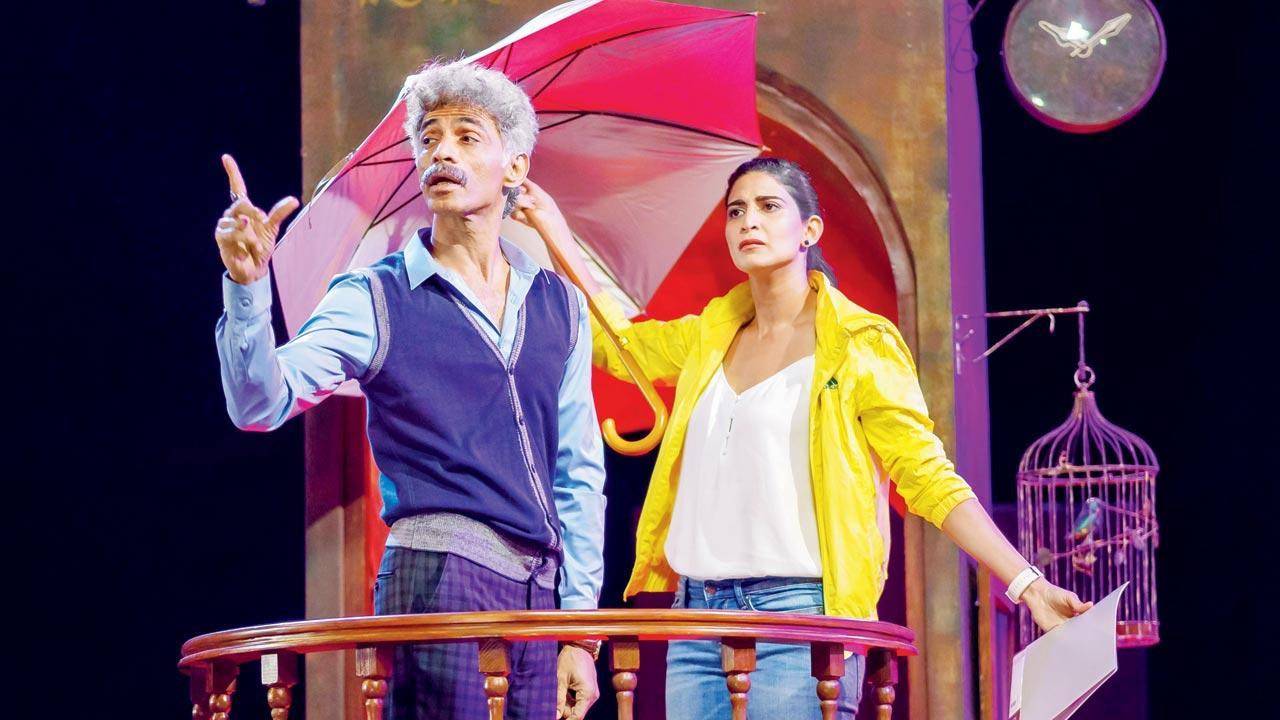
Aahana Kumra returns to Prithvi Theatre to perform her much-loved play Sir Sir Sarla after 9 years

Aahana Kumra: The stage made me an artiste

Mohar Basu (MID-DAY; November 4, 2021)

It’s homecoming for Aahana Kumra as she gears up to share the stage with Makarand Deshpande for Sir Sir Sarla. Kumra, like many of her peers in Bollywood, is a product of the theatre world and had first been part of the much-loved play during Diwali 2012. In a happy coincidence, the actor will reunite with the cast to perform today, on the occasion of Diwali, at Prithvi Theatre in Juhu. Elated to return to her roots, she says, “It was the stage that made me an artiste, and while I have done television, films, and [web] shows later, I will always have a special connection with theatre.”

The four-character play, penned and helmed by Deshpande, sees Kumra play the titular role of Sarla with the director slipping into the role of the professor aka Sir. Rehearsing with the cast has been an emotional ride for the actor. “This Diwali performance after nine years is not only symbolic of life coming full circle, but has also brought a sense of nostalgia. It reminds me of how it all started. My love for theatre is unparalleled, and I know that no matter what heights I reach, I will be in touch with my roots,” says Kumra, who recently had a release in Call My Agent: Bollywood.

SOPs for theatres, multiplexes say no food or drinks inside hall; 50% occupancy allowed

Mumbai: SoPs out for cinemas, auditoriums, only 50 per cent seating capacity for now

But No Vaccine Mandate For Movie-Goers
Bhavika Jain & Bella Jaisinghani | TNN (THE TIMES OF INDIA; October 13, 2021)

Mumbai: The Maharashtra government on Tuesday issued standard operating procedures (SOPs) for reopening of theatres, multiplexes and auditoriums in the state from October 22, saying these establishments will be allowed to operate at a 50% capacity and no food or beverage can be served inside the screening area.

The SOPs do not specify any vaccine mandate for movie-goers. Also, since entry into malls is restricted to fully vaccinated individuals and those under 18 years old, entry to multiplexes which are located inside malls will be given on showing a movie ticket. Thus those unvaccinated or partially vaccinated could also enter multiplexes inside malls after showing their tickets at the entrance to the malls and multiplexes.

Masks have to be compulsorily worn all the time. The state government has also given its nod for other cultural events to be organised in open-to-air venues or even closed auditoriums from October 22, and SOPs listed out by the state will be applicable to these events also.

As per the SOPs, only fully vaccinated (14 days after second dose) staffers like ushers, food handling staff and cleaning staff will be allowed. Other SOPs include sanitising of auditoriums after every screening, staggering of movie timings to avoid crowding, and regular cleaning and disinfection of theatre areas.

Theatres and auditoriums were reopened in the state last November after the decline of the first wave and were shut again in March.
------------------------
State releases protocols for theatres like 50 per cent capacity, compulsory masking and staggered timings; here’s how you can stay safe and help others
Dharmendra Jore (MID-DAY; October 13, 2021)

Ahead of the reopening of cinemas, multiplexes, theatres and auditoriums across Maharashtra on October 22, the state government on Tuesday issued SoPs for the facilities as well as patrons. While the staff and audience must be fully vaccinated to enjoy movies responsibly, citizens have been asked to stick to COVID-appropriate behaviour and not carry any eatables inside the halls. They also must keep proof of vaccination handy.

The guidelines for cinemas and auditoriums also include allowance of 50 per cent seating capacity. The management will have to control crowding in the common and waiting areas, make sanitisers available and ensure that the staff and patrons wear masks. Thermal check-up of the entrants has been made mandatory. Food is not allowed inside the hall. For multiplexes, show timings will be staggered to avoid crowding and digital ticket booking will have to be encouraged apart from opening more box office windows.

For easy verification of vaccination claims, the staff and patrons should have Aarogya Setu app installed on their phones. Those fully vaccinated with a 14-day cooling period will be allowed to enter and work. Ventilation and air-conditioning should be as per the protocol. The temperature should be maintained between 24 and 30 degrees Celsius and humidity between 40 and 70.

SOPs for drama theatres
- Designated backstage people, no guests backstage
- Regular medical check-up of actors, especially child artistes and backstage staff  
- Sanitisation/fumigation of the show’s property, green rooms and auditorium
------------------------
Theatre folk happy a long interval finally set to end

Bhavika Jain & Bella Jaisinghani | TNN (THE TIMES OF INDIA; October 13, 2021)

Mumbai: The state government has included additional SOPs for drama auditoriums as there is an element of live performances there.

All artistes should be fully vaccinated, and props and frequently touched items should be frequently sanitised, the SOPs state. No guest will be allowed to mingle with performers inside the green room or even on stage. Use of makeup items like brushes and combs should be seperate for each artiste.

But although Coronavirus prevention norms for stage plays and cinema theatres are stringent, artistes and backstage workers are relieved they can finally resume work after a long interval. Actor-producer Makarand Deshpande summed up the mood, saying, “It’s a good beginning.”

Actor Vijay Patkar, who is president of the Akhil Bharatiya Marathi Chitrapat Mahamandal, said, “Shri Ganesh toh hua (It is a welcome start). My dominant feeling is one of happiness that at least after a year-and-a-half of joblessness, our backstage workers, tamasha artistes, can resume earning an income.” 

Patkar had organised demonstrations urging the state government to reopen theatres for the welfare of artistes and folk performers, especially from mofussil areas, who have fallen on hard times. Yet, Patkar said, it is equally true that “50% occupancy is less than adequate.” “If we allow 50%, we may only get 30% since audiences are still wary. Given the ebbing of the Covid wave, I feel at least 75% occupancy should have been permitted. Compliance norms are stringent too. But we will abide by all rules,” he said.

Film trade associations echoed similar feelings. Birendra Nath Tiwari, president of the Federation of Western India Cine Employees (FWICE) said, “The bottomline is that after 18 months, we are happy theatres can start screening films once again. During the pandemic, film-goers have grown accustomed to watching films on mobile phones and other digital platforms, and this prolonged diversion does not augur well for the medium of cinema. The experience and magic of the silver screen must be revived. We do find the reopening norms extremely strict, especially as crowds elsewhere are not regulated with such zeal. But we have no objection. Let us at least restart business. Moreover, by now, people have adjusted to Covid protocol like masks and sanitisers. And now that malls allow only fully vaccinated visitors, the public is getting used to that also.”

Cultural affairs minister Amit Deshmukh said that while the state government wants to open up all sectors and give relief to the people associated with the sectors, it is mandatory for all of them to be responsible and follow all Covid-related guidelines set down.

Cinemas and theatres to reopen in Maharashtra from October 22

Bollywood prepares for showtime in Maharashtra

Bhavika Jain & Bella Jaisinghani (THE TIMES OF INDIA; September 26, 2021)

Mumbai: A day after the Maharashtra government announced reopening of religious places and more classes in schools, CM Uddhav Thackeray on Saturday approved the reopening of cinema halls and auditoriums in the state from October 22. A detailed standard operating procedure (SOP) is being compiled and will be issued in the next few days.

The decision was taken following a meeting of Thackeray with filmmakers, members of the state Covid task force and senior officials. Cinema and theatre professionals welcomed the announcement. Stage artistes were especially pleased that theatre reopening was advanced from the earlier appointed date of November 5.

Movie theatres and auditoriums are one of the last few sectors to reopen in the state.
---------------
Bhavika Jain & Bella Jaisinghani (THE TIMES OF INDIA; September 26, 2021)

Mumbai: CM Uddhav Thackeray has approved reopening of cinema halls and auditoriums sin the state from October 22.

Cinema halls and thetares were reopened in November last year after being shut since March 2020 and were shut again in April 2021 after the second wave hit the state. Theatre owners, filmmakers and artistes had been demanding the state allow theatres and auditoriums to function. However, the MVA government said it was treading cautiously due to the fear of a third wave. Senior officials said though SOPs are still being worked out, it is mostly likely that these places will be asked to run at 50% capacity.

However, there is still no clarity on whether only fully vaccinated individuals will be allowed entry as most mutliplexes are inside malls and only fully vaccinated people are allowed inside malls.

Birendra Nath Tiwari, president of the Federation of Western India Cine Employees, said, “Viewers have missed the experience of watching films on the big screen for months. I thank the CM and urge cinema hall owners and employees to observe all Covid-related precautions.”

Theatre actor-producer Makarand Deshpande, who attended the CM’s meeting on Saturday, was “incredibly happy.” He said, “Theatres are our temples. I am especially pleased because live performers and backstage artistes, who were out of work during the lockdown, can now resume their livelihoods. Actors can make their way to OTT platforms. But what do technicians and stage professionals do? I wish the audience arrives vaccinated because everybody, performers and audience, should be healthy.”

Another participant at the meeting was actor Aadesh Bandekar, who as Shiv Sena member had placed the Marathi industry’s concerns before the CM. He said, “Now theatre authorities as well as audiences should follow all SOPs 100% to ensure we do not face another scenario of closure. Unlike cinema, theatre is a live performance. Moreover, artistes and technicians travel from one venue to another, often on the same day, for shows. The risk of infection must be controlled.”

Welcoming the state’s decision, Nitin Tej Ahuja, CEO of Producers Guild of India, said, “Producers can now start planning for theatrical release of their films, many of which have been ready for quite some time now. The extended shutdown in one of the most important territories for box-office revenues was among the foremost reasons holding back Hindi film releases.”

But single-screen cinemas are not likely to resume shortly. Nitin Datar, president of Cinema Owners and Exhibitors Association of India said, “Our sector is facing closure. We have been requesting government for concessions in property tax and electricity bill rebates as other states have given. Until that happens, we do not have the means to reopen.”

AMC Suresh Kakani said restrictions may be further eased in Mumbai. “Though curbs on train travel were removed on August 15, we haven’t seen a mega surge in cases 40 days later,” he said.
---------------
After a seven-month shutdown, single screens, multiplexes and drama theatres will finally open on October 22
Dharmendra Jore (MID-DAY; September 26, 2021)

Single screens, multiplexes, drama theatres and auditoriums will reopen across the state from October 22 on the condition that they follow Coronavirus-related health protocols, which will soon be issued by the government.

CM Uddhav Thackeray announced this after meeting eminent people from the entertainment industry on Saturday. The State Covid Task Force members also participated in the deliberations that were held after the industry’s demand for not delaying the resumption further.

On Friday, Thackeray announced that schools and junior colleges will resume physical classes from October 4, while places of worship will be allowed to reopen on October 7, which is the first day of Navaratri.

“The standard operating procedures (SoPs) are being prepared. We will announce the SoPs soon,” said the CM in a statement.

The previous unlock in November had allowed multiplexes, cinema halls and auditoriums to operate at 50 per cent intake. Eatables were not allowed inside the halls. 

The entertainment industry in Maharashtra will come face to face with the audience in October after a seven-month shutdown—the second one since last March. The reopening has been planned a weekend before Diwali, a favourite release time for big banners.

Saturday’s meeting with the CM was attended by Shiv Sena’s Rajya Sabha member Sanjay Raut, state chief secretary Sitaram Kunte, filmmakers Rohit Shetty and Kunal Kapoor, film and theatre personalities Makarand Deshpande, Subodh Bhave and Aadesh Bandekar.

Revathi ma’am’s last monologue was written by Vijay Sethupathi-Bejoy Nambiar


Proud to collaborate with idol Mani Ratnam and Vijay Sethupathi in Navarasa, director Bejoy Nambiar on how Tamil superstar went beyond call of duty
Uma Ramasubramanian (MID-DAY; August 5, 2021)

Bejoy Nambiar has pulled off a casting coup by roping in Vijay Sethupathi, Prakash Raj and Revathi for his segment in Navarasa. But for the director, the highlight of the Netflix anthology is collaborating with his idol Mani Ratnam. “Makarand Deshpande once told me that one should be careful about working with their idols. Since you have grown up watching them, working with them may ruin the illusion of greatness. I have been fortunate as I haven’t experienced that. Getting the opportunity to work with Mani sir is a privilege,” says the director, who has gone behind the camera to narrate the story of Edhiri. With the nine tales in the anthology examining varied human emotions, his short film focuses on compassion.

If he had one of the greatest auteurs in Indian cinema serving as the presenter-producer, Nambiar considers himself grateful to have an equally talented cast breathe life into his story. Such was Sethupathi’s involvement in the material that he went beyond the call of duty to write dialogues for certain sequences.

“Vijay Sethupathi and I sat together and rewrote the dialogues for several scenes. Revathi ma’am’s last monologue was written by him. His contribution to the script has been credited in the film. It surprises me how much actors invest in their performances. His [suggestions] have improved many scenes.” The project is the South Indian film industry’s attempt to raise funds for the fraternity members who were hit hard due to the pandemic.

To portray a real life character is the toughest job-Angad Bedi

Angad Bedi on playing a lawyer in The Verdict: Toughest to play real-life character
Angad Bedi on staying true to his muse as he essays famed defence lawyer Karl Khandalavala in the web show, The Verdict, based on the 1959 Nanavati case
Mohar Basu (MID-DAY; July 1, 2019)

It is my most emotionally draining role" begins Angad Bedi, who has dived deep into the part of lawyer Karl Jamshed Khandalavala for ALT Balaji's ambitious outing, The VerdictL State v/s Nanavati. If the case hit headlines for being modern India's first crime of passion, Khandalavala — as the defence counsel — shot to limelight for being the man who held Commander Kawas Manekshaw Nanavati's fate in his hands.

Describing the challenges he faced to essay his role in the 10-part web series, Bedi says, "To portray a real-life character is the toughest job. It is easy to play your age. But here, I play [an older] man who is sure of himself and has never lost a case in his life. To internalise Karl, I spent time studying his body language. I also read up on the laws prevalent in the 1950s."

Before the Manav Kaul and Elli AvrRam starrer went on floors, the actor and his styling team dedicated weeks to zeroing in on his look, modelling it on the ex-Air Force pilot. "We decided to stick to suits while playing with accessories. So, the rimless round spectacles were brought in, and a pocket watch was added to lend [an air of] arrogance."

Considering he has previously been part of the courtroom drama Pink (2016), the actor admits that he found himself turning to the Amitabh Bachchan-starrer for inspiration. "In Pink, I was in the dock and Bachchan sir was the one questioning. During the shoot, I would keenly observe Bachchan sir. So, I took inspiration from his [lawyer] act and channelised it for my Karl act. The biggest challenge, however, was to stand up to Makarand Deshpande [who plays prosecutor Chandu Trivedi], who has had years of theatre experience. We had to be neck-and-neck in the courtroom sequences."

Sadak 2 release date changed; to now release on July 10, 2020


MUMBAI MIRROR (May 21, 2019)

Mahesh Bhatt’s comeback directorial, Sadak 2, will open on July 10, 2020. The film brings back Sanjay Dutt and Pooja Bhatt from the 1991 original, with Alia Bhatt, Aditya Roy Kapur, Makarand Deshpande and Gulshan Grover as the new additions to the cast. It kicked off recently with its 26-year-old leading lady admitting that she was “petrified” to be directed by her dad for the first time.

“I feel like a tiny mouse trying to climb a beautiful, immense, emotional mountain. I hope I am able to make it to the top and if I fall I hope I’m able to get up again.” Alia shared. “It’s a tough climb but from everything I’ve seen and everything I’ve heard, I know every single step and misstep will be worth it!” The film marks her father’s return to direction after a hiatus of almost twenty years.

The original revolved around a cab driver and his efforts to rescue a young girl who’s been sold into the flesh trade from a brothel lorded over by the eunuch Maharani. The sequel revolves around Sanjay and Alia’s journey to expose a fake Godman, played by Makarand. Talking about his role, Makarand said: “Mukesh Bhatt always used to tell me that I am their lucky mascot, but I don’t know what happened that they didn’t cast me in their films in past few years.”

Mirror Exclusive: Makarand Deshpande turns a godman and villain for Sadak 2


Actor plays the antagonist in Mahesh Bhatt’s directorial comeback which also features Sanjay Dutt, Pooja Bhatt and Aditya Roy Kapur
Himesh Mankad (MUMBAI MIRROR; May 15, 2019)

Mirror had earlier reported (May 2) that Sadak 2, which marks Mahesh Bhatt’s return to the director’s chair after 20 years, revolves around Alia Bhatt’s encounter with a godman. The filmmaker had informed that he is in talks with a ‘great’ actor to play the godman in the story that chronicles Alia’s quest to expose a fake guru who runs an ashram.

Now, we have learnt that Bhatt has roped in Makarand Deshpande to essay the character in the thriller. “It is an intense and challenging role, and Makarand has already started acting workshops with Bhaat saab. Like Maharani, played by Sadashiv Amrapurkar in the Sanjay Dutt, Pooja Bhatt-starrer Sadak, a unique look is being designed for him in the sequel,” revealed a source close to the development.

Makarand and Mahesh Bhatt had worked together in the 1993 drama, Sir, which saw the latter in a character named Mak. Apart from Makarand, the film has another antagonist, Gulshan Grover who, as Pooja had informed with a post on April 27, was the first actor to receive the script. “It’s a strong and layered character with negative shades,” the source added. The film, which also features Aditya Roy Kapur and Pooja Bhatt in pivotal roles, goes on the floors on May 18 in Mumbai. “On the first day at a city studio, the team will shoot with Sanjay and Alia, with other members of the cast joining in at a later date. Apart from Mumbai, the film will also be shot at other locations of India.”

The Mukesh Bhatt, Mahesh Bhatt and Fox Star Studios production is Alia’s first film from her home banner and is slated to release on March 25 next year.

Sanjay Dutt reprises his role of taxi driver Ravi from the original, this time as a 54-year-old who accompanies Alia on her journey. The 59-year-old actor has already started prep with the director. 

The Verdict: State v/s Nanavati will also explore the parallel lives-Manav Kaul

Manav Kaul: The Verdict: State v/s Nanavati explores the parallel lives too
Kaul says series on the Nanavati case has an edge over its cinematic adaptations since it unearths stories of those associated with the protagonist
Sonia Lulla (MID-DAY; December 8, 2018)

Set to play the titular role in Ekta Kapoor’s upcoming web show, Alt Balaji’s The Verdict: State v/s Nanavati, Manav Kaul found in this chip of history a story that could still be among the most “bizarre” ones he’s ever heard. “When I was offered this role, the only thing that crossed my mind was how bizarre the situation was. You can’t even write a fictional piece that could be stranger than this reality. While we’re taking cinematic liberties, we’re sticking to the truth to convey this story.”

Exploring a subject that has emerged as one of the most revered in Bollywood, Kaul says the digital platform lends the team the liberty of time that isn’t afforded by cinema. Alluding to a film like Akshay Kumar’s Rustom, which also dealt with the same subject, he says, “Our case will explore not only the story of Nanavati, but also that of the wife, the lawyer and the other parallel lives. We’ve justified everyone’s stories. We had the advantage of exploring storylines that are important, but can’t be done [in films]. I took 15 days to read, understand and decipher the man [K M Nanavati, played by Kaul].”

Joining forces with actors like Makarand Deshpande and Saurabh Shukla, Kaul admits that since web shows must command the attention of viewers for their 10-episode long runs, it is imperative that the content be stellar. “If someone doesn’t like the first episode, they won’t click on the second one. so, you have to be amazing at what you do. One needs actors of a certain calibre to bring about good performances, and it also requires a good script. [Unlike in a film], here, you only have a story [ to make a mark].”

Manmarziyaan is my take on a potboiler-Anurag Kashyap

Anurag Kashyap
Rinky Kumar (DNA; September 4, 2018)

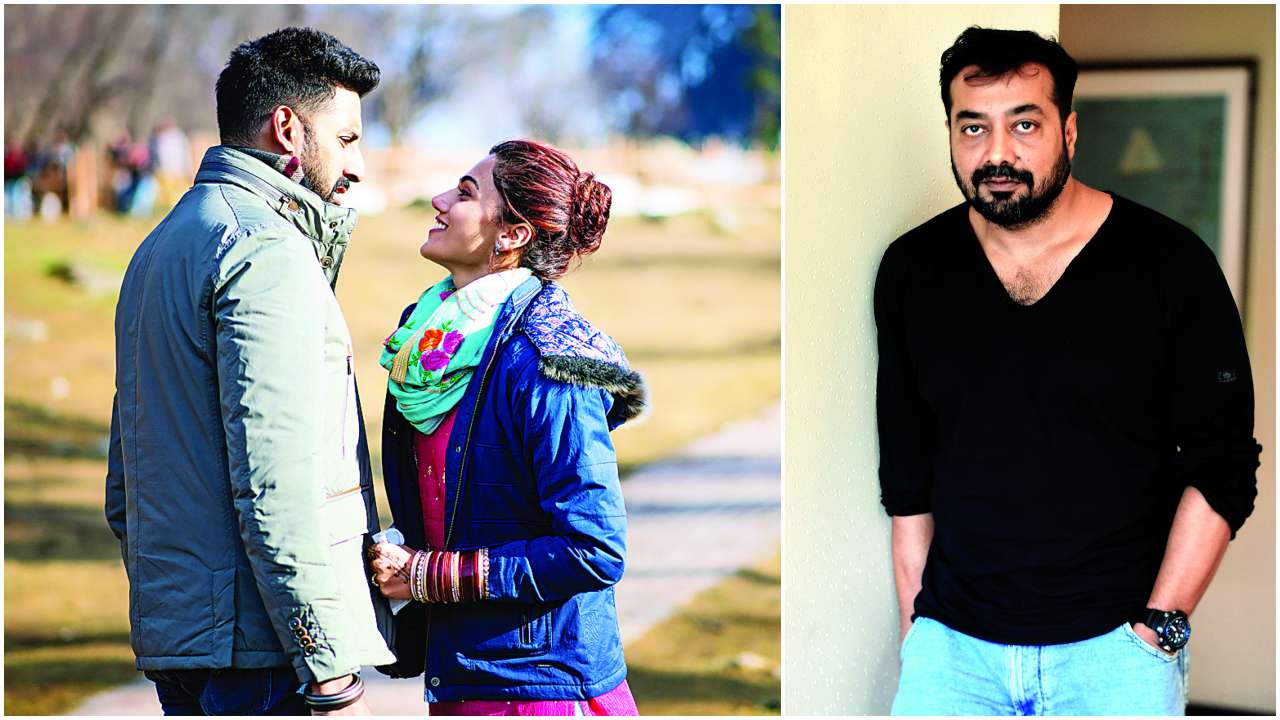
Anurag Kashyap is probably in one of the best phases of his career. His web series Sacred Games as well as one of the shorts, which he has helmed as part of the anthology Lust Stories, have got positive reviews. His performance as the antagonist in the recent Tamil thriller Imaikkaa Nodigal has been appreciated. The 45-year-old’s last directorial stint Mukkabaaz (2017) struck a chord with the audience for showcasing the trials and tribulations of a sportsman, who dares to take on the system. Now, the maverick filmmaker is gearing up for the release of his forthcoming movie Manmarziyaan, starring Abhishek Bachchan, Taapsee Pannu and Vicky Kaushal. As we settle down for a chat, Anurag says, “My Tamil film is getting good reviews. I’m only getting acting offers.”

However, in the same breath he adds, “I hate acting. I only want to direct. Someone had once told me, ‘Anurag, tu acting karega na, toh tu aur tera producer dono paise kamayenge. Tu direct karta hain, phir bhi paise nahin kamata.’ On that note, we begin our conversation and he tells us how cinema gives him a better perspective about life and why, in reality, he is a far cry from the aggressive filmmaker that he is made out to be. Excerpts…

What appealed to you about Manmarziyaan?
The character of Rumi played by Taapsee Pannu. We like love stories and aspire to have one in our lives. But I don’t believe most of that. Manmarziyaan is something that I believe in because it shows how people behave in love and how indecisive they are.

So, what’s your idea of romance?
The most amazing thing is the quest for it. Love isn’t there, we romance the idea of it. And everything else is included in that journey.

Dev D, which released in 2009, was a romantic musical. Your forthcoming film is also being termed as one. So, was it like homecoming for you?
Both the movies are different from each other. If I would say in filmmaker Neeraj Ghaywan’s words, ‘That was Dev’s story, this is Paro’s story.’ But I think it’s more than that. I don’t like to define things. We simplify things for ourselves by putting them in words that are understandable. I like things to be complex. And I would want people to talk about it rather than define it in one word.

All the characters in your films are quite angst-ridden. Do they come from a deeply personal space?
It’s not like that. I make crime films but that doesn’t mean I commit crime. I’m actually a peaceful person. I’m more peaceful as compared to other people who make lovely movies.

This is your second collaboration with Aanand L Rai after Mukkabaaz. How was the experience as both of you have different sensibilities?
It’s been good. I wanted to make Mukkabaaz, he wanted to make Manmarziyaan. We read each other’s scripts and decided let’s do both. As for our sensibilities, I never think about them. I connect with Aanand and always tell him whether I like his films or not. Aanand L Rai has been appreciative of my work. I enjoy a massive support system in the industry among the directors. I feel fearless while making my films because I know that tomorrow if no studio or producer will stand by me, the directors will. I get a great sense of security from Aanand. I know I will be allowed to be myself as a creative person while working with him because he gives me immense breathing space. And that gives me a lot more confidence to explore things because Manmarziyaan was his idea. Kanika Dhillon wrote it, it went to two sets of people before it came to me. I was clear that I would give it my own sensibility and interpretation. So, I changed the cast first and then the music.

Music plays a pivotal role in almost all your films…
My love for music comes from my inability to play it. You always desire what you don’t have. In the pursuit of becoming a Tansen, I became a Kansen (laughs).  My thinking is that if you keep saying ‘no’ to what you don’t like, you are eventually left with what you like. That’s my process.

You also tend to improvise a lot on the sets…
I can’t deal with actors who come too prepared. They have to be in the moment. It’s not their job to keep in mind the graph of their characters.

Do you think it enhances their performance?
I don’t know, but that’s the way I work. I just want them to be believable. I want to do what I believe in, if I don’t, then it’s pointless.

In one of his interviews, Aanand mentioned that while working on this film, he felt you were much calmer...
Aanand knows me because we would meet at public events. He knew me as a filmmaker through my movies, blogs and interviews. I’ve been the same person all my life. Even when I made darker films, I was still the same person. Anyone who works with me for the first time is initially shocked because it’s the perception of me that has been with them.

On the first day of shoot, even Abhishek Bachchan was surprised to see you jumping and dancing on the set…
I was a writer for Yuva (2004). So, he and I didn’t interact much. I’ve always been an aloof person. I don’t get out of my room except when I’ve to work. But if you talk to people with whom I have worked on the first film, they will tell you I dance on the set, I never scream. Abhishek told me, ‘I expected you to sit in a corner with light falling on your brooding face’ and I told him, ‘I don’t brood.’ When I do, no one sees me because I am in my room. People have a perception of me that has been built by the media. I’m happy in my own space. Everyone thinks I’m super aggressive as I say things bluntly.

But you didn’t love his performance in Yuva..
I wrote in my blog that it could have been better. And I think Abhishek took it hard because that was a performance that everyone appreciated. He thought a writer usually doesn’t say such things. We didn’t talk to each other for 10-15 years.

So, how was it working with him now?
It was lovely; today, we have become good friends. You know when you work with someone, you think they have got your back. I felt the same with him.

You didn’t have reservations before collaborating with him?
I had reservations before I met him. But once I did, they disappeared.

What is it that drives you about cinema?
The possibility of exploring things and telling stories, baaki kuch nahin (smiles). I articulate through cinema. It’s also my process of understanding things. When I am going through something in life or something is affecting me, I put it in my film and figure out what it means in the process.  

Do you enjoy acting?
Not at all…

But you usually get good reviews for your performances…
That’s because I’m a good actor. However, I like acting on stage. Recently, I met Makarand Deshpande who has directed me in his plays and he asked me, ‘Why don’t you act?’ I told him I like to do so on stage as theatre is an actor’s medium, but cinema is a filmmaker’s medium. I’m very selfish, I want it to be my medium.

How do you look back at your journey as a filmmaker?
I’m very happy. I’ve had 25 good years of filmmaking. I’ve done more than 100 films as a writer, director, producer. I came here to make one movie.

Will we ever see you helm a commercial potboiler?
Manmarziyaan is my take on a potboiler.

I’m happy that I don’t have the trappings of a star-Akshay Oberoi

Akshay Oberoi
Nayandeep Rakshit (DNA; January 13, 2018)

Akshay Oberoi knows he isn’t a popular face in the industry. But he’s happy not to be one. The actor admittedly wants to experiment with his roles. He feels the lack of an image helps him try out things that many star kids around wouldn’t even dare to. In a candid conversation, he opens up about what prompted him to take up his latest film Kaalakaandi and how he’s struggled his way this far despite having a filmi connection.

What did you think of your performance in Kaalakaandi, which has just released?
I’m usually over-critical of my performances. But I genuinely liked Kaalakaandi. I feel that it has served the purpose. I’m happy with the final product. I hope everyone likes it, too, and this becomes my first commercial film.

It’s a dark comedy, a space that hasn’t been explored much in Indian cinema. Do you think this movie will push the envelope?
I don’t think many can do it. It’s a tricky space because it’s one thing to cast a film but it also needs to be well-written. I’m really excited to see the audience’s reaction. I hope there are budding script writers who can do the same. But once you read something like this, you think how anyone can actually come up with such stuff, yet make it relatable.

In one of the scenes in the film, you have an awkward fall before making out. In real life, have you faced something embarrassing?
Nothing as embarrassing that has been shown in the film, but I fell off the bed once.

Imran Khan introduced you to director Akshat Verma...
Yes, I took the number from him. And thank God, I did. Somewhere around 2011, there was a shift in Bollywood and things started changing rapidly. I can’t be in a race with the star kids where someone is promoting them. I don’t have that kind of support. I needed to do these interesting films, hence Akshat came to my mind. He’s got a wicked sense of humour which is brilliant for the films he does.

Don’t you feel that because of the kind of projects that you have chosen, the doors of the masala genre may completely shut for you?
It’s true. But now, the scenario is slowly transforming. Films with good stories need good actors to take them across and people have started to realise that. If I get called to do a commercial film, it would be only because of that. I’m not a guy who they can sell but they know my story will get made a certain way. That will eventually add up to the popularity of actors who are like me.

But isn’t the box office important to you?
Yes, it is. I want Kaalakaandi to work well. Because for me to do the kind of work that I want to do, if these films work commercially, then a Gurgaon or a Bombairiya will get a larger audience. I’ve got my validation for my work as an actor. Now, I want to get that validation from my audience at the ticket windows as well.

Would you ever approach a director or a producer to give you a film?
Even after making my debut with a Sooraj Barjatya film, I would send tons of texts to directors to ask if there was a suitable role for me. I would message Karan (Johar), Kabir (Khan) who at least met me and spoke to me. Dibakar (Banerjee) and Aanand (L Rai) sir also responded once. There were few who would not even respond. Once I got a film, I would stop. But after it was shot, I would start again.

That, despite being Vivek Oberoi’s cousin?
No, I don’t think they knew it back then. They might know it now. They always seemed surprised.

So many times people use shortcuts to get a film. Have you ever thought of taking one in desperation?
No. I’m so engrossed with my acting that something like that would kill me from within. At the end of the day, I want to be respected as an actor. Sometimes, you need to figure out what you can live with and what you can’t. I want people to think that I was really good at what I did.

But everyone dreams of the biggest things...
(Cuts in) I wanted to be Shah Rukh Khan! But my priorities shifted after my first film. Two years of growth with no work, I was back to theatre where Makarand Deshpande trained me. I thought I’d never get what I wanted. Then, I did a bit of rethinking and realised that I’d rather be someone like Irrfan Khan because I want to be respected that way. So, I started chasing roles that nobody wanted to do. I kept chasing Bejoy (Nambiar) and thank God, he answered that call. It led to Pizza and a lot of doors opened up after that.

If you have to go nude on screen, due to the demand of the script, would you be open to the idea?
I would be absolutely comfortable doing that. I want people to think that I’m absolutely fearless when it comes to my work. What’s exciting for me is that I’ve no image because my work hasn’t been that popular or commercial enough to give me one. You might say I look a certain way but I’ve done varied roles. Thankfully, I don’t have the trappings of a star. Also, if you look at the movies that I’ve done, there has always been a sex scene (smiles).

How does your wife react to such scenes?
In real life, I am very scared (laughs). But that’s why I love the camera. I can do anything in front of it. My wife has been cool and supportive. It isn’t easy for her. In fact, it bothers me more than her. She knows that I love this job so much that I’m trying to do it well. To be true to my work, I’ve to do the things that are written on the page.

Mithun Chakraborty plays psychiatrist, Flora Saini a nagging wife in Ram Gopal Varma's horror flick Geher


Avinash Lohana (MUMBAI MIRROR; April 24, 2017)

Mirror (April 11) was the first to report that after Bhoot and its sequel, Bhoot Returns, Darna Mana Hai, Darna Zaroori Hai and Phoonk, Ram Gopal Varma is all set to return with yet another horror flick with Mithun Chakraborty in a pivotal role. Now, we hear that the film, titled Geher, has Mithun playing a psychiatrist and Flora Saini as Manav Kaul's nagging wife. Shooting began in the first week of April in Mumbai.

“As a child I was skeptical about bhoot-prets but I went on to play a woman possessed in a horror film down South and it was a difficult task. Fortunately in this film I don't get possessed but I was left awestruck watching Mithun sir perform. I don't have any scenes with him but I would hang around just to watch him,“ says Flora.

She also informs that Makarand Deshpande will be seen in a completely different avatar in the film. “I didn't recognise him when I saw him for the first time on the sets,“ marvels the actress, adding that her character is also true-to-life, with minimal makeup. “Ramu sir was very specific of what he wanted and brutally honest about his work. If I could steal one thing from him it would be his mind,“ she laughs, saying they should be able to wrap up the film by the month-end.

Nicholas Brown, Zenia Starr in Mukesh Jadhav's adaptation of Agatha Christie's The Rats


With his new film, Mukesh Jadhav is giving a back story to the author's play 'The Rats' which is remembered for its abrupt beginning and end
Sankyukta Iyer (MUMBAI MIRROR; June 9, 2016)

Mukesh Jadhav was in college when he first read Agatha Christie's one-act play, The Rats. A decade later, the filmmaker is giving the mystery thriller, remembered for its abrupt beginning and end, a more fleshed out narrative with his new thriller, Pratichayya. “I decided to give the characters a back story and a climax,“ Mukesh reveals.

The Rats, which sees an illicit couple caught in a trap, is part of a set of three one-act plays, titled Rule of Three, which was staged in 1962. “The film circles around the fact that the human mind is capable of great evil. While most of us would be shocked to see a dead body, there are some people who can hide one for 48 hours in their own house and go about their daily routine like nothing ever happened. We're touching upon our true faces and the one we save for the world,“ Mukesh explains. “The film is a sensitive exploration of the darker side of female desire ­ a woman's passion warped by her jealousy and sense of deprivation.“

Produced by UAE-based Desert Rose Holdings Ltd and Motion Media Arts Pvt Ltd, Pratichayya features Shreyas Talpade, Makarand Deshpande, Rahul Dev and Shahbaz Khan and is slated to release by the year-end.

Incidentally, composer Monty Sharma's score for the film which features a foot-tapping number with Turkish, Hindi and Arabic lyrics got a thumbs-up from Turkish Consul General E Sabri Ergen, who was present on the sets during filming. The diplomat invited the cast and crew to promote their film in Turkey. “It's a global film in a true sense,“ says Mukesh, adding the film features Australian actors Zenia Starr and Nicholas Brown.

Makarand Deshpande to tie the knot with live-in partner Nivedita Pohankar


Neha Maheshwri Bhagat (BOMBAY TIMES; November 24, 2015)

After leading a rather nomadic life, theatre virtuoso Makarand Deshpande will soon walk down the aisle with his live-in partner Nivedita Pohankar. He met her six years ago and the two hit it off instantly. A writer by profession, she has written two plays and is currently penning down a feature film. He confirms, “Yes, I am getting married early next year.“ Ask him why it took him so long to tie the knot, and he replies, “So far, it didn't occur to me that I should marry. There has been no pressure from my family either. It's not just about being in a relationship, but to become one took us time. She is a writer and understands me better.“ The common thread between the two is theatre, where Makarand's heart lies. He adds, “I like listening to her and admire her perspective towards life and people. She is not judgmental, but is observant.“