Showing posts with label Mahatma Gandhi. Show all posts
Showing posts with label Mahatma Gandhi. Show all posts
We need over a thousand ‘Gandhis’ in this world today-Pratik Gandhi
4:15 PM

Akash Bhatnagar (HINDUSTAN TIMES; October 2, 2025)
Few actors have consistently embodied Mahatma Gandhi as Pratik Gandhi has, across both stage and screen. The 45-year-old has portrayed the ‘Father of the Nation’ for years on stage and even has a web series coming up, titled Gandhi, in which he plays the role. And to add to the coincidence, he is also performing a stage play today on Gandhi Jayanti, where he plays him yet again.
The actor believes it was destined: “Me playing Gandhi was written the day I was born in a Gandhi family. It has been an extremely important, poignant, and rewarding experience in itself.”
He says, “Gandhi is more relevant in these times than he was ever before for the whole world. We need over a thousand ‘Gandhis’ in this world today, considering everything that we see. And what a coincidence it is that this year, Gandhi Jayanti is on the day of Dussehra. There are so many ravanas that we need to burn and kill within ourselves with the Gandhian approach.”
Ask if Pratik himself imbibed any qualities from Mahatma Gandhi’s life, and he is quick to respond: simplicity and self-belief. “Achieving simplicity in today’s complex and hyperdigital world, is a virtue and a privilege to a lot of people. Gandhi ji also said that true strength does not come from physical power, it comes from indomitable will. After performing the character for a long time, I actually understand where it comes from,” he shares.
I'm far from done. There's so much to learn, so little time, says Asha Bhosle on her 92nd birthday
9:23 AM

Asha Bhosle with a young A R Rahman
Renuka Vyavahare (BOMBAY TIMES; September 8, 2025)
Beginning her musical journey at the tender age of 10, Padma Vibhushan Asha Bhosle has built an illustrious career spanning over eight decades. A force to reckon with, she is celebrated for her immense talent, versatility, and, above all, her remarkable ability to adapt and evolve with the times. A Guinness World Record holder for being the most recorded artist in music history, Asha Bhosle's enduring legacy is not just rooted in her distinct voice or range—but in the indomitable spirit that continues to define her and her longevity. As she turns 92, she opens her heart, reminiscing about a legendary journey and the timeless landmarks along the way in a heartfelt exclusive with Bombay Times.
'Quite contrary to my public image, I am reclusive'
I am 92-years-old and I take this opportunity to thank all my well-wishers who have supported me in my long journey. Had it not been for your love, I wouldn’t have made it this far. Every time I hear your applause, it pushes me to go further and test uncharted territories in this vast ocean of music and art. Quite contrary to my public image, I am reclusive at heart. I am shy to discuss my achievements because I have so much more to learn in so little time.
'Cinema’s popularity brought an end to the golden era of theatre'
Prior to the advent of cinema (silent cinema then talkies), the only public entertainment platform was theatre. My wonderful actor, singer, composer and writer father, Master Dinanath Mangeshkar owned his own travelling theatre company. I, along with my four siblings (Lata Mangeshkar, Usha Mangeshkar, Meena Khadikar and Hridaynath Mangeshkar) travelled with the theatre company all over India where my father performed these grand musicals to a rapt audience. Therefore, I grew up in an atmosphere of music and the performing arts. It was great that Dadasaheb Phalke laid the foundation of cinema in India but as cinema rose to prominence over the years, our theatre company sadly folded. Soon after, my father passed away in 1942 at the height of The Quit India Movement.
'Looking back: How my journey began'
In 1943, World War II was raging in Europe and that’s when I recorded my first Marathi song at the age of 10. Around this time the Battle for Stalingrad in Russia was in full swing. My first record label read ‘British India’. World War Two era was one of rationing and hardships and we often slept on empty stomachs. I remember attending a political rally at Shivaji Park in Mumbai where I first saw Mahatma Gandhi and I was very impressed by his speech and other leaders such as Jawaharlal Nehru, Sardar Patel and Abdul Ghaffar Khan. The partition of India in 1947 was a painful experience for many Indians, but we managed to live through that as well.
‘Sometimes I recorded as many as seven songs a day’
When I moved to Mumbai, (then Bombay), the British had left it in pristine shape. It was a grand city, and I was in awe of it. I loved travelling on trams, trains and buses hopping from one studio to the next. Working in the emerging music industry (termed Bollywood today) was full of new experiences. As people heard me sing, more work came my way. Sometimes I recorded as many as 7 songs a day. Years later, I was informed that I had got a mention in the Guinness World Records as the most recorded artist (around 11,000 songs). Honestly, I did not work to break any records.
‘My husband Rahul Dev Burman was the finest musical genius of our times’
Music evolves every decade or so. According to me, the first music composer who brought a new exciting western sound to Hindi cinema was C Ramchandra. He experimented with Rock and Roll and took a leaf out from Bill Haley and Elvis Presley’s style of music. Suddenly, that was a rage, and I adapted to this western style to keep up with the times. Then came OP Nayyar with his rustic Punjab folk music sound which went through the roof. I adapted to this style as well and remained relevant. Post O P Nayyar, came the finest musical genius of our times; my late husband Rahul Dev Burman (a prince by birth from the royal family of Tripura, but an Emperor by his deeds). RDB’s revolutionary style of compositions, sound, technique are admired even today. R D Burman passed away in 1994 and a year later in 1995, another musical genius A R Rahman unleashed a fresh new brilliant sound on an unsuspecting audience through Rangeela. When I sang Rangeela Re and Tanha Tanha Yahan Pe Jeena for him, I was 62 years old! I thank ARR for bringing the best out of an elderly person.
'Dekhi Zamane Ki Yaari, Bichhde Sabhi Bari Bari'
I take this opportunity to remember the wonderful singers that I have worked with…my older sister Bharat Ratna Lata Mangeshkar, Padma Shri Mohammed Rafi, Shri Kishore Kumar, Shri Manna Dey, Shri Mukesh, Shri Hemant Kumar, Smt Geeta Dutt, Smt Shamshad Begum and the list goes on. I shared a great rapport with them, not only as colleagues but also as close friends. I recall one common factor between all these great artists - they were all simple human beings without a nasty bone in their system. Unfortunately, most of my close friends and colleagues have passed away and I mourn their loss, a void that can never be filled. On this note, I recall Rafi Saab’s famous song; composed by the late Sachin Dev Burman and penned by the late Kaifi Azmi Sahab…Dekhi Zamane Ki Yaari, Bichhde Sabhi Bari Bari…!
'I am not done yet'
Since my name is Asha (hope), I would like to conclude by saying, I am not done yet. On 12th Sep ‘25, a song sung by me with a very popular British Band shall be launched. I am happy to say that whenever musical boundaries were being broken, I remained the common thread for experimentation by all these great composers of extraordinary calibre. I’m proud to see the growth of my granddaughter Zanai, who is a music composer, writer, singer, classical dancer and an actor. As Mr. AR Rahman recently remarked; that my family (Mangeshkar / Bhosle / Burman) has done nothing but music for 4 generations. He went on to add that this family knows nothing other than music. I take that as a compliment.
We keep saying art has no barriers; the audience just proved it-Pratik Gandhi
10:55 AM

Pratik Gandhi at Aga Khan Palace (Pic: Jignesh Mistry)
Mihir Bhanage (BOMBAY TIMES; August 7, 2025)
Apart from getting the country vibing to a banger opening theme, Hansal Mehta’s Scam 1992 also gave the audience an actor to look forward to – Pratik Gandhi. With a body of work that spans Gujarati films, Hindi plays, OTT shows and movies, Pratik has become a name to reckon with, more so in the last two years with projects like Do Aur Do Pyaar, Agni, Madgaon Express, Dhoom Dhaam and Phule. In a chat with us, the actor speaks about his love for theatre, his takeaway from the Phule controversy and why the struggle of Bollywood films is more complex than it looks. Excerpts:
‘No film institute can give you what theatre does’
“Theatre is an actor’s gym,” says Pratik, who was in the city to stage Mohan Ka Masala, in which he played the role of Mohandas Karamchand Gandhi. “It is a place where you can work on different prototypes. When you perform in a play, you go through the same story and emotions multiple times. I live that character more than once and it gives me the chance to rehearse my craft,” says the actor.
Highlighting that tools and theoretical knowledge are of no use if you can’t implement them, Pratik adds, “Film institutes can teach you about the tools you can use as an actor, or about the theory part of the profession, but theatre gives you a platform to implement that knowledge practically. That’s something no other place can give you.”
‘The audience has evolved multifold; makers are taking time’
Bollywood has been trying to figure out what really clicks with the audience post the pandemic. While experts try to decipher that, Pratik shares a different take on why the industry is struggling. “It’s a very complex thing. You can’t look at the problem from just one lens – of content, marketing, etc,” says the actor, adding, “I feel that for the longest time, filmmakers and the audience were evolving together, almost in sync with each other. But during the pandemic the exposure to global content happened and the audience suddenly evolved multifold. Makers, on the other hand, could not evolve that fast and that created a huge gap which we are all trying to fill up. It’s happening, but it will take some time.”
Pratik also feels that the audience’s evolution was unprecedented. “Earlier, India was looked at as a less English-speaking market and makers would be told to dumb stories down. Now, people are watching Korean and Spanish shows. Someone sitting in a remote area is watching an English show on their phone. This was something no one predicted. We keep saying art has no barriers. The audience just proved it.”
Another enemy everyone is fighting nowadays is the overuse of data in filmmaking. If you are creating a film or show on the basis of data interpretation, then you don’t need human brains to work in this industry
‘Nobody has the time to process anything today’
A few months ago, Phule, which featured Pratik and Patralekhaa as Jyotirao and Savitribai Phule, respectively, had a brush with controversy after certain groups opposed the film’s release. While the film did get a stamp of approval from critics and viewers after it released, Pratik says he wasn’t surprised with what happened.
“The world has become impatient. We want to react and jump the gun before watching or understanding anything,” he says, adding, “In the chaotic world of social media and hyperconnectivity, nobody has the time to process anything. I keep giving this example to people that in the Doordarshan days, news anchors would read the news to you, without added emotion or a specific tone. This was so you could interpret the news the way you wanted to, without being biased. Now, news is interpreted and given to you. You are not supposed to use your brain. Looking at everything, I was not surprised by the people’s reaction to Phule. I faced the same issues during Bhavai (2021). What people think and what can offend them, that’s something nobody can gauge.”
On the relevance of Phule and Gandhi in today’s times...
Having played Mahatma Phule on screen and Mahatma Gandhi on stage, Pratik says that so many things from these legendary figures’ lives are relevant even today. “We hear about discrimination, wars and people justifying violence in different ways every day. These are things that these prominent figures in Indian history fought against. I think they were visionaries because they could visualize that the world would need guiding thoughts in difficult times even if they weren’t around. That makes them significant even today,” he says.
Speaking about his play Mohan Ka Masala, Pratik adds, “We tend to think that Gandhiji was born with qualities of a Mahatma but it’s not like that. He was a common man like any of us who made mistakes and learnt from them. The message you can take away from the play is that everyone has been given qualities to become a Mahatma. It is the choices you make that define your journey.”
On six-pack abs and a possible Madgaon Express reunion
In his next OTT show, Saare Jahan Se Accha, Pratik plays a spy. Speaking about the same, he says, “We’ve often seen spies as these super-special, heroic people who can do anything. That’s not the case in real life and we have tried to show that with our next. Spies six-packs wale thodi hote hai!”
On the topic of six-pack abs, we ask him about his shirtless act in Dhoom Dhaam and whether he would do it again. Pratik laughs and shares, “I don’t mind at all! I have always looked like that. Just that I had never taken my shirt off on screen before Dhoom Dhaam.”
On a concluding note, we ask the actor if he and the team are open to a Madgaon Express sequel. To that, Pratik says, “The whole team is super excited to do it again. We are all just waiting for Kunal (Kemmu) to come up with an idea. It was a crazy, mad film.”
Manoj Bajpayee to play Mahatma Gandhi in Subhash Ghai’s Gandhi: A Perspective
9:45 AM
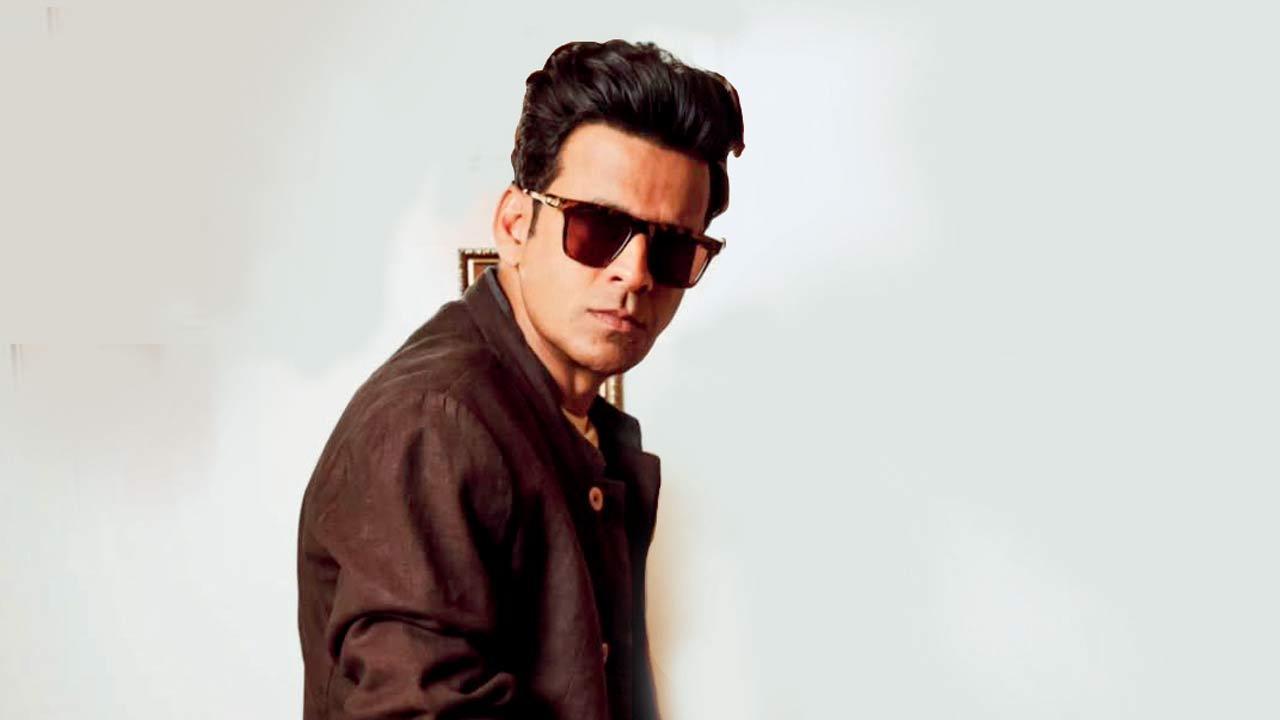
Portraying Mahatma Gandhi’s follower in Subhash Ghai’s Gandhi: A Perspective, Manoj Bajpayee reveals how he turned down a web series on the leader
Upala KBR (MID-DAY; February 7, 2025)
Manoj Bajpayee’s desire to work with filmmaker Subhash Ghai can be best understood in an anecdote he reveals. “When I landed in Mumbai to become an actor, the first set I went to was Subhash-ji’s Trimurti [1995] and the first office was Shyam Benegal’s. Since Subhash-ji works with big stars, I knew I stood no chance, but I kept on trying my luck on his movie sets,” he recalls. The then-aspiring actor’s wish was to be fulfilled over 30 years on. Today, Bajpayee fronts the director’s short film, Gandhi: A Perspective, and he couldn’t be happier about it.
“When I got a call to be directed by him in the short, I grabbed the opportunity. I admire the larger-than-life cinema he created. When I compare his films with today’s mainstream entertainers, which are VFX-heavy, his cinema makes more sense,” says the actor.
With Gandhi: A Perspective, Ghai wants the youth to better understand the renowned leader’s ideals and values. Bajpayee says that the film shows how the Mahatma is “misrepresented” by people today.
He shares, “Without understanding Gandhi-ji, people are commenting on him in a frivolous manner. That bothered Subhash-ji. He has written the script, which revolves around a teenager, who doesn’t have much idea about Gandhi-ji and talks about him in a derogatory manner. His idea changes [when my character] familiarizes him about the Mahatma’s teachings.”
The actor says that he has been fascinated with Gandhi since childhood, and has read extensively about the leader. So, would he like to play the Mahatma on screen?
“I keep myself away from playing famous figures. If you give me a biopic of an unknown person, like Aligarh [2016] was [about Dr Shrinivas Ramchandra Siras], I have freedom to give my own interpretation to it. But the moment you play a famous personality whose life has been read about and seen by everyone all over, people start critiquing it differently. They don’t look at the actor’s performance; instead, they get into comparisons of how successful the actor was in copying the real-life personality. I was offered to play Gandhi-ji in a web series, but I said no. Such projects require a year of prep. You have to change yourself mentally and physically as Gandhi-ji is not an easy personality to play. Watch Ben Kingsley’s process in Gandhi [1982], and you understand how tedious it was for him to play the part.”
The world needs Mahatma Gandhi now more than ever before-Pratik Gandhi
8:26 AM
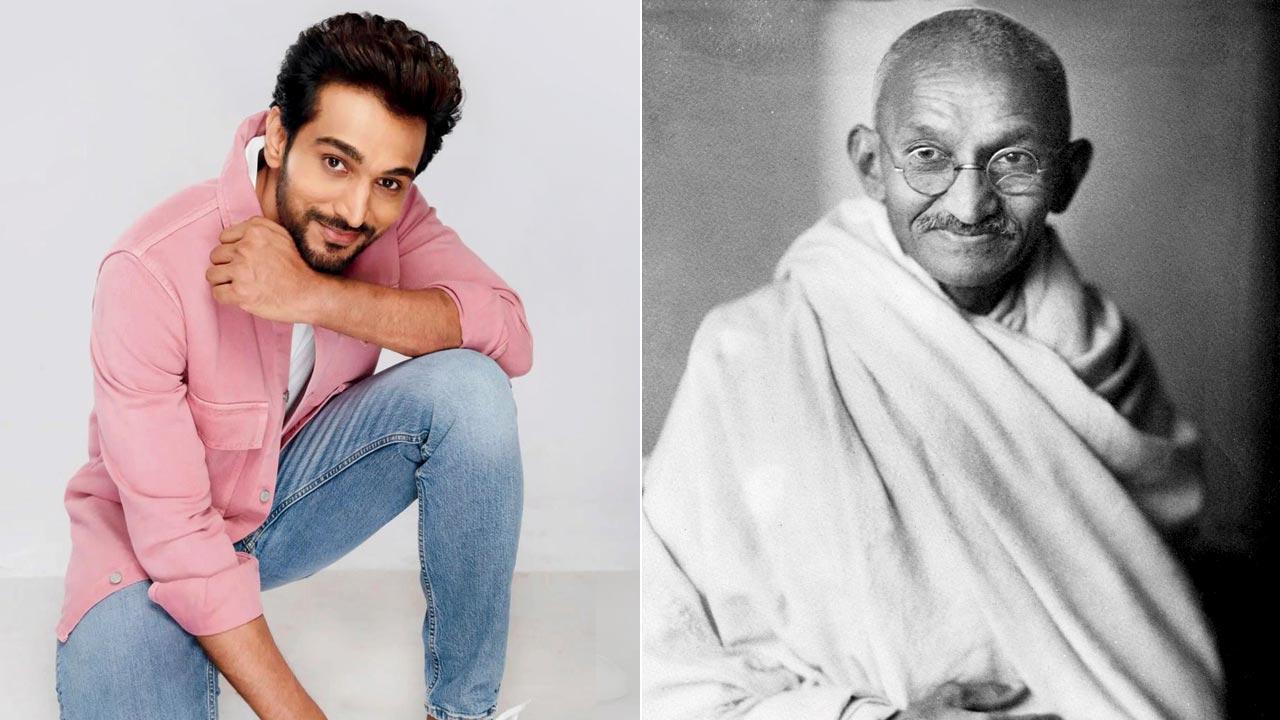
After PM Modi’s remark on Gandhi creates a stir, Pratik says the Mahatma represents a thought process that is relevant today as he portrays the leader in upcoming eponymous web series
Mohar Basu (MID-DAY; June 4, 2024)
When Dedh Bigha Zameen came his way, Pratik Gandhi’s first reaction was to the title, and an unfavourable one at that. Director Pulkit made him see that it had nothing in common with Bimal Roy’s classic, Do Bigha Zameen (1953). “After my first reading, I realized that it couldn’t have had any other name,” says Pratik.
In Dedh Bigha Zameen, the actor plays a common man who intends to sell his ancestral land, only to realize that it has been illegally possessed by a corrupt official. The hero battling an oppressive system is a common trope in Hindi cinema. But Pratik credits Pulkit of Bhakshak fame for developing a moving and essential story.
“Pulkit’s approach and writing are organic. Bhakshak disturbed me; I couldn’t sleep all night. He has the tendency to touch your core while asking questions that others don’t. We would create many scenes on the set. While performing, some lines hit differently, and Pulkit allows you the space to tweak a scene to your liking.”
Pratik showed his acting prowess with Scam 1992: The Harshad Mehta Story (2020), and with the success of Madgaon Express, his star is on the rise. He considers himself a switch-on-switch-off actor.
“When I am performing, I have two people inside me—Pratik and the character. The character is telling the story, Pratik is objectively looking at the performance. I’m critical of myself to the point of overthinking.”
His next big project is Gandhi, a multi-season series on Mohandas Karamchand Gandhi. Last week, Prime Minister Narendra Modi stated that the world did not know of the Mahatma until the film, Gandhi (1982), was made. The remark has been condemned by many across the country. The actor says the Mahatma has become all the more relevant today.
“The world needs Gandhi now more than ever before. Gandhi is not a person, he is a thought process. It’s necessary to know and understand where he comes from. With this show, we’re making a digital footprint of him. What we’ve read in school is only a portion of his life. Our series is delving into many aspects that people have not known. It will help them see Gandhi in a different light, even make him more human.”
Check out Sidhant Gupta as Pandit Jawaharlal Nehru in Nikkhil Advani's Freedom At Midnight
9:46 AM
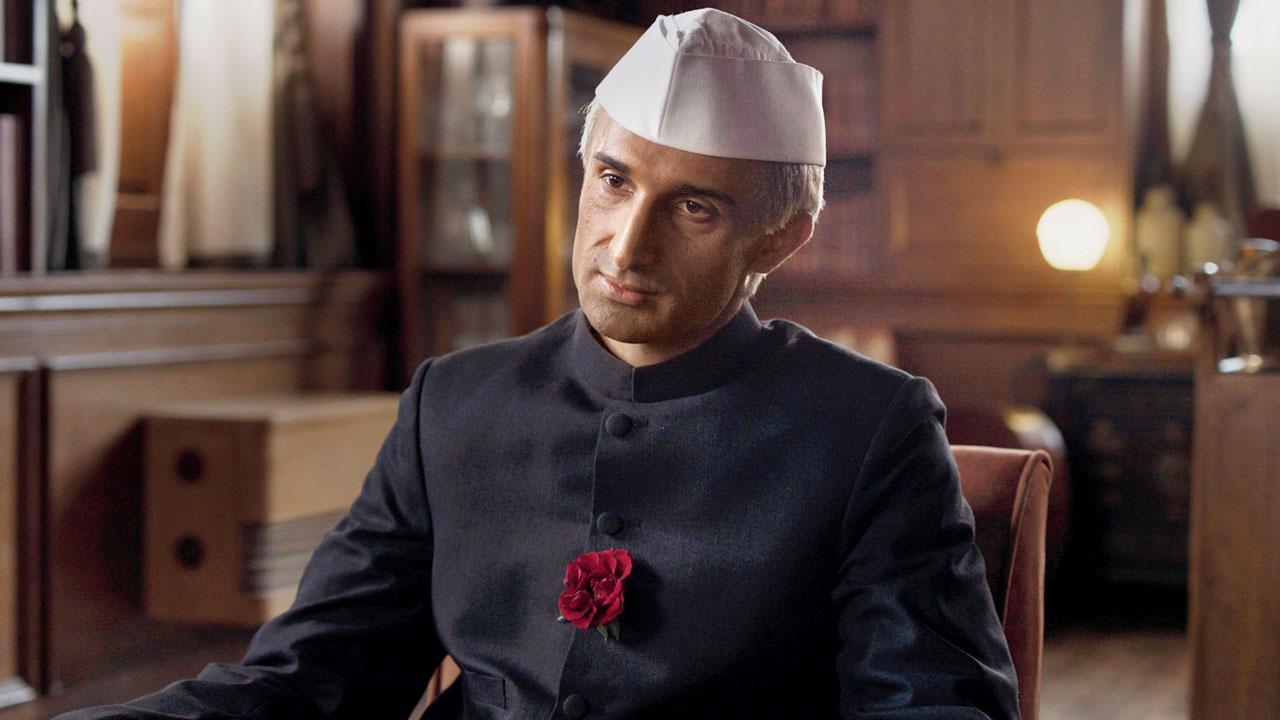
Sharing exclusive picture of Sidhant as Nehru, Freedom at Midnight creator on how the series adapted from the eponymous book looks at India’s independence struggle through personal accounts
Letty Mariam Abraham (MID-DAY; May 3, 2024)
There is something about history that draws Nikkhil Advani, something about real-life events that make for compelling storytelling. A case in point—Rocket Boys that focused on Homi Bhabha and Vikram Sarabhai. Now, the director-showrunner is gearing up to bring the most important chapter of Indian history to the screen with Freedom At Midnight.
In June 2022, Advani had announced the historical drama that is based on Dominique Lapierre and Larry Collins’ acclaimed book of the same name. Almost two years on, he has shared the series’ first look with mid-day, which sees actor Sidhant Gupta as Pandit Jawaharlal Nehru.
“This show is a profound tribute to the luminaries of our freedom movement—Mahatma Gandhi, Jawaharlal Nehru, and Sardar Vallabhbhai Patel,” says Advani. While Gupta will be seen on screen after his breakout role in Jubilee (2023), Chirag Vohra and Rajendra Chawla will slip into the roles of Gandhi and Patel respectively. The Sony LIV series took birth over a simple conversation between Danish Khan, the platform’s business head, and Advani.
“Over the course of interacting on [shows], Danish sir and I have become not just collaborators, but also friends. He took one second after hearing the initial pitch of Rocket Boys to greenlight it. For Freedom, he came to me with a sparkle in his eye and asked, ‘How would you like to make your favourite book into a show?’”
The rest, as they say, is history. The team took the project on floors in late January this year. Besides being an ode to the heroes, Advani says Freedom at Midnight is also a means to take the audiences back to their roots, as they view India’s freedom struggle and the Partition through untold tales.
“We know the major sacrifices and struggles that led to our independence. What Dominique Lapierre and Larry Collins got was access to Lord Louis Mountbatten’s diaries and notes. So, in between all those milestones, we have some personal accounts that make that time come alive. We have tried to capture that.”
I have been prepping for Gandhi for nearly eight years in three languages-Pratik Gandhi
8:09 AM
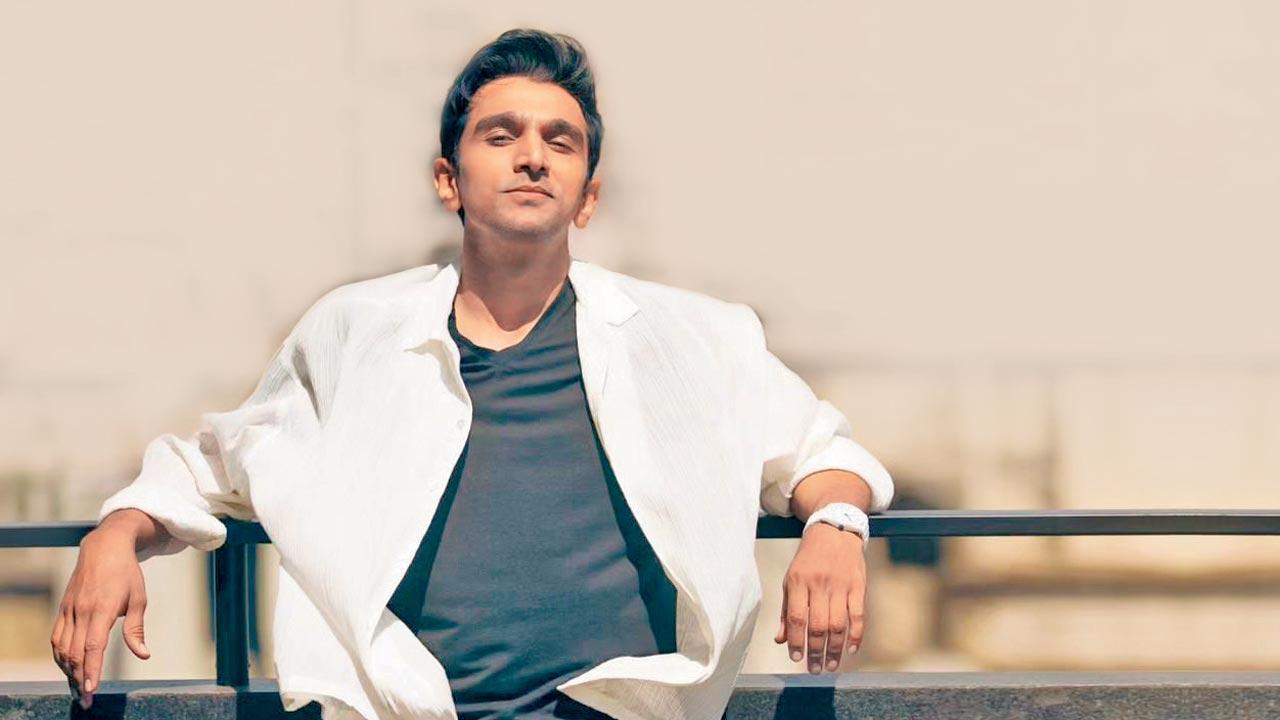
Currently shooting Gandhi in London, Pratik on how web series was ‘destined’ for him after he portrayed the Mahatma in the long-running play, Mohan No Masalo
Mohar Basu (MID-DAY; April 29, 2024)
Four months into 2024, Pratik Gandhi sits comfortably with two much-loved films, Madgaon Express and Do Aur Do Pyaar, behind him. But what lies ahead makes the actor happier—the web series, Gandhi. Based on historian Ramachandra Guha’s books Gandhi Before India and Gandhi: The Years That Changed the World, Hansal Mehta’s show dissects the man behind the world-renowned leader Mohandas Karamchand Gandhi, better known as Mahatma Gandhi.
Pratik, who recently kicked off its London schedule, says, “I get nervous when I do a series; even on my 200th show, I’m nervous. On Gandhi, I try not to think of the magnitude or expectations. I only think of my excitement. I try to bring the rigour that will pull me through for 120 days. It’s a plus that Hansal sir and everyone in the crew also has that rigour.”
It’s fascinating how some roles become an integral part of an actor’s life. Since 2015, Pratik has been playing the Mahatma in a play titled Mohan No Masalo. As he brings the character alive again, this time on screen, the actor views it as something far bigger than a coincidence.
“I was destined to do this. I have been prepping for this for nearly eight years in three languages [Gujarati, Hindi and English]. This character has been a spiritual performance [for me].”
The actor, who broke out with Scam 1992: The Harshad Mehta Story (2020), has been seen in two back-to-back theatrical offerings recently. Does going back to a series worry him since theatrical releases are perceived to be the way forward?
“I never think of OTT and big screen as different. I look for a story. Madgaon Express’ success is empowering; [it tells us that] people come to screens for stories. As actors, all we can do is portray a character memorably and give our all. I want my stories to surprise people. I have a range of emotions to display in Gandhi. The Hindi film audience has never seen me play such a character, and I hope that shock value will land.”
We can’t end our chat without asking him whether Madgaon Express will have a sequel, as rumours suggest. “Kunal [Kemmu, director] left that Las Vegas reference in the end. So, he may have something in mind.”
Narayanrao was lynched after Gandhiji’s murder; 8,000 Brahmins were lynched in Maharashtra-Randeep Hooda
10:25 AM
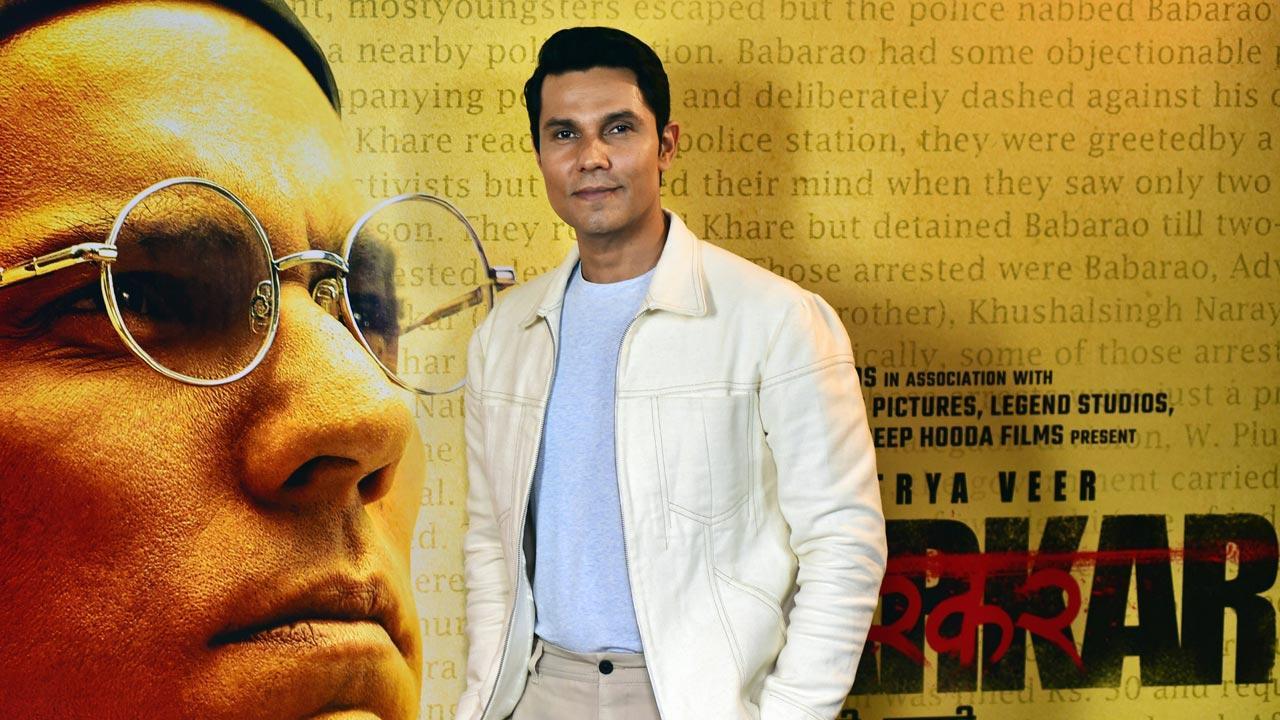
Randeep Hooda plays Vinayak Damodar Savarkar in his directorial debut, and hopes the thriller will shed new light on the much-maligned nationalist
Aastha Atray Banan (MID-DAY; March 10, 2024)
If you thought Vinayak Damodar Savarkar and Mohandas Karamchand Gandhi were antagonists, given that the former was accused of playing a part in the latter’s assassination plot, actor Randeep Hooda will tell you differently. “They had completely different ways of going about it, but their end goal was the same: Akhand Bharat,” he says.
“In fact, when Savarkar was in Kala Pani [Cellular Jail], it was Gandhiji who advised his brother, Narayanrao, about how to draft the bail plea.” It has been claimed that Savarkar swore allegiance to the British if he was released.
Hooda plays the controversial man in his directorial debut, Swatantra Veer Savarkar (due to release on March 22), and is now a veritable expert on his life, likes, dislikes, and ideologies. “But this movie is not a history lesson,” he laughs, “It’s supposed to be entertaining as well.”
The “anti-propaganda film”, as he calls it, is a retelling of Savarkar’s life. The intellectual-writer developed the nationalist political ideology Hindutva in Ratnagiri in 1922, and was a leading figure in the Hindu Mahasabha. He was also sentenced to two life-terms at Kala Pani (after he was found guilty of supplying the pistol used to assassinate the then collector of Nasik, AMT Jackson, in 1909) and composed 6,000 poems when incarcerated. His book, The Indian War of Independence, about the first war for freedom in 1857, was banned before it came out.
However, members of the Hindu Mahasabha turned against him when he distanced himself from Nathuram Godse and others accused of playing a part in Gandhi’s assassination plot during their trial. Though Godse had claimed full responsibility for the assassination, court approver Digambar Badge had said that Godse had a meeting with Savarkar before the assassination, where Savarkar told them all, “Yashasvi houn ya (be successful and return)”.
He was branded a traitor and coward, and though the Bharatiya Janata Party has tried to rebrand him as “Veer”, the nasty names continue to follow him around. We meet Hooda in Juhu, and he is in good spirits, wanting to delve deep into Savarkar’s psyche. Excerpts from an interview
What was your first introduction to Savarkar?
I think Kala Pani and Savarkar were synonymous for me when I was a child. When I started digging deep, I found there was so much missing from the public domain. I wondered why it has been swept under the carpet. My well-wishers told me, “Why are you getting into this? Why become political? You are an artiste”. I replied, “His story needs to be told, whatever it takes.” The kind of name-calling that happens in his name is unjustified. I just pursued the goal to correct that wrong with all sincerity. I ended up co-writing the film and directed it as well. It’s taken me two years of only thinking about Savarkar. I have put everything on the line—emotionally, monetarily, physically. And I’m so grateful people will know his special story.
What was the research involved?
I read books in English, Hindi; spoke to Maharashtrian filmmakers and historians who have written about him. I read about him and I read what he wrote. He is such a profound writer... People have just heard things through “WhatsApp university”, and keep calling him maafiveer (apologist). He was not that. He was just 26, and sentenced to serve two life terms. He went to Kala Pani in 1911 and the date of his release was 1960—he would have been 76! He used to keep writing bail pleas, but they were too flowery. Then Gandhiji asked him to keep it short, and that’s how he got out. Narayanrao was lynched after Gandhiji’s murder—8,000 Brahmins were lynched in Maharashtra. So much for non-violence. People don’t know about most of this.
He had a complicated relationship with Gandhi...
They had opposing ideologies, and both were very stubborn. They met three times—in 1907 at London’s India House; and once at a restaurant on Vijay Dashmi, and gave speeches together. Then in 1927, Gandhi visited him in Ratnagiri when he was placed under house arrest. They started at opposite ends, but met in the centre united by one purpose: A united India. But both of them were not part of the government, much like revolutionaries all over the world. Revolutionaries fight; politicians take control.
Was Savarkar less about religion, and more about nation?
Yes. Till 1920, everyone was one. In 1920, a caliphate movement started in Rae Bareli. Many Muslim leaders thought that India was a sultanate when the British came, and that it should go back to being a sultanate when they left. They didn’t want to be a part of the Congress’ democratic process, where they were a minority. To get them involved, Gandhiji became president of the Khilafat Movement, and there on began the process of appeasement. They were given more seats, and electorates.
This irked Savarkar. He came up with the Hindutva philosophy in response: he held that everyone who lived in the region between the Indus river to the sea, were Hindus. Whatever caste, religion, or community, as long as you love Hind, you are a Hindu. This angers people, but that’s a geographical definition. He said anybody who calls the land between the river and the sea the home of their ancestors, are Hindus.
Are the movie, and you, defending Savarkar?
I hope it does, but that’s not its purpose. I have made it as a thriller; it will enthrall you. It’s for young people. I have laid out the facts; I don’t call him veer, you will have to decide if he was one.
What did you learn the most by playing Savarkar?
Saam, Daam, Dand, Bhed (by any and all means)—that’s what he believed in. It’s what I have used to make this movie and get it released. One should do whatever it takes once one has decided the purpose of his life. And also, “Dushman ko kiye hue vaade nibhaaye nahin jaate”.
What do you want people to take away when they leave the halls?
That there is a bias in the telling of our history; documentation has been very one-sided. Also, you will get entertained and learn more about the freedom struggle than what’s available at first look.
Ameen Sayani, golden voice of radio, falls silent
8:22 AM
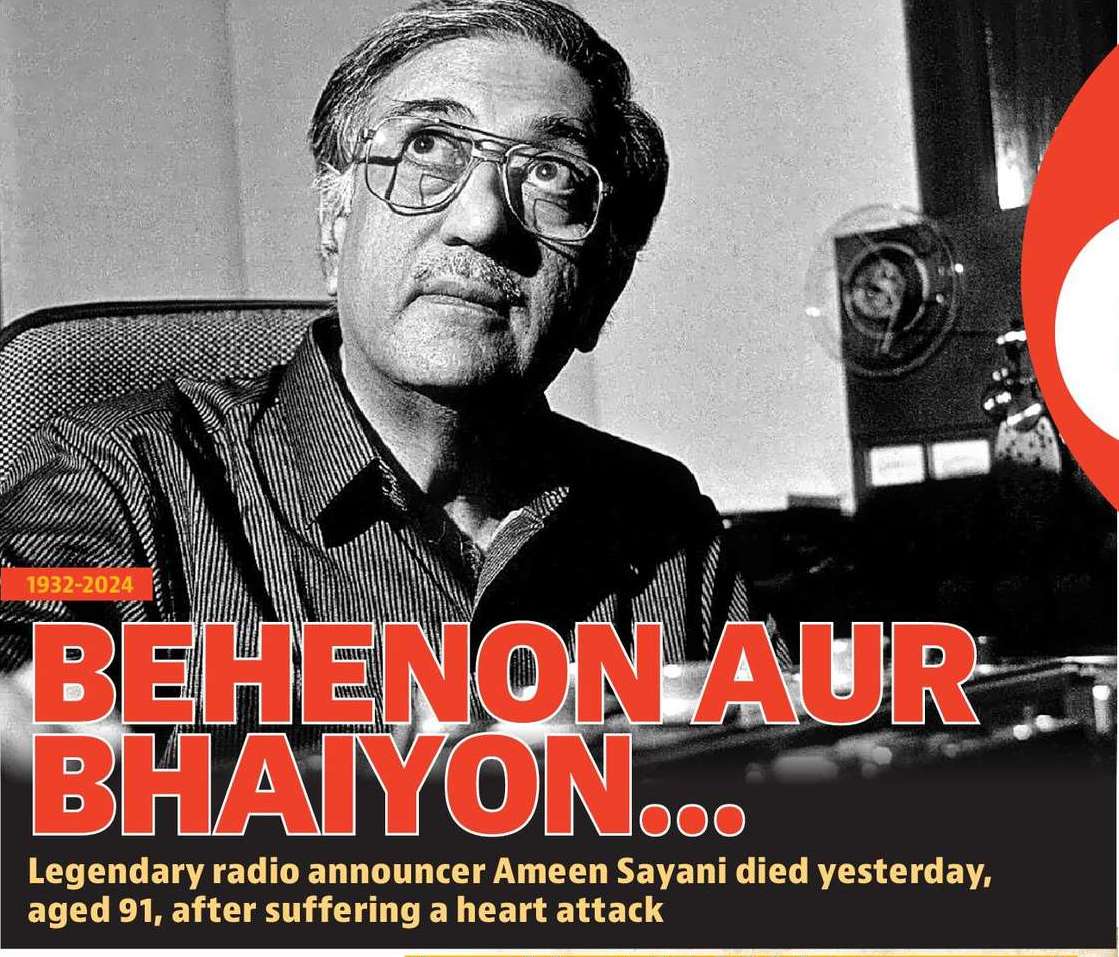
Avijit Ghosh (THE TIMES OF INDIA; February 22, 2024)
His voice was his face. Everyone recognized it. From homemakers in Jodhpur to college students in Jhumri Telaiya, from paan sellers in Benaras to bank clerks in Akola — millions would tune in to Radio Ceylon every Wednesday at 8pm and be welcomed by the friendly and familiar greeting, “Behno aur bhaiyon”. Binaca Geetmala wasn’t just a blockbuster radio programme; it was a debating point, a social glue, an audio addiction.
Mumbai-based radio personality Ameen Sayani, 91, who hosted that iconic hit parade of film songs from Dec 1952 to April 1994, passed away following a heart attack on Tuesday.
From 1950s-70s, radio ruled indoor entertainment in India. With a voice that seemed to be shaking hands and a style that was intimate, Sayani not only personified “the golden years of radio” but also shaped and expanded it. At a time when songs sold films, his show was pivotal to the fortunes of the Hindi feature. It spawned hundreds of shrota sanghs (listeners’ clubs) in towns and kasbahs.
Overcoming the faint and wavering sound of short-wave radio, hundreds would press their ears to the ‘transistor’ to engage with a weekly register of songs. The programme’s emotional bonding with the listener is hard to explain, impossible to replicate.
Binaca (later Cibaca) Geetmala was born at a time when Hindi songs were banned on All India Radio by Union I&B minister B V Keskar, a classical music purist. Radio Ceylon grabbed the opportunity.
“Geetmala came on the scene as a low-priced experiment. I was given the job because none of the senior broadcasters cared much about it,” he told this reporter in a 2009 email interview.
The job entailed listing songs, writing the show’s script, presenting it and handling the feedback for Rs 25 per week. “Within a few months, AIR lost a major chunk of its popular listenership,” said Sayani, who was mentored by his elder brother Hamid, a reputed broadcaster.
The format of playing 16 hit tracks of the week for an hour (initially 30 minutes and seven numbers) was novel and exciting. But it was Sayani’s voice that became the 41-year-long show’s endearing USP. At its peak, the show received 65,000 letters every week.
Sayani’s easy, relaxed and flowing style led to first-rate interviews with major composers, lyricists and singers of the time. S Kumar’s Ka Filmi Muqaddama was another popular 70s show of his. Prolific with ad jingles, he also occasionally worked in the movies. The radio compere introduced Dev Anand’s Teen Devian (1965) with a background commentary and did a cameo for Mehmood’s Bhoot Bangla (1965).
Born into an enlightened and well-heeled Khoja family, Sayani graduated in history from St Xavier’s, Mumbai. Not many know he assisted his mother, Kulsum, in editing, publishing and printing a fortnightly journal for neo-literates on Mahatma Gandhi’s instructions. The fortnightly, Rahber (1940-60) was published in Devanagari, Urdu and Gujarati scripts.
Sayani also brought out a highly popular CD and cassette series, “Geetmala Ki Chhaon Mein”, which was peppered with film star interviews as well as digressions into the music of the past. He received Padma Shri in 2009.
On X, Prime Minister Narendra Modi mourned his passing with a tribute to the charm and warmth of Sayani’s golden voice. “Through his work, he played an important role in revolutionizing Indian broadcasting and nurtured a very special bond with his listeners,” he wrote.
Union information and broadcasting minister Anurag Thakur posted, “For most of us, he was the voice of the radio, who, with his magical wordplay, entertained and engaged us in a way no one had before.”
------------------------------
Soumya Vajpayee (HINDUSTAN TIMES; February 22, 2024)
Beloved radio host Ameen Sayani, 91, who hosted the show Binaca Geetmala, died on Tuesday in Mumbai after suffering a heart attack. His son Rajil Sayani confirmed the news to Indian Express.
Sayani, whose introduction: ‘Namaskar, behenon aur bhaiyon, main aapka dost Ameen Sayani bol raha hoon’, still evokes nostalgia, hosted Binaca Geetmala on Radio Ceylon (Sri Lanka) and later over Vividh Bharati (All India Radio) for 42 years. He produced and compiled over 54,000 radio programmes and 19,000 spots/jingles since 1951. He was a narrator for various movies, including Bhoot Bungla (1965) and Teen Devian (1965). He also acted in a few films, including Qatl (1986).
The late legend’s funeral will take place today in Mumbai.
-------------------------------------------------
Excerpts from Ameen Sayani’s 2016 interview with Soumya Vajpayee, when AIR turned 80
On working for Radio Ceylon and All India Radio
Radio Ceylon gave me fame and fortune but my birthplace [in] broadcasting was All India Radio (AIR). When I was eight, my brother Hamid took me to the English section of AIR Mumbai and got me in it. After Mahatma Gandhi passed away, I was broken since he was very close to our family. So I told myself that I was naye Bharat ka naya naujawan and would broadcast in Hindi. Since Radio Ceylon played Indian film songs, it got popular. I honed my Hindi and Urdu skills and got into Radio Ceylon. I spent some time there and my career took a turn with Binaca Geetmala.
On his favourite show
A show on Radio Ceylon used to have a competition in English. In 1952, we were told that there should be a similar programme in Hindi. We were told that the person who took it up would have to produce, script and present it and check the mail. I was given that programme since no one else was willing to work so hard for Rs. 25 a week. I took it up and put all my love for music into it. When the first programme of Geetmala was broadcast, I got 9,000 letters. The mail doubled every week. Within a year, it had gone up to 65,000 a week.
-------------------------------------------------
Harish Bhimani: He was so empathetic and encouraging
I was a chemical engineer with an MBA when I decided to become a voice artist. Ameen Sayani ji was worried about my sudden career shift... and advised me, “I know you are cut out for this. But don’t let it get to your head. I’m with you.” He was my mentor and gave me my first cheque. I am in the middle of writing a chapter of his biography.
Vishnu Sharma: I have become an orphan professionally
Meri aatma ka ek hissa chala gaya. When I came to Mumbai in 1981, aasaani se kaam nahin milta tha. I met Ameen ji and said, “Main aapke liye free mein kaam kar loonga.” So, he said, “Arey bhai, free mein kyun karoge? Maine tumko suna hai. Tum kal se aa jaana mere paas.” Uske baad, whenever I needed any guidance and support, he was always there.
RJ Rohini: His contribution to radio gave RJs a new identity
Once in an interview that Ameen sahab was giving, he said, “I’m not special or extraordinary. I’m not knowledgeable beyond any layperson. My attempt is to speak from my heart to reach the hearts of my listeners.” His contribution to radio has given presenters an identity beyond being mere announcers.
Aparshakti Khurana: He will always be radio’s golden voice
I’m truly saddened to hear about sir Ameen Sayani’s passing. Sayani sahab will continue to be the golden voice of Indian radio, and I was lucky to have grown up listening to him, thanks to my parents who were avid fans of his show, Binaca Geetmala. What Sachin Tendulkar is to cricket and Amitabh Bachchan is to cinema, Ameen Sayani was to radio.
The web series on Mahatma Gandhi, directed by Hansal Mehta, will be the biggest project of my career-Pratik Gandhi
4:06 PM

Soumitra Das (BOMBAY TIMES; October 2, 2023)
Pratik Gandhi, who has been performing Mohan No Masalo (Mohan’s Masala in English and Mohan Ka Masala in Hindi) since the last eight years, says that “playing Gandhi on stage has taught me a lot about life.” Pratik, who also found a place in the Limca Book Of Records for the play (for performing a monologue in three languages - Hindi, English and Gujarati - in a single day), will be performing the play (in Hindi) today in Ahmedabad.
He adds, “Every year, I try to make sure that I perform the play on Gandhi Jayanti. I started doing monologues with the play Hu Chandrakant Bakshi. One day, I told Manoj Shah (who eventually directed Mohan No Masalo) that Gandhi’s is a universal story and character, and it’s a subject that can still fascinate generations. A lot of people think Gandhi was a born ‘Mahatma’, but hardly anyone knows about him as a young guy, his fears, and his failures. I wanted to bring out those aspects which would really interest youngsters too. So, we roped in Ishan Doshi, a young writer who wrote the play (in English) and he has done a fabulous job. There’s no audio of Mahatma Gandhi in his native language (Gujarati). So, for the play’s Gujarati version, we explored his Kathiyawadi accent, kyun ki
unki boli mein there was that accent since he was from Porbandar.”
He adds, “Working with Hansal Mehta again for my upcoming web series on Mahatma Gandhi is the best thing that could have happened, and it will be the biggest project of my career. Even though a big film (Gandhi) was made on his life, it was an international project. Our project will cover his whole life and I am super excited.” Excerpts from a chat:
‘Every time I perform this play, I learn something new’
While preparing for this play, I read a lot of books on Gandhi and some of his quotes really stayed with me. I have seen a lot of Gandhian people in my family and their simple, minimalist lifestyle has inspired me. Initially, I thought the audience might find some of the dialogues cliched but once I started performing, I realised the power of those lines. Every time I perform this play, I learn something new.
‘I have some unforgettable memories associated with this play’
I remember performing for the inmates of Sabarmati Jail and the entire stage was cordoned off. I felt they would be least interested in the play and initially, when I saw a few inmates going out or asking for a bathroom break, I thought it (performing there) was a wrong decision. But after my performance, one guy came, and he was crying like a child. He said that after watching the play, he felt ashamed to have let his mother down and promised that he would never do something that would land him in jail again. I have also performed at the Indian Army base camp in Leh Ladakh, for the Indian Navy and abroad. In Mumbai, once I was supposed to perform the play at a small black box theatre and apart from two foreigners, nobody turned up. But we still staged the play and they loved my performance. I have some unforgettable memories associated with this play. Through this play and while reading about him, I have realized that ahimsa isn’t a cowardly act; it’s the highest form of bravery. Non-violence is the strongest tool that anyone can have.
‘Performing the play in the US was absolute madness’
I will never forget my experience of performing the play in the USA because it was absolute madness, and one of the craziest moments of my career. We were invited by JAINA (Federation of Jain Associations in North America) and I was to perform in Hindi. There were 8,500 people in the audience and 15 minutes into the performance, I could hear a murmur, and Manoj bhai told me to change the language. So, I started performing in English but after a while, the same thing happened, and I switched to performing in Gujarati. Eventually, Manoj bhai asked me to mix all the languages and I had to do that! Later, I learnt that the audiences were fighting among themselves and so, Manoj bhai wanted to make sure that the situation was brought under control. As an actor, I was really irritated but after the play was over, I got a standing ovation. It was an experience of a lifetime.
Check out Sharib Hashmi, Daisy Shah shooting for The Ghost Of Gandhi
8:25 AM
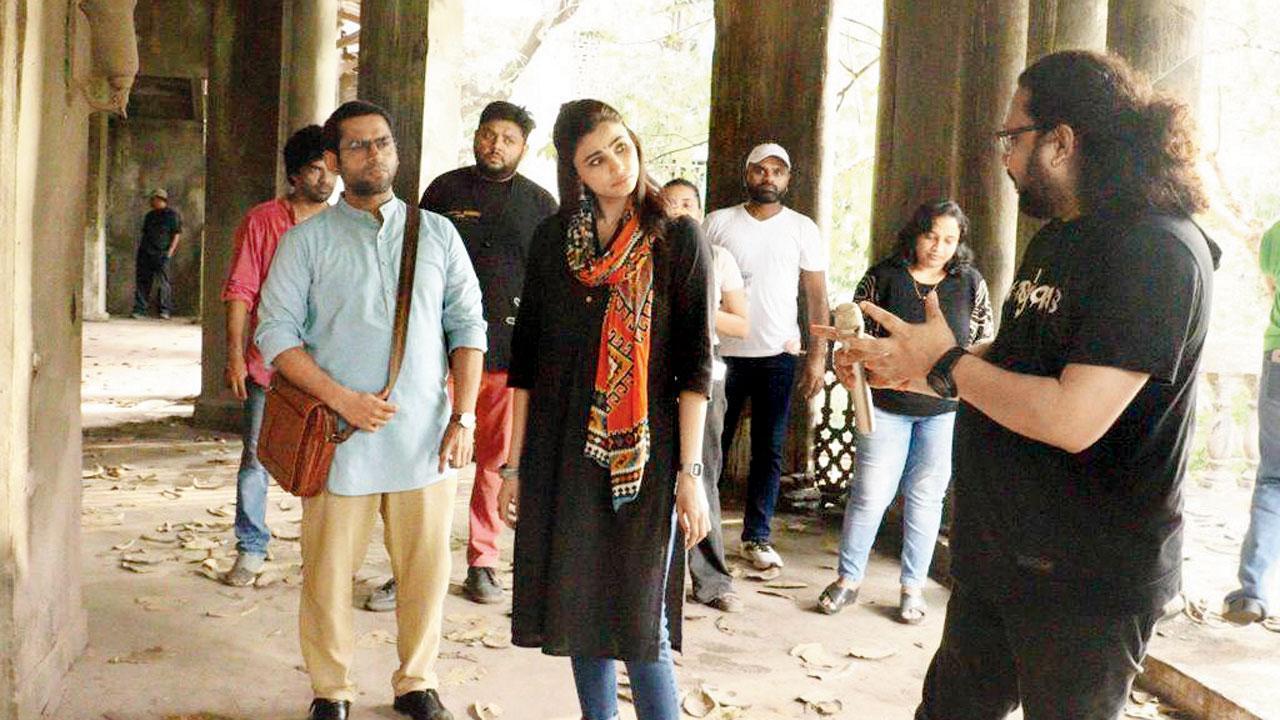
Sharib to play a social activist in The Ghost Of Gandhi, which revolves around the Mahatma’s spirit visiting the corrupt
Upala KBR (MID-DAY; August 14, 2023)
Sharib Hashmi continues his pursuit for different roles. Only a month after playing a supportive husband in Tarla, the actor will now be seen as a social activist in the upcoming web series, The Ghost Of Gandhi. The drama, helmed by Manish Kishore, will mark the OTT debut of Jai Ho (2014) actor Daisy Shah. The director says that through the web series, he wants to remind viewers of the teachings of Mahatma Gandhi.
“In the show, we are bringing back Mahatma Gandhi’s philosophies and how they can [be applied] to make India a better nation. While in Lage Raho Munna Bhai [2006], Gandhiji was visible only to Munna Bhai, here his ghost is visible to every corrupt human being. I cast Sharib and Daisy as they connected to the script immediately. People who cannot resonate with the show’s ideology may not be able to deliver what I want,” says Kishore.
The series went on floors last month in Mumbai. Before that, the director conducted 14-day workshops with Hashmi and Shah, who plays a journalist. What drew Hashmi to the project, he says, are the premise and his character. “How my character collates all the stories about Gandhi-ji’s ghost [and takes them] to the media are elements that I found attractive about the series. It’s an interesting take on today’s times,” explains the actor.
S S Rajamouli takes up questions on religious extremism, regional politics etc in his interviews in the West
8:40 AM
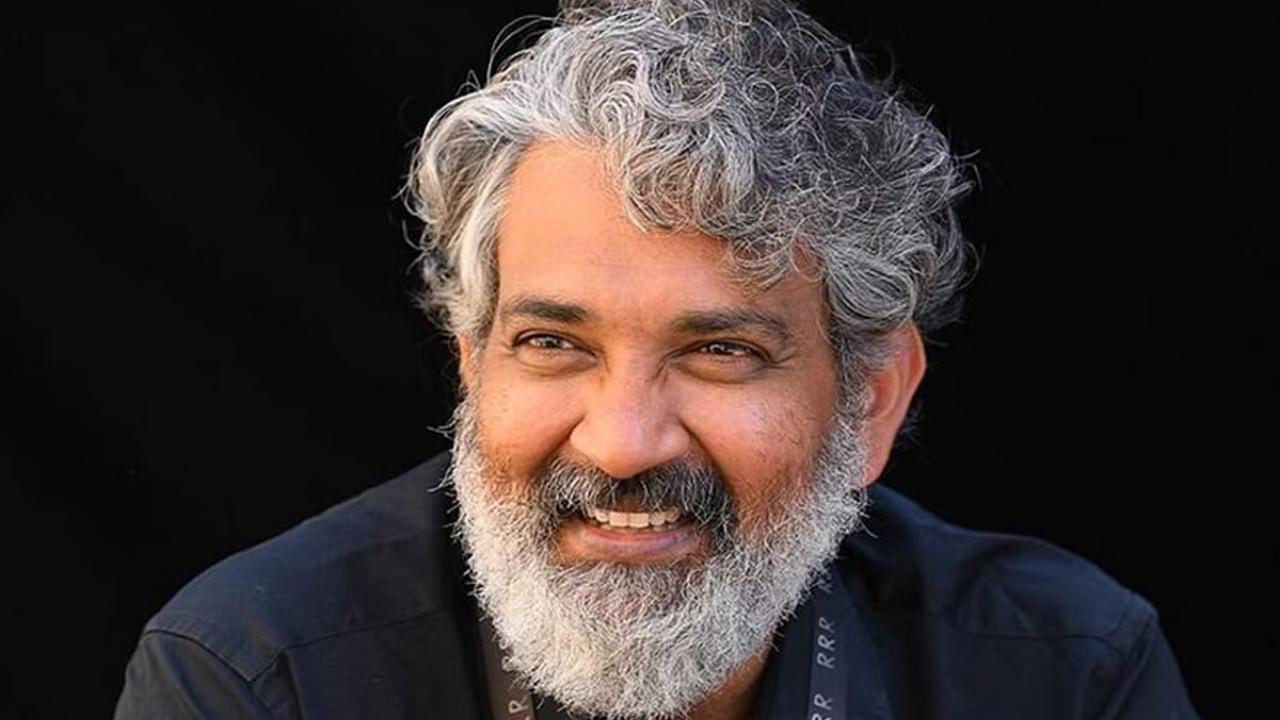
S S Rajamouli’s no-holds-barred interviews in the West during his Oscar campaign for RRR have been a far-cry from his otherwise play-it-safe-and-simple media approach back home. The filmmaker – who’s been getting tough love from the US press, that doesn’t mind pressing him on sensitive topics – hasn’t shied away from questions on atheism, spirituality, religious extremism, regional politics and more
Niharika Lal (BOMBAY TIMES; March 4, 2023)
“Personally, I’m an atheist. I don’t believe in god. I don’t believe in any religion. But I understand the power of spiritualism. For me, spiritualism is an emotion. And I write stories filled with emotions,” Rajamouli told The Associated Press.
To The New Yorker, he said, “There might be some overlap, but I don’t try to bring my personal beliefs into my films. For me, there is a very clear and pure relationship between the audience and me. The audience is paying me their hard-earned money, giving me their time, and expecting some kind of entertainment. That’s my job.”
In a departure from his otherwise cookie-cutter interactions with the Indian media, Rajamouli’s recent spate of interviews to the US press have seen him shoot straight when it comes to hot-button topics, sometimes at the cost of being not-so-politically correct.
Delving further into his personal beliefs, he told the outlet recently that at one point in his life, “I got caught up in my family’s religious fervour. I started reading religious texts, going on pilgrimages, wearing saffron cloth, and living like a sanyasi for a few years. Then I caught onto Christianity, thanks to some friends. I’d read the Bible, go to church, all kinds of stuff. Gradually, all these things somehow made me feel that religion is essentially a kind of exploitation...My love for stories like the Mahabharata or the Ramayana never diminished. I did start pushing away from those texts’ religious aspects, but what stayed with me was the complexity and the greatness of their drama and storytelling.”
Among the other topics the filmmaker’s touched upon are religious extremism, the Andhra Pradesh-Telangana bifurcation connect in RRR, his political leanings and whether or not there’s an undercurrent of the latter in his films.
‘I KNOW THAT THERE ARE EXTREME GROUPS IN MY AUDIENCE, I’M NOT CATERING TO THEM’
“I hate extremism. I hate extreme people in any section of society,” said Rajamouli, when quizzed about his own politics and whether his films may reflect them. While talking about the rise of extremist sentiments in society and their impact on its films, the filmmaker added, “I don’t think in those terms. I always feel like films reflect the society that created them, whatever that society’s feelings are. Films reflect the pace of society because filmmakers have to cater to audiences. They’ll see what audiences like, what their present mood is, and make films for that. If there is a rise in that kind of sentiment in society, those kinds of films will come out. But I always stay away from that. I go a completely different route,” he said.
“I don’t have any kind of hidden agenda. I make films for people who are willing to pay their hard-earned money for the film ticket ,” he reiterated to AFP, adding, “I like to get them entertained, make them feel dramatic about the characters, about the situations, have a good time, go back and live their lives.”
‘WITH RRR, I THOUGHT WHY NOT BRING THESE TWO PEOPLE – ONE FROM AP, ONE TELANGANA – AND HAVE THEM BE FRIENDS?’
During The Hollywood Reporter’s Awards Chatter podcast, Rajamouli addressed the bifurcation of Andhra Pradesh, saying, “The bifurcation of the state itself was not a painful one. You can bifurcate a state, but nothing is going to change. The distance is not going to change, the people are not going to change. The relationships are not going to change. It’s just a matter of thinking they are two different states. But what really troubled me was in the process of bifurcating the states, the kind of angst and the kind of anger the people were spewing against each other. And, like, for a small period of time, which part of the state we belonged to became a major topic of discussion for everything. For 45 years, we didn’t even have this notion. Why is this suddenly coming up? Why are the people whom we thought of as brothers and sisters suddenly asking about my regionality and looking at each other as enemies? That really made me feel bad. And there was nothing I could do. So when the idea of RRR came out, my main idea was to bring the two heroes together. And I realized, what if I can bring these two people – one from Andhra, one from the Telangana region – and if I could say these two people were friends? Yes, it is completely fictional, but it’s my way of saying, ‘guys, these two heroes, whom we look up to as demigods, are friends. If they can be friends, if they can sacrifice their life for each other, we can also be the same’. I don’t think many of the people would have got it. I was not vocally saying, that is the reason why I was making it, but it’s almost for myself that I was making it .”
‘IF I WERE TO REPLACE NETAJI’S PORTRAIT IN RRR WITH GANDHIJI’S WOULD PEOPLE STILL THINK I DISRESPECTED NETAJI?’
On accusations that RRR’s concluding musical number highlights Subhas Chandra Bose and Bhagat Singh but omits others like Mahatma Gandhi and B R Ambedkar, Rajamouli told The New Yorker, “Whichever stories touched me, made me cry, or made my heart swell with pride – those are the historic figures that I chose for that scene. I could also only highlight eight people in that musical number. I would need room for 80 in order to put all the figures that I respect in the movie. Still, I respect all of the revolutionaries that I chose, and, if I didn’t put Gandhiji’s portrait there, it doesn’t mean I disrespect him. I have huge respect for Gandhiji, no doubt about that. My question is : If I were to replace Netaji Subhas Chandra Bose’s portrait with Gandhiji’s, would all these people ever question me, saying that I disrespected Subhas Chandra Bose by not portraying him there?”
Nathuram Godse’s speech in court was a reference point-Chinmay Mandlekar
8:57 AM
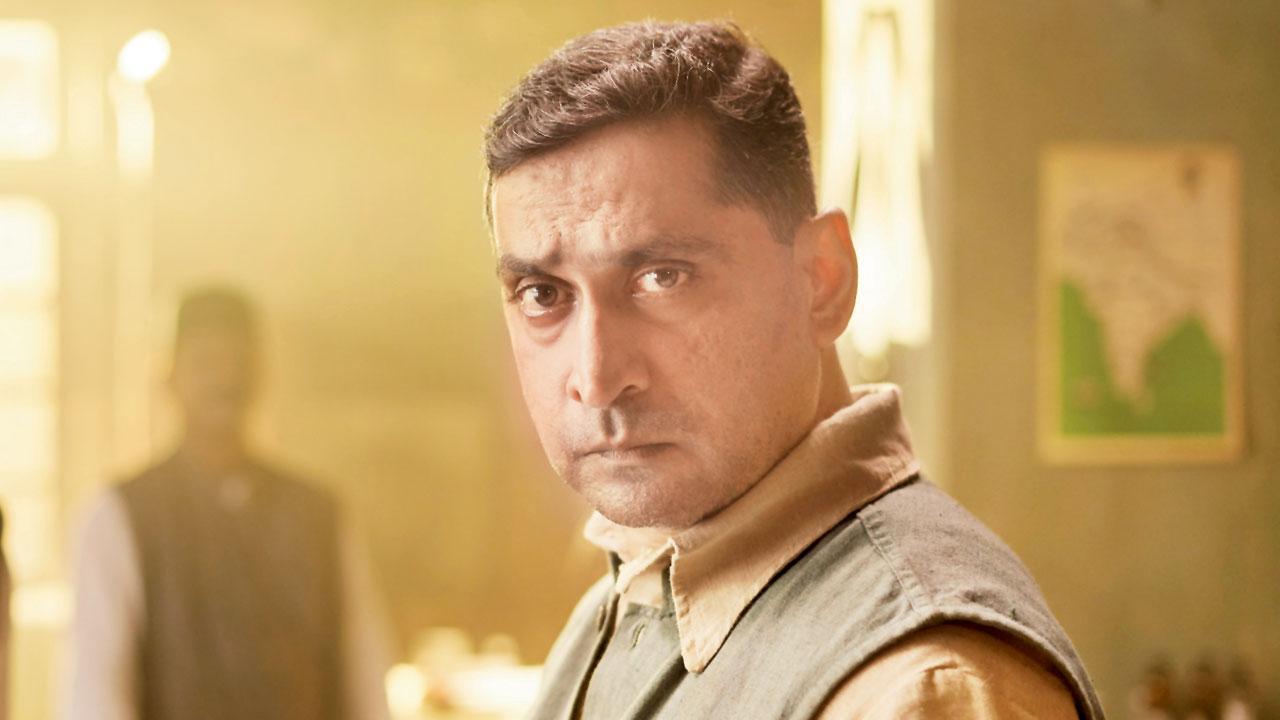
Chinmay says he relied on script and available material on Nathuram to prep for the role in Gandhi-Godse: Ek Yudh
Hiren Kotwani (MID-DAY; January 26, 2023)
For Chinmay Mandlekar, Gandhi Godse - Ek Yudh came out of the blue. He remembers being surprised when told that Rajkumar Santoshi wanted to meet him. Recounting his meeting, the actor says, “Raj ji asked where I came from and what I have done previously. After about 15 minutes of our chat, he asked, ‘Will you do it?’ Seeing my surprised look, he said, ‘I’m making Gandhi-Godse, and I want you to play Nathuram Godse.’”
The drama, starring Deepak Antani as Mahatma Gandhi, presents an alternate reality where the leader meets Godse after surviving the assassination attempt. While the film was to initially roll in 2020 summer, it kicked off only in September that year due to the pandemic. Santoshi is known to be fastidious about his research, more so when dealing with an intense subject that examines the ideological conflict between Gandhi and Godse.
Mandlekar — who was recently seen in The Kashmir Files (2022) — says that while the script was their guiding light, adequate prep preceded the filming. “There is a lot of debate [about the movie]. But the dialogues aren’t coming from Deepak ji or me. [Most of the dialogues used] have been said or written by Gandhi ji and Godse at some point in their lives. The main focus was to internalise those lines. For me, another reference point was Godse’s speech in court, which is now in public domain. It is about an hour long, and explains his psyche.”
During the trailer launch, Santoshi had revealed that he barred the lead actors from interacting with each other during the shoot, to maintain their on-screen conflict.
When asked about the director’s diktat, Mandlekar says, “That was only when Raj ji was around. Deepak ji is so sweet, you can’t not be friends with him.”
Gandhi Godse - Ek Yudh writer Asghar Wajahat's next is about Mahatma Gandhi's visit to Pakistan
8:32 AM
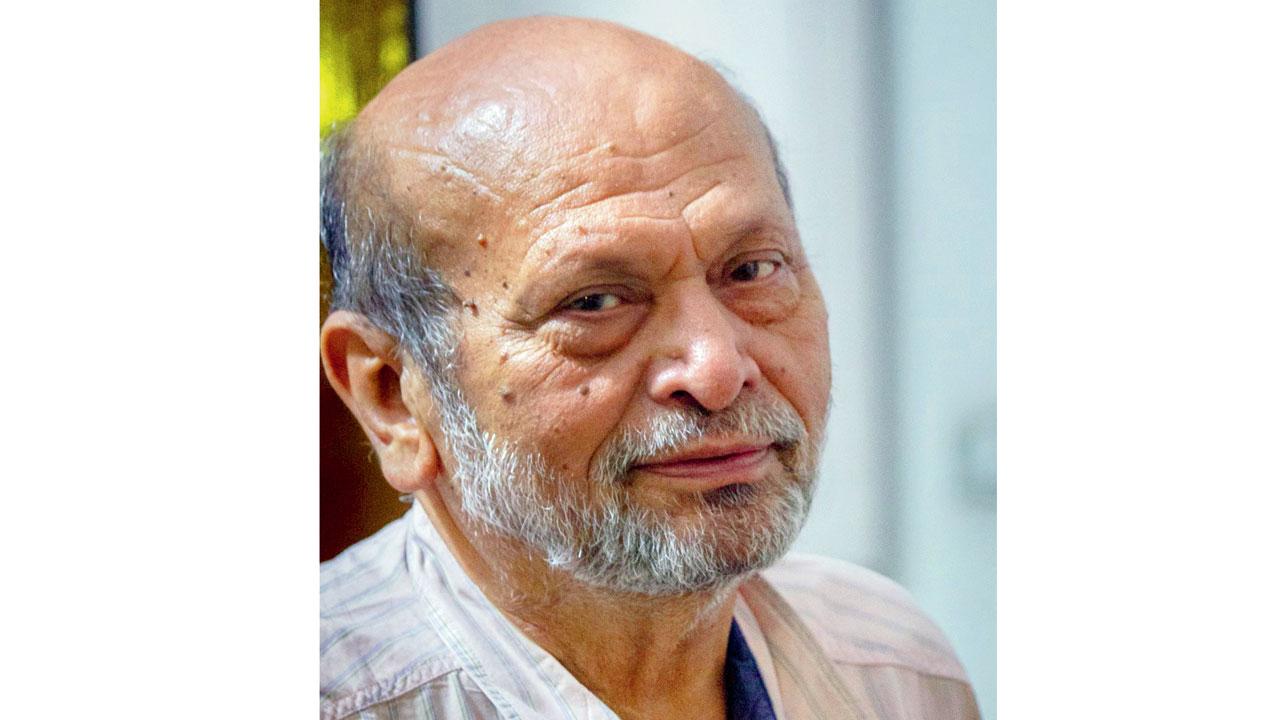
After writing Gandhi Godse - Ek Yudh, playwright Asghar Wajahat developing another counterfactual story about Mahatma meeting Jinnah in Pak
Hiren Kotwani (MID-DAY; January 24, 2023)
Hindi novelist-playwright Asghar Wajahat has served as the writer on Rajkumar Santoshi’s Gandhi Godse - Ek Yudh. The historical drama, based on Wajahat’s play Godse@Gandhi.com, explores the alternate reality where Mahatma Gandhi meets Nathuram Godse in prison after surviving the assassination attempt.
“This virtual history helps us understand our past, wherein we let characters grow in their natural direction. Both had their strengths and weaknesses, which are being [studied] in the film,” says the writer.
Even as he awaits the film’s release, Wajahat is working on another counter-factual historical narrative. This, too, will have Gandhi at its centre. “It will be about Gandhi visiting Pakistan to meet Muhammad Ali Jinnah, after the Partition. Gandhi had expressed his wish to Jinnah, who had agreed on two conditions. One, that Gandhi wouldn’t speak against the Two-Nation Theory, and secondly, Pakistan government would take full responsibility for his security.”
The writer shares that Pakistan’s first governor-general was keen on Gandhi’s visit, as he felt it would strengthen the liberal forces. Wajahat adds, “It was also a question of Jinnah’s own political relevance. However, the Muslim League was against [his visit]. We’ll explore these aspects [in the script].”
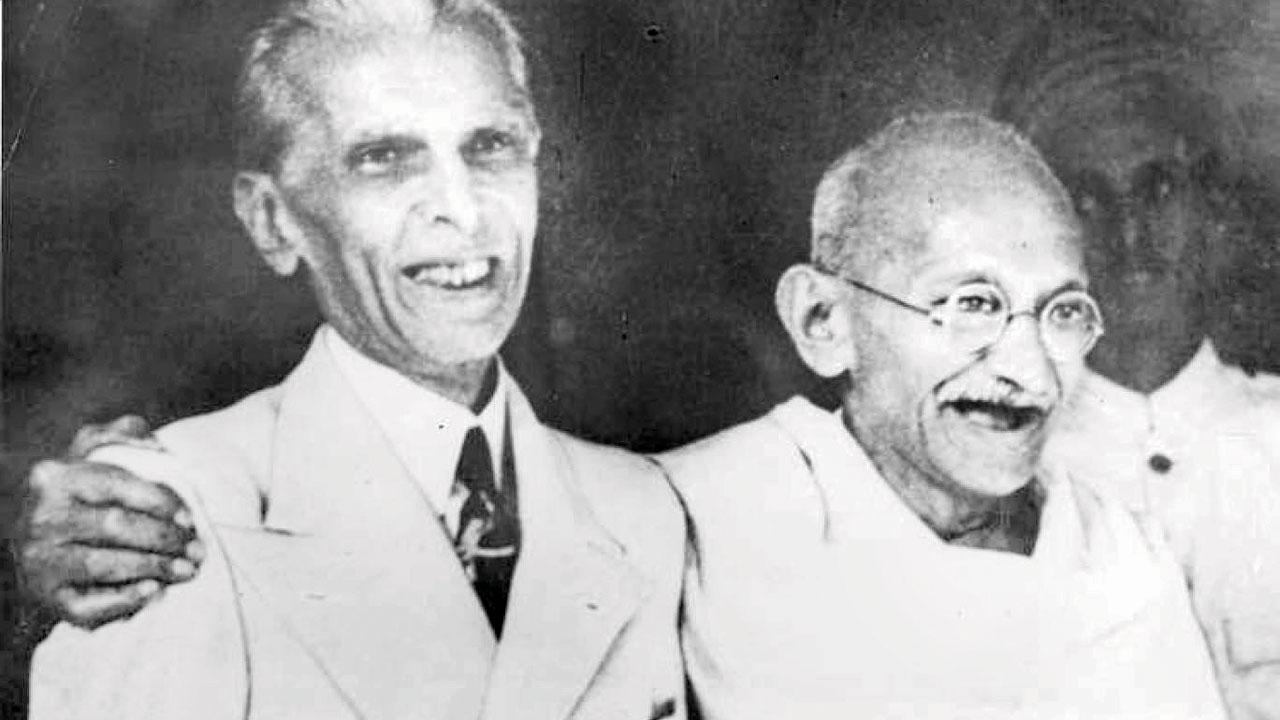
Injustice was meted out to both Mahatma Gandhi and Nathuram Godse-Rajkumar Santoshi
9:05 AM
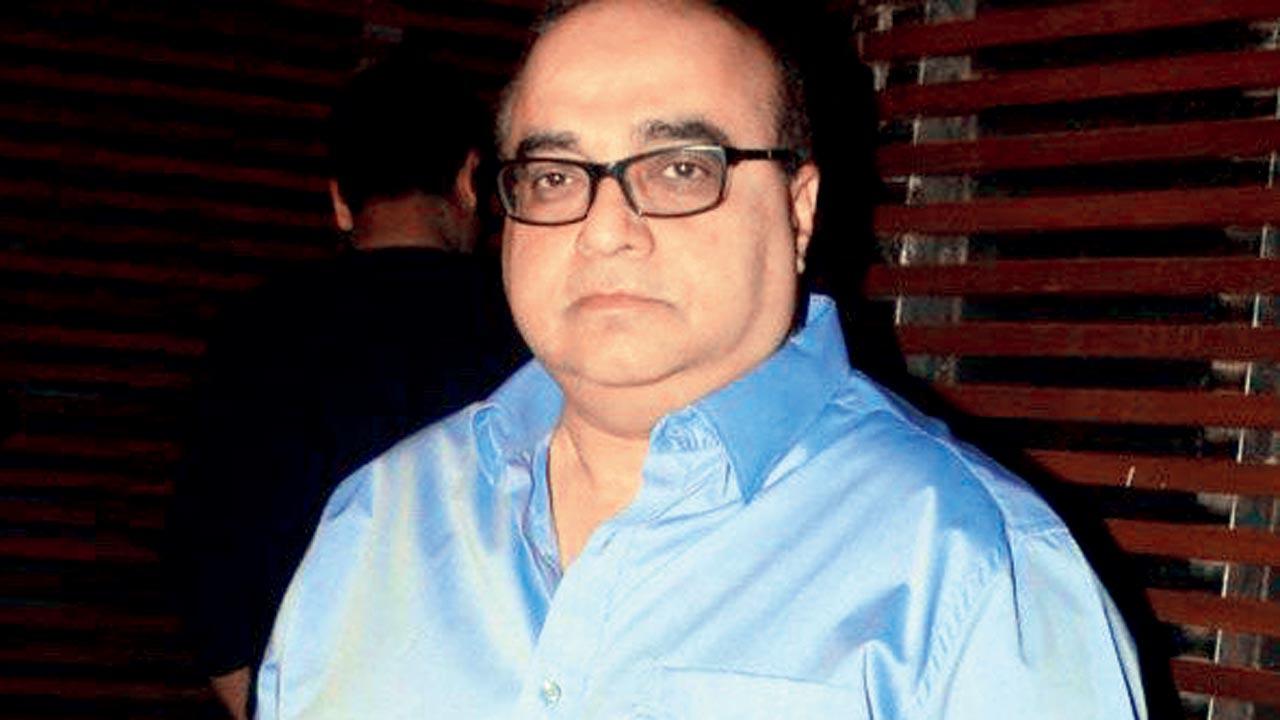
Returning to the movies after a sabbatical that wasn’t his own doing, Rajkumar Santoshi takes on a bold subject where the Mahatma lives to listen to his assassin
Jane Borges (MID-DAY; January 22, 2023)
In an industry where you’re only as good as your last film, a near 10-year hiatus can be construed as damaging. Director-screenwriter Rajkumar Santoshi who has given Bollywood fans delicious fodder to last a lifetime, thanks to cult films like Ghayal, Andaz Apna Apna and The Legend of Bhagat Singh, is well aware of this. His last film, the Shahid Kapoor-starrer Phata Poster Nikhla Hero, released in 2013, “but this break wasn’t a conscious decision. It was forced upon me,” clarifies Santoshi in an interview to mid-day.
“I have been working all this while…writing and researching for Battle of Saragarhi, which had Randeep Hooda in the lead [the film was shelved after Dharma Productions announced Akshay Kumar’s Kesari, which followed the events of the same battle]. Unfortunately, things didn’t pan out the way I would have liked,” he says, adding, “Most production houses that I reached out to, only had one question—‘Star kaun hain?’ For me, content is king. The only time I made an exception was for Amit ji [Amitabh Bachchan]. And that’s because I am a great admirer of his work. Khakee was made keeping him in mind.”
Santoshi stuck to his guns. His new film, Gandhi Godse - Ek Yudh, which releases on Republic Day, and is already in the thick of a controversy, stars non-filmy theatre talent, Deepak Antani and Chinmay Mandlekar, in the lead.
“A couple of years ago, my writer friend Asghar Wajahat saab gave me a script of his play to read for feedback. It imagined a conversation between Mahatma Gandhi and Nathuram Godse [his assassin]. He wasn’t even thinking about making a film. But I was so moved by it, I knew it deserved a larger life. I started working on the screenplay, while Asghar saab and I wrote the dialogues.”
He didn’t sign on stars because he wanted theatre actors with some resemblance with the lead characters. “It was also a conscious decision to have a Gujarati actor [Deepak] to play Gandhi and a Marathi hero as Godse.”
The subject is historical fiction, which imagines a situation where the Mahatma survives the attack on him and later meets Godse in prison. Their conversation leads to a fiery debate. Santoshi says that while the story is fictional, it’s based on facts and rigorous research. “My strong belief is that a lot of allegations were made against Gandhiji. Similarly, Godse was labelled a terrorist. I empathize with both. Gandhiji was shot and never got a platform to explain or respond to his naysayers, while Godse’s voice was suppressed… the arguments he made in his defence were not made public until recently. I think injustice was meted out to both of them. This film gives them a platform to talk,” he says.
The film, the shoot for which began just a little before the pandemic, has braved lockdowns, restrictions and repeated delays. When the trailer was released earlier this month, it triggered fresh controversy, with many, including the Mahatma’s great grandson claiming that it “glorified a murderer”. In the prevailing environment, where jingoism is at its peak, and choosing sides either make you a nationalist or anti, Santoshi says he’d rather stick to objective storytelling.
“Gandhiji was a fearless man, the only weapon he carried was ‘truth’. Godse was equally fearless—he knew the consequences of his actions. So, when I am attempting a film like this, I can’t afford to be worried about what someone says. My conscience is clear. I want to be fair to both the characters,” he insists, adding that the Censor Board gave him a Universal certificate, after two screenings.
“After clearing it once, the board decided to send it for revision, because of the names involved. They all had only good things to say. I didn’t get a single complaint. Isn’t this proof enough that the film is non-controversial?”
As for those who are objecting to the film, he requests that they see the film, before coming to conclusions. “You can’t judge a film based on the trailer. Everybody is so restless… they are looking for an opportunity to create noise and news. The trailer is meant to make people inquisitive, not agitated,” he urges.
Incidentally, Gandhi was the inspiration behind two of his previous films, Damini (1993) and Ghatak (1996). “In fact, in Damini there’s a quote of Gandhi as well. He has inspired both Indian and world leaders. Who am I to criticize Gandhiji?”
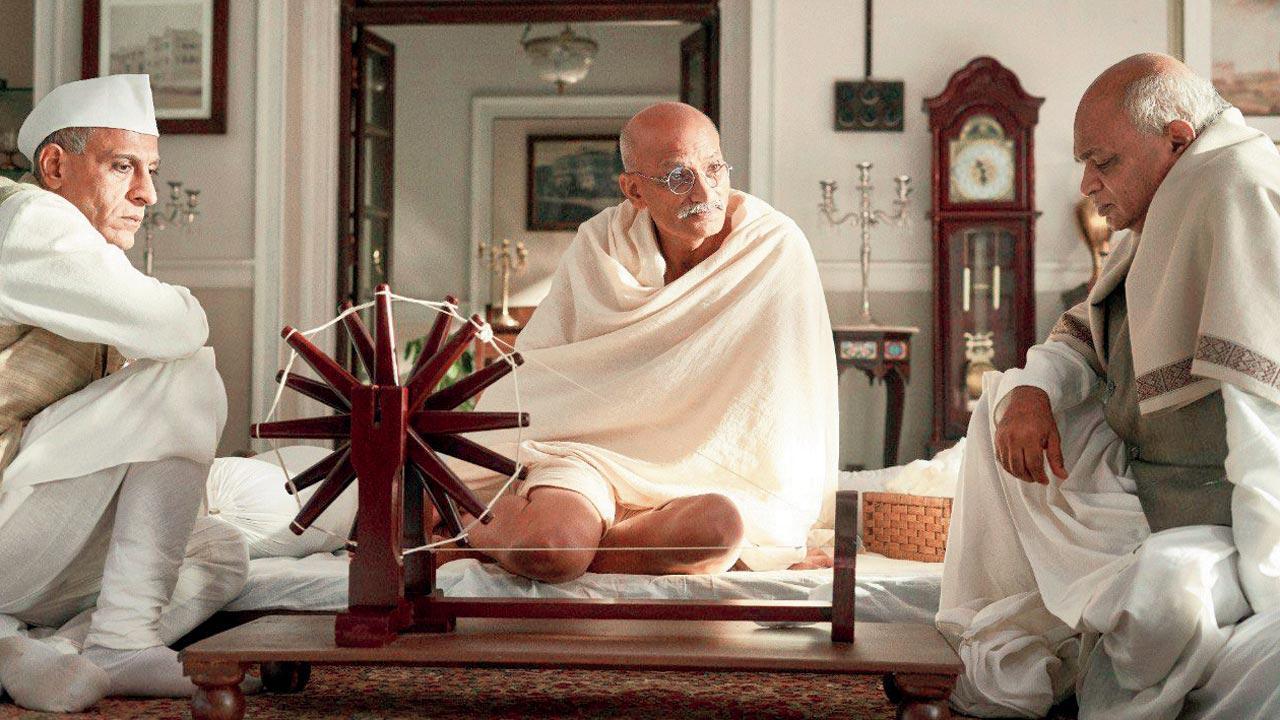
I sympathize with both Gandhi and Godse-Rajkumar Santoshi
8:24 AM
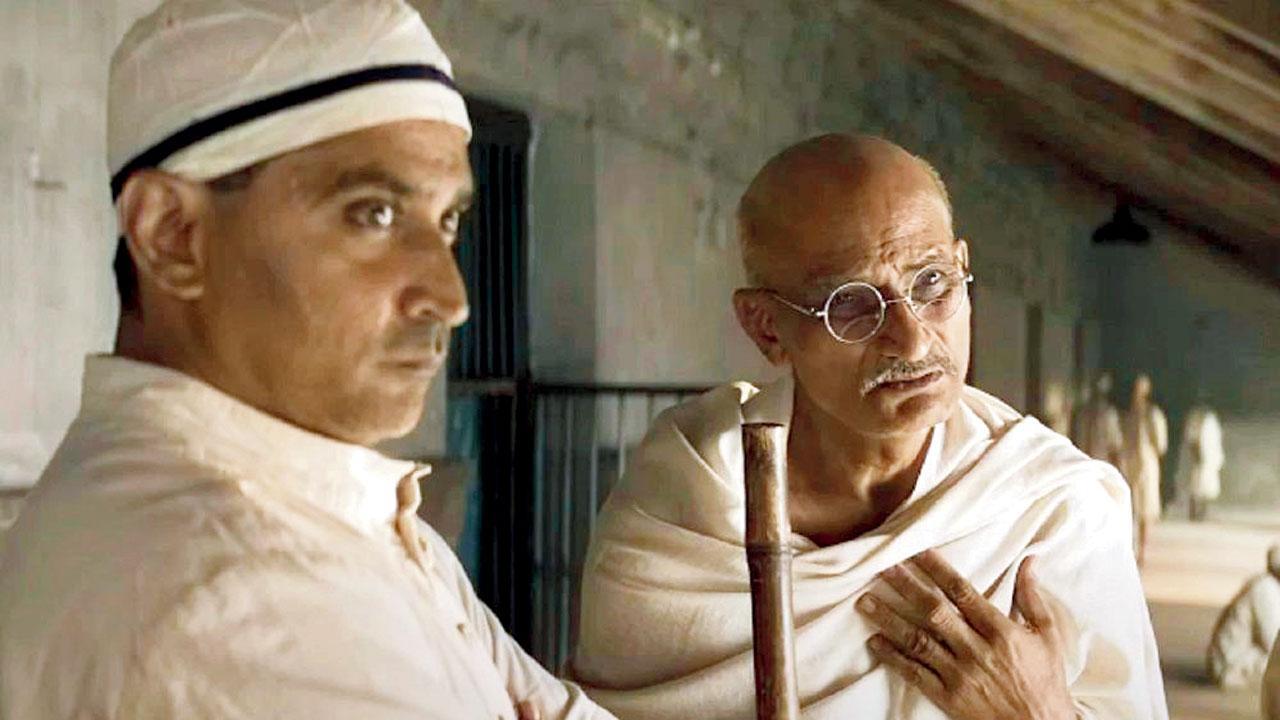
Gandhi-Godse: Ek Yudh director says film explores conflicting ideologies of Mahatma and his assassin
Hiren Kotwani (MID-DAY; January 12, 2023)
How would the course of history change if Mahatma Gandhi had survived the assassination attempt? With Gandhi Godse - Ek Yudh, filmmaker Rajkumar Santoshi explores this alternate reality. The period drama imagines the Mahatma meeting Nathuram Godse in prison after his failed assassination attempt, thus exploring the conflicting ideologies of the two men.
Tell him that such a subject demands a balanced approach, and Santoshi says, “I sympathize with both Gandhi and Godse. As much credit as Gandhi got, he also faced allegations. To date, people ask why he couldn’t be more assertive about saving Bhagat Singh from the death sentence. Similarly, during his trial after killing Gandhi, Godse gave a statement in court, which was curbed for decades. Until recently, no one knew what he had said. I feel that was unjust to him. People should know what he had to say in his defense. The idea behind this film is to give a platform to Godse to express his viewpoint, and also to Gandhi to respond to the allegations. We are presenting both sides without being partial to anyone.”
Does he worry about irking certain sections of the population with the movie? “When people saw that I had Asghar Wajahat writing for me, they accused me of being a Leftist. I’m not siding with any ideology. I have made this film with honesty.”
The drama sees him return to direction almost a decade after Phata Poster Nikhla Hero (2013). Rumours were rife that Rajkummar Rao was initially considered for the film, which has been fronted by Chinmay Mandlekar and Deepak Antani. The director, however, clarifies, “I have always worked with stars. But I was clear that I didn’t want stars for this film. For Godse, I wanted a Maharashtrian actor who could speak Marathi lines organically. I opted for a Gujarati actor to play Gandhi.”
The January 26 release will lock horns with Pathaan, but Santoshi is unperturbed about the clash. “Our initial plan was to release it on October 2, but the film wasn’t ready then. January 30 marks Gandhi ji’s death anniversary, so we chose [the closest window].”
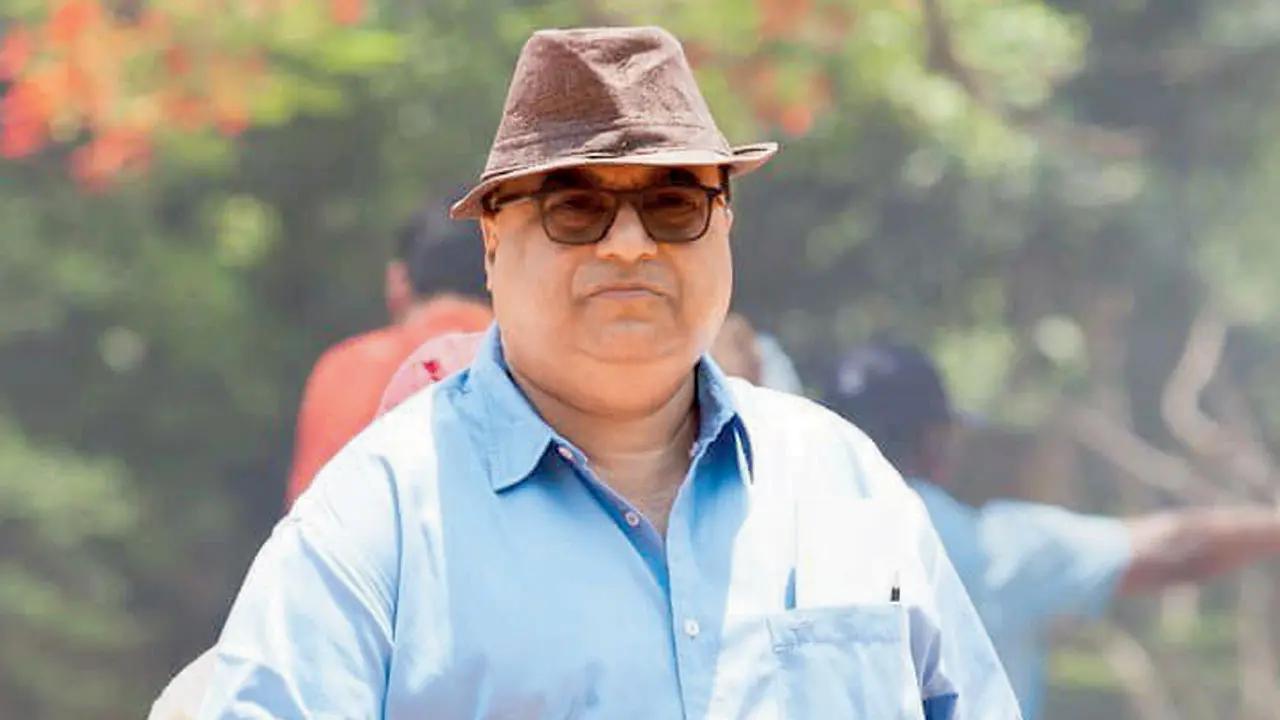
(With our Mahatma Gandhi Series), we are designing a story akin to The Crown or The Tudors-Sameer Nair
8:21 AM
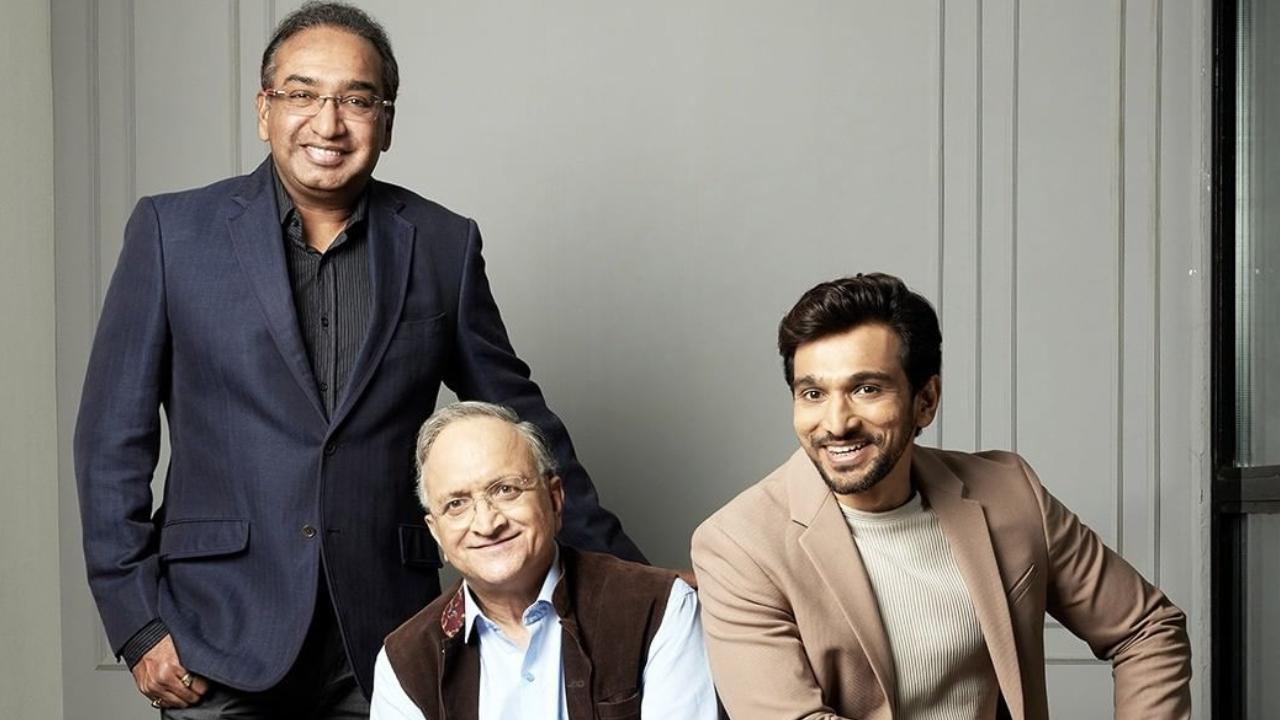
Sameer Nair, Ramachandra Guha, and Pratik Gandhi/ Instagram
From pursuing historian Guha for book rights, to exploring the Mahatma’s bond with Jinnah, creator Nair discusses making a definitive biopic with his web series Gandhi
Mohar Basu (MID-DAY; August 16, 2022)
In May, to mark five years of Applause Entertainment, creator Sameer Nair announced Gandhi, the magnum opus based on Mahatma Gandhi’s life. The multi-season series will be based on Indian historian-author Ramachandra Guha’s books, Gandhi Before India and Gandhi — The Years That Changed The World. It’s not surprising when Nair begins the chat by admitting that getting Guha on board was not easy. “I pursued Mr Guha for three years,” he smiles, before recounting,
“I first reached out to him in July 2019. I met him without reading the book in its entirety, and he sent me back. Then I read the whole book, and went back to him. I reached out to him again during the pandemic. [The conversation] went from a straight ‘No’ to ‘Let me see’, to ‘Let’s talk.’”
The series, with Pratik Gandhi of 'Scam 1992: The Harshad Mehta Story' (2020) fame in the titular role, will see Hansal Mehta serve as director-showrunner, and Siddhartha Basu as historical and creative consultant. It’s easy to see that Gandhi is Nair’s passion project. The idea, he says, is to tell an all-encompassing story that sees the parallel growth of a nation and a leader.
“I don’t want to draw parallels because that has its own pitfalls, but we are designing a story akin to 'The Crown' or 'The Tudors'. There has been a single story made on Mahatma Gandhi [in terms of a biopic]. Richard Attenborough’s 'Gandhi' (1982) is a two-and-a-half hour movie about one man. Freedom fighters like B R Ambedkar and Subhas Chandra Bose don’t make memorable appearances in the film. We are attempting something more ambitious. We want to tell the story of Gandhi and the Indian independence struggle with all 150 characters since we have the advantage of time. In 25 hours, we will explore the whole gamut.”
Mohandas Karamchand Gandhi’s story begins as a tale of an angry young man, which will be the focus of the first season. It will go on to trace his learnings in South Africa that impacted his ideology. Nair elaborates, “When he went to South Africa, he realised the on-ground impact of racism. The journey plays out from there — how he comes back to India, gathers forces, and becomes Mahatma. The people he meets for 30 years before independence is what we are telling. People tell me they know the story, but do they really? They don’t know the million stories of the freedom movement. Gandhi’s friendship with Muhammad Ali Jinnah remains untapped. The story of the birth of a nation is at the heart of it. The politics of the story adheres to the book Guha has written. This is not a pro or against story. Mr Guha has questioned a lot through the book. For instance, he wrote that Gandhi went on to be the father of the nation, but could he be a father to his own children? It is a human drama, not a political story.”
A show of such magnitude relies as much on the principal cast as on its writing. “I knew the lead had to be Pratik Gandhi because he already does a play on him [Mohan No Masalo]. A range of new actors will be in the show; we want no one with baggage to come. This show is a multi-season commitment, so we need actors who will subscribe to it.”
The drama will go on floors next year.
Pratik Gandhi to star in an epic series to be made on the life and times of Mahatma Gandhi
7:41 AM
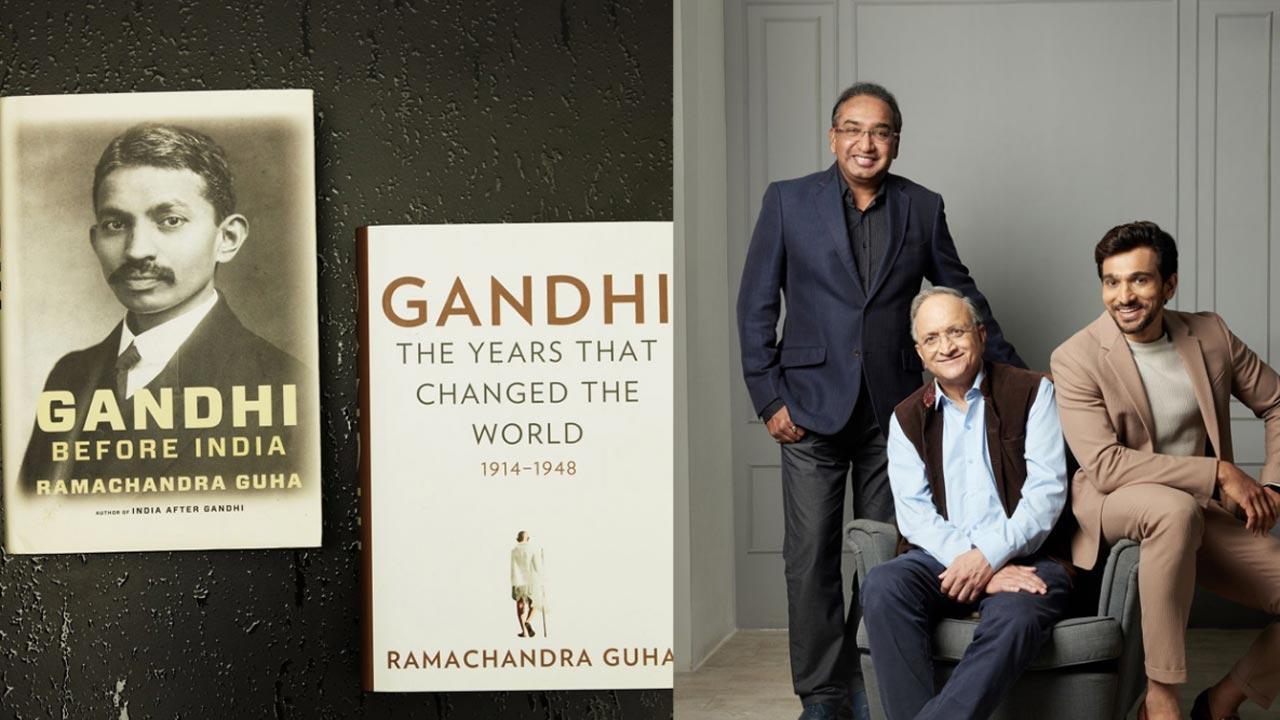
Applause Entertainment has acquired the rights to two books on Mahatma Gandhi, authored by historian Ramachandra Guha, for the series
BOMBAY TIMES (May 19, 2022)
Truth, love, non-violence and an iron-willed determination, the teachings of Mahatma Gandhi are timeless and have impacted generations of leaders all over the world. Bringing alive the period of Indian Independence, Applause Entertainment is all set to present a biopic on the life of Mahatma Gandhi. Based on the writings of renowned historian and author Ramachandra Guha, a premium, multi-season series will be adapted from his two books — Gandhi Before India and Gandhi — The Years That Changed the World. The series will be produced for a worldwide audience and shot extensively across several Indian and international locations. Pratik Gandhi has been signed to essay the role of Mahatma Gandhi.
From his earliest days to his actions in South Africa to the struggle in India, the series will tell the lesser-known stories of Mahatma Gandhi’s life. It will also tell the stories of his compatriots and contemporaries, the incredible personalities who, along with him, played an integral part in the shaping of what became free and modern India.
Sameer Nair, CEO, Applause Entertainment, says, “Ramachandra Guha is a historian and storyteller par excellence, and we are honoured to adapt his classic books — Gandhi Before India and Gandhi — The Years That Changed The World — to screen. We couldn’t think of anyone better than the incredibly talented Pratik Gandhi to bring alive the Mahatma and his philosophies of peace and love that shook the world. We believe that only a richly-layered, multi-season drama series will do real justice to Gandhi and to all the great personalities that embed the proud and illustrious history of India’s freedom struggle. This is a story of the birthing of modern India for a global audience.”
Ramachandra Guha says, “Gandhi’s work transformed the world and his legacy still sparks the most intense debates. His life was an epic journey that played out across three great countries — India, England and South Africa. Along the way, he made many friends and a few enemies too. I am delighted that my books on Gandhi are now being adapted for this ambitious and exciting series being produced by Applause Entertainment.”
Pratik Gandhi shares, “I deeply believe in the Gandhian philosophy and his values that echo simplicity in its purest forms. Personally, too, I strive to achieve and imbibe many of his qualities and teachings. Moreover, playing the role of Mahatma has been very close to my heart ever since my theatre days, and now, it is a huge honour to yet again essay the role of this legendary leader on screen. I believe it’s a huge responsibility to essay this role with dignity, grace and conviction.”
CM Uddhav Thackeray urged to ban release of Why I Killed Gandhi
8:22 AM
Prafulla Marpakwar (THE TIMES OF INDIA; January 25, 2022)
Mumbai: State Congress president Nana Patole on Monday urged CM Uddhav Thackeray to ban release of the film, ‘Why I Killed Gandhi’, slated for release on January 30.
“Nathuram Godse assassinated Mahatma Gandhi on January 30, 1948. Now, Godse’s supporters have selected the same date to release the film. It must be banned. It should be ensured that it is not released in any cinema house nor on the OTT platform,” Patole said in a letter to the CM.
Patole pointed out that the world observes January 30 as non-violence day and that Gandhi promoted the concept of non-violence and truth throughout life. “Unfortunately anti-Gandhi people are releasing the film on his death anniversary; Congress will not allow it. We are against glorification of such events. I was planning to personally call on the CM, but due to his ill-health, I sent a letter,” he said.
When Kal Penn made MILF jokes in the White House, and other funny stories
8:11 AM

When Kal Penn, born Kalpen Modi, decided to split his first name and add an extra ‘n’, it wasn’t an actor’s obsession with numerology but a brown person in America taking a subtle jab at Hollywood’s fixation with hokey accents and turbans. “I joke that the ‘n’ stands for ‘not going to play a stereotypical cab driver.” Frank and refreshingly free of movie star airs, the 44-year-old Indian American actor spoke to Mohua Das about some honest and wildly funny stories that have gone into the making of his memoir, You Can’t Be Serious
Mohua Das (THE TIMES OF INDIA; January 2, 2022)
The book is loaded with funny footnotes. Did it occur to you that nobody actually reads footnotes?
Yes, it did occur to me! A lot of comedic nuggets are in the footnotes and if you ignore them you won’t get all the jokes. So, there’s just one part in the book that my parents had a problem with. It was a joke that I made in a footnote about a close cousin. We’ve been playing pranks on each other for years. I decided to tell people in the book that he got gonorrhea (grins) and in the footnote I say, he certainly didn’t. But then, nobody reads footnotes and I’ve won the prank contest now!
Be it the kid in kindergarten who called you the N-word or aunties who rolled their eyes when you told them that you were going to arts school — if you could have a conversation with them now, what would you tell them?
I guess everything in in the book! (laughs) Much of what kids see and hear comes from some of the things they’re exposed to on TV and the lack thereof. The only exposure they had to anyone who looked like me was Apu from The Simpsons or people from Indiana Jones and the Temple of Doom. Much has changed since then so I don’t think I have to go back and say anything to them. They have TV! As for the aunties. . . I can’t imagine what it’s like to move halfway around the world, away from your family in your 20s at a time when you couldn’t even make a phone call. I feel silly that I never considered that when I was growing up. So, aunties and uncles in a place like America where your parents are immigrants are a support network because ten people are there to cheer you on. On the downside, you have ten people trying to give you advice!
As a brown actor in America, race and identity issues lie at the heart of your book… A lot of stories especially earlier in my career are about race and misogyny at the movie studio but then I put that in the context of today and how wonderful it is to see how things have progressed.
I couldn’t have dreamt of turning on the TV 15 years ago and seeing the types of projects out there today — Mindy Kaling has three shows, Hasan Minhaj is sold out, there are so many sketch comedy artistes who are all South Asians or desis. It all comes down to the fact that audiences want content that is diverse, authentic, slice of life and get to meet characters that they’re either meeting or not meeting in real life.
You put your acting career on hold to work for the Barack Obama administration for a year and then extended it. Why was that?
My commitment was for a year but in the first year I realised that the government moves very slowly in a democracy. The things that I was working on — the Affordable Care Act, repeal of the Don’t Ask Don’t Tell act — I wanted to see them through and so I extended for a second year. I also got appointed to the president’s committee on the arts and humanities and was able to work on arts education and cultural diplomacy.
What do you miss about working at the White House?
On a serious side, you miss the opportunity to do really good work for people and being humbled every day that you walk into that building. On the flip side, I had to police my overly creative brain. Like, in my second week, I got looped into an email from the President’s National Security Council. The document said, ‘Kal you need to know about the Moro Islamic Liberation Front’ acronymed MILF. How MILF is highly dangerous and MILF recruits young men! Laughing my butt out in the office I hit reply without thinking and said, ‘Their main terror group is the MILF?’ Nobody replied to that email until about an hour later a senior bureaucrat wrote back, ‘Looks like Kal is in the House!’ (Laughs) It reminded me that there’s a time to be serious and a time to be funny and I loved finding that balance.
Your coming out is not something you dwell much on in the book. Why is that?
I didn’t think it was the most interesting chapter. It was too easy to write. The harder stuff to write was about the racist directors and the rage I had while working for them or helping Obama — the first sitting president — plan the first-ever Diwali. There are lots of stories about me that people didn’t know. Like how my grandparents marching with Mahatma Gandhi is tied to my public service at the White House…these are the stories that I felt would resonate.
Subscribe to:
Posts (Atom)