Showing posts with label Maharaja. Show all posts
Showing posts with label Maharaja. Show all posts
The South is eating OTT’s lunch; Bollywood isn’t the main course anymore
9:49 AM

Once built around a Bollywood-first script, India’s streaming economy now finds its biggest growth engines and creative bets firmly rooted in the southern states
Javed Farooqui (THE ECONOMIC TIMES; November 26, 2025)
Over the last decade the gravitational pull of India’s entertainment economy has shi fted unmistakably southward. What began as sporadic national curiosity, gradually swelled into a full-blown cultural crossover. When Naatu Naatu from the Ram Charan-NTR Jr starrer RRR lit up the Oscar stage, it signalled that southern cinema was no longer rising quietly; it was asserting itself at the centre of India’s mainstream imagination.
That momentum has now spilled decisively into the OTT universe. For years, India’s streaming landscape ran on a Bollywood-first operating system. Budgets, narratives, and viewer targeting were all sculpted around the Hindi-speaking market.
But the lockdown years changed viewing behaviour dramatically. Housebound and hungry for fresh stories, audiences began exploring Tamil, Telugu, Malayalam and Kannada films in unprecedented numbers. The runaway popularity of Pushpa: The Rise - Part 01, Kantara and RRR ensured that southern storytelling was no longer incidental, it was central.
Among the southern-language industries, Malayalam cinema has emerged as the most intriguing outlier. Despite being the smallest in scale, it has consistently punched above its weight. Films like Manjummel Boys and Aadujeevitham - The Goat Life have travelled across states, while titles such as 2018 and Premam have shown modest overseas draws. Its combination of creative discipline and financial prudence has strengthened the entire value chain, making Malayalam cinema an appealing proposition not just for theatres but also broadcasters and streaming platforms chasing quality content with dependable economics.
Battle for Eyeballs
Today, the fiercest battle for subscribers, originals and film rights is unfolding in southern India. Tamil Nadu, Telangana, Andhra Pradesh, Kerala and Karnataka have become high-growth markets. Every major platform is investing aggressively, drawn by more than 250 million people, deep digital penetration, mature entertainment habits and a willingness to pay.
L V Krishnan, chief executive officer of TAM Media Research, notes that southern audiences have historically shown about 50% higher content consumption. “With growing digital penetration and diverse storylines, content consumption is being further boosted by streaming platforms. Easy and cost-effective AI-driven dubbing has broadened the appeal of southern content to a global audience.”
India’s streaming ecosystem has exploded to 57 OTT platforms, spanning national giants and regional players like Aha, Sun NXT and ETV Win. Ormax Media estimates the country’s OTT audience will touch 600 million by year-end, powered by rising connected-TV usage expected to hit 129 million. With 562 million smartphones and nearly 50 million connected-TV screens, digital entertainment is now the default mode of consumption.
Content Counts
Content supply has kept pace —India churns out close to 200,000 hours of original programming a year—from over 1,600 films to more than 2,600 hours of premium OTT series, says a FICCI-EY report. Paid streaming is also expanding, with subscription video users projected to rise from 47 million in 2024 to about 65 million by 2027.
Although platforms do not reveal regional subscriber splits, executives say the South contributes disproportionately to paid users and viewing hours. The region’s 143 million OTT users nearly match North India’s 151 million despite its smaller population base, according to Ormax. Half the southern population already consumes OTT content, the highest penetration in India.
The investment momentum reflects this energy. Platforms are building larger content teams in Chennai and Hyderabad, experimenting with new pricing models and aggressively commissioning original series that reflect local culture rather than merely ticking regional boxes. The era of token presence is over; depth is the new strategy.
For Netflix, Prime Video and ZEE5, southern growth is fuelled by blockbuster films and originals. For JioHotstar and Sony LIV, sports strengthen their entertainment pipeline. Local giants such as JioHotstar and ZEE5 also benefit from steady daily TV content that reinforces platform stickiness.
“Streaming created a watershed moment for South cinema. During the pandemic, high quality subtitles and dubbing removed language barriers and audiences discovered stories they never had access to,” said Monika Shergill, VP content, Netflix India.
On a New Platform
In 2022, South content viewership grew 50% year-on-year, with South titles appearing in Netflix’s global non-English Top 10 list in about 17 countries the following year. This number has now risen to 26. Last year, Vijay Sethupathi’s Maharaja became Netflix’s most-watched Indian film globally.
“South storytelling is not just becoming bigger in India, it is becoming mainstream. A large part of our slate today consists of South movies, and we acquire the Hindi dubbing rights along with multiple subtitle and dubbing language rights. This allows these powerful films to travel across different audiences,” Shergill said.
Early OTT investment focused heavily on acquiring South Indian films. Titles such as Pushpa, Kantara, Kalki 2898 AD and KGF fetched some of the highest digital acquisition fees. Films still trigger subscriber spikes, but platforms are now investing more in long-form originals to build retention.
Netflix recently announced six new Tamil and Telugu originals, underscoring long-term commitment.
“We currently have about 26 shows in development, negotiation or production for the South. This is the largest pipeline of South Indian content we have ever had,” said Nikhil Madhok, director and head of originals, Prime Video India, adding that 60% of users watch content in multiple languages.
Sony LIV is developing 13 regional originals, 11 of them from the South. Sony LIV’s business head Danish Khan said the South’s strong legacy in films and television raises creative expectations. “Tamil and Telugu are large markets both within India and internationally. Malayalam has become a supplier of strong stories across India.”
Khan noted that consumption patterns in South India mirror national trends—sports, films and originals drive engagement. Sony LIV acquires only select Malayalam films for cost efficiency. The subscriber split is around 80:20 male to female and viewership is 70:30 in favour of men. “OTT penetration in South India is already high and content consumption per user is higher than the national average,” he said.
“We anticipate a substantial rise in the volume of OTT content originating from the South in the coming years.”
JioHotstar plans to triple its South slate to 1,500 hours of original and acquired programming over the next year. JioStar head of entertainment, South cluster, Krishnan Kutty said one-third of the platform’s viewers are from the South and account for a disproportionately high share of watch time.
“The Tamil and Telugu markets are the largest in terms of heft and creative ecosystem. Kerala punches far above its weight because it has a strong pool of storytellers. Some of our most successful movies and specials have come from Kerala. In Karnataka, we are at an early stage, but we are very excited about that market too,” Kutty said.
ZEE5 chief business officer Siju Prabhakaran said, “South contributes up to 45% of our total OTT watch time. Language packs contribute roughly 60-70% of our new subscribers. Each market has a business head who understands local culture and stories. For us, content is the hero.” ZEE5’s language packs are priced at Rs. 99 per month and Rs. 699 annually.
Plot in Story-telling
Executives say South Indian audiences are shaping a distinct OTT playbook. The region’s entrenched TV habits and strong cinema culture push platforms to create habit-forming content. Films remain the biggest subscription catalyst, with Prabhakaran estimating 50- 60% of new subscribers still coming from movies. Prime Video also notes the South’s affinity for films.
To build retention, platforms are adopting TV style storytelling. JioHotstar’s 80–100 episode series are “breaking conventional norms of digital content” as viewers return weekly. ZEE5’s OTT-first reality shows are among its biggest non-fiction subscription drivers.
The South is no longer a regional appendage to the national entertainment market. It has become the creative engine powering India’s soft-power ambitions. As language barriers fall and audiences embrace Indian stories, creators from Tamil Nadu, Telangana, Andhra Pradesh, Kerala and Karnataka are leading the charge. Streaming has not only expanded southern cinema’s audience; it has reshaped India’s entertainment economy and its cultural centre of gravity.
THE GREAT EXPANSION
- JioHotstar plans to triple its South slate to 1,500 hours over next year.
- Prime Video has 26 South-origin shows in the pipeline.
- SonyLIV has 13 regional originals, 11 of them from the South.
- ZEE5 says the South accounts for 45% of its OTT watch time, driven by aggressively priced language packs.
- Netflix has announced six new Tamil and Telugu originals; says views of South content grew 50% YoY in 2022.
I think the media has been critical of and unkind to the Hindi film industry-Vishnu Manchu
4:12 PM

Readying Kannappa for release, actor Vishnu Manchu discusses scripting the larger-than-life story over four years and approaching mythological genre with caution
Priyanka Sharma (MID-DAY; June 17, 2025)
Actor Vishnu Manchu had a clear inspiration in mind when he began developing Kannappa over a decade ago. “I was thinking on the scale of The Lord of the Rings,” he says of the script that he first began writing with screenwriter Tanikella Bharani.
“After a few months, Bharani told me that he did not feel cut out to make a larger-than-life film. So, in 2015, he gave me the script to develop further,” recalls Manchu, who locked the script only by 2019.
Mukesh Kumar Singh’s directorial venture is inspired by the legend of Lord Shiva’s devotee Kannappa. As Manchu set out to mount the expansive project, he adhered to his thumb rule. “Don’t change the script when you are filming. [On set], improvisations can keep happening. But for me, changing the script is a sacrilege.”
Kannappa boasts cameos by Mohanlal, Akshay Kumar, and Prabhas. How difficult was it to assemble a cast that other producers can only dream of?
Manchu, whose father Mohan Babu has produced the movie, says, “The stars agreeing to do the roles is Lord Shiva’s blessing. I had one name in mind for each character. Everything fell in place.”
Telling a mythological story is an uphill task today, with people often blaming the makers for hurting their religious sentiments. The sensitivity demanded while making such a project isn’t lost on the actor.
“You have to be very careful because you’re making a movie about Lord Shiva. You cannot mess around with people’s sentiments. But when you make a movie with devotion and honesty, even if there’s a mistake, people will excuse you. As far as I know, I’ve stayed true to the subject. Exploring such subjects is not risky; otherwise, Mahabharat [2013 serial] wouldn’t have come out.”
The Bollywood-vs-South debate has heated up in the past few years, with Hindi films’ lacklustre run becoming all the more glaring in the face of South blockbusters. Mention this to Manchu, and he says, “I think the media has been critical of and unkind to the Hindi film industry. There is no success formula. You can’t explain why the Tamil film Maharaja [2024] made a mark. Or why Sanam Teri Kasam [2016] made over Rs. 20 crore on its re-release. No film industry has a foolproof method.”
Indian films big on style, find bigger global connect
10:04 AM

Overseas mop-up rises 30% between 2022 & 2024; ‘universal’ content, availability on streaming platforms enhance appeal
Rajesh N Naidu (THE ECONOMIC TIMES; March 31, 2025)
Mumbai: Indian films are showing higher growth in collections abroad than at home, with overseas box-office mop-up surging nearly 30% to $323 million ('2,760.6 crore) between 2022 and 2024, even as domestic growth crawled at 7.2%, according to the FICCI-EY Media and Entertainment 2025 report.
Between 2022 and 2024, domestic box-office revenue for Indian films increased a modest 7.2% to Rs. 11,800 crore, it said.
"Recently, Indian films have been telling stories which have universal emotions and global appeal. These films score well on the parameter of visual presentation of stories. Consequently, Indian films have been crossing language and geographical barriers," said Adi Tiwary, creative director and partner, Stuart Entertainment, an Australia-based boutique distributor and producer specialising in global content licensing, production and strategic partnerships.
Indian films such as 'Pushpa 2 – The Rule' (2024), 'Kalki 2898 AD' (2024), 'Pathaan' (2023), 'Jawan' (2023), 'Animal' (2023), 'Leo' (2023), 'Jailer' (2023), 'KGF - Chapter 2' (2022) and 'RRR' (2022) collected Rs. 200-500 crore each in overseas markets.
Experts said these films connected with people around the world because they use some of the same styles and techniques seen in popular Hollywood movies, and they discuss ideas and feelings that people of different ages can relate to.
For instance, 'Kalki 2898 AD' is fast-paced and uses several languages. Its style is similar to Marvel superhero movies and action films like 'Mad Max: Fury Road'. On the other hand, 'RRR' appealed to many international viewers by telling a story that felt deeply Indian and rooted in its culture.
The mix of global style and Indian storytelling has played a big role in the success of these movies overseas. It's also helped attract more non-Indian audiences to Indian films, according to industry executives and experts.
Rajat Agrawal, COO, Ultra Media & Entertainment Group, said, "Indian films have been gaining popularity even among non-Indians in overseas markets. Given the universal themes of love, family and friendship in Indian films, they have resonated with non-Indian audiences."
Producer and film business expert Girish Johar concurred, saying, "Apart from stories, Indian films are finding patronage even among non-Indian audiences because of the improved scale and quality of filmmaking."
Another factor aiding the acceptance of Indian films in overseas markets is their easy availability on global streaming platforms.
Ameya Naik, producer and founder of Fantasy Films, said, "Global streamers have played a key role in familiarizing Indian content to overseas audiences. Better subtitles and superior dubbing of Indian films on these global streamers have removed language barriers and provided overseas audiences anytime access to Indian films."
In addition to global streamers, growing online distribution, social media discussions, targeted marketing and prestigious awards at international film festivals have piqued overseas audiences' interest in Indian films. In addition, following the Covid-19 pandemic, Indian films rose to prominence as a result of the lull in Hollywood productions caused by the writers' strike.
In the overseas markets, the success of Indian films relies more on the Indian diaspora settled abroad. But there is demand for Indian films from audiences in non-traditional markets such as the Gulf (the UAE, Saudi Arabia and Qatar), North America (the US and Canada), the UK and Europe (Germany, France and the Netherlands) and Southeast Asia (Malaysia, Singapore and Indonesia). Despite such a wide overseas market, industry experts believe revenue from the Chinese markets will make a material difference to Indian films' collection given its size.
A testimony to this is the success of the Tamil film 'Maharaja' in China. Of its total worldwide collection of over Rs. 200 crore, it collected Rs. 91.6 crore from China alone, showing the potential of that market.
In Veeram, I was given a role that no one in Hindi cinema was offering me end at the time-Kunal Kapoor
2:47 PM
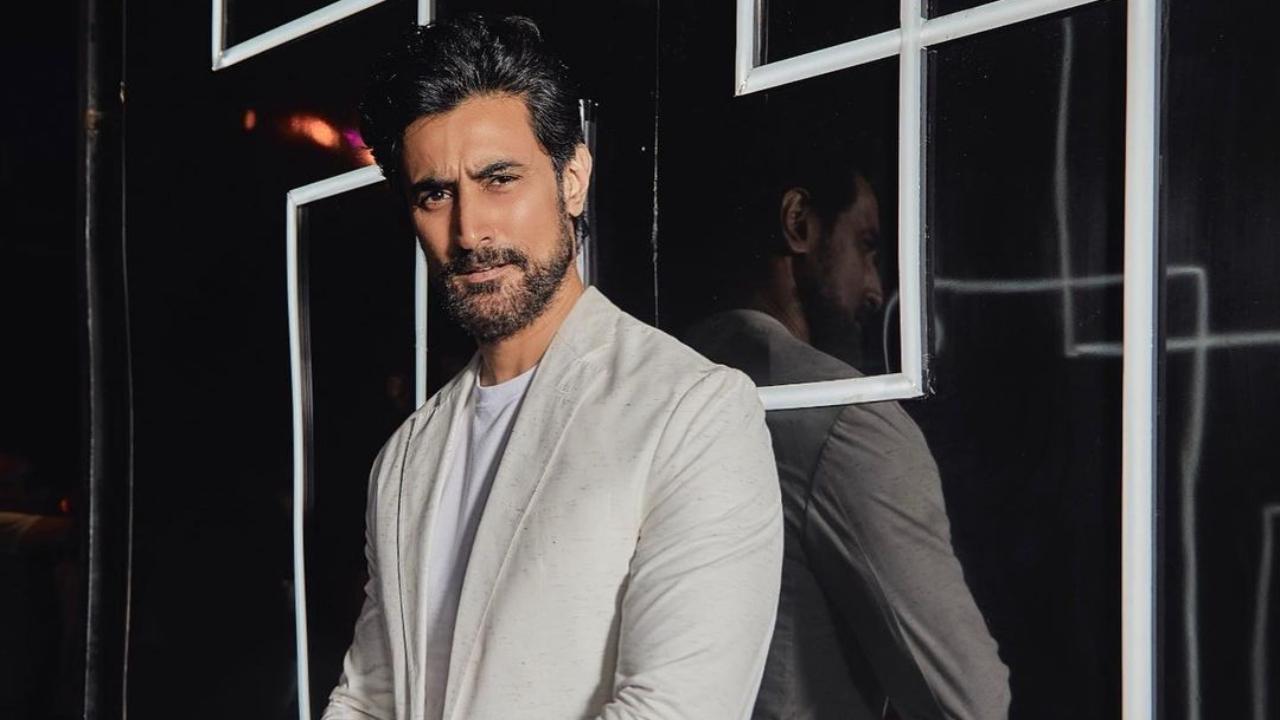
M Priyanka Goud (HYDERABAD TIMES; September 27, 2024)
Kunal Kapoor, who began his Bollywood journey as a lead actor nearly two decades ago, is now making a mark in the south film industries, particularly in antagonist roles. Following his performances in Veeram (Malayalam) and Devadas (Telugu), Kunal shared that he feels more satisfied in his career, especially when portraying negative characters.
In an exclusive interview with Hyderabad Times, he spoke about his upcoming Telugu film Vishwambhara, where he stars alongside Chiranjeevi. “Playing an antagonist is more exciting than the protagonist. There are no rules to follow. For a long time, I was stuck in certain roles, but it’s incredible how south filmmakers are seeing me in a whole new way now,” he said.
‘BACK IN THE DAY, I HAD VIDEOTAPES OF CHIRANJEEVI’S AAJ KA GOONDARAJ & PRATIBANDH’
Working with Chiranjeevi sir has been an absolute pleasure — he’s among the kindest and most supportive co-stars. He’s truly a legend, both on and off the screen. I’ve always been a huge fan of Chiranjeevi garu. Back in the day, I had a vast collection of videotapes, and Aaj Ka Goondaraj (Gang Leader in Telugu) along with his Hindi debut Pratibandh were part of it. The last film of his that stood out to me was Sye Raa Narasimha Reddy. Though he’s a Megastar on screen, he’s incredibly down to earth in real life. I remember during an action scene, I felt a slight twinge in my shoulder, and the first thing he asked was, ‘Is your shoulder okay?’ It’s rare to meet someone of his stature who is so thoughtful and concerned about everyone on set.
‘AUDIENCES SEEM TO PREFER ANTI-HEROES OVER TRADITIONAL ONES’
When I started, the roles I was offered were all very similar. Back then, a hero was expected to fit a certain mould, but now even the idea of a hero has changed. Audiences seem to prefer anti-heroes over traditional ones, and I feel fortunate to explore these grey-shaded characters, especially in south films. In the Malayalam film Veeram, I was given a role that no one in Hindi cinema was offering me end of the year.at the time. Director Jairaj saw something in me that the Hindi film industry didn’t, and I’m enjoying this new phase as an actor.
‘IT’S AMAZING TO SEE PEOPLE APPRECIATING FILMS BEYOND THEIR LANGUAGE’
This is an incredible time for actors and technicians, with collaborations across industries becoming more common. South films like Baahubali, RRR, and Kalki 2898 AD have broken language barriers and are being watched nationwide. As an actor, it’s exciting to explore diverse roles in different regions. The content today is outstanding — like the Tamil film Maharaja, which became the most-watched film, largely thanks to OTT platforms making it accessible to wider audiences. It’s amazing to see people appreciating films beyond their language. Everywhere I’ve been, from Bombay to Hyderabad, people have been praising Vijay Sethupathi sir’s performance in that film.
‘I have an exciting lineup of films ahead’
I’m working on Jewel Thief with Saif Ali Khan and Jaideep Ahlawat, followed by a mythological project, Ramayana, alongside Ranbir Kapoor and Sai Pallavi, with shooting starting soon. I’ve also ventured into writing and recently completed a script for an action-packed vigilante series, which is set to begin production by the end of the year.
(Crisp) Movie Review: MAHARAJA by FENIL SETA
12:36 PM

Maharaja is a Tamil film which released on June 14 and stars Vijay Sethupathi in the lead. It is about a barber whose house is robbed and what happens next. The film’s biggest strength is its screenplay by Nithilan Swaminathan. He uses an interesting trick in storytelling and it elevates the impact. One can never even anticipate what’ll happen next. The credit also goes to his direction as it keeps the viewers on the edge of their seats. Though Nithilan Swaminathan tries his best, the narrative does get a bit confusing at times and one might have to read the plot on Wikipedia or watch the film again to understand the plot better. Vijay Sethupathi, as expected, is terrific and there's no doubt that he's one of the greatest actors of Indian cinema. Anurag Kashyap, too, puts his best foot forward. Sachana Namidass (Jyothi), Manikandan (Dhana) and Singampuli (Nallasivam) leave a huge mark. Natarajan Subramaniam (Inspector S Varadharajan) is very impressive. All in all, Maharaja is a must watch for its unique narrative style. It is running successfully in cinemas and will be out on Netflix on July 12.
My rating - **** out of 5!
My rating - **** out of 5!
Junaid Khan commences shooting for his untitled love story, co-starring Sai Pallavi
8:33 AM
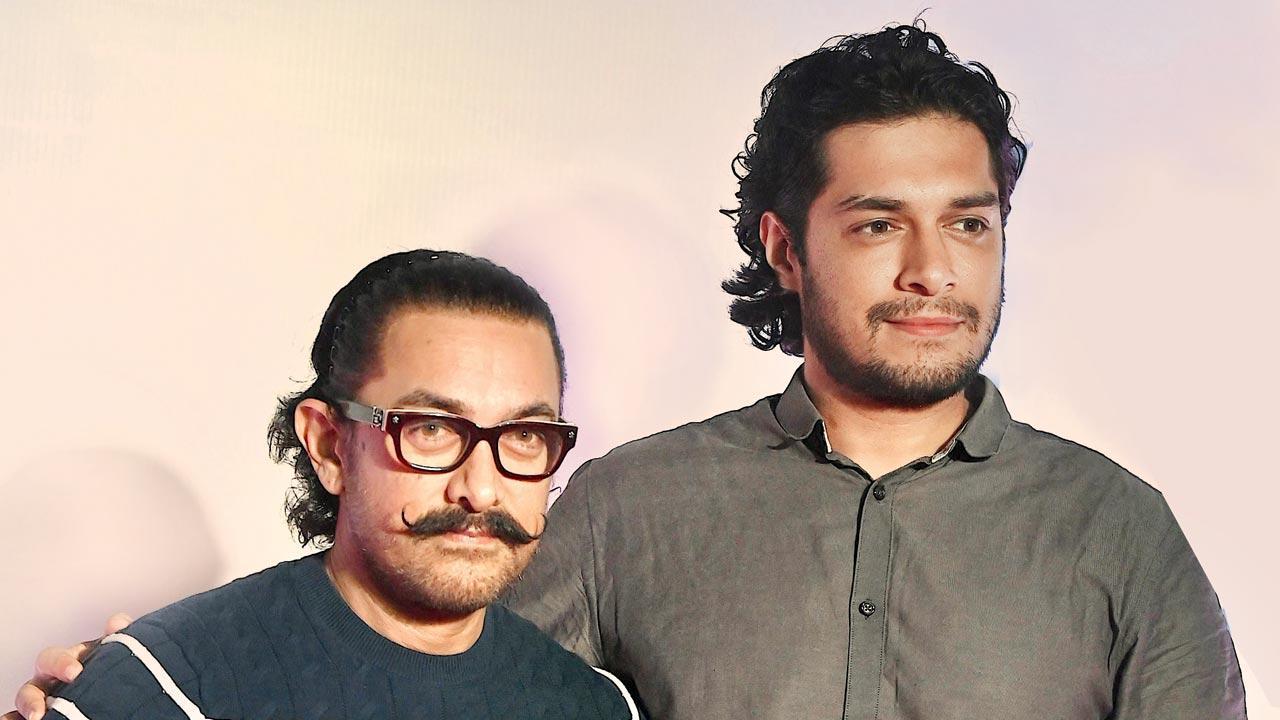
Sources say Junaid’s next, backed by Aamir, rolled in Powai yesterday; film marks star kid’s third offering
Mohar Basu (MID-DAY; December 2, 2023)
In May, mid-day had reported that actor-producer Aamir Khan had greenlit a movie that would be headlined by son Junaid Khan, with a portion of it to be shot in Japan (Land of the rising son, May 4). The yet-untitled love story, which marks the star son’s third outing after Yash Raj Films’ Maharaja and Aamir Khan Productions’ Pritam Pyare, went on floors at a Powai studio yesterday.
A source reveals, “For the first day, director Sunil Pandey had lined up some scenes featuring Junaid and leading lady Sai Pallavi. They made an early start, wrapping up work by evening. A fortnight before the project rolled, the makers did an elaborate photoshoot with Junaid at Mehboob Studios in Bandra.”
The film was originally supposed to roll in Japan. However, the team had to rework the plan. The source adds, “Japan is too cold to shoot right now. So, the first schedule will be canned entirely in Mumbai. Sunil, who has also directed Pritam Pyare, plans to shoot over the next fortnight before calling for a break. The team will then resume work in January.”
Junaid will make his Bollywood debut next year with Maharaja.
There is nobody telling me if I should do a film or not-Shalini Pandey
8:18 AM

Rishabh Suri (HINDUSTAN TIMES; July 7, 2023)
Shalini Pandey’s Hindi debut, Jayeshbhai Jordaar (2022) might not have worked commercially, but she has already moved on to her next. Pandey will be seen opposite actor Aamir Khan’s son Junaid, who will make his debut in Maharaj.
Confirming the same, Pandey says, “I can’t talk much about it, but we have finished the shooting. It was a nice experience with Junaid and I felt mature and confident as an actor. I am somebody who is really curious. I did my bit in Jayeshbhai and learnt technical skills of acting. This time, in Maharaj, I could enjoy the process more.”
Pandey states that she has no godfather in the industry, adding, “There is nobody telling me if I should do a film or not.”
Talking about how she chose Jayeshbhai Jordaar, the 29-year-old shares, “I didn’t know I was auditioning for it until I met our producer Maneesh Sharma. That’s when I got to know it’s a film opposite Ranveer Singh. As an actor, if you are offered a film opposite Ranveer, then it’s anyway a yes, but I wanted to read the script.”
She recalls Sharma telling her that her character would be pregnant. “I agreed and went with my gut instinct. It has been wrong also, but that’s the only thing I have. I loved Jayeshbhai and said why not. That’s what I look forward to with every project now. I can’t control the outcome, but I can at least learn. Maharaj happened when I had just finished Jayeshbhai. I read the script, and again there was the gut feeling, ‘why not?’,” she ends.
Aamir Khan is producing a slice-of-life film set in Japan for son Junaid
8:39 AM
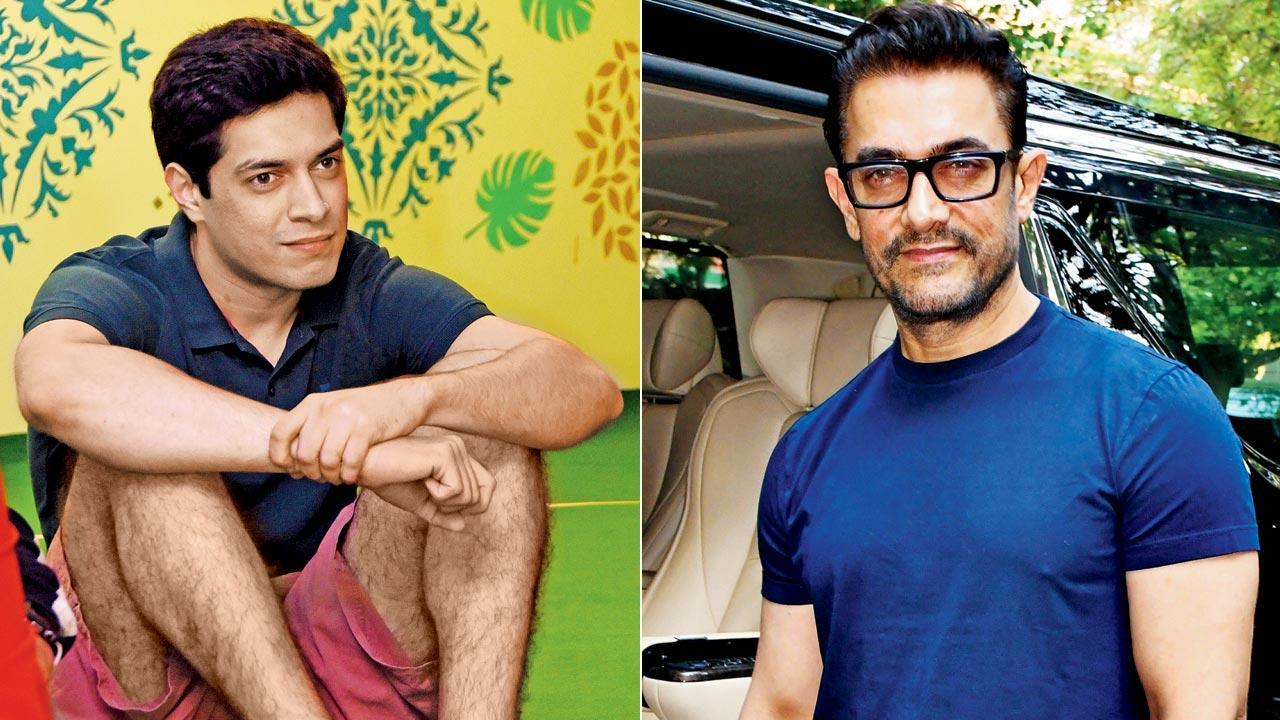
Sources say Aamir is producing slice-of-life film set in Japan for son Junaid; team in talks with Japanese govt for subsidies
Mohar Basu (MID-DAY; May 4, 2023)
Junaid Khan, who is following in his superstar-father Aamir Khan’s footsteps, has his work cut out for him. But he appears to have made a promising start with two films under his belt, Yash Raj Films’ Maharaja and his home production Pritam Pyare. Now, it is heard that a third movie is in the offing. It turns out that Aamir’s production house has developed a slice-of-life film that will be fronted by Junaid. Interestingly, a chunk of the offering will be set in Japan.
With Aamir having greenlit the production, work is on in full swing. While the team is currently looking for a suitable director, they have also initiated talks with the Japanese government regarding shoot subsidies.
A source reveals, “Aamir has a distinct vision for the heart-warming film, and believes Japan is the perfect setting for it. About 70 per cent of the movie will be shot across the country. Well-aware that filming in a foreign country can be an expensive affair, Aamir’s production team has reached out to the Japanese government to procure subsidies. That would offset some of the costs, thus enabling him to make the film without worrying about the budget and scale.”
If they get a positive response from the government, a team will head to the country for a recce next month, paving the way for a two-month shoot from September. The leading lady will be finalised in the coming weeks.
Unlock in Mumbai: Level 3 keeps TV, Bollywood off sets
8:20 AM
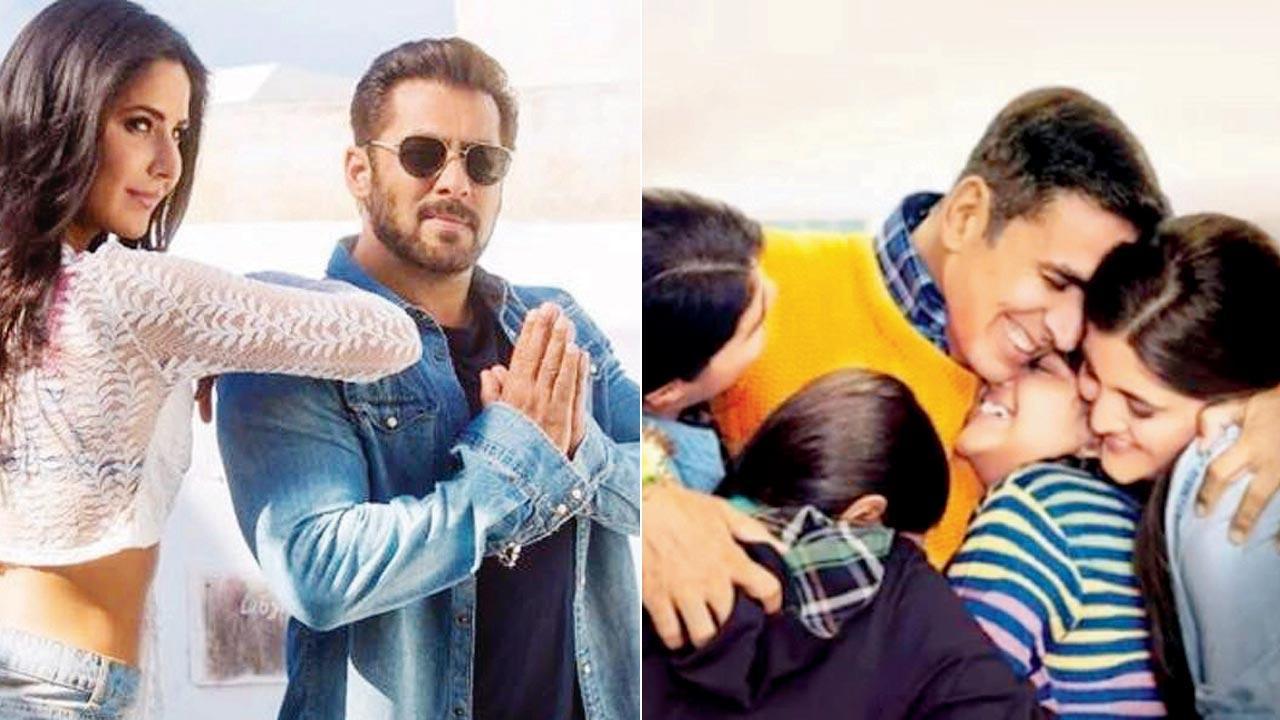
While Akshay Kumar’s film will return to the floors after govt’s bio-bubble nod, continued curbs means others are taking it slow
Mohar Basu, Uma Ramasubramanian (MID-DAY; June 14, 2021)
A week after the state government gave the go-ahead to filming in a bio-bubble, Bollywood is taking it slow and steady. Among the top stars, Akshay Kumar has taken the lead and will resume shooting for Aanand L Rai’s Raksha Bandhan at Film City this week.
A source from the production team reveals, “Since our set has been lying unused, Akshay sir requested the makers to resume production, assuring them that he has recovered from the post-COVID fatigue. Aanand sir is handpicking a lean crew for the stint.” A few miles away from Film City, debutant Junaid Khan reported to the Maharaja shoot at a Marol set last week.
With Mumbai continuing to observe Level-3 restrictions for the next fortnight despite moving to Level 2 in terms of positivity rate and oxygen bed occupancy, shoots will have to be wrapped up by 5 pm daily. The eight-hour work limit coupled with the bio-bubble expenses have discouraged many from being set-bound. Yash Raj Films, the studio backing Maharaja, is waiting it out for bigger productions like Pathan and Tiger 3.
A source reveals that both films were being shot in a bio-bubble up to mid-April. “Each had a large unit of over 100 people. YRF tested everyone regularly and had put up the crews at a hotel. It was spending a substantial amount of money on these safety norms. But at this point, keeping the expenses and the teams’ safety in mind, they have decided to return to work only after crew members have got the first dose of the vaccine.”
The restrictions are posing a problem for the overburdened television industry. Ashok Dubey, general secretary, Federation of Western India Cine Employees (FWICE), explains, “Since they can film only till 5 pm, creators are unable to create a bank of episodes. Plus, it’s not feasible to put up the cast and crew at hotels as most serials don’t have massive budgets. Keeping these factors into account, many have not resumed work.”
J D Majethia, who has been shooting Wagle Ki Duniya in a bio-bubble in Silvassa since May, echoes Dubey’s sentiment. “The cost goes up by five to 10 per cent per episode due to bio-bubble. Also, we need at least 12 hours a day to pull off an episode. Right now, in Mumbai, one can shoot for only eight hours, which is challenging.”
Junaid Khan-starrer Maharaja will be the first Hindi movie to resume work after curfew
8:14 AM
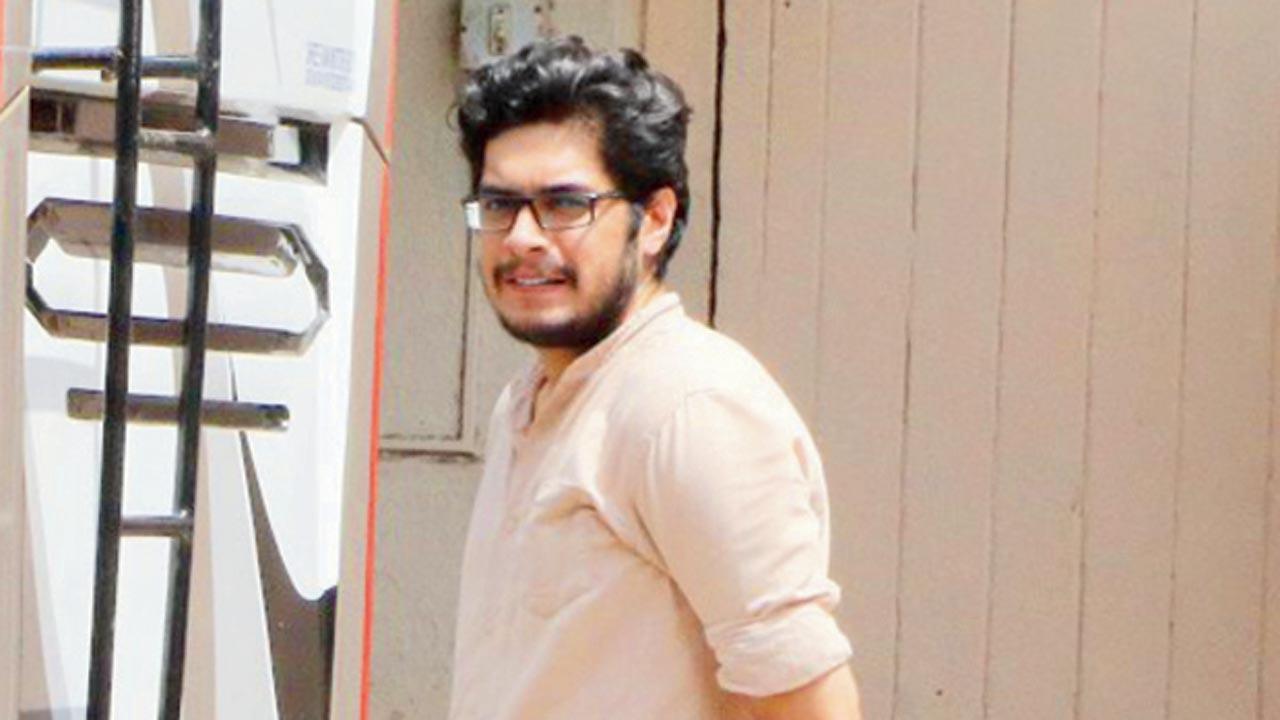
With Maharashtra government giving go-ahead to bio-bubble shoots, Aamir Khan's son Junaid’s debut film 'Maharaja' will be the first Hindi movie to resume work after curfew
Mohar Basu (MID-DAY; June 8, 2021)
On Saturday, Maharashtra government announced that film and television shoots can resume in a bio-bubble, with work duration not extending beyond eight hours. Two days into the decision, Yash Raj Films’ tentatively-titled Maharaja has become the first major Bollywood production to return to sets. Work on the period drama — which marks the debut of Aamir Khan’s son Junaid and is directed by Siddharth P Malhotra — will recommence this morning at Vijay Nagar in Marol, where a set lay stranded since the junta curfew was imposed mid-April.
A source from the unit reveals that producer Aditya Chopra sprang into action over the weekend. “On Sunday, over 100-plus cast and crew members, including those who have taken the first dose of the vaccine, underwent RT-PCR test. Of the people who tested negative, only 25 junior artistes have been summoned to the set, along with the main cast. Only a few key members of the production team have been asked to join in. The idea is to keep the on-set team to the bare minimum.”
Cyclone Tauktae destroys many Bollywood film sets causing further delays
8:15 AM

(From left) The set of Tiger 3 was built at SRPF Ground, and Gangubai Kathiawadi, at Film City
Reeling under lockdown, showbiz hit hard again as Cyclone Tauktae affects sets of Tiger 3, Maharaja; filming of TV serials along the western coast stalled
Uma Ramasubramanian, Mohar Basu (MID-DAY; May 19, 2021)
Cyclone Tauktae battered Mumbai with rains and gusty winds on Monday, leaving behind a trail of destruction. Film and television sets spread across different locations in the city that have been standing unused since April 15 due to the suspension of shoots, too suffered at the hands of nature’s fury.
Filmmaker Sanjay Leela Bhansali had an elaborate set built at Film City for the final stint of Gangubai Kathiawadi. “Ahead of the monsoons last year, Bhansali sir had the entire area covered to ensure minimum damage. The move benefitted him immensely as the set-up remained unscathed despite Monday’s torrential rains,” reveals a source.
It is heard that some producers sent workers to Film City to cover their sets when news of the cyclone was announced over the weekend. Salman Khan was shooting for Maneesh Sharma’s Tiger 3 before the junta curfew was imposed in Maharashtra. The source reveals that a set-up, along the lines of a Dubai market, had been created at the SRPF Ground in Goregaon for the stint. “The outdoor set-ups of Tiger 3 and Junaid Khan’s Maharaja [tentatively titled], which was built in Marol, have been slightly impacted.”
The make-believe worlds of television shows have been hit harder. Birendra Nath Tiwari, president, Federation of Western India Cine Employees (FWICE), says, “Film City, which is largely a green belt, has suffered the most. Thankfully, shoots were suspended in the city, so there has only been damage to property, and no loss of lives. That said, there has been mass-scale destruction of sets.” A wall has apparently caved in on the site where popular show Yeh Rishta Kya Kehlata Hai used to be filmed.
The television industry has suffered another blow due to the cyclone — all shoots along the western coast have been stalled. “The shoots of web shows and serials in Daman, Diu, Umbergaon and Gujarat have been halted. Things were bad enough in the entertainment industry, and the cyclone made it worse. It will be a week before the damage can be taken stock of, and shoots can resume,” adds Tiwari.
Aamir Khan's son Junaid to kickstart shooting for his Bollywood debut Maharaja
8:29 AM
Uma Ramasubramanian (MID-DAY; February 15, 2021)
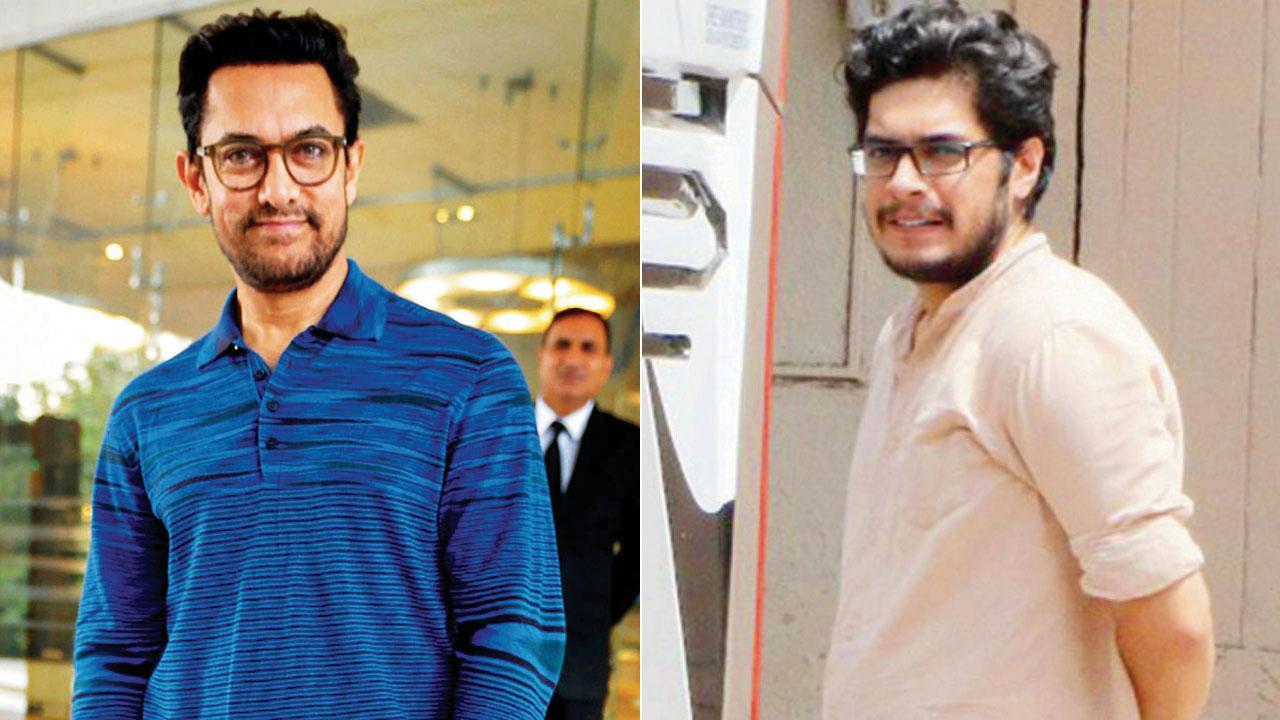
Last December, mid-day had reported that after superstar father Aamir Khan’s long-standing romance with the big screen, son Junaid was ready to flirt with acting (Yes, he Khan, Dec 11). Today, the star kid, who has a theatre background, will face the camera for the first time as director Siddharth P Malhotra takes Maharaja, based on the 1862 Maharaj libel case, on floors.
Producer Aditya Chopra, who has previously launched Ranveer Singh, Anushka Sharma and Parineeti Chopra, among others in Bollywood, knows the importance of first impressions only too well. Under his guidance, Junaid has been working on his look and the character over the past five months. “The director and his production design team were setting up the groundwork over the past month. A massive set has been built in Vijay Nagar in Marol where the period drama will be shot,” reveals a source.
The movie will reportedly trace how religious leader Jadunathji Brijratanji Maharaj had taken reformer-journalist Karsandas Mulji to court for his “libellous” article, which stated that he had sexual liaisons with women devotees. Junaid is said to portray the role of Mulji. mid-day reached out to Yash Raj Films, which remained unavailable for comment.
Subscribe to:
Posts (Atom)